Author Archive

Large blast in Iran came from suspected missile site, satellite images show 

June 27, 2020

Source: Large blast in Iran came from suspected missile site, satellite images show | The Times of Israel

Complex in Tehran’s eastern mountains said to hide underground tunnel system, missile production; authorities have claimed a gas tank blew up at a non-military facility
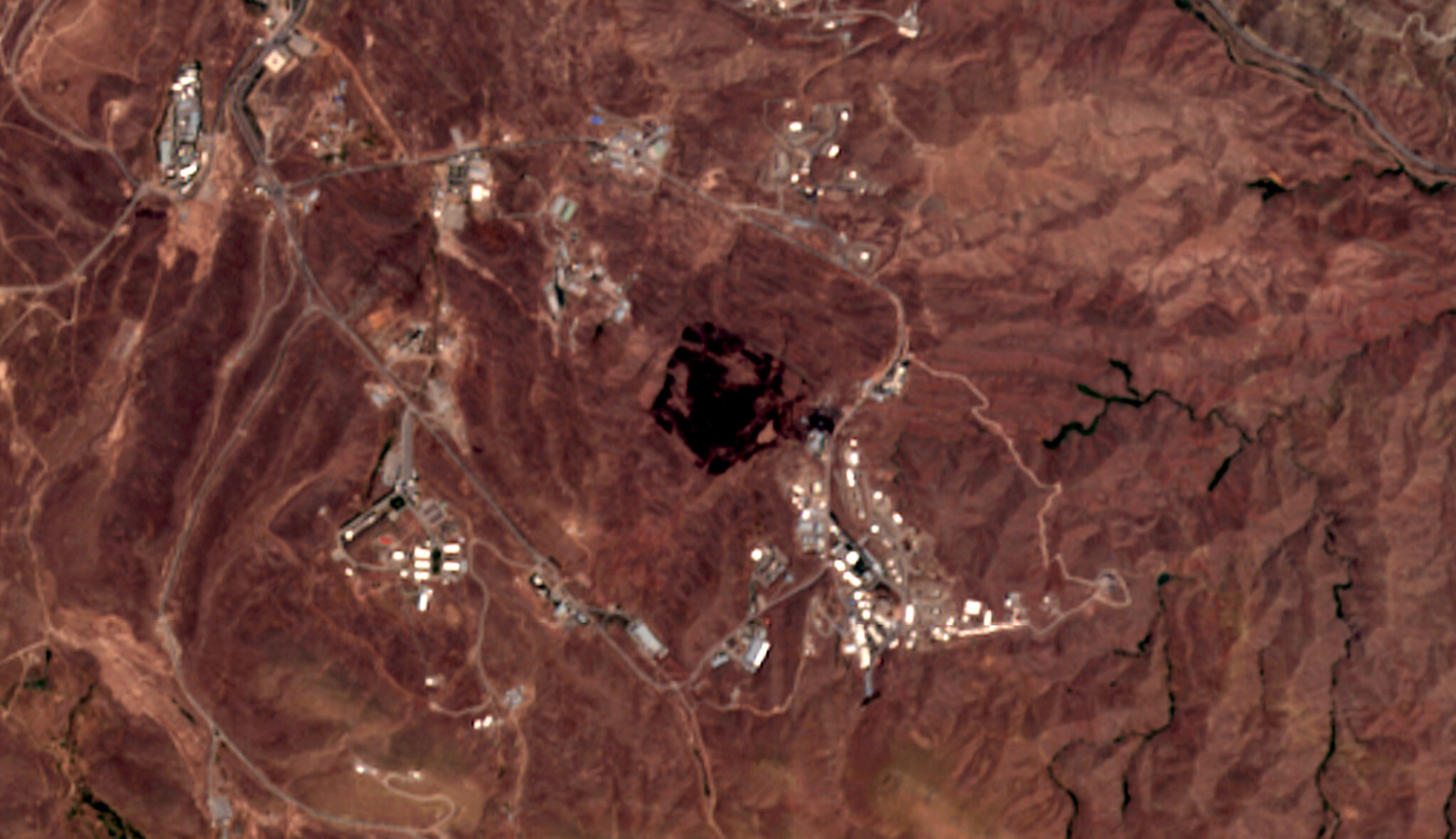
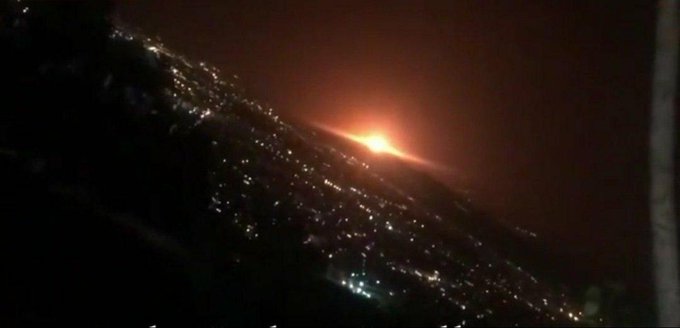
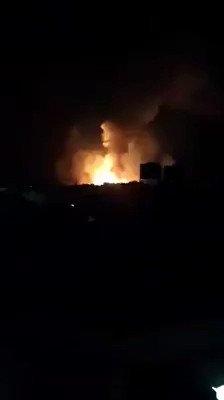
The site of an explosion that rattled Iran’s capital, on June 26, 2020 (European Commission via AP)

The site of an explosion that rattled Iran’s capital, on June 26, 2020 (European Commission via AP)

DUBAI, United Arab Emirates (AP) — An explosion that rattled Iran’s capital came from an area in its eastern mountains that analysts believe hides an underground tunnel system and missile production sites, satellite photographs showed Saturday.

What exploded in the incident early Friday that sent a massive fireball into the sky near Tehran remains unclear, as does the cause of the blast. The Fars news agency, which is close to the country’s ultra-conservatives, initially reported that the blast was caused by “an industrial gas tank explosion” near a facility belonging to the defense ministry. It cited an “informed source” and said the site of the incident was not related to the military.

The unusual response of the Iranian government in the aftermath of the explosion, however, underscores the sensitive nature of an area near where international inspectors believe the Islamic Republic conducted high-explosive tests two decades ago for nuclear weapon triggers.

The blast shook homes, rattled windows and lit up the horizon early Friday in the Alborz Mountains. State TV later aired a segment from what it described as the site of the blast.

One of its journalists stood in front of what appeared to be large, blackened gas cylinders, though the camera remained tightly focused and did not show anything else around the site. Defense Ministry spokesman Davood Abdi blamed the blast on a leaking gas he did not identify and said no one was killed in the explosion.

خبرگزاری فارس

@FarsNews_Agency

🔴 انفجار در شرق تهران/ یک مقام آگاه: تصاویری که از بامداد امروز در فضای مجازی با عنوان وقوع انفجار در منتشر شده مربوط به انفجار یک مخزن گاز صنعتی در حاشیه یکی از مراکز بوده است. این انفجار هیچ ارتباطی به تاسیسات نظامی واقع در این منطقه ندارد.
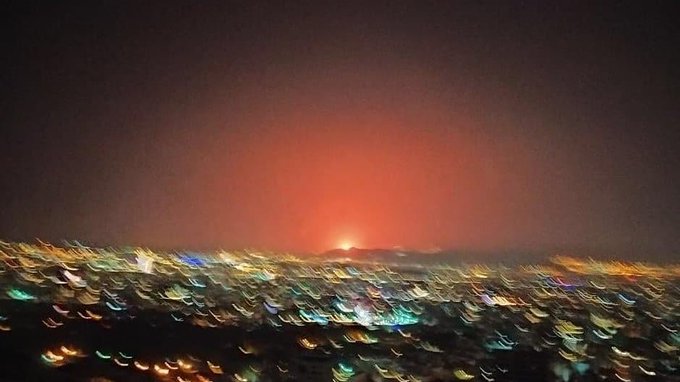
View image on TwitterView image on Twitter

Abdi described the site as a “public area,” raising the question of why military officials and not civilian firefighters would be in charge. The state TV report did not answer that.

Satellite photos of the area, some 20 kilometers (12.5 miles) east of downtown Tehran, showed hundreds of meters (yards) of charred scrubland not seen in images of the area taken in the weeks ahead of the incident. The building near the char marks resembled the facility seen in the state TV footage.

The gas storage area sits near what analysts describe as Iran’s Khojir missile facility. The explosion appears to have struck a facility for the Shahid Bakeri Industrial Group, which makes solid-propellant rockets, said Fabian Hinz, a researcher at the James Martin Center for Nonproliferation Studies at the Middlebury Institute of International Studies in Monterey, California.

Photo combo from the European Commission’s Sentinel-2 satellite shows the site of an explosion, before, left, and after, right, that rattled Tehran, on June 26, 2020 (European Commission via AP)

The Washington-based Center for Strategic and International Studies identified Khojir as the “site of numerous tunnels, some suspected of use for arms assembly.” Large industrial buildings at the site visible from satellite photographs also suggest missile assembly being conducted there.

The US Defense Intelligence Agency says Iran overall has the largest underground facility program in the Middle East.

Such sites “support most facets of Tehran’s ballistic missile capabilities, including the operational force and the missile development and production program,” the DIA said in 2019.

Iranian officials themselves also identified the site as being in Parchin, home to a military base where the International Atomic Energy Agency previously said it suspects Iran conducted tests of explosive triggers that could be used in nuclear weapons. Iran long has denied seeking nuclear weapons, though the IAEA previously said Iran had done work in “support of a possible military dimension to its nuclear program” that largely halted in late 2003.

Western concerns over the Iranian atomic program led to sanctions and eventually to Tehran’s 2015 nuclear deal with world powers. The US under President Donald Trump unilaterally withdrew from the accord in May 2018, leading to a series of escalating attacks between Iran and the US, and to Tehran abandoning the deal’s production limits.
 

Iran: US effort to extend arms embargo will fail; new sanctions a ‘big mistake’ 

June 26, 2020

Source: Iran: US effort to extend arms embargo will fail; new sanctions a ‘big mistake’ | The Times of Israel

Envoy to UN says snapping back restrictions will end nuclear deal: ‘If that happens, Iran will not be under constraint as to its course of action. All options will be open’

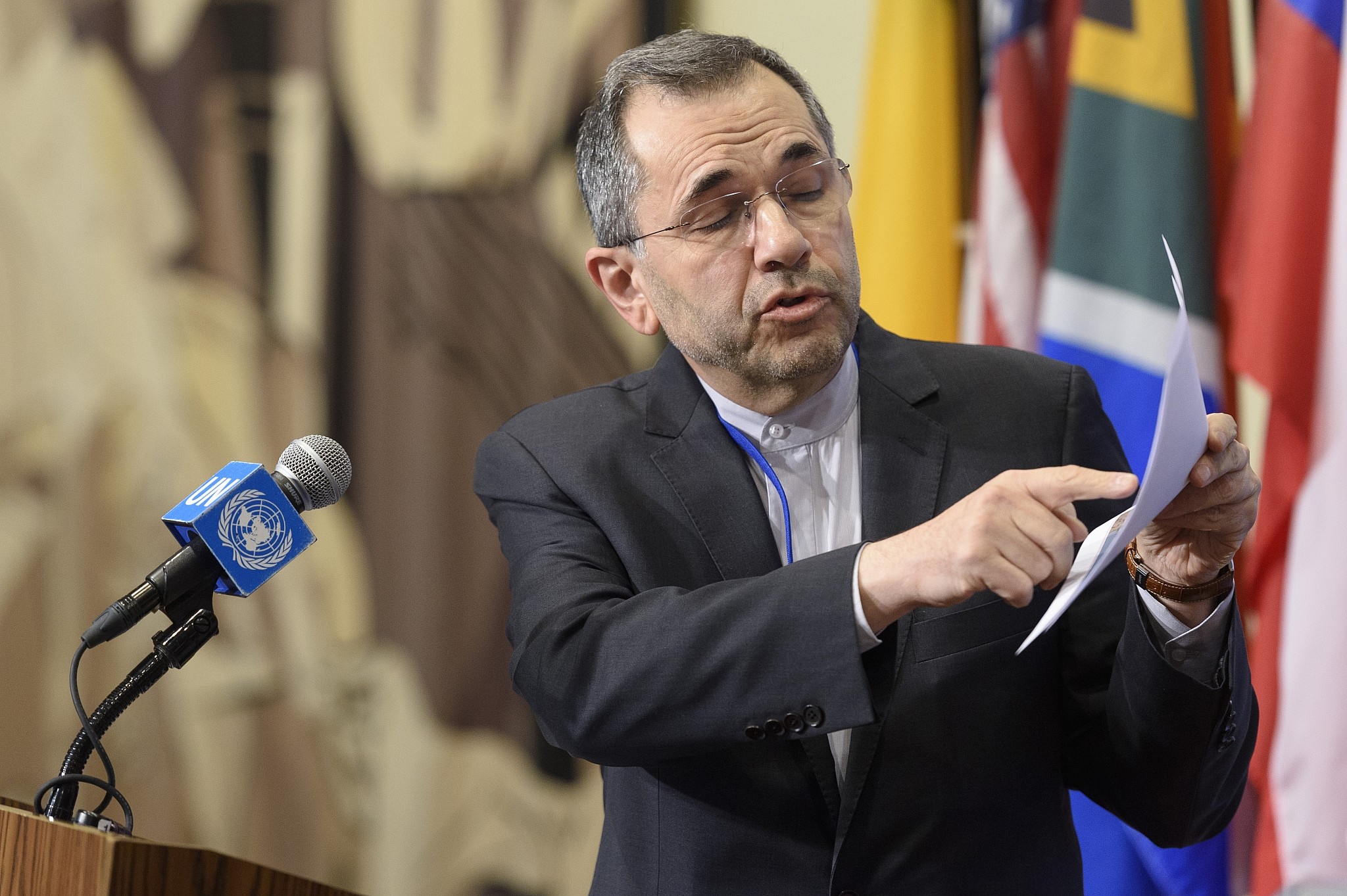
Iranian envoy to the UN Majid Takht Ravanchi briefs journalists outside the Security Council on June 24, 2019. (Loey Felipe/UN)

Iranian envoy to the UN Majid Takht Ravanchi briefs journalists outside the Security Council on June 24, 2019. (Loey Felipe/UN)

UNITED NATIONS — Iran’s UN ambassador said Thursday that he believes a US resolution to extend an arms embargo against his country will be defeated and warned it would be “a very, very big mistake” if the Trump administration then tries to re-impose UN sanctions.

Ambassador Majid Ravanchi said restoring UN sanctions will end the 2015 nuclear deal between Iran and major powers and release Tehran from all its commitments.

“If that happens, Iran will not be under constraint as to what course of action it should take,” he said reporters. “All options for Iran will be open.”

Lifting the arms embargo on Tehran is part of the UN 2015 Security Council resolution endorsing the nuclear agreement.

Ravanchi spoke a day after US Secretary of State Mike Pompeo threatened to seek to reimpose UN sanctions on Iran if the Security Council does not approve a resolution that would indefinitely extend the arms embargo, which is set to expire in October.

“Iran will be able to purchase advanced weapons systems and become an arms dealer of choice for terrorists and rogue regimes all throughout the world,” Pompeo said. “This is unacceptable.”

Later Wednesday, US Special Representative for Iran Brian Hook and US Ambassador Kelly Craft briefed Security Council members on the US draft resolution that would maintain the arms embargo indefinitely.

US Secretary of State Mike Pompeo speaks to the media before departing from al-Bateen Air Base in Abu Dhabi, United Arab Emirates, September 19, 2019, as US special representative on Iran Brian Hook, left, listens. (Mandel Ngan/Pool via AP)

Tensions between Iran and the US have escalated since 2018, when the Trump administration withdrew from the nuclear deal between Tehran and six major powers and re-imposed crippling US sanctions.

The five other powers that signed the nuclear deal — Russia, China, the United Kingdom, France and Germany — remain committed to it, saying the agreement is key to continuing inspections by the International Atomic Energy Agency and preventing Iran from pursuing nuclear weapons.

Ravanchi said ending the arms embargo in October “is an essential part of the agreement between Iran and its partners.”

“We believe there is no stomach for members of the Security Council to digest the draft resolution like the one the US presented,” he said. “So, it is our view that the draft resolution will be defeated.”

Ravanchi stressed that Iran will not accept “anything less than full implementation” of the provision lifting the arms embargo.

And he added: “It would be a wise idea for the United States to reconsider the presentation of the draft because it’s not going to be approved.”

The Iranian ambassador pointed to letters from the foreign ministers of Russia and China, both veto-wielding members of the Security Council, to its members opposing any extension of the arms embargo.

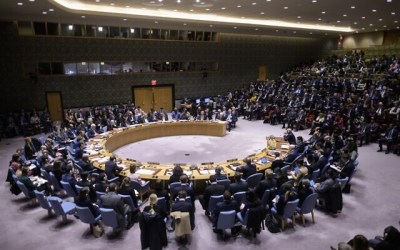
Palestinian Authority President Mahmoud Abbas (L) speaks to the UN Security Council at the United Nations headquarters on February 11, 2020 in New York. (Johannes EISELE / AFP)

The 2015 nuclear deal, known as the JCPOA, also includes a “snap back” provision that would restore all UN sanctions against Iran that had been lifted or eased if the nuclear deal is violated.

Responding to Pompeo’s threat to use that provision if the US arms embargo resolution isn’t approved, Ravanchi said: “This is a very, very big mistake on the part of the United States to try to snap back the resolution, because they know that is the end of JCPOA, and they should think twice before resorting to that option.”

He said Iran and many other Security Council members believe the US has no legal authority to invoke snap back because it is no longer part of the JCPOA.

Russia’s UN Ambassador Vassily Nebenzia has dismissed as “ridiculous” the possibility of the Trump administration trying to use the snap back provision, stressing that since the US pulled out out of the JCPOA “they have no right” to use any of its provisions.

But Pompeo and Craft insist the resolution makes clear the US retains the right to use the provision.

Ravanchi said the US should ask itself how it will implement snap back in the face of strong opposition to it.

And he said the US should also bear in mind the consequences of having no JCPOA, and the consequences of snap back action, including its impact on other Security Council members and the council’s credibility.

The ambassador was asked whether ending IAEA inspections, stopping unannounced inspections under the nuclear agency’s additional protocol, or withdrawing from the Nuclear Nonproliferation Treaty, considered the cornerstone of global efforts to prevent the spread of nuclear weapons, are likely steps Iran would take if the US succeeds in re-imposing UN sanctions.

“I am not going to tell you exactly what action we are going to take,” Ravanchi replied. ”There are a number of options available.”


Israeli airstrikes reported against Iranian sites in Syria, killing 7 

June 24, 2020

Source: Israeli airstrikes reported against Iranian sites in Syria, killing 7 | The Times of Israel

Syrian state media confirms two soldiers killed in one strike, while watchdog says 5 pro-Iranian fighters killed in second strike, with attacks blamed on Israel

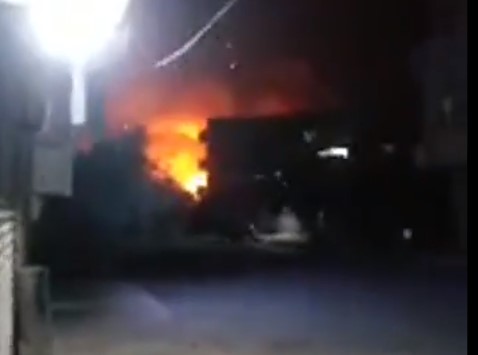
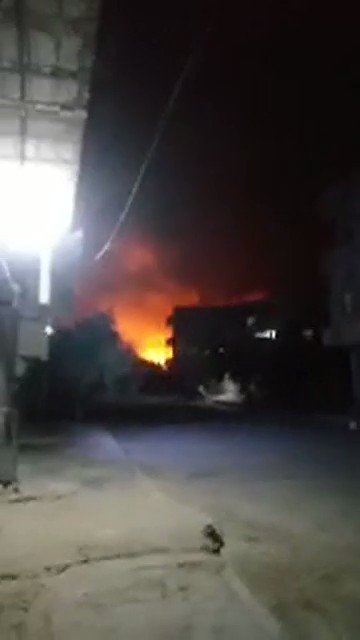
Explosions seen in the city of Hama, Syria after suspected Israeli airstrikes on June 24, 2020 (Screencapture/Twitter)

Explosions seen in the city of Hama, Syria after suspected Israeli airstrikes on June 24, 2020 (Screencapture/Twitter)

Suspected Israeli airstrikes late Tuesday in Syria killed at least seven people, including two Syrian soldiers and five pro-Iranian militia members, SANA and Britain-based watchdog said.

Two soldiers were killed and four others wounded in the strikes in the southern province of Sweida, a Syrian military source cited by state media said.

“Several hostile missiles were fired at our military positions in Kababej, west of Deir Ezzor and in the Al-Sukhna region,” a military source quoted by the official SANA news agency said, using Damascus’ common term for Israeli attacks.

“At the same time, one of our military positions was targeted near the town of Salkhad in the southern city of Sweida, resulting in the death of two martyrs and the wounding of four other soldiers,” the source added.

SANA later reported a third set of strikes early Wednesday near Hama, claiming that air defense had intercepted several missiles. Video reportedly from the scene showed explosions on the ground.

ELINT News@ELINTNews

: Unconfirmed video reportedly showing explosions and fire near Al-Salamiyah in Hama Countryside, Syria,

Further reports claim Regiment 47 base was the target. https://twitter.com/seerij80/status/1275552118594772994 

سيراج علي@seerij80

مباشر القصف الصاروخي الذي يستهدف قواعد ايرانية بالقرب من مدينة حماة
واصوات انفجارات بالقرب من المطار العسكري والفوج ٤٧
ليلة سودة عليكم ..

Embedded video

26 people are talking about this

The Syrian Observatory for Human Rights war monitor said Israeli strikes had targeted “Iranian militia positions in Tel al-Sahen,” killing the Syrian soldiers, while five Iranian-backed fighters were killed and several others critically wounded in a separate strike on a “military center” near Deir Ezzor, in eastern Syria.

The strikes led to “widespread damage” in communications towers and ignited fires in the area. Iranian-backed militias were also present in the area, the observatory said.

Al-Arabiya reported that the strikes were carried out by Israeli planes and that four aircraft had participated in the attack.

The report said that an Iranian weapons shipment had arrived in Al-Suwayda Tuesday morning.

Joe Truzman@Jtruzmah

A different angle of possible ammunition warehouse that was allegedly struck by |i airstrikes in Salamiyah city located in Hama Governorate this evening.

Embedded video

See Joe Truzman’s other Tweets
There was no comment from the Israel Defense Forces, which generally refuses to make statements about individual strikes. Israeli officials have confirmed the broad outlines of a several-year air campaign to keep Iran from gaining a foothold in Syria.

Iranian bases in Deir Ezzor have been targeted in the past in strikes attributed to Israel, which has launched hundreds of strikes in Syria since the start of the civil war in 2011, targeting government troops, allied Iranian forces and fighters from the Lebanese Shiite terror group Hezbollah.

It was the fourth incident of alleged Israeli strikes in Syria in the past month.

Twelve people were killed on June 7 in overnight drone airstrikes targeting pro-Iranian militia in the Deir Ezzor region in eastern Syria, according to the Syrian Observatory for Human Rights.

The Observatory said the sites had been refortified and restocked three days earlier, and munitions and vehicles were destroyed in the strike.

The Observatory did not identify the aircraft responsible in that case, but its head, Rami Abdul Rahman, had told AFP that Israel was likely responsible.

Israel has repeatedly warned that Iran and its proxies, notably the Lebanese Hezbollah terror group, are developing precision-guided missiles, which Israel sees as one of the major strategic threats facing it.

Earlier in the day, IDF chief Aviv Kochavi visited troops in northern Israel and warned they may soon need to shift attention to the West Bank and Gaza, should violence break out in response to Israeli annexation plans.

Judah Ari Gross and agencies contributed to this report.


Rouhani says he’s ready for talks if US apologizes for exiting nuclear deal

June 24, 2020

Source: Rouhani says he’s ready for talks if US apologizes for exiting nuclear deal | The Times of Israel

Iranian president issues warning to UN nuke watchdog, criticizes European countries for not doing more to shield his country from American sanctions

Iranian President Hassan Rouhani delivers a speech during the inaugural session of the new parliament in Tehran on May 27, 2020. (AFP)

Iranian President Hassan Rouhani said on Wednesday that he is prepared to hold talks with the US, if Washington first apologizes for leaving a landmark 2015 nuclear pact and recommits to the terms of the deal.

During a televised cabinet meeting Rouhani said Washington’s recent calls on Iran to open negotiations are just “words and lies,” Reuters reported.

In 2018, US President Donald trump pulled out of the deal and reimposed sanctions on Iran. Tehran has since sought for other signatories to the deal — Germany, France, Britain, Russia and China, which have been struggling to save the accord — to increase economic incentives to make up for the hard-hitting sanctions imposed by Washington after the US withdrawal.

Iran accuses the US of trying to prevent that by pressuring the countries still in the deal, known as the Joint Comprehensive Plan of Action. Meanwhile, Iran has been violating its restrictions, including the amount of uranium it can enrich and the purity of enrichment, to try to pressure the five countries.

“We have no problem with talks with the US, but only if Washington fulfills its obligations under the nuclear deal, apologizes and compensates Tehran for its withdrawal from the 2015 deal,” Rouhani said.

“But we know these calls for talks with Tehran are just words and lies,” he added, referring to Washington’s repeated statements urging talks.

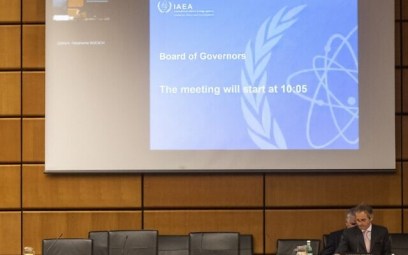
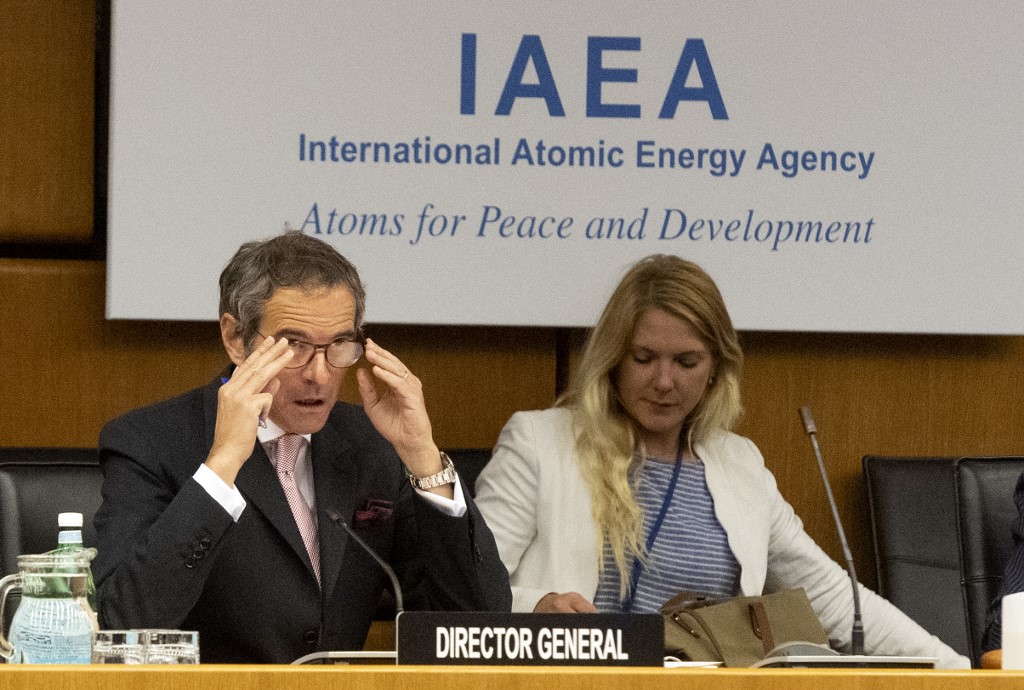
Rafael Grossi, Director General of the International Atomic Energy Agency (IAEA), opens a virtual meeting of the Board of Governors of the IAEA , due to coronavirus safety related measures, at the agency’s headquarters in Vienna, Austria on June 15, 2020. (JOE KLAMAR / AFP)

Rouhani also warned that the UN nuclear watchdog risked losing its independence after it adopted a resolution urging access to two sites alleged to have hosted past nuclear activities.

The Vienna-based International Atomic Energy Agency passed a resolution put forward by European states last week, calling on Iran to help clarify whether undeclared nuclear activities took place at the sites in the early 2000s.

But the Islamic Republic says the IAEA’s requests for access were based on allegations from its arch-enemy Israel and had no legal basis.

“The Zionist regime and the Americans are pressuring the agency to investigate something related to 20, 18 years ago. They are deceiving the agency, misleading it,” Rouhani said.

“Our expectation is that… the agency should be able to keep its independence,” he added, warning that Israel and the United States were tarnishing its reputation.

Rouhani also slammed the three European parties to the Iran nuclear deal — Britain, France and Germany — for putting forward the resolution and “sullying themselves for no reason” by cooperating with Israel and the US.

“We did not expect this from the Europeans,” he said, praising China and Russia — also parties to the nuclear deal — for standing against the resolution.

Rouhani said Iran would continue to work with the IAEA regarding “legal inspections.”

It is not clear what effect the new resolution will have on the nuclear deal but Iran has threatened unspecified consequences.

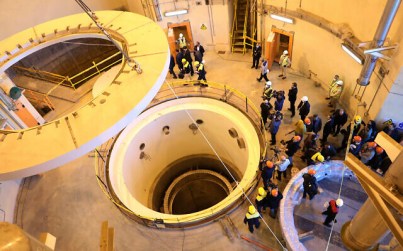
Technicians work at the Arak heavy water reactor’s secondary circuit, as officials and media visit the site, near Arak, 150 miles (250 kilometers) southwest of the capital Tehran, Iran, December 23, 2019. (Atomic Energy Organization of Iran via AP)

Rouhani also criticized European countries, which continue to support the existing deal, saying that have not provided Iran with protection from the US sanctions.

“The Europeans have failed to fulfill their promises. They should carry out their obligations,” he said.

The IAEA maintains that one of the two sites that Iran has blocked access to was partially demolished in 2004. At the other, the agency said it observed activities “consistent with efforts to sanitize” the facility from July 2019 onward.

A third site, the IAEA said, had undergone “extensive sanitization and leveling” in 2003 and 2004 and there would be no verification value in inspecting it.

The watchdog also said Iran has “not engaged in any substantive discussions” with the IAEA for almost a year to answer the agency’s questions about possible undeclared nuclear material and activities. The agency also said that Iran has continued to increase its stockpiles of enriched uranium and remains in violation of the nuclear deal.


Hospitals told to prepare to reopen specialized COVID-19 wards as cases mount 

June 21, 2020

Source: Hospitals told to prepare to reopen specialized COVID-19 wards as cases mount | The Times of Israel

Health ministry tells medical centers to prepare for ‘extreme scenario’ with hospitalizations on the rise, a month after most hospitals closed their coronavirus divisions

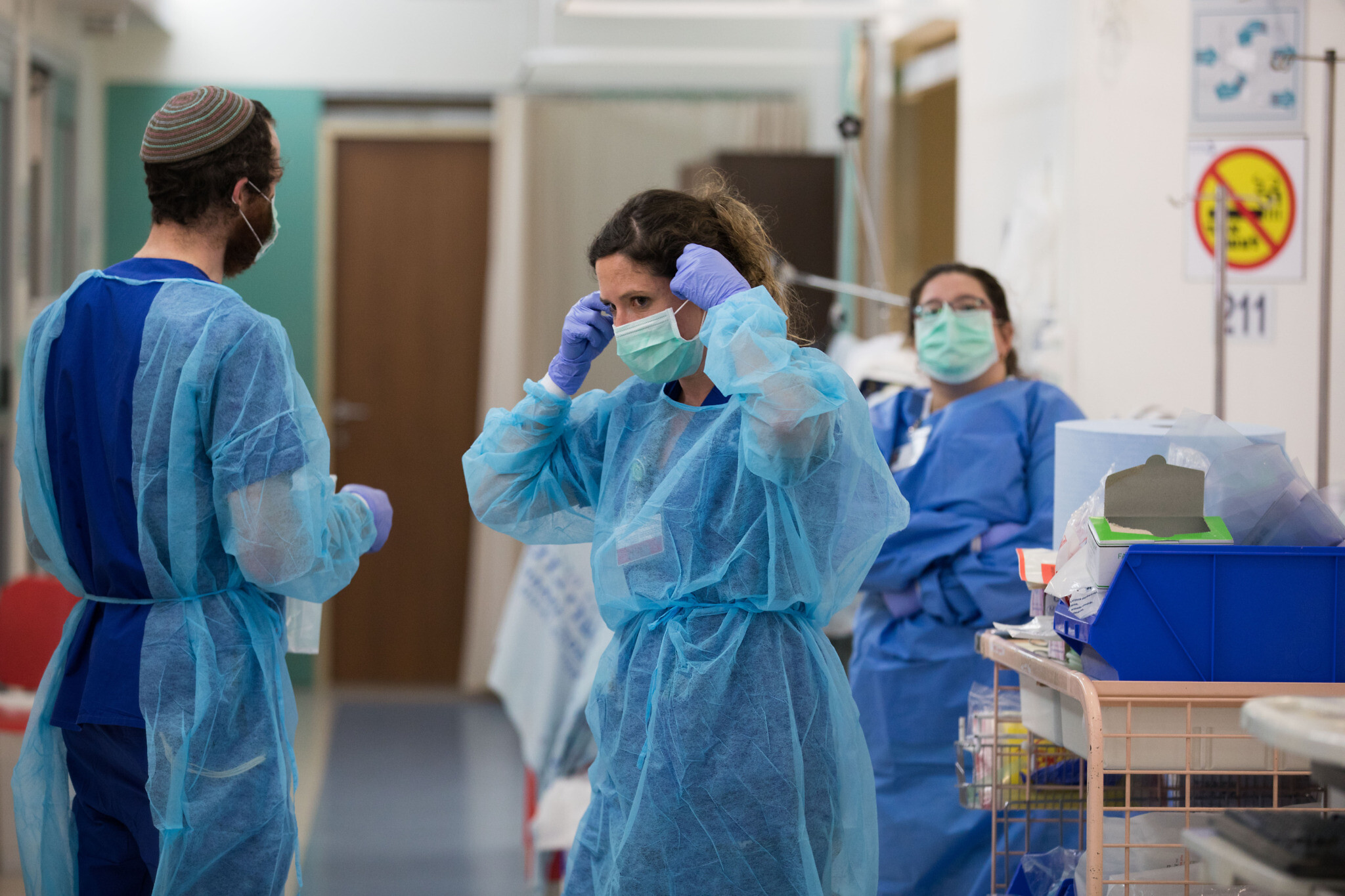
Medical staff working at the new COVID-19 unit at the Shaare Zedek Medical Center in Jerusalem, March 31, 2020. (Nati Shohat/FLASH90)

Medical staff working at the new COVID-19 unit at the Shaare Zedek Medical Center in Jerusalem, March 31, 2020. (Nati Shohat/FLASH90)

The Health Ministry on Sunday instructed hospitals around the country to prepare to reopen their coronavirus wards as the number of new COVID-19 cases continued to climb by nearly 300 a day.

Several hospitals shuttered their coronavirus wards last month as the number of new cases dropped to several dozen a day, but daily infection numbers have since rebounded.

The head of the ministry’s General Medicine Division told hospital administrators in a letter that the directive comes against the backdrop of a rise not just in total cases but also in the number of hospitalized patients, of those in serious condition, and of hospital staff forced into quarantine.

“The guideline is to prepare for the immediate opening of a single ward dedicated to [treating] the coronavirus,” wrote Dr. Sigal Liberant-Taub.

The Health Ministry said Sunday morning that there were 20,686 total cases since the start of the pandemic, including 4,716 active cases, which is some 2,000 more active cases than just a couple of weeks ago. Over 200 people were hospitalized, including 43 patients in serious condition and 28 people on ventilators.

Medical workers treat a patient at the coronavirus ward at Ichilov Hospital in Tel Aviv on May 4, 2020. (Yossi Aloni/Flash90)

According to official figures, 905 medical workers are in quarantine, including 168 doctors and 306 nurses.

Liberant-Taub told the administrators that they should be prepared for an “extreme scenario,” urging them to “refresh” their medical staffs on the importance of personal protective equipment, of working in small teams and of separating the respiratory wards that are more likely to receive coronavirus patients from other departments, in an effort to limit exposure to the virus.

Beds at a coronavirus critical care unit at Sheba Medical Center (Courtesy)

Top officials are set to meet Sunday to discuss new measures intended to keep a lid on the new outbreak, though authorities are reportedly concentrating on increased enforcement of rules requiring masks in public, including upped fines, rather than new restrictions on movement or shutting down the economy.

Currently, authorities can hit people with a NIS 200 ($58) fine for not donning a mask in public areas.

On Saturday, the IDF’s Coronavirus National Information and Knowledge Center warned that Israel has entered a second wave of infections and said if it did not take immediate steps to bring numbers down, it could face a thousand new cases a day and hundreds of new deaths in a month’s time. However, some government officials distanced themselves from the report, claiming it was predicated on faulty statistics.

Despite the rise in cases, the cabinet on Friday gave the go-ahead to hold cultural events of up to 250 people with certain limitations. The green light applied to cinemas and theaters, and took immediate effect. In certain situations, with prior approval, events of up to 500 people will also be authorized, the cabinet decided.


UN nuclear watchdog passes resolution criticizing Iran, in first since 2012

June 21, 2020

Source: UN nuclear watchdog passes resolution criticizing Iran, in first since 2012 | The Times of Israel

Motion calls on Tehran to provide IAEA inspectors with access to two sites suspected of undeclared nuclear activity in the early 2000s; Iran has blocked access for months

Rafael Grossi, (left) Director General of the International Atomic Energy Agency (IAEA), opens a virtual meeting of the Board of Governors of the IAEA in Vienna, Austria on June 15, 2020 (JOE KLAMAR / AFP)

Rafael Grossi, (left) Director General of the International Atomic Energy Agency (IAEA), opens a virtual meeting of the Board of Governors of the IAEA in Vienna, Austria on June 15, 2020 (JOE KLAMAR / AFP)

The board of governors at the UN’s nuclear watchdog has passed a resolution critical of Iran, diplomatic sources said Friday, the first of its kind since 2012.

The resolution calls on Tehran to provide inspectors from the International Atomic Energy Agency (IAEA) with access to two sites in Iran in order to clarify whether undeclared nuclear activity took place there in the early 2000s.

It “calls on Iran to fully cooperate with the Agency and satisfy the Agency’s requests without any further delay, including by providing prompt access to the locations specified by the Agency.”

Iran has been blocking access to the sites for months, prompting a growing diplomatic row.

The resolution was carried by 25 votes in favor versus two against, with seven abstentions. Russia and China, both of which had spoken out against the prospect of a resolution earlier this week, voted against.

It had been put forward by France, Germany and Britain and supported by the United States, even though the American ambassador to the UN in Vienna had said “the text could be strengthened.”

General view of the board of governors meeting of the International Atomic Energy Agency, IAEA, at the International Center in Vienna, Austria, August 1, 2019. (AP Photo/Ronald Zak)

Earlier this week Iran warned that such a resolution would be “counterproductive” and that it would take “appropriate measures” in response.

Russia’s Ambassador to the UN in Vienna Mikhail Ulyanov echoed that position after the resolution was passed on Friday.

“While stressing the need for Tehran and IAEA to settle this problem without delay, we believe that the resolution can be counterproductive,” he tweeted.

Even though the sites in question are not thought to be directly relevant to Iran’s current nuclear program, the agency says it needs to know if activities going back almost two decades have been properly declared and all materials accounted for.

Speaking to reporters after the resolution was passed on Friday, IAEA Director General Rafael Grossi said it would be “absolutely unacceptable” if an example were to be set that states can be selective in their implementation of agreements with the UN agency.

“There are no exceptions. There is no Additional Protocol a la carte,” Grossi said, referring to the agreement under which the IAEA requested access to the sites.

“I intend to sit down with Iran very soon and to try to solve this as soon as possible,” he said, adding that Iran’s ambassador to the UN in Vienna Kazem Gharib Abadi would be his first port of call.

Earlier this week Gharib Abadi argued in a statement that the IAEA’s access requests were based on allegations from Iran’s arch-enemy Israel.

Iran this week argued that the IAEA’s access requests were based on allegations from Israel, which has flagged at least one site as a “secret atomic warehouse” and pressed the IAEA to investigate.

Iran’s alleged atomic warehouse in Turquzabad, Tehran. (YouTube screenshot)

Despite the row over the two sites, the IAEA says it still has the access it needs to inspect Iran’s declared nuclear facilities, as the agency is mandated to do under the landmark deal between Iran and world powers reached in 2015.

However the latest row comes as that deal continues to unravel, with Iran continuing to breach the limits on nuclear activity in the accord in retaliation for the United States’ withdrawal from it and reimposition of sanctions.

At the start of this week’s meeting on Monday, IAEA Director General Rafael Grossi repeated his appeal to Iran to “cooperate immediately and fully” and grant access.

While the new resolution is largely symbolic in character, it could be a prelude for the dispute being referred to the UN Security Council, the only UN body that can impose sanctions.

US President Donald Trump withdrew from the nuclear deal two years ago and went on to re-impose tough economic sanctions on Iran. In retaliation, Iran has been slowly abandoning limits on its activities set out under the deal, including on the size and enrichment level of its uranium stockpile.

Iran has accused the European parties to the deal — France, the UK and Germany — of not doing enough to mitigate the impact of American sanctions.


Iran’s currency hits record low amid sanctions, virus, international pressure 

June 21, 2020

Source: Iran’s currency hits record low amid sanctions, virus, international pressure | The Times of Israel

Day after IAEA censures Tehran for blocking access to two sites and EU diplomats say they’ll back extending arms embargo, rial plummets to 190,000 for each dollar

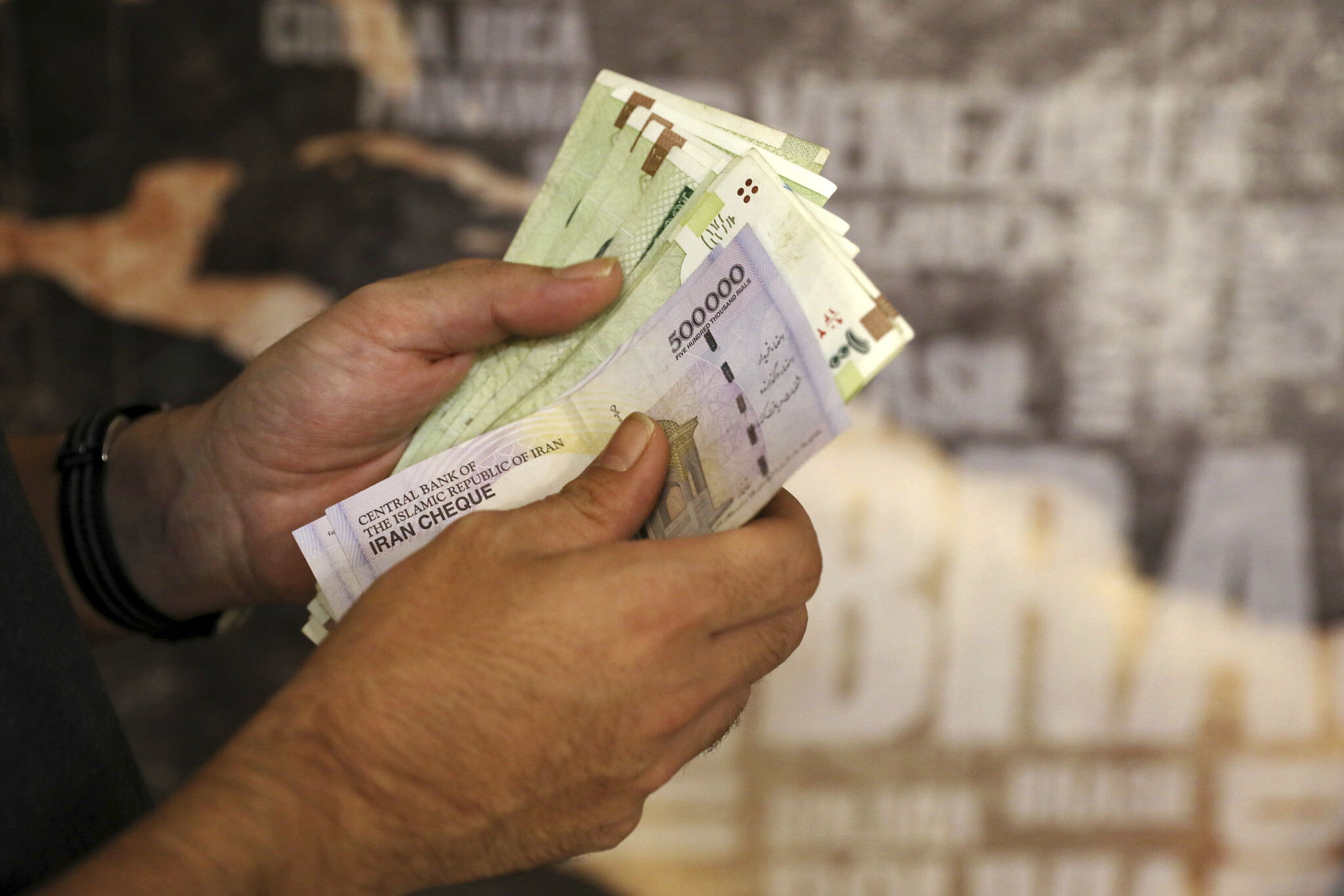
A man counts his banknotes and traveler checks in Tehran, Iran, on Wednesday, August 21, 2019 (AP Photo/Ebrahim Noroozi)

A man counts his banknotes and traveler checks in Tehran, Iran, on Wednesday, August 21, 2019 (AP Photo/Ebrahim Noroozi)

Iran’s currency has dropped to its lowest value ever at 190,000 rial for each dollar amid severe US sanctions against the country, new international pressure over its nuclear and weapons programs and the ongoing coronavirus pandemic.

The Iranian currency has tumbled from a rate of 32,000 rials to $1 at the time of Tehran’s 2015 nuclear deal with world powers.

Since US President Donald Trump’s decision to withdraw the US from the nuclear deal with Iran and reimpose crippling trade sanctions over two years ago, Iran’s oil exports, the country’s main source of income, have fallen sharply.

Last week, Senior Vice President Eshaq Jahangiri said that Iran’s oil revenues have plummeted to $8 billion from $100 billion in 2011.

Iran recently sent five tankers with at least $45.5 million worth of gasoline and similar products to Venezuela.

It was a way to bring money into cash-starved Iran and put Venezuela’s own pressure on the US, which under Trump has pursued maximalist campaigns against both nations.

On Friday the UN’s nuclear watchdog censured Tehran and three European powers said they backed extending an arms embargo against the country.

The International Atomic Energy Agency (IAEA) passed a resolution put forward by European states, urging Tehran to provide inspectors access to two sites in Iran to help clarify whether undeclared nuclear activity took place there in the early 2000s.

It called on Iran to fully cooperate with the IAEA and satisfy its requests without delay, including by providing prompt access to the sites. Iran has been blocking access to the sites for months, prompting a growing diplomatic row.

Iranian Foreign Minister Mohammad Javad Zarif on Friday said the UK, France and Germany were “accessories” to Israel and the US and accused them of breaking agreements they made in the 2015 Iran nuclear deal after foreign ministers of the three nations toughened their stance on Iran, backing a UN arms embargo extension.

However ,the countries also warned the US against “any unilateral attempt to trigger a UN sanctions snapback.”


Iran’s unyielding pursuit of nuclear weapon capabilities JS 524

June 20, 2020


Iran says virus cases top 200,000, death toll nears 10,000

June 19, 2020

Source: Iran says virus cases top 200,000, death toll nears 10,000 | The Times of Israel

Official figures have shown an upward trajectory in new confirmed COVID-19 cases since early May, Tehran letting each region decide on its own precautions

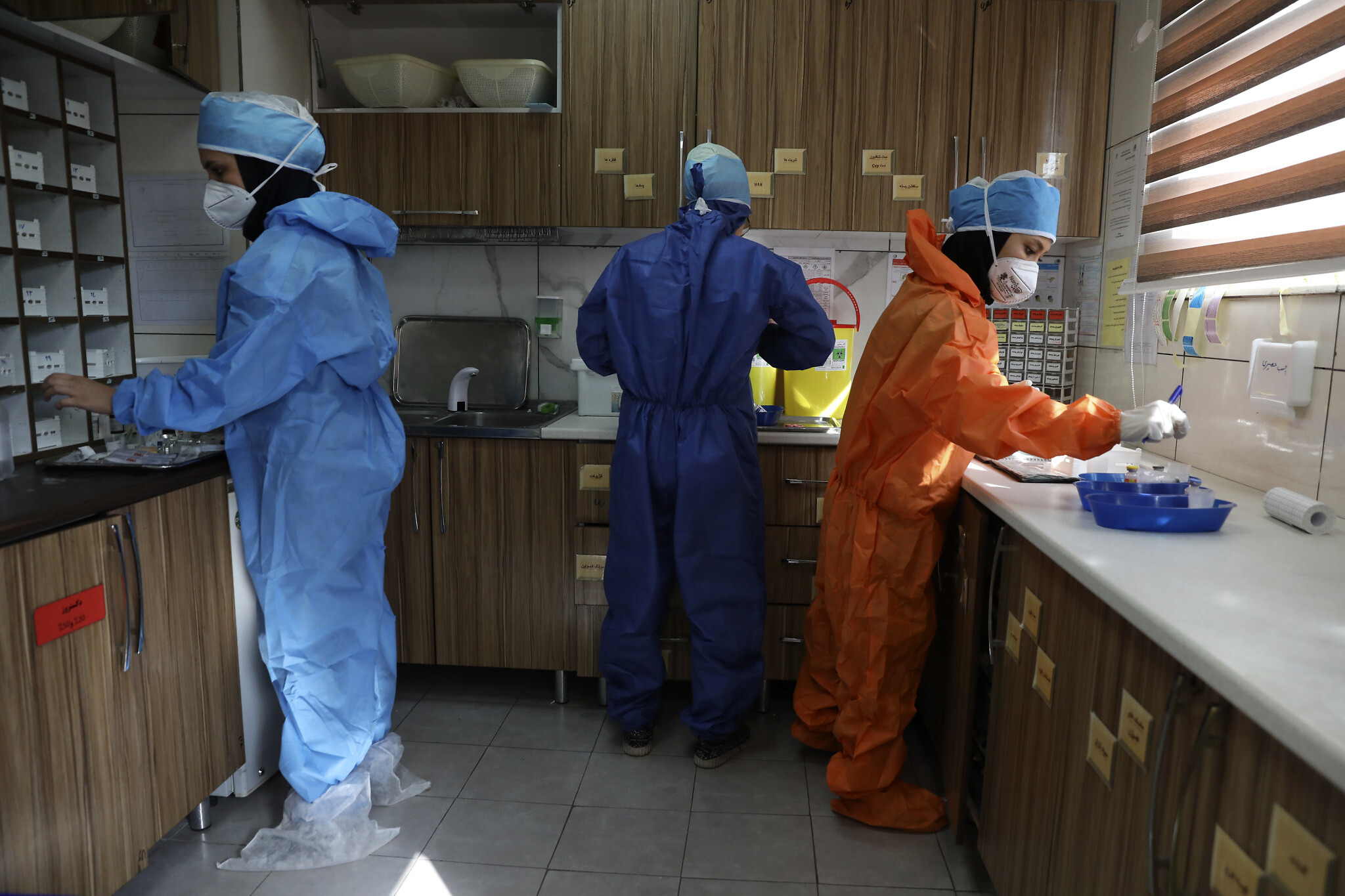
In this Tuesday, June 16, 2020, photo, nurses prepare medicines for COVID-19 patients at the Shohadaye Tajrish Hospital in Tehran, Iran. (AP Photo/Vahid Salemi)

In this Tuesday, June 16, 2020, photo, nurses prepare medicines for COVID-19 patients at the Shohadaye Tajrish Hospital in Tehran, Iran. (AP Photo/Vahid Salemi)

TEHRAN, Iran — Iran said its novel coronavirus caseload passed the 200,000 mark on Friday, as authorities gave provinces the power to reimpose measures aimed at stemming the spread of the virus.

Official figures have shown an upward trajectory in new confirmed COVID-19 cases since early May, when Iran hit a near two-month low in recorded infections.

Health ministry spokeswoman Sima Sadat Lari said on state television that another 2,615 people in Iran had tested positive for the virus in the past 24 hours.

That brought to 200,262 the total number of confirmed cases since the country’s outbreak emerged four months ago.

The new cases were “a reflection of (the Iranian people’s) cooperation in the past two to four weeks,” said Lari, who again urged citizens to observe health protocols and social distancing.

She added that 120 fatalities in the past day had taken the overall toll to 9,392.

There has been skepticism at home and abroad about Iran’s official figures, with concerns the real toll could be much higher.

Six of Iran’s 31 provinces — Bushehr, Hormozgan, Kermanshah, Kurdistan, Sistan and Baluchistan, and West Azerbaijan — are currently “red”, the highest level on the country’s colour-coded risk scale.

The number was five on Thursday.

Deputy Health Minister Hossein Erfani told state television on Friday that Iran had implemented what it calls “dynamic social distancing”.

The measure enabled “each province to decide for itself” regarding restrictive measures.

Iran reported its first cases on February 19 and started implementing measures such as shutting down non-essential businesses and busy Shiite shrines to contain the virus.

But the government progressively lifted the restrictions from April in order to reopen the sanctions-hit economy.

The recent upsurge in infections — which the government insists is due to increased testing rather than a worsening outbreak — and the new powers have prompted some provinces to reimpose restrictive measures.


Gantz: Iran’s ‘blatant’ nuclear violations threaten Israel and global stability 

June 19, 2020

Source: Gantz: Iran’s ‘blatant’ nuclear violationthreaten Israel and global stability | The Times of Israel

Defense minister hails IAEA resolion criticizing Tehran for blocking inspector’s access to suspect sites; vows Iran will never get atomic weapons

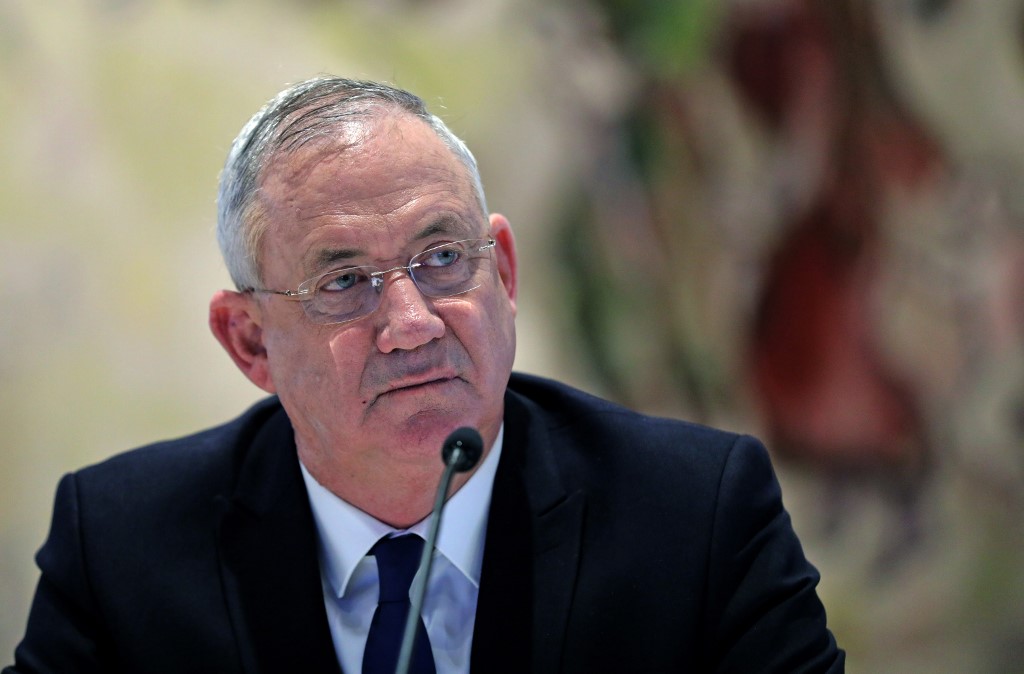
Defense Minister Benny Gantz attends a cabinet meeting of the new government at Chagall State Hall in the Knesset in Jerusalem on May 24, 2020. (Abir Sultan/Pool/AFP)

Defense Minister Benny Gantz on Friday hailed the UN nuclear watchdog’s passing of a resolution criticizing Iran for not granting access to suspicious sites, saying that Tehran’s nuclear ambitions threatened Israel and global stability.

The resolution passed by the International Atomic Energy Agency’s board of governors, the first of its kind since 2012, calls on Iran to grant inspectors access to two sites to determine whether undeclared nuclear activity took place there in the early 2000s.

In a statement applauding the move, Gantz accused Iran of violating the 2015 agreement between Tehran and world powers that curbed its nuclear program in exchange for sanctions relief.

“We’ve known for years that Iran is concealing blatant violations of the nuclear deal with the intention of threatening both Israel and global stability,” Gantz said in a statement. “Israel will not allow Iran to achieve nuclear capability and the international community is doing the right thing by insisting on effective inspections.”

The Foreign Ministry said the resolution “corroborates all of Israel’s claims regarding Iran’s continued covert nuclear activity.” It also noted the IAEA move came on the heels of a United Nations report saying Iran may have violated an arms embargo imposed on it as part of the UN Security Council anchoring the 2015 nuclear deal.

“Iran continues to systematically violate all international commitments it has signed and is working effortlessly to hide evidence and disrupt investigations in order to deceive the international community,” a Foreign Ministry statement said.

It added: “The world must set a clear red line for Iran.”

Top Israeli officials have long accused Iran of pursuing nuclear weapons, a charge denied by Iranian leaders, who insist their nuclear program is for peaceful purposes.

Iran has been blocking access to the sites flagged by the IAEA for months, prompting a growing diplomatic row.

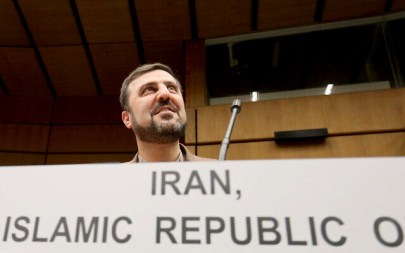
Iran’s ambassador to the International Atomic Energy Agency, Gharib Abadi, waits for the start of the IAEA board of governors meeting at the International Center in Vienna, Austria, November 7, 2019. (AP Photo/Ronald Zak)

The resolution was carried by 25 votes in favor versus two against, with seven abstentions. Russia and China, both of which had spoken out against the prospect of a resolution earlier this week, voted against.

It had been put forward by France, Germany and Britain and supported by the United States, even though the American ambassador to the UN in Vienna had said “the text could be strengthened.”

Iran’s Ambassador to the UN in Vienna Kazem Gharib Abadi told Friday’s meeting that the resolution will not “encourage Iran to grant access to the Agency based on fabricated and unfounded allegations.”

“Iran categorically deplores this resolution and will take appropriate action in response, the repercussions of which would be upon the sponsors of this resolution,” he added.

Even though the sites in question are not thought to be directly relevant to Iran’s current nuclear program, the agency says it needs to know if activities going back almost two decades have been properly declared and all materials accounted for.

Despite the row over the two sites, the IAEA says it still has the access it needs to inspect Iran’s declared nuclear facilities, as per its mandate under the 2015 nuclear accord.

However, the latest dispute comes as that deal further unravels, with Iran continuing to breach its limits on nuclear activity in retaliation to a US withdrawal from the accord in 2018 and renewed sanctions.

Iran has previously hinted that a resolution along the lines of the one passed Friday could cause “complication and difficulties” for the future of the 2015 accord, also known as the Joint Comprehensive Plan of Action (JCPOA).

In his statement, Gharib Abadi warned the IAEA against actions that could lead to “the destruction of the JCPOA.”

Director-general of International Atomic Energy Agency, Rafael Grossi, speaks before the start of the IAEA board of governors meeting at the International Center in Vienna, Austria, March 9, 2020. (AP Photo/Ronald Zak)

Speaking to reporters after the resolution was passed, IAEA Director-General Rafael Grossi said it would be “absolutely unacceptable” if an example were to be set that states can be selective in their implementation of agreements with the UN agency.

“There are no exceptions. There is no Additional Protocol a la carte,” Grossi said, referring to the agreement under which the IAEA requested access to the sites.

“I intend to sit down with Iran very soon and to try to solve this as soon as possible,” he said, adding that Gharib Abadi would be his first port of call.

Iran this week argued that the IAEA’s access requests were based on allegations from Israel, which has flagged at least one site as a “secret atomic warehouse” and pressed the IAEA to investigate.

Additional information provided by the IAEA to back up its requests “were merely some commercial satellite imageries that contained no convincing underlying reason” to provide access, Tehran argued.

Also on Friday, the British Foreign Office said Foreign Secretary Dominic Raab would be meeting French and German counterparts in Berlin to discuss “a diplomatic solution to Iran’s destabilizing activities in the Middle East.”