Source: How could Iran retaliate for Natanz explosion – analysis – The Jerusalem Post
Iran’s regime, led by the Islamic Revolutionary Guard Corps, believes in two types of actions. It believes first in perceived tit-for-tat responses and asymmetric attacks.
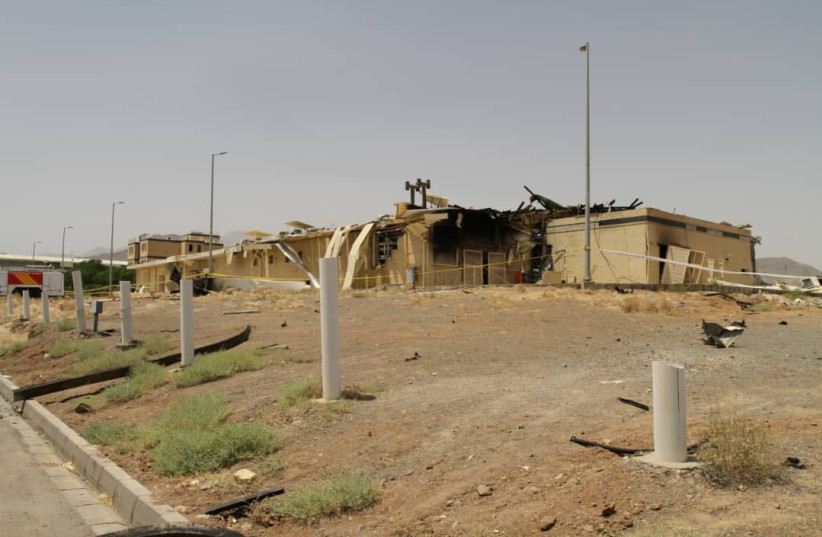
The government is in a difficult position because it labelled the explosion an accident, but it is now facing a deluge of foreign media reports that seek to conclude the explosion was perpetrated by a state or group.
The Post and Times quoted a Middle East security official as saying the damage was done to “send a signal” to Tehran. Reports also claim damage was done to key centrifuges or possibly to advanced gas inputs to the IR-6 centrifuges. That could set back the program for months or a year.
Iran, however, is at a crossroads in other ways. It has sent tankers to Venezuela to boost gas trade. It’s supporters in Iraq may have gunned down a well-known local commentator named Husham al-Hashimi. Iran is also benefiting from a UN expert opinion that deemed the US killing of IRGC Quds Force head Qasem Soleimani an ‘unlawful’ killing. Iran has also triggered a dispute mechanism regarding the 2015 Iran deal.
How might Iran respond to what it perceives as an attack, if the regime does draw that conclusion from Natanz?
Iran’s regime, led by the Islamic Revolutionary Guard Corps, believes in two types of actions. It believes first in perceived tit-for-tat responses, such as the ballistic missile strike carried out in January after Soleimani was killed by the US.
It also believes in asymmetric attacks, such as targeting mining ships in the Gulf of Oman to stir up a crisis in May and June 2019, or the September 2019 attack on the Saudi oil facilities at Abqaiq.
Iran has also carried out attacks on Israel from Syria.
In May 2018, amid tensions over the US withdrawing from the Iran deal and the Syrian regime’s offensive in southern Syria, a salvo of rockets was fired toward the Golan.
In February 2018, a drone was also launched from T-4 and flew into Israeli airspace before being shot down.
Iran has retaliated in other ways and times. When ISIS was accused of targeting a parade in Ahvaz in September 2018, Iran retaliated with a ballistic missile fired at ISIS in Syria on October 1, 2018.
On September 8, 2018, Iran also fired ballistic missiles at Kurdish dissidents near Koya in retaliation for increased Kurdish militant activity in Iran.
Iran’s more usual method of responding is to vow to respond and then do nothing. Iran vowed a “hard revenge” response for the killing of Soleimani in January. But Iran’s IRGC planned a ballistic missile strike that it likely knew would not kill people.
US forces in Iraq had warning of the incoming missiles and soldiers were able to take shelter. It was a gamble for Iran. If Iran killed any Americans the US would retaliate. Instead, Iran shot down a civilian Ukrainian airliner in Tehran during the missile strike on the US forces in Iraq.
Iran thus “responded” by killing innocent people because its air defense is incompetent. It’s not the first time that this air defense incompetence had bad results. Similar incompetence by Syrian air defenders shot down a Russian airplane in the fall of 2018 during Israeli airstrikes in northern Syria.
Iran has often vowed or hinted at retaliation against Israel for more than 1,000 airstrikes on Iranian targets in Syria. Yet the evidence points to just a few rockets fired toward Israel from Syria. Rockets were fired on January 20, 2019, June 2, 2019, November 19, 2019 and also the February 2018 drone attack and the May 2018 salvo. There was also the Iranian-backed Hezbollah “killer drone” incident in August 2019.
Adding it all up shows that Iran talks a lot about revenge and warnings of destruction but rarely does what it says it will do. This isn’t for lack of trying. Iran has sent precision guidance for Hezbollah munitions via Syria. It has helped Hezbollah stockpile an arsenal of 150,000 rockets. It helped Hezbollah with its drone program. Iran has sent ballistic missiles to Syria in the fall of 2018 and 2019.
It has also funneled technology, know-how, experts, advice and weapons to the Houthis in Yemen. This resulted in long range ballistic missile attacks by Houthi rebels on Saudi Arabia. In December 2017, the Houthis even managed to reach almost all the way to Riyadh before their missiles were shot down. Iranian drones, the Qasef and Sammad models the Houthis adapted from Iranian models, have wreaked havoc on Saudi Arabia. Even in the last month there have been explosive-laden drone attacks on Saudi.
In addition, we know that Iran shot down a $200 million US surveillance Global Hawk drone in June 2019. Iran claimed it could have shot down a manned US P-8 plane at the same time. But Iran correctly judged that if they killed Americans then US President Donald Trump would retaliate.
Instead, Trump choose not to kill Iranians in response to an expansive piece of machinery being lost. Similarly, Trump warned Iran about harassing US ships in the Persian Gulf. Iranians had driven fast boats around US ships in April 2020, even showing off a heavy machine gun cocked and ready at the bow of one boat. But Iran likes this kind of showing off. Actually shooting at US ships is another matter. Iran knows its navy would be sunk within an afternoon should it actually attack US ships.
The regime in Iran calculates carefully. It calculates retaliation carefully and it knows that it has suffered many setbacks. Iran’s real retaliation and response is not tit-for-tat against enemies that are more powerful, but rather using its system of militias to burrow into countries and take them over from the bottom up. Its real retaliation is having more Hezbollah power in Lebanon’s parliament.
Iran only has up to 800 IRGC personnel in Syria. But real retaliation is setting down roots near the Golan and recruiting locals. This is a multi-decade project. Iran chooses its actual attacks with caution and also daring, such as the attack on Saudi Arabia’s Abqaiq in September.
It calculated correctly that Riyadh won’t bomb Iran in response. Iran’s drones and cruise missiles harmed Abqaiq’s facility but caused no casualties. That is the way Iran weighs its attacks today. When Iran decides that it must retaliate, either for perceived sabotage inside Iran, or after it collects evidence and present its, then the system of the IRGC will choose carefully its methods, from mines to missiles and drones, to strike at Iran’s enemies across the region.
Source: Mossad said to foil Iranian attacks on Israeli embassies in Europe, elsewhere | The Times of Israel
Report comes as tensions between Israel and Iran grow, following claims Jerusalem was behind bombing of Natanz nuclear facility that reportedly set back work there by 2 years
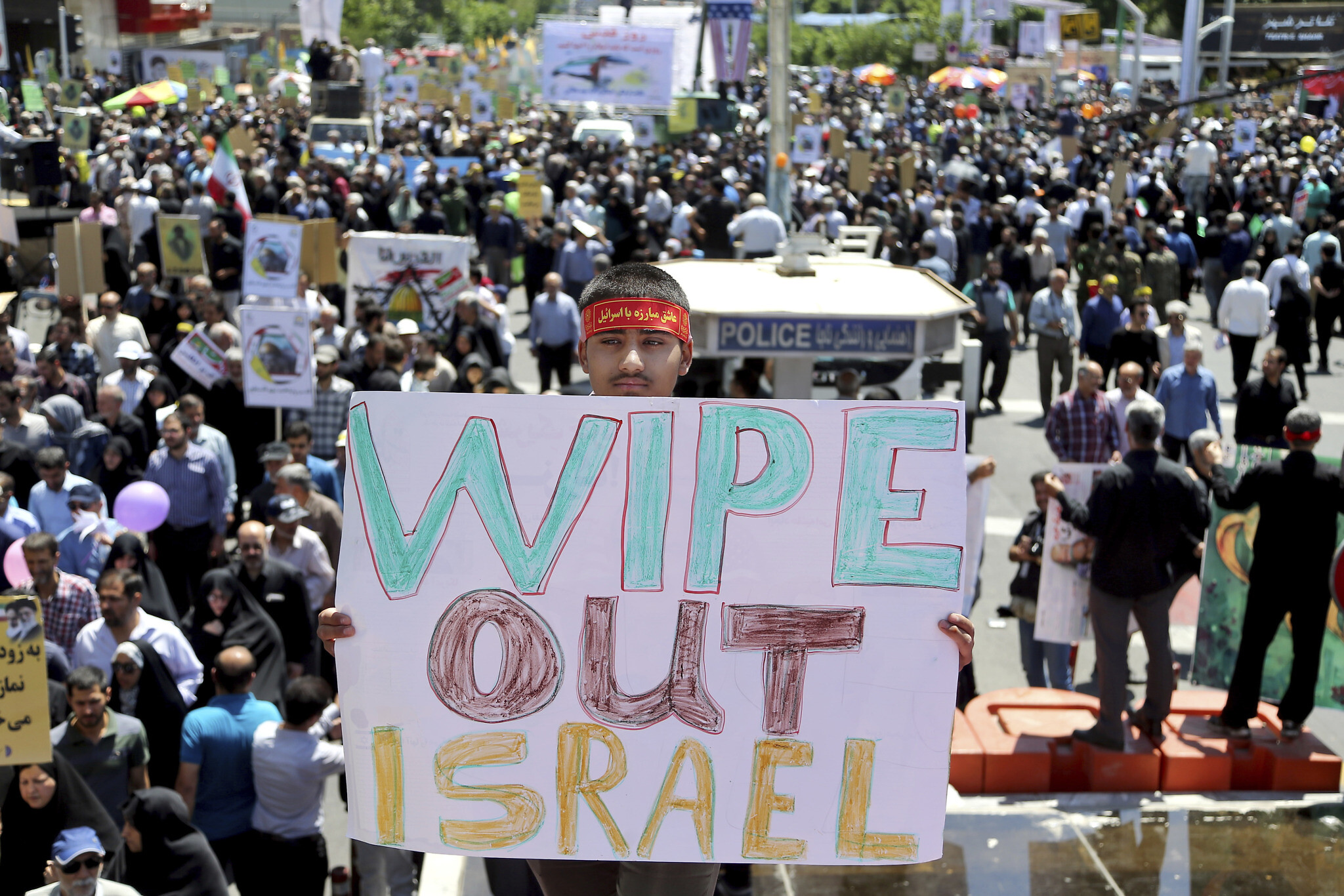
The Mossad spy agency recently foiled planned or attempted Iranian attacks on Israeli diplomatic missions in Europe and elsewhere, according to a report Monday.
The report by Channel 12 said the names of the countries where attacks were prevented remain under censorship, but cooperation with them helped to thwart the attacks.
No other details were available, and no sources were named.
In 2012, Iran and its Lebanese proxy, the terror group Hezbollah, seemingly attempted to carry out a number of attacks against Israeli diplomatic missions in India, Georgia, Thailand, and elsewhere.
Monday’s Channel 12 report also said that an attack on the Natanz nuclear facility in Iran, credited to Israel, had managed to set back Tehran’s uranium enrichment program by two years, citing Western intelligence estimates.
A Middle Eastern intelligence official was quoted Sunday by The New York Times as saying the fire that damaged a building used for producing centrifuges at Natanz was sparked by Israel.
The unidentified official said the blast Thursday at the nuclear complex was caused by a powerful bomb.
A member of Iran’s Islamic Revolutionary Guard Corps also told the American newspaper that an explosive was used, but did not specify who was responsible.

Former defense minister Avigdor Liberman has hinted that the official cited in the report is Mossad chief Yossi Cohen.
Prime Minister Benjamin Netanyahu announced Sunday that he would extend Cohen’s term until June 2021, citing unspecified “security challenges.” The spymaster is famed in the Mossad ranks as an operations man. Under his watch, the Mossad has grown in personnel and budget, and has reportedly focused on espionage operations targeting the Iranian nuclear program.
An Israeli TV report Friday night said that Israel was bracing for a possible Iranian retaliation if it determines that Jerusalem was behind the Natanz explosion.
Defense Minister Benny Gantz played down the speculation on Sunday, saying that not everything that happened there could be blamed on Israel.
Iran admitted Sunday that Natanz incurred “considerable” damage from the fire last week, as satellite pictures appeared to show widespread devastation at the sensitive facility.
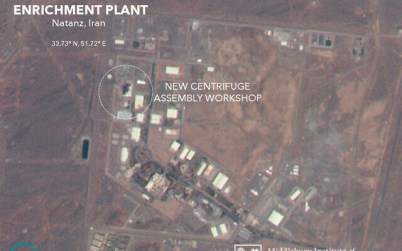
Iran had sought to downplay the damage from the blaze, though analysts said it had likely destroyed an above-ground lab being used to prepare advanced centrifuges before they were installed underground.
“We first learned that, fortunately, there were no casualties as a result of the incident, but financial damages incurred to the site due to incident were considerable,” said Iran’s atomic agency spokesman Behrouz Kamalvandi.
“More advanced centrifuge machines were intended to be built there,” he said, adding that the damage would “possibly cause a delay in development and production of advanced centrifuge machines in the medium term.”
Authorities have pinpointed the source of the fire, but are withholding the information for national security reasons, he said.
The building was first constructed in 2013 for the development of advanced centrifuges, though work was halted there in 2015 under the nuclear deal with world powers, he added.
When the United States withdrew from the nuclear deal, the work there was renewed, Kamalvandi said.
He said that the fire had damaged “precision and measuring instruments,” and that the center had not been operating at full capacity due to restrictions imposed by Tehran’s 2015 nuclear deal with world powers. Iran began experimenting with advanced centrifuge models in the wake of the US unilaterally withdrawing from the deal two years ago.
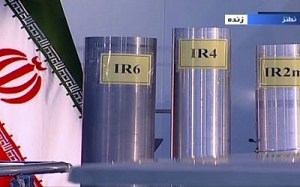
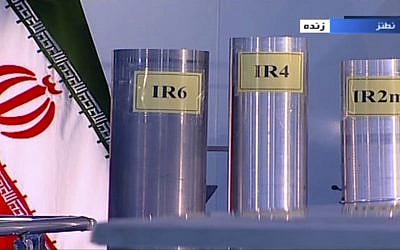
In 2018, Iran showed off IR-2, IR-4 and IR-6 centrifuges at the site, in what was seen as a warning to Europe to stick to the nuclear deal after the withdrawal from the accord by the US. Pictures have also purported to show IR-8 centrifuges at Natanz, though Iranian officials have also said the site could not yet handle the ultra-advanced centrifuges.
The fire was one of a series of mysterious disasters to strike sensitive Iranian sites in recent days, leading to speculation that it may be the result of a sabotage campaign.
Iran long has denied seeking nuclear weapons, though the IAEA previously said Iran had done work in “support of a possible military dimension to its nuclear program” that largely halted in late 2003.
Western concerns over the Iranian atomic program led to sanctions and eventually to Tehran’s 2015 nuclear deal with world powers. The US, under President Donald Trump, unilaterally withdrew from the accord in May 2018, leading to a series of escalating attacks between Iran and the US, and to Tehran abandoning the deal’s production limits.
AP contributed to this report.
Source: Explosion reportedly damages factory in Iran, the latest in series of blasts | The Times of Israel
2 said killed and 3 injured at facility in Kahrizak, south of Tehran; local governor says incident caused by human error as oxygen tanks were being filled
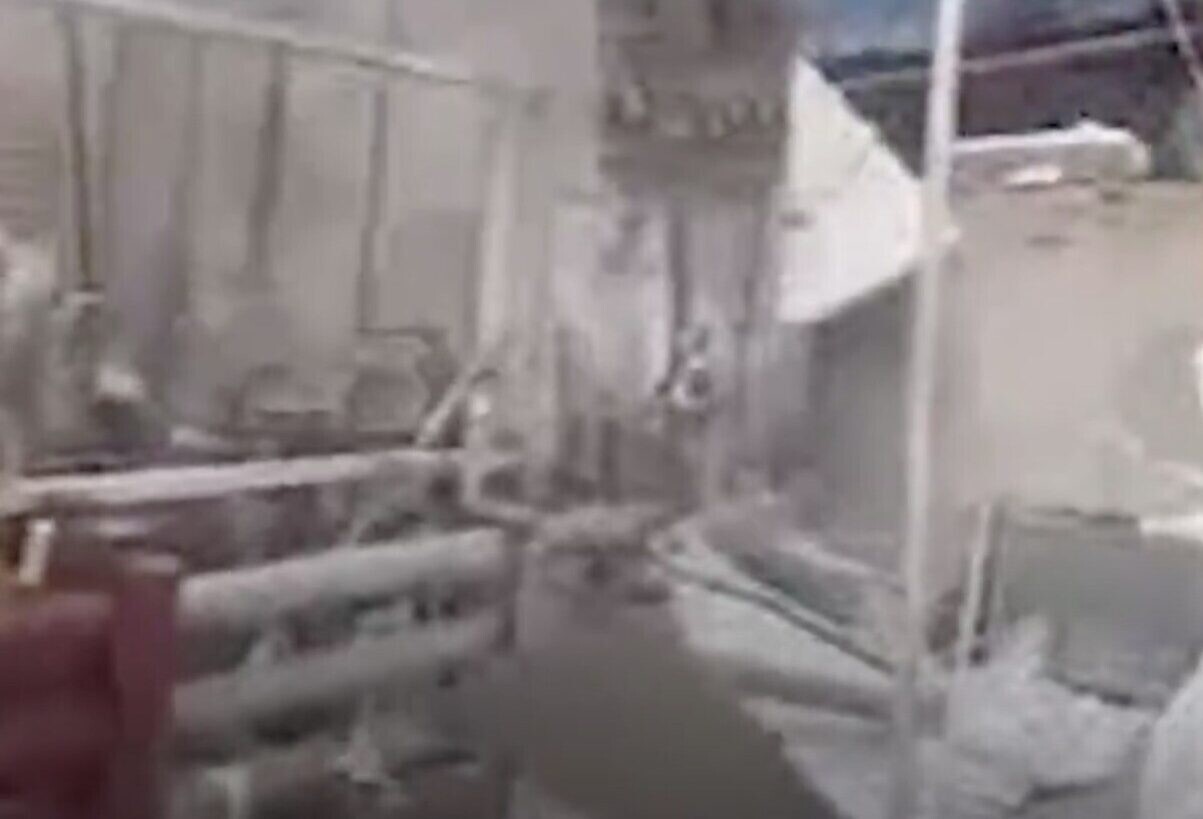
An explosion reportedly damaged a factory south of Tehran in the early hours of Tuesday, the latest in a series of blasts in Iran.
According to Iranian media reports, two people were killed and three were injured in the blast at the Sepahan Bresh factory in the Kahrizak district.
The governor said the explosion also damaged the walls of an adjacent Saipa Press — a car parts company — complex.
Firefighters and paramedics were dispatched to the scene.
The explosion came after a series of mysterious disasters have struck sensitive Iranian sites in recent days, leading to speculation that the earlier incidents may be the result of a sabotage campaign.
Last week an explosion damaged Iran’s Natanz nuclear facility, and a week before that, a large blast was felt in Tehran, apparently caused by an explosion at the Parchin military complex, which defense analysts believe holds an underground tunnel system and missile production facilities.
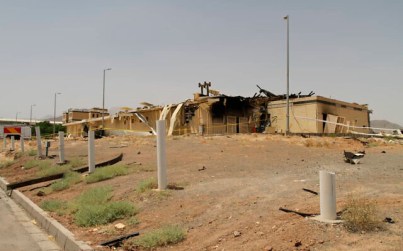
A Middle Eastern intelligence official was quoted Sunday by The New York Times as saying the fire that damaged a building used for producing centrifuges at Natanz was sparked by Israel and was caused by a powerful bomb.
But the unidentified official said Israel was not linked to several other recent mysterious fires in Iran over the past week.
An Israeli TV report Friday night said that Israel was bracing for a possible retaliation from Iran if it determines that Jerusalem was behind the explosion.
Iran admitted Sunday that Natanz incurred “considerable” damage from the fire last week, as satellite pictures appeared to show widespread devastation at the sensitive facility. It had previously sought to downplay the damage from the blaze, though analysts said it had likely destroyed an above-ground lab being used to prepare advanced centrifuges before they were installed underground.
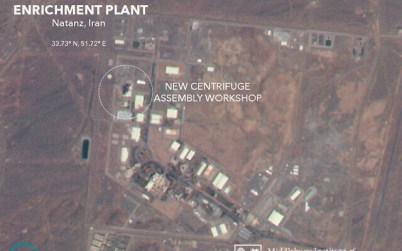
The building was constructed in 2013 for the development of advanced centrifuges, though work was halted there in 2015 under the nuclear deal with world powers, said Iran’s atomic agency spokesman Behrouz Kamalvandi earlier this week. When the United States withdrew from the nuclear deal, the work there was renewed, Kamalvandi said.
Iran long has denied seeking nuclear weapons, though the IAEA previously said Iran had done work in “support of a possible military dimension to its nuclear program” that largely halted in late 2003.
Western concerns over the Iranian atomic program led to sanctions and eventually to Tehran’s 2015 nuclear deal with world powers. The US, under President Donald Trump, unilaterally withdrew from the accord in May 2018, leading to a series of escalating attacks between Iran and the US, and to Tehran abandoning the deal’s production limits.
AP contributed to this report.
Source: Natanz nuclear site explosion looking worse for Iran amid internal crisis – The Jerusalem Post
For Iran this embarrassment is compounded by an increasing crescendo of articles that not only highlight the destruction at the site but also point fingers at who did it.
Iran had already begun to shift focus from an “accident” as it first claimed the mysterious explosion was on July 2, to a more serious incident. Iran had to weigh the consequences of misleading international atomic energy inspectors and officials. After all, if Iran said it as an accident and then said it was attacked, that might make Tehran look incompetent. Having shot down a civilian airliner in January the regime already looks incompetent.
For now Iran is concerned about the embarrassment of the Natanz incident. ISNA, Fars News, Tasnim and other Iranian media that are linked to the state or state-run are not pointing fingers or discussing the incident. Iran’s message was that the explosion was an accident and that Iran would investigate and determine if it was intentional and then Iran would weigh its response.
Neighboring countries are holding their breath. Kuwait’s media has stopped covering the incident and Gulf media is also waiting to see what may happen. Iran is in the middle of a series of political crises. The Foreign Minister Javad Zarif was in parliament over the weekend where he was insulted and heckled. He has been called “liar” by key media and officials. Zarif always projects an air of happy arrogance abroad where he feels most comfortable and is often worshiped by western diplomats. But at home Zarif can’t pull the wool over everyone’s eyes all the time, and he has been castigated. In addition, the speaker of parliament, Mohammed Bagher Qalibaf looks to play an increasing role in foreign policy. He has been speaking with Palestinian factions recently, urging hatred of Israel. Iran has also triggered the nuclear deal dispute mechanism, oddly just a day after the Natanz incident.
To understand Iran’s Natanz reaction we must thus understand that there is internal political chaos bubbling under the surface in Iran. There is economic uncertainty. There are a variety of problems in Iran and the nuclear drive to add centrifuges and gas and all of this is just a piece of the puzzle. Iran’s IRGC is itching for a fight. It has lost its key official, Quds Force head Qasem Soleimani in a January US airstrike. It’s new Quds Force commander Esmail Ghaani is an expert on Afghanistan, not on Israel and the Arab world. Yet he was in Syria in June to oversee Iran’s regional game plan. But Iran knows that its ally in Syria is undergoing an economic disaster from US sanctions, and its Hezbollah ally in Lebanon is also facing economic chaos in Beirut. Iran’s only real victory is on the world stage where Russia and China want to help it end an arms embargo. Iran would like that to happen so it can continue to funnel weapons to groups like the Houthis in Yemen. Even on that file Iran has seen two weapons shipments intercepted by the US Navy in the last year.
Natanz is important and the increasing spotlight put on the damage and accusations of who did it will rile up Iran’s IRGC and demands for a response. But Iran will have to choose carefully its next moves in a region that is a powder keg and one where it is trying to open up diplomatic avenues.
Source: Israel was behind blast at Iran nuclear site, Mideast intel official tells NYT | The Times of Israel
Officials says powerful bomb was used to damage building involved in centrifuge production at Natanz, denies Israeli connection to other recent fires in the Islamic Republic
A fire that damaged a building used for producing centrifuges at Iran’s Natanz nuclear site was sparked by Israel, a Middle Eastern intelligence official told the New York Times on Sunday.
The unidentified official said the blast Thursday at the Natanz nuclear complex was caused by a powerful bomb.
The Middle Eastern intelligence official said Israel wasn’t linked to several other recent mysterious fires in Iran over the past week.
The report came as Iran admitted that Natanz incurred “considerable” damage from the fire last week, as satellite pictures appeared to show widespread devastation at the sensitive facility.
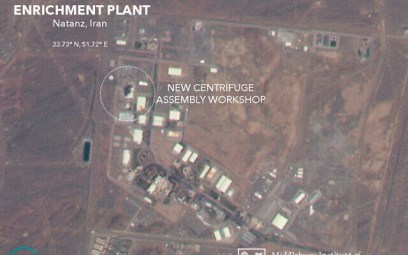
Iran had sought to downplay the damage from the blaze, though analysts said it had likely destroyed an above-ground lab being used to prepare advanced centrifuges before they were installed underground.
“We first learned that, fortunately, there were no casualties as a result of the incident, but financial damages incurred to the site due to incident were considerable,” said Iran’s atomic agency spokesman Behrouz Kamalvandi.
He confirmed that the damaged building was a centrifuge assembly center and not an “industrial shed,” as earlier claimed.
Authorities have pinpointed the source of the fire, but are withholding the information for national security reasons, he said.
The building was first constructed in 2013 for the development of advanced centrifuges, though work was halted there in 2015 under the nuclear deal with world powers, he added.
When the US withdrew from the nuclear deal, the work there was renewed, Kamalvandi said.
He said that the fire had damaged “precision and measuring instruments,” and that the center had not been operating at full capacity due to restrictions imposed by Tehran’s 2015 nuclear deal with world powers. Iran began experimenting with advanced centrifuge models in the wake of the US unilaterally withdrawing from the deal two years ago.
The photos showed most of the building flattened with debris scattered around the perimeter, indicating that it had been targeted in an explosion.
Experts assess that the damage from the apparent explosion has set back Iran’s nuclear program by a year, according to Israel’s Channel 13 news. The network said Sunday that the lab in Natanz where advanced centrifuges are assembled had been destroyed.
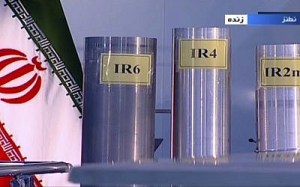
In 2018, Iran showed off IR-2, IR-4 and IR-6 centrifuges at the site, in what was seen as a warning to Europe to stick to the nuclear deal after the withdrawal from the accord by the US. Pictures have also purported to show IR-8 centrifuges at Natanz, though Iranian officials have also said the site could not yet handle the ultra-advanced centrifuges.
The fire was one of a series of mysterious disasters to strike sensitive Iranian sites in recent days, leading to speculation that it may be the result of a sabotage campaign.
Also Sunday, Prime Minister Benjamin Netanyahu announced that he would extend the term of Mossad chief Yossi Cohen until June 2021, citing unspecified “security challenges.”
The spymaster is famed in the Mossad ranks as an operations man. Under his watch, the Mossad has reportedly grown in personnel and budgets and has focused on espionage operations targeting the Iranian nuclear program.
Defense Minister Benny Gantz played down the speculation earlier Sunday, saying that not everything that happened there could be blamed on Israel.
On Saturday, an explosion reportedly damaged a power plant in Ahvaz, Iran, which was later followed by reports of a chlorine gas leak at a petrochemical center in southeast Iran.
The previous week a large blast was felt in Tehran, apparently caused by an explosion at the Parchin military complex, which defense analysts believe holds an underground tunnel system and missile production facilities.
The Fars news agency, which is close to the country’s ultra-conservatives, initially reported that the Parchin blast was caused by “an industrial gas tank explosion” near a facility belonging to the defense ministry. It cited an “informed source” in saying the site of the incident was not related to the military.
However, this was largely disputed by defense analysts as satellite photographs of the Parchin complex emerged showing large amounts of damage at the site.
Iran long has denied seeking nuclear weapons, though the IAEA previously said Iran had done work in “support of a possible military dimension to its nuclear program” that largely halted in late 2003.
Western concerns over the Iranian atomic program led to sanctions and eventually to Tehran’s 2015 nuclear deal with world powers. The US under President Donald Trump unilaterally withdrew from the accord in May 2018, leading to a series of escalating attacks between Iran and the US, and to Tehran abandoning the deal’s production limits.
Source: With Iran in its sights, Israel launches new spy satellite into orbit | The Times of Israel
Defense Ministry says Ofek-16, an ‘optoelectronic reconnaissance satellite with advanced capabilities,’ blasted off at 4 a.m., undergoing tests after entering orbit

Israel launched a new spy satellite into orbit from a launchpad in the center of the country early Monday morning, the Defense Ministry said.
“The Defense Ministry and Israel Aerospace Industries successfully launched into space the reconnaissance satellite ‘Ofek 16,’ which entered into its orbit,” the ministry said in a statement.
Israel is one of a small number of countries in the world that operate reconnaissance satellites, giving it advanced intelligence-gathering capabilities. As of April, this cadre included Iran, which successfully launched a spy satellite into orbit after years of failed attempts.
“Our network of satellites lets us watch the entire Middle East — and even a bit more than that,” said Shlomi Sudari, the head of IAI’s space program.
The reconnaissance satellite was fired into space at 4 a.m. using a Shavit launch vehicle that took off from a launchpad in the Palmachim air base in central Israel, the ministry said.
The Ofek-16 is an “optoelectronic reconnaissance satellite with advanced capabilities,” the ministry said. It is the latest satellite in the Ofek series to be launched into space, following the Ofek-11, which entered orbit in 2016.
According to Sudari, the Ofek-16 is the “brother” of the Ofek-11, containing many of the same capabilities, along with a few “light improvements, in terms of precision.” Defense Ministry officials refused to comment on the jump in the name, from Ofek-11 to Ofek-16.
“The Ofek-16 is highly advanced, including breakthrough ‘blue and white’ technology that serves our defense interests,” Sudari said, using a term that refers to the colors of the Israeli flag to signify domestically produced capabilities.
Though the main function of the new spy satellite will likely be monitoring Iran and developments in its nuclear and missile programs, defense officials denied any symbolism in conducting the launch amid growing reports that Israel was responsible for a number of recent explosions in the Islamic Republic, including one at a uranium enrichment facility and another at a missile production plant.
“The timing was planned far in advance,” Sudari said.
Sudari said the Ofek-16 would operate on a low-Earth orbit, similar to the other Ofek satellites.
“Under the original launch plan, the [Ofek-16] satellite entered orbit around the Earth and began to beam back data,” the Defense Ministry said early on Monday.

Engineers from the ministry and Israel Aerospace Industries began performing a series of tests to ensure that the satellite was operating correctly. The ministry said these checks would continue “until the satellite enters full operation shortly.”
Amnon Hariri, the head of the Defense Ministry’s Space Department, beamed that the launch was “eloquent,” with no hiccups.
Once operational, the satellite will be operated by the Israel Defense Forces’ Unit 9900, a visual intelligence detachment that controls all of the nation’s spy satellites.
“The State of Israel’s technological and intelligence superiority is the cornerstone of its security,” Defense Minister Gantz wrote on Twitter. “We’ll continue to strengthen and fortify Israel’s strength on every front and every place.”
This was the first launch of an Israeli spy satellite into space since the Ofek-11 in September 2016.
The Ofek-11 experienced initial technical issues shortly after launch, but engineers on the ground were able to stabilize it and get it working.
According to the Defense Ministry, there were no such issues with the Ofek-16.
Last year, Israel also put the Amos-17 communications satellite into orbit, using a SpaceX rocket that was launched from Cape Canaveral, Florida.
Israel launched its first satellite, the Ofek 1, into space in 1988, footage of which was released by the Defense Ministry in 2018.
It was not until seven years later, in 1995, that Israel launched a reconnaissance satellite into space capable of photographing the Earth.
Times of Israel staff contributed to this report.
Incident in city of Ahvaz in southwest follows mysterious explosions at nuclear facility and site near Tehran, which prompted regime to issue warning to Israel and US

An explosion reportedly damaged a power plant in the Iranian city of Ahvaz on Saturday, the latest in a series of mysterious blasts in the country that prompted Iran to issue a warning to Israel and the US earlier this week.
Persian and Arabic media reported an explosion and fire at the Zargan power plant in Ahvaz in Iran’s southwest, near the Persian Gulf and the Iraqi border.
Videos posted online showed a column of smoke at the facility and workers filing past a fire truck.
Iran’s IRNA news agency later reported that the fire at the plant had been brought under control. It said the blaze was ignited when a transformer exploded.
Mohammad Hafezi, the power plant’s health and safety manager, told IRNA the cause of the fire was under investigation.
A few hours later on Saturday, IRNA said a chlorine gas leak at a petrochemical center in southeast Iran sickened 70 workers.
Most of the workers at the Karun petrochemical center in the city of Mahshahr in southeast Khuzestan province were released after undergoing medical treatment.
An Israeli TV report Friday night said that Israel was bracing for a possible Iranian retaliation as officials in Tehran suggested on Friday that the mystery fire and explosion at Natanz could have been caused by an Israeli cyberattack.
The report said the attack “destroyed” a laboratory where Iran was developing advanced centrifuges for faster uranium enrichment, and a Kuwaiti report quoted an unnamed source assessing that the strike set back the Iranian nuclear program by two months.
Three Iranian officials told the Reuters news agency they believed the incident at the Natanz enrichment facility early Thursday was the result of a cyberattack, and two of them said Israel could have been behind it, but offered no evidence.
But Amos Yadlin, the head of the Institute for National Security Studies, and a former head of IDF military intelligence, tweeted Friday that, “According to foreign sources, it appears that the prime minister focused this week on Iran rather than [his plan for West Bank] annexation. This is the policy I’ve been recommending in the last few weeks.”
Added Yadlin: “If Israel is accused by official sources then we need to be operationally prepared for the possibility of an Iranian reaction (through cyber, firing missiles from Syria or a terror attack overseas).”
Officially, Iran reported an “accident” occurred Thursday at the Natanz nuclear complex in central Iran, saying there were no casualties or radioactive pollution. But top generals also said Iran would respond if the incident turned out to be a cyberattack.
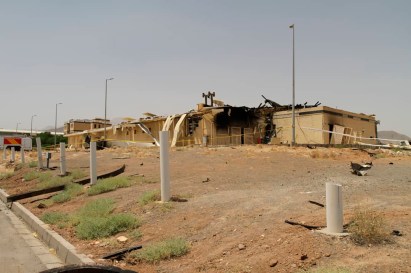
Israel’s Channel 13 TV military analyst Alon Ben-David said Friday evening that the attack hit “the facility where Iran develops more advanced centrifuges — what are meant to be the next stage of the nuclear program, to produce enriched uranium at a far faster rate. That facility yesterday took a substantial hit; the explosion destroyed this lab.
“Those were centrifuges that were supposed to be installed underground at the Natanz facility; they were intended to replace the old centrifuges and produce a lot more enriched uranium, a lot more quickly,” he added. “They suffered a blow. It has to be assumed that at some stage, they will want to retaliate.”
Ben-David said Israel was “bracing” for an Iranian response, likely via a cyberattack. In an April cyberattack attributed by western intelligence officials to Iran, an attempt was made to increase chlorine levels in water flowing to residential Israeli areas.
Hours after the Natanz fire and reported explosion on Thursday, Iran’s state news agency IRNA published an editorial warning that “if there are signs of hostile countries crossing Iran’s red lines in any way, especially the Zionist regime (Israel) and the United States, Iran’s strategy to confront the new situation must be fundamentally reconsidered.”
IRNA also reported that unnamed Israeli social media accounts had claimed the Jewish state was responsible for the “sabotage attempts.” It stressed that Iran had tried “to prevent escalations and unpredictable situations while defending its position and national interests.”
Natanz, located some 250 kilometers (155 miles) south of Tehran, includes underground facilities buried under some 7.6 meters (25 feet) of concrete, which offers protection from airstrikes.
There was “no nuclear material (at the damaged warehouse) and no potential of pollution,” the spokesman for Iran’s Atomic Energy Organization Behrouz Kamalvandi told state television.
Kamalvandi said no radioactive material or personnel were present at the warehouse within the Natanz site in central Iran, one of the country’s main uranium enrichment plants.
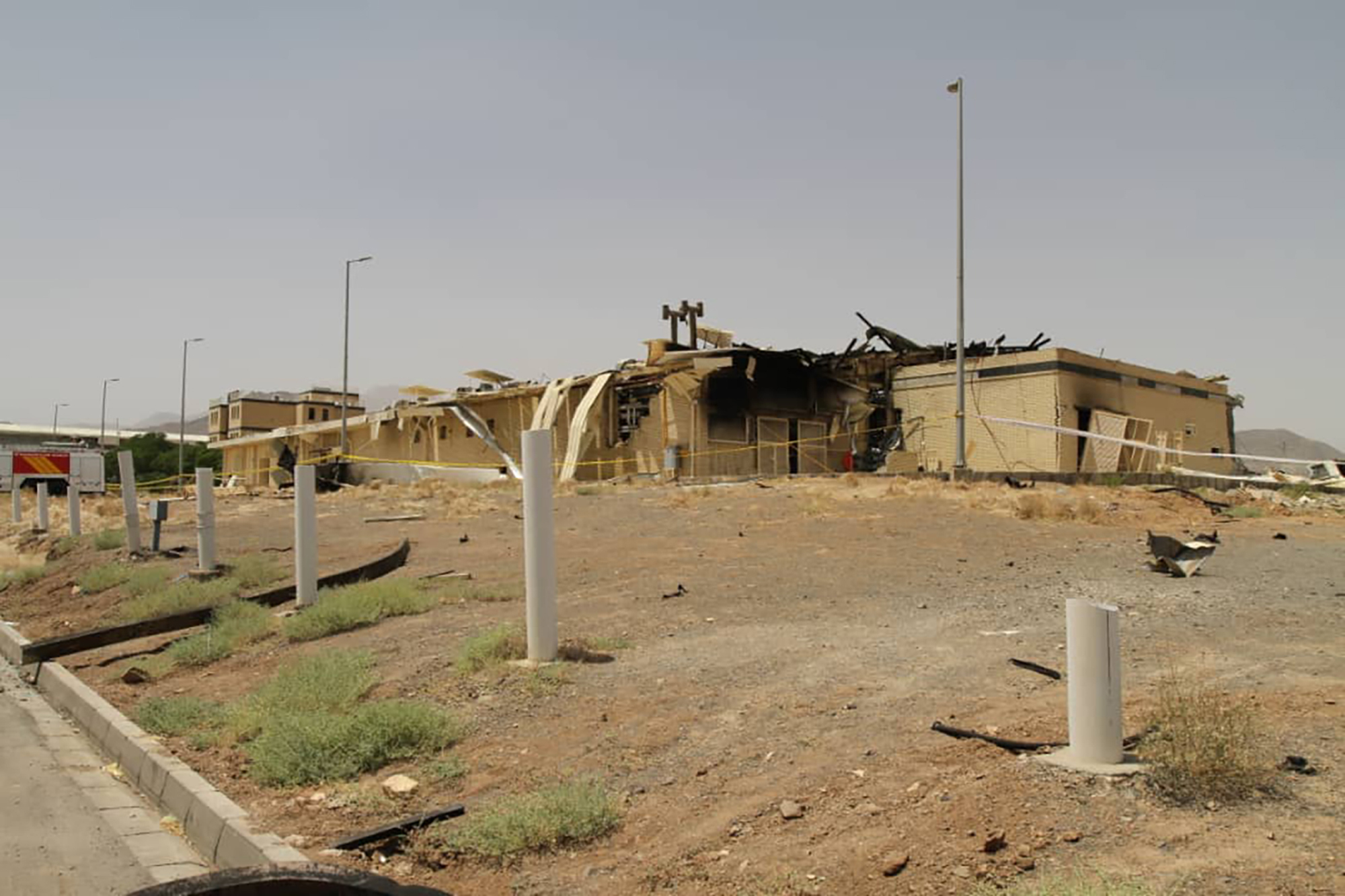
The Iranian Atomic Energy Organization released a photo purportedly from the site, showing a one-story building with a damaged roof, walls apparently blackened by fire and doors hanging off their hinges as if blown out from the inside.
The Fars news agency, which is close to the country’s ultra-conservatives, initially reported that the Parchin blast last week was caused by “an industrial gas tank explosion” near a facility belonging to the defense ministry. It cited an “informed source” and said the site of the incident was not related to the military.
However, this was largely disregarded by defense analysts as satellite photographs of the Parchin military complex emerged showing large amounts of damage at the site.
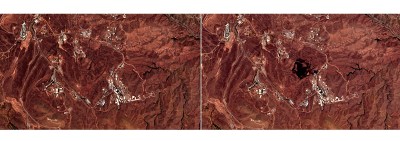
Later, Iranian Defense Ministry spokesman Davood Abdi blamed the blast on leaking gas that he did not identify and said no one was killed in the explosion.
Satellite photos of the area, some 20 kilometers (12.5 miles) east of downtown Tehran, showed hundreds of meters (yards) of charred scrubland not seen in images of the area taken in the weeks ahead of the incident. The building near the char marks resembled the facility seen in the state TV footage.
The gas storage area sits near what analysts describe as Iran’s Khojir missile facility. The explosion appears to have struck a facility for the Shahid Bakeri Industrial Group, which makes solid-propellant rockets, said Fabian Hinz, a research associate at the Middlebury Institute of International Studies at Monterey.
The Washington-based Center for Strategic and International Studies identified Khojir as the “site of numerous tunnels, some suspected of use for arms assembly.” Large industrial buildings at the site visible from satellite photographs also suggest missile assembly being conducted there.
Iranian officials themselves also identified the site as being home to a military base where the International Atomic Energy Agency previously said it suspects Iran conducted tests of explosive triggers that could be used in nuclear weapons.
Iran long has denied seeking nuclear weapons, though the IAEA previously said Iran had done work in “support of a possible military dimension to its nuclear program” that largely halted in late 2003.
Western concerns over the Iranian atomic program led to sanctions and eventually to Tehran’s 2015 nuclear deal with world powers. The US under President Donald Trump unilaterally withdrew from the accord in May 2018, leading to a series of escalating attacks between Iran and the US, and to Tehran abandoning the deal’s production limits.




 anneinpt
 artaxes
 danmillerinpanama
 davidking1530
 Peter Hofman
 Joseph Wouk
 Peter
Peter Louisiana Steve
 WarSclerotic
Recent Comments