Author Archive

Israely Navy’s New SA’AR 6 Corvette succesfully passed its first test drive

August 6, 2020

https://www.navyrecognition.com/index.php/news/defence-news/2020/march/8157-israely-navy-s-new-sa-ar-6-corvette-succesfully-passed-its-first-test-drive.html

POSTED ON THURSDAY, 12 MARCH 2020 13:41


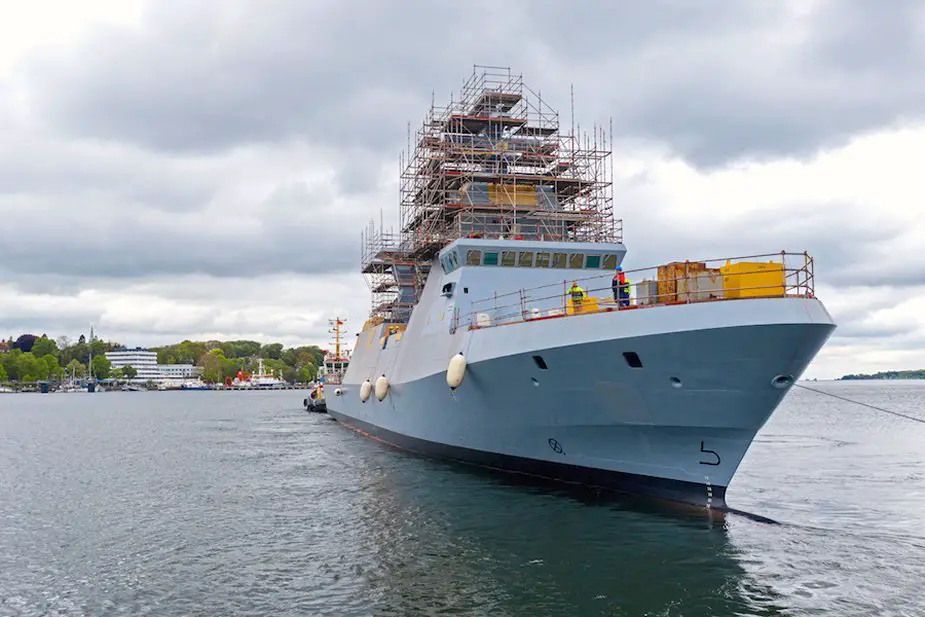
Kiel shipbuilders can build corvettes in record time. Just two years and a month after construction began, the first of the four new corvettes of the Israeli Navy successfully passed its first test drive on the Baltic Sea last Tuesday and Wednesday.


Israel Navy’s first SA’AR 6-class corvette INS Magen (Picture source: Twitter account: Defensa_Israel)


The first SA’AR-6 class corvette was named INS Magen in May 2019. German shipbuilder ThyssenKrupp Marine Systems (TKMS) acts as General Contractor to build four corvettes of this class for the Israeli Navy.

Each ship will carry an Oto Melara 76 mm main gun, two Typhoon Weapon Stations, 40 Barak 8 naval surface-to-air missiles to intercept and destroy all types of airborne threats such as anti-ship missiles, cruise missiles, combat aircraft, helicopters and unmanned aerial systems (UAS).

The ships will also be fitted with 16 anti-ship missiles such as Gabriel, RGM-84 Harpoon and RBS-15 Mk 3 to attack enemy ships and boats. The armament will also include two torpedo launchers for MK54 Lightweight Torpedo, and two 30mm Rafael Typhoon remote weapon stations.

The four corvettes were christened INS Magen, INS Oz, INS Independence and INS Victory in April 2018. The vessels are expected to be commissioned by the Israeli Navy between 2020 and 2022.

The warships will be used to conduct patrol duties in Israel’s Exclusive Economic Zone (EEZ) to protect the country’s gas reserves, shipping lanes and other strategic assets in the Mediterranean.

Israely Navys New SAAR 6 Corvette succesfully passed its first test drive 925 001

Israel Navy’s first SA’AR 6-class corvette INS Magen at the Kiel shipyard (Picture source: Thyssenkrupp Marine Systems)

Merkava Tank History and Review

August 6, 2020

The Merkava has been the main battle tank for Israel’s Defense Forces since 1979. Though originally lacking in mobility and sheer armor protection, the Merkava has a unique design that greatly enhances the survivability of its crew. In this video, I talk about the events leading up to the Merkava’s development, how it was designed, the problems in encountered, and what my overall opinion on it is.

Thans to Spookston

‘We’ll light up Tel Aviv…with our rockets’: Lebanese rebuff Israeli solidarity

August 6, 2020

https://www.timesofisrael.com/theyll-destroy-our-country-lebanese-unmoved-by-tel-aviv-show-of-solidarity/

‘They’re raising our flag now, but soon enough they’ll destroy our country,’ writes one Twitter user, as Tel Aviv city hall lights up with Lebanese flag after Beirut disaster

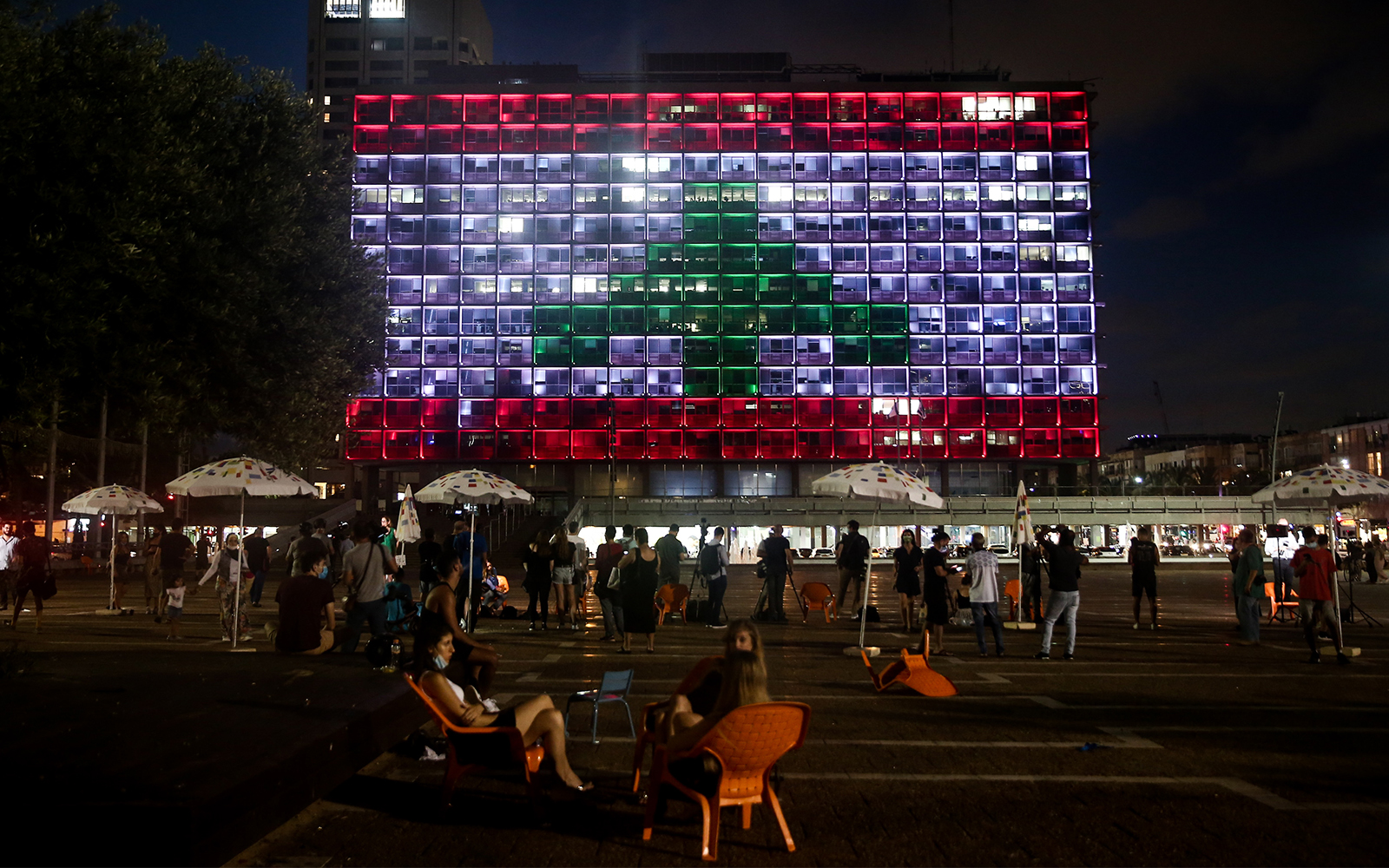
By TOI STAFFToday, 11:31 amUpdated at 12:57 pm  1Tel Aviv municipality in Rabin square is lit up with the Lebanese flag in solidarity with the victims of the the Beirut port explosion, August 5, 2020. (Miriam Alster/Flash90)

If you thought the backlash to the Tel Aviv municipality projecting a Lebanese flag on the side of its building was strong inside Israel, try the backlash inside Lebanon.

Many Lebanese took to social media on Wednesday to express their ire over the attempted gesture of solidarity by the Tel Aviv municipality with the victims of the previous night’s Beirut port explosion. The blast, which was apparently caused by the ignition of 2,750 metric tons of ammonium nitrate, has claimed at least 135 lives, and left over 5,000 injured and 300,000 homeless.

“Sure, they’re raising our flag now, but soon enough they’ll destroy our country and violate our country’s sovereignty,” wrote one Twitter user.

Israel announced Tuesday night that it had reached out to offer humanitarian aid to Lebanon after the massive blast rocked Beirut. The disaster has pushed Lebanon, already laboring under an unprecedented economic crisis, to the brink, and hospitals have struggled to cope with the influx of injured.

“This evening we will light up City Hall with the flag of Lebanon. Humanity comes before any conflict, and our heart is with the Lebanese people following the terrible disaster that befell them,” Tel Aviv Mayor Huldai wrote on Twitter.

Yair Netanyahu, the son of Prime Minister Benjamin Netanyahu, tweeted that he was opposed to displaying the colors, falsely claiming that it was illegal. The Prime Minister’s office, however, sent out a photo of the Lebanese flag, accompanied by a statement affirming “support [for] the Lebanese people.”

Many other countries, including Jordan, Iran, and the United Arab Emirates, also lit up major public buildings to express solidarity with the victims of the blasts.https://platform.twitter.com/embed/index.html?dnt=true&embedId=twitter-widget-0&frame=false&hideCard=false&hideThread=false&id=1291077104940048388&lang=en&origin=https%3A%2F%2Fwww.timesofisrael.com%2Ftheyll-destroy-our-country-lebanese-unmoved-by-tel-aviv-show-of-solidarity%2F&siteScreenName=timesofisrael&theme=light&widgetsVersion=223fc1c4%3A1596143124634&width=550px

Using the hashtag “We don’t want it,” many Lebanese expressed their rejection of both Israeli solidarity and offers of medical aid. Some also shared remarks by politician Moshe Feiglin, leader of the Zehut party, who had said that the Beirut port blast was a “wonderful celebration.”

“As a Lebanese citizen, it disgraces me for Tel Aviv to show Lebanon solidarity. Anyone who circulates those photos I will consider a collaborator,” another user wrote of the brightly lit municipality building.

ٍSome users — especially those supportive of Hezbollah — said that they hoped for violence.

“We will be the ones to light up Tel Aviv — with our rockets. Tel Aviv is already lit by the ghost of Imad and Jihad [Mughniyeh],” wrote Mohammad Ali Sakr, referring to two leaders in the terror group — a father and his son — allegedly killed by Israel.

“We don’t want anything from you, you are our enemies… you who killed the children of Qana,” wrote Saad Dai’ri. Around 106 Lebanese civilians died in the 1996 incident in the village of Qana, when Israel shelled a United Nations position in an attempt to strike back at Hezbollah fire. The prime minister at the time, Shimon Peres, expressed “bitter surprise” that civilians were in the area.

Others posted photos of Ramallah, where the Palestinian Authority’s central broadcasting station had also been lit by a projection of the Lebanese flag.

Israel has fought two major wars against Lebanese forces, which many in the country recall painfully. In 1982, Israel invaded after repeated cross-border attacks by the Palestinian Liberation Organization, and ended up occupying a strip of southern Lebanon until 2000. In 2006, Israeli forces entered Lebanon again following the abduction of two Israeli soldiers by Hezbollah.

“Israel is the largest source of martyrs and wounded in all of Lebanon…it is absolute evil. Working with it is forbidden,” wrote Jamal Chaiito, posting photos of First Lebanon War destruction and the Qana incident.

Some appeared to disagree, saying that they welcomed Israeli aid.

“But we do want it — peace, that is. Screw Iranian ideas,” wrote Hussein Nasr, who describes himself as a resident of south Lebanon.

Tel Aviv has in the past lit up its City Hall with the colors of other countries going through disasters. The municipality’s tribute to Egypt’s flag after an attack on Christian Copts in May 2017 was the first time the gesture was made toward an Arab country, although unlike Lebanon, Egypt has a peace accord and ties with Israel.

Israeli Navy – Squadron 916 – Anti Gaza terrorists

August 4, 2020

Thanks to niz196

A day with Patrol Squadron 916 on their “Devorot” FAC (Fast Attack Craft) made in Israel and equipped with Jet propulsion, sophisticated detection means, mighty weapon and highly trained crew. The craft name SHALDAG (the hebrew word for the kingfisher bird)

This is the main Naval unit combatting Gaza terrorist’s יום עם לוחמי פלגת הבט”ש הדרומי 916 מבסיס חיה”י באשדוד על ספינות השלדג שלהם.

How Israel’s Navy protects my home in Eilat on the Red Sea

August 4, 2020

I served in this unit in Sharem El Sheik and Eilat in the 80’s.

IDF Neutralizes Terror Cell Attempting Attack Along Israel-Syria Border – YouTube

August 4, 2020

Israel strikes Hamas sites in Gaza following rocket fire

August 3, 2020

https://www.jpost.com/breaking-news/palestinians-idf-strikes-gaza-in-response-to-tonights-rocket-launch-637258


Rocket fire came as city of Sderot inaugurated drive-in movie theater and shortly after change of command of the Gaza Divison.

By ANNA AHRONHEIM   AUGUST 3, 2020 07:50

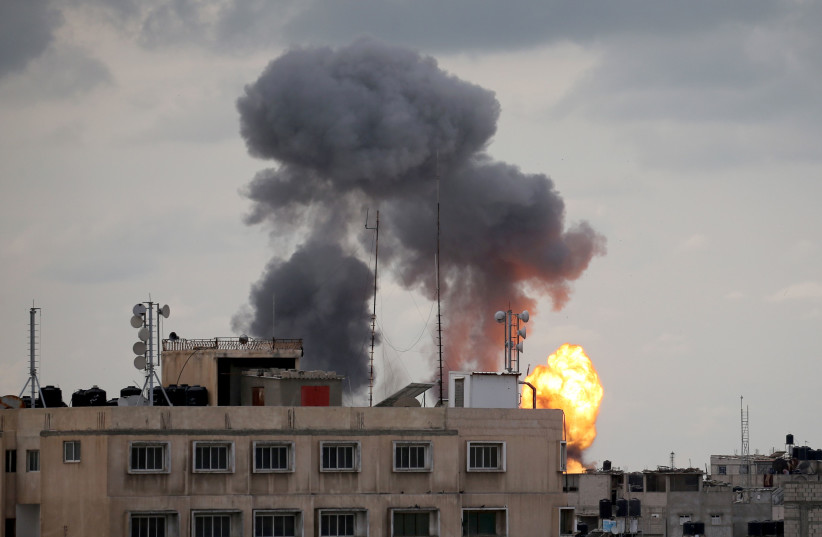
Flame and smoke are seen during an Israeli air strike in the southern Gaza Strip (photo credit: IBRAHEEM ABU MUSTAFA/REUTERS)

Flame and smoke are seen during an Israeli air strike in the southern Gaza Strip(photo credit: IBRAHEEM ABU MUSTAFA/REUTERS)

Israel Air Force jets struck several Hamas sites in the central and southern Gaza Strip early Monday morning after a rocket was fired from the coastal enclave towards southern Israel, as residents of the town of Sderot took in a Drive-Through movie.The military said warplanes hit a cement factory used in the construction of tunnels as well as “underground facilities” used by Hamas.Palestinian media said jets struck “resistance sites” near Khan Younis and Rafah.The retaliatory strikes came several hours after a rocket was fired from northern Gaza and was intercepted by the Iron Dome missile defense system. It was the first in almost a month.“One [rocket] launch was detected from the territory of the Gaza Strip toward Israel, which was intercepted by aerial defense soldiers,” the IDF Spokesperson’s Unit said in a statement.Sirens were activated in Sderot and surrounding communities of Ibim, Erez, Or Haner and Nir Am that border the northern Gaza Strip in the Sha’ar Hanegev region around 9PM, sending thousands of Israelis to bomb shelters.The city of Sderot said that the sirens sounded during the inauguration of the city’s Drive-In Theater complex where dozens of cars were parked as residents took in a movie.

While there were no physical injuries, several vehicles were damaged from shrapnel from the Iron Dome interceptor which fell on the city’s streets.The rocket also came shortly after the change of command of the Gaza Division where Brig.-Gen. Eliezer Toledano was replaced by Brig.-Gen. Nimrod Aloni after two years in the position.“During my tenure as commander of the Gaza Division, the leaders of the terrorist organizations, Hamas and Islamic Jihad, pursued a strategy of intimidation and panic, firing rockets and mortar shells aimed at Israeli citizens,” Toledano said at the ceremony. “Hamas does not care about the children of the Gaza Strip. They must stop digging tunnels like wild animals and invest the concrete in building infrastructure for the homeless. They must stop manufacturing rockets and use pipes to build proper water and sewage infrastructure for their children. They must stop sowing launchers and harvest rockets and sow wheat and harvest grain,” he added.The head of the Southern Command, Maj.-Gen. Hertz Halevy warned that the IDF cannot guarantee peace in the area but that it will do everything it can to protect the quality of life of the residents of southern Israel.“We do not guarantee peace in an area where there are reasons to fight, we know what is on the other side, we promise to do everything to protect and to always be ready for any action that may be required against the Gaza Strip,” he said. “It is our duty, together with the civilian leadership, to allow the Gaza Envelope area to continue to prosper and flourish regardless of the situation in Gaza itself.”

Syrian cell entered Israeli territory to plant bomb in unmanned army post — IDF

August 3, 2020

https://www.timesofisrael.com/syria-cell-entered-israeli-territory-in-bid-to-attack-unmanned-army-post-idf/

Army confirms all four people would-be bombers killed, but says not yet clear who they were working for; spokesman indicates Israel may retaliate against Damascus

By JUDAH ARI GROSSToday, 8:24 am  0Volume 90%

Four militants crossed into Israeli territory from Syria and planted improvised explosive devices inside an unmanned Israel Defense Forces outpost along the Syrian border late Sunday night, the military said, as it revealed new details about the overnight incident.

Soldiers from the Maglan special forces unit and unspecified aircraft opened fire at the four suspects, some of whom were armed, killing them all, IDF Spokesperson Hidai Zilberman told reporters Monday morning. The army also released video of the incident, showing figures approaching a fence near the border and being hit with a missile.

No Israeli soldiers were injured.

The spokesman said the military did not yet know which military or terrorist organization the men belonged to, but that the IDF was looking into the matter.

He said it was not immediately clear if this was an isolated incident or if it was tied to the ongoing tensions with Hezbollah, which has vowed to carry out some kind of attack on Israel in retaliation for the death of one of its fighters in an airstrike in Syria last month that it attributed to the Jewish state. There has been no comment from the Lebanon-based group.

“I believe in the coming days we’ll know better about what organization they were a part of,” Zilberman said.

The spokesman said the military was working on “neutralizing” the area where the four militants were operating — disarming the bombs they planted — so that the explosives could be studied in order to determine to  what organization the men belonged.

Israeli army forces seen stationed near the border between Israel and Lebanon in the Golan Heights on July 27, 2020. (David Cohen/Flash90)

Zilberman said regardless of which group was behind the attempted attack the military ultimately holds the Syrian government responsible for the incident and indicated it was considering retaliating against Damascus in some way, as it has in the case of previous attacks that came from Syria, irrespective of which group carried them out.

The spokesman said the military was not changing its level of alertness in light of the attempted attack and would remain with reinforcements along the Syrian and Lebanese borders for the time being.

“We will continue to be on alert for many more days. We have a lot of patience,” he said.

The four suspects were under IDF surveillance over the course of several hours before the troops opened fire, being monitored by female soldiers operating powerful security cameras, known in Hebrew as Tatzpitaniyot.

The men were first seen approaching the area at around 8 p.m., and they crossed the official Israel-Syria border — but not the security fence separating the two countries, which lies a few meters west — some three hours later.

“They crossed the ‘alpha line’ so they were totally within Israeli territory,” Zilberman said, referring to the technical term for the line marking the Israel-Syria border

.
Israeli army forces seen stationed near the border between Israel and Lebanon in the Golan Heights on July 27, 2020. (David Cohen/Flash90)

Seeing that the men were armed, the lookouts directed a group of Maglan soldiers, who had been lying in wait, to the location.

The special forces troops opened fire with machine guns and other weapons, while an aircraft overhead also fired at the suspects. “I can say with high certainty that they were killed,” Zilberman said.

The spokesman said the lookouts had noted a number of cases of people approaching the border “pretending to be innocent shepherds” in recent days, which the military believed to in fact be reconnaissance operations ahead of an attack. In light of these concerns, the IDF sent a Maglan team to the area to act as an “ambush” if such an attack should occur, Zilberman said.

The IDF spokesman said that while the outpost where the men planted the bomb was unmanned, the military still considered the attempted attack to be serious matter as the area is often patrolled by Israeli troops.

The military on Monday morning released the footage of the men entering Israeli territory (above). The weapons that the IDF said were in their possession are not clearly visible in the grainy footage filmed with a night-vision camera.

In the video, the men can be seen stalking through a field and approaching the security fence. The suspects could then be seen standing behind a mound of dirt before they were apparently hit with a missile, which causes an explosion where they were standing.

Asked why the IDF was prepared to release the footage from Sunday night, but not from an incident last Monday in which the military said a group of Hezbollah operatives attempted to carry out an attack on Mount Dov along the Israel-Lebanon border, Zilberman said the decision was made out of “operational” considerations.

The military believes that releasing the footage of the failed Hezbollah attack from July would embarrass the group and perhaps increase the chances of some kind of retaliation.A picture taken from the Israeli side of the Blue Line that separates Israel and Lebanon shows smoke billowing above Mount Dov on the Israeli-Lebanese border, after reports of clashes between the IDF and Hezbollah in the area, on July 27, 2020. (Jalaa MAREY / AFP)
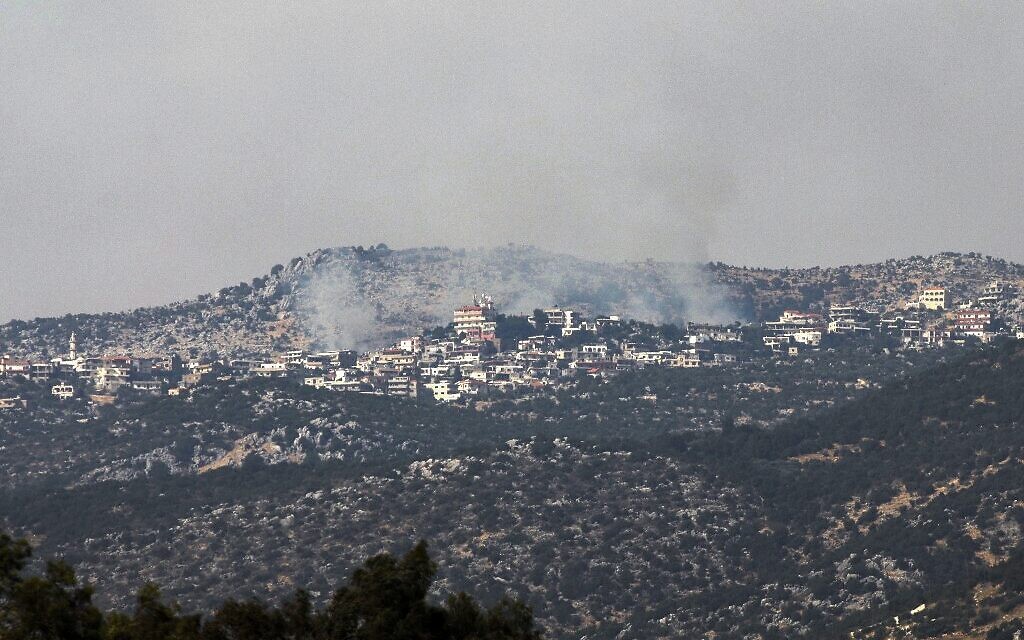
According to Zilberman, the outpost where the men placed the explosive was located in an enclave in the area of Tel Fares along the border that previously housed a clinic operated by a Christian charity, under the auspices of the IDF, to treat Syrian civilians who were affected by the country’s civil war. It was closed when Syrian dictator Bashar Assad’s forces retook the Syrian Golan in 2018.

Over the past weeks, Hezbollah has threatened some form of retaliation for the death of one of its fighters last week in Syria in an airstrike that it attributed to Israel, but which the Jewish state has not officially acknowledged conducting.
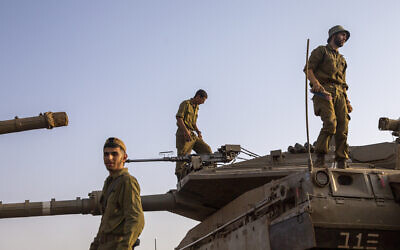
Israeli soldiers work on tanks near the Lebanon border on July 28, 2020. (AP Photo/Ariel Schalit)

Bracing for the attack, the IDF sent an infantry battalion to the Northern Command as reinforcements, along with additional “advanced” firepower in the form of precision-guided surface-to-surface missiles, combat intelligence units and special forces. The military has also ordered its troops and vehicles to keep away from areas along the border that are vulnerable to attack.

Last Monday, the IDF said it thwarted an attempt by Hezbollah to send a team of fighters into the Israeli-controlled territory of Mount Dov, also known as Shebaa Farms, to carry out an attack. According to the military, the Hezbollah cell made it a few meters across the border before IDF troops opened fire at the operatives — apparently not hitting them, but driving them back into Lebanon.

Hezbollah officially denied that an attack had taken place, but did not explicitly dispute that its members had crossed into the Israeli-controlled enclave.

The terror group said a reprisal for its fallen operative in Syria was still to come.

In the past, Hezbollah has vowed to retaliate for losses of its fighters in Syria with attacks on Israel. This was the case in September, when the terror group fired three anti-tank guided missiles at Israeli military targets along the Lebanese border, narrowly missing an IDF armored ambulance with five soldiers inside, after the IDF killed two of its fighters in Syria the month before.

Times of Israel staff contributed to this report
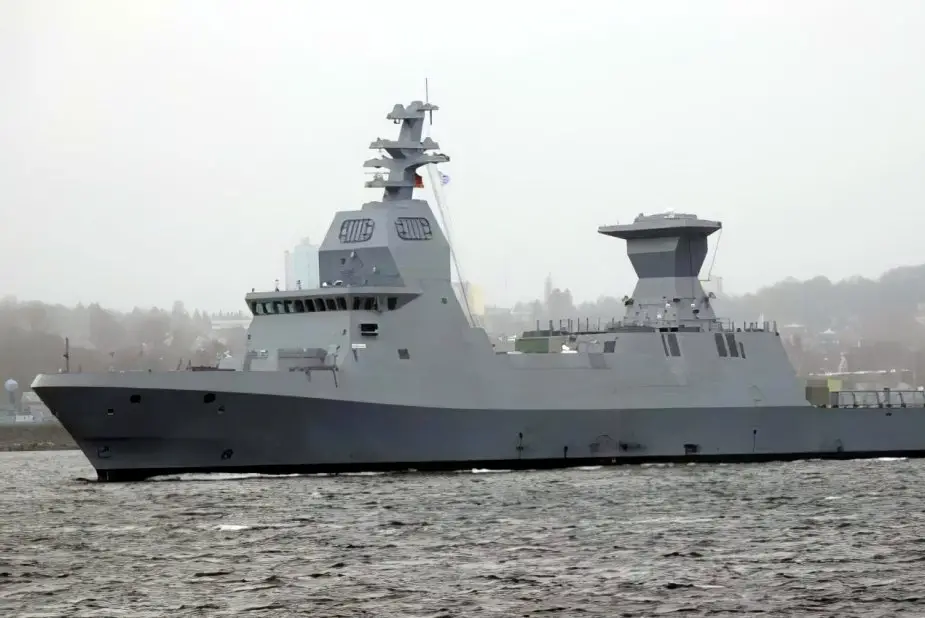
A rare close up look at the Israeli Navy

August 2, 2020

i24News was brought aboard the Israeli missile boat, the INS Hetz, and given a rare glimpse at the workings and firepower of one of the vessels that make up the core of the Israeli Navy.

A report by Shai Ben-ari. Israel is using one of its three Sa’ar-5 Corvette-class ships as a test bed for future capabilities (including sea-based Iron Dome) that it wants for the four new Sa’ar-6 ships on order with TKMS shipyard in Germany

Iran launches first underground ballistic missiles in a drill – DEBKAfile

August 2, 2020


Iranian underground missile launch.US Gulf forces on alerthttps://www.debka.com/iran-launches-first-underground-ballistic-missiles-in-a-drill/

Iran’s Revolutionary Guards Wednesday, July 29, launched underground ballistic missiles in a military drill in which a mock US aircraft carrier was attacked in the Strait of Hormuz. Drone footage showed two missiles blasting out from covered positions in what appeared to be a desert plateau in central Iran. Gen. Amir Ali Hajizadeh, the head of the IRGC’s aerospace division said this was the first underground launch of a ballistic missile. Most of this arsenal is believed to be hidden in underground silos.
A day earlier, footage of the first day of exercise, dubbed Payambar-e Azam 14 (The Great Prophet), broadcast on state television showed a missile fired from a helicopter leaving a trail of smoke before appearing to smash into the side of the fake warship, a rough replica of the USS Nimitz. Other footage from the exercise showed speedboats encircling the replica, commandos rappelling onto the deck of the vessel, and scuba forces underwater. Antiaircraft batteries were seen firing from a location that the report described as being near the port city of Bandar Abbas.

The missiles used in Iran’s military exercise were not identified.

The US Navy condemned the “irresponsible and reckless behavior by Iran,” calling it an attempt “to intimidate and coerce.”

The firings prompted a military alert at two US CENTCOM Gulf headquarters – the Al-Dhafra Air Base at Abu Dhabi in the UAE and the Al-Udeid Air Base in Qatar. Troops were told to seek cover. “The incident lasted for a matter of minutes and an all clear was declared after the threat … had passed,” said Central Command spokeswoman Beth Riordan.

A semiofficial Iranian news agency published a graphic showing an American carrier into the shape of a casket with a set of crosshairs painted on it and a caption quoting Supreme Leader Ayatollah Ali Khamenei as pledging to avenge the US drone strike that killed top Iranian general Qassem Soleimani in January.