Author Archive

UAE deal shows Arab-Israel conflict starting to come apart before our eyes

September 4, 2020
https://www.timesofisrael.com/uae-deal-shows-arab-israel-conflict-starting-to-come-apart-before-our-eyes/

Israel finds itself in a place of honor in the moderate Sunni camp against the extremist Shiites; there are even signs of a certain shift in Hamas

Avi Issacharoff
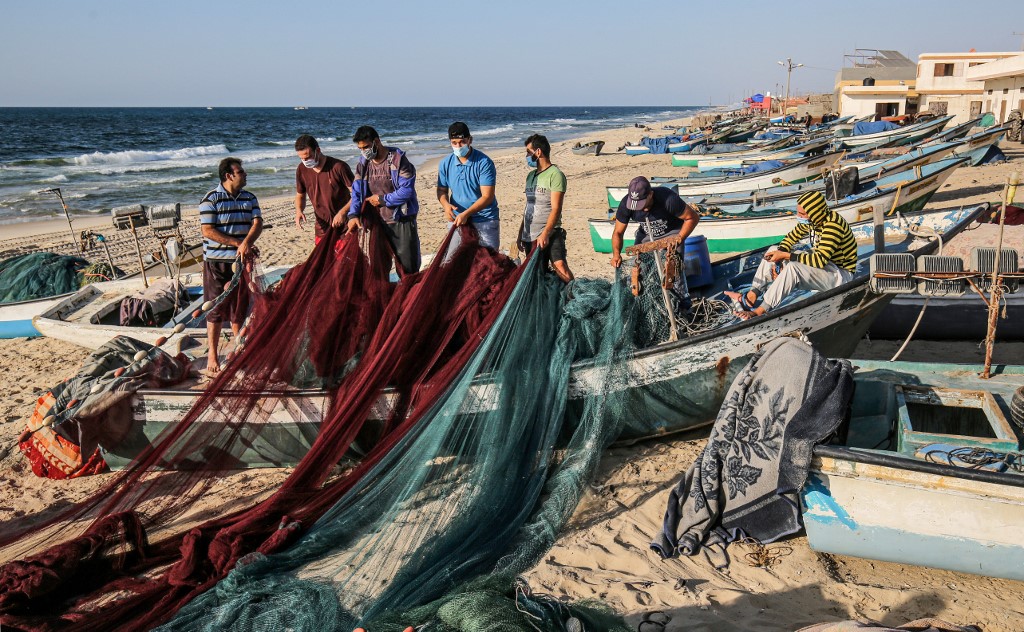
Palestinian fishermen, mask-clad due to the COVID-19 coronavirus pandemic, prepare their fishnets along a beach off the Mediterranean Sea in Rafah in the southern Gaza Strip on September 2, 2020. (SAID KHATIB / AFP)

Palestinian fishermen, mask-clad due to the COVID-19 coronavirus pandemic, prepare their fishnets along a beach off the Mediterranean Sea in Rafah in the southern Gaza Strip on September 2, 2020. (SAID KHATIB / AFP)

The historic agreement between the United Arab Emirates and Israel is a direct continuation of the profound changes in the Middle East that have been quietly taking place in recent years. The Israeli-Arab conflict is starting to come apart before our very eyes, and Israel finds itself in a place of honor in the moderate Sunni camp against the extremist Shiites.

Located between these two groups are several sub-groups, including the Palestinian Authority and the Muslim Brotherhood (Qatar, Turkey, Hamas). The PA is sometimes backed by the moderate Sunni camp, especially by the countries bordering Israel (Jordan and Egypt), although sometimes they, too, lose interest.

As for the Muslim Brotherhood and its supporters, Turkey still maintains diplomatic relations with Israel; Qatar is officially mediating between Israel and Hamas – with its representative, Mohamed al-Emadi, meeting openly with Israeli security agency and IDF personnel; and even Hamas may no longer be quite what it used to be.

The most prominent symbol of this apparent, tentative Hamas shift — from terrorist group to governing authority that sometimes takes up the “mantle of terror” — is its all-powerful leader in the Gaza Strip, Yahya Sinwar.
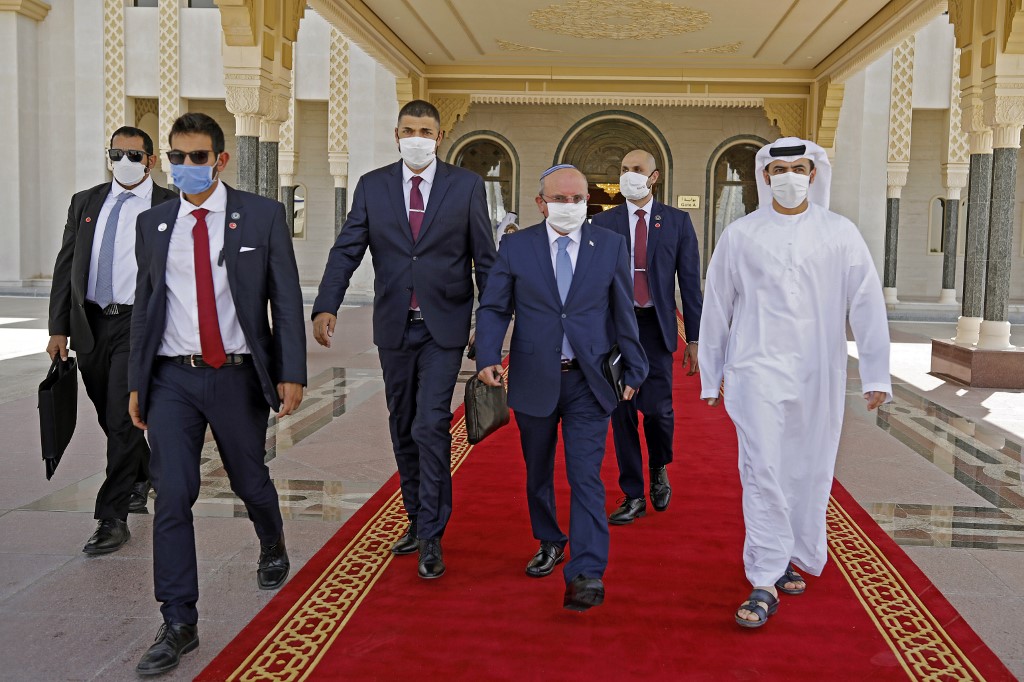
The head of Israel’s National Security Council, Meir Ben-Shabbat (2nd-R), wearing a protective mask, makes his way to board the plane as he prepares to leave Abu Dhabi on September 1, 2020, at the end of an unprecedented visit on normalizing Israel-UAE relations. (NIR ELIAS / POOL / AFP)

Sinwar, who took over in Gaza when Hamas political bureau chief Ismail Haniyeh left the Strip, is in no hurry right now to further escalate hostilities with Israel. He is a classic example of the cliché, “The things that you see from here you don’t see from there.” This is confirmed by the mini-escalation we have witnessed on the Gaza-Israel front in recent weeks — the balloon bombs, the dribble of rockets towards Israel. These were not simply an expression of anti-Jewish sentiment. They were intended to achieve very specific aims: Maintain Qatari funding to the Strip, renew several stalled infrastructure projects within Gaza (electricity lines; an industrial zone), and obtain help battling COVID-19.
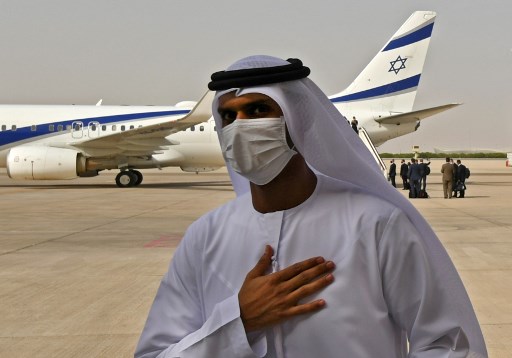
An Emirati official stands near an El Al plane that carried a US-Israeli delegation to the UAE following a normalization accord, upon its arrival at the Abu Dhabi airport, in the first-ever direct flight from Israel to the UAE, on August 31, 2020. (KARIM SAHIB / AFP)

Sinwar, who likes to show off his mastery of Hebrew and his understanding of Israeli politics, viewed the escalation on the northern border with Hezbollah as a potential opportunity to gain some achievements down south. However, the massive explosion in Beirut’s port, which at the very least delayed Hezbollah’s planned revenge against Israel for the killing of one of its fighters, left Israel with only the southern border to worry about. And then the virus complicated matters further for Gaza’s rulers.

Up until recently Gaza was about the safest place in the world as regards COVID-19. But lately there has been a real outbreak, albeit in numbers that Israel’s coronavirus czar Ronni Gamzu would love to contend with. Sinwar realized the enormity of the problem and pushed for a quick ceasefire. As soon as Qatar renewed its promise to provide a reported $27 million in monthly funding, plus a few million here and there for fuel and various projects, Sinwar deescalated hostilities with Israel, and focused on locking down Gaza’s two million people to stop the COVID contagion.

Hamas leader Yahya Sinwar (4th L) takes part in a rally as Palestinians call for a “Day of Rage” to protest Israel’s plan to annex parts of the West Bank, in Gaza City on July 1, 2020. (MAHMUD HAMS / AFP)

If there is something the populace cannot tolerate at this point it is another war — not when they have already reached rock bottom financially and a pandemic has arrived. And that relative sensitivity to the residents of Gaza is noteworthy. Hamas is emphatically his top priority, but Sinwar attaches importance to public sentiment — in striking contradiction to his northern neighbor Hezbollah chief Hassan Nasrallah, who could not care less about the non-Shiite population of Lebanon.

And so Israel and its Prime Minister Benjamin Netanyahu once again agreed to a ceasefire that includes cash transfers to hard-up families in Gaza and paychecks to Hamas clerks, bolstering Hamas as ruler of Gaza. Again, just to make it clear: The government of Israel is helping Hamas retain power. Why? Because Israel clearly understands that the alternative — war and the disintegration of Hamas — is worse. In other words, Israel is willing to pay protection money — or at least have Qatar pay — to help Gaza with COVID-19 in exchange for a quiet border.
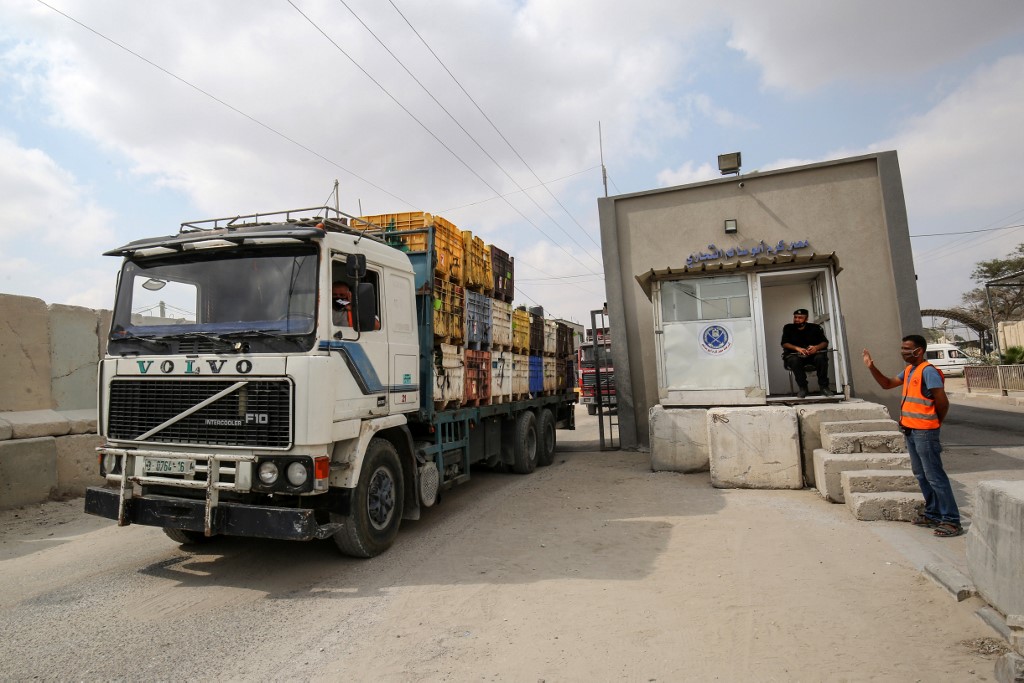
A Palestinian policeman waves on a truck s it enters through the Kerem Shalom crossing into the Gaza Strip on September 1, 2020, after a Qatari-mediated deal with Israel. (SAID KHATIB / AFP)

Where did it start?

Word on the Gazan street is that the COVID outbreak began with a mother from Al-Maghazi refugee camp in the center of the Strip who wanted to take her baby for medical treatment at the Al-Makassed hospital in East Jerusalem. She arrived at the Erez Crossing (according to the rumor) and had to turn back as she lacked the necessary paperwork. When she returned to Hamas’s Four-Four crossing, she was asked if she had been to the Israeli side and she said no.

Four days later she set out once again, this time with the proper permits, and reached Al-Makassed hospital. Except that once there, it was discovered that she had contracted COVID-19. The doctors updated the PA’s Ministry of Health in Ramallah, who updated their counterparts in Gaza. A medical team was sent to the family’s home in Al-Maghazi to test her family members. Her father-in-law, who owns a small supermarket, turned out to be infected. From there it was just a short jump to a wider outbreak. By last Wednesday morning, 480 people were infected in one of the most densely populated areas in the world.

“Initially, they declared a 48-hour lockdown,” A., a resident of Gaza, told me. “After a break for supplies, they then declared a 72-hour lockdown. And then another 48 hours. You can leave to buy groceries or medicine and there are donkey-driven carts selling fruits and vegetables. But there are very few drivers on the roads and almost no one on the streets. All public places are closed. Hamas is also stopping traffic between areas and the entire Strip has been divided into zones with no traffic allowed between them,” said A.
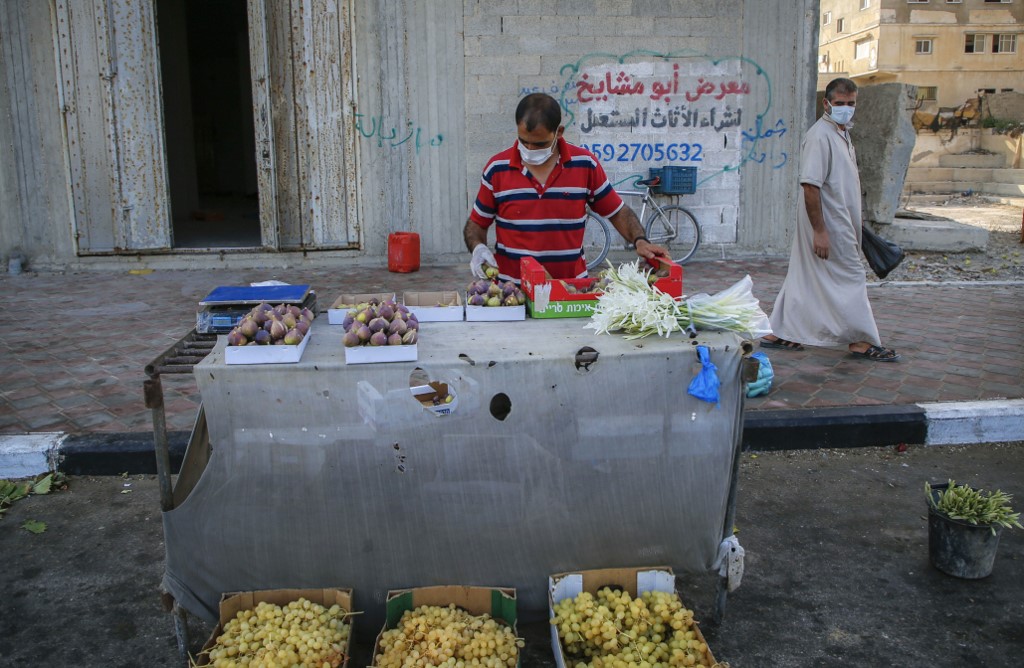
A mask-clad Palestinian stallholder arranges produce on a street in Gaza City on September 3, 2020, amidst a COVID-19 coronavirus pandemic-imposed lockdown. (MOHAMMED ABED / AFP)

“For instance, it is forbidden to drive from Khan Younis to [nearby] El-Kerara, or between Deir al-Balah and the [refugee] camps in the center. Gaza City has been divided into sections — Tuffah, Daraj, Shati, etc. — and each is isolated from the others. This outbreak came at a very bad time as far as the people of Gaza are concerned, because it coincided with the escalation with Israel which resulted in 16-hour electric outages, bombings, and a ban on fishing. People’s fear of the disease only increased with the threat of war.

“The agreement between Qatar, Hamas, and Israel may have calmed people’s concerns a little, but only a little,” A. went on. “Everything is still so unstable. There is a sense that the disease is under control, but God forbid that it gets out of hand.”


The Battle of Latakia

September 2, 2020

From Wikipedia

The Battle of Latakia (Arabic: معركة اللاذقية‎; Hebrew: קרב לטקיה‎) was a small but revolutionary naval action of the Yom Kippur War, fought on 7 October 1973 between Israel and Syria. It was the first naval battle in history to see combat between surface-to-surface missile-equipped missile boats and the use of electronic deception.[1] Background At the outset of hostilities, the Israeli Navy set out to destroy the naval capabilities of the Syrians, who were equipped with Soviet Komar-class and Osa-class missile boats. The Syrian missile boats were equipped with Soviet manufactured P-15 Termit (NATO reporting name: SS-N-2 Styx) anti-ship missiles with twice the range of the Israeli Gabriel anti-ship missiles.[2] Battle The four Israeli Navy Sa’ar 3-class and one Sa’ar 4-class missile boats headed towards the Syrian port of Latakia in two parallel columns. In the western column were the missile boats Miznak (Blast), Ga’ash (Storm), and Hanit (Lance); the eastern column was composed of the missile boats Mivtach (Reliance) and Reshef (Spark). At 22:28 hours the Israelis encountered the Syrian K-123 torpedo boat which was sunk with 76mm cannon fire from Mivtach and Hanit. As they headed toward the shore, the Israeli ships engaged a 560-ton Syrian T43-class minesweeper and also sank it, this time using four Gabriel anti-ship missiles. At 23:30 the Israelis made contact with two Syrian Komar-class and one Osa-class missile boats. The Syrian missile boats fired their Styx missiles at long range, but as the missiles approached, the Israelis employed electronic countermeasures and launched chaff rockets to successfully decoy the missiles. When the Israeli ships closed the range, they fired five Gabriel missiles, sinking one Komar and the Osa immediately and damaging the second Komar. The surviving Syrian Komar tried to escape, but it ran aground in shallow water and was destroyed by 76mm cannon fire at 00:26 hours. During this naval clash other Syrian missile boats launched missiles from within the port limits of Latakia (actually launched while the missile boats were moored between merchant ships in port). However, these missiles malfunctioned or lost guidance and two foreign (one Greek and one Japanese) merchant vessels anchored along the piers were hit. Both vessels were struck in the engine rooms. The Syrian Navy remained bottled up in its home ports for the rest of the war. While the Battle of Latakia was the first naval battle in history between missile boats, it was not the first incident in which a missile boat sank another ship using missiles. That had happened when two Egyptian Navy Komar-class missile boats sank the British-built Israeli destroyer Eilat on 21 October 1967, shortly after the Six-Day War, using four P-15 Termit surface-to-surface missiles.[3]

Why Israel Has Designed A Very Special F 35 Stealth Fighter

September 2, 2020

IAF bombs Iranian targets in Syria; Israel-Hamas ceasefire announced – TV7 Israel News 01.09.20 – YouTube

September 1, 2020

Special Forces – כוחות מיוחדים שייטת 13 Israeli Navy Seals – Shayetet 13

August 30, 2020

Shayetet 13 squadron is the Israeli Navy’s Navy SEALs. The unit’s permanent base is a Atlit base and is directly subject to the commander of the navy. The squadron commander is a colonel in the rank of colonel.

Challenges on Israel’s southern front with Gaza – Jerusalem Studio 535

August 28, 2020

Israel’s rapprochement with the Arab world – Jerusalem Studio

August 25, 2020

Namer ⚔️ Israeli Heavy APC

August 24, 2020

PLEASE I need only a few more people to subscribe for free at: https://josephwouk.locals.com/ to give you vids that YouTube blocks. ( Including War and Remembrance.) Thanks to Military Weapons They are more heavily armored than the Merkava IV tanks. Subscribe Now – ⚔️ https://goo.gl/pY8ZSL ⚔️ —————————————————— #Namer, means “leopard” and also a syllabic abbreviation of “Nagmash” (#APC) and “Merkava” is an Israeli armoured personnel carrier based on a Merkava Mark IV tank chassis. Namer was developed by and is being assembled by the Israeli Ordnance Corps. It has entered service in limited numbers with the Israel Defense Forces since the end of 2008. However, as of 2014, still only very limited numbers of Namers were in service with the IDF. Due to budgetary constraints, the introduction of the Namer into the IDF has been slow, leaving the ground forces dependent on the M113 for many years to come. According to the IDF, the Namer is the most heavily armored vehicle in the world of any type. Type: heavy armoured personnel carrier IFV upgrade planned Place of origin: Israel In service: 2008–present Used by: Israel Defense Forces Wars: Gaza War Operation Protective Edge Designer: Israel Military Industries Manufacturer: IDF Ordnance (assembly) Unit cost: $3 million Produced: 2008–present No. built: Current: Up to 120 are currently operational Future: A total of 531 are planned to be produced by 2027 (including those already built) ⚔️SPECIFICATIONS⚔️ Weight: 60 tonnes Crew: 3 (commander, driver, RCWS operator) + 9 troops Armor: Classified composite matrix of laminated ceramic-steel-nickel alloy + underlaid reactive armour. Sloped modular design. Main Armament: Samson RCWS equipped with either 12.7 mm (0.50 in) M2 machine gun, or Mk 19 grenade launcher, or smaller MG. Secondary Armament: 1 × 7.62 mm (0.300 in) FN MAG MG 1 × 60 mm (2.4 in) external mortar 12 smoke grenades Engine: 1,200 hp (895 kW) turbocharged diesel engine Power/weight: 20 hp/ton Payload capacity: 9 infantrymen Suspension: Helical spring Operational Range: 500 km (310 mi) Speed: 60 km/h (40 mph) – top speed

Unit 914: Where I fought in the first Lebanon War

August 22, 2020

Also know as “Peace for Galilee,” 1982..

The :Daburs (wasps) PC boats

Mossad’s Greatest Victories: 1948 – Gulf War

August 22, 2020

PLEASE I need more people to subscribe for free at: https://josephwouk.locals.com/

That way I’ll be able to upload great videos that YouTube won’t allow.

This excellent documentary covers all of the Mossad’s successes: Revaluation of Khrushchev.s speech denouncing Stalin, capture and execution of Eichmann, theft of the MIG-21 from Iraq,. the 6 day war, revenge on the Black September murderers in Munich, as well as the destruction of Saddam Hussain’s atomic reactor. Well worth watching. – JW
