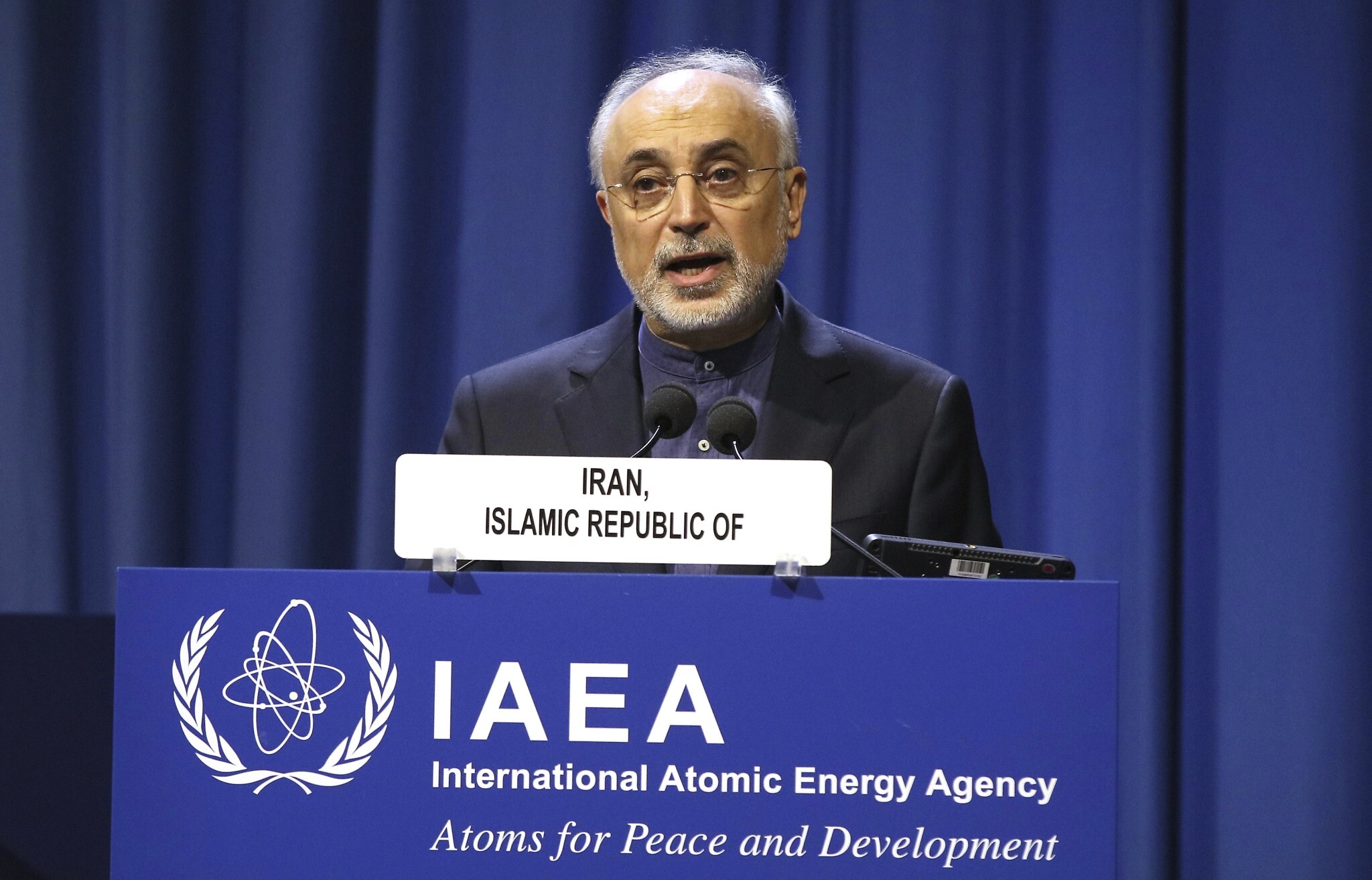
Author Archive

Trump asked for options to hit Iran nuke sites in last days in office – report

November 17, 2020


New York Times reports president asked top advisers if he had options to strike main sites to halt enrichment, but was warned it could lead to wider conflict

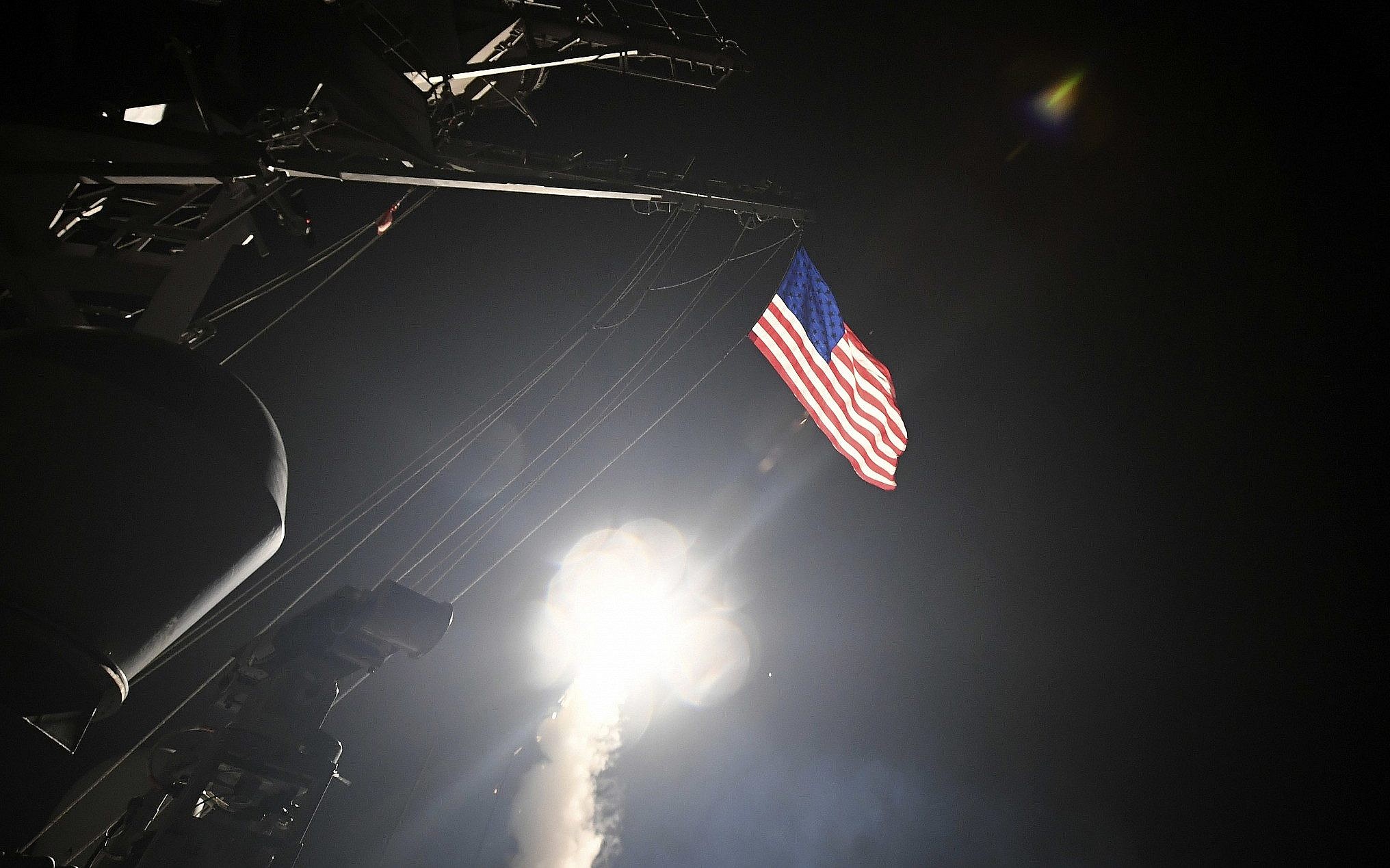
By TOI STAFF and AGENCIESToday, 3:13 am  0Illustrative: In this image provided by the U.S. Navy, the guided-missile destroyer USS Porter (DDG 78) launches a tomahawk land attack missile in the Mediterranean Sea, April 7, 2017 (Mass Communication Specialist 3rd Class Ford Williams/U.S. Navy via AP)

US President Donald Trump convened top advisers last week to ask if he had options to strike Iranian nuclear sites during his last weeks in office, but was dissuaded with warnings it could lead to a wider conflict, The New York Times reported Monday.

Trump convened top officials on Thursday, a day after the UN nuclear watchdog said Iran had stockpiled more than 12 times more enriched uranium than the 2015 nuclear deal allows, the Times reported, citing four current and former US officials.

Among those present were Vice President Mike Pence; Secretary of State Mike Pompeo; acting defense secretary Christopher C. Miller; and Gen. Mark A. Milley, the chairman of the Joint Chiefs of Staff, the report said.

Trump asked them how he should respond to the International Atomic Energy Agency report and what his options were. The Times said the focus of any attack would almost certainly be the heavily fortified Natanz nuclear center.US President Donald Trump arrives to address the nation from the White House on the ballistic missile strike that Iran launched against Iraqi air bases housing US troops accompanied by Joint Chiefs Chairman Gen. Mark Milley, center, and US Air Force Chief of Staff Gen. David L. Goldfein, January 8, 2020. (AP Photo/Alex Brandon)
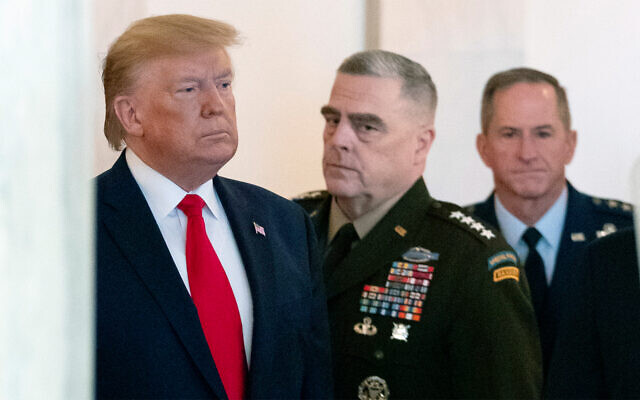
Pompeo and Miley reportedly warned that a major strike, whether with missiles or by a cyberattack, could easily escalate into a major regional conflict.

The report said they left Thursday’s meeting believing that Trump had taken a missile strike of the table, but could still be looking at a more measured response against Iran or its allies.

Trump’s most high-profile attack on Iran, when the US killed top Iranian general Qassem Soleimani in a January 3 drone strike at Baghdad’s airport, resulted in a limited response from Iran.

The Pentagon has a wide range of strike options for Iran, including military, cyber and combination plans, the report said, noting that some called for direct action by Israel.

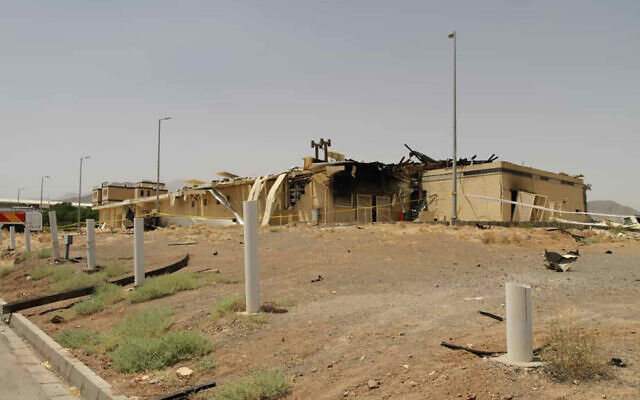
Israel has been blamed for an attack on an advanced centrifuge development and assembly plant at Natanz in July. It has also been blamed, together with the US, for the Stuxnet virus that sabotaged Iranian enrichment centrifuges a decade ago.A building Iran claims was damaged by a fire at the Natanz uranium enrichment facility some 200 miles (322 kilometers) south of Tehran, on July 2, 2020. (Atomic Energy Organization of Iran via AP)
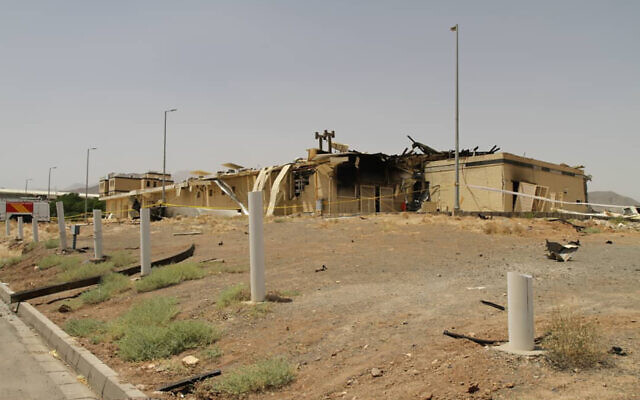
The New York Times also reported this week that Israel assassinated Al-Qaeda’s No. 2 in Tehran in recent months at the behest of the US.

Monday’s report highlighted fears that Trump could seek to dramatically influence events in his final few weeks in office (even though he has not conceded the election) in a bid to tie US President-elect Joe Biden’s hands on issues like Iran.

Israel’s Ambassador to the US Ron Dermer warned Monday that it would be a “mistake” for the incoming administration to reenter the Iran nuclear deal, as Biden pledged to do during the campaign.

“I think it would be a mistake and hopefully [Bdien] will look at the Middle East as it is, he will see the benefits of [the normalization] process, of how he can continue that process, and I think to not go back into the same deal,” Dermer said during a panel in Washington.

The nuclear deal was signed by the United States, Germany, France, Britain, China and Russia in 2015, but Trump withdrew from it three years later. Nevertheless, he has said he expects Iran to abide by the limits it sets.

The IAEA reported in a confidential document distributed to member countries and seen by The Associated Press last week that Iran as of November 2 had a stockpile of 2,442.9 kilograms (5,385.7 pounds) of low-enriched uranium, up from 2,105.4 kilograms (4,641.6 pounds) reported on August 25.Construction at Iran’s Natanz uranium-enrichment facility that experts believe may be a new, underground centrifuge assembly plant, annotated by experts at the James Martin Center for Nonproliferation Studies at Middlebury Institute of International Studies, October 26, 2020. (Planet Labs Inc. via AP)
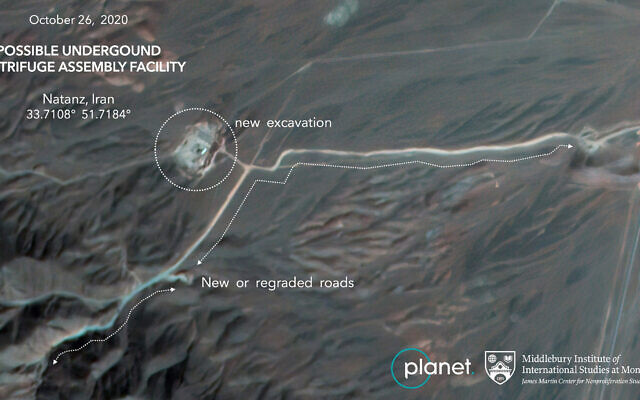
The nuclear deal allows Iran only to keep a stockpile of 202.8 kilograms (447 pounds).

The IAEA reported that Iran has also been continuing to enrich uranium to a purity of up to 4.5%, higher than the 3.67% allowed under the deal.

Wednesday’s report confirmed that, in line with previous statements by Iranian officials, centrifuges had been installed at an underground part of the Natanz nuclear facility after another part of the site was damaged the explosion in July, which Iran blamed on “sabotage.”

Iran has openly announced all violations of the nuclear deal in advance, which have followed the decision by the US to pull out unilaterally in 2018.

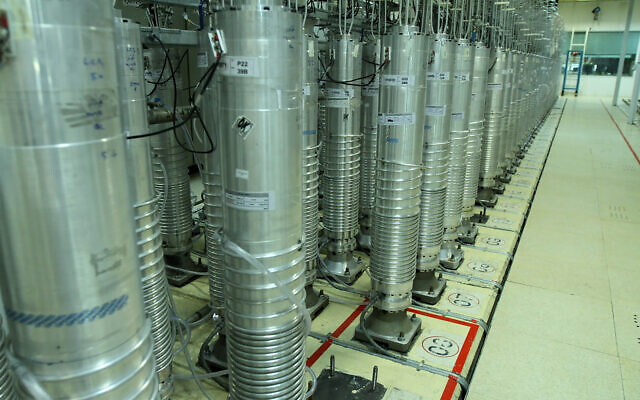
The deal promised Iran economic incentives in exchange for the curbs on its nuclear program. Since the US withdrawal and imposition of new sanctions, Tehran has been putting pressure on the remaining parties with the violations to come up with new ways to offset the economy-crippling actions by Washington.This photo released by the Atomic Energy Organization of Iran on November 5, 2019, shows centrifuge machines at Natanz uranium enrichment facility in central Iran. (Atomic Energy Organization of Iran via AP)
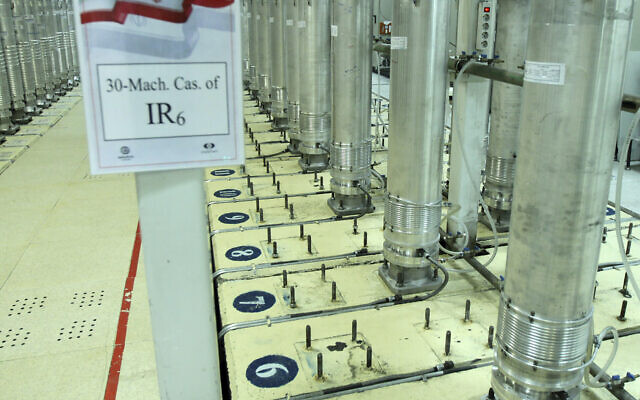
At the same time, the Iranian government has continued to allow International Atomic Energy Agency inspectors full access to its nuclear facilities, a key reason the countries that remain parties to the JCPOA say it’s worth preserving.

The goal of the agreement is to prevent Iran from building a nuclear weapon, something the country insists it does not intend to do.

A widely cited analysis by the Washington-based Arms Control Association suggests that Iran now has more than double the material it would need to make a nuclear weapon. However, IAEA Director General Rafael Grossi told The Associated Press in an interview last month that his agency does not share that assessment.

Before agreeing to the nuclear deal, Iran enriched its uranium up to 20% purity, which is a short technical step away from the weapons-grade level of 90%. In 2013, Iran’s stockpile of enriched uranium was already more than 7,000 kilograms (7.72 tons) with higher enrichment, but it didn’t pursue a bomb.

In the quarterly report distributed to members on Wednesday, the IAEA said it still has questions from the discovery last year of particles of uranium of man-made origin at a site outside Tehran not declared by Iran.

The United States and Israel had been pressing the IAEA for some time to look into the Turquzabad facility, which Prime Minister Benjamin Netanyahu described to the UN in 2018 as a “secret atomic warehouse.”

In the current report, the IAEA said the “compositions of these isotopically altered particles” found there were “similar to particles found in Iran in the past, originating from imported centrifuge components.” It said it found Iran’s response to questions last month “unsatisfactory.”

“Following an assessment of this new information, the agency informed Iran that it continues to consider Iran’s response to be not technically credible,” the IAEA wrote this week. “A full and prompt explanation from Iran…is needed.”

Al-Qaeda’s No. 2 Leader Was Killed In Iran By Israeli Assassins At Behest Of U.S.: Report

November 14, 2020

Iranian flag waving with city skyline on background in Tehran, Iran - stock photo
Sir Francis Canker Photography/Getty Images

Al-Qaeda’s second in command was reportedly killed by Israeli Assassins on motorcycles at the request of the United States, according to intelligence officials.

The New York Times reported that Abdullah Ahmed Abdullah, also known as Abu Muhammad al-Masri was shot by motorcycle-riding Israeli assassins on the streets of Tehran three months ago. Al-Masri was described as “one of the masterminds of the deadly 1998 attacks on American embassies in Africa” and was on the FBI’s “Most Wanted Terrorist” list. Also killed in the attack was al-Masri’s daughter, Miriam, who was previously married to Osama Bin Laden’s son Hamza, who was killed in the early years of the Trump administration.

As reported by the Times, al-Masri was allegedly in Iran’s “custody” but was living freely in an upscale suburb of Tehran. At around 9 p.m. on the night he was killed, al-Masri and his daughter left their home in a white Renault L90 sedan. The two gunmen fired five shots, with four hitting al-Masri’s car and the fifth hitting a separate car.

“The killing occurred in such a netherworld of geopolitical intrigue and counterterrorism spycraft that Mr. al-Masri’s death had been rumored but never confirmed until now. For reasons that are still obscure, Al Qaeda has not announced the death of one of its top leaders, Iranian officials covered it up, and no country has publicly claimed responsibility for it,” the Times reported. “Mr. al-Masri, who was about 58, was one of Al Qaeda’s founding leaders and was thought to be first in line to lead the organization after its current leader, Ayman al-Zawahri.”

Though al-Masri was reportedly killed three months ago, his photo is still on the FBI’s Most Wanted list.

The killing was initially reported by Iranian state-controlled media as an assassination against a Lebanese history professor and his daughter. The media outlets claimed Habib Daoud was a member of the terrorist organization Hezbollah, which wants to destroy Israel. The story seemed plausible since it matched similar Israeli assassinations of Iranian nuclear scientists, but it fell apart when no record of Daoud ever existing could be found.

“Several Lebanese with close ties to Iran said they had not heard of him or his killing. A search of Lebanese news media found no reports of a Lebanese history professor killed in Iran last summer. And an education researcher with access to lists of all history professors in the country said there was no record of a Habib Daoud,” the Times reported. “One of the intelligence officials said that Habib Daoud was an alias Iranian officials gave Mr. al-Masri and the history teaching job was a cover story. In October, the former leader of Egypt’s Islamic Jihad, Nabil Naeem, who called Mr. al-Masri a longtime friend, told the Saudi news channel Al Arabiya the same thing.”

Iran enriched uranium stockpile 12 times limit set in nuclear deal, UN nuclear agency says

November 12, 2020


Iran enriched uranium stockpile 12 times limit set in nuclear deal, UN nuclear agency says

Iran’s stockpile of enriched uranium is now more than 12 times the limit set down in a 2015 deal with world powers, the UN’s nuclear agency reports.

The International Atomic Energy Agency reports in a confidential document distributed to member countries and seen by The Associated Press that Iran as of November 2 has a stockpile of 2,442.9 kilograms (5,385.7 pounds) of low-enriched uranium, up from 2,105.4 kilograms (4,641.6 pounds) reported on August 25.

The nuclear deal signed in 2015 with the United States, Germany, France, Britain, China and Russia, known as the Joint Comprehensive Plan of Action, or JCPOA, allows Iran only to keep a stockpile of 202.8 kilograms (447 pounds)

.

Iran’s uranium conversion facility near Isfahan, which reprocesses uranium ore concentrate into uranium hexafluoride gas, which is then taken to Natanz and fed into the centrifuges for enrichment, March 30, 2005. (AP/Vahid Salemi)

The IAEA reports that Iran has also been continuing to enrich uranium to a purity of up to 4.5%, higher than the 3.67% allowed under the deal.

Violations of the nuclear pact have followed the decision by the US to pull out unilaterally in 2018.

— Agencies

Biden will seek to reenter Iran nuclear deal within months, former aide says

November 11, 2020


Amos Hochstein tells Israeli TV rejoining the agreement is a top priority for the US-president elect; report says Trump planning flurry of sanctions to make move harder

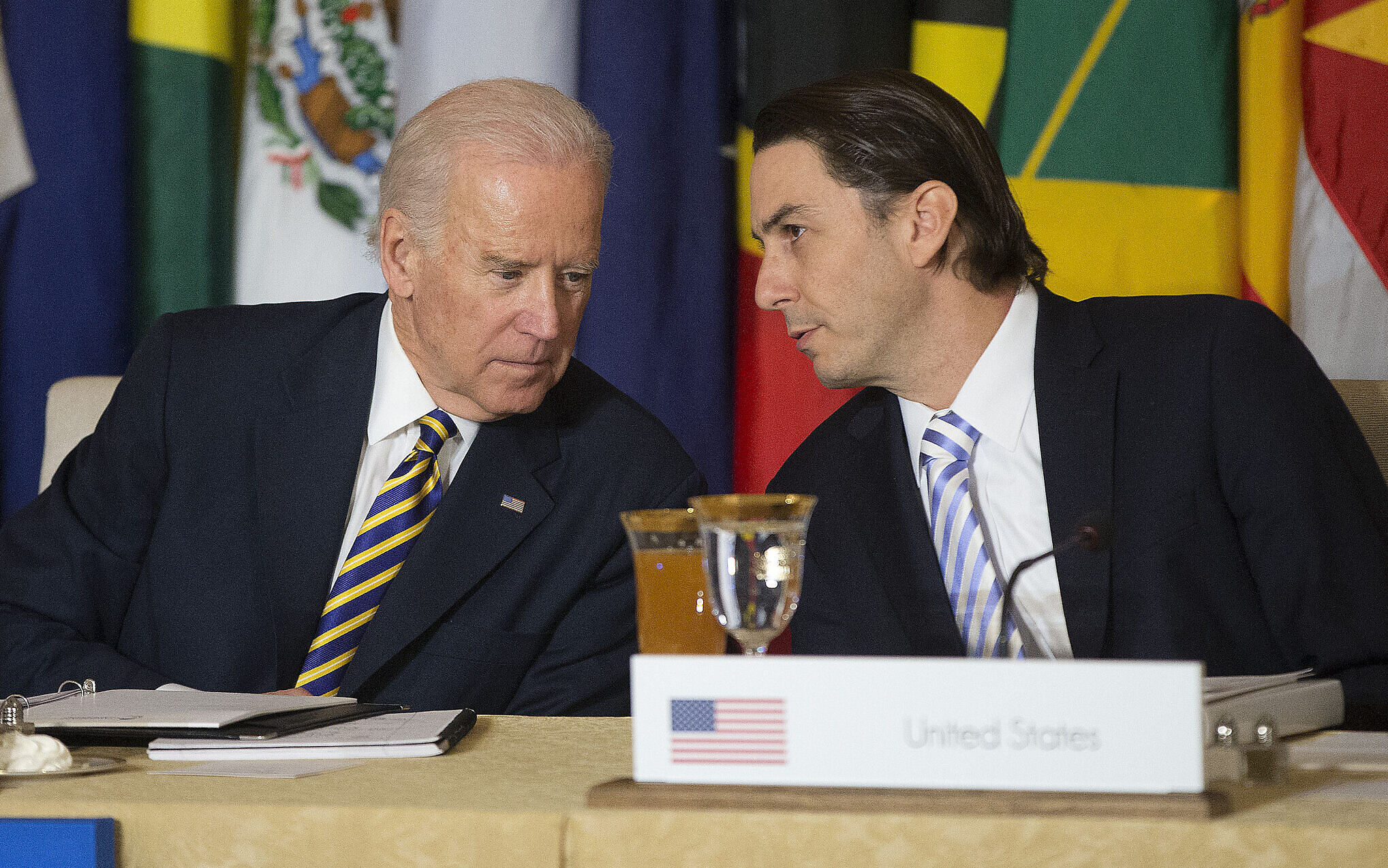
By TOI STAFF8 November 2020, 10:40 pm  6Then US vice president Joe Biden, left, talks with then State Department special envoy for international energy affairs Amos Hochstein at a working lunch during the Caribbean Energy Security Summit, at the State Department in Washington, January 26, 2015. (AP Photo/Pablo Martinez Monsivais/File)

A former senior aide to Joe Biden said rejoining the Iran nuclear deal was “high on his agenda” and that the US president-elect would move to do so shortly after taking office.

“I believe that in the first months [of Biden’s presidency], we’ll either see him rejoin the deal fully, or what I would call ‘JCPOA-minus,’ meaning lifting sanctions in exchange for suspending some of the Iranian nuclear programs [developed] in the past three years,” Amos Hochstein said Sunday in an interview in Hebrew with Channel 12 news.

Hochstein, who served at the State Department and oversaw energy sanctions on Iran during former president Barack Obama’s tenure, said Biden wants “some changes” to the pact clinched in 2015 — and abandoned by US President Donald Trump in 2018 — including its expiration date.

The comments came as an Israeli news site reported the Trump administration — in coordination with Israel and Arab states in the Persian Gulf — was planning a bevy of wide-ranging sanctions on Iran to make it more difficult for the incoming administration to reenter the nuclear deal, which was negotiated when Biden served as vice president under Obama.

Quoting Israeli and Arab sources, Walla news said US Special Representative for Iran and Venezuela Elliot Abrams is planning to announce a raft of fresh sanctions on Iran every week from now until January 20. These sanctions will reportedly target Iran’s missile program and its support for terrorist groups, as well as focus on its human rights violations, making it harder for Biden to roll back such punishments.

Abrams met with Prime Minister Benjamin Netanyahu in Jerusalem on Sunday and was expected to hold talks with other senior Israeli officials.

Elliott Abrams, US special representative for Iran and Venezuela, meets with Prime Minister Benjamin Netanyahu (L) at the Prime Minister’s Residence in Jerusalem, November 8, 2020. (Matty Stern/US Embassy Jerusalem)

According to the report, Israel and Gulf states believe Biden will swiftly lift other sanctions on Iran’s nuclear program to restart diplomacy with Tehran, shedding some of the US’s leverage over the cash-strapped country. New sanctions, therefore, would keep up pressure on Tehran to compromise and likely keep Biden out of the international pact unless he lifts them.

“The goal is as many sanctions as possible by January 20,” an unnamed Israeli official was quoted as saying.

An Arab official involved in the negotiations told the news site, “The goal of the Trump administration is to impose sanctions that Biden cannot lift.”

Earlier Sunday, a senior minister in Netanyahu’s Likud party called for “dialogue with the new administration” to ensure that Biden does not reenter the pact under its previous terms.

Netanyahu has been a strident critic of the nuclear deal, arguing it did not put in place sufficient safeguards to prevent Iran from seeking nuclear weapons capabilities, and cheered Trump’s decision to withdraw from the accord.

‘Bring back the Palestinian issue’

In his Channel 12 interview, Hochstein also spoke to the Palestinian issue, saying Biden “sees the two-state solution as preferable to one state. And his fear is that if there is no two-state solution, in the end, it will lead to a binational state.”

The Biden administration will “bring the Palestinian issue back to the heart of the discourse,” according to Hochstein.

Trump unveiled a peace plan in January that envisioned a Palestinian state in some 70 percent of the West Bank, the Gaza Strip and some neighborhoods on the outskirts of Jerusalem. The plan was rejected by the Palestinian Authority, which has boycotted the Trump administration since its 2017 recognition of Jerusalem as Israel’s capital.

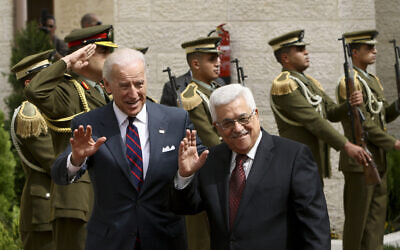
Then-US vice president Joseph Biden, left, and Palestinian Authority President Mahmoud Abbas wave to the press ahead of their meeting in the West Bank city of Ramallah, March 10, 2010. (AP Photo/ Tara Todras-Whitehill)

An unnamed senior official in PA President Mahmoud Abbas’s office was quoted as saying by the Israel Hayom daily on Sunday that Ramallah has sent Biden messages that the PA would be willing to resume US-brokered peace negotiations with Israel, but only from the point where they were halted in 2016 under Obama.

The official added that Abbas will demand that Biden immediately return the US embassy from Jerusalem to Tel Aviv, reversing a move Trump made in 2018, and undo Trump’s recognition of the Israeli capital.

Biden has previously said that while he plans to take a more evenhanded approach to the Middle East conflict than his predecessor, he will not overturn those decisions.

Hochstein also said he did not believe Netanyahu’s delay in congratulating Biden would affect relations.

“He’ll smile and move on,” he said of the president-elect

Trump approves selling F-22 Raptor to Israel — report

October 31, 2020

Newspaper says US is okaying sale of the advanced stealth aircraft to maintain the Jewish state’s military superiority, after announcing plans to sell F-35s to UAE

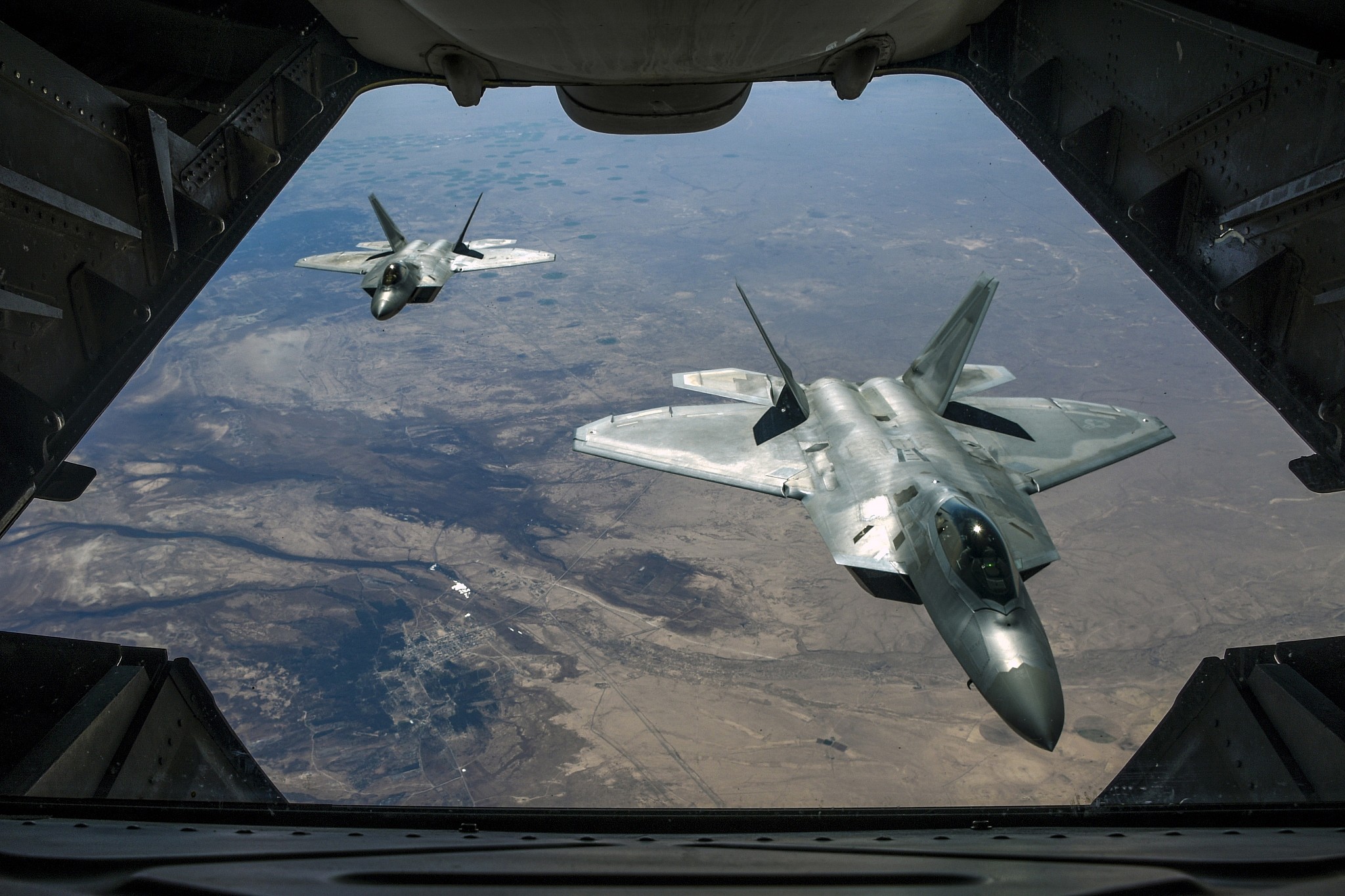
Illustrative: Two US Air Force F-22 Raptors fly over Syria, February 2, 2018. (Air National Guard/ Staff Sgt. Colton Elliott via Department of Defense)

Illustrative: Two US Air Force F-22 Raptors fly over Syria, February 2, 2018. (Air National Guard/ Staff Sgt. Colton Elliott via Department of Defense)

US Secretary of Defense Mark Esper told Israeli officials during a visit to Israel this week that the Trump administration has approved selling F-22 stealth fighters to the Jewish state, according to a Friday report.

US President Donald Trump okayed the sale of the F-22 Raptor and precision-guided bombs to Israel, the London-based Asharq Al-Awsat newspaper reported, citing senior sources in Tel Aviv.

Israeli defense officials requested to buy the F-22 — one of the world’s most advanced fighter jets — to maintain Israel’s qualitative military edge in the region after the US agreed to sell F-35 fighters to the United Arab Emirates, Haaretz reported on Tuesday.

Israel had previously expressed interest in buying the F-22, but the US declined, the report said. The US halted production of the fighter in 2011 and legally barred its sale to foreign countries.

Esper and Defense Minister Benny Gantz have met three times in just over a month, including Esper’s visit to Tel Aviv on Thursday. Esper also met with Prime Minister Benjamin Netanyahu, Defense Ministry Director-General Amir Eshel and Israel Defense Forces Chief of Staff Aviv Kochavi during the trip.

“They discussed the imperative to maintain regional security and stability and to confront Iran,” Gantz’s office said.

A source familiar with the meeting, who requested anonymity, told AFP that Gantz and Esper built on the discussions held in Washington last week on “making progress toward upgrading Israel’s qualitative military edge” following “developments in the region.”

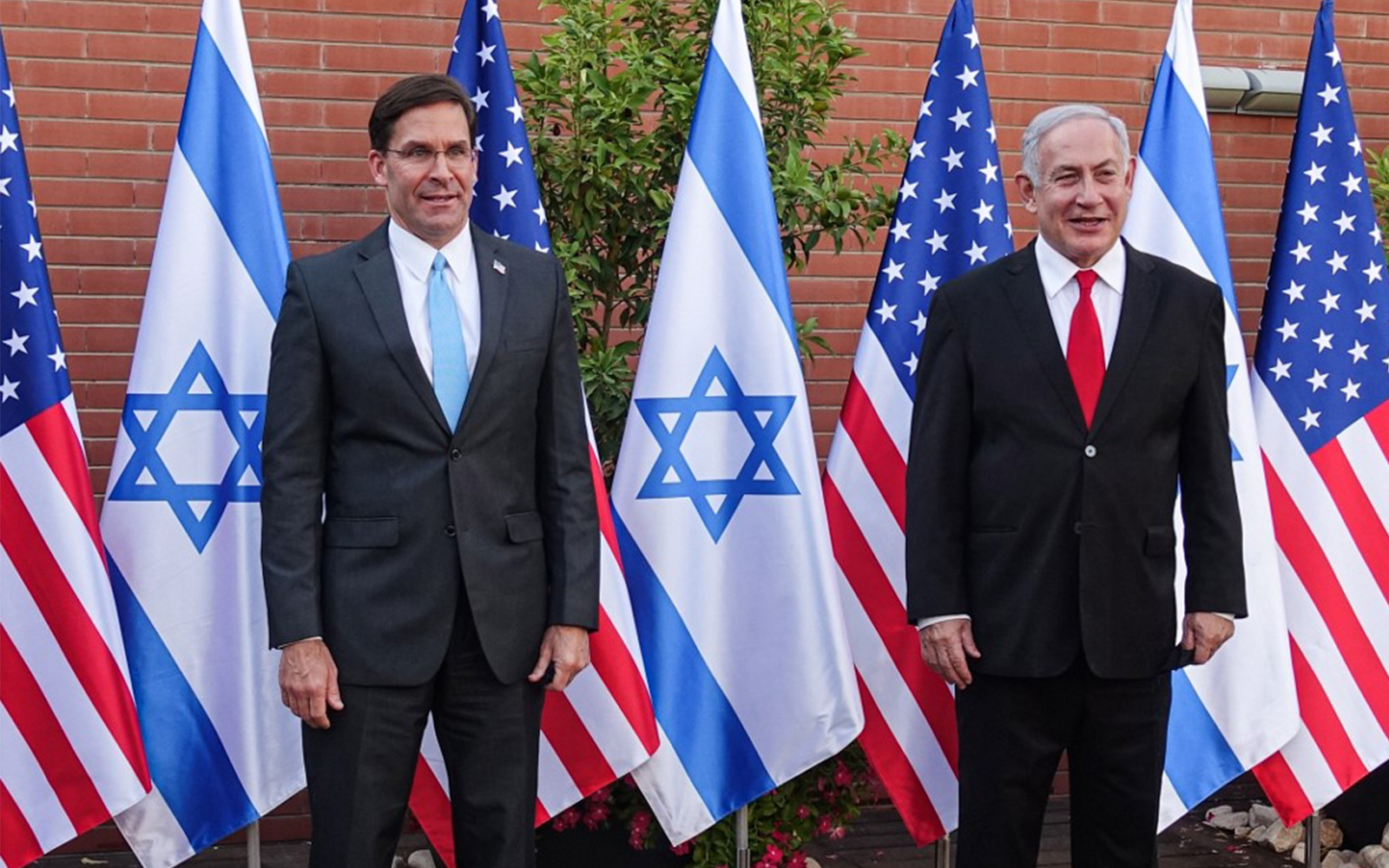
US Secretary of Defense Mark Esper, left, and Prime Minister Benjamin Netanyahu, right, meet at the Israel Aerospace Industries in Tel Aviv on October 29, 2020. (Paul Handley/AFP)

Last week and in late September, Gantz traveled to Washington for high-level meetings with Esper and other American defense officials on ways to offset the damage to Israel’s military edge by the proposed sale of the state-of-the-art, fifth-generation aircraft to the UAE.

Esper and Gantz signed an agreement in Washington last week that reaffirmed American commitment to maintaining Israel’s qualitative military edge, the technical term for military superiority in the Middle East, in light of the proposed sale of American F-35 stealth fighter jets to the UAE.

Though the US has agreed generally to maintain Israeli military supremacy in the region, no deals have yet been signed for specific weapon systems or defense programs. These will likely focus on the sale of additional fighter jets, helicopters and air defense systems to Israel, a senior defense official familiar with the negotiations told reporters last week.

The White House updated Congress on Thursday of its intent to sell F-35s to the UAE.

The informal notification to the House Foreign Affairs Committee revealed that the White House plans to sell as many as 50 units of the Lockheed Martin-made jets for roughly $10.4 billion, a senior congressional staffer told The Times of Israel. Israel has ordered the same number of F-35s from the US, though not all of them have been transferred yet.

Reports of the US intention to sell the aircraft to the UAE began days after Abu Dhabi agreed to normalize ties with Israel following negotiations brokered by the White House.

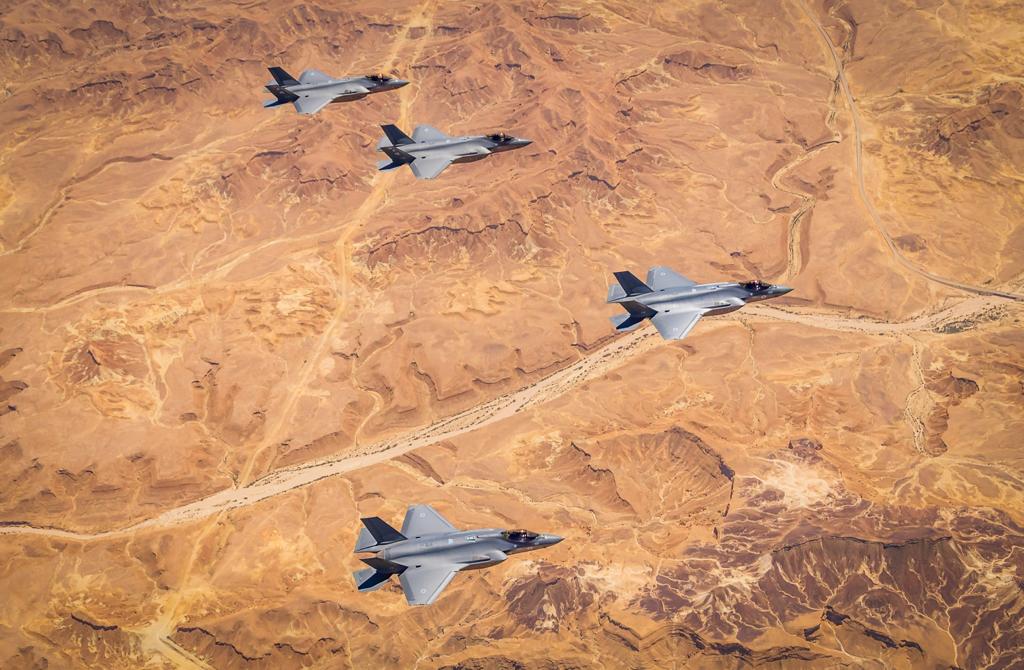
Israeli and American F-35 fighter jets take part in a joint exercise over southern Israel on March 29, 2020. (Israel Defense Forces)

US and Israeli officials have asserted the F-35 sale was not directly tied to normalization, but White House officials have acknowledged that the peace deal signed last month placed the UAE in a better position to purchase the advanced aircraft, which only Israel has in the Middle East.

Prime Minister Benjamin Netanyahu initially voiced opposition to the sale, but last Friday reversed his position, issuing a statement saying it would not oppose US plans to provide “certain weapon systems” to the UAE.

Asked to comment on the Congressional notification, Netanyahu told reporters Thursday that it followed extensive talks between the US and Israel during which Jerusalem received “more than just security” in the assurances from the US that its military superiority in the region would be maintained.

“We are facing a joint threat,” he said, apparently suggesting that the US could sell such weapons to the UAE with Israel’s blessing, given their common enemy of Iran.

The proposed sale of the F-35 to Abu Dhabi has become a hot-button issue in Israel in light of allegations that Netanyahu had told the United States that Jerusalem would not oppose such a move as part of a normalization agreement with the UAE brokered by the White House. Netanyahu has repeatedly denied that the F-35 sale was part of the deal with the Emiratis.

Gantz has publicly accused Netanyahu of holding negotiations regarding the sale of advanced weapons by the US to countries in the region behind the back of the Defense Ministry.

UN watchdog says Iran building new underground nuclear facility

October 27, 2020

IAEA says centrifuge structure meant to replace Natanz plant hit by mysterious explosion over summer; Tehran had promised to replace site with more secure one in mountains

Iran's nuclear enrichment facility in Natanz, 300 kilometers (186 miles) south of the capital Tehran, on April, 9, 2007. (Hasan Sarbakhshian/ AP/File)

Iran’s nuclear enrichment facility in Natanz, 300 kilometers (186 miles) south of the capital Tehran, on April, 9, 2007. (Hasan Sarbakhshian/ AP/File)

BERLIN, Germany (AP) — Inspectors from the UN’s atomic watchdog have confirmed Iran has started building an underground centrifuge assembly plant after its previous one exploded in what Tehran called a sabotage attack over the summer, the agency’s head told The Associated Press on Tuesday.

Iran also continues to stockpile greater amounts of low-enriched uranium, but does not appear to possess enough to produce a weapon, Rafael Grossi, director-general of the International Atomic Energy Agency, told the AP in an interview in Berlin.

Following the July explosion at the Natanz nuclear site, Tehran said it would build a new, more secure, structure in the mountains around the area. Satellite pictures of Natanz analyzed by experts have yet to show any obvious signs of construction at the site in Iran’s central Isfahan province.

“They have started, but it’s not completed,” Grossi said. “It’s a long process.”

He would not give further details, saying it’s “confidential information.” Iran’s mission to the United Nations did not immediately respond to a request for comment.

Iran said last month it had identified those responsible for the sabotage at the Natanz facility, but did not provide further details. Foreign media reports have attributed the explosion, which they said badly damaged an advanced centrifuge development and assembly plant, to Israel or the US.

The explosion was one of a series of mysterious blasts at Iranian strategic sites around the same time, which were largely attributed to either Washington, Jerusalem, or both.

Reports in August had indicated that Iran was moving to boost uranium enrichment at Natanz. A document from the International Atomic Energy Agency said new advanced centrifuges were being moved from a pilot facility to a new area of the nuclear facility.

Ali Akbar Salehi, the head of Iran’s nuclear department, last month told state television the destroyed above-ground facility was being replaced with one “in the heart of the mountains around Natanz.”

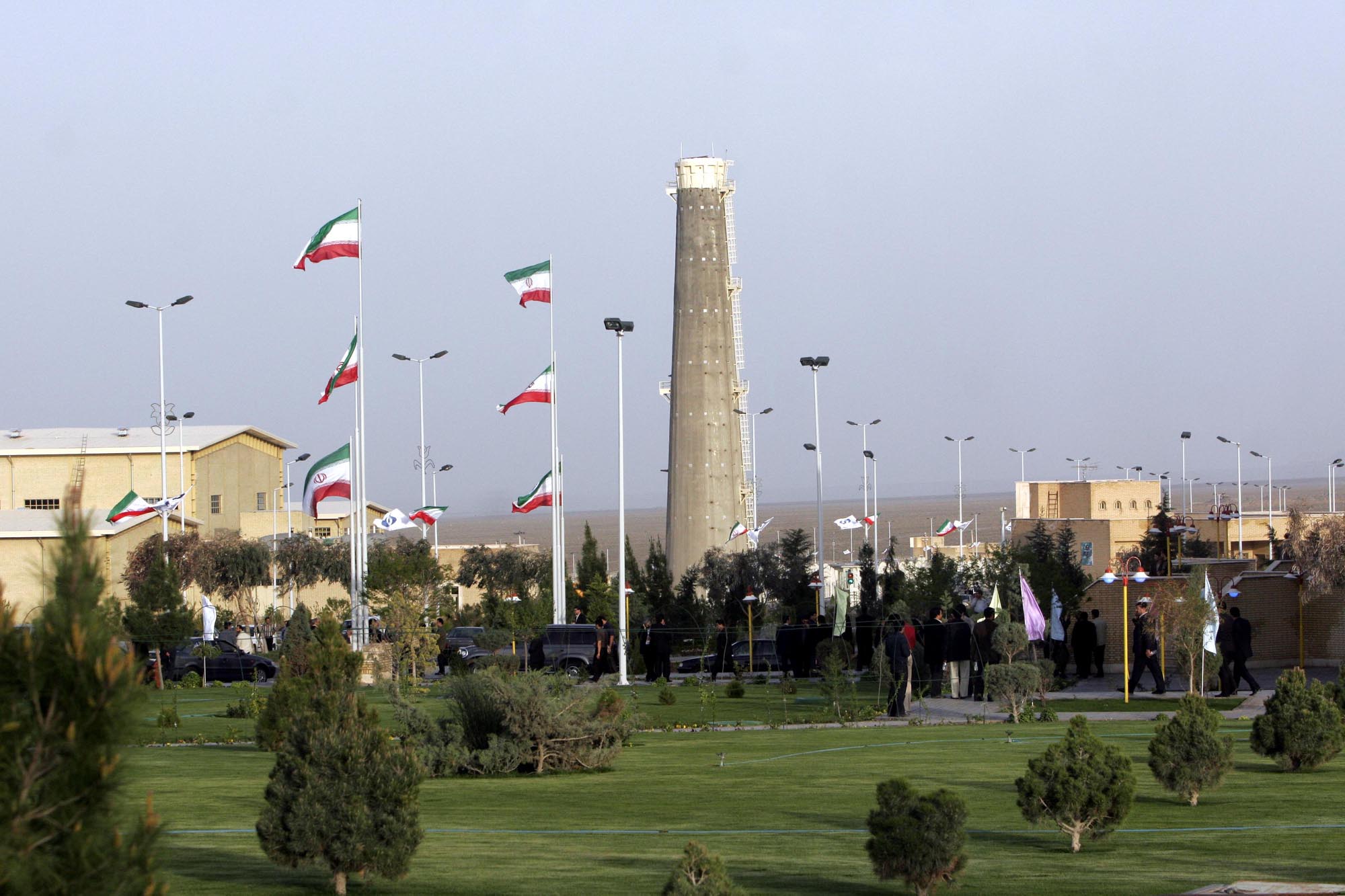
Natanz hosts the country’s main uranium enrichment facility. In its long underground halls, centrifuges rapidly spin uranium hexafluoride gas to enrich uranium.

Natanz became a flashpoint for Western fears about Iran’s nuclear program in 2002, when satellite photos showed Iran building an underground facility at the site, some 200 kilometers (125 miles) south of the capital, Tehran. In 2003, the IAEA visited Natanz, which Iran said would house centrifuges for its nuclear program, buried under some 7.6 meters (25 feet) of concrete. That offers protection from potential airstrikes on the site, which also is guarded by anti-aircraft positions.

Natanz had been targeted by the Stuxnet computer virus previously, which was believed to be a creation of the US and Israel. Iran has yet to say who it suspects of carrying out the sabotage in the July incident. Suspicion has fallen on Israel as well, despite a claim of responsibility by a previously unheard-of group at the time.

Under the provisions of the landmark 2015 nuclear deal with world powers known as the Joint Comprehensive Plan of Action, Iran is allowed to produce a certain amount of enriched uranium for non-military purposes.

In return, Iran was offered economic incentives by the countries involved.

Since US President Donald Trump pulled the US unilaterally out of the deal in 2018 and re-imposed sanctions, however, the other signatories — Germany, France, Britain, Russia and China — have been struggling to keep the deal alive.

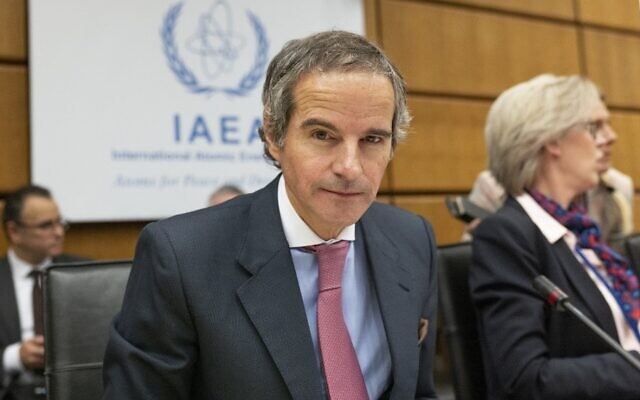
Rafael Grossi, director-general of the International Atomic Energy Agency, prepares for the opening of the IAEA Board Meeting at the agency’s headquarters in Vienna, Austria on March 9, 2019. (Joe Klamar/AFP)

Meanwhile, Iran has been steadily exceeding the deal’s limits on how much uranium it can stockpile, the purity to which it can enrich uranium and other restrictions to pressure those countries to come up with a plan to offset US sanctions.

Iran has continued to allow IAEA inspectors full access to its nuclear facilities, including Natanz, Grossi said.

In the latest IAEA quarterly report, the agency reported Iran as of Aug. 25 had stockpiled 2,105.4 kilograms (4,641.6 pounds) of low-enriched uranium, well above the 202.8 kilograms (447.1 pounds) allowed under the JCPOA. It was also enriching uranium to a purity of 4.5%, higher than the 3.67% allowed under the deal.

In the next report, due in coming weeks, Grossi said: “We continue to see the same trend that we have seen so far.”

According to a widely cited analysis by the Washington-based Arms Control Association, Iran would need roughly 1,050 kilograms (1.16 tons) of low-enriched uranium — under 5% purity — in gas form and would then need to enrich it further to weapons-grade, or more than 90% purity, to make a nuclear weapon.

The IAEA’s current assessment is, however, that Iran does not at the moment possess a “significant quantity” of uranium — defined by the agency as enough to produce a bomb — according to Grossi.

“At the moment, I’m not in contact with my inspectors, but by memory, I wouldn’t say so,” he said.

“All of these are projections and the IAEA is not into speculation,” he added. “What may happen? What could happen? We are inspectors, we say the amounts that we see.”

Iran insists it has no interest in producing a bomb, and Grossi noted that before the JCPOA, Iran had enriched its uranium up to 20% purity, which is just a short technical step away from the weapons-grade level of 90%. And in 2013, Iran’s stockpile of enriched uranium was already more than 7,000 kilograms (7.72 tons) with higher enrichment, but it didn’t pursue a bomb.

Centrifuge machines in the Natanz uranium enrichment facility in central Iran, November 5, 2019. (Atomic Energy Organization of Iran via AP)

“The idea of a ‘significant quantity’ is a technical parameter… that applies in the context of the safeguards agreement to indicate amounts which could be theoretically used for the development of a nuclear weapon,” he said.

“The fact that there could be such an amount would not indicate automatically that a nuclear weapon is being fabricated, so I think we have to be very careful when we use these terms.”

Grossi personally visited Tehran in late August for meetings with top officials and managed to break a months-long impasse over two locations thought to be from the early 2000s where Iran was suspected of having stored or used undeclared nuclear material and possibly conducted nuclear-related activities.

Inspectors have now taken samples from both of those sites, and Grossi said they are still undergoing lab analysis.

“It was a constructive solution to a problem what we were having,” he said. “And I would say since then we have kept the good level of cooperation in the sense that our inspectors are regularly present and visiting the sites.”

Times of Israel staff contributed to this report.

Iran says UN arms embargo on Tehran has ended

October 18, 2020

5 years after nuclear deal took effect, ‘all restrictions on transfer of arms terminated,’ Islamic Republic says, hailing world’s position ‘in defiance of US regime’s efforts’

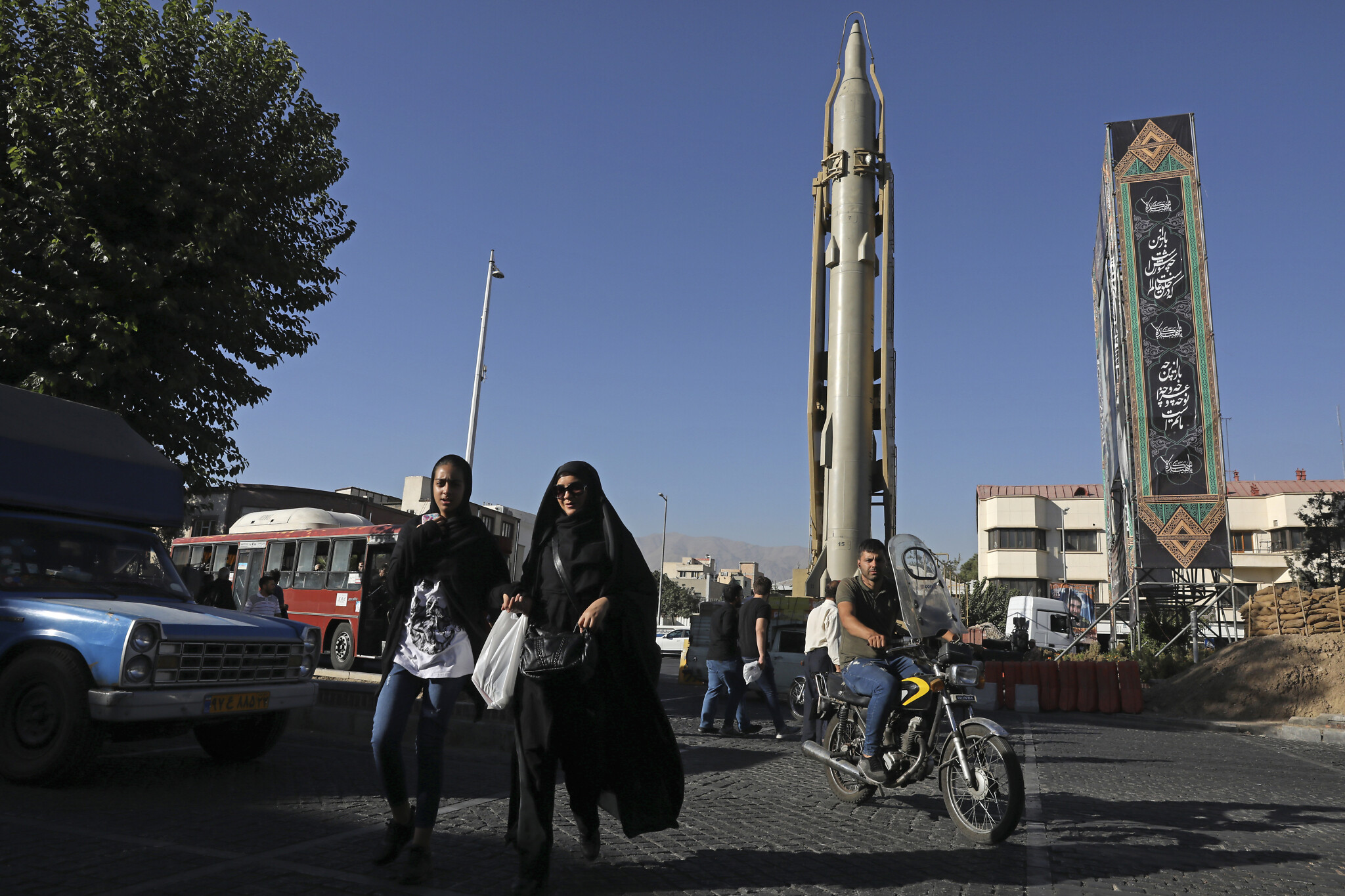
A Shahab-3 surface-to-surface missile is on display at an exhibition by Iran's army and paramilitary Revolutionary Guard in downtown Tehran, Iran, Wednesday, Sept. 25, 2019. (AP/Vahid Salemi)

A Shahab-3 surface-to-surface missile is on display at an exhibition by Iran’s army and paramilitary Revolutionary Guard in downtown Tehran, Iran, Wednesday, Sept. 25, 2019. (AP/Vahid Salemi)

TEHRAN, Iran — A longstanding UN embargo on arms sales to and from Iran expired early Sunday in line with a 2015 landmark nuclear deal, the Iranian foreign ministry said.

“As of today, all restrictions on the transfer of arms, related activities and financial services to and from the Islamic Republic of Iran … are all automatically terminated,” the ministry said in a statement.

The embargo on the sale of arms to Iran was due to start expiring progressively from Sunday, October 18, under the terms of the UN resolution that blessed the 2015 nuclear deal between the Islamic republic and world powers.

“As of today, the Islamic Republic may procure any necessary arms and equipment from any source without any legal restrictions, and solely based on its defensive needs,” the ministry added in the statement sent out on Twitter.

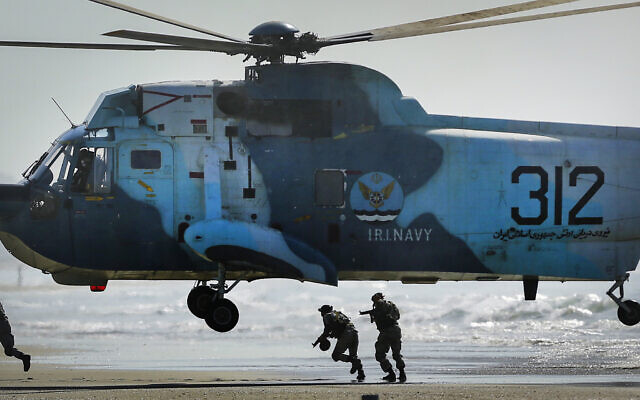
This photo released by the semi-official Fars News Agency shows Iranian troops participating in a military drill near the strategic Strait of Hormuz, Iran, Thursday, Sept. 10, 2020. Units from the navy, air force and ground forces are participating in a nearly 2 million-square-kilometer (772,200-square-mile) area of the Gulf of Oman. (Mehdi Marizad/Fars News Agency via AP)

It insisted that under the terms of the deal, struck with the United States, China, Britain, France, Germany, Russia and the European Union, “the lifting of arms restrictions and the travel ban were designed to be automatic with no other action required.”

US President Donald Trump withdrew his country from the deal in 2018 and has unilaterally begun reimposing sanctions on Iran.

But Washington suffered a setback in August when it failed to win support from the United Nations Security Council to indefinitely extend the arms embargo.

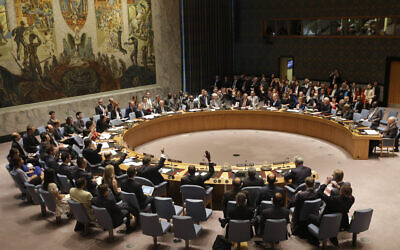
In this July 20, 2015, file photo, members of the Security Council vote at United Nations headquarters on the landmark nuclear deal between Iran and six world powers. (AP/Seth Wenig, File)

It was “a momentous day for the international community,” the Iranian ministry said on Sunday, adding the world had stood with Tehran “in defiance of the US regime’s efforts.”

But it stressed that “unconventional arms, weapons of mass destruction and a buying spree of conventional arms have no place in Iran’s defense doctrine.”

Despite pulling out of the deal, the Trump administration insists it is still a “participant” and can therefore go ahead with reimposing sanctions.

Washington has said it has decided to unilaterally reinstate virtually all of the UN sanctions on Iran lifted under the accord.

But the US legal argument has been rejected by almost the entire UN Security Council, with European allies of the United States saying the priority is to salvage a peaceful solution to Iran’s nuclear program.

Moscow said in September that it was ready to boost its military cooperation with Tehran, while Beijing has also spoken of its willingness to sell arms to Iran after October 18.

Washington maintained it will seek to prevent Iran from purchasing Chinese tanks and Russian air defense systems.

Iranian Foreign Minister Javad Zarif said in a tweet that the international community had “protected” the nuclear deal and Sunday marked the “normalization of Iran’s cooperation with the world.”

Iran’s nuclear chief has COVID-19; country sees highest daily virus death toll

October 11, 2020

Ali Akbar Salehi said to be in good condition at home; Tehran announces 251 fatalities in 1 day with nearly 4,500 critical patients, as currency crashes to record low

By AGENCIESToday, 3:20 pm  0File: The head of Iran’s Atomic Energy Organization Ali Akbar Salehi delivers his speech at opening of the general conference of the IAEA in Vienna, Austria, September 16, 2019. (AP Photo/Ronald Zak)

The head of Iran’s atomic energy organization is the latest senior official to test positive for the coronavirus, the semiofficial Tasnim news agency reported Sunday.

According to the report, Ali Akbar Salehi, who is also a vice president of Iran, confirmed positive for the virus last week and has been in home quarantine since. The news agency reported that his health condition is currently good.

Meanwhile, a separate report by Tasnim news agency said the country’s vice president in charge of budget and planning, Mohammad Bagher Nobakht, had also tested positive for the virus.

Iran has seen several top officials contract the virus over past months, including senior Vice President Eshaq Jahangiri and Vice President Massoumeh Ebtekar. A number of Cabinet ministers have also tested positive, including Tourism Minister Ali Asghar Mounesan and the former Industry Minister Reza Rahmani.

The head of an Iranian government task force on the coronavirus who had urged the public not to overreact about its spread was among the first senior officials to contract the virus in late February.

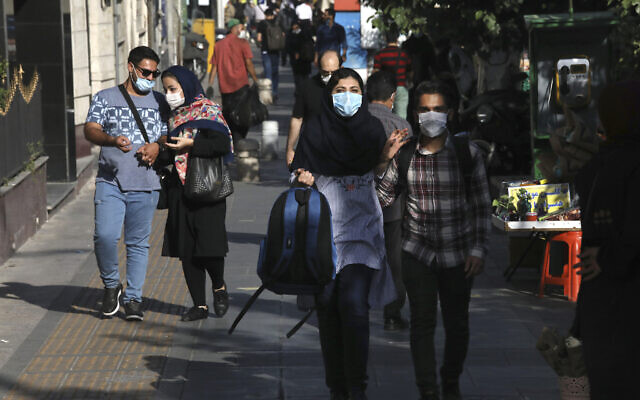
People wearing protective face masks to help prevent the spread of the coronavirus walk on a sidewalk in downtown Tehran, Iran, Sept. 20, 2020 (AP Photo/Vahid Salemi)

Iran announced on Sunday its highest single-day death toll from the coronavirus with 251 confirmed dead, the same day the nation’s currency hit a record low.

Health Ministry spokesperson Sima Sadat Lari said the total confirmed death toll now stands at 28,544, making it the hardest-hit country in the region. Iran had previously recorded its highest daily death toll four days earlier with 239 new fatalities.

A further 3,822 new cases were confirmed over the past 24-hour period, raising recorded nationwide cases to 500,075. Nearly 4,500 patients are in critical condition.

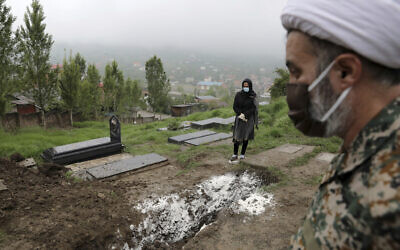
A woman wearing mask and gloves prays at the grave of her mother who died from the coronavirus, at a cemetery in the outskirts of the city of Babol, in northern Iran, April 30, 2020. (AP Photo/Ebrahim Noroozi)

The virus first appeared in Iran at the same time the government was trying to shore up support for the country’s parliamentary elections, which saw the lowest voter turnout since the 1979 Islamic Revolution that brought its clerical leadership to power.

Iran has struggled to contain the spread of the virus across the nation of 80 million people, initially beating it back only to see a spike in cases again, beginning in June.

President Hassan Rouhani announced on Saturday that the country would start imposing fines for breaches of health regulations in Tehran. Iran had previously held back from using fines to enforce mask-wearing in public and other health protocols.

The government has largely resisted imposing wide-scale lockdowns as the economy teeters from continued US economic sanctions that effectively bar Iran from selling its oil internationally.

Money exchange shops in Tehran sold the US dollar at 315,000 rials on Sunday, compared to what was 32,000 rials to the dollar at the time of Iran’s 2015 nuclear deal with world powers.405An Iranian woman checks a display board at a currency exchange shop as she walks by in the capital Tehran, on September 29, 2020 (ATTA KENARE / AFP)

The currency plummeted further on Sunday days after the Trump administration’s decision to blacklist 18 Iranian banks that had so far escaped the bulk of re-imposed sanctions.

The move subjects non-Iranian financial institutions to penalties for doing business with them, effectively cutting the banks off from the international financial system.

US President Donald Trump unilaterally withdrew the United States from the agreement in 2018 and reimposed crushing economic sanctions.

Israeli PM Netanyahu Addresses 75th Session of the UNGA

September 29, 2020


Rouhani accuses US of ‘atrocity’ over sanctions, blames ‘Zionists’ for woes

September 27, 2020

Iranian president decries the damage of recent American punitive actions, says US administration will yet ‘bow down before the Iranian nation’

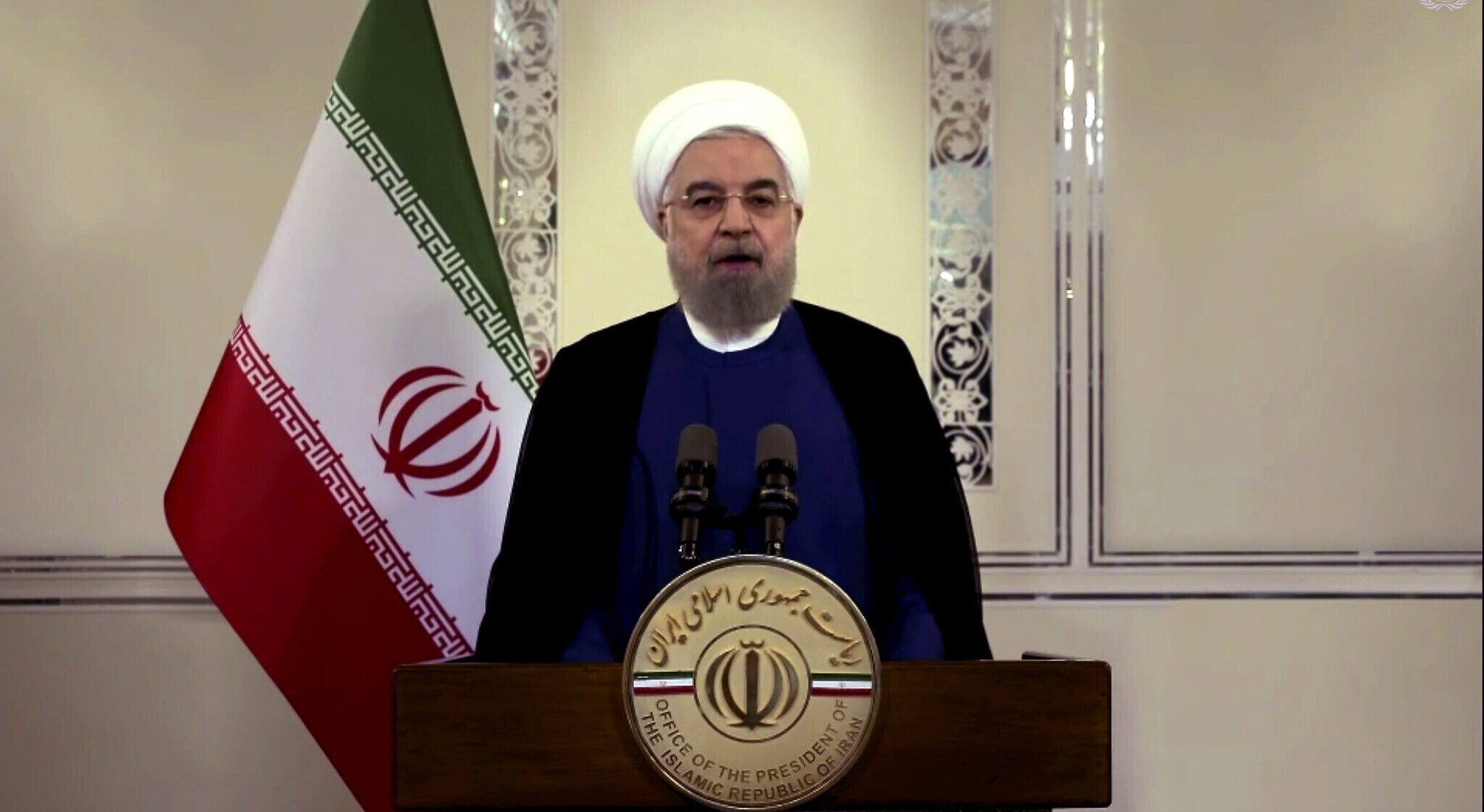
Iranian President Hassan Rouhani speaking in a pre-recorded message played during the 75th session of the United Nations General Assembly, at UN headquarters in New York, September 22, 2020. (UNTV via AP)

Iranian President Hassan Rouhani speaking in a pre-recorded message played during the 75th session of the United Nations General Assembly, at UN headquarters in New York, September 22, 2020. (UNTV via AP)

Iranian President Hassan Rouhani on Saturday accused the US of committing an “atrocity” for sanctions that have inflicted damages of $150 billion, and urged the Iranian people to blame the White House for recent financial woes, in a televised address on Iranian state TV.

The United States imposed fresh sanctions this week on Iran’s defense ministry and enforced an arms embargo under a United Nations authority that is widely contested.

“The people should curse the White House for the shortages… the main source of all the crimes and pressures against the Iranian nation is the White House,” Rouhani said.

Rouhani went on to blame the ails of Iranian society on “Zionism, reactionary approaches, and US extremists.”

In his closing remarks, Rouhani said that he had “no doubt the US administration will bow down before the Iranian nation.”

Tensions between the US and Iran have escalated since US President Donald Trump pulled out of the 2015 deal aimed at capping Iran’s nuclear activities in return for sanction relief, and unilaterally reimposed sanctions on Iran in 2018.

Despite pulling out of the nuclear deal, Trump announced Monday that the US has reimposed UN sanctions on the grounds that the United States is still a “participant” in the accord, as it was listed in the 2015 resolution.

This argument has been rejected by virtually all nations on the UN Security Council, including US allies.

The sanctions target 27 entities and officials related to Iran’s nuclear proliferation activities, a statement from the White House said. The order seizes US assets from “those who contribute to the supply, sale, or transfer of conventional arms to or from Iran, as well as those who provide technical training, financial support and services, and other assistance related to these arms.”

Trump said in a statement: “This executive order is critical to enforcing the UN arms embargo on Iran. The order will greatly diminish the Iranian regime’s capacity to export arms to terrorists and dangerous actors throughout the region, as well as its ability to acquire weapons to build up its own forces.”

Agencies contributed to this report.