Author Archive
BREAKING: Israel-Iran Military Actions Seemingly IMMINENT as Tensions Rise | TBN Israel
August 14, 2024
Iran Escalates Nuclear Program, raising international cornern
August 14, 2024Iran is reportedly advancing its nuclear weapons program, including high-level uranium enrichment and missile development, amid growing international concern.
Source: Iran Escalates Nuclear Program, raising international cornern
Israel BRACES For Iranian Attack; IDF Vows COUNTERSTRIKE On Key Iranian Infrastructure | TBN Israel
August 9, 2024
General Petraeus predicts Irans downfall
February 4, 2024U.S. Missiles Strike Targets in Yemen Linked to the Houthi Militia
January 12, 2024New York Times
The American-led strikes came in response to more than two dozen Houthi drone and missile attacks against commercial shipping in the Red Sea since the Israel-Hamas war began.
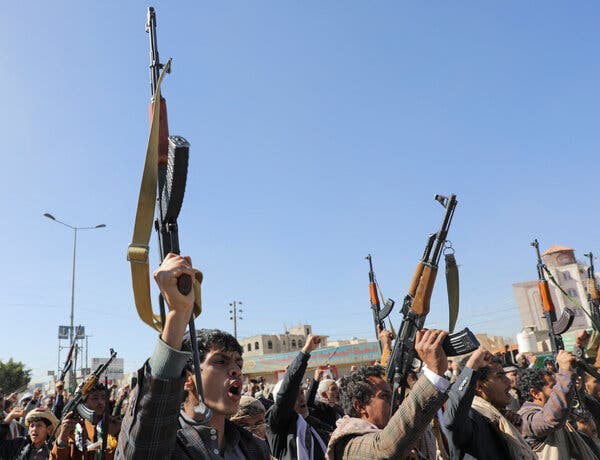
Eric Schmitt and
Reporting from Washington
The United States and five of its allies on Thursday carried out military strikes against more than a dozen targets in Yemen controlled by the Iranian-backed Houthi militia, in an expansion of the war in the Middle East that the Biden administration had sought to avoid for the past three months.
The American-led air and naval strikes came in response to more than two dozen Houthi drone and missile attacks against commercial shipping in the Red Sea since November, and after warnings to the Houthis in the past week from the Biden administration and several international allies of serious consequences if the salvos did not stop.
Where U.S. and Allies Attacked the Houthis in Yemen
Airstrikes were carried out against targets linked to the Houthi militia, including airports, military bases and weapon storage areas.
On Thursday night, President Biden called the strikes a “clear message that the United States and our partners will not tolerate attacks on our personnel or allow hostile actors to imperil freedom of navigation in one of the world’s most critical commercial routes.”
In a statement, he warned: “I will not hesitate to direct further measures to protect our people and the free flow of international commerce as necessary.”
But the Houthis have defied earlier American ultimatums, vowing to continue their attacks in what they say is a protest against Israel’s military campaign in Gaza.
More than 2,000 ships have been forced to divert thousands of miles to avoid the Red Sea, causing weeks of delays, Mr. Biden said. On Tuesday, American and British warships intercepted one of the largest barrages of Houthi drone and missile strikes yet, an assault that U.S. and other Western military officials said was the last straw.
Biden officials said they had telegraphed what was coming for weeks. But the strikes, they said, were meant more to damage Houthi capability and to hinder the group’s ability to strike Red Sea targets, rather than to kill leaders and Iranian trainers, which could be viewed as more escalatory.
The strikes hit radars, missile and drone launch sites, and weapons storage areas, Defense Secretary Lloyd J. Austin III said in a statement. Pentagon officials said late Thursday they were still assessing whether the strikes were successful, and emphasized that they had sought to avoid any civilian casualties.
Thursday’s attack drew the United States more deeply into a conflict that ignited after Hamas attacked Israel on Oct. 7 and killed 1,200 people, according to Israeli officials. The Israeli response has so far killed more than 23,000 people in Gaza, according to health authorities there.
Some American allies in the Middle East, including the Gulf nations of Qatar and Oman, had raised concerns that strikes against the Houthis could spiral out of control and drag the region into a wider war with other Iranian proxies, such as Hezbollah in Lebanon and Tehran-backed militias in Syria and Iraq.
But on Thursday, the United States decided to act. Britain joined the United States in the attack against the Houthi targets as fighter jets from bases in the region and off the aircraft carrier Dwight D. Eisenhower struck targets with precision-guided bombs.
“The United Kingdom will always stand up for freedom of navigation and the free flow of trade,” Prime Minister Rishi Sunak said in a statement.
The Netherlands, Australia, Canada and Bahrain also participated, providing logistics, intelligence and other support, according to U.S. officials. At least one Navy submarine fired Tomahawk cruise missiles, the officials said.
The president called the response from the international community “united and resolute.” Bahrain was the only Arab nation to take part, and there were questions as late as Thursday afternoon whether the small kingdom would be willing to publicly acknowledge its role. In the end, it did.
The Houthi foreign ministry responded to the attacks with a statement that “the U.S. and U.K. must be prepared to pay a heavy price and face the serious consequences of their aggression.”
It was unclear whether the allied strikes would deter the Houthis from continuing their attacks, which have forced some of the world’s largest shipping companies to reroute vessels away from the Red Sea, creating delays and extra costs felt around the world through higher prices for oil and other imported goods.
The Houthis, whose military capabilities were honed by more than eight years of fighting against a Saudi-led coalition, have greeted the prospect of war with the United States with open delight. On Wednesday, before the strike, Abdul-Malik al-Houthi, the militia’s leader, threatened to meet an American attack with a fierce response.
“We, the Yemeni people, are not among those who are afraid of America,” he said in a televised speech. “We are comfortable with a direct confrontation with the Americans.”
Administration officials have sought to separate the Houthi attacks from the conflict in Gaza, and to cast as illegitimate Houthi claims that they are acting to support the Palestinians. The officials are emphasizing that difference so that they can try to contain a wider war even as they ramp up their targeted response to the Houthi attacks.
Houthi officials say that the sole goal of their attacks is to force Israel to halt its military campaign and to allow the free flow of aid into Gaza.
For the Biden administration, the decision to finally strike back at the Houthis was three months in coming. Despite the barrage of attacks from the Houthis, the administration had hesitated to respond militarily for a number of reasons.
There was a fear that strikes on Yemen could escalate into a tit-for-tat between American naval vessels and the Houthis and even draw Iran further into the conflict, officials said. On Thursday, Iran’s navy seized a vessel loaded with crude oil off the coast of Oman.
Top Biden aides also had been reluctant to feed the narrative that the Yemeni militia group had become so important as to warrant U.S. military retaliation. Several administration officials said that the United States was also wary of disrupting the tenuous truce in Yemen.
The Houthis, a tribal group, have taken over much of northern Yemen since they stormed the nation’s capital, Sana, in 2014, effectively winning a war against the Saudi-led coalition that spent years trying to rout them. They have built their ideology around opposition to Israel and the United States, and often draw parallels between the American-made bombs that were used to pummel Yemen and those sent to Israel and used in Gaza.
“They offer bombs to kill the Palestinian people,” Mr. al-Houthi said in his speech. “Does that not provoke us? Does that not increase our determination in our legitimate stance?”
Hundreds of thousands of people have died in airstrikes and fighting in Yemen, as well as from disease and hunger, since the conflict there began. A truce negotiated in 2022 has largely held even without a formal agreement.
U.S. and other Western officials said the continuing attacks by the Houthis left them little choice but to respond, and they will hold the Houthis responsible for the attacks.
“We’re going to do everything we have to do to protect shipping in the Red Sea,” the U.S. national security spokesman, John Kirby, said at a news conference on Wednesday.
Mr. Biden authorized the strikes earlier in the week and Mr. Austin gave the final go-ahead on Thursday from Walter Reed National Military Medical Center in Bethesda, Md., where he is being treated for complications from prostate cancer surgery.
The administration briefed senior Democrats and Republicans on Capitol Hill earlier on Thursday that they planned to carry out strikes, a decision that generated bipartisan support.
The strikes came after weeks of consulting with allies. On Wednesday, Gen. Charles Q. Brown Jr., the chairman of the Joint Chiefs of Staff, was on the phone with his British counterpart, Adm. Sir Tony Radakin, to discuss the strikes, defense officials said.
Thursday night’s strikes were the biggest U.S. attack against the Houthis in nearly a decade. In 2016, the United States struck three Houthi missile sites with Tomahawk cruise missiles after the Houthis fired on Navy and commercial vessels. The Houthis’ attacks stopped afterward.
Reporting was contributed by Vivian Nereim from Riyadh, Saudi Arabia, Hwaida Saad from Beirut, Lebanon, Farnaz Fassihi from New York and Stephen Castle from London.
Eric Schmitt is a national security correspondent for The Times, focusing on U.S. military affairs and counterterrorism issues overseas, topics he has reported on for more than three decades. More about Eric Schmitt
Helene Cooper is a Pentagon correspondent. She was previously an editor, diplomatic correspondent and White House correspondent. More about Helene Cooper
A huge explosion destroyed an Iranian shipment of missiles and UAVs destined for the Houthis in Yemen
January 11, 2024
Iran ‘deeply involved’ in planning Houthi attacks on Red Sea shipping — White House
December 23, 2023Source: Iran ‘deeply involved’ in planning Houthi attacks on Red Sea shipping — White House
Washington intensifies rhetoric, declassifies intelligence tying Tehran to breakdown of key shipping route, but holds off on re-designating Houthis as a terror group
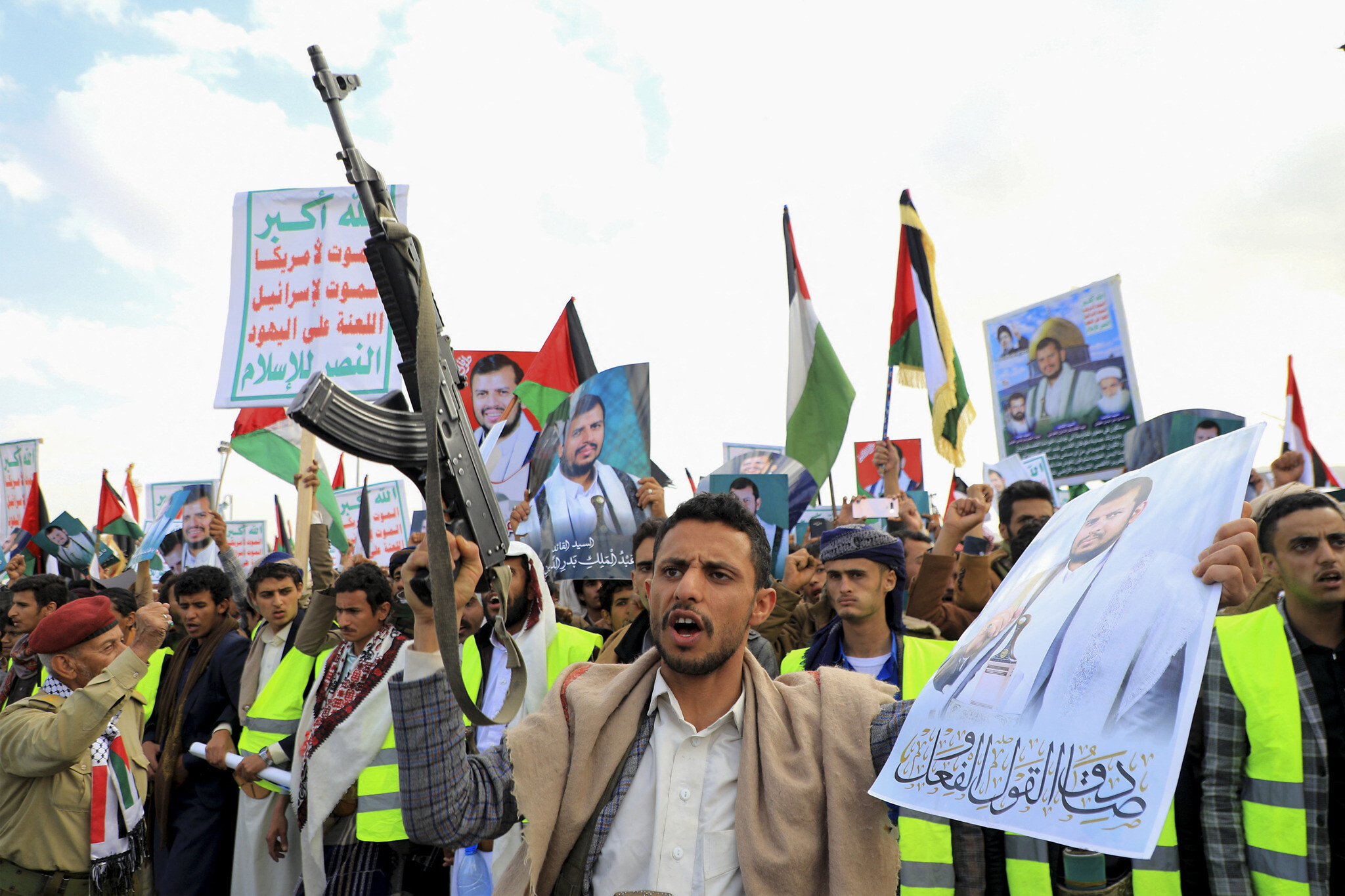
Yemenis in Houthi-controlled territory brandishing their guns chant slogans during a march in solidarity with the people of Gaza, in the capital Sanaa on December 15, 2023. (MOHAMMED HUWAIS / AFP)
Iran has been “deeply involved” in the planning of attacks by Yemen’s Houthi rebels against commercial vessels in the Red Sea, the Biden administration said on Friday, intensifying its rhetoric against Tehran amid the growing crisis surrounding global shipping efforts.
Citing newly declassified American intelligence, White House National Security Council spokesperson Adrienne Watson said in a statement that Iran is providing weapons, funding, training and “tactical intelligence” to enable the strikes along the critical sea corridor.
“Iranian support throughout the Gaza crisis has enabled the Houthis to launch attacks against Israel and maritime targets, though Iran has often deferred operational decision-making authority to the Houthis,” Watson said.
“Since 2015, Iran has transferred advanced weapons systems to the Houthis, including Unmanned Aerial Systems, Land Attack Cruise Missiles, and ballistic missiles that have been used in attacks against maritime vessels, including commercial vessels with no known links to Israel, and in attacks against Israel since October,” she revealed.
Without ongoing Iranian support, “the Houthis would struggle to effectively track and strike commercial vessels,” Watson said.
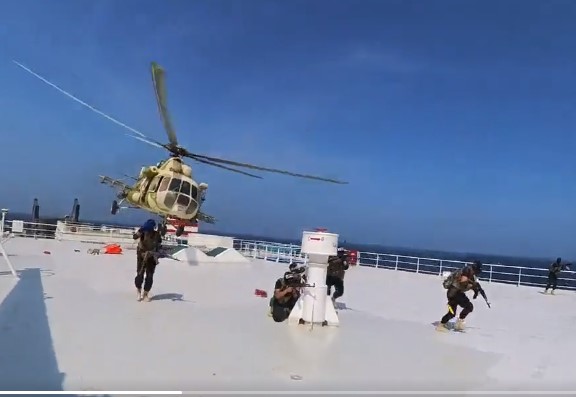
Iran-backed Houthis in Yemen publish a video showing how the group hijacked an Israeli-linked shipping vessel in the Red Sea on November 20, 2023. (Screen capture/X)
“We have no reason to believe that Iran is trying to dissuade the Houthis from this reckless behavior,” Watson said.
The Houthi campaign has prompted a growing list of companies to halt operations in the major trade route.
The US has established a naval coalition to protect the Red Sea global shipping lane. However, the Biden administration has not yet taken the step to reverse its decision to declassify the Houthis as a terror organization. US officials say Washington is still considering the move.
Meanwhile on Thursday, Greece announced that it was joining the US-led naval coalition.
Australia also announced Thursday that it would send 11 personnel to support the coalition, dubbed Operation Prosperity Guardian, but no warships or planes.
Australian Defense Minister Richard Marles said that Australia’s military needs to keep focused on the Pacific region.
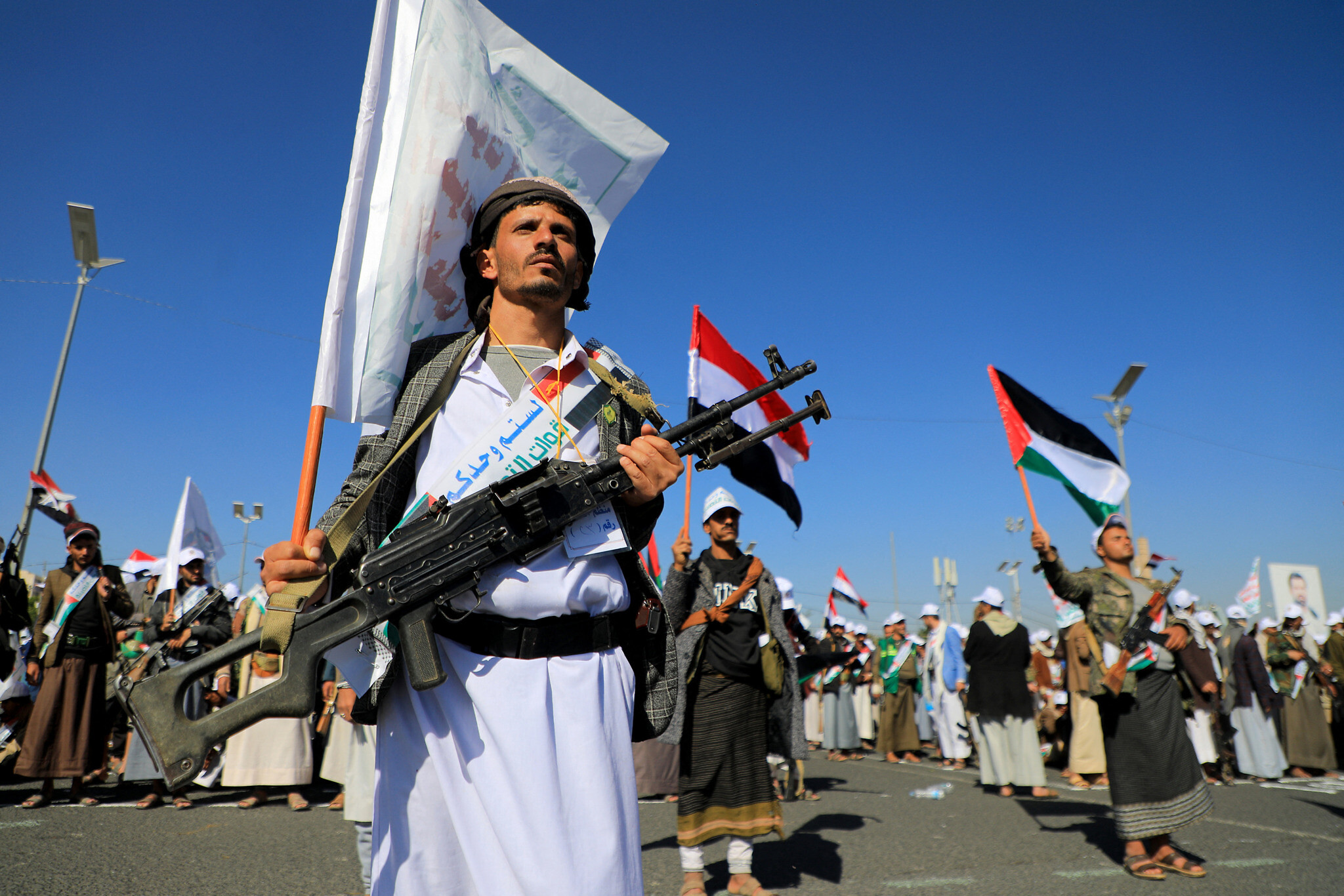
A Yemeni man carries a gun as he takes part in a march to express solidarity with the people of Gaza, in the Houthi-controlled capital Sanaa on December 2, 2023. (MOHAMMED HUWAIS / AFP)
The task force announced by US Defense Secretary Lloyd Austin on Monday initially included Britain, Bahrain, Canada, France, Italy, the Netherlands, Norway, Seychelles and Spain.
The Iran-backed Houthis say their missile and drone strikes on passing container ships are in support of Palestinians in the Gaza war raging between Israel and terror group Hamas since October 7. The Yemeni rebel group had announced that it would target any ship heading to Israel or linked to it, though a number of vessels with no apparent connection to Israel have been targeted as well.
Several other countries have also agreed to be involved in the operation but prefer not to be publicly named, a US defense official said Monday on the condition of anonymity to discuss additional details of the new mission that have not been publicly announced.
War erupted when Hamas carried out a devastating attack on Israel that killed some 1,200 people, mostly civilians. Terrorists who burst through border with the Gaza Strip also abducted at least 240 people who were taken as hostages into the Palestinian enclave.
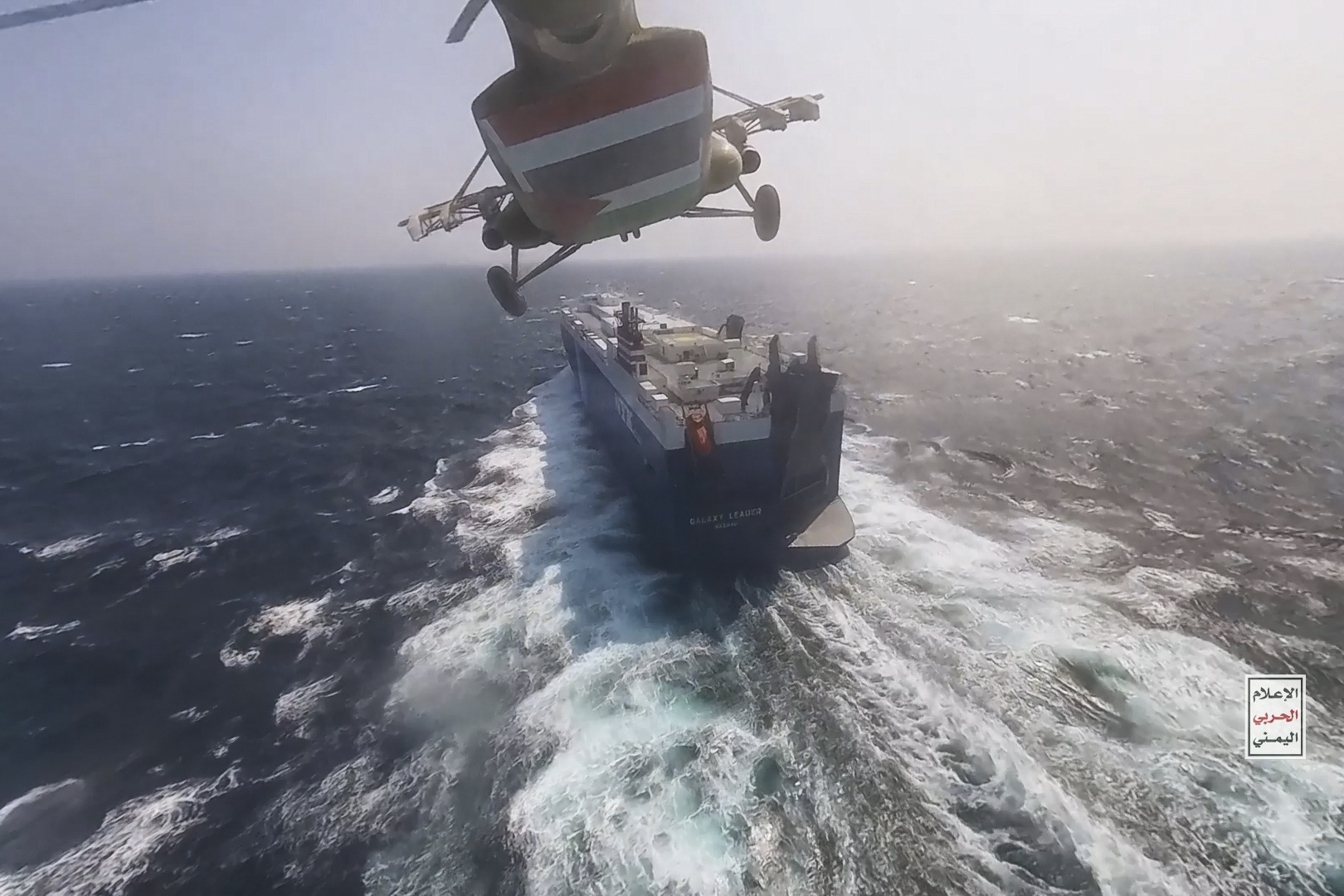
This photo released by the Houthi Media Center shows a Houthi forces helicopter approaching the cargo ship Galaxy Leader on November 19, 2023 in the Red Sea. (Houthi Media Center via AP)
Israel responded with a military campaign which it says is aimed at destroying Hamas and freeing the hostages.
The Houthi attacks in waters leading to the Suez Canal, a chokepoint for about 10 percent of global trade, have forced many shipping companies to divert their vessels.
Companies have ordered their ships to hold in place and not enter the Bab el-Mandeb Strait at the southern end of the Red Sea until the security situation can be addressed.
A day after Austin announced the task force operation, the Houthi rebels vowed to keep up attacks on ships, declaring they would not be deterred by the naval coalition.
Houthis have also launched missiles and drones at southern Israel, which were intercepted by air defense systems.
Iranian-Backed Terrorists Shoot Down U.S. Military Aircraft
November 9, 2023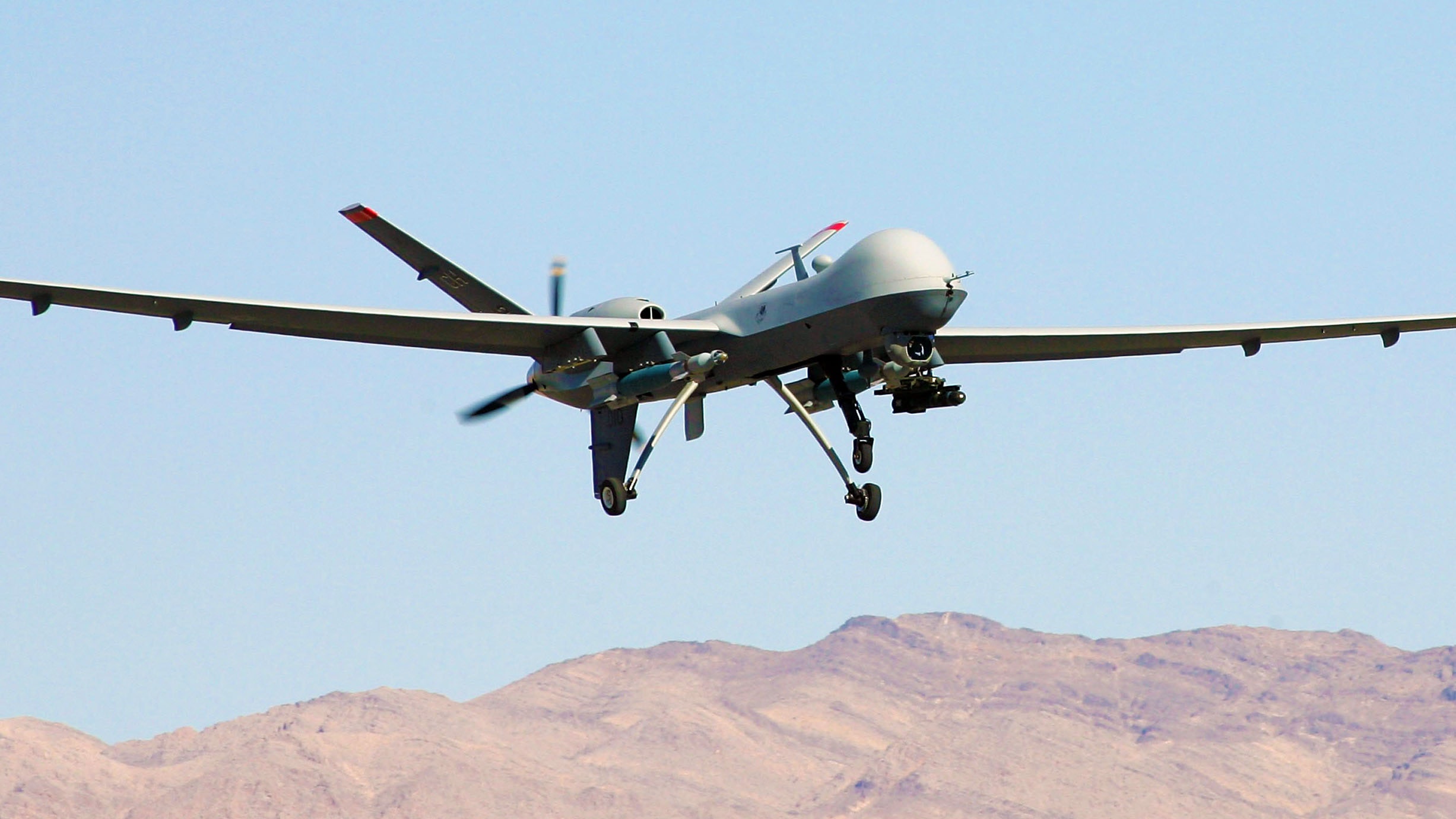
Iranian-backed terrorists in Yemen shot down a U.S. military drone over international waters on Wednesday, which comes after U.S. forces throughout the region have been repeatedly attacked by Iran’s terrorist proxies.
A U.S. defense official confirmed the incident to CNN and said that U.S. Central Command was investigating.
The Houthis, an Iranian-backed terrorist group in Yemen that the Biden administration delisted as a terror group back in 2021, claimed credit for downing the $56.5 million MQ-9 Reaper drone over the Red Sea.
Iran shot down a U.S. drone back in June of 2019 with a surface-to-air missile and then-President Donald Trump initially approved a retaliatory strike against Iran before backing off his decision.
CLICK HERE TO GET THE DAILY WIRE APP
The U.S. launched airstrikes later in the day but they were against Iranian-backed terrorists in Syria, not the Houthis in Yemen.
The strikes came after Iran and its terrorist proxy groups have launched 22 attacks against U.S. forces in Iraq and another 18 attacks against U.S. forces in Syria, leading to 46 U.S. soldiers being injured, including 25 who have been diagnosed with traumatic brain injuries.
Secretary of Defense Lloyd Austin said in a statement that the “self-defense” strikes were on “a facility in eastern Syria used by Iran’s Islamic Revolutionary Guard Corps (IRGC) and affiliated groups.”
“This strike was conducted by two U.S. F-15s against a weapons storage facility,” he said. “This precision self-defense strike is a response to a series of attacks against U.S. personnel in Iraq and Syria by IRGC-Quds Force affiliates.”
This was the second such strike U.S. forces have launched against Iranian forces in Syria over the last couple of weeks. The administration has not released any footage of the strikes.
Austin added that the U.S. will continue to conduct counter-ISIS missions in Iraq and Syria.
This report has been updated to include additional information.
Top U.S. Senators Warn Military Will Strike Iran Under Two Conditions | The Daily Wire
November 6, 2023Source: Top U.S. Senators Warn Military Will Strike Iran Under Two Conditions | The Daily Wire
Top U.S. Senators said over the weekend that they are introducing a bipartisan resolution calling for military strikes against Iran if its terror proxies in the Middle East kill any U.S. soldiers or if Hezbollah opens up a second front against Israel.
Sens. Lindsey Graham (R-SC) and Richard Blumenthal (D-CT) made the remarks during a CNN interview Sunday morning with Dana Bash on “State of the Union.”
The segment comes after Hamas murdered 1,400 Israelis in an unprecedented terrorist attack last month and Hezbollah, an Iranian-backed terrorist group in Lebanon, has conducted small scale attacks against Israel as it weighs whether to launch a full-scale attack.
“It basically says, if the war expands, if Hezbollah opens up a second front in the north against Israel in a substantial way to overwhelm Iron Dome, then we should hit the Islamic Republic of Iran,” Graham said. “There is no Hamas without the Ayatollahs’ support. There is no Hezbollah without the Ayatollahs’ support. The great Satan in the region is not Israel or the United States. It’s Iran.”
Graham said that he and Blumenthal just came back from the region and that Israel had begged them to deter Iran from entering the war as they deal with wiping out the Hamas terrorist organization inside Gaza.
“If any of our troops are killed in Syria and Iraq by Iranian-backed militias, I think that’s an expansion of the war,” Graham said. “So, the resolution puts Iran on notice that all this military force in the region will be coming after you if you expand this war by activating Hezbollah or killing an American through your proxies in Syria and Iraq. And they need to hear that. They need to believe that.”
Graham’s remarks come after there have been at least 31 attacks from Iranian-backed terrorists on U.S. forces in Iraq and Syria over the last two weeks, according to a report from The Wall Street Journal.




 anneinpt
 artaxes
 danmillerinpanama
 davidking1530
 Peter Hofman
 Joseph Wouk
 Peter
Peter Louisiana Steve
 WarSclerotic
Recent Comments