Israel always claimed Iran duped the world, and the 2015 deal paved its path to a nuclear arsenal. Armed with Iran’s own archive, PM now looks to Trump to do ‘the right thing’

By DAVID HOROVITZ30 April 2018, 10:05 pm 28Prime Minister Benjamin Netanyahu gives a speech on files obtained by Israel’s Mossad that he says prove Iran lied about its nuclear program, at the Defense Ministry in Tel Aviv, on April 30, 2018. (AFP Photo/Jack Guez)
Prime Minister Benjamin Netanyahu on Monday dropped a Mossad intelligence bombshell on Iran, and on the Obama administration-led international community that negotiated the 2015 nuclear deal with Tehran. He showcased a vast archive of Iran’s own documentation demonstrating that Tehran worked to develop a nuclear weapons arsenal, lied to the international community about it, and has taken the steps necessary to ensure it can proceed to the bomb within the framework of the 2015 deal.
In a brief, devastating presentation at the Tel Aviv Defense Ministry headquarters, Netanyahu unveiled what he described as one of Israeli intelligence’s greatest ever achievements — getting its hands on Iran’s own archived nuclear weapons program paperwork: 55,000 pages, and another 55,000 files on 183 CDs, he said. That archive faithfully records the progress of Iran’s comprehensive program to build nuclear weapons, named Project Amad, he noted — speaking in English, for maximal international resonance. And by obtaining that material, he declared, Israel could now incontrovertibly demonstrate that Iran’s leaders have “brazenly” lied to the world, and that the 2015 accord is founded on Iranian “deception.”
“100,000 files right here prove that they lied,” he declared, detailing the finds in a slideshow while standing in front of displays of files and CDs.
Watching the prime minister’s presentation in a TV studio, the former head of Military Intelligence in the Israeli army, Amos Yadlin, called the material “conclusive proof” of Tehran’s duplicity — vindication of Israel’s consistent claim that Iran had a nuclear weapons program, continued to work on it in recent years, and duped the world about it. The captured archive material contains “no smoking gun since 2015,” Yadlin observed, because that most recent material presumably hasn’t been archived yet. However, since Iran now demonstrably lied to the world until 2015, Yadlin added dryly, “it has presumably continued to lie since then as well.”
Netanyahu said he had already shared the material with the United States, and that the US could vouch for its authenticity. He said he would also share it with other countries and the International Atomic Energy Agency. The prime minister has always opposed the 2015 deal, negotiated by the P5+1 powers led by President Barack Obama. His presentation on Monday was plainly designed, among other factors, to advance his “fix it or nix it” demand — a stance, crucially, shared by US President Donald Trump, who has to decide in less than two weeks whether to withdraw from the accord.
The prime minister was notably non-specific regarding what action he thinks the US and the other P5+1 countries should take. As in, should they fix it, or should they nix it? He simply said that he was certain Trump would do “the right thing — the right thing for the United States, the right thing for Israel, and the right thing for the peace of the world.”Volume 0%
For the first time anyone could recall, Netanyahu had skipped his scheduled speech at Monday’s opening of the new Knesset session in order to marshall his material and prepare his speech. That cancellation, which came just hours after a reported major raid on an Iranian base in Syria, sparked a mini-panic among some Israelis. Awaiting Netanyahu’s address, the news anchor at Israel’s Hadashot TV news assessed, with only a small degree of exaggeration, that “every household in Israel” was now bracing for the prime minister’s address and wondering whether war with Iran was “inevitable.”
“No,” came the succinct answer from military analyst Roni Daniel.
Elaborating, a widely respected former Defense Ministry official, Amos Gilad, said in the studio: “Let’s reassure the public: There is no danger of war. And Iran is not attacking us.”
Gilad, however, then rather undermined his attempts at defusing panic by adding: “Iran is determined to get rid of Israel. They take the historical view… They are developing missiles. They say the agreement with Obama allows them in eight years time to develop nuclear weapons if they want to…”
It is that patient Iranian approach, that relentless Iranian threat, that Netanyahu was determined to highlight in his presentation. To that end, his speech had several complementary goals:
First, showing the Iranians the potency of Israel’s security and intelligence apparatuses — capable of removing Iran’s own closely guarded material from right under its nose (and consequently capable of identifying the key personnel, like Mohsen Fakhrizadeh, leading the nuclear weapons program).
Second, detailing, stage by stage, the progress of the Iranian nuclear weapons program as gleaned from Iran’s own documents, map, photos and videos — in five stages that he showcased slide by slide: from designing nuclear weapons, to developing nuclear cores, to building nuclear implosion systems, to preparing nuclear tests and, finally, to integrating nuclear weapons on missiles.
Third, giving the international community extraordinary evidence on which to formulate a more appropriate response to Tehran’s terrifying duplicity.US President Donald Trump speaks during a joint press conference with Nigerian President Muhammadu Buhari in the Rose Garden of the White House on April 30, 2018, in Washington, DC. Trump said the current Iranian nuclear deal was ‘unacceptable.’ (AFP/Saul Loeb)
And, fourth, providing Trump with the intelligence information he needs to take the firmest stance against the maintenance of the 2015 deal in its current form — no matter how derisive or threatening the Iranian response.
Will it work? Will the P5+1 countries suddenly discover a new iron will when it comes to confronting the malevolent ayatollahs? Netanyahu, for one, evidently puts little faith in that. But, as he detailed, he has been coordinating with the Trump administration. And the president, within minutes of Netanyahu’s presentation in Tel Aviv, was declaring on the White House lawn that Netanyahu had sent the right message, and that an Iranian path to the bomb in seven years is “not acceptable.”
Netanyahu argued Monday, as he has argued consistently all along, that the 2015 accord is “a terrible deal” that “should never have been concluded.” Now, he said, he had the proof.Then US president Barack Obama, right, and Prime Minister Benjamin Netanyahu hold a meeting in the Oval Office of the White House on November 9, 2015. (AFP/Saul Loeb)
The Obama administration claimed that no deal would have satisfied Israel, but that was always untrue. Israel wanted to see a deal that would dismantle Iran’s entire nuclear weapons program; the 2015 deal simply didn’t do that. Again, Netanyahu now had the proof.
Even Monday, armed with that Iranian archive of danger and duplicity, Netanyahu did not demand that the deal be scrapped. He stressed, rather, that the accord, as it stands, gives Iran a clear path to a nuclear arsenal, and asserted that the material he was presenting shows without a shadow of doubt that the Iranians fully intend to follow that path — to enrich mountains of uranium, to develop their ballistic missiles, to weaponize.
His message to the world on Iran’s rapacious leaders and their nuclear goals: They’re dangerous. They’re duplicitous. They have to be stopped. And… it’s not too late.

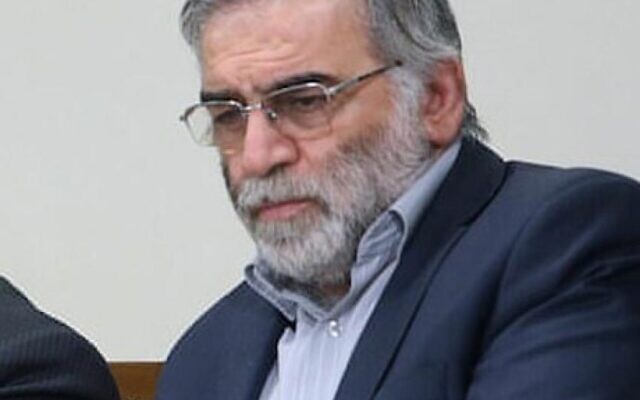
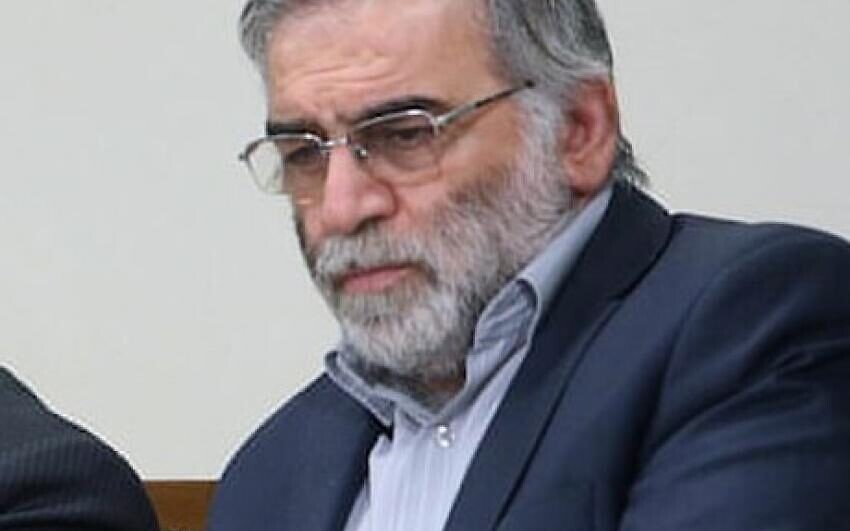
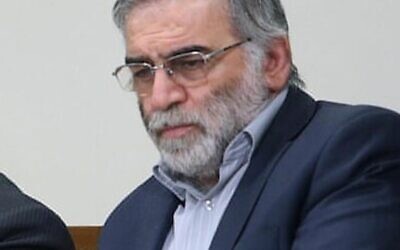 Dr. Mohsen Fakhrizadeh in an undated photo (Courtesy)
 In this photo released by the official website of the office of the Iranian Presidency, President Hassan Rouhani, right, listens to Chief of the General Staff of the Armed Forces Gen. Mohammad Hossein Bagheri during the army parade commemorating National Army Day in front of the shrine of the late revolutionary founder Ayatollah Khomeini, just outside Tehran, Iran on April 18, 2019. (Iranian Presidency Office via AP)
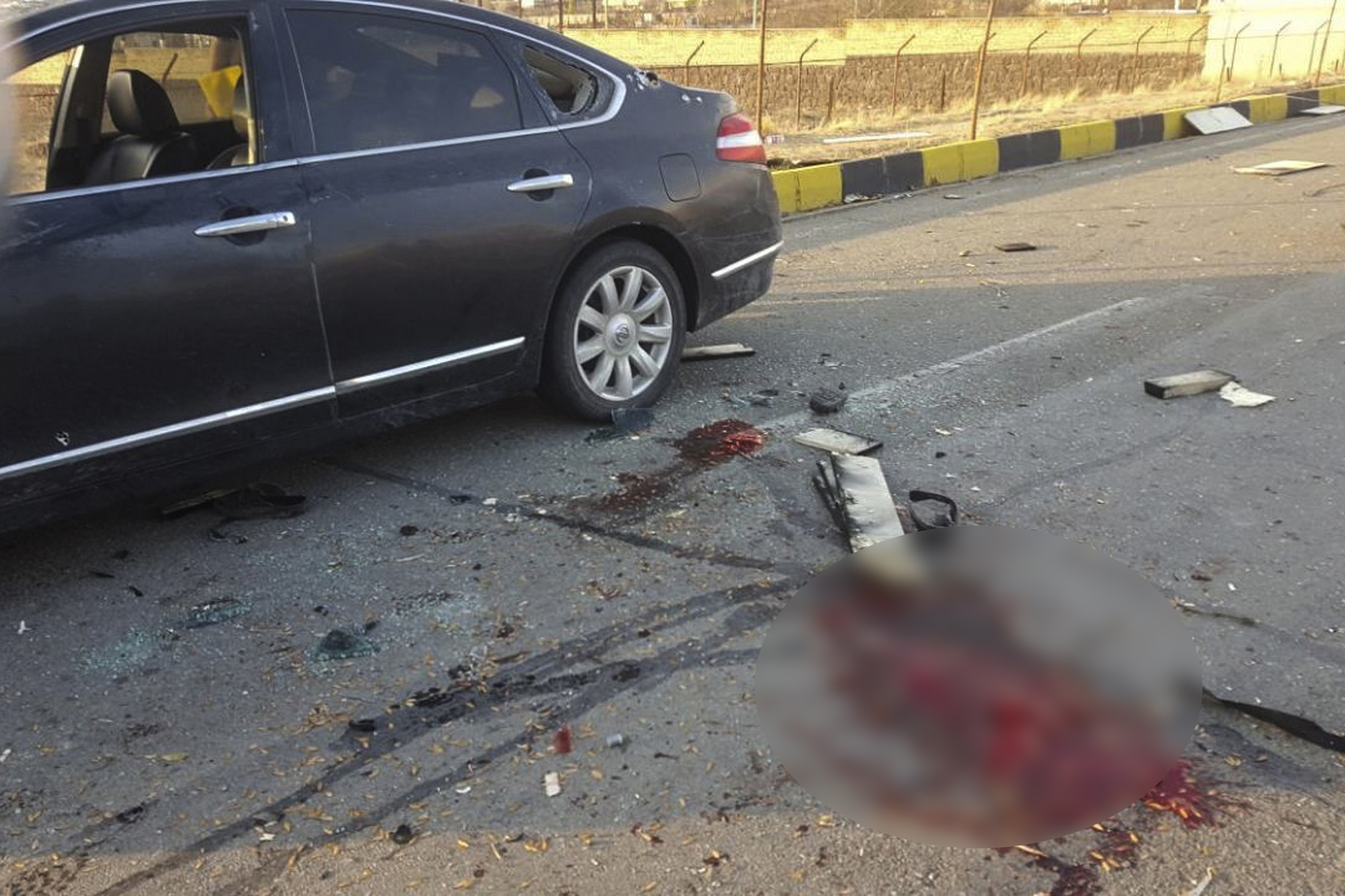
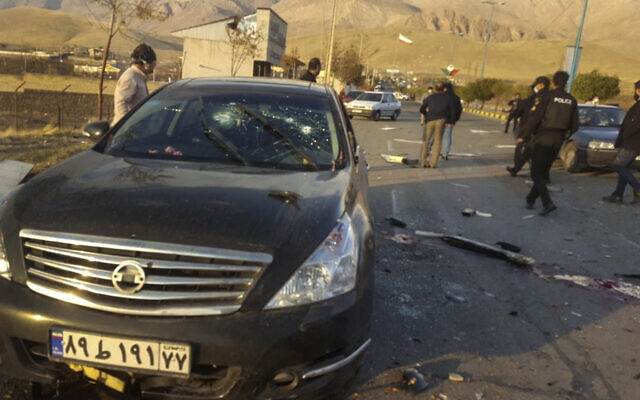 This photo released by the semi-official Fars News Agency shows the scene where Mohsen Fakhrizadeh was killed in Absard, a small city just east of the capital, Tehran, Iran, Friday, Nov. 27, 2020 (Fars News Agency via AP)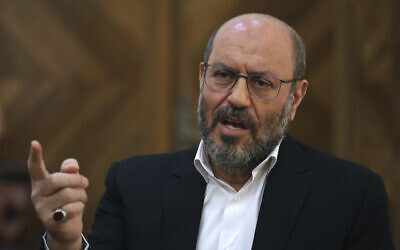
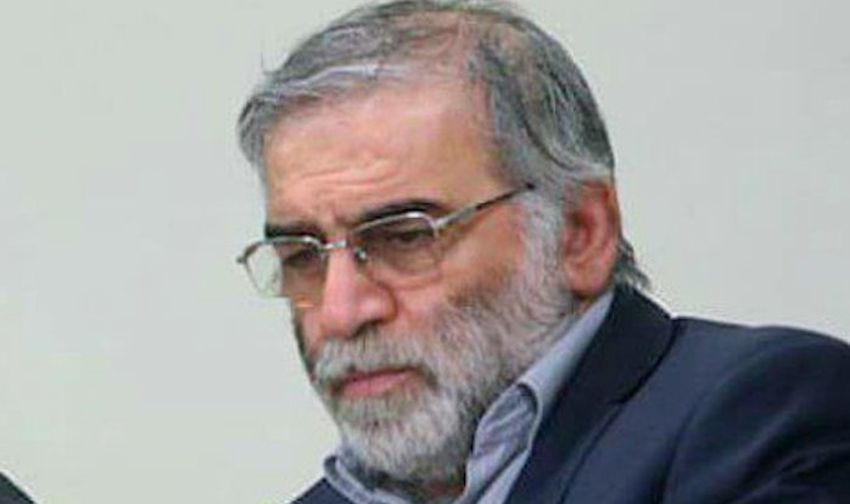
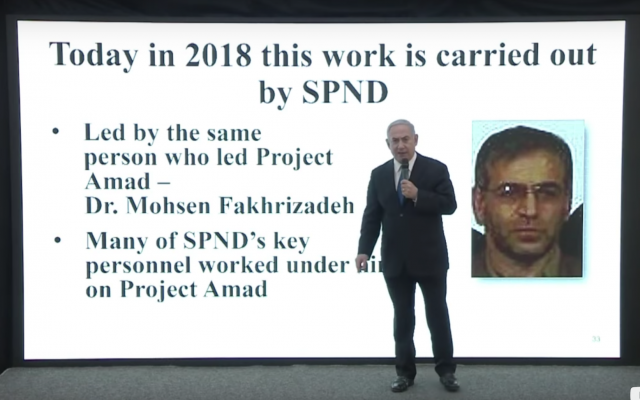 Prime Minister Benjamin Netanyahu stands in front of a picture of Mohsen Fakhrizadeh, who he named as the head of Iran’s nuclear weapons program, April 30, 2018 (YouTube screenshot)
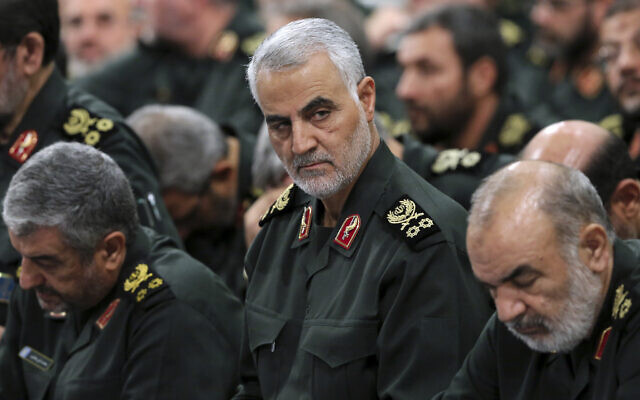 In this Sept. 18, 2016 file photo released by an official website of the office of the Iranian supreme leader, Revolutionary Guard Gen. Qassem Soleimani, center, attends a meeting with Supreme Leader Ayatollah Ali Khamenei and Revolutionary Guard commanders in Tehran, Iran. (Office of the Iranian Supreme Leader via AP)
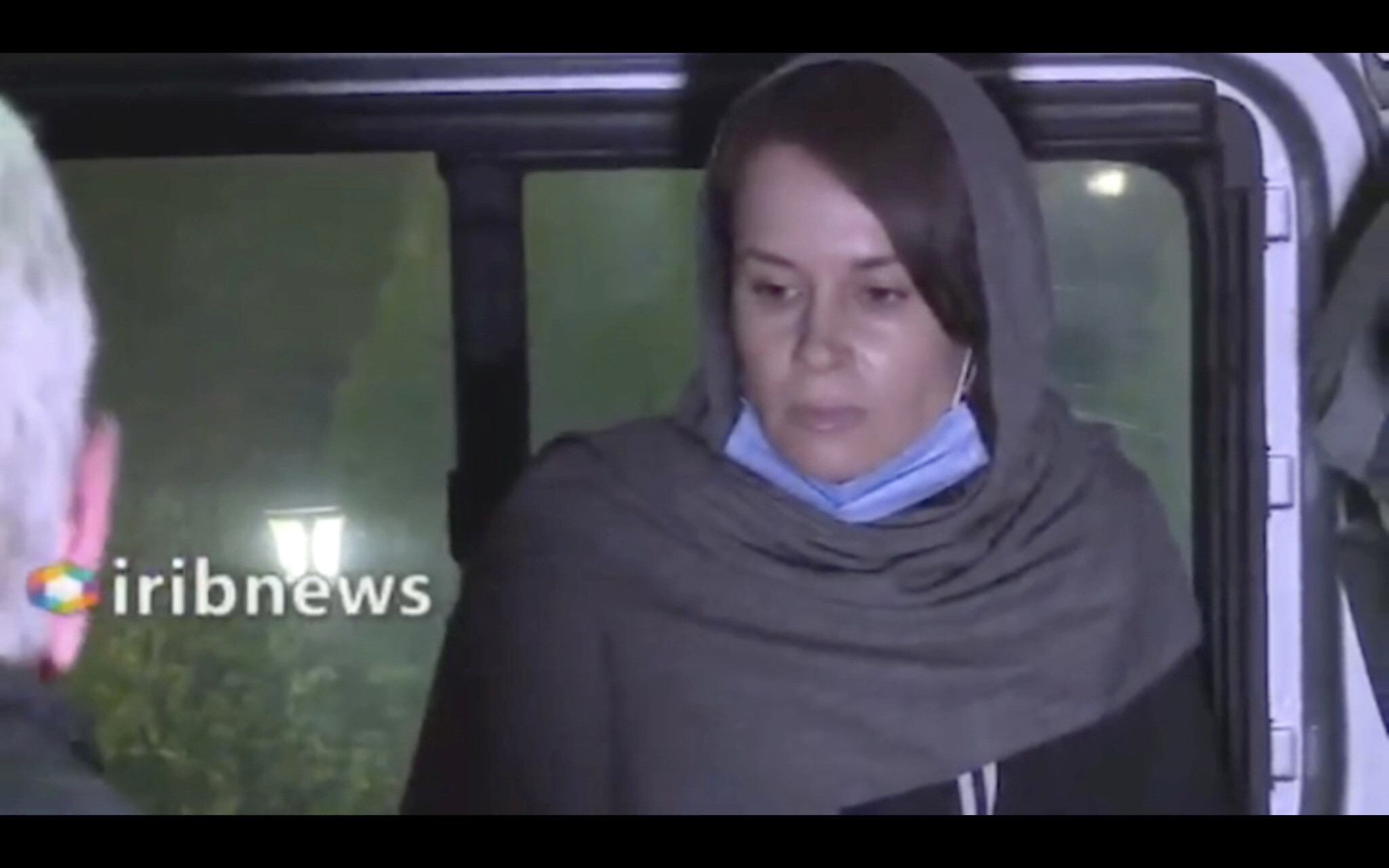
 In this frame grab from Iranian state television video aired Wednesday, Nov. 25, 2020, British-Australian academic Kylie Moore-Gilbert is seen in Tehran, Iran. (Iranian State Television via AP)
 In this Dec. 21, 2012 photo, Saeid Moradi, an Iranian suspect bomber, on a wheelchair is helped by a Thai prisoner to arrive for his trial hearing at criminal court in Bangkok, Thailand. (AP Photo/Apichart Weerawong)
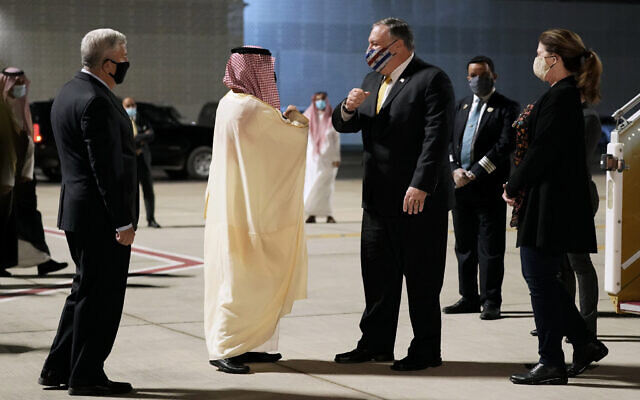 US Ambassador to Saudi Arabia John Abizaid, left, and Saudi Arabia’s Foreign Minister Faisal bin Farhan, second from left, greet US Secretary of State Mike Pompeo and his wife Susan as they arrive at Neom Bay Airport in Neom, Saudi Arabia, Nov. 22, 2020. (AP Photo/Patrick Semansky, Pool)


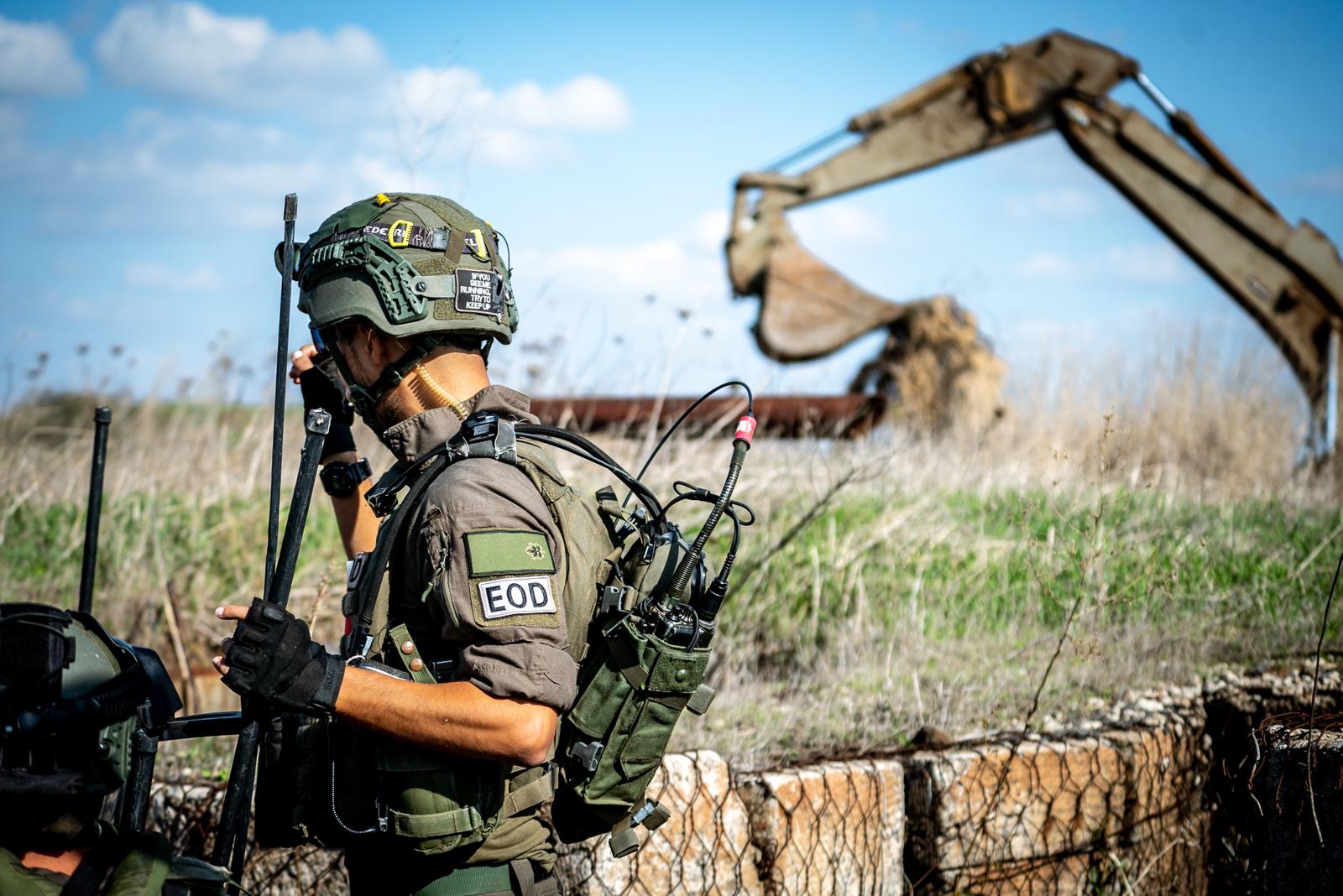
 Three anti-personnel mines that Israel says were planted inside Israeli-controlled territory along the border with Syria, which were uncovered on November 17, 2020. (Israel Defense Forces)



 anneinpt
 artaxes
 danmillerinpanama
 davidking1530
 Peter Hofman
 Joseph Wouk
 Peter
Peter Louisiana Steve
 WarSclerotic

Recent Comments