Author Archive

Netanyahu to visiting US defense secretary: We won’t let Iran obtain nukes

April 14, 2021

Following attack on Iran’s Natanz facility, which has been blamed on Israel, PM says US-Israeli cooperation is ‘crucial’ to combat threats facing both countries

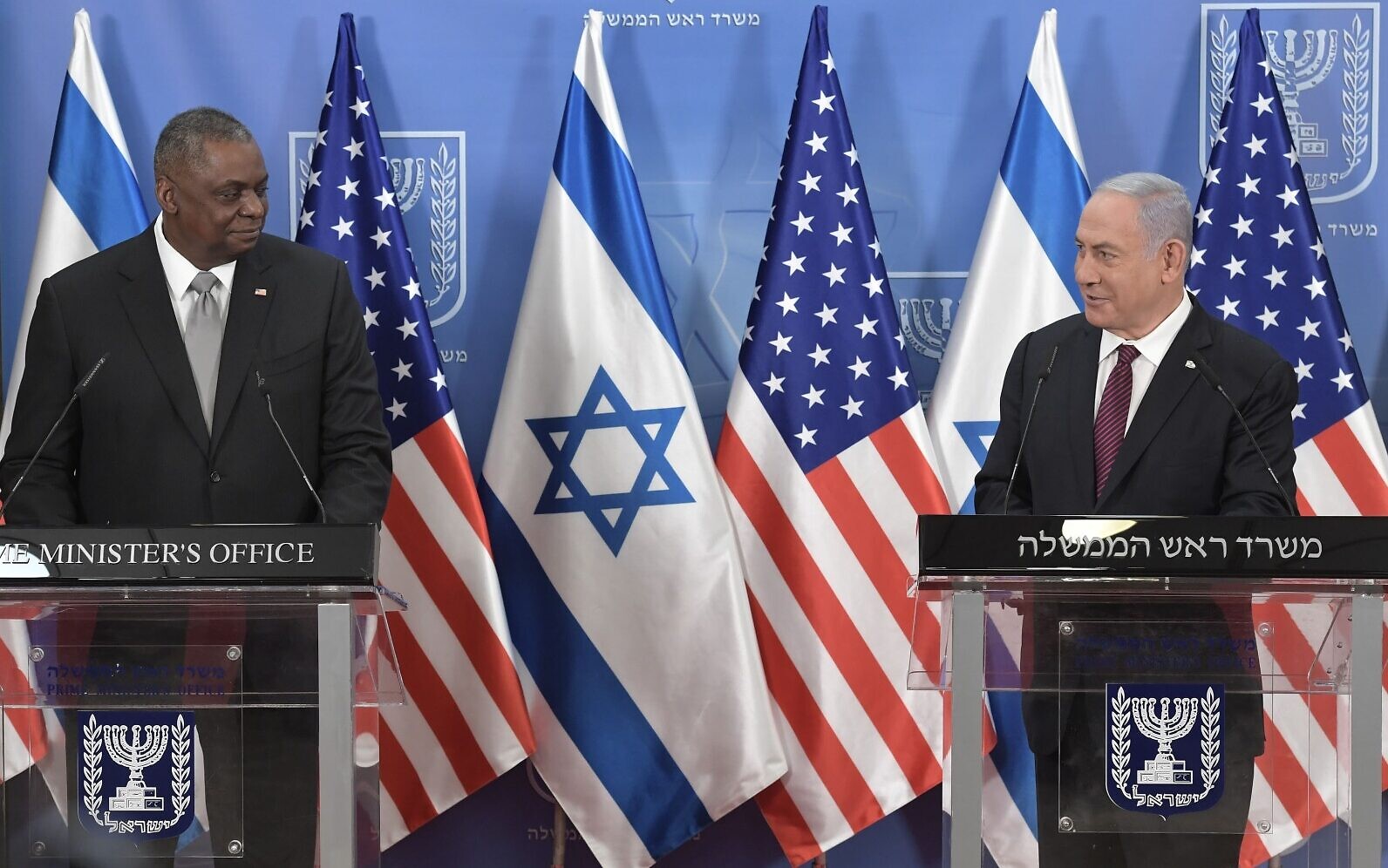
Prime Minister Benjamin Netanyahu (R) and US Defense Secretary Lloyd Austin at a press conference at the Prime Minister's Office in Jerusalem on April 12, 2021. (Kobi Gideon/GPO)

Prime Minister Benjamin Netanyahu (R) and US Defense Secretary Lloyd Austin at a press conference at the Prime Minister’s Office in Jerusalem on April 12, 2021. (Kobi Gideon/GPO)

Hosting US Defense Secretary Lloyd Austin at his office in Jerusalem, Prime Minister Benjamin Netanyahu said Monday that Israel and the US agree on never allowing Iran to obtain nuclear weapons.

“As you know, the US-Israel defense partnership has continually expanded over successive administrations and our cooperation is crucial in dealing with the many threats confronting both the United States and Israel,” Netanyahu said at a press conference alongside Austin.

“In the Middle East, there is no threat more dangerous, serious and pressing than that posed by the fanatical regime in Iran,” said Netanyahu, citing Iran’s pursuit of nuclear weapons, arming of terror groups, and calls for Israel’s annihilation.

“Mr. Secretary, we both know the horrors of war. We both understand the importance of preventing war. And we both agree that Iran must never possess nuclear weapons. My policy as prime minister of Israel is clear — I will never allow Iran to obtain the nuclear capability to carry out its genocidal goal of eliminating Israel.

Speaking days after an apparent attack on the Iranian Natanz nuclear facility, which Tehran has blamed on Israel, Netanyahu concluded by saying that “Israel will continue to defend itself against Iran’s aggression and terrorism,” the prime minister added.

Austin, speaking after Netanyahu, refrained from explicitly mentioning Iran but said he had decided to travel to Israel to “express our desire for earnest consultations with Israel, as we address shared challenges in the region.”

With his two-day visit, the first official visit to the Jewish state by an American secretary of defense since 2017, Austin is the first member of US President Joe Biden’s administration to pay an official visit to Israel.

Affirming the Biden administration’s support for Israel’s security and qualitative military edge in the region, Austin said he and Netanyahu discussed “ways to deepen our longstanding defense relationship in the face of regional threats and other security challenges, and I affirm the department’s support for our ongoing diplomatic efforts to normalize relations between Israel and Arab and Muslim-majority nations,” he says.

“I am confident that together we can chart a path toward enduring peace in this region and advance open and stable order — now, and in the years ahead,” Austin said.

Austin’s visit comes amid ongoing talks in Vienna regarding a return to the 2015 nuclear deal by both Iran and the United States, a move that is staunchly opposed by Israel, particularly by Netanyahu.

On Wednesday, Netanyahu warned that Israel will not be bound by a revitalized nuclear deal between world powers and Iran. Israeli defense analysts have warned that there is a growing rift between Jerusalem and Washington on the issue of Iran and its nuclear program, which may have significant ramifications on Israel’s security.

This satellite photo from Planet Labs Inc. shows Iran’s Natanz nuclear facility on April 7, 2021 (Planet Labs Inc. via AP)

Austin arrived in Israel Sunday as reports emerged from Iran that its Natanz nuclear site had suffered a total power cut in what was widely assumed to be the result of an Israeli cyberattack. Jerusalem refused to comment on the matter, while Iran has blamed Israel, with its foreign minister vowing on Monday to “take revenge on the Zionists.”

The electrical glitch came hours after Tehran began using a new, more powerful centrifuge that could reportedly enrich uranium at a much faster rate than its existing equipment.

Just a day earlier, the International Atomic Energy Agency (IAEA) said in a report released that Iran had again violated limits on its stockpile of enriched uranium, according to Reuters.

Austin’s visit also comes amid indications the Israel-Iran conflict was increasingly being waged at sea, marking a change in the conflict that previously took place primarily via airstrikes, cyberattacks, alleged espionage activities, and on land.

Israeli officials have refused to comment on the matter, in line with a longstanding policy of ambiguity regarding its military actions against Iran in the region, save for those that are direct, immediate retaliations for attacks on Israel.

Times of Israel staff and agencies contributed to this report.

Blast at Natanz was caused by bomb planted near main electric line – Israeli TV

April 14, 2021

Report says enrichment facility entirely stopped functioning since blast, nuclear program set back by at least 6 months; separate report says advanced centrifuges damaged

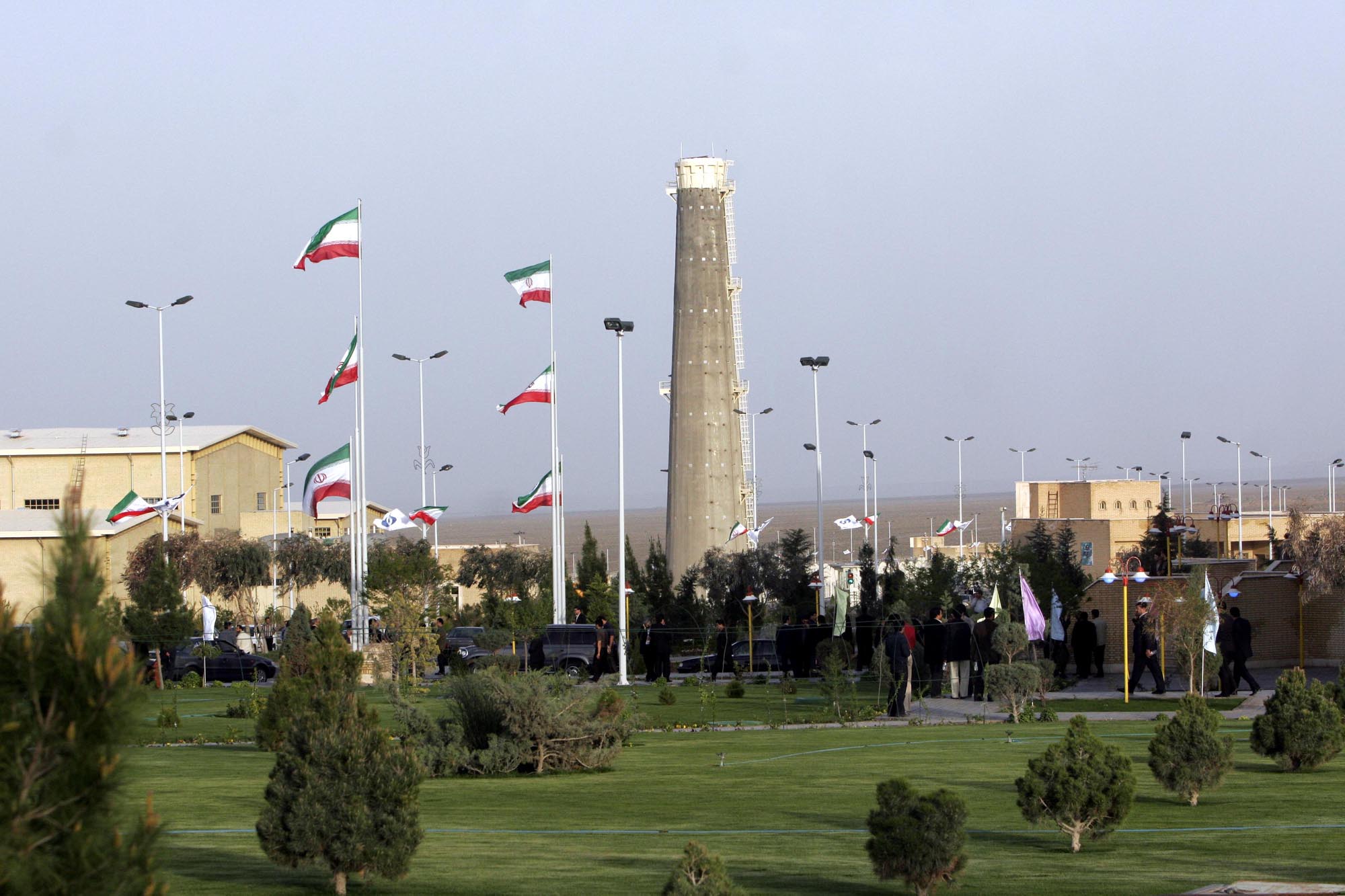
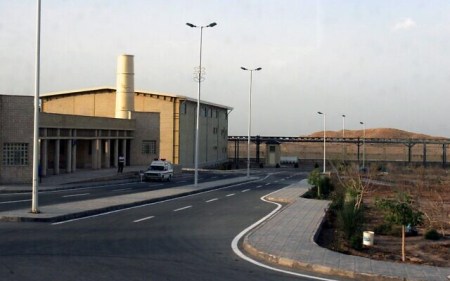
FILE: Iran's nuclear enrichment facility in Natanz, 300 kilometers (186 miles) south of the capital Tehran, on April 9, 2007. (Hasan Sarbakhshian/AP)

FILE: Iran’s nuclear enrichment facility in Natanz, 300 kilometers (186 miles) south of the capital Tehran, on April 9, 2007. (Hasan Sarbakhshian/AP)

A blast at Iran’s Natanz nuclear enrichment facility that has been attributed to Israel was caused by a bomb planted at the site in advance, an Israeli television report said Monday.

According to Channel 13 news, the bomb went off Sunday at 4 a.m., when some 1,000 workers were at Natanz. The facility was reportedly evacuated immediately after the blast over fears of further bombs, but no other explosives were found.

The report, which did not cite a source, said the explosive was placed near the main electricity line at Natanz and that when it detonated, the entire facility stopped functioning. The facility remains non-functional, the report said, with the program set back by months.

“All the signs point to this being the worst attack that Iran’s nuclear program has suffered… at the most important Iranian nuclear facility,” said Alon Ben-David, the network’s military analyst.

Natanz has previously been targeted, including by an explosion that rocked the facility last summer, in what was also said to have been an Israeli attack aimed at disrupting uranium enrichment and research at the site. In 2010, the United States and Israel allegedly halted Iran’s nuclear program with the Stuxnet virus, which caused Iranian centrifuges to tear themselves apart, reportedly destroying a fifth of the country’s machines.

Israel is anticipating Iran will respond to the latest attack but not necessarily right away, according to Ben-David. He said such retaliation could come in the form of a cyberattack on civilian infrastructure, an attack on Israeli-owned ships, missile fire from Syria or Yemen, or cruise missile or drone attacks on strategic Israeli targets.

“Yesterday signifies that the faceoff between Israel and Iran has escalated to a higher level,” he said.

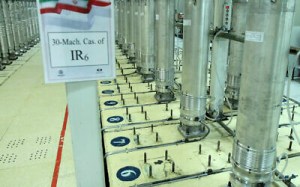
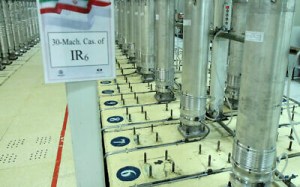
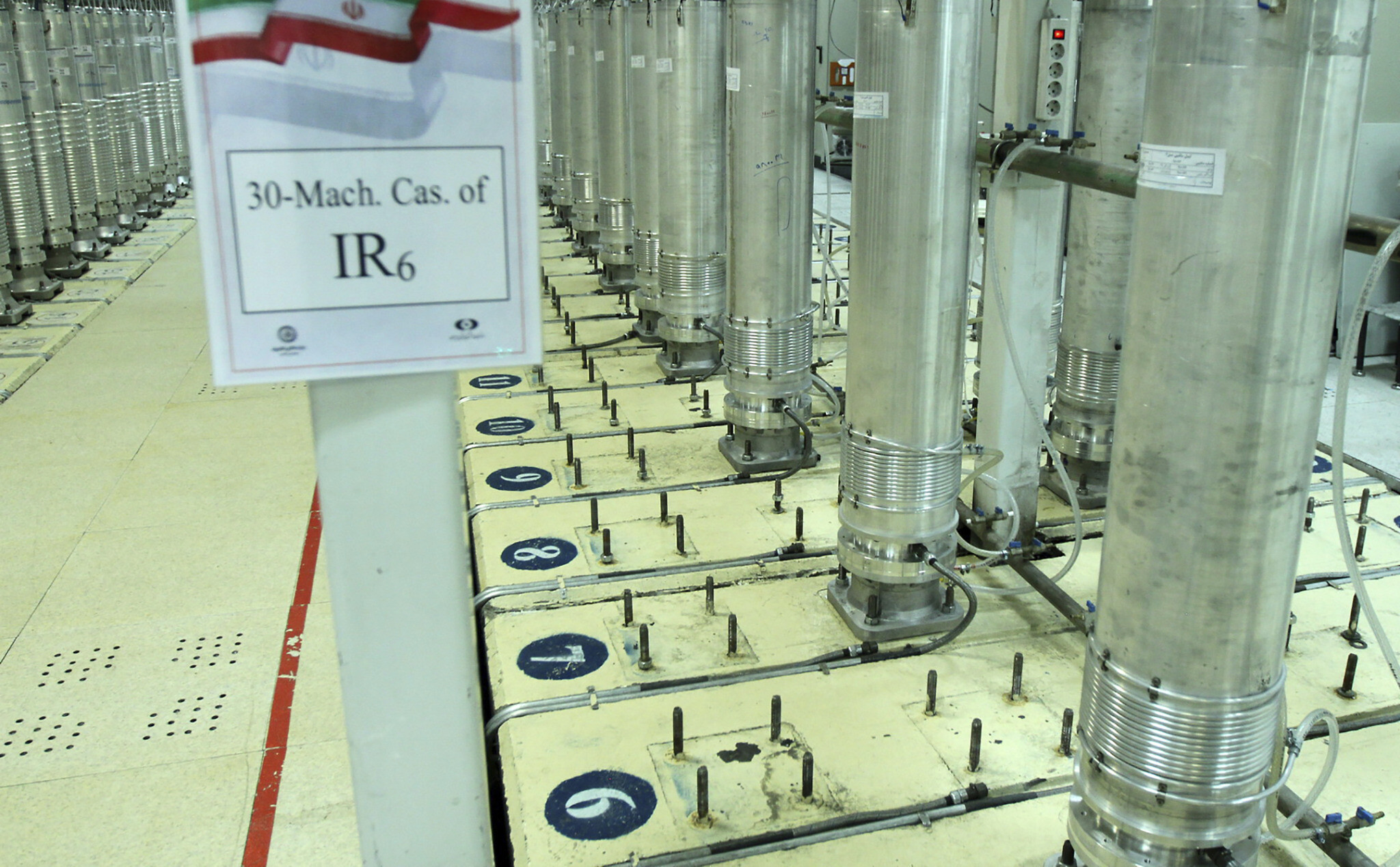
Centrifuge machines in the Natanz uranium enrichment facility in central Iran, in an image released on November 5, 2019. (Atomic Energy Organization of Iran via AP, File)

The network also said Iran may now try to expand its operation at the underground Fordo plant, where it has over 1,000 centrifuges. There were some 6,000 centrifuges at Natanz.

Separately, the Kan public broadcaster reported that advanced centrifuges were damaged in the blast at Natanz. The report, which cited an intelligence source, did not specify which model of centrifuges were targeted. Iran publicly inaugurated the advanced IR-5 and IR-6 centrifuges at the facility on Saturday.

The television reports came after the Iranians downplayed the extent of the attack, with a spokesman for the Atomic Energy Organization of Iran saying Monday that the blast was caused by a “small explosion” but insisting the damage could be quickly repaired.

Iran initially reported a power blackout had hit Natanz on Sunday, a day after it announced it had started up advanced uranium enrichment centrifuges banned under the 2015 deal limiting its nuclear program in exchange for sanctions relief.

Iran blamed Israel for the incident at Natanz, which according to The New York Times was caused by a massive blast at the centrifuges’ power supply. Israeli and US media quoted unnamed intelligence sources as saying it was believed to have caused significant damage to the centrifuges and set back Iran’s uranium enrichment ability by at least nine months.

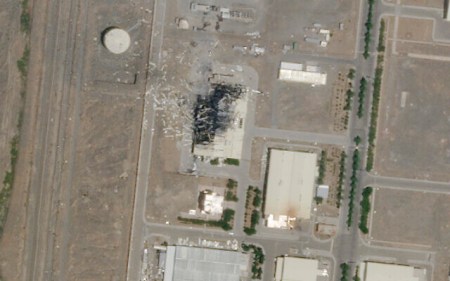
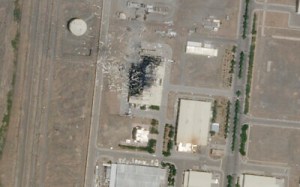
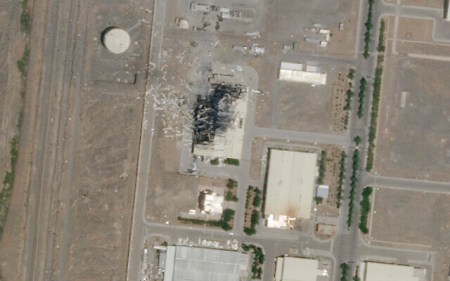
FILE: The aftermath of an explosion and a fire at an advanced centrifuge assembly plant at Iran’s Natanz nuclear site, July 5, 2020. (Planet Labs Inc. via AP)

The Islamic Republic has called the attack an act of “nuclear terrorism” and vowed “revenge on the Zionist regime.”

Sunday’s incident came as US Defense Secretary Lloyd Austin landed in Israel for talks with Prime Minister Benjamin Netanyahu and Defense Minister Benny Gantz. The US, Israel’s main security partner, is seeking to reenter the 2015 atomic accord aimed at limiting Tehran’s program so that it cannot pursue a nuclear weapon — a move staunchly opposed by Israel, particularly Netanyahu.

The US denied Monday that it was involved in the incident at Natanz.

With Natanz sabotage, will Iran’s powerful Guards finally face scrutiny?

April 14, 2021

Attack on nuclear site seen as latest in a string of failures for IRGC; criticism of paramilitary force leaks out ahead of election

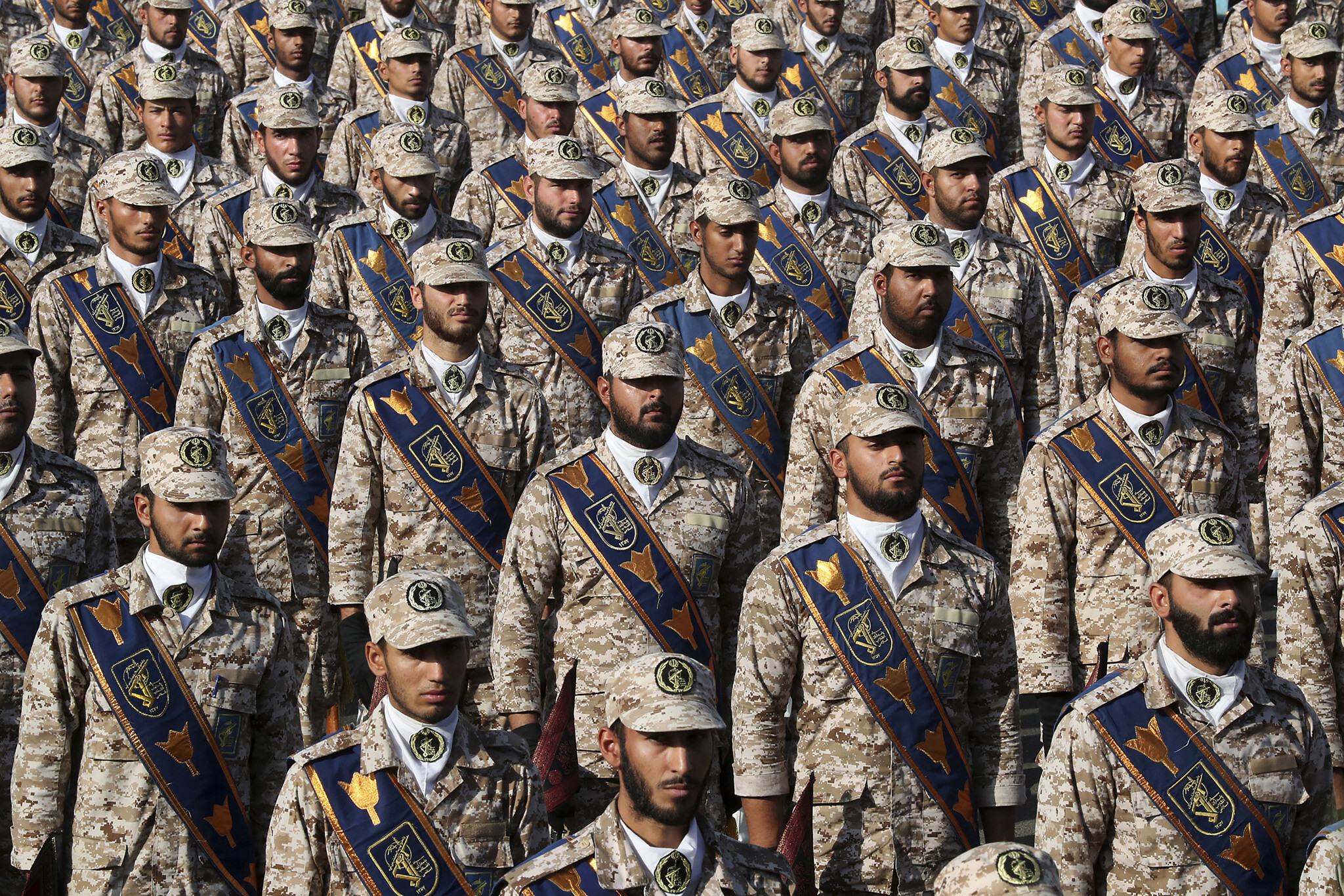
Revolutionary Guard troops attend a military parade marking the 39th anniversary of the start of the Iran-Iraq war, in front of the shrine of the late revolutionary founder Ayatollah Khomeini, just outside Tehran, Iran, September 22, 2019. (Iranian Presidency Office via AP)

Revolutionary Guard troops attend a military parade marking the 39th anniversary of the start of the Iran-Iraq war, in front of the shrine of the late revolutionary founder Ayatollah Khomeini, just outside Tehran, Iran, September 22, 2019. (Iranian Presidency Office via AP)

DUBAI, United Arab Emirates (AP) — The recent sabotage at Iran’s main nuclear enrichment facility is just the latest setback for the country’s Revolutionary Guard, though the paramilitary force is rarely publicly criticized due to its power.

But with some of its leaders now considering vying for the presidency, the Guard’s influence and failures could become fair game.

In just over the last year, the Guard shot down a Ukrainian commercial airliner, killing 176 people. Its forces failed to stop both an earlier attack at Iran’s Natanz facility and the assassination of a top scientist who started a military nuclear program decades earlier. Meanwhile, its floating base in the Red Sea off Yemen suffered an explosion.

Then on Sunday, the nuclear facility, of which the Guard is the chief protector, experienced a blackout that damaged some of its centrifuges. Israel is widely believed to have carried out the sabotage that caused the outage, though it has not claimed it.

This satellite photo from Planet Labs Inc. shows Iran’s Natanz nuclear facility on April 7, 2021 (Planet Labs Inc. via AP)

No one in Iran has directly called out the Guard for these failures — and that isn’t surprising. The force created after its 1979 Islamic Revolution has an extensive intelligence apparatus rivaling those of Iran’s civilian government — and it is brutal in its clampdown on dissent. Former detainees at Tehran’s Evin prison describe the Guard as running an entire ward of the facility housing politically sensitive prisoners. Local journalists can face arrest, prosecution, and imprisonment for their work.

Around the edges, however, criticism is beginning to leak out.

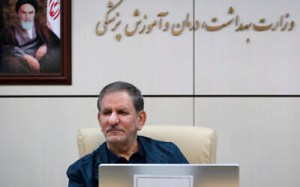
Eshaq Jahangiri, President Hassan Rouhani’s top vice president and a reformist, lamented that “nobody is ready to be responsible” for what happened at Natanz in remarks that appeared aimed at the Guard.

“Which body is responsible to identify and prevent the country’s enemies from doing something in the country? Has anyone ever been held accountable, or been held responsible or reprimanded, for what the biggest enemy of this country is doing here?” Jahangiri asked in a video shared widely on social media.

In this Feb. 28, 2020 photo, released by official website of the Office of the Iranian Vice-President, Senior Vice-President Eshaq Jahangiri sits in front of a painting of the late revolutionary founder Ayatollah Khomeini during a top-level meeting on prevention and combating the coronavirus, in Tehran, Iran. (Office of the Iranian Vice President via AP)

Separately quoted by the hardline newspaper Kayhan, Jahangiri added: “People need to know what the resources, credibility, and prestige of the country are being spent on.”

That’s another apparent dig at the Guard, whose business interests through construction and other industries reach into the billions of dollars. The exact scope of all its holdings remains unclear, though experts’ estimates run from 15% to as much as 40% of Iran’s overall economy.

This new willingness to point the finger — however carefully — in the direction of the Guard may in part be due to the upcoming June presidential election.

Rouhani, a relatively moderate cleric within Iran’s theocracy whose administration struck a 2015 nuclear deal that brought Iran relief on sanctions, cannot run again due to term limits. That’s created a potential free-for-all filing period for candidates when it opens in May.

Within Iran, candidates exist on a political spectrum that broadly includes hardliners who want to expand Iran’s nuclear program and confront the world, moderates who hold onto the status quo, and reformists who want to change the theocracy from within. Those calling for radical change find themselves blocked from even running for office by Iran’s constitutional watchdog, the Guardian Council.

A soldier has yet to serve as Iran’s top civilian leader since the Islamic Revolution, in part over the initial suspicion that its conventional military forces remained loyal to the toppled shah. However, a line of former Guard leaders have begun raising their profiles ahead of the vote, and many may try to run.

They include Mohsen Rezaei, an outspoken former top commander; Hossein Dehghan, an adviser to Supreme Leader Ali Khamenei; Rostam Ghasemi, a former oil minister; and Mohammad Bagher Qalibaf, the speaker of Iran’s parliament known for his support of a bloody crackdown on students in 1999.

The aftermath of an explosion and a fire at an advanced centrifuge assembly plant at Iran’s Natanz nuclear site, July 5, 2020. (Planet Labs Inc. via AP)

A young generation of Guard leaders is in the mix as well, led by Saeed Mohammad, who once headed the Guard’s powerful Khatam al-Anbiya Construction Headquarters that is one of Iran’s biggest business conglomerates.

The debate over how much power the Guard should wield in Iran’s politics is as old as the Islamic Republic itself. Yet the force has been able to portray itself as the country’s defender through mass media on Iranian state television. Private local channels don’t exist.

That includes the Iranian spy TV show “Gando,” a fever dream of conspiracy theories in line with the Guard’s worldview. Its second season just aired, drawing more criticism for its depiction of Iran’s civilian government as being weak and overwhelmed by foreign powers.

But there’s a clear line between their idealized television version and the reality of these recent attacks striking the heart of one of Iran’s most powerful forces.

“We spent our resources and capabilities for the production of a TV series to portray ourselves as powerful in the fields of security and intelligence, as well as accusing our officials of spying,” wrote the hardline daily Jomhuri Eslami, asking why recent attacks hadn’t been thwarted.

The election may soon see more people soon asking that question publicly.

Iran’s Zarif: Israel made ‘a very bad gamble’ with blast at nuclear plant

April 14, 2021

Iranian FM says Tehran can now legitimately use any capacity it has at Natanz after ‘terrorist stupidity’; Russia’s Lavrov says Moscow expects nuke deal to be saved

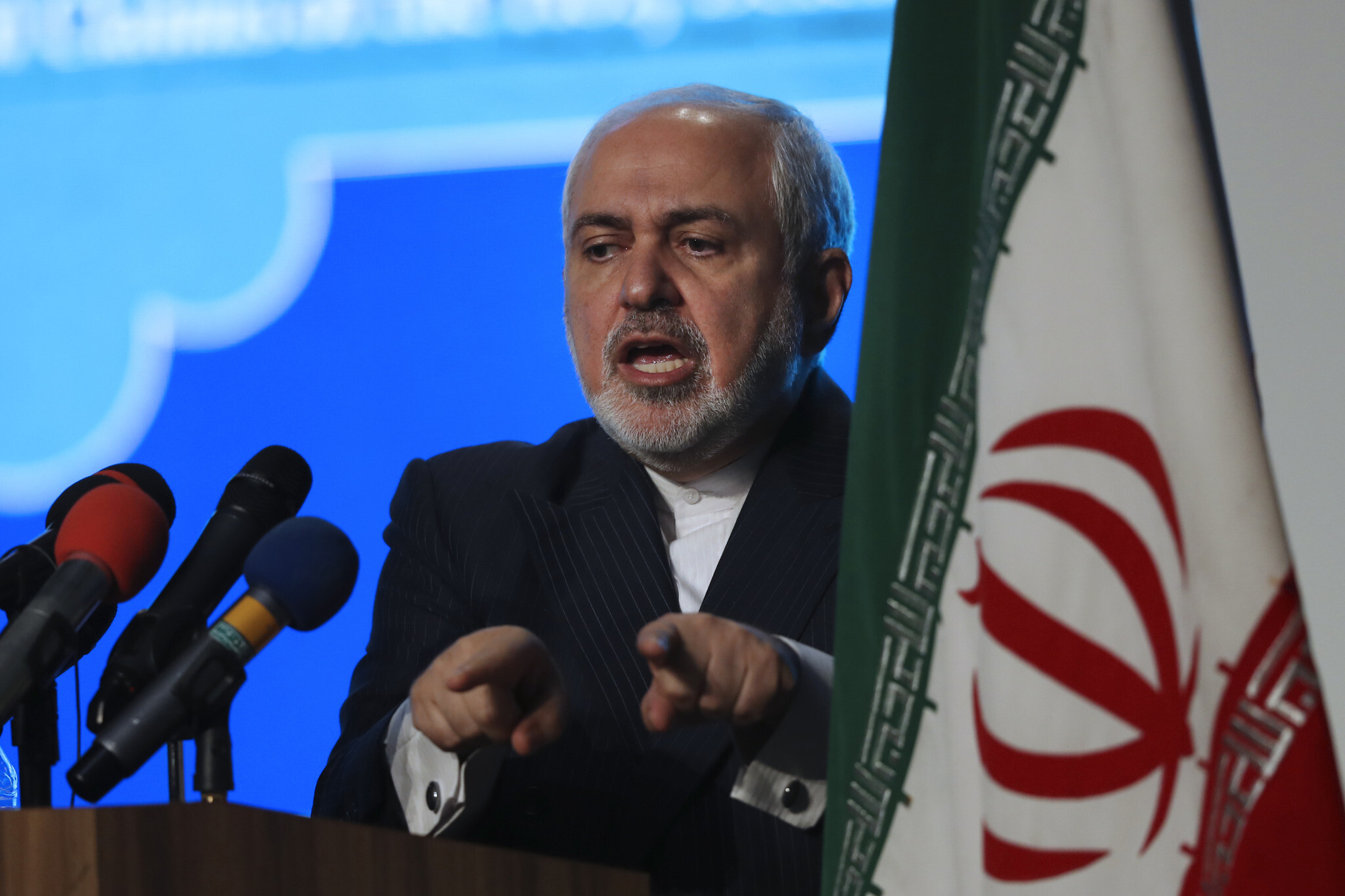
Iran's Foreign Minister Mohammad Javad Zarif addresses a conference in Tehran, Iran, February 23, 2021.  (Vahid Salemi/AP)

Iran’s Foreign Minister Mohammad Javad Zarif addresses a conference in Tehran, Iran, February 23, 2021. (Vahid Salemi/AP)

Iran’s foreign minister said Tuesday that Israel made a “very bad gamble” if it believed its alleged sabotage at the Natanz nuclear plant would stop efforts to lift US sanctions on Tehran.

“If [Israel] thought that they can stop Iran from following up on lifting sanctions from the Iranian people, then they made a very bad gamble,” Mohammad Javad Zarif told a joint press conference with his visiting Russian counterpart, Sergey Lavrov.

“What they did in Natanz, they thought it would reduce Iran’s leverage” in the talks on bringing the US back into the deal, Zarif said. “But it makes it possible for Iran to legally, legitimately, and in order to make up for this terrorist stupidity, use any capacity it has at Natanz.”

He said the enrichment plant would be made “more powerful” with advanced centrifuges.

Zarif additionally said that “acts of sabotage” and sanctions will give the United States no extra leverage in talks on reviving the 2015 nuclear deal, which are set to resume on Wednesday.

“We have no problem with returning to implementing our JCPOA commitments,” he said, referring to the deal with major powers, which Washington quit in 2018.

“But the Americans should know that neither sanctions nor acts of sabotage will give them negotiation tools and these acts will only make the situation more difficult for them,” Zarif told a press conference alongside Lavrov.

File: Iran’s nuclear enrichment facility in Natanz, Iran (AP Photo/Hasan Sarbakhshian)

The US, Israel’s main security partner, is seeking to reenter the 2015 atomic accord aimed at limiting Tehran’s program so that it cannot pursue a nuclear weapon — a move staunchly opposed by Israel, particularly Prime Minister Benjamin Netanyahu.

The US has said it is prepared to lift or ease sanctions that are “inconsistent” with the nuclear deal along with sanctions that are “inconsistent with the benefits” that Iran expected to get from agreeing to the accord.

However lawmakers in Tehran have called for the discussions to be suspended in the wake of the incident at Natanz, although the US denied Monday that it was involved.

According to The New York Times, US officials said they did not know if their Iranian counterparts would show up in Vienna on Wednesday when the talks on the agreement were set to resume.

But Lavrov on Tuesday said Moscow expected the Iranian nuclear deal to be saved.

“We expect that it will be possible to preserve the Joint Comprehensive Plan of Action,” Lavrov said after the talks with Zarif in Tehran.

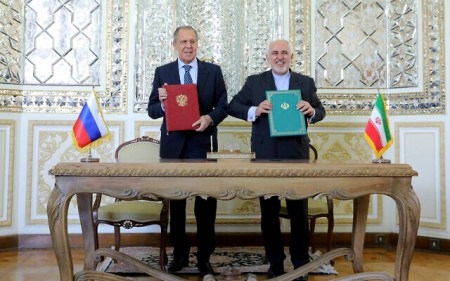
In this photo released by the Iranian Foreign Ministry, Iranian Foreign Minister Mohammad Javad Zarif, right, and his Russian counterpart Sergey Lavrov, pose for photos after the ceremony of signing documents, in Tehran, Iran, April 13, 2021 (Iranian Foreign Ministry via AP)

“As far as we understand, our partners in Tehran have expressed their readiness to immediately move in that direction” if Washington upholds agreements on its end, Lavrov added.

Russia’s top diplomat also criticized recent EU sanctions on Iran, saying they raised “a huge number of questions” while talks aimed at reviving the agreement on curbing Tehran’s atomic ambition were ongoing. On Monday, the EU added eight Iranian security officials, including the chief of the powerful Revolutionary Guard, and three notorious prisons to a sanctions blacklist over a 2019 protest crackdown.

The Sunday attack on the Natanz nuclear facility is casting a major shadow over the resumption of indirect talks between the US and Iran over resurrection of the international accord limiting Iran’s nuclear program.

The Times reported Monday that the blast that Tehran has blamed on Israel was caused by a bomb that was smuggled into the plant and then detonated remotely. The report cited an unnamed intelligence official, without specifying whether they were American or Israeli.

According to the official, the blast took out the primary electrical system as well as its backup.

The claim was apparently confirmed by the former head of Iran’s atomic energy organization in an interview with Iranian state television.

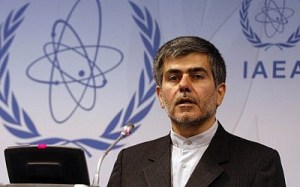
Fereydoon Abbasi Davani, Iran's vice president and head of the country's Atomic Energy Organization (photo credit: Ronald Zak/AP)

Fereydoon Abbasi Davani, Iran’s vice president and head of the country’s Atomic Energy Organization (Ronald Zak/AP)

“From a technical standpoint, the enemy’s plan was rather beautiful,” said Fereydoon Abbasi Davani, now head of the Iranian parliament’s energy committee. “They thought about this and used their experts and planned the explosion so both the central power and the emergency power cable would be damaged.”

Although the extent of the damage remains unknown, the Times said intelligence officials believed it would take many months for the damage to be undone.

The head of Iran’s Atomic Energy Organization, Ali Akbar Salehi, said that emergency power was already restored at the plant and enrichment was continuing, although it was unclear to what level. “A large portion of the enemy’s sabotage can be restored, and this train cannot be stopped,” he told Iranian media, according to the Times.

An unsourced Israeli Channel 13 TV report Monday said the plant was still non-functional, however.

FILE: The aftermath of an explosion and a fire at an advanced centrifuge assembly plant at Iran’s Natanz nuclear site, July 5, 2020. (Planet Labs Inc. via AP)

Channel 13 said the bomb went off Sunday at 4 a.m., when some 1,000 workers were at Natanz. The facility was reportedly evacuated immediately after the blast over fears of further bombs, but no other explosives were found.

The Channel 13 news report, which did not cite a source, said the explosive was placed near the main electricity line at Natanz and that when it detonated, the entire facility stopped functioning. The facility remains nonfunctional, the report said, with the program set back by months.

Natanz has previously been targeted, including by an explosion that rocked the facility last summer, in what was also said to have been an Israeli attack aimed at disrupting uranium enrichment and research at the site. In 2010, the United States and Israel allegedly halted Iran’s nuclear program with the Stuxnet virus, which caused Iranian centrifuges to tear themselves apart, reportedly destroying a fifth of the country’s machines.

Centrifuge machines in the Natanz uranium enrichment facility in central Iran, in an image released on November 5, 2019. (Atomic Energy Organization of Iran via AP, File)

The network also said Iran may now try to expand its operation at the underground Fordo plant, where it has over 1,000 centrifuges. There were some 6,000 centrifuges at Natanz.

Separately, the Kan public broadcaster reported that advanced centrifuges were damaged in the blast at Natanz. The report, which cited an intelligence source, did not specify which model of centrifuges were targeted. Iran publicly inaugurated the advanced IR-5 and IR-6 centrifuges at the facility on Saturday.

Iran blamed Israel for the attack, a day after it announced it had started up advanced uranium enrichment centrifuges banned under the 2015 deal, calling it an act of “nuclear terrorism” and vowing “revenge on the Zionist regime.”

Back at military cemeteries, Israelis grieve fallen soldiers, terror victims

April 14, 2021

Two-minute siren commemorating 23,928 troops and victims of terror brings country to a halt; Netanyahu to address official state ceremony at Mount Herzl

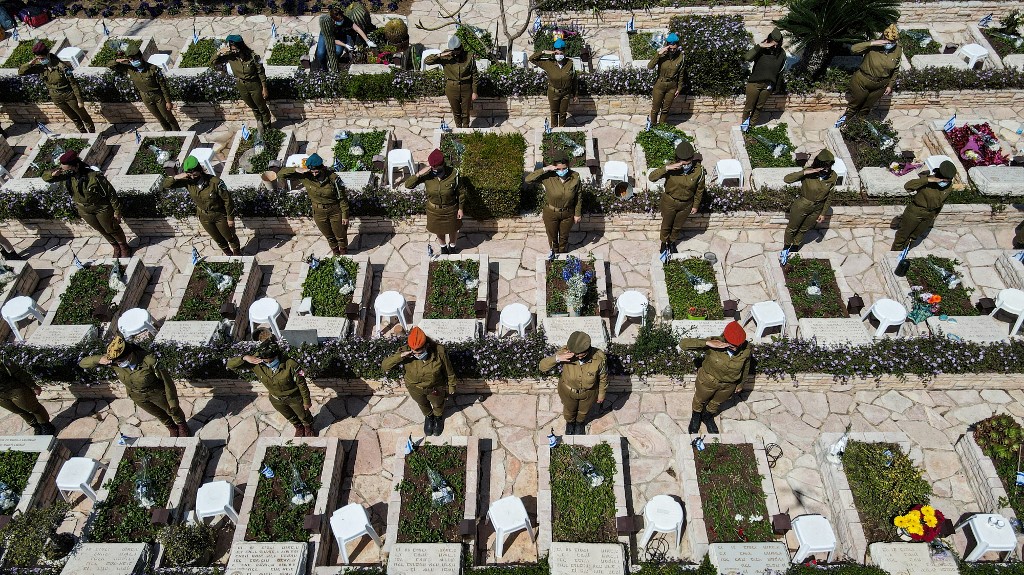
This picture taken on April 13, 2021, on Yom HaZikaron (Israel's Memorial Day) shows an aerial view of female Israeli soldiers performing salutes by graves at the Kiryat Shaul military cemetery in the Mediterranean coastal city of Tel Aviv. (JACK GUEZ / AFP)

This picture taken on April 13, 2021, on Yom HaZikaron (Israel’s Memorial Day) shows an aerial view of female Israeli soldiers performing salutes by graves at the Kiryat Shaul military cemetery in the Mediterranean coastal city of Tel Aviv. (JACK GUEZ / AFP)

Israel came to a standstill on Wednesday morning with a two-minute memorial siren at 11 a.m. commemorating 23,928 fallen soldiers and terror victims, including 43 soldiers and civilians killed since last Memorial Day.

During the siren, traffic around the country came to an abrupt halt, as Israelis stopped driving to stand beside their cars and people at home bowed their heads in somber silence.

At 11:02 a.m., the official commemoration ceremony began at Jerusalem’s Mount Herzl with a prayer for the dead by IDF Chief Rabbi Brig. Gen. Eyal Karim.

Israel’s Memorial Day is marked annually with candle-lighting ceremonies, melancholy music on the radio, and newspaper features and TV programs about those who died. This year sees a return of Israelis visiting the country’s 52 military cemeteries and hundreds of smaller military sections in civilian cemeteries nationwide after they were closed during last year’s commemorations due to coronavirus restrictions.

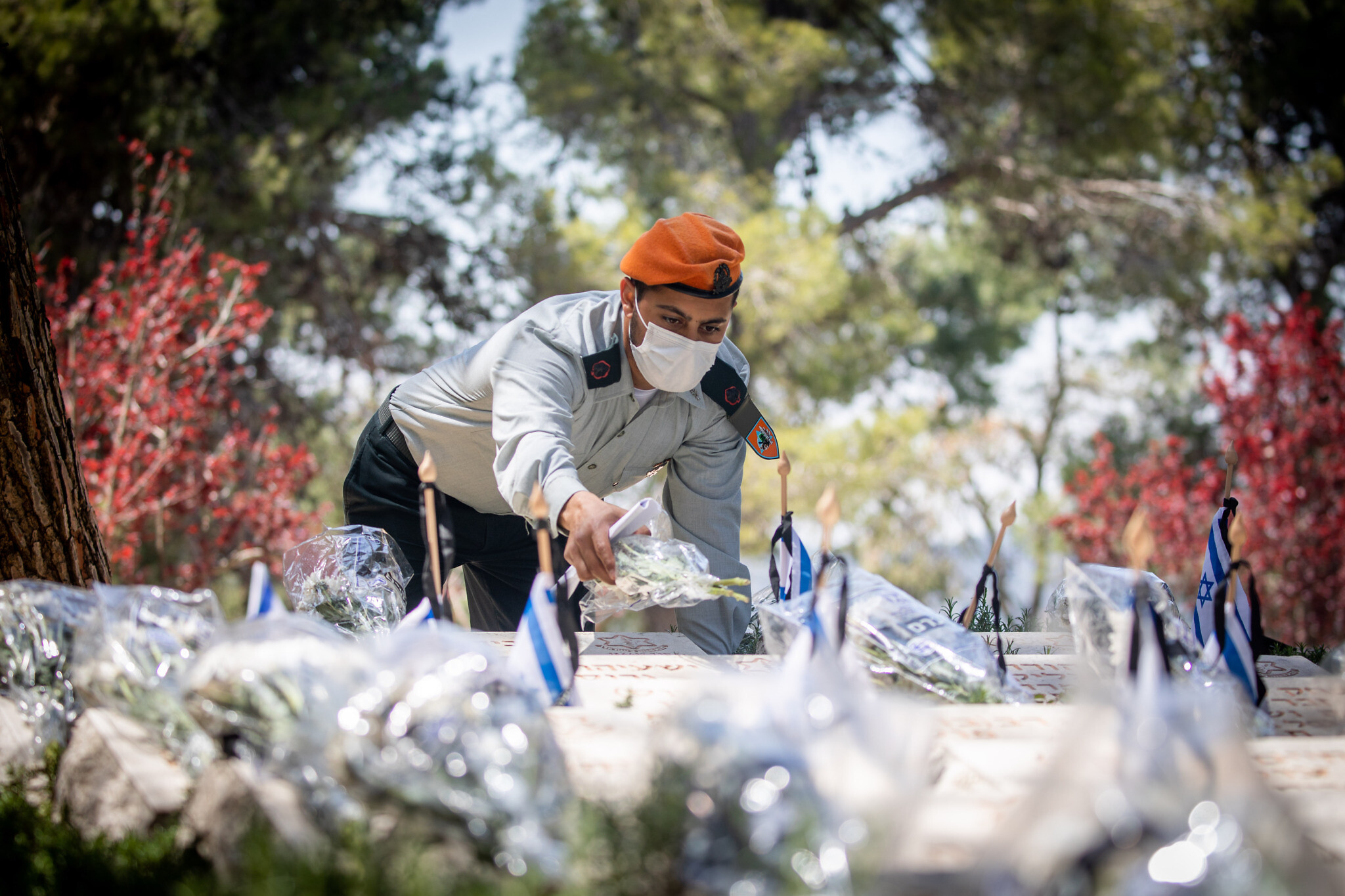
Israeli soldiers visit graves of fallen soldiers in Mount Herzl Military Cemetery in Jerusalem, on April 13, 2021, ahead of Israeli Memorial Day, which begins tonight. (Yonatan Sindel/Flash90)

The Wednesday morning official ceremony was joined by families of the fallen, soldiers from across the army’s units and divisions, as well as the nation’s leaders, President Reuven Rivlin, Prime Minister Benjamin Netanyahu, chief rabbis Yitzhak Yosef and David Lau, IDF chief of staff Lt. Gen. Aviv Kohavi, Supreme Court chief justice Esther Hayut, Shin Bet chief Nadav Argaman and Mossad head Yossi Cohen.

The prime minister will deliver his main Memorial Day address at the ceremony.

A separate official ceremony honoring the 4,176 people who died in acts of terror will begin at 1 p.m. at Mount Herzl in Jerusalem.

Female soldiers place Israeli national flags showing black sashes atop with the Hebrew word “Remembrance” on graves, at the Kiryat Shaul military cemetery in the Mediterranean coastal city of Tel Aviv on April 13, 2021, as they pay respects to fallen soldiers on Yom HaZikaron (Memorial Day). (JACK GUEZ / AFP)

Since last Memorial Day, 112 new names were added to the roster of those who died defending the country since 1860. Forty-three were IDF soldiers, police officers, and civilians, and 69 were disabled veterans who passed away due to complications of injuries sustained during their service.

The figures include all soldiers and police who died during their service over the past year, including as a result of accidents, suicide, or illness.

Screen capture from video of IDF disabled veteran Itzik Saidyan talking about his struggle with post-traumatic stress disorder. (Channel 12 News)

In a stark reminder of the toll of Israel’s wars, a former soldier suffering from post-traumatic stress disorder set himself on fire on Monday outside the Defense Ministry’s rehabilitation center, setting off a national reckoning. Itzik Saidyan, 26, remains in critical condition.

Memorial Day is one of Israel’s few national, non-religious holidays, during which large swaths of the Israeli public typically visit the graves of loved ones and comrades.

Unlike last year, when the pandemic saw all Memorial Day ceremonies held without audiences and smaller events planned for municipal cemeteries across the country were canceled, this year’s events will be held under few health restrictions.

The general public has nonetheless been encouraged to visit the graves of fallen soldiers earlier this week to avoid crowding on Memorial Day itself when close relatives visit.

On Wednesday, ministers approved removing some Memorial Day rules, including allowing relatives of the fallen who do not have the Green Pass to attend ceremonies. The Green Pass is given to those who are fully vaccinated or have recovered from the coronavirus, granting them entry to public venues not open to others.

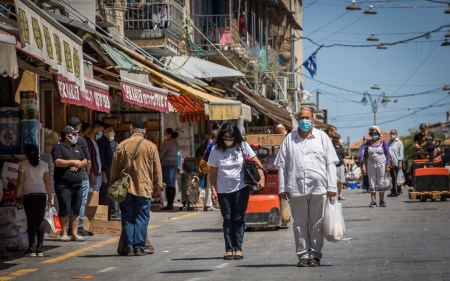
People stand for a two-minute silence in Jerusalem’s Machane Yehuda market on Memorial Day, Yom Hazikaron, April 28, 2020 April 28, 2020. (Nati Shohat/Flash90)

The new measures include raising the number of people allowed to gather outdoors from 50 to 100.  The current limit of 20 people indoors remains in place.

The Memorial Day events officially began at the Yad LaBanim center in Jerusalem on Tuesday afternoon, with Netanyahu, Knesset Speaker Yariv Levin and Chief Justice Hayut in attendance.

Speaking at the ceremony, Netanyahu said Israel will make “every effort” to return its captives, which include two civilians and the bodies of two IDF soldiers believed to be held by the Hamas terror group in Gaza.

“This is a sacred mission that we’re not letting go of,” he said.

President Reuven Rivlin speaks at a ceremony marking Memorial Day for Israel’s fallen soldiers and victims of terror, at the Western Wall in Jerusalem’s Old City, on April 13, 2021. (Olivier Fitoussi/Flash90)

Speaking at the official state ceremony held at the Western Wall, President Reuven Rivlin said the message of the day was that citizens of the Jewish state must not take it for granted.

“From here, I want to speak to you, the commanders, the soldiers, those soon to enlist, the young generation. I grew up as a child at a time when we did not have a state. For me, for those of my generation, the State of Israel is not something to be taken for granted. This strong and powerful country you see was established by the heroism and dedication of young people of your age,” Rivlin said.

The commemoration day, established in 1951 by then-prime minister and defense minister David Ben-Gurion, was set for the 4th of Iyar on the Jewish calendar, the day before Independence Day, which begins immediately after Memorial Day.

At 7:45 p.m. Wednesday evening, Memorial Day will end with the national torch-lighting ceremony at Mount Herzl that will usher in Israel’s 73th Independence Day.

Biden to approve $23 billion sale of F-35s to UAE that followed Abraham Accords

April 14, 2021

New administration had been reviewing foreign arms sales made by Trump, including deal to supply advanced stealth jets reached as part of Israel normalization

US Defense Secretary Lloyd Austin speaks to reporters at Israel's Nevatim air base Monday, with an Israeli F-35 fighter jet in the background, on Monday, April 12, 2021 in Israel. (AP Photo/Robert Burns)

US Defense Secretary Lloyd Austin speaks to reporters at Israel’s Nevatim air base Monday, with an Israeli F-35 fighter jet in the background, on Monday, April 12, 2021 in Israel. (AP Photo/Robert Burns)

The Biden administration has told Congress it will move ahead with a massive arms deal to the United Arab Emirates, including advanced F-35 aircraft, that was signed in the wake of Israel’s normalization deal with the Gulf nation, congressional aides told Reuters on Tuesday.

A State Department spokesperson said the administration would move forward with the proposed sales to the UAE, which also include armed drones and other equipment, “even as we continue reviewing details and consulting with Emirati officials” related to the use of the weapons.

In January, the new administration put a temporary hold on several major foreign arms sales initiated by former US president Donald Trump, including the deal to provide 50 F-35 advanced fighter jets to the United Arab Emirates, which was fast-tracked by Washington after Abu Dhabi agreed to normalize relations with Israel.

The State Department spokesperson told Reuters that estimated delivery dates to the UAE were for after 2025.

In addition to the massive $23 billion transfer of stealth F-35 fighters to the United Arab Emirates, another deal being paused is the planned major sale of munitions to Saudi Arabia. Both sales were harshly criticized by Democrats in Congress.

It was not immediately clear if the Saudi deal was also going ahead.

“When it comes to arms sales, it is typical at the start of an administration to review any pending sales, to make sure that what is being considered is something that advances our strategic objectives and advances our foreign policy,” Secretary of State Antony Blinken said after putting the review in place in January.

From left to right: Prime Minister Benjamin Netanyahu, US President Donald Trump, Bahrain Foreign Minister Abdullatif al-Zayani and United Arab Emirates Foreign Minister Abdullah bin Zayed al-Nahyan are seen on the Blue Room Balcony after signing the Abraham Accords during a ceremony on the South Lawn of the White House in Washington, September 15, 2020. (AP Photo/Alex Brandon)

The Trump administration’s announcement on the F-35 sale came shortly after the Republican president lost the November 6 election to now-President Joe Biden and followed the signing of the Abraham Accords between Israel, Bahrain and the UAE, under which the Arab states agreed to normalize relations with Israel.

Trump had explicitly backed arms sales on commercial grounds, saying that the Saudis were creating US jobs by buying from US manufacturers.

Congressional critics have expressed disapproval with such sales, including the deal with Saudi Arabia, that then-Secretary of State Mike Pompeo pushed through after bypassing lawmakers by declaring an emergency required it. The critics have alleged the weapons could be used to aid Saudi Arabia’s war in Yemen, which is the home of one of the world’s worst humanitarian crises.

Less than a month after the UAE sale was announced, an effort to block the deal fell short in the Senate, which failed to halt it.

Senators argued the sale of the defense equipment had unfolded too quickly and raised too many questions. The Trump administration billed it as a way to deter Iran, but the UAE would have become the first Arab nation — and only the second country in the Middle East, after Israel — to possess the stealth warplanes.

The deal was approved by the UAE during Trump’s final hour in the White House, a US official said.

The exact nature of the agreement signed that day was not clear though, nor whether it represented the contract itself. A contract would be more binding and could place financial penalties on parties who fail to follow through with the deal.

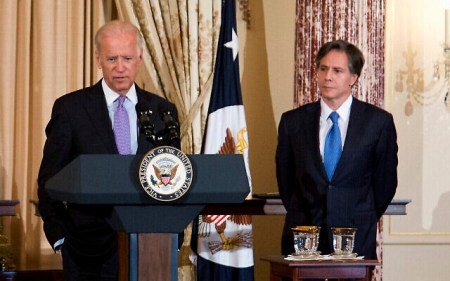
Then-Vice President Joe Biden (left) and then-Deputy Secretary of State Tony Blinken, June 30, 2015, at the State Department in Washington. (AP Photo/Manuel Balce Ceneta)

“We very much support the Abraham Accords. We think that Israel normalizing relations with its neighbors and other countries in the region is a very positive development,” Blinken said in January.

“We’re also trying to make sure that we have a full understanding of any commitments that may have been made in securing those agreements, and that’s something we’re looking at right now,” he added.

In a November interview with The Times of Israel, Blinken panned the apparent “quid pro quo” nature of the F-35 sale that immediately followed the normalization agreement.

“The Obama-Biden administration made those planes available to Israel and only Israel in the region,” said Blinken, who served as Biden’s national security adviser, deputy national security adviser to the president and deputy secretary of state during the Obama administration.

Israel and the UAE signed a US-brokered normalization deal in September. The Trump administration formally notified Congress of its planned weapons sale to Abu Dhabi two months later.

Despite the review, Israel-UAE normalization has moved ahead without any adverse effects over the last few months.

On the record, the three countries have insisted that the arms deal was not part of negotiations that brought about the so-called Abraham Accords.

But Trump officials have acknowledged that the agreement put Abu Dhabi in a better position to receive such advanced weaponry, and a source with direct knowledge of the talks told The Times of Israel that both the US and Israel knew that the arms deal was “very much part of the deal.”

Israel announced in October that it would not oppose the sale, an about-face from its previous opposition to the deal on the grounds that it would harm the Jewish state’s military edge in the region. That decision came after meetings held between Defense Minister Benny Gantz and his US counterpart at the time, Mark Esper, at the conclusion of which the sides signed an agreement further codifying Washington’s commitment to maintaining Israel’s federally-protected military edge in the region.

From left, Defense Minister Benny Gantz, US Defense Secretary Lloyd Austin, and Israeli Air Force chief Amikam Norkin stand in front of an Iron Dome missile defense system at the Nevatim Air Base in southern Israel on April 12, 2021. (Judah Ari Gross/Times of Israel)

Tuesday’s news that the US would move ahead came a day after Gantz met current US Defense Secretary Lloyd Austin in Tel Aviv. It was not clear if the sale to the UAE was a focus of their talks.

Gantz is also believed to have secured an American commitment to a substantial military package to compensate for the weapons that the Pentagon was preparing to sell to one of Israel’s neighbors.

Jacob Magid contributed to this report

Senior Iran official confirms ‘thousands of centrifuges damaged and destroyed’

April 14, 2021

Admission of scale of damage at Natanz casts doubts on Tehran’s ability to ramp up uranium enrichment to 60%, as threatened; Israeli report says whole plant still out of commission

Centrifuge machines in the Natanz uranium enrichment facility in central Iran, in an image released on November 5, 2019. (Atomic Energy Organization of Iran via AP, File)

Centrifuge machines in the Natanz uranium enrichment facility in central Iran, in an image released on November 5, 2019. (Atomic Energy Organization of Iran via AP, File)

A senior Iranian official confirmed Tuesday that the blast at the Natanz nuclear facility, which Tehran blames on Israel, destroyed or damaged thousands of centrifuges used to enrich uranium.

Alireza Zakani, the hard-line head of the Iranian parliament’s research center, referred to “several thousand centrifuges damaged and destroyed” in a state TV interview. However, no other official has offered that figure and no images of the aftermath have been released.

His comments came as Iran said it was stepping up uranium enrichment to an unprecedented 60% — bringing Iran closer to the 90% purity threshold for military use, and shortening its potential “breakout time” to the bomb — and installing new centrifuges in response to the Sunday attack.

The remarks appear to confirm Israeli reports indicating the damage was widespread and Iran will have significant difficulty restoring its enrichment to previous levels in the coming months.

An Israeli TV report on Tuesday night said that Iran will only be able to enrich very small quantities of uranium to 60% since Natanz is still out of commission following the Sunday attack.

Channel 13 analyst Alon Ben David said that despite Iranian officials’ vow to start preparing Wednesday to begin the higher enrichment process, they cannot do it at Natanz, since the 6,000 centrifuges there remain “out of action.”

There are 1,000 centrifuges at Iran’s Fordo nuclear facility that can enrich to 60% in very small quantities, the Israeli analyst said, describing the Iranian threat of higher enrichment, therefore, as unlikely to be significant.

This Nov. 4, 2020, satellite photo by Maxar Technologies shows Iran’s Fordo nuclear site (Maxar Technologies via AP)

The weekend attack at Natanz was initially described only as a blackout in the electrical grid feeding above-ground workshops and underground enrichment halls — but later Iranian officials began calling it an attack.

On Monday, an Iranian official acknowledged that the blast took out the plant’s main electrical power system and its backup. “From a technical standpoint, the enemy’s plan was rather beautiful,” Fereydoon Abbasi Davani, the head of the Iranian parliament’s energy committee, told Iranian state television on Monday.

“They thought about this and used their experts and planned the explosion so both the central power and the emergency power cable would be damaged.”

The comments from Davani, the former head of Iran’s atomic energy organization, came as reports in Israel and the US provided new details of the early Sunday bombing and its consequences, with assessments that the blast would set back the Iranians by 6-9 months.

The New York Times reported that the blast was caused by a bomb that was smuggled into the plant and then detonated remotely. The report cited an unnamed intelligence official, without specifying whether they were American or Israeli. This official also specified that the blast took out Natanz’s primary electrical system as well as its backup.

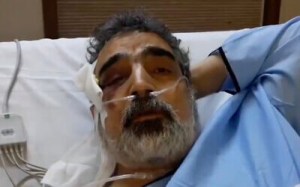
Behrouz Kamalvandi, spokesman for the Atomic Energy Organization of Iran, is interviewed from his hospital bed on April 12, 2021, after being injured the day before in a reported fall at the Natanz nuclear facility. (Screen capture: Twitter)

The report said that Iran’s Atomic Energy Organization spokesman, Behrouz Kamalvandi, said the explosion inside the bunker had created a hole so big that he fell into it when trying to examine the damage, injuring his head, back, leg and arm.

Nevertheless, other Iranian officials tried to play down the damage in the underground facility.

The head of Iran’s Atomic Energy Organization, Ali Akbar Salehi, claimed earlier Monday that emergency power had already been restored at the plant and enrichment was continuing.

“A large portion of the enemy’s sabotage can be restored, and this train cannot be stopped,” he told Iranian media, according to the Times.

Iran’s Foreign Ministry said it damaged some of Iran’s first-generation IR-1 centrifuges, the workhorse of its nuclear program.

Enrichment to 60% marks a significant escalation and is a short technical step away from weapons-grade uranium. Iran had been enriching up to 20%, and even that was a short step from weapons-grade levels of 90%.

Iran’s semi-official Fars news agency said its atomic energy agency will initiate preparatory steps to ramp up enrichment on Tuesday night. The report said the damaged IR-1 centrifuges will be replaced with new machines that have a higher capacity.

The International Atomic Energy Agency confirmed in a statement that Iran warned it will start enriching uranium up to 60% purity.

In a report to member states, the IAEA’s director-general, Rafael Mariano Grossi, “said Iran had informed the Agency that the country intends to start producing UF6 enriched up to 60 percent,” the statement said.

Israel has hinted at being involved, but not officially confirmed any role in the attack. However, Prime Minister Benjamin Netanyahu has repeatedly vowed never to allow Tehran to obtain a nuclear weapon and Israel has twice preemptively bombed Mideast nations to stop their atomic programs.

In return to pre-Trump norm, State Dep’t report refers to ‘occupied’ territories

March 31, 2021
Human rights report names chapter ‘Israel, West Bank and Gaza,’ as in Trump era, but areas themselves labeled ‘occupied’ for first time in years

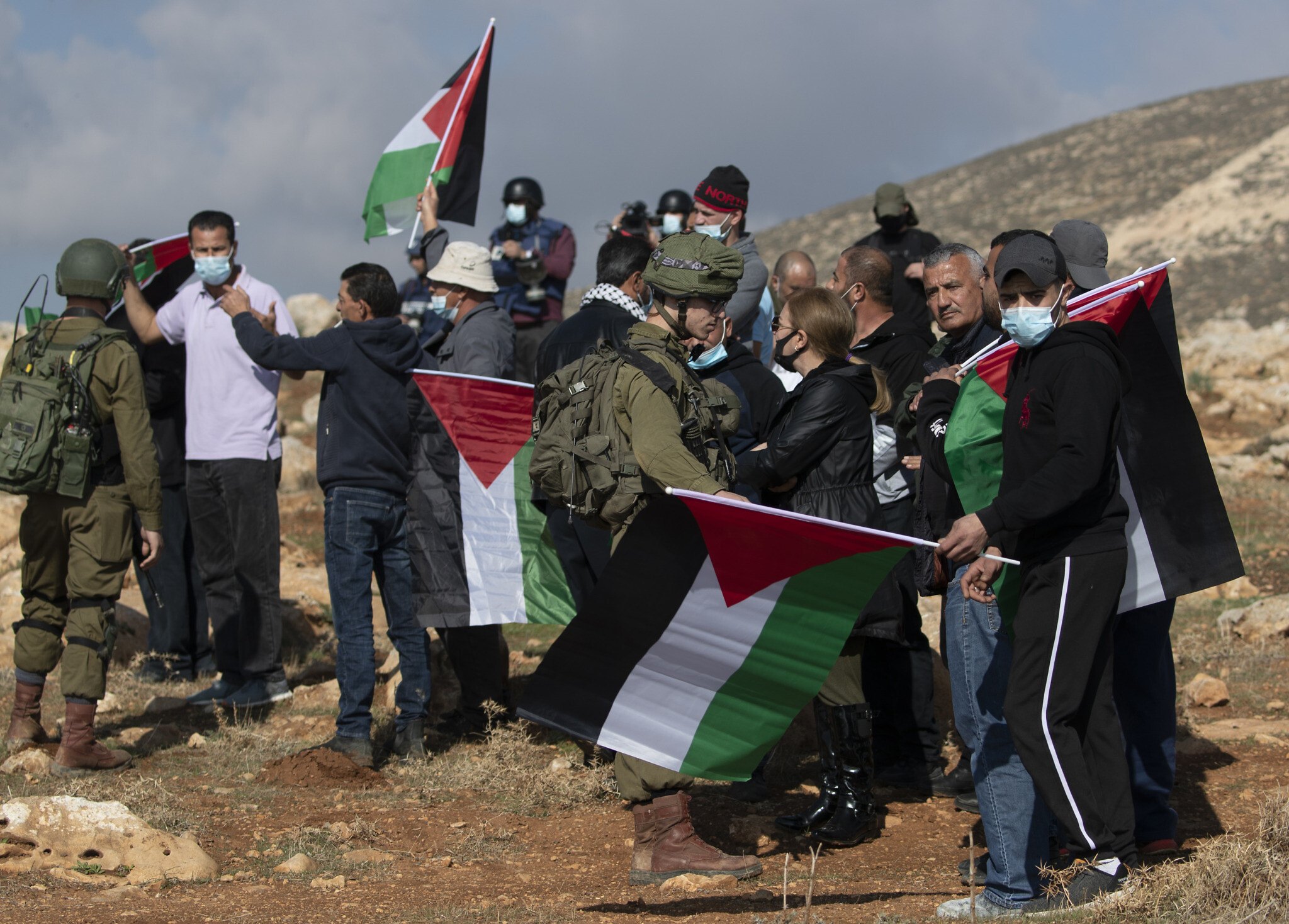
Israeli soldiers stop Palestinian protesters from reaching a Jewish settler outpost, at the outskirts of the West Bank village of Mughayer, north of Ramallah on December 18, 2020. (AP/Nasser Nasser)

Israeli soldiers stop Palestinian protesters from reaching a Jewish settler outpost, at the outskirts of the West Bank village of Mughayer, north of Ramallah on December 18, 2020. (AP/Nasser Nasser)

In a partial return to a pre-Trump-era norm, the US State Department’s annual report on human rights violations around the world published on Tuesday referred to the West Bank, Gaza Strip, East Jerusalem and the Golan Heights as territories “occupied” by Israel.

However, the Biden administration did not go as far as to title the specific chapter in the 2020 Country Reports on Human Rights Practices “Israel and the Occupied Territories,” as had been the custom for decades until the Trump administration, led by former US ambassador to Israel David Friedman, who pushed to have it altered to say “Israel” followed by a list of the disputed territories.

In the 2017 report, the chapter was titled “Israel, Golan Heights, the West Bank and Gaza. After then-US president Donald Trump recognized Israeli sovereignty over the Golan Heights, the 2018 and 2019 reports dropped that territory from the section title.

The 2020 report — the first during the Biden administration — uses the same chapter label from the previous two years, “Israel, the West Bank and Gaza.”

In addition to changing the chapter title, the Trump-led State Department dropped almost every mention of occupation from the bodies of the 2017, 2018 and 2019 annual reports. The 2016 report was published in the early months of the Republican president’s administration, while the more moderate Rex Tillerson was secretary of state and before Friedman began his stint as ambassador.

The 2020 chapter states that it “covers the West Bank, Gaza, and East Jerusalem territories that Israel occupied during the June 1967 war.”

However, it also clarifies that “language in this report is not meant to convey a position on any final status issues to be negotiated between the parties to the conflict, including the specific boundaries of Israeli sovereignty in Jerusalem, or the borders between Israel and any future Palestinian state.”

US Ambassador to Israel David Friedman (4th from right) tours the Efrat settlement with settler leaders on February 20, 2020. (Courtesy)

Asked to explain the decision to leave the chapter title on Israel and the Palestinians as it was under the Trump administration, Acting Assistant Secretary of the State Department’s Bureau of Democracy, Human Rights, and Labor Lisa Peterson told journalists at the report’s unveiling press conference that labeling the chapter by its geographic areas rather than the more general “Occupied Territories” was more useful to readers.

Palestinian Ambassador to the UK Husam Zomlot praised the labeling shift, but said that it would not be enough on its own.

“Good that we are back on the same page regarding the status of occupied territory. The real question is: What is the Biden administration going to do about it? It’s too late for talk, we need action to hold Israel accountable and to end the occupation,” Zomlot, who used to serve as the head of the PLO’s Mission in Washington,” told The Times of Israel.

Israel rejects the claim that it occupies the West Bank, saying the territories it has ruled since 1967 are “disputed.” While it maintains a blockade over the Gaza Strip, which it says is designed to prevent the smuggling of weapons to the enclave-ruling Hamas terror group, Israel notes that it pulled its military and citizens out of that territory.

Israel annexed East Jerusalem after the 1967 Six Day War and the Golan Heights in 1981. The US has never recognized the former move, but Trump did become the first president to recognize Jerusalem as Israel’s capital in 2017 before recognizing Israeli sovereignty over the Golan Heights in 2019.

The Biden administration has said it would not walk back the Trump move on Jerusalem, agreeing that it is Israel’s capital. However, Secretary of State Antony Blinken has not recognized Israeli sovereignty over the Golan Heights.

US Secretary of State Antony Blinken speaks during a news conference at the State Department in Washington, Feb. 26, 2021. (AP Photo/Manuel Balce Ceneta, Pool, File)

Pressed on the issue last month, Blinken acknowledged that the area is critical for Israel’s security, and that the current situation in Assad-led Syria makes talk of Israel returning the Golan Heights irrelevant. However, “if the situation were to change in Syria, that’s something we’d look at,’ he said.

Biden himself notably pushed back against referring to Israel’s control over the West Bank as an “occupation” in the Democratic Party’s 2016 platform — a move that angered some more dovish voices in the party.

But since he’s entered office, his administration has declared that it plans to reverse several Trump administration policies deemed counterproductive and detrimental to prospects for a two-state solution, such as the cutting of aid to the Palestinians and the shuttering of diplomatic missions to them.

Much of the 2020 report is similar to prior years, cataloging human rights abuses by the Israel Defense Forces, Hamas and Palestinian Authority. However, abuses by Israel were slightly more detailed than they were during the Trump years.

Within Israel proper, the report notes “significant human rights issues,” such as “targeted killings of Israeli civilians and soldiers [by Palestinians]; arbitrary detention, often extraterritorial in Israel, of Palestinians from the West Bank and Gaza; restrictions on Palestinians residing in Jerusalem including arbitrary or unlawful interference with privacy, family, and home; interference with freedom of association, including stigmatizing human rights nongovernmental organizations; significant restrictions on freedom of movement; violence against asylum seekers and irregular migrants; violence or threats of violence against national, racial, or ethnic minority groups; and labor rights abuses against foreign workers and Palestinians from the West Bank.”
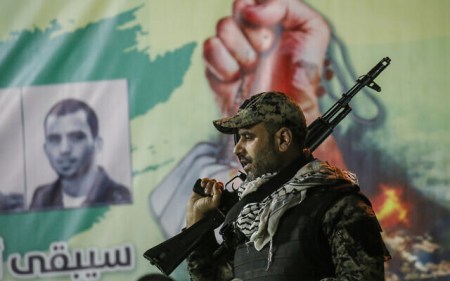
Palestinians attend a Hamas rally marking the 32nd anniversary of the terror group’s founding, in the southern Gaza Strip, December 16, 2019. (Fadi Fahd/Flash90)

As for Israeli abuses in the West Bank and Gaza, the State Department documents reports of unlawful or arbitrary killings of Palestinians due to unnecessary or disproportionate use of force; reports of torture; restrictions on free expression, the press, and the internet, including violence, threats of violence, unjustified arrests and prosecutions against journalists, censorship, and site blocking; substantial interference with the rights of peaceful assembly and freedom of association, including harassment of nongovernmental organizations; and significant restrictions on freedom of movement, including the requirement of exit permits.

As for the PA, the State Department notes reports of unlawful or arbitrary killings, torture, and arbitrary detention by authorities; significant problems with the independence of the judiciary; unlawful interference with privacy; serious restrictions on free expression, the press, and the internet — including violence, threats of violence, unjustified arrests and prosecutions against journalists, censorship, and site blocking; substantial interference with the rights of peaceful assembly and freedom of association, including harassment of nongovernmental organizations; restrictions on political participation, as the PA has not held a national election since 2006; acts of corruption; lack of investigation of and accountability for violence against women; violence and threats of violence motivated by anti-Semitism; anti-Semitism in school textbooks; violence and threats of violence targeting lesbian, gay, bisexual, transgender, or intersex persons; and reports of forced child labor.

On Hamas, the State Department highlights unlawful or arbitrary killings, systematic torture, and arbitrary detention by the terror group’s officials; political prisoners; arbitrary or unlawful interference with privacy; serious restrictions on free expression, the press, and the internet, including violence, threats of violence, unjustified arrests and prosecutions against journalists, censorship, site blocking, and the existence of criminal libel and slander laws; substantial interference with the rights of peaceful assembly and freedom of association; restrictions on political participation, as there has been no national election since 2006; acts of corruption; reports of a lack of investigation of and accountability for violence against women; violence and threats of violence motivated by anti-Semitism; anti-Semitism in school textbooks; unlawful recruitment and use of child soldiers; violence and threats of violence targeting lesbian, gay, bisexual, transgender, or intersex persons; and forced or compulsory child labor.

The State Department also notes “reports of unlawful or arbitrary killings, and violence and threats of violence against Israeli citizens” by Palestinians and “reports of violence and threats of violence motivated by extremist nationalist sentiment” by Israelis.
US said open to crafting road map back to Iran nuclear deal, as progress stalls

March 31, 2021

Biden administration officials quoted saying indirect communication, political disputes and Iran’s upcoming election have hindered progress, as Tehran demands full sanction removal

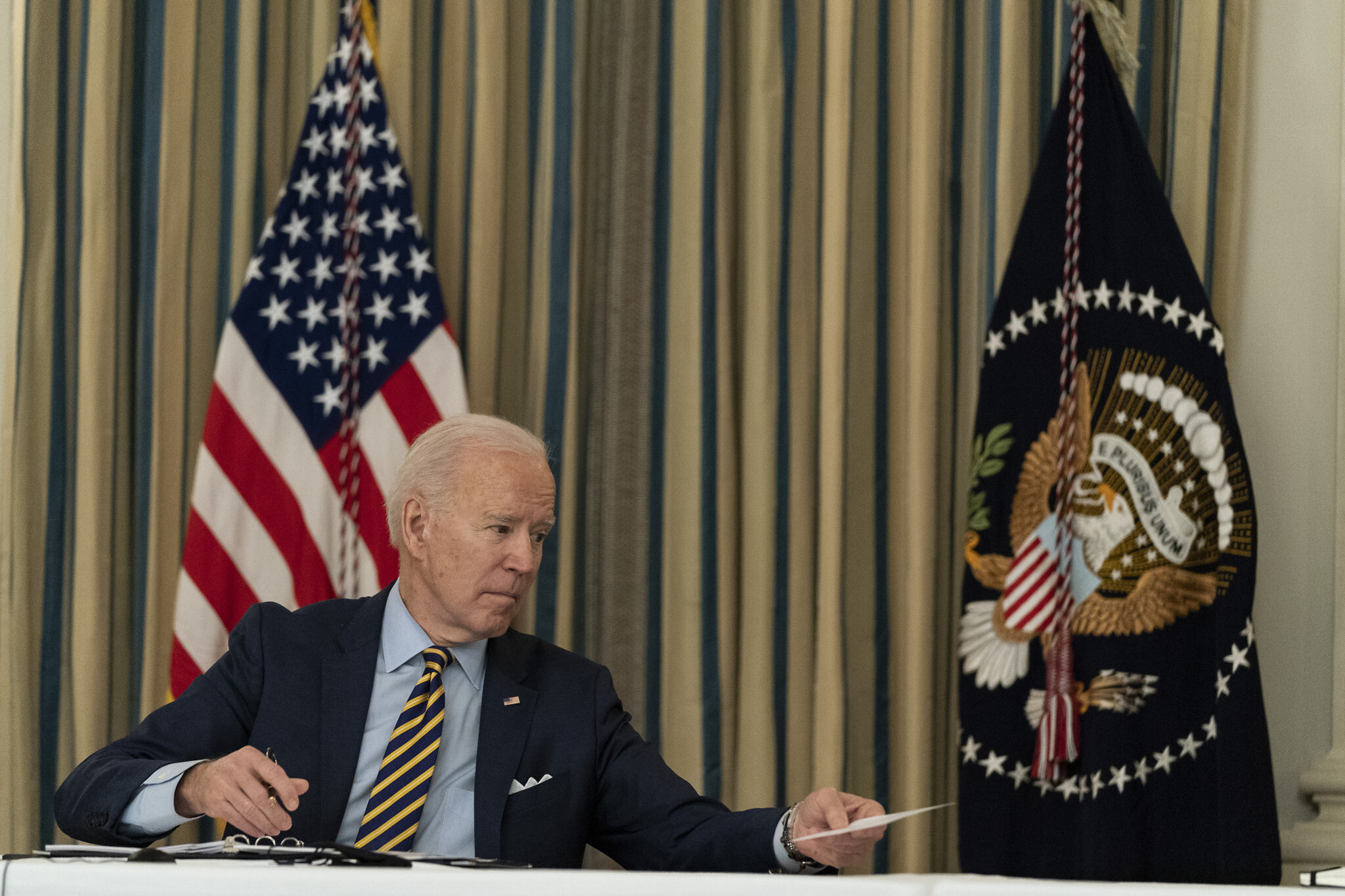
US President Joe Biden passes a note to Secretary of State Antony Blinken, during a virtual meeting with Indian Prime Minister Narendra Modi, Australian Prime Minister Scott Morrison and Japanese Prime Minister Yoshihide Suga, from the State Dining Room of the White House, March 12, 2021, in Washington. (AP Photo/Alex Brandon)

US President Joe Biden passes a note to Secretary of State Antony Blinken, during a virtual meeting with Indian Prime Minister Narendra Modi, Australian Prime Minister Scott Morrison and Japanese Prime Minister Yoshihide Suga, from the State Dining Room of the White House, March 12, 2021, in Washington. (AP Photo/Alex Brandon)

US officials believe Iran may be willing to discuss a broad road map to revive the 2015 nuclear deal, according to a report Wednesday.

US President Joe Biden has placed resumption of the nuclear deal high on his list of foreign policy priorities, but so far all of his proposals have been rejected. Most recently, the US floated a step-by-step approach back to compliance, which Tehran has turned down.

An unnamed US official told the Reuters news agency: “What we had heard was that they were interested first in a series of initial steps, and so we were exchanging ideas on a series of initial steps.”

“It sounds from what we are hearing publicly now, and through other means, that they may be … not interested in [discussing] initial steps but in a road map for return to full compliance,” the US official said.

Supreme Leader Ayatollah Ali Khamenei addresses the nation in a televised speech in Tehran, Iran, Jan. 8, 2021 (Office of the Iranian Supreme Leader via AP)

“If that’s what Iran wants to talk about, we are happy to talk about it,” he added.

However, it is unclear whether Iran is indeed willing to craft a road map back to the deal, the report said.

Last week, Iran’s supreme leader reiterated the Islamic Republic’s “definite policy” that Washington must lift all sanctions before Tehran returns to its commitments under deal.

The US and Iran have not communicated directly, instead relying on intermediaries such as Britain, France, China, or Russia.

Iran, China sign huge 25-year strategic deal; could reduce US regional influence

March 29, 2021


Beijing to invest $400 billion in Iran in exchange for oil, report says; agreement will strengthen military ties and may undermine US leverage in Middle East

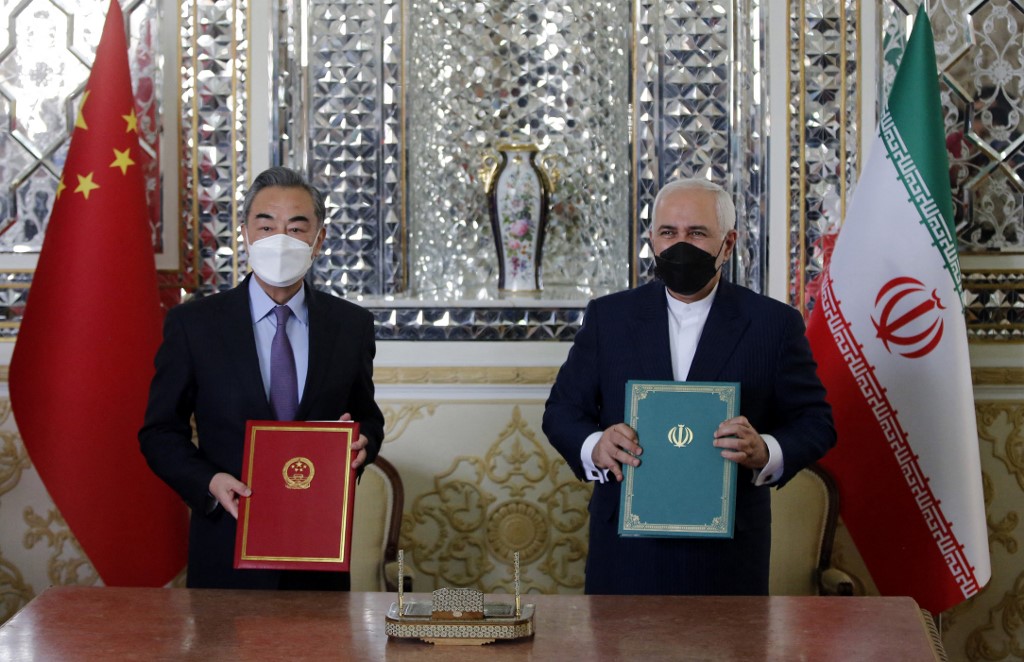
Iranian Foreign Minister Mohammad Javad Zarif (R) and his Chinese counterpart Wang Yi, pose for a picture after signing an agreement in the capital Tehran, on March 27, 2021. Iran and China signed what state television called a "25-year strategic cooperation pact" on today as the US rivals move closer together. (AFP)

Iranian Foreign Minister Mohammad Javad Zarif (R) and his Chinese counterpart Wang Yi, pose for a picture after signing an agreement in the capital Tehran, on March 27, 2021. Iran and China signed what state television called a “25-year strategic cooperation pact” on today as the US rivals move closer together. (AFP)

TEHRAN — Iran and China on Saturday signed a 25-year strategic cooperation agreement addressing economic issues amid crippling US sanctions on Tehran, according to Iranian state media.

The agreement, dubbed the Comprehensive Strategic Partnership, covers a variety of economic activity from oil and mining to promoting industrial activity in Iran, as well as transportation and agricultural collaborations, according to the report.

No additional details of the agreement were revealed as Iran’s Foreign Minister Mohammad Javad Zarif and Chinese counterpart Wang Yi took part in a ceremony marking the event.

The New York Times reported that China will invest some $400 billion in Iran in exchange for oil as part of the deal. The two countries will also step up military cooperation with joint training, research and intelligence sharing, the report said.

China is Iran’s leading trade partner and was one of the biggest buyers of Iranian oil before then US president Donald Trump reimposed sweeping unilateral sanctions in 2018 after abandoning a multilateral nuclear agreement with Tehran.

The deal signed Saturday could undermine US leverage over Iran ahead of expected negotiations and lessen American influence in the Middle East. Ongoing US sanctions against Iran could hamper its trade with China despite Saturday’s agreement, however.

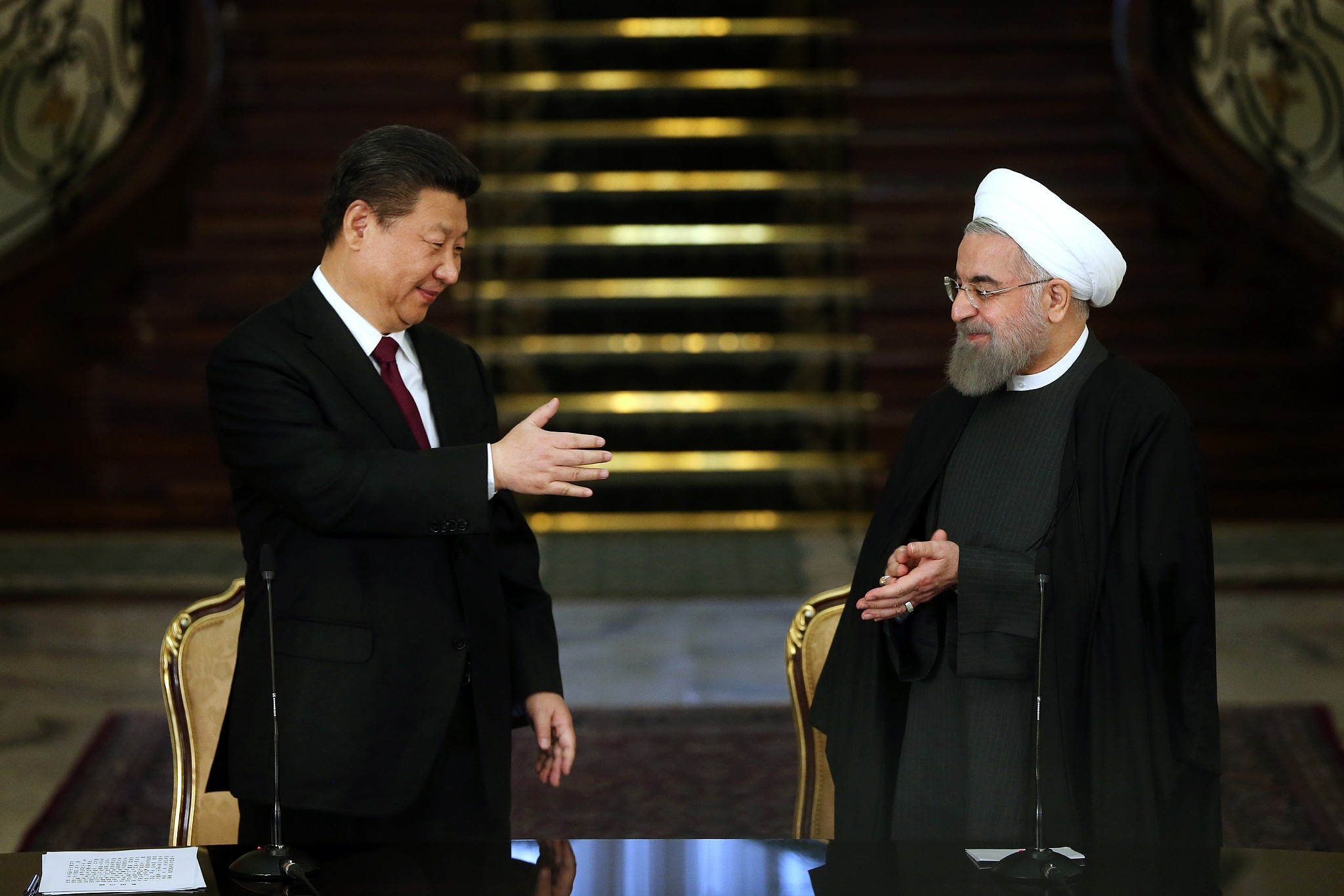
The Times report said Iran was prepared to host direct talks between Israel and the Palestinians, further suggesting that US influence in the region could be waning.Chinese President Xi Jinping, left, and his Iranian counterpart Hassan Rouhani prepare to shake hands at the conclusion of their joint press conference at the Saadabad Palace in Tehran, Iran, January 23, 2016. (Ebrahim Noroozi/AP)
“We believe this document can be very effective in deepening” Iran-China relations, Iran’s foreign ministry spokesman Saeed Khatibzadeh said, recalling that the pact had first been proposed during a visit to Tehran by Chinese President Xi Jinping in January 2016.

Xi and his Iranian counterpart Hassan Rouhani agreed then to establish a roadmap for “reciprocal investments in the fields of transport, ports, energy, industry and services.”

“Iran’s government and people are striving, as they always have, to broaden relations with trustworthy, independent countries like China,” supreme leader Ayatollah Ali Khamenei said at the time, describing the proposed cooperation agreement as “correct and reasonable.”

Xi has championed the Belt and Road Initiative, a plan to fund infrastructure projects and increase China’s sway overseas.

The deal with China marked the first time Iran has signed such a lengthy agreement with a major world power. In 2001, Iran and Russia signed a 10-year cooperation agreement, mainly in the nuclear field, that was lengthened to 20 years through two five-year extensions.

Before the ceremony Saturday, Yi met Rouhani and the special Iranian envoy in charge of the deal, Ali Larijani.

The deal also supports tourism and cultural exchanges and comes on the 50th anniversary of the establishment of diplomatic relations between China and Iran. The two countries have had warm relations and both took part in a joint naval exercise in 2019 with Russia in the northern Indian Ocean.

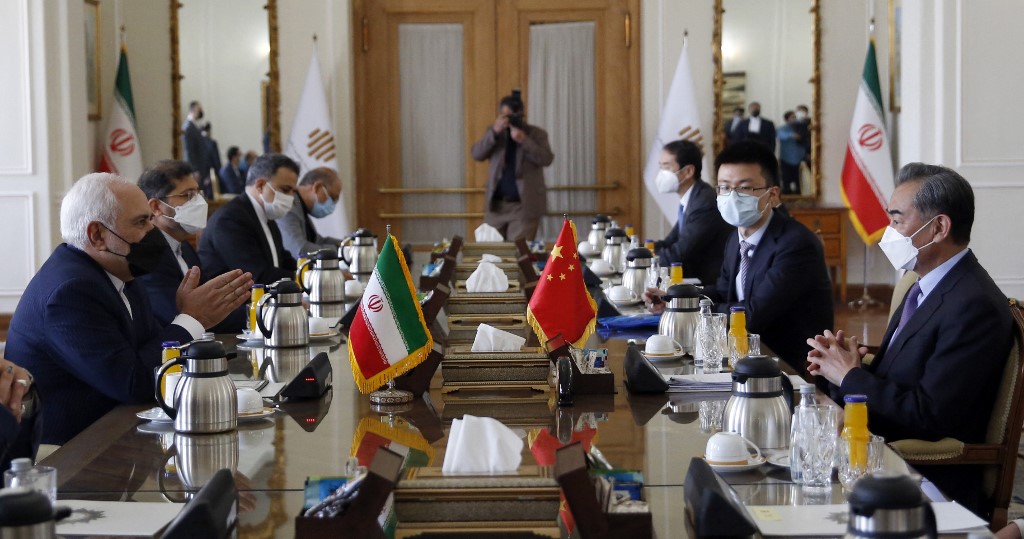
Reportedly, Iran and China have done some $20 billion in trade annually in recent years. That’s down from nearly $52 billion in 2014, however, because of a decline in oil prices and US sanctions imposed in 2018 after Trump pulled the US unilaterally out of Iran’s nuclear deal with world powers.Iranian Foreign Minister Mohammad Javad Zarif, left, meets with his Chinese counterpart Wang Yi, right, in the capital Tehran, on March 27, 2021. Iran and China signed what state television called a ’25-year strategic cooperation pact,’ as the US rivals move closer together. (AFP)



Iran has since pulled away from restrictions imposed under the deal under those sanctions in order to put pressure on the other signatories — Germany, France, Britain, Russia and China — to provide new economic incentives to offset US sanctions. Iran is also believed to be maneuvering for leverage ahead of expected negotiations with the Biden administration.

The nuclear accord gave Iran relief from international sanctions in return for limits on its nuclear program, but after Trump took the US out of the deal Iran walked back its own commitments, including by enriching uranium past the accord’s limits and barring UN inspections of its nuclear facilities. A number of other world powers remain committed to the deal.

US President Joe Biden wants to negotiate tougher conditions for an agreement with Iran, including by limiting its missile production and destabilizing activities in the region. Iran has ruled out such talks and demands the US lift sanctions before it returns to compliance, putting the two sides at a stalemate.

A US official said Saturday that it doesn’t matter “who goes first” to return to compliance with the deal, suggesting Washington was softening its position in the standoff with Tehran.

Israeli officials, including Prime Minister Benjamin Netanyahu, have voiced opposition to the Biden administration’s desire to rejoin the deal, putting Jerusalem and Washington at odds on the issue. Some leading Israeli officials in recent months have warned of military action to halt Iran’s nuclear program.

Nonetheless, Israeli and US officials agreed to set up a joint team for sharing intelligence about Iran’s nuclear program during recent strategic talks, according to a report last week.