Author Archive
Israeli prime minister ENCOURAGED by Biden’s stance on Iran
August 28, 2021Catastrophe in Afghanistan — for Afghans, Israel, the region… and for America
August 20, 2021As the Taliban retake power, the imminent 20th anniversary of 9/11 underlines the horrific consequences of the US failing to reckon with this region’s darkest forces

By DAVID HOROVITZ19 August 2021, 11:49 am

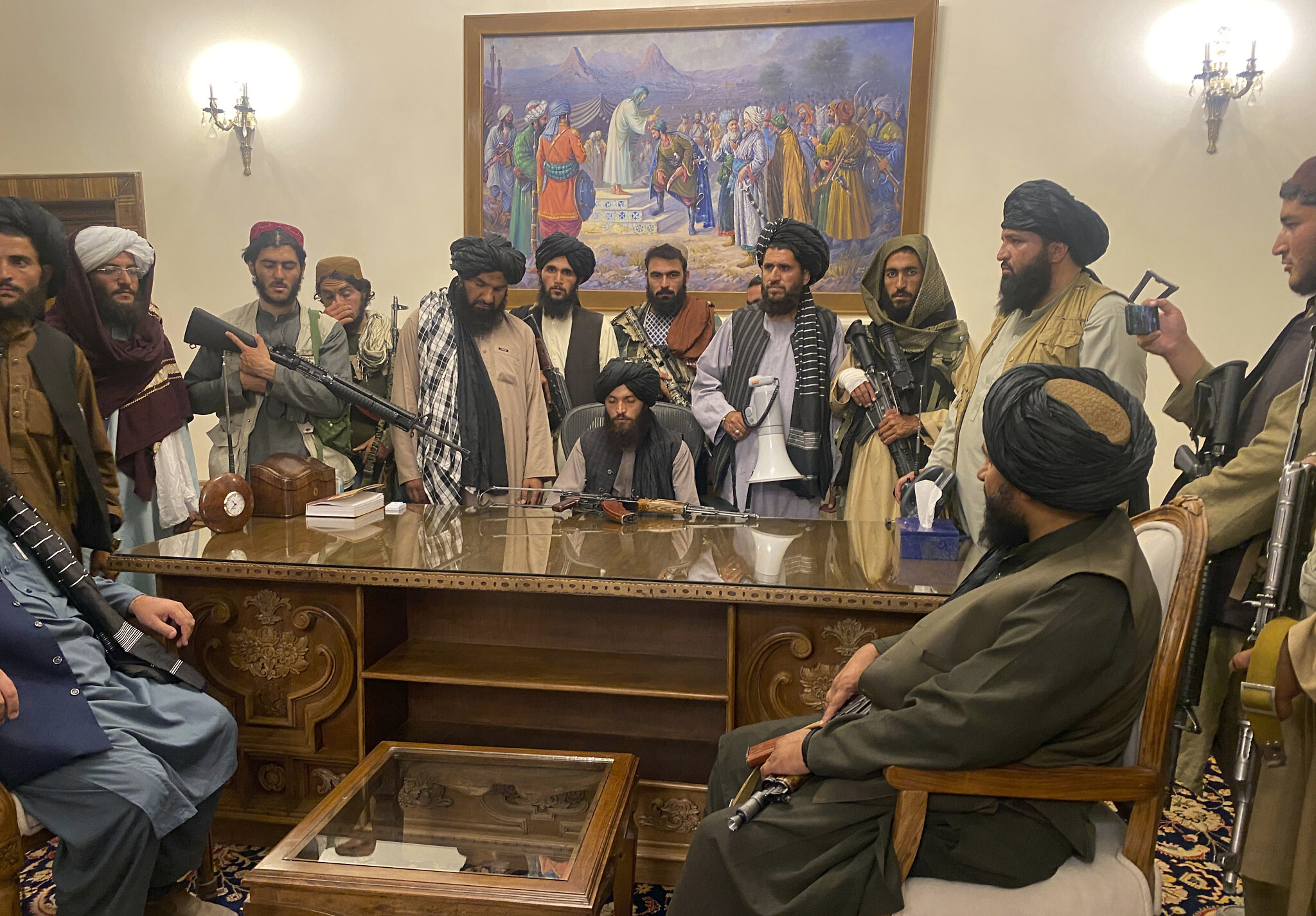
Taliban fighters take control of the Afghan presidential palace after President Ashraf Ghani fled the country, in Kabul, Afghanistan, August 15, 2021. (AP Photo/Zabi Karimi)
Like every national leader, the president of the United States has a prime obligation to safeguard the security and well-being of his citizens. And like his predecessor Donald Trump, President Joe Biden concluded that the presence of US troops and contractors in Afghanistan was having the opposite effect — that the American military deployment, as Biden put it on Monday, was “not in our national security interest.”
Thousands of Americans had lost their lives in the course of the 20-year war since the September 11, 2001, terrorist attacks, when the Bush administration began targeting Afghanistan for harboring al-Qaeda terrorists. And Biden, inheriting an agreement to withdraw the last few thousand US troops, decided to go ahead with it and, he said this week, avoid a “third decade” of war.
Before we get into the profound and dismal wrongheadedness of this decision — which in a matter of a few days has seen the United States humiliated and weakened in the eyes, most especially, of its Islamist enemies — we should note that Israel has twice in recent decades carried out its own hasty military withdrawals on our very own doorstep, under circumstances and with consequences it has to some extent lived to regret.
We left southern Lebanon unilaterally in 2000, under public pressure amid the relentless loss of soldiers’ lives in the Security Zone, and were plunged into the Second Lebanon War six years later. Now we face a full-fledged Hezbollah army on that front. We left Gaza unilaterally in 2005, choosing neither to negotiate the pullout with the Palestinian Authority nor to heed the warnings that emboldened terror groups, claiming vindication, would fill the vacuum. Now we face endless friction and intermittent bloody conflict with Hamas.
Israel, in other words, is not immune to the urge to cut and run.Get The Times of Israel’s Daily Editionby email and never miss our top storiesNewsletter email addressGET ITBy signing up, you agree to the terms
And that is what the United States has now done in Afghanistan, to devastating effect. It has handed Afghanistan back to the Taliban — brutal and benighted Islamic fundamentalists who, when they last controlled the country, oppressed women with a methodical viciousness unparalleled by any other regime worldwide; indiscriminately massacred civilians; restricted education; destroyed agriculture; banned culture and recreation…Taliban fighters stand guard in a vehicle along the roadside in Kabul on August 16, 2021, (AFP)
In consigning Afghanistan to its grisly fate, moreover, the US has shown itself to have been incapable of forging the Afghan military into a competent fighting force, despite all the training, the tens of billions in equipment, the lives lost.
And while Biden now blames Afghanistan’s political leaders for fleeing, and the Afghan army for laying down its arms, the US also reveals itself to have been unable to recognize the unreliability of its Afghan allies. As recently as July 8, Biden asserted with outrageously misguided complacency that “the likelihood there’s going to be the Taliban overrunning everything and owning the whole country is highly unlikely.”
For Israel, the debacle is a reinforcement of our insistence that we, and we alone, put our lives on the line in the defense of this country — even as we forge and nurture our alliances with our vital allies, and none more so than the United States. We do not and must not ask US or any other forces to risk their lives for us, and we dare not rely on any other country or alliance to protect us from our enemies.Taliban officials arrange a Taliban flag before a press conference by Taliban spokesman Zabihullah Mujahid, at the Government Media Information Center, in Kabul, Afghanistan, August 17, 2021. (AP Photo/Rahmat Gul)
For Israel and its allies and semi-allies in the region, the US mishandling of Afghanistan also shocks and horrifies because it gives succor to terrorist groups and extremist regimes. First and foremost of these is Iran, closing in on the bomb, toying with the US in negotiations over a return to the 2015 nuclear deal, determined to destroy “Little Satan” Israel, and now even more contemptuous of the “Great Satan.”
For the United States, however, what’s ultimately worst about the abandonment of Afghanistan to some of the darkest forces on the planet is that it negates, rather than serves, that core presidential obligation to ensure the security and well-being of the American people. The US deployment had been greatly scaled back, and the losses, still of course terrible, reduced to a fraction of those in earlier years. The hapless departure and its consequences, bitter experience indicates all too well, will exact a far greater cost than maintaining that deployment would have.
Biden’s two immediate predecessors complained that, notwithstanding the US commitment to championing freedom and democracy, it was not America’s job to solve all the problems of this part of the world (Barack Obama) and fight our region’s stupid wars (Donald Trump). But that the debacle is playing out around the 20th anniversary of 9/11, when 3,000 people lost their lives in al-Qaeda’s horrific terrorist assault on America, serves to grimly underline the direct consequences for the United States itself of failing to reckon with the ruthless, amoral and sophisticated forces plotting to harm it.People wait to be evacuated from Afghanistan at the airport in Kabul on August 18, 2021. (AFP)
Those regressive forces, most of them strategizing in our part of the world, are murderously hostile to everything that is best about America — its defense of freedoms, its commitment to democracy, its striving for opportunity and equality, its fundamental humanity. Today, they are more confident and stronger than they were just a few days ago. And the bastion of the free world’s defense against them, the United States of America, looks tired and irresolute.
This, at the risk of catastrophic understatement, is not in the US national security interest.US President Joe Biden leaves after speaking about the Taliban’s takeover of Afghanistan, from the East Room of the White House, on August 16, 2021, in Washington, DC. (Brendan Smialowski/AFP)
Iran ups uranium enrichment to 60 percent, UN watchdog confirms
August 18, 2021
IAEA says Tehran boosting its nuclear capabilities at the Natanz plant, as talks with world powers stall
By AFPToday, 12:22 am
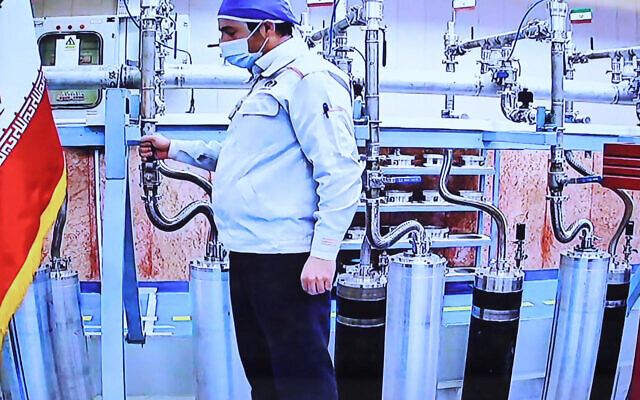
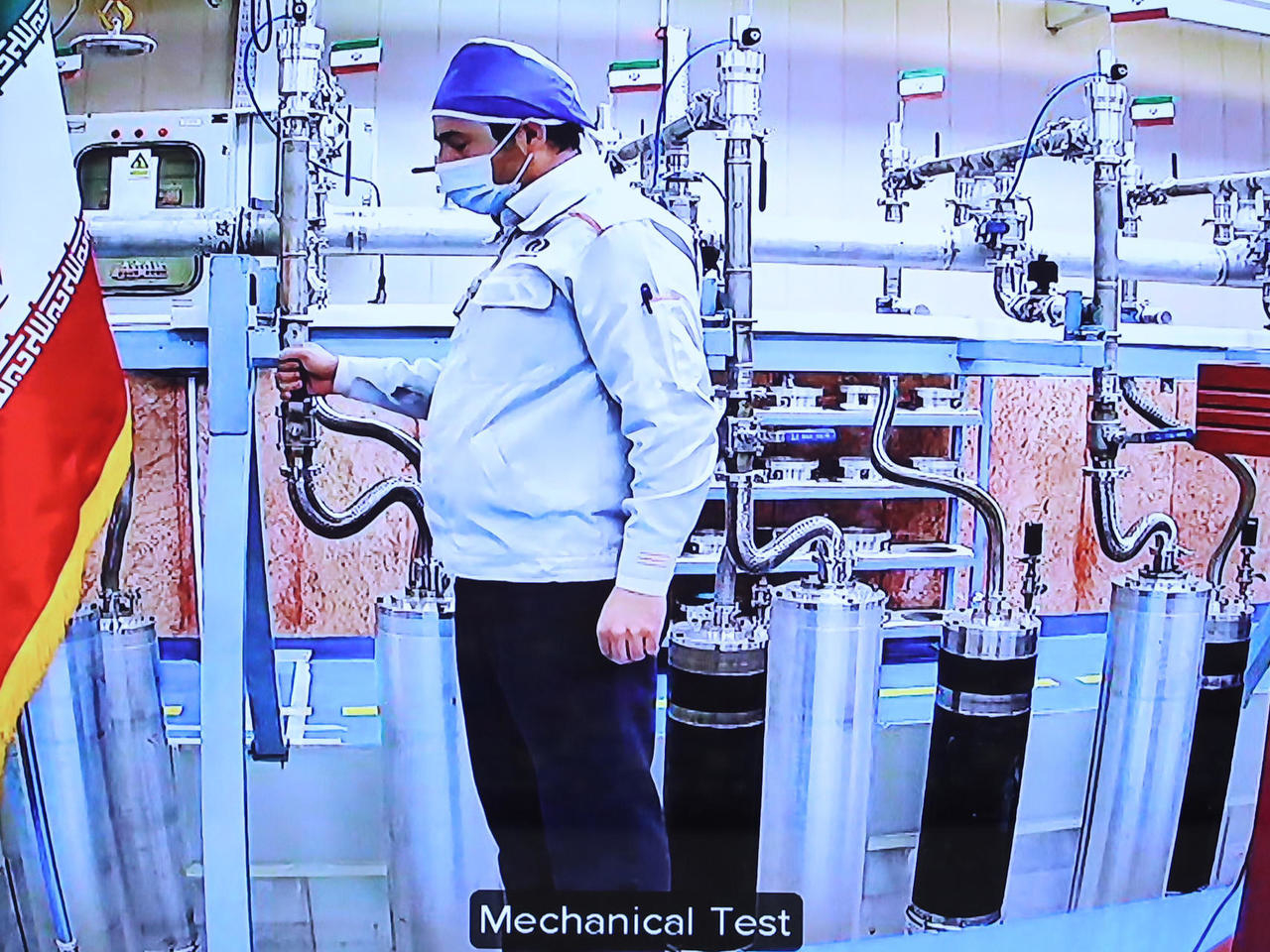
A handout picture provided by the Iranian presidential office on Saturday, April 10, shows a video conference screen of an engineer inside Iran’s Natanz uranium enrichment plant (Iranian Presidency/AFP)
VIENNA — Iran has established a process to accelerate production of highly enriched uranium, the UN nuclear watchdog said Tuesday, with talks to save the 2015 nuclear deal at a standstill.
International Atomic Energy Agency director Rafael Grossi informed IAEA member states that Tehran was boosting such capacity at its Natanz enrichment plant.
The agency verified on Saturday that “Iran had configured a new operational mode for the production of UF6 enriched up to 60 percent U-235,” Grossi said in a statement to AFP.
This involved using two centrifuge cascades compared to one previously, he added.
The move takes Iran closer to the 90 percent purity level needed for use in a nuclear weapon.Get The Times of Israel’s Daily Editionby email and never miss our top storiesNewsletter email addressGET ITBy signing up, you agree to the terms
Tehran had started in mid-April to enrich uranium to 60 percent.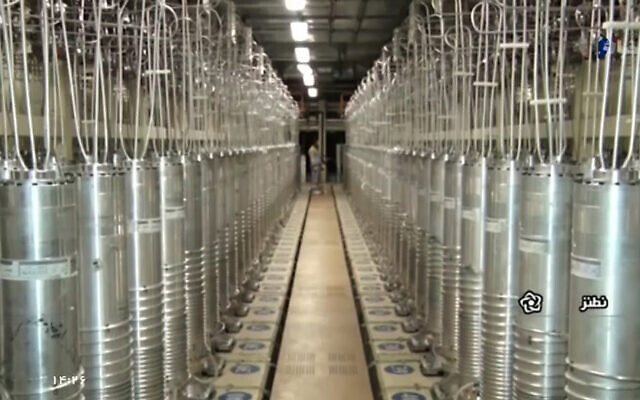
In this image made from April 17, 2021, video released by the Islamic Republic Iran Broadcasting, IRIB, state-run TV, various centrifuge machines line a hall at the Natanz Uranium Enrichment Facility, Iran. (IRIB via AP)
The Islamic Republic has gradually rolled back its nuclear commitments since 2018, when then-US president Donald Trump withdrew from a multilateral nuclear deal and began imposing sanctions.
The 2015 deal known formally as the Joint Comprehensive Plan of Action, or JCPOA, gave Iran relief from sanctions in return for curbs on its nuclear program.
Under the accord, Iran had committed to keep enrichment to 3.67 percent, though it had stepped this up to 20 percent in January.
Trump’s successor Joe Biden said he hopes to revive the nuclear deal and indirect talks in Vienna, through European intermediaries, started in the Austrian capital in April.
But the talks broke up on June 20 without any discernible progress.
The EU said earlier this month that Iran is ready to resume talks under new president Ebrahim Raisi, and meetings could take place in Vienna from early September.
Meanwhile the United States on Monday urged Iran to return to the negotiations, voicing alarm over Iranian production of uranium metal reported by the UN nuclear watchdog.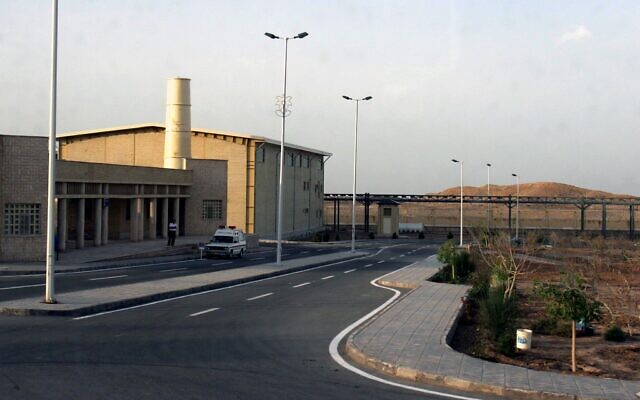
File: Iran’s nuclear enrichment facility in Natanz, Iran (AP Photo/Hasan Sarbakhshian)
According to the report presented by Grossi, Iran has made 200 grams of the metal, after having announced such a project in July for research purposes.
The State Department said Washington believed Tehran “has no credible need to produce uranium metal.”
Under the 2015 deal, Iran promised not to produce the metal, which can be used to build a nuclear bomb.
IAEA: Iran producing uranium metal, which can be used in nuclear bomb
August 17, 2021UN nuclear watchdog says Tehran produced 200g of material enriched up to 20%, in further departure from deal
By TOI STAFF and AGENCIES16 August 2021, 9:41 pm
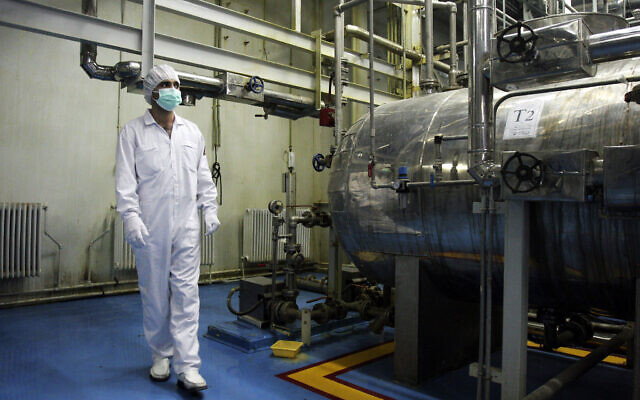
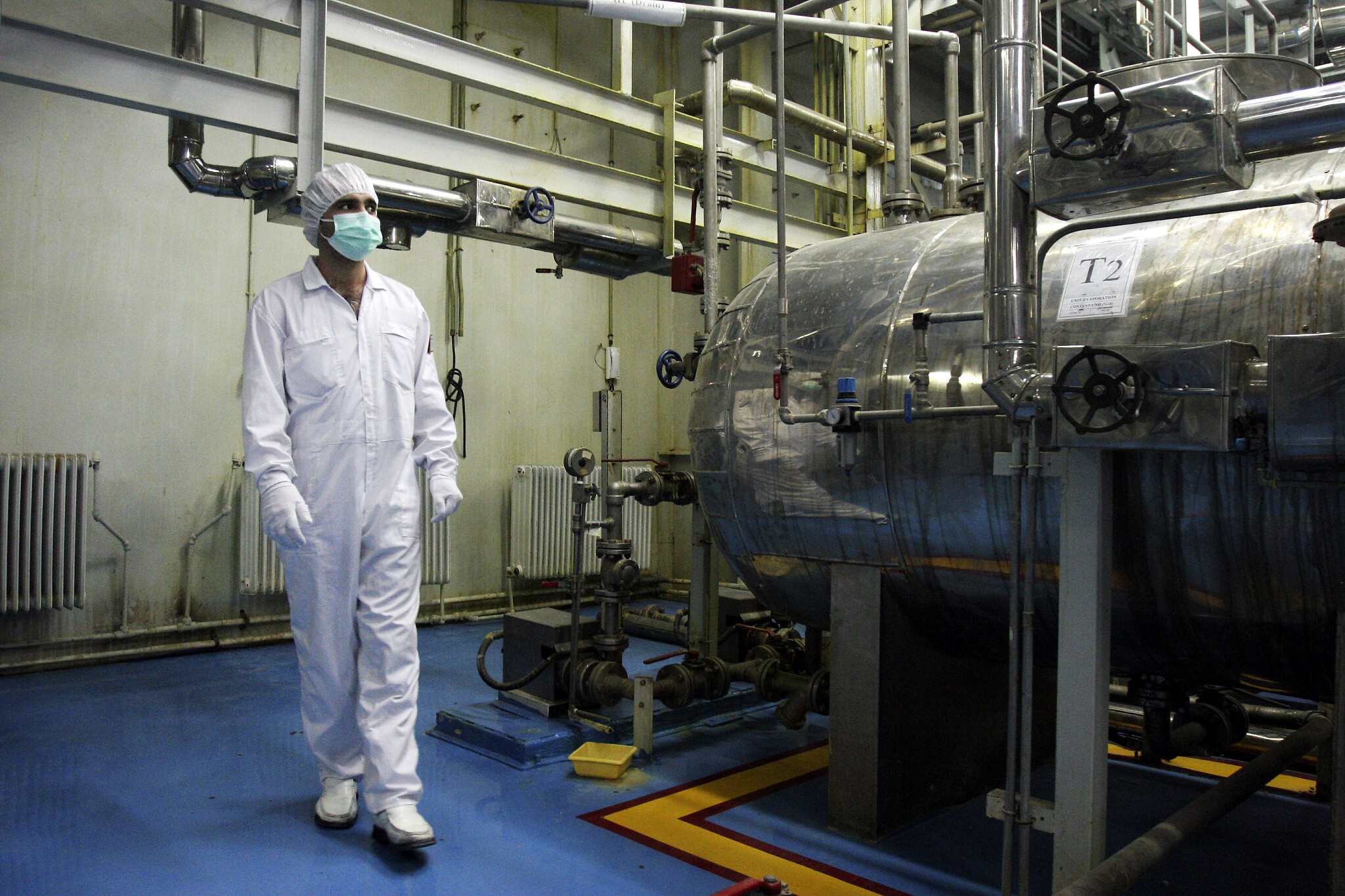
An Iranian technician walks through the Uranium Conversion Facility just outside the city of Isfahan 255 miles (410 kilometers) south of the capital Tehran, Iran, February 3, 2007. (Vahid Salemi/ AP/ File)
With the chances of a return to the 2015 nuclear deal fading, Iran has progressed with producing uranium metal, the UN nuclear watchdog said on Monday.
“On 14 August 2021, the Agency verified… that Iran had used 257g of uranium enriched up to 20% U-235 in the form of UF4 (uranium tetrafluoride) to produce 200g of uranium metal enriched up to 20% U-235,” the International Atomic Energy Agency wrote, according to Reuters.
Uranium metal can be used as a component in nuclear weapons. Iran had signed up to a 15-year ban on “producing or acquiring plutonium or uranium metals or their alloys,” under the so-called Joint Comprehensive Plan of Action (JCPOA) signed in 2015 with world powers.
Iran previously told the UN nuclear watchdog that it was advancing research on uranium metal production, saying it is aimed at providing advanced fuel for a research reactor in Tehran.
The IAEA added that the move was step three in a four-step plan, the fourth being the production of a reactor fuel plate, according to Reuters.Get The Times of Israel’s Daily Editionby email and never miss our top storiesNewsletter email addressGET ITBy signing up, you agree to the terms
But Iran has insisted its nuclear activities are peaceful and that it is not aiming at building a weapon
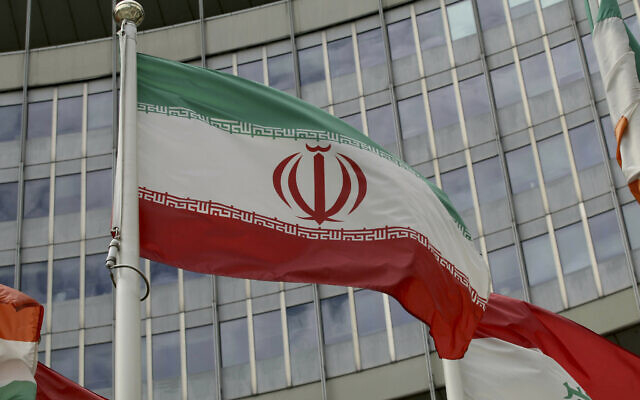
The Iranian flag waves outside of the UN building that hosts the International Atomic Energy Agency, IAEA, office inside in Vienna, Austria, July 10, 2019. (AP Photo/Ronald Zak)
Former United States president Donald Trump pulled out of the deal in 2018 and re-imposed sanctions that have choked Iran’s oil-dependent economy. Iran has responded by walking back measures it had agreed to abide by, including enriching uranium to unprecedented levels, near weapons-grade.
Talks kicked off in April in Vienna to find a way to bring both parties back to the deal. But the last round took place on June 20, with no date set for when they would resume. The EU chairs the meetings.
US President Joe Biden, Trump’s successor, has signaled his readiness to return to the nuclear deal and has engaged in indirect negotiations with Iran alongside formal talks with the agreement’s remaining parties, Britain, China, France, Germany, and Russia.
Police officers stand in front of the ‘Grand Hotel Wien’ in Vienna, Austria, April 9, 2021, where closed-door nuclear talks with Iran take place. (AP Photo/Florian Schroetter)
Israel has long opposed the nuclear deal and Biden’s stated intentions to reenter the treaty.
A return to the 2015 deal seems more unlikely as tensions have risen, notably with an attack by drones last month on an Israeli-linked tanker off Oman that killed a Briton and a Romanian national on board.
The G7 — the US, Britain, Canada, France, Germany, Italy and Japan — blamed the attack on Iran, which denies the accusation.
Bennett seeking joint US-Israel strategy on Iran if nuclear talks fail — report
August 13, 2021
PM said to urge coordination during meeting with CIA chief; officials believe William Burns also skeptical Tehran will return to 2015 deal
By TOI STAFFToday, 2:59 am

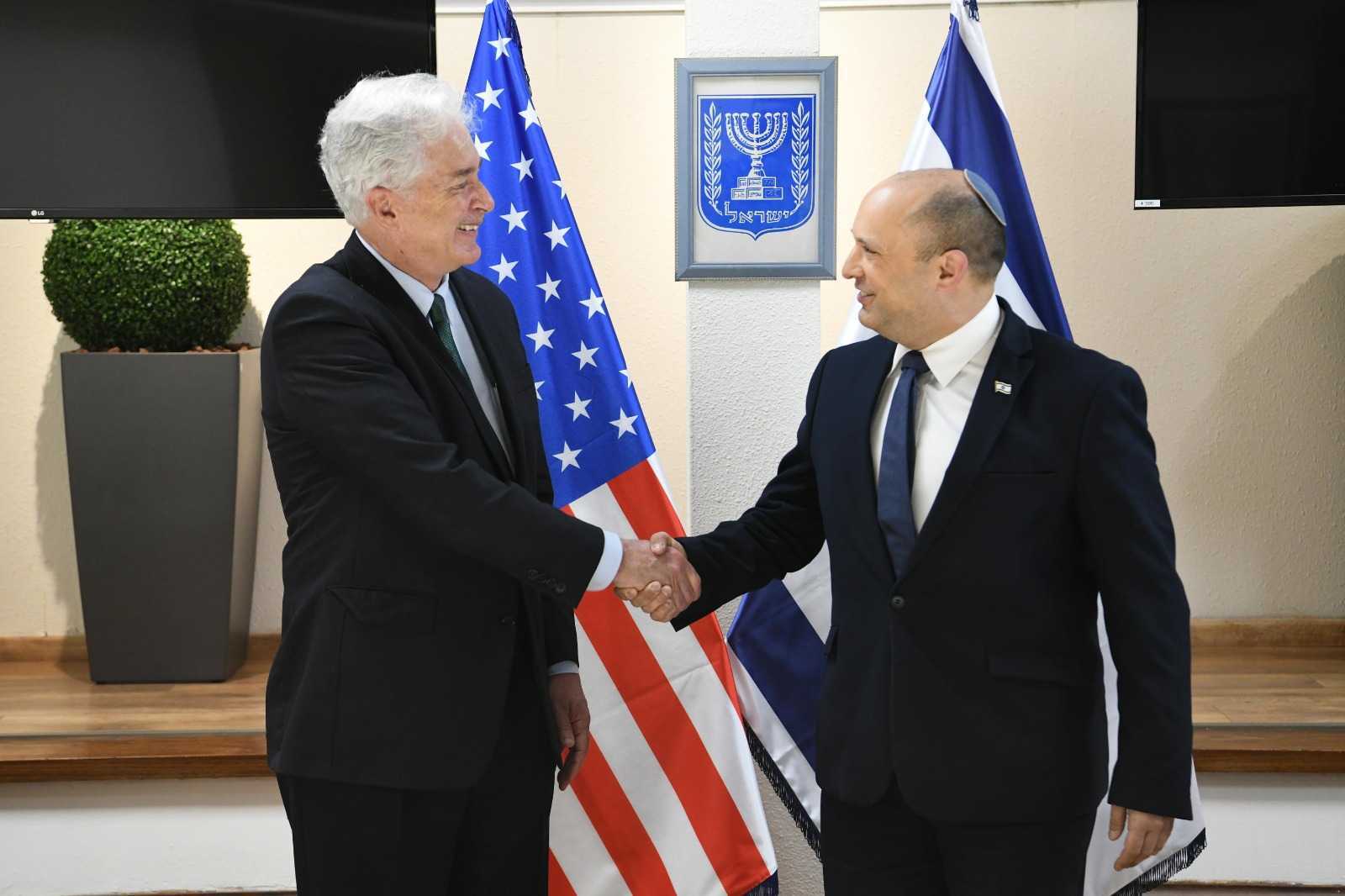
CIA chief William Burns, left, meets with Prime Minister Naftali Bennett in Jerusalem, August 11, 2021. (Amos Ben-Gershon/GPO)
During his meeting this week with CIA chief William Burns, Prime Minister Naftali Bennett told the US spymaster that Jerusalem and Washington should form a joint strategy for a scenario in which Iran refuses to reenter the 2015 nuclear deal, according to an Axios report Thursday.
The report said Israeli officials received the impression that like Israel, Burns is also skeptical on Tehran returning to compliance with the deal under the new hardline government.
“It was important for the prime minister to make it clear that when we say we think it is a mistake to return to the 2015 nuclear deal, it is not an automatic continuation of the Netanyahu government’s policy and that we have a different approach,” the report cited a senior Israel official as saying.
Burns, a career diplomat, played a key role in the US rapprochement with Iran that led to the 2015 deal between Iran and major powers, known as the Joint Comprehensive Plan of Action.
US President Joe Biden has sought to rejoin the pact after former president Donald Trump withdrew from it in 2018. Israel opposes the deal and government officials have held successive rounds of talks with US counterparts on the nuclear negotiations.Get The Times of Israel’s Daily Editionby email and never miss our top storiesNewsletter email addressGET ITBy signing up, you agree to the terms
A report in The New York Times earlier this month said US officials are increasingly pessimistic on the prospects of returning to the accord under the new leadership in Tehran.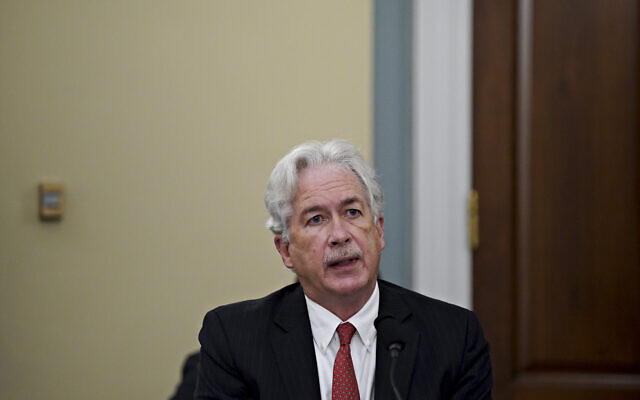
CIA Director William Burns speaks during a House Intelligence Committee hearing on Capitol Hill in Washington, April 15, 2021. (Al Drago/Pool via AP)
Channel 12 news reported on Tuesday that during a meeting with Mossad chief David Barnea, Burns was presented with information intended to show Iran’s new President Ebrahim Raisi as mentally disturbed, untrustworthy and incapable of negotiating a new nuclear deal or sticking to his commitments.
According to the network, Barnea gave Burns a dossier on Raisi that portrayed him as exceptionally extreme, cruel, corrupt and unstable. “The Mossad described him as someone with mental disturbances,” the channel claimed in the unsourced report.
Raisi, a hardline former judiciary head who was Supreme Leader Ali Khamenei’s choice for the role, has been accused of ordering the execution of thousands of prisoners toward the end of the Iran-Iraq war in 1988.
He took office last week, taking over from Hassan Rouhani, a relative moderate who agreed to the landmark deal in 2015 that curbed Iran’s nuclear activities in exchange for sanctions relief.
Iran’s new President Ebrahim Raisi speaks at his swearing-in ceremony at the Iranian parliament in the capital Tehran, on August 5, 2021. (Atta Kenare/AFP)
European Union-sponsored talks in Vienna are aimed at reviving the JCPOA but the last round took place on June 20, with no date set for when they would resume and Western officials estimating that with Raisi in power, the chances of clinching a deal have dwindled significantly.
Bloomberg news reported Monday that with chances of a return to the 2015 deal fading, the US is considering the possibility of easing sanctions on Iran in return for an agreement that the Islamic Republic freeze any progress on its nuclear project,
If a widescale deal cannot be reached, the US is weighing a number of possible interim steps, including sanctions relief, officials familiar with the negotiations were quoted by the news agency as saying.
The move would be different from a full return to the JCPOA, as it would only include limited sanctions relief in exchange for Iran freezing its most provocative nuclear proliferation work, the report said, citing the officials.
New Iranian leader picks minister wanted for Buenos Aires Jewish Center bombing
August 11, 2021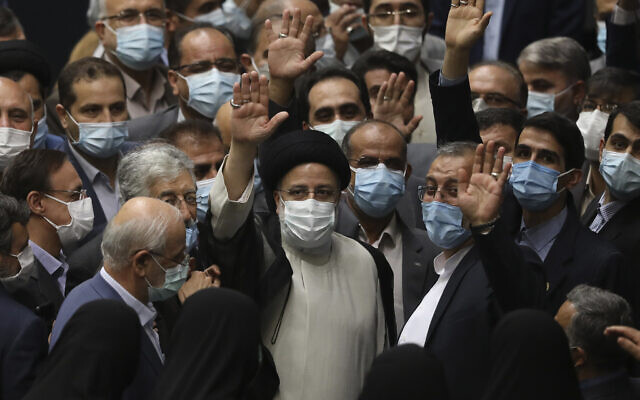
President Ebrahim Raisi, center, waves to journalists as he is surrounded by group of lawmakers after taking his oath as president at the parliament in Tehran, Iran, on Thursday, August 5, 2021. (AP Photo/Vahid Salemi)
Iran’s new president, Ebrahim Raisi, presents a Cabinet dominated by hardliners, state TV reports, providing one of the first glimpses into the policies he might pursue over the next four years.
The conservative cleric and former judiciary chief, Ebrahim Raisi, nominates hardline career diplomat Hossein Amirabollahian to the crucial post of foreign minister as Iran and the US seek to resuscitate Tehran’s landmark nuclear deal with world powers.
The Cabinet list, which offers few surprises, must still be confirmed by Iran’s parliament. The supreme leader also typically weighs in on picking officials for the most sensitive positions, such as foreign minister.
Amirabollahian, 56, has served in a range of administrations over the decades. He was deputy foreign minister for Arab and African affairs under former populist hardline President Mahmoud Ahmadinejad, known in the West for his Holocaust denial and disputed re-election in 2009.
Raisi also appoints Gen. Ahmad Vahidi as his interior minister — a former defense minister blacklisted by the US in 2010 and wanted by Interpol over his alleged role in the 1994 bombing of a Jewish cultural center in Buenos Aires, which killed 85 people and wounded hundreds.
Israeli #INSOz Sa’ar-6 can hold its own vs whole Iran Navy!
August 10, 2021With 1st declared rocket attack in 15 years, Hezbollah risks war to test Israel
August 8, 2021
IDF’s projection in early 2021 that the Lebanese terrorist militia will try to initiate limited conflicts on the border comes true
By JUDAH ARI GROSS7 August 2021, 5:03 am

Israeli artillery fires toward Lebanon from a position near the northern town of Kiryat Shmona following Hezbollah rocket fire from the Lebanese side of the border, on August 6, 2021 (JALAA MAREY / AFP)
The rockets fired at northern Israel on Friday were the fifth such attack from Lebanon in three months, but the first directly and openly carried out by the Hezbollah terror group since the 2006 Second Lebanon War — indicating a clear change in the dynamics on that frontier, after 15 years in which conflict bubbled just below the surface.
The Blue Line — the unofficial but internationally recognized border between Israel and Lebanon — has largely been quiet in the decade and a half since the war, with just a handful of exceptions, even as the Israel Defense Forces and Iran-backed Hezbollah continued to wage a quieter conflict with one another elsewhere, mostly in neighboring Syria.
Generally speaking, Israel has refrained from conducting strikes in Lebanon, and Hezbollah too halted rocket fire from the land of the cedars. But in recent months, that arrangement has started to break down.
During May’s conflict between Israel and terror groups in the Gaza Strip, Palestinian factions in Lebanon fired rockets at northern Israel three times, apparently with the tacit approval of Hezbollah, which maintains strict control over southern Lebanon. A Palestinian group again fired rockets at northern Israel earlier this week. In these four cases, Israel responded with limited artillery barrages. On Wednesday this was followed by a round of airstrikes on unspecified military targets in the area from which the rockets were fired. These were the first Israeli airstrikes against targets inside Lebanon since 2014.
Following the Second Lebanon War, the threat that emerged on the Lebanese border was another full-scale war. This was what the IDF trained for and worked to postpone or at least improve its chances of winning. In contrast, the situation in the Gaza Strip is far muddier: While there is a threat of large-scale conflict — such as in May or in 2014 — it is far more common for the area to see more limited attacks by Palestinian terror groups and similarly restrained retaliation by the IDF, without the situation deteriorating into all-out war.Get The Times of Israel’s Daily Editionby email and never miss our top storiesNewsletter email addressGET ITBy signing up, you agree to the terms
At the beginning of this year, the IDF warned that such a dynamic was poised to emerge in Lebanon as well, with Hezbollah feeling increasingly confident that it could launch attacks directly against Israel without risking a full-scale war, one that according to Israeli military assessments would be devastating for Israel and — more so — for Lebanon.
A picture taken from Lebanon’s southern Marjayoun area shows an agricultural vehicle driving down a dirt road in the Israeli town of Metula along the border fence between the two countries on August 6, 2021 (Mahmoud ZAYYAT / AFP)
Despite the apparent emergence of this new, more aggressive stance by Hezbollah, the IDF has maintained that the terrorist militia is deterred, both out of fear of the Israeli military and due to the ongoing financial and societal crises playing out within Lebanon, as could be seen this week with rallies against the government to mark the one-year anniversary of the Beirut Port explosion.
Indeed, IDF Spokesperson Ran Kochav told reporters on Friday that the army believes the rocket attack itself “shows Hezbollah’s deterrence, as it fired at open areas.”
But there is reason to question this interpretation. Of the 19 rockets fired at northern Israel on Friday, 10 were shot down by the Iron Dome missile defense system, something that, under the IDF’s air defense doctrine, is normally only done when it appears a projectile is heading to a populated area.
While Hezbollah may not have been intentionally launching a full-scale war with its rocket attack on Friday, it seems it was certainly willing to risk one.
The IDF’s projections for how a war with Hezbollah would break out do not anticipate that the terror group would initiate such a conflict with a sudden, large-scale assault — but rather that such a conflict would kick off with some kind of attack along the border, possibly an ambush against IDF troops, as was the case in the Second Lebanon War, or a rocket or missile attack, to which Israel would respond forcefully.
This picture taken on August 6, 2021 shows a view of Israeli bombardment near the southern Lebanese village of Kfar Shouba following a rocket attack from the Lebanese side (Mahmoud ZAYYAT / AFP)
Hezbollah would then retaliate further, potentially launching large barrages of rockets at the Israeli home front and deploying its Radwan Unit, a special forces detachment that has been specifically trained to capture portions of the Galilee in order to score a public victory over Israel — however fleeting — and to delay Israel in launching its own ground invasion of southern Lebanon. Such an invasion would be necessary, IDF officers say, to take the strategic high ground, the Lebanese mountainous ridge overlooking northern Israeli communities.
Friday’s rocket attack appears then to be a test balloon by Hezbollah to see how Israel’s relatively newly formed government responds.
So far, Israel has indicated that it does not appear poised to take immediate action against Hezbollah besides the initial artillery barrage. The IDF spokesperson told reporters that Israel had “no intention of going to war,” and a senior defense official added that further response would be conducted “in accordance with operational needs and a timeframe that is best suited for Israel.”
How and if Israel retaliates to Friday’s attack will set a precedent for any future aggression by Hezbollah and shape the emerging modus vivendi on the Lebanese border: if it will return to its post-Second Lebanon War calm or if it will again see regular rocket fire.
Israel warns of ‘overt and covert’ response if Hezbollah rocket fire continues
August 6, 2021
IDF carries out artillery strikes in response to 19-rocket barrage by terror group, first since 2006 war; UNIFIL: Rockets were fired outside our operating area
By EMANUEL FABIAN and JUDAH ARI GROSSToday, 4:23 pm

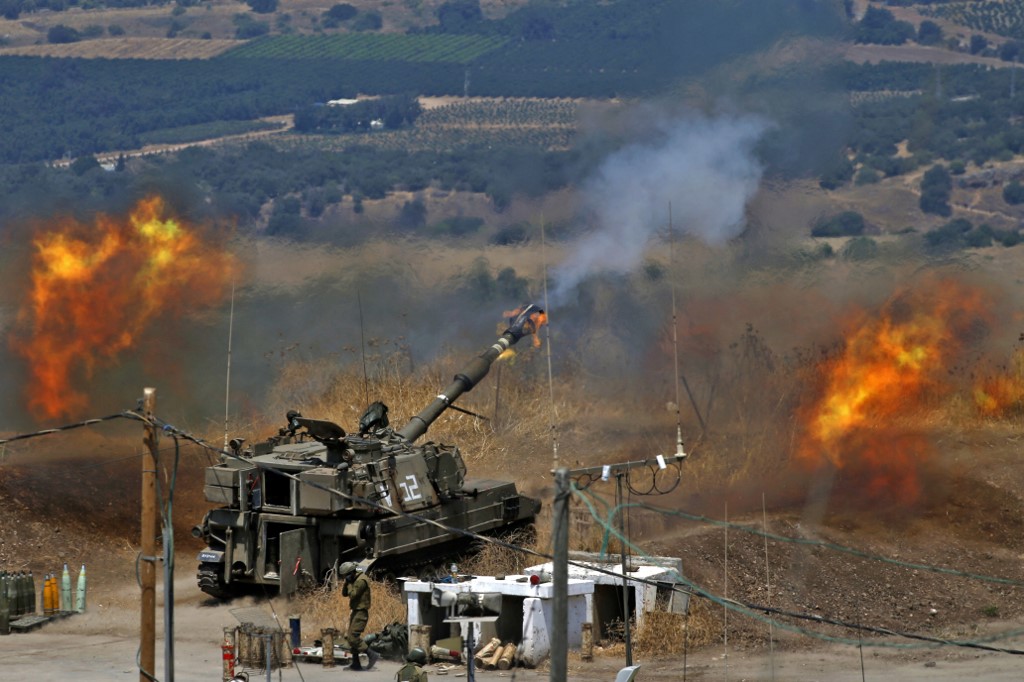
Israeli self-propelled howitzers fire toward Lebanon from a position near the northern town of Kiryat Shmona following rocket fire by the Lebanese terror group Hezbollah, August 6, 2021. (Jalaa Marey/AFP)
Israel is preparing a wide range of military and covert responses to a barrage of 19 rockets fired at Israel on Friday by the Hezbollah terror group, a defense official said, noting that the severity will depend on how the situation develops.
“The Israel Defense Forces has in recent days taken action with large-scale strikes in Lebanon, mostly with artillery and with strikes on infrastructure with fighter jets, as we haven’t done for years,” the official said in a statement.
“The defense establishment is preparing additional options for a response through different means — overt and covert — in accordance with developments [in the field]. The continuation of our activities will be in accordance with operational needs and a timeframe that is best suited for Israel,” the official added.
The UN peacekeeping mission in Lebanon, known by its acronym UNIFIL, said the situation was “very dangerous” and that the rockets launched at Israel were fired outside of its area of operation in southern Lebanon.
“This is a very dangerous situation, with escalatory actions seen on both sides over the past two days,” UNIFIL said in a statement.Get The Times of Israel’s Daily Editionby email and never miss our top storiesNewsletter email addressGET ITBy signing up, you agree to the terms
“UNIFIL is actively engaging with the parties through all formal and informal liaison and coordination mechanisms to prevent the situation from spiraling out of control,” the mission added. Smoke rise from Israeli shelling near the southern Lebanese village of Kfar Shouba, after Hezbollah fired rockets at ISrael, Friday, Aug. 6, 2021. (AP Photo/Mohammed Zaatari)
Meanwhile, Lebanon’s caretaker Prime Minister Hassan Diab called on the United Nations to pressure Israel to stop “violating Lebanese sovereignty,” and restore calm to the area.
Nineteen rockets were fired into northern Israel from Lebanon on Friday morning, sending residents in a number of towns in the Golan Heights and Galilee Panhandle scrambling to shelters.
The Israel Defense Forces said 10 projectiles were intercepted by the Iron Dome missile defense system and six landed in open areas around Mount Dov. Another three rockets failed to clear the border and landed in Lebanese territory, according to the military.
The Iran-backed Hezbollah terror group confirmed it had fired the projectiles on Friday, which it said came in response to recent Israeli airstrikes in Lebanon. “The Islamic Resistance shelled open areas near the Shebaa Farms with dozens of 122mm rockets,” it said in a statement carried in Arabic-language media, referring to the Mount Dov area.
The barrage was believed to be the first to be formally acknowledged by Hezbollah since the 2006 Second Lebanon War.
Israel responded with artillery strikes. Witnesses reported artillery fire by Israeli forces on the Lebanese side of Shebaa Farms and outside the town of Kfar Shouba. Israeli self-propelled howitzers fire towards Lebanon from a position near the northern Israeli town of Kiryat Shmona following rocket fire from the Lebanese side of the border, on August 6, 2021.(Photo by JALAA MAREY / AFP)
Shebaa Farms is an enclave where the borders of Israel, Lebanon and Syria meet. Israel says it is part of the Golan Heights, which it captured from Syria in 1967 and later annexed. Lebanon and Syria say Shebaa Farms belong to Lebanon, while the United Nations says the area is part of Syria.
The attack sparked tensions between locals and Hezbollah. Videos circulated on social media after the rocket attack showing two vehicles, including a mobile rocket launcher, being stopped by villagers in the southeastern village of Shwaya in Hasbaya region near the border with the Golan Heights.
Some angry villagers, who belong to the Druze sect, could be heard saying: “Hezbollah is firing rockets from between homes so that Israel hits us back.”https://platform.twitter.com/embed/Tweet.html?dnt=true&embedId=twitter-widget-0&features=eyJ0ZndfZXhwZXJpbWVudHNfY29va2llX2V4cGlyYXRpb24iOnsiYnVja2V0IjoxMjA5NjAwLCJ2ZXJzaW9uIjpudWxsfSwidGZ3X2hvcml6b25fdHdlZXRfZW1iZWRfOTU1NSI6eyJidWNrZXQiOiJodGUiLCJ2ZXJzaW9uIjpudWxsfSwidGZ3X3NwYWNlX2NhcmQiOnsiYnVja2V0Ijoib2ZmIiwidmVyc2lvbiI6bnVsbH19&frame=false&hideCard=false&hideThread=false&id=1423561729745821702&lang=en&origin=https%3A%2F%2Fwww.timesofisrael.com%2Fisrael-warns-of-overt-and-covert-response-if-hezbollah-rocket-fire-continues%2F&sessionId=221f192df73abb6150230b258e3c96d9e78ae97c&siteScreenName=timesofisrael&theme=light&widgetsVersion=1890d59c%3A1627936082797&width=550px
Hezbollah later issued a statement saying that the rockets were fired from remote areas, adding that the fighters were stopped in Shwaya on their way back.
“The Islamic Resistance was and will always be most keen about the safety of its people and avoiding any harm to them through its acts of resistance,” the statement said. A rocket launcher placed on a pick up truck that was used by Hezbollah to fire rockets at Israel, is seen in the southeastern village of Shwaya, near the border with the Golan Heights, Friday, Aug. 6, 2021. T(AP Photo/Mohammed Zaatari)
The Lebanese army said it arrested the four people who had launched the rockets and seized the rocket launcher after it was intercepted by villagers.
Thursday’s early morning airstrikes were in response to a previous rocket attack from Lebanon on Wednesday.
Prime Minister Naftali Bennett, Defense Minister Benny Gantz, IDF Chief of Staff Aviv Kohavi and other security officials were to hold talks to review Israel’s potential courses of action following Friday’s attack.
Gantz held an earlier meeting with Kohavi and other senior officers, with a statement from his office saying he stressed “the importance of maintaining close contact and providing the home front with ongoing updates.”
The Defense Minister also spoke with mayors of northern border communities and asked them to remain in close contact with the military. Defense Minister Benny Gantz meets with IDF Chief of Staff Aviv Kohavi and other top officers at the Kirya military headquarters in Tel Aviv on August 6, 2021. (Ariel Hermoni/Defense Ministry)
Military spokesperson Ran Kochav told reporters on Friday that Israel has “no intention of going to war, but we do not want to turn the Lebanon border into a line of confrontation.”
“The incident shows Hezbollah is deterred, as it fired at open areas,” Kochav added.
He also asserted Hezbollah intentionally fired the rockets at open areas and not at Israeli towns or communities. Still, the Iron Dome system was activated to intercept some of the rockets, which is usually only done when projectiles are heading for populated areas, military bases or key infrastructure.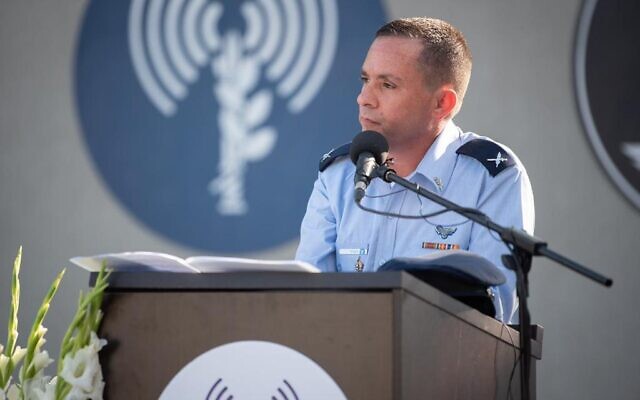 Incoming IDF Spokesperson Ran Kochav speaks during a ceremony at the IDF Spokesperson’s Unit’s headquarters in northern Tel Aviv on June 6, 2021. (Israel Defense Forces)
“This is a moderate response from Hezbollah, as to not escalate the situation,” Kochav said.
Recent attacks had been blamed on local Palestinian groups in Lebanon, and not the powerful Hezbollah. However, Hezbollah maintains tight control over southern Lebanon, making it unlikely that such attacks would be conducted from this area without at least its tacit approval.
On Wednesday, three rockets were fired into northern Israel from Lebanon. Two rockets hit open areas, while the third fell short of the border.
In response, the Israel Defense Forces fired artillery shells at targets in Lebanon just after the attack. Some two hours later it followed up with a second and a third round before conducting airstrikes toward “terror infrastructure” and rocket launching sites, according to the military.
Rocket fire from Lebanon has been exceedingly rare in the 15 years since the 2006 Second Lebanon War Israel fought against Hezbollah, though it has occurred sporadically. Recent months, however, have seen a slight uptick, with 10 launches aimed at Israel during May’s 11-day war in Gaza, as well as last month, leading to fears among some that the phenomenon could become more common, as has happened in areas on the Gaza border.https://platform.twitter.com/embed/Tweet.html?dnt=true&embedId=twitter-widget-1&features=eyJ0ZndfZXhwZXJpbWVudHNfY29va2llX2V4cGlyYXRpb24iOnsiYnVja2V0IjoxMjA5NjAwLCJ2ZXJzaW9uIjpudWxsfSwidGZ3X2hvcml6b25fdHdlZXRfZW1iZWRfOTU1NSI6eyJidWNrZXQiOiJodGUiLCJ2ZXJzaW9uIjpudWxsfSwidGZ3X3NwYWNlX2NhcmQiOnsiYnVja2V0Ijoib2ZmIiwidmVyc2lvbiI6bnVsbH19&frame=false&hideCard=false&hideThread=false&id=1423072147170332683&lang=en&origin=https%3A%2F%2Fwww.timesofisrael.com%2Fisrael-warns-of-overt-and-covert-response-if-hezbollah-rocket-fire-continues%2F&sessionId=221f192df73abb6150230b258e3c96d9e78ae97c&siteScreenName=timesofisrael&theme=light&widgetsVersion=1890d59c%3A1627936082797&width=550px
Israel has conveyed to Lebanon via UN peacekeepers that it could intensify its response if calm is not returned to the border.
“Without getting into the identity of who shot the rockets, it’s clear that the Lebanese government bears full responsibility for any fire at the State of Israel’s territory,” the IDF said in a Hebrew-language statement. “The Lebanese state lacks control over terror groups operating within it.”
Agencies contributed to this report
By EMANUEL FABIAN and JUDAH ARI GROSSToday, 4:23 pm
Israeli self-propelled howitzers fire toward Lebanon from a position near the northern town of Kiryat Shmona following rocket fire by the Lebanese terror group Hezbollah, August 6, 2021. (Jalaa Marey/AFP)
Israel is preparing a wide range of military and covert responses to a barrage of 19 rockets fired at Israel on Friday by the Hezbollah terror group, a defense official said, noting that the severity will depend on how the situation develops.
“The Israel Defense Forces has in recent days taken action with large-scale strikes in Lebanon, mostly with artillery and with strikes on infrastructure with fighter jets, as we haven’t done for years,” the official said in a statement.
“The defense establishment is preparing additional options for a response through different means — overt and covert — in accordance with developments [in the field]. The continuation of our activities will be in accordance with operational needs and a timeframe that is best suited for Israel,” the official added.
The UN peacekeeping mission in Lebanon, known by its acronym UNIFIL, said the situation was “very dangerous” and that the rockets launched at Israel were fired outside of its area of operation in southern Lebanon.
“This is a very dangerous situation, with escalatory actions seen on both sides over the past two days,” UNIFIL said in a statement.Get The Times of Israel’s Daily Editionby email and never miss our top storiesNewsletter email addressGET ITBy signing up, you agree to the terms
“UNIFIL is actively engaging with the parties through all formal and informal liaison and coordination mechanisms to prevent the situation from spiraling out of control,” the mission added.Smoke rise from Israeli shelling near the southern Lebanese village of Kfar Shouba, after Hezbollah fired rockets at ISrael, Friday, Aug. 6, 2021. (AP Photo/Mohammed Zaatari)
Meanwhile, Lebanon’s caretaker Prime Minister Hassan Diab called on the United Nations to pressure Israel to stop “violating Lebanese sovereignty,” and restore calm to the area.
Nineteen rockets were fired into northern Israel from Lebanon on Friday morning, sending residents in a number of towns in the Golan Heights and Galilee Panhandle scrambling to shelters.
The Israel Defense Forces said 10 projectiles were intercepted by the Iron Dome missile defense system and six landed in open areas around Mount Dov. Another three rockets failed to clear the border and landed in Lebanese territory, according to the military.
The Iran-backed Hezbollah terror group confirmed it had fired the projectiles on Friday, which it said came in response to recent Israeli airstrikes in Lebanon. “The Islamic Resistance shelled open areas near the Shebaa Farms with dozens of 122mm rockets,” it said in a statement carried in Arabic-language media, referring to the Mount Dov area.
The barrage was believed to be the first to be formally acknowledged by Hezbollah since the 2006 Second Lebanon War.
Israel responded with artillery strikes. Witnesses reported artillery fire by Israeli forces on the Lebanese side of Shebaa Farms and outside the town of Kfar Shouba.Israeli self-propelled howitzers fire towards Lebanon from a position near the northern Israeli town of Kiryat Shmona following rocket fire from the Lebanese side of the border, on August 6, 2021.(Photo by JALAA MAREY / AFP)
Shebaa Farms is an enclave where the borders of Israel, Lebanon and Syria meet. Israel says it is part of the Golan Heights, which it captured from Syria in 1967 and later annexed. Lebanon and Syria say Shebaa Farms belong to Lebanon, while the United Nations says the area is part of Syria.
The attack sparked tensions between locals and Hezbollah. Videos circulated on social media after the rocket attack showing two vehicles, including a mobile rocket launcher, being stopped by villagers in the southeastern village of Shwaya in Hasbaya region near the border with the Golan Heights.
Some angry villagers, who belong to the Druze sect, could be heard saying: “Hezbollah is firing rockets from between homes so that Israel hits us back.”https://platform.twitter.com/embed/Tweet.html?dnt=true&embedId=twitter-widget-0&features=eyJ0ZndfZXhwZXJpbWVudHNfY29va2llX2V4cGlyYXRpb24iOnsiYnVja2V0IjoxMjA5NjAwLCJ2ZXJzaW9uIjpudWxsfSwidGZ3X2hvcml6b25fdHdlZXRfZW1iZWRfOTU1NSI6eyJidWNrZXQiOiJodGUiLCJ2ZXJzaW9uIjpudWxsfSwidGZ3X3NwYWNlX2NhcmQiOnsiYnVja2V0Ijoib2ZmIiwidmVyc2lvbiI6bnVsbH19&frame=false&hideCard=false&hideThread=false&id=1423561729745821702&lang=en&origin=https%3A%2F%2Fwww.timesofisrael.com%2Fisrael-warns-of-overt-and-covert-response-if-hezbollah-rocket-fire-continues%2F&sessionId=221f192df73abb6150230b258e3c96d9e78ae97c&siteScreenName=timesofisrael&theme=light&widgetsVersion=1890d59c%3A1627936082797&width=550px
Hezbollah later issued a statement saying that the rockets were fired from remote areas, adding that the fighters were stopped in Shwaya on their way back.
“The Islamic Resistance was and will always be most keen about the safety of its people and avoiding any harm to them through its acts of resistance,” the statement said.A rocket launcher placed on a pick up truck that was used by Hezbollah to fire rockets at Israel, is seen in the southeastern village of Shwaya, near the border with the Golan Heights, Friday, Aug. 6, 2021. T(AP Photo/Mohammed Zaatari)
The Lebanese army said it arrested the four people who had launched the rockets and seized the rocket launcher after it was intercepted by villagers.
Thursday’s early morning airstrikes were in response to a previous rocket attack from Lebanon on Wednesday.
Prime Minister Naftali Bennett, Defense Minister Benny Gantz, IDF Chief of Staff Aviv Kohavi and other security officials were to hold talks to review Israel’s potential courses of action following Friday’s attack.
Gantz held an earlier meeting with Kohavi and other senior officers, with a statement from his office saying he stressed “the importance of maintaining close contact and providing the home front with ongoing updates.”
The Defense Minister also spoke with mayors of northern border communities and asked them to remain in close contact with the military.Defense Minister Benny Gantz meets with IDF Chief of Staff Aviv Kohavi and other top officers at the Kirya military headquarters in Tel Aviv on August 6, 2021. (Ariel Hermoni/Defense Ministry)
Military spokesperson Ran Kochav told reporters on Friday that Israel has “no intention of going to war, but we do not want to turn the Lebanon border into a line of confrontation.”
“The incident shows Hezbollah is deterred, as it fired at open areas,” Kochav added.
He also asserted Hezbollah intentionally fired the rockets at open areas and not at Israeli towns or communities. Still, the Iron Dome system was activated to intercept some of the rockets, which is usually only done when projectiles are heading for populated areas, military bases or key infrastructure.Incoming IDF Spokesperson Ran Kochav speaks during a ceremony at the IDF Spokesperson’s Unit’s headquarters in northern Tel Aviv on June 6, 2021. (Israel Defense Forces)
“This is a moderate response from Hezbollah, as to not escalate the situation,” Kochav said.
Recent attacks had been blamed on local Palestinian groups in Lebanon, and not the powerful Hezbollah. However, Hezbollah maintains tight control over southern Lebanon, making it unlikely that such attacks would be conducted from this area without at least its tacit approval.
On Wednesday, three rockets were fired into northern Israel from Lebanon. Two rockets hit open areas, while the third fell short of the border.
In response, the Israel Defense Forces fired artillery shells at targets in Lebanon just after the attack. Some two hours later it followed up with a second and a third round before conducting airstrikes toward “terror infrastructure” and rocket launching sites, according to the military.
Rocket fire from Lebanon has been exceedingly rare in the 15 years since the 2006 Second Lebanon War Israel fought against Hezbollah, though it has occurred sporadically. Recent months, however, have seen a slight uptick, with 10 launches aimed at Israel during May’s 11-day war in Gaza, as well as last month, leading to fears among some that the phenomenon could become more common, as has happened in areas on the Gaza border.https://platform.twitter.com/embed/Tweet.html?dnt=true&embedId=twitter-widget-1&features=eyJ0ZndfZXhwZXJpbWVudHNfY29va2llX2V4cGlyYXRpb24iOnsiYnVja2V0IjoxMjA5NjAwLCJ2ZXJzaW9uIjpudWxsfSwidGZ3X2hvcml6b25fdHdlZXRfZW1iZWRfOTU1NSI6eyJidWNrZXQiOiJodGUiLCJ2ZXJzaW9uIjpudWxsfSwidGZ3X3NwYWNlX2NhcmQiOnsiYnVja2V0Ijoib2ZmIiwidmVyc2lvbiI6bnVsbH19&frame=false&hideCard=false&hideThread=false&id=1423072147170332683&lang=en&origin=https%3A%2F%2Fwww.timesofisrael.com%2Fisrael-warns-of-overt-and-covert-response-if-hezbollah-rocket-fire-continues%2F&sessionId=221f192df73abb6150230b258e3c96d9e78ae97c&siteScreenName=timesofisrael&theme=light&widgetsVersion=1890d59c%3A1627936082797&width=550px
Israel has conveyed to Lebanon via UN peacekeepers that it could intensify its response if calm is not returned to the border.
“Without getting into the identity of who shot the rockets, it’s clear that the Lebanese government bears full responsibility for any fire at the State of Israel’s territory,” the IDF said in a Hebrew-language statement. “The Lebanese state lacks control over terror groups operating within it.”
Agencies contributed to this report
Hezbollah fires rocket barrage at Israel; IDF responds with artillery fire
August 6, 2021
Military says majority of over 10 projectiles were intercepted by air defenses; Defense Minister Gantz to hold immediate consultation at IDF headquaters
By EMANUEL FABIANToday, 11:11 am
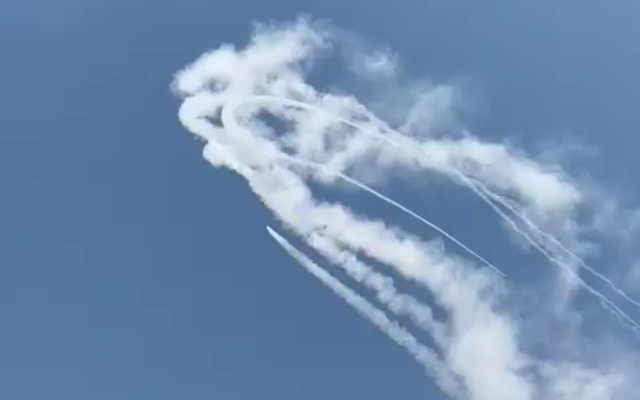
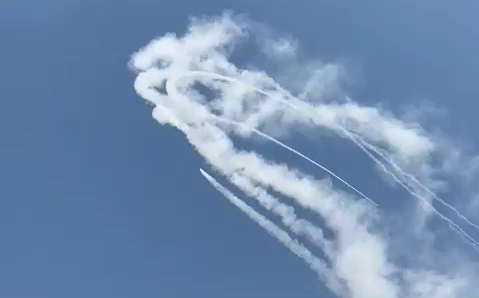
Iron Dome interceptor missiles are seen over the Golan Heights, as over 10 rockets were fired from southern Lebanon on August 6, 2021. (Video screenshot)
Over ten rockets were fired into northern Israel from Lebanon on Friday morning, sending residents in a number of towns in the Golan Heights and Galilee Panhandle scrambling to shelters.
The Israel Defense Forces said most of the rockets were intercepted by the Iron Dome missile defense system, while some landed in open areas of land in Mount Dov.
The alarms sounded shortly before 11 a.m. in Ein Quiniyye, Neveh Ativ and Snir, near Israel’s northern border with Lebanon and Syria.
The Iran-backed Hezbollah terror group confirmed it had fired the projectiles on Friday, which it said came in response to recent Israeli airstrikes in Lebanon.
“The Islamic Resistance shelled open areas near the Sheba Farms with dozens of 122mm rockets,” it said in a statement carried in Arabic-language media.Get The Times of Israel’s Daily Editionby email and never miss our top storiesNewsletter email addressGET ITBy signing up, you agree to the terms
Thursday’s early morning airstrikes were in response to a previous rocket attack from Lebanon on Wednesday.
There were no immediate reports of casualties or damage. The Magen David Adom ambulance service said it was not aware of any injuries.
The IDF said it had begun a wave of artillery strikes toward the source of the rocket fire.
The military added that there were no special instructions for residents in the area. “Civilian life adjacent to the Lebanese border continues in full routine,” the IDF said in a statement.
Amid the rocket barrage, video footage showed a number of interceptor missiles from the Israeli Iron Dome defense system that was activated
Defense Minister Gantz is to hold a discussion with top military brass to review Israel’s potential courses of action following Friday’s attack, Channel 12 news reported.
On Wednesday, three rockets were fired into northern Israel from Lebanon. Two rockets hit open areas, while the third fell short of the border.
In response, the Israel Defense Forces fired artillery shells at targets in Lebanon just after the attack. Some two hours later it followed up with a second and a third round before conducting airstrikes toward “terror infrastructure” and rocket launching sites, according to the military.
Rocket fire from Lebanon has been exceedingly rare in the 15 years since the 2006 Second Lebanon War Israel fought against Hezbollah, though it has occurred sporadically. Recent months, however, have seen a slight uptick, with 10 launches aimed at Israel during May’s 11-day war in Gaza, as well as last month, leading to fears among some that the phenomenon could become more common, as has happened in areas on the Gaza border
Israel has conveyed to Lebanon via UN peacekeepers that it could intensify its response if calm is not returned to the border.
“Without getting into the identity of who shot the rockets, it’s clear that the Lebanese government bears full responsibility for any fire at the State of Israel’s territory,” the IDF said in a Hebrew-language statement. “The Lebanese state is lacking control over terror groups operating within it.”
Aaron Boxerman and Times of Israel staff contributed to this report.




 anneinpt
 artaxes
 danmillerinpanama
 davidking1530
 Peter Hofman
 Joseph Wouk
 Peter
Peter Louisiana Steve
 WarSclerotic

Recent Comments