Three days into the Vienna negotiations with world powers, Iran is plainly not after a new or revamped nuclear accord, DEBKAfile’s Iranian sources confirm – notwithstanding the large delegation in attendance. Tehran has made its intentions plain by three actions:
Abandoning the ambiguity surrounding its nuclear program and frankly admitting for the first time that Tehran is intent on building a nuclear bomb.
Iran’s 2022-2023 state budget provides for another two years of international sanctions, thereby taking aboard the economic consequences of weaponizing its nuclear program. Tehran is therefore not holding its breath for the prospect of sanctions relief.
Extra-fast centrifuges are being pressed into service for the rapid accumulation of sufficient 60pc pure enriched uranium to fuel a number of nuclear warheads.
Tehran’s final admission of its true intent, after years of claiming that Islam only allows nuclear power for peaceful purposes, came from the highly authoritative Fereydun Abbasi-Davani, Chairman of Iran’s Atomic Agency. In a comment on the new round of nuclear talks launched in Vienna on Monday, he revealed that the late Mohsen Fakhrizadeh, the father of the national nuclear program, who was assassinated last year, “had created a nuclear weapons ‘system’ for offensive purposes.” That was the cause of his death at Israel’s hands, the official added.
Sources close to Iran’s Revolutionary Guards enlarged on this statement, by saying: “Enemy sabotage, assassinations should be stopped by Iran cross[ing] several scientific lines as soon as possible, to show our capability and defend our people.” The “scientific lines” to be crossed refer to the nuclear threshold.
While most of the local media agree that the Vienna talks are likely to go nowhere, most have failed to cite these groundbreaking admissions by Iranian officials. They have instead highlighted the optimism voiced by the world powers facing Iran (Germany, UK, France, Russia, China – at the table and the US in a separate room) in the light of Iran’s willingness to start the talks from the point broken off in June. This mood ignored the telling statement coming on Tuesday, Nov. 30 from another high-ranking Iranian official. Masud Mirkazemi, head of Iran’s national planning center. During his presentation of Iran’s new state budget to foreign minister Hossein Amir-Abdollahian, the planning expert explained that “given the reputation of Western countries, we’re not gong to keep the country waiting for another eight years of negotiations.” In other words, Tehran is pressing on with its plans regardless of the nuclear negotiations, on the assumption that they will drag on inconclusively for the foreseeable future. There is every indication that Iran has embarked single mindedly on a crash program to improve and speed up uranium enrichment at the Natanz and Fordow plants. Due to this all-out effort, inspectors of the nuclear watchdog, the International Atomic Agency, are denied access to the Karaj site, where the extra-fast centrifuges are manufactured.
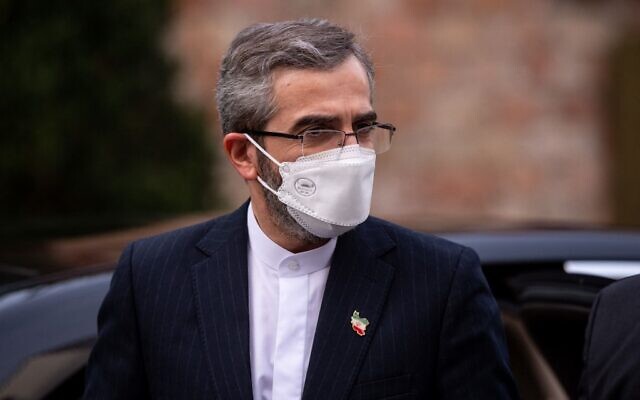
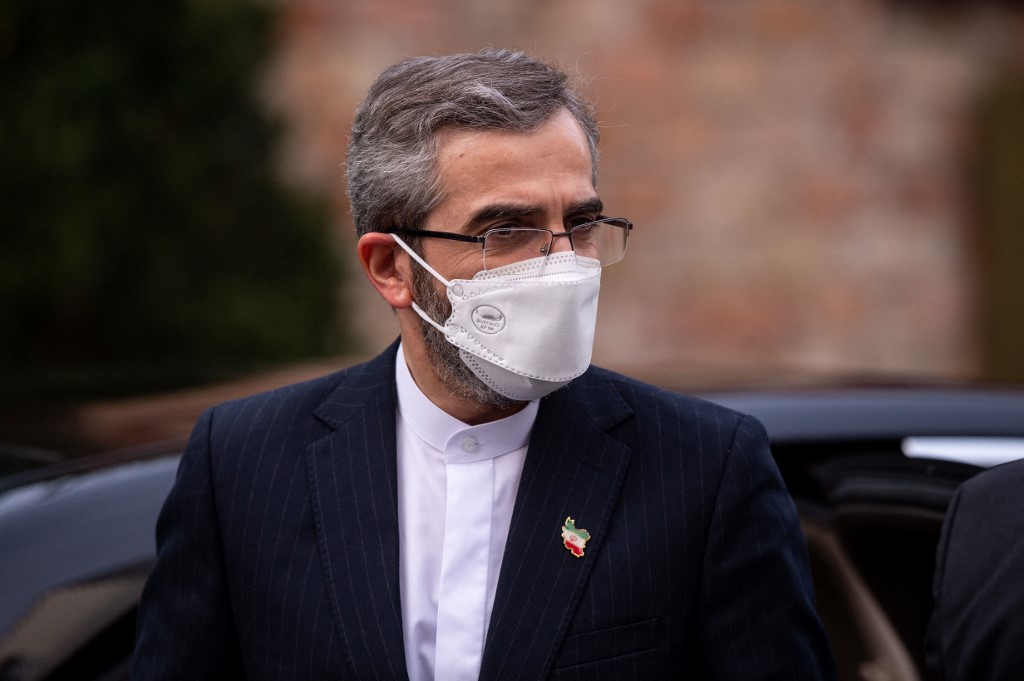
Iran’s chief nuclear negotiator Ali Bagheri Kani arrives at the Coburg Palais, the venue of the Joint Comprehensive Plan of Action (JCPOA) meeting, in Vienna on November 29, 2021. (VLADIMIR SIMICEK / AFP)
TEHRAN, Iran (AP) — Iran struck a maximalist tone Tuesday after just one day of restarted talks in Vienna over its tattered nuclear deal, suggesting everything discussed in previous rounds of diplomacy could be renegotiated.
Iranian state media reported the comments by Ali Bagheri, Iran’s top nuclear negotiator, and Mohammad Eslami, the country’s civilian nuclear chief. It remained unclear, however, whether this represented an opening gambit by Iran’s new hardline president or signaled serious trouble for those hoping to restore the 2015 deal that saw Tehran strictly limit its enrichment of uranium in exchange for the lifting of economic sanctions.
The United States left the deal under then-US president Donald Trump’s “maximum pressure” campaign against Tehran in 2018. Since the deal’s collapse, Iran now enriches small amounts of uranium up to 60% purity — a short step from weapons-grade levels of 90%. Iran also spins advanced centrifuges barred by the accord, and its uranium stockpile now far exceeds the accord’s limits.
US President Joe Biden has said America is willing to re-enter the deal, though the negotiations continue with US officials not in the room as in previous rounds of talks since Washington’s withdrawal.
Speaking to Iranian state television, Bagheri referred to the previous rounds of talks only as a “draft.”Get The Times of Israel’s Daily Editionby email and never miss our top storiesNewsletter email addressGET ITBy signing up, you agree to the terms
“Drafts are subject to negotiation. Therefore nothing is agreed on unless everything has been agreed on,” he said. “On that basis, all discussions that took place in the six rounds are summarized and are subject to negotiations. This was admitted by all parties in today’s meeting as well.”
That directly contradicted comments Monday by the European Union diplomat leading the talks.
“The Iranian delegation represents a new administration in Tehran with new understandable political sensibilities, but they have accepted that the work done over the six first rounds is a good basis to build our work ahead, so no point in going back,” Enrique Mora said then.Deputy Secretary General of the European External Action Service (EEAS) Enrique Mora speaks to journalists in front of the Coburg palace after a meeting of the Joint Comprehensive Plan of Action (JCPOA) in Vienna, Austria on November 29, 2021. ( VLADIMIR SIMICEK / AFP)
Another state TV segment saw Bagheri in Vienna also saying Iran demanded a “guarantee by American not to impose new sanctions” or not re-impose previously lifted sanctions.
Eslami, speaking to Iran’s state-run IRNA news agency, reiterated that demand.
“The talks (in Vienna) are about return of the US to the deal and they have to lift all sanctions and this should be in practice and verifiable,” he said. He did not elaborate.
Talks in Vienna resumed Monday after an over five-month hiatus as hardline Iranian President Ebrahim Raisi took power. Raisi, a protégé of Supreme Leader Ayatollah Ali Khamenei, campaigned on getting sanctions lifted. However, fellow hard-liners within Iran’s theocracy long have criticized the nuclear deal as giving too much away to the West.
Mikhail Ulyanov, Russia’s top representative to the talks, tweeted Tuesday that the resumption of negotiations was “quite successful.”
“Participants decided to continue without delay the drafting process in two working groups – on sanctions lifting and nuclear issues,” he wrote. “This work starts immediately.”Mohammad Eslami, head of Iran’s nuclear agency (AEOI) talks on stage at the International Atomic Energy’s (IAEA) General Conference in Vienna, Austria, September 20, 2021. (Lisa Leutner/AP)
Israel, Iran’s regional, nuclear-armed rival, kept up its own pressure amid the negotiations. Israeli Prime Minister Naftali Bennett, in a video address delivered to nations negotiating in Vienna, warned that he saw Iran trying to “end sanctions in exchange for almost nothing.”
“Iran deserves no rewards, no bargain deals, and no sanctions relief in return for their brutality,” Bennett said in the video that he later posted to Twitter. “I call upon our allies around the world: Do not give in to Iran’s nuclear blackmail.”
Iran maintains its atomic program is peaceful. However, US intelligence agencies and international inspectors say Iran had an organized nuclear weapons program up until 2003. Nonproliferation experts fear the brinkmanship could push Tehran toward even more extreme measures to try to force the West to lift sanctions.
Making matters more difficult, United Nations nuclear inspectors remain unable to fully monitor Iran’s program after Tehran limited their access. A trip to Iran last week by the head of the International Atomic Energy Agency, Rafael Grossi, failed to make any progress on that issue.
Khamenei had plenty of reasons to stall, but if there’s no change in Tehran’s stance, the West needs a Plan B — with options ranging from a military strike to capitulation
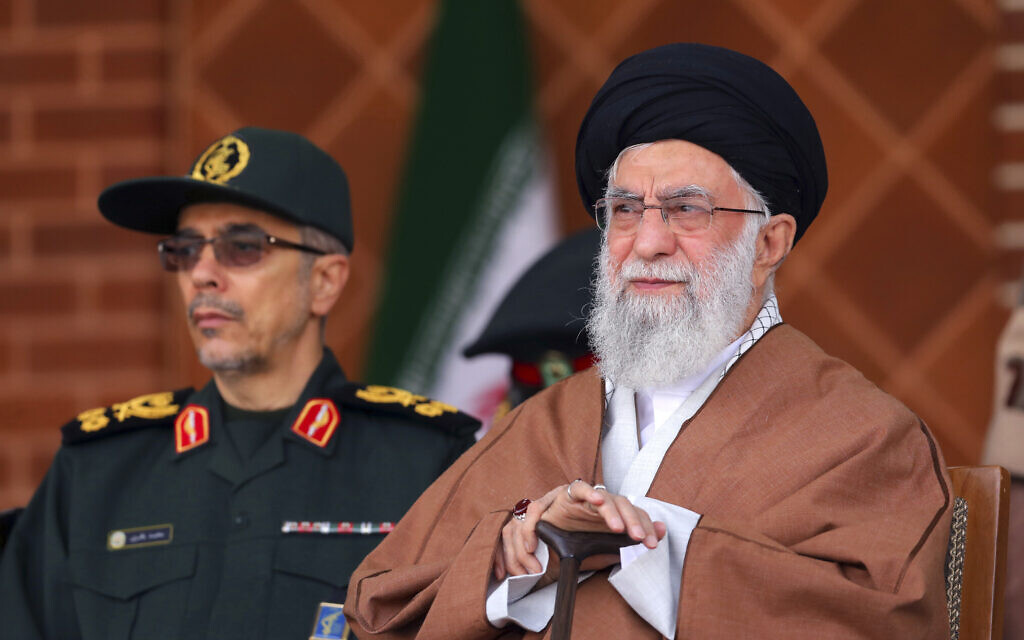
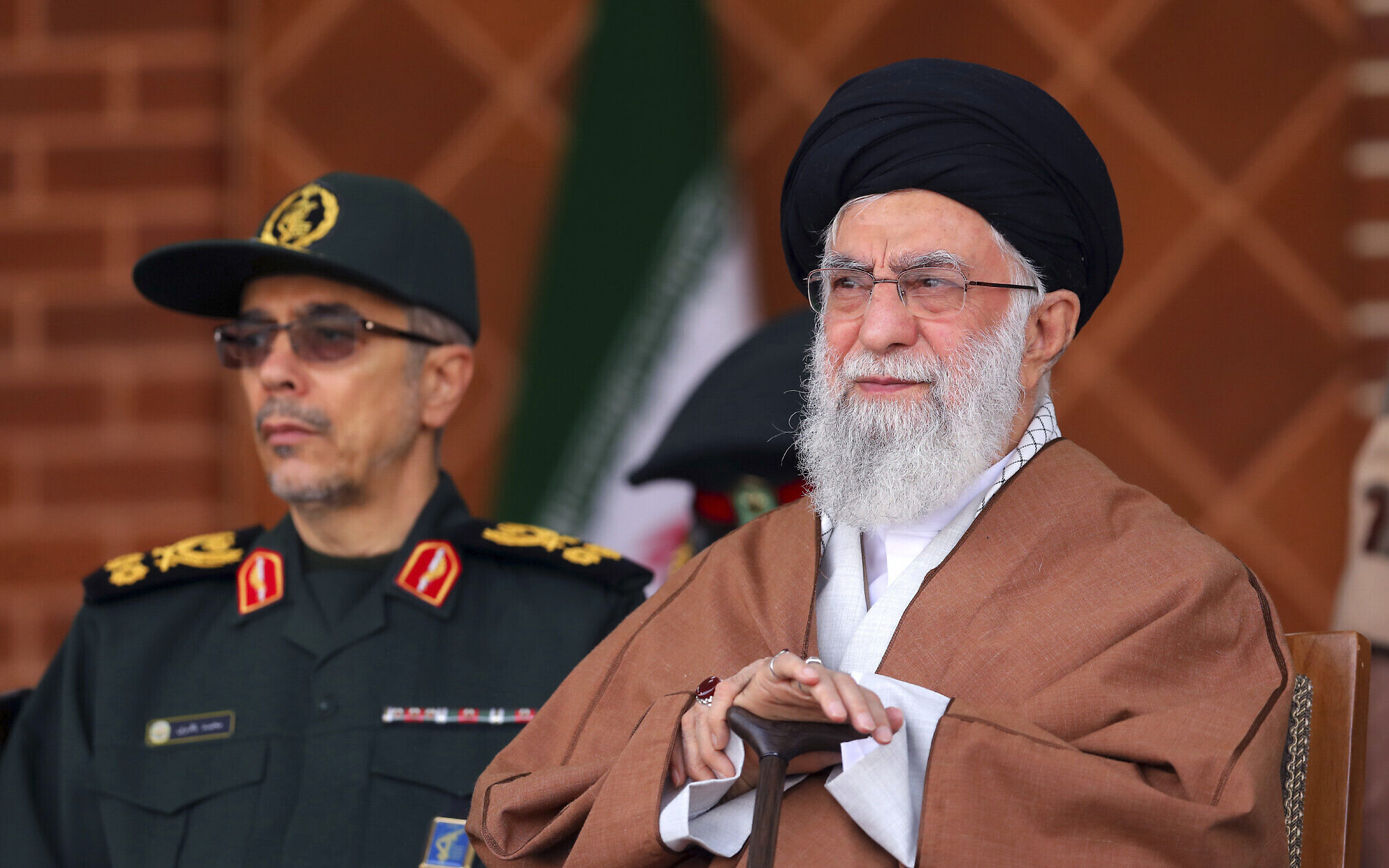
In this picture released by an official website of the office of the Iranian supreme leader, Supreme Leader Ayatollah Ali Khamenei, right, reviews armed forces with Chief of the General Staff of the Armed Forces Gen. Mohammad Hossein Bagheri, during a graduation ceremony at Iran’s Air Defense Academy, in Tehran, Iran, October 30, 2019. (Office of the Iranian Supreme Leader via AP)
Negotiators will meet in Vienna on Monday for the first indirect nuclear talks between Iran and the US in nearly six months. The hiatus was much longer than originally anticipated, and in the interim, an agreement continues to look ever more unlikely.
Some, like Israel, believe Iran is deliberately stalling on talks to give itself time to build up its nuclear capacity. However, others believe that that Iranians themselves do not yet know if they want to return to the original nuclear deal, or how to get there.
Senior diplomats from Britain, China, France, Germany and Russia plan to meet Iranian officials in Vienna on Monday to discuss bringing Tehran back into compliance with the 2015 deal known as the Joint Comprehensive Plan of Action, which eased sanctions on Iran in return for curbs on its nuclear program. The talks could pave the way for the US to rejoin the accord.
The United States pulled out under former President Donald Trump and reimposed sanctions on Iran, prompting Tehran to abandon all the limits the deal placed on it. That has raised tensions across the wider Mideast as Israel has warned it won’t allow Iran to be able to obtain a nuclear weapon
As summer turned into fall, Iran pressed on toward nuclear weapons capability. The International Atomic Energy Agency reported earlier this month that Tehran had significantly increased its stockpile of highly enriched uranium in recent weeks, reaching 113.8 kg (251 lbs) enriched to 20 percent, up from 84.3 (186 lbs) in September, and 17.7 kg (39 lbs) enriched up to 60%, up from 10 kg (22 lbs).Get The Times of Israel’s Daily Editionby email and never miss our top storiesNewsletter email addressGET ITBy signing up, you agree to the terms
“Every three months we wake up and discover that they’ve advanced,” said Raz Zimmt, an Iran scholar at the Institute for National Security Studies.”What did we expect?”
“Regarding fissile material, they are very close,” said Zimmt, estimating that it would take 3-4 weeks to enrich enough uranium for a nuclear weapon. They would still have to build a detonator and a delivery system, which could take up to two years.
What’s more, it remains unclear whether Iran even wants a deal, or whether it is stalling for time, as Israel argues, to continue to enrich.
“Iran wants to appear interested in negotiation and agreement,” said Eytan Gilboa of the Jerusalem Institute for Strategy and Security. “But it’s not clear at all they are willing to make the concessions necessary to achieve an agreement.”In this photo released Novenber 4, 2019 by the Atomic Energy Organization of Iran, its head Ali Akbar Salehi speaks with the media while visiting the Natanz enrichment facility in central Iran. (Atomic Energy Organization of Iran via AP)
The Islamic Republic is after a full removal of sanctions and immunity from a military strike, said Gilboa, goals that it is unlikely to achieve.
Others argue that Iran’s leadership, especially Supreme Leader Ali Khamenei, has not yet decided what course to take.
“What has happened over the last year, year and a half at least, is that Iran is mistrustful,” explained Ori Goldberg of Reichman University’s Lauder School of Government. “I don’t think Iran considers the US and the West approaching these negotiations in good faith. I think a lot of what they’re doing is trying to figure out if this is genuine, and not just dallying for the purpose of increasing their fissionable material stockpile.”Iran’s President Ebrahim Raisi speaks before parliament in the capital Tehran, on August 25, 2021. (Atta Kenare/AFP)
Even if Khamenei does decide he wants to cut a deal, hardline President Ebrahim Raisi is not going to be an easy negotiating partner.
“For Raisi, it is politically difficult to be perceived as being as open and welcoming, which wasn’t the case for Rouhani,” said Goldberg.
Raisi has to take into consideration the sentiments of his supporters, and the more intransigent members of his administration, he argued. “They’re going to be a little difficult and ornery about the whole thing, but they still very much want to be there.”
The fight over the banks
Iran is not the only country with unreasonable expectations from the talks. While in Morocco last week, Defense Minister Benny Gantz said that in the “best-case scenario,” a deal would address not only the issue of uranium enrichment but with missiles and Iran’s activities in the region, namely its support for proxies throughout the Middle East.Benny Gantz, center, is welcomed by Morocco’s Foreign Minister Nasser Bourita, in Rabat, Morocco, Wednesday, Nov. 24, 2021. (AP/Mosa’ab Elshamy)
“A good deal would be a deal that sealed the holes of the current deal in terms of nuclear enrichment, launch systems, the deal’s duration, and what Iran is doing in the region,” he said.
That is not at all on the table. Though US officials have been stressing that time is running out, they are still eager to reach some sort of deal with Iran on the nuclear issue alone. If a narrow agreement on enrichment and inspections is there for the taking, the Biden Administration is not about to gum up the works by bringing up new sensitive issues that will take months to discuss.
Foreign Minister Yair Lapid, in London and Paris this week for talks on the Vienna negotiations, seems to be taking a more modest approach. In his talks with Boris Johnson and Emmanuel Macron, Lapid will seek to ensure that banking sanctions against Iran remain in place, Channel 13 reported.
But Iran is coming to Vienna determined first and foremost to have those very sanctions removed. It is no coincidence that Iran’s negotiating team includes the deputy governor of Iran’s Central Bank, and senior officials from the trade and economy ministries.The Central Bank of Iran (Courtesy)
Making Israel’s position even weaker, US officials seem to be sending messages to Israel not to get in the way of talks.
Last week, US officials warned Israel that its attacks against the Iranian nuclear program are counterproductive and have enabled Tehran to rebuild an even more efficient enrichment system, then leaked those warnings to the New York Times.
Over the weekend, US defense officials also outed Israel for carrying out a covert operation, telling the New York Times that Israel was responsible for a cyberattack against Iran’s nationwide fuel system last month.
Time is running out
Though expectations are low for significant movement for a deal during this round, there is likely to be one important outcome.
In the previous six rounds of talks, Iran’s unreasonable demands could be explained by Iran wanting to simply play for time as it worked toward a bomb, or by the opposite position — that Iran sought a deal, but was simply trying to squeeze more concessions out of the US.
Now, with the US fast running out of patience, Iran’s true intentions will become apparent.President Barack Obama, standing with Vice President Joe Biden, delivers remarks in the East Room of the White House in Washington, Tuesday, July 14, 2015, after an Iran nuclear deal is reached. (AP Photo/Andrew Harnik, Pool)
“If we don’t see after this round some sort of flexibility in the Iranian positions, then there is no choice but to come to final conclusion that they don’t want to come back to the agreement,” said Zimmt.
And if that turns out to be the case, then what?
There is probably no one in the region who actually thinks Joe Biden would ever order a military strike on Iran’s nuclear program. Senior US officials aren’t even trying to go through the motions of trying to make Iran fear an attack. They almost always speak of “other options” — and not “all options” — being on the table should diplomacy fail.
Prime Minister Naftali Bennett and his ministers have been trying to convince Iran that a military strike is a possibility, but that too is unlikely. The IDF let its capabilities for such an operation erode, and is scrambling to get its operational plans and munitions back in order.IAF and AFCENT F-15 and F-16 jets are seen over southern Israel during the ‘Desert Eagle’ drill, August 10, 2021. (Israel Defense Forces)
But even when the military is ready, Israel’s political and diplomatic reality won’t be. Bennett’s ideologically unwieldy coalition would likely be torn apart by a strike. Israel’s US and European allies — which Bennett and Lapid have been working hard to win over — will be furious that Israel is pulling them into a seething Middle East when they’d rather be dealing with COVID, energy prices, and the economy.
If a military strike is not Plan B, the other options aren’t likely to change Iranian behavior. The US could try to add more sanctions with Chinese and Russian support, and it can try to increase pressure through UN Security Council resolutions. It could also agree to a limited “less-for-less” deal with Iran that only deals with specific aspects of Tehran’s nuclear program.
Or the Biden Administration will lose its nerve, and try to break the diplomatic logjam by removing sanctions upfront.
“The US will pay in cash, and get checks in return,” predicted Gilboa.
Despite killing of nuclear scientist and explosions at enrichment facilities, Iran building faster and more efficient nuke program that puts it in position to have bomb in weeks
In this image made from April 17, 2021, video released by the Islamic Republic Iran Broadcasting, IRIB, state-run TV, various centrifuge machines line the hall damaged on Sunday, April 11, 2021, at the Natanz Uranium Enrichment Facility, some 200 miles (322 km) south of the capital Tehran. (IRIB via AP, File)
US officials have warned Israel that attacks against the Iranian nuclear program are counterproductive and have caused Tehran to rebuild an even more efficient enrichment system, the New York Times reported Sunday.
Citing officials familiar with the behind-the-scenes discussion between Washington and Jerusalem, as the US continues to try and bring Iran back into the nuclear deal, the report said that Israeli officials have dismissed the warnings.
Noting that in the last 20 months there have been four explosions at Iranian nuclear facilities attributed to Israel, along with the killing of Iran’s top nuclear scientist, the report said that US officials cautioned that while such efforts may be “tactically satisfying,” they are “ultimately counterproductive.”
In the wake of the explosions, which took uranium enrichments plants offline and destroyed dozens of centrifuges, the Americans noted that Iran has managed to resume enrichment within months, often installing newer machines that can enrich uranium far faster.
However, the officials said Israel appeared unmoved by the arguments and this was one of the many areas the US and Israel disagreed with how to approach efforts to contain Tehran’s drive to build nuclear weapons.Get The Times of Israel’s Daily Editionby email and never miss our top storiesNewsletter email addressGET ITBy signing up, you agree to the terms
Further complicating matters was the fact that Iran has apparently managed to improve its defenses, particularly in the cyber field, the report said, meaning that launching cyber attacks like the Stuxnet attack that crippled centrifuges at the Natanz nuclear enrichment site for more than a year, an attack widely reported to be a joint US-Israeli effort, was no longer as effective.The aftermath of an explosion and a fire at an advanced centrifuge assembly plant at Iran’s Natanz nuclear site, July 5, 2020. (Planet Labs Inc. via AP)
The major concern now was how close Iran has come to being able to build a nuclear weapon since then-US president Donald Trump withdrew the US from the deal in 2018.
This week, with Iran set for talks with world powers in Vienna on November 29, the International Atomic Energy Agency said Tehran had again increased its stockpile of highly enriched uranium.
Iran’s stockpile, as of November 6, was many times in excess of the limit laid down in the agreement with world powers, said the IAEA report. Such highly enriched uranium can be easily refined to make atomic weapons, which is why world powers have sought to contain Tehran’s nuclear program.
The Vienna-based agency told members that it is still not able to verify Iran’s exact stockpile of enriched uranium due to the limitations Tehran imposed on UN inspectors earlier this year.
The IAEA has been unable to access surveillance footage of Iranian nuclear sites or of online enrichment monitors and electronic seals since February. The agency’s chief, Rafael Mariano Grossi, told The Associated Press this month that the situation was like “flying in a heavily clouded sky.”In this image, made from an April 17, 2021 video released by the state-run TV station Islamic Republic Iran Broadcasting, various centrifuge machines line a hall at the Natanz Uranium Enrichment Facility. (IRIB via AP)
Sunday’s NYT report said that since abandoning the agreement, Iran had managed to reduce its breakout time to a bomb from about a year to just several weeks.
“Before Mr. Trump decided to scrap the deal, Iran had adhered to the limits of the 2015 agreement — which by most estimates kept it about a year from ‘breakout,’ the point where it has enough material for a bomb. While estimates vary, that buffer is now down to somewhere between three weeks and a few months, which would change the geopolitical calculation throughout the Middle East,” the report said.
US officials have publicly warned Iran’s violations are making it increasingly unlikely that there can be a return to the 2015 deal as it was.
The US envoy for Iran Robert Malley warned Friday that Tehran was approaching the point of no return for reviving a nuclear deal after it boosted its stocks of enriched uranium before talks resume this month.
“The time will come if Iran continues at this pace with the advancements they’ve made, [it] will make it impossible even if we were going to go back to the JCPOA to recapture the benefits,” Malley told the Manama Dialogue conference in Bahrain, referring to the deal by its official name, the Joint Comprehensive Plan of Action.
“Iran’s advances are spreading alarm across the region… that’s what’s making the clock tick faster and making all of us say that the time is short for a return to the JCPOA,” Malley said.Technicians work at the Arak heavy water reactor’s secondary circuit, as officials and media visit the site, near Arak, 150 miles (250 kilometers) southwest of the capital Tehran, Iran, Monday, Dec. 23, 2019. (Atomic Energy Organization of Iran via AP)
“And I want to be clear, because there’s no ambiguity about what they seem to be doing now, which is to drag their feet on the nuclear talks and accelerate the progress in their nuclear program,” he added.
The US envoy said he was not encouraged by the statements from the new Iranian government of President Ebrahim Raisi, which earlier on Friday accused Washington of conducting a “propaganda campaign” against the country.
With the possibility of a return to the 2015 deal fading, the US was examining the possibility of hammering out an interim deal with Iran, the New York Times report said, confirming a separate report last week.
US National Security Adviser Jake Sullivan raised the prospect of an interim agreement with Iran to allow more time for nuclear negotiations, in talks with his Israeli counterpart, Eyal Hulata, the Axios news site reported.
A pair of American sources said Sullivan and Hulata were just “brainstorming,” and that the proposal was suggested by an unspecified European ally of the US.
The US sources said the proposal was for Iran to suspend a disallowed nuclear activity such as enriching uranium to 60 percent, in exchange for the US and allied countries releasing some frozen Iranian money, or issuing sanctions waivers on humanitarian goods.
An unnamed Israeli official cited in the report said Hulata told Sullivan he was against the idea and Israel’s concern was that any interim agreement could become permanent, allowing Iran to maintain its nuclear infrastructure and supply of uranium it has built up.
The mounting doubts has seen the US trying to reassure its allies in recent days that if diplomacy fails, other options were available.
“The United States remains committed to preventing Iran from gaining a nuclear weapon. And we remain committed to a diplomatic outcome of the nuclear issue,” US Defense Secretary Lloyd Austin told an event put on by the International Institute for Strategic Studies.
“But if Iran isn’t willing to engage seriously, then we will look at all of the options necessary to keep the United States secure,” he said.
Israel has been more direct, repeatedly warning it will attack Iran’s nuclear program and allocating billions of dollars to the military to prepare and train for a potential strike.
Pentagon head vows to prevent Tehran getting nukes, says Washington committed to diplomatic outcome but will examine alternatives if Tehran isn’t willing to engage
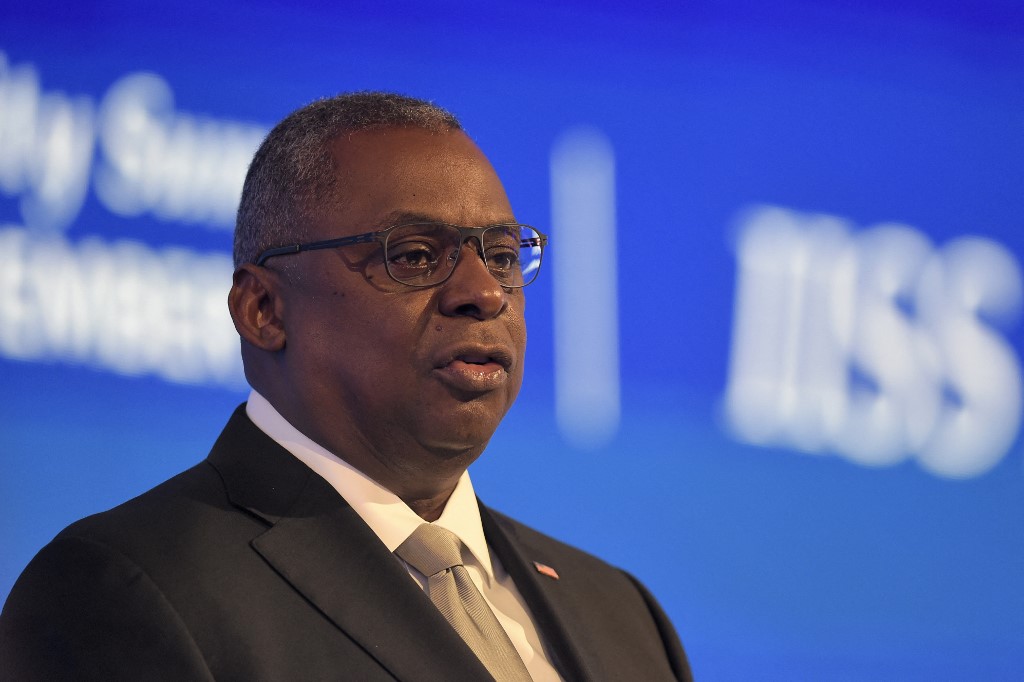
US Secretary of Defense Lloyd Austin speaks during the 17th IISS Manama Dialogue in the Bahraini capital Manama, on November 20, 2021 (Mazen Mahdi/AFP)
America’s top defense official vowed Saturday to prevent Iran from obtaining a nuclear weapon and to counter its “dangerous use” of suicide drones in the Mideast, as negotiations remain stalled over Tehran’s tattered atomic deal with world powers.
United States Defense Secretary Lloyd Austin’s comments in Bahrain at the annual Manama Dialogue appeared aimed at reassuring America’s Gulf Arab allies and Israel, as the Biden administration tries to revive the nuclear deal which limited Iran’s enrichment of uranium in exchange for the lifting of economic sanctions.
“The United States remains committed to preventing Iran from gaining a nuclear weapon. And we remain committed to a diplomatic outcome of the nuclear issue,” Austin told an event put on by the International Institute for Strategic Studies.
“But if Iran isn’t willing to engage seriously, then we will look at all of the options necessary to keep the United States secure,” he said.
“Iran should be under no illusion that it will manage to undermine the relationship between the US and other countries in the region,” Austin said, according to the Walla news site.Get The Times of Israel’s Daily Editionby email and never miss our top storiesNewsletter email addressGET ITBy signing up, you agree to the terms
Austin’s remarks come after the US’ chaotic withdrawal from Afghanistan raised concerns about America’s commitment to the Middle East, as defense officials say they want to pivot forces to counter perceived challenges from China and Russia.In this image, made from an April 17, 2021 video released by the state-run TV station Islamic Republic Iran Broadcasting, various centrifuge machines line a hall at the Natanz Uranium Enrichment Facility. (IRIB via AP)
“Let’s be clear: America’s commitment to security in the Middle East is strong and sure,” Austin said, according to Reuters. “But Iran’s actions in recent months have not been encouraging — especially because of the expansion of their nuclear program.”
The defense chief reiterated that in the opinion of the Biden administration, diplomacy is “the tool of first resort.”
Since then-US president Donald Trump unilaterally withdrew America from the Iran nuclear deal in 2018, a series of escalating incidents have struck the wider Mideast. That includes drone and mine attacks targeting vessels at sea, as well as assaults blamed on Iran and its proxies in Iraq and Syria.
The US also killed Iranian al-Quds Force commander General Qassem Soleimani in early 2020, which then saw Iran target American troops in Iraq with ballistic missiles.
In addition, a number of attacks on Iranian nuclear facilities have been blamed on Israel, and since February, Iran and Israel have been engaged in a “shadow war” in which vessels linked to each country have come under attack in waters around the Gulf.
Israel has said it will not allow Iran to get nuclear weapons, and its military has begun drawing up fresh attack plans for a potential strike on Iranian facilities. Last month the government reportedly allocated billions of shekels toward making those plans viable.
The Pentagon chief was asked why Washington did not respond to last month’s drone attack on a base used by the US-led coalition fighting the Islamic State terror group in Syria. The New York Times said Friday the attack was Iranian retaliation for Israeli airstrikes in Syria.
“The United States of America maintains the right to defend itself. And we will defend ourselves and our interests, no matter what, at the time and place of our choosing,” Austin replied.The damaged al-Tanf base in southern Syria is seen a day after it was apparently struck by Iranian drones, on October 20, 2021. (Courtesy, via Aurora Intel)
Under US President Joe Biden, military officials are looking at a wider reshuffling of forces from the Mideast to other areas, though it still maintains a large presence at bases across the region.
Austin hinted at that in his remarks, saying: “Our potential punch includes what our friends can contribute and what we have prepositioned and what we can rapidly flow in.”
“Our friends and foes both know that the United States can deploy overwhelming force at the time and place of our choosing,” Austin said.
Austin’s comments also touched on the ongoing war in Yemen, for which the Biden administration halted its offensive support.
Saudi Arabia has led a military campaign since 2015 against the Iranian-backed Houthi rebels who hold Yemen’s capital, Sanaa. The Houthis have launched drone and ballistic missile attacks on the kingdom to retaliate for a punishing aerial bombing campaign that also has killed civilians.Illustrative: Tribesmen loyal to Houthi rebels raise their weapons during a gathering against the agreement to establish diplomatic relations between Israel and the United Arab Emirates in Sanaa, Yemen, on August 22, 2020. (AP Photo/Hani Mohammed)
But while the kingdom constantly refers to every drone and missile fired by the Houthis as successfully intercepted by its defenses, Austin put the rate, instead, at “nearly 90 percent.” The US also withdrew its THAAD air defenses and Patriot missile batteries from Prince Sultan Air Base several months ago.
“We’ll work with them until it’s 100%,” he said.
The Manama Dialogue takes place each year in Bahrain, a small island kingdom off the coast of Saudi Arabia that’s home to the US Navy’s 5th Fleet. Bahrain also has engaged in a years-long campaign crushing dissent. Activists wrote to Austin before his trip, urging him to raise the detention of prisoners on the island and Bahrain’s involvement in the Yemen war.
Following two years of limited exercises due to the pandemic and lack of a national budget, army ramps up efforts to prepare troops, especially reservists, for war with Hezbollah
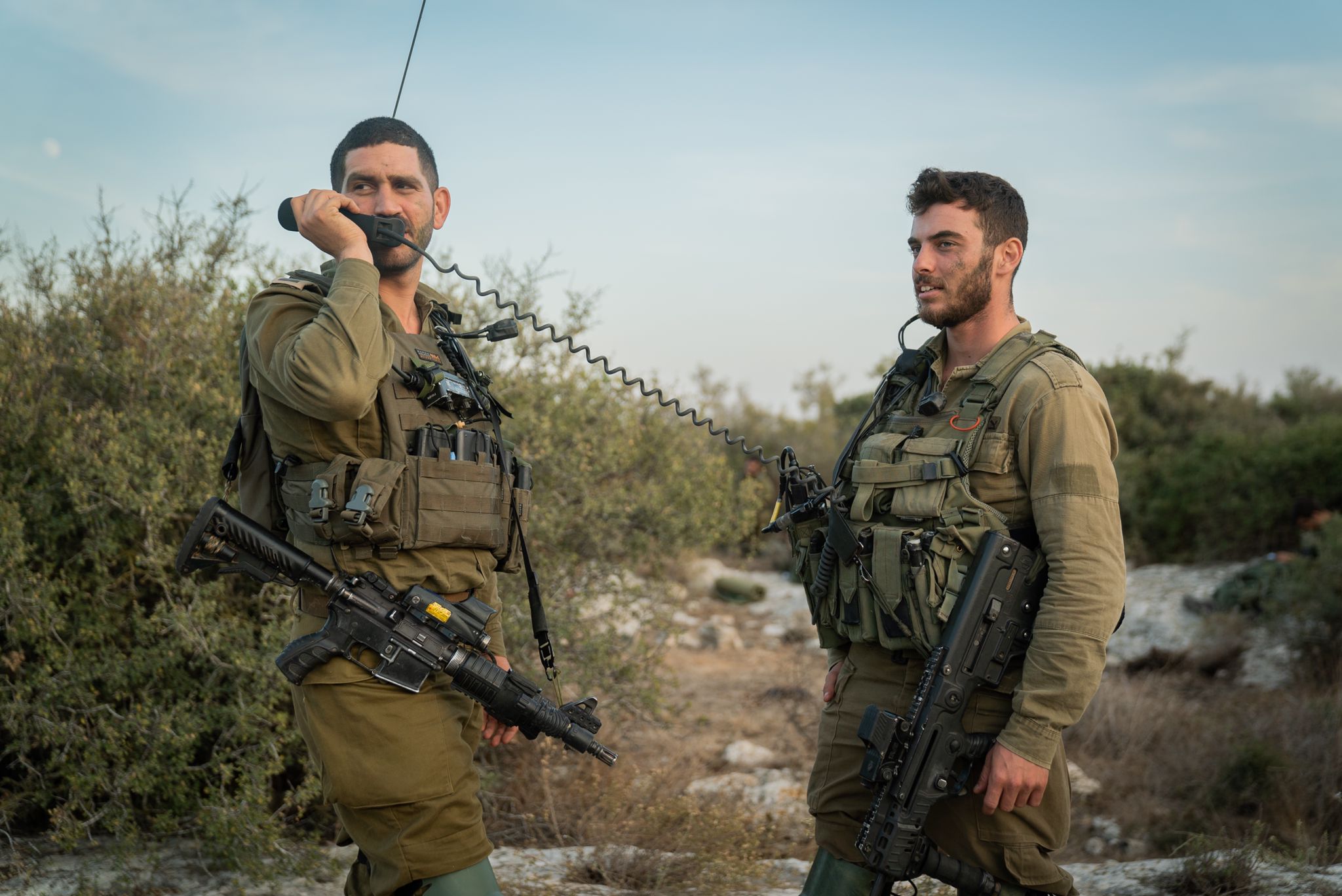
Israeli troops take part in an exercise in northern Israel, in November 2021. (Israel Defense Forces)
The Israel Defense Forces has been on a training spree over the past month, holding several large exercises for its Ground Forces in the Northern Command, with plans to continue doing so into next year, following two years of relative stagnation due to a combination of the coronavirus pandemic and the lack of a national budget.
The month-long series of drills, which wrapped up on Thursday, simulated a war on Israel’s northern front against Hezbollah, the Iran-backed Lebanese terror group that has long represented the IDF’s most significant military threat, with a massive arsenal of nearly 150,000 rockets and missiles. According to Israeli estimates, Hezbollah could fire some 4,000 projectiles at Israel every day in a future conflict.
Such a conflict would require an Israeli ground invasion of southern Lebanon, which would play a critical role in any future war in Lebanon, Brig. Gen. Dan Noyman, head of the Northern Command’s 36th Division, told reporters earlier this year.
And yet the soldiers who would be conducting such a ground maneuver, particularly the reservists, have not trained sufficiently for such an operation in recent years, drawing criticism from within and outside the military.
The IDF sought to address that issue this year and next year, investing over a billion shekels ($324 million) in more and higher quality exercises for the Ground Forces.Get The Times of Israel’s Daily Editionby email and never miss our top storiesNewsletter email addressGET ITBy signing up, you agree to the terms
In 2022, the IDF plans to hold 50 percent more exercises than it did in 2020 and 30% more than it did this year — the largest amount of training in five years — a senior Ground Forces officer told reporters this week, speaking on condition of anonymity.
In the coming year, 91,000 reservists will go through individual training exercises, double the number that did this year, the officer said.
The exercises over the past month — known collectively as “Hewn Stone” or, in Hebrew, Even Gazit — have focused in large part on preparing troops and commanders to use new equipment and tactics and to work better with different branches of the military in order to carry out strikes on Hezbollah targets in Lebanon, while also defending Israeli territory.An Israeli soldier launches a drone during an exercise in northern Israel, in November 2021. (Israel Defense Forces)
Noyman’s 36th Division, which includes the Golani Brigade and the 7th and 188th Armored Brigades, took part in the drill over the past week. The 146th Reserve Division conducted exercises the week before — its first division-wide exercise in seven years.
Worrying prospects for Lebanon
The uptick in training does not necessarily signify that war with Hezbollah is due to break out imminently, though the military is closely monitoring the deteriorating situation in neighboring Lebanon, which is in the midst of a near-unparalleled financial and societal crisis.
This cataclysm in Lebanon has been years in the making and has continued to reach new depths in recent months as the country has increasingly struggled with fuel and food shortages, alongside lingering fury over last year’s deadly Beirut Port blast, which killed hundreds of people and injured thousands.
The IDF believes that these pressing issues make Hezbollah less interested in launching an all-out war against Israel, as it must focus on shoring up its domestic status as it faces criticism even from its natural base in Lebanon, the country’s Shiite population, as it is increasingly seen as being one of the main factors behind the country’s corruption and dysfunction.
However, the military is also concerned that Hezbollah may seek to ramp up tensions with Israel as a way to shift the focus away from it and toward an external foe.Shiite fighters from Hezbollah and Amal terror movements take aim with (left to right) a Kalashnikov assault rifle and a rocket-propelled grenade launcher amidst clashes in the area of Tayouneh, in the southern suburb of the capital Beirut, on October 14, 2021 (Ibrahim Amro/AFP)
As conditions spiral out of control in Lebanon, the IDF is now working to shore up its physical defenses along the northern border, out of concern that the country’s crises may prompt large numbers of refugees to seek asylum in the far more stable Israel. Over the past two years, a number of migrants, most of them from African countries and Turkey, have crossed into Israel from Lebanon, in search of better job prospects.
The military has for years been looking to replace the mostly chain-link fences that are in place along the border with a more substantial concrete barrier, but these plans have stalled in recent years due to the lack of a national budget.
However, with the passing of the budget earlier this month, the IDF has been able to begin work on some sections of the concrete wall, in the areas most likely to see infiltration attempts, which is expected to take roughly two years to complete.
Naval exercise represents first public military cooperation between Jerusalem and Manama; comes amid growing tensions with Tehran at sea
By JUDAH ARI GROSS11 November 2021, 2:41 pmUpdated at 8:46 pm
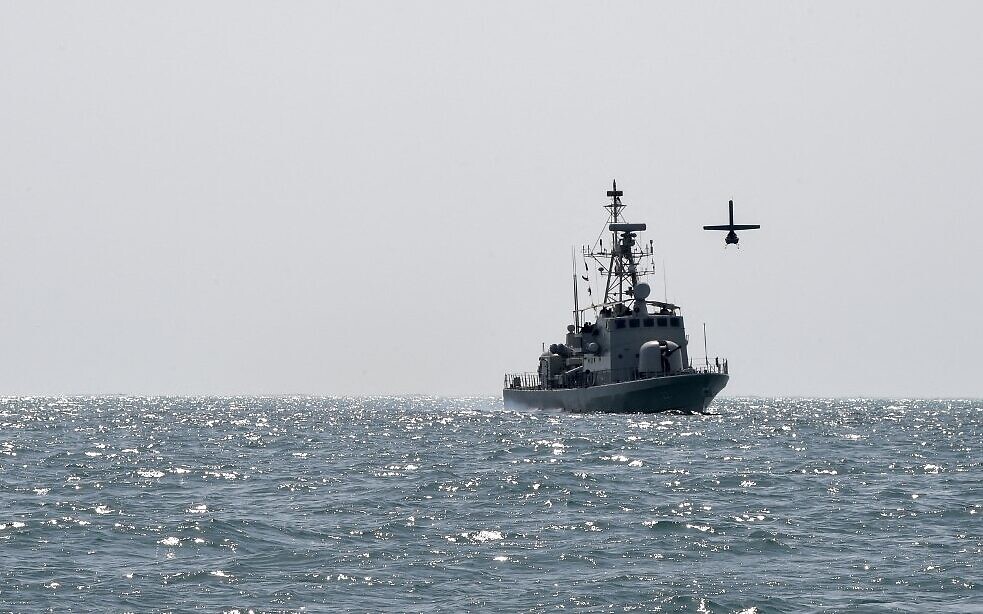
Illustrative. A US Navy Martin UAV drone flies over the Gulf waters as the Royal Bahrain Naval Force (RBNF) Abdulrahman Al Fadhel takes part in a joint naval exercise between the US 5th Fleet Command and Bahraini forces, on October 26, 2021. (Mazen Mahdi/AFP)
The navies of Israel, the United States, the United Arab Emirates and Bahrain launched a joint exercise in the Red Sea this week, in response to their shared adversary Iran’s presence and aggression in the waters of the Middle East, a senior Israeli naval official said.
“This [Iranian] presence is something that we need to push back as much as possible from the State of Israel, from the Red Sea, from the areas that harm our freedom to sail… In order to do that, we need to make our partnerships tighter,” the senior officer told reporters on Thursday evening, speaking on condition of anonymity.
“Here the goal is to extend the range of the navy’s operations — for the good of the State of Israel and the IDF — to extend our ability to detect [threats], to extend our sailing range, to prevent naval terror and also to retaliate, when we must, when it’s needed, against what the Iranians are doing,” the officer said.
Since February, Iran and Israel have been accused of engaging in what analysts have called a naval “shadow war,” in which vessels linked to each nation have come under attack in waters around the Persian Gulf and the Gulf of Oman in a series of tit-for-tat exchanges.
The officer said that unlike much of its efforts in the region, which are conducted through proxies, Iran is more “independent” at sea, conducting operations with its own forces.Get The Times of Israel’s Daily Editionby email and never miss our top storiesNewsletter email addressGET ITBy signing up, you agree to the terms
Earlier on Thursday, the US Central Command’s 5th Fleet announced that it had launched an exercise in the Red Sea the day before with the navies of Israel, the United Arab Emirates and Bahrain, focusing on “visit, board, search and seizure tactics.”
“It is exciting to see US forces training with regional partners to enhance our collective maritime security capabilities,” Vice Adm. Brad Cooper, commander of the 5th Fleet, said in a statement.
The Israeli naval officer said the exercise would focus on these somewhat simpler strategies and would not include things like missile launches, nor would advanced equipment like submarines take part in it, though he said the drill was also meant to allow the participants to get to know one another.
The exercise, one of the first Israel has held with the 5th Fleet, came just over a year after Israel normalized ties with the UAE and Bahrain under the Abraham Accords and a few months after Israel moved into the area of responsibility of the US military’s Middle East-focused Central Command.
Though Israel has conducted exercises alongside the UAE in the past, the drill represents the first-ever public military cooperation between Israel and Bahrain.
“This is the first time — at sea — that we’re swapping know-how with Bahrain, with the Emirates, about professional, operational techniques,” the officer said.
“It’s more comfortable to work together at sea. You’re far from the viewing eye, you can’t be photographed from shore, people don’t always know that it’s even happening. It’s taking place in a ‘gray zone.’ I believe it will open further doors for us, maybe slowly, maybe quickly,” he said.
According to the senior naval official, this exercise is one of several that Israel and the 5th Fleet plan to conduct in the coming year.
“This exercise is part of a work plan, and you will see more of them in the coming year. They won’t just be bilateral with the Americans. Since the 5th Fleet works with countries that are part of the Abraham Accords, in this exercise, Bahrain and the United Arab Emirates are taking part,” he said.
In his statement, Cooper reiterated the importance of this multi-national cooperation.
“Maritime collaboration helps safeguard freedom of navigation and the free flow of trade, which are essential to regional security and stability,” he said.
The drill is being led by the US Navy’s 5th Fleet, which operates throughout the Middle East, and it will be held in the northern Red Sea, keeping a wide berth from Iran, which maintains proxies in Yemen and regularly has ships located around the Bab al-Mandab Strait between the southern Red Sea and the Gulf of Aden.
“We have an interest in Bab al-Mandab, which affects the freedom of movement of the State of Israel, and we need to push back Iran’s presence [from there], and there are other countries that are also partners to this threat,” the officer said.
In addition to the portions of the exercise that are being held at sea, US Marines from the 5th Fleet are also in Israel, training with the IDF on urban warfare techniques, as part of the drill, the Israeli officer said.
Recent months have seen a significant increase in apparent shows of force by the US, Israel and countries in the Persian Gulf on one side and Iran on the other.
Earlier this week, Tehran launched a major naval exercise in the Gulf of Oman, which Iran’s deputy army chief said was meant to “[warn] the enemies that any act of aggression against Iran will draw a crushing response from the army.”
Twice over the past month, the US has flown B-1 heavy bombers through the region, and Israel hosted a massive multinational aerial exercise, Blue Flag.
Tensions have been particularly high with Iran in recent months as the Islamic Republic has stalled indirect talks with the United States in Vienna regarding a mutual return to the 2015 nuclear deal. The talks have now been scheduled to resume at the end of November, though US officials have indicated uncertainty about how seriously they believe the Iranians will take them.
Israeli and American officials have increasingly threatened military action against Iran’s nuclear program should those negotiations fail.
Jewish state will expedite its demise if it ‘gives the Islamic Republic an excuse,’ warns Amir Ali Hajizadeh; foreign minister says Tehran seeks ‘good deal’ in nuke talks
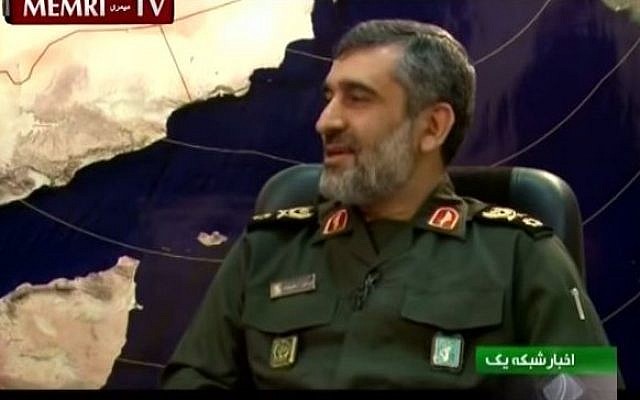
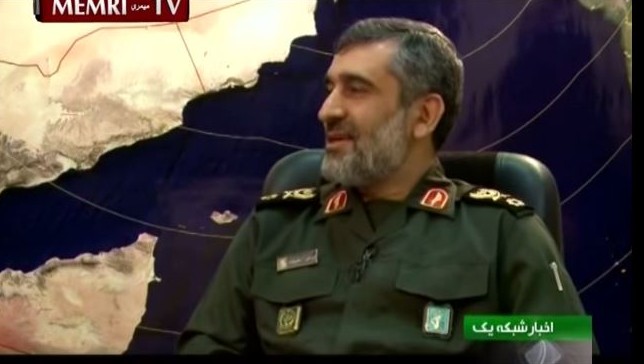
Commander of the Islamic Revolution Guards Corps (IRGC) Aerospace Force Brigadier General Amir Ali Hajizadeh. (Screen capture: YouTube/MEMRITVVideos)
The commander of Iran’s Revolutionary Guard Aerospace Force said Thursday that Israel is “doomed to termination” and that any move by Jerusalem against the Islamic Republic will expedite that demise.
Israeli security chiefs have ramped up their rhetoric against Iran, with IDF Chief of Staff Aviv Kohavi warning Tuesday that the military was boosting its preparations for a possible attack on Iranian nuclear facilities.
The same day, Defense Minister Benny Gantz said Israel would carry out operations that “haven’t been seen in the past” if regional war breaks out.
Speaking at a ceremony in Tehran, Amir Ali Hajizadeh mocked Israel for being the “only regime in the world arguing about how to survive,” according to Iran’s Tasnim news agency.
“The (Zionist) regime that discusses its existence is doomed to termination and cannot talk about destroying other countries,” Hajizadeh was quoted as saying.Get The Times of Israel’s Daily Editionby email and never miss our top storiesNewsletter email addressGET ITBy signing up, you agree to the terms
In response to the recent remarks by Israeli officials, he said the Jewish state “may be able to start a battle, but it is the Islamic Republic that will end it with the termination of the Zionist regime. If the Zionist regime gives the Islamic Republic an excuse, it will only expedite its termination.”
The Israeli Air Force is expected to resume practicing for a strike on Iran’s nuclear program.
In January, Kohavi announced he had instructed the military to begin drawing up fresh attack plans for a strike on Iran’s nuclear facilities, and last month the government reportedly allocated billions of shekels toward making those plans viable.IDF Chief of Staff Aviv Kohavi attends a Knesset Foreign Affairs and Defense Committee meeting on November 9, 2021. (Yonatan Sindel/Flash90)
Meanwhile, Iran’s foreign minister said Wednesday that Tehran was ready to reach a “good agreement” on the nuclear issue at negotiations due to get underway in Vienna later this month.
In a tweet, Hossein Amir-Abdollahian said his deputy and chief negotiator Ali Bagheri was “engaged in successful talks in Europe,” where he is visiting London, Paris and Berlin this week.
“At the negotiating table in Vienna, we are ready to deliver a good agreement,” the foreign minister wrote. “The return of all parties to their commitments is an important and leading principle.”
Talks to restore the 2015 nuclear deal between Iran and world powers are due to resume in Vienna on November 29, after a suspension since June.
In recent months, Iran has dragged its feet on returning to indirect negotiations with the United States about a mutual return to the 2015 nuclear deal, which then-US president Donald Trump abrogated in 2018 and Iran abandoned a year later.
Last week, Iranian officials said they planned to return to the talks by the end of November, but US President Joe Biden’s administration has expressed growing impatience and threatened to explore “other options” should the negotiations fail.
The US has dropped demands for Iran to halt ballistic missile development and regional destabilization aggression from the drive to renegotiate a nuclear deal with Iran. This was indicated by US President Joe Biden at the G20 summit taking place last week in Rome. He merely “pledged” that “if the US returns to the Iran nuclear agreement, it will only subsequently leave if Tehran clearly breaks the terms of the deal.”
These demands were integral to Israel’s support for the diplomatic path Biden has advocated for the resolving the issue of a nuclear-armed Iran.
However, the European signatories of the original 2015 nuclear accord (JCPOA) hailed this pledge as the key to unlocking the diplomatic impasse reached on the Vienna track. German Chancellor Angela Merkel, French President Emmanuel Macron and the UK’s Boris Johnson stated: “We welcome President Biden’s clearly demonstrated commitment to return the US to full compliance with the JCPOA and to stay in full compliance, so long as Iran does the same.”
No wonder Tehran was suddenly accommodating and agreed to resuming negotiations next month..
Seen from Israel, the Biden administration has backtracked from its earlier acceptance of the need to restrain Iran’s regional belligerence and ballistic missiles, along with the drive for a nuclear weapon capability:
Iran has already committed numerous breaches of the terms of the 2015 accord, stripping it of content by strides forward its nuclear goal. What do Biden, Johnson, Merkel and Macron propose to do to turn Iran’s nuclear clock back as well as their own?
How much is the Biden pledge worth if his presidency ends in 2024? It won’t be binding on his successors since the Senate has never endorsed the JCPOA and indeed it was never formally signed by Barack Obama and rested only his personal pledge which Biden now offers to renew.
By reverting to the Obama position, Biden too is ready to give Iran free rein on its ballistic missile program and regional warmongering by using terrorist organizations like the Lebanese Hizballah the Iraqi Shiite militias and Yemen’s Houthi rebels.
These omissions from Washington’s Iran agenda concern Israel no less than the nuclear issue.
Tehran, for its part, did not miss seizing the moment as a chance to push all the way back to the starting point. Foreign Minister Hossein Amir-Abdollahian said succinctly: “There is no need for the negotiation and the simplest solution is for Biden to issue an executive order saying he was returning to the nuclear deal and lifting sanctions.” In other words, eliminating Donald Trump’s “maximum pressure” policy and reverting to Barack Obama’s conciliatory mode.
However, in assumping that Biden had totally abandoned all military options, Tehran may have jumped the gun – especially when it comes to American lives or interests,
On Oct. 30, the US President also said: “With regard to the issue of how we’re going to respond to actions taken by them against the interests of the United States – whether they’re drone strikes or anything else – is we’re going to respond, and we’re going to continue to respond.”
He was referring to the pro-Iranian combined armed drone-artillery assault of Oct. 20 on the US garrison at al-Tanf in southern Syria on the Iraq and Jordanian borders. Washington had made no response until then. The delay may have occurred in view of the president’s long absence from Washington at the G20 summit and the climate conference in Glasgow. However, the impression gained in Tehran was of an American president who was vacillating on resorting to military action in the face of aggression.
State media says surface-to-surface rockets launched from northern Israel caused ‘material damage,’ no casualties; attack comes days after rare daytime strike in same region
Illustrative: A Syrian anti-aircraft missile is fired into sky near Damascus during an alleged Israeli airstrike on January 6, 2021. (Screen capture: SANA)
The Israeli military struck targets using surface-to-surface missiles near the Syrian capital of Damascus early Wednesday morning, Syrian media reported.
The SANA news agency said the missiles hit sites in the Zakia region outside Damascus and caused “material damage” shortly before 1 a.m. on Wednesday. The outlet gave no details on the targets that were hit, and there were no immediate reports of casualties.
Syrian media reported that the strike was carried out with surface-to-surface missiles fired from northern Israel, similar to an alleged Israeli attack conducted earlier this week.
There was no comment from the Israel Defense Forces, in line with its policy of ambiguity regarding its activities in Syria.
Israel’s alleged use of surface-to-surface missiles — in place of munitions fired from aircraft — has been linked to a recent meeting between Prime Minister Naftali Bennett and Russian President Vladimir Putin, one of Syrian dictator Bashar Assad’s main allies who has supplied much of Damascus’s air defense system. To avoid embarrassing Russia and its military technology, Israel reportedly agreed to rely less on airstrikes, which had repeatedly defeated the Russian batteries.Get The Times of Israel’s Daily Editionby email and never miss our top storiesNewsletter email addressGET ITBy signing up, you agree to the terms
The reported strike comes some three days after the Israeli military bombed a number of locations surrounding Damascus in a rare daytime strike, according to Syrian media, reportedly targeting advanced weapons heading to the Hezbollah terror group and other Iranian proxies.
SANA said those strikes were carried out using surface-to-surface missiles fired from northern Israel and that explosions were heard in the countryside surrounding the Syrian capital.
Strikes were reported in the areas of al-Dimas, Qudsaya and al-Mezzah military air base — all located west of Damascus. Although not unheard of, daytime strikes on Syrian targets are relatively rare.
The United Kingdom-based Syrian Observatory for Human Rights, a pro-opposition group of unclear funding, said Saturday’s raid killed at least five pro-Iranian fighters and wounded others. The nationalities of the people killed were not immediately known.
According to the Observatory and Syrian media reports, the strike targeted advanced weaponry and ammunition depots belonging to Hezbollah, Iranian forces and allied militias.
There was no comment from the Israel Defense Forces, in line with its policy of only publicly acknowledging strikes that are in response to attacks from Syria.
The targets of the strike were all located in areas known to host Syrian air defenses as well as arms warehouses.
Israeli officials have expressed increasing concern over the proliferation of Iranian-made surface-to-air missile systems in Syria, as well as the Syrian military’s improved air defense capabilities, which have made it more difficult for the IDF to operate over Syria.
Israel has carried out hundreds of airstrikes inside Syria over the course of the country’s civil war, targeting what it says are suspected arms shipments believed to be bound for Lebanon’s Iran-backed Hezbollah terror group, which is fighting alongside Syrian government forces.

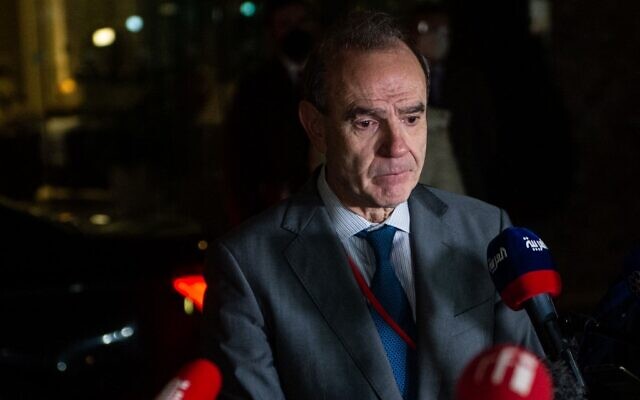 Deputy Secretary General of the European External Action Service (EEAS) Enrique Mora speaks to journalists in front of the Coburg palace after a meeting of the Joint Comprehensive Plan of Action (JCPOA) in Vienna, Austria on November 29, 2021. ( VLADIMIR SIMICEK / AFP)
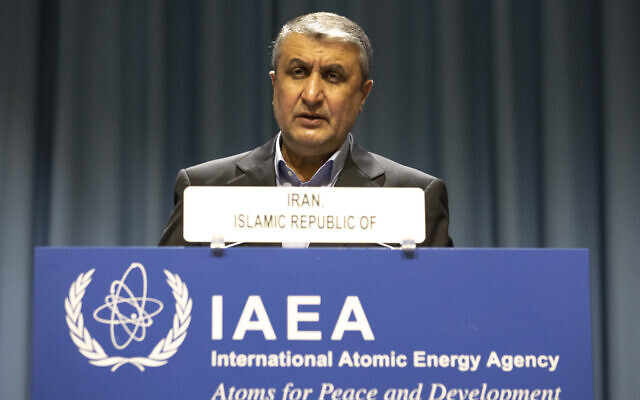 Mohammad Eslami, head of Iran’s nuclear agency (AEOI) talks on stage at the International Atomic Energy’s (IAEA) General Conference in Vienna, Austria, September 20, 2021. (Lisa Leutner/AP)
 In this photo released Novenber 4, 2019 by the Atomic Energy Organization of Iran, its head Ali Akbar Salehi speaks with the media while visiting the Natanz enrichment facility in central Iran. (Atomic Energy Organization of Iran via AP)
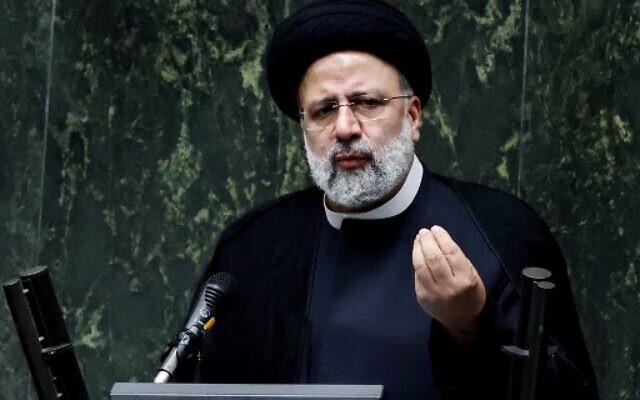 Iran’s President Ebrahim Raisi speaks before parliament in the capital Tehran, on August 25, 2021. (Atta Kenare/AFP)
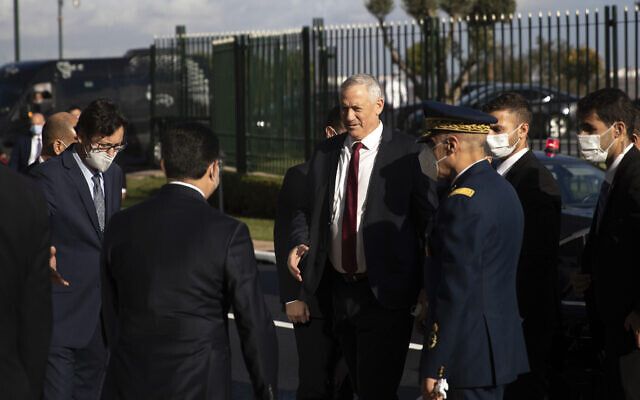 Benny Gantz, center, is welcomed by Morocco’s Foreign Minister Nasser Bourita, in Rabat, Morocco, Wednesday, Nov. 24, 2021. (AP/Mosa’ab Elshamy)
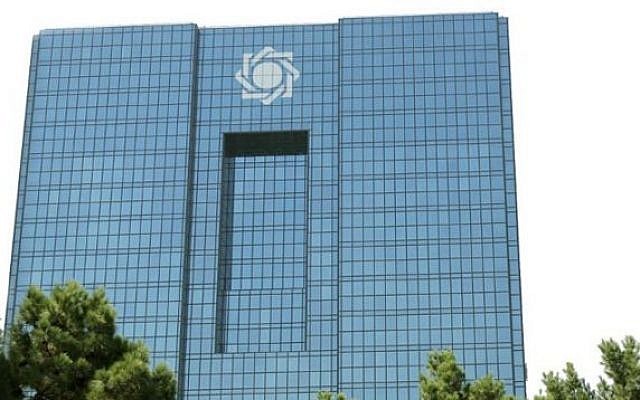 The Central Bank of Iran (Courtesy)
 President Barack Obama, standing with Vice President Joe Biden, delivers remarks in the East Room of the White House in Washington, Tuesday, July 14, 2015, after an Iran nuclear deal is reached. (AP Photo/Andrew Harnik, Pool)
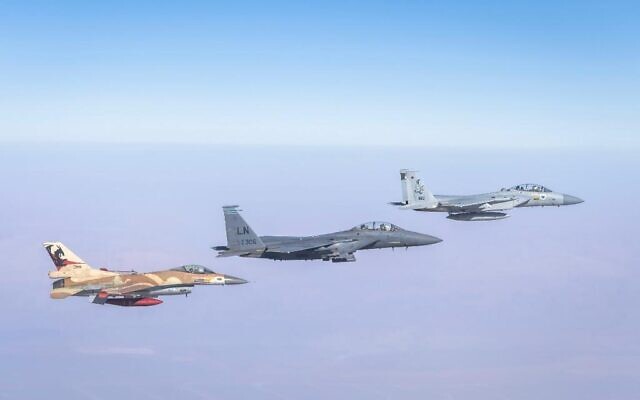 IAF and AFCENT F-15 and F-16 jets are seen over southern Israel during the ‘Desert Eagle’ drill, August 10, 2021. (Israel Defense Forces)
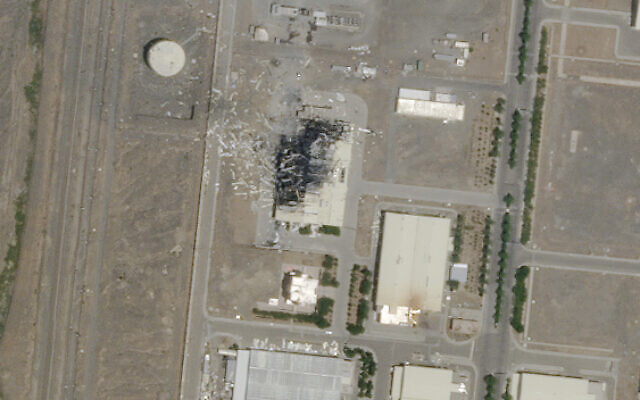 The aftermath of an explosion and a fire at an advanced centrifuge assembly plant at Iran’s Natanz nuclear site, July 5, 2020. (Planet Labs Inc. via AP)
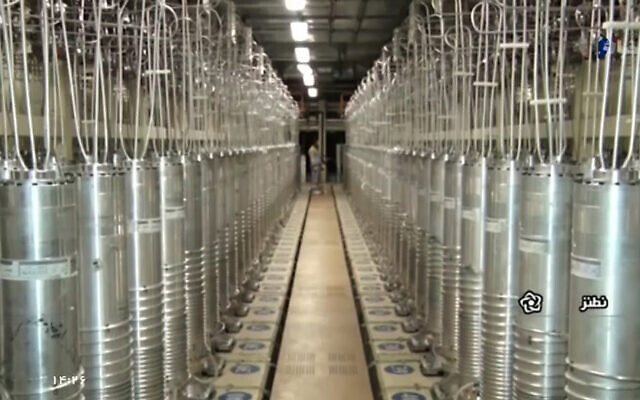 In this image, made from an April 17, 2021 video released by the state-run TV station Islamic Republic Iran Broadcasting, various centrifuge machines line a hall at the Natanz Uranium Enrichment Facility. (IRIB via AP)
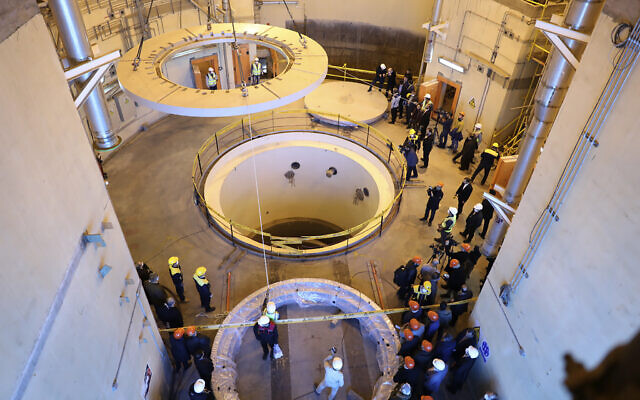 Technicians work at the Arak heavy water reactor’s secondary circuit, as officials and media visit the site, near Arak, 150 miles (250 kilometers) southwest of the capital Tehran, Iran, Monday, Dec. 23, 2019. (Atomic Energy Organization of Iran via AP)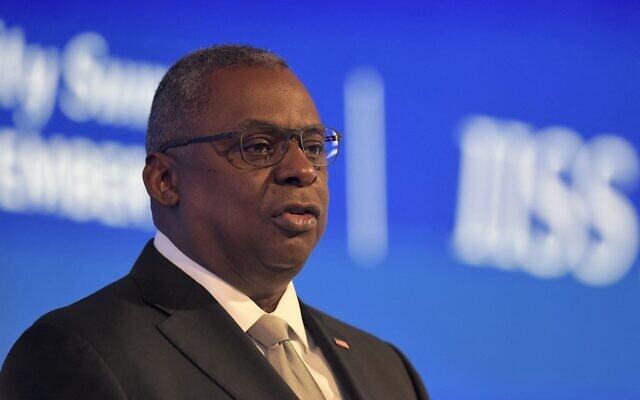
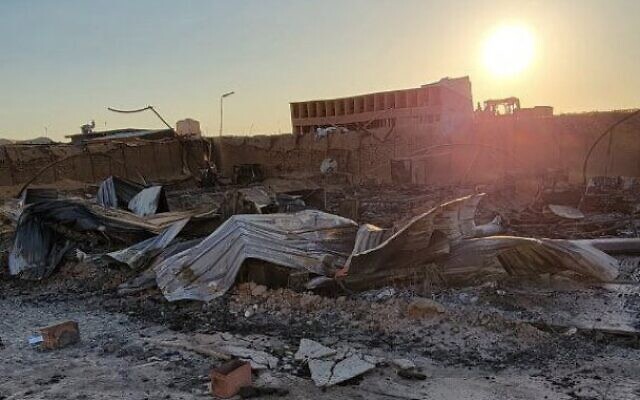 The damaged al-Tanf base in southern Syria is seen a day after it was apparently struck by Iranian drones, on October 20, 2021. (Courtesy, via Aurora Intel)
 Illustrative: Tribesmen loyal to Houthi rebels raise their weapons during a gathering against the agreement to establish diplomatic relations between Israel and the United Arab Emirates in Sanaa, Yemen, on August 22, 2020. (AP Photo/Hani Mohammed)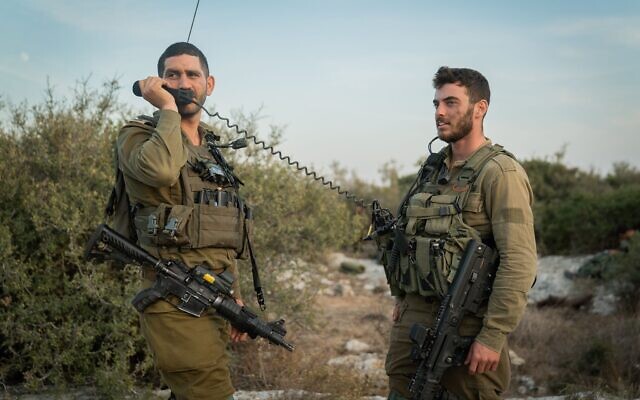
 An Israeli soldier launches a drone during an exercise in northern Israel, in November 2021. (Israel Defense Forces)
 Shiite fighters from Hezbollah and Amal terror movements take aim with (left to right) a Kalashnikov assault rifle and a rocket-propelled grenade launcher amidst clashes in the area of Tayouneh, in the southern suburb of the capital Beirut, on October 14, 2021 (Ibrahim Amro/AFP)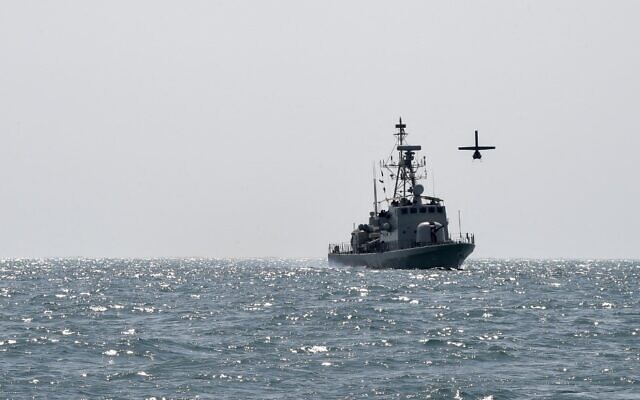
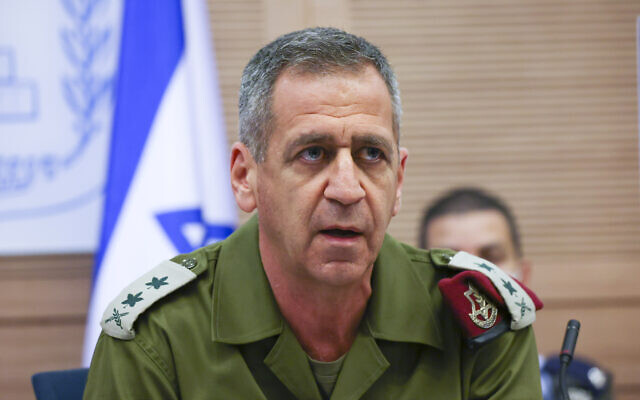 IDF Chief of Staff Aviv Kohavi attends a Knesset Foreign Affairs and Defense Committee meeting on November 9, 2021. (Yonatan Sindel/Flash90)





 anneinpt
 artaxes
 danmillerinpanama
 davidking1530
 Peter Hofman
 Joseph Wouk
 Peter
Peter Louisiana Steve
 WarSclerotic


Recent Comments