Author Archive
FULL: Trump’s D-Day 75th Anniversary Speech
June 6, 2019Who’s afraid of the Gaza Strip?
May 28, 2019Opinion: Israel has been lurching from round of violence to round of violence with Hamas and the other Palestinian terror groups in the coastal enclave and wasting the goodwill of an international community that for once is firmly behind it
Ron Prosor |Published: 05.28.19 , 15:49
https://www.ynetnews.com/articles/0,7340,L-5516790,00.html
What will the world say? For years this has been the de facto excuse of the Israeli government when it is accused of not really trying to defeat the terrorist organizations in Gaza. But why?
It is not the international community that is stopping Israel from hitting these terror groups hard. After a year of battles of attrition against Hamas and Islamic Jihad, one could easily say that if and when Israel decides to defeat these organizations, there will not exactly be a deafening chorus of condemnation from the international stage – even by the Arab states.

Rocket launches from Gaza towards Israel (Photo: Reuters)
Towards the end of the last deadly round of violence earlier this month, which claimed the lives of four Israelis, condemnation of the massive rocket barrage launched from Gaza into Israel could be heard from several members of the international community.
One might expect such messages of support from Israel’s friends in Washington, Warsaw and Prague, and indeed they came. But condemnation also came from Paris, Oslo, and even from the European Union’s foreign minister, Federica Mogherini, who could never be accused of being a massive Zionist.
Without condemning the “violence on both sides,” without any attempt to create a false symmetry and without the whitewashed statements we became so used to in the past, Europe stood unequivocally alongside Israel and against Hamas.
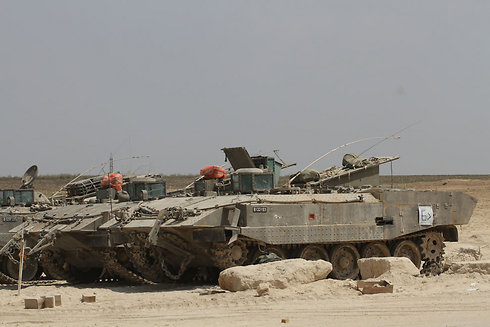
IDF troops on the Gaza border during the 2014 war (Photo: Ido Erez)
But the Israeli political echelon chooses to shut its ears and its eyes to the declarations of support and the green light to act issued by the international community.
In fact, Israel has chosen to ignore this state of affairs for the past five years, since the end of Operation Protective Edge in 2014.
During those 50 days of fighting in Gaza, Israel did not come under any real pressure from the rest of the world. Intensive and efficient diplomacy meant that the IDF had breathing room of the kind it had not experienced in many years.
But Jerusalem and the military brass did not successfully exploit this, and instead of making real diplomatic gains, were content to return to the same understandings reached two years earlier after Operation Pillar of Defense.
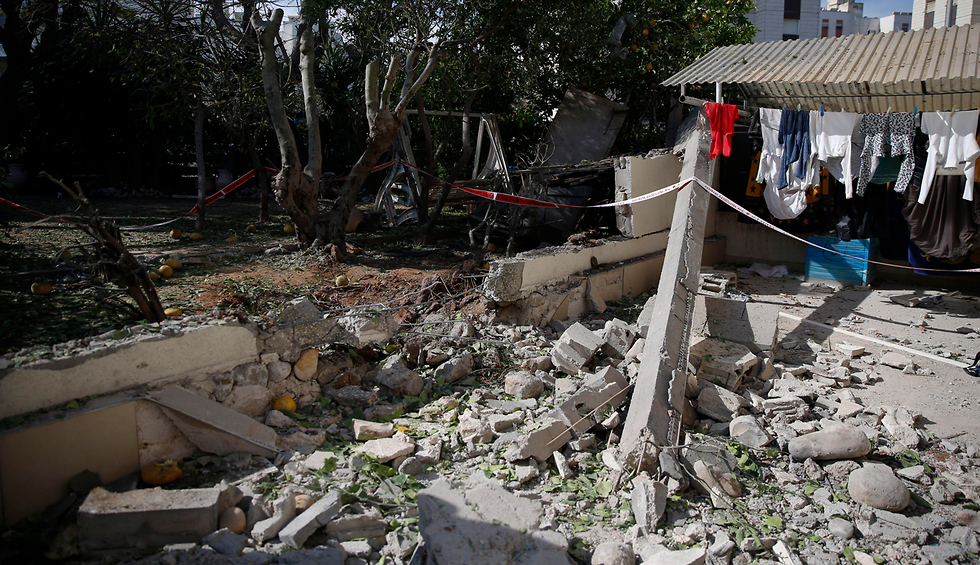
A home in Ashkelon damaged in a Gaza rocket strike (Photo: AP)
It would be an exaggeration to say that the world is letting the IDF “win,” but the Israeli government is not really doing this either.
Israel of 2019 has cast aside the country’s fundamental security concept, which always rested on the three legs of deterrence, vigilance and decisiveness.
The first leg was thoroughly eroded, the second weakened and the third is no longer part of the equation. Israel does not aspire to any form of decision-making and prefers to operate from one round of violence to the next.A decision does not have to be military in nature, it can also made on the diplomatic level. But in order to make a decision, one must have targets and objectives.
Hamas has been doing this successfully for more than a year – on its watch, funds have been transferred from Qatar to the Gaza Strip, the Gaza fishing zone was expanded, additional raw materials were allowed into the Gaza Strip, the electricity supply expanded, and more.
Israel, on the other hand, is motivated by a desire to achieve certain goals but rather out of fear. It is fearful of setting diplomatic targets and of a prolonged confrontation.
The political echelon is afraid to set objectives for one simple reason: if you do not set objectives, you cannot fail to achieve them.
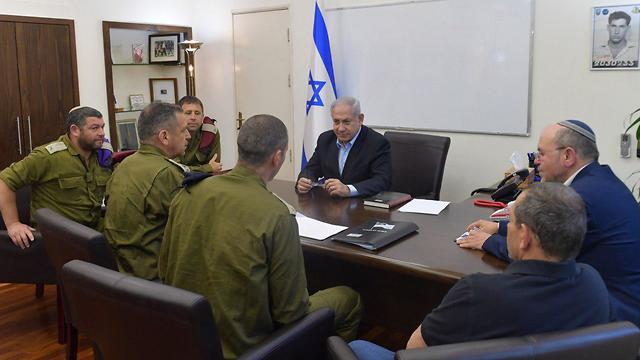
Benjamin Netanyahu and his generals during the fighting with Gaza earlier this month (Photo: GPO)
The images published of the prime minister at situation assessments during the last few rounds of fighting with Gaza do not show a single other civilian official. And when the only voices in the room are those of the security forces, the decision-makers are working with a partial toolbox and from the outset are solely bound to a military option, which ultimately means going down the familiar path that leads to nowhere.It would not do anyone any harm to recall the famous words of U.S. President Franklin Roosevelt, who told his people that, “the only thing we have to fear is fear itself.”
Ron Prosor, is Israel’s former permanent representative to the United Nations and former ambassador to the Court of St. James’s. He is currently the Abba Eban Chair of International Diplomacy at the Interdisciplinary Center Herzliya (IDC).
Peace and Annexation are not Mutually Exclusive
May 27, 2019President Trump appears to recognize that the conflict is not about specific borders, but about the Arabs’ total opposition to Israel’s existence. Israel could be on its way to a full annexation of Judea and Samaria.
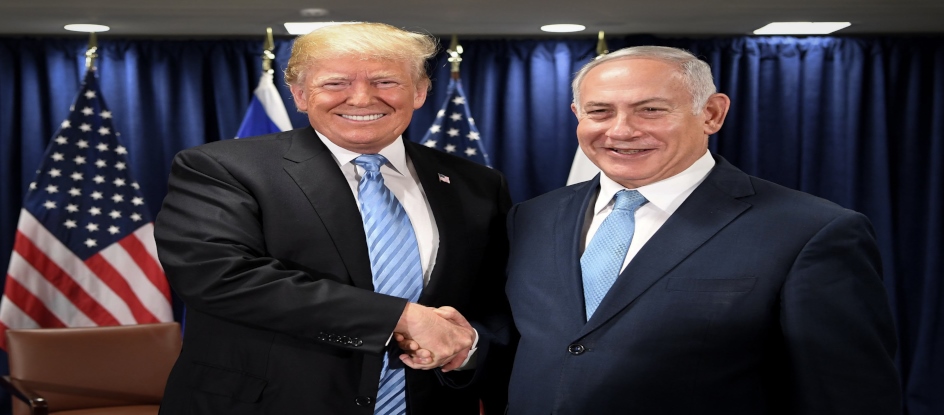
Shortly before the Israeli elections, Prime Minister Benjamin Netanyahu vowed to extend Israeli sovereignty to all Israeli settlements in Judea and Samaria: “I am going to apply Israeli sovereignty, but I don’t distinguish between settlement blocs and isolated settlements. From my perspective, each of those settlement points is Israeli. We have responsibility [for them] as the government of Israel. I don’t uproot any, and I won’t transfer them to the sovereignty of the Palestinians. I take care of them all,” he said.
Netanyahu also told Trump regarding the peace plan that “… there can’t be the removal of even one settlement, and [that Israel insists on] our continued control of all the territory to the west of the Jordan”.
Netanyahu’s pledge caused a meltdown among certain American Jewish groups, nine of whom wrote a letter to Trump, pleading with him to stop Netanyahu from fulfilling his pledge of annexation.
However, US Secretary of State Mike Pompeo was recently asked whether he thought that Netanyahu’s pledge of annexation would hurt Trump’s peace plan and he said that he did not think so. “I think that the vision that we’ll lay out is going to represent a significant change from the model that’s been used,” said Pompeo. Already in late March, US Ambassador to Israel David Friedman said about the current administration’s concern for Israeli security, “How can we kick the can down the road and leave this to our successors? … Can we leave this to an administration that may not understand the existential risk to Israel if Judea and Samaria are overcome by terrorism in the manner that befell the Gaza Strip after the IDF withdrew from this territory? Can we leave this to an administration that may not understand the need for Israel to maintain overriding security control of Judea and Samaria and a permanent defense position in the Jordan valley?” Pompeo’s indication that there is no contradiction between a potential Israeli annexation of Jewish communities beyond the green line and Trump’s peace plan represents a groundbreaking paradigm shift in US-Israeli relations. For decades, the international community, including the US, as well as the left in Israel and abroad, insisted that a Jewish presence in Judea and Samaria undermines peace. For the first time ever, a US president appears to think differently. This is a fact that could shift decades of perceptions on the topic.
“Pompeo’s remarks are the latest signal that the Trump peace plan, if it’s ever presented, will bear no resemblance to previous models of a two-state solution. Instead, the plan seems designed to perpetuate isolated areas of limited Palestinian autonomy under overall Israeli control, including annexed settlements,” said Dan Shapiro, former US ambassador to Israel and currently a fellow at Tel Aviv University’s Institute for National Security Studies.
Shapiro makes it sound as if that is a bad thing. It is not:
Most main Israeli settlement blocs are adjacent to the narrow 1949 ceasefire lines and are important components of Israel’s security. A complete Israeli withdrawal to the 1949 ceasefire lines (pre-1967 green line) in the context of a two-state solution would greatly expose Jerusalem, metropolitan Tel Aviv and Ben Gurion airport to terrorists taking advantage of the commanding heights of Judea and Samaria. Critics demand that Israel exposes itself to security threats that no other country in the world would accept.
Unlike its predecessors, the Trump administration appears to recognize that the conflict is not about specific borders, but about the Arabs’ total opposition to Israel’s existence within any boundaries. Unlike the rest of the international community, the Trump administration seems to understand that the two-state solution has failed because the Palestinian Authority (PA) is not prepared to accept Israel’s existence and shoulder the responsibilities of statehood. The two-state mantra itself has become an obstacle to peace and a political weapon to put constant pressure on Israel. A fully independent PA state would become a terrorist state threatening Israel’s security. In 2018, Netanyahu said that the PA Arabs should have all the powers to govern themselves but no power to threaten Israel. Instead of labels, Netanyahu stressed the need for content with solutions that do not undermine Israel’s security.
What many international observers deliberately ignore is that full national independence is not an automatic right for anyone, as evidenced by the experience of stateless peoples such as the Kurds, for example. The same international community that rejects the establishment of the world’s first Kurdish state hypocritically demands the establishment of a 22nd Arab state.
The PA Arabs have rejected statehood more than any other group in the world. By consistently prioritizing Israel’s destruction over its own independence, the PA has effectively disqualified itself as a candidate for full statehood. It can only be hoped that the US is only the first of many to realize this fact.
________________
Judith Bergman is a columnist and political analyst and a fellow with the Gatestone Institute.
Exclusive — Pompeo: $8B Arms Sales to Middle East Allies ‘Appropriate and Necessary’
May 25, 2019By KRISTINA WONG24 May 2019
Secretary of State Michael Pompeo said Friday in an exclusive interview with Breitbart News that a newly-announced $8 billion in arms sales to Middle East allies would help protect their and America’s interests against increased Iranian threats in the region.
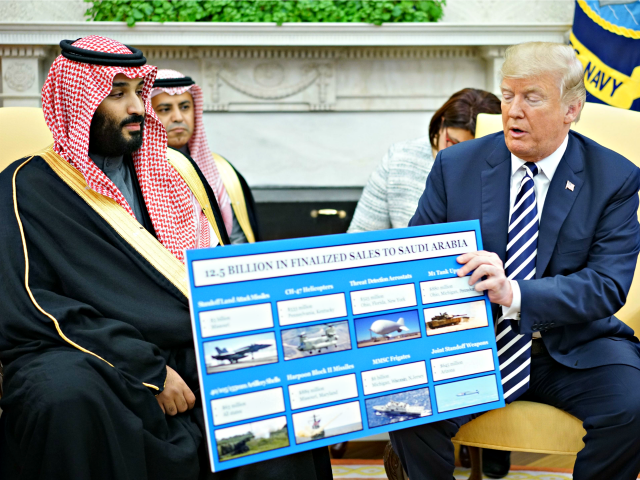
“It is significant that we are not only demonstrating our will to continue to help them support and defend their countries and deter these threats, but the challenge from the Islamic Republic of Iran that we face,” Pompeo said in a phone interview.
“We’ve seen the heightened tensions over the last handful of weeks, so our expectation is that the risks will continue to stay at a heightened level, so it is appropriate and necessary to get these arms sales moving forward,” he said.
The State Department on Friday notified Congress of 22 pending arms sales to the United Arab Emirates, Jordan, and Saudi Arabia worth $8 billion total. The equipment includes aircraft support maintenance; intelligence, surveillance, and reconnaissance (ISR); munitions; and other equipment.
Pompeo said that the first sales will begin to be delivered within the next few weeks, but others could take some months. “It’s about prioritization, delivery schedule, availability,” he said.
“One of the reasons we need to start today…is some of these things do take time,” he added. “You gotta take that first step, or you can’t get to where you hopefully need to be, and that’s what’s today’s declaration is about.”
The arms sales were previously blocked by members of Congress more than a year ago. While most foreign arms sales are approved by Congress, the State Department in this case is drawing upon an authority under Section 36 of the Arms Export Control Act that allows the administration to undertake arms sales in an emergency.
The State Department has determined the increased threat-stream from Iran constitutes an emergency.
On May 3, U.S. Central Command commander Marine Gen. Kenneth McKenzie received intelligence showing there were increased threats from Iran to U.S. forces and assets in the Middle East. On May 5, the Pentagon approved his request to send an aircraft carrier, a bomber squadron, and a Patriot anti-missile battery to the region.
Shortly thereafter, there were attacks on four oil tankers in the Persian Gulf and an attack on a Saudi pipeline that the Pentagon later attributed to Iran. On Sunday, a rocket landed less than a mile from the U.S. Embassy in Iraq that was also attributed to Iranian or Iranian-backed forces in the country. On Friday, the Pentagon announced it was extending the mission of 600 troops that deployed with the battery, and was sending 900 additional troops for a total of 1,500.
The attacks and threats have come as the U.S. has ramped up its economic pressure on Iran, to force it back to the negotiating table over its nuclear program, which the West suspects is a weapons program. In April, the administration designation the Iranian Revolutionary Guard Corps as a terrorist organization, and announced it would end waivers for sanctions on the remaining countries buying oil from Iran.
Pompeo said the attacks were designed to increase the risk to shippers so that crude oil prices will rise and the Islamic Republican of Iran can expand its capacity to inflict terror around the world. “The attempts that you’ve seen over the past week, the attacks on the four commercial tankers, the attacks on the east-west pipeline in Saudi Arabia aim squarely at the heart of Western democratic economies,” he said.
The arms sales would help partners ensure that important sea lanes remain open, and that crude oil is delivered at prices that keep American businesses growing and successful, he said.
“We’ve had some success at disrupting that so far, but we must be ever-vigilant. We need to ensure that we protect our interests, that we do our best to help our allies protect their own commercial vessels, their own territory, and this set of weapons sales is a component of that,” he said.
Pompeo pushed back against criticism from members of Congress that the administration was bypassing them.
“This isn’t going around Congress. The authority that the president used today was granted to us by Congress. It passed the law, it would have been signed by a previous president and provided us specific authority to conduct arms sales in precisely the manner in which we’re doing, so it’s not a bypass of Congress. Indeed we are expressly following the will of Congress in doing this,” he said.
He also addressed criticism over selling arms to Saudi Arabia after the high-profile murder of columnist Jamal Khashoggi in the Saudi embassy in Turkey, calling the murder “horrific” but saying, “this is the right thing to do.”
“Look, we are here supporting the Kingdom of Saudi Arabia, the United Arab Emirates, and Jordan to protect their interests and also it protects ours, American interests. This is the right thing to do. And those are important strategic partners to the United States,” he said.
Pompeo also noted that if the U.S. did not sell Saudi Arabia and other regional allies the weapons, they would buy them from the Russians or the Chinese, who have very different interests from the U.S. He argued that buying the systems from the U.S. also decreases the risks of misuse of these systems. The sales will also create 40,000 jobs in the U.S., he said.
In response to the administration’s pressure campaign, former Obama officials and Democrats have launched their own campaign to save the Iran nuclear deal, which the U.S. pulled out of last year. In a series of op-eds and statements in recent weeks, they have accused the Trump administration of wanting war with Iran.
Pompeo called suggestions the administration wants war with Iran “patently false.”
“I’ve said it, the president’s said it, we do not war with the Islamic Republican of Iran,” he said. However, he said, Iran must stop its dangerous behavior.
“For 40 years, the Iranians have attacked and killed Americans. They’ve made clear their intentions to continue to do so. They continue to chant ‘death to America.’ They continue to talk about wiping Israel from the face of the earth. They’re the most antisemitic country by policy in the world, and so that’s a real threat,” he said.
“We don’t war with them. What we want them to do is to cease their nuclear program, we want them to step away from their proxy campaign attempting to essentially control five capitals in the Middle East,” he continued.
“We want them to cease continuing to develop their missile program that could launch nuclear missile weapons across the world,” he said. “The UN Security Council said the same thing, and UN Security Council [Resolution] 2231. That’s what we’re looking for, and we’re using peaceful means — economic and diplomatic efforts to achieve those ends.”
He blasted the Obama administration’s approach to dealing with Iran, and said President Trump has pursued a different path.
“The Obama administration for the last eight years had appeased Iran and allowed them to grow their terror regime, enhance the capacity of their proxies threatening not only the United States and Israel, but the Gulf States as well,” he said.
“President Trump has taken a very different approach and done our best to deny the Iranians the capacity to conduct their terror campaigns,” he said.
“These arms sales are a piece of our complete effort, of the holistic package of efforts we’re undertaking to deter Iran and to deny them the resources they need to inflict these terror efforts all around the world,” he said.
Greenblatt’s Trojan Horse
May 24, 2019By David Israel – 19 Iyyar 5779 – May 24, 2019

Some of my reports about President Donald Trump’s peace envoy to the Middle East, Jason Greenblatt, have been very critical. But despite those reports, I believe Greenblatt is far from being an enemy of the settlement enterprise, or of Israel.
I also happen to believe that Jason Greenblatt represents the first American administration which actually understands the Arabs, and has come up with a viable plan to rein them in for the sake of their own future and Israel’s.
I believe that I understand Greenblatt’s plan and that it could work. I’m merely committed to pointing out the inevitable and sometimes terrifying risks to Israel and to the Jewish settlements in the liberated territories, which is the only thing I truly care about.
I’ll explain.
In a recent lecture at Tel Aviv University about the lessons of Oslo, Yaakov Amidror, a former major-general and National Security Advisor to several Israeli prime ministers, commented on the common Israeli complaint that the PLO never produced their own David Ben-Gurion, and therefore can’t make Ben-Gurion-type decisions, by which they refer to Israel’s political founder’s willingness to settle for less in order to gain more in the future.
According to Amidror, PLO chairman Yasser Arafat was every bit as able to make Ben-Gurion decisions as Ben-Gurion himself had been, but we can’t appreciate it because we don’t understand Arafat’s plans.
In 1992, Arafat was in a much worse position than Ben-Gurion had been in 1947, when he accepted the UN partition plan that awarded Israel less than half the territory of Mandatory Palestine. Ben-Gurion was already there, on the land – Arafat desperately needed to be allowed in.
And so, to Arafat, Amidror argued, embracing the Oslo agreements was his path to the promised land.
Arafat knew that everything he said about doves and olive branches and good neighbors was reversible, but his capturing of Judea, Samaria and Gaza could never be reversed.
Arafat in the Oslo story was the Trojan horse, while the entire Israeli political and military establishment played the role of the naïve Trojans.
The Trump administration entered the Middle East after six US presidents had messed it up – starting with Jimmy Carter, who deposed the Shah and forced Israel to give up a lot of land and resources in exchange for a piece of paper; Reagen’s bizarre military adventure in Lebanon that cost needless American lives; Bush I’s betrayal of his most loyal agent in the region, Saddam Hussein, to appease the Saudis; Clinton’s continued subduing of Hussein while ignoring the latter’s value in deterring Iran; Bush II’s disastrous, multi-trillion dollar invasion which turned Iraq into a loyal Shiite ally of the Iranian mullahs; and Obama’s catastrophic meddling in the Arab Spring fiasco.
Trump is the first US president who reads the Middle East correctly, possibly because he has the annoying habit of ignoring his military advisors. He has certainly improved security in the Middle East by choking the ayatollah’s regime in Iran, and by blocking the Syrian and Turkish territory to the rich Iraqi oil fields.
In the stalemated peace negotiations between the PLO and Israel, Trump, his envoy Greenblatt, and his Ambassador to Jerusalem David Friedman, understood that an even-handed approach would not do, because the problem was not Israel. Israeli leaders have been near-suicidal in their fanatical zealotry for peace in our times with their Arab neighbors. The problem was and still is that even the most generous Israel offer does not meet the most minimalist PLO demands.
Countless times, we’ve heard from Arab intellectuals, military men, politicians and journalists that the problem between us and them is not the Naksa – their name for their 1967 defeat, but the Nakba – the fact that a Jewish state was established in 1948. There is no compromising this – all the territory occupied by Jews in 1948 must be returned, and all the Arabs who fled from the land, along with their next generations for eternity, must come back.
President Trump and Jason Greenblatt are merely the first American officials to pay attention, and to realize we’ve all been dealing with the wrong partner in these tortured peace negotiations.
Which is why, from the start, the Trump administration’s approach has been to humiliate the PLO, trivialize it, cut back its funds, deplete UNRWA, shut down the PLO mission in DC, move the embassy to Jerusalem – showing the world and – much more importantly – the Arabs, that the PLO does not count.
And the PLO has reacted as expected, screaming its head off, running to the EU leadership (which could be replaced this week or next), and to Russia (which maintains a healthy diplomatic relationship with both Trump and Netanyahu).
Now, by boycotting the Bahrain conference, the PLO has written itself out of what could emerge as the most important peace conference of the past 50 years in the region. Unlike previous conferences, this one will not be a stage for politicians to placate the media with hollow proclamations. Instead they’ll be discussing money and the good things money can buy for the Arabs in Judea and Samaria, perhaps Gaza as well: a new infrastructure, power, water, housing, transportation, health, education, business, industry, agriculture.
The PLO insists that before any of these issues are settled, there are more urgent ones: a Palestinian state with Jerusalem as its capital, a total Israeli withdrawal from Judea and Samaria, a return of some 5 million children of refugees to Haifa, Acre, Jaffa, Lod, and Ramla. Issues the PLO knows full well are designed to stick the “peace process” where it is – providing the PLO with a reason to exist.
Should Jason Greenblatt succeed, his deal would launch a speedy emergence of a robust Arab middle class in Judea and Samaria, which would, in the near future, stand up to its oppressors in Ramallah. With sufficient encouragement from the US, Saudi Arabia and the Gulf states, and with Israeli cooperation which is already setting facts on the ground, the PLO would be relegated to the trash heaps of history.
There is no need for a traditional, US-brokered peace deal, because by definition a deal involving the PLO is destined to fail.
I suspect that all the “deal of the century” talk, with its lingering postponements, is so much camouflage. The real Trump-Greenblatt deal is intended to fix the Arabs’ abysmal economic condition, the result of 25 years of a PLO failed state.
I could be wrong—in which case there are several hats in my possession I would choose from and eat.
But I have faith that Jason Greenblatt is not a political hack. He’s a real-estate lawyer and a businessman. He should have the skill-set needed to tell what can and can’t be achieved. He would not talk his biggest client – Donald Trump – into signing his name to a deal that has no future.
Frankly, I hope Jason Greenblatt represents the Ben-Gurion spirit of the Trump administration – which requires a good measure of humility but also an almost inhuman stubbornness.
I actually think Greenblatt is a new Trojan horse, preferring to help reshape Arab society in the territories in an almost clandestine manner, for the sake of a peaceful outcome down the road. He could succeed.
Our job as a Jewish newspaper is to make sure our brothers and sisters in Israel and in the settlements (also in Israel) don’t find themselves under the wrong side of the horse.
ISRAELI NAVY INAUGURATES FIRST SAAR 6 CORVETTE
May 24, 2019The construction of the four Sa’ar 6 warships was agreed to in a 430 million euro deal between Israel and the German company ThyssenKrupp in 2015.
BY ANNA AHRONHEIM MAY 24, 2019 13:13

timesofisrael.com

The INS Magen, the Navy’s first Sa’ar 6 corvette, was officially named at a ceremony held at the Kiel shipyards in Germany.
The ceremony was headed by Navy Commander Maj.-Gen. Eli Sharvit, Defense Ministry Head of Procurement Avi Dadon, Navy Material Command head Yossi Ashkenazi, project head Brig.-Gen. Erez, as well as the Commander of the INS Magen Lt.-Col Baruch. Commanders and soldiers who took part in the project and shipyard employees also attended the ceremony.The ceremony included the customary breaking a bottle of champagne on the ship’s bow by the navy commander’s wife, Etti Sharvit.
The construction of the four Sa’ar 6 warships was agreed to in a 430 million euro deal between Israel and the German company ThyssenKrupp in 2015.
The INS Magen is expected to arrive in the spring of 2020.
The new Sa’ar 6 are set to defend Israel’s strategic maritime assets such as the country’s offshore natural gas reserves, as well as maintaining Israel’s sovereignty in the near and far seas, destroying the enemy’s war fleets and significantly contributing to complex and secret missions in the war-between-war campaign.
“The Sa’ar 6 corvettes, including the INS Magen, will significantly increase the strength of Israel’s missile boat flotilla, and they will serve as the ‘tip of the spear’ in protecting strategic Israeli interests,” read a statement by the IDF Spokesperson’s Unit.
The Sa’ar 6 will have a maximum speed of 26 knots and a crew of 70 sailors, a range of 2500 miles, and advanced capabilities able to deal with a wide range of threats. They will be fitted with two Naval Iron Dome short range defense missile launchers with 20 Tamir missile for each launcher and Barak-8 long-range surface-to-air missile naval defense system.
They will also have 16 anti-ship missiles, one 76mm Oto Melara Super Rapid main gun, two Typhoon 25mm remote weapon stations and two 324mm torpedo launchers for MK54 Lightweight Torpedoes.
“Today, when we give the missile corvette a Hebrew name – the INS Magen – we add another significant brick to our country’s protective wall. Building watercraft is like going on a long, many-year trip,’ Sharvit said at the ceremony. “One step after another we walk a complex path which presents many challenges and requires close cooperation with many others along the way. I would like to thank all our partners in this journey, both in the Navy and outside of it.”
“Just one year ago we stood here at a ceremony marking cutting the first metal, and here, a year later, we are standing in awe of the first of four ships, the INS Magen,” said Avi Dadon, the head of the Defense Ministry’s procurement department. “This unusual achievement is thanks to the hard work of Navy commanders and those in the Defense Ministry. Together with our partners in the German shipyard, you turned a dream into reality. This will dramatically influence the amount of power the Navy has.”
Thyssenkrupp CEO Rolf Wirtz said, “We are very proud to contribute to Israel’s security. The Sa’ar 6 ships are the most advanced and largest in the Israeli Navy. The Israeli industry will put together the final systems, and these ships will greatly aid the country’s economy.”
Israel approves armored vehicles for Palestinian Authority
May 21, 2019Israel approves entry of ten armored vehicles donated by EU on background of crisis between Israel and PA over tax revenues.
Mordechai Sones, 21/05/19 18:26
http://www.israelnationalnews.com/News/News.aspx/263491

The Palestinian Authority under Mahmoud Abbas has received armored vehicles from the European Union according to YNet. Israel approved the vehicle’s introduction after years of postponements, on the background of the crisis surrounding offsetting tax money to terrorists’ families.
The armored vehicles were brought into Samaria via Jordan with Israel’s approval.
In recent years the Palestinian Authority has repeatedly demanded that Israel approve entry of armored vehicles, but their request was allegedly rejected time after time.
The last time PA armored vehicles aroused controversy was in 2000 when a paper published by the Ariel Center for Policy Research identified the PA armored threat to Jewish communities in Judea and Samaria, saying “Because the IDF limits yishuv self defense to small arms, the growing armor vehicle capability of the PA would render the assault troops it carries invulnerable to yishuv defenders. The IDF gate guards do not have anything to stop these vehicles. The standard sliding gates for all yishuvim would buckle under the impact of such armored vehicles, and many yishuvim lack even this ‘obstacle’ – such that the only thing separating between the attacker and the yishuv is a moving aluminum arm painted red and white.”
The report went on to say that “The PA armored vehicle force is not capable of challenging the IDF, but would be unstoppable in a first strike on yishuvim. Therefore, it is reasonable to assume that that is their purpose.
“Although it is possible to gain sudden entry into yishuvim by using commandos or even less prepared troops – as the examples of Ariel and Ofra show – armored vehicles provide a rapid capability to do so that ground troops cannot match.”
At that time, the IDF justification for the PA need for armored vehicles according to Oslo was that Arafat needed them to protect his government from Arab extremist elements, while at the same time trying to deny their existence.
The current shipment of armored vehicles arrived at a time of crisis between Jerusalem and Ramallah around the law to offset terrorist salaries and the Palestinian Authority’s stubborn refusal to accept tax revenues from Israel after it offset the Palestinian Authority’s payment to the families of terrorists.
For more than three months, tens of thousands of members of the PA organizations have received half of their salaries because of the crisis surrounding the PA-Israel offsetting law. In the corridors of the security apparatuses, there was harsh criticism of Israel’s policy, as the PA continues security coordination with the Israeli defense establishment while Israel conducts indirect negotiations with Hamas, allowing tens of millions of dollars from Qatar to be disbursed.
YNet conjectures that the approval of the move during this period is intended to soften the criticism and frustration in the Palestinian Authority and to maintain close security coordination.
About three months ago, Palestinian Authority Chairman Mahmoud Abbas announced that Ramallah would waive all the tax revenues it receives every month from Israel – about NIS 500 million – in response to the Israeli decision to offset the salaries of the terrorists.
According to the cabinet decision, Israel offsets the taxes it transfers to the Palestinian Authority on payments linked to terrorism. Prime Minister and Defense Minister Binyamin Netanyahu instructed the security forces to intensify the examination of payments to terrorists and their families and to update the frozen amount accordingly.
In 2000, the IDF repeatedly denied Arab armored vehicles in Judea and Samaria, apparently
intending to convince Jewish residents there that Arab armor would only threaten to concentrate on communities in Gaza. But evidence of attack preparations against yishuvim of Judea and Samaria continued to grow, as reports of PA armor in Ramallah and Shechem began to gain credibility despite IDF denials.
The lunatics run the show
May 21, 2019Women’s movement: Put ‘Mother and Father’ back on IDF forms
Shovrot Shivyon women’s movement slams surrender to LGBT pressure, says there was ‘no public discussion,’ conservatives are ‘silenced.’
Arutz Sheva Staff, 21/05/19 15:02
http://www.israelnationalnews.com/News/News.aspx/263471

The Shovrot Shivyon (Breaking Equality) women’s movement on Tuesday called on the IDF “to return ‘Father’ and ‘Mother’ to the induction forms and immediately remove the categories of ‘Parent 1’ and ‘Parent 2,’ recently instituted by the IDF.”
The new categories were instituted in response to continuous pressure from LGBT groups and in order to avoid embarrassment during the recruitment process.
According to Shovrot Shivyon, “Identity politics have penetrated the IDF. The minority is forcing its opinion on the majority who believe in the values of the natural family. The IDF Spokesperson stated that the goal was to prevent embarrassment during induction stages. The silent and conservative majority was the one who felt embarrassed by such a form. Progressive values are assimilated by left-extreme groups without any public discussion, with the other side being silenced and modernized.”
“As women and mothers, we call on the army to return to a consensus and avoid political disagreements that shape society at the expense of our children.”
Earlier on Tuesday, an IDF spokesperson explained: “The IDF updates and changes the questionnaires from time to time in accordance with the comments received and the needs that arise during the screening process.”
HAMAS AND ISRAEL DENY REPORT OF SIX MONTH TRUCE
May 21, 2019Palestinian reporter calls it ‘fake news’; Otzma, ‘humiliating treaty of surrender.’
BY HAGAY HACOHEN, TOVAH LAZAROFF MAY 20, 2019 23:43
https://www.jpost.com/Israel-News/Hamas-Israel-agree-to-a-six-months-cease-fire-agreement-590216
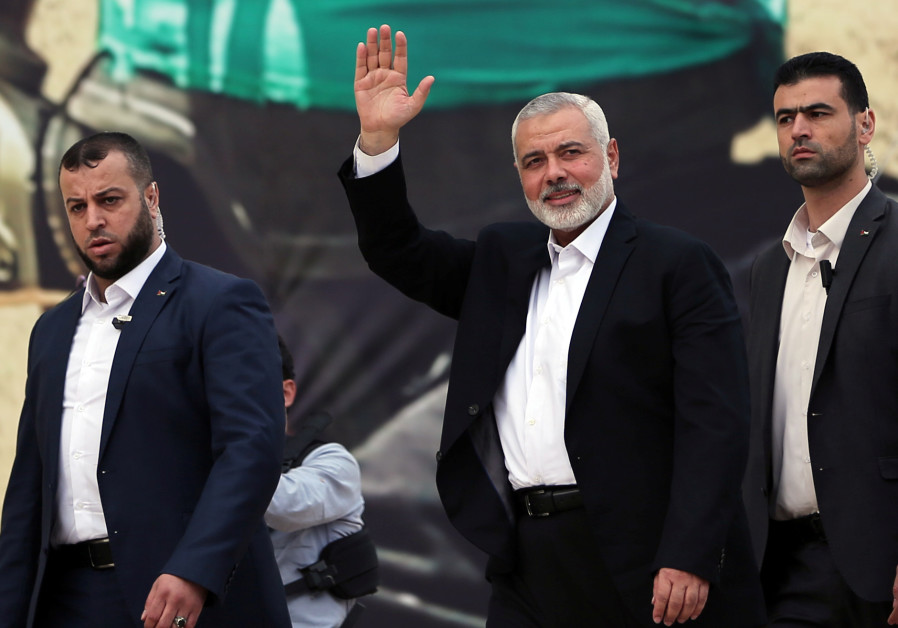
Israel and Hamas have denied reports that a Gaza ceasefire understanding had been reached that would ensure six-months of calm.
Channel 12 news on Monday night reported that a truce had been reached, sparking a chain of Israeli political reactions and diplomatic denials.According to the report, Hamas agreed to end clashes with IDF forces along the Gaza border, with Palestinian rioters keeping to a 300 meter distance from the border.
Hamas also agreed to end its night raids against IDF units along Israel’s southern border. During those six months, no new flotillas would be launched in an attempt to break Israel’s maritime blockade of Gaza, Channel 12 reported.
Israel agreed to widen the Gaza fishing zone to 15 nautical miles and to ensure the uninterrupted transfer of medicines and other forms of civic aid to Gaza residents, the report said.
Talks would be held on the Gaza crossings, electricity, health services and financial assistance. In addition, Israel will promote UN funded projects.
If calm is held for six month, the report stated, then work could proceed on a more permanent ceasefire that would include the return of the bodies of two IDF soldiers and the release of two Israeli civilians held in Gaza.
All efforts toward either an informal or a formal ceasefire have been brokered by Egypt with the help of the United Nations. Nickolay Mladenov, the UN Special Coordinator to the Middle East Peace Process, had no comment on the report.
In the past, informal ceasefire understandings have rarely been publicly acknowledged and have been measured only by the absence of violence. Earlier this month, a severe outbreak of Israel-Hamas violence caused the death of four Israeli civilians and almost led to a full-on outbreak of war.
Palestinians and Israelis objected to the reports of an informal ceasefire.
The organizers of the weekly Palestinian Friday border protests pledged: “we will continue with the Friday marches until the siege is removed and the rights of our people restored.”
Representatives of the Eshkol Regional Council, in turn, said that from their perspective, a ceasefire includes a complete cessation of incendiary balloons, terror attacks on the security fence, and the sporadic fire to which they are subjected.
MK Amir Peretz from the Labor Party said that a deal with Hamas that does not include the return of the remains of IDF soldiers Oron Shaul and Hadar Goldin for burial in Israel, as well as living Israelis held captive by the terrorist group, is an ongoing assault on “IDF values and the alliance [the state has] with families.”
Goldin’s parents, Lea and Simcha, said that the “deal with Hamas is misleading the families, who have been waiting for almost five years for their sons to be returned from the battlefield.”
Palestinian reporter Iiad El-Kara suggested that the ceasefire is “fake news,” claiming that, “this is part of the conniving means used by Prime Minister Benjamin Netanyahu against Yisrael Beytenu leader Avigdor Liberman.”
Former Yesh Atid MK Haim Yalin said: “I don’t believe a single word of Hamas,” noting that, at this time, Israel has had 12 ceasefire understandings with Hamas and that Hamas broke all of them.
The far-right Otzma Yehudit Party issued a press release saying that this is a “humiliating treaty of surrender” and that “Hamas is dictating to the State of Israel what is on the agenda, and brings the Israeli government to its knees time and time again.”
MK Yoaz Hendel of Blue and White responded to the news, saying that in the Middle East, “agreements with terrorists are not worth the paper on which they are signed.”
Yasser Okby contributed to this report.
Israel and Hamas agree to six-month ceasefire
May 20, 2019Israel prepared to expand fishing zone, promote UN-initiated deal, transfer medicines and humanitarian aid, open negotiations.
Mordechai Sones, 20/05/19 20:27
http://www.israelnationalnews.com/News/News.aspx/263431

News 12 Defense and Security commentator Roni Daniel reports that two weeks after the end of the last round of fighting with Hamas, Israel and Hamas reached an agreement on a temporary cease-fire for six months, mediated by Egypt and with the help of a UN representative.
The mutual understandings agreed upon states the Hamas Islamic Movement agrees to a cease-fire and end to border hostilities, preserving a security zone 300 meters from the fence, cessation of night clashes, and cessation of flotillas to the coastal area.
For its part, Israel is prepared to expand the fishing zone to 15 miles, promote a UN-initiated deal, transfer medicines and humanitarian aid, and open negotiations on electricity, crossings, health, and finances.
All this is supposed to take place in six months. If the parties succeed in keeping the rules – Hamas demands rapid implementation – then they will enter the more problematic next stage – returning the IDF fighters who fell in Gaza whose bodies are held there, and the two citizens who are still being held there. The Egyptians were a significant factor in the agreement, and it is yet to be seen what will happen next year on the assumption that the parties will meet the conditions in return for quiet.




 anneinpt
 artaxes
 danmillerinpanama
 davidking1530
 Peter Hofman
 Joseph Wouk
 Peter
Peter Louisiana Steve
 WarSclerotic
Recent Comments