Author Archive

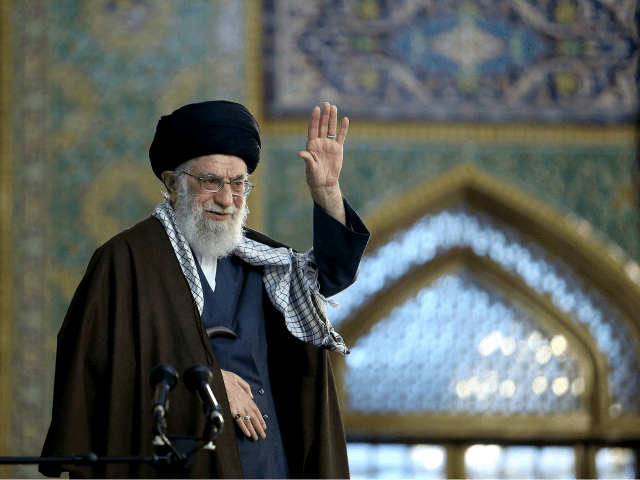
Iran’s Khamenei Celebrates Birthday By Calling for Destruction of Israel

July 18, 2018

17 Jul 2018

By Deborah Danan

https://www.breitbart.com/jerusalem/2018/07/17/khamenei-celebrates-birthday-by-calling-for-destruction-of-israel-trumps-vicious-satanic-peace-plan/

Office of the Iranian Supreme Leader via AP

TEL AVIV – Iran’s Supreme Leader Ayatollah Ali Khamenei celebrated his 79th birthday on Monday by calling for the destruction of Israel and slamming President Donald Trump’s as yet unveiled peace plan as a “satanic, vicious plot.”

His Twitter feed on Monday was overlaid with a festive display of multicolored balloons, somewhat incongruous with the deluge of hate messages underneath.

“Everyone should know that the satanic and vicious plot that the U.S. has for #Palestine — calling it the Deal of Century — will never happen,” he tweeted.

“The turbulent dream that Al-Quds [Jerusalem] would be given to the Zionists will never come true.”

He continued: “The Palestinian nation will stand against it and Muslim nations will back the Palestinian nation, never letting that happen.”

“By God’s grace, the Palestinian nation will certainly gain victory over the enemies and will witness the day when the fabricated Zionist regime will be eradicated,” he vowed.

Much of what he tweeted was paraphrased from a speech delivered at a meeting of Iran’s Hajj organization on Monday. Khamenei took the opportunity to blast Saudi Arabia, home to Mecca where the faithful make the Muslim pilgrimage.

“Regrettably, some Muslim governments, due to their lack of faith in the principle of Islam, never mind the Palestinian cause, have chosen to sacrifice themselves for the US,” the state-affiliated Mehr media outlet quoted him as saying. He continued by predicting that “this too will come to nothing and they will see the day when the roots of the fabricated Zionist regime will dry up.”

He added that Mecca’s holy sites “belong to all Muslims, not to the rulers of Saudi Arabia.”

“Today, the Muslim World needs unanimity. Division is forbidden, because the enemy is focused on the Islamic World,” Khamenei emphasized.

He said that in order to conduct a “true” hajj, Muslims must commit to a complete “disavowal of the infidels.”

Khamenei also called for a fresh investigation into a 2015 crush during the hajj that killed hundreds of pilgrims, blaming the tragedy on the Saudi authorities’ alleged indifference to the safety of the participants.

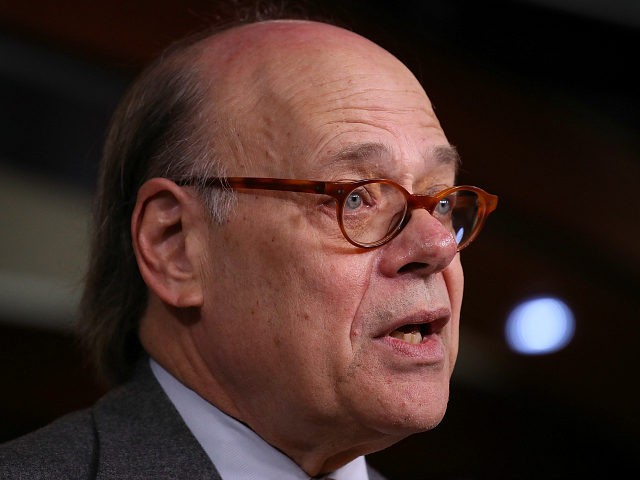
Rep. Steve Cohen Melts Down, Defends Tweet Calling for Military Coup

July 18, 2018
By Sean Moran

https://www.breitbart.com/big-government/2018/07/17/rep-steve-cohen-melts-down-defends-tweet-military-coup/

Win McNamee/Getty Images

Rep. Steve Cohen (D-TN) this week repeatedly defended his tweet that implied that America needed to have a military coup to remove President Donald Trump after his meeting with Russian President Vladimir Putin.

Trump held a summit with Putin on Monday, in which the 45th president declined to directly chastise Putin for allegedly trying to influence the 2016 presidential election, even when asked by an Associated Press (AP) reporter to do so. President Trump blamed the Russia investigation for some of the friction between the two countries.

In response to the summit, Rep. Cohen tweeted on Monday, “Where are our military folks? The Commander in Chief is in the hands of our enemy!”

Congressman Cohen then proceeded to tweet several times suggesting that he never implied that the military needs to intervene in light of the Trump-Putin summit.

The Tennessee Democrat complained that people on Twitter are jumping to conclusions over his vague tweet on Monday.

“Talk about jumping to conclusions without talking to source. No coup called for,” Cohen contended. “I seriously doubt anyone would use twitter to do .. one tweet if by land two if by sea…Wow.”

In another tweet, Cohen wrote, “Twitter is for tweets, not a coup.”

Now, in a tweet on Tuesday, Cohen said his inflammatory tweet was merely a call for “twitter comments from military.”

Cohen wrote:

So not true &so bad journalism,.You know I didn’t call for coup but sought twitter comments from military. Tweeted it 3 Times that not coup , very soon after false interpretation. Wouldn’t a reasonable person when such a tweet from a Congressman, call for clarification but NO.

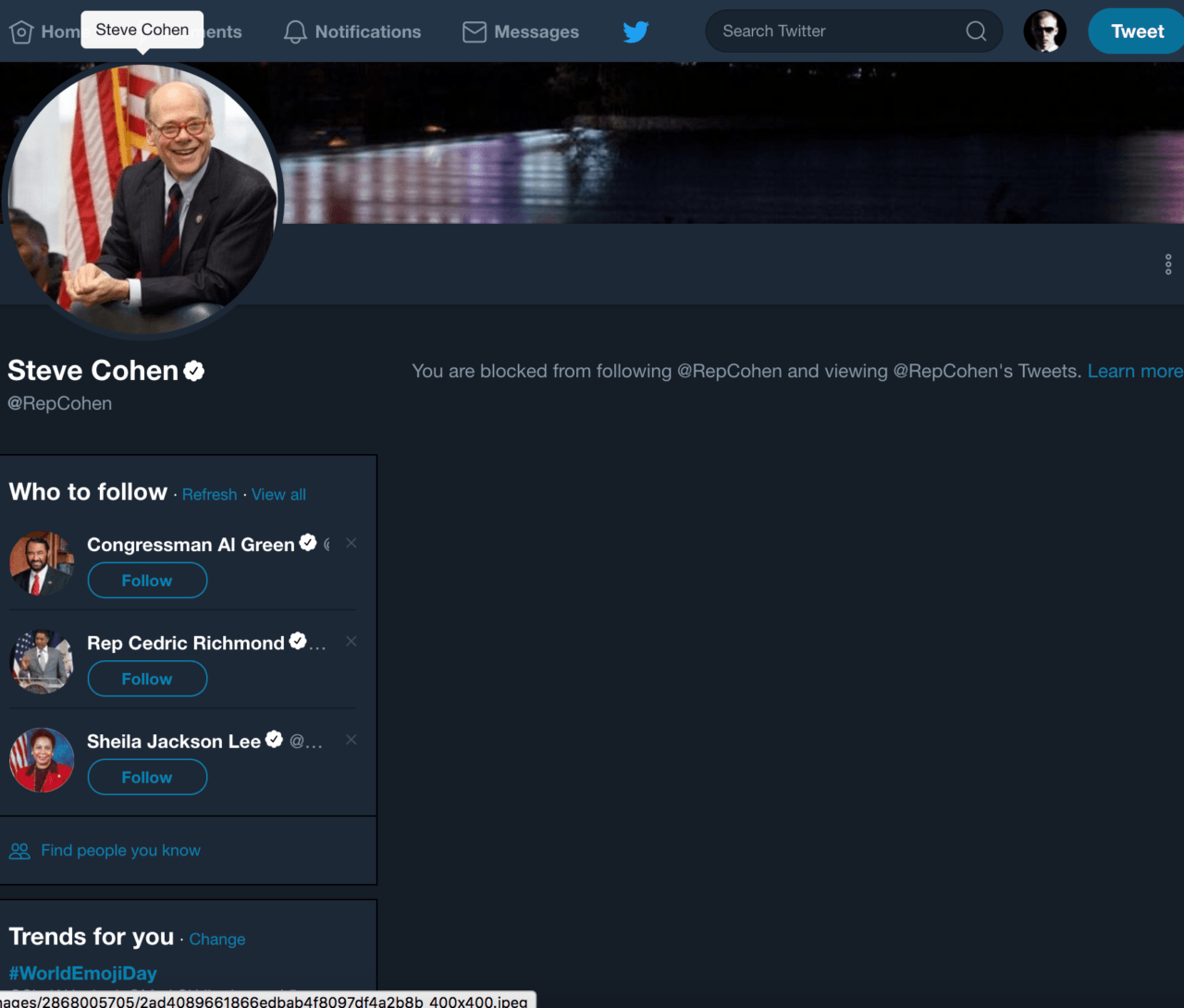
Surprisingly, Rep. Cohen even blocked Breitbart News’s Sean Moran from viewing his Twitter account.

Cohen’s tweet on Monday is not the first time he has said something incendiary. Last week, Congressman Cohen said that disgraced Federal Bureau of Investigation (FBI) agent should receive a Purple Heart during a House Judiciary Committee hearing. Armed service members receive the award when they are wounded in combat. The Democrat said that the Strzok deserved a Purple Heart for surviving attacks from Republicans that focused on his alleged anti-Trump bias.

Congressman Cohen said, “If I could give you a Purple Heart, I would. You deserve one. This has been an attack on you, in a way to attack Mr. Mueller, in the investigation that is to get at Russia collusion involved in our election.”

Similar to his Monday tweet, Cohen then walked back his assertion that Strzok should get a Purple Heart.

Rep. Cohen said, “My intent was to speak metaphorically to make a broader point about attacks against the FBI and Special Counsel [Robert] Mueller’s investigation into a Russian attack on our country.”

War is Coming? the Army Prepare for Large-Scale Military Operation in Gaza

July 18, 2018

IDF drills to conquer all of Gaza, as Israel said to have warned Hamas it is prepared to embark on campaign in Strip if arson kite launches don’t cease by Friday

Lior Sharon

http://www.jerusalemonline.com/news/politics-and-military/military/war-is-coming-army-told-to-prepare-for-large-scale-military-operation-in-gaza-36348

Israeli soldiers walk near an army tank patrolling along the border between Israel and the Gaza Strip on May 29, 2018. Photo: AFP/Jack Guez

War is Coming? the Army Prepare for Large-Scale Military Operation in Gaza

IDF drills to conquer all of Gaza, as Israel said to have warned Hamas it is prepared to embark on campaign in Strip if arson kite launches don’t cease by Friday

Lior Sharon
image description
Israeli soldiers walk near an army tank patrolling along the border between Israel and the Gaza Strip on May 29, 2018. Photo: AFP/Jack Guez

Israel’s political leadership has reportedly instructed the army to prepare for a military offensive in the Gaza Strip, to be initiated if the launching of incendiary devices from the Hamas-run coastal enclave into Israeli territory continues.

According to a Channel 10 news report Tuesday, Israel has set Friday as a deadline for the flaming kite and balloon launches to cease. If this does not happen, Israel may decide it has no choice but to embark on a military campaign in the Strip, the report said.

Israel sent a similar message to Hamas through Egyptian intelligence, Channel 10 reported, with the Palestinian terror group in turn indicating its forces will work to stop the launching of burning materials by Friday.

Hamas is manning some 60 percent of its positions along the border fence in order to stop the launches, according to the TV report, and is expected to dispatch its forces to all of its posts by Friday.

Citing Palestinian sources, the report said Hamas would only put a complete stop to the flaming kite launches if it can achieve some sort of accomplishment, such as the reopening of the Rafah border crossing with Egypt. The Palestinian Liberation Organization’s ambassador to Egypt said earlier Tuesday the crossing would reopen on Wednesday after being shuttered for more than 24 hours over technical issues.

The report came as Israeli leaders touted the IDF’s readiness for a military conflict with Hamas amid ongoing violence along the Gaza border.

During a tour on Tuesday of the army’s Gaza Division, Prime Minister Benjamin Netanyahu said Israel was already in a “military campaign.”

“We are in a military campaign in which there have been exchanges of blows. I am prepared to say that the Israel Defense Forces is prepared for any scenario,” Netanyahu said.

Over the weekend, Hamas fired some 200 rockets and mortar shells at Israel and the IDF carried out multiple strikes inside the Palestinian enclave. That escalation began after an IDF officer was moderately injured by a hand-grenade thrown by a Gaza assailant at the border on Friday.

On Saturday night, a ceasefire of sorts was brokered by Egypt and other international bodies, though Israel was not directly involved in the talks. The violence has abated, but tensions endured and cross-border attacks continued.

Asked if Israel was working to prevent a military conflict with Hamas, Netanyahu defended the government’s actions.

“I believe that we are doing the right things. It would be worthwhile to pay attention not only to what we are saying, but to what we are doing,” he said.

Netanyahu was joined on the visit by Defense Minister Avigdor Liberman, IDF Chief of Staff Gadi Eisenkot, and the head of the Shin Bet security service, Nadav Argaman.

While the senior officials were meeting in the Gaza Division on Tuesday, a number of incendiary and apparently booby-trapped balloons were launched into Israel from the Gaza Strip. A total of 17 fires started by airborne devices from Gaza were reported on Tuesday, including one that landed in the yard of a preschool where children were playing.

In response to the arson attacks, an Israeli drone conducted an airstrike near a group of Palestinians launching incendiary balloons from the northern Gaza Strip, injuring two of them, according to the Hamas-linked Shehab news outlet.

The Israeli military confirmed that one of its aircraft carried out the strike.

In recent days, the Israel Defense Forces has stepped up this practice, after the security cabinet called on it to take a more forceful stance against the airborne arson attacks on Sunday.

Recent months have seen daily arson attacks from Gaza with incendiary kites and balloons that have burned thousands of acres of Israeli land; regular riots and clashes along the border, which have resulted in over 130 Palestinians killed by IDF gunfire; and occasional outbursts of mortar and rocket fire by Gaza terrorist groups, which have prompted dozens of Israeli retaliatory airstrikes against Hamas positions. Dozens of the dead were members of Hamas and other terror groups, they have acknowledged.

This violence has raised tensions between Israel and Hamas to the highest they have been since the 2014 Gaza war.

For the full article – click here


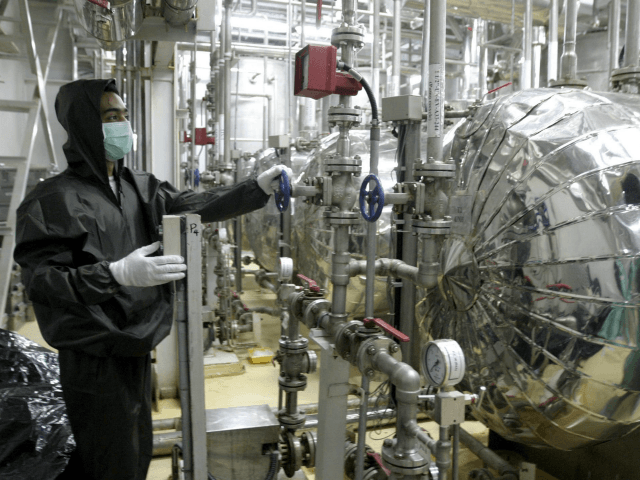
Iran Uranium Stockpile Soars to 950 Tons, Nuclear Chief Confirms

July 18, 2018

18 Jul 2018

By Simon Kent

https://www.breitbart.com/jerusalem/2018/07/18/iran-uranium-stockpile-soars-to-950-tons-nuclear-chief-confirms/

AFP/Getty Images

Iran’s stockpile of uranium stands at close to 950 tons despite global bans and a failed nuclear deal with the U.S., the chief of the country’s nuclear agency reassured the nation on Wednesday.

Ali Akbar Salehi, head of Iran’s Atomic Energy Organization, told state TV Iran has almost doubled its stockpile in three years. It has imported some 400 tons of uranium since the 2015 nuclear deal with Western powers brokered by Barack Obama, bringing its stockpile to between 900 and 950 tons — up from 500 tons.

Salehi claimed that is enough for Iran to reach its longtime goal of powering 190,000 centrifuge machines for enriching uranium in the future.

To that end, last month Iran notified the International Atomic Energy Agency that it plans to open a center for producing new centrifuges, a move that drew an immediate response from Israel.

Prime Minister Benjamin Netanyahu warned the Jewish state viewed that as a grave threat to its future security.

The nuclear accord limits Iran’s uranium enrichment to 3.67 percent, enough to use in a nuclear power plant but below the 90 percent needed for an atomic weapon, AP reports.

However, since the U.S. pulled out of the deal in May, Iran has vowed to boost enrichment capacity to put pressure on the remaining signatories to live up to the agreement.

The news of Iran’s boost in uranium reserves comes as it looks to talks with Europe designed to salvage the failed nuclear, a top official said Tuesday.

U.S. President Donald Trump announced in May he was abandoning the 2015 agreement and reimposing nuclear-related sanctions, threatening global companies with heavy penalties if they continue to operate in Iran.

In a bid to save the accord, the EU and European parties to the deal — Britain, France, and Germany — presented a series of economic “guarantees” to Iran this month, but these were judged “insufficient” by Tehran.

Negotiations with Europe are continuing, and foreign ministry spokesman Bahram Ghasemi said Monday they could last several “weeks,” according to state television.

Long Overdue: Congress Wants Recognition of Israeli Sovereignty Over Golan Heights

July 17, 2018

By – on

Long Overdue: Congress Wants Recognition of Israeli Sovereignty Over Golan Heights

While the Democrats have become the party and the face of the new antisemitism, the Republicans are doing what is right, rational and righteous.

The Golan is  critical to Israel’s security. This key territory could help Israel defend itself from attacks by Iranian forces and others operating in Syria. Syria lost the Golan Heights to Israel in the June 1967 war — when the United Arab Republic, Jordan, and Syria attacked the tiny Jewish state.

Iran’s vow to annihilate the Jewish state and the continuing political turmoil in the Muslim world and its accompanying Jew-hatred only reinforce Israel’s need for long-term defensible borders.

Israeli Control of the Golan Heights: High Strategic and Moral Ground for Israel
By Ephraim Inbar

MAP 1: Northern Israel


Security Needs

The Golan Heights is a sloping plateau, ascending from 300 meters on its west end to 1,000 meters on its east end, and covering a total area
of 1,800 km (695 sq. mi.). The Jordan River and the Sea of Galilee (part of the Syrian-African Rift) mark its western border, the Yarmuk River demarcates its southern perimeter, and the hills along the watershed line and the Rokad River bound it on the east. The 2,814 meter-high Hermon Mountain (partially in Israeli territory) marks the northern boundary of the Heights (see Map 1 and 2). The Hermon provides an excellent vantage point for the entire region – up to Damascus, only some 60 kilometers to the east, and over to the Haifa Bay, on the Mediterranean to the west (see Map 2). The Golan Heights dominate the Jordan River valley, the Israeli Galilee to its west, and the area leading to Damascus to its east.

Map 2: Mount Hermon Overlooks Damascus and Haifa (A North to South Perspective)

Militarily, withdrawal from the Golan Heights would be extremely problematic. Control of this area gives Israel several important advantages, including those that were crucial in repelling the surprise Syrian military onslaught in October 1973, and has enabled Israel to maintain stability along this border. Indeed, despite the absence of a peace treaty, and despite regional tensions that eventually led to violent clashes between Israel and Arab actors, the border between Israel and Syria has remained quiet since 1974. Even the military confrontation between Israeli and Syrian units in 1982, in the Lebanese arena, did not extend to the Golan Heights.

The current border along the watershed line – the hills in the Eastern part of the plateau – is the best defense line against a conventional
military attack from the east. Such an attack must overcome the topographical superiority of the defensive force, as the

terrain requires the attacking side to channel its forces in between the hills. These natural terrain bottlenecks allow a small defending force to repel an attack and bring in reinforcements if needed. In the 1973 October War, the Golan’s topography enabled 177 defending tanks to stop approximately 1,500 Syrian tanks and gave the IDF the critical time to call up and deploy its reserve formations.6 An armored attack can hardly be successful and cannot be sustained for long without taking the hills that Israel presently controls.

No other line on the plateau can confer such defensive advantages as the current border is based on the watershed line and the whole terrain west of this line descends toward the eastern cliffs on the Jordan River. A withdrawal from the Golan would place Israeli troops at its bottom, about 200 meters below sea level, with a very steep gradient toward the plateau at about 300 meters above sea level, making recapturing this territory in a crisis a very complicated military operation (see Topographical Cross-Section on Map 1 and Map 3).

Map 3: The Golan Heights

Control over the Golan Heights enhances the safety of the strategic Haifa Bay area on the Mediterranean Coast by increasing its distance from Syrian positions to almost 90 kilometers. The Bay area is an important industrial hub, houses one of two main Israeli ports, and forms part of the strategically vital triangle, alongside Jerusalem and Tel Aviv, that holds most of the country’s infrastructure and population.

Israeli military presence in the Golan Heights also prevents the formation of an indefensible pocket in the narrow strip (about 7 kilometers wide and 26 kilometers long) of the Upper Galilee, the northernmost part of Israel, an area sandwiched between Hizballah- controlled southern Lebanon and the Golan Heights (see Map 4).

Tens of thousands of Israeli citizens in this “Finger of the Galilee” could be easily disconnected from Israel and taken hostage in the case of a coordinated attack by Syria, if it controlled the Golan, and an Iranian-inspired Hizballah.7 The capacity of this organization to inflict damage upon Israel has grown considerably since the end of the 2006 Lebanon War.

Map 4: “Finger of the Galilee”

Read the rest.

Congress Wants Recognition of Israeli Sovereignty Over Golan Heights

Despite failed bid, hearing will press Trump admin to support Israeli ownership of contested land

By Adam Kredo, Free Beacon, July 15, 2018:

Congress is renewing efforts to press the Trump administration into recognizing Israeli sovereignty over the contested Golan Heights region on Israel’s northern border with Syria, bucking efforts by GOP leadership to kill the effort, according to conversations with lawmakers.

The House’s National Security Subcommittee, led by chairman Rep. Ron DeSantis (R., Fla.) will hold a hearing Tuesday to examine how recognizing Israel’s sovereignty over the territory could bolster U.S. national security efforts to stem the flow of terrorists in the Jewish state and elsewhere in the region by giving the Jewish state unilateral control over the Syrian territory, where Iranian-backed fighters and other jihadists have been spotted since the start of a bloody civil war.

The push to have the Trump administration formally recognize Israel’s sovereignty over the territory comes following a Monday afternoon press conference between President Donald Trump and Russian President Vladamir Putin, where the two leaders discussed efforts to decrease tension in Syria.

When DeSantis and other Republicans pushed a congressional resolution recognizing Israeli control over the Golan Heights in May, it was nixed by GOP leadership who were seeking to prevent such a vote on the heels of the Trump administration’s successful effort to relocate the U.S. embassy in Israel from Tel Aviv to Jerusalem.

The resolution had won support from Sen. Ted Cruz (R., Texas) and others.

DeSantis expressed disappointment at the time in comments to the Free Beacon.

“I don’t know why my Golan Heights amendment was not made in order and thus denied a vote,” DeSantis said. “It was a germane amendment that would have provided the House with a chance to add clarity to the broader U.S. policy vis-a-vis Syria.  How could we even contemplate supporting anything other than the application of Israeli sovereignty to such a strategically significant area, especially given the plethora of malevolent forces that undermine security in the region?”

DeSantis, who will chair Tuesday’s hearing, told the Washington Free Beacon he will not stand down despite opposition by some to formally recognizing Israeli control over the territory, which Israel annexed in 1981.

“U.S. recognition of the Golan Heights is overdue and I hope this hearing demonstrates that the time is right for the Trump administration to do so,” DeSantis told the Free Beacon. “As we’ve seen with the successful relocation of our American embassy to Jerusalem, when the U.S. leads with purpose and conviction good things happen.”

The United States has declined for decades to take a position on the status of this territory, but lawmakers such as DeSantis argue the time is right for this effort, particularly in light of the chaos in Syria and the threat it poses to Israeli and U.S. security assets in the region.

sraeli officials, including Prime Minister Benjamin Netanyahu, have supported such efforts and also have requested the Trump administration move to recognize Israeli sovereignty over the territory. Public calls for the recognition increased after the Free Beacon first reported on the now-dead congressional resolution on the matter.

The Tuesday hearing will focus on Iran’s destabilizing efforts in Syria and how it has impacted regional security, according to information viewed by the Free Beacon.

Congressional officials and other supporters argue that U.S. recognition of Israeli control of the Golan Heights could thwart Russia and Iran’s growing influence in Syria and also send a powerful message that the United States sides with the Jewish state’s security interests as regional tensions grow.

The United States, under numerous governments, has assured the Israeli government that it supports Israel’s annexation of the territory, but has declined to go as far as backing a full recognition of sovereignty. The area remains a key territory that could help Israel defend itself from attacks by Iranian forces and others operating in Syria, supporters argue.

Iranian militants who are still operating freely in Syria as they defend embattled President Bashar al-Assad have used the Golan Heights and areas near it to target Israel.

In February, for instance, Israel intercepted an armed Iranian drone that had entered its airspace via Syria.

In May, Iranian forces in Syria fired at least 20 rockets at Israeli military personnel stationed in the Golan Heights, leading the Trump White House to issue public statements supporting Israel’s right to self-defense in the face of such attacks.

Witnesses testifying at the Tuesday hearing include Dore Gold, a veteran Israeli official who most recently served as director general of Israel’s Ministry of Foreign Affairs from 2015 to 2016; Michael Doran, a former senior director of the White House’s the National Security Council during the George W. Bush administration; Morton Klein, president of the Zionist Organization of America; and Eugene Kontorovich, a Northwestern University professor of law who has studied Israel’s legal claims to the Golan Heights.

A brave statement from MR president Trump !

July 16, 2018

Let this be cast in gold !

I would rather take a political risk in pursuit of

peace than risk peace in pursuit of politics,”

he said.


Trump: Israel’s Safety Important to Both US, Russia

July 16, 2018

Trump: Israel’s Safety Important to Both US, Russia

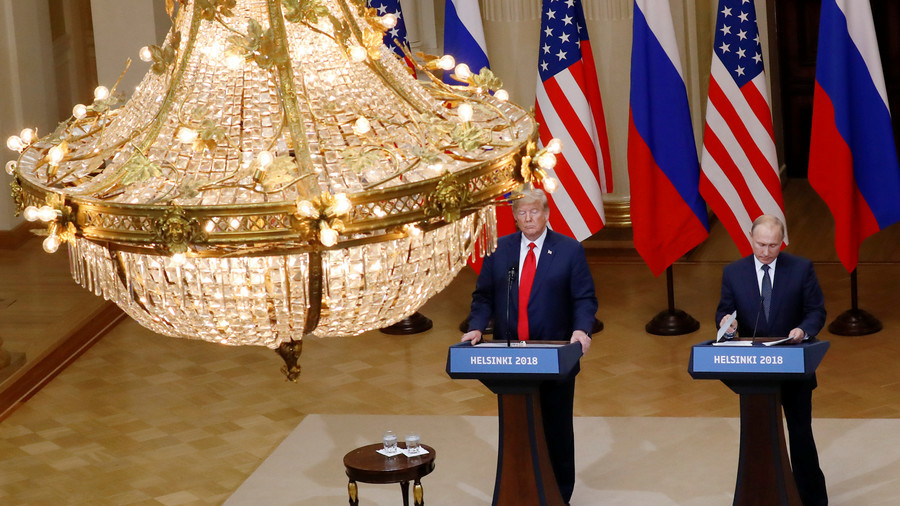
U.S. President Donald Trump told reporters in Helsinki following his talks with Russia’s President Vladimir Putin on Monday (July 16) that Israel’s safety is important to both world leaders.

Speaking at a joint news conference together with Putin after the summit, Trump said bluntly in response to a question about Syria, “President Putin also is helping Israel. And we both spoke with Bibi Netanyahu, and they would like to do certain things with respect to Syria, having to do with the safety of Israel.

“So in that respect we absolutely would like to work in order to help Israel, and Israel will be working with us, so both countries would work jointly.”

Trump said that a great deal of progress has been made in in certain sections of Syria with the “eradication of ISIS, we’re about 98 percent, 99 percent there,” adding that Russia had helped the United States with, “in certain respects.”

He went on to say, “Working with Israel is a great thing and creating safety for Israel is something that both President Putin and I would like to see very much.”

Israel said planning measures to restrict Erdogan’s influence in Jerusalem

July 16, 2018

By – on

https://gellerreport.com/2018/07/israel-planning-erdogan.html/

After of century of Ataturk — separation of mosque and state — a once-prospering and modern Turkey has been dragged back to stone ages by deeply devout monster Recep Tayyip Erdogan. Islamic Jew-hatred — it’s in the Quran. Erdogan, a vicious anti-semite and former President Obama’s closest friend among world leaders, has based much of his presidency on Islamic Jew-hatred, counting on its popularity in the Muslim country (Mein Kampf has been a number one bestseller in Turkey for years) to secure the popularity of his regime. He has embarked upon the rapid re-islamization of Turkey, which is popular with many Turks outside Istanbul and Ankara despite his war on freedom and his people.

“Israel said planning measures to restrict Erdogan’s influence in Jerusalem,” Times of Israel, July 7, 2018 (thanks to Mark):

Israel is considering restricting the activities of Turkey’s international aid agency in Jerusalem and the Palestinian territories in an effort to counter President Recep Tayyip Erdogan’s reported efforts to extend his influence in East Jerusalem, Hadashot news reported Saturday.

The National Security Council has drafted possible measures to be taken against the Turkish Cooperation and Coordination Agency (TIKA) that operates in East Jerusalem, the West Bank, and the Gaza Strip.

According to the report, Israeli intelligence officials believe that TIKA has hosted members of the Islamic Movement at their offices, and that several of its employees transferred funds and information to the Hamas terrorist group.

Among the measures under consideration was imposing a general restriction on all TIKA actives or requiring the agency to obtain individual permits for each project.

Hadashot said Israel’s suspicions of TIKA were intensified by the recent uptick in Erdogan’s anti-Israel rhetoric.

Last month, the Haaretz daily reported that Jordan, Saudi Arabia, and the Palestinian Authority were urging Israel to act against Erdogan’s efforts in East Jerusalem.

The report said Turkish Islamic associations in recent years have been sponsoring an increasing number of programs and trips for thousands of local Palestinians, and had a strong influence in the protests around the Temple Mount.

According to the Turkey’s Daily Sabah, TIKA has carried out 400 aid projects that include restoration work on the Dome of the Rock, and a new dorm room for female student’s at Ramallah’s Al-Quds University.

One Israeli official told Haaretz in June that Turkey was attempting to purchase property through government charities, and that the Palestinian Authority was weary of “having another landlord in East Jerusalem.”

Diplomats told the paper that Jordan began expressing concern to Jerusalem over a year ago and accused it of “being asleep at the wheel,” since singing the reconciliation agreement with Turkey in 2016.

Riyadh meanwhile is said to be worried that Erdogan will attempt to use his influence in Jerusalem to claim himself the custodian of the Muslim sites in the city, cementing his increasing authority over the Arab-Muslim world.

Relations between Jerusalem and Ankara imploded in 2010, following an Israeli naval raid on a Turkish ship trying to breach Israel’s blockade of the Hamas-controlled Gaza Strip. The raid, in which IDF commandos were attacked by activists on board, left 10 Turks dead and several soldiers wounded.

In May, relations between Israel and Turkey sank to a fresh low point after expelling each other’s envoys amid an acerbic war of words following deadly clashes on the Gaza Strip border.

Erdogan took to social media to accuse Israel of being “a terror state” that was committing “genocide” against Palestinians….

Cold War ended, difficulties in Russia-US relations don’t have any objective reasons – Putin

July 16, 2018
https://www.rt.com/news/433391-putin-trump-helsinki-meeting-cold-war/
There are no objective reasons for Moscow and Washington not to get along, said Russian President Vladimir Putin speaking first after more than three hours talks with US President Donald Trump.

“We’ve reviewed the current status and prospects of the Russia-US ties, key issues of the international agenda. It’s obvious that the bilateral relations are undergoing a difficult stage, but these difficulties, tensions between our countries have no objective reasons. The era of ideological confrontation between our countries is long gone, the situation in the world has changed drastically,” Putin said.

The talks reflected “shared wish” of the two presidents to fix the US-Russia relations and envision the first steps to do so, Putin added.

The US and Russia are facing new challenges nowadays, differing drastically from the ones of the Cold War era, Putin said, naming regional conflicts, spread of terrorism, organised crime, ecology and economy risks.

Trump again asked his Russian counterpart on the alleged Russian meddling into the 2016 presidential elections, Putin revealed, stating that he replied exactly the same, as the last time. Russia has not meddled into the internal affairs of the US, he stated, adding that if any real evidence is provided, Moscow will cooperate on it.

Russia’s President described the talks with his US counterpart as “constructive and sincere,” adding, however, that such meeting was not enough to address “everything piled up.”

DETAILS TO FOLLOW

5 Things To Watch For At The Trump-Putin Summit

July 16, 2018

Despite John McCain and the neocon’s best efforts to disrupt it, his advisors (and the Democrats) warnings, and the rest of the Deep State’s concerted plans with the liberal media to paint Trump into a lose-lose situation, the Trump-Putin Summit in Helsinki is due to start within the next hour or two.

As President Trump noted in a tweet earlier, “Unfortunately, no matter how well I do at the Summit, I would return to criticism that it wasn’t good enough.”

As The Hill notes, Trump has long wanted a closer relationship with Putin, something he believes can mend frayed ties between their two countries. But beyond his apparent affinity for Putin, many in Washington have questioned why the president is sitting down with his Russian counterpart and what he seeks to accomplish.

Here are five things to watch for when Trump and Putin meet in Helsinki:

Election interference

Russia’s interference in the 2016 election, already at the front of observers’ minds, has rocketed to the top of the agenda ahead of Monday’s summit. Deputy Attorney General Rod Rosenstein announced Friday the indictment of 12 Russian intelligence officers who allegedly hacked into the Democratic National Committee and other Democratic groups. The announcement comes just days before the Helsinki summit, ramping up pressure on Trump to raise the issue with Putin. But the president has long wavered on the matter, despite the U.S. intelligence community’s assessment that Russia interfered in the election. Just last month, Trump tweeted that “Russia continues to say they had nothing to do with Meddling in our Election!”

Trump has repeatedly highlighted that denial — which Putin made during their first face-to-face meeting at last year’s group of Group of 20 summit — as a way of downplaying the issue. “President Trump is now the outlier in his own administration, seemingly,” said a former Trump transition official. The president has promised multiple times to press Putin on election interference, saying Friday he would “absolutely firmly ask the question” when they meet. Trump has expressed a belief, however, there is not much he can do to deter their activity. “I don’t think you’ll have any ‘Gee, I did it, I did it, you got me.’ There won’t be a Perry Mason here,” Trump said at a press conference with British Prime Minister Theresa May.

National security figures with ties to the White House hope Trump publicly warns Putin against interfering in the midterms and threatens the Russian leader with consequences.

But the worst-case scenario they fear is Trump remaining silent on the issue and raising the possibility of lifting sanctions on Moscow, something that would fuel criticism from political opponents who believe he is too close to Putin.

Democrats in Congress have called on Trump to cancel the summit entirely in response to the indictment, but there is no sign Trump is interested in doing so.

Syria

Trump has reportedly been eying a deal with Putin in Syria that is aimed at moving Iranian forces away from the border with Israel in exchange for withdrawing U.S. troops. But both U.S. and Russian officials have been reluctant to give ground on thorny issues such as troop levels or territory, and experts are not optimistic a deal will be made in Helsinki. “To me, this whole issue of expecting the Russians or hoping the Russians are going to deliver Iranian concessions in Syria is the triumph of blind hope over grim analysis,” said Robert Ford, former U.S. ambassador to Syria under former President Obama.

Under the terms of a possible deal, Russia would promise to limit Iranian presence near Syria’s border with Israel and Jordan and, in turn, the U.S. would allow Syrian President Bashar Assad’s forces to take control of the area. U.S. forces have an outpost in southern Syria near the border with Jordan and Iraq known as al Tanf, which Pentagon officials have said is key to ensuring Iran does not complete the Tehran-to-Beirut land bridge it desires. But under the reported deal, U.S. forces would leave al Tanf — and eventually Syria — altogether. Experts have warned Trump not to repeat the mistakes of his summit with North Korean leader Kim Jong Un, when he did not come away with an ironclad plan for denuclearization.

“If he buys a vague promise, then it looks like the Singapore summit where he gets some nice words without details from the other side of the summit table,” said Ford.

Crimea

Crimea has been at the heart of U.S.-Russia tensions since 2014. That’s when Russia annexed the peninsula off Ukraine, sparking a wave of international sanctions and other measures aimed at isolating Moscow. But Trump has repeatedly left the door open to recognizing Russia’s claim over Crimea during his meeting with Putin, even repeating Moscow’s talking point that it has a rightful claim to the territory because most residents speak Russian. The president stoked further concern this week when he again did not rule out the possibility during his press conference at the end of the tumultuous NATO summit.

“That’s an interesting question, because long before I got here President Obama allowed that to happen, that was under his watch, not my watch,” Trump said. “What will happen with Crimea from this point on? That, I can’t tell you.”

One of the post-Crimea punishments for Russia was getting booted from the then-Group of Eight world economic powers. But last month, on his way to the Group of Seven summit in Canada, Trump said that should be reversed. “Russia should be in this meeting,” he said at the time. “Why are we having a meeting without Russia being in the meeting?”

The U.S. and its European allies stepped up their military posture and exercises in Eastern Europe after the Crimea annexation. But after Trump unilaterally agreed to cancel joint military exercises with South Korea during his summit with North Korea’s Kim, allies are fearful of him doing the same with Putin. Republicans in Congress are cautioning Trump against a repeat performance. “I think the president should listen to his security council and our secretary of Defense and our NATO allies on anything of substance dealing with the U.S. military posture. We’ve got to be careful, we’ve got to be strong,” said Sen. Richard Shelby (R-Ala.), who recently led a congressional delegation to Russia.

Arms control

Trump has said one of his top priorities for the summit is arms control, a topic that could produce a rare opportunity for the U.S. and Russia to find common ground. Arms control advocates say Trump can score an easy win with Putin by agreeing to extend the New START Treaty for another five years. The treaty, negotiated by the Obama administration, caps the U.S. and Russia’s deployed nuclear warheads to 1,550 each and comes up for renewal in 2021. “[Renewal] would ensure that we do not return to a numerical arms race,” said Thomas Countryman, former assistant secretary of State on international security and nonproliferation.

But most experts do not believe a decision on New START will come at the summit. Trump has dismissed the treaty as one of Obama’s “bad deals,” and it could take some convincing to get him on board. Republicans have argued the treaty should not be extended while Russia is in violation of a separate arms control agreement known as the Intermediate-Range Nuclear Forces (INF) Treaty. That agreement, which has been credited with helping end the Cold War, bans ground-launched ballistic and cruise missiles with ranges between 500 and 5,500 kilometers. The United States has repeatedly accused Russia of violating the INF Treaty by developing and deploying a banned missile, a charge Moscow denies.

The summit could provide an opportunity for Trump to address the INF violation directly with Putin, but experts say Russia has shown little appetite for reversing course.

Stagecraft

Even more than contentious policy issues, the visuals could be the most memorable part of the Trump-Putin summit. Trump and Putin will hold a joint press conference, which should be a spectacle in and of itself and give U.S. media a chance to rare opportunity to press the Russian leader on election meddling and other key issues. It could cause problems for Trump if he appears too friendly with Putin, especially given the timing of the meeting, just days after the hacking indictments.

But Trump’s desire to form a close bond with Putin could lead the president to give his Russian counterpart a warm reception, just like he did with Kim in Singapore. It could fuel criticism back home that Trump has a greater affinity for strongmen than he does for longtime U.S. allies.

Days before the summit, Trump was shown grimacing during a group photo with NATO partners in Brussels and rolled his eyes when he was asked during a meeting with British Prime Minister Theresa May about critical comments he made about the U.K. leader. Putin, a former KGB officer with a flair for the dramatic, could also have some tricks up his sleeve.

The Russian leader frequently shows up late for meetings with world leaders, even forcing Pope Francis to wait for 50 minutes before a 2015 sit-down in Vatican City. Putin even brought his pet Labrador to a 2007 meeting with German Chancellor Angela Merkel, who has a well-known fear of dogs. The Russian president later said he did not mean to scare Merkel and claimed he apologized after learning she is scared of dogs.

*  *  *
And in case it’s not immediately obvious, as Jim Jatras recently noted, there are many reasons the bipartisan US establishment hates Trump. His heresies from neoliberal orthodoxies on immigration and trade are prominent. But top among them is his oft-stated intention to improve relations with Russia.

That’s fighting words for the Deep State and its mainstream media arm, for which demonizing Russia and its president Vladimir Putin is an obsession.

The fact that Donald Trump made his intention to get along with Moscow a priority during his 2016 campaign, both against his Republican primary rivals and Hillary Clinton (who has compared Putin to Hitler) was cause for alarm. This is because far more than even the frightening prospect that the 70-year state of war on the Korean Peninsula might end, US reconciliation with Russia would yank the rug out from under the phony justifications for spending hundreds of billions of dollars annually to counter a “threat” that ceased to exist over a quarter century ago. Absent hostility to Russia that money has no reason to keep sustaining the power, privilege, and prosperity of a horde of moochers and profiteers, both at home and abroad.

That’s why when it was reported soon after his January 2017 inauguration that Trump was seeking to open dialogue with the Kremlin and set an early summit with Putin there was a hysterical counteraction.

*  *  *

Finally, watch out for any ‘hot mic’ incidents, because it would very awkward if a president on the United States was caught offering himself up to a Russian leader…