Author Archive

Palestinian politicians come out against PA’s boycott of US

July 28, 2018
Forner PA minister Nabeel Amro says ‘boycott on the entire US administration is not helpful,’ while political analyst Hanna Issa believes the US alone holds the keys to resolving the Israeli-Palestinian conflict.
https://www.ynetnews.com/articles/0,7340,L-5318226,00.html
Some leading Palestinian politicians don’t believe that Palestinian President Mahmoud Abbas’ boycott on American officials—imposed in the wake of Washington’s recognition in December of Jerusalem as Israel’s capital—is proving beneficial to the Palestinian cause.

In the current diplomatic climate, officials warned, Europe cannot replace the US as an intermediary for peace talks with Israel, because many European capitals are reluctant to assume America’s traditional role as primary peace broker between the two sides. European leaders are also wary of ignoring the Trump administration’s demand to not abide by the PA’s push to form a new, multilateral mechanism for negotiations.Nabeel Amro, a former Palestinian minister of information, explained to The Media Line that “the Palestinians want Europeans to be more involved, but we can’t force them.”

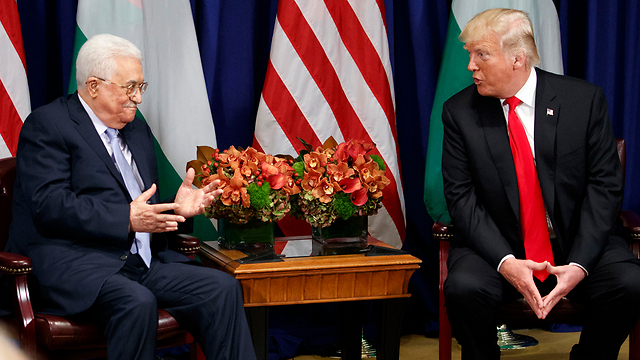
Palestinian President Abbas meets with US President Trump (Photo: AP)

Palestinian President Abbas meets with US President Trump (Photo: AP)

While he believes that “it is right to reject the (prospective) American (peace) plan as it violates Palestinian rights, a boycott on the entire US administration is not helpful. Our relationship with the US should be about dialogue, not boycotts.”

Whereas, Amro supports the PA’s rejection of the White House’s decision to relocate the American Embassy to Jerusalem, he stressed that “there is no need to boycott the whole country. Diplomacy requires activity and movement at all levels. The US is still supporting the PA in matters of security. Why do we accept security cooperation, but not the political collaboration?”

Amro concluded by noting that the US and Russia, for example, “have been going through political tensions for years, but still officials from both nations continue to meet and talk.”
Hanna Issa, a Palestinian political analyst, believes that the US alone holds the keys to resolving the Israeli-Palestinian conflict. “America is a great country and most of world’s governments have mutual interests with it,” he told The Media Line. “Therefore, boycotting (Washington) will not benefit the Palestinians.”

Issa highlighted that the PA does not even yet know the exact details of the White House’s plan, as it has not been published. Therefore, the PA’s rejection of the proposal out-of-hand is, in his estimation, premature and counter-productive.

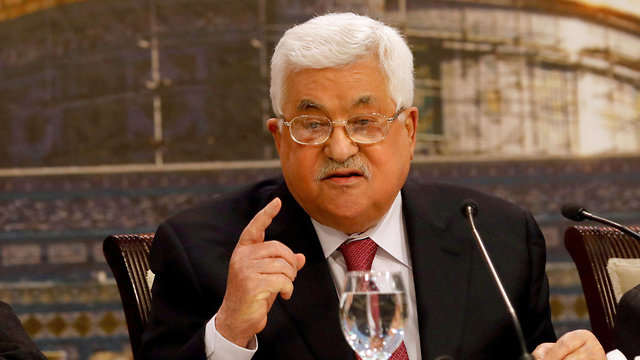
Palestinian President Abbas (Photo: Reuters)

Palestinian President Abbas (Photo: Reuters)

Nabil Shaath, a foreign affairs adviser to Abbas, disagrees with these assessments. “We are not seeking to replace the US with the European Union,” he conveyed to The Media Line.

“Abbas was clear in his speeches that we want multilateral negotiations involving European countries, Russia and China. At the same time, we refuse the US monopoly on talks and the contempt of the Trump administration for the Palestinian side.”

In this respect, Shaath made explicit that the Palestinians will not tolerate what they perceive as President Donald Trump’s unwavering support for Israel despite its “many violations of international law, its occupation of Palestinian territories, settlement building and refusal to accept the Palestinian right of return.”

Shaath nevertheless rejected the claim that Ramallah’s positions amount to a boycott on the the American administration. Rather, he qualified, “we are boycotting political dialogue with the US over the so-called ‘deal of the century.’ We still speak with the US Consulate in Jerusalem on daily basis and we still have our representative office in Washington.”

To this end, the PA repeatedly has reiterated an unwillingness to engage with Trump’s peace envoys, including senior adviser Jared Kushner, US Special Representative for International Negotiations Jason Greenblatt and US Ambassador to Israel David Friedman—who, together, Shaath described as a “Zionist, extremist team.”

Last weekend, the American trio penned an op-ed in The Washington Post calling on Hamas to rejects its violent tactics and refusal to accept Israel’s right to exist. The three envoys also called on the Palestinian people to find a way out of the “hopeless treadmill” of “destruction, violence and human misery.”

“The world is moving forward, but bad choices are causing Palestinians to fall further and further behind,” the op-ed read.

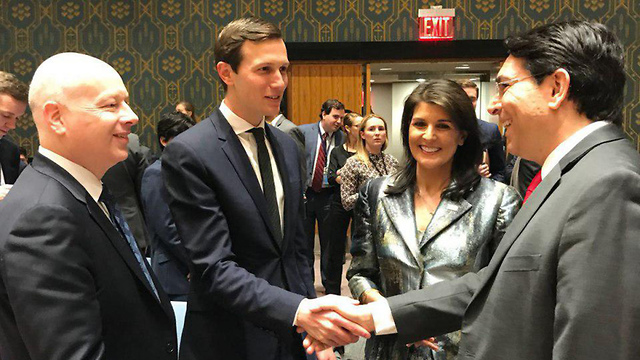
Members of Trump's peace team, Jason Greenblatt and Jared Kushner, with US Ambassador to the UN Nikki Haley and Israeli Ambassador to the UN Danny Danon

Members of Trump’s peace team, Jason Greenblatt and Jared Kushner, with US Ambassador to the UN Nikki Haley and Israeli Ambassador to the UN Danny Danon

Responding to the article, Abd al-Lateef Qanou, a Hamas spokesman in Gaza, told The Media Line that “the US administration is completely biased in Israel’s favor and doesn’t meet our peoples’ hopes and ambitions.

“It takes the side of the occupation and is a partner in the killing of Palestinians. We do not rely on any American efforts in finding a solution to the conflict.”

Article written by Dima Abumaria

Reprinted with permission from The Media Line

I was thinking !

July 28, 2018

H/T for  and a big head bow from me .

I was thinking; If Liberals don’t believe in biological gender then why did they march for women’s rights?

I was thinking; If women do the same job for less money, why do companies hire men to do the same job for more money?

I was thinking; Since only 11 million people have Obama-Care, how will 24 million people die if it is repealed? Will an additional 13 million people be randomly shot?

I was thinking; We should stop calling them all ‘Entitlements’. Welfare, Food Stamps, WIC, ad nausea are not Entitlements. They are taxpayer-funded handouts and shouldn’t be called Entitlements at all. But, Social Security and Veterans Benefits are Entitlements because the people receiving them are entitled to them. They were earned and paid for by the recipients.

I was thinking; If you rob a bank in a Sanctuary City, is it illegal or is it just an Undocumented Withdrawal?

I was thinking; After the London ‘Lone Wolf’ terrorist attack, government officials arrested at least eight other ‘Lone Wolves’ who had conspired with the original ‘Lone Wolf’ in planning the ‘Lone Wolf’ attack. Why do they tell us even though all involved are Muslims, you can be assured that the ‘Lone Wolf’ attack has nothing at all to do with Islam, just like the other 1,000-plus ‘Lone Wolf’ attacks by Muslims, are completely unassociated with Islam?

I was thinking; Why is each ISIS attack now a reaction to Trump policies, but all ISIS attacks during Obama’s term were due to Climate Change and a plea for jobs?

I was thinking; If Muslims want to run away from a Muslim country, does that mean they are Islamophobic?

I was thinking; If Democrats don’t want foreigners involved in our elections, why do they think it’s all right for illegals to vote?

I was thinking; Is the DNC is mad at Russia because it ‘thinks’ they are trying to manipulate our elections, or because Russia is exposing that the DNC is manipulating our elections?

I was thinking; How did the Russians get Debbie Wasserman Schultz and the DNC to steal the Primary from Bernie Sanders? How did Russia get Donna Brazile to leak debate questions to Hillary Clinton in advance of the debates?

I was thinking; Why is it that Democrats think Super delegates are fine, but they have a problem with the Electoral College?

I was thinking; If Donald Trump deleted all of his emails, wiped his server with Bleachbit and destroyed all of his phones with a hammer, would the Mainstream Media suddenly lose all interest in the story and declare him innocent?

I was thinking; If Hillary’s speeches cost $250,000 an hour, how come no one shows up to her free speeches?

I was thinking; If you don’t want the FBI involved in elections, don’t nominate someone who’s being investigated by the FBI.

Congress Seeks Major Downsizing of U.N. Palestinian Refugee Agency

July 28, 2018

New bill would cut U.S. funding to UNRWA, redefine Palestinian refugees

UNRWA staff take part in a protest in front of the agency's headquarters in Gaza City

UNRWA staff take part in a protest in front of the agency’s headquarters in Gaza City / Getty Images

BY:

Congress Seeks Major Downsizing of U.N. Palestinian Refugee Agency

Congress is considering new legislation that would cut U.S. contributions to a key United Nations agency responsible for Palestinian refugees and change the official definition of a refugee in a way that could strip such status for millions of Palestinians, according to new legislation.

Legislation introduced by Rep. Doug Lamborn (R., Colo.), a member of the House Armed Services Committee, seeks to redefine how Palestinian refugees are viewed by the international community, reducing millions in U.S. aid dollars to the U.N. Relief Works Agency, or UNRWA, which currently provides resources to some 5.3 million refugees.

The Trump administration significantly reduced U.S. funding to UNRWA earlier this year in a bid to reform the embattled agency, which has long faced accusations of anti-Israel bias and been ensnared in scandals regarding its material support to the Hamas terror group.

Lamborn’s legislation, which would scale back UNRWA’s mission, comes on the heels of a congressional effort to compel the State Department to release a long classified report that is believed to show the number of actual Palestinian refugees is far few from the 5.3 million. Sources familiar with the report’s contents say the actual number of refugees is closer to 20 or 30,000 and that U.S. officials have over classified these findings in order to prevent public disclosure that could cripple UNRWA.

America has been UNRWA’s largest financial donor since its inception in 1949. Since that time, the agency has faced multiple scandals and has been plagued by accusations it harbors an anti-Israel bias and disseminates such materials in its taxpayer-funded schools in the region.

Lamborn, who also has been working to ensure the State Department release the classified refugee report, told the Washington Free Beacon that readjusting the official definition of a Palestinian refugee could change the calculus in the long-stalled peace process, a major sticking point of which has been the so-called right of return to Israel for Palestinian refugees. An influx of millions of refugees would erase Israel’s Jewish majority.

“It’s critical that we return UNRWA to its original and intended framework. UNRWA’s inflated refugee count is intended to increase the number of Palestinians that would receive the so-called right of return. U.S. funds should only go to UNRWA to the extent that they carry out their original mission of resettling refugees,” Lamborn said.

“Unfortunately, UNRWA has become another anti-Semitic and anti-American agency at the United Nations. It is time for the United States to address UNRWA’s twisted definition of a refugee,” Lamborn said. “This is the first step towards peace in the region.”

The legislation notes that in the 1950s, UNRWA altered its refugee requirements, enabling scores of Palestinians previously ineligible for refugee status to take advantage of the agency.

“This change significantly inflated the number of purported refugees and subsequently the number of individuals who are eligible to receive UNRWA benefits,” the bill notes.

“This classification process is inconsistent with how all other refugees in the world are classified, including the definition used by the United Nations High Commission on Refugees (UNHCR) and the laws concerning refugees in the United States,” the bill states. “Because of UNRWA’s unique definition of a refugee, the number of Palestinian refugees has grown exponentially over the years, from approximately 600,000 in 1949 to 5,300,000 today.”

The issue is further complicated by multiple scandals in which UNRWA has been accused of anti-Israel bias and of working with Hamas terrorists.

Hamas missiles, used to attack Jewish citizens, have been found stored in UNRWA facilities multiple times in the past years, including in UNRWA-run schools.

If approved, the new legislation would limit the amount of U.S. taxpayer dollars allocated to UNRWA until it moves to resettle only original Palestinian refugees, as laid out in the law.

Opinion :Chaos on the borders: Israel has lost its deterrence

July 28, 2018
Analysis: The Israeli government and IDF’s policy against Hamas in Gaza has reached a dead end, the Iranian entrenchment in Syria is being disrupted but not stopped, and very little is left of Israel’s deterrence. The last week’s events remind us that Israel will soon have to make dramatic decisions on both fronts. Meanwhile, it’s at a loss.
First published: 07.27.18, 23:34
https://www.ynetnews.com/articles/0,7340,L-5318196,00.html
The government and the IDF’s deterrence and containment strategy has reached a dead end. In the south, on the Gaza border, Israel hasn’t managed to achieve a stable calm and provide the western Negev residents with a sense of security in almost four months—in fact, since March 30, the day the protests by the border fence began. In the north, Israel is unable to stop Iranian military entrenchment in Syria, just slow it down.The Iranians and their proxies—despite the blows they suffer several times a week—continue their efforts to turn Syria into an active separate front against Israel, from which precise surface-to-surface and surface-to-sea missiles will be launched and where anti-aircraft systems will be stationed.

All of these will reduce the IAF’s freedom of operations and make it difficult for Israel to deal with the thousands of missiles and rockets Hezbollah has accumulated in Lebanon, and that the Iranians are progressively accumulating in Syria. The intense diplomatic dialogue Israel is having with the Russians, and the “kinetic dialogue” (the exchange of fire) with the Syrian army, only make up a partial solution and do not prevent spillover fire.

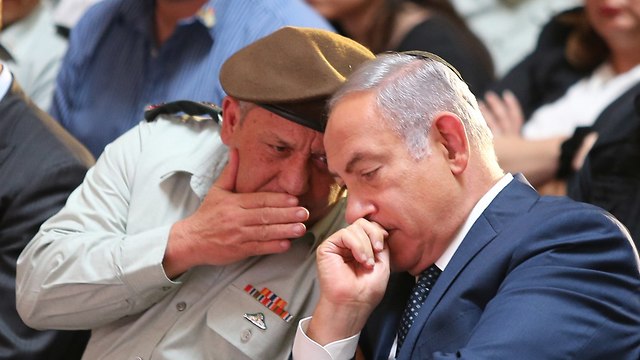
IDF chief Eisenkot and Prime Minister Netanyahu (Photo: Alex Kolomoisky)

IDF chief Eisenkot and Prime Minister Netanyahu (Photo: Alex Kolomoisky)
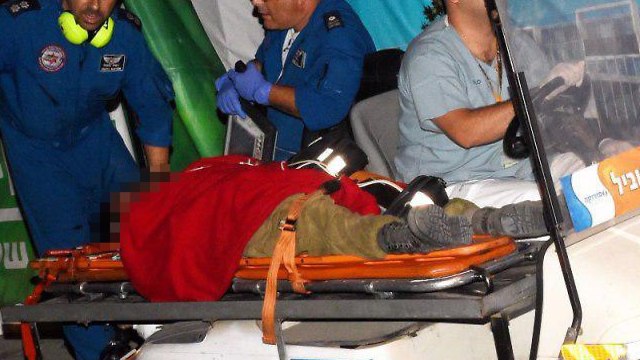
The Syrian Sukhoi jet that was shot down this week by the Air Force deters the regime of Syrian President Bashar Assad, but not the Iranians. The events that followed over the next 24 hours—the shooting of rockets from Syria that landed in the Kinneret and the Palestinian sniper fire that wounded a Givati officer on the Gaza border—do a good job of demonstrating the severity of the problem, which can be defined by one word: Chaos. Things have gotten out of hand.Those who shot and hit the IDF officer on the Gaza border were likely members of what the army refers to as an “errant” Palestinian group. Normally this means extremist Jihadist-Salafist organizations trying to undermine Hamas’s rule in the strip. But this time there’s reason to believe that much like last Friday—when Staff Sgt. Aviv Levi was shot to death—this was a member of an extremist faction within Hamas’s military wing, who made a law unto themselves.

The IDF officer wounded by sniper fire this week (Photo: Haim Horenstein)

The IDF officer wounded by sniper fire this week (Photo: Haim Horenstein)

What’s interesting is that both the errant Salafists and the extremists from within Hamas’s ranks are trying, using the attacks on the border, to drag the IDF into another large-scale round of fighting inside the Gaza Strip. The errants hope this would bring the end of Hamas, while the Hamas extremists believe that if the IDF enters the strip, they would be able to cause great losses to Israel and kidnap soldiers to free prisoners.

That must have been the goal of the attack, which started with children being sent to protest by the border fence. When an IDF force showed up, out in the open and exposed, to disperse them, the sniper, who was ready nearby, opened fire at the troops. The IDF will have to reexamine its methods of operation on the border fence, and ensure its soldiers carry out their missions from behind cover.

But this won’t solve the problem. There’s no calm in the south because Hamas is not interested in calm until it achieves its goals without having to make any significant concessions. Hamas wants money from the Palestinian Authority, electricity and water from Israel, and an open Rafah crossing from Egypt. These are part of the demands it is making.

Israel is willing to provide Hamas with humanitarian aid on the condition it stops the arson terrorism, and even rehabilitate the strip if it returns the bodies of the MIA soldiers from Operation Protective Edge and the two Israeli civilians it is holding. But Hamas is unwilling, which is why it allows the errant factions to operate on a low scale, while at the same time leading incendiary kite and balloon squads. In this way, it maintains the tensions along the border as well as Israel, Egypt and the UN’s need to meet its demands.

The Middle East’s game of pool

The economic carrot and military stick system Israel is using on Hamas recently has gone bankrupt, as the residents of the western Negev can attest while Code Red rocket alert sirens send them running to shelters almost every other night. The IDF’s retaliatory strikes, even though they very much hurt Hamas, not only don’t cause the terror group to stop the incendiary balloons harassment, but they also don’t cause Hamas to stop the rockets and gunfire—whether it’s done directly by the Gaza rulers or by the errant factions.

Stopping the flow of trucks through the Kerem Shalom crossing is as useful as putting a milk bucket under a bull; and the Egyptians can’t influence Hamas either, let alone stop it. The Egyptian and UN envoy Mladenov’s efforts to achieve calm fail again and again. It’s time we realize we can’t expect them to restore the quiet. Every time the IDF delivers a blow to Hamas’s military infrastructure, the Hamasniks rush to the head of Egyptian intelligence and to Mladenov, who restrain Israel for them. The opposite effect: the mediators are unable to bring an end to the Gazans’ hostile attacks, they can only restrain the Israeli response just as it begins to hurt Hamas and harm it. How convenient this arrangement is to an organization that is trying to keep the flames low to achieve its political and economic goals.

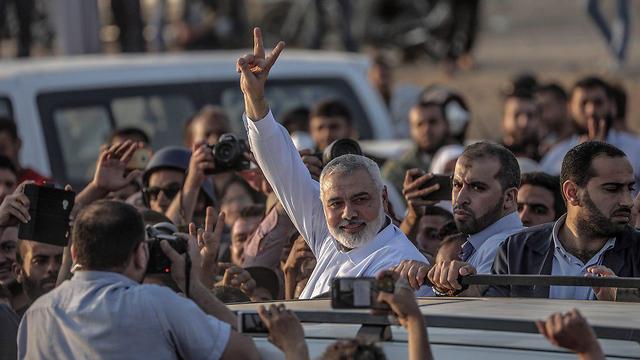
Hamas leader Haniyeh on the Gaza border (Photo: EPA)

Hamas leader Haniyeh on the Gaza border (Photo: EPA)

This trick works not only in the south, but in the north as well. The Khalid ibn al-Walid Army—which belongs to ISIS and controls the enclave where the borders of Jordan, Syria and Israel meet—is currently under a massive attack by the Assad army and the Shiite militias fighting alongside it. The Syrian ISIS realizes it is about to lose its stronghold to the regime army, just as it did in Daraa and Quneitra, and so it took a measure this week that we know from the Gazan scene—it launched grad rockets at the Kinneret, so Israel would respond by shooting at the regime army, which is attacking ISIS. The Syrian ISIS men on the triple-border area hoped the Israeli response to the rockets they fired as a provocation would stop Assad’s men. A perfect imitation of what the errant groups in Gaza are trying to do. But unlike what’s happening in Gaza, there are quite a few ISIS targets on the IAF and Artillery Corps’ lists; which is why Israeli aircraft attacked the mobile BM21 launcher that fired the grad rockets at Israel.

Just like in a game a pool—I hit the Israeli ball so it in turn hits the Syrian regime’s ball, which is about to hit me.

Searching for ISIS rockets shrapnel in the Kinneret (Photo: Avihu Shapira)

Searching for ISIS rockets shrapnel in the Kinneret (Photo: Avihu Shapira)

If it hadn’t been for the operations that do take place, the situation in the north could’ve been much worse. The IDF manages to disrupt and slow down the Iranian entrenchment, and the violations of sovereignty are limited and do not include terror attacks on the border. Israel is also successful in making the Russians interested in having a dialogue with us.

And yet, all of this is part of a chaotic reality, which contains a lot of details, but the bottom line is all that matters: the IDF and the Israeli government are no longer successful in creating effective deterrence—not in the north and not in the south. The deterrence may not be completely gone, but it has been seriously eroded, in a way that puts the State of Israel in a hopeless situation, with a continuous threat to its sovereignty along its borders, to the safety of its residents who live in these border areas, and to its daily routine.

So what can be done in such a situation? In the south, the dilemma is much more difficult and complex. The IDF can do more than what it has already done by continuing to destroy Hamas’s infrastructure and even by hitting its leaders (assassination), but such moves will almost necessarily lead to a long military operations inside the Gaza Strip. At the end of such an operation, we will be facing dilemmas just as complex: bring down the Hamas regime and stay in the strip until a different regime comes in its stead, or pull out of the strip after destroying most of Hamas’s military capabilities and returning more or less to the situation we were in before the operation began. Neither option assures long-term quiet for the residents of south Israel.

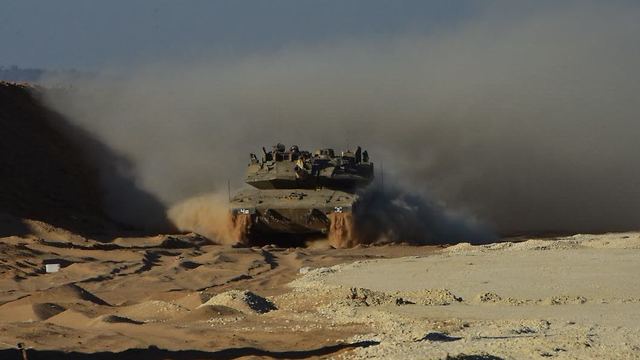
IDF tank on the Gaza border (Photo: IDF Spokesman's Office)

IDF tank on the Gaza border (Photo: IDF Spokesman’s Office)

On the other side is a civilian-economic arrangement that would calm the situation in the strip and Hamas. But those proposing such large-scale economic rehabilitation plans still can’t demonstrate just how these plans will be carried out in practice.

A combined solution is required—both military and civilian—in conjunction with Arab Gulf nations, which will allow the rehabilitation of the strip in cooperation with Hamas or—if a decision is made for Israel to go into the strip—without Hamas.

In the north, the dilemma is much simpler. Unlike the Egyptians, who have proven to be unable to influence Hamas and restrain it, the Russians in Syria can actually deliver the goods. They haven’t done it yet because they still need the Iranians to fight the last stronghold of the rebels in the Idlib Governorate in northern Syria. If and when Assad completes his takeover of Idlib, the time will come when the Russians could put into action the “big political agreement” they’re planning in Syria, as part of which the foreign forces will have to leave.

Right now, there is no use in removing the Iranians to within 100 or even 200 kilometers from Israel. In the age of missiles, rockets and cyber attacks, several hundred kilometers are meaningless. By being in our area, it’s as if the Iranians are right on our border. That is why Israel needs to continue acting militarily and make it clear to the Russians that there will be no agreement—and they won’t be able to reap the benefits of their interference in Syria—until the Iranians and their proxies leave Syria completely.

At the moment it appears the Israeli government and the IDF are at a loss in light of the serious erosion of the deterrence and of the ability to maintain security along the borders in the north and south. The immediate action needed right now to significantly reinforce the active anti-aircraft and anti-missile defense array—including the acquisition of thousands of interceptors and dozens of launchers, and of course fortifying structures all across the country. Such steps, in and of themselves, could immediately boost the deterrence.


Shots fired at IDF troops in northern Gaza

July 28, 2018

Shots fired at IDF forces in northern Gaza. IAF attacks observation post.

Elad Benari, Canada, 27/07/18 21:27
IDF patrols Gaza border-Flash 90

Since March 30, Arabs have been holding weekly violent riots along the Gaza border and have been using kites and balloons with explosives attached in order to set fire to Israeli property.

The thousands of balloons and kites carrying incendiary and makeshift explosive devices have sparked hundreds of fires and caused millions of dollars in property damage inside Israel.

The so-called “March of the Return” protests have been openly encouraged by Gaza’s Hamas terrorist rulers.

Intelligence Report: How long can a full-scale Gaza war be kept at bay?

July 28, 2018

Tensions flare after the first Israeli casualty on the Gaza border since the 2014 war with Hamas.

By Yossi Melman
July 28, 2018 01:58
https://www.jpost.com/Jerusalem-Report/Intelligence-Report-A-shaky-ceasefire-563398
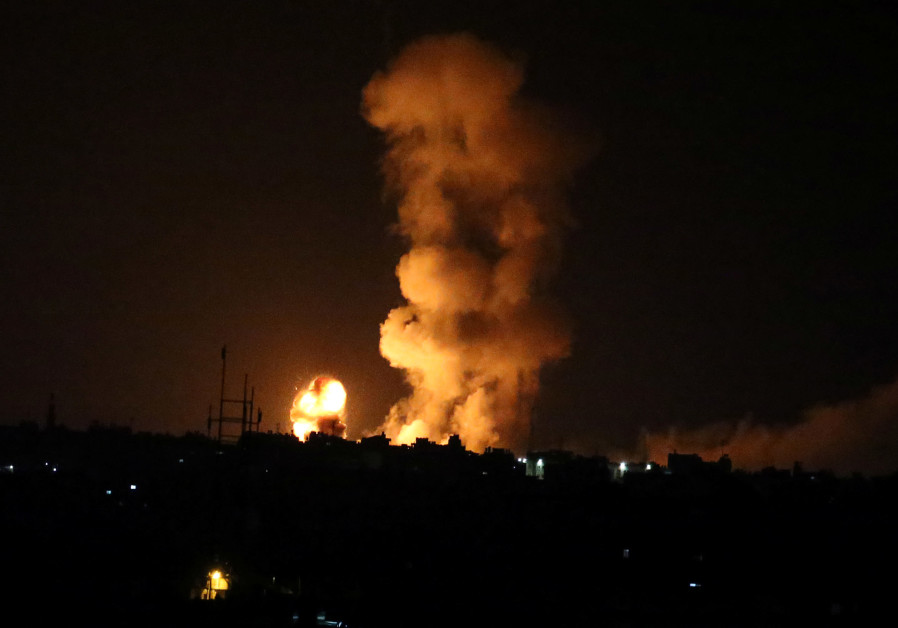
An explosion is seen following an Israeli air strike in the southern Gaza Strip July 20, 2018. (photo credit: IBRAHEEM ABU MUSTAFA / REUTERS)
TWICE THIS month, over weekends, a full-scale war with Gaza was prevented at the last minute. Nonetheless, though it may have been avoided temporarily, the threat still looms on the near horizon.

Fridays on the Israel-Gaza border are very tense as it is the Muslim holy day. Each week they go to mosques, pray and hear inciteful preaching.

Inspired – and in many cases financed – by Hamas leadership, thousands of Gazans have gathered each Friday following prayers near the border fence in order to protest against the Israeli blockade.

But these are not peaceful demonstrations.

The protesters consistently try to infiltrate Israel, damage the security fence, and target Israeli military positions and civilian machinery.

They fly arson kites, balloons and condoms filled with helium gas that burn fields, orchard groves and nature reserves on the Israeli side of the border.

Each Friday over the last four months contained the potential for an all-out war.

Each minor incident had the potential to get out of hand and turn into a major escalation, a lead-up to a war.

And this is exactly what happened twice in July. On Friday, July 14, the Israel Air Force (IAF) attacked a balloon launching pad and – unlike in previous similar strikes – Hamas activists were killed.

Hamas and Palestinian Islamic Jihad (PIJ) responded by firing nearly 200 rockets and mortar shells in the direction of Israeli rural settlements. The IAF retaliated the next day (Saturday) by striking 40 Hamas and PIJ targets, including an entire battalion base. It was the largest IAF attack in daylight since the last Gaza war in the summer of 2014, codenamed “Protective Edge.”

In order to prevent war, both sides hurried to call for help from Gen. Abbas Kamel, the Egyptian intelligence chief, and Nickolay Mladenov, the UN special envoy to the Middle East.

The two brokered a ceasefire with terms not really clear nor defined. Thus, that shaky ceasefire was ultimately broken just one week later.

This time the reason was surprise sniper fire from Gaza, which killed Israeli soldier St.-Sgt. Aviv Levi, age 20, from the Givati Infantry Brigade, who was on patrol along the border. He was the first fatal Israeli casualty on the Gaza front since the last war.

It’s not clear who shot the bullets, who gave the orders and whether they came from the highest Hamas authority or from a local initiative. Regardless, from Israel’s perspective Hamas, which rules the enclave with an iron fist, is the sovereign entity in Gaza and is therefore held accountable for every act of violence against Israeli troops or civilians.

A few hours later, Israel fiercely retaliated through a massive IAF attack that targeted 30 Hamas positions, including two battalion bases. A few Hamas terrorists were killed and it was expected that Hamas would continue the vicious cycle of violence by launching a barrage of rockets. But it didn’t.

Hamas’s restraint that Friday night was a clear indication that it doesn’t want to escalate the situation. Later, Hamas announced that a new ceasefire deal had been reached also due to the good services of Kamel and Mladenov, who is a former foreign minister of Bulgaria.

As is a matter of routine, both sides claimed victory and boasted that the other side asked – even begged – for the cessation of hostilities.

It will be more accurate to say that in reality, both sides are happy about the ceasefire.

Nevertheless, the basic problems – which Hamas’s Gaza, the Palestinian Authority that controls the West Bank, and Israel face – are still alive and kicking.

In July 2014, Hamas and Israel found themselves in a war which both didn’t want.

It was the third war between the two sides since 2007, when Hamas toppled the PA government by a military coup d’état.

The war lasted for 50 days and claimed the lives of 73 Israelis (among them 68 soldiers), one foreign worker and 2,125 Palestinians – more than half of them civilians, including hundreds of women and children.

Half a million Palestinians left their homes, which were hit and damaged, or found shelter from the Israeli bombing. Thousands of buildings were destroyed.

Israel was showered with 4,500 rockets of various ranges and with mortar shells that caused damage to rural communities, killed livestock and burned fields in the south – with some damage even occurring further north. Dozens of the rockets hit Tel Aviv suburbs, although they caused little damage. The Israeli economy suffered a substantial decline in its production. A few rockets fell near the airport and resulted in the suspension of international flights to Ben-Gurion Airport – the major gateway of Israel to the world. The overall cost of the war to the Israeli Finance Ministry was $4 billon.

The third Gaza war ended with a ceasefire and understandings that were supposed to bring a long-term solution. It was achieved and agreed upon through indirect talks between Israel and Hamas brokered in Cairo by the Egyptian general intelligence. But from the outset it was clear that both sides showed reluctance to fulfill all their commitments.

The major stumbling blocks were:

• Israel demanded that Hamas return the bodies of IDF soldiers killed in the war.

Later, after the ceasefire, Israel also demanded the release of two Israeli civilians who crossed the border to Gaza and are being held by Hamas. Hamas says it will only do this if Israel releases hundreds of Palestinians terrorists – some of whom have been involved in brutal and deadly killings of Israelis.

Israel refuses to make such a deal.

• Hamas wants Israel to lift its blockade and allow the flow of billions of dollars for the reconstruction of Gaza. The money is pledged by donor countries – such as Qatar, the United Arab Emirates, Saudi Arabia, the European Union and Japan – with plans to build a power station, a new sewer system and a water desalination station. But Israel set its own precondition: Hamas must first dismantle its rocket infrastructure and stop digging underground tunnels.

Thus, the hope for a long-term agreement between the two sides was a non-starter.

Nevertheless, with a few exceptions of occasional clashes, the ceasefire had been maintained for nearly 44 months – the longest period of peace for Israeli residents in the area since 1968.

But the fragile situation broke down on March 30. Hamas organized what it called the “Great March of Return,” which brought tens of thousands of Palestinians to the border area between Gaza and Israel.

Week after week they tried to break through the border fence, causing some damage to the fence itself, to military positions and to heavy machinery.

The cabinet instructed the army to prevent, by all means, Hamas’s attempts to penetrate Israel. The IDF responded harshly with an iron fist. Soldiers were deployed along the 66 kilometers of the Gaza border, backed by snipers, tanks, artillery, intelligence posts and drones in the sky.

After a month of demonstrations, Hamas failed to achieve its goal. Its protesters failed to cross the border and were stopped, paying a heavy price. Some 150 Palestinians were killed, mainly by the snipers, among them dozens of teenagers. Some 5,000 people were wounded. Israel was criticized by the international community for using disproportional force but felt victorious.

Realizing that the tactics of demonstrations and damaging the fence didn’t bring any fruitful dividends, Hamas moved on to a new tactic.

Already during the marches on the border, kids were flying kites in the direction of Israel. Hamas commanders jumped on the idea with a clever ploy. They set fire to the kites and flew them to Israel, taking advantage of the summer wind, which blows eastward from the sea.

The arson kites began to cause damage to fields, orchards, groves and nature reserves.

While Israel managed to find a solution to the new challenge by using drones and laser beams to cut the ropes, Hamas once again outmaneuvered Israel. Parallel to the kites they began flying balloons and condoms, filled with helium gas taken from hospital storages where it was used for MRI and other medical equipment. The gas gives the flying objects an effective boost.

The new weapon has proved to be highly destructive, leading to a depressing scene in the fields surrounding Gaza – charred black from the hundreds of fires.

The public and media pressure was mounting on the cabinet to respond accordingly.

But IDF Chief of Staff Lt.-Gen. Gadi Eisenkot, backed by reports from the IDF chief legal officer, explained to the cabinet that since the balloons and condoms are being launched from shelters far from the border, using a sniper for a precise hit is impossible. At the same time, Eisenkot explained that it would be legally problematic and would probably be internationally condemned, if the army were to fire missiles from drones at the youngsters flying the balloons. Missiles are less accurate, more lethal and the collateral damage would be very high, he explained.

But eventually, Eisenkot had no choice but to obey orders from the cabinet, led by Prime Minister Benjamin Netanyahu, who was worried about his public image as a helpless, indecisive and weak leader.

Israel began to fire missiles against the shelters and the pads from which the balloons were being launched as well as against the Hamas operatives orchestrating the balloon campaign. Some of them were killed and Hamas in return fired rockets and more shells inside Israel.

In the last four months, 500 rockets and mortar shells have been fired. It is wellknown to Hamas that the Iron Dome anti- rocket system can’t intercept the shells if their flying time is less than 25 seconds and their distance is short of 7 kilometers.

Luckily, these rockets have caused very little physical damage, but have made life for the residents in the region once again unbearable.

In July, Israel began to escalate its attacks in Gaza and eventually the brinkmanship policy paid off. Hamas rushed to ask for a ceasefire and promised this time that it would cover everything. Hamas commitments include not to send its activists to cross into Israel, not to damage the fence, not to fly kites, condoms and balloons and not to launch rockets and shells.

Israel, in return, is committed to cease its military operation in Gaza. Many military and diplomatic observers doubt very much that the new ceasefire will hold for longer than a few weeks.

This is because the basic problems of Gaza and its two million residents, who have been taken as hostage by Hamas – and to a lesser degree Israel – have remained.

As long as the two sides do not resolve the basic issues and the stumbling blocks, as long as Gaza will continue to be poor and on the verge of a humanitarian disaster, it will remain a source for war.

Dignity for the Palestinians

July 27, 2018

US ‘prepared’ and may strike Iran next month – reports

July 27, 2018
https://www.rt.com/news/434399-us-ready-bomb-iran/
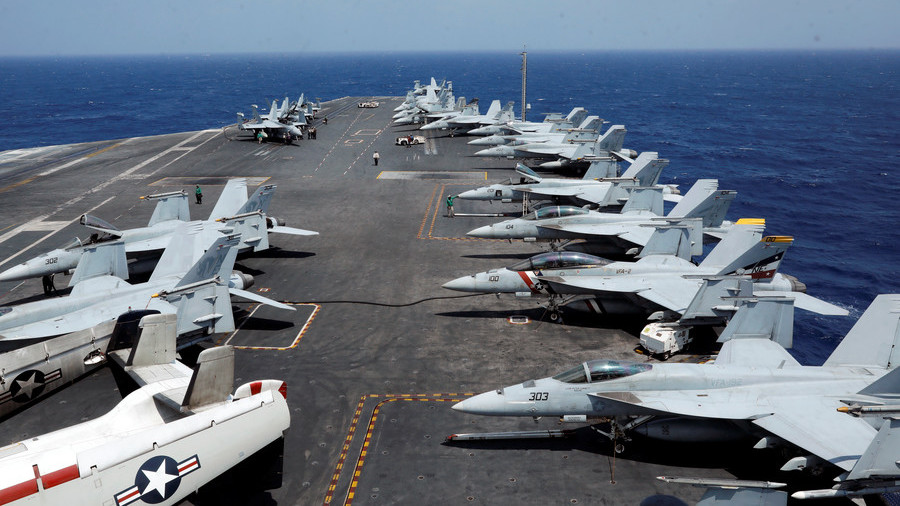
FILE PHOTO: US Navy F18 fighter jets on the deck of aircraft carrier USS Carl Vinson © Erik De Castro / Reuters
The US may be ready to target Iran’s nuclear facilities soon amid a bellicose exchange of threats between the two countries, ABC reported. However, Australian Prime Minister Malcolm Turnbull dismissed the claim as “speculation.”

The outlet cites senior figures in the government of Malcolm Turnbull, who believe the United States is “prepared” to bomb Iran’s nuclear sites. The grim prediction suggests the move could happen as early as next month.

The report comes at a time when tensions between Washington and Tehran are hitting boiling point. In one of the latest exchanges of threats between the two nations, Iran said that a war with it would be the “mother of all wars.” This prompted Donald Trump to issue a harsh response, warning that Iran would face“consequences the likes of which few throughout history have ever suffered before.”

READ MORE: ‘War will destroy everything you own,’ head of Iran’s elite troops warns Trump

Australia, a member of global intelligence alliance known as the Five Eyes, is reportedly poised to play a part in the operation, providing its defense facilities to identify targets in Iran. The same assistance may be offered by the UK, while two other parties in the alliance – Canada and New Zealand – “would be unlikely to play a role in any military action in Iran,” according to ABC.

However, the outlet’s security sources noted the significant difference between a country directly participating in a mission, and providing intelligence on Iranian facilities.

Read more

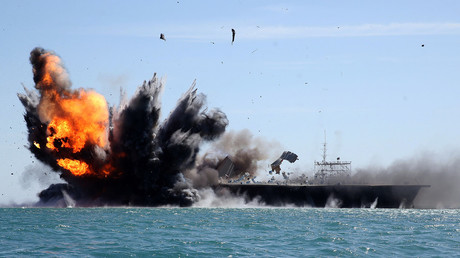
FILE PHOTO: Iran's military drill in the Strait of Hormuz © Hamed Jafarnejad

“Developing a picture is very different to actually participating in a strike,” the unnamed security source said.

Australian Prime Minister Malcolm Turnbull dismissed the ABC’s report calling it a “speculation.” He acknowledged though that “the whole world” is aware of Trump’s attitude towards Iran.

The commander of the Iranian elite Quds Force cautioned Trump, should he resort to military action, saying on Thursday that “war will destroy everything you own.” He also warned the US against further public outbursts against Iran’s leadership and its people.

US-Iranian relations has been on a downward spiral since the US leader put into action his longstanding threat to withdraw from the landmark Iran nuclear deal in May, citing its supposed flaws and Iran’s malign activities. However, the International Atomic Energy Agency has repeatedly confirmed that Tehran had not been violating the agreement.

The European signatories of the deal, known as the Joint Comprehensive Plan of Action (JCPOA), were reluctant to comply with Trump’s calls to rip it apart. On the contrary, they vowed to maintain it – even without Washington’s participation – and hold additional talks with Tehran. America’s withdrawal was also condemned by Russia and China, which are also signatories of the JCPOA.

Head of the Russian Upper House Committee for International Relations Senator Konstantin Kosachev warned that the world may face a crisis worse than that seen on the Korean peninsula if world powers sit idle in the wake of Trump’s decision.

‘Close to war, no policy for Gaza’

July 27, 2018

Minister Yisrael Katz harshly criticizes the defense minister’s conduct against terrorism: tLiberman’s policy is impossible and incorrect,’

Yisrael Katz-Hillel Meir/TPS

Intelligence Minister Yisrael Katz (Likud) said Friday morning that the incitement propagated by the Palestinian Authority is what leads to terrorist attacks such as the the deadly stabbing attack in the town of Adam last night.

“It’s interesting that this terrorist came from the same village from which the terrorist who massacred the Salomon family came. This is proof of the inspiration and the atmosphere. It is enough to see Abu Mazen (Mahmoud Abbas), who also claims that he will pay the last shekel he has as an incentive to the families of the terrorists, to understand the picture in the region. This is the time to implement the law that determines the cessation of funding and the transfer of a budget exactly equal to amount that Abu Mazen funds the families of the terrorists,” Minister Katz said in an interview with Nissim Mishal on Radio 103FM.

Katz mentioned his initiative to pass a law calling for the expulsion of families of terrorists to Gaza: “I am no longer talking about punishment. It is a means of deterrence beyond the demolition of a house whose purpose is to save lives. I called on the prime minister to allow the advancement of the law, because Hamas encourages such terrorism and they receive support and incentives from Abu Mazen.”

He also addressed the security situation in the south and harshly criticized the defense minister. “Israel has no clear policy vis-à-vis Gaza, and there are two options for dealing with the situation in Gaza: complete civil disengagement, or creating a plan for Hamas to decide. The policy Liberman supports is to keep Hamas’ head above water, and that is a failed policy. It is an impossible and incorrect policy.”

“In the Hamas decision, there are military elements that I will not discuss. I always suggest separating from Gaza, but I am being prevented from making a final decision on this proposal, and I have been proposing for years to separate from Gaza and to create a border, like Lebanon and Syria, It is absurd. How can it be that with Nasrallah, who heads an army of 150,000 rockets in Lebanon, we have succeeded in creating a deterrent force, but in Gaza, where there are enormous power gaps, Hamas leaders [are not dettered] from harming the IDF soldiers. Something is wrong with Israel’s policy, and it does not allow itself to express its full power,” added Minister Katz.

According to Katz, the problem is the lack of a consistent policy vis-à-vis Hamas in Gaza. “The defense minister still thinks Hamas should be made to decide on a proposal, in my opinion, if the peace is not restored, we are very close to another battle in Gaza. It is important to understand that I am not pushing for war. We want to supply fuel, electricity, concrete, cement, or water to Gaza, as the security establishment is doing today. As far as I’m concerned, this is not a normal situation, and it is impossible to leave the residents of the State of Israel in the situation they are in.”

Israel Cooperated to Secure Trump’s Prisoners Deal with Erdogan, But the Turks Cheated

July 27, 2018

Israel Cooperated to Secure Trump’s Prisoners Deal with Erdogan, But the Turks Cheated

Photo Credit: Screenshot – Pastor Andrew Brunson

President Trump thought he had a deal, after his meeting with Turkish President Recep Tayyip Erdogan earlier this month had ended with a smile, a fist-bump and what Trump thought was an agreement to free Andrew Brunson, an American pastor imprisoned in Turkey, the Washington Post reported Friday (A fist bump, then a rancorous call: How Trump’s deal to free an American pastor in Turkey fell apart).

The deal involved Israeli Prime Minister Netanyahu’s agreeing to release Ebru Özkan, a Turkish woman suspected of helping Hamas in return for Brunson’s release. But the deal fell apart on Wednesday, when a Turkish court ordered Brunson’s transfer to house arrest for the duration of his trial.

Turkey’s judicial system will have the ultimate say on a detained American pastor, Turkish Justice Minister Abdulhamit Gul tweeted on Thursday. “Turkey is a fully independent and sovereign country that determines its own destiny,” Gul added, “The Brunson case will proceed in its own way, as it should be in a fully independent and sovereign country, and supreme Turkish justice will have the ultimate say.”

Israel deported Özkan on July 15, a week after indicting her for ties to Hamas. She had been arrested by Israel while on a tourist visa in June.

Brunson, an evangelical pastor of the Izmir Resurrection Church, was arrested in October 2016 for “Christianization” activities. The arrest took place during the government purges that followed the 2016 alleged Turkish coup d’état attempt, when tens of thousands of Turkish military personnel, civil servants, educators, academics, dissidents, and journalists were arrested. Brunson’s Protestant church has about 25 congregants.

Trump, who was proud of his skill at cementing the prisoners’ exchange, was raging on Thursday when he tweeted: “The United States will impose large sanctions on Turkey for their long time detainment of Pastor Andrew Brunson, a great Christian, family man and wonderful human being. He is suffering greatly. This innocent man of faith should be released immediately!”

Vice President Pence said in as speech Thursday that should Turkey not free Brunson, it must be “prepared to face the consequences.”