Author Archive

Will Biden follow Obama’s path on Iran or forge his own?

November 22, 2020

Surely he can’t be as bad as Obama… Here’s hoping he isn’t.

https://www.jns.org/will-biden-follow-obamas-path-on-iran-and-return-to-negotiations/

Israel’s security establishment is worried that another Obama-esque approach to Iran will fail a second time and will once again result in a triumphant Iran flush with billions of dollars in cash. Then again, Joe Biden is not Barack Obama, and the world is in a different place.
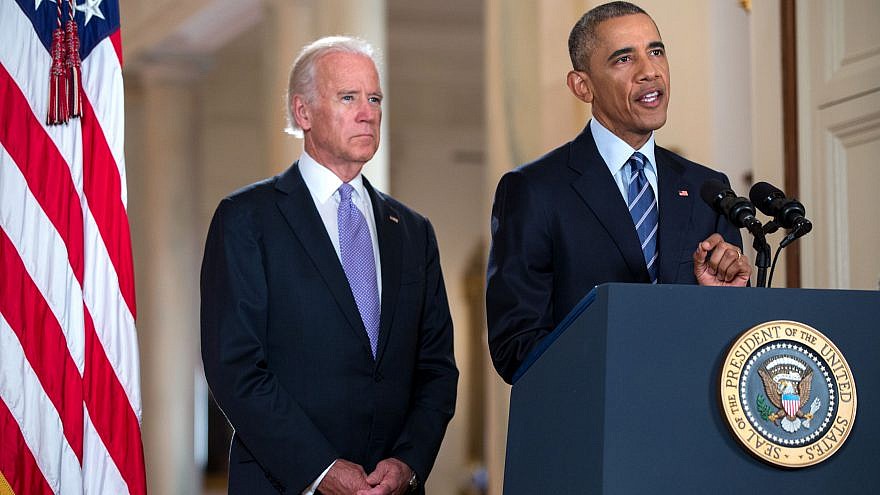
Former U.S. President Barack Obama, flanked by Vice President Joe Biden, delivers a statement on the Iran nuclear agreement in the East Room of the White House on July 14, 2015. Credit: Official White House Photo by Pete Souza.

(November 12, 2020 / JNS) One of the top foreign-policy issues President-elect Joe Biden will be forced to address upon taking office in January will be the Iranian threat.

During the campaign trail, in what was seen as a dig at U.S. President Donald Trump’s efforts to apply maximum pressure on Iran through sanctions, Biden said he would handle Iran “the smart way” and would give Iran “a credible path back to diplomacy.” Biden has also said that the United States could rejoin the deal “as a starting point for follow-on negotiations” if Iran commits to full compliance.

But Israel’s security establishment is worried that another Obama-esque approach to Iran will fail a second time and will once again result in a triumphant Iran flush with billions of dollars in cash. Any letting down of the guard could also embolden world leaders eager to turn a blind eye to Iranian violations and hegemonic ambitions in order to seal a deal, regardless of Israeli or Gulf state fears.

Asaf Romirowsky, executive director of Scholars for Peace in the Middle East and a senior non-resident fellow at Bar-Ilan University’s Begin-Sadat Center, told JNS that Biden will “have a hard time disregarding the renewed sanctions on Tehran and their effects.”

“As a veteran politician, Biden has a greater appreciation of the U.S.-Israeli alliance and will not compromise Israeli security,” said Romirowsky. “Moreover, his history with Israel will contribute to his attitude that would presumably be less acrimonious as it was during the Obama years.”

Biden, however, may indeed feel the need to revert back to his old boss’s methods of diplomacy in order to appease Iran.

Iranian President Hassan Rouhani, quoted by the state-run IRNA news agency, said the next U.S. administration must “compensate for past mistakes” and “return to the path of complying with international agreements through respect of international norms.”

‘Not fully cooperating with the IAEA’s investigation’

According to the latest report by U.N. inspectors, Iran has 2,440 kilograms of enriched uranium stockpiles, which far exceeds the 300 kilograms allowed under the 2015 nuclear deal. Experts say that is enough material to make at least two nuclear weapons. The report said that Iran is also enriching uranium to as much as 4.5 percent purity, which is also higher than the limits in the deal. Additionally, Iran has also completed the transfer of a cascade of advanced centrifuges from a plant above ground to an underground site, which can protect the plant from aerial attacks.

What has Israeli experts worried is Iran’s blatant non-compliance with the deal and clear interest in pursuing nuclear weapons. It continues to install advanced centrifuges and is developing its intercontinental ballistic-missile program.

Iran’s lies and deceptions with regard to its intent for its nuclear program, which it says is for peaceful purposes only, have been handily proven by Israel in a number of instances. But each time Israel requested that the international community investigate, Israel was met with a slow reluctance to comply.

In 2018, Mossad agents broke into Iran’s secret nuclear archives in the heart of Tehran and walked away with about 50,000 pages and 163 compact discs worth of intelligence proving Iran had misled the United States and Europe about its intentions even while it negotiated the Joint Comprehensive Plan of Action, or JCPOA.

The International Atomic Energy Agency (IAEA) was slow to respond.

In his 2018 address to the U.N. General Assembly, Israeli Prime Minister Benjamin Netanyahu urged the international community to investigate what he said was a secret nuclear facility in the Turquzabad district of Tehran.

Again, the IAEA took its time investigating, but eventually, it did demand an explanation from Iran over why traces of nuclear particles were discovered at the site.

According to the United States Institute of Peace (USIP), “besides its public denials, Iran does not appear to be fully cooperating with the IAEA’s investigation into the site.”

The USIP also said that the IAEA “continues to question Iran about the site,” but the agency had “not received an entirely satisfactory reply.”

Yet even with clear evidence of Iran’s rogue behavior, Romirowsky said Biden, like Obama, “believes that a deal is still the best way to prevent a nuclear Iran.”

Romirowsky warned that Biden is entering “a very different Middle East landscape that he and his advisers cannot ignore, specifically regarding Israel, and its newfound Arab relations and collaboration in particular, as it relates to the threat of Iran illustrated by security and military ties between Israel, the Egyptians and the Saudis.”

‘Their best interests in mind’

Uzi Rabi, director of the Moshe Dayan Center for Middle Eastern Studies at Tel Aviv University, told JNS he is concerned that Israel will soon find itself “at the eleventh hour” with regard to Iran’s nuclear weapons program. “We are in a very delicate situation,” he said.

He noted Biden’s intentions to negotiate with Iran, as well as Tehran’s eagerness to reach an agreement due in part to its poor economic plight.

“The question is what sort of agreement Biden has in mind,” said Rabi. “Will it have modifications with regard to Iran’s ballistic-missile program, Iran’s aggression in the region and bringing in more monitoring? That would be great.”

The JCPOA ignored or mismanaged all three of these issues.

Rabi said he hopes that the Americans have “learned a lesson from what happened before” regarding Iran’s disingenuous approach to negotiating. He also said the Americans “cannot get to the negotiating table and play it by ear. They must have a clear end game.”

He explained that the important elements that were left out of the deal, such as Iran’s ballistic-missile program, its hostile behavior in the Middle East, and improved inspections, should be included in any new agreement.

“One should hope that Biden and his team is coming up with a fresh approach about how to deal with Iran,” he said.

Rabi said that behind the scenes, Gulf state leaders fear that Biden will follow Obama’s appeasement approach and will want to lift sanctions and reduce pressure on Iran.

This mistaken approach could have a negative “snowball effect,” he warned. “Biden should bear this in mind and internalize what has happened in the Middle East.”

Ultimately, said Rabi, this is Biden’s “litmus test.”

“If Biden performs in a successful way when it comes to the Iran file, that will make life easier for everyone in the Middle East, including the United States. If the opposite happens, you can definitely expect a negative snowball effect,” he stated.

Rabi echoed Romirowsky, suggesting that Israel needs a joint agreement with Egypt, Saudi Arabia and the United Arab Emirates by which they can influence some changes to any new Iran deal if and when it happens.

In order to try and be involved in any new negotiations, Israel and its Arab partners should “strive for a dialogue with those in the future Biden administration,” said Rabi.

Romirowsky added that “Iran and its proxies are still the largest destabilizing factors to the region.”

As such, he said, “a Biden administration will contend with a more unified Middle East—a Sunni Crescent that includes Israel. This will require an understanding of Israeli deterrence bolstered by an Israeli Qualitative Military Edge. Trump’s policies towards Israel gave Israel a sense of relief and gratitude post-Obama.”

According to Romirowsky, moving forward, Biden will need to “convince Israelis that he will have their best interests in mind when it comes to Iran.”

IDF says it bombed barracks of top Iranian officers in Syria to ‘send message’

November 22, 2020

Lots of messages being sent at the moment… all to Iran.

(Note this article is dated 18 November).

https://www.timesofisrael.com/idf-says-it-bombed-barracks-of-top-iranian-officers-in-syria-to-send-message/

Military says Iranian command base near Damascus airport also among targets hit overnight in response to attempted border attack; army goes on high alert for possible retaliation

Syrian air defenses respond to alleged Israeli missiles targeting south of the capital Damascus, on July 20, 2020. (AFP)

The Israel Defense Forces said a round of airstrikes it carried out in Syria on Wednesday morning was meant to send a message to Iran to leave the country, specifically the border area, following an attempted attack on the Golan Heights that was thwarted this week.

In the predawn hours of Wednesday morning, Israeli fighter jets struck eight targets in Syria — roughly half near Damascus and half along the Golan border — in response to an Iranian-directed effort to set off anti-personnel mines against Israeli troops, IDF Spokesperson Hidai Zilberman said. The explosives were disarmed on Tuesday morning.

According to the spokesman, the strikes targeted a number of facilities controlled by Iran’s Islamic Revolutionary Guards Corps’ expeditionary Quds Force, which commands and supports proxy militias in Syria. In addition, the Israeli fighter jets bombed a Syrian military base, as well as several Syrian anti-aircraft batteries that fired at them.

The Syrian state news agency SANA said three soldiers were killed and one was injured in the attack, which it said targeted sites in southern Syria. There were no immediate reports of casualties from the IRGC.

The Syrian Observatory for Human Rights, a pro-opposition organization based in the United Kingdom, said 10 people in total were killed in the Israeli strikes, some of them Iranian. This could not be immediately confirmed. The Observatory has in the past been accused of inflating and even inventing casualty figures. In general, Israel does not intentionally target people in its strikes, instead focusing on infrastructure, as this has been found to reduce the likelihood of retaliation by Iran and its proxies.

Zilberman told reporters that the retaliatory attack was intended as both a message to Iran that “we won’t allow Iranian entrenchment at all and next to the border specifically,” and a message to Syria that it will be held responsible for allowing Tehran to maintain a presence in its country.

The spokesman said that Israel tried to send a similar message to Iran and Syria in August after a previous attempt to plant bombs along the border, but it evidently “wasn’t received.”

Zilberman said the military was prepared for the possibility of retaliation from Iran or Syria, with Iron Dome and other air defense systems on high alert.

Israel views a permanent Iranian military presence in Syria as an unacceptable threat, which it will take military action to prevent.

Defense Minister Benny Gantz threatened further action if Iran again attempted to carry out attacks on Israeli forces or continued to establish a permanent military presence in Syria.

“The IDF last night struck military targets belonging to the Iranian Quds Force and the Syrian military in response to the planting of bombs on the Syrian border within Israeli territory. I say again to our enemies: Israel will not accept violations of our sovereignty anywhere, and we will not allow a dangerous force build-up on any border,” Gantz said in a Hebrew video statement.

Zilberman did not reveal the nature of all eight targets of the predawn attack, but said they included: a military base used by Iran to direct its forces in the country located just next door to Damascus International Airport; a secret barracks used by top Iranian commanders in Syria, which is also used to host visiting delegations from Tehran, southeast of Damascus; a base of the Syrian military’s 7th Division, which cooperates widely with Iran; and mobile Syrian surface-to-air missile batteries.

According to the spokesman, the military knew there were Iranian officers in the barracks when the attack was carried out, but did not specifically target them or the areas in the building where they were located.

In addition, the IDF said it targeted arms warehouses in Syria. Zilberman did not comment on the nature of the sites that were bombed on the Golan border.

The Syrian state news outlet also said Syrian air defenses shot down several incoming Israeli missiles, though war analysts generally dismiss the regime’s regular claims of interceptions as false, empty boasts. Zilberman said the military was still reviewing the results of the attack so he could not say definitively if the claim was true, but that if the Syrian military had succeeded in downing any incoming missiles, it was “extremely marginal if it happened at all.”

Though Israel officially maintains a policy of ambiguity regarding its activities in Syria — in the hopes of not giving Iran and Syria a pretext to respond — the IDF consistently acknowledges carrying out airstrikes on targets in Syria that either are in response to specific attacks from the country, as was the case this week, or were attempts to preempt and prevent such attacks.

According to Zilberman, the three Claymore-style mines planted along the border were set there by Syrian nationals who live near the border, at the instruction of the IRGC Quds Force. The mines were uncovered in a buffer zone near the border that is under Israeli control but is on the Syrian side of the security fence, where the IDF regularly conducts patrols, indicating that the explosives were meant to be used against soldiers.

It was the same area where Iranian-backed Syrian operatives tried to plant mines in August, though in that case the four men were spotted by the IDF at the time and killed.

Since that attempt, the IDF has more closely monitored the area to prevent a similar attack.

Zilberman said the military did not yet know when the three mines were planted along the border, but that it seemed to have been several weeks ago. The IDF was investigating how the Iranian-backed operatives were able to evade detection and plant the bombs.

On Tuesday morning, the IDF sent a team of combat engineers into the area to disarm the mines.

Zilberman said the military called on the UN peacekeeping force that is meant to maintain the 1974 ceasefire between Israel and Syria to prevent such attacks in the future.

The IDF has launched hundreds of strikes in Syria since the start of the civil war in 2011 against moves by Iran to establish a permanent military presence in the country and efforts to transport advanced, game-changing weapons to terrorist groups in the region, principally Hezbollah.

Israel’s Success Against Iran Poses a Challenge for Biden

November 21, 2020

https://www.bloomberg.com/opinion/articles/2020-11-17/israel-s-military-success-against-iran-poses-challenge-for-biden

The president-elect needs to decide how much help he wants to accept from the Israelis.

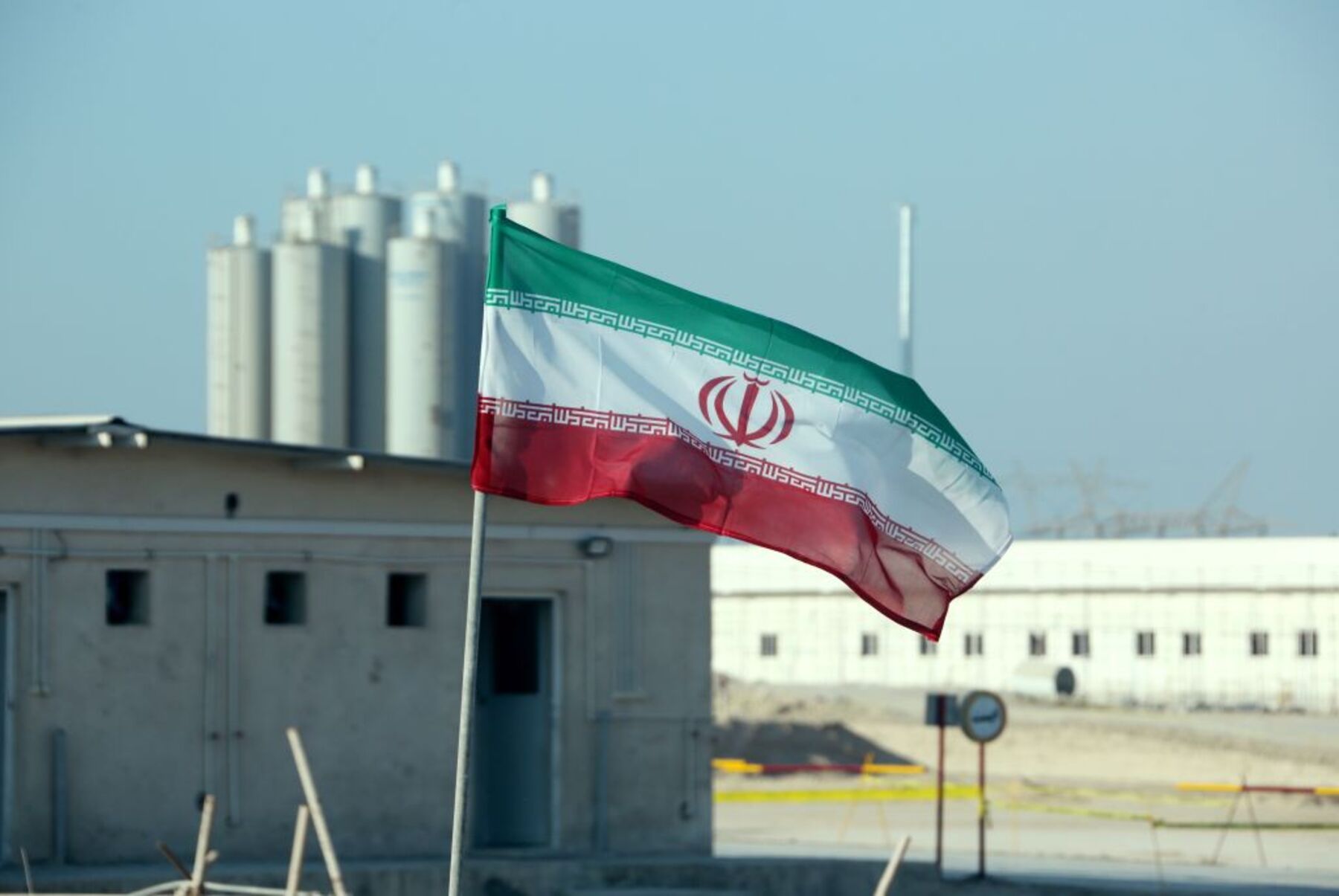
Iran's Bushehr nuclear power plant.

When President-elect Joe Biden finally starts getting intelligence briefings, he may want to pay special attention to Israel’s successful operation against Abu Muhammad al-Masri, al-Qaeda’s second in command.

The significance of that operation, which took place in August and saw al-Masri shot dead in the street, is its location: Iran. According to the center-left conventional wisdom, this sort of thing should be impossible. While many analysts acknowledge that senior al-Qaeda leaders fled to Iran after the fall of the Taliban in Afghanistan, they have insisted that there was no significant relationship between the Shiite majority regime in Tehran and the Sunni-jihadist terrorist group.

In fact, al-Qaeda’s No. 2, who was wanted by the FBI for his role in planning the 1998 attacks on U.S. embassies in Africa, was living freely in an Iranian suburb. It should be obvious by now that Iran is willing to cooperate with al-Qaeda when their interests converge.

Iran and al-Qaeda have cooperated for decades against U.S. targets in the Middle East. “There is ample evidence going back to the 1990s that Iran is willing to work with al-Qaeda at times,” said Thomas Joscelyn, a founding editor of the Long War Journal. “Sometimes their interests are opposed and sometimes they converge.”

This came to the public’s attention in 2017, after the CIA released a batch of documents recovered at the compound of Osama bin Laden in Pakistan. One of those documents is a 19-page memo laying out the quarter-century history of al-Qaeda’s relationship with Iran. It says Iranian intelligence offered al-Qaeda money, arms and training and facilitated the travel of some operatives, while providing safe haven for others. Indeed, after the fall of the Taliban, the wives and children of bin Laden and his deputy fled to Iran.

All of this is relevant to Biden as he navigates how to achieve his own stated goal of rejoining the Iran nuclear bargain from which the U.S. withdrew in 2018. If Biden proceeds with his current plan of lifting nuclear sanctions on Iran in exchange its return to compliance with the nuclear agreement, what will his administration do to deter Iran from supporting terrorism? The current administration has sanctioned Iran’s central bank and military for sponsoring terror. Will Biden keep those sanctions in place?

Another question for Biden is whether he will encourage Israel to continue its daring intelligence operations inside Iran. When Biden was vice president, the U.S. discouraged Israel from assassinating Iranian nuclear scientists, particularly as it conducted the diplomacy that led to the 2015 nuclear deal. In the past four years, however, Israeli operations have been successful. The killing of al-Masri occurred during a summer in which a number of strategic sites inside Iran exploded as a result of what appears to be Israeli sabotage. Will Biden urge Israel to cool its jets?

Ten years ago, it was understandable that America would want to restrain Israel while it negotiated with Iran. The Obama administration tried but failed to reach a much stronger and more durable deal that restricted Iran’s nuclear ambitions. Now Biden should consider whether pursuit of that flawed deal is worth the effort. In the next two months, he and his transition team will have to decide whether constraining Israel helps or hinders the goal of containing Iran.

Trump can help Israel against Iran in final months – analysis

November 18, 2020

Here’s hoping…

I’ve always thought it would be totally awesome if the US gave/sold Israel some bombers (like B-2 or B-52 or B-1), together with a whole heap of whopping big bunker busters.

Game over, Iran.

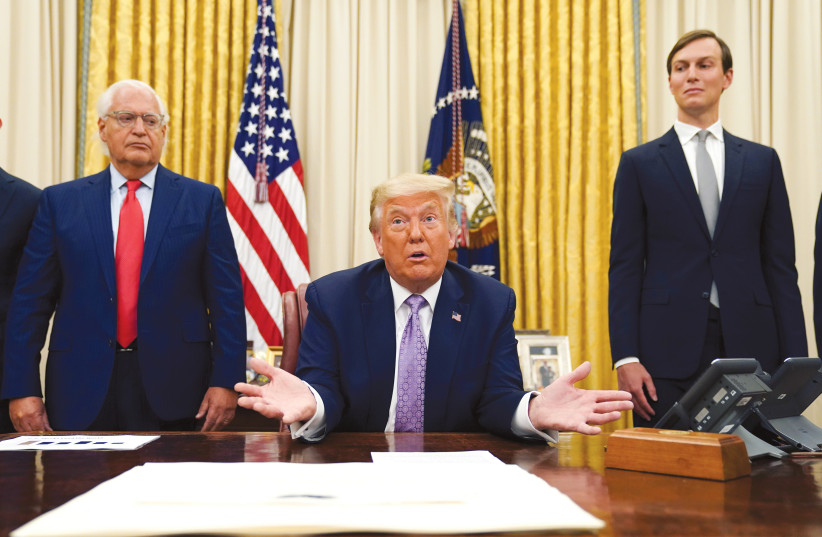
US AMBASSADOR to Israel David Friedman and White House senior adviser Jared Kushner stand behind US President Donald Trump in the Oval Office in August. (photo credit: KEVIN LAMARQUE/REUTERS)

It’s likely that the US and Israel have something up their sleeves that can’t be mentioned.

https://www.jpost.com/middle-east/trump-can-do-more-on-iran-than-normalization-in-final-months-analysis-649352

When US Secretary of State Mike Pompeo announced his trip to the region last week, State Department officials said his stop in Israel from Wednesday to Friday will be on “a variety of issues, including the implementation of the Abraham Accords.”

Interestingly, Iran was not mentioned as a topic of discussion in Israel, despite being mentioned repeatedly in the context of Pompeo’s visit to the United Arab Emirates, Qatar and Saudi Arabia on this tour.

Yet it defies all logic to think that Iran is not going to be on the agenda for Pompeo’s visit to Jerusalem. Yes, there is much to discuss about the Abraham Accords, but Israel is one of the primary targets of the Iranian nuclear threat.

And in the two months remaining for the Trump administration, it is more likely to be able to take effective steps directly countering the Iranian threat than on expanding the circle of Middle Eastern countries establishing relations with Israel.

When it comes to the Abraham Accords, the State Department official said the UAE and Bahrain are working toward opening embassies in Israel and starting cooperation in education, healthcare, security and other issues.

“The accords represent a historic breakthrough, and we believe more Arab and Muslim-majority countries will soon follow down this path of peace,” he said.

In Israel, however, officials are more circumspect about the chances of convincing more Arab states to normalize ties.

Intelligence Minister Eli Cohen (Likud), a member of the security cabinet, said many processes in the region were put on hold ahead of this month’s US election. That situation will likely continue until presumed President-elect Joe Biden makes his positions clear, he said.

“I think many countries in the region will now sit, wait and see what the American policy will look like,” Cohen said.

Saudi Arabia is one country that has been mentioned as a likely candidate to establish relations with Israel soon. Biden, however, has made statements about distancing his administration from Riyadh, especially in light of its human-rights violations, which the Trump administration ignored.

The Saudis will likely wait and see what they can get out of a Biden administration in exchange for normalization with Israel, whether it’s weapons sales, more favorable policies or both.

Cohen expressed hope that Biden would pick up where US President Donald Trump left off.

“We’re in a process of peace agreements, of promoting stability in the region,” he said. “If I were Biden, I would strengthen this axis and not make things easier for Iran.”

In the meantime, Israel is encouraging the Trump administration to take direct action to reduce the Iranian threat.

It’s likely that the US and Israel have something up their sleeves that can’t be revealed. A recent report in The New York Times that Israel in August killed al-Qaeda’s No. 2 leader, who was based in Iran, is a reminder that there are always things happening behind the scenes when it comes to Israeli and American efforts to curb the threat from Iran.

SOME HAVE suggested the possibility of an attack on Iran in the next two months. But this seems unlikely in light of acting Secretary of Defense Christopher C. Miller’s letter to all Department of Defense employees on Friday, calling for an end to the state of war the US has been in since 2001.

“This is a critical phase in which we transition our efforts from a leadership to a supporting role… All wars must end,” he wrote. “Ending wars requires compromise and partnership. We met the challenge; we gave it our all. Now, it’s time to come home.”

The US can, for example, send bunker-buster bombs to Israel, like a bill proposed last month by Congressmen Josh Gottheimer (D-New Jersey) and Brian Mast (R-Florida) would allow. The 30,000-pound Massive Ordnance Penetrator bomb the bill mentions would allow Israel to defend itself against Iran if it develops nuclear weapons and would “shore up Israel’s qualitative military edge,” Gottheimer said.

One expert, speaking on condition of anonymity, said Israel would need B-1 or B-52 bombers to carry the bunker buster to Iran without its air force being able to stop it. But the Obama administration refused to give Israel the bunker busters or allow the IAF to train on the planes.

The Trump administration is in favor of giving Israel bunker busters, but it has said the US only has 18 B-1 bombers. Still, America has plenty of Cold War-era B-52s that can do the job.

When Pompeo visits Israel this week, Prime Minister Benjamin Netanyahu could push for the US to give Israel these capabilities, which will shift the balance in the region so that the Jewish state can destroy Iran’s nuclear program if need be.

As for what’s being discussed more openly, the Trump administration clearly is not relaxing its “maximum pressure” campaign during its final months. The US plans to pile on more and more sanctions in the coming weeks, with a goal to make it difficult for Biden to return to the Joint Comprehensive Plan of Action (JCPOA), the 2015 nuclear deal that gave Iran a long-term path to a bomb.

Some of these sanctions would be placed by designating entities and individuals as terrorists, others would be on human-rights violators, and still others would target Iran’s ballistic-missile system.

These kinds of sanctions are technically easy to undo: Whatever Trump can do with a flourish of executive power can be reversed by Biden the exact same way.

But the Trump administration is relying on the idea that lifting sanctions on terrorists and human-rights violators would be politically toxic. It would raise the question of why the Biden administration cares so much about restoring the Obama-era agreement that it would overlook atrocities, thus making it much more challenging for Biden to take the necessary steps to rejoin the Iran deal. 


FORMER ISRAELI ambassador to the US Michael Oren, who was in Washington as the Obama administration began talks with Iran, said the Trump administration was giving Biden “the gift of leverage” going into negotiations and called on the president-elect not to squander it.

“As Bibi [Netanyahu] used to say, We have them on the ropes. Don’t let them get off the mat,” he said.

However, Oren mentioned efforts that Biden associates have been making to counter the Trump administration by spreading “myths” about the efforts to curb an Iran nuclear weapon.

“The lie of the JCPOA… [is a] false dichotomy that it’s either the Iran deal or war,” Oren said. “That isn’t the choice: The choice is between the Iran deal and a better deal. Nobody in the Middle East believed the choice is war. The only people who believed that is the American people because they’re so war-weary – and it worked.”

“I think that Biden would [present that dichotomy] again, and that’s a lie,” he said.

A “multidimensional lie” that some in the Biden orbit have been spreading is that Iran is closer to a nuclear weapon than it was before Trump pulled the US out of the JCPOA, Oren said.

“[For] one [thing], the IAEA says Iran has not enriched enough uranium to produce even one nuclear weapon,” he said. “Two, the JCPOA enables Iran to develop centrifuges that enrich uranium at four times the present rate, reducing the breakout time to a quarter of what it was, which means [that it’s] much closer than Iran was to a bomb in 2015.”

Taking that into account, strategies that Israel and the Trump administration are not discussing openly are likely to have more staying power and be far more effective in protecting Israel from the Iranian threat at this juncture.

Analysis: A History of Targeted Killings Attributed to the Mossad

November 18, 2020

Nice summary of the good work of Mossad.

You should start to feel worried if you see a motorbike (with passenger) in your rear view mirror…

Analysis: A History of Targeted Killings Attributed to the Mossad

The New York Times revealed on Nov. 13 that Israeli operatives, at the behest of the United States, killed Abu Muhammad al-Masri, a senior Al Qaeda leader in the line of succession on Aug. 7 in Tehran. The killing of al-Masri by Israeli operatives follows a decades old pattern of targeted killings by the Mossad.

FDD’s Long War Journal has compiled the following list of notable targeted killings attributed to the Mossad.

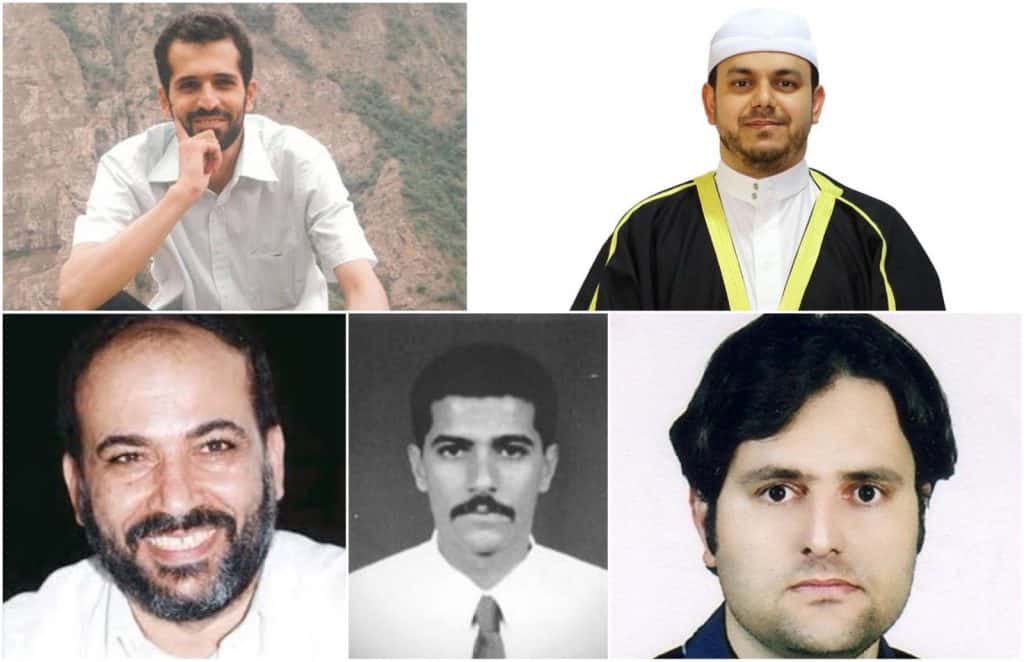
Abu Muhammad al-Masri and Maryam al-Masri

A tweet by Iran’s semi-official Fars News Agency on Aug. 7, reported that an “Arabic-speaking father and daughter” were shot and killed in their vehicle on Pasadran street in Tehran, Iran.

A little over three months later, The New York Times revealed the pair killed in Tehran were Al Qaeda’s Abu Muhammad al-Masri and his daughter Maryam al-Masri, the widow of Hamza bin-Laden, the son of former Al Qaeda chief Osama bin-Laden.

According to the report, the pair were killed when two gunmen on a motorcycle pulled up beside the vehicle al-Masri was driving and fired five shots from a pistol fitted with a silencer.

Additionally, Israel’s News Channel 12 shed light on why Israel became involved in al-Masri’s killing.

Citing Western intelligence sources, al-Masri planned to “attack Israeli and Jewish targets.” The killing of al-Masri was a “clean operation that was carried out without incident,” the Channel 12 report stated.

Fadi al-Batsh

In Apr. 2018, Fadi al-Batsh, a Palestinian engineer and member of Hamas, was killed when two men on a motorcycle fired approximately one dozen shots at him as he walked down a street in the Malaysian capital of Kuala Lampur.

According to information obtained by The Times, al-Batsh was part of a “training and fundraising network operated from Gaza by Hamas, whose network stretches across the world and has a presence in the UK.”

Additionally, the money raised by the network was funneled to Gaza and the West Bank for Hamas’ military wing al-Qassam Brigades to operate against Israeli targets.

Mostafa Ahmadi-Roshan and Dariush Rezaei-Nejad

On Jan. 11, 2012, a motorcycle pulled up alongside Ahmadi-Roshan’s silver Peugeot 405 and stuck a magnetic charge to the door he was sitting beside. The magnetic charge detonated killing Ahmadi-Roshan as the assailants drove away.

According to reports, Ahmadi-Roshan was a chief chemist working on Iran’s nuclear program.

Less than six months before the killing of Ahmadi-Roshan, another scientist, Rezaei-Nejad, was shot and killed Jul. 23, 2011, by assailants on a motorcycle in Tehran.

Like his counterpart Ahmadi-Roshan, Rezaei-Nejad was reportedly working on Iran’s nuclear program, although it remains unconfirmed what role he played in it.

Fathi Shaqaqi

On Oct. 26, 1995, Shaqaqi was shot and killed outside the seaside town of Sliema, Malta. Two men on a motorycle drove up to Shaqaqi as he walked down a sidewalk and fired five shots from a pistol equipped with a silencer. Shaqaqi had just returned from Libya where he had met with the Libyan leader, Col. Muammar Qaddafi, to urge him to stop expulsions of Palestinians from the country.

Shaqaqi, the founder of Palestinian Islamic Jihad, had long been accused by Israeli intelligence of masterminding suicide bombings against Israelis. He was also a key player in forming the National Alliance, a coalition of eight PLO factions including Islamic Jihad and Hamas who rejected peace with Israel.

A pattern of assassinations

The killings mentioned above share similar characteristics. All involved assassins on motorcycles, the operations were conducted in countries considered hostile to Israel and those killed posed a threat to the country’s security.

There are more notable instances where the Mossad was reportedly behind targeted killings: Hezbollah’s Imad Mughniyeh, Black September’s Ali Hassan Salameh, Hamas’ Mahmoud al-Mabhouh and the Popular Front for the Liberation of Palestine’s Wadi Hadad.

It is noteworthy to mention the Mossad rarely admits responsibility for targeted killings. There are rare occasions when a government official hints of Israel’s involvement in targeted killings, but generally they remain a mystery.

As seen with the killing of al-Masri, neither Iran, the United States, Al Qaeda or Israel have officially mentioned anything about the three-month-old assassination. This saves Iran from having to explain its documented relationship with Al Qaeda and how Israel, a chief enemy of Iran, was able to operate inside the country without being detected by Iranian intelligence.

Israel must prepare for a change in US policy toward Iran

November 17, 2020

What?!

The possible change of leadership in the US is an opportunity for Israel to change course to a more appropriate policy also in terms of the Iranian challenge.

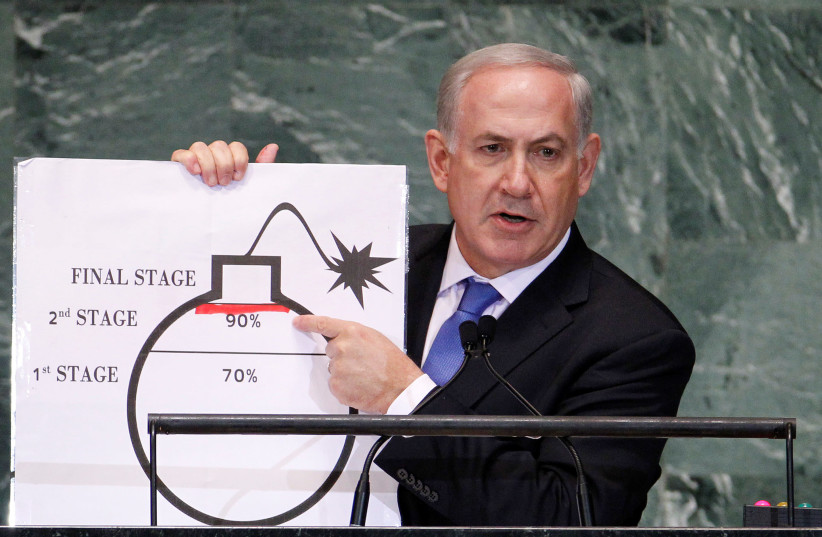
Israel's Prime Minister Benjamin Netanyahu points to a red line he has drawn on the graphic of a bomb as he addresses the 67th United Nations General Assembly at the U.N. Headquarters in New York, U.S., September 27, 2012. (photo credit: REUTERS)

https://www.jpost.com/opinion/israel-must-prepare-for-a-change-in-us-policy-toward-iran-649108

‘The year is 1939 and Iran is Germany” – I heard Prime Minister Benjamin Netanyahu say at a Jewish conference in Los Angeles in 2006. This statement sounded to me anti-Zionist because it raised the question of whether we really are in the situation we were in 1939 before there was a Jewish state with the strongest army in the region. So, does Zionism justify itself?

In addition, I wondered how this apocalyptic message is consistent with the attempt to bring American Jews to visit Israel and invest in it, and with us Israelis to raise our children in a country on the brink of a nuclear holocaust. I do not intend to diminish the Iranian strategic challenge and the importance to prevent Iran from achieving military nuclear capabilities, but a more rational and less hysterical perspective would benefit Israel.

This alarmist approach was one of the reasons for the conflicts the Netanyahu government had with the Obama-Biden administration. A new perspective would benefit the ability of Israel to work jointly with the Biden-Harris administration on a coordinated approach.

The prevailing axiom in our area is that Iran poses an existential threat, and that its efforts to achieve the ultimate weapon require us to use any means possible to prevent it. As part of our zigzagging between paranoia and hubris, we hear that Iran is a strong power that threatens the future of the Middle East, and the next day that Iran is on the verge of collapse if only we take one step or another. Both statements are far from reality. I would like to present a more balanced approach to Iran and the threat posed by it.

There are many similarities between Iran and Israel. According to foreign sources, Israel achieved military nuclear capabilities in the 1960s and was the sixth country in the world to do so. Under the Non-Proliferation Treaty, the five permanent members of the Security Council (USA, Russia, Britain, France, China) have recognized nuclear weapons, but since then – India, Pakistan and North Korea have already declared nuclear weapons in their possession. Iran is not on the list, and even if it will be, Iran’s abilities are a long way from ours.

Iran’s motivation to acquire nuclear weapons, which is presented to us mainly as an aspiration for regional hegemony, is not different than Israel’s motivation, which stems from existential anxiety and the goal of defense and deterrence.

Iran is surrounded by enemies, represents a hated Persian minority in an area where an Arab and Turkish majority and represents an outcast Shi’ite minority in an area with a vast majority of Sunnis. Iran was traumatized by the war with Iraq, in which about a million Iranians were killed and wounded. As you may recall, the West supported Iraq.

Iran has chosen Israel as a target for its rhetoric because it pays off in terms of Iran’s status in the region, but Israel is not the reason for Iran’s motivation to acquire nuclear weapons.

As in Israel, the Iranian public is one of the most educated and creative in the world. The Iranian people, from all over the Muslim world, are most similar to us Israelis.

The governments of Israel and Iran are similar in the disproportionate influence of religious leaders and the lack of separation between religion and state, as opposed to liberal democracies. Israel often talks about the lack of democracy in Iran, but in the global ranking of democracies, Iran is ahead of Saudi Arabia, which we see as a moderate country. In Iran, it is remembered that the West supported the tyranny of the shah and that the United States assisted in a coup that brought the shah to power instead of a semi-democratic Mosaddegh regime. Israel, on the other hand, is in the process of declining in the democracy index.

Extremist elements in Iran have grown stronger thanks to the hysterical treatment of Iran by Israel and the United States. During the Gulf War, the Bush administration overthrew Iran’s enemy in Iraq – the Sunni Ba’ath party – and turned it into a chaotic Shi’ite-dominated state. Israel helped Iran export the revolution to Lebanon during its long stay in Lebanon after an unnecessary war (in which I participated) that turned Hezbollah into a legitimate organization in the eyes of the Lebanese.

Netanyahu encouraged president George Bush to overthrow the Ba’athist regime in Iraq. Netanyahu encouraged President Donald Trump to abandon the JCPOA agreement between Iran and the powers (P5 + 1). The abandonment of the agreement dismantled the international coalition that imposed crippling sanctions on Iran, which eventually brought Iran into negotiations; weakened Rouhani’s moderate leadership, which prefers a functioning economy to regional hegemony, strengthened extremist Revolutionary Guards, and brought Iran closer to a nuclear weapon.

I still remember as a diplomat serving in the US that the line we presented was that sanctions were not enough to bring about a change in Iranian policy, and after the agreement was signed, that if only they had continued with the sanctions, Iran would have surrendered.

I remember the concern we expressed during the negotiations about the possibility that president Barack Obama would include regional agreements with Iran. And after the agreement was signed, Obama was accused of failing to reach a regional agreement that would prevent Iran from promoting terrorism. The alarmist Israeli position has caused harm and continues to do so. Israel is perceived as inconsistent, failing to convince the Europeans, Russians and Chinese, whose cooperation is necessary.

Israel must be part of an international coalition trying to reach an agreement with Iran that will prevent it from reaching a nuclear bomb, but it must be understood that an agreement requires compromise. Israel must prevent Iran from transferring weapons to Hezbollah, but alongside military action, smart diplomacy must be exercised vis-à-vis Lebanon, where the mechanism of negotiations about the naval border can serve as an opportunity. Israel needs to find ways to reach out to the Iranian people and make a clear separation between our attitude toward the ayatollah’s regime and our attitude toward the general public.

The Iranian people are a proud people who do not support the rule of the ayatollahs, but want the change to come from within and not from outside intervention. A day will come and this proud people will change the political reality in Iran and the Arab Spring will also become the “Persian Spring.”

One can find Iranian exiles in the West who will say that an overthrow of the regime by US force will be welcomed there with flowers, as there were Iraqi exiles who claimed this before the attack on Iraq, and we know how that ended.

Another very important point of similarity between the Iranian and Israeli governments is that they are the only governments in the world that do not support the two-state solution to the Israeli-Palestinian conflict, and both benefit politically from this conflict as well as from the conflict between them.

The Iranian position is understandable, the only way the apocalyptic calls of its leaders against Israel be realized is if we fail to reach a two-state solution with the Palestinians and the status quo will eliminate us demographically or morally. But in this case, it is us eliminating Zionism, not the Iranians.

The possible change of leadership in the US is an opportunity for Israel to change course to a more appropriate policy also in terms of the Iranian challenge.

The writer is an adviser for international affairs at the Peres Center for Peace and Innovation, a member of the board of directors at Mitvim – the Israel Institute of Regional Foreign Policy and of J Street Israel. He served as political adviser to president Shimon Peres, and served in the embassy in Washington and as consul-general to New England in Boston.

Are Israel and the US planning to attack Iran?

November 15, 2020

An Israeli strike against Iran is extremely complicated and has always been viewed by the IDF as a last resort.

https://www.jpost.com/israel-news/are-israel-and-the-us-planning-to-attack-iran-649030

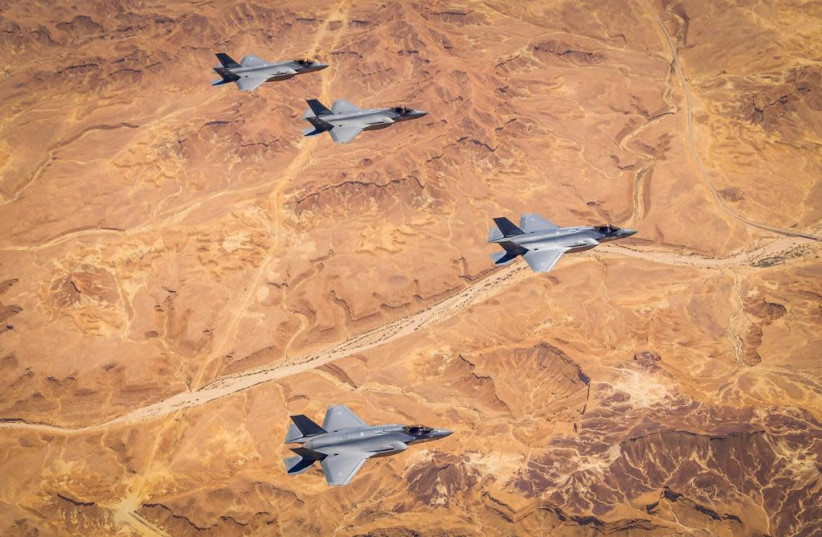
IAF, USAF hold joint F-35 drill in southern Israel (photo credit: IAF)

In 2008, after the election that brought former US president Barack Obama to power, there were some officials in Israel who were confident that the previous president, George W. Bush, would not leave office with Iran’s nuclear facilities still standing. They were wrong. Iran’s nuclear facilities are not only still standing; they have grown in quality and quantity.

This is important to keep in mind amid speculation – once again during a presidential lame duck period – that in his last few weeks in office, Donald Trump will either order US military action against Iran or give Israel a green light, as well as some assistance, to do so on its own.

The speculation has a number of catalysts. First was the firing of Mark Esper as secretary of defense this past week and the replacement of him and other top Pentagon officials with Trump ideologues. Some media outlets in the US have raised the possibility that Trump wanted to get Esper out of the way, so he could more easily carry out controversial military moves.

In addition, there is no doubt that there is a lot of coordination already taking place on Iran. Elliott Abrams, the administration’s top envoy on Iran, was in Israel this week for talks with Prime Minister Benjamin Netanyahu; US Secretary of State Mike Pompeo will be here next week for three days to continue those conversations; and on Thursday night, IDF Chief of Staff Lt.-Gen. Aviv Kochavi held a video call with his US counterpart, chairman of the Joint Chiefs Gen. Mark Milley.

And then there was the interview that H.R. McMaster, Trump’s former national security adviser, gave to Fox News on Wednesday in which he raised the possibility that Israel – fearful of President-elect Joe Biden’s Iran policies – would attack Iran in the twilight of Trump’s term in office.

For veteran Israel-Iran watchers, this feels like a rerun of what happened in 2008 as well as in 2012 when Israel also seemed on the verge of an attack. While ministers later confirmed that Netanyahu had in fact wanted to launch an attack in 2012, he ultimately failed to muster support in the cabinet, so the IDF had no choice but to back down.

THIS IS all important to keep in mind amid the current speculation. While anything is possible – especially with Trump – there does not seem to be an immediate urgency right now to attack.

There are also no signs of activity in the IDF that would indicate a possible war, like beefing up forces in the North or preparing the home front for the missile onslaught that will likely follow. On the other hand, we should not necessarily expect to see moves that would give away a strike in the planning. In 2007, ahead of Israel’s bombing of Syria’s nuclear reactor, almost no one knew about it within the IDF, let alone throughout the country.

When it comes to the sense of urgency, while the International Atomic Energy Agency’s report this past week about Iran’s growing uranium stockpile is concerning, Tehran is still not at the point of building a bomb since it is not yet enriching uranium to military-grade levels. If that were to happen, the clock would definitely start ticking toward a possible bombing. But absent such enrichment – or some other piece of secret intelligence that the public is not aware of – there does not seem to be an immediate reason to attack right now.

Keep in mind that an Israeli strike against Iran is extremely complicated and has always been viewed by the IDF as a last resort. It is just that the threat is not yet at the point to warrant a military strike.

And then there is politics. Netanyahu has enough trouble heading into a new election campaign, which has a good chance of starting sometime in the coming week or two. His management of the coronavirus crisis has weakened him and his popularity ratings are falling. A war with thousands of rockets raining down all across Israel will probably not help.

Despite all the above, it is important to keep in mind that almost anything is possible when dealing with these two leaders – Trump and Netanyahu – who are unpredictable and willing to do a lot to stay relevant and in office.

Al-Qaeda No. 2 was planning attacks on Israelis, Jews when killed in Tehran

November 15, 2020

The US and Israel both had ‘scores to settle’ with terror chief al-Masri, reportedly shot dead by Israeli agents in August; Iran now said to fear more hits in Trump’s last 2 months.

https://www.timesofisrael.com/tv-al-qaeda-no-2-was-planning-attacks-on-israelis-jews-when-killed-in-tehran/

The Al-Qaeda No. 2 reportedly shot dead by Israeli agents in Tehran in August was planning attacks on Israeli and Jewish Diaspora targets when he was killed, Israel’s Channel 12 news reported Saturday night.

Earlier Saturday, The New York Times reported that Abdullah Ahmed Abdullah, aka Abu Muhammad al-Masri, was killed by Israeli agents at the behest of the US on August 7. Iran denied the Times story, claiming it was “made up information.”

“Abu Muhammad al-Masri had recently begun planning attacks against Israelis and Jewish targets in the world,” the Israeli TV report said, quoting unnamed Western intelligence sources. This further underlined why the US and Israel had a “shared interest” in the elimination of this “arch-terrorist,” it said. The US was seeking him for orchestrating two devastating attacks on embassies in Africa in the 1990s, while Israel alleges he oversaw the 2002 suicide bombing of an Israeli-owned hotel in Kenya in which three Israelis were killed.

The killing of al-Masri was the result of a huge, year-long operation, that went off without a hitch, the Israeli report said. The New York Times story said he was shot dead in Tehran by two Israeli agents on a motorbike, who fired five bullets at close range.

The Channel 12 report specified that the gunmen were Mossad agents. Israel’s Channel 13, by contrast, said the gunmen were likely “foreign agents activated by Israel.”

Channel 13 further said Iran now fears further operations against terrorist chiefs in Tehran by Israel and the United States in the final weeks of the Trump presidency.

The Channel 13 news report also said the killing of al-Masri in the heart of Tehran had prompted an intensive investigation by Iran of the intelligence breach that saw him tracked down.

The nature of the killing, the TV report noted, resembled a series of assassinations of Iranian nuclear scientists in recent years attributed in foreign reports to Israel.

The Iranians were now “extremely worried” that Israel or the US, since they evidently have the intelligence, may try to eliminate additional terrorists operating from Iran, from Al-Qaeda and other groups, between now and the US presidential handover in January, the Channel 12 report said.

Channel 13 said it was curious that the US did not publicize the killing of the Al-Qaeda number two, and that President Donald Trump did not reveal the killing during the presidential election campaign. It noted that nobody has claimed the up-to $10 million reward offered by the FBI for information regarding him.

It noted that at the time of al-Masri’s killing, Iran tried to pass off the incident as involving the death of a Lebanese lecturer and his daughter — “fictional figures,” the TV report noted.

It added that Israel had an account to settle with al-Masri, while the US account with him was even larger. Al-Masri was allegedly responsible for two August 7, 1998 attacks on the US embassies in Kenya and Tanzania that killed 224, and his reported assassination came exactly 22 years later.

He was also allegedly behind the suicide bombing of the Paradise hotel in Mombasa, Kenya — the only Israeli-owned hotel in the city — which killed 13 and injured 80. The Mombassa blast, on November 28, 2002, took place on the eve of Hanukkah, and the bomb, in a vehicle that plowed into the hotel, was detonated just as 60 tourists from Israel had checked in. Three Israelis were killed, two of them children.

At around the same time, two missiles were fired at an Israeli Arkia passenger plane taking off from Mombassa airport with 271 people on board.

The pilots saw the missiles streak past the plane, and considered an emergency landing, but flew on to Israel, and the plane was escorted home by Israeli fighter planes. Israel then temporarily halted flights to Kenya.

According to The New York Times account of the assassination, al-Masri was driving his sedan close to his home when two Israeli agents on a motorcycle pulled up alongside his vehicle and fired five shots from a silenced pistol, killing him and his daughter, Miriam, who was married to Osama bin Laden’s late son Hamza bin Laden.

The assassination has not been publicly acknowledged by the US, Israel, Iran or al-Qaeda.

The US was keeping tabs on al-Masri and other members of the terrorist group in Iran for years, but it’s unknown what role the US played in the killing, if any.

Al-Masri was one of the earliest members of al-Qaeda and likely the next in line to lead the terror group after its current chief, Ayman al-Zawahri.

Following the shooting, Iranian media identified the victims as a history professor from Lebanon named Habib Daoud and his daughter, Maryam, The New York Times report said. A Lebanese news outlet and Iran’s Revolutionary Guards Corps said the victim was a member of the Hezbollah terrorist group, which is backed by Iran.

Daoud and Maryam did not actually exist, however. One intelligence official, and a former head of Egypt’s Islamic Jihad group, said the persona was an alias Iran provided to al-Masri.

It’s unclear why Iran would harbor al-Masri. Iran is a Shiite state, and has fought with al-Qaeda, a Sunni jihadist organization.

Intelligence officials told the Times that al-Masri was in Iranian “custody” since 2003 and lived in Tehran since at least 2015. While in Tehran, he was protected by Iran’s Revolutionary Guards Corps but allowed to move freely and travel abroad.

Experts told the Times that Iran may hold al-Qaeda members to prevent attacks in Iran, or to allow them to conduct operations against the US.

Iran cooperates with the Gaza-based Sunni terror groups Hamas and Palestinian Islamic Jihad.

Iran has denied harboring al-Qaeda members and did not respond to a New York Times request for comment on the article. Israeli and US officials also declined to comment.

Around the time of al-Masri’s killing, a series of mysterious explosions rocked Iran, hitting several sensitive sites, including the Natanz nuclear facility, a power station, a pipeline and the Parchin military complex outside Tehran.

Iran said in September it had identified those responsible for the sabotage at the Natanz facility, but did not provide further details. Foreign media reports have attributed the explosion, which they said badly damaged an advanced centrifuge development and assembly plant, to Israel or the US.

Israeli agents had in past years assassinated Iranian nuclear scientists using shooters on motorcycles, similar to al-Masri’s killing, according to foreign reports.

Al-Masri was from Egypt and around 58-years-old. He fought the Soviets in Afghanistan with jihadist groups, was then barred from returning to Egypt, and joined Bin Laden. He worked for al-Qaeda in Sudan and Somalia, where he trained militants to use weaponry they then used to shoot down US helicopters in Mogadishu in 1993 in the so-called Black Hawk Down incident. Nineteen American soldiers were killed in the battle with Somali militiamen.

Bin Laden then charged al-Masri with plotting attacks against US sites in Africa, leading to the simultaneous bombings of the two US embassies. The FBI had offered a $10 million reward for information on him.

Iran Unveils New Ballistic Missile Launcher Platform

November 8, 2020

This is a very disturbing video…

In a video posted on YouTube, the semi-official Iran’s Military Achievements Media posted footage of multiple ballistic missiles being stacked vertically in a line at a purported underground site.

Iran unveiled Wednesday a new domestically-developed ballistic missile launcher platform it claims to be using at its underground launch pads.

The platform, which appears to be set on a rail track, is designed to deliver the projectiles one by one for launches in quick succession and somewhat resembles the magazine of a handgun or rifle.

The new system appears to increase the intensity of the strike launched from a single bunker, while also storing the missiles more effectively, taking up less space at the site.

According to the reports in regional media, the platform is produced by the aerospace arm of Iran’s Islamic Revolutionary Guard Corps (IRGC).

During the unveiling, IRGC chief Hassan Salami proclaimed “our missile power guarantees the withdrawal of enemies,” Iranian media report.

Earlier this year, Iran unveiled what it called “missile cities” — missile launch sites located deep underground to ensure their safety from airstrikes.

Tehran claimed to have established a multitude of those along its Gulf shoreline, cranking up the tensions in the region.

Palestine quits Arab League role in protest over Israel deals

September 23, 2020

Ha ha ha, this just gets better and better.

https://www.aljazeera.com/news/2020/9/22/palestine-quits-arab-league-role-in-protest-over-israel-deals

'There is no honour in seeing Arabs rush towards normalisation during its presidency,' Maliki said [File: Hamad I Mohammed/Reuters]

Palestine has quit its current chairmanship of Arab League meetings, the Palestinian foreign minister said on Tuesday, condemning as dishonourable any Arab agreement to establish formal ties with Israel.

Palestinians see the deals that the United Arab Emirates and Bahrain signed with Israel in Washington a week ago as a betrayal of their cause and a blow to their quest for an independent state in Israeli-occupied territory.

Earlier this month, the Palestinians failed to persuade the Arab League to condemn nations breaking ranks and normalising relations with Israel.

Palestine was supposed to chair Arab League meetings for the next six months, but Foreign Minister Riyad al-Maliki told a news conference in the occupied West Bank city of Ramallah that it no longer wanted the position.

“Palestine has decided to concede its right to chair the League’s council [of foreign ministers] at its current session. There is no honour in seeing Arabs rush towards normalisation during its presidency,” Maliki said.

In his remarks, he did not specifically name the UAE and Bahrain, Gulf Arab countries that share with Israel concern over Iran. He said Arab League Secretary-General Ahmed Aboul Gheit had been informed of the Palestinian decision.

The Palestinian leadership wants an independent state based on the de facto borders before the 1967 war, in which Israel occupied the West Bank and the Gaza Strip and annexed East Jerusalem.

Arab countries have long called for Israel’s withdrawal from illegally occupied land, a just solution for Palestinian refugees and a settlement that leads to the establishment of a viable, independent Palestinian state, in exchange for establishing ties with it.

In a new move addressing internal Palestinian divisions, officials from West Bank-based President Mahmoud Abbas’s Fatah faction and the Gaza-based Hamas movement were due to hold reconciliation talks in Turkey on Tuesday.

Hamas seized the Gaza Strip in 2007 from Fatah forces during a brief round of fighting. Differences over power-sharing have delayed implementation of unity deals agreed since then.