Author Archive

Mossad is preparing to strike at the heart of Iran’s nuclear programme

December 9, 2021

Oh how I hope and pray this is true…

A very interesting article.

Mossad is preparing to strike at the heart of Iran’s nuclear programme

https://www.spectator.co.uk/article/mossad-is-prepraring-to-strike-at-the-heart-of-iran-s-nuclear-programme

Iran is about to be hit by a fresh wave of Mossad operations, sources in Jerusalem have told me. This is the result of a change in Israeli policy: from now on, when Tehran’s proxy militias make trouble in the region, the Jewish state will retaliate on Iranian soil. ‘No more attacking the tentacles of the octopus,’ one source said. ‘Now we will go for the head.’

For the foreseeable future, I can confirm, this will not take the form of air raids, missile strikes or drone attacks. Instead, Israel’s feared secret service has been told to carry out pinpoint operations inside the Islamic Republic, inflicting surgical but devastating punishment.

Mossad’s impressive capabilities in Iran were demonstrated by the assassination of Mohsen Fakhrizadeh last November, the full details of which I exposed for the first time in February . A one-ton robot machine gun was smuggled into the country piece-by-piece and used to remotely kill the nuclear scientist as he drove to his holiday home. The spy agency’s capabilities were also demonstrated by the audacious theft of Iran’s entire archive of nuclear secrets from a warehouse outside Tehran in 2018.

As if more evidence was needed, this week I revealed the secret details of three operations – two at a nuclear plant in Natanz and one at the Iran Centrifuge Technology Company (TESA) factory in Karaj – that were planned by 1,000 Mossad personnel [!!!] and executed over 18 months of sabotage.

The first hit, in July 2020, was perhaps the most audacious. The previous year, spies posing as construction suppliers had sold the Iranian authorities materials that were used to build the Iran Centre for Advanced Centrifuges (ICAC) at Natanz, a highly secure nuclear facility in central Iran. Twelve months later, the explosives that Mossad had hidden in the supplies were detonated, destroying the warehouse and the centrifuges it contained.

But there remained the underground hall at Natanz, one of the most secure sites in the Islamic Republic. Named A1000, it housed up to 5,000 centrifuges and was protected from air assault by 40 feet of concrete and iron. This time, Israeli spies managed to persuade the scientists working in this inner sanctum to work for them. Thinking that they were helping a group of international dissidents, the scientists collected explosives that were smuggled into the facility by drone and in a catering lorry, and planted them in the subterranean A1000 hall. The ensuing explosion, which came in April, demolished 90 per cent of the centrifuges there, putting the complex out of action for nine months.

Finally, there was a missile attack on the TESA factory in Karaj in June. The payload was dispatched by a quadcopter drone, weighing the same as a motorcycle, which had been smuggled into the country piece by piece by Israeli spies and their Iranian agents.

Why does all this matter? This week, negotiations between the Iranian regime and Western powers have resumed in Vienna. There is widespread concern that Tehran is playing for time while continuing its progress towards a bomb.

In recent weeks, Israel has shared intelligence with its western allies suggesting that Iran is preparing the technical groundwork to enrich uranium to 90 per cent purity, the level required to produce a nuclear weapon, while paying lip service to a deal. This would be a gamechanger in the balance of power in the region and the world – and an intolerable existential threat to Israel.

When it comes to finding a diplomatic solution to this crisis, Jerusalem would be forgiven for lacking confidence in the international community. In his desperation to undo the Trump legacy and reheat Obamaism, President Biden – the leader of the free world – has dispatched a negotiating team that seems to abide by the principle of ‘give in first, beg for lollypops later.’

Britain, by contrast, has held a stronger line. The last couple of months have been marked by much warmth between London and Jerusalem; both Naftali Bennett and foreign minister Yair Lapid have enjoyed friendly visits to London, and Britain has passed new legislation to ban Hamas’ political wing as well as its military one. When signing a wide-ranging bilateral trade, defence and technology deal with Mr Lapid last week, foreign secretary Liz Truss vowed: ‘We will work night and day to prevent the Iranian regime from ever becoming a nuclear power.’

But as solid as British support may be, it may not be enough to prevent the United States from signing an execrable ‘less for less’ deal, which would allow Iran to receive sanctions relief while retaining the progress it has made towards a bomb. And partners such as Russia and China cannot be relied upon to keep their spanners out of the works.

The stakes could not be higher. Sometimes it seems like public opinion is somnambulant on the matter. We are facing the spectre of a fanatical, Islamist regime – the world’s foremost sponsor of terror, both in the Middle East and across the world – going nuclear. Would it launch a strike at Israel, which it has promised to wipe off the map? What would be the consequences of that? Would Israel and the Gulf States launch a pre-emptive strike? What would America do? Where would all this leave Britain, and our interests overseas? Even the Iranian use of nuclear weapons tactically in Syria or elsewhere is not unimaginable. And that would be an entirely different crisis. Hand-in-hand, the world is sleep-walking into a moment when Jerusalem decides that the risk has become unbearable, air strikes are launched, and full-scale war breaks out.

But in the meantime, the Mossad is coming. That was the coded message that Israeli Prime Minister Naftali Bennett gave to Iran last week. ‘They make us bleed without paying a price for it,’ the Prime Minister said. ‘We have to get to the dispatchers.’

Retaliating directly on Iranian soil enables Mossad to flex its muscles and send a message, creating more fear and confusion in Tehran. This will prepare the way for further sabotage operations on its nuclear facilities. It is vital that this succeeds. The sobering truth is that if international negotiations fail, and Israel’s spies fail, then war is all but certain. For those who aspire to live in peace, rarely has Israel – and the world – needed the Mossad more.
Explosion heard near Iranian nuclear site Natanz

December 5, 2021

Here’s hoping it was a big one, and due to the efforts of Mossad…

5 December 2021

Conflicting reports emerge about nature of the blast, which occurred as Tehran is negotiating to restore 2015 nuclear deal

https://www.foxnews.com/world/explosion-heard-near-iranian-nuclear-site-natanz

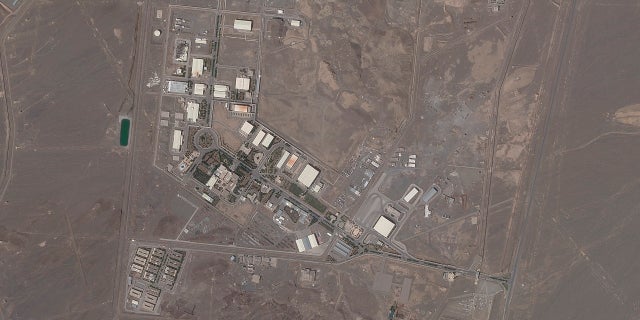
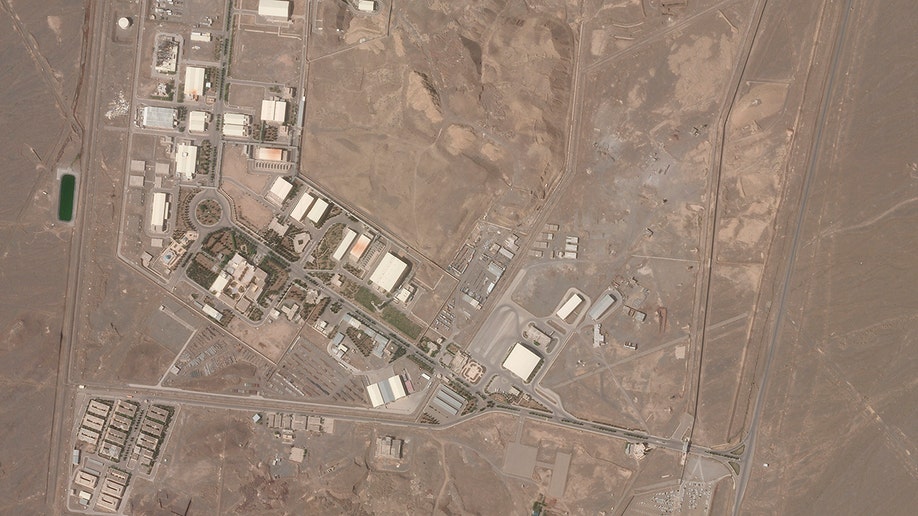
This satellite photo from Planet Labs Inc. shows Iran's Natanz nuclear facility on Wednesday, April 7, 2021. 

TEHRAN, Iran — An explosion shook the area near Iran’s main nuclear-enrichment plant late on Saturday, prompting conflicting explanations from Iranian officials as Tehran engages in talks with world powers over its nuclear program.

The blast was heard in the area of Badroud, around 12 miles from the Natanz nuclear site, according to IRNA, Iran’s state news agency. The incident involved a sound and then a flash of light in the sky, reported Fars News Agency, an organization close to the Islamic Revolutionary Guard Corps.

Natanz has been the site of attacks and sabotage in the past, but Iran didn’t immediately place blame on any foreign government and sent differing signals about what happened after reports of the explosion circulated in local media.

An Iranian army spokesman played down the explosion on state television, saying a missile system had been test fired and there was no reason to be concerned. A news agency close to Iran’s security forces, Tasnim, cited sources saying that a hostile drone had activated defense systems on Saturday night.

Natanz Governor Ramezanali Ferdowsi said the explosion occurred at 8:15 p.m. local time and caused no casualties or financial damage, according to Iran’s official student news agency ISNA.

Iran has carried out periodic tests of its defense capabilities in central parts of Iran, including around nuclear sites in Isfahan, Arak, Fordo and Natanz.

The U.S. National Security Council declined to comment on the reports.

The reports come a day after the latest round of talks in Vienna between Iran, the U.S. and other world powers to revive the 2015 nuclear deal stalled. The negotiations are intended to agree on the steps Iran and the U.S. will take to return into compliance with the accord, which lifted most international sanctions on Tehran in exchange for strict but temporary restrictions on Iran’s nuclear work.

Israeli Prime Minister Naftali Bennett has called on Europe and the U.S. to stop the negotiations and in recent weeks, his government has stepped up warnings that it could act militarily against Iran’s nuclear work. Israel, which views a nuclear-armed Iran as an existential threat, opposed the 2015 deal. Iran has accused Israel of sabotaging its nuclear facilities, which Israel hasn’t accepted responsibility for.

Mr. Bennett spoke by phone on Thursday with Secretary of State Antony Blinken and urged the U.S. to immediately end its talks with Iran over its “nuclear blackmail,” according to the prime minister’s office.

Natanz has been targeted before. In April, Iran said saboteurs caused a blackout at the country’s main nuclear-enrichment plant there, which diplomats have said destroyed several thousand centrifuges, machines for enriching uranium. Iran accused Israel of attempting to derail informal talks with the U.S. on reviving the nuclear deal.

Last year, an explosion at Natanz caused damage to a building identified by experts and diplomats as an advanced centrifuge assembly plant. The United Nations’ International Atomic Energy Agency said that it had been informed about the blast by Iranian authorities who said the cause was unknown.

PA on Verge of Financial Collapse as Fewer Donors Honor Commitments

November 21, 2021

What can I say but…

Nelson Muntz ... HA HA ... ;-) - via @TOPLAR | Nelson muntz, Nelson simpsons,  The simpsons

From The Media Line, 27 October 2021.

EU, Gulf and US have all cut aid to the Palestinians, whose financial difficulties have been exacerbated by the coronavirus pandemic

The Palestinian Authority is experiencing the worst fiscal difficulties it has ever had since its establishment more than a quarter century ago. The treasury is facing a severe cash crunch, and this could soon reflect on its ability to pay government salaries and conduct daily business, top officials say.

An adviser to PA Prime Minister Mohammad Shtayyeh told a local radio station that the PA is experiencing its worst financial situation in years.

Stephen Salameh said in an interview on Ajyal Radio this week that the cessation of European support comes on top of a massive reduction in financial aid from Arab countries and the United States.

In the past, when faced with financial crises, the PA turned to wealthy Arab governments in the Gulf for assistance, but that support has declined.

The Media Line has learned that, of the $100 million that the Arab League member countries had committed to the PA as part of a financial “security net,” less than $2 million (!!!) has been forthcoming, according to a top official at the PA Ministry of Finance.

The donors’ share of the PA budget has dropped by a whopping 58% in the past few years, forcing the government to scramble for ways to make up the difference. This has left the PA with limited options; it raised taxes, implemented austerity measures and looked to local banks for loans.

But with the emergence of the coronavirus and an economy on the ropes, citizens cannot afford to pay higher taxes and banks are increasingly wary of continuing to raise the PA’s borrowing limit. The government is now trying to resurrect old moves from its playbook.

President Mahmoud Abbas dispatched Shtayyeh to Brussels this week, in hopes of persuading the Europeans to restore financial aid. The PA government has received no aid from the European Union this year.

An example of how serious the financial situation is: Gas stations in the West Bank city of Bethlehem have refused to service PA cars, including security vehicles, because the government hasn’t paid its bills.

Nizar al-Jabari, a member of the Administrative Board of the Gas Station Owners Syndicate, told The Media Line on Wednesday that the PA Ministry of Finance paid 3 million shekels, or $940,000, to the gas stations the previous day.

Jabari estimates the government debt to gas stations at “between 50 million and 60 million shekels,” or $16 million-$19 million.

Abbas is battling both domestic and external crises, in what observers describe as the worst political and financial troubles since he took the helm of the PA more than 16 years ago.

The problems are serious enough that they threaten the authority’s very existence.

On the political front, Abbas is facing growing challenges within his own Fatah party and popular turmoil because of his crackdown on civil liberties and cancellation of presidential and parliamentary elections that has been scheduled for the summer. And the lack of progress on the negotiations track with Israel has had a major impact on the PA’s standing locally, regionally and internationally.

The Palestinian street is growing impatient with the PA government.

“Prices are rising, incomes are either stagnant or there’s no work,” said Ameen Khairi, a shop owner in Nablus, in the northern West Bank. “They overburdened us with taxes that we can’t afford. The PA needs to live within its means.”

The economy in the Palestinian territories is teetering on the verge of collapse and the internal divide is growing ever deeper.

“The Palestinian economy continues to suffer under the occupation. Now, couple that with the bad management of the coronavirus policy that added to the troubles,” says Jamal Nimer, chairman of the Board of Directors at the Carmel Hotel in Ramallah.

He told The Media Line that the Palestinian economy is failing, especially the tourist sector, which has been hit hard because of the closures and restrictions as part of the government policy to contain the COVID-19 pandemic.

“Our economy is struggling, unemployment is soaring and poverty levels are skyrocketing. The outlook for the Palestinian economy is gloomy,” Nimer said.

More than a quarter of Palestinians lived in poverty before the pandemic.

Dr. Nasr Abdel Karim, a professor of finance and economics in the College of Graduate Studies at the Arab American University in Ramallah, says there is no doubt that the PA is going through a “real and suffocating financial crisis. Its manifestations are evident. There is a budget deficit, an accumulation of debt and delays in paying its obligations. It’s undeniable that there’s a clear decline in aid.”

Abdel Karim told The Media Line, however, that this crisis is “not new and has been repeated for years.”

But he argues that what makes the current financial hardship different is “essentially the position of the European Union. European aid, which was between $400 million and $500 million [annually], is not present now.”

Last week, one of the PA’s biggest European backers criticized the Palestinian government for widespread graft. A Swedish radio station quoted Foreign Minister Ann Linde as saying: “The corruption that pervades Palestine is an obstacle to providing economic support.”

Eighty-three percent of Palestinians believe there is corruption in PA institutions, according to a recent poll by the Ramallah-based Palestinian Center for Policy and Survey Research (PCPSR).

Abdel Karim adds that Palestinians had great expectations following the election of US President Joe Biden and the change in administration that the flow of American aid would soon resume, after the Trump White House cut it off.

“This isn’t happening yet, leaving the PA disappointed with the US administration,” he said.

One of Abbas’ advisers confirmed to The Media Line that the president and his inner circle are “concerned” about the financial and political state of the PA.

“There is a feeling in the Mukataa that we have been abandoned by everyone,” he said, referring to the presidential compound in Ramallah, the seat of the PA government.

According to the London-based, pan-Arab Al-Araby Al-Jadeed newspaper, during a meeting with Palestinian leadership in Ramallah last week, Abbas became furious at the Biden administration, describing US officials as “liars for not keeping the promises they made to us.”

Those promises include reopening the Palestine Liberation Organization office in Washington, providing financial support to the PA, and reopening the US consulate in East Jerusalem.

The Palestinians were counting on renewed US support, politically and financially, that would encourage wealthy Arab states to restore their financial support. However, according to the same unnamed source, there is “a clear American truancy about directly returning financial support to the PA, especially as the United States accuses the PA of corruption.”

“This has affected the Gulf’s response to the requests from the PA,” the source said.

Abdul Karim says the PA leadership is living in a “political and financial bubble,” and that this week’s visit of the head of the Palestinian General Intelligence Service, Majid Faraj, to Dubai, although it is under the cover of a visit to the Palestine pavilion at Expo 2020, “is an attempt to placate the United Arab Emirates and restore ties.”

Faraj, one of Abbas’ closest and most trusted confidants, met with the ruler of Dubai, Sheikh Mohammed bin Rashid Al Maktoum, amid intensive official Palestinian media coverage. It was the first time Mohammed bin Rashid met with a senior Palestinian official since relations between the PA and the UAE became strained.

“The [Palestinian] Authority is also concerned about the diplomatic crisis, because if conditions improve diplomatically, it will have positive repercussions for financial aid,” Abdul Karim said.

Guards’ Publication Says Israel Attacked Research Center In September

November 21, 2021

Relates to the incident in the previous post.

https://www.iranintl.com/en/20211109462747

A weekly publication in Iran says an incident reported as a fire in a military research center in September was an “attack” by Israel to exert pressure on Iran.

The little-known Sobh Sadegh publication of the Islamic Revolutionary Guard Corps (IRGC) mentioned Tuesday that a “self-reliance research center” west of Tehran was in targeted by Israel in an operation similar to other attacks since July 2020, including two explosions in the Natanz uranium enrichment facility.

The IRGC reported on September 26 that a fire damaged one of its research facilities and three personnel were injured. Hours later, the announcement was deleted from its website and another version appeared saying that the fire was in the depot of the facility. Later, IRGC said that two of its personnel died in the incident.

Days later, ImageSat International published images saying that an explosion had taken place in a secret IRGC missile center west of Tehran. The images showed that one-quarter of the building was destroyed.

Several mysterious fires and explosion have hit Iran’s nuclear, military and industrial sites since July 2020, generally ascribed to operation by Israel. A top nuclear official, Mohsen Fakhrizadeh, was also killed last November in an elaborate assassination.

Satellite images show alleged Iranian missile factory seriously damaged in blast

November 21, 2021

From 30 September.

https://www.timesofisrael.com/satellite-images-show-alleged-iranian-missile-factory-seriously-damaged-in-blast/

Before and after photographs from an explosion at an alleged Iranian missile base, on September 27, 2021. (ImageSat International)

Private Israeli intelligence firm releases photographs of facility outside Tehran, where at least two members of the Iranian military were killed earlier this week

A private Israeli intelligence firm released satellite photographs of an alleged Iranian missile production facility outside Tehran on Thursday, showing the damage at the site after an explosion there earlier in the week.

In the images, taken on Monday shortly after the blast, at least a quarter of the building — a “secret missile base” belonging to the Islamic Revolutionary Guard Corps, according to the company — can be seen completely destroyed, while additional damage can be seen on the roof along the entire structure.

The photographs were released by ImageSat International, a satellite image analysis firm. The company identified the site as the Shahid Hemmat Industrial Group.

The IRGC said that at least two members of the organization were killed in the explosion at the center outside Tehran, which it said was a “research self-sufficiency center.”

That appeared to refer to the Research and Self-Sufficiency Jihad Organization, which was sanctioned by the United States Treasury in 2017 over its work “researching and developing ballistic missiles.”

Missile facilities and other sensitive sites in Iran have seen fires before.

The most notable came in 2011, when a blast at a missile base near Tehran killed Revolutionary Guard commander Hassan Tehrani Moghaddam, who led the paramilitary force’s missile program, and 16 others.

Initially, authorities described the 2011 blast as an accident, though a former prisoner later said that the Guard interrogated him on the suspicion that Israel was behind the explosion.

Iran runs out of water after years of mismanagement

July 30, 2021

Sucks to be you, Iran.

I know of a nearby country that has world class expertise in water management…

Iran runs out of water, reservoirs evaporate

25 July 2021

A diver takes the plunge into the deepest swimming pool in the world - reaching 60m below - in the United Arab Emirates, one of five countries to record temperatures above 50C on the same day last month.

Iran is “water bankrupt” after years of mismanagement under the regime, leading to shortages that have triggered deadly protests across the country and discontent in the wider Middle East, an exiled expert has said.

All sources of the nation’s water — rivers, reservoirs and groundwater — are starting to run dry, Kaveh Madani, a scientist and former deputy environment minister now living in the United States, told The Times.

Iran’s energy minister has admitted that the country is facing an unprecedented crisis, and Ayatollah Ali Khamenei, 82, the supreme leader, has expressed some sympathy with the demonstrators. “We cannot really blame the people,” he said.

At least eight people have died in recent protests, which started in Khuzestan, the southern province which has suffered some of the worst effects, according to Amnesty International.

The water shortage is being replicated across the region, with the marshes of southern Iraq starting to dry out again despite restoration efforts, and eastern Syria suffering a drought.

Farther west, nearly three quarters of Lebanon’s population, including a million refugees, could lose access to safe water in the next four to six weeks after the pumping system started to break down amid a fuel shortage, Unicef said.

The crisis in the Middle East has been brewing for years, with repeated warnings of “water wars”. The problem has been exacerbated by global warming, with average temperatures rising inexorably.

Five countries recorded temperatures above 50C on the same day last month — the UAE, Iran, Oman, Kuwait and Pakistan — and the region’s mega-cities are expected to experience temperatures of up to 55C for days at a time by the middle of the century.

However, water experts say that the underlying problem is mismanagement across the region. In Iran, 600 dams have been built since the Islamic Revolution in 1979 and the accompanying hydroelectric power plants are now a vital part of the nation’s economy. Experts say that reservoirs in such hot and arid areas lose so much water to evaporation — two billion cubic metres of water a month in Iran — that they have become part of the problem.

“The system is water bankrupt when consumption is more than renewable water availability,” Madani said. He was an academic at Imperial College London before being recruited in 2017 to become deputy head of Iran’s environment ministry. However, his appointment offended hardliners and he was detained by the Revolutionary Guard, accused of spying and eventually forced to leave.

He said Iran had to plan to live with shortages. “Iran cannot fully restore its wetlands, aquifers and rivers in a short period of time,” he said. “So, it has to admit to water bankruptcy and stop denying that many of the damages have become irreversible.”

The crisis was foreseen years ago. In 2005 Reza Ardakanian, 63, now the energy minister, wrote a paper in his capacity as a water management expert in which he warned that Iran’s water extraction was double sustainable levels.

He has pointed out that the present crisis has coincided with one of the driest years in five decades: meteorologists say rainfall in the region is down by as much as 85 per cent.

In Iran, cheap fuel has been used to power pumps to extract vast amounts of groundwater to drive the country’s massively expanded agriculture. The falling levels of groundwater can be detected from space; Nasa says the loss in weight has affected the region’s gravitational field.

Iran is not the only victim. Over-extraction of groundwater has caused droughts in eastern Syria, the country’s breadbasket, while both Syria and Iraq have complained about Turkish dams impeding the flow of the Euphrates and Tigris into Mesopotamia.

The crisis has had diplomatic effects. Egypt has threatened war if Ethiopia continues to fill its Great Ethiopian Renaissance Dam on the Nile unchecked. Israel, by contrast, has offered to double the amount of desalinated water it sells to Jordan as part of efforts by the new government to build ties.

In Lebanon, mismanagement of fuel supplies has contributed to the water crisis. The central bank has subsidised imports but has now run out of dollars, leading to widespread shortages.

Mains electricity is running at a maximum of two hours a day. Operators of the private generators which make up the difference may have to turn them off in the next few days for lack of diesel, raising the extraordinary prospect of a modern country almost entirely without electricity.

Yukie Mokuo, Lebanon’s Unicef representative, said yesterday: “Unless urgent action is taken, hospitals, schools and essential public facilities will be unable to function and over four million people will be forced to resort to unsafe and costly sources of water, putting children’s health and hygiene at risk.”

Iran sought nuclear weapons, technology for WMDs last year, reports find

May 10, 2021

What a surprise.

https://www.foxnews.com/world/iran-nuclear-weapons-technology-weapons-mass-destruction

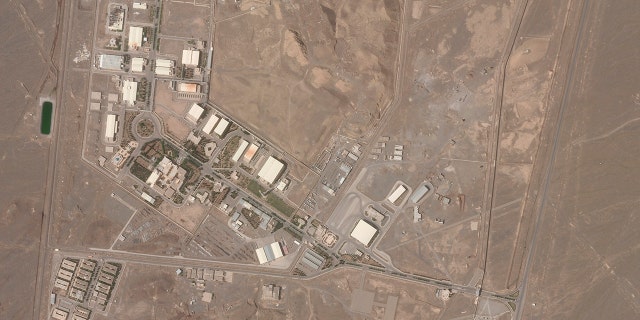
FILE - In this April 14, 2021, file satellite photo provided from Planet Labs Inc. shows Iran's Natanz nuclear facility. (Planet Labs via AP)

The Islamic Republic of Iran made multiple attempts in 2020 to obtain technology for its weapons of mass destruction program and has not stopped its drive to develop atomic weapons, intelligence agencies from the Netherlands, Sweden and Germany recently reported.

The Netherlands’ General Intelligence and Security Service “investigated networks that tried to obtain the knowledge and materials to develop weapons of mass destruction. Multiple acquisition attempts have been frustrated by the intervention of the services,” the agency wrote in its April report.

According to the Dutch report, “The joint Counter-proliferation Unit (UCP) of the AIVD [the General Intelligence and Security Service] and the MIVD [the country’s Military Intelligence and Security Service] is investigating how countries try to obtain the knowledge and goods they need to make weapons of mass destruction. Countries such as Syria, Pakistan, Iran and North Korea also tried to acquire such goods and technology in Europe and the Netherlands last year.”

Iran’s regime was listed under the document’s section on preventing “countries from acquiring weapons of mass destruction.”

The intelligence agency did not provide details on the multiple attempts by the rogue nations to secure weapons of mass destruction technology. The report also did not state whether Iran’s regime illegally obtained technology and equipment for its nuclear program.

The General Intelligence and Security Service under its mandate “conducts investigations, provides information, and mobilizes third parties to safeguard the democratic legal order and national security, to actively reduce risks, and to contribute to foreign policy-making.”

The Netherlands’ MIVD and AIVD intelligence services, according to the report, “conducted intensive research into several very active networks” that are involved in proliferation and use various third parties in European countries. “Consequently, export licenses were verified and acquisition attempts frustrated,” the report said.

The damning findings from the fresh European intelligence are likely to animate broader discussion about whether the U.S. should return to the much-criticized 2015 Iran nuclear deal.

Critics have long argued the atomic accord places what is at best a temporary restriction on the Islamic Republic’s drive to join the club of nations with nuclear weapons.

A spokesperson for Sen. Ted Cruz, R-Texas, told Fox News, “The Iranian regime has never stopped seeking weapons of mass destruction to use against America and our allies. Nevertheless, the Biden administration, like the Obama administration, is committed to dismantling all meaningful pressure against the regime and flooding it with hundreds of billions of dollars.

“Sen. Cruz had fought for years to prevent that from happening, and continues to emphasize that any deal with Iran not brought to the Senate as a treaty and passed by the Senate can and will be reversed by a future administration,” the spokesperson added.

The Biden administration is currently conducting indirect negotiations with Iran’s regime in Vienna about the U.S. rejoining the Joint Comprehensive Plan of Action, the formal name for the 2015 nuclear accord.

The Trump administration withdrew from the nuclear pact in 2018 because U.S. officials believed the deal permitted Tehran’s rulers to build nuclear weapons.

The Swedish Security Service revealed in its intelligence report for 2020 that Iran sought Swedish technology for its nuclear weapons program. According to the document, “Iran also conducts industrial espionage, which is mainly targeted against Swedish hi-tech industry and Swedish products, which can be used in nuclear weapons programs. Iran is investing heavy resources in this area and some of the resources are used in Sweden.”

Iran’s regime wages industrial espionage against the Scandinavian country and targets its industry, the 88-page document notes.

In April, the Bavarian Office for the Protection of the Constitution, the domestic intelligence agency of the southern German state, wrote in its report for 2020: “Proliferation-relevant states like Iran, North Korea, Syria and Pakistan are making efforts to expand on their conventional arsenal of weapons through the production or constant modernization of weapons of mass destruction.”

The German intelligence agency, the rough equivalent of the FBI, noted that “In order to obtain the necessary know-how and corresponding components, these states are trying to establish business contacts with companies in high-technology countries like Germany.”

Jason M. Brodsky, senior Middle East analyst at Iran International, a London-based news organization, told Fox News, “I think these findings underscore the permissive environment that Europe affords for Iran to conduct industrial espionage and a range of other intelligence activities. They also highlight the need for the E3 [Britain, France, Germany] and the United States to obtain credible explanations from Tehran over the uranium traces found at undeclared sites throughout the country as a part of clarifying the outstanding safeguards issues with the IAEA [International Atomic Energy Agency].”

Brodsky continued, “The activities of the Organization of Defensive Innovation and Research (SPND) merit continued scrutiny in light of these revelations. SPND [a subsidiary organization of the Iranian Defense Ministry] inherited Iran’s past nuclear weapons program – Project Amad – and in 2019, the U.S. government found that the organization was functioning in a way so that the intellectual wealth of that program was preserved.

“That is not to mention SPND’s work on chemical weapons research through the Shahid Meisami Group, which the U.S. sanctioned in December 2020. These European intelligence findings demonstrate the need for continued vigilance over this entity and Iran’s ambitions for weapons of mass destruction,” Brodsky said.

The U.S. government – both Republicans and Democrats – have recognized Iran’s regime as the leading state sponsor of international terrorism.

Fox News did not receive an immediate response from Iran’s U.N. mission, its embassy in Berlin or its foreign ministry in Tehran.

Iran rattled as Israel repeatedly strikes key targets

April 21, 2021

Ha ha ha, suckers.

Long article, but it’s full of good news, mentions many “accidents” (which I have bolded).

Hadn’t heard about the a few of these “accidents,” such as the first one mentioned which sounds like typical Mossad style.

https://www.theage.com.au/world/middle-east/iran-rattled-as-israel-repeatedly-strikes-key-targets-20210421-p57l5u.html

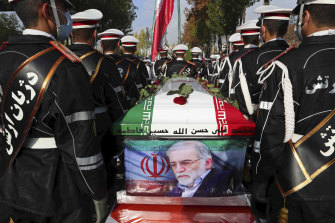
The killing of Iranian nuclear scientist Mohsen Fakhrizadeh, whose funeral on November 30 is pictured, was only one of a string of attacks aimed at the heart of Iran’s nuclear program.

Beirut: In less than nine months, an assassin on a motorbike fatally shot an al-Qaeda commander given refuge in Tehran, Iran’s chief nuclear scientist was machine-gunned down on a country road, and two separate, mysterious explosions rocked a key Iranian nuclear facility in the desert, striking the heart of the country’s efforts to enrich uranium.

The steady drumbeat of attacks, which intelligence officials said were carried out by Israel, highlighted the seeming ease with which Israeli intelligence was able to reach deep inside its neighbour’s borders and repeatedly strike its most heavily guarded targets, often with the help of turncoats.

The attacks, the latest wave in more than two decades of sabotage and assassinations, have exposed embarrassing security lapses and left Iran’s leaders looking over their shoulders as they pursue negotiations with the Biden administration aimed at restoring the 2015 nuclear agreement.

The recriminations have been caustic.

The head of parliament’s strategic centre said Iran had turned into a “haven for spies.” The former commander of Iran’s Revolutionary Guard called for an overhaul of the country’s security and intelligence apparatus. Lawmakers have demanded the resignation of top security and intelligence officials.

Most alarming for Iran, Iranian officials and analysts said, was that the attacks revealed that Israel had an effective network of collaborators inside Iran and that Iranian intelligence services had failed to find the moles.

“That the Israelis are effectively able to hit Iran inside in such a brazen way is hugely embarrassing and demonstrates a weakness that I think plays poorly inside Iran,” said Sanam Vakil, deputy director of the Middle East and North Africa Program at Chatham House.

The attacks have also cast a cloud of paranoia over a country that now sees foreign plots in every mishap.

Over the weekend, Iranian state television flashed a photograph of a man said to be Reza Karimi, 43, and accused him of being the “perpetrator of sabotage” in an explosion at the Natanz nuclear enrichment plant last month. But it was unclear who he was, whether he had acted alone and if that was even his real name. In any case, he had fled the country before the blast, Iran’s Intelligence Ministry said.

On Monday, after Iranian state news media reported that Brigadier General Mohammad Hosseinzadeh Hejazi, the deputy commander of the Quds Force, the foreign arm of the Revolutionary Guard, had died of heart disease, there were immediate suspicions of foul play.

Hejazi had long been a target of Israeli espionage, and the son of another prominent Quds Force commander insisted on Twitter that Hejazi’s death was “not cardiac-related”.

A Revolutionary Guard spokesman failed to clear the air with a statement saying the general had died of the combined effects of “extremely difficult assignments,” a recent COVID-19 infection and exposure to chemical weapons during the Iran-Iraq war.

The general would have been the third high-ranking Iranian military official to be assassinated in the last 15 months. The United States killed General Qasem Soleimani, the leader of the Quds Force, in January 2020. Israel assassinated Mohsen Fakhrizadeh, Iran’s chief nuclear scientist and a brigadier general in the Revolutionary Guard, in November.

Even if Hejazi died of natural causes, the cumulative loss of three top generals was a significant blow.

The attacks represent an uptick in a long-running campaign by the intelligence services of Israel and the United States to subvert what they consider to be Iran’s threatening activities.

Chief among them are a nuclear program that Iran insists is peaceful, Iran’s investment in proxy militias across the Arab world, and its development of precision-guided missiles for Hezbollah, the militant movement in Lebanon.

An Israeli military intelligence document in 2019 said that Hejazi was a leading figure in the last two, as the commander of the Lebanese corps of the Quds Force and the leader of the guided missile project. Revolutionary Guard spokesman Ramezan Sharif said that Israel wanted to assassinate Hejazi.

Israel has been working to derail Iran’s nuclear program, which it considers a mortal threat, since it began. Israel is believed to have started assassinating key figures in the program in 2007, when a nuclear scientist at a uranium plant in Isfahan died in a mysterious gas leak.

In the years since, six other scientists and military officials have been assassinated. A seventh was wounded.

Another top Quds Force commander, Rostam Ghasemi, said recently that he had narrowly escaped an Israeli assassination attempt during a visit to Lebanon in March.

But assassination is just one tool in a campaign that operates on multiple levels and fronts.

In 2018, Israel carried out a daring night-time raid to steal 450 kilograms of secret nuclear program archives from a warehouse in Tehran.

Israel has also reached around the world, tracking down equipment in other countries that is bound for Iran, to destroy it, conceal transponders in its packaging or install explosive devices to be detonated after the gear has been installed inside of Iran, according to a former high-ranking US intelligence official.

A former Israeli intelligence operative said that to compromise such equipment, she and another officer would drive by the factory and stage a crisis, such as a car accident or a heart attack, and the woman would appeal to the guards for help. That would get her enough access to the facility to identify its security system so that another team could break in and disable it, she said, speaking on condition of anonymity because she was not authorised to discuss covert operations.

In an interview on Iranian state television last week, Iran’s former nuclear chief revealed the origins of an explosion in the Natanz nuclear plant in July. The explosives had been sealed inside a heavy desk that had been placed in the plant months earlier, said Fereydoon Abbasi-Davani, the former chief of Iran’s Atomic Energy Organisation.

The explosion ripped through a factory producing a new generation of centrifuges, setting back Iran’s nuclear enrichment program by months, officials said.

Alireza Zakani, head of parliament’s research centre, said Tuesday that in another case machinery from a nuclear site had been sent abroad for repair and was returned to Iran with 300 pounds of explosives packed inside it.

Little is known about the more recent explosion at Natanz this month except that it destroyed the plant’s independent power system, which in turn destroyed thousands of centrifuges.

It would have been difficult for Israel to carry out these operations without inside help from Iranians, and that may be what rankles Iran most.

Security officials in Iran have prosecuted several Iranian citizens over the past decade, charging them with complicity in Israeli sabotage and assassination operations. The penalty is execution.

But the infiltrations have also sullied the reputation of the intelligence wing of the Revolutionary Guard, which is responsible for guarding nuclear sites and scientists.

A former Guard commander demanded a “cleansing” of the intelligence service, and Iran’s vice president, Eshaq Jahangiri, said that the unit responsible for security at Natanz should be “be held accountable for its failures”.

The deputy head of parliament, Amir-Hossein Ghazizadeh Hashemi, told the Iranian news media on Monday that it was no longer enough to blame Israel and the United States for such attacks. Iran needed to clean its own house.

As a publication affiliated with the Guard, Mashregh News, put it last week: “Why does the security of the nuclear facility act so irresponsibly that it gets hit twice from the same hole?”

But the Revolutionary Guard answers only to Iran’s supreme leader, Ayatollah Ali Khamenei, and so far there has been no sign of a top-down reshuffling.

After each attack, Iran has struggled to respond, sometimes claiming to have identified those responsible only after they had left the country or saying that they remained at large. Iranian officials also insist that they have foiled other attacks.

Calls for retaliation grow louder after each attack. Conservatives have accused the government of President Hassan Rouhani of weakness or of subjugating the country’s security to the nuclear talks in hopes they will lead to relief from US sanctions.

Indeed, Iranian officials shifted to what they called “strategic patience” in the last year of the Trump administration, calculating that Israel sought to goad them into an open conflict that would eliminate the possibility of negotiations with a new Democratic administration.

Both Rouhani and Foreign Minister Mohammad Javad Zarif have said they would not allow the attacks to derail the negotiations because lifting sanctions was the priority.

It is also possible that Iran has tried to retaliate but failed.

Iran was blamed for a bomb that exploded near Israel’s Embassy in New Delhi in January, and 15 militants linked to Iran were arrested last month in Ethiopia for plotting to attack Israeli, American and Emirati targets.

But any overt retaliation risks an overwhelming Israeli response.

“They are not in a hurry to start a war,” said Talal Atrissi, a political science professor at the Lebanese University in Beirut. “Retaliation means war.”

Conversely, the timing of Israel’s latest attack on Natanz suggested that Israel sought if not to derail the talks, to at least weaken Iran’s bargaining power. Israel opposed the 2015 nuclear agreement and opposes its resurrection.

The United States, seeking to negotiate with Iran in Vienna, said it was not involved in the attack but has not publicly criticised it either.

And if the repeated Israeli attacks had the effect of fomenting a national paranoia, an intelligence official said, that was a side benefit for Israel. The additional steps Iran has taken to scan buildings for surveillance devices and plumb employees’ backgrounds to root out potential spies has slowed down the enrichment work, the official said.

The conventional wisdom is that neither side wants full-scale war and is counting on the other not to escalate. But at the same time, the covert, region-wide shadow war between Israel and Iran has intensified with Israeli airstrikes on Iranian-backed militias in Syria and tit for tat attacks on ships.

But as Iran faces a struggling economy, rampant COVID-19 infections and other problems of poor governance, the pressure is on to reach a new agreement soon to remove economic sanctions, said Vakil of Chatham House.

“These low-level, gray zone attacks reveal that the Islamic Republic urgently needs to get the JCPOA back into a box” to free up resources to address its other problems, she said, referring to the nuclear deal, formally called the Joint Comprehensive Plan of Action.

The New York Times

The West’s shameful Iranian capitulation

April 15, 2021

https://www.spectator.co.uk/article/the-west-s-shameful-iranian-surrender

On a sweltering day in July 2018, German police pulled over a scarlet Ford S-Max hire car that was travelling at speed towards Austria. The driver, Assadollah Assadi, the third secretary to the Iranian embassy in Vienna, was arrested at gunpoint and taken into custody.

Although unusual, there was a good reason for detaining the diplomat: Assadi had used his immunity to smuggle a bomb on a commercial airliner from Tehran to Austria, intending to carry out what would have been one of Europe’s worst atrocities in recent years.

Once in Vienna, he had handed the device — codenamed the ‘Playstation’ — to two married Belgian-Iranian agents, Amir Saadouni and Nasimeh Naami, and instructed them to blow up an anti-regime event in Paris, which was to be attended by dignitaries including Rudy Giuliani and former environment secretary Theresa Villiers.

The plot was thwarted on the day of the attack after a tip-off from Mossad, saving hundreds of lives. Assadi was arrested the following day while pursuing diplomatic refuge in Austria. But as we reported in this week’s Jewish Chronicle, the treasure trove of evidence inside the vehicle should have set off alarm bells in European corridors of power — alarm bells that should be sounding especially loudly today.

The car was effectively being used as a mobile intelligence station to run agents. It contained handwritten records of trips to 289 locations in 22 cities across Europe as well as notes on bomb handling and ideas for attacks using acid and toxic pathogenic substances. Also discovered were receipts for expense reimbursements and salary payments to spies, details of computers issued to them, numerous mobile phones and GPS devices, and more than €30,000 (£26,000) in cash. In short, it revealed an Iranian espionage network in Europe that was startling in both its scale and scope.’The plot may have been a wake-up call, but the Europeans tend to wake up from time to time, then fall asleep again’

When seen in the light of the political context at the time, the arrest seemed almost ironic. Not eight weeks previously, Donald Trump had pulled America out of the nuclear deal with Iran, the Joint Comprehensive Plan of Action (JCPOA), reimposing ‘maximum pressure’ sanctions on the theocracy. The Europeans were appalled.

One of Washington’s main reasons for leaving the deal, signed by the Obama administration in 2015, was that lifting sanctions allowed Tehran to fund extensive terror networks, proxy militia and missile emplacements overseas. But even while investigators were poring over the material found inside Assadi’s scarlet Ford S-Max, policymakers in Europe’s capitals were busy designing a mechanism to allow Iran to continue to trade behind the backs of the Americans. The system, known as ‘Instex’, was launched five months later, in an attempt to neuter the deterrent from Washington.

This bizarre state of affairs cannot be overemphasised. Exhibit A: Tehran activates its extensive spy network in an attempt to blow up hundreds of civilians on the streets of Paris. Exhibit B: the Europeans try to undermine American pressure on the theocracy, shovelling more money into its maw. A cynic might call it suicide by diplomacy.

This week, history is repeating itself. Eight weeks ago, an Antwerp court sentenced Assadi and his three co-conspirators to between 15 and 20 years in prison. This was the first conviction of an Iranian official for terrorism offences since the 1979 Islamic revolution. Yet this week, the European powers pressed ahead with direct negotiations with Tehran in Vienna, aimed at expunging all trace of the Trump years and restoring the nuclear deal. By all accounts, progress was swift: a few days of discussions resulted in a ‘roadmap’ that could lead to a new agreement in as little as two months.

The Ayatollahs have never been in any doubt that the Europeans are in the palms of their hands. The only sanctions insisted on by Europe last week were symbolic restrictions on a small number of Iranian officials, a gesture of solidarity for dual nationals held hostage in Iranian prisons. Aside from this, there was simply no disguising the enthusiasm for welcoming the malignant theocracy back into the fold.

To make matters worse, in the post-Trump era, Washington is equally wide-eyed. Returning to the Obama deal has become a political pose to this new administration, which pursues it like an article of faith. It took Joe Biden just 11 weeks to go from being elected as 46th President of the United States to commencing new nuclear negotiations with Iran.

In fact, even before he entered the Oval Office, Biden had publicly telegraphed his intentions to reheat Obama’s JCPOA. In an article for CNN last September, he argued that President Trump had ‘recklessly tossed away a policy that was working to keep America safe and replaced it with one that has worsened the threat’. The Iranians, shall we say, were hardly kept guessing about America’s negotiating objectives. This was the David Cameron-Theresa May school of negotiations that produced such truly exemplary results during the Brexit era.

Unsurprisingly enough, Tehran’s foreign minister, Seyed Araghchi, opened the talks by playing hardball, insisting that all sanctions imposed since 2016 — including those unrelated to its nuclear programme — be lifted before any return to compliance. This would mean a fresh wave of dollars breaking on the shores of the Islamic Republic, allowing it to kick-start its beleaguered economy with oil exports and return to a fully functional banking system. Only then — with the influx of cash being toasted by terror cells from Sudan to Vienna — would the theocracy consider curtailing its nuclear ambitions. Or rather, consider agreeing to do so.

The United States, negotiating at arm’s length via its European allies around the table in Vienna, responded feebly by suggesting a step-by-step approach. ‘I think what essentially ruled out are the maximalist demands that the United States do everything first and only in turn would Iran then act,’ Ned Price, the State Department spokesman, said. But there was never any doubt about the American endgame.

There are two Iranian spy networks in the West. The first, Department 312 of Tehran’s Ministry Of Intelligence and Security, aims at infiltrating, intimidating and assassinating Iranian dissidents who have gone into exile to campaign against the theocracy. That is the ring that was exposed in 2018 and is now being rebuilt.

The second targets Israelis, whether representatives of the state or civilians. The latter espionage group has the more difficult task. Iran knows full well that any aggressive action against Israeli citizens will meet with swift retaliation.

Israel, as the single country most threatened by Tehran (intelligence sources estimate that 80 per cent of threats against the Jewish state emanate from the theocracy) does not, shall we say, buy into the transatlantic policy of appeasement. Last week,  Benjamin Netanyahu made his position clear ahead of a visit to Jerusalem by the new US secretary of defence, General Lloyd Austin, a visit designed to calm Israeli nerves over the impending nuclear deal. ‘These type of deals with extremist regimes are worth nothing,’ he said. ‘A deal with Iran that threatens us with annihilation will not obligate us.’

Speaking on Holocaust Remembrance Day, he added: ‘Only one thing will obligate us: to prevent those who wish to destroy us from carrying out their plans.’ On Sunday, an unexplained ‘incident’ occurred at Iran’s nuclear facility in Natanz — which had just started using more advanced centrifuges — taking out its electrical distribution grid.

In sharp contrast with Israel, whatever the opposite of retaliation is, Europe is following that policy. In the somnambulant haze that hangs in the continent’s corridors of power, even a fully armed bomb, built in Tehran and on its way to delivery to a rally of thousands of people in central Paris, is not enough to raise serious hesitations abut the intentions of the Iranian regime. The planned attack in the heart of France was generally viewed, amazingly enough, as an internal Iranian issue. The security services uprooted the spy network, then returned to business as usual. As one source familiar with the matter told me: ‘The plot may have been a wake-up call, but the Europeans tend to wake up from time to time, then fall asleep again.’ And this time, Europe and America are in lockstep. One can only hope that they are not sleepwalking to their own destruction.

Iran calls Natanz atomic site blackout ‘nuclear terrorism’

April 12, 2021

Somebody turned out the lights.

Ha ha ha

https://www.foxnews.com/world/iran-natanz-atomic-site-blackout-nuclear-terrorism

DUBAI, United Arab Emirates (AP) – Iran on Sunday described a blackout at its underground Natanz atomic facility an act of “nuclear terrorism,” raising regional tensions.

Ali Akbar Salehi, the head of the Atomic Energy Organization of Iran, stopped short of directly blaming anyone for the incident. Details remained few about what happened early Sunday morning at the facility, which initially was described as a blackout caused by the electrical grid feeding the site.

Many Israeli media outlets offered the same assessment that a cyberattack darkened Natanz and damaged a facility that is home to sensitive centrifuges. While the reports offered no sourcing for the evaluation, Israeli media maintains a close relationship with the country’s military and intelligence agencies.

If Israel caused the blackout, it further heightens tensions between the two nations, already engaged in a shadow conflict across the wider Middle East.

It also complicates efforts by the U.S., Israel’s main security partner, to re-enter the atomic accord aimed at limiting Tehran’s program so it can’t pursue a nuclear weapon. As news of the blackout emerged, U.S. Defense Secretary Lloyd Austin landed Sunday in Israel for talks with Prime Minister Benjamin Netanyahu and Israeli Defense Minister Benny Gantz.

Power at Natanz had been cut across the facility comprised of above-ground workshops and underground enrichment halls, civilian nuclear program spokesman Behrouz Kamalvandi told Iranian state television.

“We still do not know the reason for this electricity outage and have to look into it further,” Kamalvandi said. “Fortunately, there was no casualty or damage and there is no particular contamination or problem.”

Asked if it was a “technical defect or sabotage,” Kamalvandi declined to comment.

Malek Shariati Niasar, a Tehran-based lawmaker who serves as spokesman for the Iranian parliament’s energy committee, wrote on Twitter that the incident was “very suspicious,” raising concerns about possible “sabotage and infiltration.” He said lawmakers were pursuing details of the incident as well.

The Vienna-based International Atomic Energy Agency, which monitors Iran’s program, said it was “aware of the media reports,” but declined to comment.

Natanz was largely built underground to withstand enemy airstrikes. It became a flashpoint for Western fears about Iran’s nuclear program in 2002, when satellite photos showed Iran building its underground centrifuges facility at the site, some 200 kilometers (125 miles) south of the capital, Tehran.

Natanz suffered a mysterious explosion at its advanced centrifuge assembly plant in July that authorities later described as sabotage. Iran now is rebuilding that facility deep inside a nearby mountain.

Israel, Iran’s regional archenemy, has been suspected of carrying out that attack as well as launching other assaults, as world powers now negotiate with Tehran in Vienna over its nuclear deal.

Iran also blamed Israel for the killing of a scientist who began the country’s military nuclear program decades earlier. The Stuxnet computer virus, discovered in 2010 and widely believed to be a joint U.S.-Israeli creation, once disrupted and destroyed Iranian centrifuges at Natanz.

“It’s hard for me to believe it’s a coincidence,” said Yoel Guzansky, a senior fellow at Tel Aviv’s Institute for National Security Studies, of Sunday’s blackout. “If it’s not a coincidence, and that’s a big if, someone is trying to send a message that ‘we can limit Iran’s advance and we have red lines.'”

Israel has not claimed any of the attacks, though Prime Minister Benjamin Netanyahu repeatedly has described Iran as the major threat faced by his country in recent weeks.

Meeting with Austin on Sunday, Gantz said Israel viewed America as an ally against all threats, including Iran.

“The Tehran of today poses a strategic threat to international security, to the entire Middle East and to the state of Israel,” Gantz said. “And we will work closely with our American allies to ensure that any new agreement with Iran will secure the vital interests of the world, of the United States, prevent a dangerous arms race in our region, and protect the state of Israel.”

The Israeli army’s chief of staff, Lt. Gen. Aviv Kochavi, also appeared to reference Iran.

The Israeli military’s “operations in the Middle East are not hidden from the eyes of the enemy,” Kochavi said. “They are watching us, seeing (our) abilities and weighing their steps with caution.”

Multiple Israeli media outlets reported Sunday that a cyberattack caused the blackout in Natanz. Public broadcaster Kan said Israel was likely behind the attack, citing Israel’s alleged responsibility for the Stuxnet attacks a decade ago. Channel 12 TV cited “experts” as estimating the attack shut down entire sections of the facility. None of the reports included sources or explanations on how the outlets came to that assessment.

In Tehran, Iranian officials meanwhile awaited the arrival of South Korean Prime Minister Chung Sye-kyun, the first visit by a premier from Seoul since before the 1979 Islamic Revolution. Iran on Friday released a South Korean oil tanker held since January amid a dispute with Seoul over billions of dollars of its assets frozen there.

On Saturday, Iran announced it had launched a chain of 164 IR-6 centrifuges at the plant. Officials also began testing the IR-9 centrifuge, which they say will enrich uranium 50 times faster than Iran’s first-generation centrifuges, the IR-1. The nuclear deal limited Iran to using only IR-1s for enrichment.

Since then-President Donald Trump’s withdrawal from the Iran nuclear deal in 2018, Tehran has abandoned all the limits of its uranium stockpile. It now enriches up to 20% purity, a technical step away from weapons-grade levels of 90%. Iran maintains its atomic program is for peaceful purposes.

On Tuesday, an Iranian cargo ship said to serve as a floating base for Iran’s paramilitary Revolutionary Guard forces off the coast of Yemen was struck by an explosion, likely from a limpet mine. Iran has blamed Israel for the blast. That attack escalated a long-running shadow war in Mideast waterways targeting shipping in the region.