Author Archive

The Air Force Team Behind the Operation to Eliminate Hassan Nasrallah

October 7, 2024

My bolding in article.

A pivotal mission marks a turning point in the conflict, impacting Hezbollah and the future of the Middle East.

30 September 2024

https://israfan.com/p/air-force-eliminates-hassan-nasrallah
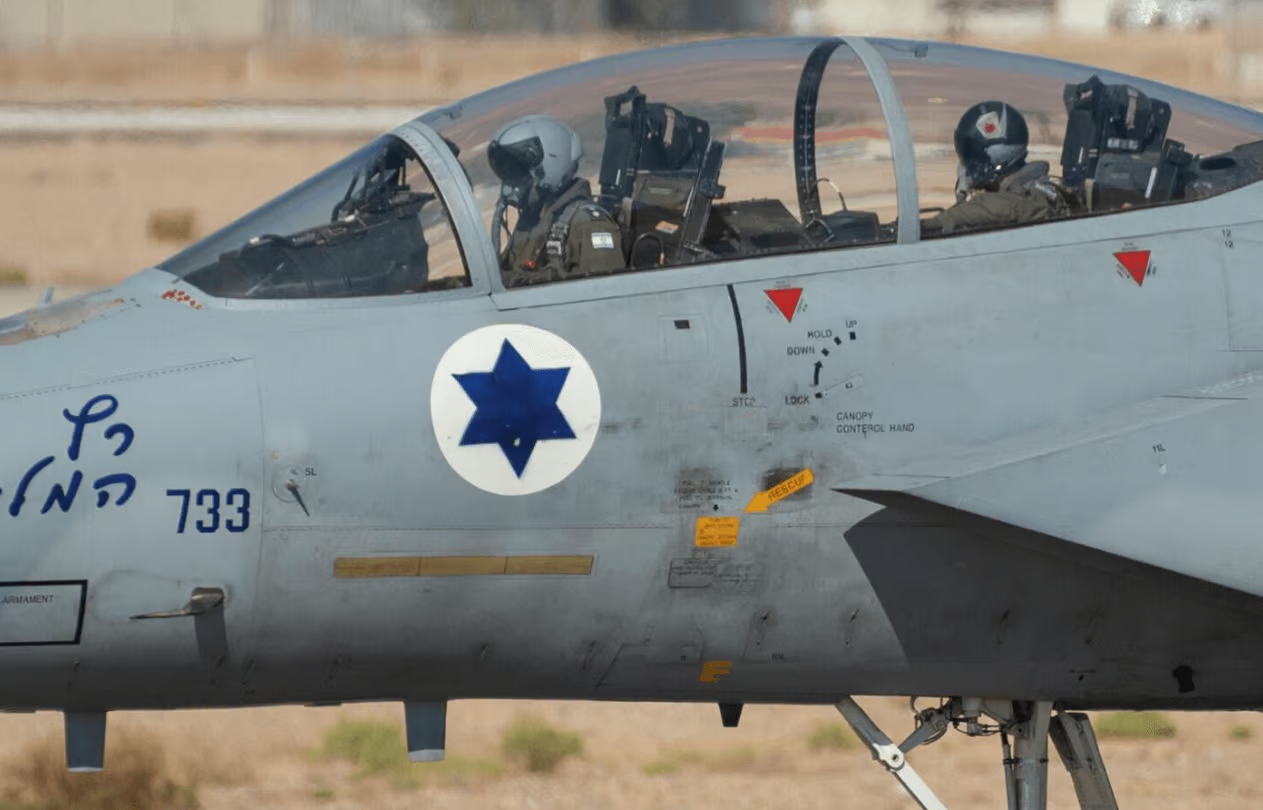
In a historic and high-stakes operation, Israel’s Air Force has successfully eliminated Hezbollah Secretary-General Hassan Nasrallah, marking a critical milestone in the ongoing conflict. Brig. Gen. Amichai Levin, commander of Hatzerim Air Force Base, confirmed the strategic importance of this mission during a joint interview with Lt. Col. M, commander of the elite 69th “Hammers” Squadron, responsible for executing the strike.

Despite the complex situation on the northern front, Levin stressed that Israel remains focused on three main objectives: returning hostages held by Hamas, dismantling the terrorist organization, and ensuring the safe return of northern residents. “The base, the squadron, and the entire Israeli Air Force (IAF) continue to operate intensively in Gaza, but separating the northern front from Gaza is essential to achieving these goals,” Levin stated.

The elimination of Nasrallah, who had long orchestrated Hezbollah’s activities against Israel, is being hailed as a game-changer for the entire region. According to Levin, “Nasrallah’s death will have a profound impact that extends beyond Lebanon’s borders. This operation moves us closer to our war objectives, sending a clear message to all those who threaten Israel.”

The mission was a culmination of years of intelligence gathering and operational planning. It showcased the exceptional coordination between the IDF’s Military Intelligence Directorate and the Air Force. “The intelligence we received was of the highest caliber. Without such precise information, an operation of this magnitude would not have been possible,” said Levin. “It also highlighted the Air Force’s initiative, audacity, and determination.”

Lt. Col. M, the 37-year-old commander of the 69th Squadron, revealed the depth of personal connection many of his team members have with the northern front. M’s family, including his wife’s relatives, were among the thousands evacuated from kibbutzim near the Lebanese border, placing the mission into even sharper focus for the squadron.

The operation took place in the heart of Beirut, targeting Nasrallah’s stronghold in the Dahiya district. “We knew exactly who we were going after, and we made sure everything went according to plan,” M said. He detailed how the mission involved a diverse formation of pilots, from seasoned veterans to younger members, flying together to ensure its success. “There were no hitches neither in the intelligence aspect, nor in the planes or the execution itself. It was flawless.”

M described the emotional aftermath of the mission, sharing the profound sense of accomplishment that came after landing back in Israel. “We gave three hugs: one to the aircrews, realizing we had just completed something historic; one to our technical officer, whose family has been directly affected by Hezbollah’s violence; and the third, of course, to my wife.”

Levin also underscored the importance of deception and strategy to ensure that Nasrallah remained unaware of the strike until it was too late. “Keeping the target stable and preventing any early warning to Hezbollah was a major challenge, but we’ve refined these techniques over time with the help of some of our brightest young officers.”

While the mission was a significant blow to Hezbollah, both Levin and M stressed that Israel’s work is far from over. The northern front remains volatile, with continued rocket fire from Hezbollah, and the threat from Hamas in Gaza persists. “We still have a long road ahead. The hostages are still in Gaza, and Hamas has yet to be dismantled. But Nasrallah’s death brings us closer to securing Israel’s borders and ensuring the safety of our people,” said Levin.

Despite the operational success, Levin also addressed questions about the protests that rocked Israel in 2023, some of which involved reservists from the 69th Squadron. He was quick to emphasize that these events do not reflect any lack of commitment from the squadron’s personnel. “Let there be no doubt about their dedication to Israel. Many of those involved in the protests are the same people who have flown countless missions, risking their lives for the country,” Levin remarked.

As Israel continues its campaign on multiple fronts, the elimination of Nasrallah stands as a testament to the capabilities of the Israeli Air Force and the unity of purpose among its military forces. The mission not only struck a major blow to Hezbollah but also demonstrated Israel’s unwavering resolve to defend its people.

Israel’s Air Force will continue its relentless pursuit of peace and security. With each operation, the IDF gets closer to achieving its objectives, ensuring a brighter future for Israel and its citizens.

The mission may be over, but the fight for Israel’s security continues.
It has been too long…

October 7, 2024

Apologies for not posting for some time. Especially given recent events, which have been very relevant to this blog.

What can I say, I have been too lazy and have fallen out of the routine of posting.

As is the case with media in Israel, headlines in Australian media over the past year have focused on Israel/Gaza/Lebanon/Iran events.

Recently there has also been a lot of coverage on the Fakestinian protesters waving Hezbollah flags (a prohibited terror symbol in Aust) and the issue of these protesters wanting to protest on the anniversary of October 7.

I will endeavour to post more articles, focusing on those which offer an interesting viewpoint. Also will post interesting Australian media articles which people in the northern hemisphere may not otherwise see.

Stay strong, fight hard, and don’t back down

David

Gulf states, including Saudi Arabia, provided intelligence on Iran attack

April 17, 2024

Some interesting info in this article.

Several Gulf States, among them Saudi Arabia and the United Arab Emirates, passed on intelligence about Iran’s plans to attack Israel, providing vital information that was key to the success of the air defense measures that almost entirely thwarted the massive assault, the Wall Street Journal reported Monday citing Saudi, US, and Egyptian officials.

US persuaded several countries to help in preparing for Iranian assault on Israel, enabling a comprehensive defensive shield to be put in place, Wall Street Journal says

The cooperation was spearheaded by the US, which has for years been striving to form an informal military partnership to counter threats from Iran, the report said.

Overnight Saturday-Sunday Iran launched hundreds of ballistic and cruise missiles alongside hundreds of drones at Israel. Yet by Sunday morning, the Israel Defense Forces, backed by the US and other allies, were able to confirm that some 99% of the incoming threats were downed, and the handful that made it through caused only minor damage.

While it was already known that Jordan actively participated in the downing of drones heading to Israel through its airspace, the Journal report for the first time revealed the scope of joint activities stretching across the region, and that included countries that have no diplomatic ties with Israel.

The report cited officials as saying that the success in stopping so many drones and missiles was due to Arab countries having passed on intelligence about the Iranian plan, as well as enabling the use of their airspace and providing radar tracking. In some cases, Arab militaries took an active role in intercepting the threats and “supplied their own forces to help” the report said, indicating that Jordan was not the only Arab nation to do so.

The full role played by Saudi Arabia and “other key Arab governments” is being kept quiet, according to the report.

Tehran had vowed to avenge seven Islamic Revolutionary Guard Corps members, including two generals, who were killed in an alleged Israeli airstrike on a building near the Iranian embassy in Damascus on April 1. It was a major escalation of ongoing fighting along Israel’s northern border amid near-daily attacks by the Iran-backed Hezbollah terror group.

After the April 1 strike and Iran’s threats to retaliate, US officials began pushing Arab governments for intelligence about Iran’s plans for revenge and for help with intercepting an attack, Saudi and Egyptian officials told the Journal.

Initially, some Arab governments were hesitant, fearing that by helping Israel they would come into direct conflict with Iran or face reprisals. In addition, some were wary about being seen as aiding Israel amid its war on Hamas in the Gaza Strip, which began with the Palestinian terror group’s devastating attack on Israel, and which has been the impetus for the spiking regional tensions.

However, eventually, Saudi Arabia and the United Arab Emirates agreed to privately pass on information while Jordan agreed to let the US and “other countries’ warplanes” use its airspace. Jordan also said it would use its own jets to intercept missiles and drones, the officials said.

They said that two days before the attack, Iranian officials told Saudi Arabia and other Gulf states about the profile of the response they were planning against Israel and its timing in order that those countries could secure their own airspace. That information was passed on to the US, providing vital details for the US and Israeli defense plans.

As the attack became imminent, Washington ordered the deployment of aircraft and missile defense systems in the region and coordinated defense between Israel and Arab governments, a senior Israeli official told the Journal.

“The challenge was to bring all those countries around Israel” despite its regional isolation, the official said. “It was a diplomatic issue.”

According to the report, missiles and drones were immediately tracked after launch by radars in Persian Gulf countries via a US operations center in Qatar. The information was beamed to fighter jets from “several countries” in the air over Jordan and other countries, as well as to warships and Israel’s missile defense units.

As soon as the drones came within range they were shot down, mostly by Israeli and US fighters, with some by Jordanian, British, and French warplanes, the officials said.

A US official told the journal that during the attack there was a period when over 100 Iranian ballistic missiles were simultaneously in the air and heading for Israel, but the vast majority were shot down by the country’s air-defense systems, both within its borders and beyond.

US officials also noted that half of the Iranian ballistic missiles either failed to launch or crash-landed short of Israel. [HAHAHA!!!]

Two US officials confirmed that statistic to ABC News. According to that report, five missiles did make it through the defenses causing minor damage at the Nevatim Air Base, including to a C-130 transport aircraft and empty storage facilities.

Israel has said there was also minor damage to a taxiway.

The tally for US aircraft was 70 drones while two guided-missile destroyers may have stopped up to six missiles, the Journal reported. A US Patriot system near Erbil, Iraq, also bagged one ballistic missile, a US official told the paper.

The US has been working for years to forge military cooperation between Israel and Sunni Arab states that share a common alignment against Iran.

With a formal military alliance not possible under the existing political situation, the US instead worked to build an informal regional air defense cooperation. The Abraham Accords in 2020, which normalized ties between Israel and the UAE as well as Bahrain, gave a boost to the plans. In another significant move, Israel in 2021 was moved from the European theater to the US Central Command.

Dana Stroul, who until December was the most senior civilian official at the Pentagon for the Middle East region, told the Journal that “Israel’s move into Centcom was a game changer” because it made it easier to share intelligence and provide early warning across countries.

The Israeli official who spoke to the Journal agreed, saying, “The Abraham Accords made the Middle East look different… because we could do things not just under the surface but above it. That’s what created this alliance.”

Israel is believed to have significant covert cooperation with Saudi Arabia though the kingdom has repeatedly said it will only establish ties after the establishment of a Palestinian state as part of a two-state solution to the Israel-Palestinian conflict.

Another Israeli official involved in the regional security cooperation drive said that though intelligence has been shared in the past, the response to the Iran attack “was the first time that we saw the alliance work at full power.”

War erupted on October 7 when Hamas led a massive cross-border attack on Israel that killed 1,200 people mostly civilians. The thousands of attackers who burst through the border also abducted 253 people to Gaza.

Israel responded with a military offensive to destroy Hamas and free the hostages of whom 129 remain in captivity, some of them believed no longer alive.

The day after the Hamas attack, Iran’s proxy Hezbollah began attacking along the border with Lebanon, while also firing rockets at northern towns and communities. Israel has responded with strikes against Hezbollah targets in Lebanon and, allegedly, also airstrikes on related infrastructure in Syria.

The escalating violence raised concerns that it could explode into a major regional war alongside the fighting in Gaza. Those fears have been further stoked by the Iranian assault and Western allies are reportedly urging Israel to not respond.

Iran’s strike against Israel more show than kill

April 15, 2024

Andrew Bolt is Australia’s most prominent conservative/right wing columnist.

https://www.heraldsun.com.au/news/opinion/andrew-bolt/andrew-bolt-irans-strike-against-israel-more-show-than-kill/news-story/aebc86d20fa7907163edfdefe2601895

When the smoke cleared after Iran’s first direct attack on Israel, we saw this world war was all bluster — as fake as professional wrestling.

Sunday – Iran’s first direct attack on Israel – was said to start World War III.

True, Iran unleashed more than 200 drones and rockets, and eight countries got dragged into this fighting.

But relief: when the smoke cleared, we saw this world war was as fake as professional wrestling. Call it World Championship Warfare.

Iran had vowed revenge after Israel bombed its embassy building in Syria’s capital, Damascus, killing a top Iranian general who had overseen anti-Israel terrorists sponsored by Iran. A hard-line political group backing Iran’s supreme leader said he had also helped in “planning and executing” the October 7 massacre of 1200 Jews by Hamas.

Iran’s pride demanded Israel pay. But its fear of Israel – which has shown what it will do to those who wound it – dictated that be more show than kill.

So everything was telegraphed.

First, Iran warned Israel it would strike, and the US even knew it would be this weekend.

That gave Israel time to get jets in the air in readiness, and the US time to position ships with planes and anti-missile defences to help out.

Next, Iran got Hezbollah, its terrorist proxy in Lebanon, to fire some of its 200,000 rockets and missiles at northern Israel – but not many.

Then Iran sent only 185 drones against only military targets and over such a distance that they took nine hours to reach Israel, by which time almost all were shot down.

Iran also fired nearly 150 missiles, but nearly all were intercepted, too. Some did strike – or were allowed to – an Israeli air force base in the Negev desert, letting Iran boast it landed “heavy blows”. Israel said damage was minor.

In the end, the only person reported injured was a Bedouin girl – a Muslim.

Then, having achieved just some showy bangs, Iran called pax: “The matter can be deemed concluded”.

If Israel agrees, it is.

This make-believe shows Israel still frightens its enemies, and the US will still defend it.

What’s more, Arab media reported even Muslim Jordan and Saudi Arabia helped shoot down Iranian missiles and drones. So did British jets.

But Iran’s terrorist proxies did little. Hamas in Gaza is now too weak, and Yemen’s Houthi rebels didn’t shoot much, either.

Yes, Iran remains a menace as it develops its nuclear bomb, but even Muslim countries now defend Israel from it, helping Israel win the first World Championship Warfare title.

How the Israel Air Force could bring Iran to its knees – analysis

April 14, 2024

Ideal time. Strike now. Leave Fordow and Natanz for another day. Take out air defences, IRGC assets and the soft nuclear sites first.

What if Israel finally decides to strike back? What if it decides to take this opportunity to finally bomb Iran’s prized nuclear weapons program?

https://www.jpost.com/israel-hamas-war/article-796936

Iran took its best shot  (or a very significant one) at Israel with over 100 ballistic missiles, cruise missiles, and over 100 drones, totaling over 300 forms of aerial attack from many different sides and vectors.

What if Israel finally decides to strike back? What if it decides to take this opportunity to finally bomb Iran’s prized nuclear weapons program?

Such a scenario has been gamed out for years, but here is one version of what it could look like.

Several quartets of F-35 stealth combat jets could fly by separate routes to hit sites across the massive Islamic Republic, some as far as 1,200 miles from the Jewish state.

Some of the aircraft might fly along the border between Syria and Turkey (despite those countries’ opposition) and then race across Iraq (who would also oppose). Other aircraft might fly through Saudi airspace (unclear if this would be with quiet agreement or opposition) and the Persian Gulf.

The main aim would be to eliminate Iran’s air defense 

They might arrive simultaneously or in waves (as Iran did overnight between Saturday and Sunday) to first eliminate the ayatollahs’ air defenses at dozens of Iranian nuclear sites, carefully hand-picked by the Mossad and IDF intelligence.

Their job would be to eliminate Iran’s serious air defense shield, a much more sophisticated defense system than anything Lebanon, Syria, or Hamas possesses.

Regardless of whether the F-35s came in unison or in waves, there would almost certainly be a separate wave for Israel’s F-15 eagles, F-16 fighting falcons, and heavily loaded F-35s carrying 5,000-pound American GBU-72 bombs. 2,000 pound and smaller bombs might also be used for a variety of targets.

There might even be additional waves after that to assist in penetrating deep into the ground to destroy Iran’s top nuclear facilities at Fordow and Natanz.

The IDF could also potentially use a significant number of its own surface-to-surface ballistic missiles as well as intelligence-collecting and attack drones.

Fordow’s main chamber is buried some 80 meters underground, a depth that only the 30,000-pound “bunker buster” bombs in the American arsenal could immediately destroy.

But even under the Trump administration, the US has always refused to provide Israel with such bunker busters.

That said, one does not need to entirely eliminate a facility to render it useless. A repeated series of strikes could block Tehran’s access to electric power, bury its entrances and exits, and cut it off from the world.

Such an operation might not be free.

Iran might succeed at shooting down aircraft.

Some aircraft might fail to make the return flight due to fuel issues even if there was some complex midair refueling capability or midway landing spot as part of the plan.

On the positive side, despite the massive number of aerial attacks by the IDF in Lebanon, Syria, and Gaza, which reportedly also included F-15 and F-16 fighter aircraft at times, Israel lost only one F-16 in early 2018 and has never lost an F-35.

Special forces or Mossad agents in Iran to assist close-up could be lost one way or another.

There are also additional facilities that Israel might strike, such as the heavy water reactor at Arak, the uranium conversion plant near Isfahan, research reactors at Bonab, Ramsar, and Tehran, and other facilities where Iran has moved forward on weaponization issues – though these facilities might be a lower priority as they are earlier points in the nuclear weapons cycle.

As of mid-2023, it was also revealed that IDF intelligence formed a new unit of dozens of officers with one goal: to collect and assess intelligence to develop a massive target bank for hitting Iran far beyond just its nuclear program.

The targets were to include key power sources for the Islamic Revolutionary Guard Corps in order to bring them to their knees much the same way IDF intelligence had collected intelligence for years on an enormous number of Hamas and Hezbollah targets.

Israel might not undertake a huge attack on Iran’s nuclear facilities.

If it does, it might not open up the much larger target bank of IRGC targets.

Maintaining US and allied support is also a crucial value.

On the other hand, the main reason not to attack Iran for years has been the blowback that Jerusalem could receive from Hezbollah, Hamas, and hundreds of drones and ballistic missiles.

Being that most of the worst case scenarios have already transpired – and even worse including Yemen who was not viewed as for sure taking part in a theoretical larger war as they have in fact in the current very real war – there would seem to be a lot less of a reason to hold back at this moment than at anytime in decades.

Iran launches over 100 drones at Israel in first-ever direct attack; IDF braces to intercept

April 13, 2024

And so it begins…

https://www.timesofisrael.com/iran-launches-wave-of-drones-at-israel-in-first-ever-direct-attack-idf-braces-to-intercept

Israel said Saturday night that Iran had launched a large wave of attack drones from its territory toward the Jewish state and that the military was tracking and preparing to intercept them, in the first-ever direct attack on Israel by the Islamic Republic.

IDF Spokesman Rear Adm. Daniel Hagari first confirmed at 11 p.m. that the attack, anticipated for several days, had begun.

Iran’s Revolutionary Guards later confirmed it had launched dozens of drones and missiles against specific targets in Israel, Iranian state media quoted a statement by the elite force as saying.

Israel assessed that over 100 drones had been launched. The Israeli Air Force was tracking the drones and was preparing for additional waves of attacks, which may also include missiles.

The drones currently being tracked were expected to reach the country within hours, though the Israel Defense Forces will work to intercept them at an earlier stage. Other threats, including ballistic missiles or cruise missiles, will take less time to reach Israel, and the IDF said it would update accordingly.

The incoming attack led Jordan and Iraq to shut down their airspace for a period of several hours, and Israel too announced that its airspace would shutter as of Sunday at 12:30 a.m. until an unspecified time, leading to various flight cancellations.

Israel’s prime minister and top defense leaders were set to hold a security assessment at military headquarters in Tel Aviv shortly after midnight.

In a press statement, Hagari said the Air Force was tracking the drones, while noting that they would take several hours to reach the country. He said there would be GPS disruptions as the military works to intercept the drones.

“The defense and offense systems of the Israeli Air Force are on alert, and dozens of planes are in the skies — prepared and ready,” said Hagari, adding: “We have an excellent aerial defense array, but the defense is not hermetic.”

If there are any additional attacks, that require a separate warning, Hagari said the IDF will update the public.

Sirens will only sound if the drones enter Israeli airspace, at the relevant locations, Hagari said. He added that the IDF will seek to intercept the targets as early as possible.

Channel 12 said the US was the first to identify the launch and immediately notified Israel, leading to a flurry of activity in recent hours in Israel and its surroundings that led to widespread public assessment that an attack was imminent.

State-linked media in Iran reported that a second wave of drones had been launched at Israel.

Two security sources in Iraq said dozens of drones had been spotted flying from Iran toward Israel over Iraqi airspace in what Iranian Press TV called “extensive drone strikes” by the Revolutionary Guards.

Channel 12 aired video from Iraq that purported to show a wave of drones passing overhead in the night sky. Several such videos were shared on social media.

Jordan’s air defenses were ready to intercept and shoot down any Iranian drones or aircraft that violate its airspace, two regional security sources said.

Earlier in the evening, presaging the attack, the White House announced that US President Joe Biden would cut short a weekend trip to Delaware to hold consultations with his national security team on the potential Iranian strike on Israel.

Biden’s defense secretary, Lloyd Austin, called his Israeli counterpart Yoav Gallant for the second time in three days to discuss US support for Israel’s defense, the Pentagon said.

“Secretary Austin made clear that Israel could count on full US support to defend Israel against any attacks by Iran and its regional proxies,” read the statement.

Before the incoming attack was confirmed, the IDF’s Home Command issued new guidelines shuttering all schools and educational activity the next day — action that would not affect most schoolchildren, who started their vacation ahead of the Passover holiday at the weekend.

In addition to the closure of educational facilities, the military announced it would be forbidden for more than 1,000 people to assemble outdoors.

Tensions between Israel and Iran had reached a new high in recent days as the Islamic Republic vowed to avenge seven Islamic Revolutionary Guard Corps members, including two generals, who were killed in an alleged Israeli airstrike on a building near Tehran’s consulate in Damascus on April 1.

Defense Minister Gallant said in a video statement that Israel had “added new capabilities, on land, in the air, at sea, in intelligence, within the State of Israel, and together with our partners, led by the US,” in preparation for attacks from the “terror state” Iran.

Citing unnamed sources, CNN reported Saturday that the US expected Iran to target multiple sites inside Israel and in the region in the coming days, with one of the sources cited as saying that the US had observed Iran preparing as many as 100 cruise missiles to strike Israel. A senior US administration official told CNN that Iran’s proxies could be involved in the attack as well.

Also citing unnamed sources, Channel 12 reported that by the Israeli security establishment’s estimation, Iran would strike military rather than civilian targets.

On Saturday morning, the IRGC seized a Portuguese-flagged cargo ship, at least partially Israel-owned, near the Strait of Hormuz.

Following the incident, Foreign Minister Israel Katz called “on the European Union and the free world” to designate the IRGC as a terrorist organization and slap sanctions on Iran.

“The Ayatollah regime of [Iranian Supreme Leader Ali] Khamenei is a criminal regime that supports Hamas’s crimes and is now conducting a pirate operation in violation of international law,” said Katz.

Several international entities have made adjustments to regular business amid the expected Iranian attacks.

Australia’s Qantas and Germany’s Lufthansa airlines on Saturday announced they would reroute flights in the Middle East, with the German airline saying it would avoid Iranian airspace altogether until Tuesday.

Canada on Saturday warned its citizens to avoid all travel to Israel, Gaza, and the West Bank, as Ottawa upgraded its risk assessment in the region.

The Netherlands announced it would keep its embassy in Tehran closed on Sunday, and would decide then whether or not to reopen on Monday.

Interview: ‘Israeli attack on Iranian nuclear facilities may come as early as 2025’

October 3, 2023

Here is the book related to the article. I will definitely be getting a copy when it is released in Australia.
https://www.amazon.com/Target-Tehran-Cyberwarfare-Assassination-Diplomacy/dp/1668014564/ref=sr_1_1

https://worldisraelnews.com/interview-israeli-attack-on-iranian-nuclear-facilities-may-come-as-early-as-2025/

War is likely even if a nuclear accord is renegotiated, the authors of a new book on the Israel-Iran conflict said. 

By World Israel News Staff

The chances of a full-blown war between Israel and Iran are escalating with every month and could happen as early as 2025, the authors of an explosive new book told World Israel News in an interview on Wednesday.

According to Yonah Jeremy Bob and Ilan Evyatar, two Israeli journalists whose recently published book, Target Tehran, chronicles the history of the Israel-Iran nuclear conflict, war is likely to break out even if the U.S. and Iran succeed in negotiating a return to the 2015 nuclear accords, which Israel opposes.

“Without an ironclad agreement between Iran and the world powers guaranteeing that Tehran will not be able to become a nuclear weapons power, the chances of conflict grow with every month,” Evyatar told World Israel News.

“The fundamental reason for Israel’s opposition to the Iran nuclear deal is that it simply does not believe Iran will stop pursuing the development of an atomic bomb,” he added.

Israel’s stance is fortified by the revelations uncovered in its pillage of Iran’s nuclear archive, executed right under the nose of the Iranian security apparatus in the heart of Tehran. The raid—which the authors dissect in a chapter of the book — highlighted that Iran’s nuclear aspirations remained steadfast even before former U.S. President Donald Trump withdrew from the nuclear accords – a decision he made based on evidence the Mossad found during the heist.

Since then, Iran has been amassing enough 60% enriched uranium for several nuclear bombs, and is poised to take the relatively straightforward step to 90% weapons-grade enrichment.

Bob and Evyatar suggest that the crisis could boil over as early as October 2025, when the restrictions on the number of centrifuges Iran can assemble begin to expire. Even if a new accord was signed, if it maintains the basic provisions of the previous one, the authors argue, tensions could escalate in anticipation of an Iran equipped with more centrifuges, thus capable of achieving weapons-grade uranium at unprecedented speeds.

The 2015 agreement, which Iran is still party to, theoretically keeps Tehran several months away from a nuclear weapon by limiting the volume of enriched uranium. However, the Israelis argue that once Iran obtains a substantial number of advanced centrifuges and enrichment sites, detecting a breakout in time to counteract will become far more challenging for Israeli and western intelligence apparatus.

“Israel would probably address such a prospect first through covert sabotage led by the Mossad, and if that didn’t work, the IDF would be assigned to mount an aerial strike,” Bob said.

Why it would be better for Israel if Iran enriched to 90% now

August 15, 2023

28 July 2023

https://www.israelhayom.com/2023/07/28/why-it-would-be-better-for-israel-if-iran-enriched-to-90-now/

No real technical variance exists between 90% and 60% enrichment; the difference in breakout time to a bomb’s worth of weapons-grade enrichment is a matter of days or a few weeks. Israel is better off with an Iranian push to 90% without billions of dollars flowing to the regime and without the illusion that holding Tehran at 60% enrichment is meaningful.

With Israel consumed by an intense judicial reform debate, Iran is expanding its nuclear weapons program. The Biden administration continues to promote unofficial understandings with Tehran based on keeping Iranian enrichment at 60% in exchange for the release of billions of dollars. The goal: Kick the Iranian nuclear issue down the road until after the 2024 elections. The proper name for such understandings, which in many ways are far worse than the 2015 JCPOA nuclear deal, should be “false quiet for money”, and not “freeze for freeze”.

The idea behind these understandings is to freeze Iran’s nuclear progress in enriching uranium to 60%, which is very close to what is required technically for Tehran to reach 93%, or weapons-grade enrichment. This gives the mullahs, for the first time, a win-win situation: a de facto green light to 60% enrichment together with massive sanctions relief. Presenting it as understandings rather than an agreement is an attempt by the Biden administration to avoid review by Congress, where it will face fierce opposition.

Israel is better off with an Iranian push to 90% without billions of dollars flowing to the regime and without the illusion that holding Tehran at 60% enrichment is meaningful. No real technical variance exists between 90% and 60% enrichment; the difference in breakout time to a bomb’s worth of weapons-grade enrichment is a matter of days or a few weeks. The most dangerous technical threshold has already occurred when the Biden administration did not respond to Iran’s enrichment to 20%, which is about 70% of the effort necessary to reach weapons-grade uranium.

For ten months after the US killed Qassem Soleimani, the regime stopped its nuclear expansion. Then it went all out after Biden’s election and the end of maximum pressure. When the regime feels American steel, it backs down. When it feels American mush, it pushes forward.

It is still not clear where the Biden administration has set any red lines for action to prevent Iran from developing nuclear weapons. Since President Biden won the election in November 2020 on a promise to abandon the maximum pressure campaign of his predecessor, Tehran massively expanded its nuclear program. Iranian nuclear scientists have used advanced centrifuges to enrich uranium to 20%, 60% and briefly to almost 84%; produced uranium metal for use in developing nuclear weapons; and repeatedly stonewalled UN weapons inspectors.

After almost three years of a failed Iran policy of maximum concessions, perhaps the Biden administration finally has communicated to Tehran that they will act forcefully at 90%. But “forcefully” must mean more than the snapback of UN sanctions, and the enforcement of US sanctions, which should have occurred at prior levels of Iranian nuclear expansion. It must involve the credible threat that President Biden will use American military power to stop the development of Iranian nuclear weapons.

Even if Iran doesn’t believe that the Americans will use military force, Tehran is not likely to make the mistake of rushing to 90%. Instead, if past is prologue, Tehran will follow its decades-long strategy of forcing the West to accept increasing levels of nuclear weapons expansion. It will remain at the 60% line while building out its nuclear infrastructure and extracting maximum financial concessions. The most alarming is the work done at Natanz where Tehran is building out a hardened site that reportedly will go over 100 meters (328 ft.) underground and be ready in about two or three years to be used for future high levels of enrichment, protected from outside attack. According to the understandings, Tehran will continue the development and production of advanced centrifuges, ballistic missiles capable of carrying nuclear warheads, and crucial capabilities related to nuclear weapons systems.

We are sleepwalking into the Iranian trap. With Iran remaining below the 90% line, and the Biden administration pursuing a false quiet at a high price, Tehran is left to pursue nuclear weapons on all fronts. Israel needs to fight this Iranian strategy while Congress must immediately review every step the Biden administration takes.

Brig. Gen. (res.) Prof. Jacob Nagel is a senior fellow at the Foundation for the Defense of Democracies (FDD) and a professor at the Technion. He served as national security advisor to Prime Minister Benjamin Netanyahu and the acting head of the National Security Council.

Mark Dubowitz is the FDD’s chief executive and an expert on Iran’s nuclear program and sanctions. In 2019, he was sanctioned by Iran.

Saudi foreign minister: All bets off if Iran gets nuclear weapon

December 13, 2022

The nuclear talks have stalled with the focus shifting to the Russia-Ukraine war as well as domestic unrest in Iran.

https://www.jpost.com/breaking-news/article-724598

Saudi Arabia’s foreign minister said on Sunday that Iran’s Gulf Arab neighbors would act to shore up their security if Tehran were to obtain nuclear weapons.

Indirect US-Iranian talks to salvage a 2015 nuclear pact between global powers and Iran, which Washington exited in 2018, stalled in September. The UN nuclear chief has voiced concern over a recent announcement by Tehran that it was boosting enrichment capacity.

“If Iran gets an operational nuclear weapon, all bets are off,” Prince Faisal bin Farhan Al Saud said in an on-stage interview at the World Policy Conference in Abu Dhabi when asked about such a scenario.

“We are in a very dangerous space in the region…you can expect that regional states will certainly look towards how they can ensure their own security.”

The nuclear talks have stalled with Western powers accusing Iran of raising unreasonable demands and focus shifting to the Russia-Ukraine war as well as domestic unrest in Iran over the death in custody of 22-year-old Mahsa Amini.

Though Riyadh remained “skeptical” about the Iran nuclear deal, Prince Faisal said it supported efforts to revive the pact “on condition that it be a starting point, not an end point” for a stronger deal with Tehran.

Sunni-ruled Gulf Arab states have pressed for a stronger agreement that addresses their concerns about Shi’ite Iran’s missiles and drones program and network of regional proxies.

“The signs right now are not very positive unfortunately,” Prince Faisal said.

“We hear from the Iranians that they have no interest in a nuclear weapons program, it would be very comforting to be able to believe that. We need more assurance on that level.”

Iran says its nuclear technology is solely for civil purposes.

A senior Emirati official said on Saturday that there was an opportunity to revisit “the whole concept” of the nuclear pact given the current spotlight on Tehran’s weapons with Western states accusing Russia of using Iranian drones to attack targets in Ukraine. Iran and Russia deny the charges.

In Iran, Israel Has Everyone Rattled

September 14, 2022

Article from July, has some very interesting details in it. Taken from jihadwatch.org 27 July 2022.

Ever since Israel introduced a computer worm into Iranian computers that caused more than a thousand Iranian centrifuges to speed up and destroy themselves, in an operation that has entered history as Stuxnet, Israel has been performing acts of derring-do that have, through cyberwarfare, sabotage, and assassinations, rattled Iran’s leaders. Between 2010 and 2012, four of Iran’s top nuclear scientists were assassinated, one after the other, in the middle of Tehran traffic, by a man (or sometimes two) on a motorbike who pulled up alongside their cars and let loose a volley of shots, then rode off through that traffic. None of the killers has been found. In 2018, 20 Mossad agents managed to break into a nondescript building in central Tehran, blast their way through 32 steel doors, and seize the entire nuclear archive of Iran, some 100,000 documents, which they managed to bring back to Israel for analysis, and also to share its information about heretofore unknown nuclear sites with the IAEA. In 2020 and 2021, Mossad agents again managed to sabotage nuclear facilities at Natanz; the second attack was on a facility that had been built deep underground. At the end of 2021 Mossad killed Mohsen Fakhrizadeh, the nuclear scientist who was regarded as the “godfather” of Iran’s nuclear program.

And in recent months, Israel has renewed its campaign of assassination, killing nearly a half-dozen high-ranking officials belonging mainly to the Islamic Revolutionary Guards Corps. A report on these latest Israeli acts, and their effect on Iranian morale, can be found here: “Iranian politician says Israel ‘freely runs its operations’ in Tehran,” Times of Israel, July 19, 2022:

An Iranian politician indicated that many in his country feel Israel is operating freely in Tehran and targeting security operations with ease.

In a report published Tuesday in the UK-based Financial Times, an official cited only as a “reformist politician” was quoted as saying that “it feels as if Israel has established a large-scale organization in Tehran and freely runs its operations.”

The politician added: “Israel is clearly targeting Iran’s ‘highly secure’ image to tarnish its greatness in people’s eyes.”

A series of assassinations and attacks in Iran have been attributed to Israel in recent months, though Jerusalem rarely if ever publicly takes credit for such operations. But in a rare interview last week — and rarer yet comments on Israeli activity in enemy countries — National Security Adviser Eyal Hulata said Israel had “acted quite a lot in Iran over the past year.”

The Financial Times report noted a feeling of “anxiety at the highest levels of the Iranian establishment” over the series of Israeli-attributed attacks. In late June, the IRGC replaced its longtime intelligence chief in a move seen by many as a reaction to the suspected assassinations.

Iran is running scared. Every other month, it seems, the Israelis manage to kill another high official, or to hit another nuclear or non-nuclear facility, or place malware on Iranian computers. in the past, Iran has several times claimed to have “unearthed” a Mossad cell, but no names are ever produced, no prisoners paraded to confess on camera, and nothing more is heard about these so-called Mossad agents. Most analysts suspect that Iran has yet to find a single Israeli agent.

Nevertheless, Iranian officials told the UK newspaper that they are not looking to directly escalate tensions at the moment.

Of course, the key words here from Iran are “not looking to directly” escalate tensions. The Iranians want to conduct their regional aggression not “directly,” but through their two closest proxies, the Houthis in Yemen and Hezbollah in Lebanon. So far, Iran has supplied Hezbollah with 130,000 rockets and missiles that have been hidden in civilian areas all over southern Lebanon, and occasionally Hezbollah launches a rocket or drone toward Israel.

Iran’s policy remains to work with its proxy forces and we will not initiate any attacks against Israel if Israel doesn’t attack Lebanon,” a “regime insider” was quoted as saying. “It’s not wise for us to fight with Israel. And Zionists also show teeth to attack but their teeth are not sharp enough to go as far as striking Iran.”

Gen. Aviv Kochavi, head of the IDF, would beg to differ. Israel has been striking Iran relentlessly all along: what was Stuxnet, what were those eight targeted assassinations, what was that repeated sabotage of nuclear facilities in Natanz and Fordo, what are the continuing mysterious explosions at petrochemical plants and electric plants all over Iran, aif not examples of Israel “striking at Iran”?

In a similar report in The New York Times late last month, Iranian officials told the newspaper that Israel’s operations have had drastic and long-lasting effects.

The security breaches inside Iran and the vast scope of operations by Israel have really undermined our most powerful intelligence organization,” said former Iranian vice president Mohammad Ali Abtahi.

Unnamed Iranian officials also said at the time that “Israel’s spy network has infiltrated deep into the rank and file of Iran’s security circles.”

The fear is palpable in the ruling circles in Tehran. They are no longer bothering to hide it. The nonstop success of Mossad in its sabotage and assassination efforts has demoralized the Iranians. The “drastic and long-lasting effects” of Israeli deeds has made clear to the Iranians that “Israel’s spy network has infiltrated deep into the rank and file of Iran’s security circles.” Sitting in Tehran, whom can the ayatollahs, or the IRGC commanders, trust? Israel keeps hitting them here, there, and everywhere. It never claims responsibility; it doesn’t have to. Everyone knows who has been behind these attacks. Everyone wonders who else is part of this Mossad network, what Iranians are working with Mossad to undermine and weaken the regime. High officials, including at least one IRGC commander, have been arrested in a panicky show of force, but nothing has been proved, and it seems the Iranians are announcing that “Israeli agents have been arrested” just to persuade the public that “something is being done.” But not a single trial has yet been held of supposed Mossad agents, none of those agents have been named or paraded before the public. Iranian officials are trying, but failing, to put on a brave face about Iran’s supposed imperviousness to Israeli attacks, even as the Mossad keeps running circles around it. They have no idea where the next Israeli strike, or act of sabotage, or assassination will take place. Iran’s top clerics and military men are now deeply suspicious of one another. Whom they can trust? In whom can they confide? Mossad appears to be, to use Flaubert’s famous phrase, “présent partout, et visible nulle part” – everywhere present, but nowhere to be seen.