Author Archive

Jewish People Have ‘Flourished and Thrived as an Example of Humankind,’ Trump Declares in Rosh Hashanah Message

September 10, 2018

“Over the centuries, the Jewish people have suffered unthinkable persecution, yet you have not only endured, you have thrived and flourished as an example of humankind”

Never a truer word has been said.

Jewish People Have ‘Flourished and Thrived as an Example of Humankind,’ Trump Declares in Rosh Hashanah Message

US President Donald Trump spoke once again of his “personal connection” to Judaism on Thursday, as he held a telephone call with American Jewish leaders to mark Rosh Hashanah — the Jewish New Year which begins on Sunday night.

“I am the very proud father of a Jewish daughter, Ivanka, and my son-in-law, who I’m very proud of also — I will say that very loudly — Jared, and my several Jewish grandchildren, namely three beautiful Jewish grandchild that I love,” Trump declared.

Over a period of 20 minutes, the president spoke glowingly about Jewish contributions to the US, his efforts to broker a peace deal between Israel and the Palestinians, the recent deportation to Germany of Nazi collaborator Jakiw Palij, and his determination to combat antisemitism in America.

“Over the centuries, the Jewish people have suffered unthinkable persecution, yet you have not only endured, you have thrived and flourished as an example of humankind,” Trump said.

On Israel, Trump emphasized that he had “kept my promise to recognize Jerusalem as the capital of Israel, as we have since moved our embassy to Tel Aviv to its rightful home in the holy city.”

Regarding his peace efforts, Trump praised his team’s progress on the issue. “Ambassador Friedman, Jason [Greenblatt], Jared [Kushner], and others are working hard to reach a peace agreement between the Israelis and the Palestinians.”

Said Trump: “All my life I’ve heard that’s the hardest deal to make, and I’m starting to believe that maybe it is. But I will say that if it can be delivered, we will deliver it.”

Both Kushner and Friedman were present on the call, along with Norm Coleman, the chairman of the Republican Jewish Coalition (RJC), and Harvard law professor Alan Dershowitz, a Jewish Democrat now widely viewed as a Trump confidante. “It’s an honor to be asking you a question,” Dershowitz told the president, going on to inquire whether the Jewish community should “be optimistic that you can help bring about a peaceful resolution of the conflict that we all pray for all the time?”

“I think the answer to that is a very strong yes,” Trump responded.

While there was no discussion of the current storm over an anonymous oped by a White House official in The New York Times that accused Trump of acting “in a manner that is detrimental to the health of our republic,” Trump was candid in his explanation of his evolving policy toward Iran.

“I had a secretary of state that didn’t like terminating [the 2015 Iran nuclear deal],” Trump said, referring to his first selection for that post, Rex Tillerson, who was fired in March. “I played that little game for a while, and then ultimately I decided I’m just doing it. And I did it.”

Withdrawing from the Iran deal had “a tremendously positive impact on, I think really, world security — because Iran is no longer the same country,” Trump added. “From the day I did it, they’ve lost their mojo.” [Hahahah!]

Hezbollah planning attacks in Judea and Samaria, commander says

September 3, 2018

http://www.israelhayom.com/2018/08/31/hezbollah-planning-attacks-in-judea-and-samaria-commander-says/

Senior Hezbollah commander says fighting rebels in Syria has been a “perfect training ground” for future war with Israel

Hezbollah violations of cease-fire agreement with Israel could lead to war, U.N. warns

U.N.: Hezbollah arsenal is a “threat to peace.”

A senior Hezbollah commander told the Lebanese media Friday that the Shiite organization is planning to infiltrate Judea and Samaria and carry out terrorist attacks there in the event of conflict with Israel.

In an interview with the Lebanese paper Al Akhbar, conducted at a former Israeli military post in southern Lebanon, the commander said that Hezbollah was preparing “many surprises for the enemy.”

“A small number of well-armed fighters, who are very familiar with the enemy’s defenses, can infiltrate and enter the West Bank and cause great damage,” the commander said.

Hezbollah, whose fighters have been deployed in Syria to support the forces loyal to Syrian President Bashar Assad in a yearslong civil war there, has been given “a perfect training ground for the resistance,” the commander said.

The civil war in Syria has provided training “in operational combat in a residential area and an opportunity to test the various weapons. The battle against the takfiri groups [Islamist groups that accuse other Muslims of apostasy] has prepared us for battle with the Zionist enemy,” he said.

“The war is coming. Going on this assumption, we are now preparing for battle,” he continued.

The commander also noted that more than 2,000 new Hezbollah recruits were being trained every year.

On Thursday, the U.N. Security Council warned that violations of the 2006 cease-fire agreement between Lebanon and Israel could lead to a new conflict and urged international support for Lebanon’s armed forces and their increased deployment in southern Lebanon as well as at sea.

The council’s warning against “a new conflict that none of the parties or the region can afford” came in a resolution adopted unanimously extending the mandate of the United Nations Interim Force in Lebanon in southern Lebanon known as UNIFIL until Aug. 31, 2019.

Council members urged “all parties” to exercise “maximum calm and restraint and refrain from any action or rhetoric that could jeopardize the cessation of hostilities or destabilize the region.”

The U.N. peacekeeping force was originally created to oversee the withdrawal of Israeli troops following the 1978 South Lebanon Conflict. The mission was expanded after the 2006 Second Lebanon War between Israel and Hezbollah, to ensure that peacekeepers could deploy along the Lebanon-Israel border and help Lebanese troops extend their authority into their country’s south for the first time in decades.

The French-drafted resolution again urged all countries to enforce a 2006 arms embargo and prevent the sale or supply of weapons to any individual or entity in Lebanon not authorized by the government or U.N. force known as UNIFIL – an implicit criticism of the suppliers of weapons to Hezbollah.

Rodney Hunter, the U.S. Mission’s political coordinator, told the council that Hezbollah, with Iran’s help, “has grown its arsenal in Lebanon in direct threat to peace” along the border with Israel “and the stability of all of Lebanon.”

Hunter said 12 years after the council imposed an arms embargo, “it is unacceptable that Hezbollah continues to flout this embargo, Lebanon’s sovereignty, and the will of the majority of Lebanese people.”

Israel and Lebanon are still technically at war. The resolution reiterates the council’s call for Israel and Lebanon “to support a permanent cease-fire and a long-term solution.”

The council also stressed “the necessity of an effective and durable deployment of the Lebanese Armed Forces in southern Lebanon and the territorial waters of Lebanon at an accelerated pace.”

It called for UNIFIL, which has more than 10,000 troops deployed in southern Lebanon, and the Lebanese military to analyze the country’s ground forces and maritime assets.

The council also called for the Lebanese government “to develop a plan to increase its naval capabilities … with the goal of ultimately decreasing UNIFIL’s Maritime Task Force and transitioning its responsibilities to the Lebanese Armed Forces.”

France’s Deputy Ambassador to the U.N. Anne Gueguen stressed that “only the presence of the Lebanese state and its armed forces will ensure security … and create the conditions of lasting stability in the south of Lebanon and along its territorial waters.”

The Security Council also commented on the current political situation in Lebanon.

Nearly four months after the country held its first general elections in nine years, politicians are still squabbling over the establishment of a new government amid uncertainty over a long stagnating economy, struggling businesses and concerns over the local currency.

The Security Council welcomed the elections and the country’s progress toward reactivating government institutions, and called for the establishment of a new Lebanese government “without further delay.”

After defunding UNRWA, US said seeking to limit others’ aid to it, then close it

September 3, 2018

Please Allah, make it happen so…

After defunding UNRWA, US said seeking to limit others’ aid to it, then close it

Trump Administration will allow Gulf and Arab allies to help keep UN’s Palestinian refugee agency afloat for now, but ultimately wants it dismantled, Israeli TV reports

https://www.timesofisrael.com/after-defunding-unrwa-us-said-seeking-to-limit-others-aid-to-it-then-close-it/

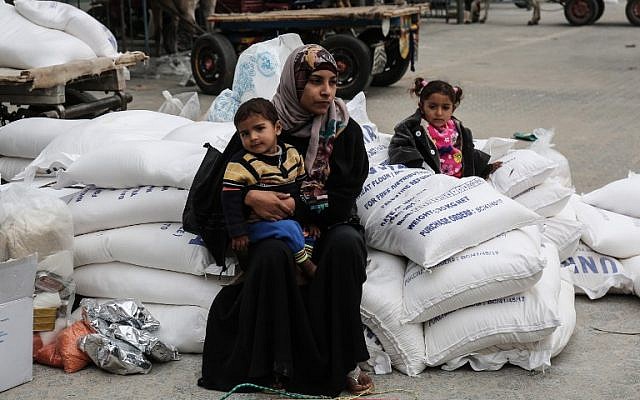
A Palestinian woman sits with a child after receiving food supplies from the United Nations' offices at the United Nations' offices in the Khan Younis refugee camp in the southern Gaza Strip, February 11, 2018. (AFP/Said Khatib)

A day after the US announced it will not give any further funding to UNWRA, the UN agency that aids Palestinian refugees, Israeli officials said the Trump Administration has made clear to them that it intends to see UNRWA closed down altogether and all its functions taken over by other agencies.

The US will not prevent the Gulf states, Arab nations, and others from providing emergency funding to keep UNRWA (the UN’s Relief and Works Agency for Palestine Refugees) functioning this year, Israel’s Hadashot TV news reported on Saturday, quoting senior Israeli diplomatic sources. But it will condition its consent to further funding by US allies in the Arab world on a reevaluation of UNRWA’s role and a redefinition of who the agency defines as a Palestinian refugee. Ultimately the TV report said, the US goal is to “close down UNRWA altogether.”

The US, which is shortly set to issue a report on the whole Palestinian refugee issue, in which it will reportedly state that there are only some 500,000 Palestinian refugees — as opposed to the 5 million-plus claimed by UNRWA — considers that there are only some 20,000 genuine Palestinian refugees outside the West Bank and Gaza Strip, the TV report also said.

It said the US will now look for other organizations to take on the work done by UNRWA, in education, medical assistance, food aid, and more — with Palestinian recipients acknowledged to be in need of aid, but not considered to be refugees.

Jordan’s King Abdullah II (L) and US First Lady Melania Trump (R) listen while US President Donald Trump makes a statement for the press before a meeting in the Oval Office of the White House June 25, 2018 in Washington, DC. (AFP/Brendan Smialowski)

To this end, the TV report said, the Trump Administration has already asked King Abdullah of Jordan to take over responsibility for UNRWA’s educational network in Jordan — but has been rebuffed. Similarly, it wants Mahmoud Abbas’s Palestinian Authority to take responsibility for UNRWA schools in the West Bank and Gaza — but this idea is a non-starter at present, with the PA boycotting the Trump Administration.

Abbas’s PA reacted furiously Friday and Saturday to the US decision to defund UNRWA, and is reported to be examining whether there are ways to work via the UN to block US efforts to marginalize and potentially close the agency.

The TV report noted that while Israel’s Prime Minister Benjamin Netanyahu is backing the US in defunding UNRWA, and has called often for the agency to be closed down, Netanyahu is anxious that aid be channeled to needy Palestinians via other avenues, to avoid a further escalation of tension in the West Bank and Gaza….

continues at link

https://www.timesofisrael.com/after-defunding-unrwa-us-said-seeking-to-limit-others-aid-to-it-then-close-it/

The Great Middle Eastern War of 2019

August 29, 2018

A long article, but covers pretty much all the possibilities…

The Great Middle Eastern War of 2019

The next war on Israel’s north will not simply be a more destructive replay of the 2006 Lebanon War, but will likely involve many more actors on multiple fronts, unprecedented challenges for escalation management, warfighting, and conflict termination—and the possibility of a regional conflagration.

Growing tensions on Israel’s northern border have raised concerns about yet another Israel-Hezbollah confrontation or a war between Israel and Iran in Syria. Such a war may not be limited to the original participants, but could involve an array of Shi‘a militias and even the Assad regime, and could span the region—thereby affecting vital U.S. interests.

Two factors are driving these tensions: efforts by Hezbollah and Syria—with Iran’s help—to produce highly accurate missiles in Lebanon and Syria that could cripple Israel’s critical infrastructure and make life there intolerable; and Iran’s efforts to transform Syria into a springboard for military operations against Israel and a platform for projecting power in the Levant.

Iran, however, while pursuing an anti-status quo agenda that has often brought it into conflict with Israel and the United States, has shown that it seeks to avoid conventional wars and consequent heavy losses to its own forces. Instead, it relies on proxy operations, terrorism, and non-lethal shaping activities. Yet it has occasionally been willing to venture high-risk activities that entail a potential for escalation. (Example: Iranian forces in Syria launched an explosives-laden UAV into Israeli airspace in February; it was shot down, but the incident sparked a round of clashes.)

Israel also seems intent on avoiding war, though its actions show that it is willing to accept the risk of escalation to counter these emerging threats. Indeed, since 2013 it has carried out more than 130 strikes in Syria on arms shipments destined for Hezbollah, and since late 2017 it has expanded this “campaign between the wars” to target Iranian military facilities in Syria—without, thus far, sparking a wider confrontation.

Complacency is, however, unwarranted. The two major Arab-Israeli confrontations of the recent past (Lebanon 2006, Gaza 2014) resulted from unintended escalation. The emerging dynamic between Israel, Iran, and the “axis of resistance” is a formula for a third major “accident,” and so deserves careful analysis.

Multiple Actors, Fronts, and Domains

The potential for yet another war—one of unprecedented scope and complexity—is an outcome of the Syrian civil war, which has enabled Iran to build a military infrastructure in Syria and to deploy its Shi‘a “foreign legion” to Israel’s borders. War is now possible on multiple fronts and in far-flung theaters, fought on land, in the air, at sea, and in information and cyber domains by fighters from Hezbollah, Iran, Syria, Iraq, Afghanistan, Pakistan, and even Yemen. The widened scope of a possible war will create new military options for Iran and Hezbollah, and stretch Israeli capabilities to their limits.

Hezbollah Secretary General Hassan Nasrallah said as much, though perhaps with some exaggeration, when he warned in June 2017 that “if an Israeli war is launched against Syria or Lebanon it is not known that the fighting will remain Lebanese-Israeli, or Syrian-Israeli,” and “this could open the way for thousands, even hundreds of thousands of fighters from all over the Arab and Islamic world to participate.” Likewise, IRGC Commander Mohammad Ali Jafari stated in November 2017 that, “The fate of the resistance front is interwoven and they all stand united, and if Israel attacks a part of it, the other component of the front will help it.”

Such a war is most likely to occur as a result of unintended escalation, after another Iranian action against Israel from Syria, or after an Israeli strike in Lebanon or Syria (for example, against missile production facilities). It could start as a result of a U.S. and/or Israeli strike on Iran’s nuclear program. It might even come about as a result of a conflict that starts in the Gulf but that reaches Israel’s borders—perhaps as a result of Iranian diversionary moves (much as Saddam Hussein tried in 1991 to derail the U.S. military campaign to expel Iraqi forces from Kuwait by launching missiles at Israel).

A new northern war could resemble one of several scenarios:

Lebanon War Plus. A war between Israel and Hezbollah in Lebanon, in which Iranians, thousands of foreign Shi‘a fighters, and even Hamas (which has established a limited military presence in southern Lebanon) also participate. The Syrian front remains relatively quiet, with Israel acting there on a limited basis to interdict the movement of fighters and capabilities into Lebanon.

War in Syria. A war between Israeli and Iranian forces, Shi‘a militias (including Hezbollah fighters), and perhaps even elements of the Syrian military, fought on Syrian territory. The Lebanese front remains relatively quiet. Should Syrian ground forces get drawn into combat, however, Russia might intervene to protect its client.

A Two-Front War. A war in Lebanon and Syria between Israeli and Iranian troops, Hezbollah, Shi‘a militias, and perhaps even elements of the Syrian military, in which both sides treat Lebanon and Syria as a single, unified theater of operations.

All three of these scenarios entail a potential for escalation or spillover into secondary fronts or theaters, and the involvement of additional actors:

Additional Fronts/Theaters. A war in Lebanon and/or Syria might prompt: attacks on Israel from Gaza, unrest in the West Bank, or terrorist attacks in Israel; Houthi attacks on Israeli interests (such as Israeli maritime traffic in the Bab al-Mandeb Strait), or Israeli strikes on Houthi targets in Yemen; missile attacks on Israel by Shi‘a militias in Iraq, and Israeli counterstrikes. Some of these militias have already warned that the latter could trigger attacks on U.S. personnel in Iraq.

Israel vs. Iran. During fighting in Syria or Lebanon, Israel attacks Iran to strike a blow against the central pillar of the enemy coalition, and to thereby influence the course of the war. Alternatively, Iran augments attacks on Israel from Syria or Lebanon with attacks from its own territory, perhaps after suffering heavy losses in Syria. These could take the form of air or missile strikes and/or destructive cyberattacks on military targets and critical infrastructure.

A Regional War? A low-probability/high-impact scenario in which a conflict in the Levant morphs into a regional war involving Saudi Arabia and perhaps the United Arab Emirates, as well. Israel responds to attacks on its critical infrastructure with air strikes or cyberattacks on Iran’s oil industry or even its nuclear facilities—with the encouragement and perhaps logistical assistance of Gulf Arab states. Iran retaliates against Israel, but also conducts missile strikes, sabotage, or cyberattacks on Arab oil facilities across the Gulf, leading to escalation there, and perhaps even military intervention by the United States.

Campaign Design Considerations

For Israel, planning for and fighting the next northern war will entail unprecedented challenges, due to uncertainties regarding the number of actors involved, the potential for combat on multiple fronts, theaters, and domains (including cyber), and the role of the great powers. Moreover, because the military capabilities of both sides and the geopolitical environment are rapidly evolving, and because Iran began its entrenchment in Syria only recently, the character of a future war will be greatly influenced by its timing. A war in 2019 might be very different than a war in 2025.

Despite these uncertainties, recent experience and current trends permit several generalizations. Israel’s next northern war will be far more wide-ranging than prior conflicts. Israel may start with an intense air campaign to counter the threat of enemy rocket and missile forces and militias, but effectively dealing with this threat will require large-scale ground operations. Israel’s enemies will not be satisfied only with launching rockets and missiles at Israeli military facilities, population centers, and critical infrastructure, but they will try to use ground forces to infiltrate Israeli lines and to capture Israeli villages and small military outposts. They will also likely employ cyber warfare in support of conventional military operations (for instance, to disrupt Israeli missile defenses), and perhaps against critical infrastructure, to achieve strategic effects.

In past conflicts with Hezbollah, Israel focused on the organization’s military forces, its leadership, military specialists, and elements of the Lebanese infrastructure that facilitated its operations. In the next northern war, the dilemma of whether to prioritize action against immediate threats or enemy centers of gravity and critical enablers will be acute; substantial effort needs to be invested in identifying centers of gravity that can be targeted to hasten war termination on favorable terms.

Russia is a key actor in Syria and could be a key factor in a future war: Will Moscow stand aside, or will it constrain Israel’s ability to strike pro-regime forces in Syria, to prevent the unraveling of the Assad regime’s post-2015 civil war gains? And will Washington remain militarily uninvolved—beyond perhaps augmenting Israeli missile defenses—or will it play a more active role, seeing this as an opportunity to strike a blow against Iran, and thereby advance its goal of undermining the latter’s influence in the region? Depending on how events play out, Israel could face a disquieting possibility: Russian efforts to thwart its use of decisive force, U.S. reticence, and ineffectual great power diplomacy could prevent Israel from achieving its full military aims—not entirely unlike the denouement of the October 1973 war. That could ensure a protracted war, and perhaps a war that ends without Israel fulfilling its aims.

Challenges of Complexity

The next northern war will require new operational concepts and a rethinking of Israel’s “way of war,” especially its approach to attaining military decision via defeat mechanisms tailored to its adversaries. The challenge for planners is great because they are dealing with a complex emerging threat consisting of many actors, operating on multiple fronts, with no single, well-defined center of gravity. In addition, there will be many other factors that Israeli military planners will have to consider when grappling with this complex operational environment:

Ends, Ways, and Means. Israel’s war aims would likely be shaped by how a war begins and its geopolitical context. Would Israel aim to degrade enemy forces and to demoralize them? Disrupt the cohesion of the axis of resistance? Discredit the enemy’s “resistance doctrine”? Destabilize Syria and/or Iran? Or simply reestablish deterrence and bring about a prolonged period of quiet? How many of these goals are attainable? Should Israel focus on Hezbollah and Nasrallah? On Lebanese infrastructure that facilitates Hezbollah’s activities? On Iran and IRGC head Soleimani? On the Shi‘a militias? Or on the Assad regime? How much emphasis should be placed on targeting the enemy’s field forces, military infrastructure, leadership, and motivation/morale, and how should Israel prioritize and phase these efforts? Finally, how will Israel resolve the tension between the imperative to end its wars quickly in a way that restores deterrence—which will require it to inflict heavy damage on enemy forces that in many cases will be embedded among civilians—and its desire to avoid unnecessary escalation, as well as fulfill its obligations under the law of armed conflict?

Images of Victory. Israel has a much higher bar for success than its enemies. If the axis of resistance can disseminate images of its flags flying over captured Israeli military outposts or villages (even if subsequently retaken), land blows to Israel’s critical infrastructure, and continue to launch rockets against Israel on the final day of combat, they will claim victory. It may not be possible, however, for the axis of resistance to preserve the luster of these putative achievements in the face of significant combat losses and widespread devastation in Lebanon, Syria, and even Iran.

Scope of Operations. Israel has always tried to avoid multi-front wars that require it to split its forces. A key unknown is whether Hezbollah or Iran would try to limit or expand a conflict with Israel. Would Hezbollah eschew a fight in Lebanon to preserve its military assets there, avoid widespread destruction to the country’s infrastructure, and avert a political backlash? Would Syrian forces actively participate in such a war? Would Iran encourage the Houthis to attack Israeli shipping in the Red Sea, or would the Houthis do so without being asked? Would Hezbollah and Iran launch terrorist attacks against Israeli interests from the outset of a war, or might they try to de-escalate a potentially devastating conventional conflict in the Levant in order to launch a less risky, low-intensity terrorist “war in the shadows” against Israeli interests worldwide? And might Israel threaten to bring the war to Lebanon or Iran in order to prevent further escalation and bolster deterrence?

Hezbollah’s Dilemma. Hezbollah has more than 100,000 rockets and missiles in Lebanon—sufficient to overwhelm Israeli defenses—though most are not very accurate. Iran has thousands more—though most cannot reach Israel. After seven years of civil war, Syria has relatively few missiles left—though it is trying to rebuild this capability. Hezbollah’s Lebanon-based rocket and missile force is the key to achieving truly strategic effects against Israel, and a basic assumption over the past decade is that in the next war on Israel’s north, Hezbollah will be the main participant. But this may not be the case, because that would invite massive Israeli air strikes and ground operations and lead to widespread devastation in Lebanon—an outcome Hezbollah will presumably want to avoid. And so its dilemma: how to exploit the potential of its rocket and missile force without destroying Lebanon or jeopardizing this strategic asset, which may be needed later in the war to counter Israeli escalatory moves. This may be why Hezbollah (with Iran’s help) is creating its own Syrian and Iraqi proxies to fight for it in the Golan—and why Israel is trying to disrupt some of these efforts.

Mobilization Potential. Only a fraction of Iran’s Shi‘a foreign legion is based in Syria (perhaps 10,000 to 20,000 of the nearly 200,000 foreign fighters it claims to have trained). In the event of an unanticipated war with Israel, it could take weeks for Iran to deploy available militia forces based outside of Syria, and Israel would undoubtedly interdict them en route to the front. Due to attrition and their relatively low level of training, these forces may not add much to the war effort.

Axis of Overreach? Axis of resistance members have frequently overreached (for example, Hezbollah vs. Israel in 2006, Iran vs. Israel in Syria in 2018) and they might do so again by goading Israel into yet another devastating war. This could narrow their postwar military options, unravel recent hard-won military gains of pro-regime forces in Syria, and further destabilize Lebanon and even Iran. Washington should use the specter of such outcomes to induce Russia to restrain its axis of resistance partners in wartime.

Implications

The next war on Israel’s northern front, whether it starts in Lebanon or Syria, will not be just a more extensive and destructive replay of the 2006 Lebanon War. Developments since then ensure that such a war will likely involve many more actors, a much larger theater of operations, unprecedented challenges for escalation management, warfighting, and war termination—and the possibility of a regional conflagration.

The complexity of the emerging operational environment demands detailed analysis of its implications for the United States and Israel through wargaming, red-teaming, and joint planning efforts; the development of new Israeli operational concepts; the proper prioritization and phasing of military operations and the identification and targeting of enemy centers of gravity; and an active U.S. diplomatic and military posture to ensure that a potentially devastating local war does not become a destabilizing and destructive regional conflict.

That said, the foregoing assessment suggests several ways that the United States and Israel can shape the operational environment to enhance the odds of an outcome compatible with their shared interests with respect to Iran and its axis of resistance, should war come:

Play on Iran’s Escalation Aversion. Iran generally seeks to avoid or deter conventional wars, and is sensitive to threats to the regime and the homeland. Accordingly, U.S. and Israeli decision-makers should use the potential for escalation inherent in a possible northern war to deter Iran from actions that could lead to such a conflict in the first place, or its spread to Iran—which could jeopardize Iran’s vital economic interests (if, for example, its oil infrastructure were to be hit), and the stability of the Assad regime in Syria.

Support Israel’s “Campaign Between the Wars” in Syria. Israeli attempts to disrupt Iran’s military build-up in Syria have already sparked clashes there. Yet such efforts might reduce the need for Israeli preventive action in a crisis, the potential for escalation in wartime, and the amount of damage wrought in a future war. The U.S. government should support these efforts, and reinforce Israeli diplomacy with Russia to preserve Israeli military freedom of action in Syria. It should also quietly indicate to Russia that a war in Syria might jeopardize Moscow’s recent military achievements there, by encouraging surviving Syrian rebel groups to resume their fight against an enfeebled Assad regime.

Keep Hezbollah “Out.” Because of the size of its rocket and missile arsenal and its ground forces, keeping the bulk of Hezbollah’s forces out of a northern war and preventing such a war from spreading to Lebanon may greatly facilitate efforts to prevent a limited local war from becoming a much bigger war, and from perhaps sparking a regional conflagration.

Keep U.S. Forces “In” Syria. The presence of even a small U.S. military contingent in northeastern Syria might discourage pro-Iranian Shi‘a militias from moving through these areas to the front with Israel during wartime, and limit their movement to a few roads in southeastern Syria—thereby facilitating their interdiction by Israel. For this and a host of other reasons, the U.S. military should retain a limited ground presence in northeastern Syria.

Foster Arab-Israeli Cooperation. The possibility of war between Israel, Iran, and its axis of resistance, raises questions about covert or tacit contributions by various Arab states to a common war effort. Washington should encourage quiet military coordination and cooperation between Israel and these states, which could greatly complicate war-planning and warfighting for Iran and its proxies.

Ending the War. Conflict termination has posed challenges in recent Arab-Israeli conflicts, and the multiplicity of actors with diverse interests involved in a northern front war will make this even more complicated than before. After the Cold War, the great powers no longer felt a need to intervene to prevent the defeat of their clients or to avoid a superpower confrontation. Russia is back in Syria, however, and it might or might not decide to constrain Israel or its partners in the axis of resistance. Russian behavior, even if somewhat ambiguous in practice, could ensure that the next war will be a long one. The challenge for U.S. and Israeli diplomacy is to arrive at sustainable understandings with Russia to ensure that it plays a constructive role during the next war, and in efforts to end it. Russia may prove neither willing nor able to do so, but it would be irresponsible not to explore the possibilities.

This reality further underscores the need for Israel to develop viable operational concepts, new “ways of war,” and credible defeat mechanisms, so that it can decide and terminate future wars on its own terms. And it highlights the need for the United States to remain engaged in the region so that if war comes, it can ensure that Israel has the freedom of action to achieve its war aims, and thereby advance U.S. interests in countering and curtailing Iranian influence in the region.

Published on: August 20, 2018

Nadav Ben Hour of the Israel Defense Forces is a visiting military fellow, and Michael Eisenstadt is Kahn Fellow and director of the Military and Security Studies Program at The Washington Institute for Near East Policy.

Aussie leaders: one friend of Israel pushed out, but another enters

August 29, 2018

Off topic, but in Australia, news last week was dominated by the change in our Prime Minister.

No, he didn’t lose an election, but was replaced by his own (ruling) party – the Liberal Party.

(Which seems to be a not unusual thing to happen in recent years over here…)

Previously, Malcolm Turnbull was Prime Minister and Julie Bishop was Deputy Leader of the Liberal party.

Now Scott Morrison is Prime Minister and Josh Frydenberg is Deputy Leader of the Liberal Party.

This article from the Israeli press explains just how strong Malcolm Turnbull’s support for Israel was, and that Scott Morrison is likely to be a strong supporter as well:

In Canberra, one friend of Israel pushed out, another enters

https://www.jpost.com/International/In-Canberra-one-friend-of-Israel-pushed-out-another-enters-565856

In fact, as this article in the Israeli press from 3 years ago notes, Malcolm Turnbull may in fact be jewish, as his mother may have been jewish:

Australia’s new PM may be Jewish, but hasn’t given it much thought

https://www.timesofisrael.com/australias-new-pm-may-be-jewish-but-hasnt-given-it-much-thought/

But what I find more interesting, and this is mentioned near the end of the first article link above, is that Josh Frydenberg is devoutly Jewish, and is the first jewish person to reach such a senior position in Australian politics (I believe – I may be wrong…)

Here he is at the swearing in ceremony, swearing on the Hebrew bible:

Also last year, Josh Frydenberg and Rabbi Eli Gutnick held a ceremony to mark the completion of the first Torah to be written in Parliament House in Canberra:

The article below details 5 things of interest about Josh, but I have just copied the text into this post from item #1 about his jewish heritage.

Five things you need to know about Josh Frydenberg

https://www.9news.com.au/2018/08/24/15/17/josh-frydenberg-deputy-liberal-leader-five-things-you-need-to-know

He is the child of two Jewish immigrants

Josh Frydenberg will be the first Jewish Liberal Party Deputy.

His mother Erica is a psychologist, who was born in Hungary, while his father Harry, a surgeon, was born to Polish parents.

Some family members survived the Holocaust, and his great aunt has her Auschwitz prisoner number tattooed on her arm, according to a profile piece published in the Sydney Morning Herald last year.

Frydenberg grew up in the well-to-do suburb of Kew, in inner Melbourne, where he attended Bialik and Mount Scopus Colleges.

article continues here:

https://www.9news.com.au/2018/08/24/15/17/josh-frydenberg-deputy-liberal-leader-five-things-you-need-to-know


Mr. President: The Palestinians Already Had ‘Their Turn’

August 27, 2018

A good, succinct summary of history.

Mr. President: The Palestinians Already Had ‘Their Turn’

JNS.org – President Donald Trump said this week that following the move of the US embassy to Jerusalem, the Palestinian Arabs “will get something very good because it’s their turn next.”

Somebody ought to explain to the president that the Palestinians have already had “their turn” — again and again and again.

They got their turn in 1921, when the British separated the eastern 78 percent of Palestine, declared it off-limits to Jews, and established the Palestinian Arab state of “Trans-Jordan,” whose name was later changed to “Jordan.”

They got their turn in 1937, when the British government’s Peel Commission proposed to give the Arabs a second Palestinian state, comprising most of western Palestine, with a tiny Jewish state alongside it.

They got another turn in 1938, when another British government body, the Woodhead Commission, proposed to give the Arabs an even larger part — and the Jews an even smaller part — of western Palestine.

They got yet another turn in 1939, when the British White Paper blocked off almost all Jewish immigration, precisely at the moment that the Jews in Europe were trying to flee from Hitler. All the British asked in return was that the Palestinian Arabs support the Allies, not the Nazis, in World War II. The Arabs supported the Nazis anyway.

Yet more turns were coming for the ever-coddled Arabs of Palestine.

In 1947, the United Nations proposed to turn half of western Palestine into an Arab state, leaving the Jews a truncated, indefensible state consisting of three easily dissected sections. The Palestinian Arabs said no to that, too.

As the Palestinian Arabs and their Arab neighbors waged jihad against the newborn state of Israel in 1948, the West decided that the Palestinian Arabs deserved another “turn.” British officers helped command the Arab forces in the war, while the Truman administration declared an embargo against sending any weapons to Israel.

In more recent times, the turns have kept on coming for the Palestinians.

In 1993, Israel agreed to the Oslo Accords — withdrawing from the areas where 98 percent of the Palestinians reside, creating the de facto state known as the Palestinian Authority, freeing thousands of imprisoned Palestinian terrorists, and giving tens of thousands of weapons to the de facto army known as the Palestinian security forces.

How did the Palestinians respond? By waging an intifada against Israel, slaughtering hundreds of Jews in suicide bombings and trying to smuggle in 50 tons of weapons on the SS Karine A.

Despite all that, the Palestinians got even more turns.

Israeli Prime Minister Ehud Barak gave them a turn in 2000, reportedly offering to create a Palestinian state in nearly all of Judea-Samaria. The Palestinians said no. Israeli Prime Minister Ariel Sharon gave them a turn in 2005, withdrawing from Gaza and permitting them to create a state there. They responded by firing thousands of rockets. Israeli Prime Minister Ehud Olmert gave them a turn in 2008, reportedly offering the Palestinians even more than Barak did. They still said no.

Israeli Prime Minister Benjamin Netanyahu gave them yet more turns. He froze settlement construction for 10 months. He freed hundreds of additional terrorists. He offered them a demilitarized state.

Despite all that, the Palestinian Authority (PA) still won’t fulfill its obligations in the Oslo Accords, such as disarming, outlawing and extraditing terrorists, or ending incitement. In fact, the PA won’t even negotiate with Israel.

Mr. President, you have it all wrong. The Palestinians don’t deserve to “get something very good” from Israel. They’ve already received plenty. They’ve already had their “turn” — again and again and again.

Stephen M. Flatow is a vice president of the Religious Zionists of America, an attorney in New Jersey and the father of Alisa Flatow, who was murdered in an Iranian-sponsored Palestinian terrorist attack in 1995. His book, “A Father’s Story: My Fight for Justice Against Iranian Terror,” will be published later this year.


Israel mocks Iran’s ‘indigenous’ fighter jet as copy of obsolete F-5

August 24, 2018

Persians, are you serious? C’mon, you need to do a bit better than this.

There are more pictures in the article at the link – if you are interested in seeing what fighter jets looked like 70 odd years ago….

Israel mocks Iran’s ‘indigenous’ fighter jet as copy of obsolete F-5

https://www.timesofisrael.com/israel-mocks-irans-indigenous-fighter-jet-as-copy-of-obsolete-f-5/

In this photo released by the official website of the office of the Iranian Presidency, President Hassan Rouhani, left, waves to the pilots of a fighter jet, before an inauguration ceremony of the aircraft, Iran, Tuesday, Aug. 21, 2018. (Iranian Presidency Office/AP)

Iranian media praises Kowsar’s ‘advanced avionics’; defense minister says it is an answer to threats from Israel, US

A spokesman for Prime Minister Benjamin Netanyahu mocked Iran’s revelation Tuesday of its “indigenous” new fighter jet.

Iran unveiled the fighter jet at a defense show in Tehran on Tuesday, calling the Kowsar a “fourth-generation” fighter, with “advanced avionics” and multi-purpose radar, the Iranian news agency Tasnim said, adding that it was “100-percent indigenously made.”

But analysts quickly noted similarities between the plane and the F-5 fighter jet, made by Northrop-Grumman in the 1950s.

“The Iranian regime unveils the Kowsar plane and claims that it is ‘the first 100% locally-manufactured Iranian fighter jet,’” Ofir Gendelman, Netanyahu’s Arabic language spokesman, wrote on Twitter. “It boasts about its offensive capabilities. But I immediately noticed that this is a very old American war plane (it was manufactured in the ‘50s). It is from the F-5 class of jets which has not been in use for decades.”

The F-5 was sold to Iran in the 1960s and first entered operation in the Iranian Imperial Air Force in 1965. In the West the F-5 line of jets is largely used for training purposes.

Iran has already used the F-5 platform — and, some observers suggest, actual parts from its aging fleet of non-flying F-5s — to develop its newer jets.

The Saeqeh, first flown in 2004, was one such plane.

The suspicions follow the much-derided unveiling in 2013 of an apparently fake previous “first” domestic fighter jet, the Qaher F-313, which was determined by numerous Western experts to have been a plastic model of a plane too small to fly.

State TV said the Kowsar had already been through successful testing and showed it waiting on a runway for its first public display flight, though live footage of the flight stopped before the plane took off [Bwahahahahaha!!!!]

Israeli Defense Minister Avigdor Liberman took the unveiling of the new fighter jet more seriously, saying it was a “natural reaction to an economic crisis.”

“The Iranians are feeling very pressured by the continued US sanctions and in reaction they are coming out with these things, but we also shouldn’t dismiss it,” Liberman told reporters.

At the Kowsar’s unveiling Tuesday, Iranian President Hassan Rouhani said the Islamic Republic must prepare to battle its enemies.

“We should make ourselves ready to fight against the military powers who want to take over our territory and our resources,” the president said in a televised address at the event, Reuters reported.

Images on state television showed Rouhani sitting in the cockpit of the new plane at the National Defense Industry exhibition.

The plane was publicly announced on Saturday by Iranian Defense Minister Amir Hatami, who had said it would be unveiled on Wednesday.

He gave few details of the project, focusing instead on Iran’s efforts to upgrade its missile defenses.

Hatami said the defense program was motivated by memories of the missile attacks Iran suffered during its eight-year war with Iraq in the 1980s, and by repeated threats from Israel and the United States that “all options are on the table” in dealing with the Islamic Republic’s nuclear and ballistic missile projects and its threats to destroy Israel.

“We have learned in the [Iran-Iraq] war that we cannot rely on anyone but ourselves. Our resources are limited and we are committed to establishing security at a minimum cost,” he said in a televised interview.

The US has sold hundreds of billions of dollars of weapons to Iran’s regional rivals, and is in the process of reimposing crippling sanctions in a bid to force Iran to end its military deployments and support for allied militias in Syria, Iraq, Yemen, Lebanon, and elsewhere in the region.

In May, the US announced it was abandoning the 2015 nuclear deal and reimposing nuclear-related sanctions, threatening global companies with heavy penalties if they continue to operate in Iran.

In a bid to salvage the accord, the EU and European parties to the deal — Britain, France, and Germany — presented a series of economic “guarantees” to Iran last month, but they were deemed “insufficient” by Tehran.

The sanctions that went into effect earlier in August target US dollar financial transactions, Iran’s automotive sector, and the purchase of commercial planes and metals, including gold. Even stronger sanctions targeting Iran’s oil sector and central bank are to be re-imposed in early November.

US President Donald Trump has offered talks on a “more comprehensive deal” but Iran has balked at negotiating under the pressure of sanctions and has instead leaned on its increasingly close ties with fellow US sanctions targets Turkey and Russia.

Aussies to get Spike missiles, Trophy protection system

August 24, 2018

Some good news for a change.

Proud to see our armed forces supporting the Israeli defence industry.

And this is top shelf stuff we are getting, the Trophy system is a seriously clever piece of kit.

(Note that it looks like German military hardware shown in the pic in the article, definitely not Australian!).

RAFAEL TO SUPPLY AUSTRALIA WITH SPIKE MISSILES, TROPHY PROTECTION SYSTEM

https://www.jpost.com/Israel-News/Israeli-Rafael-equips-Australia-with-SPIKE-LR2-for-combat-vehicles-565517

Lance turret firing SPIKE LR Missle

Australian army second outside Israel [after the US military] to purchase armored vehicle safety product

Defense giant Rafael Advanced Defense Systems Ltd. has been selected to provide several weapons systems to the Australian Defense Force, including the Spike LR2 fifth-generation anti-tank guided weapon and Trophy Active Protection System.

The announcement was made Wednesday in Canberra by Australia’s Minister for Defence Industry Christopher Pyne at the official launch ceremony of VRA Systems, a joint venture between Rafael and engineering company the Varley Group.

According to VRA’s inaugural CEO Jacob Blitman, the company will employ up to 70 Australians in local facilities with the potential to hire hundreds more.

“VRA aims to maximize the proportion of Spike LR2 componentry produced in Australia and deliver through life in service support, making use of our reach-back to Rafael’s research and development network in Israel,” he said.

Jeff Phillips, Managing Director of the Varley Group, said, “the 5th Generation Spike LR2 is the first of what we hope will be many opportunities for VRA to deliver Australian sovereign capabilities, drive innovation and jobs, and create export opportunities.”

The Spike LR2, which will be delivered to the Australian Defence Force by VRA Systems for their new Boxer Combat Reconnaissance Vehicles, is an advanced, multipurpose missile which incorporates improvements in lethality and immunity.

The 12.7 kg. missile, which can be fired from vehicles, helicopters, ships and ground launchers, has advanced electro-optic seekers which includes capabilities of a smart target tracker with artificial intelligence features.

The Spike LR2 also has two advanced warhead configurations for increased lethality, the company said. One is the tandem high-explosive anti-tank warhead configuration, which ups the armor penetration capability of the missile by over 30%, and the other is the new multipurpose blast warhead, which gives the gunner control of the desired effect.

Designed against new modern targets with a low signature and time-sensitive characteristics, the missile also includes new third-party target allocation (networked-enabled) enhancement with an embedded inertial measurement unit assembly which allows the missiles to be fired to grid target coordinates including advanced armor and protection systems, making it one of the only missiles in the world with this capability.

In addition to the Spike LR2, the Australian Defense Forces is set to receive the Trophy Active Protection System for their armored vehicles, becoming the second army after the United States to purchase the system.

Designed to detect and neutralize incoming projectiles, the Trophy system has four radar antennae and fire-control radars to track incoming threats, such as anti-tank guided missiles and rocket-propelled grenades. Once a projectile is detected, the Trophy system fires a shotgun-type blast to neutralize the threat.

The Trophy system is the only fully operational and combat-proven active protection system in the world, proving its efficacy in several operations, especially during Operation Protective Edge, when IDF tanks were able to operate in the Gaza Strip without suffering any losses.

VRA will also deliver a range of other Rafael products to Australia, including the Tamir counter-rocket, artillery and missile interceptor for short-range ground-based air defense; and the Torbuster torpedo counter-

Is Jerusalem important within Islam?

August 21, 2018

An excellent, and interesting, examination of the relationship of Jerusalem to Islam.

Hint: there is none.

The paragraphs I have bolded – relating to the Paly’s – are remarkable.  Try to get your local “Free, free, Palestine” activist to give a response to this.

If you can get them to shutup and listen, that is. Which will be unlikely.

In Islam, Jerusalem is not Mecca

https://www.gatestoneinstitute.org/12844/islam-jerusalem-mecca

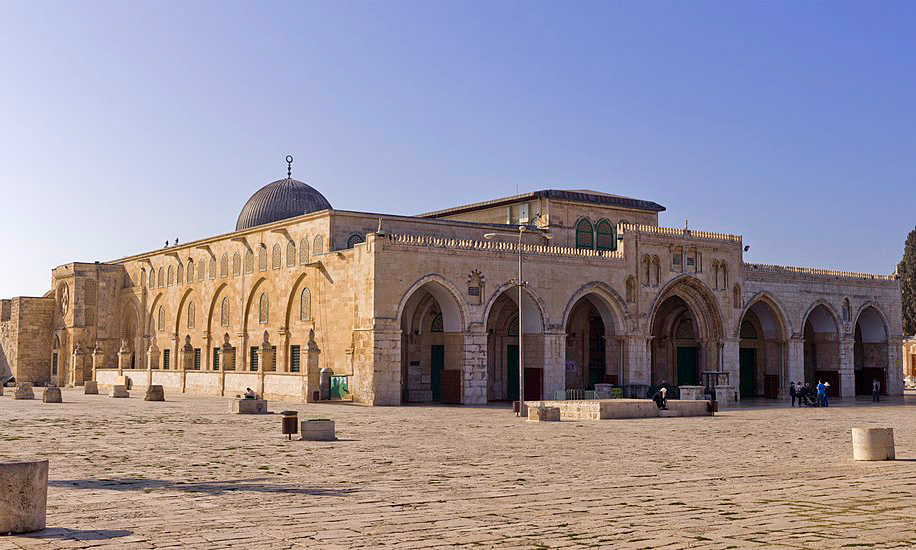
Al-Aqsa Mosque

Intriguingly, only when non-Muslims are in control of Jerusalem do Muslims seem to remember the city. Otherwise, as history shows, Muslims have never attached real significance to it. They never claimed Jerusalem as the capital of any country or empire. In fact, Muhammad instructed his people not to pray toward Jerusalem, as they had done previously, but to Mecca:

“And We did not make the qiblah which you used to face except that We might make evident who would follow the Messenger from who would turn back on his heels. And indeed, it is difficult except for those whom Allah has guided. And never would Allah have caused you to lose your faith.” — Quran 2:143, Sahih International.

Certain Quranic verses, moreover, emphasize Jerusalem’s connection to the Jews and contradict its Islamization. The Quran does not promise Muslims to enter or rule Jerusalem. In fact, one of its verses quotes the Prophet Moses instructing the Jews to enter the Holy Land (al-ard al-muqaddesa) that God has given to them — including Jerusalem. This is a verse, however, that the majority of Arabs and Muslims choose to ignore:

“O my people, enter the Holy Land which Allah has assigned to you and do not turn back [from fighting in Allah ‘s cause] and [thus] become losers.” — Quran 5:21, Sahih International.

An interpretation of the verse identifies al-ard al-muqaddesa as Beit al-Maqdis, or Jerusalem and its surroundings (herehere), or the region stretching from Egypt to Euphrates river (here).

In another verse, God Himself instructs the Children of Israel to dwell in the land:

“And We said after Pharaoh to the Children of Israel, “Dwell in the land, and when there comes the promise of the Hereafter, We will bring you forth in [one] gathering.” — Quran 17:104, Sahih International.

Again, “the land” in this verse is al-Sham (Levant), a region on the eastern coast of the Mediterranean Sea and north of the Arabian Peninsula and south of Turkey.

“It was for the British that Jerusalem was so important — they are the ones who established Jerusalem as a capital,” said Professor Yehoshua Ben-Arieh, a historical geographer at Hebrew University, to the New York Times. “Before, it was not anyone’s capital since the times of the First and Second Temples,” Ben-Arieh added.

In December 1917, the British general Edmund Allenby seized control of Jerusalem from its Ottoman Turkish rulers.

In December 1949, the State of Israel decided to hold its Knesset sessions in Jerusalem and declared Jerusalem its capital. Then, In 1980, its Knesset passed the Basic Law: Jerusalem, Capital of Israel and declared Jerusalem, complete and united, to be Israel’s “eternal and indivisible capital.”

Jerusalem was not even mentioned in the original Palestine National Charter (1964) or in the 1968 amended Palestinian National Charter. In the 1996 amendment, Jerusalem (Al-Quds) was only mentioned in the context of talking about UN resolutions relating to the status of the city.

Only in the transitional constitution of the Palestine authority (the Palestine Basic Law, approved by PLC in 1997, signed in 2002), does one find an article stating that Jerusalem is the capital city of “Palestine.”

It is remarkable that in spite of almost 1,200 years of Muslim rule, Jerusalem “never served as capital of a sovereign Muslim state, and it never became a cultural or scholarly center. Little of political import by Muslims was initiated there.” Islam and Muslims’ real connection to Jerusalem only came about six years after Prophet Muhammed’s death, when in 638 CE, the Caliph Omar and his invading armies captured Jerusalem.

Upon his arrival in Jerusalem, Omar was given a tour of the city, including the Church of the Holy Sepulchre. When the time for the Muslim prayer came, Omar declined the invitation by Sophronius, the patriarch of Jerusalem, to pray inside the Church and instead prayed outside. Omar’s fear was that that Muslims who would come after him might establish a mosque in place of the church if he would pray at the site. Omar, then, was conscious of what belonged to the Muslims and what belonged to the Christians.

Jerusalem’s Temple Mount and the Rock (or “Foundation Stone”) located there have been sacred to the Jews for millennia in their daily lives. According to Jewish tradition, the Rock is where Abraham, the progenitor and first patriarch of the Hebrew people, had prepared to sacrifice his son Isaac. The Temple Mount was also the site of Solomon’s Temple and its successor, the Second Temple (also known as Herod’s Temple). Since the Temples’ destruction — the First Temple at the hands of Babylonian King Nebuchadnezzar II in 587 BCE, and the Second Temple at the hands of the Romans in 70 CE — the “Western Wall” of the Temple Mount (a retaining wall) is all that remains of the Temples, and the Temple Mount has since been the the direction towards which Jews face when praying.

According to al-Tabari [1] and Ibn Kathir [2], when Omar arrived at the Temple Mount, he prayed with his back to the Rock, facing Mecca in the southern corner of the platform, where the Al-Aqsa Mosque was later constructed.

Omar was therefore the first Muslim to pray on the Temple Mount. However, he clearly showed that the Mount and the Rock were no longer Muslims’ Qibla (the direction that should be faced when a Muslim prays). The Mount was the direction of Muslim prayers till 622 CE, when it was changed to the Kaaba in Mecca for eternity (Quran 2:142–145). However, the Mount and Rock were still sacred, and supposedly Islamic, because in 621 CE Prophet Muhammad told his followers that he had ascended into heaven from the site of the Rock.

In an attempt to transform Jerusalem into an Islamic sanctuary, or to Islamize it, the Dome of the Rock shrine was built over the Rock in 691-692 CE, and Al-Aqsa Mosque on the Temple Mount in 705 CE by the Umayyad caliph Abd al-Malik ibn Marwān, some 55 and 70 years respectively after Muslim armies captured Jerusalem.


Although the Dome of the Rock structure (Arabic: Qubbat al-Ṣakhrah) is “the oldest extant Islamic monument,” it is not a mosque and does not fit easily into other categories of Muslim religious structures. The Dome’s “grand scale and lavish decoration,” as well as the extravagant services to its visitors, prompted some Muslim historians, such as Ibn Kathir and Ibn Taymiyyah to report that the Damascus-based Abd al-Malik built the Dome in an attempt to divert Muslims away from the Kaaba and toward Jerusalem while Mecca was under the control of rebels led by Abdullah Ibn al-Zubayr. That was probably the first time the Muslims had used Jerusalem in an internal political rivalry.

Scholars have also argued that Abd al-Malik built the Dome to proclaim the emergence of Islam as a supreme new faith. According to Encyclopedia Britannica:

“The Dome’s grand scale and lavish decoration may have been intended to rival that of the Christian holy buildings of Jerusalem, especially the domed Church of the Holy Sepulchre. According to this view, the message of Islam’s supremacy was also conveyed by the Dome’s Arabic inscriptions, which present a selection of Quʾrānic passages and paraphrases that outline Islam’s view of Jesus—i.e., denouncing the Christian doctrines of the Trinity and the divinity of Jesus, while emphasizing the unity of God and affirming Jesus’ status as a prophet.”

Notably, Ibn Taymiyyah decried not only the lavish decoration, but also the construction of the Dome itself as a kind of bidaa (heresy).

In a further Islamization of Jerusalem, the Temple Mount mosque was named Al-Aqsa, meaning in Arabic, “the farthest mosque”, the same phrase used in a key passage of the Quran called “Al-Israa, the Night Journey”:

“Exalted is He who took His Servant [Mohammed] by night from al-Masjid al-Haram to al-Masjid al-Aqsa, whose surroundings We have blessed, to show him of Our signs. Indeed, He is the Hearing, the Seeing.” — Quran 17:1, Sahih International.

Naming the Jerusalem mosque Al-Aqsa was an attempt to say that the Dome of the Rock was the very spot from which Mohammed ascended to heaven, thus connecting Jerusalem to divine revelation in Islamic belief. The problem however, is that Mohammed died in the year 632, which was 73 years before the first construction of the Al-Aqsa Mosque was completed.

For Muslims, Jerusalem’s significance is dependent upon political and religious rivalries; its importance appears evident when non-Muslims (including the Crusaders, the British, and the Jews) control or capture the city. Only at those phases in history did Islamic national leaders claim Jerusalem as their holiest city after Mecca and Medina.

Unsurprisingly, Palestinian Authority President Mahmoud Abbas once decried Hamas leader Mahmoud Al-Zahar, claiming that the latter had minimized Jerusalem’s significance by saying that “Jerusalem is not Mecca,” when Abbas had insisted on 2006 legislative elections being held in Jerusalem. If Al-Zahar had said that “Jerusalem is not Mecca and is not sacred,” he would have said the truth.

In Islam, Jerusalem is only blessed, but not sacred. Mecca it is not.

A. Z. Mohamed is a Muslim born and raised in the Middle East.


[1] The History of al-Tabari Vol. 12: The Battle of al-Qadisiyyah and the Conquest of Syria and Palestine A.D. 635-637/A.H. 14-15, pages 194-195. Published by State University of New York Press, Albany, 1992.
[2] Ibn Kathir (in Arabic, Bidaya), published by Maktabit AlMaaref, Beirut, 1966, II, page 96; VII, pages 54-56.

Head of Syrian intel’s ‘Palestine Department’ said assassinated

August 21, 2018

It’s never an accident…

https://www.timesofisrael.com/head-of-syrian-intelligences-palestine-department-assassinated-report/

Ahmad Issa Habib (Courtesy)

Ahmad Issa Habib reportedly shot in head by unknown assailants; he was responsible for ‘the struggle against Israel’

A Syrian military intelligence officer in charge of the army’s “Palestine Department” was assassinated Saturday in the country’s northwest, Arabic media reported.

Ahmad Issa Habib was said to have been shot in the head by unknown assailants in the village of Baarin, west of the city of Hama. Some reports said he was killed in his car, others that he was hit at his home.

According to Israel’s Army Radio, quoting Syrian opposition sources, Habib was the point man in President Bashar Assad’s regime “responsible for the struggle against Israel.”

There was no word on the identity of the shooters or a possible motive.

The reported killing came exactly two weeks after the assassination of a top Syrian chemical weapons and rocket scientist in nearby Masyaf, which some have blamed on Israel’s Mossad spy agency.

Aziz Azbar was killed when his car exploded in Masyaf late on August 4.

Syrian media blamed Israel for that killing, and a senior official from a Middle East intelligence agency later told the New York Times Israel was behind the attack and said his own intelligence agency had been informed of the Israeli operation.

According to the report, Israel believed that Azbar was leading a classified weapons development program called Sector 4 at the Syrian Scientific Studies and Research Center, and was busy re-building an underground weapons factory to replace the one said destroyed by Israel last year.

Azbar was working alongside Maj. Gen. Qassim Suleimani, the commander of the Iranian Revolutionary Guards’ elite al-Quds Force and enjoyed high-level access to both the Syrian and Iranian governments, the New York Times said.

Azbar and his team were working to begin mass-producing precision-guided missiles by retrofitting SM600 Tishreen rockets. They were also working on a solid-fuel plant for missiles and rockets, a safer alternative to liquid fuel, the report said. The Tishreen is a Syrian version of the Iranian Fateh-110, a missile with a range of 200 kilomenters (125 miles.)

Israel’s Hadashot TV news said he was in charge of a project improving the range and accuracy of the regime’s Scud missiles. Reports have also indicated an Iranian missile operation at the site.

The intelligence official also told the Times that Azbar had for years been active in the Assad regime’s chemical-weapons production program and was also involved in coordinating Iranian and Hezbollah activities in Syria.

The Scientific Research and Studies Center in Masyaf, also known by its French acronym CERS, has long been associated with chemical weapons production, and was the target of a number of airstrikes attributed to Israel. An alleged Israeli strike on the site in April reportedly killed a number of Iranian soldiers.

The official quoted in The New York Times said that Israel had been tracking Azbar for years, and had wanted to assassinate him over his prominent role in Syria’s weapons program even before the outbreak of the Syrian civil war in 2011. He said it was the fourth time in three years the Mossad has assassinated an enemy weapons engineer in a foreign country.

Israel has been blamed for the killing of several scientists in recent years, including two Hamas engineers in the last 18 months.

A Hamas rocket scientist was shot dead by gunmen in Malaysia in April and a drone engineer was killed in Tunisia in December 2016. Hamas blamed the Mossad for both deaths.

Israel does not usually comment on reports of its alleged military operations in Syria but has repeatedly warned it would work to keep advanced weapons out of Hezbollah terrorists’ hands and has vowed to stop Iran establishing a military presence in the country.

Defense Minister Avigdor Liberman sought to downplay the possibility of Israeli involvement in Azbar’s killing.

“Every day in the Middle East there are hundreds of explosions and settling of scores. Every time they try to place the blame on us. So we won’t take this too seriously,” he told Hadashot News.

An insurgent group calling itself the Abu Amara Brigades claimed responsibility for the operation. The group has previously claimed attacks targeting officials and militia commanders inside government territory.