Author Archive

Why are Arab armies rubbish?

February 1, 2019

This is a review of the book Armies of Sand: The Past, Present, and Future of Arab Military Effectiveness by Kenneth Pollack.

Why do Arab militaries perform so badly in war? The answer given is below.  

(I would also specifically mention Islam as a component of the culture as well.)

The main source of Arab military ineffectiveness is culture. “It seems unlikely that it is mere coincidence that the most damaging problems that Arab armed forces have suffered in battle just happen to conform perfectly to patterns of behavior emphasized by the dominant Arab culture,” Pollack writes. “It gets even harder to buy given that Arab organizations in other walks of life experience precisely the same patterns of behavior as their armies, despite the fact that those other organizations were not trained by the Soviets, nor were they subject to coup-proofing or other forms of politicization, nor did they behave like similar organizations in other developing countries.”

Pollack identifies key aspects of Arab culture relevant to the book: conformity, centralization of authority, deference to authority and passivity, group loyalty, manipulation of information, atomization of knowledge, personal courage, and ambivalence toward manual labor and technical work. One can see how these values and behaviors will negatively affect military performance, especially the most glaring problem for Arab armed forces: poor tactical leadership from junior officers. Consistently, these officers fail to show any initiative or creativity—they rarely if ever adapt quickly to changing circumstances in battle. This makes perfect sense, though, if one considers these soldiers were trained to conform and defer to authority. This stands in stark contrast to the Israeli military, whose soldiers were raised in the “Start-Up Nation,” which encourages innovation from all ranks.

The Mirage of Arab Military Might

Why do Arab militaries perform so badly in war? Israel’s victory in the Six-Day War, Chad’s defeat over Libya in 1987, the Islamic State’s humiliation of the Iraqi security forces—why do they lose when, by all objective measures, they should win? And when they win, why are their victories so small?

These questions are not just academic. Indeed, their answers are central to American foreign policy in the Middle East, for today and for the future.

Go back to May 2014, when then-President Barack Obama told a graduating class of West Point cadets that training foreign soldiers was central to his strategy on counterterrorism. “We have to develop a strategy that matches this diffuse threat—one that expands our reach without sending forces that stretch our military too thin or stir up local resentments,” Obama said. “We need partners to fight terrorists alongside us.” His idea was to deploy small numbers of military trainers and advisers to the Middle East and elsewhere to assist local forces, keeping the American footprint to a minimum.

More than four years later, President Donald Trump has continued this approach, which, along with his decision to withdraw American troops from Syria, indicate that the United States will need to rely on Middle Eastern forces to do their own fighting. Given that the United States will still have vital interests in the Middle East to protect, Washington will need to care even more about the effectiveness of Arab armed forces.

Enter Kenneth Pollack, a scholar at the American Enterprise Institute. Pollack’s new book, Armies of Sand: The Past, Present, and Future of Arab Military Effectiveness, seeks to explain the reasons for Arab military weakness since World War II and why the same problems are consistent across the Arab world. Sweeping in its scope yet accessible to the layman, Armies of Sand is a remarkable scholarly achievement that should be required reading for anyone involved in forming American foreign policy in the Middle East.

Arab armed forces have performed poorly in numerous areas of warfare. These problems—too many to list here—range from poor tactical leadership by junior officers to poor strategic leadership by generals, from mismanagement of information to struggles handling weapons. Other problems include unit cohesion, terrible equipment maintenance, and sub-par training.

Pollack identifies four theories that experts have proposed to explain the weaknesses of Arab armed forces: reliance on Soviet-style doctrine and military methods; poor civil-military relations and the “excessive politicization of Arab militaries resulting from the constant coups—and coup-proofing—endemic to the Arab states”; economic factors, particularly the “chronic underdevelopment of the Arab states throughout the post-World War II era”; and “patterns of behavior derived from Arab culture.”

“Although numerous observers have written books, articles, and papers arguing for one explanation or another, no one has ever looked at all of them collectively to try to deduce which are wrong and which right; whether these recurrent patterns of Arab military ineffectiveness could be traced back to just one overarching source, or a combination of some or all,” Pollack writes. “No one has ever tried to sift through them and figure out which ones hold water, and which are just hogwash. That is the purpose of this book.”

Pollack’s first takeaway is that relying on Soviet military doctrine is not the cause of the Arabs’ military problems. To the contrary, the Soviets were more helpful than hurtful. Regardless, there was no correlation between an Arab military’s reliance on Soviet methods and its performance on the battlefield.

Second, politicization was a problem, but not the most important one. It definitely hurt the effectiveness of Arab armed forces in many ways, but “deficiencies in tactical leadership, tactical information management, air operations, weapons handling, and maintenance persisted regardless of how politicized or professional they were.”

Third, economic underdevelopment was similarly an “element of modern Arab military ineffectiveness, and arguably an important one—just not the most important one.” None of the non-Arab militaries that Pollack examined experienced the same difficulties that were the greatest problems of the Arab armed forces.

The main source of Arab military ineffectiveness is culture. “It seems unlikely that it is mere coincidence that the most damaging problems that Arab armed forces have suffered in battle just happen to conform perfectly to patterns of behavior emphasized by the dominant Arab culture,” Pollack writes. “It gets even harder to buy given that Arab organizations in other walks of life experience precisely the same patterns of behavior as their armies, despite the fact that those other organizations were not trained by the Soviets, nor were they subject to coup-proofing or other forms of politicization, nor did they behave like similar organizations in other developing countries.”

Pollack identifies key aspects of Arab culture relevant to the book: conformity, centralization of authority, deference to authority and passivity, group loyalty, manipulation of information, atomization of knowledge, personal courage, and ambivalence toward manual labor and technical work. One can see how these values and behaviors will negatively affect military performance, especially the most glaring problem for Arab armed forces: poor tactical leadership from junior officers. Consistently, these officers fail to show any initiative or creativity—they rarely if ever adapt quickly to changing circumstances in battle. This makes perfect sense, though, if one considers these soldiers were trained to conform and defer to authority. This stands in stark contrast to the Israeli military, whose soldiers were raised in the “Start-Up Nation,” which encourages innovation from all ranks.

The education system in Arab societies drilled in these values to the point that they became central to soldiers’ behavior. “Typical Arab educational practices relentlessly inculcated the values, preferences, and preferred behavior—the culture—of the wider society,” Pollack writes.

Pollack also explains that Arab military programs are modeled on the educational methods of the larger society, reinforcing certain patterns of behavior and conditioning soldiers to act and think in “ways that reflect the values and priorities of the dominant culture.”

Pollack’s findings present hurdles for the United States, which has spent decades trying to build more effective Arab militaries. The logic behind this approach is simple: Partners in the region can act as force multipliers for Washington, lessening the burden on the American military. When these efforts backslide, however, the United States often has to deploy more of its own soldiers or, at the very least, invest more resources to help the locals fight. If Arab culture is the main source of the Arabs’ military woes, then sending their leaders to American military schools will not be sufficient, nor will more training. The United States can take certain steps, some of which Pollack discusses, to make moderate, but still significant, progress, but anything more would require broader changes in Arab society—a much taller task.

Another related problem for Washington is that its Arab allies cannot be expected to counter the greatest threats in the region: Iran, Iran’s proxies, and Sunni jihadist groups like ISIS. The Iraqi Army’s breakdown in 2014 proves this point for the latter. The United States is effectively seeking an unofficial alliance of Arab states (and Israel) to counter Iran’s aggression in the Middle East. It may give Arab states billions of dollars in military aid and sophisticated weapons, but these countries have far fewer soldiers on whom to rely in a conflict with the Islamic Republic, and those whom they have are less battle-tested. Only Egypt and Turkey have comparable numbers, but the former is weak and the latter has close economic relations with Tehran. Beyond conventional strength, Iran is also much better than the Arabs at training foreign fighters and creating proxy forces.

Pollack makes a crucial point: The Middle East is going through unprecedented changes—social, economic, technological, and political. This transformation will affect Arab culture and may even “benefit Arab armies in combat.” Additionally, warfare in the 21st century is changing. It is possible that the Arabs will adapt better as the world moves from the Industrial Age to the Information Age. The future is uncertain, but Arab militaries could become more effective.

The United States should care about the effectiveness of Arab armed forces, but the reality is that a sustainable security system in the Middle East requires active American military power on the ground. The United States should work to strengthen allies, but that is not sufficient. History proves that when America is not actively engaged in the Middle East, it will inevitably be forced to return to the region and in a more forceful way. The United States must decide whether it will lead in the Middle East or be an uninvolved bystander. If Washington chooses the latter, it better prepare itself for the inevitable disaster to come.

Rafael Designing Future Battlefield Warriors – Drone Swarms

January 31, 2019

There is a nice video available at link below.

Watch: Rafael Designing Future Battlefield Warriors – Drone Swarms

In a secret laboratory in northern Israel, the Jewish State is preparing for next-generation warfare: thousands of small drones capable of synchronized action, like flocks of birds, observing, following and finally attacking the enemy – without risking the life of friendly forces, Channel 12 reported Thursday night.

Rafael Advanced Defense Systems is working on the design and production of drone swarms that can mimic the behavior of flocks of birds such as starlings.

Eric, head of the skimmers division in Rafael, introduced the integrated operation of these weapons:

“We try to imitate nature, whether it’s to fly as a group or to identify targets,” he explained. “You can see how these flyers assemble together,” he added. “It’s enough for me to tell one drone to fly south and the rest would follow.”

In the lab, the drones are adapted to the modern battlefield, which includes urban areas with multiple targets, most of which are hidden inside buildings.

According to the report, Rafael’s small drones are already capable of going out to take over a village or a city, fly low over the streets and hit terrorists, all the time directed by remote control and the enemy has no way to disrupt their operation.

“Not even the sky is the limit,” said Shmuel Olansky, head of innovation at Rafael. “You’re looking at years’ worth of developed capabilities that have been created here – as if they were groomed for today’s challenges.”

Nasrallah embezzled millions from Hezbollah funds?

January 31, 2019

Surely this would be worthy of some hand chopping?

(Article is from 20 Jan)

http://www.israelhayom.com/2019/01/20/report-nasrallah-embezzled-millions-from-hezbollah-funds/

Saudi news outlet Al-Watan says Iranian forces have Hezbollah leader Hassan Nasrallah under house arrest and are pressuring him to divulge what happened to the tens of millions of dollars reportedly missing from Hezbollah bank accounts.

Hezbollah leader Sheikh Hassan Nasrallah is suspected of embezzling millions of dollars from the terrorist organization’s coffers, the Saudi website Al-Watan Online reported Saturday.

According to Al-Watan, Nasrallah is under house arrest, guarded by Iranian forces, and is reportedly receiving medical treatment.

The Al-Watan report painted a dim picture of Nasrallah’s situation, saying that the Iranian forces guarding him were pressuring him to divulge what had happened to tens of millions of dollars that Iran had deposited into Hezbollah’s accounts. Nasrallah and his associates are suspected of taking the missing money for personal use.

There has not been any independent confirmation of the Al-Watan report. Sunni Saudi Arabia and Shiite Iran are arch enemies and are waging several proxy battles across the region.

Observers confirmed to Al-Watan that Hezbollah was in an “unusual” situation, with its leaders in worse shape than they have been since Iran founded the Lebanese Shiite proxy. The report said that Nasrallah’s recent media absence was directly related to the missing millions.

The Al-Watan report comes a week after Lebanese media outlets reported on Jan. 12 that the Hezbollah leader had suffered a heart attack and was hospitalized in “serious condition” in Beirut. Other reports said that he had suffered a stroke and was fighting cancer.

None of the Lebanese reports about Nasrallah’s health received official confirmation.


Is Jerusalem a sacred islamic city?

January 31, 2019

Interestingly, the author of this article is an Australian shia imam.

He’d probably want to keep his head down…

… if he wishes to keep it attached to his shoulders.

https://www.jpost.com/Opinion/Is-Jerusalem-a-sacred-Islamic-City-578560

There is a big difference between a city being sacred in the eyes of God and it being a sacred Islamic city.

Image result for al aqsa mosque

Jerusalem is home to around 400,000 Muslims, but is it a sacred city according to Islam?

This is a question the majority of Muslims within the political and academic world try to avoid, simply because it opens a rather uncomfortable discussion. In fact, a Muslim asking such a question could face serious consequences; such as society doubting in his/her faith.

Until 2014, I was an Islamist who abhorred Jewish people and was open to waging war against them. Today, however, I am friends with many Jewish faith leaders. This transition wasn’t political, it was rather theological. In brief, I started to question certain claims taught to me by my teachers and Muslim community. I began by asking myself the question, does Jerusalem really belong to Islam and Muslims?

To answer this vitally important question, we need to inquire how cities become sacred according to Islam.

Sacred cities in Islam

Throughout human history, every religion has been associated with an area that has been sanctified, respected and revered. Islam is no different. There are tens of sacred cities in Islam, such as Mecca, Medina, Qum, Karbala and Najaf – due to clear verses of the Koran acknowledging their glory or sayings of Prophet Mohammad assuring Muslims of their exaltation.

There is a big difference between a city being sacred in the eyes of God and it being a sacred Islamic city. For example, all prophetic tombs, birthplaces and areas where miracles took place are considered sacred in Islam, but they are not specifically Islamic locations. A sacred Islamic location is a location wherein a significant Islamic event has taken place by either Allah or Prophet Mohammad.

Jerusalem in Islamic scripture

The Holy Koran states very clearly that the Holy Land, Jerusalem, belongs to the Jewish nation of Moses, the Israelites:

“And [mention, O Muhammad], when Moses said to his people, “O my people, remember the favor of Allah [God] upon you when He appointed among you prophets and made you possessors and gave you that which He had not given anyone among the world” (Koran: 5:20 onwards).

The above verse also makes it clear that God “had not given (this land to) anyone among the world” other than the Jewish nation.

From this verse, and others of similar context, we understand that Jerusalem is a sacred city according to God, but it is not a sacred Islamic city, due to the fact that its sacredness was established before the existence of Islam.

After the emergence of Islam, in the year 621 CE, it is believed that Prophet Mohammad took a miraculous and spiritual night journey to Al-Aqsa Mosque (the Farthest Mosque). This event is reported in the Koran in the following verse:

“Exalted is He who took His Servant by night from the Sacred Mosque (Mecca) to al-Masjid al- Aqsa (the Farthest Mosque), whose surroundings We have blessed, to show him of Our signs…” (Quran 17:1).

Two vital matters need to be addressed regarding the above verse:

  1. Prophet Mohammad traveling to a location does not make that location “Islamic.”
  2. There is little evidence that “Al-Aqsa Mosque” is actually in Jerusalem, and there are a large number of Muslims who believe that “the Farthest Mosque” is a reference to a mosque in the heavens, not on earth; due to the fact that the current Al-Aqsa Mosque did not exist during the lifetime of Prophet Mohammad, making it impossible for him to have visited it.

Messengers of both Judaism and Christianity had arrived in Jerusalem to preach their scriptures centuries before Prophet Mohammad. Therefore, it cannot be historically accurate to say that Mohammad brought Islam to Jerusalem before them.

Up until the migration of Mohammad to Medina in 622 CE and the official establishment of Islam therein, Islam was a minority religion when compared to the two well-established religions of Judaism and Christianity. Besides, the citizens of Jerusalem who converted to Islam merely changed their own faith, not the entire history of Jerusalem.

Thus, neither Islamic scripture nor history  claim that Jerusalem is a sacred Islamic city.

Jerusalem meets Islam

In May 632 CE, Prophet Mohammad appointed Usama ibn Zaid as the commander of his army to respond to the Romans in an agreed-upon battle within Palestine.

The next day Usama set out for his expedition, but he then learnt that Mohammad had died and therefore he returned to Medina. Caliph Abu Bakr then ordered Usama to increase his army to 3,000 men and to attack the inhabitants of the Kingdom of Moab and Byzantine-held Darum, to kill or capture as many as he could and Usama did so.

This event proves that up until the demise of Prophet Mohammad, there were no Muslims in what is today known as Palestine, and that it was inhabited by the Romans of the Byzantine.

Also, Prophet Mohammad would not wage war against a city full of Muslims. In reality, Islam as a religion officially came to Palestine in the year 636 CE, four years after Mohammad’s death and during the reign of the second caliph of Islam, Omar.

The Islamic caliphate conducted an attack on Jerusalem, which was ruled by the Byzantine Romans. The city was placed under a four-month siege commencing in November of that year. After four months of hardship and butchery, the Orthodox Patriarch of Jerusalem, Sophronius, surrendered Jerusalem to Caliph Omar in 637 CE. When Caliph Omar realized that Islam was still a minority religion in the region, he adopted the jizyah system, forcing Christians and Jewish people to pay tax to the Islamic caliphate.

After conducting a massacre of the citizens of Jerusalem, our Caliph Omar came to Jerusalem to appoint his governors. He then built what is known today as “the Aqsa Mosque,” which many Muslims mistakenly think was built by Prophet Mohammad.

The mosque in Jerusalem with its golden dome is known to Muslims as “Qubbat al-Sakhrah” (Dome of the Rock), and it was completed in 691 CE by the Umayyad Dynasty, the following Islamic caliphate. It is arguably not permissible for Muslims to pray within Al-Aqsa Mosque and the Qubbat al-Sakhrah, as they are built upon occupied and invaded land.

By the ninth century, the Fatimid Dynasty, a Shia Islamic caliphate, ruled a large area of north Africa. They were also terrorists who invaded Palestine and massacred Christians in Jerusalem for siding with the Romans of the Byzantine, who had attempted to regain their conquered land. The notorious caliph of the Fatimid Caliphate, Al-Hakim, caused much damage to the entire region, even killing John VII, the Patriarch of Jerusalem, a provocative act that laid the groundwork for the First Crusade. Due to the defeat of the Crusaders, Muslims became the majority, by the sword and not by the pen.

By this time, the entire Mediterranean coast of Palestine had been captured, followed by a series of massacres of the Christian people and a genocide that spread all the way to Damascus and Beirut. Islam became the established religion of Palestine by the ninth century, and became the majority religion of the region throughout the Mamluk Era, between 1250 and 1516.

Therefore, we Muslims did not enter Palestine as preachers and convert its nation into Muslims. We murdered their leaders and conducted serial massacres led by both Sunni and Shia terrorist Islamic caliphs. The citizens of Palestine may convert to Islam, but in no way can Palestine be considered Muslim land. Of course, many may dispute this position, but the fact is that the Jews were in this land long before even Christianity arose. Their ancient cultural links remain unbroken, as in the saying each Passover, “Next year in Jerusalem.”

Our Arab-Muslim ancestors came out of their deserts as conquerors and not as learners, and as guiders who do not seek the guidance of others. They believed that they had sufficient knowledge and wisdom, and that they did not need to learn anything from others. This delusion of my co-religionists persists to this day, despite the fact that the world has changed.

Disturbing events in Islamic history

On the other hand, I do not understand the Muslim struggle for Jerusalem. Islamic laws strictly prohibit relieving oneself while facing Mecca, in fact, toilets in all Islamic countries and most Muslim homes do not face Mecca, out of respect to the holy city. Yet Bukhari reports that our Prophet Mohammad used to deliberately and repeatedly relieve himself while facing Jerusalem, even though he could have faced another direction instead.

Does it make sense that Palestinians are dying for Jerusalem when their own beloved Prophet used to prefer defecating toward it?

Whether Palestine is Jewish land or whether Israel is a state are two completely different debates. A Muslim may reject Israel being a state, but cannot deny the fact that the entire region, including Palestine, is in fact Jewish land.

The writer, an Iranian-born Australian Shia Muslim Imam, is president of the Islamic Association of South Australia.

There is a big difference between a city being sacred in the eyes of God and it being a sacred Islamic city.

Jerusalem is home to around 400,000 Muslims, but is it a sacred city according to Islam?

This is a question the majority of Muslims within the political and academic world try to avoid, simply because it opens a rather uncomfortable discussion. In fact, a Muslim asking such a question could face serious consequences; such as society doubting in his/her faith.

Until 2014, I was an Islamist who abhorred Jewish people and was open to waging war against them. Today, however, I am friends with many Jewish faith leaders. This transition wasn’t political, it was rather theological. In brief, I started to question certain claims taught to me by my teachers and Muslim community. I began by asking myself the question, does Jerusalem really belong to Islam and Muslims?

To answer this vitally important question, we need to inquire how cities become sacred according to Islam.

Sacred cities in Islam

Throughout human history, every religion has been associated with an area that has been sanctified, respected and revered. Islam is no different. There are tens of sacred cities in Islam, such as Mecca, Medina, Qum, Karbala and Najaf – due to clear verses of the Koran acknowledging their glory or sayings of Prophet Mohammad assuring Muslims of their exaltation.

There is a big difference between a city being sacred in the eyes of God and it being a sacred Islamic city. For example, all prophetic tombs, birthplaces and areas where miracles took place are considered sacred in Islam, but they are not specifically Islamic locations. A sacred Islamic location is a location wherein a significant Islamic event has taken place by either Allah or Prophet Mohammad.

Jerusalem in Islamic scripture

The Holy Koran states very clearly that the Holy Land, Jerusalem, belongs to the Jewish nation of Moses, the Israelites:

“And [mention, O Muhammad], when Moses said to his people, “O my people, remember the favor of Allah [God] upon you when He appointed among you prophets and made you possessors and gave you that which He had not given anyone among the world” (Koran: 5:20 onwards).

The above verse also makes it clear that God “had not given (this land to) anyone among the world” other than the Jewish nation.

From this verse, and others of similar context, we understand that Jerusalem is a sacred city according to God, but it is not a sacred Islamic city, due to the fact that its sacredness was established before the existence of Islam.

After the emergence of Islam, in the year 621 CE, it is believed that Prophet Mohammad took a miraculous and spiritual night journey to Al-Aqsa Mosque (the Farthest Mosque). This event is reported in the Koran in the following verse:

“Exalted is He who took His Servant by night from the Sacred Mosque (Mecca) to al-Masjid al- Aqsa (the Farthest Mosque), whose surroundings We have blessed, to show him of Our signs…” (Quran 17:1).

Two vital matters need to be addressed regarding the above verse:

  1. Prophet Mohammad traveling to a location does not make that location “Islamic.”
  2. There is little evidence that “Al-Aqsa Mosque” is actually in Jerusalem, and there are a large number of Muslims who believe that “the Farthest Mosque” is a reference to a mosque in the heavens, not on earth; due to the fact that the current Al-Aqsa Mosque did not exist during the lifetime of Prophet Mohammad, making it impossible for him to have visited it.

Messengers of both Judaism and Christianity had arrived in Jerusalem to preach their scriptures centuries before Prophet Mohammad. Therefore, it cannot be historically accurate to say that Mohammad brought Islam to Jerusalem before them.

Up until the migration of Mohammad to Medina in 622 CE and the official establishment of Islam therein, Islam was a minority religion when compared to the two well-established religions of Judaism and Christianity. Besides, the citizens of Jerusalem who converted to Islam merely changed their own faith, not the entire history of Jerusalem.

Thus, neither Islamic scripture nor history  claim that Jerusalem is a sacred Islamic city.

Jerusalem meets Islam

In May 632 CE, Prophet Mohammad appointed Usama ibn Zaid as the commander of his army to respond to the Romans in an agreed-upon battle within Palestine.

The next day Usama set out for his expedition, but he then learnt that Mohammad had died and therefore he returned to Medina. Caliph Abu Bakr then ordered Usama to increase his army to 3,000 men and to attack the inhabitants of the Kingdom of Moab and Byzantine-held Darum, to kill or capture as many as he could and Usama did so.

This event proves that up until the demise of Prophet Mohammad, there were no Muslims in what is today known as Palestine, and that it was inhabited by the Romans of the Byzantine.

Also, Prophet Mohammad would not wage war against a city full of Muslims. In reality, Islam as a religion officially came to Palestine in the year 636 CE, four years after Mohammad’s death and during the reign of the second caliph of Islam, Omar.

The Islamic caliphate conducted an attack on Jerusalem, which was ruled by the Byzantine Romans. The city was placed under a four-month siege commencing in November of that year. After four months of hardship and butchery, the Orthodox Patriarch of Jerusalem, Sophronius, surrendered Jerusalem to Caliph Omar in 637 CE. When Caliph Omar realized that Islam was still a minority religion in the region, he adopted the jizyah system, forcing Christians and Jewish people to pay tax to the Islamic caliphate.

After conducting a massacre of the citizens of Jerusalem, our Caliph Omar came to Jerusalem to appoint his governors. He then built what is known today as “the Aqsa Mosque,” which many Muslims mistakenly think was built by Prophet Mohammad.

The mosque in Jerusalem with its golden dome is known to Muslims as “Qubbat al-Sakhrah” (Dome of the Rock), and it was completed in 691 CE by the Umayyad Dynasty, the following Islamic caliphate. It is arguably not permissible for Muslims to pray within Al-Aqsa Mosque and the Qubbat al-Sakhrah, as they are built upon occupied and invaded land.

By the ninth century, the Fatimid Dynasty, a Shia Islamic caliphate, ruled a large area of north Africa. They were also terrorists who invaded Palestine and massacred Christians in Jerusalem for siding with the Romans of the Byzantine, who had attempted to regain their conquered land. The notorious caliph of the Fatimid Caliphate, Al-Hakim, caused much damage to the entire region, even killing John VII, the Patriarch of Jerusalem, a provocative act that laid the groundwork for the First Crusade. Due to the defeat of the Crusaders, Muslims became the majority, by the sword and not by the pen.

By this time, the entire Mediterranean coast of Palestine had been captured, followed by a series of massacres of the Christian people and a genocide that spread all the way to Damascus and Beirut. Islam became the established religion of Palestine by the ninth century, and became the majority religion of the region throughout the Mamluk Era, between 1250 and 1516.

Therefore, we Muslims did not enter Palestine as preachers and convert its nation into Muslims. We murdered their leaders and conducted serial massacres led by both Sunni and Shia terrorist Islamic caliphs. The citizens of Palestine may convert to Islam, but in no way can Palestine be considered Muslim land. Of course, many may dispute this position, but the fact is that the Jews were in this land long before even Christianity arose. Their ancient cultural links remain unbroken, as in the saying each Passover, “Next year in Jerusalem.”

Our Arab-Muslim ancestors came out of their deserts as conquerors and not as learners, and as guiders who do not seek the guidance of others. They believed that they had sufficient knowledge and wisdom, and that they did not need to learn anything from others. This delusion of my co-religionists persists to this day, despite the fact that the world has changed.

Disturbing events in Islamic history

On the other hand, I do not understand the Muslim struggle for Jerusalem. Islamic laws strictly prohibit relieving oneself while facing Mecca, in fact, toilets in all Islamic countries and most Muslim homes do not face Mecca, out of respect to the holy city. Yet Bukhari reports that our Prophet Mohammad used to deliberately and repeatedly relieve himself while facing Jerusalem, even though he could have faced another direction instead.

Does it make sense that Palestinians are dying for Jerusalem when their own beloved Prophet used to prefer defecating toward it?

Whether Palestine is Jewish land or whether Israel is a state are two completely different debates. A Muslim may reject Israel being a state, but cannot deny the fact that the entire region, including Palestine, is in fact Jewish land.

The writer, an Iranian-born Australian Shia Muslim Imam, is president of the Islamic Association of South Australia.

Where’s David’s Sling and why wasn’t it used to intercept Iran’s missiles?

January 25, 2019

I was wondering this too when I saw that it was an Iron Dome that was used.

Hmm…

https://www.jpost.com/Arab-Israeli-Conflict/Wheres-Davids-Sling-and-why-wasnt-it-used-to-intercept-Irans-missiles-578377

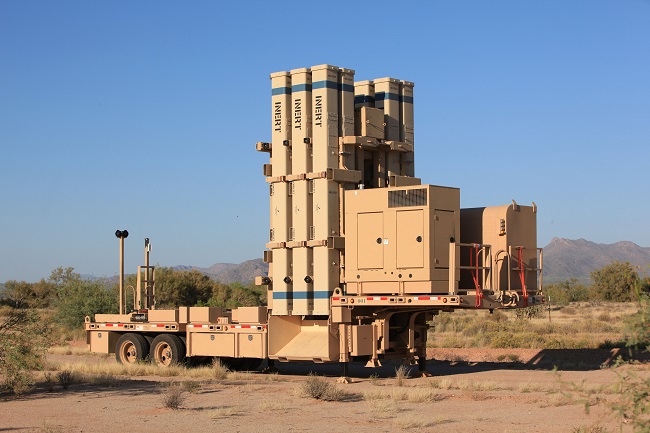
Rafael have started delivering major components of the new US-Israel David’s Sling Weapon System

Missile defense system hasn’t been used since it failed to intercept Syrian missiles last year.

At around 2:30 p.m. on Tuesday, Israelis enjoying the slopes of the Mount Hermon ski resort heard a loud bang and saw smoke trails in the skies above them. The Iron Dome missile defense system had intercepted a long-range missile fired by Iranian forces in Syria.

The missile was an Iranian-made surface-to-surface model with a range of some 200 km. with a payload of hundreds of kilograms of explosives that was fired from the outskirts of Damascus. The launch of this type of missile doesn’t happen at a moment’s notice. It took months of preparation and the approval of the highest officials in Tehran.

Israeli intelligence must have identified the chatter. They knew it was coming.

According to Syrian reports, an hour earlier Israeli jets carried out a rare daytime strike on Iranian targets in Syria. No special instructions had been given to the thousands of civilians enjoying the day and no warning siren was sounded.

However, the IDF was prepared, operating the recently upgraded Iron Dome to cover Mount Hermon.

While the primary targets of the Iron Dome system are short-range rockets and other artillery rounds that have been successfully intercepted, like the Iranian surface-to-surface missile on Sunday, the job should be done by the David Sling missile defense system.

This system became operational two years ago, and was first used last year against two SS-21 Tochka tactical ballistic missiles launched from Syria.

But, they missed their mark and David’s Sling has not been used since then.

Part of Israel’s multi-layered missile defense system umbrella, David’s Sling was designed to intercept tactical ballistic missiles and medium-to-long-range rockets, as well as cruise missiles fired at ranges between 40 to 300 km.

The Iranian missile would have made an ideal target to demonstrate to the Israeli public that the expensive defense system actually works.

Each interceptor launched by Israel’s David’s Sling system costs an estimated $1 million, but the army insists that the cost is not relevant when they are launched in order to defend the home front.

Israel’s air defenses also include the Iron Dome, which is designed to shoot down short-range rockets; and the Arrow system which intercepts ballistic missiles outside of the Earth’s atmosphere. Compared to the David’s Sling costly interceptor, each Iron Dome Tamir interceptor has a reported price of between $100,000 and $150,000.

But that shouldn’t be why we haven’t seen the use of David’s Sling since its failed interception.

Israel continuously improves the technology behind its anti-missile systems, with the Iron Dome upgraded with the Tamir interceptor that has a demonstrated capability against cruise missiles.

A week before the system was used, it was reported by Inside Defense that the United States Army wanted to purchase two Iron Dome batteries from Israel.

The Iron Dome undergoes upgrades “all the time” a spokesman for Rafael Advanced Systems told The Jerusalem Post, adding that the “system performed in accordance with its variety of capabilities.”

It was a good opportunity to give the new system a chance to fire while showing off its new capabilities to the US, as well as to the Iranians who want to deter Israel from launching further attacks against their interests in Syria.

But the question keeps popping up: Where is the David’s Sling?

Are there problems with the joint Israeli-US project that the public doesn’t know about?

The Palestinians’ Uncivil War

January 9, 2019
  • The biggest losers from this internal bloodletting are the Palestinians living under these leaders in the Palestinian Authority (PA) and Hamas-ruled Gaza.
  • The dispute between Hamas and Fatah is not over who will bring democracy and a better economy to the Palestinians. They are not fighting over who will improve the living conditions of the Palestinians in the West Bank and Gaza Strip by building new schools and hospitals. They are not fighting over who will introduce major reforms to the Palestinian government and end financial and administrative corruption. They are not fighting over the need for freedom of expression and a free media.
  • Mahmoud Abbas, the Hamas leaders correctly argue, is not a rightful or legitimate president. If Abbas were to sign a deal with Israel, people could come along later and say that he lacked the legal authority to do so; they would be right.
  • In order for any peace process to move forward, the Palestinians first need to stop attacking each other. [Never going to happen] Then, they need to come up with new leaders who actually give a damn about their people. [Even less likely to happen]

https://www.gatestoneinstitute.org/13502/palestinians-hamas-fatah-conflict

Pictured: Fatah gunmen guard the home of a senior Fatah official in the Gaza Strip on January 30, 2007, during the violent Hamas takeover of the Gaza Strip.

The Palestinians’ major ruling groups, Fatah and Hamas, are now saying they are done with each other: that the divorce is final.

Recent days and weeks have witnessed the two groups maligning each other beyond anything previously seen. Fatah and Hamas have reached a new level of mutual loathing. At times, it even seems as if Fatah and Hamas hate each other more than they hate Israel [Crikey, that bad, eh?]

Many in the West say they would like to see Israel and the Palestinians return to the negotiating table. They want Israelis and Palestinians to resume the so-called peace process. They are hoping that Israel and the Palestinians will manage to reach a historic agreement that would end the Israeli-Arab conflict and bring real peace to the Middle East.

The region, however, does not need a “peace process” between Israel and the Palestinians. It needs one of a different type. The “peace process” that the Middle East is crying out for is one between Palestinians and Palestinians, one that would end their bloody, internecine war.

Before pushing “peace” upon Israel and the Palestinians, it would be helpful if the international community first tried to help the Palestinians stop torturing each other. The Palestinians cannot make peace with Israel while they are busy killing their own people. The Palestinians cannot make peace with Israel when their leaders lead only themselves — to money and power.

The political struggle between Fatah and Hamas is not a normal dispute between two rival parties in parliament. Rather, it is a rivalry between two large groups and governments that have tens of thousands of armed men at their disposal and massive arsenals of weapons.

The biggest losers from this internal bloodletting are the Palestinians living under these leaders in the Palestinian Authority (PA) and Hamas-ruled Gaza.

Fatah, the largest faction of the Palestine Liberation Organization (PLO), is the dominant party that controls the PA. The PA has tens of thousands of policemen and security officers (in the West Bank) who are funded and trained by various Western countries, including the US and UK.

Similarly, Hamas has thousands of security officers and militiamen who help it maintain a tight grip on the Gaza Strip.

In 2007, two years after the Israeli withdrawal from the Gaza Strip, Hamas overthrew the PA regime in Gaza. Since then, Hamas has been the unchallenged ruler of the Gaza Strip, home to nearly two million Palestinians. It took Hamas less than a week to remove Abbas’s government from power and seize control of the entire coastal territory.

The dispute between Hamas and Fatah is not over who will bring democracy and a better economy to the Palestinians. Let us make this clear: they are not fighting over who will improve the living conditions of the Palestinians in the West Bank and Gaza Strip by building new schools and hospitals. They are not fighting over who will introduce major reforms to the Palestinian government and end financial and administrative corruption. They are not fighting over the need for freedom of expression and a free media.

Instead, this is a struggle over money, power and ego.

The Palestinian Authority and its president, Mahmoud Abbas, are furious with Hamas because it forced them out of the Gaza Strip 11 years ago. Abbas and his senior aides and advisers have yet to overcome the deep humiliation they suffered when Hamas militiamen overthrew their regime in the Gaza Strip and killed several PA and Fatah men. Abbas seeks to shame his rivals in Hamas. He seems to want Hamas to pay a steep price for expelling him and his regime from the Gaza Strip.

Abbas is also apparently disturbed because Hamas defeated his Fatah loyalists in the 2006 Palestinian parliamentary elections. The result of that vote, too, was humiliating for Abbas and his regime.

Last year, in the context of his hitherto unsuccessful effort to undermine Hamas and end its rule over the Gaza Strip, Abbas imposed a series of sanctions that included the suspension of salaries to thousands of civil servants living there. Abbas also stopped paying Israel for the fuel and electricity it had been supplying to the residents of the Gaza Strip.

These punitive measures, however, have backfired, further undermining Abbas’s credibility among his people. He is now being accused by many Palestinians of being fully responsible for the suffering and misery of his people in the Gaza Strip. He is being accused of imposing a blockade on his own people and of being an Israeli “collaborator” for conducting security coordination with the Israeli security forces in the West Bank.

Hamas leaders have also called for bringing Abbas to trial on charges of “high treason” — a crime, according to Palestinian laws and traditions, punishable by death.

Hamas says that Abbas is a dictator and traitor because of his refusal to share power with anyone and his “close relations” with Israel. Hamas leaders never fail to broadcast that Abbas’s four-year term in office expired in January 2009. Abbas, the Hamas leaders correctly argue, is not a rightful or legitimate president. If Abbas were to sign a deal with Israel, people could come along later and say that he lacked the legal authority to do so; they would be right.

Recently, Hamas has been condemning Abbas for his decision to dissolve the Palestinian parliament, which, in any event, has been inoperative since Hamas’s violent takeover of the Gaza Strip. This decision, according to Hamas, proves that Abbas is an autocrat and dictator, who presides over an authoritarian regime.

Hamas also claims that Abbas is a traitor because his security forces conduct security coordination with Israel and continue to arrest scores of Hamas supporters in the West Bank.

Abbas, for his part, has made similar charges against Hamas. He recently hinted that Hamas was working for Israel. Abbas, in a speech, referred to Hamas as “spies” (he used the Arabic word jasous) — the word Palestinians use to label Palestinians accused or suspected of collaborating with Israel.

Hamas officials have responded by likening Abbas to Hamid Karzai, the former president of Afghanistan who came to power with the help of the US and Western countries. What they are saying is that Abbas is a puppet in the hands of Israel and the US.

Abbas was expressing outrage over the recent detention of some 500 of his loyalists in the Gaza Strip at the hands of Hamas. The men were reportedly rounded up by Hamas because they were planning to hold a big rally to celebrate the 54th anniversary of the launching of Fatah’s first armed attack against Israel.

Abbas and his advisers have, in turn, repeatedly accused Hamas of being in collusion with the US and Israel to create a separate Palestinian state in the Gaza Strip. According to Abbas and his representatives, US President Donald Trump’s administration and Israel are working to establish a small and isolated Palestinian state there, thus permanently detaching it from the West Bank.

Fatah leaders are now saying that they have cut off contact with Hamas — permanently. Hamas leaders, similarly, are saying that as long as Abbas remains in power, the dispute with Fatah will continue.

The leaders of Hamas and Fatah are making their mutual distrust unmistakably clear. They probably have good reason to believe that their suspicions are not misplaced; after all, they know each other better than anyone else does. If they are right, what is the point of presenting any peace plan between Israel and the Palestinians? Who is Israel supposed to make peace with? With the discredited 83-year-old Abbas, who will never be able to win the backing of a majority of his people for any peace agreement with Israel? Or with Hamas, which forever informs the world that it will never make peace with Israel because it cannot accept the presence of non-Muslims on what it perceives to be Muslim-owned land?

In order for any peace process to move forward, the Palestinians first need to stop attacking each other. Then, they need to come up with new leaders who actually give a damn about their people. As these two conditions seem rather unrealistic at this point, any talk about the resumption of an Israeli-Palestinian “peace process” sounds like nothing so much as a big joke.

New Netflix Series Shines Light on Israel’s Counter-Terror Expertise

December 5, 2018

New Netflix Series Shines Light on Israel’s Counter-Terror Expertise

Israel’s use of targeted killings during the Second Intifada is the focus of an episode of a new Netflix docuseries.

While controversial, the practice of assassinating Palestinian terror leaders helped Israel quell the surge of violence it faced between 2001-2005.

In an interview with The Algemeiner this week, Jon Loew — the chairman of Big Media and an executive producer of “Terrorism Close Calls,” which delves into the details of major thwarted attacks across the globe — talked about the episode — titled “The Israel Honey Trap” — and what he learned about the Jewish state’s counter-terror expertise during its making.

A transcript of the interview follows:

Why did you think it was important to include an episode on Israel?

“To many people, including me, it’s clear that Israel is on the front lines of the West’s war on terrorism. It became obvious throughout the production of the series that many other countries law enforcement and intelligence agencies felt the same, and capitalized off of Israel’s decades of experience fighting the same enemies. Many media companies seemed to be afraid of including positive stories about Israel for fear of a backlash of some sort. We are not afraid of speaking the truth.”

What were the top challenges you faced when creating the Israel episode?

“Surprisingly, while we met with some hesitation — I would not call it resistance — from our international buyers, the greatest hurdle was actually getting the Israeli security services to believe that our documentary would be objective, and not just another anti-Israel hit piece. Oddly, I think the Israelis were surprised that a foreign company like ours would remain so objective, and they were almost unclear as to how to cooperate so closely with us.”

Looking at how various countries deal with terror threats, is there anything you would say is unique about Israel‘s approach?

“Israel is operating so close to its enemies, including enemies within, that it became obvious that the Israelis had a very compassionate view on how to fight terrorism. While some Westerners, including me, would wonder why Israel would continue providing electricity to Gaza during a war against Hamas, it was important to the Israelis that they not lose their humanity — even if the rest of the world did not take notice. They were more worried about the ‘one pregnant Gazan who couldn’t get help at a local hospital’ than they were about public opinion.”

In the episode, some of Israel‘s best counter-terror minds speak with you very openly about strategy and specific cases they were involved in. Were you surprised by the frankness?

“Our company has a reputation for being fair and honest, so the people we were interviewing understood they could trust us from the get-go. I think our great experts were happy to have a fair and welcoming environment to really share how they felt. We were very luck to have access to great agents in Israel and so many other countries.”

Israel’s experience in counter-terror operations is so extensive, how did you come to chose the specific instance — involving the first female Hamas suicide bomber — that you centered your attention on?

“We worked very closely with Fauda co-creator Avi Issacharoff on the Israel episode, and after Avi suggested this case it became obvious that we had to choose this one. As a proud American Jew from New York, it gave me great pleasure to simultaneously showcase Israel’s counter-terror proficiency and humiliate Hamas at the same time.[ha ha ha!]

“In the case of the ‘suicide bomb mother,’ it turned out that she was not a ‘selfless martyr’ willing to give up her wonderful motherhood for the cause. She was caught having an affair with her Hamas husband’s commander. The only way the Hamas guys could save face was having her kill herself. There is nothing noble about this and it was important to us as a team that we expose this.”

The ten-part “Terrorism Close Calls” docuseries, including the Israel episode discussed above, is available for viewing on Netflix now.

IDF footage from attack tunnel shows alleged Hezbollah members still inside

December 5, 2018

Go to the article to see the (short) video, plus another video.

https://www.timesofisrael.com/idf-footage-from-attack-tunnel-shows-alleged-hezbollah-members-still-inside/

Israeli military robot films within cross-border tunnel 25 meters below ground, detonates small charge next to suspected terror operative, scaring him away

Hezbollah operatives were working inside a cross-border tunnel when it was exposed by the Israeli military on Tuesday morning, the IDF spokesperson said at a press conference, showing footage he said was filmed mere hours earlier inside the underground passage.

In the video, which was filmed by a small Israeli military robot, two men could be seen walking into the tunnel from the entrance inside Lebanon on Tuesday morning, hours before the army announced that the tunnel had been located and would soon be destroyed.

One of the men can be seen approaching the robot, which sets off a small explosive device, scaring them away.

The Israel Defense Forces said the tunnel, which extended some 40 meters into Israel, was the “first of what are sure to be many” attack tunnels dug by Hezbollah across the border from southern Lebanon discovered as part of a newly launched operation, known as Northern Shield.

According to the Israeli military, the operation is expected to last several weeks and is being led by the head of the IDF Northern Command Maj. Gen. Yoel Strick.

“The operation will continue until the outcome is achieved, however long that may take,” Prime Minsiter Benjamin Netanyahu said at the same press conference addressed by the IDF spokesperson at the Defense Ministry in Tel Aviv.

Speaking after Netanyahu, IDF Chief of Staff Gadi Eisenkot said Northern Shield was launched before Hezbollah’s tunnels were made operational and “became an immediate and direct threat to northern communities and army bases.”

The military deployed reinforcements to northern Israel as a precaution in case the Iran-backed Hezbollah launches retaliatory strikes or raids in response to the operation.

The army also called up a small number of reservists, from combat engineering, air defense, and administrative units.

“This morning we initiated action to thwart Hezbollah’s intrusion into our territory, to improve our security reality in the north… to strike and to continue to strike Iranian entrenchment in the north,” Eisenkot said.

According to the IDF spokesperson, Brig. Gen. Ronen Manelis, the tunnel that was uncovered on Tuesday originated under an ostensibly civilian building, meters away from a position controlled by the UN peacekeeping force UNIFIL, which is meant to ensure that armed groups other than the Lebanese military stay away from the border zone under UN Resolution 1701.

Israel has long been critical of what it describes as UNIFIL’s failure to rein in the powerful, Iran-backed Hezbollah terrorist group, which the IDF says maintains a large arsenal in the area despite Resolution 1701.

Manelis also presented footage captured by the IDF from above Lebanon, which he said showed Hezbollah using civilian trucks to hide the dirt and rocks from the excavation of the tunnels.

According to the IDF, the tunnel originated in the Lebanese village of Kafr Kila, near the Israeli border, and was approximately 200 meters (650 feet) long. It was dug some 25 meters (80 feet) below ground and was approximately two meters (six feet) tall by two meters (six feet) wide, which would easily make it large enough for heavily armed to pass through it.

The tunnel contained a ventilation system, electricity, and communication lines, the army said.

Eisenkot said that in the wake of the 2014 Gaza war, in which the threat of Hamas tunnels was a major issue, the Israeli military “built a highly advanced operational, technological engineering and intelligence capability to neutralize attack tunnels, both in the north and in the south.”

The army chief said the heads of communities in northern Israel were informed of the operation ahead of time and lauded them for showing “responsibility” by not revealing that it was poised to take place.

He said that the IDF was “in possession of Hezbollah’s offensive tunneling plans” and called on Israelis to “feel safe, to continue their daily routines and to continue traveling to the north.”

Hamas: Israeli special forces posed as medical workers to get into Gaza for raid

December 5, 2018

Apologies for the absence of postings from myself recently, I have been on leave and travelling a bit (weak excuse, I know).

Good to see Joseph and co have been manning the barricades, I am now back into the fray!

In addition to the article copied into this post, also see these other articles related to the commando raid inside Gaza from a little while back.

https://www.timesofisrael.com/hamas-claims-idf-officers-installed-spying-equipment-near-secret-gaza-hq/

https://www.timesofisrael.com/hamas-fears-israeli-special-forces-operating-base-inside-gaza-tv/

https://www.timesofisrael.com/hamas-on-hunt-for-collaborators-after-israeli-special-forces-operation-in-gaza/

Hamas: Israeli special forces posed as medical workers to get into Gaza for raid

https://www.timesofisrael.com/hamas-israeli-special-forces-posed-as-medical-workers-to-get-into-gaza-for-raid/

Palestinians stand next to the remains of a car said to be destroyed following an Israeli airstrike, in Khan Younis in the southern Gaza Strip on November 12, 2018 (SAID KHATIB / AFP)

Palestinians stand next to the remains of a car said to be destroyed following an Israeli airstrike, in Khan Younis in the southern Gaza Strip on November 12, 2018 (SAID KHATIB / AFP)

Terror group tells UK’s Independent daily that IDF soldiers used fake IDs to enter Strip in November, were caught because of their accents

Hamas officials have told a British news outlet that Israeli special forces troops posed as medical workers for a non-governmental organization during a raid inside the Gaza Strip last month that went awry.

On the night of November 11, the Israeli unit was exposed inside the southern Gaza city of Khan Younis following a search at a Hamas checkpoint, resulting in a firefight in which an Israeli lieutenant colonel was killed, along with seven Palestinian gunmen.

After the special forces operation and subsequent gun battle, Hamas and the Iran-backed Palestinian Islamic Jihad terror group launched the largest-ever bombardment against Israel from the Gaza Strip, lobbing some 500 rockets and mortar shells mostly at Israeli communities surrounding the coastal enclave — pushing Israel and terror groups to the brink of war.

Most details of the operation remain under a strict gag order by the military censor, and all articles about it must be approved, including this one.

According to a report Monday in the Independent newspaper, the Israeli troops used “detailed but fake” identity cards with the names and personal information of Palestinians living in the Gaza Strip.

“Those who the Israelis were posing as were detained but they had no idea their names had been used,” Hazem Qassem, a Hamas spokesman, told the British paper from Gaza City. The Palestinians whose names were found to have been unwittingly used were later released, he said.

According to the Hamas officials, the Israeli troops posed as medical workers, ferrying patients around the area.

“[The Israeli unit] were posing as NGO workers, there were women in the car as well. They used this to justify why they were stealing into Gaza and had a story prepared should they be questioned,” one official said.

Palestinian officials have claimed the Israeli troops were installing surveillance equipment in the Gaza Strip in order to listen in on Hamas’s internal communications.

The Independent acknowledged that it was unable to corroborate much of the information provided by the Hamas officials about the Israeli raid. The Israel Defense Forces has confirmed that special forces soldiers conducted an operation on the night in question but would not provide any details besides that it was of great importance to national security.

During the raid on the night of November 11, the troops were stopped at a Hamas checkpoint and questioned. During their interrogation, the Hamas gunmen noticed that the alleged Israeli soldiers’ accents did not match the addresses listed on their ID cards.

“They told the fighters at the checkpoint that they were delivering patients back from clinics to their homes and had a wheelchair in the back of the van. They presented their ID cards but the [fighters] manning the checkpoint were suspicious as their accents and voices did not match the areas where they said they were from,” a Hamas official said.

According to the Palestinian officials, when a more senior Hamas commander decided to bring in the suspects for additional questioning, the Israeli special forces soldiers opened fire, killing the senior commander, Nour Barakeh, and his deputy.

During the firefight and dash to the border, the Israeli lieutenant colonel — who can only be identified by the first Hebrew letter of his name, “Mem” — was killed and another officer was wounded. Five other Palestinian gunmen were also killed.

A Hamas official said the Gaza-ruling group had significantly tightened security throughout the Strip — a development confirmed by journalists and NGO workers in the coastal enclave.

“We are concerned that we want foreigners to keep coming in. They are helping with the humanitarian situation. We are dedicated to facilitating people coming in and out of Gaza. Any tightened security measures – which are applied to everyone – will be temporary,” said the official, speaking to the British newspaper on condition of anonymity.

The massive flareup that followed last month’s raid ended with an Egyptian-brokered ceasefire that remains in effect some three weeks later.

Members of Hamas and the Palestinian Islamic Jihad said the groups are prepared to go to war with Israel again, but will for now maintain the calm.

“If the Israelis launch a new attack, the Palestinian [fighters] are ready to deal with this attack,” Walid al-Qottati, a member of Islamic Jihad’s political wing, told The Independent.

“We are not lowering our guard yet,” a Hamas official agreed. “We do think the Israelis might do a sudden strike but for the moment, for now, at least things are moving [in] the right direction.”

Since the raid, Hamas officials have released details about the operation to the public, apparently in an attempt to fish for additional information about the nature of the Israeli operation and potentially in order to embarrass the IDF.

Last month, Hamas published the photographs of eight suspected Israeli special forces soldiers, calling on members of the public to contact its military wing if they had any information about them and their activities.

Though freely available on the internet, the photographs could not be published by Israeli media by order of the military censor.

In a highly irregular public statement, the censor also called on Israelis not to share any information they have about the raid, even if they think it benign.

The IDF has launched two investigations into the raid.

According to the army, one investigation will be conducted within Military Intelligence. The findings will be presented to Military Intelligence head Maj. Gen. Tamir Hyman and IDF Chief of Staff Gadi Eisenkot.

The military said an initial probe was expected to be completed within the coming weeks.

In addition, Maj. Gen. Nitzan Alon — the former head of IDF Operations — was charged with a wider investigation into how the army conducts such raids.

Alon was instructed to lead a team to “examine and study the challenges and [make] recommendations at the level of the General Staff, of multiple army branches and of the inter-organizational cooperation between different special forces,” the army said.


Documentary: Top Secret – Mossad

October 22, 2018

I thought I’d seen just about all the doco’s on Youtube about the Mossad, then this one popped up in the suggestions generated for me by Youtube…

It focuses on the hunt for this scumbag, Yahya Ayyash aka ‘The Engineer’ (responsible for making the bombs for the suicide bomber attacks on Israeli buses in the 90’s):

https://en.wikipedia.org/wiki/Yahya_Ayyash

It also references various other cases like Eli Cohen, the capture of Eichmann and so on.

But the doco focuses on the hunt for Ayyash,  and the coverage is quite detailed with lots of archival footage, as well as re-enactments.

The doco has been uploaded via copying from VHS tape (!) and is quite good quality, voiceover is by Johnny Depp.