Author Archive

IAEA: Time to tackle ‘more difficult’ Iran issues

January 31, 2014

IAEA: Time to tackle ‘more difficult’ Iran issues – The Times of Israel.

Head of UN’s nuclear watchdog says allegations of past weapons programs, detailed in a major 2011 report, must be resolved

By AFPJanuary 31, 2014, 4:46 pm

Head of Iran's Atomic Energy Organization Ali Akbar Salehi, left, and International Atomic Energy Agency (IAEA) Director General Yukiya Amano, in Tehran, Iran, Nov. 11, 2013 (photo credit: AP/ ISNA/Mehdi Ghasemi)
Head of Iran’s Atomic Energy Organization Ali Akbar Salehi, left, and International Atomic Energy Agency (IAEA) Director General Yukiya Amano, in Tehran, Iran, Nov. 11, 2013 (photo credit: AP/ ISNA/Mehdi Ghasemi)

VIENNA — After recent progress with Iran, it is time to tackle “more difficult” nuclear issues such as allegations of past weapons work, the head of the UN atomic watchdog told AFP in an interview.

“We started with measures that are practical and easy to implement, and then we move on to more difficult things,” said Yukiya Amano, director general of the International Atomic Energy Agency.

“We certainly wish to include issues with ‘possible military dimensions’ in future steps … We have already discussed it and will continue to discuss it at the next meeting” between the IAEA and Iran on February 8, he said.

A November 11 agreement with the IAEA towards improved oversight over Iran’s program included six steps such as this week’s visit by IAEA inspectors to the Gachin uranium mine and to a new reactor plant at Arak in December.

But the deal, separate to an accord struck with world powers on November 24 in Geneva, made no specific mention of long-standing allegations that prior to 2003, and possibly since, Iran’s nuclear work had what the IAEA calls “possible military dimensions”.

Two years of talks between the IAEA and Iran over these accusations, detailed in a major and controversial IAEA report in November 2011 and consistently denied by Iran as being based on faulty intelligence, went nowhere.

But Amano, 66, told AFP that Iran has not been let off the hook, saying that the November 24 accord with world powers made clear that “all past and present issues” must be resolved.


Off Topic: Exclusive: CIA Helped Saudis in Secret Chinese Missile Deal

January 31, 2014

(The CIA’s involvement in 2007 is hardly newsworthy but the article gives some interesting details about the Saudi missile program. Artaxes)

Off Topic: Exclusive: CIA Helped Saudis in Secret Chinese Missile Deal – Newsweek.

 By

Filed: 1/29/14 at 12:53 PM  | Updated: 1/30/14 at 11:32 AM
1
The spy agency held secret meetings with Saudi air force officers, overseeing the technical details of the kingdom’s purchase of East Wind ballistic missiles Ibraheem Abu Mustafa/Reuters


Saudi Arabia has long been a backroom player in the Middle East’s nuclear game of thrones, apparently content to bankroll the ambitions of Pakistan and Iraq (under Saddam Hussein) to counter the rise of its mortal enemy, Iran. 

But as the West and Iran have moved closer to a nuclear accommodation, signs are emerging that the monarchy is ready to give the world a peek at a new missile strike force of its own – which has been upgraded with Washington’s careful connivance.

According to a well-placed intelligence source, Saudi Arabia bought ballistic missiles from China in 2007 in a hitherto unreported deal that won Washington’s quiet approval on the condition that CIA technical experts could verify they were not designed to carry nuclear warheads.

The solid-fueled, medium-range DF-21 East Wind missiles are an improvement over the DF-3s the Saudis clandestinely acquired from China in 1988, experts say, although they differ on how much of an upgrade they were.

The newer missiles, known as CSS-5s in NATO parlance, have a shorter range but greater accuracy, making them more useful against “high-value targets in Tehran, like presidential palaces or supreme-leader palaces,” Jeffrey Lewis, director of the James Martin Center for Nonproliferation Studies at the Monterey Institute of International Studies, tells Newsweek. They can also be fired much more quickly.

The poor accuracy of the old DF-3s rendered them impotent during the first Gulf War as a counterstrike to Saddam Hussein’s Scuds, according to Desert Warrior, a 1996 memoir by Saudi Prince Khaled bin Sultan, then-commander of the Riyadh’s Air Defense Forces. King Fahd declined to fling them at Iraq because the likely result would have been mass civilian casualties, and “the coalition’s air campaign being waged against Iraq was sufficient retaliation,” Khaled wrote.

When that war ended, the Saudis went looking for something better. In China, they likely found it. But unlike in 1988, when they royally annoyed Washington with their secret acquisition of DF-3s, this time they decided to play nice. And the CIA was their assigned playmate.

CIA and Saudi air force officers hammered out the ways and means for acquiring the new Chinese missiles during a series of secretive meetings at the spy agency’s Langley, Va., headquarters and over dinners at restaurants in northern Virginia during the spring and summer of 2007, a well-informed source tells Newsweek. The arrangements were so sensitive that then-deputy CIA director Stephen Kappes ordered the CIA’s logistical costs, estimated at $600,000 to $700,000 buried under a vague “ops support” heading in internal budget documents – prompting loud complaints from the head of the agency’s support staff.

Aside from technical personnel, among the few CIA officials let in on the deal were the agency’s then-number three, Associate Deputy Director Michael Morrell, a longtime Asia hand; John Kringen, then-head of the agency’s intelligence directorate; and the CIA’s Riyadh station chief, who Newsweek is not identifying because he remains undercover. Two analysts subsequently traveled to Saudi Arabia, inspected the crates and returned satisfied that the missiles were not designed to carry nukes, says the source, who asked for anonymity in exchange for discussing the still-secret deal.

The CIA declined to comment, as did current and former White House officials. The Chinese and Saudi embassies in Washington did not respond to requests for comment.

Reports that the Saudis have upgraded their missile fleet, however, are not new. Former CIA analyst Jonathan Scherck, for example, who managed intelligence reports on Saudi Arabia as a contractor from 2005 to 2007, claimed in Patriot Lost, an unauthorized 2010 book, that China began supplying a “turnkey nuclear ballistic missile system” to the kingdom with the covert approval of the George W. Bush administration, “no later than December 2003.”

Lewis discounts Scherck’s “nuclear” claim, which Scherck says he based on reports he saw from CIA spies and technical collection systems.

Kenneth Pollack, a former CIA and White House National Security Council expert on the Middle East, also dismisses Scherck’s nuclear scenario, as well as recent claims by the BBC and Time magazine – citing a former head of Israeli military intelligence – that the Saudis had placed Pakistani nuclear warheads “on order.”

“Nonsense and disinformation,” he told Newsweek.

But Lewis says that other small but important details in Patriot Lost checked out. “One can raise a number of questions about the logic in Scherck’s book – particularly when he starts imagining Pakistani warheads on those Chinese missiles or accusing Bush administration officials of various crimes,” Lewis explains, “but when Scherck sticks to the details about monitoring foreign missile shipments and deployments, he’s believable.”

An engineer on a U.S. Navy guided missile cruiser before joining the CIA, Scherck was fired in 2008 for pursuing details out of channels at the National Geospatial Agency, the satellite imagery service helmed by James Clapper when he began to dig into the missile mystery. Clapper is now director of National Intelligence. Then the Justice Department pounced on Scherck, seizing the modest revenues from his self-published book and prohibiting him from writing or talking further about the matter. Now 39, Scherck works as a night manager of a hotel in Southern California while he works on a screenplay.

Meanwhile, the Saudis have been acting like they want people to take notice of their previously furtive missile program.

“Over the past few years, Saudi Arabia has started talking a lot about its Strategic Missile Force,” Lewis writes in the draft of an upcoming piece for Foreign Policy that he showed Newsweek. “And, in the course of doing so, Riyadh seems to be hinting that it has bought at least two new types of ballistic missiles.”

“For example,” Lewis writes, “in 2010, Khaled – by then deputy defense minister – cut the ribbon on a new headquarters building in Riyadh for the Strategic Missile Force. They released a number of images of the building, both inside and out. Moreover, since about 2007, the Saudi press has covered graduation ceremonies from the Strategic Missile Force school in Wadi ad-Dawasir – especially if the commencement speaker is a person of importance.

“The process of recruiting Saudis has also resulted in fair amount of information appearing in print, right down to the pay schedule,” he added. “For a while, the Strategic Missile Force even had a website, although it is no longer active.”

The most intriguing photo to appear so far, showed “Khaled’s replacement – the recently removed deputy minister of defense Prince Fahd – visiting the Strategic Missile Force headquarters in Riyadh,” Lewis writes. Instead of gifting him with the usual “solid-gold falcon in a glass case… the stuff dreams are made of,” Lewis cracks, officials are shown posing with a glass-enclosed case of three missile models.

“The missile on the far left is, obviously, a DF-3 of the sort that Saudi Arabia purchased from China in the late 1980s,” Lewis writes. “But the other two? They could any one of Chinese or Pakistani missiles. All the missiles Lewis mentions are nuclear-capable.

Again, the unprecedented missiles-and-pony show could be a deception. In any case, the Saudis are banging the drums around their missile bases – without any apparent notice here, Lewis says, probably because it’s all in Arabic.

The local Saudi press has been covering blood drives and disaster relief efforts by personnel at known missile bases, Lewis tells Newsweek. And while officials have been secretive about another missile base, he’s discovered that “people on Arabic bulletin boards have big mouths.

“Turns out, if you’re a Saudi assigned to a launch unit,” he says, “the most natural thing in the world is to announce on a bulletin board, ‘Hi, I work for the Saudi missile force, and I’ve been assigned to this place, and where can I get an apartment?’ And people openly talk about their deployments in a way that Saudi officials would freak if they realized it.”

Maybe. But you can’t scare people if nobody knows what you got. Maybe the Saudis are suddenly trying to get attention. They’ve faced the deterrence dilemma before.

In late 1988, Khaled recalled in his memoir, he worried that nobody had detected the deployment of the secretly acquired Chinese DF-3s. What good was having them if nobody was afraid of them? He suggested leaking their existence, “as the object of acquiring the weapon would not have been achieved” unless the world (read: Iranians and Israelis) knew about it. “As it happened,” he wrote in Desert Warrior, “we had no need to do so, because the Americans broke the news first.” And they were in a king’s rage about it.

But what about the 2007 Chinese missile deal Newsweek was told about? No one seems to have noticed that, either.

But they may now.

Important note: Those DF-21s – or whatever they are – don’t dramatically tilt the Middle East map in the Saudis’ favor.

“Even if it is the case that Saudi Arabia received DF-21 missiles, unless they also received nuclear warheads for the missiles, it has little meaning for the regional military balance,” Pollack told Newsweek.

“Saudi Arabia has had Chinese ballistic missiles since the 1980s, and the DF-21 has a shorter range than the CSS-2s they originally bought. A conventional warhead on the DF-21 would be too small to cause the kind of damage that would have a strategic impact. Even if the Chinese had sold Saudis the mod-4 warhead for the DF-21 – which theoretically can cripple an aircraft carrier – the Saudis lack the sensor technology to find an aircraft carrier, except when one is docked at Port Jebel Ali in the UAE, Saudi Arabia’s close ally.”

Lewis agrees – with caveats. When you’re talking nukes and missiles, you always have to factor in the weird stuff, like Kissinger whispering to Hanoi that Nixon was bonkers over Vietnam and would slap the armageddon button if pushed too far – the so-called “madman theory.”

“It has its advantages, it definitely has its advantages,” Lewis says of the new Saudi missiles deal, if only because some of those missiles could have been modified to carry nuclear warheads after CIA technicians left. “But I don’t know if I were an Iranian I would feel fundamentally different about the DF 21s than I did about the DF-3…. “

He adds, “Maybe there’s a whole gut, or visceral, thing, where they” – the Iranians – “say, ‘Hey, these guys spent a lot of money, they’re serious.’ So maybe it just conveys the Saudis’ will in a way that is unsettling, in a way that the fine old missile system wasn’t.

“It’s a weird thing. It has its own, strange logic. So yeah, it makes a difference. But it’s not a difference-maker.”

Newsweek Contributing Editor Jeff Stein writes the SpyTalk column from Washington.

Analysis: Iran Not Fazed By Kerry’s Threat of Military Option

January 31, 2014

(Any other result would surprise me. Artaxes)

Analysis: Iran Not Fazed By Kerry’s Threat of Military Option – Washington Free Beacon

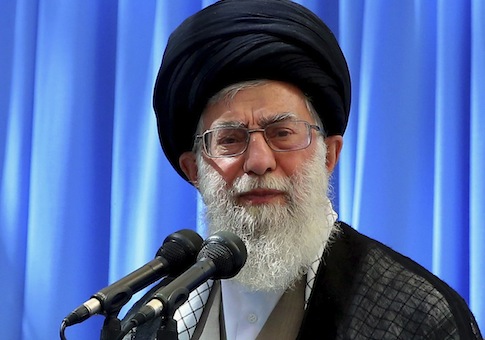
Ali Khamenei / AP

Ali Khamenei / AP

BY:
January 30, 2014 12:14 pm

An analysis of statements made by top Iranian officials shows that Iran does not take Secretary of State John Kerry’s threat of military force seriously.

Kerry warned in an interview with the Saudi-owned Al-Arabiya channel that if Iran were to restart its uranium enrichment program that the United States military option is “ready and prepared.”

“If they decided they’re going to throw this agreement away and go start enrichment again, sure, they can turn around,” said Kerry. “But guess what? If they do that, then the military option that is available to the United States is ready and prepared to do what it would have to do.”

An analysis by the Middle East Media Research Institute of comments made by top Iranian officials in reaction to Kerry’s statement shows that Iran thinks Kerry is bluffing.

Supreme Leader Ali Khamenei said earlier this month that the United States doesn’t have the ability to dismantle Iran’s nuclear program.

“If the Americans are not acting in a [particular] issue, the reason for this is lack of capability, not lack of hostility,” said Khamenei. “They [the Americans] have said, ‘If we could, we would dismantle Iran’s nuclear industry’–but they cannot … The recent talks showed both America’s hostility and its impotence.”

“What kind of action–or mistake–could they possibly take against Iran?” said Khamenei on Sunday.

Commander of the Islamic Revolutionary Guards Corps, Mohammad Ali Ja’fari, said that Iran has no fear of the United States’ “miniscule and shabby” military threat.

“Mr Kerry, in the eyes of the true fighters, the U.S., with all its military force, is miniscule and shabby,” said Ja’fari. “Your military option will remain only on the table.”

“Iran has no fear of this threat, and it and its revolutionary allies worldwide will unite to respond,” Ja’fari said.

On Tuesday, Iranian Army Chief of Staff Hassan Firouzabadi said that the “military option that is today on the table in the U.S. has become a joke among the nations.”

Top adviser to Khamenei, Ali Akbar Velayati, said that Kerry’s declarations are a bluff.

“These declarations are more of a bluff,” said Velayati. “Obviously the Americans do not have this capability, because if they did, they would not have been expelled, completely weakened, from Iraq and Afghanistan.”

Ayatollah Makarem Shirazi expressed disbelief that Kerry was anointed U.S. Secretary of State.

“People are wondering how a man who does not know how to speak was appointed Secretary of State,” said Shirazi.

Off Topic: Washington ‘deeply concerned’ about delay in Syria’s removal of chemical arms stockpile

January 31, 2014

Off Topic: Washington ‘deeply concerned’ about delay in Syria’s removal of chemical arms stockpile – Jerusalem Post.

Only 4% of stockpile has been prepared for transfer; US stops short of renewing threat of military action to force compliance.

By MICHAEL WILNER, REUTERS

01/30/2014 22:26
A UN team examining samples from site of August 21 attack in Damascus.
A UN team examining samples from site of August 21 attack in Damascus. Photo: REUTERS/Mohamed Abdullah

WASHINGTON – The US strongly condemned Syria for its failure to prepare and package the bulk of its chemical weapons arsenal for removal from the country, six days before a UN deadline requires its government to have shipped its entire stockpile to the port at Latakia.

In September, Syria agreed to forfeit its massive chemical weapons stockpile to be destroyed at sea under strict time constraints, under threat of military force from Washington.

“We all know that the Syrian regime has the capability to move these weapons, since they have been moved multiple times in the conflict,” State Department spokeswoman Jen Psaki said on Thursday, adding that the US was “deeply concerned” about the delay. “This isn’t rocket science here. They’re dragging their feet.”

Psaki said US President Barack Obama and Secretary of State John Kerry never removed the prospect of military action from the table after threatening Syria’s Bashar Assad with assault in August. But they are focused on enforcing the deal that resulted from that standoff, she said.

“We’ve never taken the option, as it relates to Syria, off the table. But obviously what we’re pursuing now is the diplomatic path,” Psaki said. “There is still the possibility, and still the option here… that the Syrian regime can deliver on the promise that they will deliver the weapons to the port.”

Secretary of Defense Chuck Hagel also condemned the Syrian government for the delay.

“I do not know what the Syrian government’s motives are – if this is incompetence – or why they are behind in delivering these materials,” Hagel told reporters in Warsaw on Thursday. “The Syrian government has to take responsibility to respect the commitment that had been made.”

Delays pose a difficult challenge for Obama, who has faced criticism at home and abroad for failing to do more to quell Syria’s nearly three-year-old civil war.

The president cited the chemical weapons deal in his annual State of the Union address on Tuesday, saying that “American diplomacy, backed by the threat of force, is why Syria’s chemical weapons are being eliminated.”

Underscoring the administration’s anxiety, Hagel said he discussed the issue in a call on Wednesday with his Russian counterpart, Defense Minister Sergei Shogun, and asked him to “do what he could to influence the Syrian government to comply with the agreement that has been made” for destroying the chemical weapons.

Sen. Lindsey Graham, a frequent Republican critic of Obama’s Syria policy, said: “Having the Russians disarm Assad is sort of like Mussolini disarming Hitler; I’m not so sure it’s going to work.”

According to US representative to the OPCW Robert Mikulak, “Syria has said that its delay in transporting these chemicals has been caused by ‘security concerns,’ and insisted on additional equipment – armored jackets for shipping containers, electronic countermeasures, and detectors for improvised explosive devices.”

But “these demands are without merit, and display a ‘bargaining mentality’ rather than a security mentality,” he said in a statement to the OPCW’s executive council.

The administration stopped short of threatening action if Syria failed to comply.

After threatening and then backing away from military action last year, there seems to be little support in Congress or among the war-weary American public for a new US military entanglement in the Middle East.

Failure to eliminate its chemical weapons could expose Syria to sanctions, although these would have to be supported in the UN Security Council by Russia and China, which have so far refused to back such measures against Assad.

“The question will be whether the Russians will tolerate Assad making them look bad,” said Dennis Ross, Obama’s former Middle East adviser. “I suspect he is dragging his feet to see what he can get away with.”

IAF strikes Gaza after rocket fired at Israel

January 31, 2014

IAF strikes Gaza after rocket fired at Israel – The Times of Israel.


IDF retaliates with airstrikes against targets in Gaza Strip, five reported injured; no injuries or damage in rocket attack

By Times of Israel staffJanuary 31, 2014, 1:25 am Updated: January 31, 2014, 3:18 am
 

A Grad rocket fired toward Israel from the Gaza Strip in 2009. (file photo: Jorge Novominsky/Flash90)

A Grad rocket fired toward Israel from the Gaza Strip in 2009 (file photo: Jorge Novominsky/Flash90
 

The Israeli Air Force early Friday morning retaliated against rocket fire into southern Israel hours earlier by bombing the Gaza Strip.According to the IDF, Israeli planes hit “a terror activity site and a weapon manufacturing facility in the northern Gaza strip and a weapon storage facility in the southern Gaza Strip.”

Unconfirmed reports from Gaza indicated as many as five injured in the strikes.

Palestinian security sources said two strikes targeted training sites of Ezzedine al-Qassam Brigades, Hamas’s armed wing, in Beit Lahiya in northern Gaza. In two additional air strikes at sites west of southern Gaza city Rafah two Palestinians were injured, the sources said.

“Israelis cannot be held at the mercy of these hideous terrorists operating from Hamas Gaza Strip,” IDF spokesperson Lt. Col. Peter Lerner said in a statement. “The bases of Gaza terrorism and its industry of death will not be immune while our citizens are being attacked. It is our responsibility, right and obligation to defend Israel from Gaza based aggression.”

A video uploaded to YouTube claimed to show the Israeli airstrikes hitting the Gaza Strip early Friday morning.

Earlier in the evening, sirens wailed in the southern city of Netivot as a Grad rocket fired from the Gaza Strip exploded in an open area outside town.

There were no injuries or damage reported in the incident. Security forces retrieved the remains of a projectile that landed outside the city, which is home to over 26,000.

Thursday night’s incident marked the first time since November 2012′s Operation Pillar of Defense that air raid sirens went off in the southern town as a result of rocket fire from the Hamas-controlled Gaza Strip.

Last Wednesday the Israeli Air Force launched an airstrike in the northern Gaza Strip town of Beit Hanoun, killing at least one man, said by Israel to be a terrorist. According to the IDF, Israel targeted and hit Ahmad Zaanin, 21, a member of a Gaza-based Popular Front for the Liberation of Palestine’s military wing, responsible for recent rocket fire against Israel. It said he fired the rockets that targeted Israel after the funeral for prime minister Ariel Sharon earlier in January.

AFP contributed to this report.

Report: PA Chairman Abu Mazen will be invited to meet Rouhani in Tehran

January 30, 2014

Report: PA Chairman Abu Mazen will be invited to meet Rouhani in Tehran – jerusalemonline.

In the background of the Hamas movement supporting the rebels in Syria, Iran chose to severe ties with the Sunni terrorist organization and to find a new ally, the Fatah movement.

Jan 30, 2014, 10:54AM | Rachel Avraham
 
Best friends now? Rouhani and Abu Mazen
Best friends now? Rouhani and Abu Mazen. Photo Credit: AP
 
 As the United States focuses on efforts within the region to establish its influence based on peace negotiations between Israel and the Palestinian Authority, a new/old player in the region, Iran, is interested in strengthening its influence in the Middle East. 

 Since Tuesday, senior level Palestinian Authority official Jibril Rajoub is in Iran, on behalf of Palestinian Authority chairman Abu Mazen, where he will meet with a series of senior level Iranian officials.  By the means of Rajoub, Abu Mazen delivered a personal letter to Iran’s President Hassan Rouhani, which surveyed the internal Palestinian arena in regards to the negotiations existing with Israel under American auspices.

 Palestinian sources stated this morning in the Al Quds Al Arabi newspaper that Iran is even expected to invite Abu Mazen for an official visit in Tehran, as the strengthened relations between Tehran and the Palestinian Authority develop.  This visit is the result of intensive contacts arranged recently between the two sides in the framework of Iranian attempts to become involved with pressing regional issues.

Zarif and Rajoub met in Tehran
Zarif and Rajoub met in Tehran. Photo Credit: Channel 2

Iran severed relations with Hamas

 Another thing that brought about the warming of relations between Iran and the Palestinian Authority is Hamas distancing itself from the Hamas movement in Gaza, because of its support for the rebel movement in Syria.  Unlike Hamas, the Islamic Republic supports the Assad regime and is interested in him maintaining power.  Therefore, Iran stopped financially supporting Hamas and cut off all contact with the Sunni Islamist terrorist organization.  Therefore, representatives of Fatah and Iran were quick to establish new lines of communication between them.

 Sources in Tehran stated that Iranian Foreign Minister Mohammad Javad Zarif, who was the first to meet with Rajoub, stressed Iran’s readiness to support the Palestinian Authority and the Fatah movement.  Fatah and Iran announced the opening of a “new page,” to the great alarm of the State of Israel.  

Iran Is Not Our Friend

January 30, 2014

Iran Is Not Our Friend – The New Republic

BY LEON WIESELTIER

“On the foreign policy front . . . I find myselfwondering why we cannot regard another country, in this case Iran, 
as just that, as one more country which we would regard as neither friend nor foe, with whom we are prepared to deal on a day-to-day basis, neither idealizing it nor running it down, keeping to ourselves (here, of course, I am speaking about our government) our views about its domestic political institutions and practices, and interesting ourselves only in those aspects of its official behavior which touched our interests—maintaining in other words, a relationship with it of mutual respect and courtesy, but distant.” George Kennan wrote those words in his diary on March 8, 1998, after some thoughts on “the scandal of Mr. Clinton’s relationship to 
his Jewish girl intern.” Kennan died too soon. The day of his Iran policy has come.

This is the day of the extended hand, which Obama promised in his first inaugural address. The American government is no longer disgusted by the Iranian government, if ever it really was: in 2009, during the democratic rebellion in Iran, we certainly kept to ourselves, to use Kennan’s words, our views about its domestic political institutions and practices; or rather, 
we uttered hollow phrases of routine condemnation and moved on. But we are partners now, Washington and Tehran, and not only in the negotiations over 
the Iranian nuclear program. The administration hopes for an Iranian contribution also to a diplomatic solution to the Syrian excruciation. (There is no such solution. It is now a war to the death between secular tyranny and religious terrorism—the predictable, and often-predicted, consequence of leaving Syria alone.) There is wariness on both sides, of course; but generally there is a bizarre warmth between the governments, a climate of practicality and cordiality, as if a new page has been turned in a history of ugly relations, as if the ugliness of those relations were based only in illusion and misunderstanding. There is a new government in Tehran, isn’t there?

No, there isn’t. There is only a new president. Hassan Rouhani is an improvement over Mahmoud Ahmadinejad, since he is not a lunatic. He does not deny that the Holocaust happened, which for the Islamic 
Republic counts as a breakthrough in enlightenment. But it is important to remember, during this explosion of good feelings, that Iran is still the Islamic Republic, a theocratic tyranny ruled by 
a single man, a haughty cleric who subsumes the state beneath religion and his interpretation of it, and maintains his power by means of a fascistic military organization that brutalizes the population and plunders the economy—liberticide and prey, as a poet once wrote about another dictator. This same mullah-king supports the murderer in Damascus and the murderers in Lebanon and Gaza, and remorselessly pursues 
a foreign policy animated by anti-Americanism and anti-Semitism and intra-Muslim hatred. We may have extended our hand, but the Supreme Leader—the title itself is repugnant to decent modern ears—has not unclenched his fist. The smiles of his president and his foreign minister must not blind us to the scowl that is the true face of this cruel and criminal regime.

This does not mean that we must not negotiate with it. I appreciate the need for a diplomatic exploration of the Iranian nuclear challenge, though I prefer a deal that represents a strategic decision by Iran to renounce nuclear weaponry, not 
a strategic decision by Iran to find a cunning way out of the sanctions, and I resent the suggestion by the White House that anybody who is skeptical of its interim agreement is for war. Strenuous negotiations demand strenuous sanctions: the stronger our diplomatic position, the greater the likelihood that we will not resort to force. The thrill of diplomacy must not be allowed to obscure or to soften its purpose. Nor should it shrink our understanding of America’s role in the world. The abandonment of human rights as a primary and ardently pursued goal of American foreign policy—the Obama administration has returned American statecraft to its pre-Bosnia, pre-Rwanda days: we will have to be educated again by history, and by France—has been justified, in the case of Iran, by the urgency of the nuclear question. American support of democratization 
in Iran, it is said, would jeopardize the American effort to strike a deal on nuclearization. And so we must choose between a nuclear-free Iran and a tyranny-free Iran. But it is a false choice, designed to ratify the administration’s prior lack of appetite (and lack of nerve) for the promotion of freedom. We discovered the phoniness of the choice in our experience with the Soviet Union. You may still recall the twentieth century. Soviet missiles threatened the United States then infinitely more than Iranian centrifuges threaten us now, but arms control was not permitted to eclipse human rights in our policy toward the nuclear dictatorship. And even though we were prepared to offend, with our “moralism,” the interlocutors with the ICBMs, we did not fail—not at arms control nor, eventually, at human rights; and we learned that human rights, too, had vast strategic implications. A people is always more important than a government. 

Not long ago I was looking for a certain passage in Niebuhr, and I came upon his observation that “there are two ways of denying our responsibilities to our fellowmen”: “seeking to dominate them by our power” and “seeking to withdraw from our responsibilities to them.” It was not the passage I was seeking, and as I kept scouring the marked-up books I bumped into the great man’s call to “widen the conception of interest,” so that “the sense of justice must prevent prudence from becoming too prudential in defining interest.” This is the Niebuhr that our ostentatiously reflective president forgot, or never knew. He is withdrawn and we have withdrawn. We are leavers. We leave to pivot, but we do not pivot. We respect others too much to help them: how would contempt differ? Our friends doubt us, our enemies play us. We stand for too little and we stand for too few. The post-American world is here: behold it and weep.

Leon Wieseltier is the literary editor of The New Republic.

ISIS: Interrim Deal not expected to seriously affect Iran’s Centrifuge R&D

January 29, 2014

The latest report from the Institute for Science and International Security (ISIS) concludes: The interim steps under the Joint Plan of Action are not expected to seriously affect Iran’s centrifuge research and development program.

By Charles Artaxes

In the latest ISIS report titled “Iran’s Centrifuge Research and Development Program” published on January 27, 2014 the Author David Albright concludes that the interrim deal (Joint Plan of Action) in its current form is not expected to seriously affect Iran’s centrifuge research and development program.

“The interim steps under the Joint Plan of Action are not expected to seriously affect Iran’s centrifuge research and development program. These steps may delay the final development of new centrifuges that have not yet used uranium hexafluoride at the Natanz Pilot Fuel Enrichment Plant. However, Iran can continue development of several existing types of advanced centrifuges there. More significant limitations on Iran’s centrifuge R&D combined with greater transparency of this program should be included in the final step of a comprehensive solution, given that Iran’s development of more advanced centrifuges would greatly ease its ability to conduct a secret breakout to nuclear weapons.”

But even more importantly, he points out that it seems that the only site under verified limitations is the Natanz enrichment plant.

“Verified limitations imposed by the interim steps on Iranian centrifuge R&D seem to be restricted to the Pilot Fuel Enrichment Plant at Natanz where uranium hexafluoride has been introduced into the centrifuges, which necessarily entails IAEA safeguards. Other sites involved in centrifuge R&D are not safeguarded under Iran’s comprehensive safeguards agreement and do not appear to be monitored in any way under the Joint Plan of Action. Activity at those facilities would likely not involve the secret use of uranium hexafluoride, since this act would be a violation of Iran’s safeguards agreement with the IAEA. However, this conclusion has not been confirmed by the IAEA and requires verification.”

It is not surprising that the number of centrifuge R&D sites is unknown.

“The number of Iranian facilities engaged in centrifuge R&D is not known. Moreover, the nature of the activities carried out at these sites is unclear. Nonetheless, these sites are likely conducting valuable R&D without the use of uranium hexafluoride, including design work, limited centrifuge manufacturing and assembly, and tests involving the spinning of rotors in air or under vacuum, often called mechanical testing. Mechanical testing is vital, and extensive mechanical testing would usually occur before a centrifuge would be brought to Natanz and tested with uranium hexafluoride. Afterwards, more mechanical testing of that centrifuge could also occur outside of Natanz.”

Worse and even more troubling is, that the sites which were involved in centrifuge R&D in the past are not under any IAEA safeguard and not subject to any kind of verification. He names explicitly three such sites.

“One of such unsafeguarded sites is Kalaye Electric, until 2003 Iran’s primary centrifuge R&D site and still an important part of its centrifuge research and development activities. Figure 1 shows commercial satellite imagery of the site in north Tehran.”

“One site that deserves further scrutiny is Farayand Technique, which is located in an industrial park in a valley near Esfahan. According to former senior U.N officials close to the IAEA, inspectors who visited this site during the 2003-2006 suspension suspected that the site could have been originally intended as a back-up to the Kalaye Electric facility or perhaps even as the pilot centrifuge plant. At the time, the site had two centrifuge test stands and a test pit, which would have been capable of mechanically testing centrifuges. Next to this facility was a large building under construction, which may have been intended to be the pilot centrifuge plant before the decision was made to establish it at Natanz. The Farayand building was far bigger than the building housing the pilot centrifuge plant at Natanz. In this case, Farayand Technique would have also served as a centrifuge assembly plant.”

“Another site deserving of scrutiny is Pars Trash, a subsidiary of Kalaye Electric located in Tehran that prior to 2004 was involved in centrifuge manufacturing and concealment activities aimed at defeating the IAEA’s efforts to uncover Iran’s centrifuge R&D program. This site received centrifuge manufacturing and development equipment from Kalaye Electric. It is located in Tehran among warehouses and light industrial buildings about a kilometer west of the Kalaye Electric facility. Prior to 2004, it manufactured centrifuge outer casings. Pars Trash was originally a small, private factory involved in making automobile parts. It went bankrupt and was bought by the Kalaye Electric Company, or its subsidiary, Farayand Technique. In February 2003, Pars Trash was involved in Iran’s concealment efforts. The facility stored centrifuge equipment that had been hastily moved from Kalaye Electric in an attempt to prevent its discovery by IAEA inspectors who were seeking access to that site. As in the case of Farayand, it is unclear whether this or possibly other sites have a current role in the production and testing of centrifuges, including advanced ones.”

All this shows us, if we didn’t know already, what a worthless piece of paper the interrim deal is.
Of course, its only worthless if the goal is to prevent Iran from becoming a nuclear power.
If the goal of the US goverment under Mr. Hope and Change is a different one, as I suspect, then it makes perfect sense.

Read the full report here.

Iran’s nuclear bid ‘only a matter of time,’ says PM’s former top adviser

January 29, 2014

Iran’s nuclear bid ‘only a matter of time,’ says PM’s former top adviser – The Times of Israel.

Uzi Arad also reveals settlers-in-Palestine idea has been widely discussed, says evacuation of settlers must be kept to a minimum

By Elhanan MillerJanuary 29, 2014, 1:51 am
 
Professor Uzi Arad greets attendees at the first annual lecture in memory of Zvi Yavetz in Tel Aviv, January 28, 2014 (photo credit: Roee Shpernik)
Professor Uzi Arad greets attendees at the first annual lecture in memory of Zvi Yavetz in Tel Aviv, January 28, 2014 (photo credit: Roee Shpernik

When Uzi Arad, a former national security adviser to Prime Minister Benjamin Netanyahu, analyzes the nuclear deal reached with Iran in November, he sees little prospect of the Islamic Republic rolling back its bid to attain nuclear weapons capabilities. The inability to reach a final agreement with Iran, he predicts, will leave Israel to face the dilemma of whether to attack Iran on its own.

According to the interim deal finalized between Iran and the six superpowers on January 13, the Islamic Republic is to limit the enrichment of uranium to a level of 5 percent and dilute its stockpiles of enriched uranium. The process, a spokesman for Iran’s atomic department stated, began on January 20.

But Arad, who has spent decades monitoring Iran’s nuclear proliferation, was deeply skeptical on Tuesday that Iran would voluntarily forgo its bid to attain nuclear military capabilities — in the allotted six-month time-frame for negotiations, or beyond. True to his past in Israel’s intelligence services, Arad’s messages are often cryptic; he refuses to reveal where he personally stands on many specifics. But the crux of his argument on Iran is fairly clear.

“From Israel’s perspective, the result [of the interim nuclear deal] is disappointing compared to what we had hoped for,” Arad told The Times of Israel on the sidelines of a first annual lecture series in memory his former history teacher, Tel Aviv University founder professor Zvi Yavetz, who passed away last year.

“Most experts doubt whether a [final] deal can be reached, so we should treat the current situation as one which will continue. They [the Iranians] will continue enriching [uranium] to a level they regard as permissible, until the opportunity arises when they decide to catch up easily. It’s only a matter of time. Meanwhile, they achieve sanctions relief and the sense of [Western] laxness. The threat of military intervention is dissipating in the air,” he said.

Uzi Arad (left) talks to Prime Minister Benjamin Netanyahu at a 2009 cabinet meeting. (Photo credit: Kobi Gideon / FLASH90)

Uzi Arad (left) talks to Prime Minister Benjamin Netanyahu at a 2009 cabinet meeting. (Photo credit: Kobi Gideon / FLASH90)

Once one of Netanyahu’s closest security confidants, Arad ended a 25-year career in the Mossad to become Netanyahu’s foreign policy adviser when he was first elected prime minister in 1997. Arad left that post when Netanyahu was replaced by Ehud Barak in 1999 to found the Institute for Policy and Strategy at the Herzliya Interdisciplinary Center (IDC), launching and presiding over the prestigious annual Herzliya Conference series. He returned to Netanyahu’s side in 2009 as head of Israel’s National Security Council and Netanyahu’s adviser on national security, a position he held until 2011.

For Arad, those who contend that American pressure can cause Iran to forgo its nuclear bid are delusional.

“I ask in the name of common sense: a state which went through such efforts to reach military nuclear capabilities, which paid such a heavy price over the years for whatever reason, will suddenly simply say: ‘Alright, never mind, this was just a game?’ Of course not. The same impulses remain, except now [Iran] needs to add new considerations to the equation. They want to reach nuclear capabilities cheaply, without sanctions.”

Iran already enjoys many of the benefits of being a “nuclear breakout state” (that is, a state which can produce a nuclear weapon within months if it so chooses), he said. The only situation worse for Israel is if Iran produces actual weapons.

Israel, for its part, is gradually losing confidence in the international coalition led by the US, which it formerly believed could tackle the Iranian challenge to Israel’s satisfaction, Arad said.

Germany's Foreign Minister Guido Westerwelle, Chinese Foreign Minister Wang Yi, Iranian Foreign Minister Mohammad Javad Zarif, US Secretary of State John Kerry, and French Foreign Minister Laurent Fabius at the UN Palais on November 24, 2013, in Geneva, after announcing an interim deal at the Iran nuclear talks. (photo credit: AP/Carolyn Kaster, Pool)

Germany’s Foreign Minister Guido Westerwelle, Chinese Foreign Minister Wang Yi, Iranian Foreign Minister Mohammad Javad Zarif, US Secretary of State John Kerry, and French Foreign Minister Laurent Fabius at the UN Palais on November 24, 2013, in Geneva, after announcing an interim deal at the Iran nuclear talks. (photo credit: AP/Carolyn Kaster, Pool

“If we have the ability to solve the problem through certain means, what are we waiting for? Why haven’t we done so earlier? Obviously our leaders, since the time of [Ariel] Sharon, thought that we’re part of a coalition. That the US is bearing this heavy burden. This was the situation until not long ago, but if no one is going to do it, Israel will face a dilemma; it will need to weigh [a military strike] in light of the possible outcomes.”

Two schools of thought now exist in Israel, Arad noted. There are those who believe in the “apocalyptic scenario” of a nuclear Iran, concluding that Israel must take any risk to stop it. Others believe that Israel can maintain a high level of security even given a nuclear Iran; hence expressing less willingness to go all out.

Arad refused to reveal which of the two views he supports.

‘Israel has discussed sovereign Jewish enclaves within Palestine’

The question of whether Jewish settlers should be allowed to remain in their communities under Palestinian sovereignty, a position The Times of Israel first revealed is supported by Prime Minister Benjamin Netanyahu, has dominated Israeli headlines over the past few days.

According to Arad, who currently heads the Center for Defense Studies and serves on the faculty of IDC’s Lauder School of Government, the idea of leaving Jewish settlements under Israeli sovereignty as enclaves within the Palestinian state has been discussed both by the Israeli government and academia.

“These ideas are part of the international inventory [of solutions]. There are precedents for this in almost every continent,” he said.

A Jewish settler argues with a female soldier during the disengagement from the Gaza Strip on August 17, 2005. (photo credit: Yossi Zamir/ Flash90)

A Jewish settler argues with a female soldier during the disengagement from the Gaza Strip on August 17, 2005. (photo credit: Yossi Zamir/ Flash90)

“Every Israeli should realize that transferring human beings is a serious matter. The blood of Jews is no less red than the blood of non-Jews. Just as we do not rush to move one population, so we should not rush to move another.”

Arad said that the evacuation of settlers should be treated as a matter of human rights and accordingly reduced to a minimum.

“The blasé attitude toward uprooting and moving families makes me uncomfortable. There should be a principle of minimizing the movement of populations, regardless of which side, if only from a human rights perspective.”

When speaking to his American counterparts, Arad said, he often compares the evacuation of settlements to a professional relocation, which employees often try to avoid for its harmful effect on family life.

“I ask the Americans: why are you so lighthearted about moving people who work and live in their historic homeland?”

US To Transfer Weapons To Rebel Factions In Syria

January 28, 2014

US To Transfer Weapons To Rebel Factions In Syria – jerusalemonline.

According to a report by the Reuters news agency, the U.S. will supply more “moderate” factions of the rebels in Syria with arms and weaponry to be via Jordan. The decision was authorized in a U.S. Congressional hearing held behind closed doors

Jan 28, 2014, 04:55PM | Jonathan Benedek

Rebels in Syria

Rebels in Syria Photo Credit: AP

American-made firearms will apparently be transferred to “moderate” factions among the rebels in Syria, according to a report last night from the Reuters news agency. Top security officials in the US and European countries provided the information to Reuters. The security officials claim that most of the weapons will be transferred via Jordan, to non- Islamic factions fighting the Assad regime.

The supply of weapons will include a wide variety of firearms such as American-made assault rifles and even more powerful weapons such as shoulder-fired anti-tank weaponry. The arms shipments will not include however, anti-aircraft missiles out of fear that these weapons will fall into the wrong hands.

The decision to provide weapons to rebel factions in Syria was authorized by a U.S. Congressional hearing held behind closed doors. For a long time, the U.S. Congress has refused to authorize the supply of weapons to rebels in Syria primarily out of concern that weapons will end up in the hands of factions who oppose the US and Western influence.