Off Topic: Bolton: Obama, Clinton, Kerry doctrine ‘drift, decline, and defeatism’ – YouToube.
Author Archive
Off Topic: Is Europe’s gas supply threatened by the Ukraine crisis?
March 4, 2014Off Topic: Is Europe’s gas supply threatened by the Ukraine crisis? – The Guardian.
(Shows you how utterly stupid Europe’s ruling elites are. Making Europe dependent on oil and gas from Arab despots and wannabe-tsars in Russia and reducing the exploitation of Europe’s own recources like coal as well as not using fracking for the sake of the global-warming-religion and the green radicals. Europe should end its dealings with these ‘champions of human rights’ and instead of its hypocritical boycott plans regarding Israel Europe should start buying gas from the huge gas fields that were recently discovered in Israel.
THAT would hurt Putin more than any meaningless letters of protest. – Artaxes)
Russia supplies about 30% of Europe’s gas – should we be worried? John Henley reports
Jon Henley
The Guardian, Monday 3 March 2014 23.44 GMT

The Trans-Siberian Pipeline – one of Russia’s main natural gas export pipelines, in Ukraine. Photograph: Bloomberg
Last December, Ukraine‘s now-deposed, pro-Moscow president Viktor Yanukovych abandoned a trade deal with the European Union in favour of closer ties with Russia. One of the sweeteners in the $20bn support package that helped persuade him was a steep discount – around 30% – on the price that Russia’s gas giant, Gazprom, was then charging Ukraine for the natural gas on which it relies. This weekend, as relations between the two countries descended to an alarming new low, Moscow warned that the cut-price deal was unlikely to last much longer.
Gazprom, which controls nearly one-fifth of the world’s gas reserves and supplies more than half of the gas Ukraine uses each year, insisted the threatened price rise merely reflected cash-strapped Ukraine’s inability to meet its contractual obligations. The state-owned company said that Kiev owes it $1.55bn for gas supplied in 2013 and so far in 2014, and shows little evidence of paying up. But this is not the first time Russia has used gas exports to put pressure on its neighbour – and “gas wars” between the two countries tend to be felt far beyond their borders. Russia, after all, still supplies around 30% of Europe’s gas.
In late 2005, Gazprom said it planned to hike the price it charged Ukraine for natural gas from $50 per 1,000 cubic metres, to $230. The company, so important to Russia that it used to be a ministry and was once headed by the former president (and current prime minister) Dmitry Medvedev, said it simply wanted a fair market price; the move had nothing to do with Ukraine’s increasingly strong ties with the European Union and Nato. Kiev, unsurprisingly, said it would not pay, and on 1 January 2006 – the two countries having spectacularly failed to reach an agreement – Gazprom turned off the taps.
The impact was immediate – and not just in Ukraine. The country is crossed by a network of Soviet-era pipelines that carry Russian natural gas to many European Union member states and beyond; more than a quarter of the EU’s total gas needs were met by Russian gas, and some 80% of it came via Ukrainian pipelines. Austria, France, Germany, Hungary, Italy and Poland soon reported gas pressure in their own pipelines was down by as much as 30%.
While it was eventually resolved through a complex deal that saw Ukraine buying gas from Russia (at full price) and Turkmenistan (at cut price) via a Swiss-registered Gazprom subsidiary, the dispute gave the EU a fit of the jitters: a compelling demonstration, Brussels said, of the dangers of becoming overdependent on one source of supply. But three years later, the same row erupted again: Gazprom demanded a price hike to $400-plus from $250, Kiev flatly refused, and on New Year’s day 2009, Gazprom began pumping only enough gas to meet the needs of its customers beyond Ukraine.
Again, the consequences were marked. Inevitably, Russia accused Ukraine of siphoning off supplies meant for European customers to meet its own needs, and cut supplies completely. As sub-zero temperatures gripped the continent, several countries – particularly in south-eastern Europe, almost completely dependent on supplies from Ukraine – simply ran out of gas. Some closed schools and public buildings; Bulgaria shut down production in its main industrial plants; Slovakia declared a state of emergency. North-western Europe, which had built up stores of gas since 2006, was less affected – but wholesale gas prices soared, a shock that was declared “utterly unacceptable” by Brussels.
So last weekend’s news that Gazprom intends to start charging Ukraine around $400 per 1,000 cubic metres for its gas, as opposed to the $270-odd it has been paying since Yanukovych spurned Brussels for Moscow – sparking the demonstrations that led to his downfall – might seem alarming. Many industry experts, though, point out that the world has changed since 2009, and that there are any number of reasons why Moscow’s natural gas supplies may not prove quite the potent economic and diplomatic weapon they once were.
For starters, we are not now in early January but in March, considered the final month of the continental European heating season, when demand is likely to be highest. Moreover, this has been a particularly mild winter – the mildest since 2008 – and higher than normal temperatures are forecast to continue for several weeks yet, significantly reducing demand for gas and leaving prices at their lowest for two years. Energy market analysts at the French bank Société Générale said in a briefing note last month that European gas demand in 2013 was at its lowest level since 1999. In the UK, gas consumption is currently approaching a 12-year low.
Partly as a result of weaker demand, but also because since the first “gas war” of 2006, many European countries have made huge efforts to increase their gas storage capacity and stocks are high. Some countries, such as Bulgaria, Slovakia and Moldova, which lack large storage capacity and depend heavily on gas supplies via Ukraine, would certainly suffer from any disruption in supplies. But Gas Infrastructure Europe (GIE), which represents the gas infrastucture industry, estimated that in late February European gas storage was 10 percentage points higher than this time last year and about half full; the National Grid puts Britain’s stocks at about 25 percentage points above the average for the time of year.
“The conflict won’t have any impact at all” on prices, a Frankfurt-based analyst told Bloomberg News. “The gas price is currently influenced by temperatures and storage levels, and both don’t favour demand right now.” Prices of gas for delivery next month have risen around 10%, but that reflects insecurities in the market about a possible military confrontation between Russia and Ukraine rather than worries about fundamental shortages of supply were Gazprom to turn off the taps, the analyst told the agency.
Other, structural changes have lessened the potential impact on Europe of a disruption to Russian gas supplies through Ukraine. New Gazprom pipelines via Belarus and the Baltic Sea to Germany (Nord Stream) have cut the proportion of Gazprom’s Europe-bound exports that transit via Ukraine to around half the total, meaning only about 15% of Europe’s gas now relies on Ukraine’s pipelines. Gazprom is also planning a Black Sea pipeline (South Stream), expected in 2015, meaning its exports to Europe will bypass Ukraine completely. Ukraine itself has cut its domestic gas consumption by nearly 40% over the past few years, halving its imports from Russia in the process.
Moreover, a boom in sales of US shale gas means longstanding gas exporters such as Russia now have to fight for their share of the market. Europe is increasingly installing specialist terminals that will allow gas to be imported from countries such as Qatar in the form of liquefied natural gas – while Norway’s Statoil sold more gas to European countries in 2012 than Gazprom did. “Since the Russian supply cuts of 2006 and 2009, the tables have totally turned,” Anders åslund, an energy advisor to both the Russian and Ukrainian governments, told the Washington Post.
Gazprom has no wish to see sales to Europe disrupted. At its annual meeting with investors in London on Monday, company officials were optimistic about its prospects despite a 13% fall in its share price triggered by recent events in Ukraine. Indeed, they predicted Russia’s share of Europe’s total gas supply would actually increase in future as overall consumption – and Britain and Norway’s gas production – declines.
Europe accounts for around a third of Gazprom’s total gas sales, and around half of Russia’s total budget revenue comes from oil and gas. Moscow needs that source of revenue, and whatever Vladimir Putin’s geo-political ambitions, most energy analysts seem to agree he will think twice about jeopardising it. Short of an actual war, the consensus appears to be, Europe’s gas supplies are unlikely to be seriously threatened.
Tehran – Official: Iran Has Studied Israeli Strike Tactics
February 25, 2014Tehran – Official: Iran Has Studied Israeli Strike Tactics – Vos Iz Neias?.
(Let them think that the IDF has not improved its tactics and has not studied THEM. – Artaxes)
Published on: Today 07:50 AM
By: AP

Tehran – A senior Iranian military official says the Islamic Republic has analyzed Israeli strikes during the 2006 war in Lebanon to boost its own defense capabilities against the U.S. and Israel.
Iran sees Israel as its arch-nemesis. The Jewish state fought a 2006 war against Iran’s ally, the Lebanese militant group Hezbollah. Israel and the U.S. have not ruled out a military option against Iranian nuclear facilities.
Gen. Gholam Reza Jalali, who heads a unit in charge of civil defense, said Iran sent a team to Lebanon and collected 5,000 photos of buildings destroyed in Israeli attacks during the 2006 war and changed its defense plans accordingly. His comments were published in the conservative daily Kayhan Tuesday.
He said Iran has built underground facilities and spread out its installations and forces
Off Topic: Convergence of the Twain
February 24, 2014Off Topic: Convergence of the Twain – The Washington Free Beacon.
Column: Why American foreign policy is headed for disaster
BY: Matthew Continetti
February 21, 2014 5:00 am
February 21, 2014 5:00 am
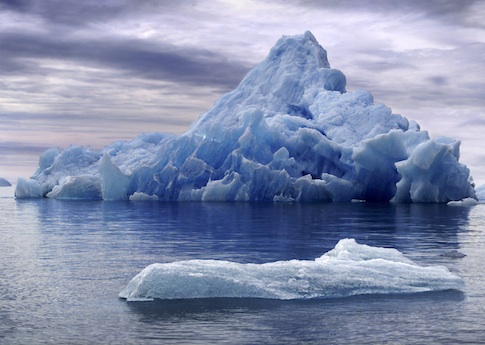
Over the last several weeks, reading news of disorder and upheaval from Venezuela to the Levant to Ukraine to Iraq to Afghanistan, I have thought often of a poem written almost a century ago. Thomas Hardy composed “The Convergence of the Twain” in memory of the sinking of the Titanic. It was published in 1915, three years after the great ship made contact with the deadly iceberg, but reading it today one cannot help experiencing its timelessness, cannot help sharing in its tragic sense of fate.
Hardy’s theme is the vanity and fragility of progress, of technological achievement, of wealth and human power when compared with the immensity and amorality of nature. When I read the poem today however I am drawn to its final stanzas, where Hardy writes of the limits of human foresight, of sudden and unexpected changes in fortune, of the horrible things that can result from the collision of disparate elements. What seems disconnected, separate, foreign, distant, estranged can suddenly cohere in terrible and revelatory events: a Titanic, a Pearl Harbor, a 9/11, a Boston Marathon bombing. I worry that one of those events approaches us now.
Hardy’s poem begins with the image of the Titanic “in a solitude of the sea / Deep from human vanity.” It is a ruin. Frigid waters flow through the “steel chambers” of the engine room, which once “late the pyres / Of her salamandrine fires.” Beasts of the sea—“grotesque, slimed, dumb, indifferent”—crawl “Over the mirrors meant / To glass the opulent.” The ornamentation of the cruise liner is dimmed, “bleared and black and blind.” Where human beings once walked, “Dim moon-eyed” fish swim instead. Hardy anthropomorphizes them, has the fish ask, “What does this vaingloriousness down here?” What caused the wreckage?
Hardy’s answer is “The Immanent Will that stirs and urges everything.” As the engineers, mechanics, and builders fashioned the Titanic in Belfast Harbor, they had no awareness of that “Immanent Will,” which unbeknownst to them “prepared a sinister mate / For her—so gaily great— / A Shape of Ice, for the time far and dissociate.” The ship and her nemesis were intimately connected: “And as the smart ship grew / In stature, grace, and hue, / In shadowy silent distance grew the Iceberg too.” In retrospect the pomp and circumstance that surrounded the christening of the Titanic was pitiable. The iceberg was always out there. It was always waiting.
Watching the strange mix of clumsiness and insouciance with which Barack Obama and John Kerry approach the world, the abstract and aloof manner in which they comment and posture on foreign affairs, it is hard not to recall Hardy’s metaphor of growing dangers distant from the center of civilization. The recent news of a possible terrorist plot against airliners flying to the United States, and of a threat against the U.S. embassy in Uganda, remind us of the durability of the ideology and menace of Islamic terrorism. The ability of non-monarchical Arab governments to control their populations has collapsed, creating an arc of stateless space that begins in Libya and Egypt, is briefly interrupted by the tiny, embattled, belittled, and bullied Jewish State, and extends through Lebanon into Syria and western Iraq.
This is our iceberg. Within its confines murderers and barbarians roam, butchering each other and anyone else who is caught in the crossfire. Within its confines followers of al Qaeda gather and plot. They will not remain within its confines for long, though. Anyone who pays the least attention to the articles inside the New York Times will have noticed leaks by officers of our intelligence agencies, leaks desperately warning that the jihadists have turned their eyes to Europe and to the United States. It is no secret. At the end of last month the Director of National Intelligence told Congress that al Qaeda is no less of a threat than it was when it attacked in 2001.
Our response? The United States has no influence in Egypt, it has left the Syrian dictator more secure, it has left him with his stash of WMD, and it has no pull over Lebanon, no pull over Iraq. The United States is gutting its military, it is pursuing negotiations with Iran whose only point is, in the words of one former Obama official, to “buy time.” It is withdrawing from Afghanistan and leaving it in the hands of the former hosts of al Qaeda, and it is lifting asylum restrictions to make it easier for Syrians with “loose ties” to terrorism to migrate here.
The United States is about to lose strategically important drone bases in Afghanistan, it has found itself out-maneuvered by Vladimir Putin at every turn, its policies toward hotspots in Venezuela and Ukraine seem nonexistent. The policy is to talk above all, to keep talking in Geneva with the Syrians, to keep talking in Vienna with the Iranians, to keep talking in Jerusalem with the Israelis and the Palestinians, no matter that the talk accomplishes nothing, no matter that it drains resources, energy, and personnel that could be put to more constructive use elsewhere. His policy in Syria in tatters, his negotiations with Iran a charade, the secretary of State flew to Indonesia last week to rally the world against the amorphous force of climate change. Why do something about 130,000 dead Syrians, about proliferating weapons of mass destruction, when you can poke fun of those who dissent from the scientific consensus?
The territory over which al Qaeda claims sovereignty is growing, our influence in the Middle East is shrinking, and serious contenders for the American presidency want to make it more difficult for the government to survey the enemy. Our president and his administration interpret these developments, if they interpret them at all, in isolation, as discrete situations, as the inevitable consequences of the post-American world they are so diligently helping to bring into being. “Alien they seemed to be,” Hardy writes. “No mortal eye could see / The intimate welding of their later history.”
The fecklessness of our government and the dangers in the Middle East are the “twin halves of one august event.” We do not know when that event will occur. We know only that it will occur, and that there will be no sign of the crash until the “Spinner of Years” says,
“Now!” And each one hears,
And consummation comes, and jars two hemispheres.
In Iran, It’s the Guys With the Guns Who Call the Shots
February 24, 2014In Iran, It’s the Guys With the Guns Who Call the Shots – The Weekly Standard.
Talking to Michael Rubin about his new book, Dancing with the Devil: The Perils of Engaging with Rogue Regimes.
9:31 AM, Feb 22, 2014 • By LEE SMITH
Michael Rubin, a resident scholar at the American Enterprise Institute and senior lecturer at the Naval Postgraduate School, has just published a very timely book— especially for anyone interested in the likely success of the Obama administration’s diplomatic engagement with Iran. Dancing with the Devil: The Perils of Engaging Rogue Regimes is a historical survey of American engagement that makes a powerful counterargument to the State Department’s mantra that “it never hurts to talk to enemies.” As often as not, as Rubin shows, this piece of conventional wisdom is dead wrong. Recently I spoke with the former Pentagon official about his new book.
Are there any hopes for engaging the rogue regime in Tehran?
Yes. Twice, Ayatollah Khomeini did an about-face on policy: First, with regard to what it would take to release American hostages, and the second was with regard to ending the Iran-Iraq War. While former Carter aides said it was the triumph of diplomacy that led to the hostages’ release, this is nonsense. It was Saddam Hussein’s invasion of Iran that raised the cost of Iranian isolation to be too great to bear.
Second, Iran had largely pushed back the invading Iraqi army by 1982. Khomeini swore, however, that he would continue the war until he “liberated Jerusalem.” Six years and a half million dead later, the stalemate continued. Khomeini got on the radio and said it was like “drinking a chalice of poison,” but he had no choice but to accept a ceasefire with Iraq, The question the White House must ask is what it will take to force Supreme Leader to drink from that same chalice. What is certain is that $20 billion in sanctions relief and new investment is not the answer.
Can you ever actually negotiate with a rogue regime?
Yes. But diplomacy should be the end of the process rather than the beginning. Reagan negotiated with Gorbachev only after deploying intermediate-range missiles in Europe and convincing the Kremlin he might use them. In 2003, Muammar Qaddafi abandoned his nuclear program because the build-up to war in Iraq convinced him that U.S. red lines were not illusionary and because the seizure of a ship carrying North Korean contraband to Libya made him realize that U.S. intelligence was pervasive enough that he could not simply lie. The problem is that the State Department seldom does the preparatory work and too often treats those across the table as equals. Make no mistake: we are not the equals of Iran, North Korea, or the Taliban. And any diplomat who acts as if we are should never work again.
If you can’t negotiate, what are the good options?
First of all, we shouldn’t become so invested in the process that we lose sight of national security. We shouldn’t be afraid to walk away from the table. Rogues aren’t simply adversaries, they are—according to the Clinton administration—states that eschew the rules of diplomacy. Why would you negotiate with a state that doesn’t abide by anything it says in negotiations or simply uses diplomacy to run down the clock? Military options and sanctions have very high costs, but it’s time to recognize that contrary to what Richard Armitage and Nicholas Burns have said, so too does diplomacy misapplied. As to the good options—it depends on what it takes on a case-by-case basis to neuter rogues like North Korea, Iran, or Pakistan.
Which is the nastiest rogue regime the U.S. has ever engaged? And why did Washington do so?
Hands down, it’s North Korea. Initially we had to because of the armistice suspending the Korean War and because of the practicalities of returning bodies washed down by floods or coordinating VIP crossings of the demilitarized zone. The problem has been the limelight-seeking behavior of men like Jimmy Carter or Dennis Rodman—twins in all but appearance—or Bill Richardson seem willing to sacrifice national security for personal limelight.
How do rogue regimes differ from another? In particular, what makes Iran’s regime different from any other?
Rogues can differ in ideology and structure: Qaddafi’s Libya, Saddam’s Iraq, Khamenei’s Iran, and Kim Jong-un’s North Korea are obviously different. What makes Iran so dangerous is both its messianic ideology and the effective autonomy of the Islamic Revolutionary Guard Corps (IRGC). Most Iranians are wonderful and care little for their regime. But it’s not ordinary Iranians who matter when it comes to the issues of greatest concern to the international community: It’s the guys with the guns who call the shots. And the sad thing is that despite tens of billions of dollars the intelligence community has spent, we still have no idea about who believes what among the IRGC. This is even more dangerous because if Iran develops nuclear weapons, not only the IRGC but its most ideologically pure members would have command and control over the nuclear arsenal.
Were sanctions ever really capable of stopping Iran from getting the bomb?
The Iranian Statistics Agency reported that the Iranian economy shrank 5.4 percent in the year before the latest diplomatic love affair began. No, sanctions alone would not have stopped Iran from getting the bomb, but they must be part of a comprehensive strategy. The basic problem we now have is that—for the last couple decades—we’ve gotten into the habit of sequencing strategies rather than employing them all at once. We try to talk first. If that doesn’t work, maybe we’ll impose sanctions. Every president will pay lip service to military action as a last resort. What we need to do is employ a comprehensive strategy that combines economic coercion and military pressure with diplomacy. The whole is greater than the sum of the parts. Alas, rather than seek to maximize leverage, the State Department too often treats it as a dirty word.
(You can follow Michael Rubin @mrubin1971.)
Jannati: Iran adheres to its motto of ˈDeath to USAˈ – IRNA
February 22, 2014Jannati: Iran adheres to its motto of ˈDeath to USAˈ – IRNA.
(And don’t tell me it is a mistranslation. This is from Irans’s official news agency.
Jannati is not some Joe Blow but an influential politician and member of the guardian council. – Artaxes)
Tehran, Feb 21, IRNA – Tehranˈs Substitute Friday Prayers Leader Ayatollah Ahmad Jannati said Iranˈs number one option on the table is ˈDown with USAˈ.

The senior cleric made the remarks while addressing a gathering of worshippers at Tehran University campus here Friday.
The Ayatollah praised high turnout of the Iranian nation on February 11 nationwide rallies to mark the 35th anniversary of the Islamic Revolution.
Ayatollah Jannati said the increase in the number of demonstrators this year carried the message that ˈwe are not afraid of your options on the table.ˈ
The message of Iranian people was that ˈwe are eager for your options on the tableˈ and Iranˈs number one option on the table is ˈDeath with USAˈ, Ayatollah Jannati said in response to recent remarks by a number of US officials that all options, including the military option, are still on the table to deal with Iran.
The Collapse of Sanctions on Iran
February 21, 2014The Collapse of Sanctions on Iran – The Weekly Standard.
The White House gets what it wants.
Mar 3, 2014, Vol. 19, No. 24 • By LEE SMITH
The economic news from Tehran is good—good, that is, if you are a state sponsor of terror moving toward a nuclear weapons program. If on the other hand you were hoping that sanctions might persuade the Iranians to cease and desist, the news is disastrous.

Since the Obama administration relaxed sanctions on Iran, oil sales are up 25 percent, from 1.06 million barrels per day to 1.32 million, and the White House reportedly has no intention of preventing the rise in sales and consequent swelling of Revolutionary Guard bank accounts. And that’s not all. The leading economic indicators show an Iranian economy on the mend, thanks to the interim nuclear agreement struck in November. Inflation has decreased from 40 percent-plus to 20 percent and falling. The rial-to-dollar exchange rate is steadily recovering from the depths to which it had fallen in 2012. And where Iran’s GDP fell 3 percent in 2012, the IMF now projects modest increases for 2014 and 2015.
In short, with the sanctions regime eroding, Iran’s business climate has been transformed. What was once a foolish gamble is now a promising opportunity, and trade delegations are exploring investment options in Iran’s petrochemical and automobile industries. The White House’s early assessment that the regime was getting only $7 billion in sanctions relief was way off. The figure is far closer to those estimates of $20 billion that administration officials scoffed at.
What happened? Is it possible that the White House, with all the economic expertise at its disposal, simply miscalculated? Is the Obama administration just bad at math?
No, it was intentional. Contrary to the administration’s public stance, sanctions relief was never about rewarding the regime with relatively small sums of money in exchange for steep concessions on the nuclear program. The plan rather was to get Iranian president Hassan Rouhani lots of cash, the more the better. The White House’s idea is that once Rouhani understands how much easier his life is with lots of money pouring into the economy, it will be in his interest to petition Supreme Leader Ali Khamenei for more concessions on the nuclear file. The problem with the strategy is that it shows how badly the White House has misunderstood not only the regime’s behavior, but also Rouhani’s role and how sanctions affect it.
“The administration wanted to strengthen Rouhani’s position vis-à-vis the hardliners,” Iran’s Revolutionary Guard Corps (IRGC), says Mark Dubowitz, executive director of the Foundation for Defense of Democracies, whose work has been central in building the Iran sanctions regime. According to Dubowitz, the White House wanted to empower Rouhani while weakening figures like Quds Force commander Qassem Soleimani, who use their proximity to Khamenei to argue against concessions. The administration assumes, says Dubowitz, that “the more Rouhani becomes ‘addicted’ to cash, the better he’ll be able to make the case to Khamenei that they need to make more concessions. The White House’s idea was to show Rouhani some leg.”
They gave away much more than that. What was significant about sanctions relief was not merely the exact amount of money. Rather, it was that any relaxation of sanctions would give rise to an international lobby with a vital interest in making sure the White House never made good on its threats to reimpose stiff sanctions on the Tehran regime. And it’s not just businesses wanting to trade with Iran that have a stake in sanctions relief, but also politicians. A European corporation doing business in Tehran means jobs back home. What politician would gladly turn his back on thousands of jobs or potential jobs to agree to observe the restoration of a sanctions regime that the Obama White House wasn’t serious about in the first place?
Accordingly, businesses sensing a new climate have flocked to Tehran. “Administration officials said our estimate of $20 billion was exaggerated,” says Dubowitz. “But they had to know about the secondary effects of sanctions relief. They were counting on it. It was key to their whole economic strategy of giving Iran’s economy a lift to incentivize Rouhani to deliver more on the nuclear file. As Iran’s economy continues its shift from a deep recession to a modest recovery, and Congress challenges administration officials on the impact of sanctions relief, administration officials may begin to change their tune and claim that this was their strategy all along.”
John Kerry chastised a French business delegation for visiting Tehran, but other State Department officials saw it differently. “We hope people don’t go to Tehran,” said undersecretary of state for political affairs Wendy Sherman, the administration’s lead Iran negotiator. “That is our preference. But those who go raise hopes that the Rouhani administration’s going to have to deliver on.”
The administration’s strategy, says Dubowitz, “has nothing to do with rational economic models. Rather, it’s a psychological profile of the regime based on its assessment of Rouhani as a pragmatist who was elected to secure sanctions relief and will be further strengthened if he can deliver.”
But that’s a misreading of Rouhani’s position. The last thing he wants is more sanctions relief, says Iran specialist Ali Alfoneh. “Rouhani uses the sanctions regime, and the threat of new sanctions, as a stick in his fight with the IRGC and Khamenei. It may seem counterintuitive, but the fact is that sanctions relief and Obama’s threat to veto additional sanctions are only likely to weaken Rouhani in Iran’s political power structure.”
To be sure, Rouhani was elected to win sanctions relief for a beleaguered Iranian economy—and perhaps more importantly for the Revolutionary Guards. “The IRGC was initially a beneficiary of the international sanctions regime,” says Alfoneh, a senior fellow at FDD. Sanctions eliminated competition, especially in Iran’s energy sector, and further concentrated economic power in the IRGC’s hands. “However, as the sanctions regime continued,” Alfoneh explains, “the IRGC suffered because of the overall deterioration of the Iranian economy and shrinking oil revenues.” Contrary to the White House’s understanding, sanctions relief not only enriches the IRGC but also weakens Rouhani.
Khamenei has long seen Rouhani as a useful asset in his dealings with the West. The Iranian president often boasts of his role in duping his American and European counterparts as lead negotiator when he held the regime’s nuclear file from 2003-05. But that was after the U.S.-led coalition invaded Iraq, and Khamenei was terrified the Bush administration might move on Iran next. Rouhani was the regime’s happy face. When Khamenei saw that the Americans were tied down in Iraq, says Alfoneh, he got rid of Rouhani and moved back to hardball tactics.
The same is likely to happen here. Now that Western businessmen and politicians are pecking away at the sanctions regime, Rouhani has already served his purpose. Khamenei has a deal he’s perfectly happy with. He’s getting paid for doing nothing, and if the interim agreement is renewed after six months, as many anticipate, then it’s just more money to spend on whatever he likes—backing Bashar al-Assad in the Syrian civil war, or building the bomb. What’s peculiar is that the White House seems just as pleased with the agreement.
Lee Smith is a senior editor at The Weekly Standard.
Obama Calls Retreat
February 21, 2014Obama Calls Retreat – The Weekly Standard.
Mar 3, 2014, Vol. 19, No. 24 • By WILLIAM KRISTOL
Kiev is ablaze. Syria is a killing field. The Iranian mullahs aren’t giving up their nuclear weapons capability, and other regimes in the Middle East are preparing to acquire their own. Al Qaeda is making gains and is probably stronger than ever. China and Russia throw their weight around, while our allies shudder and squabble.

Why is this happening? Because the United States is in retreat. What is the Obama administration’s response to these events? Further retreat.
Having withdrawn from Iraq, and seeing it now fall apart, the administration is nonetheless determined to get out of Afghanistan. Its Russia “reset” is a joke, and its “pivot to Asia” an empty slogan. Secretary of State John Kerry huffed and puffed when Bashar al-Assad used chemical weapons last year, and asserted it was a Munich moment. How right he was! Kerry came back brandishing a piece of paper, and Assad remains in power.
Having failed to hold Assad accountable for the use of weapons of mass destruction, Kerry now says that global climate change may be the weapon of mass destruction we should most fear. Sure. Meanwhile, in the real world of real weapons, our military is being decimated in size as it is being enervated by political correctness. And on the matter of sheer competence in the execution of foreign policy, to say that we have a B-team in charge is an insult to B-teams everywhere.
We’re tempted to produce at this point appropriate Winston Churchill warnings and statements from the 1930s. But the current situation is almost too pathetic to be worthy of Churchillian exhortation. We’re dealing with no recent memory of the Great War, no Great Depression, no Hitler or Tojo or even a Mussolini. We don’t need extraordinary heroism or exemplary statesmanship to deal with the second- and third-rate threats that we face. We require competent men taking serious measures.
But we don’t have them. And of course second- and third-rate threats, if unchecked, can cause much death and destruction. Minor league gangs and small-time thugs can destroy a neighborhood if there’s no police force. A small infection, if untreated and allowed to spread, can kill as surely as a cancer. Rome fell not to the majestic Hannibal but to groups of unimpressive barbarians. Chaos that results from weakness and dissolution can be as hard to remedy as defeat by formidable and well-organized foes. A panicked retreat can be hard to reverse even if the original opponent isn’t that formidable. It’s undoubtedly true that “Lilies that fester smell far worse than weeds.” But weeds can kill a garden too. And under President Obama, we’ve allowed the weeds to spread and multiply at an amazing rate.
All of which leads us—in this instance at least—to cite the Lincoln of 1838 rather than the Churchill of 1938: “If destruction be our lot, we must ourselves be its author and finisher. As a nation of free men, we must live through all time, or die by suicide.” Suicide isn’t yet imminent. But we are on the cusp of accepting—even embracing?—a stance of shirking fearfulness and shrinking timidity. A nation of free men needs at times like this leaders who step forward to “sound forth the trumpet that shall never call retreat.” Obama has a piccolo that only calls retreat.
Off Topic: Report: U.S. Officials Downplay New Syrian Chemical Strike Allegations
February 21, 2014Feb. 20, 2014
 A man receives treatment following an alleged Jan. 13 poison gas attack by Syrian government forces in the rebel-held city of Daraya. U.S. State Department officials reportedly offered a muted response to claims about the incident. (Fadi al-Halabi/AFP/Getty Images)
Allegations of a new chemical attack in Syria’s civil war appear to have gained little attention in Washington, the Daily Beast reports.
Representatives from the rebel-held city of Daraya are demanding a U.N. inquiry into the purported Jan. 13 strike, the publication said on Thursday. However, local leader Oussama al-Chourbaji said U.S. State Department officials “didn’t seem to care that much” when they heard last week from a delegation of witnesses visiting Washington.
The pro-opposition Syrian Support Group accused forces loyal to President Bashar Assad of killing four rebel combatants with a grenade-like device loaded with an unidentified gas. The substance is said to have caused a range of ailments partially alleviated by a sarin nerve agent antidote.
Dan Layman, a spokesman for the U.S.-based group, said “all of those who were affected or killed had the exact same symptoms” as victims of an Aug. 21 sarin strike in a rebel-occupied area close to Damascus. Assad’s regime never claimed responsibility for the 2013 attack, but later confirmed holding chemical weapons and agreed to surrender them amid warnings of a potential U.S. military response.
Al-Chourbaji, a spokesman for the Daraya local council’s medical branch, said an individual claiming to be from the U.S. State Department had asked his municipal body to transfer samples from the incident to neighboring Jordan for analysis. The council member said that request came shortly after the Jan. 13 event, but the Daily Beast reported that materials collected from the possible attack had yet to leave the city as of Thursday.
Al-Chourbaji added that State Department officials directed the witnesses visiting Washington last week to take photographs as they collect chemical traces from any future incidents.
“They said, ‘If they strike you again with chemical weapons, take pictures and tell us,'” he said. “They just advised us to take pictures [to document the taking of the samples] as if we were in a CSI episode. People are dying [and] we are making a movie.”
WATCH: Iranian Film Shows ‘Nuclear Attack’ on Israel
February 18, 2014WATCH: Iranian Film Shows ‘Nuclear Attack’ on Israel – Israel National News.
(Could they make their intentions any clearer? You see an atomic blast and someone trampling on the word ‘Holocaust’ on the floor. – Artaxes)
Latest in a series of digital saber-rattling illustrates aggressive Iranian response to theoretical military strike on nuclear program.
By Ari Soffer
First Publish: 2/18/2014, 12:32 PM

A new animated film posted on Iranian websites in recent days graphically portrays an Iranian counterattack against a theoretical joint Israeli-American strike on the Islamic Republic’s military facilities, culminating in the destruction of the Jewish state.
The clip was posted together with messages decrying attempts to tighten sanctions on Iran due to its nuclear program, according to Israel Hayom, and begins with an airstrike by Israeli and American forces on Iran.
Iranian air defenses kick in and destroy the bombers, and subsequent scenes show Iranian aircraft flying over Jerusalem, and strikes on Israel’s soil.
Chillingly, the film ends with what appears to be an Iranian-launched nuclear missile destroying the Jewish state.
The film is not the first such Iranian simulation of an attack against Israeli or western targets. Similar clips, including one earlier this month, have previously been released by official Iranian state organs as crude warnings to Israel and western states not to target its nuclear facilities.
But the graphic illustration of a nuclear attack against Israel will hardly allay fears in Jerusalem and elsewhere that Tehran’s nuclear program is far from peaceful.




 anneinpt
 artaxes
 danmillerinpanama
 davidking1530
 Peter Hofman
 Joseph Wouk
 Peter
Peter Louisiana Steve
 WarSclerotic
Recent Comments