Archive for April 14, 2025

Top Iranian officials told Khamenei to allow US nuke talks or risk fall of regime – NYT

April 14, 2025

In rare coordinated effort, officials said to have warned Iran’s supreme leader that military threats from US and Israel are real, and country faces massive unrest if it goes to war

11 April 2025
https://www.timesofisrael.com/top-iranian-officials-warned-khamenei-regime-in-danger-without-nuclear-talks-nyt/

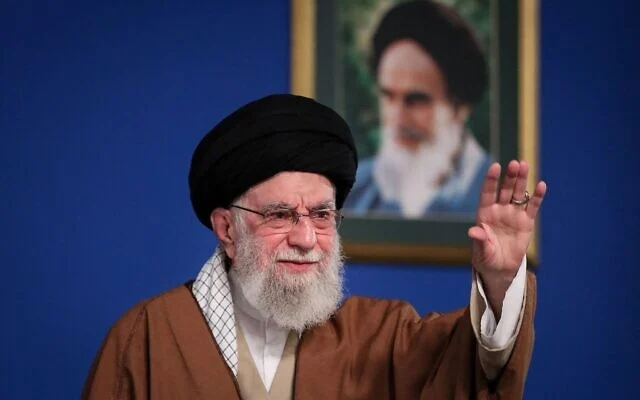
In a rare intervention, Iran’s Supreme Leader Ayatollah Ali Khamenei was urged by his top officials to allow negotiations with the United States on the regime’s nuclear program or risk the fall of the Islamic Republic, The New York Times reported Friday.

The US and Iran are set to meet in Oman on Saturday for talks over Tehran’s rogue nuclear program.

According to The New York Times report, which cited two senior Iranian officials who are familiar with the details, Khamenei held a meeting last month attended by heads of the judiciary and parliament. Those officials, in what the sources described as an unusual, coordinated effort, pressured Khamenei into accepting talks with Washington, even direct ones.

They told Khamenei that the threat of military action by the US and Israel against its nuclear sites was serious.

“If Iran refused talks or if the negotiations failed, the officials told Mr. Khamenei, military strikes on Iran’s two main nuclear sites, Natanz and Fordow, would be inevitable,” the sources said, as reported by the Times.

The country, already in economic shambles, would be forced to respond, but then would also likely be plunged into domestic unrest if it were to go to war, they said.

The combination of such events would amount to an existential threat to the Islamic Republic, the officials reportedly told Khamenei.

The sources said that Mohammad Bagher Ghalibaf, an ex-Islamic Revolutionary Guards Corps chief and current conservative head of Parliament, told Khamenei that a war combined with a domestic economic implosion could quickly get out of control.

They also quoted President Masoud Pezeshkian as telling Khamenei that managing the country through its current crises was not tenable. The report points to power cuts that threaten to shutter factories and water shortages in the central city of Yazd, which saw schools and government offices closed this week.

Iran previously rejected talks but has since relented amid US President Donald Trump’s threats.

Hossein Mousavian, a former diplomat who served on Iran’s nuclear negotiating team on a 2015 deal and is now a visiting fellow at Princeton University, told The New York Times that the change illustrated that preserving the regime was Khamenei’s main priority.

“Mr. Khamenei’s turnaround demonstrates his long-held core principle that ‘preserving the regime is the most necessary of the necessities,’” Mousavian said.

While Khamenei relented and agreed to talks, he also imposed his own conditions, the report said.

Citing three Iranian officials, the NYT said that Khamenei agreed to discuss strict monitoring for the nuclear program and a significant reduction of the enrichment of uranium. However, he has said that Iran’s missile program is off limits, regarding it as being part of Iran’s defenses. The sources said that was a “deal breaker.”

However, the report also said that Iran was “open to discussing its regional policies” and support for its terror proxies like Hamas, Hezbollah and the Houthis in Yemen.

Hamas and Hezbollah have been severely weakened by Israel in the conflicts since Hamas’s Oct. 7 2023 assault on southern Israel, and the US is currently carrying out massive strikes on the Houthis.

The US has vowed not to allow Iran to obtain a nuclear weapon, and Trump has repeatedly threatened “bombing” and a “very bad day for Iran” if no agreement is reached to prevent it.

Iran, which is sworn to Israel’s destruction, denies seeking a nuclear weapon, but it has ramped up its enrichment of uranium to 60 percent purity, which has no application beyond nuclear weapons, and has obstructed international inspectors from checking its nuclear facilities.

Iranian officials said Friday that the Islamic Republic is giving the talks “a genuine chance,” and that, if there are not further “threats and intimidation from the American side, there is a good possibility of reaching an accord.”

The talks on Saturday will be led by Foreign Minister Abbas Araghchi and US special envoy Steve Witkoff, with Omani Foreign Minister Badr al-Busaidi as intermediary, according to Iranian state media.

Trump has characterized the talks as “direct,” while Iranian officials have insisted they will be “indirect.”

Khamenei adviser Ali Shamkhani said in a post to X on Friday that Araghchi was heading to Oman “with full authority for indirect negotiations with America.”

“Tehran seeks a real, just deal—away from media show and rhetoric. Key proposals are ready. If Washington shows determination for a deal, the path to agreement will be clear,” he wrote, in a message posted separately in Farsi, English, Arabic, Russian, and Hebrew.

The Iranian foreign ministry said on Friday the US should value the Islamic Republic’s decision to engage in talks despite what it called Washington’s “prevailing confrontational hoopla.”

The ministry’s spokesman, Esmaeil Baqaei, said Iran was “giving diplomacy a genuine chance in good faith and full vigilance,” adding, “America should appreciate this decision, which was made despite their hostile rhetoric.”

In the lead-up to the talks, Trump reiterated his warning that military action was “absolutely” possible if talks failed.

During his first term, Trump withdrew from a 2015 deal between Iran and six world powers — the US, Russia, China, France, Britain and Germany —  and also imposed stiff sanctions. Iran responded by dropping some of its commitments to the deal, known as the Joint Comprehensive Plan of Action.

Hardline media in Iran voiced skepticism on the talks.

For example, the Kayhan newspaper ran editorials warning that new sanctions imposed this week showed the United States was “an enemy of Iran and its people” and dismissed negotiations to lift sanctions as a “failed strategy.”

Reformist media outlets struck a more optimistic tone, emphasizing the potential economic and investment opportunities talks could create.

Witkoff, expected to lead the American negotiation effort, visited Russia on Friday for talks on Ukraine with Russian President Vladimir Putin, an ally of Iran.

Expert-level consultations between Russia, China and Iran on nuclear issues took place in Moscow on Tuesday, according to the Russian foreign ministry.

Iran has in recent months also been talking with the three European signatories of the 2015 nuclear deal, namely France, Germany and Britain.

On Friday, Germany urged the two sides to reach a “diplomatic solution,” adding that it is a “positive development that there is a channel for dialogue between Iran and the United States.”
Trump: Israel would ‘be the leader’ of strike on Iran if nuclear talks fall apart

April 14, 2025

Hmmm…

US president adds, however, that Washington will make the decisions; Netanyahu’s cabinet secretary says PM was surprised that direct US-Iran talks are slated for coming weekend

10 April 2025

https://www.timesofisrael.com/trump-israel-would-be-the-leader-of-strike-on-iran-if-nuclear-talks-fall-apart/

US President Donald Trump said Wednesday that Israel would take a leading role in a potential military strike on Iran along with the US if upcoming nuclear talks don’t succeed.

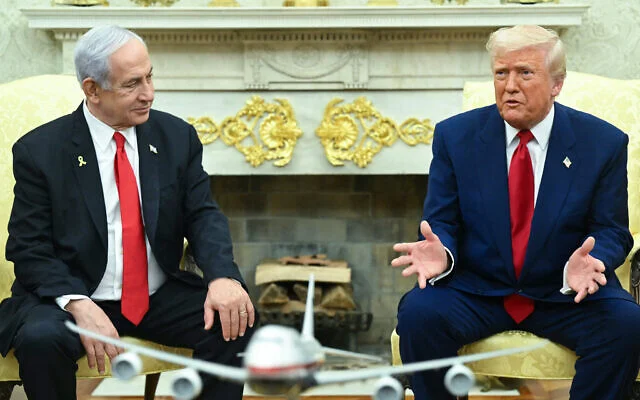
The remark came two days after Trump appeared to blindside Prime Minister Benjamin Netanyahu by announcing alongside him at the White House that direct US-Iran talks on curbing Tehran’s nuclear program would take place this coming Saturday, a timing that Netanyahu’s cabinet secretary said Wednesday had taken Jerusalem by surprise.

Asked by reporters in the Oval Office on Wednesday whether he would use military means against Iran if the latter doesn’t agree to a nuclear deal, Trump responded: “If it requires military, we’re going to have military.”

“Israel will obviously be very much involved in that — it’ll be the leader of that,” he said, in what appeared to be the first time he’s explicitly threatened an Iranian strike by Israel, let alone one led by the Jewish state.

But he appeared to partially walk back the comment in his next breath. “But nobody leads us. We do what we want to do.”

He said the US would “absolutely” use military force against Iran if necessary, and that he has a timeline for how long the diplomatic effort would last, though he didn’t specify. Reports have said Trump is giving the process two months.

“I can’t really be specific. But when you start talks, you know if they’re going along well or not… The conclusion would be when I think they’re not going along well.”

The US president said that Saturday’s slated summit in Oman was the “start” of a process. His envoy to the Middle East, Steve Witkoff, is slated to represent the US, while Iran will be represented by its Foreign Minister Abbas Araghchi. Trump has said the talks will be direct, while Iran has said they will be through a mediator.

“We have a little time, but we don’t have much time because we’re not going to let them have a nuclear weapon,” Trump said. “We’re going to let them thrive. I want them to thrive. I want Iran to be great. The only thing they can’t have is a nuclear weapon. They understand that. The people are so incredible in Iran. They’re so smart… They’re in a rough situation, rough regime… The leaders understand: I’m not asking for much. They can’t have a nuclear weapon. ”

“I was a little bit surprised because when the election was rigged, I figured that they would get the weapon, because with me, they were broke,” he claimed, citing sanctions..

Witkoff may end up holding off on traveling to Oman on Saturday if Iran refuses to hold direct talks with him in Muscat, The Washington Post reported.

US officials have been insisting that the negotiations will be direct, having argued that indirect talks aren’t as effective.

“We won’t be played for fools,” a Trump administration official was quoted as saying, arguing that what is needed to break through the deep mistrust on both sides is a “full-fledged discussion” and a “meeting of minds.”

Witkoff would even be willing to travel to Tehran if invited, two administration officials told the Post. One of the officials speculated that Trump’s decision to announce the talks alongside Netanyahu in the Oval Office on Monday was to keep the premier in check and preempt Israeli criticism.

Trump is more eager to engage in diplomacy than bombing, the officials told the Post.

Saturday surprise

Meanwhile, Cabinet Secretary Yossi Fuchs acknowledged that Netanyahu was caught off guard by Trump’s announcement of the direct talks this weekend.

Speaking with the Kol Berama radio station, Fuchs insisted that Netanyahu had known in advance about the planned US negotiations with Iran, but “he did not know the talks will take place on Saturday.”

“There is a close connection between the president and the prime minister. The president’s team competes over who loves Israel the most,” said Fuchs.

In a cabinet meeting Wednesday night, Netanyahu reportedly told ministers that Israel had had advance knowledge of the US talks with Iran, with Washington having asked Jerusalem what it would consider to be a good deal.

The Kan public broadcaster cited an Israeli source as saying that Netanyahu answered that a good proposal would be similar to one that led to the dismantlement of Libya’s nuclear program, and added that time for diplomacy was limited.

Netanyahu convened the cabinet to discuss his recent trips to Hungary and the United States, with a focus on the US. The premier called on Monday for the forum to convene, immediately after he finished his meeting with Trump, The Times of Israel has learned.

The Trump meeting contained a series of unwelcome surprises for Netanyahu even beyond the Iran talks, namely on the lack of immediate tariff relief and on tensions over Turkey, with Trump praising its President Recep Tayyip Erdogan, a staunch Israel critic who has close Hamas ties.

Only cabinet ministers were invited to the cabinet meeting. Security chiefs, including Shin Bet chief Ronen Bar as well as the heads of the IDF and the Mossad, were not invited, according to Hebrew media outlets. The Kan public broadcaster cited an unnamed source as asserting this was due to the diplomatic, non-security nature of the meeting.

Netanyahu also met CIA Director John Ratcliffe in Jerusalem on Wednesday, his office said, adding that Mossad chief David Barnea was also present.

Efforts to settle a dispute over Iran’s nuclear program, which it says is purely for civilian use but which Western countries see as a precursor to an atomic bomb, have ebbed and flowed for more than 20 years without resolution.

Trump withdrew from a 2015 deal between Iran and six world powers — the US, Russia, China, France, Britain and Germany — during his first term of office in 2018, and also imposed stiff sanctions. Iran responded by dropping some of its commitments to the deal, known as the Joint Comprehensive Plan of Action.

Iran, which is sworn to Israel’s destruction, denies seeking a nuclear weapon, but it has ramped up its enrichment of uranium to 60 percent purity, which has no application beyond nuclear weapons, and has obstructed international inspectors from checking its nuclear facilities.

International talks to bring both countries back to the deal have stalled.

The US issued fresh sanctions on Iran on Wednesday, with the Treasury Department saying that the measures targeting five Iran-based entities and one person based in Iran were imposed due to their support of Iran’s nuclear program with the aim of denying Tehran a nuclear weapon.

Netanyahu Says Iran Deal Must Include Blowing Up and Dismantling Nuclear Sites

April 14, 2025

There’s no way any deal including blowing stuff up will be agreed to by the Iranians.

Israeli leader calls for Libya-style disarmament ahead of U.S.-Iran talks in Oman.

10 April 2025

https://israfan.com/p/netanyahu-iran-deal-libya-model

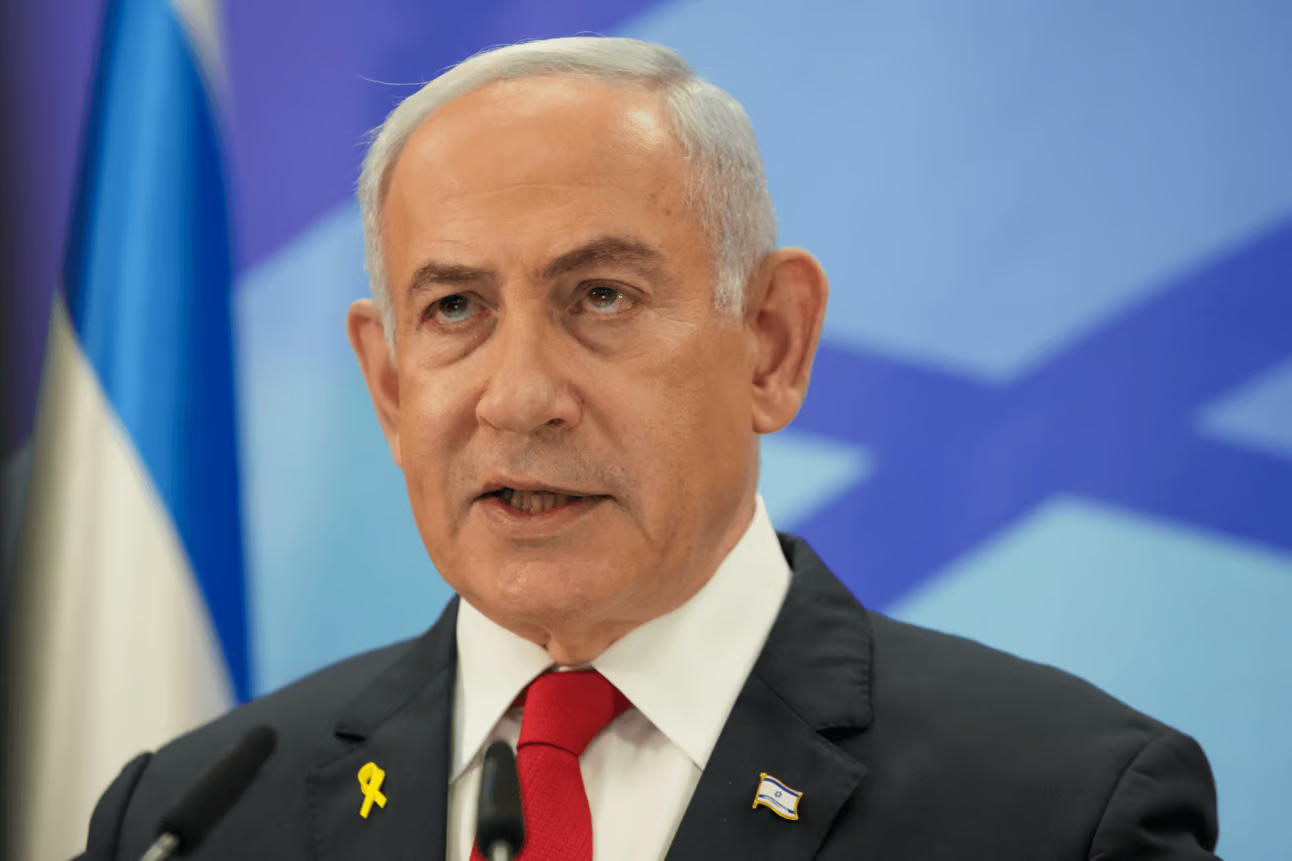
Israeli Prime Minister Benjamin Netanyahu has issued a firm warning regarding any future nuclear agreement with Iran, stating that only a Libya-style disarmament approach would be acceptable. Speaking Tuesday just before departing Washington, Netanyahu emphasized that Iran’s nuclear program must be physically dismantled and destroyed under direct American supervision.

“We agree that Iran will not have nuclear weapons,” Netanyahu declared. “This can be done by agreement, but only if this agreement is Libyan-style: They go in, blow up the installations, dismantle all of the equipment under American supervision and carried out by America this would be good.”

The remarks come ahead of renewed nuclear talks between Iran and the United States, set to begin Saturday in Muscat, Oman. While President Trump described the negotiations as “direct,” Iran insists they will be indirect, facilitated through mediators.

Trump, speaking alongside Netanyahu in the Oval Office on Monday, underscored his administration’s uncompromising stance: “Iran cannot have a nuclear weapon. If it can be done diplomatically in a full way, the way it was done in Libya, I think that would be a good thing.”

Netanyahu also highlighted several other strategic discussions held with Trump, including the ongoing war against Hamas in Gaza. He reiterated Israel’s dual objectives: “We are determined to eliminate Hamas, and at the same time, we are determined to return all of our hostages.”

Addressing critics, Netanyahu said: “The president looked at me and told the journalists who were present ‘This man is working constantly to free the hostages.’ I hope that this shatters the lie… that I don’t care. I do care, and we will be successful.”

Netanyahu also disclosed discussions on the future of the Gaza Strip, revealing that Israel is in dialogue with several countries about accepting Palestinian civilians. “In the end, this is what needs to happen,” he said.

The prime minister voiced concern about Turkey’s intentions to establish military bases in Syria, which he warned would threaten Israel. “We oppose this and are working against it,” he told Trump.

Finally, Netanyahu praised Trump’s economic diplomacy, stating that Israel would work to eliminate its trade deficit with the United States. “This is the little that we can do for the U.S. and its president, who does so much for us.”

Describing the visit as “very warm,” Netanyahu hinted that more developments are forthcoming: “There were additional things that you will hear about later.”


