Archive for February 2025
BREAKING: Iran PANICS Fearing Immediate Israel-US Attack On Nuclear Facilities | TBN Israel – YouTube
February 27, 2025Israel sees opening for strikes on Iranian nuclear sites: US intelligence
February 25, 202513 February 2025
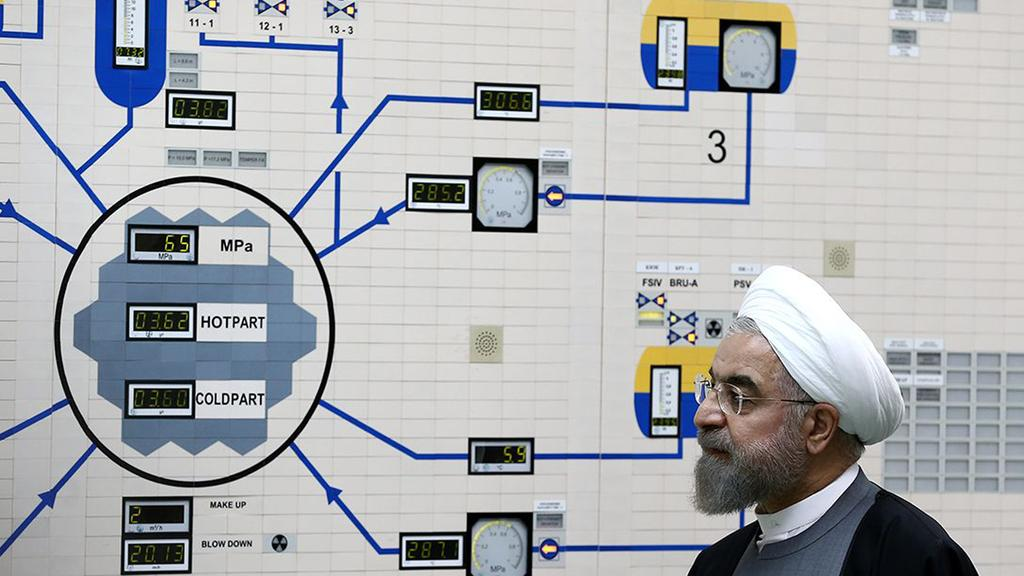
US intelligence agencies concluded during the final days of the Biden administration that Israel is considering significant strikes on Iranian nuclear sites this year, aiming to take advantage of Iran’s weakness, officials familiar with the report said.
The finding was included in an analytical assessment produced around the new year as the Biden administration wound down. The analysis highlighted the risks of further high-stakes military activity in the Middle East after the degradation of Iran’s capabilities over the past year.
The intelligence analysis concluded Israel would push the Trump administration to back the strikes, viewing him as more likely to join an attack than now-former President Joe Biden and fearing the window for halting Tehran’s pursuit of a nuclear weapon was closing, two of the people familiar with the intelligence said.
The US intelligence community produced a second report delivered during the early days of President Trump’s administration reiterating that Israel is considering such strikes on Iranian nuclear facilities, according to one of the US officials familiar with the intelligence.
US military support and munitions would likely be needed for an Israeli attack on Iran’s heavily fortified nuclear sites given their complexity, US military officials say.
Israeli Prime Minister Benjamin Netanyahu’s office didn’t respond to requests for comment, and Israel’s military declined to comment. Israeli officials have repeatedly signalled that there is an opportunity for more aggressive action against Iran.
“Iran is more exposed than ever to strikes on its nuclear facilities,” Israeli Defense Minister Israel Katz said in November. “We have the opportunity to achieve our most important goal – to thwart and eliminate the existential threat to the State of Israel.” Iran in the past has threatened a massive retaliation if its nuclear sites were hit, but Tehran is now significantly weakened after Israel’s strikes last year on its conventional military sites, and the heavy losses suffered by its regional proxies, including Hezbollah and Hamas.
During the presidential transition, some members of Trump’s team considered the viability of Israel launching preventive strikes on Iranian nuclear sites, including having US forces join Israeli aircraft in a bombing campaign. Now as president, Trump has said he prefers a negotiated solution.
Trump last week signed a national-security memorandum to reimpose his policy of “maximum pressure” on Iran and didn’t rule out supporting Israeli strikes if his desired negotiations to end Iran’s nuclear work fail.
“Reports that the United States, working in conjunction with Israel, is going to blow Iran into smithereens, ARE GREATLY EXAGGERATED,” he wrote last week on Truth Social.
A spokeswoman for the Office of the Directorate of National Intelligence declined to comment. A spokesman for the National Security Council said the administration doesn’t comment on intelligence matters.
Tehran has been signalling that it is open to talks with the US “If the main obstacle for the US is Iran pursuing nuclear weapons, then that can be resolved,” its foreign minister told state television last week. “Iran’s stance on nuclear weapons is clear.”
In December, the US intelligence community issued its sharpest warning yet that Iran could move to develop nuclear weapons. Iran has amassed a large stockpile of highly enriched uranium and is thought to have been working on the technical details of completing work on a bomb should it make the political decision to go ahead.
Iran has long forsworn development of a nuclear weapon, but the December report concluded the risks have increased that it could change its mind to develop an effective deterrent, pointing to a public debate in the country over going nuclear. Israel over the past year wiped out the top leadership and much of the arsenal amassed by Lebanese militia Hezbollah, an Iran ally and a deterrent to Israeli attacks, and crippled Iran’s air defences.
The fall of the Assad regime in Syria also deprived Iran of one of its most important allies and a crucial platform for projecting power in the region. Meanwhile, Iranian missile strikes against Israel in retaliation for Israeli attacks have failed to do much damage.
Iran’s leaders are also struggling with an economic crisis brought on by bad management, corruption and heavy sanctions, leaving the country in a weakened state as international pressure builds.
The Biden administration successfully urged Israeli leaders to avoid strikes on Iran’s major nuclear facilities last year when Israel retaliated for an Iranian missile and drone strike. The Israeli attacks instead hit Iran’s air defences and missile-production facilities, diminishing the country’s overall military infrastructure.
The timing and nature of any Israeli strikes on Iran would likely be subject to negotiations between the US and Israel and influenced by other factors, including the fate of fragile ceasefires in Gaza and Lebanon.
Any Israeli attack on Iran’s nuclear facilities would need to hit multiple sites, some in underground fortifications, and be thorough enough that Iran couldn’t quickly rebuild what was destroyed, Israeli analysts said.
Israel would be better served by a new deal in which Iran agrees to dismantle its nuclear program, said Yakov Amidror, a former Israeli national-security adviser under Netanyahu.
“If a good agreement cannot be achieved, Israel will have to act against the nuclear project of Iran” he said.
The Middle East has been struggling with several crises over the past year and a half, including wars in Gaza and Lebanon, the collapse of the Assad family’s half-century dictatorship in Syria, and direct attacks between Iran and Israel. Biden worked to contain the fighting, but Iran and the US were drawn deeper into the conflicts.
Trump’s intervention helped achieve a ceasefire deal in Gaza in January after a year of fruitless efforts. He has also pushed for a normalisation of relations between Saudi Arabia and Israel.
The president roiled the Middle East and Western policy establishments last week by saying the US would take control of Gaza, redevelop the enclave and empty it of Palestinians.
Avner Golov, a former senior director at Israel’s National Security Council and now vice president of MIND Israel, a security-focused non-profit based in Tel Aviv, said while Netanyahu’s priority is the Iranian nuclear issue, Trump seems more interested in ending the war in Gaza and moving toward regional peace deals.
“At the end of the day,” Golov said of Trump’s priorities, “it’s Saudi first with all the deals around it, then Iran.”
Benjamin Netanyahu and Marco Rubio affirm plans on Iran, Gaza – Israel News – The Jerusalem Post
February 16, 2025Source: Benjamin Netanyahu and Marco Rubio affirm plans on Iran, Gaza – Israel News – The Jerusalem Post
Thanking Rubio for “unequivocal backing” for Israel’s policy in Gaza, Netanyahu said Israel and the United States, under President Donald Trump, shared a common strategy in Gaza.


Thanking Rubio for “unequivocal backing” for Israel’s policy in Gaza, Netanyahu said Israel and the United States, under President Donald Trump, shared a common strategy in Gaza, where a fragile ceasefire is in effect between Israel and Hamas terrorists after 15 months of war.
“I want to assure everyone who’s now listening to us that President Trump and I are working in full cooperation and coordination between us,” he said.
Rubio said that he agreed with Israeli PM Benjamin Netanyahu that Iran was the “single greatest source of instability of the region.”
In a press conference in Israel, Rubio said that there can not “be a nuclear Iran.”


Rubio’s trip to Israel, Middle East
Rubio arrived in Tel Aviv late on Saturday on his first visit to the Middle East.
The secretary landed in Israel as top US and Israeli officials worked to secure the release of the remaining six living hostages in phase one of the ceasefire deal.
Rubio’s visit to the Middle East has been in the works for at least a month. The State Department said he would go to the Munich Security Conference, then Israel, the United Arab Emirates, Qatar, and Saudi Arabia from February 13-18.
Before the Saturday release of former hostages Alexander Sasha Troufanov, Sagui Dekel Chen, and Iair Horn, Trump said that if the hostages weren’t returned by 12 p.m. Saturday EST, 7 p.m. Israel Standard Time, then the US would “back” whatever decision Prime Minister Benjamin Netanyahu made.
Amichai Stein contributed to this report.




 anneinpt
 artaxes
 danmillerinpanama
 davidking1530
 Peter Hofman
 Joseph Wouk
 Peter
Peter Louisiana Steve
 WarSclerotic
Recent Comments