BREAKING Last Moments Of Sinwar Revealed
US Hezbollah Policy is Based on Complete Fantasy. Here’s How -The Caroline Glick Show
Yahya Sinwar spent two decades in Israeli prisons studying the country and trying to identify its weaknesses before emerging to assemble a powerful militia dedicated to toppling it.
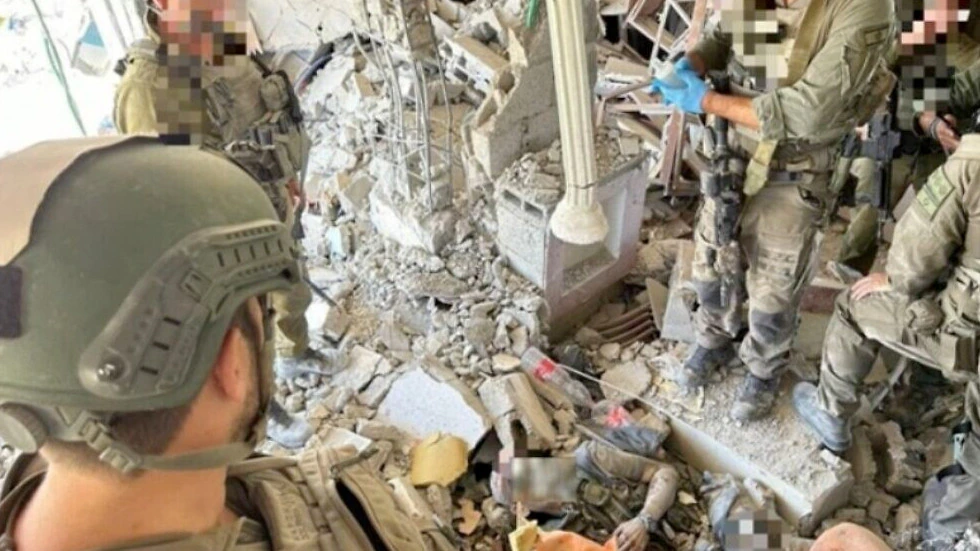
Yahya Sinwar, the Hamas leader who was killed by Israeli forces, spent two decades in Israeli prisons studying the country and trying to identify its weaknesses before emerging to assemble a powerful militia dedicated to toppling it.
That mission culminated on Oct. 7 last year, when at his command Hamas led the deadliest attack in Israel’s more than 75-year history. It triggered a war with Israel in Gaza, and now Lebanon, that has upended the Middle East, reignited the Palestinian cause and left more than 40,000 people dead.
Israel vowed to hunt down the wiry and silver-haired Sinwar after the Oct. 7 attacks that killed 1,200 people and left 250 people held hostage, and his death fulfills one of Israel’s main goals of the Gaza war. For more than a year, he evaded the Israeli military, hiding in underground tunnels from where he directed Hamas’s war effort. On Thursday, Israeli officials announced his Wednesday death.
“I prefer to be a fighter among the army and soldiers, and I will die as a fighter,” Sinwar told a Palestinian news website in 2011.
Sinwar, who for years led Hamas in Gaza, took full control of the US-designated terrorist organisation in August after Israel killed its political leader, Ismail Haniyeh, in Iran.
Sinwar’s ascension, which took the group in an even more violent direction, followed a years-long internal struggle over how Hamas should achieve its political and military ambitions. A hardliner, Sinwar believed Israeli and Palestinian civilian deaths were necessary to destabilise Israel.
He launched the attacks last year in the hope that Iran and Hezbollah militants in Lebanon would join the fighting. But those allies initially offered only limited help, with Iran-backed Hezbollah firing rockets at Israel in tit-for-tat exchanges that began the day after the Hamas attacks from Gaza. In April, after the death of an Iranian general in Damascus, Iran launched around 300 missiles and drones at Israel in retaliation for the killing.
Israel this fall launched an air-and-ground campaign against U.S.-designated terrorist group Hezbollah, killing its leader Hassan Nasrallah in Lebanon as it sought to deter attacks into its north. Iran, in response, fired some 200 missiles at Israel, an assault to which Israel has promised to respond. The escalating conflict has left the region on the brink of all-out war.
Sinwar was detained by Israel in 1988, and later told Israeli interrogators that he strangled a suspected Palestinian collaborator, according to a transcript of his confession.
Later convicted, he devoted his time in prison to getting to know Israeli society. He learned Hebrew, watched Israeli news and read books on Jewish history. He was released in 2011 in a prisoner exchange in which Israel gave up more than 1,000 Palestinian prisoners for one Israeli soldier.
Sinwar once said that what Israel considers its strength – that most Israelis serve in the army and soldiers hold a special status in society – was a weakness that could be exploited. One of the goals of the Oct. 7, 2023, attacks was to capture Israeli soldiers who could be traded for Palestinian prisoners. What became clear later was that Sinwar could also use them as insurance to keep himself alive.
But he ultimately miscalculated how Israel would respond to the unprecedented attacks, as Israeli Prime Minister Benjamin Netanyahu vowed to destroy Hamas and dismantle its military. While Israel engaged in talks to free hostages, Netanyahu gave priority to a military campaign against Hamas that eventually led to Sinwar’s killing.
The war has wiped out much of Hamas’s top leadership, including Sinwar, Haniyeh and military commander Mohammed Deif in July.
Netanyahu hasn’t presented a plan for who should govern Gaza after the war. He has ruled out Washington’s proposal that the Palestinian Authority, which runs parts of the West Bank, be put in charge of the enclave.
Some Arab states have pushed for Hamas to retain a role in governing the strip to avert an insurgency by the group’s remaining fighters. Sinwar could be succeeded by his deputy in Gaza, Khalil al-Hayya, who has represented Hamas in ceasefire negotiations with Israel, or by former Hamas leader, Khaled Meshaal.
Sinwar launched the Oct. 7 attacks in part over frustration with the paralysis in the long-running Israeli-Palestinian conflict and the fading global diplomatic importance of the Palestinian cause. The atrocities in southern Israel and subsequent destruction wrought in Gaza have undoubtedly refocused attention back on the issue.
Sinwar grew up in a refugee camp in Khan Younis in Gaza, the son of refugees who fled what is now Israel during the 1948 war with Arab states. In the 1980s, Sinwar became close to the founder of Hamas, Sheikh Ahmed Yassin, and worked with his mentor to hunt Palestinian informants suspected of collaborating with Israel. The internal police force was a forerunner to Hamas’s military wing, the Izz ad-Din al-Qassam Brigades.
During a series of interrogations after his 1988 detention and charge, Sinwar explained how he rounded up a suspected Palestinian collaborator with Israel while the man was in bed with his wife, according to a transcript of his confession.
He blindfolded the Palestinian, called Ramsi, and drove him to an area with a freshly dug grave before strangling him with a scarf known as a kaffiyeh, a symbol of the Palestinian cause.
“I was sure that Ramsi knew he deserved to die for what he did,” Sinwar said in his confession.
Sinwar’s reputation as one of the founders of Hamas and as its chief enforcer immediately propelled him through the hierarchy of Hamas prison inmates.
By the mid-1990s, Sinwar was already the most important Hamas prisoner held by Israel, according to Ehud Ya’ari, an Israeli broadcast journalist who interviewed him in prison. “It was not in question at all that he was the guy in charge,” said Ya’ari.
While Sinwar had a reputation as a violent enforcer, he also had a more cerebral, academic side. He hand wrote hundreds of pages of his thoughts and conclusions upon reading Jewish and Zionist history, demonstrating a curiosity about his enemy that stunned Israelis who met him at the time, Ya’ari added.
He also penned a coming-of-age novel about life in Gaza and a nonfiction book about his experience setting up Hamas’s internal police force.
In 2004, he appeared to develop neurological problems, speaking unclearly and struggling with walking. Doctors examined him, finding an abscess in the brain, and rushed him to hospital for surgery. After a successful operation, Sinwar returned to prison and thanked the doctors for saving his life. He also spent hours in conversation with one of his jailers.
Following his exchange in 2011, Sinwar quickly rose through Hamas’s political leadership. He became Hamas’s leader in Gaza in 2017 and for a time signalled to Israel that he was seeking a long-term quiet in the conflict between the militants and the Israeli military.
“The truth is that a new war is in no one’s interest,” Sinwar told an Italian journalist writing in 2018 in an Israeli daily.
But he became increasingly frustrated with Hamas’s diplomatic isolation, and began to deepen relations with Israel’s arch-enemy Iran and its proxy Hezbollah.
In the months leading up to Oct. 7, the anti-Israel allies discussed ways that they could attack their joint enemy. But while Iran’s proxies have attacked Israel and U.S. forces in the Middle East since the start of the war in Gaza, Tehran and its allies have for the most part avoided an all-out escalation, a decision that frustrated Sinwar.
Once the war began, Sinwar knew that success for Hamas would depend on him surviving and outlasting Israel, forcing a permanent ceasefire that would leave Hamas intact.
For a time, Sinwar believed that he might emerge victorious. His messages to his Hamas colleagues and ceasefire mediators became increasingly confident, even grandiose, according to Arab ceasefire mediators. During negotiations for a temporary pause in fighting earlier in the war, he urged Hamas’s political leadership outside Gaza not to make concessions and to push for a permanent end to the war.
Sinwar believed high civilian casualties in Gaza would create worldwide pressure on Israel to stop the war, according to messages he sent to mediators. But even as the U.S. repeatedly pushed the two sides to agree to a ceasefire, Israel proposed conditions that would likely have led to Hamas’s demise, and Sinwar dug in.
At the end of July, Israel assassinated Haniyeh in Tehran, and Sinwar was officially elevated to run the broader group, his de facto role since the war began.
In September, Hamas raised the stakes, suggesting it had killed six high-profile hostages, including an Israeli-American, amid Israeli military pressure in Gaza. The group threatened to kill more hostages if Israel tried to rescue others, illustrating how much pressure Sinwar was under. The hostages were a valuable bargaining chip to force a ceasefire, but he was also willing to kill some of them as leverage over Israel’s government to force a deal.
Ultimately, Israel’s intelligence and military capabilities proved too much for Sinwar.
In a message to Hezbollah before he was killed, the Hamas leader thanked the Shia militant group for its support and invoked a 7th-century battle in Karbala, Iraq, where the grandson of the Prophet Muhammad was slain, causing a schism in Islam.
“We have to move forward on the same path we started,” Sinwar wrote to Hezbollah. “Or let it be a new Karbala.”
You can run, you can hide, but we will get you…
For more than a year, Israeli soldiers scoured the scorched earth of Gaza in search of Yahya Sinwar, who was thought to be hiding in a vast tunnel network. Then, by pure chance, they found him.
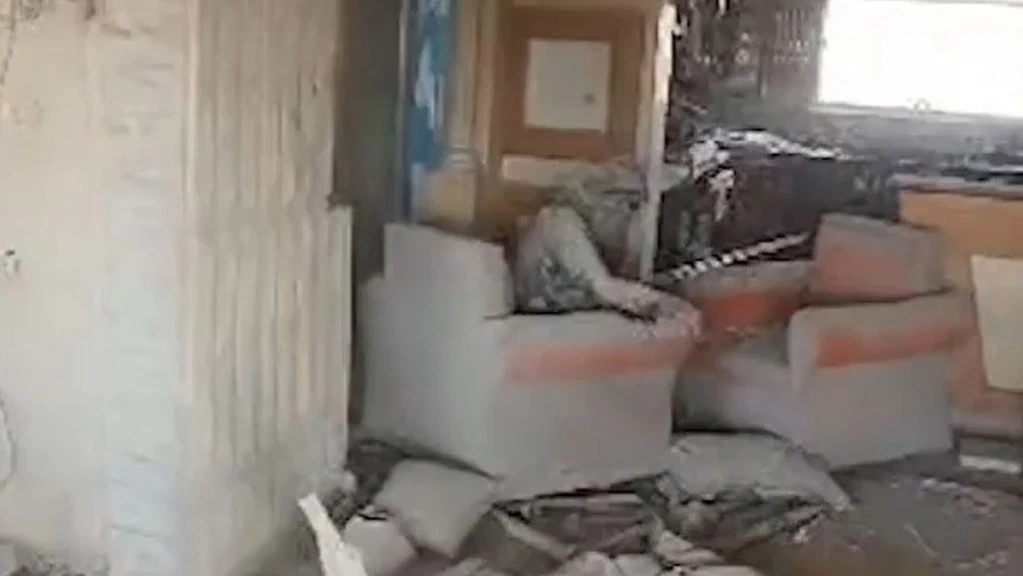
For more than a year, Israeli soldiers scoured the scorched earth of Gaza in search of the leader of Hamas, Yahya Sinwar, who was thought to be hiding in a vast tunnel network. Then, by chance, they found him.
Late on Wednesday in the southern city of Rafah, trainee Israeli troops from the 828th Battalion, a mixture of novice soldiers and reservists, spotted three suspicious figures moving “home to home on the run”, the military said.
The soldiers fired on the group, apparently wounding one of them, who fled alone into a building. They sent in a small drone in pursuit, and through its camera saw a figure sitting among debris, his face covered by a scarf, who hurled a stick at it in defiance.
Deciding it was too dangerous to enter, they called in tank fire instead. The building was hit by two 120mm shells, with shrapnel scything across the upper floors.
When the trainee soldiers piloted a drone back into the wreckage, they discovered something remarkable.
Entombed in the rubble was a body. The head was partially shattered, the face covered in ash, but the corpse was instantly recognisable: it was Israel’s No 1 enemy. His lips slightly parted in death, Sinwar, 61, was given away by his distinctive ears.
Even though it looked exactly like him, it seemed scarcely believable that the troops would stumble across the leader of Hamas in the middle of a city repeatedly cleared by the Israel Defence Forces over months of heavy fighting. Soldiers from the 450th infantry battalion were ordered to storm the building for a closer look.
Wearing gloves to protect the forensic evidence, they took pictures of the corpse, wearing combat fatigues, and sent them to the Israeli police. Specifically, they needed to get images of his yellowing teeth.
Using a wooden stick, they pushed back the man’s upper lip to reveal an identifiable gap between his front incisors. Investigators had the Hamas leader’s DNA from the 22 years he spent in Israeli jails. “We had Sinwar’s dental data on file, and the match was clear,” Aliza Raziel, head of the police’s Forensic Identification Division, said, describing it as “one of the most significant moments this year”.
The seismic discovery was quickly communicated up the chain of command until, in the skies above Israel, two of its most senior security officials held an impromptu meeting in a military helicopter to assess the information. Examining classified documents spread out on a makeshift table, Herzi Halevi, Israel’s top general, and Ronen Bar, head of Shin Bet, the domestic intelligence agency, pored over the details of Sinwar’s apparent assassination.
At the same time, grisly photos of Sinwar’s corpse were leaked online, forcing the IDF to issue a statement. By this stage they were confident enough to assert with a “high” degree of confidence that Sinwar was dead. Four hours later, the military issued a simple message on social media: “Eliminated: Yahya Sinwar.”
Unlike the planned assassination of Hassan Nasrallah, the leader of Hezbollah, in Beirut last month, it appears that Sinwar’s demise owed much more to luck than design. Releasing drone footage of Sinwar’s last moments, Rear Admiral Daniel Hagari, the IDF spokesman, confirmed the soldiers “identified him as a terrorist in a building” but did not know who it was.
“We fired on the building and went in to search. We found him with a flak jacket and a gun and 40,000 shekels [pounds 8,200],” he added.
Sinwar began terrorising the people of Gaza in the 1980s, when as head of the al-Majd, the morality police of Hamas, he was responsible for murdering suspected Palestinian collaborators and torturing those accused of supposed sins such as homosexuality or indulging in vices such as alcohol, drugs and fornication.
As rumours spread in Gaza of his demise, Palestinians expressed tentative hope that his death would mark the beginning of the end of the war, after another bloody day in which 28 people were killed in an Israeli airstrike on a school in Jabalia in the north.
Displaced from his home, Osama al-Kafarna, 43, now living in Khan Yunis, blamed both Sinwar for starting the war and Israel for its retributive, year-long campaign that has left more than 42,000 dead, according to the Hamas-run health ministry.
“Israel has always accused Sinwar of being the one who obstructs the deal, but now after his death we hope that we will not hear more lies from Israel and the war will end as soon as possible,” he said.
For Israelis and Palestinians alike, Sinwar’s death is a decisive moment. At least 97 hostages remain unaccounted for, 33 of whom are believed to be dead. And it remains unclear how Israel intends to quash the radical Sunni ideology that fuels Hamas.
“We’ve closed the account with the arch murderer Sinwar,” said Einav Zangauker, the mother of the hostage Matan Zangauker and one of the most vocal campaigners for a ceasefire, in a video statement. “But now, more than ever, the lives of my son Matan and the other hostages are in tangible danger.”
Israel had claimed that Sinwar had been hiding in tunnels under Gaza, using hostages as human shields. Hagari said he had been “running away” before he died but Hamas will try to paint him as a martyr, defiant to the last.
Binyamin Netanyahu, the Israeli prime minister, addressed the nation in a speech intended to capture the history of the moment. “Evil has been delivered a blow,” he said, before adding: “But our task is not yet complete.”




 anneinpt
 artaxes
 danmillerinpanama
 davidking1530
 Peter Hofman
 Joseph Wouk
 Peter
Peter Louisiana Steve
 WarSclerotic
Recent Comments