Archive for June 2023

Cyprus thwarts Iranian attack targeting Jews and Israelis — reports

June 25, 2023

Source: Cyprus thwarts Iranian attack targeting Jews and Israelis — reports | The Times of Israel

Planned attack said thwarted by intelligence services cooperating with Israeli, US counterparts; reportedly connected to Islamic Revolutionary Guard Corps

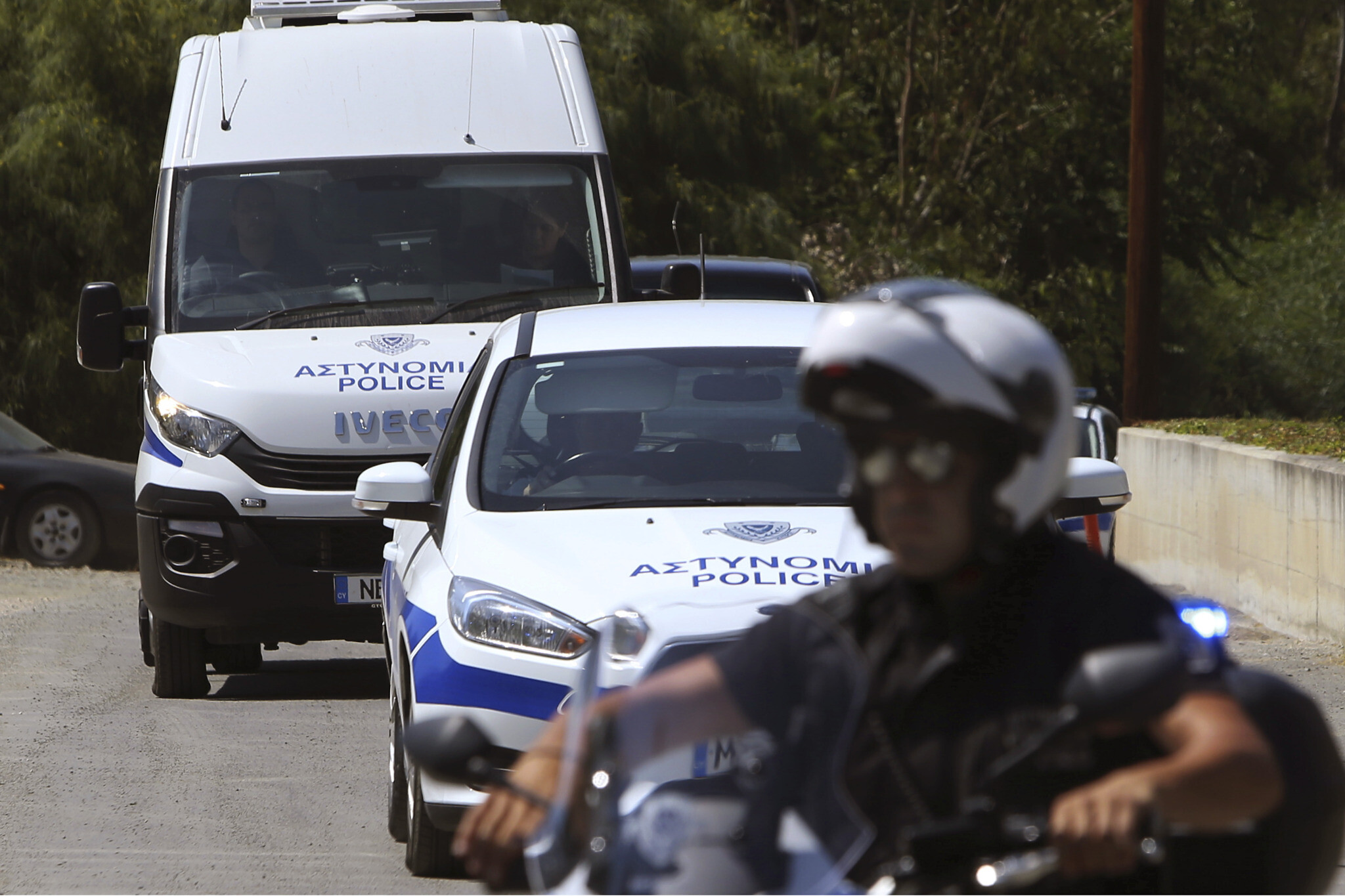
Illustrative -- A motorcyclist police officer escorts and guards a police van, Nicosia, Cyprus, June 24, 2019 (Petros Karadjias/AP)

Illustrative — A motorcyclist police officer escorts and guards a police van, Nicosia, Cyprus, June 24, 2019 (Petros Karadjias/AP)

A terror attack targeting Jews and Israelis was thwarted in Cyprus, it was reported by Cypriot media on Sunday.

According to the reports, the planned attack was believed linked to Iran’s Islamic Revolutionary Guard Corps, which is a branch of the Iranian army and is considered a terror organization by several countries, including the United States.

Israel’s National Security Council warned earlier this year that Cyprus and Greece are countries where Iran is likely to target Jews and Israelis. The countries are popular destinations for Israeli tourists, in addition to having relatively sizable expat communities.

The Phile News website said the plot was thwarted by Cypriot intelligence services, in cooperation with other foreign agencies, said to be from Israel and the US.

The report said that the attackers were using the northern part of the island as a staging post for the potential attack and that Cypriot intelligence services had closely followed the cell for a number of months.

An unnamed official told the outlet that the foiling of the plot showed that Cyprus would not allow its own territorial conflict to create a “security hole” through which attacks can be carried out.

There was no immediate confirmation from Israeli officials.

In this September 22, 2014, photo, members of the Iran’s Revolutionary Guard march during an annual military parade at the mausoleum of ayatollah Khomeini, outside Tehran, Iran (AP Photo/Ebrahim Noroozi, File)

Cyprus has been divided since 1974, when the Turkish army invaded the northern third of the island in response to a coup that had sought to unite the entire island with Greece. The rule of the north’s leader is recognized only by Turkey.

In October 2021, Israel said that an Iranian plot against Israeli businesspeople in Cyprus had been foiled. According to reports, the hired killer was of Azerbaijani origin and had arrived in Cyprus on a flight from Russia using a Russian passport.

Landing in Larnaca on the Cypriot southern side of the island, he was said to have made his way to the Turkish-controlled city of Paralimni in the north where he rented a room and two vehicles. He reportedly crossed the Turkish-Cypriot border back and forth a number of times on a bike.

Iranian plots against Israelis have also been foiled in several other countries over the past year.

In November, Georgian security officials foiled an attempt by a Pakistani citizen to murder an Israeli in Georgia on orders from an Iranian operative.

In July, Turkish forces stymied an attempt by Iranian agents to kill Israelis in Istanbul, arresting three men. The news came a month after the Mossad spy agency and its local counterparts managed to thwart three Iranian attacks targeting Israeli civilians in Istanbul. Iran denied the allegations.

Also in June, security forces in Thailand were reportedly successful in preventing an Iranian agent from establishing a terror cell in the country and potentially carrying out attacks against Israelis.

Iran and Israel have been engaged in a decades-long shadow war across the Middle East and beyond.

Agencies contributed to this report.

Iran and US near interim deal on nuclear enrichment and oil exports | Middle East Eye

June 9, 2023

Source: Iran and US near interim deal on nuclear enrichment and oil exports | Middle East Eye

Direct talks between Robert Malley and Iran’s ambassador to the UN have taken place on US soil, sources say, but it remains to be seen whether senior officials back the proposals
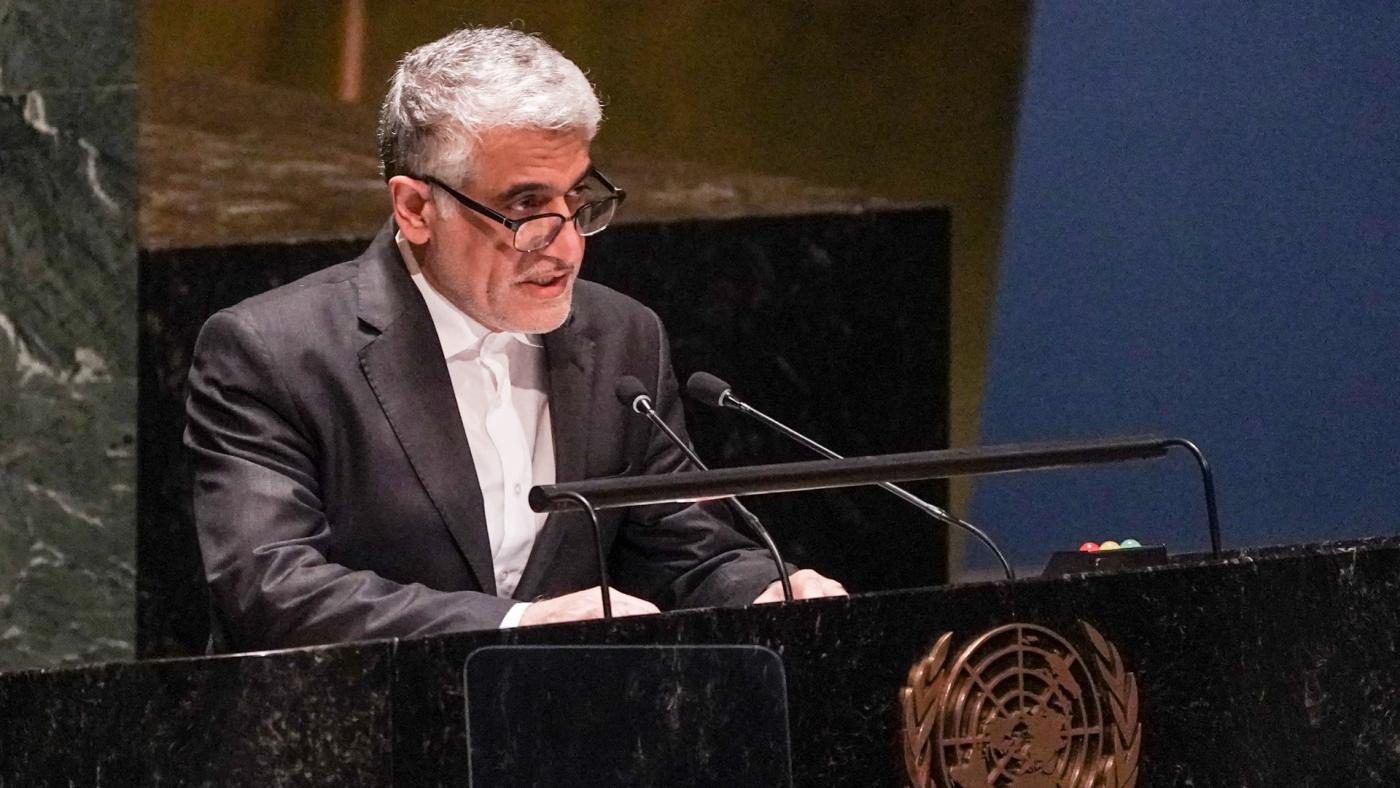
Iran's United Nations Ambassador Amir Saeid Iravani address the UN General Assembly in February (AP)
Iran’s United Nations Ambassador Amir Saeid Iravani address the UN General Assembly in February (AP)
By MEE correspondent in Tehran

According to an Iranian official and a person close to negotiations, the talks have taken place directly on US soil, marking a notable development in the diplomatic process.

However, there is still reluctance on the US side to rejoin the 2015 nuclear deal known as the JCPOA, they said.

Leading the Iranian delegation is Amir Saeed Iravani, Iran’s recently appointed ambassador to the United Nations, who also played a pivotal role in the initial stages of the Iran-Saudi Arabia reconciliation talks in Baghdad.

On the American side, Robert Malley, the US special envoy on Iran, has engaged in several face-to-face meetings with Iravani.

Negotiations have made significant headway and the two sides have reached an agreement on a temporary deal to take to their respective superiors, the sources said.

Under the terms of the deal, Iran would commit to ceasing its 60 percent-and-beyond uranium enrichment activities and would continue its cooperation with the International Atomic Energy Agency (IAEA) for the monitoring and verification of its nuclear programme.

In exchange, the sources said, Tehran would be allowed to export up to a million barrels of oil per day and gain access to its income and other frozen funds abroad.

Those funds would have to be exclusively used to purchase a range of essential items, including food and medication.

In addition to the bilateral talks between Iran and the US, Qatar has emerged as a facilitator, offering its assistance in resolving banking-related issues that have emerged as a significant point of contention.

Middle East Eye asked Malley and the Qatari foreign ministry for comment, without response. Later, a spokesperson for the White House National Security Council told Reuters: “Any reports of an interim deal are false.” The Iranian mission to the UN then said: “Our comment is the same as the White House comment.”

After Reuters asked the US State Department to confirm if Malley had been negotiating with Iravani, the news agency reported: “A State Department spokesperson declined to comment on any such talks, saying only that it had ways to pass messages to Iran but would not detail their content or how they were delivered.”

Reuters also reported that two unnamed Iranian officials said “there had been progress but no agreement was imminent”. A third said Malley and Iravani had met three times in the past week.

While the progress seems promising, the ultimate decision lies with senior Iranian officials.

Iravani has conveyed the details of the agreement to the senior decision-makers in Tehran for their approval. However, it remains uncertain whether the supreme leader and the national security council will give their consent.

Historically, Iranian authorities have been opposed to interim deals such as this, a former diplomatic official told MEE, especially during the 2017-2021 second presidential term of Hassan Rouhani.

According to the sources, Malley told the Iranians that President Joe Biden has no intention of returning to the JCPOA in its original form, which Donald Trump unilaterally pulled the US out of in 2018.

Malley also warned that if Iran begins 90 percent uranium enrichment, the Pentagon would take control of the Iranian nuclear issue from the State Department, the sources said.

On the brink: Unpacking Israel’s unilateral strike threat against Iran

June 8, 2023

Source: On the brink: Unpacking Israel’s unilateral strike threat against Iran – The Jerusalem Post

Israel has reaffirmed its capability for a preemptive strike on Iran, which would likely lead to a multifront war with serious ramifications for the region.

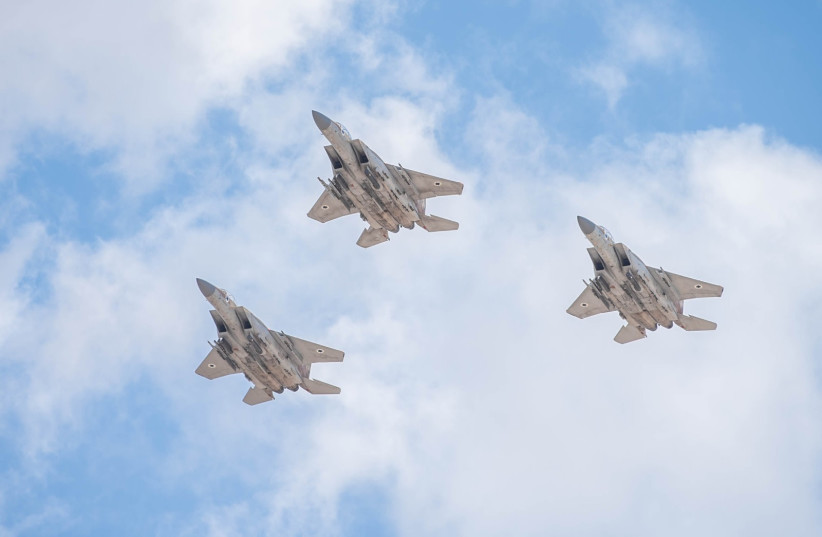
 The Israeli Air Force Independence Day flyover. (photo credit: IDF SPOKESPERSON'S UNIT)
The Israeli Air Force Independence Day flyover.
(photo credit: IDF SPOKESPERSON’S UNIT)

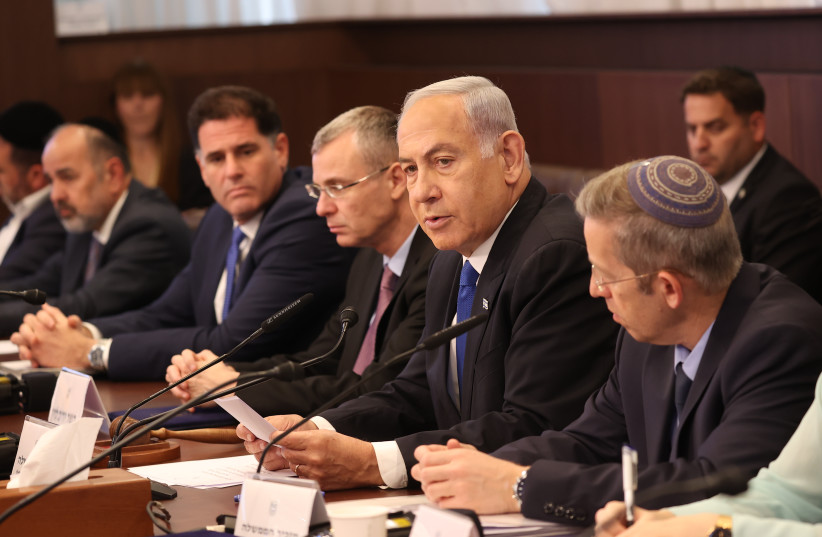
Israeli Prime Minister Benjamin Netanyahu repeated his threats against Iran on Sunday during a cabinet meeting held as part of a national war drill.

“The reality in our region is changing rapidly. We are not stagnating. We are adapting our combat doctrine and our possibilities for action in keeping with these changes,” Netanyahu said at the meeting, which was held at an underground military bunker in Tel Aviv. “We are committed to acting against the Iranian nuclear program, against missile attacks … and against … what we call a multifront campaign.”

The statement came hours after the Israeli prime minister accused the International Atomic Energy Agency (IAEA) of “capitulation” to Iran. Last week, the IAEA closed a case investigating heavily enriched uranium particles that had been discovered in Iran. The agency reported that it had received a satisfactory answer explaining the presence of the particles, which had been enriched to 83.7%, worryingly close to the 90% needed to produce a nuclear weapon.

tanyahu characterized the agency’s decision as political, criticizing the IAEA for failing to confront the Islamic Republic.

n context: Under the 2015 Joint Comprehensive Plan of Action nuclear deal, Iran agreed to limit its uranium stockpile and to enrich uranium only to 3.67%, the purity needed to run nuclear power plants. In return, Iran received relief from sanctions imposed by the US, the EU, and the UN Security Council. Since the US unilaterally withdrew from the deal in 2018, Iran has said that it is enriching uranium up to 60% purity. Iran’s uranium stockpile has also grown tenfold since the fall of the nuclear deal.

 Israeli Prime Minister Benjamin Netanyahu leads a cabinet meeting at the Prime Minister's Office in Jerusalem on June 4, 2023. (credit: AMIT SHABI/POOL)Israeli Prime Minister Benjamin Netanyahu leads a cabinet meeting at the Prime Minister’s Office in Jerusalem on June 4, 2023. (credit: AMIT SHABI/POOL)

“Iran has progressed greatly in its uranium enrichment,” Danny Citrinowicz, a research fellow at the Institute for National Security Studies’ Iran Program, told The Media Line.

No dramatic actions is needed at the moment

Amid the backdrop of numerous statements suggesting that Israel is on the verge of military action against Iran, Citrinowicz urged caution. “The situation is worrisome but at this point does not merit dramatic action,” he said.

For years, Israel has been carefully watching as Iran makes headway toward nuclear capability.

“Iran cannot be prevented from acquiring nuclear weapons. It can only be delayed,” Citrinowicz said. Israel’s hesitance to take serious action against Iran could be attributed to the apparent inevitability of Iran’s nuclear capacity, as well as the complexities associated with any preemptive strike.

Isrel is believed to be behind hundreds of airstrikes and other operations against the Iranian nuclear program. These include assassinations of senior Iranian scientists and cyberattacks against nuclear facilities.

srael’s current military exercise is meant to prepare the country for a prolonged multifront war, the scenario Israel expects should it strike Iran. The “Firm Hand” drill also involves a civilian front preparation test.

According to an Israel Defense Force statement released before the exercise began, the drill includes a multiarena exercise for the air force and a strike and defense mission exercise for the navy.

Israeli officials have repeatedly conveyed that they will not tolerate Iranian nuclear capability. Israel sees Iran as its archenemy and the Islamic Republic’s nuclear aspirations as its most formidable threat.

“The latest statements are probably a response to an American effort to reach some sort of an agreement with Iran,” retired Maj. Gen. Yaakov Amidror, senior fellow at the Jerusalem Institute for Strategy and Security and former national security adviser to Netanyahu, told The Media Line.

Negotiations with Iran have been going on since 2013

Iran has been negotiating with world powers since 2013. President Joe Biden took office in 2021, almost three years after President Donald Trump unilaterally withdrew from the Iran nuclear deal, and quickly began new negotiations. Those negotiations failed to produce a new agreement, and recent media reports have suggested that the US is now looking to enter talks with Iran on an interim agreement that would limit Iran’s enrichment of uranium but not completely stop it.

“The Israeli statements are also aimed at Iranian ears, that should they cross a certain line, Israel will respond, and does not see itself committed to any international agreements reached with Iran.”

Maj. Gen. (ret.) Yaakov Amidror

“The Israeli statements are also aimed at Iranian ears, that should they cross a certain line, Israel will respond, and does not see itself committed to any international agreements reached with Iran,” Amidror said. “It is committed to its own security and not to the international belief that the solution to the problem is only a diplomatic one.”

Since identifying the Iranian nuclear program as its most major threat over two decades ago, Israel has maintained its position against Iran’s nuclear aspirations and against any agreement with Iran.

Iran now appears to be on the cusp of nuclear capability, with many experts believing the country already has the technology and expertise it needs to develop nuclear weapons. Only internal political will appears to be keeping Iran from becoming a nuclear power.

Given that reality, Israel is facing the dilemma of whether to carry out a preemptive strike on some or all of Iran’s nuclear facilities.

Destroying Iran’s nuclear program may be an unrealistic goal for Israel. Iran’s nuclear facilities are scattered across the country, raising doubts about Israel’s ability to perform the complex airstrikes to take them out, more than 1,000 miles away from Israeli Air Force bases.

“Israel has the ability,” Amidror said. He acknowledged that the American capability to strike Iran was significantly higher than Israel’s capability, but said that Israel would be willing to use “what it has at its disposal.”

“For Israel, this would be a very complex operation, which would entail the whole of the Israeli Air Force being airborne at once, then reaching Iran – probably being targeted on the way – and successfully attacking Iran,” Amidror said.

An Israeli attack on Iran would likely be the opening act in a larger, multifront regional war. With Iran expected to urge its regional proxies to attack Israel in response, such a war would presumably lead to extensive damage throughout the Middle East and a large number of casualties.

“For Israel, this would be a very complex operation, which would entail the whole of the Israeli Air Force being airborne at once, then reaching Iran – probably being targeted on the way – and successfully attacking Iran.”

Maj. Gen. (ret.) Yaakov Amidror

Iran would be unlikely to abandon its nuclear ambitions in the aftermath. “The knowledge Iran has accumulated cannot be erased, even if such an attack is successful. Iran will not relinquish its plans the day after such an attack, and it will rebuild,” Citrinowicz said.

While most of the West is eager to reach a nuclear agreement with Iran, Israel has been steadfast in its opposition to any negotiations. This dynamic puts Israel in “an inferior position,” Citrinowicz said. “There is very little international appetite to deal with Iran in any other way than by negotiating with it,” he added.

In an attempt to avoid a large-scale military confrontation, Washington has been pushing negotiations. But the international environment that allowed for the JCPOA to be signed with Chinese and Russian support cannot be recreated at this point.

Iran has been emboldened by Russia, which is now at odds with many of the negotiating powers due to its offensive in Ukraine. Direct Iranian involvement in that war, with a steady supply of armed drones to Russia that have been used to attack Ukraine, saw immediate global criticism aimed at Iran.

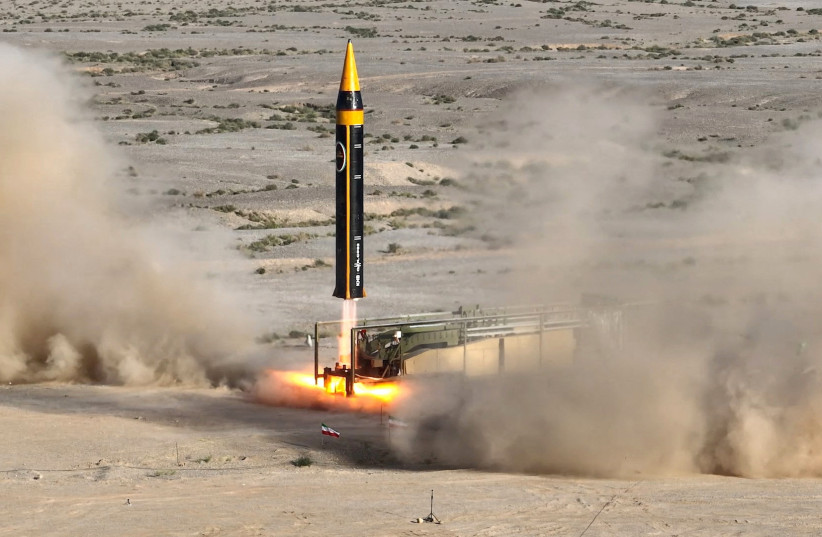
A new surface-to-surface 4th generation Khorramshahr ballistic missile called Khaibar with a range of 2,000 km is launched at an undisclosed location in Iran, in this picture obtained on May 25, 2023. (credit: IRANIAN DEFENSE MINISTRY/WANA/VIA REUTERS)A new surface-to-surface 4th generation Khorramshahr ballistic missile called Khaibar with a range of 2,000 km is launched at an undisclosed location in Iran, in this picture obtained on May 25, 2023. (credit: IRANIAN DEFENSE MINISTRY/WANA/VIA REUTERS)

In this current atmosphere, fewer countries would oppose an offensive on Iran, Amidror said.

That said, the international community wants to avoid a major regional war, which is almost guaranteed if Israel strikes Iran. Many countries want the problem of Iran to be resolved quietly without creating chaos in the region.

Will Israel strike Iran without US support?

One open question is whether Israel would choose to strike without US support.

“Without American backing, an Israeli strike would be a very complex gamble,” Citrinowicz said. “With such major ramifications of an offensive, coordinating such a strike with the US in advance is critical.”

Recent Israeli rhetoric suggests otherwise.

“If Israel will conclude that Iran is close to nuclear power, the threat is so big that it will not wait for international legitimacy,” Amidror said. “For years, the world did not help Israel, so Israel will have no choice.”

Earlier this year, the Israeli and US armies held a massive joint drill including simulated target strikes. But the Biden Administration has been unwilling to get further involved in the Middle East so far. The 2021 withdrawal from Afghanistan marked the beginning of a policy of decreased US involvement in the region.

“We will not be seeing American boots on the ground, which is likely the only thing that would impact Iranian decisions on its nuclear program,” Citrinowicz said.

Israel has expressed grave concern about the US’s progress toward negotiations with Iran. Whether Israel will follow through on its threats of a preemptive strike remains to be seen. As major ramifications are expected, Israel appears to be treading carefully before taking steps that would change the face of the Middle East.
 

Gallant: A war with Iran/Hizballah – the gravest challenge to Israel’s home front  in 75 years – DEBKAfile

June 7, 2023

Source: Gallant: A war with Iran/Hizballah – the gravest challenge to Israel’s home front  in 75 years – DEBKAfile

In all of Israel’s 75 years, its civilian population could face its most disastrous challenges ever from a potential war with Iran and/or its Lebanese proxy Hizballah, said Defense Minister Yoav Gallant on Monday, June 5. He spoke at the Home Front Command in Ramleh while visiting the IDF’s ongoing Firm Hand multi-front exercise.

Gallant first listened to the Home Front chief Maj. Gen. Rafi Milo’s rundown of the war preparations underway in the event of Iran and/or Hizballah enacting their most recent threats, especially since two military practice drills simulated Hizballah’s capture of Israeli civilian locations.

The most thoroughgoing preparations to meet these threats are afoot, the defense minister stressed.  The Home Front is required to maintain maximum readiness for any kind of emergency scenario. This successful endeavor would be the key to winning the day on all other fronts.

Rated the world’s most heavily armed non-state actor, Hizballah is estimated to have amassed between 130,000 and 150,000 rockets, the longest range of which can reach any part of Israel. Iran topped up this arsenal in the past year with precision missiles.

At drill for war with Iran and others, PM says IDF ‘can handle any threat on our own’ 

June 5, 2023

Source: At drill for war with Iran and others, PM says IDF ‘can handle any threat on our own’ | The Times of Israel

Security cabinet meets in underground command center for mock assessment, during military’s ‘Firm Hand’ multi-front war exercise focusing on northern frontier, Iran

Members of Israel's security cabinet convene for a mock assessment at the IDF's main underground command center in Tel Aviv, amid a major drill, June 4, 2023. (Hain Zach/GPO)

Members of Israel’s security cabinet convene for a mock assessment at the IDF’s main underground command center in Tel Aviv, amid a major drill, June 4, 2023. (Hain Zach/GPO)

Israel’s high-level security cabinet convened Sunday night at the military’s main operational command bunker in Tel Aviv to simulate decision-making by the political echelon during a potential multi-front war.

On May 29, the Israel Defense Forces launched the large-scale two-week drill across the country — dubbed Firm Hand — involving troops from the standing and reserve army, from nearly all units.

The drill has included the Air Force conducting simulated “strategic” strikes deep in enemy territory in an all-out war scenario, and the Navy carrying out mock offensive and defensive actions, according to a military source.

On Sunday, members of the security cabinet met at the IDF’s headquarters in Tel Aviv to participate in a mock assessment and the drill.

In remarks at the beginning of the meeting, Prime Minister Benjamin Netanyahu said: “We are confident we can handle any threat on our own,” in an apparent reference to the United States’ efforts to reach a diplomatic solution with Iran with regard to its nuclear program.

“The reality in our region is changing rapidly. We are not stagnating. We are adjusting our war doctrine and our options of action in accordance with these changes, in accordance with our goals which do not change,” Netanyahu said.

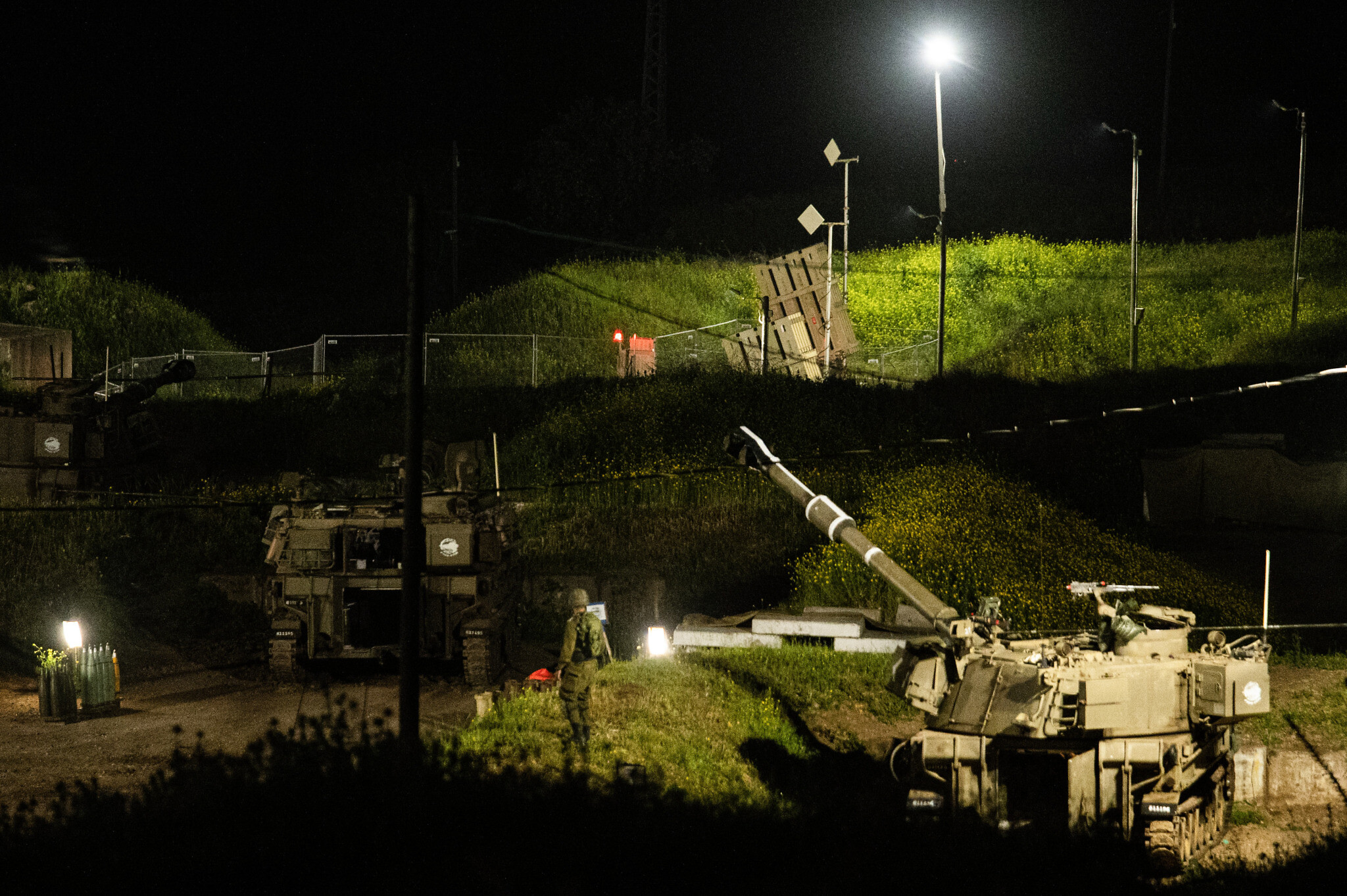
IDF Artillery Corps and an Iron Dome air defense system are seen near the border with Lebanon, in northern Israel, April 6, 2023. (Ayal Margolin/Flash90)

While the drill and the cabinet meeting were pre-planned, they came during escalated tensions over Iran’s nuclear program and Israeli warnings that a broad conflict could break out over the issue.

Tehran has been ramping up nuclear development since 2018, when the US unilaterally withdrew from a landmark pact, capping enrichment in exchange for sanctions relief.

Talks to revive the deal fell apart last year, but recent reports have indicated steps to possibly renew the diplomatic initiative, sparking Israeli concerns that a new deal could legitimize Iran’s nuclear activity and erase international support for potential military action.

Israel continued to warn against such an agreement last week, with Netanyahu, Defense Minister Yoav Gallant, and IDF chief Lt. Gen. Herzi Halevi adding to fevered saber-rattling already taking place between the countries.

At Sunday’s meeting, Netanyahu said Israel was “committed to acting against the Iranian nuclear program, against missile attacks on the State of Israel and against the possibility of the convergence of the arenas, what we call a multi-front campaign.”

“This requires us to consider, if it is possible to consider in advance, some of the key decisions the cabinet and the government of Israel will have to make together with the defense establishment… this is the purpose of the exercise,” he said.

“We are sure and confident that we can deal with any threat on our own, and also with other means,” he added.

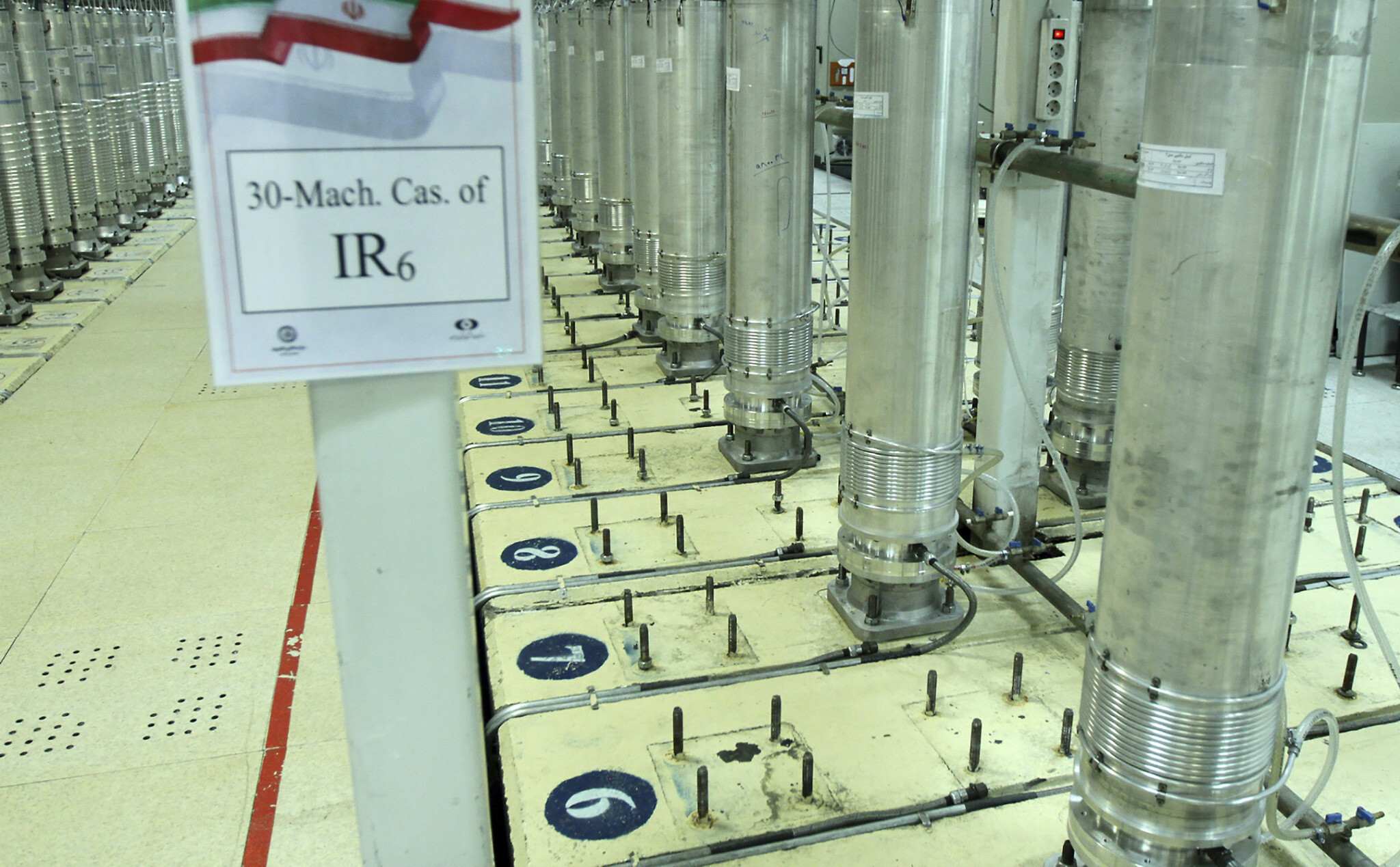
FILE – This photo released November 5, 2019, by the Atomic Energy Organization of Iran shows centrifuge machines in Natanz uranium enrichment facility near Natanz, Iran (Atomic Energy Organization of Iran via AP, File)

At the meeting, IDF officials briefed the members of the security cabinet on the mock war scenario, which is mostly focused on Israel’s northern frontiers with Lebanon and Syria, as well as Iran.

The IDF said that during the drill, troops would “practice handling challenges and sudden events on multiple fronts simultaneously.”

The IDF warned that there would be a noted increase in security forces and aircraft across the country during the drill.

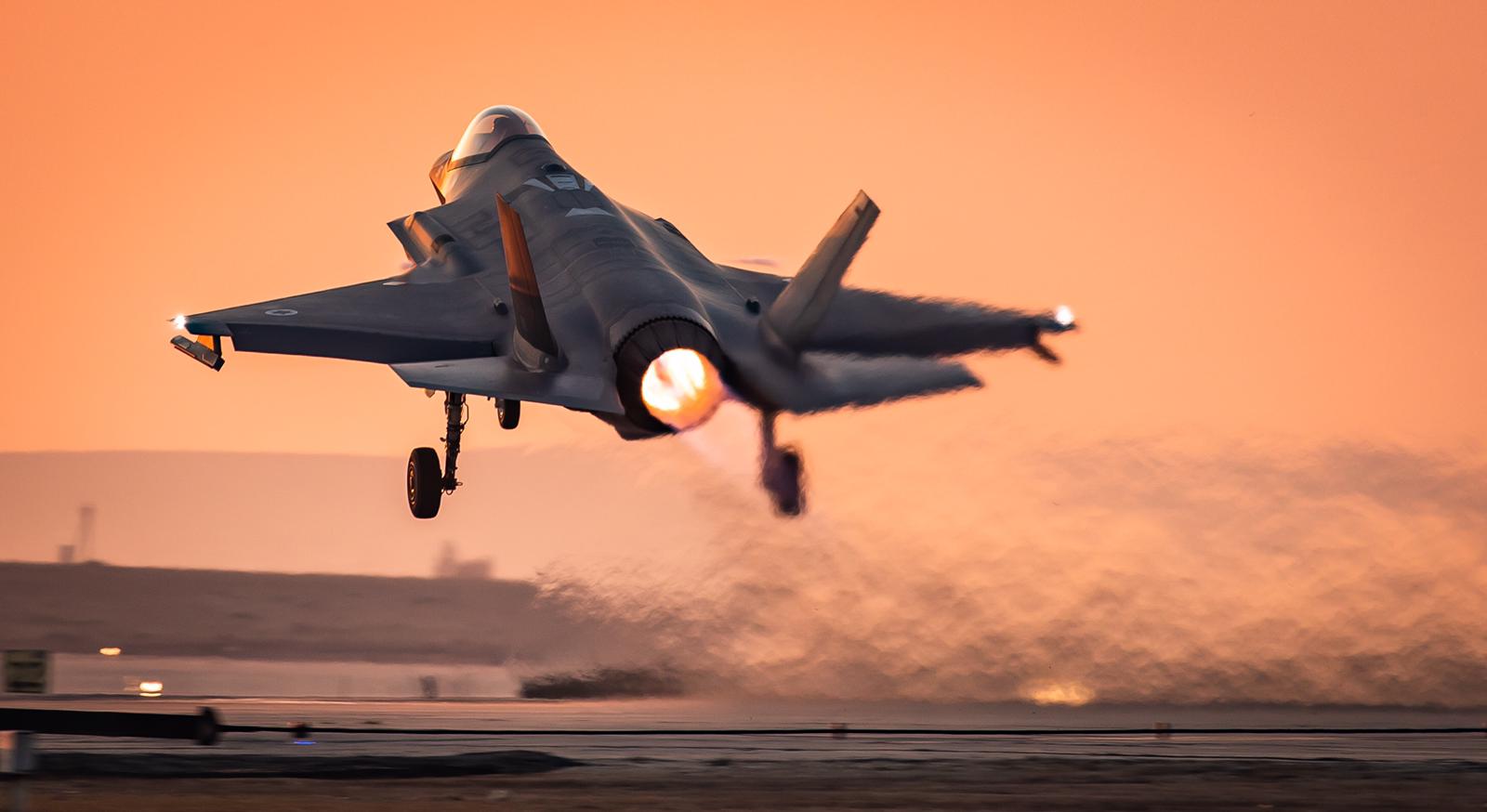
An F-35 fighter jet takes off during a surprise exercise, ‘Galilee Rose,’ in February 2021. (Israel Defense Forces)

Last year, the IDF held its largest drill in decades. The four-week-long exercise — called Chariots of Fire — also focused on sudden events erupting in multiple theaters at the same time, while mostly dealing with fighting the Iran-backed Hezbollah in Lebanon.

In light of the lack of progress regarding a return by Iran to a 2015 nuclear agreement with world powers, the IDF has ramped up efforts over the past two years to prepare a credible military threat against Tehran’s nuclear sites.

During the Chariots of Fire drill last year, dozens of Air Force fighter jets conducted air maneuvers over the Mediterranean Sea, simulating striking Iranian nuclear facilities.

With 142 deaths, Iran’s May executions highest in a month since 2015 – rights group

June 1, 2023

Source: With 142 deaths, Iran’s May executions highest in a month since 2015 – rights group | The Times of Israel

Iran Human Rights says 307 people have been put to death this year already, a rise of 75% over the same period in 2022</h24

Illustrative: In this picture taken April 16, 2011, and released by the semi-official Mehr News Agency, a blindfolded man convicted of armed robbery, kidnapping and slaying of two policemen waits to be hanged in public. (AP Photo/Mohammad Hadi Khosravi)

PARIS, France — Iran has executed over 300 people this year, with the rate in May during the current surge in hangings the highest monthly figure in the country since 2015, a rights group said on Thursday.

Norway-based Iran Human Rights (IHR) said at least 307 people have been executed in 2023, a rise of over 75 percent compared to the same period last year.

At least 142 people were executed in May, the highest monthly figure since 2015, meaning an average of over four people were hanged every day last month in the Islamic Republic, it added.

Campaigners accuse Iran of stepping up executions to strike fear into the population as the leadership moves to quell the protest movement that erupted in September.

Seven men have been hanged in cases related to the protests but activists say executions have surged in less high-profile cases, particularly over drug and murder convictions, with ethnic minorities disproportionately targeted.

“If the international community doesn’t show a stronger reaction to the current wave of executions, hundreds more will fall victim to their killing machine in the coming months.”

It said 59% of those hanged this year — 180 people — were executed for drug-related charges.

Over 20% of those executed in May — 30 people — were from the largely Sunni Baluch minority concentrated in the southeast of the country, it added.

The protests sparked by the death of Mahsa Amini, who had been arrested for allegedly flouting Iran’s dress rules for women, have abated somewhat in the last months but still continue sporadically.

Iran earlier in May hanged three more men in cases related to the protests, sparking international condemnation, and Amnesty International has warned at least seven more risk being put to death.

The Islamic Republic executes more people each year than any nation other than China, according to Amnesty.

Model Mahlagha Jaberi arrives for the screening of the film “The Old Oak” during the 76th edition of the Cannes Film Festival in Cannes, southern France, on May 26, 2023. (Photo by LOIC VENANCE / AFP)

Last week, Iranian model Mahlagha Jaberi attended the 76th Cannes film festival wearing a dress featuring a noose saying the stunt was to raise awareness of execution in her home country. Jaberi currently lives in the US.

Times of Israel staff contributed to this report.