Archive for March 2022

US, Israel ‘see eye to eye’ on Iran despite disagreements on nuke deal, says Blinken

March 27, 2022

Both countries determined ‘that Iran will never acquire a nuclear weapon,’ US secretary of state says in Jerusalem; Lapid emphasizes shared ‘vision of peace through strength’

By LAZAR BERMAN Today, 1:35 pm  

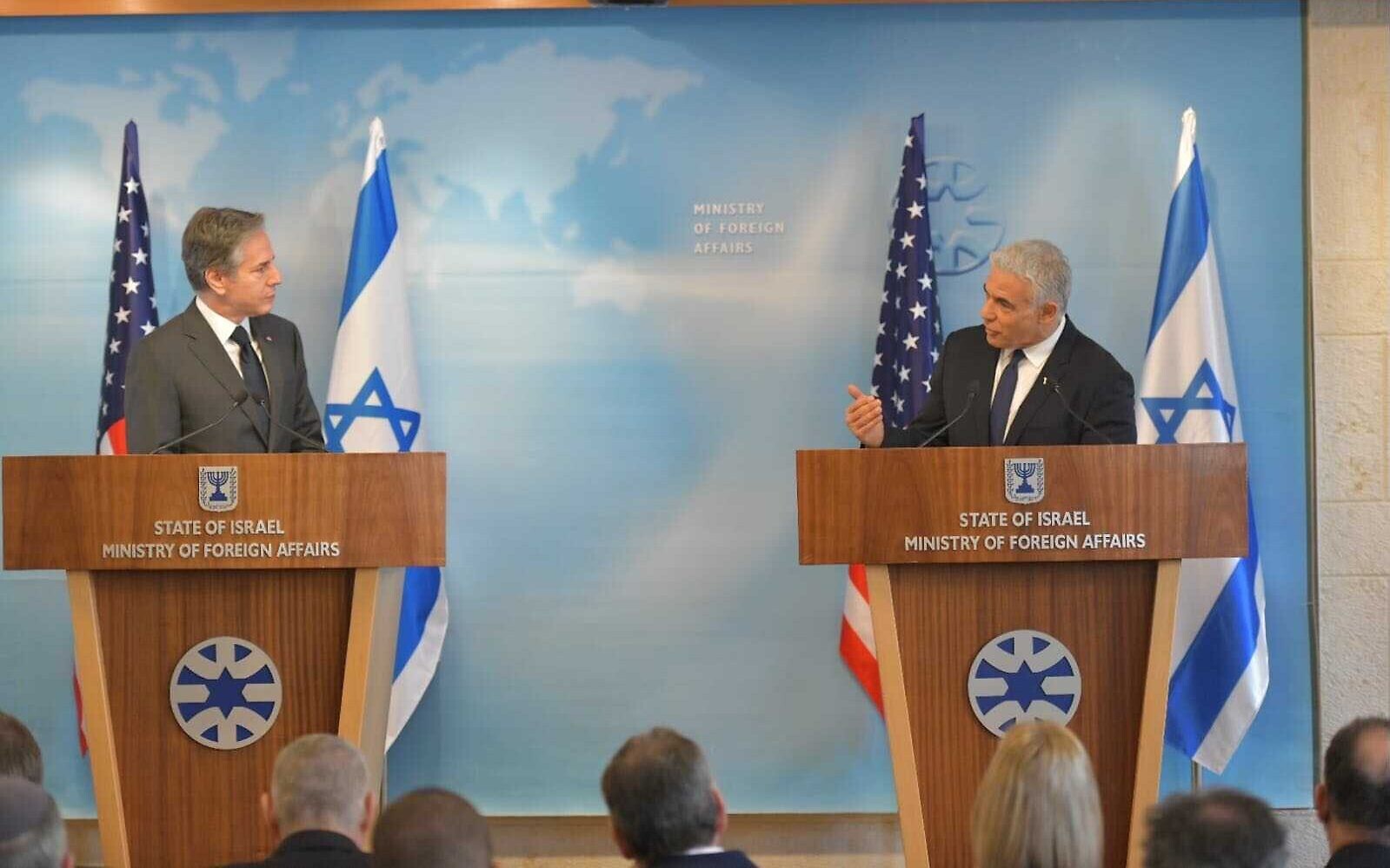
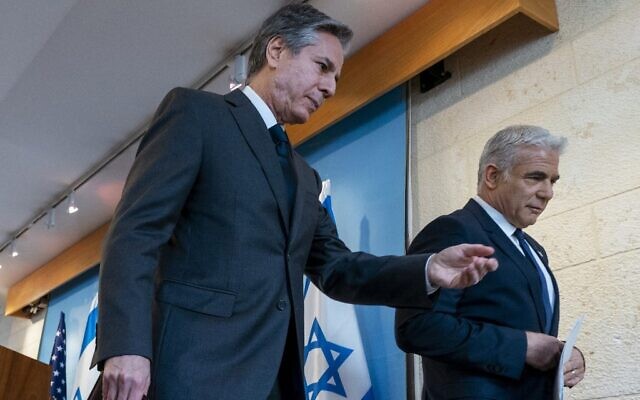
US Secretary of State Antony Blinken (R) and Foreign Minister Yair Lapid (L) at a press conference in Jerusalem, March 27, 2022 (Foreign Ministry)

The US and Israel are committed to ensuring that Iran does not acquire a nuclear weapon, US Secretary of State Antony Blinken said at a Sunday press conference in Jerusalem, as the allies acknowledged differences over negotiations with Tehran.

“When it comes to the most important element, we see eye to eye. We are both committed, both determined, that Iran will never acquire a nuclear weapon,” Blinken told reporters in Jerusalem alongside Foreign Affairs Minister Yair Lapid.

At the same time, he said that the Joint Comprehensive Plan of Action (JCPOA) was the best way “to put Iran’s nuclear program back in the box it was in,” as Lapid reiterated Israel’s “disagreements” with Washington over negotiations to revive the 2015 nuclear accord with Tehran.

Israel has firmly opposed the terms of the 2015 deal and has said that reactivating the original deal is insufficient to curb the Iranian threat.

Lapid noted that military and diplomatic strength “guarantees peace,” emphasizing that the US and Israel shared “a vision of peace through strength.”

Get The Times of Israel’s Daily Editionby email and never miss our top storiesNewsletter email addressGET IT

By signing up, you agree to the terms

He added that “Israel will do anything we believe is needed to stop the Iranian nuclear program. Anything. From our point of view, the Iranian threat is not theoretical. The Iranians want to destroy Israel. They will not succeed. We will not let them.”

“The world cannot afford a nuclear Iran,” Lapid said.

US Secretary of State Antony Blinken (L) walks by the side of Israel’s Foreign Minister Yair Lapid, following a joint press conference at the Foreign Ministry in Jerusalem, on March 27, 2022. (Jacquelyn Martin / POOL / AFP)

Blinken also condemned Iran-backed Houthi attacks on Saudi and Emirati civilians and infrastructure.

“Beyond its nuclear efforts, Iran continues to engage in a whole series of destabilizing activities,” Blinken said.

“The US will continue to stand up to Iran when it threatens us or when it threatens our allies and partners,” he said, noting the US was “fully committed to expanding cooperation through the Abraham Accords,” ahead of Sunday’s Negev Summit with foreign ministers from four Arab countries.

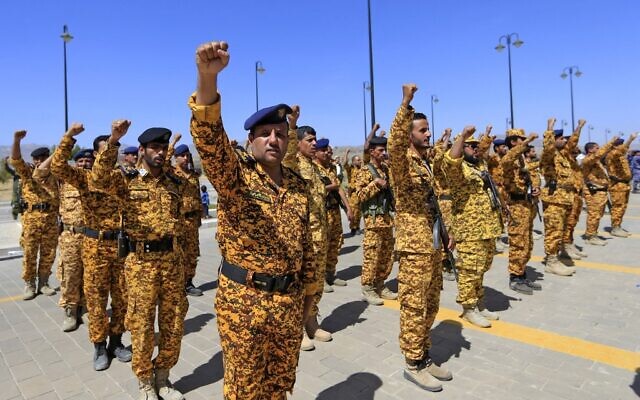
Forces loyal to Yemen’s Iran-backed Houthis take part in a mass funeral for fighters killed in battles with Saudi-backed government troops, in Yemen’s capital Sanaa, on April 8, 2021. (Mohammed Huwais/AFP)

He thanked Lapid for his leadership in finding new opportunities for the Abraham Accords and noted Israel’s efforts to mediate in the ongoing war in Ukraine.

“We greatly appreciate Israel’s strong repudiation of Russia’s aggression against Ukraine,” he said, adding that he appreciates Israel’s stated determination not to be used as a sanctions bypass.

Blinken was briefed by Israel’s senior expert on the issue before the press conference.

The top US envoy also praised Prime Minister Naftali Bennett’s mediation efforts in the conflict, and Israel’s Shining Star field hospital in Mostyska, western Ukraine.

A Ukrainian flag hangs at a schoolhouse that has been converted into a field hospital, in Mostyska, western Ukraine, March 24, 2022. (AP Photo/Nariman El-Mofty)

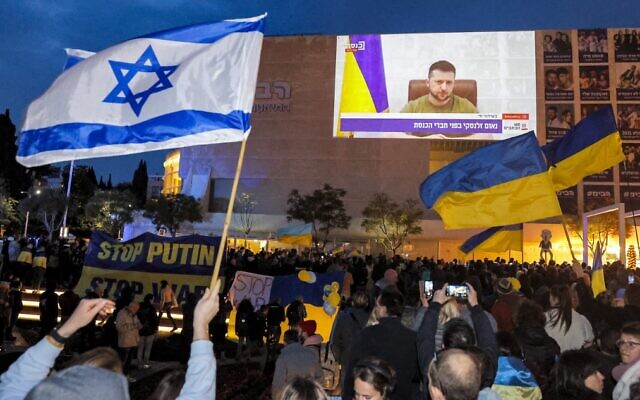
He said the people of Israel were standing with Ukraine, citing protests in Tel Aviv and the work of the United Hatzalah emergency service.

Blinken said he will discuss the effects of the Ukraine conflict in the region with regional partners at the upcoming Negev Summit. “Normalization [of Arab countries with Israel] is becoming the new normal,” he said.

He noted the US funding of Iron Dome system, and condemned last week’s stabbing attack in Beersheba.

Blinken added he will reiterate to Palestinian Authority President Mahmoud Abbas the Biden administration’s commitment to strengthening ties with the PA.

Demonstrators gather at Habima Square in Tel Aviv on March 20, 2022, to watch a televised video address by Ukraine’s President Volodymyr Zelensky. (Jack Guez/ AFP)

Earlier Sunday, Prime Minister Naftali Bennett said Israel was enjoying a period of good foreign relations.

“To anyone who has not noticed – Israel’s foreign policy is in a good period,” he said at the start of the weekly cabinet meeting. “Israel is an important actor on the world and regional stage. We are cultivating old ties and building new bridges.”

He said “the old peace” — with Egypt — is meeting “the new peace” of the Abraham Accords.

Also on Sunday, US special envoy Robert Malley said the United States will maintain sanctions on Iran’s Revolutionary Guards even if there is a deal to limit the country’s nuclear program.

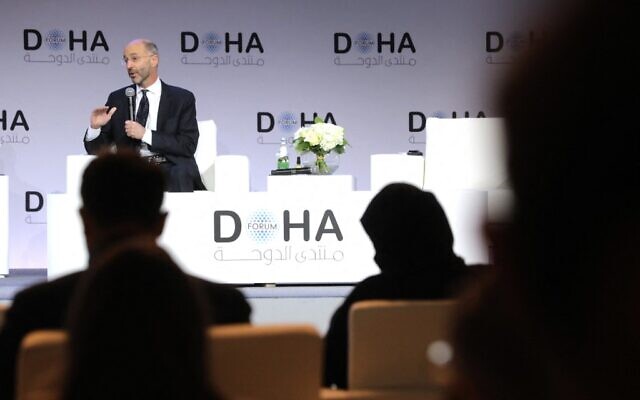
“The IRGC will remain sanctioned under US law and our perception of the IRGC will remain,” Malley told a conference in Doha, despite Iran’s demands that the Corps be taken off a US terrorist list as a condition for a revived nuclear accord.

US Special Representative for Iran, Robert Malley, participates in a panel at the Doha Forum in Qatar’s capital on March 27, 2022. (MARWAN TAHTAH / MOFA / DOHA FORUM)

“We’re pretty close,” Malley said of the negotiations, but added: “We’ve been pretty close now for some time. And I think that tells you all you need to know about the difficulty of the issues.”

Bennett and Lapid had previously said: “The attempt to delist the IRGC as a terrorist organization is an insult to the victims and would ignore documented reality supported by unequivocal evidence.”

Over the weekend, the European Union’s foreign policy chief said that a deal with Iran will likely be renewed “in a matter of days.”

Times of Israel staff and Agencies contributed to this report

Negev Summit shows Israel’s new legitimacy, and the common imperative to tackle Iran

March 27, 2022

There’s symbolism aplenty in the gathering of regional ministers at the home of Israel’s founding prime minister — and an urgent practical agenda

By DAVID HOROVITZ 26 March 2022, 10:10 pm  

Logo for the Negev Summit, March 27-28, 2022. (Courtesy)

The speed with which the Sunday-Monday “Negev Summit” has been pulled together, the storied location, and the expanding list of participants, combine to underline the significance of this unprecedented get-together of foreign ministers in Israel.

Being hosted by Foreign Minister Yair Lapid at Sde Boker, the Negev home and burial place of Israel’s founding prime minister David Ben-Gurion, the gathering at so resonant a locale constitutes further dramatic symbolic confirmation of Israel’s legitimacy and regional importance by Abraham Accords partners Morocco, Bahrain, and the United Arab Emirates.

Their foreign ministers will, simply by their presence, be upgrading relations with the country Ben-Gurion was so central to establishing. There is even talk of a photo opportunity at Ben-Gurion’s grave.

Joined by visiting United States Secretary of State Antony Blinken, Israel’s new regional allies will also be gathering along with the foreign minister of the country’s first peace partner, Egypt, for formal and less formal meetings, consultations, and meals. These talks come just a week after Egypt’s President Abdel-Fattah el-Sissi hosted Prime Minister Naftali Bennett and the UAE’s Crown Prince Mohammed bin Zayed al-Nahyan for a markedly warm and well-publicized summit of his own. Efforts have been ongoing to add Jordan’s foreign minister to the list — in vain, as of Saturday night.

In fact, the Negev Summit coincides with a planned visit to Ramallah by Jordan’s King Abdullah, designed to help find ways to alleviate Israeli-Palestinian tensions in the run-up to the fraught Ramadan period. Blinken, who will be holding talks with Israeli leaders and with Palestinian Authority President Mahmoud Abbas Sunday before he heads south to Sde Boker, would doubtless have been pleased to see not only Jordan but also Abbas at the Negev Summit.

Get The Times of Israel’s Daily Editionby email and never miss our top storiesNewsletter email addressGET IT

By signing up, you agree to the terms

But Bennett, opposed to negotiating with the PA president, would have resisted this. Abbas’ standing among the Palestinians, already low, would hardly have been strengthened by his attending a diplomatic festival somewhat honoring Israel’s founding premier. And, in any case, the Palestinian leader is largely irrelevant to the agenda that is bringing these ministers together.

Prime Minister Naftali Bennett at the grave of former prime minister David Ben-Gurion, in Sde Boker, on November 10, 2021. (Haim Zach/GPO)

For Israel’s boosted regional legitimacy is central not merely to the location of this summit, but to its core focus — the effort to muster an effective alliance against the common threat, Iran.

As with the Abraham Accords themselves, regional heavyweight Saudi Arabia will be absent from the Sunday-Monday proceedings but present in spirit, and potent behind-the-scenes. Jerusalem and Riyadh, though not formally allied, are working to bolster regional unity against Tehran — not rhetorically but practically, via intelligence sharing, the development of regional missile alert and defense systems, and more.

Abu Dhabi Crown Prince Mohammed bin Zayed al-Nahyan (R), Egyptian President Abdel-Fattah el-Sissi (C), and Prime Minister Naftali Bennett meet in Sharm el-Sheikh, March 22, 2022. (Spokesman of the Egyptian Presidency)

Behind the handshakes and the smiles, it is the US secretary who may find himself something of the awkward guest at this extraordinary gathering. He will be bringing news of the progress toward a revived P5+1 nuclear deal with Iran, designed to rein in the ayatollahs’ rogue nuclear weapons program in return for the lifting of sanctions and, possibly, the delisting of Iran’s global-troublemaking Islamic Revolutionary Guard Corps as a terrorist entity.

Bennett is a strident opponent of a revived deal; Lapid has said he would rather the US walk away from the talks than strike a bad deal. The other participants in the Negev Summit, and the Saudis watching from home, share a deep concern that Iran will be both empowered, emboldened, and enriched by the deal that is taking shape, and a realization that the US has all-too-many other global challenges to grapple with.

It was, of course, the US, and specifically the Trump administration, that brought the UAE, Bahrain, and Morocco together with Israel in the Abraham Accords, a process that has helped modern Israel gain greater recognition than ever before in this region.

The Negev Summit signals that these new partners are now working together more closely than ever, simply because they have to — in part because they know that the US now has other preoccupations and priorities, and fear that it underestimates the dangers posed by Iran.

Electronic Warfare System – Aerospace & Defense Technology

March 22, 2022
Israel Aerospace Industries (IAI)
Ben Gurion International Airport, Israel
+972-3-9358509
www.iai.co.il 

Israel Aerospace Industries (IAI) recently unveiled the Scorpius family of electronic warfare (EW) systems. Scorpius is the first electronic warfare (EW) system in the world capable of simultaneously targeting multiple threats, across frequencies, and in different directions.

Scorpius is based on the Active Electronically Scanned Array (AESA) technology, which provides a breakthrough in EW performance – enabling a new generation of electronic warfare capabilities.

Scorpius N (naval) is an EW system dedicated to defending ships against advanced threats.

With AESA’s multi-beam capability, Scorpius can simultaneously scan the entire surrounding region for targets and deploy narrowly focused beams to interfere with multiple threats across the electromagnetic spectrum. The system is able to target a range of threats, including: UAVs, ships, missiles, communication links, low probability of interception (LPOI) radars, and more. Scorpius effectively disrupts the operation of their electromagnetic systems, including radar and electronic sensors, navigation, and data communications.

Scorpius’ technological breakthrough is characterized by unprecedented receiver sensitivity and transmission power (ERP), far exceeding those of legacy EW systems. This allows Scorpius to detect multiple threats, of different kinds, simultaneously, from dramatically increased distances, and to address each threat with a customized response.

Scorpius is capable of operating across multiple domains including:

Ground: Scorpius G (ground) is a ground-based EW system designed to detect and disrupt ground- and airborne threats. Scorpius-G is a mobile system that can be quickly deployed by vehicle. Scorpius G represents a new category of air defense systems: “Soft-kill” air defense, which creates an electronic dome of protection above a wide geographic sector to neutralize a broad range of modern threats.

Naval: Scorpius N (naval) is an EW system dedicated to defending ships against advanced threats in the marine arena, including over-the-horizon anti-ship cruise missiles, unmanned combat aerial vehicles (UCAV), and airborne imaging radars. Scorpius’ extremely high range provides early detection and targeting of threats, which is essential for effective protection in the naval domain.

Air: Scorpius SP – a self-protection pod for combat aircraft, and the Scorpius SJ, a standoff jammer that disrupts enemy aerial and ground-based electromagnetic operations across a vast sector.

Training: Scorpius T (training) provides EW training for pilots. Scorpius-T can emulate a variety of modern air-defense systems, simultaneously, from a single platform. Its advanced emulation capabilities support training for fifth-generation aircraft. Scorpius T officially made its debut during the international air force exercise Blue Flag 2021.

According to Adi Dulberg, General Manager, Intelligence Division, IAI: “The modern battlefield depends on the electromagnetic domain for sensing, communications, and navigation. Protecting the use of the electromagnetic domain for our forces, while denying its use by the enemy, have become mission-critical for success in combat and for ensuring the superiority of our forces in the field.”

This Isn’t Obama’s Iran Deal. It’s Much, Much Worse

March 22, 2022

Whoa, worse than Obama. This doesn’t sound good.

https://www.tabletmag.com/sections/news/articles/this-isnt-obamas-iran-deal-its-much-much-worse

The last thing the world needs is another nuclear-armed dictatorship flush with cash and attacking its neighbors. But that’s what President Biden and his Iran envoy Robert Malley are creating in the deal they are about to close in Vienna, according to career State Department sources.

Anyone seeking to gauge the imminent outcome of the international talks over Iran’s nuclear program being held in Vienna should take a look at reports from late January that three top U.S. diplomats had quit—largely in protest over the direction set by U.S. Special Envoy for Iran Robert Malley, who serves as the U.S. government’s chief negotiator.

Having served for two years in former Secretary of State Mike Pompeo’s Iran Action Group, I knew that this development was tantamount to a public cry for an intervention. Such resignations—not of conservative dissenters, but of career staff and President Joe Biden’s own political appointees—should have been cause for Biden or Secretary Antony Blinken to recall Malley and investigate. Their failure to do so is a sign either of a troubling lack of attention to the talks, or else the possibility that Malley—who served in the same capacity under President Barack Obama when the first Iran deal, the Joint Comprehensive Plan of Action (JCPOA), was originally negotiated and signed—has been given a free hand to negotiate whatever he wants, as long as he gets Iran to sign.

Evidence for the latter view can be gleaned from the fact that Blinken has reneged on his pledge that his Iran negotiating team would have “a diversity of views.” Instead, he has let Malley continue to concede issue after issue in Vienna. Multiple career officials view these capitulations as so detrimental to U.S. national security that they contacted me requesting that I rapidly share details of these concessions with Congress and the public in an effort to stop them.

Reports out of Vienna indicate that a deal could occur within the next few days. While some issues are still being ironed out—such as whether the United States will grant Russia immunity from any economic sanctions relating to Iran, as Russian Foreign Minister Sergei Lavrov has publicly demanded—the details that follow have been conveyed to me as finalized. My subsequent discussions with foreign diplomats—including those directly involved and those outside but close to the negotiations—confirmed their claims. Ambassador Mikhail Ulyanov, who led negotiations on behalf of Russia, has crowed that “Iran got much more than it could expect. Much more,” and bragged about how Russia teamed up with China and Iran to get dozens of wins over the United States and European negotiating positions.

The list of concessions that follows is long, detailed, disturbing, but also somewhat technical. But this much is clear to me: The deal being negotiated in Vienna is dangerous to U.S. national security, to the stability of the Middle East, and to the Iranian people who suffer most under that brutal regime. The lack of evidence to justify a removal of U.S. sanctions is illegal, and the deal that will be foisted upon the world without the support of Congress will be illegitimate. This deal will not serve U.S. interests in either the short or long term.

With Robert Malley in the lead, the United States has promised to lift sanctions on some of the regime’s worst terrorists and torturers, on leading officials who have developed Iran’s WMD infrastructure, and has agreed to lift sanctions on the Islamic Revolutionary Guard Corps (IRGC) itself. In exchange, Iran will receive fewer limitations than those imposed under the JCPOA, and the restrictions on its nuclear program will expire six years sooner than under the terms of the old deal. And that’s just the beginning.

The Biden administration is preparing to end sanctions under Executive Order (E.O.) 13876, known as the Supreme Leader’s Office E.O., as soon as the deal is finalized. This would lift sanctions on nearly all of the 112 people and entities sanctioned under that authority, even if they were sanctioned under other legal authorities as well. This move is significant because the United States has used this authority to sanction some of the most evil people you can possibly imagine. Malley and his Russian go-betweens in Vienna have agreed that these people should now be free to roam around the world despite their murderous pasts, unshackled from any restraints on their financing, and plotting new terror attacks.

If that sounds like an exaggeration, believe me: It isn’t. Let’s start with the terrorists, like Mohsen Rezaei, who was involved in the AMIA bombing in Argentina in 1994 that killed 85 people when he was commander-in-chief of the IRGC. Argentine authorities issued international warrants for his arrest, and he remains on Interpol’s Red Notice. Equally culpable in the AMIA bombing is Ali Akbar Velayati, who today serves as a senior adviser to Supreme Leader Ali Khamenei. He was charged as being one of the “ideological masterminds” behind the attack. He also committed acts of terror in Syria, where he helped the Iranian regime extend credit lines to the brutal Assad regime. Under the nuclear impending deal, both Rezaei and Velayati would be removed from U.S. sanctions lists.

The victims of the Iranian regime span every single continent, but the terror suspects being desanctioned by the United States in particular have American blood on their hands—particularly IRGC Brigadier General Hossein Dehghan, who led IRGC forces in Lebanon and Syria when Hezbollah bombed the Marines compound in Beirut that killed 241 U.S. service members, 58 French soldiers, and left hundreds more wounded.

Then there are the men like Ebrahim Raisi, who now reports to Supreme Leader Khamenei with the misleading title of president. Raisi participated in and ordered the execution of around 5,000 Iranians in the 1988 “Death Commissions” as a judge overseeing sham trials—including of young children—that typically lasted only a few minutes before guilty verdicts and death sentences were delivered. Raisi’s victims were loaded by forklifts in groups of six onto cranes and hanged every 30 minutes.

One of the few survivors “spared” was a woman who was taken to a torture chamber instead of to the crane on account of her pregnancy. She was repeatedly lashed and tortured by several men, and later said she remembered each of their faces, which were etched in her mind. She could not forget that of one young and callous man in particular: Ebrahim Raisi. Under the new nuclear deal, U.S. sanctions imposed against Raisi will be lifted.

The deal also lifts sanctions (which I was personally involved in imposing) against Ahmad Jannati, one of the regime’s most powerful and brutal clerics. Jannati is primarily responsible for rigging the country’s elections as chairman of the Guardian Council and Assembly of Experts. But in his spare time, he leads massive rallies in “Death to America/England/Israel” chants. Jannati routinely pushes for the regime to kill protesters. “I thank the judiciary chief for executing two protesters,” he said in 2010 in the aftermath of the Green Movement, “and urge him to execute others if they do not give up such protests.” That fervor has not changed since the early days of the regime. When Jannati was told a prison in Khuzestan province was filling up with dissidents, he volunteered to go serve there as a “judge.” He proudly recounted: “I got busy working … for there was some doubt whether we should execute them all or not.”

Then there is their master, Khamenei himself, who is ultimately responsible for every act of terror and murder committed by the Islamic Republic of Iran. We know that Khamenei has personally ordered the massacre of Iranians by his security forces. In November 2019, as brave Iranians took to the streets to protest the 40 years of corruption and oppression at the hands of the clerics, Khamenei assembled his top security team together and told them: “The Islamic Republic is in danger. Do whatever it takes to end it. You have my order.” In the ensuing days, about 1,500 Iranians were killed by the regime’s brute squads, including dozens of children and hundreds of women. This mass murderer will also be free of sanctions.

One of the most challenging responsibilities I had in the State Department was directing the human rights portfolio. For two years, I was in charge of documenting massacres like the one that Khamenei ordered, combing through biographies and photos of torture victims, including children, with bullet holes in their heads. I hope to never see such things again, but I fear that because of this deal, we all will.

Sometimes, in the day or two after the United States placed sanctions on such men, I would get a phone call or email from an Iranian who lost a loved one because of them. Many said it was the first time in years that they felt they had received a modicum of justice—that their pain had been heard in Washington—and they profusely thanked the United States. Sanctions are not merely economic, political, or diplomatic tools—they speak truth to evil.

If you hadn’t heard of such crimes before, it’s mostly thanks to a man named Javad Zarif, who served as the regime’s chief propagandist from 2013-2021. He had the misleading title of foreign minister, but that wasn’t his role in the regime. Zarif had little power to negotiate deals or set the foreign policy of the regime—that’s the IRGC’s job—so he was tasked with fluffing reporters and think tankers in Europe and the United States in the hopes of deceiving them about the regime’s true nature and radical intentions.

He also readily defended the regime’s executions of gay people. In 2019, Zarif was asked by a brave German reporter, “Why are homosexuals executed in Iran because of their sexual orientation?” “Our society has moral principles,” Zarif responded, “and we live according to these principles. These are moral principles concerning the behavior of people in general. And that means that the law is respected and the law is obeyed.” In plain language, Zarif was covering up for the fact that his regime has executed thousands of gay Iranians—between 4,000 and 6,000 according to some estimates. Zarif’s involvement in the regime’s international terror apparatus earned him U.S. sanctions in 2019. Those will be gone, too.

But the pending nuclear deal doesn’t just lift sanctions on people who come and go from power. This deal lifts sanctions on the various economic entities that fuel the regime’s machinery of repression. Most notably, it would lift sanctions on Khamenei’s personal slush funds known as “bonyads,” including Astan Quds Razavi and the Execution of Imam Khomeini’s Order, which confiscated houses and billions of dollars from political dissidents and religious minorities to enrich Khamenei and his goons. Also free from restrictions will be the Bonyad Mostazafan, a massive conglomerate that systematically confiscated property from Jews and Bahai’s after 1979. Bonyad Mostazafan is enmeshed with the IRGC and served as a corruption network used to enrich top Iranian terrorists. All these groups and men have been sanctioned under E.O. 13876, the Supreme Leader’s Office sanctions authority, which the White House is preparing to end.

It’s important to note here that the Supreme Leader’s Office EO is in no way related to Iran’s nuclear program, and the removal of these sanctions under a so-called “nuclear deal” is a farce. The Trump administration lawyers who drafted this executive order were quite clear when we released it in 2019: It was a response to actions taken by Iran and its proxies to destabilize the Middle East, promote international terrorism, and advance Iran’s ballistic missile program. It was issued in response to Iran’s attack against U.S. military assets and civilian vessels.

The EO’s impending repeal makes clear that what Biden and Malley have in mind is not merely, or even mainly, a “nuclear deal” with Iran—it is an appeasement agreement that unshackles the Islamic Republic from any significant economic restrictions, regardless of whether it will enrich the regime’s apparatuses of terror.

Sanctions will be lifted on huge swaths of the regime’s economic and financial arms—close to 40 major entities—that support Iran’s terror, repression, and WMD infrastructure. These sanctions have not been “inconsistent with the JCPOA,” which is the justification that Blinken and Malley have claimed as justification for their repeal. The administration is lifting sanctions on economic arms of the Mehr Eqtesad network and Bonyad Taavon Basij, for example, which directly funds the Basij Resistance Force that recruits and trains child soldiers forced into combat.

The U.S. is not lifting sanctions on the Basij itself (which was the security entity responsible for killing most of the 1,500 Iranians in November 2019) because Iranian negotiators didn’t particularly care—they just wanted sanctions on the funding mechanisms lifted because that’s what actually matters. And Malley obliged. While serving as the mailed fist of the regime’s repression and brutalization of its own people, the Basij play no role whatsoever in Iran’s nuclear program.

Sanctions will also be lifted on the Central Bank of Iran (CBI) and the National Development Fund (NDF), which were sanctioned under counterterrorism authorities for providing billions of dollars to the IRGC, the Quds Force, and Hezbollah. The CBI and NDF were sanctioned after Iran brazenly attacked energy infrastructure in eastern Saudi Arabia in September 2019, an act of war. These organizations still fund terrorism.

The deal will also lift sanctions on the National Iranian Oil Company (NIOC) and the National Iranian Tanker Company (NITC) that fund the Quds Force, which under Qassem Soleimani’s leadership was directly responsible for killing hundreds of thousands of Syrians and Iraqis and for the death of at least 603 Americans in Iraq from 2003-2011.

The Central Bank, NDF, NIOC, and NITC were all sanctioned under counterterrorism authorities approved by career interagency lawyers, including from the Department of Justice and Department of the Treasury. These sanctions came from a rigorous interagency process that ensured we would not impose them haphazardly; but once such a determination is made, they are not supposed to be lifted until it can be proven the sanctioned entities longer support terrorism. To be clear: They are. But Malley apparently found a way to badger and bully the career lawyers into submission so that these terror financiers will now be free from sanctions, too.

Perhaps most troubling is Malley’s persistent attempt to remove sanctions on the IRGC, which has plotted and carried out terrorist attacks in 35 countries around the world. As Pompeo disclosed last year, the IRGC is currently providing safe haven and logistical support for al-Qaida inside Iran. When Malley initially made an interagency request to remove the IRGC from the State Department’s Foreign Terrorist Organization list, he met severe resistance from startled career officials across government. Nevertheless, he persisted.

Instead of demanding that the Iranians cease conducting and supporting terrorism, Malley obliged repeated Iranian entreaties to remove the IRGC’s terror designation. At first, he proposed that it could be exchanged for an Iranian commitment to future talks on the terrorism and “regional issues” files. The Iranian negotiators and their Russian facilitators couldn’t believe their luck, and asked for more. They demanded that the concession must be unconditional, and that no future talks would be acceptable. Of course, a promise of future talks is all but meaningless given the American capitulation in Vienna. Either way, a foreign diplomat recently confirmed to me that the IRGC Foreign Terrorist Organization delisting has indeed been finalized.

So what have we received in exchange for all these concessions to the most vile men and institutions in Iran? Has the regime come clean about its clandestine nuclear activities or committed to stop nuclear enrichment? Has the regime committed to stop supporting terror and taking American hostages? The short answer on all counts is no.

The JCPOA’s sunset clauses have not been extended at all. Some JCPOA restrictions, like the United Nations arms embargo on Iran for importing or exporting conventional weapons, have already expired. All meaningful restrictions will expire over the next nine years. Iran will not make any concessions on its ballistic missile activity, its terrorist activity, its support for proxy groups, or its hostage-taking from the United States and other countries. But it will get money anyways—lots of it.

Iran is set to get access to a massive windfall of cash: My latest estimate (derived from figures declassified during my tenure at the State Department) is $90 billion in access to foreign exchange reserves, and then a further $50-$55 billion in extra revenue each year from higher oil and petrochemical exports, with no restrictions on how or where the money can be spent.

Personally, the most troubling transfer of funds will be the $7 billion ransom payment the United States is preparing to pay for the release of four Americans from an Iranian jail. Now, let me be clear: I would be extremely glad to bring these Americans back home safely as quickly as possible. They are innocent victims who, along with their families, have suffered unjustly for far too long. But make no mistake: Biden’s payment will only supercharge Iran’s hostage-taking industry.

After Obama paid Iran $1.7 billion for four Americans back in 2016 (including $400 million in literal pallets of cash), Iranian clerics and generals bragged about it for years—and some suggested that taking hostages could henceforth serve as a sound method for balancing Iran’s budget. Sadly, if Biden goes through with this deal, that could well be the case again. Seven billion dollars would amount to around one-third of Iran’s annual terror and security budget, fueling even more violence around the world and against Iranians. At prices like these, more Americans are sure to land in Evin Prison.

Each day, I learn more about the terrible deal coming out of Vienna. The degree of capitulation happening there is staggering, especially for those of us who worked in the technical trenches to impose these sanctions and monitor Iran’s nuclear program for years. That’s why nonpartisan career staffers are desperately asking for more oversight from Congress, even though Malley and the administration designed the negotiation process to take place without any congressional (and thus democratic representative) input. Administration officials have tried to make the case to lawyers internally that they are merely going back to the original JCPOA, and therefore do not need to submit the deal to Congress under the 2015 Iran Nuclear Agreement Review Act (INARA) signed into law by the president.

That is not true. The Biden administration is not going back to the JCPOA. It has negotiated an entirely different agreement. And I can assure you it is much, much worse than the original.

Israel decimated Iranian drone fleet in February airstrike inside Iran – report

March 15, 2022

Attack said to destroy hundreds of drones near Kermanshah, prompting this week’s revenge missile fire at, on site alleged to have launched UAV-destroying mission

By TOI STAFFToday, 8:45 am  

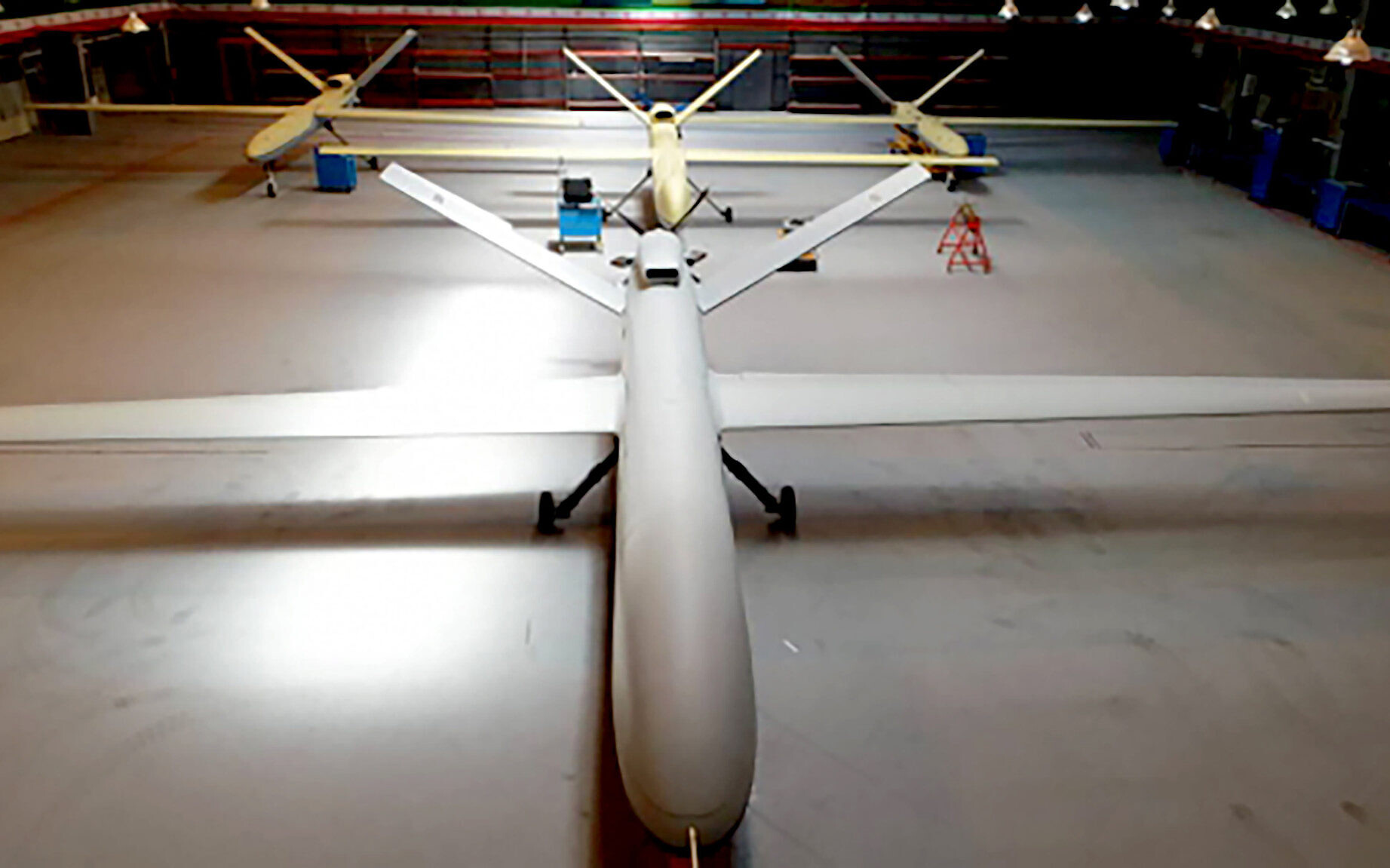
In this photo released on May 21, 2021, by Sepahnews, the website of the Iranian Revolutionary Guard, a new drone, called Gaza, is displayed in an undisclosed location in Iran. (Sepahnews via AP)

A UAV attack in the middle of February reportedly caused major damage to Iran’s drone fleet, prompting Iran to fire missiles this week at a site in Iraq that it claims was an Israeli intelligence base.

Hundreds of drones are assessed to have been destroyed in the attack on an airbase near Kermanshah, in Western Iran, Haaretz reported Tuesday, without citing sources for the extent of the damage.

While Israel has acknowledged it targets the bases of Iranian forces and allied terror groups in Syria, as well as arms shipments believed to be bound for Iran-backed groups in the region — and is believed to have carried out covert actions inside Iran — an airstrike on Iranian territory would be very unusual.

Tehran officials have blamed Israel for the attack, though neither country had made any mention of the incident until this week. Israel has not commented at all on the alleged strike.

On Sunday night, the Lebanese television station Al Mayadeen, which is linked to the Iran-back Hezbollah terror group, reported on the Kermanshah attack for the first time.

Get The Times of Israel’s Daily Editionby email and never miss our top storiesNewsletter email addressGET IT

By signing up, you agree to the terms

Citing “reliable sources,” it said there were six drones that took part in the raid and claimed they were launched from Iraqi Kurdistan.

The station said it was because of the drone attack that Iran fired missiles at a site near the US consulate in Erbil overnight Saturday. Iran has said the target of the missiles was a location being used by Israeli intelligence and, according to Al Mayadeen, it was from there that the February drone attack was launched.

The Lebanese report also claimed that as a result of the missile attack on Erbil, four Israeli officers were killed and seven more injured, four of whom were in a critical condition.

The US State Department has condemned the strike, which hit near a sprawling American consulate, and Kurdish authorities have denied the area was being used by Israel.

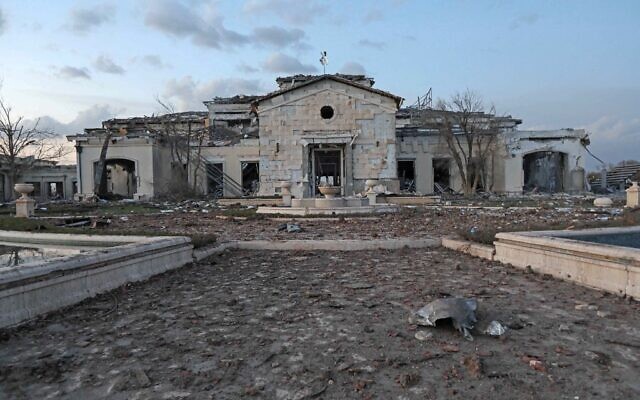
A general view shows a damaged mansion following an overnight attack in Erbil, the capital of the northern Iraqi Kurdish autonomous region, on March 13, 2022 (SAFIN HAMED / AFP)

Israel has repeatedly warned that Iranian drones are a significant threat to the region — especially as Tehran arms proxies stationed along Israel’s borders. Military officials said last week that Iran’s “UAV terror” is a new and global issue, accusing Tehran of directly attacking both military and civilian targets in the Middle East.

The IDF also published footage of what it said were intercepts of Iranian drones.

The timing of the IDF’s publication was thought to be related to the ongoing, and reportedly near-completed, nuclear talks in Vienna.

Negotiators on all sides have signaled in recent days that a potential agreement to revive the deal, known formally as the Joint Comprehensive Plan of Action, is close. Israel has highlighted the fact that the emerging nuclear deal does not address the drone issue.

The IDF believes Iran is attempting to arm all of its proxies in the region — in Syria, Lebanon, Iraq, and Yemen — with hundreds and even thousands of UAVs, in addition to providing military training.

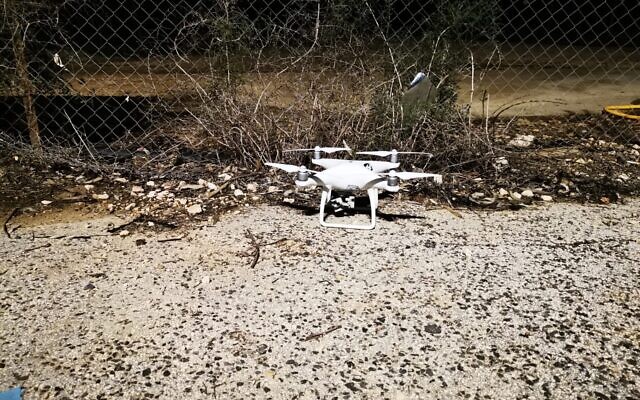
In this image released by the military on February 17, 2022, a drone belonging to Lebanon’s Hezbollah terror group is seen after being downed by troops on the border with Lebanon. (Israel Defense Forces)

Military officials say the IDF is always on full alert to protect Israel’s skies from drones. However, last month Israeli air defenses failed to down a small drone that entered the country from Lebanon, which Hezbollah claimed responsibility for launching.

A series of incidents over the past few months indicate an escalation in the shadow conflict between Israel and Iran.

A cyberattack on Monday took down Israeli government websites for over an hour on Monday evening. Israeli officials did not immediately say who was behind the attack, but some media reports were quick to point the finger at Iran.

It came as Iranian state television reported that the paramilitary Revolutionary Guard arrested members of a “network” working for Israel that planned to sabotage Iran’s major underground nuclear facility at Fordo

Iran fires missiles at Irbil US consulate; Tehran: ‘Secret Israeli bases’ targeted

March 13, 2022


No casualties after several projectiles fired toward building in Iraqi Kurdistan; Iran media claims without evidence that Israel operating sites there and they were target

By AGENCIESToday, 2:52 amUpdated at 8:22 am  

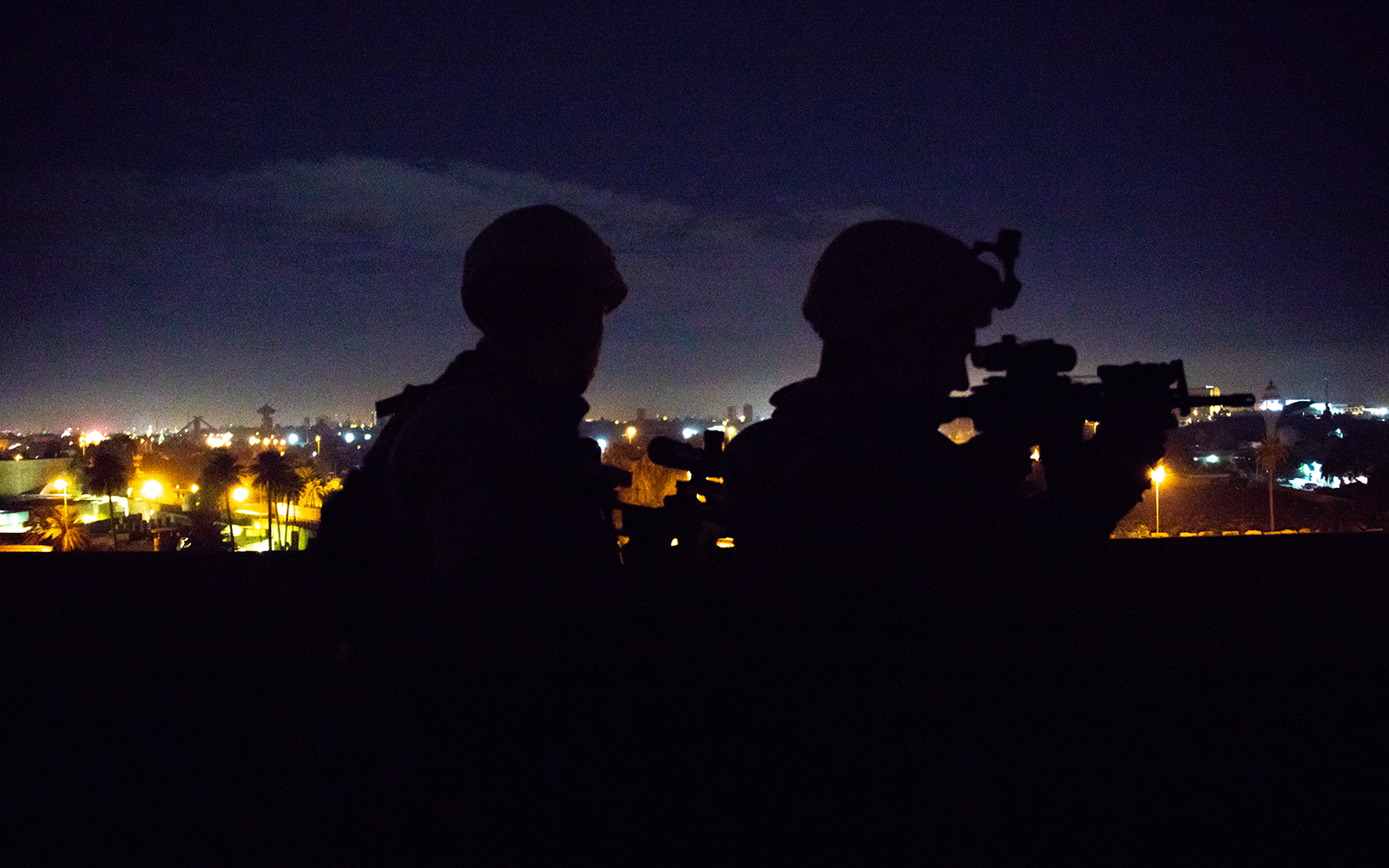
Illustrative: US Marines guard the Baghdad Embassy Compound in Iraq, Jan. 5, 2020. (US Marine Corps/Sgt. Kyle C. Talbot)

As many as 12 missiles were fired Sunday toward the US consulate in Iraq’s northern city of Irbil, with several missiles hitting the building, Iraqi and US security officials said.

Iranian state media agency IRNA, citing local reports, claimed without evidence that “secret Israeli bases” were targeted in the attack.

A US official said the missiles were launched from neighboring Iran.

Officials gave different accounts of damage. A US official said missiles hit the consulate, but a second American official later said there was no damage and no casualties at any US government facility.

Iraqi authorities said several missiles had hit the US consulate. The consulate building is new and currently unoccupied.

Get The Times of Israel’s Daily Editionby email and never miss our top storiesNewsletter email addressGET IT

By signing up, you agree to the terms

Later, Lawk Ghafari, the head of Kurdistan’s foreign media office, said none of the missiles hit the US facility but that areas around the compound had been hit by the missiles.

The area’s governor said it was not clear whether the intended target was the US consulate or the airport, where there is a base for the US-led coalition fighting the Islamic State group.

The airport said it had suffered no damage and flights had not been disrupted.

An AFP correspondent in the city heard three explosions.

Local television channel Kurdistan24, whose studios are not far from the US consulate, posted images on social networks of its damaged offices, with collapsed sections of false ceiling and broken glass.

Irbil is the capital of the autonomous Kurdistan region of Iraq.

“We condemn this terrorist attack launched against several sectors of Irbil, we call on the inhabitants to remain calm,” Kurdistan Prime Minister Masrour Barzani said in a statement.

One of the officials said the ballistic missiles were fired from Iran, without elaborating.

The attack comes several days after Syrian state media reported an Israeli strike near Damascus, Syria. The reports said the airstrike killed two members of Iran’s Revolutionary Guard. Iran’s foreign ministry strongly condemned the attack Wednesday and vowed revenge.

On Sunday, Iran’s state-run IRNA news agency quoted Iraqi media acknowledging the attacks in Irbil, without saying where they originated.

Satellite broadcast channel Kurdistan24, which is located near the US consulate, went on air from their studio shortly after the attack, showing shattered glass and debris on their studio floor.

A security statement said Irbil was targeted “with a number of missiles” early Sunday, adding that security forces were investigating the incident and would release more details later.

The attack comes as negotiations in Vienna over Tehran’s tattered nuclear deal hit a “pause” over Russian demands about sanctions targeting Moscow over its war on Ukraine.

US interests and coalition troops in Iraq have regularly been targeted in rocket and armed drone attacks.

Western officials have blamed hardline pro-Iran factions for the attacks, which have never been claimed.

In late January, six rockets were fired at Baghdad International Airport, causing no casualties.

Iraq saw a surge in these sort of attacks at the beginning of the year as Iran and its allies commemorated the second anniversary of the death of Iranian general Qassem Soleimani and his Iraqi lieutenant Abu Mehdi al-Mouhandis, killed by American drone fire in Iraq in January 2020.

Iran adjusting stance after Russia’s new demands at nuclear talks

March 7, 2022

Supreme National Security Council says negotiators in Vienna will seek ‘creative ways’ to proceed as Moscow links efforts to save 2015 pact to US sanctions over Ukraine invasion

By AMIR VAHDAT and JON GAMBRELLToday, 11:48 am  

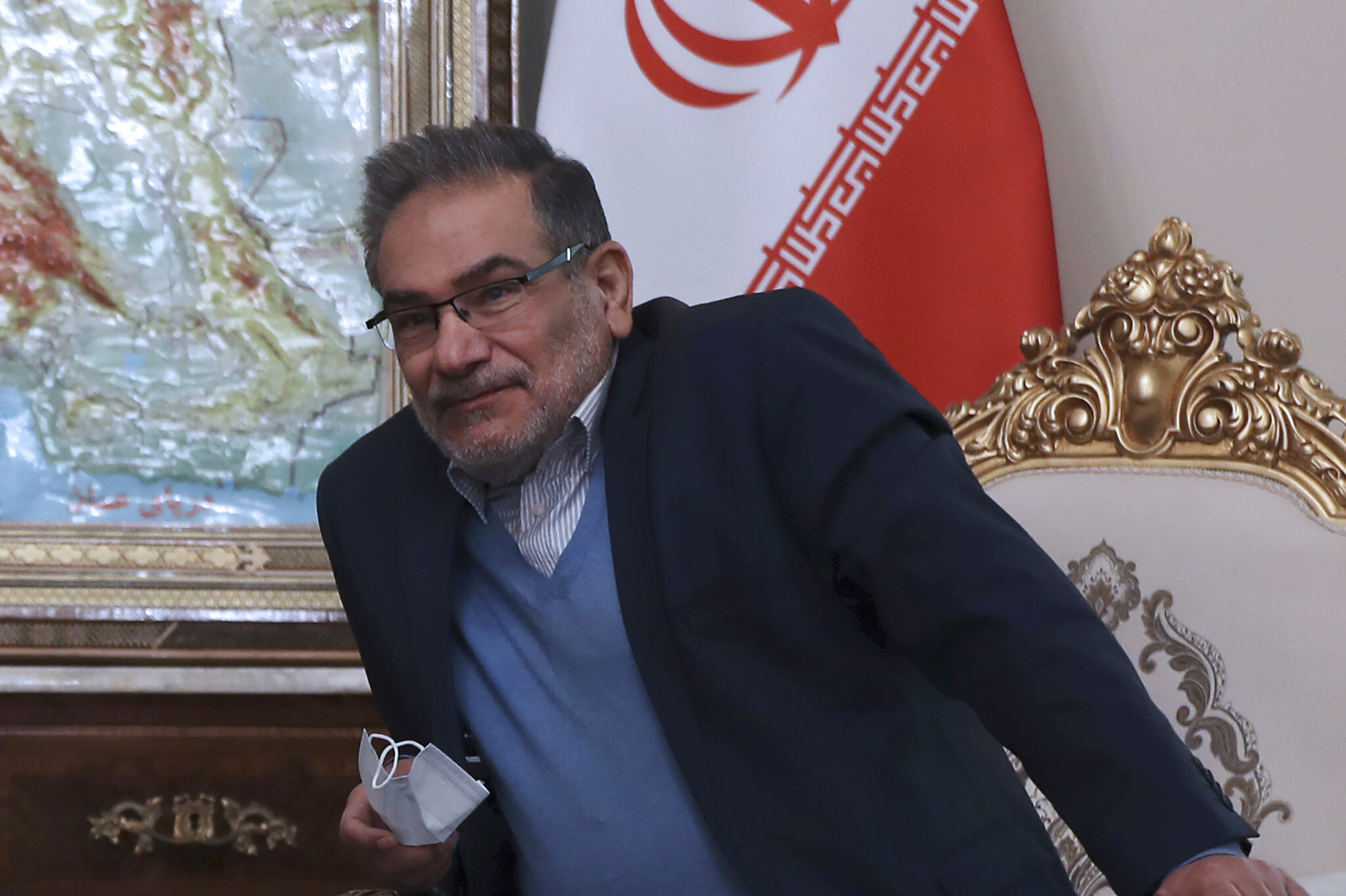
Secretary of Iran’s Supreme National Security Council Ali Shamkhani sits in a meeting in Tehran, Iran on June, 12, 2021. (Vahid Salemi/AP)

TEHRAN, Iran (AP) — A top Iranian official said Monday that his country is seeking “creative ways” to restore its nuclear deal with world powers after Russia’s foreign minister linked sanctions on Moscow over its war on Ukraine to the ongoing negotiations.

The tweet by Ali Shamkhani, the secretary of Iran’s powerful Supreme National Security Council, offers the first high-level acknowledgment of the demands of Russian Foreign Minister Sergey Lavrov.

“Vienna participants act & react based on interests and it’s understandable,” Shamkhani wrote. “Our interactions … are also solely driven by our people’s interests. Thus, we’re assessing new elements that bear on the negotiations and will accordingly seek creative ways to expedite a solution.”

In recent days, negotiators on all sides in Vienna had signaled that a potential deal was close as the head of the United Nations’ nuclear watchdog agreed to a timetable with Iran for it to disclose answers to long-standing questions it had about Tehran’s program.

But Lavrov on Saturday said he wanted “guarantees at least at the level of the secretary of state” that the US sanctions would not affect Moscow’s relationship with Tehran. That threw into question the months of negotiations held so far on restoring the 2015 deal, which saw Iran agree to drastically limit its enrichment of uranium in exchange for the lifting of economic sanctions.

Get The Times of Israel’s Daily Editionby email and never miss our top storiesNewsletter email addressGET IT

By signing up, you agree to the terms

On Sunday, US Secretary of State Antony Blinken called Lavrov’s demand “irrelevant” as the nuclear deal and sanctions on Moscow over the Ukraine war were “totally different.” The US under then-president Donald Trump unilaterally withdrew from the accord in 2018, setting off years of tensions and attacks across the Mideast.

“Getting out of the deal was one of the worst mistakes that’s been made in recent years. It let the entire Iranian nuclear program that we put in a box out of the box,” Blinken told CBS’ “Face the Nation” talk show. “And so if there’s a way of getting back to reimplementing that deal effectively, it’s in our interest to do it and we’re working on that as we speak. It’s also in Russia’s interest.”

Meanwhile, the state-owned, English-language Tehran Times newspaper on Monday published an article suggesting the draft nuclear deal in Vienna would allow Iran to “keep its advanced centrifuges and nuclear materials inside the country.”

It’s “a form of inherent guarantee to make sure that its nuclear program is fully reversible if the US reneged on its commitments again,” the newspaper said, without providing a source for the information.

The 2015 nuclear deal saw Iran put advanced centrifuges into storage under the watch of the International Atomic Energy Agency, while keeping its enrichment at 3.67% purity and its stockpile at only 300 kilograms (661 pounds) of uranium.

As of February 19, the IAEA says Iran’s stockpile of all enriched uranium was nearly 3200 kilograms (7,055 pounds). Some has been enriched up to 60% purity — a short technical step from weapons-grade levels of 90%.