Archive for February 2022

Why is no one talking about Iran digging a new unbombable nuke facility? – analysis

February 28, 2022

The facility in Natanz is built deep under a massive mountain, making it extremely difficult for the IDF to ever bomb it.

https://www.jpost.com/middle-east/iran-news/article-696721

Iran is developing a new nuclear threat that could be a game-changer – and which will continue to proceed regardless of whether there is a nuclear deal or not.

It is a problem that almost no one is talking about, in an area called Natanz where the Mossad allegedly blew up two different nuclear facilities in July 2020 and April 2021 respectively.

The new enormous nuclear threat is a new underground facility Iran is digging and building in the Natanz area which goes so deep under a mountain so large that it will leave the Fordow facility in the dust in terms of how difficult it would be for the IDF to strike it.

In a report, Institute for Science and International Security president David Albright wrote, “Fordow is already viewed as so deeply buried that it would be difficult to destroy via aerial attack. The new Natanz site may be even harder to destroy.”

Why no one is talking about it – other than Albright – is probably a mix of it being an issue that may not fully mature until 2023 and that there are few good options for addressing it.

The main mountain harboring the new Natanz tunnel complex is called Kuh-e Kolang Gaz La and has a height of 1608 meters above sea level, he said.

In comparison, the mountain harboring the Fordow centrifuge enrichment plant, called Kūh-e Dāgh Ghū’ī, is about 960 meters tall.

The report said that this makes the Natanz mountain about 650 meters or well over 50% taller, potentially providing even greater protection to any facility built underneath it.

For around 13 years, military strategists have debated and pulled their hair out over whether Israel’s vaunted air force has weaponry that could go deep enough underground to destroy Fordow.

If Israel cannot destroy Fordow, then it substantially reduces the potential for success by any Israeli use of force against the Islamic Republic’s nuclear program.

Albright is saying in no uncertain terms that the new facility being built in the Natanz area will be 50% harder to destroy than Fordow, which Jerusalem might be unable to destroy.

According to the report, the underground facility is also huge.

This means that the largest segments of Tehran’s nuclear programs may eventually move to this site.

“A Western intelligence official recently stated that there is strong reason to believe that an enrichment plant is being built at the Natanz underground site, and reiterated the claim in a follow-up conversation,” wrote Albright.

Continuing, he said, “The Institute was not able to independently confirm this, but a small, advanced centrifuge enrichment plant is certainly the most worrisome possibility.”

Albright wrote that “a relatively small number of advanced IR-6 centrifuges, say 1,000, would be enough to create a more powerful enrichment plant, providing a doubling of the enrichment output compared to Fordow and requiring about one-third of the floor area of Fordow’s main hall.”

In turn, this could mean that the vast majority of Iran’s nuclear program could become untouchable by any airstrike.

The construction of the new underground complex has been an Iranian priority, following the two previous sabotage operations.

Ali Akbar Salehi, the then-head of the Atomic Energy Organization of Iran (AEOI) stated in April 2021, “We are working 24/7 to move all our sensitive halls into the heart of the mountain near Natanz.”

However, more than a year and a half after the July 2020 sabotage, the replacement facility remains undone. Salehi had also said they hoped the halls “will be ready by next year so we can move these facilities to them.”

However, even now it is unknown if the new site will be ready for operation before 2023.

Once the Islamic Republic does have it up and running though, the report suggested that Iran could jump back up from assembling hundreds of new advanced centrifuges per year to thousands.

Until the new facility is built, Albright said that Tehran is “depending on ad hoc above ground centrifuge capabilities limited to the assembly of hundreds of advanced centrifuges per year,” with the sabotage operations setting back “Iran’s centrifuge program significantly.”

ll of this is true despite Iran’s success at operating enough advanced centrifuges to enrich enough uranium for multiple potential nuclear weapons – if it decides to enrich up further to weaponized levels.

In terms of the status of the construction, satellite images throughout 2021 show extensive excavation activities, with spoil piles growing steadily, said the report.

As of November 2021, the report said that “the area remains a major construction zone, excavation appears ongoing, and the overall tunnel facility does not appear finished. Construction materials visibly stored along the graded roads may indicate ongoing tunnel lining efforts or that Iran has begun to outfit the interior in parts of the tunnel complex.”

“Two tunnel entrance areas, one west and one east of a large mountain, with three likely tunnel portals, have been identified in commercial satellite imagery, as well as a construction staging area and probable future above-ground support site,” said the report.

Albright wrote that, “near the Western tunnel portal, there is road grading, perhaps for a second Western portal, or the genesis of an access route to the top of the mountain to allow the construction of a ventilation shaft/system on the top of the mountain.”

He recommended that “efforts should be made to dissuade Iran from finishing this facility, or… to at least disrupt its procurements of needed equipment and raw materials,” since otherwise, the facility could “reconstitute Iran’s ability to deploy thousands of advanced centrifuges each year, once again complicating any effort to lengthen its breakout or sneak-out timelines in a nuclear agreement.”

Israel said readying for signing of ‘spectacularly bad’ Iran deal next week

February 21, 2022

TV network cites Israeli security officials warning that revived agreement won’t take into account the nuclear gains Tehran has made since Trump withdrew from the accord in 2018

By TOI STAFF18 February 2022, 11:23 pm  

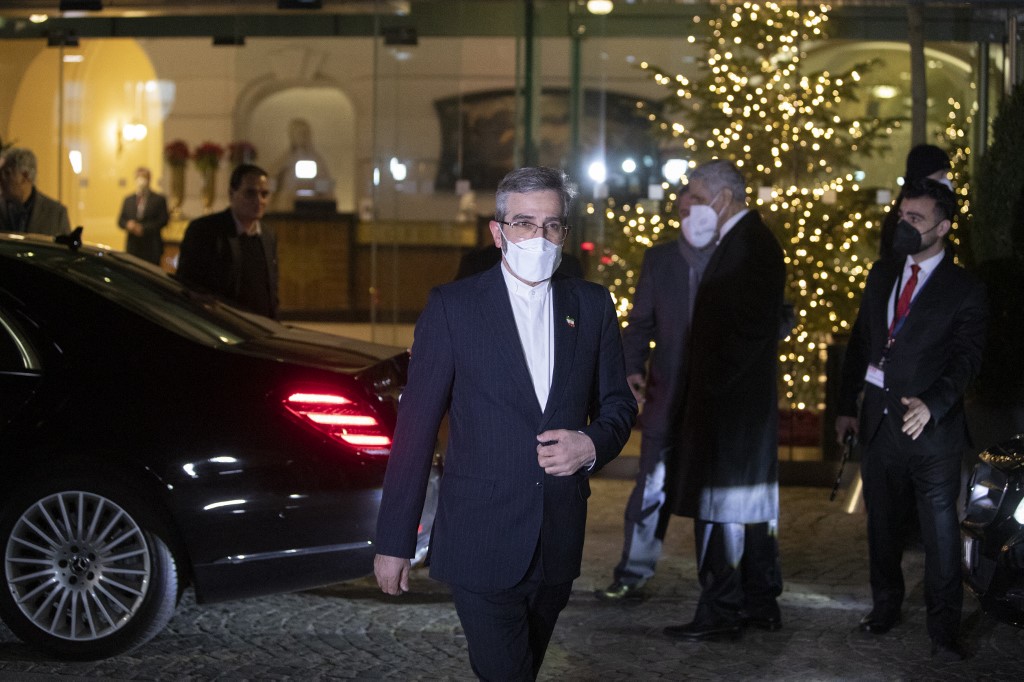
Iran’s chief nuclear negotiator Ali Bagheri Kani leaves the Palais Coburg, venue of the Joint Comprehensive Plan of Action (JCPOA) meeting that aims at reviving the Iran nuclear deal, in Vienna on December 27, 2021. (ALEX HALADA / AFP)

Israel is readying for world powers and Iran to reach an agreement next week to revive the deal aimed at curbing the Islamic Republic’s nuclear program, Israeli television reported Friday, despite Jerusalem’s efforts to lobby against a joint US-Iranian return to the multilateral accord.

Israel opposed the original agreement, formally known as the Joint Comprehensive Plan of Action, when it was signed in 2015, with then prime minister Benjamin Netanyahu arguing that it actually paved the path to an Iranian nuclear arsenal. The Netanyahu government then backed former president Donald Trump’s decision to withdraw the United States from the deal in 2018 and initiate a “maximum pressure” campaign against Iran, which led Tehran to ramp up nuclear work in violation of the JCPOA.

US President Joe Biden is now seeking to revive the accord, conditioning doing so on Iran returning to compliance.

Quoting an unnamed Israeli security official, Channel 13 news reported that while Israel considered the original deal to have been bad, the revived accord taking shape is “spectacularly bad,” as it does not factor in the progress Iran has made since.

Referring to a leaked draft of the imminent accord, the source said Iran will not be required to destroy its advanced centrifuges under the revived agreement. Tehran will have to reduce its uranium enrichment levels, but it has already developed the capability to enrich at high levels. It will also be required to cease producing uranium metal, a crucial component of the bomb-making process. However, the source noted that Iran now has the knowledge to be able to manufacture such materials in the future.

Get The Times of Israel’s Daily Editionby email and never miss our top storiesNewsletter email addressGET IT

By signing up, you agree to the terms

“In essence, it is an agreement that leaves Iran as a nuclear threshold state,” the network said, citing the security source.

Channel 13’s report asserted that Israel would plainly not be able to target Iranian enrichment facilities if and when a revived deal was signed. A key question, though, said its military analyst Alon Ben-David, was whether Israel would have a free hand, as far as the Americans are concerned, to take actions to thwart Iranian progress on weaponization and missile delivery systems for a bomb — areas not covered by the deal.

According to Channel 13, furthermore, the Biden administration has told Israel that Trump enabled Iran to become a “nuclear threshold state” in terms of uranium production and that a failure to revive the old agreement — as Jerusalem is hoping — would leave Tehran weeks away from accumulating enough nuclear material needed for a bomb, rather than months away from the bomb under the terms of the deal.

A diplomat familiar with the talks disputed that assessment, telling The Times of Israel that the deal being negotiated would likely leave Iran between six months to a year away from having enough nuclear material needed for a bomb (weaponization would take another year or two, according to most estimates).

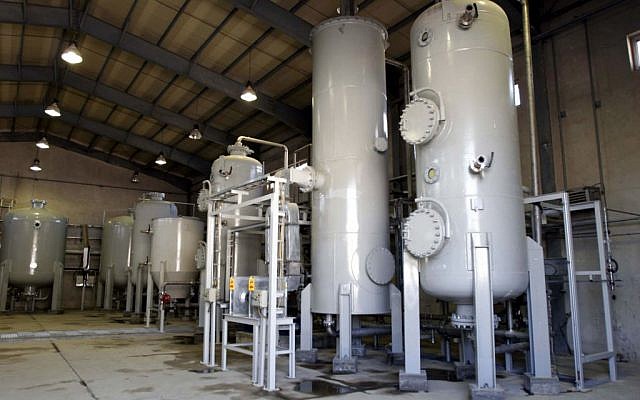
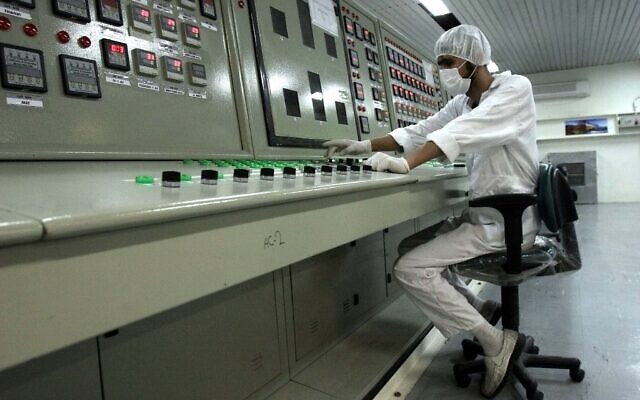
A technician works at the Uranium Conversion Facility just outside the city of Isfahan, Iran, 255 miles (410 kilometers) south of the capital Tehran, Iran, Feb. 3, 2007. (AP Photo/Vahid Salemi, file)

Jerusalem appears to argue that is a price worth paying, rather than granting sanctions relief.

A small ray of hope for Israel is that the sanctions relief being proposed by negotiators in Vienna would only occur gradually and not all at once, the Kan public broadcaster reported.

Negotiators still have a number of issues to settle before a deal can be signed, but Israel believes that will still happen next week, according to Kan.

Accordingly, Jerusalem is preparing a number of actions it plans to take in the coming days, including holding briefings with ambassadors, a possible public address by Prime Minister Naftali Bennett responding to an announcement of a resurrected JCPOA, and private conversations that Defense Minister Benny Gantz and Foreign Ministry Director-General Alon Ushpiz will hold on the sidelines of the Munich Security Conference.

Separately Friday, a senior European Union official told Reuters, “I expect an agreement in the coming week, the coming two weeks or so. I think we have now on the table text that is very, very close to what is going to be the final agreement.”

“Most of the issues are already agreed. But as a principle in this kind of negotiation, nothing is agreed until everything is agreed. So we still have… some questions, some of them rather political and difficult to agree,” the official said.

The United States said Thursday that “substantial progress” during negotiations in Vienna to save the Iran nuclear deal had been made, deeming an agreement possible within days if Iran “shows seriousness” on the matter.

An eighth round of Vienna talks, which involve Iran as well as Britain, China, France, Germany and Russia directly, and the United States indirectly, resumed in late November.

In phone call, Bennett and Biden discuss ‘steps to block Iranian nuclear program’

February 7, 2022

Premier’s office says conversation also addresses US killing of Islamic State leader and Russia-Ukraine conflict; Biden likely to visit later this year

By JACOB MAGID 6 February 2022, 9:50 pm  

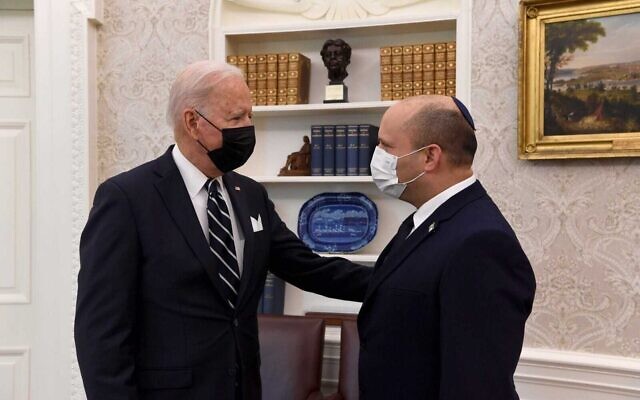
Prime Minister Naftali Bennett, right, speaks as he meets with US President Joe Biden in the Oval Office of the White House, on August 27, 2021, in Washington, DC. (GPO)

Prime Minister Naftali Bennett, right, speaks as he meets with US President Joe Biden in the Oval Office of the White House, on August 27, 2021, in Washington, DC. (GPO)

Prime Minister Naftali Bennett and US President Joe Biden held a rare phone call Sunday evening, discussing the Iranian nuclear threat, the campaign against the Islamic State, the Russian-Ukraine conflict and other security challenges.

It was the third phone call between the leaders since Bennett took office in June 2021. Bennett used to opportunity to again extend an invitation to Biden to visit, and the US leader said he would likely do so later this year. No date has been set.

The prime minister praised Biden for the US operation last week that ended in the death of IS leader Abu Ibrahim al-Hashimi al-Qurayshi. “The world is a safer place thanks to the brave efforts of American forces,” the premier told the president according to the Israeli readout.

According to Hebrew media reports, the US had notified Israel ahead of Thursday’s raid in by US special forces, during which the terror leader blew himself up, killing his wife and children along with himself. Al-Qurayshi once held the “Israel file” in IS, likely putting Israel in a situation to offer intelligence to US counterparts on their target ahead of the mission.

Bennett’s office also said that the two discussed the threats posed by Iran in the region, as well as the “steps to block the Iranian nuclear program.”

Get The Times of Israel’s Daily Editionby email and never miss our top storiesNewsletter email addressGET IT

By signing up, you agree to the terms

On Friday, the Biden administration restored some sanctions relief to Iran’s civilian atomic program, after world powers were believed to have made progress in negotiations in Vienna aimed at reviving the Joint Comprehensive Plan of Action nuclear deal. Washington clarified that the waivers were legally required to allow Iran to make modifications to its nuclear facilities to bring Tehran back into compliance with the JCPOA.

The house in which Islamic State leader Abu Ibrahim al-Hashimi al-Qurayshi died during an overnight raid by US special forces, in the town of Atme in Syria’s northwestern province of Idlib, on February 3, 2022. (Abdulaziz Ketaz/AFP)

Former president Donald Trump withdrew from the deal in 2018 — three years after it was signed — and implemented a “maximum pressure” sanctions campaign against Iran, which responded by increasingly violating the JCPOA and accelerating its effort toward acquiring a nuclear weapon.

Biden came into office pledging to return to the agreement while also negotiating a subsequent “longer and stronger” deal that would seek to curb Iran’s ballistic missile program along with its support for proxy militia groups throughout the region. But talk of the latter agreement has largely faded as the US has been faced with a new Iranian regime led by President Ebrahim Raisi who has shown less interest than his predecessor in reviving the JCPOA, let alone negotiating an additional deal with the US.

The US says that the coming weeks will be critical in determining whether the JCPOA can be salvaged, though the administration has been employing such a vague timeline for at least a month.

At a cabinet meeting earlier Sunday, Bennett implied that Israel could launch a military strike against Iran even if the Islamic Republic and world powers revive their 2015 nuclear deal.

“We are responsible for dealing with the Iranian nuclear program and, of course, we are monitoring the Vienna talks. “Our position is well-known and clear: an agreement – according to the apparent terms – will damage the ability to deal with the nuclear program. Anyone who thinks that an agreement will increase stability is mistaken.

“It will temporarily delay enrichment, but all of us in the region will pay a heavy, disproportionate price for it,” he said.

The Biden administration, by contrast, argues that the JCPOA is better than the current alternative where there are no curbs on Iran’s nuclear activity whatsoever. Jerusalem maintains that Iran will buckle if its feet are held to the fire through sanctions and a credible military threat.

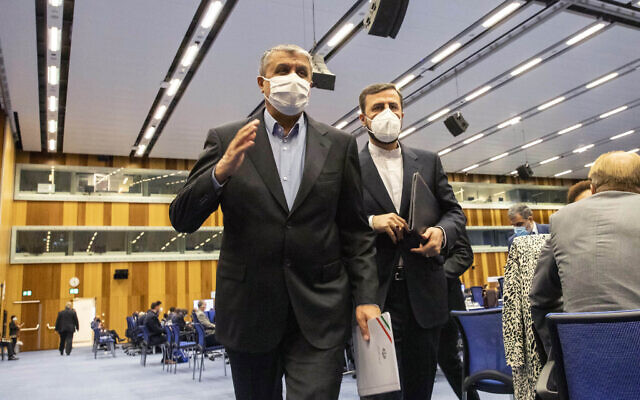
FILE – Mohammad Eslami, new head of Iran’s nuclear agency (AEOI), left, and Iran’s Governor to the International Atomic Energy Agency (IAEA), Kazem Gharib Abadi, leave the International Atomic Energy’s (IAEA) General Conference in Vienna, Austria, September 20, 2021. (AP Photo/Lisa Leutner, File)

Israel fears that reviving the nuclear deal between Iran and world powers may leave Tehran only a few months away from having enough fissile material for an atomic bomb, Israeli television reported Saturday.

The original agreement kept Iran a year from acquiring enough nuclear material to use for a bomb, but that breakout time has shrunk since Trump withdrew from the deal.

Also during the Sunday phone call, Biden and Bennett discussed the ongoing conflict between Russia and Ukraine. Israel sought to avoid taking a stance in favor of either side due to its relatively good relations with both, whereas the US has stepped up its rhetoric against Moscow in recent weeks.

Bennett ended the call by inviting the president and First Lady Jill Biden to Israel. He first extended such an invitation during his visit to the White House last August. Biden told Bennett on Sunday that he looked forward to visiting Israel later this year, according to the US readout.

An Israeli official told the Walla news site that the call lasted about 30 minutes.

The US readout issued later Sunday night was relatively similar to the Israeli one, but did make mention of Biden’s commitment to expanding partnerships in the Middle East “as exemplified by the Abraham Accords, together with Israelis and Palestinians enjoying equal measures of security, freedom, and prosperity.”

Israel said to fear restored Iran deal will leave breakout time of only a few months

February 6, 2022

‘Better to have a distance of a few months and not just weeks,’ US sources quoted as saying; 2015 pact envisioned Tehran would need a year to amass enough material for bomb

By TOI STAFF and AGENCIESToday, 2:09 am  

FILE -- This Oct. 27, 2004 file photo, shows the interior of the Arak heavy water production facility in Arak, 360 kms southwest of Tehran, Iran. (AP Photo/Fars News Agancy, File)

FILE — This Oct. 27, 2004 file photo, shows the interior of the Arak heavy water production facility in Arak, 360 kms southwest of Tehran, Iran. (AP Photo/Fars News Agancy, File)

Israel fears that reviving the nuclear deal between Iran and world powers may leave Tehran only a few months away from having enough fissile material for an atomic bomb, Israeli television reported Saturday.

The Kan public broadcaster did not specify who in Israel was concerned by the possibility that Iran’s so-called breakout time would be significantly shorter under a restored nuclear agreement.

But American sources quoted in the report appeared to acknowledge such a prospect.

“It is better to have a distance of a few months and not just weeks, as would happen if no agreement is signed,” the sources said.

The original deal aimed to keep Iran at least a year away from amassing enough material for a nuclear weapon.

Get The Times of Israel’s Daily Editionby email and never miss our top storiesNewsletter email addressGET IT

By signing up, you agree to the terms

The Kan report came days after US officials told The Wall Street Journal that a revived agreement would leave Iran with a breakout time well below a year, citing the advances in its nuclear program since then-president Donald Trump withdrew the United States from the accord in 2018.

The exact length of the breakout time will depend on the manner in which Iran agrees to return to compliance with the deal, be it by dismantling its stockpiles of enriched uranium and relevant pieces of equipment, destroying them or shipping them abroad.

A technician works at the Uranium Conversion Facility just outside the city of Isfahan, Iran, 255 miles (410 kilometers) south of the capital Tehran, Iran, Feb. 3, 2007. (AP Photo/Vahid Salemi, file)

However, enough nuclear material for a bomb is not the same as having the capabilities to build the core of the weapon and to attach it to the warhead of a missile, which Iran is not believed to possess and would likely take many more months to achieve.

Despite the JCPOA’s more limited impact, US negotiators are still committed to returning to the deal, guided by the belief that some restrictions on Iran’s nuclear program are better than none at all.

On Friday, the Biden administration restored some sanctions relief to Iran’s civilian atomic program as world powers and the Islamic Republic continue talks aimed at salvaging the languishing agreement.

As US negotiators head back to Vienna for what could be a make-or-break session, US Secretary of State Antony Blinken signed several sanctions waivers related to Iran’s civilian nuclear activities. The move reverses the Trump administration’s decision to rescind them.

The waivers are intended to entice Iran to return to compliance with the 2015 deal that it has been publicly violating since former US president Donald Trump withdrew from the agreement in 2018 and re-imposed sanctions. Iran says it is not respecting the terms of the deal because the US pulled out of it first. Iran has demanded the restoration of all sanctions relief it was promised under the deal to return to compliance.

Friday’s move lifts the sanctions threat against foreign countries and companies from Russia, China and Europe that had been cooperating with non-military parts of Iran’s nuclear program under the terms of the 2015 deal, known as the Joint Comprehensive Plan of Action, or JCPOA.

The Trump administration had ended the so-called “civ-nuke” waivers in May 2020 as part of its “maximum pressure” campaign against Iran that began when Trump withdrew the US from the deal in 2018, complaining that it was the worst diplomatic agreement ever negotiated and gave Iran a pathway to developing the bomb.

As a presidential candidate, Joe Biden made a US return to the nuclear deal a priority, and his administration has pursued that goal but there has been little progress toward that end since he took office a year ago. Administration officials said the waivers were being restored to help push the Vienna negotiations forward.

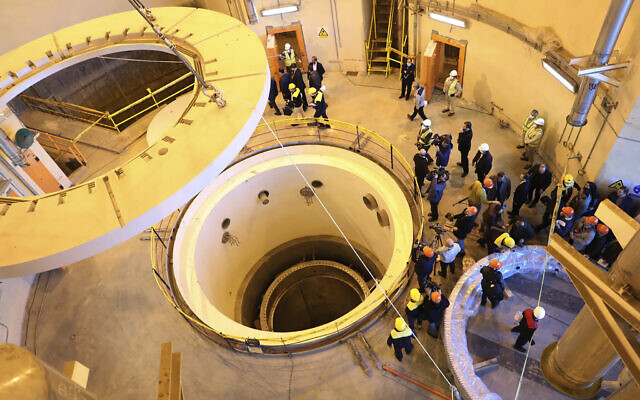
Technicians work at the Iranian Arak heavy water reactor, 150 miles southwest of the capital Tehran, on December 23, 2019. (Atomic Energy Organization of Iran via AP)

The waivers permit foreign countries and companies to work on civilian projects at Iran’s Bushehr nuclear power station, its Arak heavy water plant and the Tehran Research Reactor. Former US secretary of state Mike Pompeo had revoked the waivers in May, 2020, accusing Iran of “nuclear extortion” for continuing and expanding work at the sites.

Iran’s foreign minister on Saturday welcomed the US sanctions relief, but said the move was “insufficient.”

Jewish Pulitzer Prize winning authors

February 4, 2022

Click through the short Instagram slide show to see a familiar face and a familiar name (slide 5 of 6).