Iran’s top negotiator and civilian nuclear chief both indicate nothing has been agreed on, previous rounds of nuclear talks can be renegotiated
By NASSER KARIMIToday, 11:26 am
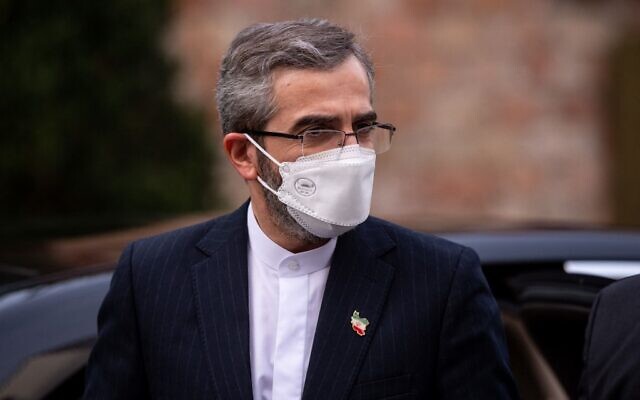
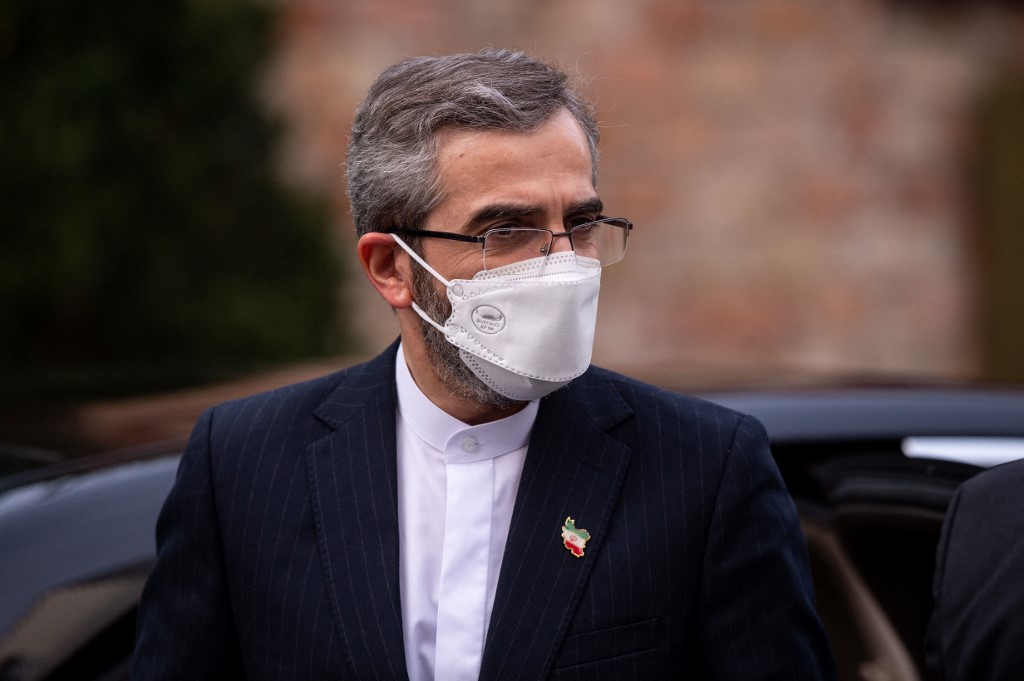
Iran’s chief nuclear negotiator Ali Bagheri Kani arrives at the Coburg Palais, the venue of the Joint Comprehensive Plan of Action (JCPOA) meeting, in Vienna on November 29, 2021. (VLADIMIR SIMICEK / AFP)
TEHRAN, Iran (AP) — Iran struck a maximalist tone Tuesday after just one day of restarted talks in Vienna over its tattered nuclear deal, suggesting everything discussed in previous rounds of diplomacy could be renegotiated.
Iranian state media reported the comments by Ali Bagheri, Iran’s top nuclear negotiator, and Mohammad Eslami, the country’s civilian nuclear chief. It remained unclear, however, whether this represented an opening gambit by Iran’s new hardline president or signaled serious trouble for those hoping to restore the 2015 deal that saw Tehran strictly limit its enrichment of uranium in exchange for the lifting of economic sanctions.
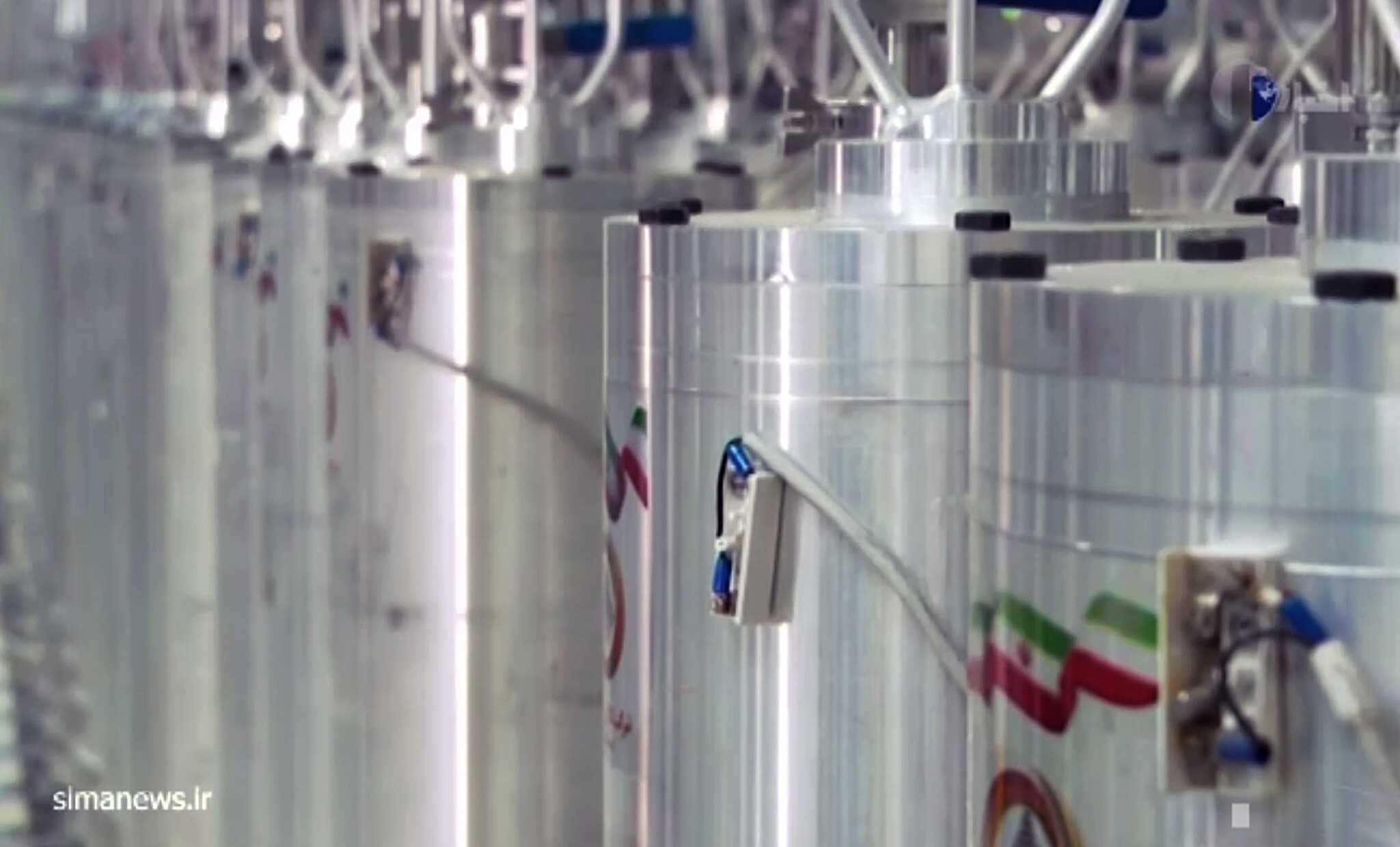
The United States left the deal under then-US president Donald Trump’s “maximum pressure” campaign against Tehran in 2018. Since the deal’s collapse, Iran now enriches small amounts of uranium up to 60% purity — a short step from weapons-grade levels of 90%. Iran also spins advanced centrifuges barred by the accord, and its uranium stockpile now far exceeds the accord’s limits.
US President Joe Biden has said America is willing to re-enter the deal, though the negotiations continue with US officials not in the room as in previous rounds of talks since Washington’s withdrawal.
Speaking to Iranian state television, Bagheri referred to the previous rounds of talks only as a “draft.”Get The Times of Israel’s Daily Editionby email and never miss our top storiesNewsletter email addressGET ITBy signing up, you agree to the terms
“Drafts are subject to negotiation. Therefore nothing is agreed on unless everything has been agreed on,” he said. “On that basis, all discussions that took place in the six rounds are summarized and are subject to negotiations. This was admitted by all parties in today’s meeting as well.”
That directly contradicted comments Monday by the European Union diplomat leading the talks.
“The Iranian delegation represents a new administration in Tehran with new understandable political sensibilities, but they have accepted that the work done over the six first rounds is a good basis to build our work ahead, so no point in going back,” Enrique Mora said then.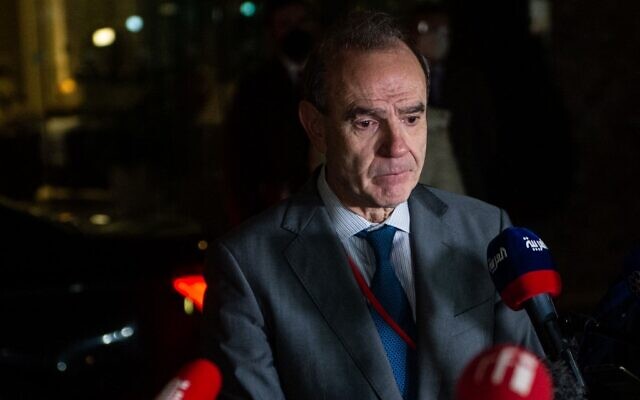 Deputy Secretary General of the European External Action Service (EEAS) Enrique Mora speaks to journalists in front of the Coburg palace after a meeting of the Joint Comprehensive Plan of Action (JCPOA) in Vienna, Austria on November 29, 2021. ( VLADIMIR SIMICEK / AFP)
Another state TV segment saw Bagheri in Vienna also saying Iran demanded a “guarantee by American not to impose new sanctions” or not re-impose previously lifted sanctions.
Eslami, speaking to Iran’s state-run IRNA news agency, reiterated that demand.
“The talks (in Vienna) are about return of the US to the deal and they have to lift all sanctions and this should be in practice and verifiable,” he said. He did not elaborate.
Talks in Vienna resumed Monday after an over five-month hiatus as hardline Iranian President Ebrahim Raisi took power. Raisi, a protégé of Supreme Leader Ayatollah Ali Khamenei, campaigned on getting sanctions lifted. However, fellow hard-liners within Iran’s theocracy long have criticized the nuclear deal as giving too much away to the West.
Mikhail Ulyanov, Russia’s top representative to the talks, tweeted Tuesday that the resumption of negotiations was “quite successful.”
“Participants decided to continue without delay the drafting process in two working groups – on sanctions lifting and nuclear issues,” he wrote. “This work starts immediately.”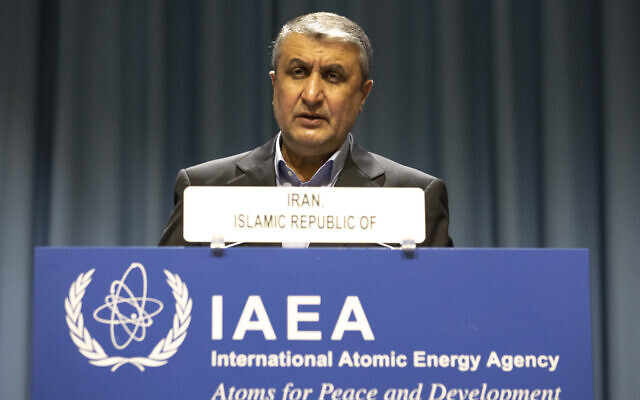 Mohammad Eslami, head of Iran’s nuclear agency (AEOI) talks on stage at the International Atomic Energy’s (IAEA) General Conference in Vienna, Austria, September 20, 2021. (Lisa Leutner/AP)
Israel, Iran’s regional, nuclear-armed rival, kept up its own pressure amid the negotiations. Israeli Prime Minister Naftali Bennett, in a video address delivered to nations negotiating in Vienna, warned that he saw Iran trying to “end sanctions in exchange for almost nothing.”
“Iran deserves no rewards, no bargain deals, and no sanctions relief in return for their brutality,” Bennett said in the video that he later posted to Twitter. “I call upon our allies around the world: Do not give in to Iran’s nuclear blackmail.”
Iran maintains its atomic program is peaceful. However, US intelligence agencies and international inspectors say Iran had an organized nuclear weapons program up until 2003. Nonproliferation experts fear the brinkmanship could push Tehran toward even more extreme measures to try to force the West to lift sanctions.
Making matters more difficult, United Nations nuclear inspectors remain unable to fully monitor Iran’s program after Tehran limited their access. A trip to Iran last week by the head of the International Atomic Energy Agency, Rafael Grossi, failed to make any progress on that issue.

 In this photo released Novenber 4, 2019 by the Atomic Energy Organization of Iran, its head Ali Akbar Salehi speaks with the media while visiting the Natanz enrichment facility in central Iran. (Atomic Energy Organization of Iran via AP)
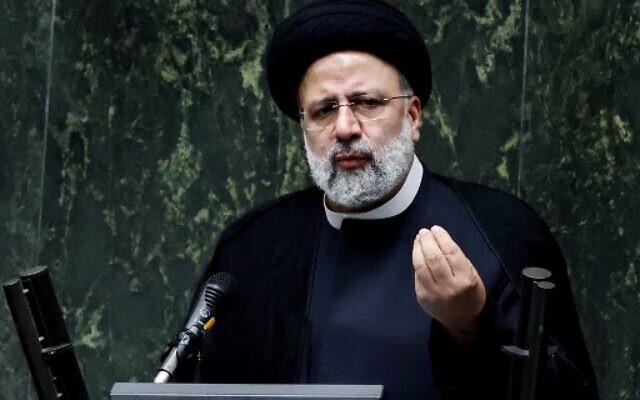 Iran’s President Ebrahim Raisi speaks before parliament in the capital Tehran, on August 25, 2021. (Atta Kenare/AFP)
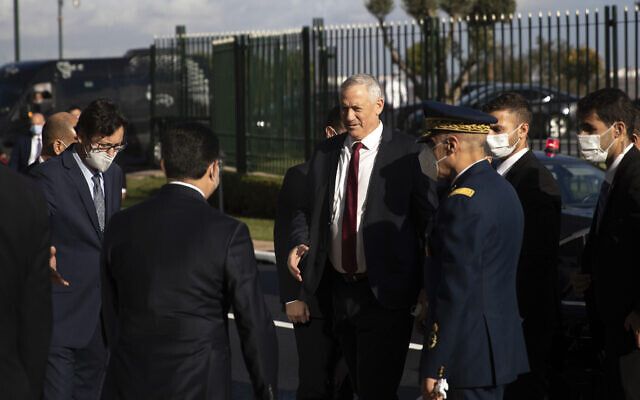 Benny Gantz, center, is welcomed by Morocco’s Foreign Minister Nasser Bourita, in Rabat, Morocco, Wednesday, Nov. 24, 2021. (AP/Mosa’ab Elshamy)
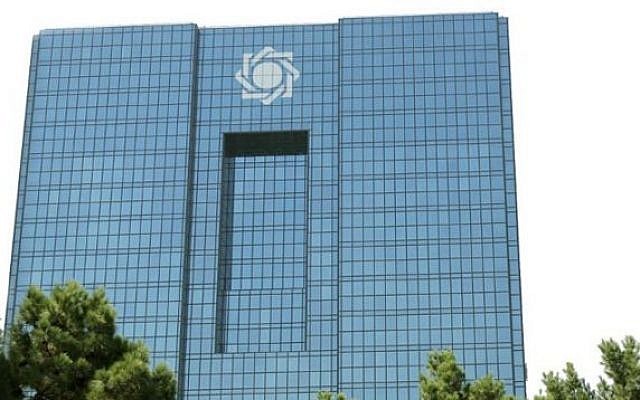 The Central Bank of Iran (Courtesy)
 President Barack Obama, standing with Vice President Joe Biden, delivers remarks in the East Room of the White House in Washington, Tuesday, July 14, 2015, after an Iran nuclear deal is reached. (AP Photo/Andrew Harnik, Pool)
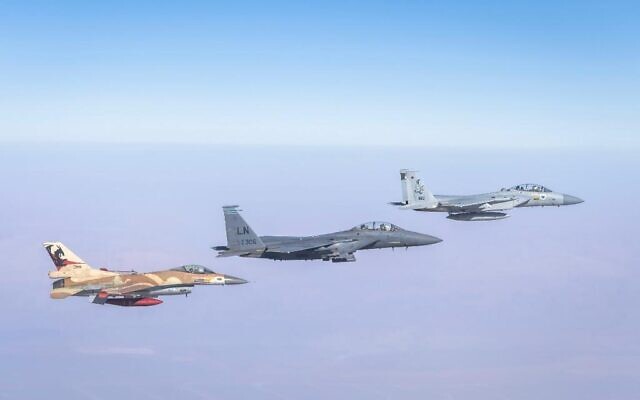 IAF and AFCENT F-15 and F-16 jets are seen over southern Israel during the ‘Desert Eagle’ drill, August 10, 2021. (Israel Defense Forces)
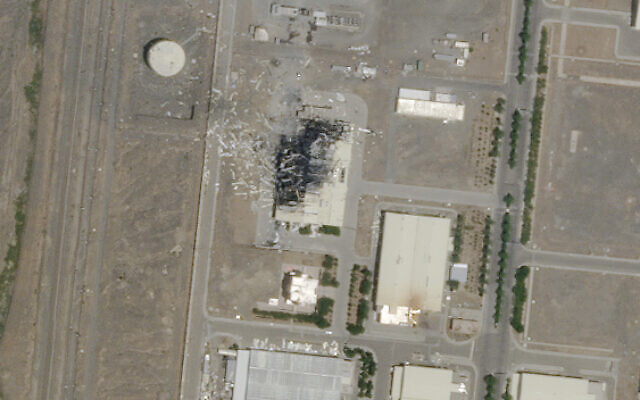 The aftermath of an explosion and a fire at an advanced centrifuge assembly plant at Iran’s Natanz nuclear site, July 5, 2020. (Planet Labs Inc. via AP)
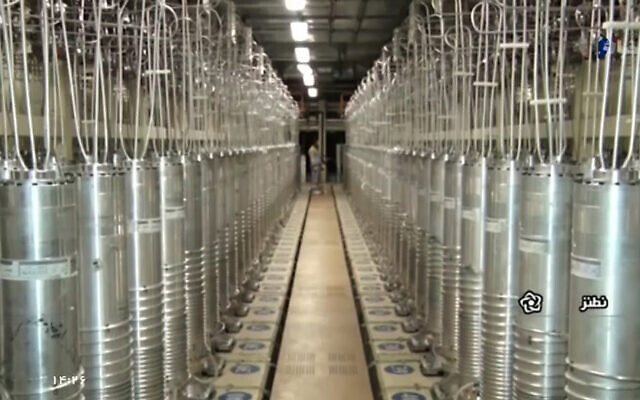 In this image, made from an April 17, 2021 video released by the state-run TV station Islamic Republic Iran Broadcasting, various centrifuge machines line a hall at the Natanz Uranium Enrichment Facility. (IRIB via AP)
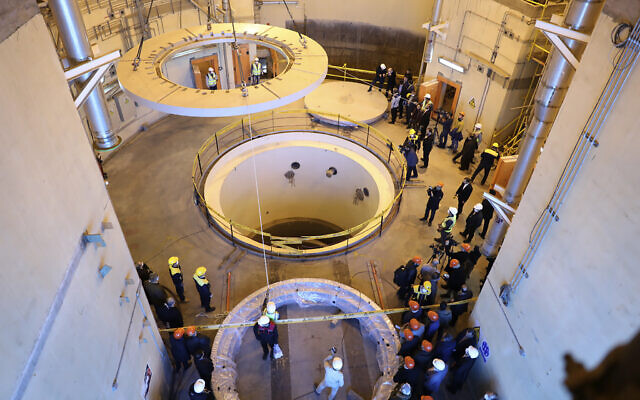 Technicians work at the Arak heavy water reactor’s secondary circuit, as officials and media visit the site, near Arak, 150 miles (250 kilometers) southwest of the capital Tehran, Iran, Monday, Dec. 23, 2019. (Atomic Energy Organization of Iran via AP)

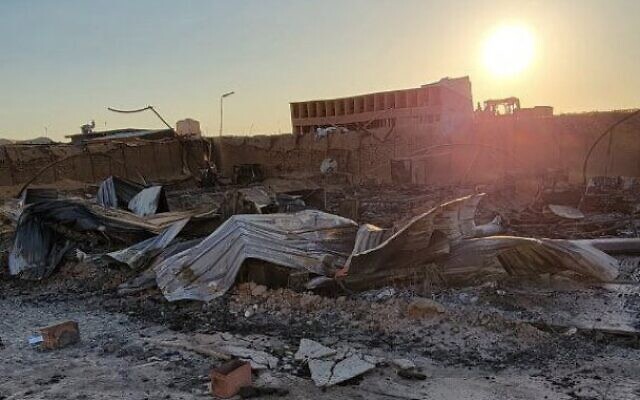 The damaged al-Tanf base in southern Syria is seen a day after it was apparently struck by Iranian drones, on October 20, 2021. (Courtesy, via Aurora Intel)
 Illustrative: Tribesmen loyal to Houthi rebels raise their weapons during a gathering against the agreement to establish diplomatic relations between Israel and the United Arab Emirates in Sanaa, Yemen, on August 22, 2020. (AP Photo/Hani Mohammed)
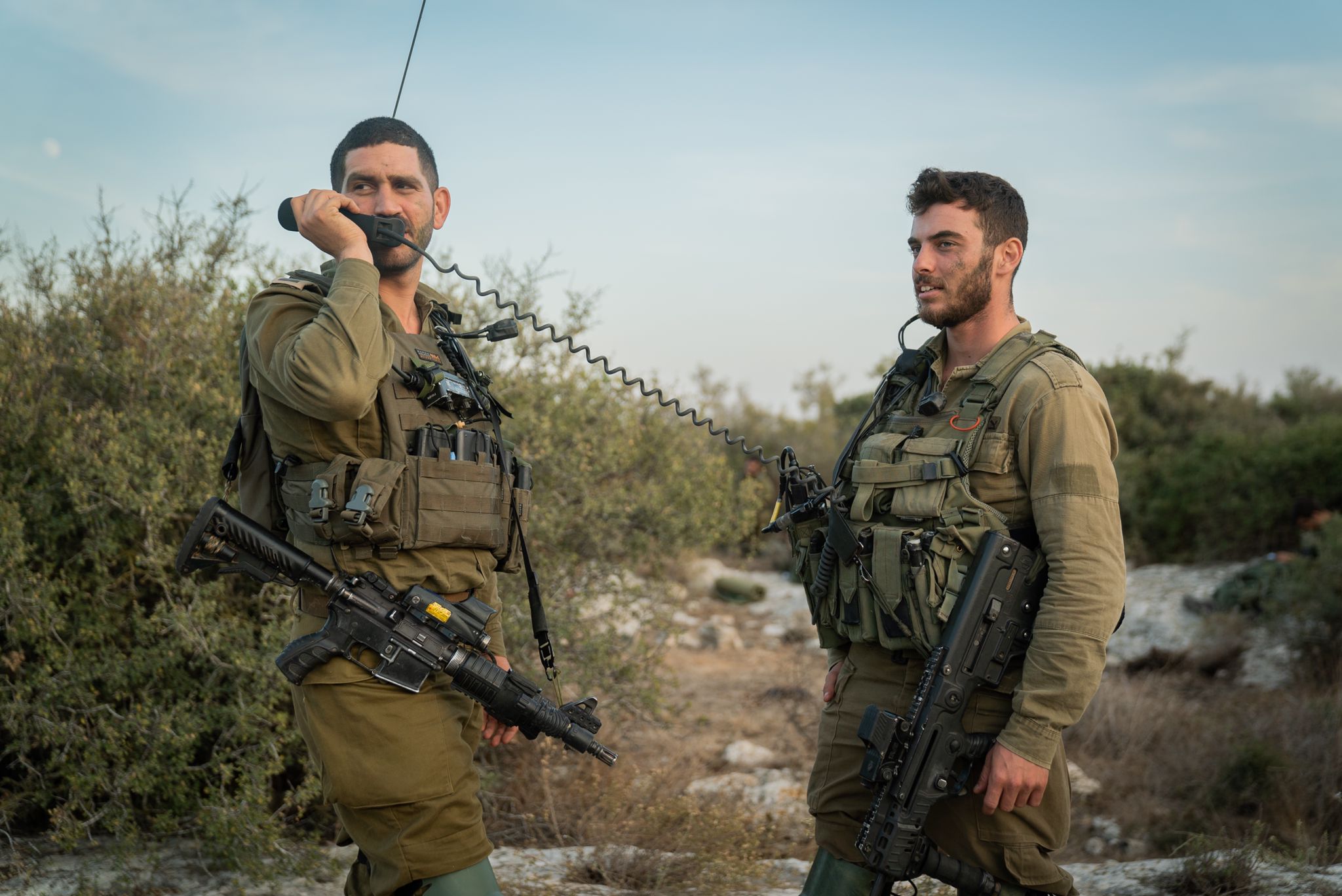
 An Israeli soldier launches a drone during an exercise in northern Israel, in November 2021. (Israel Defense Forces)
 Shiite fighters from Hezbollah and Amal terror movements take aim with (left to right) a Kalashnikov assault rifle and a rocket-propelled grenade launcher amidst clashes in the area of Tayouneh, in the southern suburb of the capital Beirut, on October 14, 2021 (Ibrahim Amro/AFP)
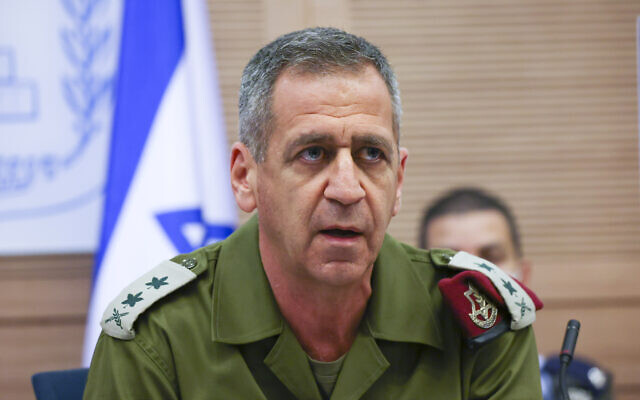 IDF Chief of Staff Aviv Kohavi attends a Knesset Foreign Affairs and Defense Committee meeting on November 9, 2021. (Yonatan Sindel/Flash90)



 anneinpt
 artaxes
 danmillerinpanama
 davidking1530
 Peter Hofman
 Joseph Wouk
 Peter
Peter Louisiana Steve
 WarSclerotic
Recent Comments