Archive for June 24, 2021

Quadcopter drone strike near Faraj – new chapter in covert campaign versus nuclear Iran – DEBKAfile

June 24, 2021

 centrifuge center FarajIranquadcopter drone

The “sabotage” attack on one of its facilities which Iran’s Atomic Energy Agency claimed to have thwarted broke new ground in Israel’s alleged covert campaign against a nuclear-armed Iran with US support. The target was a facility under UN and US sanctions near Faraj City west of Tehran that, according to some intelligence sources, manufactured centrifuges for refining uranium at the Fordow and Natanz enrichment centers.

The novelty in this case was the nature of the weapon and how it was used. Iranian media cited “a small quadcopter drone” as the weapon, which was launched from inside the country. Clearly, an unknown entity released the small device from a point inside Iran after first loading it with an explosive charge or small rocket. It is worth recalling former Mossad chief Yossi Cohen’s disclosure in an interview on June 10 that the team which purloined the Iranian nuclear archive from its hiding place in Tehran in April 2018 was comprised of a team of non-Israeli operatives.

It is no secret that Israel and American spy agencies both have ties with cells of the Mujahedin-e-Khalk resistance movement, which is not news to the security agencies in Tehran. But that a dissident group fired off an armed UAV against a nuclear facility from inside the country marks a key crossroads in the conflict.
Quadcopter drones are on sale together with simple instructions for their assembly and use in any camera shop or online – even on e-Bay. Some carry cameras; others a forklift for loading freight. The operator programs its destination in advance and then tracks it on a screen.

Assuming that an MEK cell performed the deed, was it acting on its own initiative, for Israel, for he US or for both? No one has claimed responsibility for this attack – any more than for previous clandestine sabotage strikes on Iran’s nuclear-related facilities. The fact that Iranian officials were ready to talk to the The New York Times, rare in itself, seems to indicate that Tehran is at a loss for information on the authors of the attack.

The election of Ebrahim Raisi, an ultra-hardliner, as Iran’s new president increases the chances of the Islamic Republic retaliating in kind with attacks on US targets and interests in the Middle East or Israel. And, indeed, the Iranians are already deep in UAV warfare against their perceived enemies.  As recently as on June 4, an Iranian explosive drone was launched by Iraqi Shiite militias against the big American Ain al-Asad airbase in western Iraq. No one was hurt but the damage was extensive. Armed drones were also fired this month into Baghdad’s Green Zone, seat of government and the diplomatic row, including the US embassy.

The spreading UAVsyarfare, its implications and countermeasures, ,were almost certainly discussed at meetings between US and Israel security officials and experts late last month. In military terms, UAV weaponry turns the development clock back from the highly sophisticated and costly air defense missile systems in current use, to simpler defensive solutions. This point was illustrated this week when Israel announced the completion of tests on the first airborne, high-power laser defense system. Installed on a regular aircraft, the laser system intercepted and destroyed several UAVs at various ranges and different flight altitudes. The defense ministry said the new device would be operational in another three to four years. The new gadget was unveiled during IDF Chief of Staff’s talks at the Pentagon.

Meeting top US officials, Kohavi blasts American plans to rejoin Iran deal

June 24, 2021

IDF chief reportedly says another round of fighting in Gaza is only a matter of time, as he meets with US National Security Adviser Jake Sullivan

By JUDAH ARI GROSS23 June 2021, 10:01 pm  

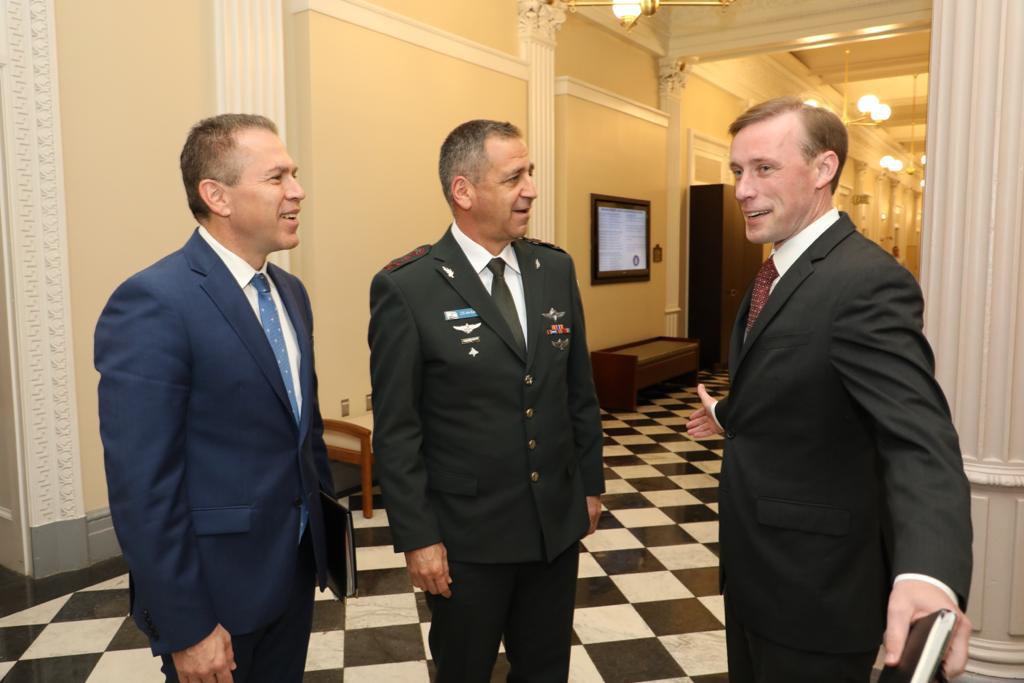
From left, Israel’s Ambassador to the United States and United Nations Gilad Erdan, IDF Chief of Staff Aviv Kohavi and US National Security Adviser Jake Sullivan meet in Washington on June 23, 2021. (Israel Defense Forces)

IDF Chief of Staff Aviv Kohavi again railed against the United States’ plan to rejoin the 2015 Iran nuclear deal during a meeting with US National Security Adviser Jake Sullivan and other top American defense officials on Wednesday, according to the Israel Defense Forces.

During his meeting in Washington, Kohavi reiterated the “failures of the current nuclear deal” and attempted to convince the American officials of alternative methods of preventing Iran from obtaining an atomic weapon, the military said.

The US National Security Council Coordinator for the Middle East and North Africa Brett McGurk and Special Assistant to the President Cara Abercrombie also took part in the meeting with Sullivan, according to the IDF.

“Throughout the day, the chief of staff has presented possible ways to prevent Iran from obtaining military nuclear capabilities during his meetings,” the IDF said in a statement.

Earlier in the day, Iran reported that an attempt had been made to attack a site associated with its nuclear program northwest of Tehran. Official Iranian state media reported that the strike had failed, but Iranian opposition outlets said damage had been caused to the facility, which was used to create parts for centrifuges.

Kohavi’s remarks came as the US and Iran — through intermediaries — have been negotiating a mutual return to the 2015 nuclear deal, known formally as the Joint Comprehensive Plan of Action. Former US president Donald Trump abrogated the agreement in 2018, putting in place a crushing sanctions regime, which prompted Iran to also abandon the accord a year later, enriching more uranium and at greater levels of purity than was permitted under the deal, as well as taking part in other forms of proscribed nuclear research.

Israel staunchly opposes US President Joe Biden’s plan to reenter the JCPOA, which he has said he’s prepared to do provided Iran returns to compliance with the agreement.

Iran’s Governor to the International Atomic Energy Agency (IAEA), Kazem Gharib Abadi, Political deputy at the Ministry of Foreign Affairs of Iran, Abbas Araghchi, and Deputy Secretary-General and Political Director of the European External Action Service (EEAS), Enrique Mora leave the ‚Grand Hotel Vienna where closed-door nuclear talks take place in Vienna, Austria, Wednesday, June 2, 2021. (AP/Lisa Leutner)

On Wednesday, Iranian officials said the US had agreed in principle to remove over 1,000 sanctions on officials and companies associated with the Islamic Republic’s oil and shipping sectors, which had been put in place under Trump.

The Biden administration has said it plans to use the JCPOA as a starting-off point for brokering a “longer and stronger” nuclear deal, though critics — including those in Israel — say that once the US eases the sanctions in place on Iran and Iranian officials as it returns to the JCPOA, Tehran will no longer have an incentive to negotiate.

Several delegations of Israeli officials, including former Mossad chief Yossi Cohen and National Security Adviser Meir Ben-Shabbat, have traveled to the US in recent months in an effort to dissuade the Biden administration from reentering the agreement.

In the past, US officials have said that the concerns raised by Israel during these talks will not change the White House’s plans.

During his meeting, the IDF chief also reportedly told Sullivan that another round of conflict in the Gaza Strip was only a matter of time, following last month’s bloody 11-day battle with terror groups in the Palestinian enclave.

According to the Kan public broadcaster, Kohavi referred specifically to the difficulties in the ongoing negotiations with Hamas and its leader in Gaza Yahya Sinwar, who has demanded Israel allow large sums of aid money from Qatar into the Strip. Israel has maintained that it will not allow large-scale reconstruction in Gaza until Hamas returns two Israeli civilians and the remains of two fallen IDF soldiers that it is holding captive.

Kohavi landed in Washington on Sunday and has met with a number of top American defense officials, including US Secretary of Defense Lloyd Austin, Chairman of the Joint Chiefs of Staff Mark Milley, US Central Command chief Kenneth McKenzie and others. He is due to return to Israel on Friday, according to the military.

IDF Chief of Staff Aviv Kohavi, center-right, and US Chairman of the Joint Chiefs of Staff Mark Milley, center-left, salute outside the US Department of Defense in Washington, DC, on June 21, 2021. (Israel Defense Forces)

Kohavi was scheduled to meet with CIA head William Burns and the US Director of National Intelligence Avril Haines.

In addition to discussing Iran’s nuclear program, the IDF chief also shared Israeli assessments of the Islamic Republic’s military expansionism in the Middle East, the IDF said.

On Wednesday, Kohavi also met with Israel’s Ambassador to the US and the United Nations Gilad Erdan, discussing in particular the IDF’s concerns regarding the Lebanese Hezbollah terrorist militia and the ways in which the UN and its peacekeeping force in Lebanon can help rein in the group in accordance with UN resolution 1701, which ended the 2006 war between Israel and Hezbollah.

“The two discussed the need to enforce and effectively fulfill the mandate of the [United Nations Interim Force in Lebanon] in light of the renewal process of the mandate in the UN later this year. The chief of staff stressed that for years the state of Lebanon has lost control of its security policy and completely abdicates its responsibility to uphold resolution 1701, as the Hezbollah terrorist organization effectively runs Lebanon’s security policies,” the IDF said.

Israel and US said to increase cooperation to combat Iranian drones

June 24, 2021


Idea of establishing Mideast no-fly zone for Iranian UAVs reportedly raised in first interagency working group meeting between Israeli and US officials on tackling growing threat

By TOI STAFF23 June 2021, 6:09 pm  

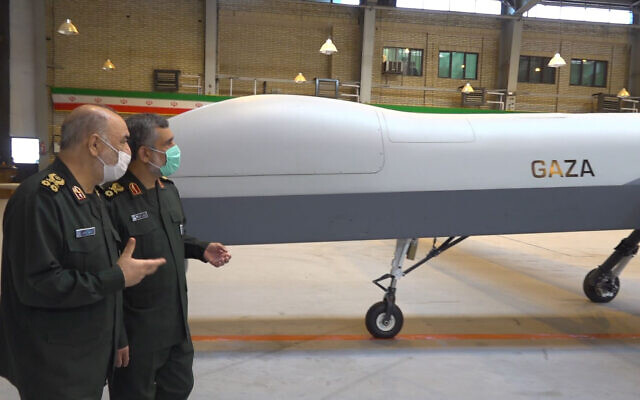
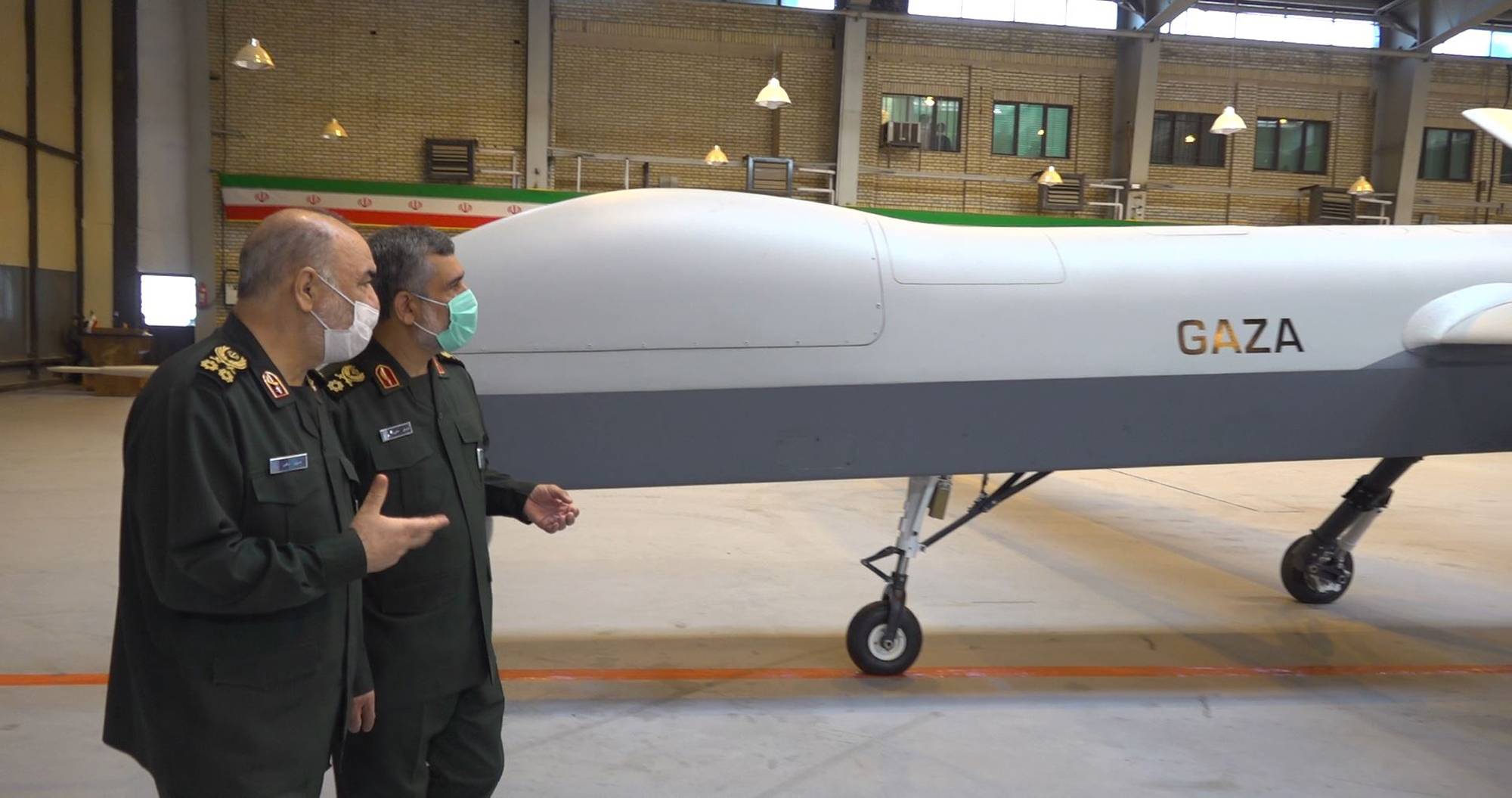
Illustrative. Iranian Revolutionary Guard Commander Gen. Hossein Salami, left, and the Guard's aerospace division commander Gen. Amir Ali Hajizadeh talk while unveiling a new drone called "Gaza" in an undisclosed location in Iran, in a photo released on May 22, 2021. (Sepahnews of the Iranian Revolutionary Guard, via AP)

Illustrative. Iranian Revolutionary Guard Commander Gen. Hossein Salami, left, and the Guard’s aerospace division commander Gen. Amir Ali Hajizadeh talk while unveiling a new drone called “Gaza” in an undisclosed location in Iran, in a photo released on May 22, 2021. (Sepahnews of the Iranian Revolutionary Guard, via AP)

The United States and Israel reportedly held talks earlier this month on cooperation against unmanned Iranian drones, with which the Islamic Republic is believed to be arming Shiite militias and terrorist organizations in the region.

Building on an April agreement by the two counties’ national security advisers, an interagency working group dealing with the threat to Israel and other US allies from Iranian drones and precision-guided missiles convened for the first time three weeks ago, the Walla news site reported.

Quoting both senior US and Israeli officials involved in the talks, the report said  the American team was led by White House National Security Council Coordinator for the Middle East and North Africa Brett McGurk and the Israeli team was headed by deputy national security adviser Reuven Ezer.

One idea reportedly raised in the meeting was establishing a “no-fly zone” in the Middle East for Iranian UAVs.

In May, Israel downed a drone it approached Israeli airspace near the northeastern city of Beit She’an, with then-prime minister Benjamin Netanyahu later saying it was made by Iran and launched by Iranian forces toward Israel from either Syria or Iraq. In a similar case in 2018, a drone was flown from Syria into northern Israel before it was shot down by an Israeli helicopter. In response, the IDF launched a wave of strikes on Iranian assets in Syria.

Israel has a waged a nearly decade-long bombing campaign in Syria aimed at thwarting Iran and allied militias, including Hezbollah, from setting up bases to attack the Jewish state, as well as the transfer of advanced arms from Iran to Hezbollah.

Sunday’s report comes days after the news site said that the US had increased military coordination with Israel and with a number of moderate Middle Eastern countries in an effort to counter the threat posed to the region by the Islamic Republic.

Over the past two months, the US military’s Central Command (CENTCOM) has increased the pace of coordination and the number of high-level meetings with Israel, Egypt, Jordan, several Gulf states, Cyprus and Greece, the Sunday report said.IDF Chief of Staff Aviv Kohavi, center-right, and US Chairman of the Joint Chiefs of Staff Mark Milley, center-left, salute outside the US Department of Defense in Washington, DC, on June 21, 2021. (Israel Defense Forces)

During his ongoing visit to the US, IDF Chief of Staff Aviv Kohavi visited the Florida headquarters of CENTCOM Tuesday, touting the “operational cooperation” between the two US and Israeli militaries as “unprecedented.”

“A joint operating target of the two militaries is Iran, which is working to entrench itself and establish terrorist forces in many states throughout the Middle East and is continuing to present a regional threat in terms of nuclear, advanced weapons systems, ballistic missiles and funding terror armies,” Kohavi said alongside CENTCOM chief, General Frank McKenzie.

Kohavi’s trip comes amid lingering tensions between the US and Israel over the Iran nuclear issue. US President Joe Biden’s administration intends to return to the 2015 nuclear deal with Iran, a move that Israeli officials, including Kohavi, have staunchly and publicly opposed.

On Friday, Channel 13 news reported that Prime Minister Naftali Bennett is hoping to use the coming weeks, ahead of the inauguration of the new hardline Iranian president, Ebrahim Raisi, to hold talks with Washington in order to influence the expected US return to the nuclear deal.

The report said Bennett has removed a ban by his predecessor, Netanyahu, on Israeli officials discussing the details of the emerging renewed deal between the US and Iran. Netanyahu had instructed security officials not to hold talks on the details of the deal with American officials, in an apparent effort to distance Israel from it.Prime Minister Naftali Bennett (2R) leads a cabinet meeting at the Prime Minister’s Office in Jerusalem, June 20, 2021. (Amit Shabi/POOL)

Last week, Iran announced that it had amassed 6.5 kilograms (14.3 pounds) of uranium enriched to 60 percent purity, and 108 kilograms of uranium enriched to 20% purity, in five months. Uranium enriched to those levels can be relatively easy to further enrich into a weapons-grade level of 90% purity.

Former US president Donald Trump abandoned the Iran deal, known as the Joint Comprehensive Plan of Action (JCPOA), in 2018, imposing fresh sanctions on Iran and Iranian officials, leading Tehran to follow suit shortly thereafter. Since then, Tehran has ratcheted up tensions on the nuclear front by amassing greater quantities of enriched uranium at greater degrees of purity and by making advancements in the development of missiles that could be used to carry a nuclear warhead.

In recent months, Iranian and European negotiation teams have been meeting in Vienna to discuss a return to the nuclear deal by the US and Iran. Though all sides have reported progress, the talks have stalled somewhat in recent weeks as Iran geared up for its presidential elections, which were held last week.

Iran nuclear site hit Wednesday was on list of targets Israel gave US – report

June 24, 2021


NY Times says facility manufactured centrifuges to replace those destroyed in April attack on Natanz; strike was carried out by drone launched from within Islamic Republic

By TOI STAFF and APToday, 9:33 am  

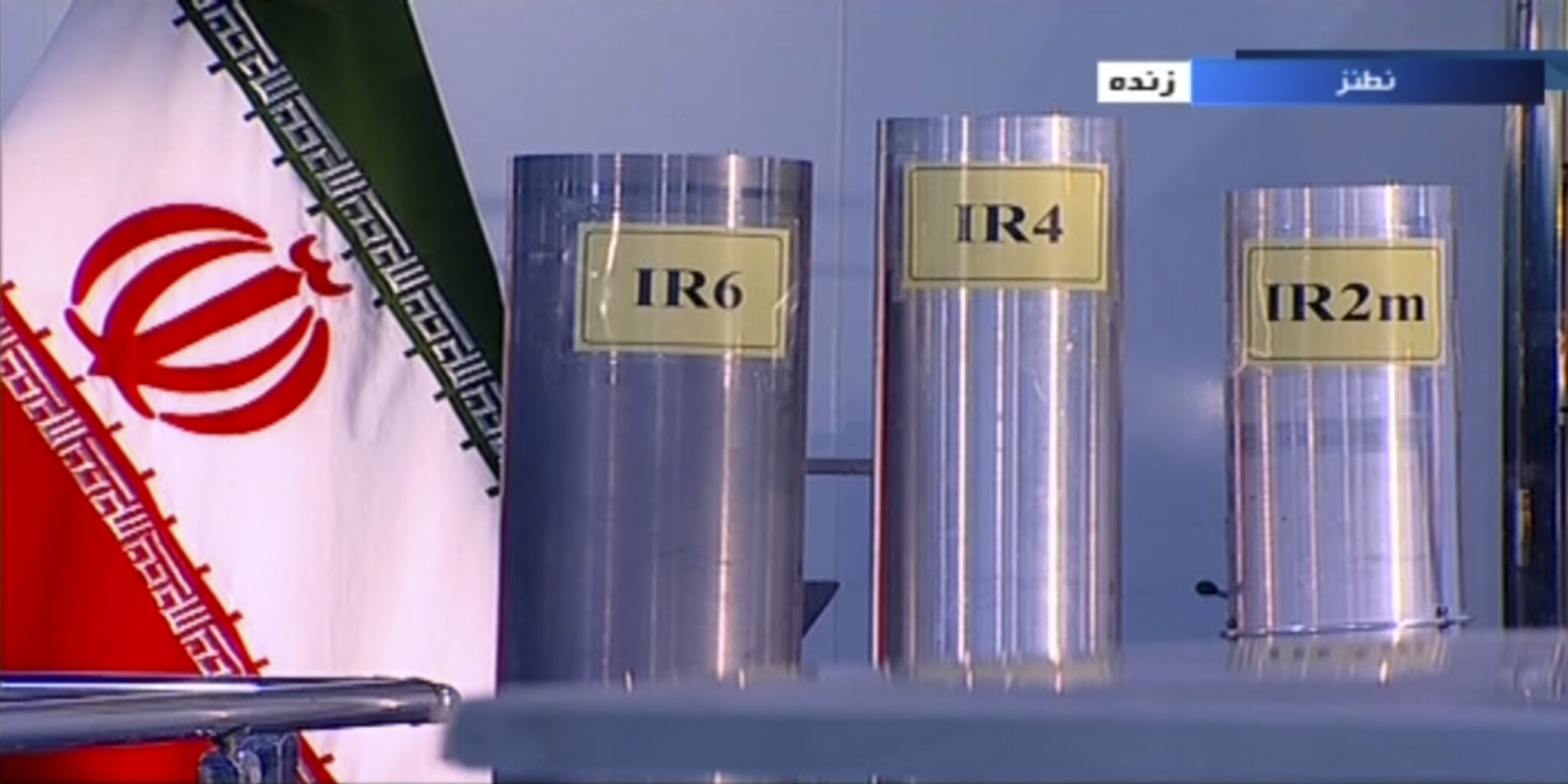
In this June 6, 2018 frame grab from the Islamic Republic Iran Broadcasting, IRIB, state-run TV, three versions of domestically-built centrifuges are shown in a live TV program from Natanz, an Iranian uranium enrichment plant, in Iran. (IRIB via AP, File)

The Iranian centrifuge production site said targeted in a drone attack Wednesday was reportedly on a list of targets that Israel presented to the Trump administration last year.

Israel proposed hitting the Iran Centrifuge Technology Company, or TESA, to former US president Donald Trump along with then-secretary of state Mike Pompeo and Gina Haspel, at the time director of the CIA, an intelligence source told The New York Times.

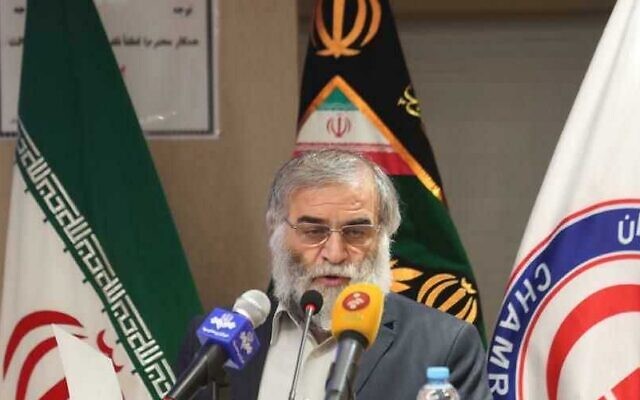
The source said that Israel also suggested striking Iran’s uranium enrichment site at Natanz and assassinating Mohsen Fakhrizadeh, a scientist who began the country’s military nuclear program decades earlier.

Fakhrizadeh was killed in November 2020 in an attack Iran blamed on Israel, while a mysterious explosion damaged a large number of centrifuges at the Natanz plant in April 2021. Israel’s former Mossad spy agency chief recently indicated in an interview given after he left office that Israel was behind that incident.

The TESA factory was tasked with replacing the damaged centrifuges at Natanz and also produces more advanced centrifuges that can more quickly enrich uranium, The Times report said.

The intelligence source said that Israel’s campaign against Iran’s nuclear program had the blessing of the Trump administration.

Iranian nuclear scientist Mohsen Fakhrizadeh. (Agencies)

A small quadcopter drone was used in the attack on TESA, the report said, citing an Iranian source who was not identified.

The drone was apparently launched from within Iran, not far from the site, and succeeded in hitting the target, according to the Iranian source familiar with the incident, the report said. However, the source did not know if it caused any damage.

Following Wednesday’s attack, Iran’s aviation authority said that a new law will require all civilian drones to be registered on a government website within six months. The drones will then be issued licenses, the report said.

Official Iranian media said the target of Wednesday’s strike was a facility that belongs to Iran’s Atomic Energy Organization in the city of Karaj, northwest of Tehran, known as the Karaj Agricultural and Medical Research Center.

Unverified reports from Iranian opposition-aligned outlets said the specific target of the attack was a factory that manufactures parts for Iran’s centrifuges.

Iranian media maintained that the attack had failed and “left no casualties or damages and was unable to disrupt the Iranian nuclear program.”

Despite the official Iranian claims to the contrary, the strike caused damage to the facility, according to unsourced reports in Hebrew media on Wednesday evening. They could not be independently confirmed.

The Iranian town of Karaj (Mojtaba Momeni/Wikimedia Commons)

While Iran maintains that the Karaj facility is used for civilian purposes, it has been subjected to United Nations, European Union and American sanctions since at least 2007 for being involved in Iran’s nuclear and ballistic missile programs. The US lifted those sanctions under the 2015 nuclear deal, but then reimposed them in 2018 when Trump unilaterally withdrew from the accord.

Iran did not identify who was behind the attack, though it has accused Israel of conducting similar strikes on its nuclear facilities in recent years.

In April, Iran’s underground Natanz nuclear facility experienced a mysterious explosion that damaged some of its centrifuges. Last July, unexplained fires struck the advanced centrifuge assembly plant at Natanz, which authorities later described as sabotage. Iran now is rebuilding that facility deep inside a nearby mountain.

Iran also blamed Israel for the November killing of Fakhrizadeh.

In a bombshell interview earlier this month, the former head of the Mossad spy agency all but confirmed that Israel was behind both the Natanz blast and the killing of Fakhrizadeh.

More generally, Cohen said: “We say very clearly [to Iran]: We won’t let you get nuclear weapons. What don’t you understand?”

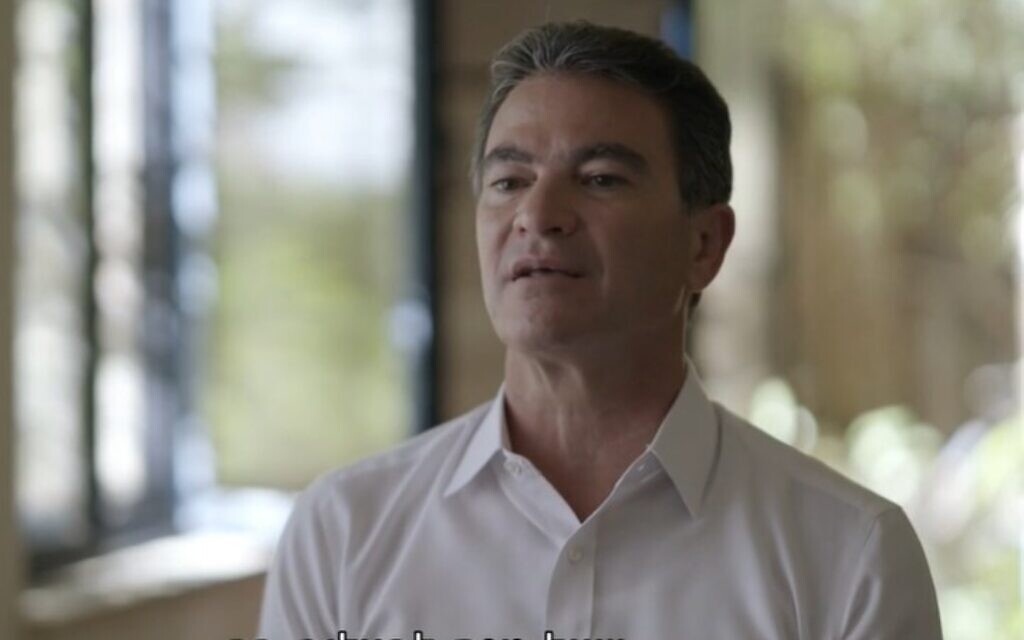
Former Mossad chief Yossi Cohen in an interview with Channel 12 broadcast on June 10, 2021 (Screencapture)

In August 2019, a drone attack targeted a facility run by the Iran-backed Hezbollah terror group in the Lebanese capital of Beirut. Though they did not take responsibility, Israeli officials said the site manufactured vital parts for Hezbollah’s precision-guided missiles. Hezbollah blamed Israel for the attack.

Wednesday’s New York Times report said That attack was carried out by tiny armed drones that took off from the coast near Beirut and that the drone operators were picked up by a submarine.

Earlier this week Iran’s southern Bushehr nuclear power plant was temporarily shut down over a “technical fault,” the country’s atomic energy body said. The statement said the plant will be reconnected to the grid and the issue will be resolved “in a few days,” but did not elaborate further.

Wednesday’s attack came as the US and Iran — through intermediaries — were negotiating a mutual return to the 2015 nuclear deal, known formally as the Joint Comprehensive Plan of Action. When Trump abrogated the agreement in 2018, he put in place a crushing sanctions regime, which prompted Iran to also abandon the accord a year later, enriching more uranium and at greater levels of purity than was permitted under the deal, as well as taking part in other forms of proscribed nuclear research.

Iran’s uranium enrichment is a key talking point at negotiations in Vienna to revive the deal.

Israel staunchly opposes US President Joe Biden’s plan to reenter the JCPOA, which he has said he’s prepared to do, provided Iran returns to compliance with the agreement.

In an apparent effort to ramp up pressure during these negotiations, Iran in April boosted its uranium enrichment to 60 percent purity, bringing it closer to the 90% purity threshold for full military use and shortens its potential “breakout time” to build an atomic bomb — a goal the Islamic Republic denies.

Iran has always denied seeking a nuclear weapon, but as it dropped its commitments to the deal it began enriching uranium to levels that the International Atomic Energy Agency said are only sought by countries aiming to build a weapon.

Judah Ari Gross contributed to this report.