Archive for June 22, 2021

US government SEIZES website of Iran’s Press TV, two other media outlets — RT World News

June 22, 2021
  • Visitors to the three domains were greeted on Tuesday with a notice that they were seized under US laws that allow civil and criminal forfeiture of property involved in “trafficking in nuclear, chemical, biological, or radiological weapons technology or material, or the manufacture, importation, sale, or distribution of a controlled substance.”

22 Jun, 2021 17:05 / Updated 14 seconds ago

US government SEIZES website of Iran’s Press TV, two other media outlets

©  https://www.presstv.com/

The seizure notice by the US Department of Justice also invokes a law governing presidential authority in dealing with “unusual and extraordinary threat; declaration of national emergency,” which includes the Iran Nonproliferation Amendments Act of 2005 and the ironically named Iran Freedom Support Act of 2006.

Launched in July 2007, Press TV is the international English-language service of the Islamic Republic of Iran Broadcasting (IRIB), Tehran’s state media agency. Al-Alam goes back to 2003 and is broadcast in Arabic, Farsi and English to audiences in the Middle East and the Mediterranean.

Al-Masirah is not owned by Iran, but by Ansarullah – the movement of the Houthis in Yemen, a faction the US has accused of being “proxies” of Iran on account of them being Shia Muslims and resisting the invasion of Yemen by Saudi Arabia since 2015. The TV channel is headquartered in Beirut, Lebanon.

Neither the US nor the Iranian authorities have commented on the seizures just yet. Meanwhile, the NGO Yemen Solidarity Council condemned the “the deliberate silencing of the Yemeni voice by the American regime.”

Washington’s move comes just a day after the newly elected Iranian President Ebrahim Raisi urged the US to lift all sanctions on Tehran and rejoin the 2015 nuclear deal, negotiated by the Obama administration but unilaterally repudiated by President Donald Trump in 2018.

Raisi called on the US to “live up to your commitments” in the deal, known as the Joint Comprehensive Plan of Action (JCPOA). He also said the Iranian ballistic missile program was “not up for negotiation.”ALSO ON RT.COMForeign policy won’t be limited by nuclear deal, says Iran’s president-elect, ballistic missile program is non-negotiable

While the Trump administration took a hard-line approach to Iran, imposing unprecedented sanctions and even assassinating a senior Islamic Revolutionary Guard Corps general – resulting in Iranian missile strikes against US bases in Iraq – it never moved against media outlets. The Biden administration was thought to be open for relaxing tensions.

Just last week, Iranian negotiators said they had reached a deal with their US counterparts to lift the Trump-era sanctions.

In Washington, IDF chief warns US against rejoining Iran nuclear deal

June 22, 2021


Meeting with American counterpart, Kohavi lays out Israeli opposition to 2015 accord, saying it paves way to an Iranian bomb

By JUDAH ARI GROSS21 June 2021, 10:58 pm  

IDF Chief of Staff Aviv Kohavi, center-right, and US Chairman of the Joint Chiefs of Staff Mark Milley, center-left, salute outside the US Department of Defense in Washington, DC, on June 21, 2021. (Israel Defense Forces)

Military chief Aviv Kohavi warned American officials against their government’s plan to reenter the 2015 nuclear deal this week during a visit to Washington, DC, as part of a last-ditch effort by Israel to affect the ongoing negotiations between the United States and Iran in Vienna.

The Israel Defense Forces chief of staff arrived in the United States on Sunday and spent the past two days in meetings with Chairman of the Joint Chiefs of Staff Mark Milley and US Secretary of Defense Lloyd Austin in the Pentagon, the military said.

“The chief of staff presented the failures of the current nuclear deal, which allow Iran to make significant advances in the coming years in the quantity and quality of centrifuges and in the amount and quality of enriched uranium, and he stressed the lack of oversight in the area of developing a nuclear weapon,” the IDF said in a statement.

Kohavi’s visit to the US, which was delayed due to last month’s Gaza conflict, came as indirect talks between Washington and Tehran picked up steam, following the election last week of hardliner Ebrahim Raisi as Iran’s next president.

Both the current and former Israeli governments have voiced opposition to the US rejoining the 2015 nuclear deal, known formally as the Joint Comprehensive Plan of Action, which former US president Donald Trump abrogated in 2018, putting in place a crushing sanctions regime that prompted Iran to also abandon the agreement a year later.

US President Joe Biden has repeatedly stated his intention to return to the agreement, provided Tehran comes back into compliance with it as well. The Biden administration has said it plans to use the JCPOA as a starting off point for brokering a “longer and stronger” nuclear deal, though critics — including those in Israel — say that once the US eases the sanctions in place on Iran and Iranian officials as it returns to the JCPOA, Tehran will no longer have an incentive to negotiate.

Several delegations of Israeli officials, including former Mossad chief Yossi Cohen and National Security Adviser Meir Ben-Shabbat, have traveled to the US in recent months in an effort to dissuade the Biden administration from reentering the agreement.

Iran’s Governor to the International Atomic Energy Agency (IAEA) Kazem Gharib Abadi attends the IAEA Board of Governors meeting at the agency’s headquarters in Vienna, Austria, on June 7, 2021. (JOE KLAMAR / AFP)

In the past, US officials have said that the concerns raised by Israel during these talks will not change the White House’s plans.

Shortly after Biden’s inauguration in January, Kohavi made waves with a particularly blunt speech arguing against the US rejoining the deal, calling it a “bad” plan.

The newly inaugurated Israeli government has said that, while it opposes Biden’s plan to rejoin the deal, it would voice its concerns behind closed doors.

Kohavi, however, has kept his criticism firmly in public.

“The chief of staff emphasized the inherent danger in returning to the original nuclear agreement and stressed that everything must be done to prevent Iran from obtaining military nuclear capabilities,” the IDF said.

During his meeting with Milley, which was attended briefly by Austin, Kohavi also discussed Iran’s expansionist efforts in the Middle East, the efforts being made by the Iran-backed Hezbollah terror group to develop precision-guided missiles, and Israel’s recent conflict in the Gaza Strip with Hamas, the military said.

“The strategic and military alliance with the United States represents a facet of the State of Israel’s national security that is of the utmost importance. Cooperation between the militaries is a force multiplier and of growing mutual interest in recent years, and we will continue to work together against our shared threats in the Middle East,” Kohavi said during the meeting.

Pentagon officials largely refrained from discussing the contents of the meeting, with a spokesperson saying only that Milley “reaffirmed the US commitment to its relationship with Israel.”

Kohavi was joined on his nearly week-long trip by Maj. Gen. Tal Kalman, who leads the IDF’s counter-Iran efforts, as well as Brig. Gen. Amit Sa’ar, who leads Military Intelligence’s Research Division, and Israel’s defense attaché in Washington, Maj. Gen. Yehuda Fuchs, who is due to complete his tenure shortly.

In addition to Milley and Austin, the IDF delegation was scheduled to meet US National Security Adviser Jake Sullivan, the head of the US Central Command Kenneth McKenzie, the head of the US Special Operations Command Richard Clark and other top American defense officials.

Kalman, Sa’ar, and Fuchs will also hold their own meetings with additional American defense officials, according to the IDF.

Kohavi was initially scheduled to travel to Washington in late April, but his trip was called off in light of rising tensions at the time between Israel and the Hamas terror group in the Gaza Strip, which culminated in a vicious 11-day battle last month.

Kohavi was also scheduled to meet with heads of think tanks and other “thought shapers” in the US, as part of Israel’s public relations efforts before returning to Israel on Friday, the military said. Deputy Chief of Staff Eyal Zamir is commanding the IDF in Kohavi’s absence.

Jacob Magid contributed to this report.

Israel Has Shot Down Drones With An Airborne High-Power Laser

June 22, 2021

Israel’s airborne laser program aims to add to its multi-layered air defense system that is increasingly tasked with countering low-end drone attacks.

BY BRETT TINGLEY JUNE 21, 2021

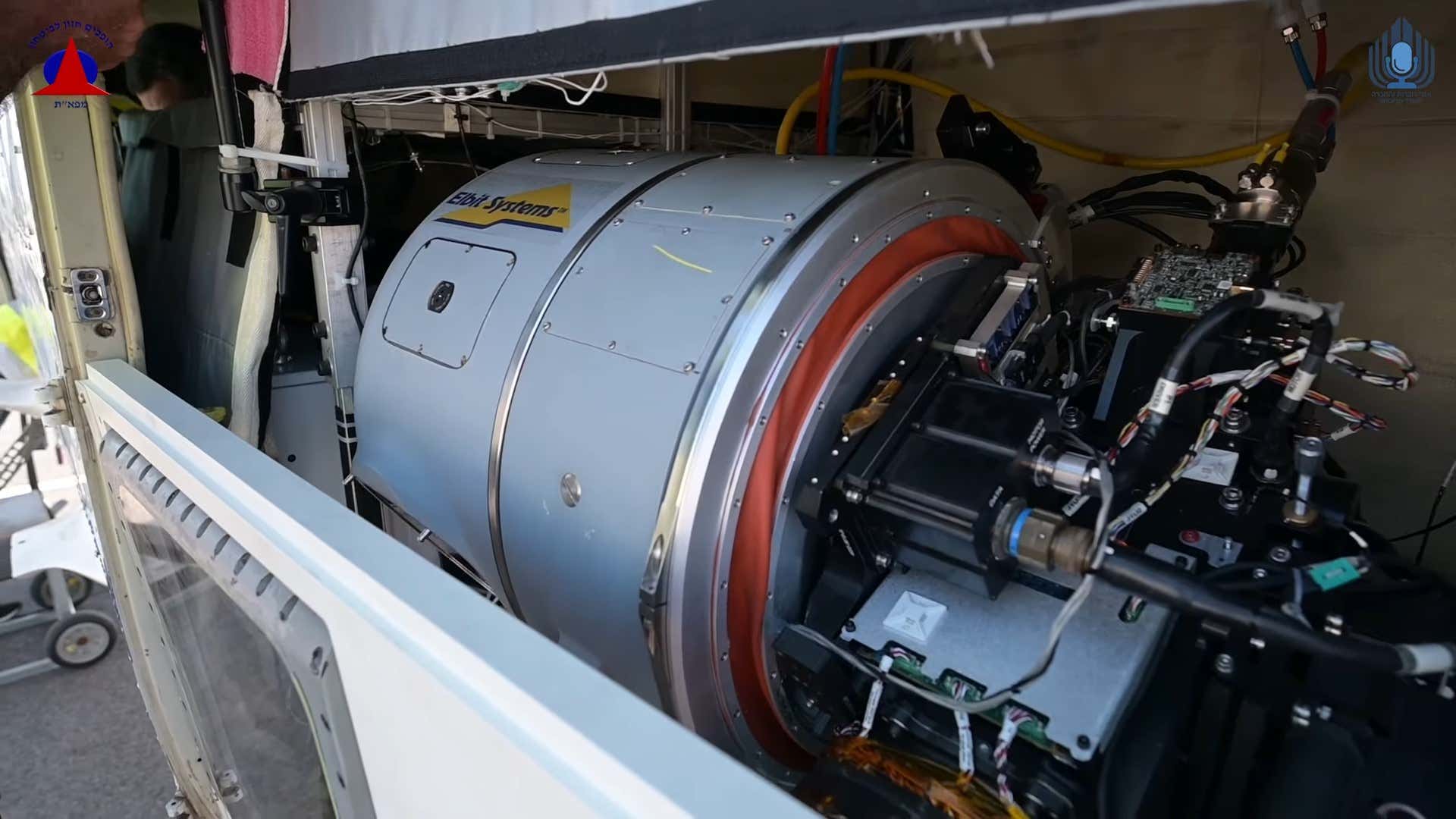
Israel’s Ministry of Defense announced today that it successfully intercepted multiple drones during a test of an airborne high-power laser weapon. The demonstrated system is being hailed as “a strategic change in the air defense capabilities of the State of Israel” and could potentially add a vital capability to Israel’s multi-layered integrated air defense system. While the new high-power laser has been tested against UAVs, statements made by officials involved with the demonstration show that the system is also intended to defend against rocket attacks.

The demonstration was carried out by the Israeli Air Force’s (IAF) “Yanat” missile test unit, Israel’s Directorate of Defense Research and Development (DDR&D), and Israeli defense contractor Elbit Systems. A press release accompanying the announcement states that multiple unmanned aerial vehicles (UAV) were intercepted and destroyed above a test range using the new airborne laser system. Footage shared online shows the system deployed on a Cessna 208 Caravan behind a windowed panel on the left side of the aircraft’s rear fuselage. Few specifics about the laser system’s capabilities have been released, but DDR&D’s Head of Research and Development, Brig. Gen. Yaniv Rotem, stated that the system successfully intercepted drones at a range of more than 1km.

Airborne laser systems offer advantages over ground-based laser systems due to the fact that they are carried aboard aircraft and therefore can be rapidly moved between locations. This offers added flexibility to respond to UAV threats wherever they might present themselves and provides greater coverage over a much wider area, especially when compared to a stationary system. 

An airborne counter-drone system also will be less impacted by atmospheric distortion than its ground-based counterparts. Laser directed energy weapons, in general, have limitations, such as being highly susceptible to atmospheric conditions, clouds, and smoke. As with any weapon system, size, weight, thermal loads, and power also significantly limit how effective they are against various threats or even how broadly they can be deployed on different aircraft. You can read all about these issues in this past piece of ours

Israel’s new airborne laser system is claimed to be able to “effectively intercept long-range threats at high altitudes regardless of weather conditions,” despite the fact that Israel’s Ministry of Defense has previously stated that laser systems do not work well in inclement weather or through cloud cover. Still, laser systems offer advantages over kinetic interceptors, in that cost-per-intercept is much lower despite the potential for high up-front procurement and research and development costs of the laser systems themselves.

The aforementioned cost per intercept advantage is a significant catalyst in the development of Israel’s new airborne laser defense system. Israel’s Defense Minister Benny Gantz said the demonstration of the new system is “significant both in terms of cost-effectiveness and defense capabilities” and “will add a new layer of protection at greater ranges and in facing a variety of threats – securing the State of Israel while saving the costs of interception.” 

While the most recent demonstration saw Israel’s new high-power laser shoot down multiple UAVs only, statements made by those developing the program show that this system could also offer a new tool in Israel’s growing arsenal of rocket defenses. Oren Sabag, General Manager of Elbit Systems Intelligence, Surveillance, Target Acquisition and Reconnaissance (ISTAR) Division, said that “that the use of a high-power laser to carry out low-cost airborne interception of rockets and hostile unmanned aircraft, closer to their launching areas and away from population centers, offers a significant change in Israel’s defense capabilities.”

Last year, Israel’s Ministry of Defense announced an unspecified “technological breakthrough” related to an airborne laser system being developed in conjunction with Elbit Systems. That system was claimed to cost just one dollar per intercept, compared with the “tens of thousands of dollars that each Iron Dome interceptor missile costs.” Israel is looking at developing an array of laser weapons that also includes drone-mounted and ground-based systems.

Israel’s new airborne high-power laser system could complement Israel’s existing multi-tier missile defense network, which includes the Iron Dome, PatriotDavid’s Sling, and Arrow surface-to-air missile systems, as well as manned fighters and helicopters. The need for a multi-layered approach for lower-end threats presented itself in recent clashes when continuous mass rocket attacks launched by Palestinian militants tested the Iron Dome’s capabilities by overwhelming it with sheer numbers.

Iron Dome and its Tamir interceptors are claimed to be capable of shooting down drones in addition to rockets and short-range artillery, but it remains unclear how effective that capability is. In the most recent round of clashes, the IDF reported shooting down unmanned aircraft flying out of Gaza, but it’s unknown which defense systems were responsible for those intercepts.

Militants have been increasingly using drones to attack Israel, and these low-end threats continue to present challenges for existing defense systems designed to intercept rockets or missiles that follow more predictable ballistic trajectories. The proliferation of low-end drones capable of carrying out improvised attacks is becoming a worldwide security issue, and even relatively small-scale drones are capable of creating large-scale impact when targeting infrastructure or high-value targets.

One could see how Israel could deploy several more mature versions of this system in the skies above key areas such as Gaza or along the border with Lebanon during a time of crisis, in essence providing anti-drone screening in a very efficient package. Migrating the capability to an unmanned system in the future would likely be ideal, enabling a loitering drone defense system. 

It’s also worth considering that one of the key benefits of lasers are they they can, at least in principle, fire indefinitely, so long as they have a sufficient and consistent power supply. This is important when considering questions about whether it is possible to simply overwhelm existing defense systems like Iron Dome. At the same time, each individual laser system can only engage one target at a time, and there could be significant lag between individual engagements depending on how long the high-power laser takes to charge up. 

The ongoing development of Israel’s airborne high-power laser system aimed at intercepting and defeating UAV threats demonstrates how crucial anti-drone capabilities have become when it comes to air defense. While airborne laser systems have been developed and tested to varying degrees of success by the U.S. Air Force as far back as the 1980s, Israel is the first to actually deploy a counter-drone laser aboard an aircraft and effectively make it work, at least from what has been publicly disclosed. The latest claims represent a technological triumph for the Israel Defense Forces which will likely influence other air arms around the globe.

What remains to be known is just what exact type of laser system is being used here and what its power output and other limitations are. For the test setup, it clearly has limited field of regard, but that will surely change over time. We also don’t know exactly what concept of operations would be employed operationally for such a system like this. Will organic sensors onboard the aircraft provide initial detection and targeting or will that come from external sources alone? Also, aboard which type of platform will this laser unit see its first operational deployment?

The U.S. Air Force is still slated to deploy its first operational airborne laser on an AC-130 gunship soon, but that system is being eyed more for air-to-ground roles. Meanwhile, a far more ambitious initiative is underway to put a podded laser defensive system on a fighter aircraft. All this is fine and well, but Israel’s approach to provide a counter-drone capability with an airborne laser, something U.S. Navy ships haven’t even received in a truly operation state, is quite intriguing. Although it is worth mentioning that there may be undisclosed work underway in the U.S. that is focusing on developing a similar system

Still, there are aforementioned challenges that remain. It will be interest to see how the IAF and its research wings overcome these challenges as they try to migrate their airborne laser system into an operational state. 

Contact the author: Brett@TheDrive.com