Archive for May 2021
Ignoring rocket fire, most foreign media focus on Israel’s airstrikes
May 11, 2021The IDF launches “significant” operation against Palestinian rocket offensive. Iran pulls the strings from Beirut
May 11, 2021IDF strikes Gaza, Iran manages Hamas rockets
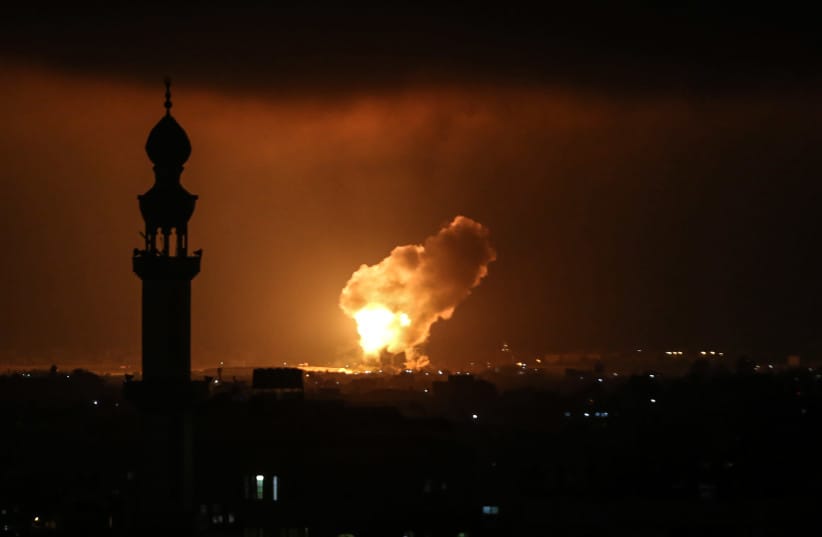
After 7 rockets were aimed at Jerusalem from Gaza on Saturday, Israel’s security cabinet ordered the IDF to go forward with a “significant” operation against Palestinian terrorist targets in the Gaza Strip. The operation to seriously incapacitate Hamas and Islamic Jihad, which by Tuesday morning, May 11, had shot 250 rockets into Israel, was confined to an aerial offensive to be rolled out over several days. Ground incursions were ruled out for now. Its designation as “Guardian of the Walls” denoted the operation’s defensive rather than offensive nature.
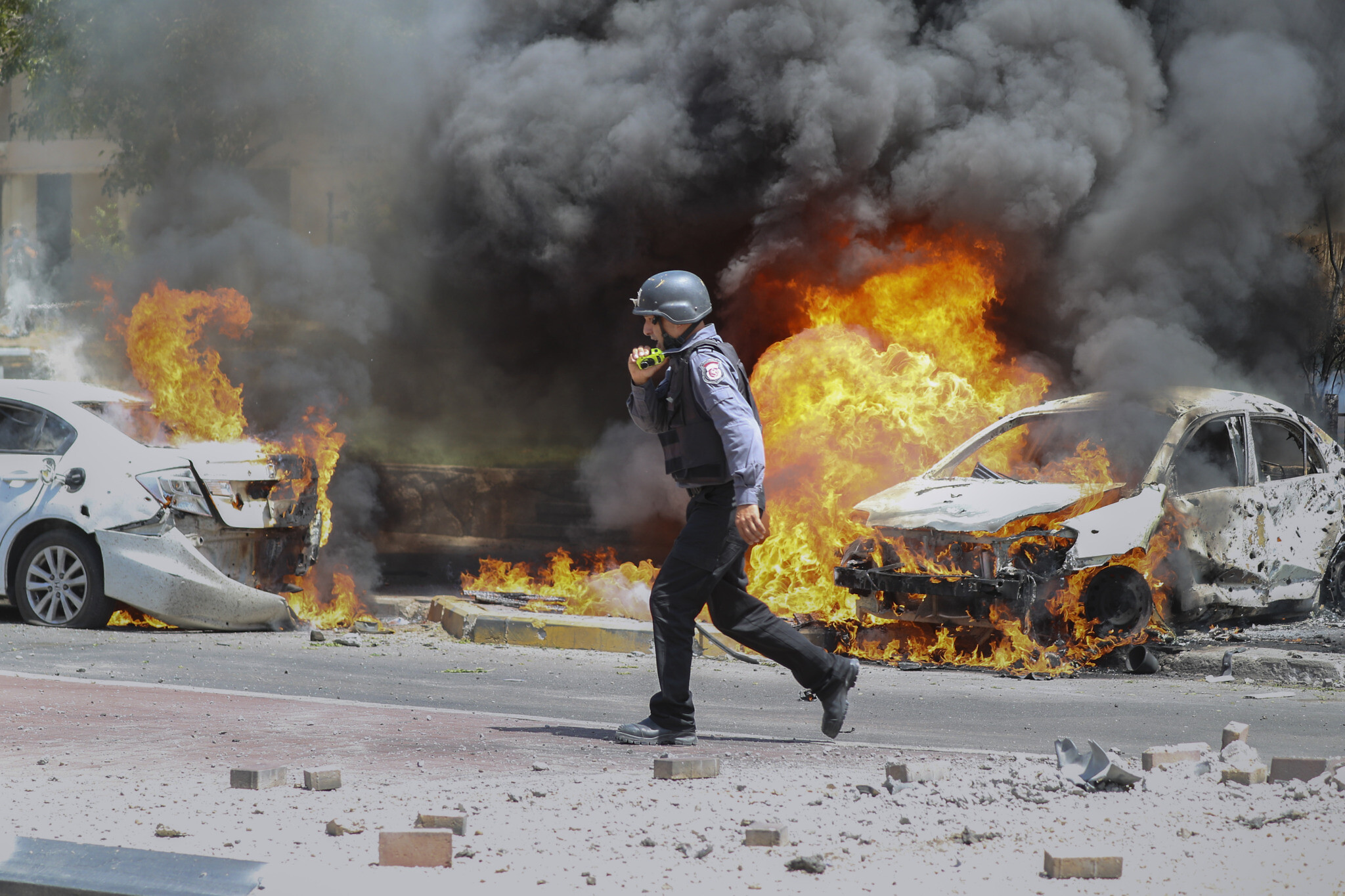
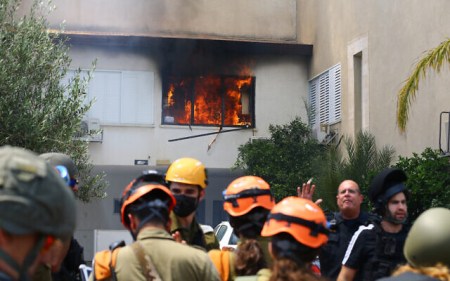
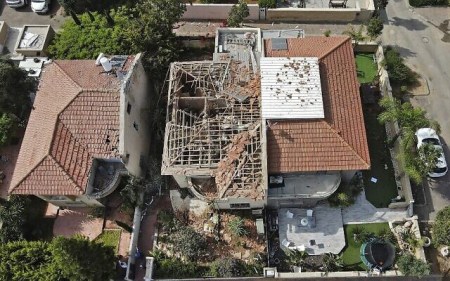
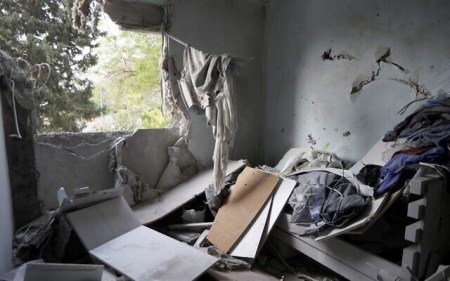
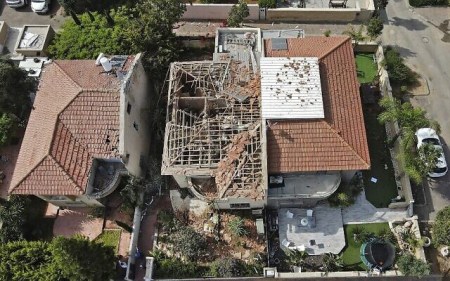
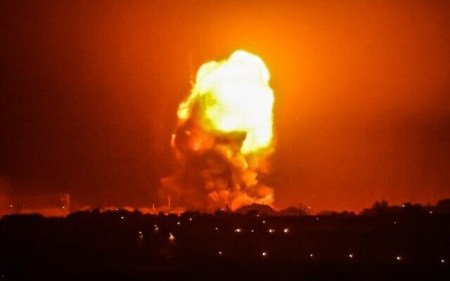
The guidelines given to the IDF and its Air Force had the same goal of “containment” aimed at restoring calm, which the police had received in its effort to quell Palestinian mob violence in Jerusalem. (Picture shows blaze caused by rocket at Jerusalem hill village.)
Hamas’ ultimatum to Israel on Saturday, followed by a 7-rocket barrage on Jerusalem, betrayed the regional slant acquired by the unending Israel-Palesitnian duel. When Israel ignored the first ultimatum, Hamas’ military arm’s spokesman, Abu Obeida issued another one after midnight, warning Israel to “end the siege of a group barricaded inside Al Aqsa Mosque.” Jihad leader Ziyad Nahala chipped in to say: “Israel started the aggression in Jerusalem and if does not stop, there is no point in diplomatic efforts for a ceasefire.”
DEBKAfile’s intelligence sources reveal that, throughout this interchange on Monday, the Palestinian organizations of the Gaza Strip were being directed by a shadowy master: Iran had been managing the crisis through its Lebanese proxy Hizballah from Beirut. In fact, Tehran had set up at Hizballah HQ a joint war-room manned by the Revolutionary Guards, Hizballah and the Palestinian Hamas, Popular Front and Islamic Jihad. The intensive efforts made by Egypt, Jordan and Qatar to negotiate a ceasefire slammed fruitlessly against this wall.
2 women killed by rockets in Ashkelon amid massive barrages from Gaza
May 11, 2021Rocket directly hits home of elderly woman; dozens of Israelis hurt in unremitting volleys on south; Islamic Jihad commanders said among those killed in IDF strikes
Two Israeli women were killed and dozens injured, including two seriously, when Palestinian terror groups in the Gaza Strip fired massive barrages of rockets at southern Israel throughout Tuesday, drawing deadly retaliatory airstrikes from the Israel Defense Forces.
The deaths marked the first Israeli fatalities in the round of fighting with Gaza terrorist groups that began Monday evening, which has seen hundreds of rockets fired at Israeli territory.
The Hamas terror group claimed that at one stage on Tuesday it fired 137 rockets in around five minutes in an apparent attempt to overwhelm the Iron Dome missile defense system.
In a subsequent barrage on the southern coastal city of Ashkelon, less than an hour later, two women were killed by rockets in apparently separate hits. There were no immediate details on their identities.
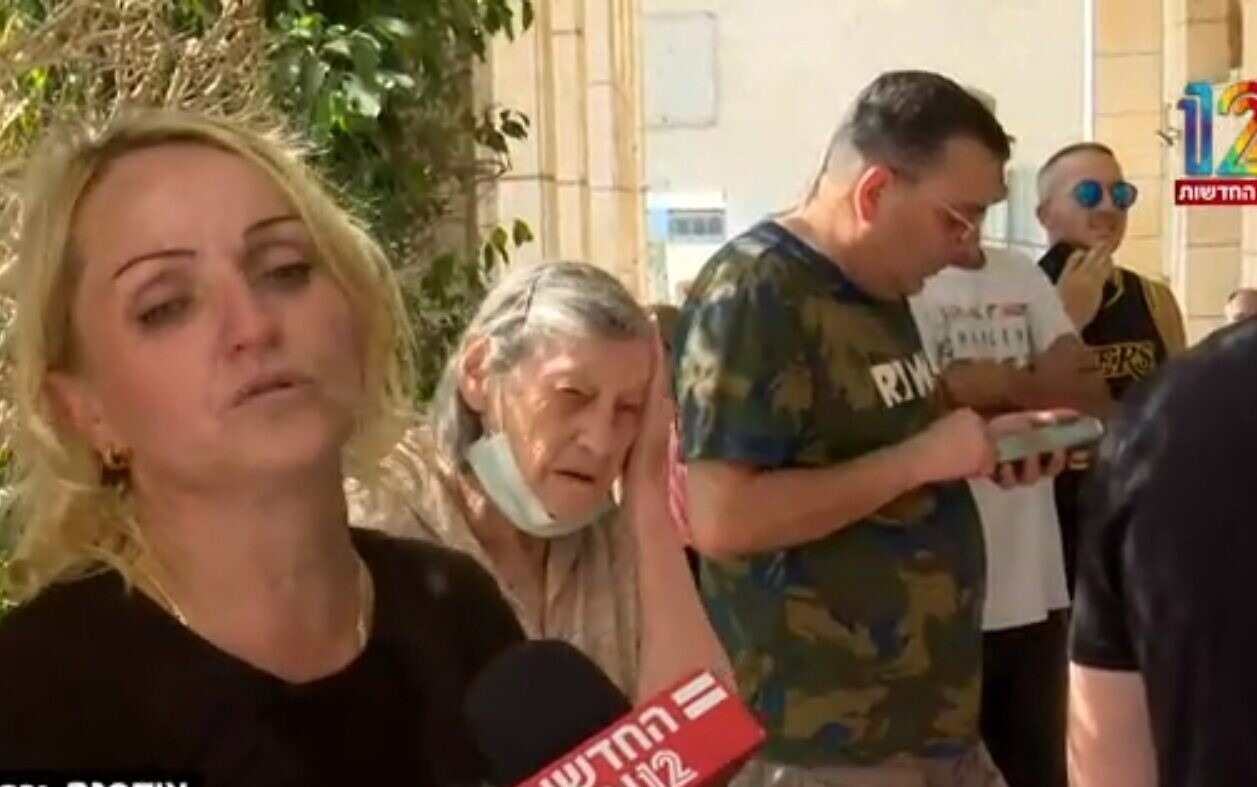
Channel 12 reported that the deadly rocket attack directly struck a home where an elderly woman and her caregiver, who did not manage to get to a public shelter in time, lived. One of the women was killed, the network said, without identifying the victim.
The network reported that the shelter is at least a minute’s run away from the woman’s home. The home did not have a safe room of its own.
The Barzilai Medical Center in Ashkelon said that it treated 74 casualties, including two seriously wounded and two in moderate condition. Forty-nine people received treatment for light injuries, with the remainder suffering from anxiety.
With a number of buildings in the city suffering direct hits over the course of the day, and concerns over the number of residential buildings without bomb shelters, the Israel Defense Forces instructed residents to remain in reinforced areas. The restriction was later lifted — followed, minutes later, by additional rocket alert sirens on the city.
Ashkelon Mayor Tomer Glam said some 25 percent of residents don’t have access to a protected area when rockets are fired at the city.
“It is impossible when normal life becomes a state of emergency within minutes,” he told Army Radio. “There are houses from the 1960s where there is no basic protection — it is time for treasury officials and decision-makers to understand what is happening here in the city.”
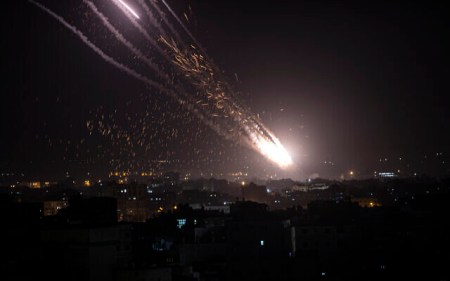
Hundreds of rockets were fired at Israel from Monday evening through Tuesday afternoon, many of which were intercepted by Iron Dome missile defense batteries while others fell short of their targets and landed inside the Strip.
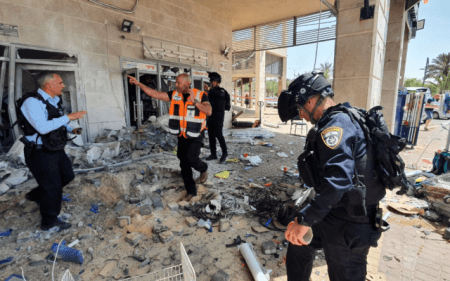
Tuesday afternoon saw the rocket attacks shift slightly northward, with projectiles fired at Ashdod including a rocket that directly hit a residential building. Buildings were also hit in Ashkelon, including an empty school.
On Monday night, a rocket directly struck a house in the Sha’ar Hanegev region, damaging it but not injuring its occupants.
In the early hours of Tuesday, a missile hit a residential building in Ashkelon, wounding six Israelis, four of them members of the same family: parents in their 40s, an 8-year-old and an 11-year-old. The father was seriously hurt with a head wound, and the others sustained light injuries from shrapnel.
The assaults continued Tuesday after a night of almost constant rocket fire on Israeli communities near the Gaza Strip and as the IDF conducted strikes on more than 100 targets in the coastal enclave, as part of what it has called “Operation Guardian of the Walls,” the military said. The previous day saw a major outbreak of violence from Gaza, including rare rocket fire on Jerusalem, where Palestinians have been clashing with police for days.
In response to the ongoing rocket rockets, IDF fighter jets, aircraft and tanks struck some 130 targets in the Gaza Strip, most of them associated with Hamas, but also some linked to other terror groups in the enclave, including the Palestinian Islamic Jihad.
Hamas and the Palestinian Islamic Jihad terror groups reported that several high-ranking commanders were killed in Israeli raids, including three top PIJ leaders in a drone strike on a building in the upscale Rimal neighborhood of Gaza City.
One of those killed was the brother of another top PIJ commander, Baha Abu al-Ata, who was killed in an Israeli strike in November 2019, kicking off a major round of fighting in the Strip. Islamic Jihad vowed revenge for the death of the three commanders in its armed wing, saying the response will be “harsh.”
Additionally, the IDF said it killed the head of Islamic Jihad’s special rocket unit, in an operation carried out in cooperation with the Shin Bet. Sameh Abed al-Mamluk was killed along with several other senior rocket officials, the army said.
According to the IDF, the military’s targets also included the home of a top Hamas commander, Hamas’s intelligence headquarters in southern Gaza, two attack tunnels that approached the border with Israel, rocket production and storage sites, observation posts, military installations and launchpads.
The IDF said it was also targeting terrorist operatives as they fired rockets or attempted to launch anti-tank missiles at Israel. On Monday, an Israeli man was lightly injured when Palestinian terrorists fired an anti-tank guided missile at his car.
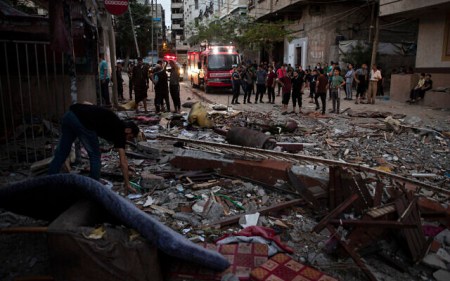
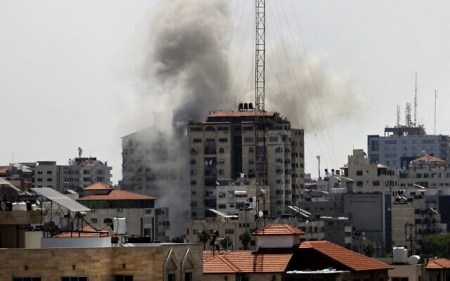
Palestinian media also reported strikes around the southern cities of Rafah and Khan Younis and on an apartment building in the al-Shati camp near Gaza city. A building was also destroyed in Gaza City’s upscale Tel al-Hawa neighborhood.
The Hamas Health Ministry said 28 Gazans were killed, including nine minors, and 125 wounded in the ongoing escalation with Israel. Fifteen Gazans sustained serious injuries, according to Hamas Health Ministry spokesperson Ashraf al-Qidra. Israel said more than half were Hamas fighters.
IDF Spokesperson Hidai Zilberman said a number of those killed in Gaza, including at least three children, were hit by errant rockets fired by Palestinian terrorists, not by Israeli airstrikes.
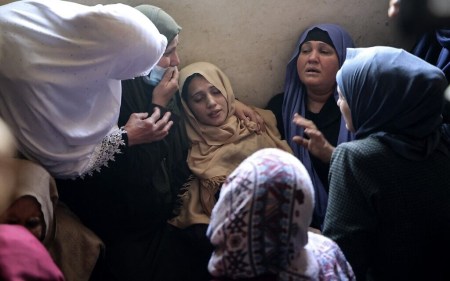
The IDF spokesperson said Israel was taking steps to avoid Palestinian civilian casualties, but that they were liable to occur anyway as Hamas deliberately operates within a densely populated area, using the residents of the Strip as human shields.
Israel on Tuesday showed no indications that it was interested in an immediate ceasefire, as Zilberman said the fighting was expected to last at least several days.
IDF Chief of Staff Aviv Kohavi on Tuesday afternoon gave the military a green light to keep targeting Hamas and PIJ members operating in the Strip and bombing sites connected to the terror groups’ rocket production and storage efforts.
Soldiers from the IDF’s Golani Infantry Brigade and 7th Armored Brigade were sent to the Gaza border as reinforcements and additional troops were called in to aerial defense, intelligence and air force units, the military said. The police said that eight reserve companies of Border Police would be called up to help deal with disturbances across the country.
Zilberman said the military was deploying additional air defenses throughout the country, notably in the Tel Aviv metropolitan area. Tel Aviv had yet to be targeted as of Tuesday afternoon, but the IDF suspected that rocket fire may be directed there as well.
Defense Minister Benny Gantz said the IDF would continue striking Hamas and other terrorists in the Strip until “long-term and complete quiet” is restored. Gantz also threatened Hamas’s leadership, saying its commanders would “be held responsible and pay the price for the aggression.”
In light of the ongoing rocket attacks, Gantz declared the area within 80 kilometers (50 miles) of the Gaza Strip to be under military control, giving the IDF the power to issue directives to civilians there. The IDF ordered schools closed in communities near Gaza on Tuesday and limited gatherings to groups of 10 people outdoors and 50 people indoors. Businesses would be allowed to open only if they had easy access to bomb shelters.
The military also limited gatherings in the Tel Aviv metropolitan area and the Shfela region around Beit Shemesh to 30 people outdoors and 50 people indoors. Schools and businesses there could also only be opened if they had easy access to a bomb shelter. A number of cities in central Israel announced they were preemptively canceling schools on Tuesday as a precautionary measure.
Meanwhile, the Hamas-run Health Ministry in Gaza said that the Strip’s sole power plant was running low on diesel fuel after Israel closed all of its crossings on Monday evening in response to the hundreds of rockets fired.
The coastal enclave normally receives most of its fuel through the Kerem Shalom commercial crossing with Israel, and according to the Gaza Electrical Company, one of the plant’s generators has already been turned off and the plant as a whole will likely shut down “soon” due to lack of fuel, threatening to severely restrict the number of hours of electricity Gazans receive.
Al-Qidra said that an electrical shortage would threaten the effectiveness of Gaza’s health care system.
“This will have a serious effect on public health and the health of our society,” al-Qidra said.
Hamas, which is officially dedicated to the destruction of the State of Israel, took effective control of the Gaza Strip in 2007 from the Palestinian Authority in a violent coup. Since then, Israel has imposed a naval blockade on the enclave, as well as stiff control over what can enter the Strip, maintaining that it is necessary in order to prevent terror groups from smuggling weapons into the area.
The military initially believed that Hamas was not interested in a large-scale conflict with Israel at this time, but that assessment changed over the past two days and the IDF began preparing accordingly.
Palestinian terror groups have tied the attacks to the unrest in Jerusalem connected to both prayer on the Temple Mount during the Muslim holy month of Ramadan and the pending eviction of a number of Palestinian families from their homes in East Jerusalem’s Sheikh Jarrah neighborhood.
Israel has fought three large operations against Hamas and other terror groups in the Gaza Strip since 2008, most recently in 2014 with a 51-day war known as Operation Protective Edge.
Times of Israel staff contributed to this report.
Gaza terrorists fire hundreds of rockets at Israel; IDF pummels Hamas targets
May 11, 2021At least 24 Israelis hurt, one seriously; 23 Palestinians said killed, among them children; military says most were Hamas members or were killed by errant Gazan rockets
Palestinian terror groups in the Gaza Strip fired a massive barrages of rockets at southern Israel throughout Tuesday, wounding at least 24 people and drawing deadly retaliatory airstrikes from the Israel Defense Forces.
The assaults continued a night of almost constant rocket fire on Israeli communities near the Gaza Strip and as the IDF conducted strikes on more than 100 targets in the coastal enclave, as part of what it has called “Operation Guardian of the Walls,” the military said. The previous day saw a major outbreak of violence from Gaza, including rare rocket fire on Jerusalem, where Palestinians have been clashing with police for days.
According to Gaza’s Hamas-run Health Ministry, at least 23 people in the Strip were killed on Monday night and Tuesday, including nine minors. Another 107 Palestinians were injured to varying degrees, the ministry said. The IDF said at least 15 of those killed were members of the Hamas terror group who were launching rockets or anti-tank guided missiles at Israel.
IDF Spokesperson Hidai Zilberman said a number of those killed in Gaza, including at least three children, were hit by errant rockets fired by Palestinian terrorists, not by Israeli airstrikes.
Hamas and the Palestinian Islamic Jihad terror groups reported that several high-ranking commanders were killed in Israeli raids on Tuesday, including two top PIJ leaders in a drone strike on a building in the upscale Rimal neighborhood of Gaza City, one of whom was the brother of another top PIJ commander, Baha Abu al-Ata, who was killed in an Israeli strike in November 2019, kicking off a major round of fighting in the Strip.
IDF Chief of Staff Aviv Kohavi on Tuesday afternoon gave the military a green light to keep targeting Hamas and PIJ members operating in the Strip and bombing sites connected to the terror groups’ rocket production and storage efforts.
The IDF spokesperson said Israel was taking steps to avoid Palestinian civilian casualties, but that they were liable to occur anyway as Hamas deliberately operates within a densely populated area, using the residents of the Strip as human shields.
Israel on Tuesday showed no indications that it was interested in an immediate ceasefire, as Zilberman said the fighting was expected to last at least several days and that the coming hours would be particularly punishing for Hamas.
“We have an intense day ahead of us,” Zilberman told reporters on Tuesday morning, adding, “We have a goal and we will not stop until we’ve reached it.”
Soldiers from the IDF’s Golani Infantry Brigade and 7th Armored Brigade were sent to the Gaza border as reinforcements and additional troops were called in to aerial defense, intelligence and air force units, the military said.
“The chief of staff said the IDF will continue to act determinedly in order to return security to residents of the south, and all headquarters should prepare for a wider conflict, which has no time limit,” the IDF said.
Asked about the potential for a ground invasion or targeted killing of top terrorist commanders, Zilberman said the military “was prepared for anything.”
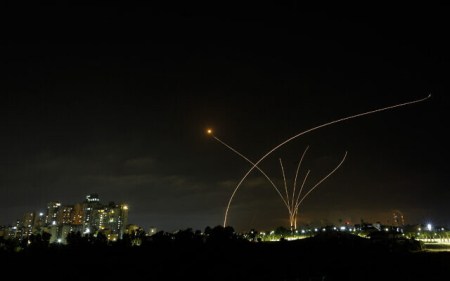
According to the IDF, over 200 rockets and mortar shells were fired from the Gaza Strip toward Israel from 6 p.m. Monday to 6 a.m. Tuesday, dozens of which were intercepted by Iron Dome missile defense batteries. The military said the Iron Dome had a successful interception rate of over 90 percent of projectiles heading toward populated areas.
According to Zilberman, roughly a third of the projectiles fired from Gaza landed inside the Strip.
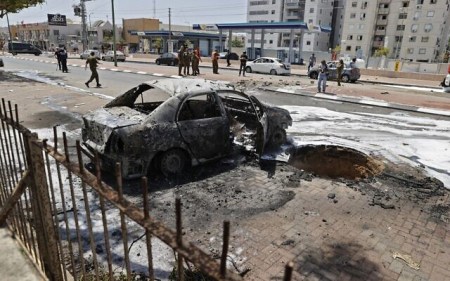
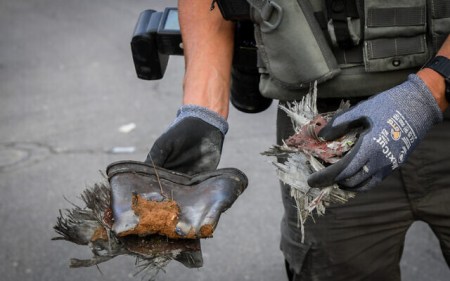
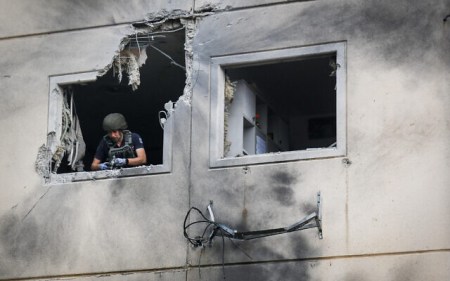
Most of the others landed in open fields, where they caused no injuries, but a small number landed inside Israeli communities, causing damage to nearby buildings and infrastructure. One rocket directly struck a house in the Sha’ar Hanegev region on Monday night, damaging it but not injuring its occupants, and two hit apartment buildings in Ashkelon on Tuesday morning, injuring those inside.
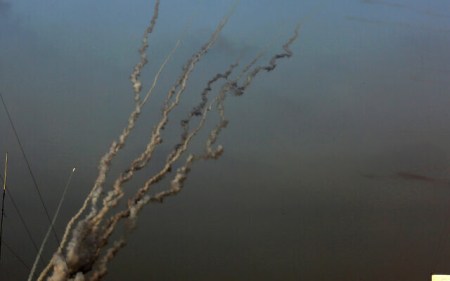
Video footage of the Tuesday morning attack showed dozens of rockets being fired at Ashkelon, with Iron Dome interceptor missiles screaming up into the gray morning sky to try and bring them down.
Six Israelis were wounded in that attack, four of them members of the same family: parents in their 40s, an 8-year-old and an 11-year old. The father was seriously hurt with a head wound, and the rest sustained light injuries from shrapnel. A 63-year-old man was also moderately injured by shrapnel, and a man and a woman in their 80s were lightly injured, medics said. On Monday, an Israeli man was lightly injured when Palestinian terrorists fired an anti-tank guided missile at his car.
In total, Ashkelon’s Barzilai Medical Center and Beersheba’s Soroka Medical Center said they was treating 24 people who were wounded on Monday night and Tuesday morning, 22 of them with light injuries. In addition to those hit by rocket fire, a number of those were hospitalized for injuries sustained while running to bomb shelters, and eight people suffered acute anxiety attacks brought on by rocket sirens, medics said.
In response to the ongoing rocket rockets, IDF fighter jets, aircraft and tanks struck some 130 targets in the Gaza Strip, most of them associated with Hamas, but also some linked to other terror groups in the enclave, including the Palestinian Islamic Jihad.
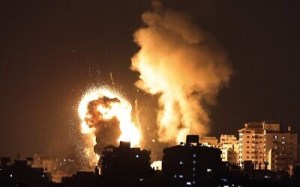
According to the IDF, they included the home of a top Hamas commander, Hamas’s intelligence headquarters in southern Gaza, two attack tunnels that approached the border with Israel, rocket production and storage sites, observation posts, military installations and launchpads. The IDF said it was also targeting terrorist operatives as they fired rockets at Israel. The military released footage of some of its strikes, including the attack on the Hamas officer’s apartment building (below).
Hamas in Gaza said it had launched the morning attack on Ashkelon in response to the IDF strike on the commander’s apartment building. The terror group said it would “turn Ashkelon into hell” if Israel targeted civilians in Gaza.
Palestinian media also reported strikes around the southern cities of Rafah and Khan Younis and on an apartment building in the al-Shati camp near Gaza city. A building was also destroyed in Gaza City’s upscale Tel al-Hawa neighborhood.
Zilberman said the military was deploying additional air defenses throughout the country, notably in the Tel Aviv metropolitan area. Tel Aviv had yet to be targeted as of Tuesday morning, but the IDF suspected that rocket fire may soon be directed there as well.
Earlier, the Hamas military wing issued an ultimatum that it would carry out a massive attack by 2 a.m. if Israel did not vacate its forces from the Temple Mount. It later claimed that it had suspended plans for the attack after police withdrew from the holy site.
There was no confirmation from Israel that police had left the compound.
Defense Minister Benny Gantz said the IDF would continue striking Hamas and other terrorists in the Strip until “long-term and complete quiet” is restored.
Gantz also threatened Hamas’s leadership, saying its commanders would “be held responsible and pay the price for the aggression.”
The waves of rocket fire began at 6 p.m., the time Hamas had earlier threatened it would attack Israel if it did not remove its security forces from the Temple Mount and the neighborhood of Sheikh Jarrah in East Jerusalem, following weeks of unrest in the capital. Monday saw widespread clashes between Palestinians and Israel Police officers on the Temple Mount, as well as multiple attacks by Palestinian rioters against Israeli civilians. Hundreds of Palestinians were reportedly injured, along with dozens of police officers and a number of Israeli civilians.
In addition to the attack on the capital — the first time Jerusalem was targeted by rocket fire since the 2014 Gaza war — Palestinian terror groups fired rockets and mortar shells at Israeli cities and towns near the Gaza border, mostly at Ashkelon and Sderot, as well as smaller communities in the Sha’ar Hanegev region of southern Israel.
An anti-tank guided missile was also fired at an Israeli civilian’s car that was traveling on a hill south of Sderot, lightly injuring him, the military said. The Palestinian Islamic Jihad took responsibility for the attack and later released footage of the strike.
In the video, the Israeli man can be seen approaching the jeep from a hill overlooking the Gaza Strip. As he gets close, the anti-tank missile is fired at the car, causing a large blast. The man was reportedly blown back from the vehicle by the blast and sustained shrapnel wounds to the face and extremities.
The Israeli Air Force began conducting retaliatory airstrikes on Hamas-controlled targets in the Strip around 6:30 p.m. in response to the attacks from the enclave, including at rocket-launching teams.
The military said its fighter jets bombed a Hamas attack tunnel in the northern Gaza Strip. A number of Hamas members were believed to be inside the tunnel at the time and were killed in the strike. It was not immediately clear if the tunnel crossed into Israeli territory.
In light of the ongoing rocket attacks, Gantz declared the area within 80 kilometers (50 miles) of the Gaza Strip to be under military control, giving the IDF the power to issue directives to civilians there. The IDF ordered schools closed in communities near Gaza on Tuesday and limited gatherings to groups of 10 people outdoors and 50 people indoors. Businesses would be allowed to open only if they had easy access to bomb shelters.
The military also limited gatherings in the Tel Aviv metropolitan area and the Shfela region around Beit Shemesh to 30 people outdoors and 50 people indoors. Schools and businesses there could also only be opened if they had easy access to a bomb shelter. A number of cities in central Israel announced they were preemptively canceling schools on Tuesday as a precautionary measure.
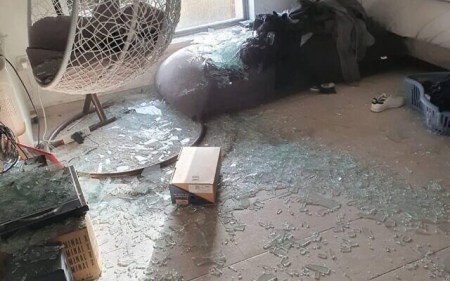
Hamas claimed responsibility for firing the seven rockets at Jerusalem, one of which was intercepted by the Iron Dome missile defense system, according to the IDF. One rocket landed near a home in a community outside Jerusalem, causing light damage, but no injuries. Some of the others sparked fires in the forests surrounding the capital, which were quickly extinguished.
The attack triggered sirens in the capital, as well as in Beit Shemesh and surrounding towns. The Knesset plenum was evacuated, as was the Western Wall complex, where thousands of Israelis had gathered to celebrate Jerusalem Day, which marks the reunification of the city after the IDF captured its eastern neighborhoods and the Old City in the 1967 Six Day War.
Zilberman, the military spokesman, said a number of terror groups conducted the rocket launches, but all with the approval and at the direction of Hamas, the de facto ruler of the Gaza Strip.
“We have a clear address: that is Hamas. The group will pay a dear price for its actions. We will respond fiercely,” he said.
Over the past day, the IDF has significantly boosted its presence along the Gaza border both in terms of ground troops and air defense systems, Zilberman said.
The military initially believed that Hamas was not interested in a large-scale conflict with Israel at this time, but that assessment changed over the past two days and the IDF began preparing accordingly.
Recent days have seen a number of rocket and mortar shell attacks from the Gaza Strip, as well as a major return of balloon-borne incendiary and explosive devices being launched from Gaza, which have burned large swaths of southern Israel.
Palestinian terror groups have tied the attacks to the unrest in Jerusalem connected to both prayer on the Temple Mount during the Muslim holy month of Ramadan, and the pending eviction of a number of Palestinian families from their homes in East Jerusalem’s Sheikh Jarrah neighborhood.
Israel has fought three large operations against Hamas and other terror groups in the Gaza Strip since 2008, most recently in 2014 with a 51-day war known as Operation Protective Edge.
Hamas, which is officially dedicated to the destruction of the State of Israel, took effective control of the Gaza Strip in 2007 from the Palestinian Authority in a violent coup. Since then, Israel has imposed a naval blockade on the enclave, as well as stiff control over what can enter the Strip, maintaining that it is necessary in order to prevent terror groups from smuggling weapons into the area.
Times of Israel staff contributed to this report.
Iran sought nuclear weapons, technology for WMDs last year, reports find
May 10, 2021What a surprise.
https://www.foxnews.com/world/iran-nuclear-weapons-technology-weapons-mass-destruction

The Islamic Republic of Iran made multiple attempts in 2020 to obtain technology for its weapons of mass destruction program and has not stopped its drive to develop atomic weapons, intelligence agencies from the Netherlands, Sweden and Germany recently reported.
The Netherlands’ General Intelligence and Security Service “investigated networks that tried to obtain the knowledge and materials to develop weapons of mass destruction. Multiple acquisition attempts have been frustrated by the intervention of the services,” the agency wrote in its April report.

According to the Dutch report, “The joint Counter-proliferation Unit (UCP) of the AIVD [the General Intelligence and Security Service] and the MIVD [the country’s Military Intelligence and Security Service] is investigating how countries try to obtain the knowledge and goods they need to make weapons of mass destruction. Countries such as Syria, Pakistan, Iran and North Korea also tried to acquire such goods and technology in Europe and the Netherlands last year.”
Iran’s regime was listed under the document’s section on preventing “countries from acquiring weapons of mass destruction.”
The intelligence agency did not provide details on the multiple attempts by the rogue nations to secure weapons of mass destruction technology. The report also did not state whether Iran’s regime illegally obtained technology and equipment for its nuclear program.
The General Intelligence and Security Service under its mandate “conducts investigations, provides information, and mobilizes third parties to safeguard the democratic legal order and national security, to actively reduce risks, and to contribute to foreign policy-making.”
The Netherlands’ MIVD and AIVD intelligence services, according to the report, “conducted intensive research into several very active networks” that are involved in proliferation and use various third parties in European countries. “Consequently, export licenses were verified and acquisition attempts frustrated,” the report said.
The damning findings from the fresh European intelligence are likely to animate broader discussion about whether the U.S. should return to the much-criticized 2015 Iran nuclear deal.
Critics have long argued the atomic accord places what is at best a temporary restriction on the Islamic Republic’s drive to join the club of nations with nuclear weapons.
A spokesperson for Sen. Ted Cruz, R-Texas, told Fox News, “The Iranian regime has never stopped seeking weapons of mass destruction to use against America and our allies. Nevertheless, the Biden administration, like the Obama administration, is committed to dismantling all meaningful pressure against the regime and flooding it with hundreds of billions of dollars.
“Sen. Cruz had fought for years to prevent that from happening, and continues to emphasize that any deal with Iran not brought to the Senate as a treaty and passed by the Senate can and will be reversed by a future administration,” the spokesperson added.
The Biden administration is currently conducting indirect negotiations with Iran’s regime in Vienna about the U.S. rejoining the Joint Comprehensive Plan of Action, the formal name for the 2015 nuclear accord.
The Trump administration withdrew from the nuclear pact in 2018 because U.S. officials believed the deal permitted Tehran’s rulers to build nuclear weapons.
The Swedish Security Service revealed in its intelligence report for 2020 that Iran sought Swedish technology for its nuclear weapons program. According to the document, “Iran also conducts industrial espionage, which is mainly targeted against Swedish hi-tech industry and Swedish products, which can be used in nuclear weapons programs. Iran is investing heavy resources in this area and some of the resources are used in Sweden.”
Iran’s regime wages industrial espionage against the Scandinavian country and targets its industry, the 88-page document notes.
In April, the Bavarian Office for the Protection of the Constitution, the domestic intelligence agency of the southern German state, wrote in its report for 2020: “Proliferation-relevant states like Iran, North Korea, Syria and Pakistan are making efforts to expand on their conventional arsenal of weapons through the production or constant modernization of weapons of mass destruction.”
The German intelligence agency, the rough equivalent of the FBI, noted that “In order to obtain the necessary know-how and corresponding components, these states are trying to establish business contacts with companies in high-technology countries like Germany.”
Jason M. Brodsky, senior Middle East analyst at Iran International, a London-based news organization, told Fox News, “I think these findings underscore the permissive environment that Europe affords for Iran to conduct industrial espionage and a range of other intelligence activities. They also highlight the need for the E3 [Britain, France, Germany] and the United States to obtain credible explanations from Tehran over the uranium traces found at undeclared sites throughout the country as a part of clarifying the outstanding safeguards issues with the IAEA [International Atomic Energy Agency].”
Brodsky continued, “The activities of the Organization of Defensive Innovation and Research (SPND) merit continued scrutiny in light of these revelations. SPND [a subsidiary organization of the Iranian Defense Ministry] inherited Iran’s past nuclear weapons program – Project Amad – and in 2019, the U.S. government found that the organization was functioning in a way so that the intellectual wealth of that program was preserved.
“That is not to mention SPND’s work on chemical weapons research through the Shahid Meisami Group, which the U.S. sanctioned in December 2020. These European intelligence findings demonstrate the need for continued vigilance over this entity and Iran’s ambitions for weapons of mass destruction,” Brodsky said.
The U.S. government – both Republicans and Democrats – have recognized Iran’s regime as the leading state sponsor of international terrorism.
Fox News did not receive an immediate response from Iran’s U.N. mission, its embassy in Berlin or its foreign ministry in Tehran.
US President invites Mossad Chief to discuss Iran and “other matters”
May 2, 2021The surprise interview initiated by President Joe Biden with Mossad chief Yossi Cohen on Friday, April 30, was prompted by Israel’s concerns over the upcoming US nuclear talks with Iran and also covered “other matters,” that were not specified in the White House readout. DEBKAfile’s sources note that this event was unusual in more than one respect: Presidential meetings with foreign spy chiefs do take place, but they are rarely made public. This one was formally announced by the White House.
Its background: During the week, a high-ranking Israeli delegation led by Cohen, national security adviser Meir Ben Shabbat and Military Intelligence Chief Maj. Gen. Tamir Hayman sat down with their American counterparts. After they offered new intelligence, the argument for and against US diplomacy with Tehran went back and forth with neither side convinced. President Biden apparently decided to step outside his schedule for the task of selling the Issue to Israel. His decision was unconventional in another respect: Yossi Cohen was the first Israeli official to be received at the White House by President Biden – even before Prime Minister Binyamin Netanyahu was invited. This denoted the urgency the president attached to clearing the air between his administration and Israel on the Iranian issue. The Mossad chief, on receiving the call from the White House, checked with the prime minister, who briefed him and told him to go ahead.


Recent Comments