Archive for April 24, 2021

IDF probing why air defenses didn’t intercept Syrian anti-aircraft missile

April 24, 2021

Incoming projectile exploded in mid-air overnight, sending debris crashing down in southern Israel; reverberations of an explosion were felt in central Israel, Jerusalem
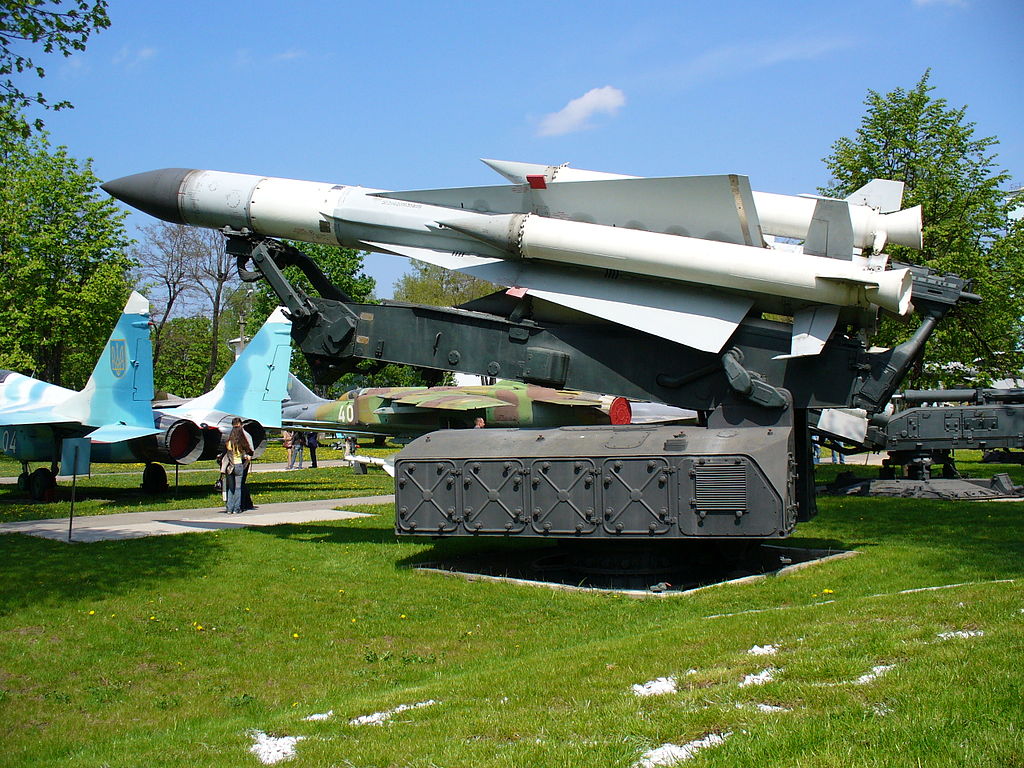
An SA-5 interceptor missile on display at the Ukrainian Air Force Museum. (George Chernilevsky/Wikimedia/CC BY-SA 3.0)

An SA-5 interceptor missile on display at the Ukrainian Air Force Museum. (George Chernilevsky/Wikimedia/CC BY-SA 3.0)

The Israel Defense Forces launched an investigation to determine why its air defenses failed to intercept an errant surface-to-air missile fired from Syria that landed in southern Israel on Thursday morning.

The Syrian missile exploded in mid-air, sending fragments crashing down, with pieces landing in the community of Ashalim, some 40 kilometers from the nuclear reactor in Dimona, without causing injuries or significant damage.

“The IDF worked to prevent a potential strike on critical assets in the State of Israel. A SA-5-model of surface-to-air missile was fired, passed through the area. There was an attempt to intercept it, which did not succeed. We are still investigating the event,” Defense Minister Benny Gantz said at a press conference in Tel Aviv.

“Normally we see different outcomes,” Gantz added.

Shortly after 1:30 a.m. on Thursday, Israeli fighter jets conducted a series of airstrikes on targets in the Syrian Golan. In response, Syrian air defense units fired a large number of anti-aircraft missiles, notably SA-5 missiles, at the attacking Israeli planes, according to Syrian state media.
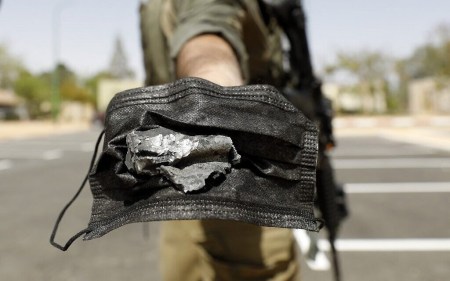
An Israeli soldier uses a mask to hold a piece of debris from a Syrian surface-to-air missile that landed near the Dimona nuclear site in Israel’s southern Negev desert, on April 22, 2021. (Ahmad GHARABLI / AFP)

Israeli radar detected that at least one of the SA-5s — also known as S-200 missiles — was on a trajectory that would have it land in the northern Negev desert, which both triggered sirens in the area and prompted Israeli air defense troops to fire an interceptor missile at the incoming projectile.

According to the IDF, the interceptor failed to shoot down the Syrian anti-aircraft missile, a massive projectile with a 200 kilogram (440 pound) warhead. The military said it was launching an investigation into the matter.

Fragments of a Syrian SA-5 missile fired toward Israel, which landed in a swimming pool in the community of Ashalim in the northern Negev, on April 22, 2021. (courtesy)

Pieces of the projectile were recovered from Ashalim. A number landed in the community’s swimming pool.

The IDF has refused to identify which of its air defense systems was used in the effort. Video footage of the launch of the Israeli interceptor was widely shared on social media (below).

Residents of Jerusalem and central Israel reported feeling reverberations of an explosion. It was not clear if it was caused by the impact of the Syrian missile on the ground or by the failed interception attempt.

In response to the launch of the surface-to-air missile, the Israeli military conducted a second round of airstrikes in Syria, targeting Syrian air defenses, including the battery that fired the SA-5 that struck southern Israel.

Syrian state media reported that four soldiers were injured in the Israeli attack. Syrian news outlets reported that one of the four troops was killed in the strike, though that was not immediately confirmed by official Syrian sources.

Though they are primarily designed to intercept aircraft and projectiles in the air, SA-5 missiles are capable of causing considerable damage if they strike the ground by virtue of their large size.

In 2019, in a similar case, a Syrian SA-5 missile that was fired at an Israeli jet crashed in northern Cyprus, causing a large explosion and starting a fire.
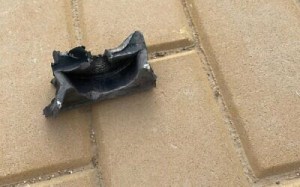
Fragments of a Syrian SA-5 missile fired toward Israel, which landed in the community of Ashalim in the northern Negev, on April 22, 2021. (courtesy)

Israel has regularly accused the Syrian military of wildly firing large amounts of anti-aircraft missiles in response to its strikes.

The predawn incident came amid peak tensions between Israel and Iran, weeks after an attack on Iran’s Natanz nuclear site earlier this month, which has been widely attributed to the Jewish state. Iran has vowed to retaliate for the alleged Israeli sabotage.

IDF Spokesperson Hidai Zilberman stressed that the military did not believe the overnight incident was a deliberate attack on the country or its nuclear facility.

“There was no intention of hitting the nuclear reactor in Dimona,” Zilberman told reporters.

‘Errant Syrian missile’ fired at Israeli jet explodes near Dimona nuclear site

April 24, 2021

IDF says missile was fired during IAF airstrike, was not a deliberate attack on reactor; in response, Israel targets battery that launched projectile; 4 Syrian troops hurt

An Israeli soldier uses a mask to hold a piece of debris from a Syrian surface-to-air missile that landed near the Dimona nuclear site in Israel's southern Negev desert, on April 22, 2021. (Ahmad GHARABLI / AFP)

An Israeli soldier uses a mask to hold a piece of debris from a Syrian surface-to-air missile that landed near the Dimona nuclear site in Israel’s southern Negev desert, on April 22, 2021. (Ahmad GHARABLI / AFP)

Incoming rocket sirens were triggered in the northern Negev in the predawn hours of Thursday morning, followed by massive explosions that could be heard throughout much of the country, as a Syrian surface-to-air missile crashed to earth near the Dimona nuclear reactor.

The Israel Defense Forces said the sirens were set off not by a directed attack on a target within Israel but by an errant Syrian anti-aircraft missile fired at an Israeli jet during an IAF airstrike on targets in the Syrian Golan Heights.

“A launch was detected of a surface-to-air missile from Syrian territory toward Israeli territory, which fell in the Negev region,” the IDF said.

There were no reports of injuries or damage.

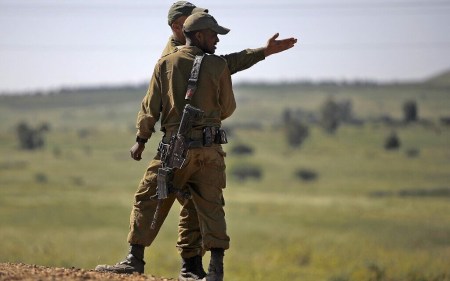
Israeli soldiers stand at a position near Moshav Sha’al in the Golan Heights on April 22, 2021. (JALAA MAREY / AFP)

IDF troops launched an interceptor missile at the incoming projectile to try to shoot it down, apparently unsuccessfully. The IDF said it was still investigating the matter as of Thursday morning. The Israeli military refused to identify which of its air defense batteries was used.

Pieces of the Syrian surface-to-air missile landed in open areas of the Ramat Negev region of southern Israel, local authorities said in a message to residents, with some pieces reportedly striking some 30 kilometers from the Dimona nuclear reactor.

In response to the launch of the surface-to-air missile, Israeli jets conducted a second round of airstrikes in Syria, bombing the battery that fired the projectile, as well as other air defense systems, the IDF said.

According to Syrian state media, four soldiers were injured in the Israeli strike and material damage was caused.

The incident came amid peak tensions between Israel and Iran, after an attack on Iran’s Natanz nuclear site earlier this month, which has been widely attributed to the Jewish state. Iran has vowed to retaliate for the alleged Israeli sabotage.

Fragments of a Syrian SA-5 missile fired toward Israel, which landed in a swimming pool in the community of Ashalim in the northern Negev, on April 22, 2021. (courtesy)

IDF Spokesperson Hidai Zilberman stressed that the military did not believe this was a deliberate attack on the country or its nuclear facility.

“There was no intention of hitting the nuclear reactor in Dimona,” Zilberman told reporters.
According to Zilberman, the projectile appeared to be a Russian-made SA-5 surface-to-air missile, a particularly large projectile, weighing several thousand kilograms with a 200-kilogram warhead.

Residents of Jerusalem and central Israel reported feeling reverberations of an explosion. It was not immediately clear if this was caused by the impact of the Syrian missile or by a failed interception attempt.

According to Syrian state media, the Israeli attack began at 1:38 a.m., with IDF jets conducting strikes on targets in the Syrian-controlled Golan Heights.

The missile set off the sirens three minutes later near Abu Qrenat, an area between Beersheba and Dimona, as well as the military’s large Ariel Sharon Base nearby, locations that are not generally targeted by rocket fire.

Roughly an hour later, Israeli fighter jets conducted a second round of strikes on Syrian air defense batteries near Damascus, according to Israeli and Syrian sources.

Though uncommon, Syrian surface-to-air missiles fired at Israeli fighter jets have in the past caused damage and triggered sirens as they fell back to earth.

In 2019, an SA-5 missile that had been fired at an Israeli aircraft landed in northern Cyprus, causing an explosion and a large fire in a village there.

In 2017, two SA-5 missiles that were launched at Israeli jets landed in eastern Israel, while a third landed in Jordanian territory, without causing injury or damage. In that incident, the IDF fired an Arrow 2 interceptor at the incoming projectile in what was the first operational use of the system.

Israeli delegation to DC to oppose US nuke deal revival, but won’t talk details

April 24, 2021

Netanyahu instructs top security officials to emphasize that Israel not bound by any agreement, committed only to its own security interests and ‘will act accordingly’

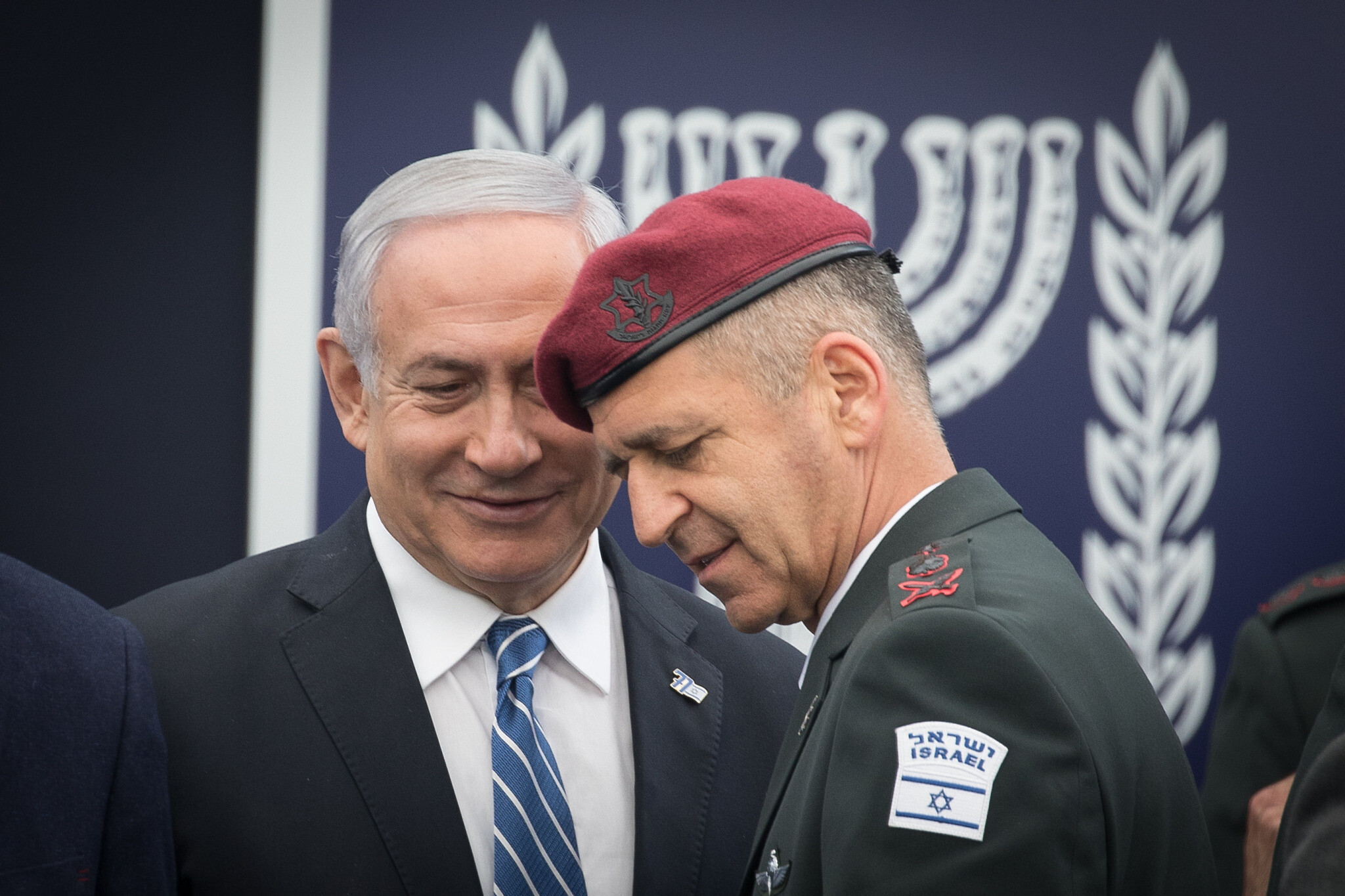
Prime Minister Benjamin Netanyahu and IDF Chief of Staff Aviv Kochavi during an event for outstanding soldiers as part of Israel's 71st Independence Day celebrations, at the President's Residence in Jerusalem, May 9, 2019. (Noam Revkin Fenton/Flash90)

Prime Minister Benjamin Netanyahu and IDF Chief of Staff Aviv Kochavi during an event for outstanding soldiers as part of Israel’s 71st Independence Day celebrations, at the President’s Residence in Jerusalem, May 9, 2019. (Noam Revkin Fenton/Flash90)

Ahead of an Israeli delegation traveling to Washington DC next week, Prime Minister Benjamin Netanyahu instructed the security officials participating in the mission to voice objection to the US return to the Iran nuclear deal, but not to hold talks on the issues.

Netanyahu emphasized in a meeting with the delegation on Thursday that Israel is not a party in the nuclear agreement with Iran, and not committed to it. Clarifying that “Israel is committed to its own security interests only and will act accordingly,” an Israeli official said.

“The instructions to the senior security officials that are flying to Washington for talks is to present Israel’s opposition to the agreement in Iran and not to negotiate over it, because we are talking about a return to the previous agreement that is dangerous for Israel and the region,” the official said speaking on condition of anonymity.

“If in the future there are serious contacts on Iran’s part over an improved agreement, Israel will state its position on the characteristics and content that such an agreement should have,” the official added.

IDF Chief of Staff Aviv Kohavi, part of the delegation, will travel Sunday to meet with a number of top US defense officials, in his first trip to the US since entering his position.

Prime Minister Benjamin Netanyahu speaks with IDF Chief of Staff Aviv Kohavi during an event honoring outstanding IDF reservists, at the President’s residence in Jerusalem on July 1, 2019. (Hadas Parush/Flash90)

Kohavi will be joined on the trip by his wife, Yael, as well as the IDF defense attaché to the US, Maj. Gen. Yehuda Fuchs, the head of the IDF’s Iran-focused Strategic and Third Ring Directorate, Maj. Gen. Tal Kalman, and the head of the IDF’s foreign relations department, Brig. Gen. Effi Defrin.

In the coming weeks, a number of other top Israeli defense officials were slated to visit the United States, including National Security Adviser Meir Ben-Shabbat, Mossad chief Yossi Cohen and Military Intelligence commander Tamir Hayman.

Kohavi, Ben-Shabbat, Cohen and Hayman all met with Netanyahu and Defense Minister Benny Gantz on Thursday to coordinate their messaging to their American counterparts.

Israeli National Security Adviser Meir Ben-Shabbat during a ceremony before boarding an El Al plane to Bahrain to sign a series of bilateral agreements between Jerusalem and Manama, at Ben Gurion Airport in Lod, near Tel Aviv, Israel, October 18, 2020. (Marc Israel Sellem/POOL via FLASH90)

Israel is generally concerned that the US is rushing too quickly to return to the 2015 accord, known formally as the Joint Comprehensive Plan of Action, and is ignoring the concerns of Israel and other Middle Eastern countries, notably those in the Gulf.

Israel’s ambassador to the United States and United Nations, Gilad Erdan, told the UN Security Council on Thursday that he firmly rejects the nuclear deal in its current form.

“For Israel, Iran poses an existential threat,” Erdan said. “That is why we will not see ourselves bound by any agreement that does not fully address the threat against the existence of the State of Israel. And every one of you would do the same if you were in our shoes, particularly in light of the Holocaust,” he added.

Israeli Ambassador Gilad Erdan speaks at the UN in New York. (Shahar Azran/Israeli Mission to the UN)

“The Biden administration also understands that the 2015 agreement was bad, we just disagree on the right way to reach a deal that will stop Iran,” Erdan told the Kan public broadcaster on Friday.

Israel and the US set up a strategic group, which last convened on April 13, to coordinate their efforts to prevent Iran from acquiring nuclear arms. The group is led by Biden’s National Security Adviser Jake Sullivan and his Israeli counterpart Ben-Shabbat.

Earlier this week, Kan news reported that Israel was lobbying the US to push for improved international oversight of Iran’s nuclear program, having concluded there will not be significant changes to the treaty but nonetheless seeking to slightly improve the terms of the pact, which is being negotiated in Vienna, with Europeans acting as intermediaries between Washington and Tehran.

Iranian President Hassan Rouhani said Tuesday that 60-70 percent of issues had been resolved in Vienna.

A spokesman for the US State Department indicated that Washington was backing down from a key prerequisite for its return to the deal.

Illustrative: Iranian President Hassan Rouhani visits the Bushehr nuclear power plant just outside of Bushehr, Iran, January 13, 2015. (AP Photo/Iranian Presidency Office, Mohammad Berno, File)

The Biden administration had repeatedly said that it would only return to the nuclear deal if Iran first returns to compliance. However, on Tuesday, US State Department Spokesperson Ned Price said at a press conference that Washington would only need to be sure that Iran intended to return to compliance.

Israeli officials, including Netanyahu, have adamantly opposed the US returning to the nuclear deal, putting Jerusalem openly at odds with the new White House administration.

Critics have long denounced the deal’s so-called “sunset clauses,” aspects of the agreement barring Iran from certain nuclear activities that end after a certain number of years. Though the deal technically prohibits Iran from ever developing a nuclear weapon, detractors of the agreement say these clauses will allow Iran to do so with impunity once the sanctions against the regime end.

The agreement is also narrowly focused solely on the nuclear issue, ignoring Iran’s development of nuclear-capable ballistic missiles that can reach Israel and parts of Europe, as well as its constant funding and support of terror groups like Hezbollah.

Proponents of the agreement generally argue that while the deal is imperfect, it was the best possible deal that could be struck under the circumstances and at least postpones the development of an Iranian nuclear weapon.

Gr

US official says sanctions will stay until Iran commits to nuclear deal – report

April 24, 2021

Brett McGurk tells Jewish leaders Washington will not take pressure off until it is clear program will be capped and ‘back in a box,’ Forward reports

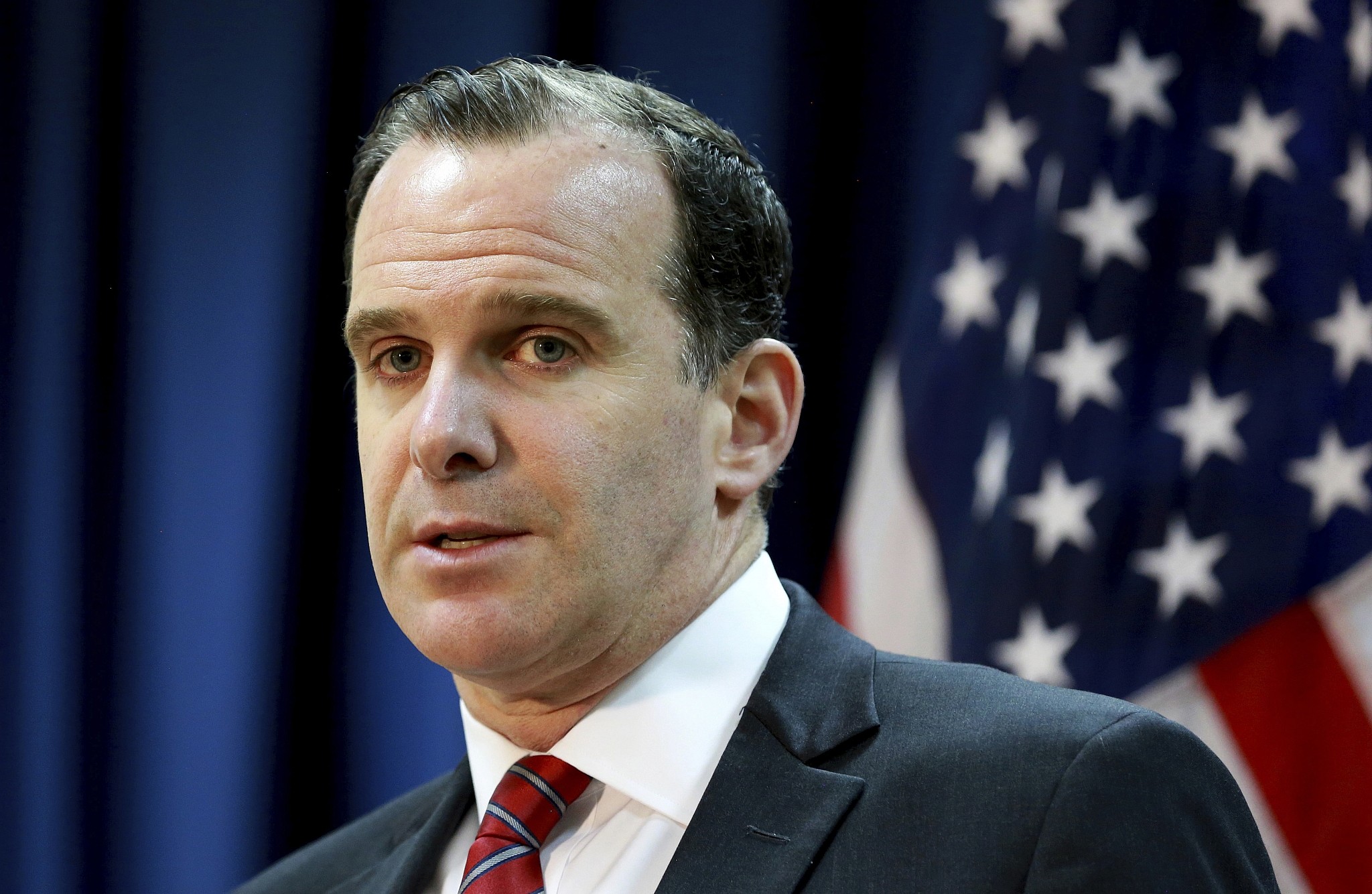
Brett McGurk, then-US envoy for the global coalition against Islamic State, at a news conference at the US embassy in Baghdad, Iraq, June 7, 2017. (Hadi Mizban/AP)

File: Brett McGurk, then-US envoy for the global coalition against Islamic State, at a news conference at the US embassy in Baghdad, Iraq, June 7, 2017. (Hadi Mizban/AP)

A top US official spoke to American Jewish leaders Friday on US efforts to revive the nuclear deal with Iran, telling them that no sanctions would be removed from the Islamic Republic before Washington gets clear commitments on Iran’s return to the 2015 accord.

“Until we get somewhere and until we have a firm commitment, and it’s very clear that Iran’s nuclear program is going to be capped, the problematic aspects reversed and back in a box, we are not going to take any of the pressure off,” the National Security Council’s Brett McGurk told leaders, according to quotes provided to the Forward by several individuals on the call.

McGurk is the NSC’s coordinator for the Middle East and North Africa.

He said that with talks resuming in Vienna Monday, “there’s a very long way to go and this process is complicated.” But he stressed that the US is “not going to pay anything upfront just to get a process going. We have to see from the Iranians a fundamental commitment and agreement to put their nuclear program back in a box that we can fully inspect and observe.”

Diplomats from Britain, China, France, Germany, Iran and Russia have been meeting in a luxury Vienna hotel to discuss a return to the deal, while US envoys are participating indirectly in the talks from a nearby hotel.

Journalists wait in front of the Grand Hotel Wien where closed-door nuclear talks with Iran take place in Vienna, Austria, Tuesday, April 6, 2021. (AP /Florian Schroetter)

Iran has pressed for the United States to lift all sanctions imposed under former president Donald Trump before it rolls back the steps Tehran took away from the 2015 deal in protest.

The Biden administration had repeatedly said that it would only return to the nuclear deal if Iran first returns to compliance. However, on Tuesday, US State Department Spokesperson Ned Price said at a press conference that Washington would only need to be sure that Iran intended to return to compliance.

Iranian President Hassan Rouhani said Tuesday that 60-70 percent of issues had been resolved in Vienna.

Israel is worried that the US is rushing too quickly to return to the 2015 accord, known formally as the Joint Comprehensive Plan of Action, and is ignoring the concerns of Israel and other Middle Eastern countries, notably those in the Gulf.

IDF Chief of Staff Aviv Kohavi will travel to the United States on Sunday to discuss the threat of Iran’s nuclear program and its entrenchment throughout the region. Top Israeli officials are expected to go to Washington in the coming weeks to discuss Iran, amid reports of growing disagreements between the governments as to how to best handle the situation.

IDF Chief of Staff Aviv Kohavi speaks at a memorial ceremony on Jerusalem’s Mount Herzl national cemetery on April 11, 2021. (Israel Defense Forces)

McGurk told the Jewish leaders that the administration has ” worked with the Israelis every day in the security realm, in terms of their freedom of action — protecting themselves — as something fundamental to us.

“Where we have some disagreement internally there is no disagreement on where we want to go: Iran can never get a nuclear weapon, period. There’s some disagreement about the kind of tactics you might use to get there. But we agree on a lot more than we disagree.”

He said consultations with Israel were “quite constructive.”

“At the end of the day, should we be able to deal with this problem diplomatically, which is our objective, I think the agreement will be very strong and give us confidence for where this is going to go over the many, many years ahead.”

Israel’s ambassador to the United States and United Nations, Gilad Erdan, told the UN Security Council on Thursday that he firmly rejects the nuclear deal in its current form.

“For Israel, Iran poses an existential threat,” Erdan said. “That is why we will not see ourselves bound by any agreement that does not fully address the threat against the existence of the State of Israel.”

Israeli Ambassador Gilad Erdan speaks at the UN in New York. (Shahar Azran/Israeli Mission to the UN)

Erdan told Kan news on Friday: “The Biden administration also understands that the 2015 agreement was bad, we just disagree on the right way to reach a deal that will stop Iran,”

Israel and the US set up a strategic group, which last convened on April 13, to coordinate their efforts to prevent Iran from acquiring nuclear arms. The group is led by President Joe Biden’s National Security Adviser Jake Sullivan and his Israeli counterpart Meir Ben-Shabbat.

Earlier this week, Kan news reported that Israel was lobbying the US to push for improved international oversight of Iran’s nuclear program, having concluded there will not be significant changes to the treaty but nonetheless seeking to slightly improve the terms of the pact, which is being negotiated in Vienna.

Proponents of the agreement generally argue that while the deal is imperfect, it was the best possible deal that could be struck under the circumstances and at least postpones the development of an Iranian nuclear weapon.

36 rockets fired at Israel overnight; IDF hits Gaza terror targets in response

April 24, 2021

Rocket salvos fired after Hamas calls for attacks on Israel over Jerusalem unrest; barrages, reported in real-time by terror group, mark worst assault from Strip in many months

  • A police sapper inspects the scene where a rocket fired from the Gaza Strip fell near houses on a kibbutz in southern Israel on April 24, 2021 (Flash90)
    A police sapper inspects the scene where a rocket fired from the Gaza Strip fell near houses on a kibbutz in southern Israel on April 24, 2021 (Flash90)
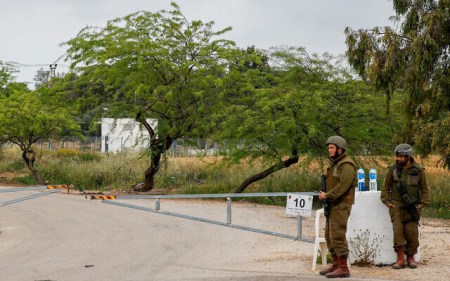
  • Israeli soldiers block a road near the Gaza border on April 24, 2021 (Flash90)
    Israeli soldiers block a road near the Gaza border on April 24, 2021 (Flash90)
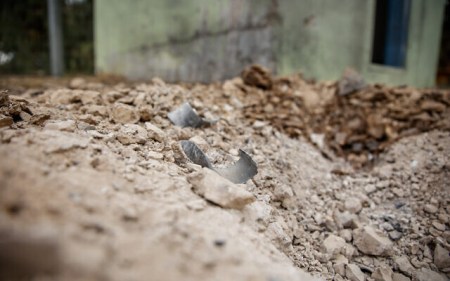
  • Remains of a rocket fired from the Gaza Strip near houses on a kibbutz in southern Israel on April 24, 2021 (Flash90)
    Remains of a rocket fired from the Gaza Strip near houses on a kibbutz in southern Israel on April 24, 2021 (Flash90)
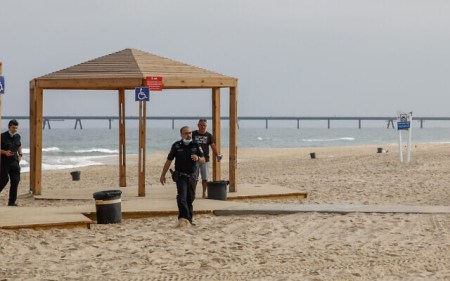
  • Israeli police officers walk on Zikim Beach close to the Gaza border after it was closed to visitors, on April 24, 2021 (Flash90)
    Israeli police officers walk on Zikim Beach close to the Gaza border after it was closed to visitors, on April 24, 2021 (Flash90)

Terrorists fired 36 rockets toward Israel from the Gaza Strip overnight with six projectiles intercepted by the Iron Dome missile defense system, the Israel Defense Forces said Saturday morning.

The barrages were the worst assault from the Strip in many months and while there were no Israeli injuries, the rockets did cause damage in a number of communities.

In response, the Israeli military struck multiple Hamas targets in the Gaza Strip in the early hours of Saturday morning, including rocket launchers and underground infrastructure, the army said, in response to several salvos of rockets fired into Israel overnight.

There were no immediate reports of casualties in the Gaza strikes.

Sirens sounded in numerous Israeli communities near the Strip overnight, including Ashkelon and the Eshkol, Sdot Negev, Sha’ar Hanegev and Hof Ashkelon regional councils.

The Iron Dome missile defense system intercepted six of the projectiles. Some fell in communities while others landed in open areas.

Iron Dome is programmed to not deploy when rockets are projected to hit non-populated areas — it was unclear why it had not activated to intercept the projectiles that landed in the border towns.

Two terror groups in Gaza took responsibility for the rocket fire — Fatah’s Al-Aqsa Martyrs’ Brigade and the Popular Front for the Liberation of Palestine’s Abu Ali Mustapha Brigades. Israel has stressed in the past it holds the ruling Hamas terror group responsible for all violence emanating from Gaza.

“We will burn the occupation’s settlements for you, O Jerusalem. The greatest has yet to come,” a spokesperson for the Al-Aqsa Martyrs’ Brigade said.

Official Hamas media tracked the launch of rockets across the Gaza Strip, reporting their firing in real-time, leading some to speculate that Hamas was covertly involved. The terror group did not take responsibility for the rocket fire, however.

“The Palestinian resistance is ready to respond to aggression, even the score with the occupation and prevent its violations against our people,” Hamas spokesperson Abd al-Latif al-Qanou said.

The attack followed days of tensions and clashes in Jerusalem and the West Bank that involved Palestinian and Israeli civilians as well as Israeli security forces.

Illustrative — An Iron Dome missile defense system fires an interceptor at a target during an exercise in early 2021. (Defense Ministry)

Before the morning strikes, the military had not responded to the rockets throughout the night, except for a single tank strike after the first volley, that targeted a Hamas post.

The Israel Defense Forces’ Home Front Command initially instructed residents in areas under threat to remain close to shelters, ordered the closure of Zikim beach, banned outside gatherings and agricultural work near the security fence and limited groups to under 100 people indoors. However, it later removed the restrictions.

Additionally, the Sdot Negev Regional Council recommended residents avoided going to synagogue on Saturday morning.

Miriam Rainan, a resident of the Nahal Oz border community, said the rockets meant residents had to stay home just as the easing of coronavirus restrictions was letting them return to normal life.

“It was a bad night and we slept in the bomb shelter. There was a lot of noise and one rocket fell on the kibbutz’s livestock. This is wrong, Iron Dome does not work properly,” she told Channel 12 news. “We were stuck at home because of the coronavirus [pandemic], and now we are stuck at home because of Hamas.”

An IDF tank is seen near the Gaza Strip on May 15, 2018. (Hadas Parush/ Flash90)

The rocket barrages came hours after Hamas held a series of protests in the Strip and called for violence against Israel in the wake of fierce clashes Thursday in Jerusalem between police, extremist Jewish activists and Palestinian protesters.

Addressing the Gazan protesters, senior Hamas leader Mahmoud Zahar condemned the decision of some Arab states to normalize relations with Israel last year and lashed out at the Palestinian Authority in the West Bank for continuing its security coordination with Israel.

“After a long series of protests and demonstrations, we have reached the conclusion that without weapons, we cannot liberate our land, protect our holy sites, bringing back our people to their land or maintain our dignity,” he said.

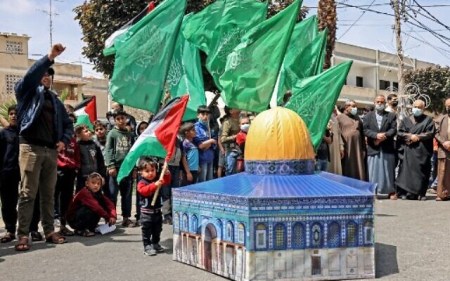
Palestinians shout slogans around a model of the Dome of the Rock, during a rally in Gaza city on April 23, 2021, condemning overnight clashes in Jerusalem and calling for an armed struggle. ( MAHMUD HAMS / AFP)

The attacks came during a general lull in violence from the Gaza Strip in recent months, amid a ceasefire between Israel and Hamas and as the enclave grapples with the coronavirus pandemic.

A single rocket was fired into Israel from Gaza last Friday. Another was fired the day before. Neither rocket caused injuries or damage, and the IDF hit Hamas targets in response.

Last month, a rocket was fired toward Beersheba as Prime Minister Benjamin Netanyahu made a campaign stop in the southern city ahead of the March 23 elections.

The last time a rocket barrage hit Israel was in September, when Palestinian terrorists fired 13 rockets in response to Israel signing peace deals with the United Arab Emirates and Bahrain. Two Israelis were hurt when a rocket hit Ashdod, one moderately and another lightly.

Prior to that, the last major flareup occurred in November of 2019, after Israel killed Baha Abu al-Ata, a senior commander in the military wing of the Islamic Jihad terror group. The assassination led to days of rocket fire in which hundreds of projectiles targeted Israeli cities.

In both cases, Israel retaliated with waves of airstrikes in the Strip.