Archive for February 2021

Iran may pursue nuclear weapons, its intelligence minister warns

February 10, 2021


In rare comments admitting Tehran is considering developing nukes, official claims it would be the West’s fault for making moves to ‘corner’ his country
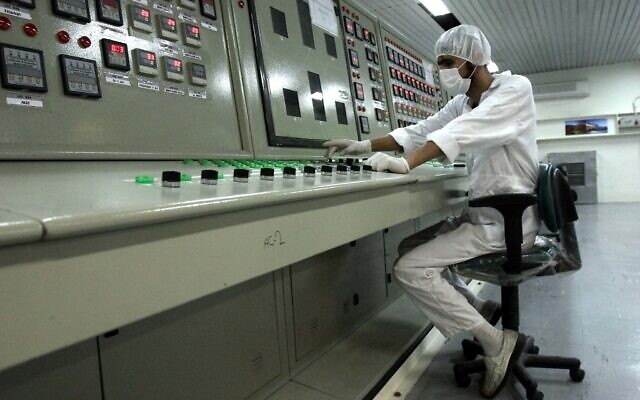
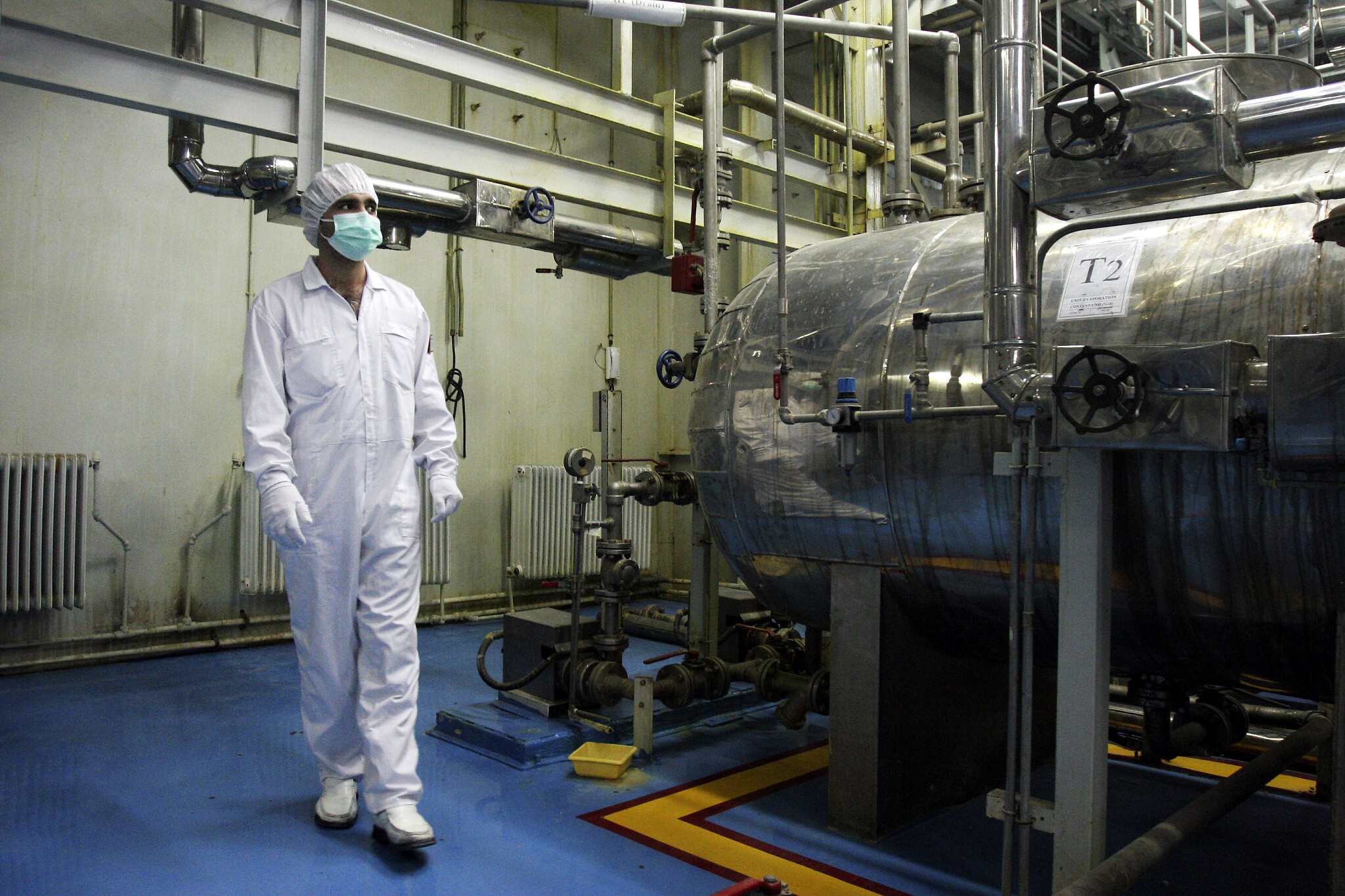
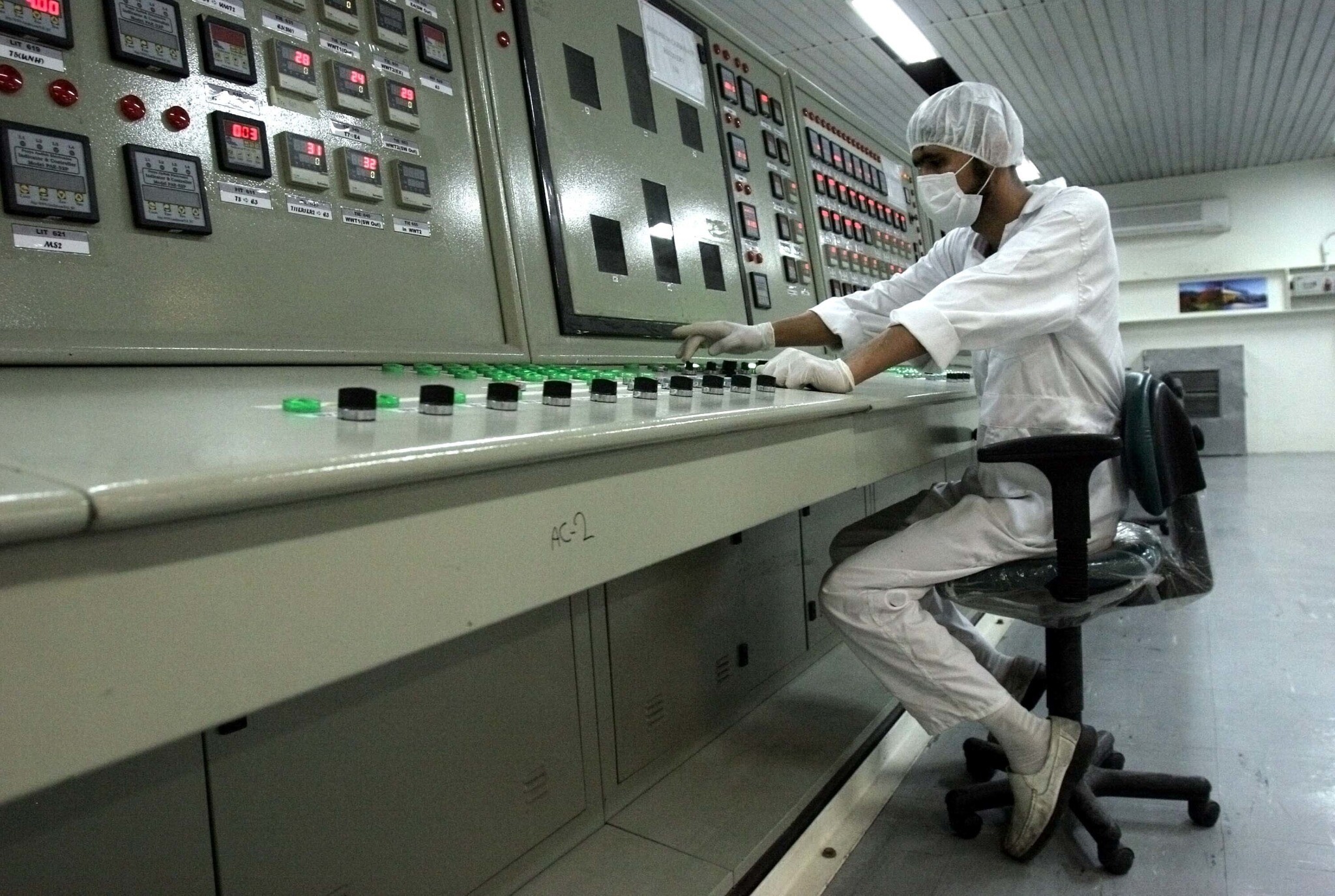
In this Feb. 3, 2007 file photo, a technician works at the Uranium Conversion Facility just outside the city of Isfahan, Iran. (AP Photo/Vahid Salemi, File)

By AGENCIES and TOI STAFF9 February 2021, 1:35 pm  7In this Feb. 3, 2007 file photo, a technician works at the Uranium Conversion Facility just outside the city of Isfahan, Iran. (AP Photo/Vahid Salemi, File)

Iran’s intelligence minister has warned the West that his country could push for nuclear weapons if crippling international sanctions on Tehran remain in place, state television reported Tuesday.

The remarks by Mahmoud Alavi mark a rare occasion that a government official said Iran could move toward nuclear weapons. Tehran has long insisted that the program is for peaceful purposes only.

“Our nuclear program is peaceful and the fatwa by the supreme leader has forbidden nuclear weapons, but if they push Iran in that direction, then it wouldn’t be Iran’s fault but those who pushed it,” Alavi was quoted as saying.

A 1990s fatwa, or religious edict, by the country’s Supreme Leader Ayatollah Ali Khamenei stated that nuclear weapons are forbidden.

Iranian Intelligence Minister Mahmoud Alavi answers questions from lawmakers in an open session of parliament in Tehran, Iran, Oct. 25, 2016 (AP Photo/Ebrahim Noroozi)

“If a cat is cornered, it may show a kind of behavior that a free cat would not,” Alavi said. He added that Iran has no plans to move toward a nuclear weapon under current circumstances.

Last month, a former Iranian diplomat said that if Israel or the US take “dangerous” steps, Khamenei may reverse the religious opinion that forbids the acquisition, development or use of nuclear weapons.

The 81-year-old supreme leader, who has the final say on all matters of state in Iran, on Sunday urged the United States to lift all sanctions if it wants Iran to live up to commitments under its 2015 nuclear deal with world powers. However, President Joe Biden has said the US won’t be making the first move.

US Secretary of State Antony Blinken said last week that Iran was currently months away from being able to produce enough material to build a nuclear weapon. And, he said, that timeframe could be reduced to “a matter of weeks” if Tehran further violates restrictions it agreed to under the 2015 nuclear deal with world powers.

Following the killing last December of an Iranian scientist, Mohsen Fakhrizadeh, named by Israel as spearheading the country’s rogue nuclear weapons program, Iran’s parliament has approved a law to block international nuclear inspectors later this month — a serious violation of the accord.

Alavi, the intelligence minister, was also quoted as saying that a member of the Iranian armed forces “facilitated” the killing of the scientist, which Iran has blamed on Israel.

The minister did not expand on what he meant — and it was not clear if the soldier had carried out the explosion that killed Fakhrizadeh. Israel, which has been suspected of killing Iranian nuclear scientists over the last decade as well as allegedly carrying out attacks on a number of facilities, has repeatedly declined to comment on the attack.
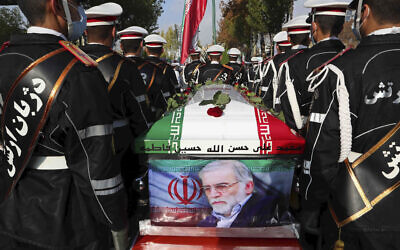
Military personnel stand near the flag-draped coffin of Mohsen Fakhrizadeh, an assassinated top nuclear scientist during his funeral ceremony in Tehran, Iran, November 30, 2020. (Iranian Defense Ministry via AP)

This was the first time that Iran acknowledged a member of its armed forces may have acted as an accomplice in the killing of Fakhrizadeh, who headed Iran’s so-called AMAD program, which Israel and the West have alleged was a military operation looking at the feasibility of building a nuclear weapon.

Unveiling a trove of material brought out of Iran by the Mossad on the regime’s nuclear weapons program, Prime Minister Benjamin Netanyahu said in 2018 that Fakhrizadeh was overseeing Iran’s bid for the bomb.

The International Atomic Energy Agency — the UN’s nuclear watchdog — says that “structured program” ended in 2003. US intelligence agencies concurred with that assessment in a 2007 report.

However, Israel insists Iran is still working to develop nuclear weapons, pointing to its enrichment work, its ballistic missile program and its research into other technologies.

On Saturday, the Wall Street Journal reported that United Nations nuclear inspectors found traces of radioactive material at Iranian nuclear sites that could indicate work on nuclear weapons.

Lawmakers in Tehran recently approved a bill requiring Iran to resume uranium enrichment to 20 percent purity, as it had been doing before the nuclear deal, and to stock 120 kilograms (265 pounds) of uranium each year. The legislation had already been in the pipeline, but it was advanced after Fakhrizadeh was killed.

Last month, Tehran announced it was beginning to enrich uranium up to 20 percent — far beyond the 3.5% permitted under the nuclear deal, and a relatively small technical step away from the 90% needed for a nuclear weapon. Iran also said it was beginning research into uranium metal, a material that technically has civilian uses, but is seen as another likely step toward a nuclear bomb.


IAEA inspectors in Iran said to find evidence of possible nuclear weapons work

February 8, 2021


Diplomats tell Wall Street Journal UN agency seeking explanations for radioactive materials found in locations where Tehran blocked access last year

By TOI STAFF6 February 2021, 11:23 am  4

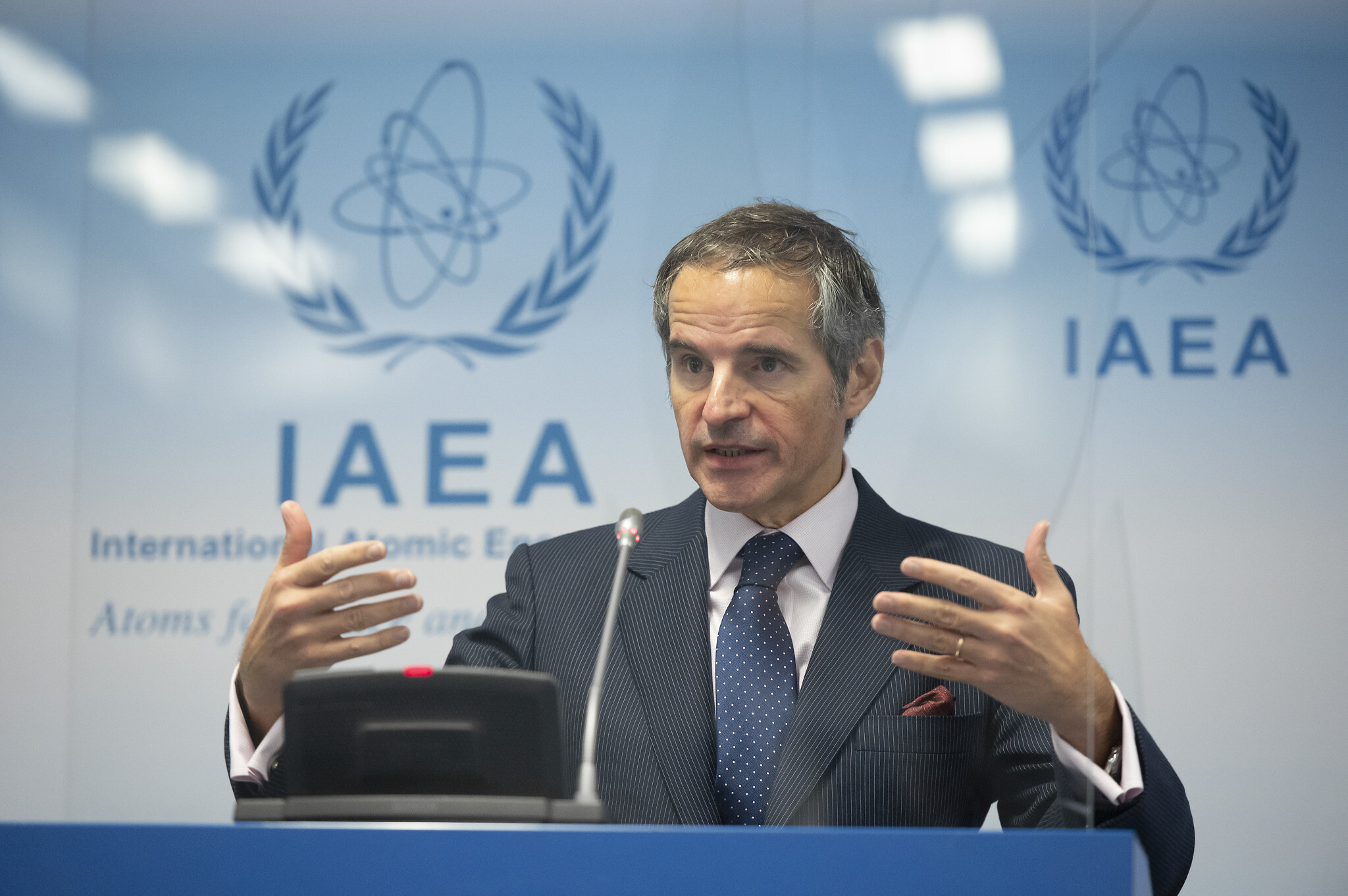
Director-General of the International Atomic Energy Agency (IAEA), Rafael Mariano Grossi, speaks during a press conference during an IAEA Board of Governors meeting at the IAEA headquarters of the UN in Vienna, Austria, November 18, 2020. (Christian Bruna/Pool Photo via AP)

Director-General of the International Atomic Energy Agency (IAEA), Rafael Mariano Grossi, speaks during a press conference during an IAEA Board of Governors meeting at the IAEA headquarters of the UN in Vienna, Austria, November 18, 2020. (Christian Bruna/Pool Photo via AP)

United Nations nuclear inspectors have found traces of radioactive material at Iranian nuclear sites that could indicate work on nuclear weapons, according to a report Saturday.

The Wall Street Journal story cited several unnamed diplomats briefed on the matter, who said the locations in which the material was found contributed to suspicions.

Tehran barred inspectors from accessing those same locations for a number of months last year, it said.

The report did not make clear whether the suspected weapons development was recent or old. The International Atomic Energy Agency and Western intelligence services all believe Iran had a clandestine nuclear weapons program until 2003, though Tehran denies ever attempting to obtain such weapons.

The diplomats noted that they themselves did not have specific knowledge about the details of the findings. They said the IAEA was seeking explanations from Iran, and had not yet updated member states on their findings.

An International Atomic Energy Agency inspector disconnects the connections between the twin cascades for 20% uranium production at Natanz nuclear power plant south of Tehran on January, 20, 2014 (Photo credit: Kazem Ghane/IRNA/AFP)

Last fall Iran allowed IAEA inspectors to visit two sites where the agency suspected undeclared nuclear activity might have taken place in the early 2000s. Their exact locations have not been made public. IAEA Director General Rafael Grossi said at the time that analyzing the samples collected would take several months.

Iran had denied the agency access to the locations last year, prompting the IAEA’s board of governors to pass a resolution in June urging Iran to comply with its requests.

One of the sites was reported to be in Abadeh, south of Isfahan — a location that in September 2019 was flagged by Prime Minister Benjamin Netanyahu as the site of an alleged secret nuclear facility.

Netanyahu said at the time that Iran had tried to destroy the site along with any evidence it had been used to develop nuclear weapons.

The landmark 2015 deal between Iran and the United States, China, Russia, Britain, France, and Germany to curb Tehran’s nuclear ambitions has been largely in tatters since former US president Donald Trump withdrew from it in 2018 and reimposed harsh sanctions on the Islamic Republic.

Iran has since been steadily violating restrictions on the amount of uranium it can enrich and the purity it is allowed to enrich to, and other limits.

Iran recently informed the International Atomic Energy Agency of its plans to increase enrichment to 20 percent, a technical step away from weapons-grade levels of 90%.

It also has said it plans to produce uranium metal, which can be used as a component in nuclear weapons. Iran had signed up to a 15-year ban on “producing or acquiring plutonium or uranium metals or their alloys” under the 2015 accord.

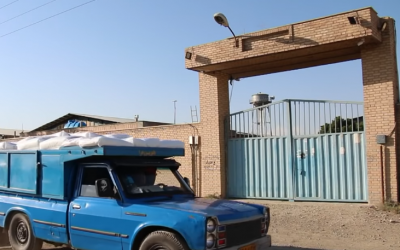
Illustrative: Iran’s alleged atomic warehouse in Turquzabad, Tehran. (YouTube screenshot)

European powers have voiced deep concern over Tehran’s moves, warning it has “no credible civilian use” for the element.

“The production of uranium metal has potentially grave military implications,” said the foreign ministers of Britain, France and Germany, the so-called E3, in a joint statement last month.

A law passed by Iran’s conservative-dominated parliament last month, despite opposition from a reformist government, mandates Iran to discontinue certain international inspections by late February if key conditions are not met, stoking international concerns about a possible expulsion of UN inspectors.

Iran’s foreign ministry on Monday said Tehran does not intend to expel the UN nuclear watchdog’s inspectors.

Tehran has signaled a readiness to engage with US President Joe Biden, who took office on January 20 and who has likewise expressed willingness to return to diplomacy with Tehran.

Iranian President Hassan Rouhani speaks during a cabinet meeting in Tehran, Iran, January 6, 2021. (Iranian Presidency Office via AP)

However, the sides have already sparred publicly, with Washington insisting Tehran must return to compliance to the deal before the US reenters, while Iran says America must first remove all sanctions and rejoin the accord.

Meanwhile, regional US allies including Israel, Saudi Arabia and Gulf states are all expected to strongly oppose a US return to the deal in its original form. Biden has indicated he wishes to address elements outside that worry Middle East nations, including Iran’s ballistic missiles program and its malign regional actions. Tehran has said this is a nonstarter.

Agencies contributed to this report.

Biden says US won’t lift sanctions before Iran stops uranium enrichment

February 8, 2021


Islamic Republic reiterates demand US first remove measures; Israel’s US ambassador says president’s statement a ‘positive sign’

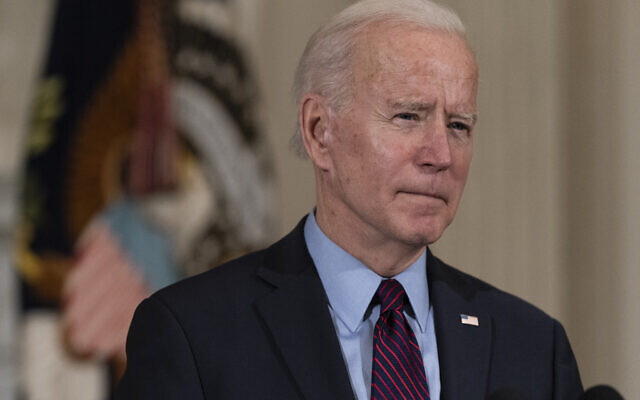
By JACOB MAGID7 February 2021, 7:36 pm  1President Joe Biden speaks about the economy in the State Dining Room of the White House, in Washington, on February 5, 2021. (AP Photo/Alex Brandon)

President Joe Biden speaks about the economy in the State Dining Room of the White House, in Washington, on February 5, 2021. (AP Photo/Alex Brandon)

US President Joe Biden told CBS Sunday that his administration will not agree to lift sanctions on Iran before it halts its uranium enrichment program, adding that the Islamic Republic will have to first resume compliance with the nuclear deal.

Asked during the interview, which will air in its entirety later on Sunday, whether he will heed Iran’s demand to first lift sanctions to facilitate talks, Biden told the network: “No.”

In a follow-up, the president was pressed whether Iran will have to stop enriching uranium first. He nodded his head in the affirmative.

Israeli Ambassador to the US Gilad Erdan praised Biden’s response in an interview with Channel 12. “I think it is a very, very positive sign,” he said.Israeli Ambassador to the US and the UN Gilad Erdan. (Israeli Mission to the UN)

However, he went on to add that Biden’s goal of returning to the 2015 Joint Comprehensive Plan of Action would be a “mistake” and urged the new US administration not to “give up the leverage” created by sanctions imposed by former US president Donald Trump, who bolted the JCPOA in 2018.

Erdan said that in the coming weeks, talks on the matter would be held between the Israeli and American national security councils, “and we will reach a common path forward.”

“The goal is the same goal… to prevent Iran from acquiring nuclear weapons,” the envoy said.

Technicians work at the Arak heavy water reactor’s secondary circuit, as officials and media visit the site, near Arak, Iran, December 23, 2019. (Atomic Energy Organization of Iran via AP)

Biden’s comments drew a line in the sand in the US’s standoff with Iran, whose Supreme Leader Ayatollah Ali Khamenei said Sunday that Washington must lift all sanctions before Tehran reverses any nuclear production steps.

“The side with the right to set conditions to JCPOA is Iran since it abided by all its commitments, not US or 3 European countries who breached theirs,” Khamenei wrote on Twitter, referring to France, Germany, and the United Kingdom.

“If they want Iran to return, US must lift all sanctions. We’ll verify and if it’s done properly, we’ll return to our commitments,” Khamenei wrote.

Later in the day, he tweeted, “The post-U.S. era has started.”https://platform.twitter.com/embed/index.html?dnt=true&embedId=twitter-widget-0&frame=false&hideCard=false&hideThread=false&id=1358464064322691078&lang=en&origin=https%3A%2F%2Fwww.timesofisrael.com%2Fbiden-says-us-wont-lift-sanctions-before-iran-stops-uranium-enrichment%2F&siteScreenName=timesofisrael&theme=light&widgetsVersion=ed20a2b%3A1601588405575&width=550px

The top diplomats of Britain, France, Germany, and the United States held talks on Friday that included discussions on Iran for the first time in almost three years.

Khamenei’s statement came a day after Iranian Foreign Minister Mohammad Javad Zarif told an Iranian newspaper that recent parliament legislation forces the government to toughen its stance on the US if sanctions are not eased in two weeks, the Reuters news agency reported.

In December, the Iranian parliament, led by hardliners, passed legislation that set a two-month deadline for the easing of sanctions.

On Saturday, the Wall Street Journal reported that United Nations nuclear inspectors found traces of radioactive material at Iranian nuclear sites that could indicate work on nuclear weapons.

An International Atomic Energy Agency inspector disconnects the connections between the twin cascades for 20% uranium production at Natanz nuclear power plant south of Tehran on January, 20, 2014. (Kazem Ghane/IRNA/AFP)

The report cited several unnamed diplomats briefed on the matter, who said the locations in which the material was found contributed to suspicions. Tehran barred inspectors from accessing those same locations for a number of months last year, it said.

The report did not make clear whether the suspected weapons development was recent or old. The International Atomic Energy Agency and Western intelligence services all believe Iran had a clandestine nuclear weapons program until 2003, though Tehran denies ever attempting to obtain such weapons.

Last month, Tehran announced it was beginning to enrich uranium up to 20 percent — far beyond the 3.5% permitted under the nuclear deal, and a relatively small technical step away from the 90% needed for a nuclear weapon. Iran also said it was beginning research into uranium metal, a material that technically has civilian uses, but is seen as another likely step toward a nuclear bomb.
Iran insists it is not seeking to develop nuclear weapons, a position repeated last month by Zarif.

In January, US State Department spokesman Ned Price said Biden has been “very clear” that “if Iran comes back into full compliance with its obligations under the [deal], the United States would do the same.”

US Secretary of State Antony Blinken said last Sunday that Iran was currently months away from being able to produce enough material to build a nuclear weapon. And, he said, that timeframe could be reduced to “a matter of weeks” if Tehran further violates restrictions it agreed to under the 2015 nuclear deal with world powers.

Report: Ethiopia arrests 16 in an Iranian cell planning attack on UAE embassy

February 5, 2021


Kan says fears of Iranian attack led to two months of high alert at Israeli mission in the African country

By TOI STAFFToday, 10:41 am  0

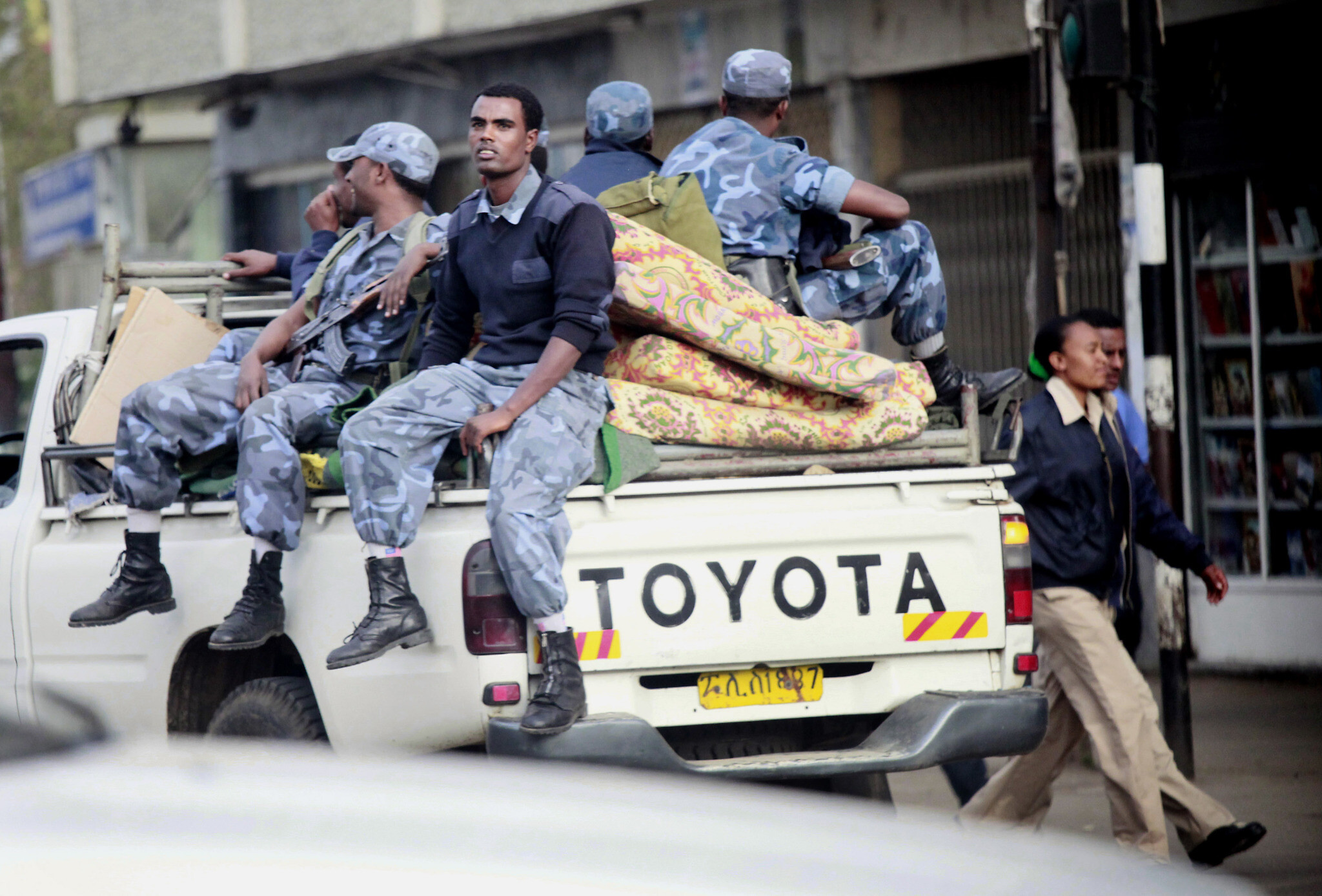
Illustrative: Ethiopian Federal Police ride through Addis Ababa, Ethiopia, Friday May 21, 2010. (AP/Jerome Delay)

Illustrative: Ethiopian Federal Police ride through Addis Ababa, Ethiopia, Friday May 21, 2010. (AP/Jerome Delay)

The Israeli Embassy in Ethiopia was on high alert over the last two months due to fears of a potential Iranian attack, according to a Thursday television report.

The Kan News report also said Ethiopian authorities have arrested 16 suspects planning an attack against the United Arab Emirates embassy in the African nation’s capital, Addis Ababa.

Israeli officials told Kan that Iran was behind the attempt, in retaliation for the killing of its top general Qassem Soleimani by the US last year and of top nuclear scientist Mohsen Fakhrizadeh in November. Iran blamed Israel for Fakhrizadeh’s killing and swore revenge.

The Iranian cell also planned an attack against the UAE embassy in Sudan, Ethiopian authorities told Kan.

Military personnel stand near the flag-draped coffin of Mohsen Fakhrizadeh, during a funeral ceremony in Tehran, Iran, November 30, 2020. (Iranian Defense Ministry via AP)

A Monday report on Kan said Iranian agents who scouted out the Israeli, American, and Emirati embassies in an unnamed East African country in preparation for a potential attack had been arrested. It was not immediately clear whether those were the same 16 suspects in Ethiopia.

Traversing across multiple continents, some of the suspects planning the attacks in East Africa, were European, including the alleged mastermind, Ahmed Ismail, a Swede, who was arrested in Sweden after local authorities exchanged intelligence with Ethiopian counterparts, Kan said.

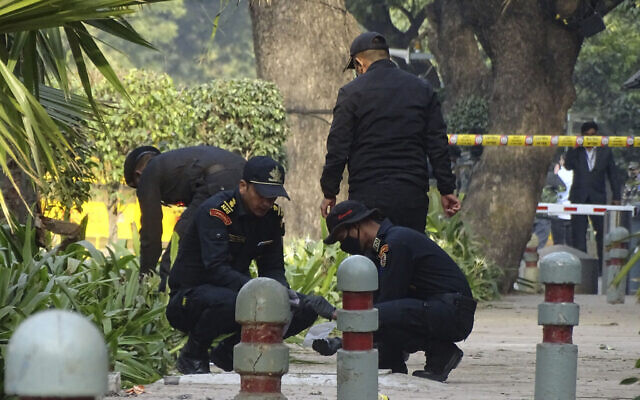
Last Friday saw a blast rock the Israeli embassy in New Delhi, India. The explosion damaged cars but did not cause injuries.

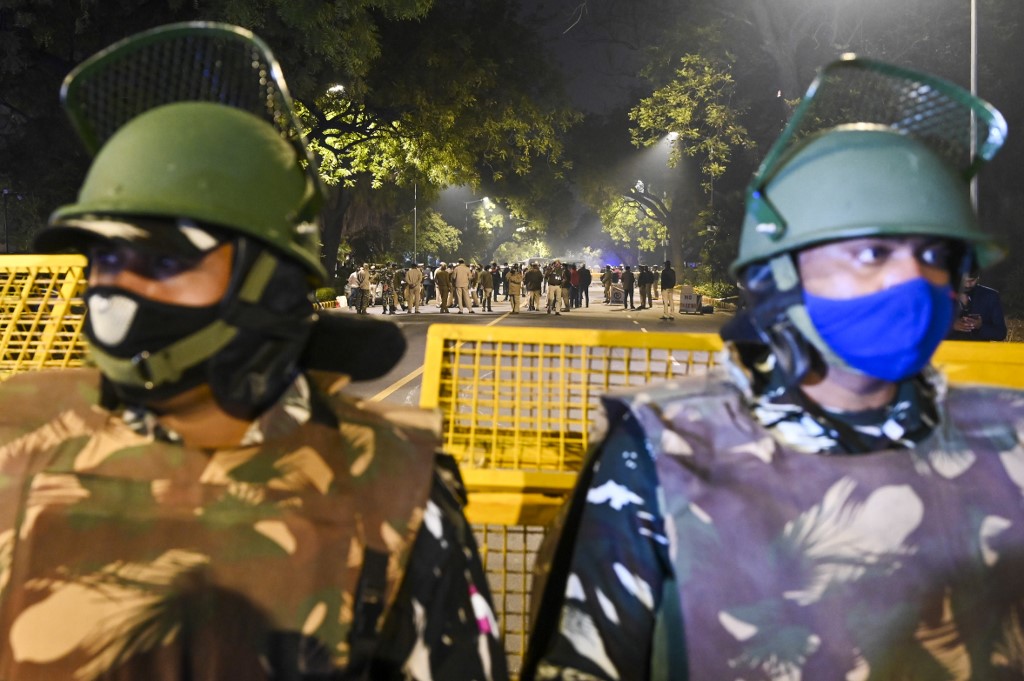
Israeli authorities are treating the explosion as a suspected terror attack aimed at the embassy, and have stepped up security precautions at missions around the world.National Security Guard soldiers inspect the site of a blast near the Israeli Embassy in New Delhi, India, January 30, 2021. (Dinesh Joshi/AP)

A handwritten note found at the scene of the bombing claimed responsibility for a previously unknown group identifying itself as “India Hezbollah.” It cited the killings of Soleimani and Fakhrizadeh, according to Indian media reports.

Unconfirmed Indian media reports claimed police had detained and questioned some Iranian nationals in New Delhi.

A police statement described the Friday explosion as having been caused by a “very low-intensity, improvised device,” that blew out the windows on three nearby cars, and said a preliminary investigation “suggests a mischievous attempt to create a sensation.”

In 2012, the wife of Israel’s defense attaché to India was moderately injured after a motorcyclist attached a bomb to her car near Israel’s New Delhi embassy. Iran was suspected in the attack. It was part of a series of attempted attacks against Israeli targets around the world attributed to Iran.

There was speculation that those incidents were in response to Israel’s alleged assassinations of multiple Iranian nuclear scientists as Jerusalem fought to curtail Iran’s nuclear program.

French PM: Israel, Saudis must be involved in new talks on Iran nuclear deal

February 5, 2021


US National Security Council said set to hold urgent meeting on Tehran’s nuclear program, as Macron offers to be ‘honest broker’ in negotiations

By TOI STAFFToday, 11:40 am  1

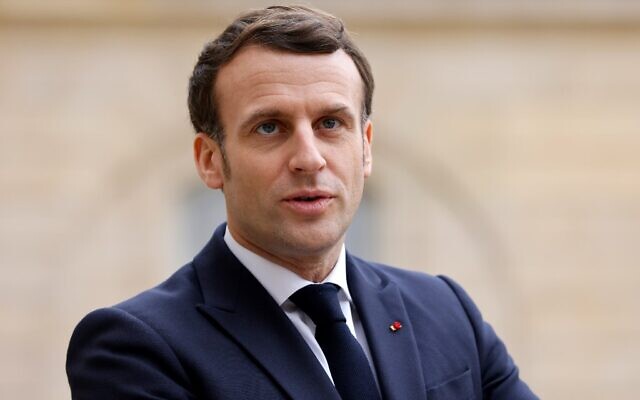
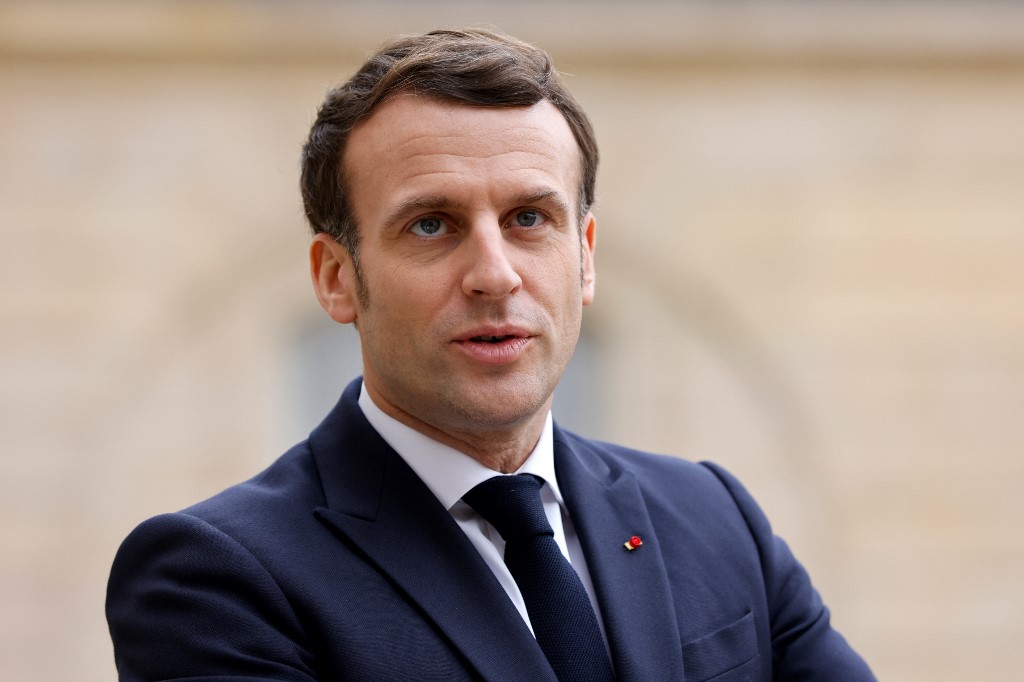
French President Emmanuel Macron at the Elysee Presidential Palace in Paris on February 4, 2021 (Ludovic MARIN / AFP)

French President Emmanuel Macron at the Elysee Presidential Palace in Paris on February 4, 2021 (Ludovic MARIN / AFP)

French President Emmanuel Macron offered Thursday night to be an “honest broker” in talks between the United States and Iran in order to revive the 2015 nuclear accord.

“I will do whatever I can to support any initiative from the US side to re-engage in a demanding dialogue, and I will… try to be an honest broker and a committed broker in this dialogue,” Macron told the Atlantic Council think-tank.

Former US president Donald Trump took the US out of the accord in 2018 and hit Iran with numerous sanctions, and it has since largely collapsed, with Tehran returning to enriching uranium to degrees and amounts beyond the caps set by the deal. The French leader tried repeatedly and unsuccessfully to persuade Trump to respect the 2015 pact.

Macron argued in favor of new negotiations with Iran that would also place limits on the Islamic republic’s ballistic missile program. and which would include Israel and Saudi Arabia.

The latter countries were fiercely opposed to the 2015 deal and supported Trump’s decision to pull the United States out.

Iran has said repeatedly it will not agree to any new negotiations.

“We have to find a way to involve in these discussions Saudi Arabia and Israel because they are some of the key partners of the region directly interested by the outcomes with our other friends of the region,” Macron said.

PM Benjamin Netanyahu (right) hosts French President Emmanuel Macron at the Prime Minister’s Residence in Jerusalem, January 22, 2020 (Koby Gideon/GPO)

It was unclear whether Macron’s offer to be a “broker” would be welcomed in Washington.

The US National Security Council will hold an urgent meeting Friday on Iran’s nuclear program, according to an Axios report, as the administration of US President Joe Biden considers how to engage with Tehran in an effort to return to the deal.

Axios said a central issue under debate will be whether to move quickly to return to the accord, or to wait until after the Iranian presidential election in June.

Meanwhile, Biden’s National Security Advisor Jake Sullivan said Thursday the US is “actively engaged” in consultations with its European allies, particularly Germany, the UK, and France, to “produce a unified front when it comes to our strategy towards Iran and towards dealing with diplomacy around the nuclear file.”

According to Reuters, the foreign ministers of the US, UK, France and Germany are expected to discuss the Iran deal in the coming days.

Iranian Foreign Minister Mohammad Javad Zarif suggested in an interview this week that the European Union could help “synchronize” actions by both sides in order to build trust and revive the deal.US National security adviser Jake Sullivan speaks during a press briefing at the White House on Feb. 4, 2021, in Washington. (AP/Evan Vucci)

Iran insists that the US drop new sanctions imposed by Trump before it returns to the deal, but the new Biden administration has said Tehran should respect the terms of the 2015 deal before it will act.

Zarif’s suggestion to involve the EU received a cool reception in Washington, where a State Department spokesman reiterated US demands on Tuesday.

On Tuesday US State Department spokesman Ned Price said Washington and Tehran were “a long way” from a return to the deal.

Price said US President Joe Biden has been “very clear” that “if Iran comes back into full compliance with its obligations under the [deal], the United States would do the same, and we would then use that as a platform to build a longer and a stronger agreement that also addresses other areas of concern.

“Of course, though, we are a long way from that.”

Price said the first steps for Washington were “consulting with our allies, consulting with our partners, consulting with Congress before we’re reaching the point where we’re going to engage directly with the Iranians and willing to entertain any sort of proposal.”

Iran’s Foreign Minister Mohammad Javad Zarif attends a news conference with Venezuela’s Foreign Minister Jorge Arreaza in Caracas, Venezuela, November 5, 2020. (AP Photo/Matias Delacroix)

He added: “We haven’t… had any discussions with the Iranians, and I wouldn’t expect we would until those initial steps go forward.”

Last month, Tehran announced it was beginning to enrich uranium up to 20 percent — far beyond the 3.5% permitted under the nuclear deal, and a relatively small technical step away from the 90% needed for a nuclear weapon. Iran also said it was beginning research into uranium metal, a material that technically has civilian uses but is seen as another likely step toward a nuclear bomb.

The United Nations’ nuclear agency said Iran has continued to ramp up its nuclear program in recent weeks by further enriching uranium and installing new centrifuges at its underground Natanz plant, according to a Tuesday report.

Iran insists it is not seeking to develop nuclear weapons.

US Secretary of State Antony Blinken said Sunday that Iran was currently months away from being able to produce enough material to build a nuclear weapon. And, he said, that timeframe could be reduced to “a matter of weeks” if Tehran further violates restrictions it agreed to under the 2015 nuclear deal with world powers.

Biden administration officials have indicated that Israel will be involved in its decision-making process regarding Iran’s nuclear program.

Minister says US will never attack Iran nuclear facilities; Israel may act alone

February 3, 2021


Tzachi Hanegbi, a close ally of Netanyahu, says in the future there ‘may be no choice’ other than an Israeli strike to prevent a nuclear-armed Islamic Republic

By TOI STAFF2 February 2021, 10:21 pm  9

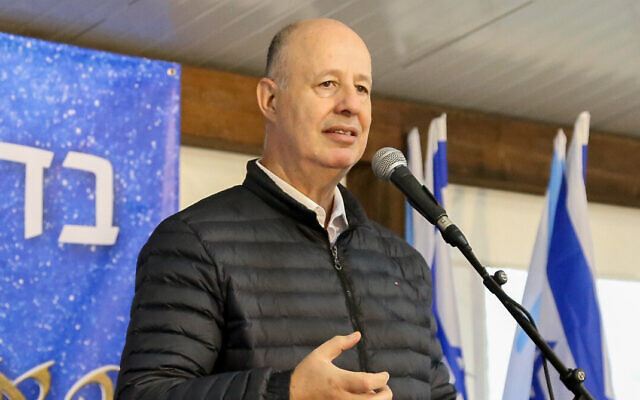
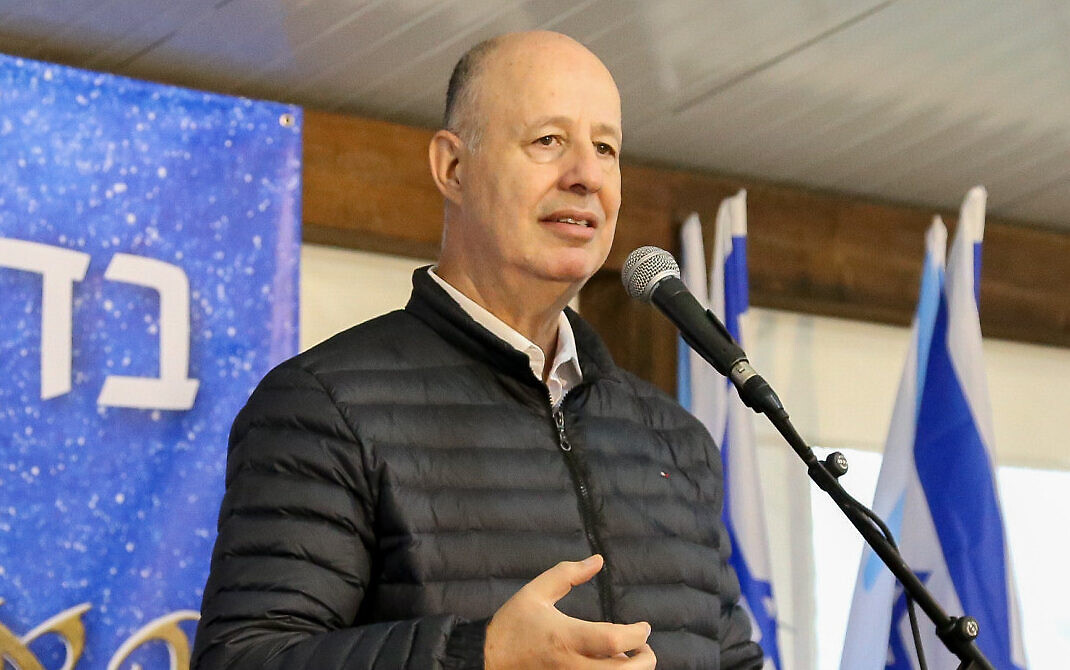
Settlement Affairs Minister Tzachi Hanegbi in Gush Etzion in the West Bank, December 24, 2020. (Gershon Elinson/Flash90)

Settlement Affairs Minister Tzachi Hanegbi in Gush Etzion in the West Bank, December 24, 2020. (Gershon Elinson/Flash90)

A Likud minister close to Prime Minister Benjamin Netanyahu said Tuesday the US will never attack Iran’s nuclear program, and Israel will have to decide whether to launch such a strike alone or come to terms with a nuclear-armed Islamic Republic.

The statement came as tensions heated in the Middle East, with Iran ramping up its nuclear program with ongoing violations of its 2015 deal with world powers, and the US and Israel issuing threats and warnings.

Some of the activity is tied to the changing of the guard at the White House. The Trump administration stepped up its pressure on Iran as its tenure drew to a close, while the Biden administration is expected to take a softer approach, despite opposition from Israel and its other regional allies.

“The United States will never attack the nuclear facilities in Iran. Israel must decide whether it will accept a nuclear Iran,” Tzachi Hanegbi told the Kan public broadcaster. “Israel will be forced to act independently to remove this danger.”

“It’s possible that in the future there will be no choice [but to attack Iran militarily],” Hanegbi said. “I hope that when our leadership is met with this dilemma, it won’t accept [a nuclear-armed Iran].”

Hanegbi said the Iranians have proved to have a “very limited” capacity to retaliate against Israel. The Jewish state has waged an air campaign against Iranian-linked targets in Syria in recent years without any serious repercussions. Tehran also swore revenge for the killing of its top nuclear scientist last year, blaming Israel for the assassination, but has not yet followed through on the threat.

A minor bomb blast at the Israeli embassy in New Delhi this week was being treated as a terror attack, but Israel has not blamed Iran.

Hanegbi, who started his Knesset career in 1988, serves as minister of settlement affairs and previously served as minister of justice, internal security, intelligence and nuclear affairs, health, environment and transport, and as a minister in the Prime Minister’s Office responsible for overseeing Israel’s intelligence services.

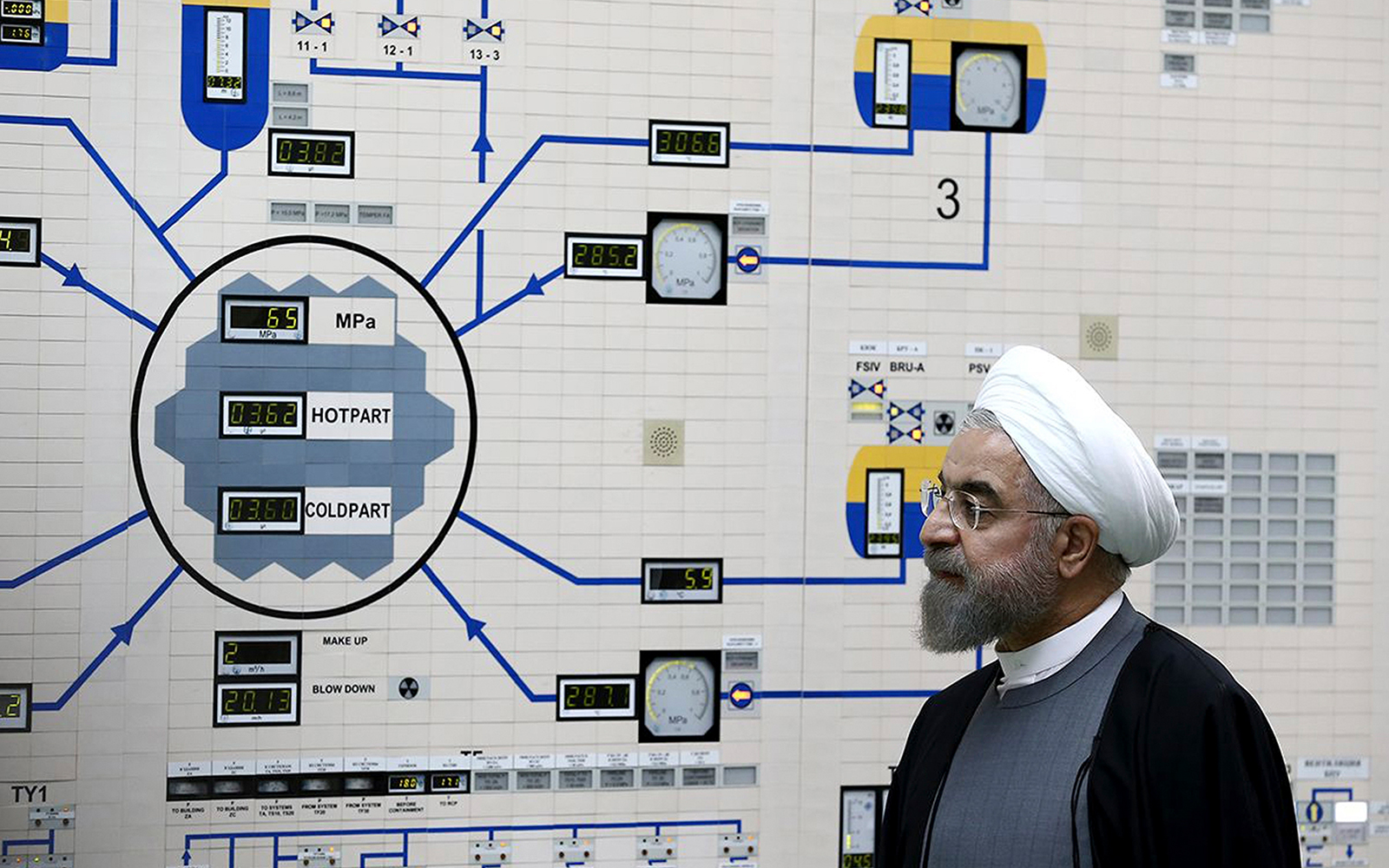
Israel has twice conducted military strikes against the nuclear programs of its enemies — Iraq in 1981 and Syria in 2007 — under what’s become known as the Begin Doctrine, which maintains that Jerusalem will not allow an enemy country to obtain an atomic weapon.Illustrative: Iranian President Hassan Rouhani visits the Bushehr nuclear power plant just outside of Bushehr, Iran, Jan. 13, 2015. (AP Photo/Iranian Presidency Office, Mohammad Berno, File)

Hanegbi made similar comments last month, when he threatened that Israel could attack Iran’s nuclear program if the United States rejoined the nuclear deal, as US President-elect Joe Biden has indicated he plans to do, in one of the most forceful recent statements on the issue by an Israeli official.

“If the United States government rejoins the nuclear deal — and that seems to be the stated policy as of now — the practical result will be that Israel will again be alone against Iran, which by the end of the deal will have received a green light from the world, including the United States, to continue with its nuclear weapons program,” Hanegbi said.

“This of course we will not allow. We’ve already twice done what needed to be done, in 1981 against the Iraqi nuclear program and in 2007 against the Syrian nuclear program,” he said.

Hanegbi made the statement after massive airstrikes in Syria targeted over 15 Iran-linked facilities, the latest in a spate of such strikes.

Defense Minister Benny Gantz said in an interview broadcast Sunday that Israel is still keeping open the possibility of taking action against Tehran’s nuclear project if necessary.

“The IDF and Israel’s defense establishment are holding onto the option of taking action against Iran’s nuclear project if that is what has to be done,” he said. “I hope it doesn’t come to that.”An Iranian technician walks through the Uranium Conversion Facility just outside the city of Isfahan, 255 miles (410 kilometers) south of the capital Tehran, Iran, February 3, 2007. (Vahid Salemi/AP)

The interview was broadcast hours after Gantz visited the Depth Corps, the Israel Defense Forces unit tasked with conducting operations far beyond the country’s borders, reviewing operational plans, his office said, in an apparent threat to Iran.

IDF chief Aviv Kohavi issued a rare public criticism of the US attitude toward the Iran deal last week, and said that he had ordered the military to develop operational plans for striking Iran’s nuclear program.

The Biden administration has said repeatedly it is willing to rejoin the 2015 nuclear deal, if Iran first returns to compliance. Tehran has said the US must first remove all sanctions it placed on Iran after withdrawing from the treaty.

Last month, Tehran announced it was beginning to enrich uranium up to 20 percent — far beyond the 3.5% permitted under the nuclear deal, and a relatively small technical step away from the 90% needed for a nuclear weapon. Iran also said it was beginning research into uranium metal, a material that technically has civilian uses but is seen as another likely step toward a nuclear bomb.
The United Nations’ nuclear agency said Iran has continued to ramp up its nuclear program in recent weeks by further enriching uranium and installing new centrifuges at its underground Natanz plant, according to a Tuesday report.

Iran insists it is not seeking to develop nuclear weapons, a position repeated last week by its Foreign Minister Mohammad Javad Zarif.

US Secretary of State Antony Blinken said Sunday that Iran was currently months away from being able to produce enough material to build a nuclear weapon. And, he said, that timeframe could be reduced to “a matter of weeks” if Tehran further violates restrictions it agreed to under the 2015 nuclear deal with world powers.

Biden administration officials have indicated that Israel will be involved in its decision-making process regarding Iran’s nuclear program.

US says sides ‘a long way’ from return to Iran nuclear deal

February 3, 2021


American officials say Washington’s top priority is to consult with allies on how to proceed on return to 2015 accord

By TOI STAFFToday, 6:56 am  1

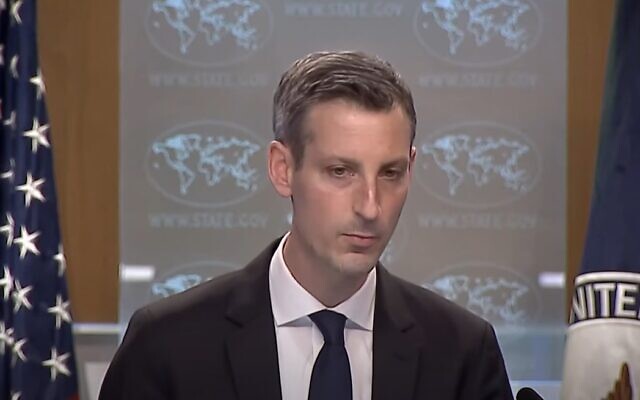
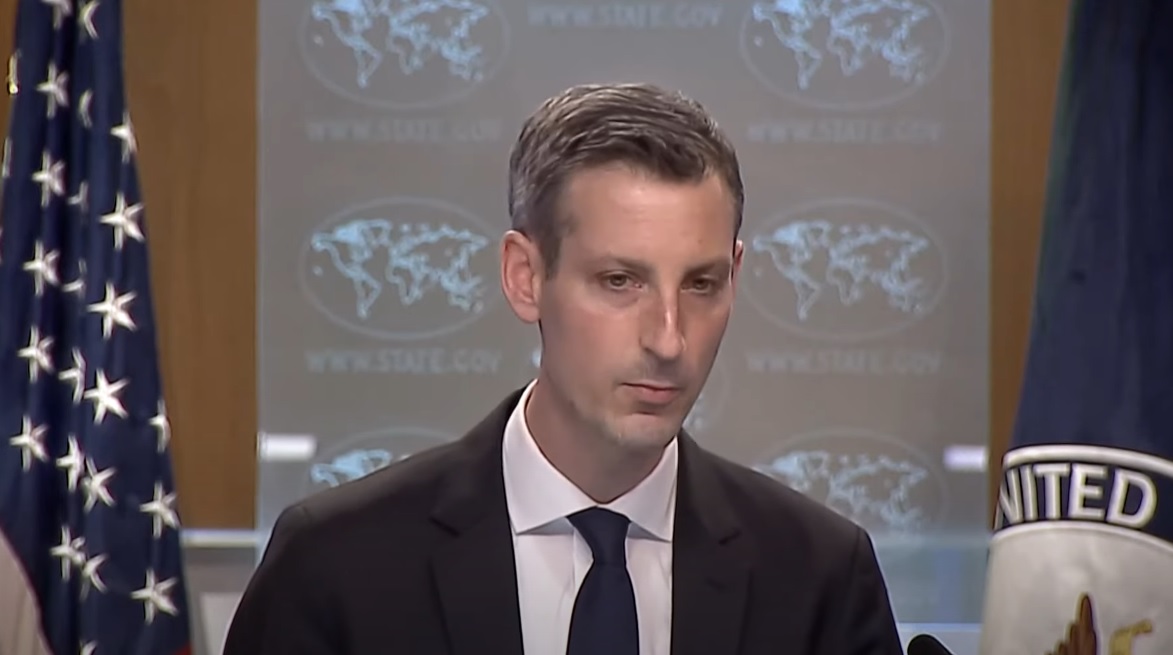
US State Department spokesman Ned Price holds a press briefing in Washington, February 2, 2021 (video screenshot)

US State Department spokesman Ned Price holds a press briefing in Washington, February 2, 2021 (video screenshot)

The United States and Iran are “a long way” from a return to the 2015 nuclear deal with Iran, US State Department spokesman Ned Price said Tuesday.

Price said US President Joe Biden has been “very clear” that “if Iran comes back into full compliance with its obligations under the [deal], the United States would do the same, and then we would then use that as a platform to build a longer and a stronger agreement that also addresses other areas of concern.

“Of course, though, we are a long way from that.”

Price said the first steps for Washington were “consulting with our allies, consulting with our partners, consulting with Congress before we’re reaching the point where we’re going to engage directly with the Iranians and willing to entertain any sort of proposal.”

He added: “We haven’t… had any discussions with the Iranians, and I wouldn’t expect we would until those initial steps go forward.”

An unnamed US official told Reuters the American “priority” was to consult with its regional partners and the partners to the accord first.

US President Joe Biden in the Oval Office of the White House, January 25, 2021. (JIM WATSON / AFP)

The Biden administration has said repeatedly it is willing to rejoin the 2015 nuclear deal, if Iran first returns to compliance. Tehran has said the US must first remove all sanctions it placed on Iran after withdrawing from the treaty.

Last month, Tehran announced it was beginning to enrich uranium up to 20 percent — far beyond the 3.5% permitted under the nuclear deal, and a relatively small technical step away from the 90% needed for a nuclear weapon. Iran also said it was beginning research into uranium metal, a material that technically has civilian uses but is seen as another likely step toward a nuclear bomb.

The United Nations’ nuclear agency said Iran has continued to ramp up its nuclear program in recent weeks by further enriching uranium and installing new centrifuges at its underground Natanz plant, according to a Tuesday report.

Iran insists it is not seeking to develop nuclear weapons, a position repeated last week by its Foreign Minister Mohammad Javad Zarif.

Biden administration officials have indicated that Israel will be involved in its decision-making process regarding Iran’s nuclear program.

The Biden administration’s policy on Iran is expected to be a point of contention between the new US administration and Israel. Israeli officials have voiced strong objections to the US rejoining the nuclear deal, and have also issued threats against Iran in recent weeks.

Israel, along with the United Arab Emirates and Bahrain, are all seeking to dissuade the Biden administration from returning to the Iran nuclear agreement in its original form. The Biden administration has pledged to consult with Israel and its other Middle East allies before making decisions regarding Iran.

Defense Minister Benny Gantz said in an interview broadcast Sunday that Israel is still keeping open the possibility of taking action against Tehran’s nuclear project if necessary.

A Likud minister close to Prime Minister Benjamin Netanyahu said Tuesday the US will never attack Iran’s nuclear program, and Israel will have to decide whether to launch such a strike alone or come to terms with a nuclear-armed Islamic Republic.

Tzachi Hanegbi told Kan News: “Israel will be forced to act independently to remove this danger.”

“It’s possible that in the future there will be no choice [but to attack Iran militarily],” Hanegbi said. “I hope that when our leadership is met with this dilemma, it won’t accept [a nuclear-armed Iran].”

Iran asks Europe to help bridge impasse with US over return to nuclear deal

February 2, 2021


Zarif suggests EU could coordinate steps from Washington and Tehran, which are both currently insisting the other return to accords first

By AFP and TOI STAFFToday, 2:12 am  1

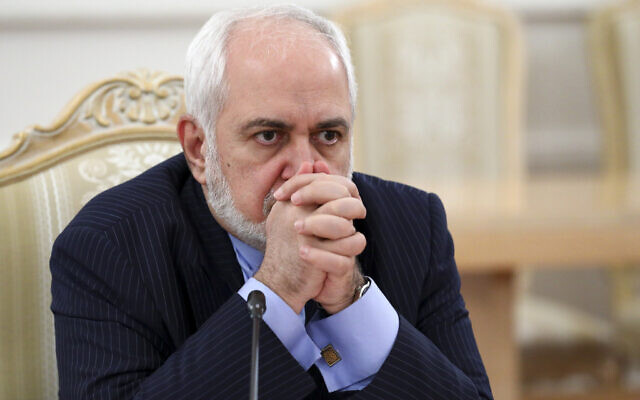
In this photo released by the Russian Foreign Ministry Press Service, Iranian Foreign Minister Mohammad Javad Zarif listens to Russian Foreign Minister Sergey Lavrov during the talks in Moscow, Russia, Tuesday, Jan. 26, 2021. (Russian Foreign Ministry Press Service via AP)

In this photo released by the Russian Foreign Ministry Press Service, Iranian Foreign Minister Mohammad Javad Zarif listens to Russian Foreign Minister Sergey Lavrov during the talks in Moscow, Russia, Tuesday, Jan. 26, 2021. (Russian Foreign Ministry Press Service via AP)

WASHINGTON  — Iran’s foreign minister on Monday asked the European Union to coordinate a synchronized return of both Washington and Tehran into a nuclear deal, after a diplomatic standoff on who will act first.

US President Joe Biden has voiced support for returning to the accord, from which Donald Trump exited, but has insisted that Tehran first resume full compliance by reversing measures it took to protest the sweeping sanctions imposed by his predecessor.

Foreign Minister Mohammad Javad Zarif, who has previously demanded an end to sanctions before Iran acts, offered a way forward during an interview on CNN International.

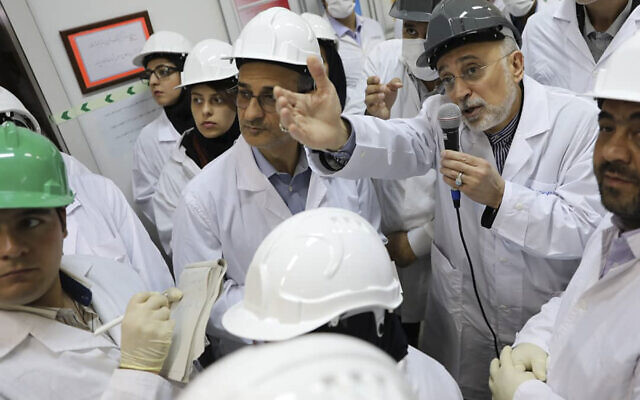
“You know clearly there can be a mechanism to basically either synchronize it, or coordinate what can be done,” he told interviewer Christiane Amanpour.In this photo released on Monday, Nov. 4, 2019 by the Atomic Energy Organization of Iran, Ali Akbar Salehi, head of the organization, speaks with media while visiting Natanz enrichment facility, in central Iran. (Atomic Energy Organization of Iran via AP)

Zarif said that EU foreign policy chief Josep Borrell should play a role in his position of coordinator of the 2015 agreement — which also included Britain, France and Germany as well as Russia and China.

Borrell can “sort of choreograph the actions that are needed to be taken by the United States and the actions that are needed to be taken by Iran,” Zarif said.

“The United States needs to come back into compliance and Iran will be ready immediately to respond. The timing is not the issue.”

Trump walked out of the deal negotiated under former President Barack Obama, vowing instead to strangle Iran’s economy and reduce its clout around the region.

The Biden administration argues that Trump’s actions badly backfired, with Iran both moving away from the nuclear deal and only intensifying its opposition to US interests, and Secretary of State Antony Blinken warning in an interview broadcast Monday that Iran could now produce enough fissile material for a nuclear weapon within “a few months.”

But Blinken again cautioned that a return to the nuclear accord would not be swift

.

Anthony Blinken speaks at The Queen theater in Wilmington, Delaware, November 24, 2020. (Carolyn Kaster/AP)

“If it decides to come back into the agreement — that may take some time, then it’s gonna take us some time to assess whether they, in fact, had made good on their obligations,” Blinken told NBC News.

Zarif in his interview said that Iran could return to its previous commitments “in less than a day.”

“Some may take a few days or weeks, but it won’t take any longer that it would take the United States to implement executive orders that are necessary to put back Iran’s oil, banking, transportation and other areas that President Trump violated, back into operation,” Zarif said.

Iran denies it is seeking a nuclear weapon, however last month, Tehran announced it was beginning to enrich uranium up to 20 percent — far beyond the 3.5 percent permitted under the nuclear deal, and a relatively small technical step away from the 90 percent needed for a nuclear weapon. Iran also said it was beginning research into uranium metal, a material that technically has civilian uses but is seen as another likely step toward a nuclear bomb.

Iran said last week it would also move to restrict short-notice inspections of suspect nuclear facilities from late February.

The Biden administration’s policy on Iran is expected to be a point of contention between the new US administration and Israel. Israeli officials have voiced strong objections to the US rejoining the nuclear deal, and have also issued threats against Iran in recent weeks.

Israel, along with the United Arab Emirates and Bahrain, are all seeking to dissuade the Biden administration from returning to the Iran nuclear agreement in its original form. The Biden administration has pledged to consult with Israel and its other Middle East allies before making decisions regarding Iran.In this photo released by the Atomic Energy Organization of Iran, technicians work at the Arak heavy water reactor’s secondary circuit, as officials and media visit the site, near Arak, 150 miles (250 kilometers) southwest of the capital Tehran, Iran, December 23, 2019. (Atomic Energy Organization of Iran via AP)

Defense Minister Benny Gantz said in an interview broadcast Sunday that Israel is still keeping open the possibility of taking action against Tehran’s nuclear project if necessary.

IDF chief Aviv Kohavi issued a rare public criticism of the US plans on Tuesday and said that he had ordered the military to develop operational plans for striking Iran’s nuclear program.

Iranian agents scouted Israeli, US, UAE embassies in East Africa for attack — TV

February 2, 2021


Attempted strike to avenge deaths of Iranian general, nuclear scientist was thwarted last month, Kan News claims, citing Western intelligence sources

By TOI STAFF1 February 2021, 11:46 pm  2

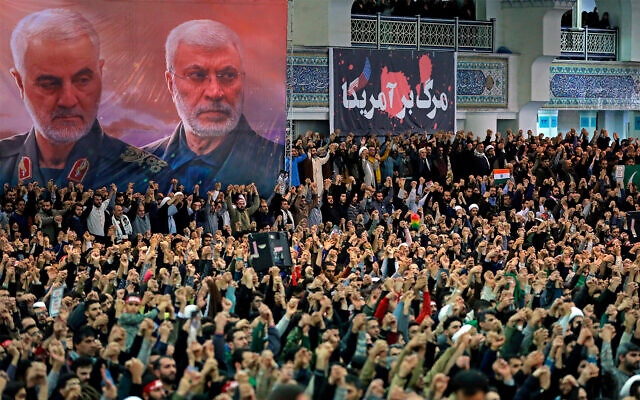
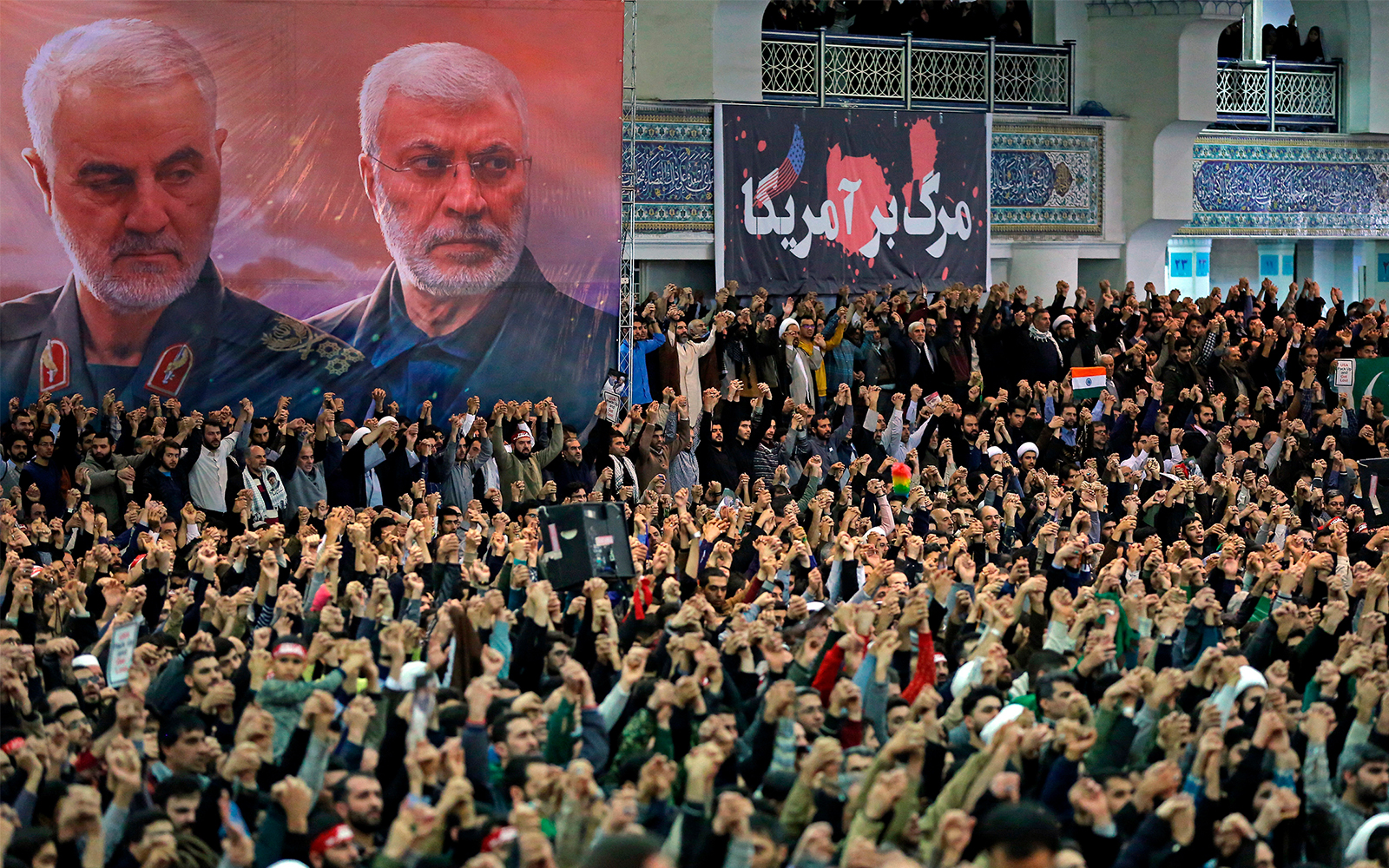
Worshipers in Iran chant slogans during Friday prayers ceremony by a banner showing slain Iranian Revolutionary Guard general Qassem Soleimani, left, and Iraqi Shiite senior militia commander Abu Mahdi al-Muhandis, who were killed in Iraq in a US drone attack on January 3, and a banner which reads in Persian: 'Death To America,' at Imam Khomeini Grand Mosque in Tehran, Iran, January 17, 2020. (Office of the Iranian Supreme Leader via AP)

Worshipers in Iran chant slogans during Friday prayers ceremony by a banner showing slain Iranian Revolutionary Guard general Qassem Soleimani, left, and Iraqi Shiite senior militia commander Abu Mahdi al-Muhandis, who were killed in Iraq in a US drone attack on January 3, and a banner which reads in Persian: ‘Death To America,’ at Imam Khomeini Grand Mosque in Tehran, Iran, January 17, 2020. (Office of the Iranian Supreme Leader via AP)

Several Iranian agents who scouted out the Israeli, American, and Emirati embassies in an unnamed East African country in preparation for a potential attack have been arrested, according to a Monday Israeli TV report.

The agents were sent by Iran to gather intelligence on the sites for a terror attack, Kan News reported, citing Western intelligence sources.

Some held dual European and Iranian citizenship, and some were arrested in the East African country, while others were apprehended in different countries. The attack was thwarted last month, according to the report.

The report said Iran intended to target one of the missions in retaliation for the killing of its top general Qassem Soleimani by the US last year and of top nuclear scientist Mohsen Fakhrizadeh in November. Iran blamed Israel for Fakhrizadeh’s killing and swore revenge.

On Friday, a blast rocked the Israeli embassy in New Delhi, India. The explosion damaged cars but did not cause injuries.

Israeli authorities are treating the explosion as a suspected terror attack aimed at the embassy, and have stepped up security precautions at missions around the world.Police cordon off an area near the Israeli embassy in New Delhi on January 29, 2021. (Sajjad HUSSAIN / AFP)



Israeli missions had already been on alert in the wake of Fakhrizadeh’s assassination.

A handwritten note found at the scene of the bombing claimed responsibility for a previously unknown group identifying itself as “India Hezbollah.” It cited the killings Soleimani and Fakhrizadeh, according to Indian media reports on Saturday.

Unconfirmed Indian media reports Saturday claimed police had detained and questioned some Iranian nationals in New Delhi.

A police statement described the Friday explosion as caused by a “very low-intensity improvised device” that blew out the windows on three nearby cars and said a preliminary investigation “suggests a mischievous attempt to create a sensation.”

In 2012, the wife of Israel’s defense attaché to India was moderately injured after a motorcyclist attached a bomb to her car near Israel’s New Delhi embassy. Iran was suspected in the attack.

It was part of a series of attempted attacks against Israeli targets around the world attributed to Iran. The same day as the 2012 New Delhi blast, a bomb was discovered on an Israeli diplomat’s car in the former Soviet republic of Georgia. The next day, three Iranians accidentally blew up their house in Thailand.

There was speculation that those incidents were in response to Israel’s alleged assassinations of multiple Iranian nuclear scientists as Jerusalem fought to curtail Iran’s nuclear program.

In September, the Politico news site reported that Iran was plotting to assassinate the US ambassador to South Africa for the killing of Soleimani. Iran dismissed the allegation.

Iran already retaliated for Soleimani’s killing in January, firing missiles at a US base in Iraq, to which the US did not respond.