With ‘extraordinary flight and interception capabilities,’ the latest generation in the family of anti-ballistic missiles is set to replace the Arrow 2 in the coming decades
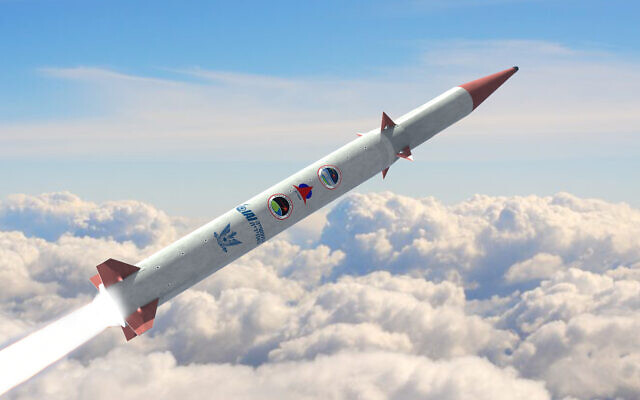
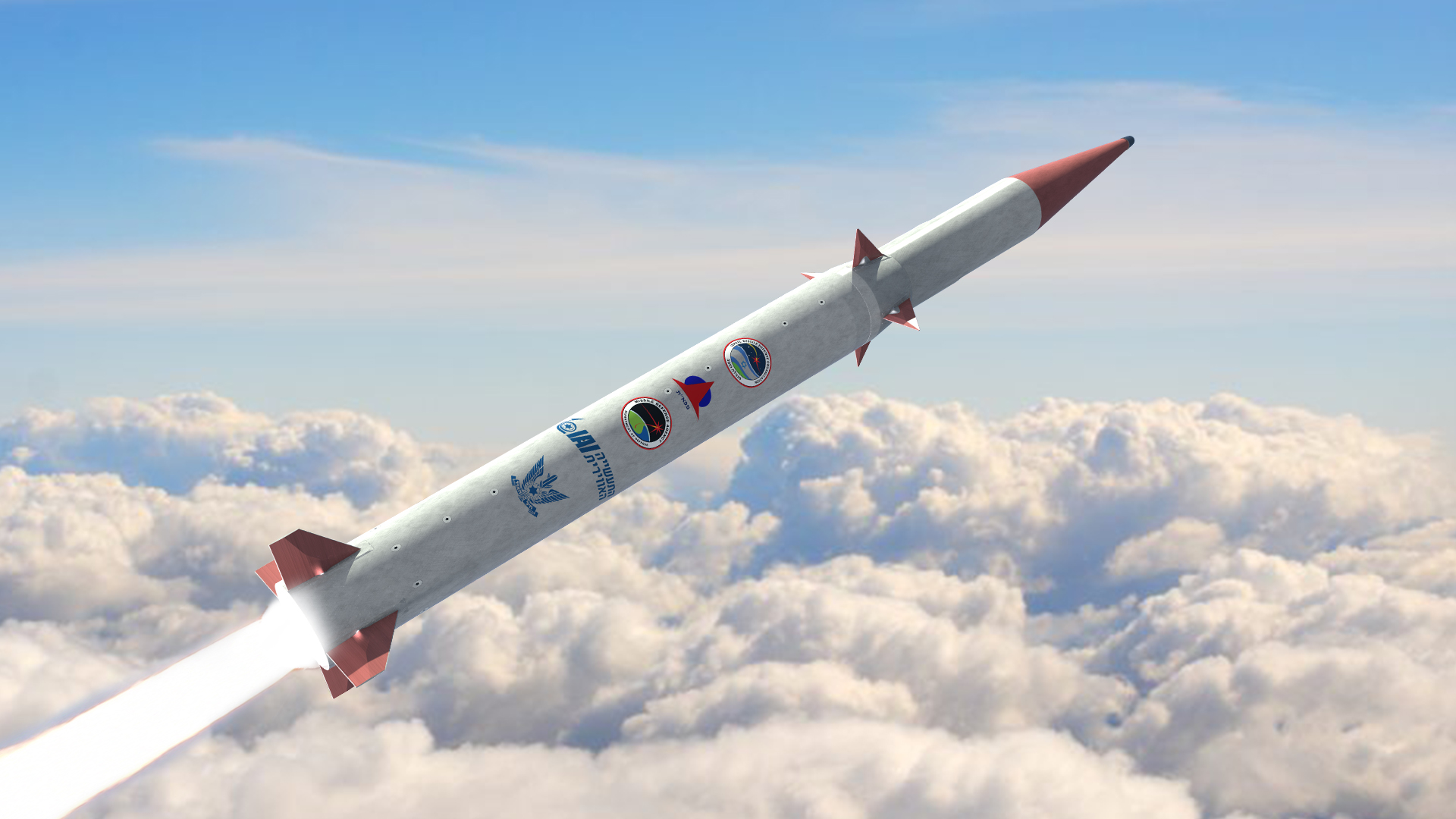
llustration: Arrow 4 air defense system missile (Ministry of Defense)
Israel and the US have begun developing the Arrow 4, the latest generation in the family of Israeli anti-ballistic missiles and an essential part of the country’s multi-layered defense system, Israel’s Defense Ministry announced Thursday.
“The defense establishment is working round the clock to shield Israel’s skies from ballistic threats,” Defense Minister Benny Gantz said, praising the joint development with US partners. “It will bring a technological and operational leap to the future battlefield,” he added.
According to Gantz, the Arrow 4 anti-ballistic missile will include upgraded capabilities and will join the existing Arrow family to “address a wide range of evolving threats in the region” adding that it is expected to replace the Arrow 2 in the coming decades.
Vice Admiral Jon Hill, director of the US Missile Defense Agency, said the Arrow 4 joint development operation “expresses the United States’ commitment to assist the State of Israel in strengthening its national defense system against the missile threat.”
Illustration: Arrow 4 air defense system missile (Ministry of Defense)
Israel says the Arrow system is a critical element in its multi-layered defense system, which includes powerful radar systems, the Iron Dome anti-rocket system, the Arrow 2 and the Arrow 3, which entered operational use in 2017. The existing systems have undergone a series of improvements with successful interception tests in Israel and Alaska, according to the Defense Ministry.
“Arrow 4 will have extraordinary flight and interception capabilities, to ensure Israel will remain one step ahead of the enemy,” said Moshe Patel, head of the Israeli Missile Defense Organization.
Earlier in February, the Israel Defense Forces and the United States European Command launched a joint air defense exercise, dubbed Juniper Falcon, focused on the threat of ballistic missile attack.
Iran has a missile capability of up to 2,000 kilometers (1,250 miles), far enough to reach Israel and US military bases in the region. Last January, after the US killed a top Iranian general in Baghdad, Tehran retaliated by firing a barrage of ballistic missiles at two Iraqi bases housing US troops, resulting in brain concussion injuries to dozens of them.
Iranian President Hassan Rouhani accused Israel of being behind the November killing of the country’s top nuclear scientist, Mohsen Fakhrizadeh, the alleged mastermind of Iran’s rogue nuclear weapons program, and has vowed to avenge his death.READ
Accord signatories state commitment to ensuring ‘Iran can never develop nuclear weapon,’ warn Tehran it would be ‘dangerous’ to limit UN nuclear agency inspections
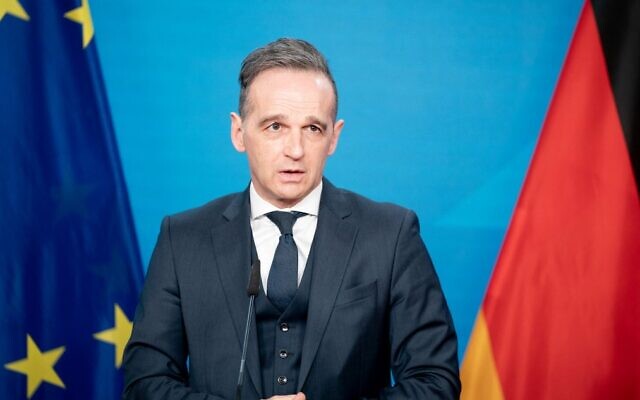
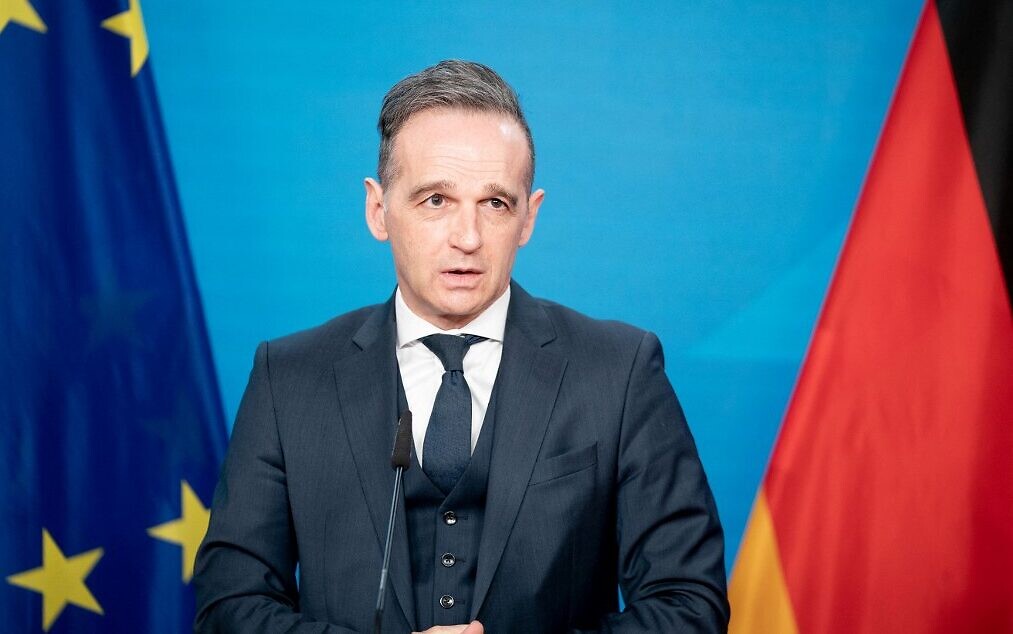
German Foreign Minister Heiko Maas gives a press statement in Berlin on February 16, 2021. (Kay Nietfeld/Pool/AFP)
PARIS — European powers and the United States on Thursday warned Iran it would be “dangerous” to limit UN nuclear agency inspections and asked Tehran to return to full compliance with a 2015 nuclear deal, while stating their commitment to “ensuring that Iran can never develop a nuclear weapon.”
Britain, France, Germany and US said after talks based in Paris that they were “united in underlining the dangerous nature of a decision to limit IAEA access” ahead of a February 21 deadline set by the Iranian parliament.
French Foreign Minister Jean-Yves Le Drian hosted his German and British counterparts in Paris, with America’s new Secretary of State Antony Blinken joining via videoconference.
Their statement urged “Iran to consider the consequences of such grave action, particularly at this time of renewed diplomatic opportunity,” adding that they all shared the aim of Iran returning to “full compliance” with the accord.
Analysts say only a small window of opportunity remains to save the deal, which received a near-fatal blow when former US president Donald Trump walked out of the accord in 2018 and reimposed sanctions on Iran.
Tehran retaliated by stepping up nuclear work in violation of the accord.
Ahead of the meeting, German Foreign Minister Heiko Maas told reporters that “The recent steps of Iran are not helpful at all, they endanger the return of the Americans” to the deal.
“Apparently Iran is not interested in easing the tensions, but in escalation. They are playing with fire,” he said.
The administration of US President Joe Biden has said it is prepared to rejoin the deal and start lifting sanctions if Iran — whose economy has been devastated — returns to full compliance.
But Tehran rejected this precondition, pressing on with increasing nuclear work in retaliation for Trump’s so-called “maximum pressure” sanctions policy to weaken the Iranian regime which has had no relations with Washington for four decades.
The Joint Comprehensive Plan of Action (JCPOA), signed in Vienna in 2015, was based on Iran providing safeguards that it would not make an atomic bomb, in exchange for a gradual easing of international sanctions.
‘Serious impact’
The diplomacy is expected to be hugely delicate and could be further derailed by the deadline set under a bill adopted by the Iranian parliament in December following the killing of top nuclear scientist Mohsen Fakhrizadeh, which Tehran blamed on Israel.
Iran would restrict some UN nuclear agency inspections by February 21 if the US does not lift the sanctions imposed since 2018.
International Atomic Energy Agency (IAEA) chief Rafael Grossi is to travel to Tehran on Saturday for talks with the Iranian authorities to find a solution for continuing inspections in the country, the agency said.
Iranian President Hassan Rouhani, right, greets IAEA chief Rafael Grossi ahead of a meeting in Tehran, Iran, August 26, 2020. (Iranian Presidency Office via AP)
It warned that the step threatened by Tehran would have “a serious impact on the IAEA’s verification and monitoring activities in the country.”
In Washington, State Department spokesman Ned Price said that Iran should provide “full and timely cooperation” with the IAEA and reverse its recent steps violating the accord.
The IAEA said last week that Iran had started producing uranium metal in a new violation of the accord, intensifying concerns it was becoming closer to having the capacity to make a nuclear weapon.
“Iran’s nuclear program is growing by the day, as the time it would take to enrich enough uranium for a single nuclear weapon shrinks,” said Ali Vaez, Iran project director at the International Crisis Group (ICG).
‘Solution for dilemma’
While Iran’s policy is ultimately determined by supreme leader Ayatollah Ali Khamenei, Iranian presidential elections in June add another time pressure factor.
Iranian Presiden Hassan Rouhani — a key advocate of nuclear diplomacy with global powers — is set to step down after serving the maximum two consecutive terms, and a more hardline figure is likely to replace him.
Ellie Geranmayeh, senior policy fellow at the European Council on Foreign Relations, said Washington should move in political and practical terms to show Iran that the Biden administration “is distancing itself from Trump-era maximum pressure.”
“There is a short window of time to limit the damage that could ensue from Iran’s next steps, for example by reducing the impact of such moves on the quality of inspections by international monitors,” Geranmayeh told AFP
.
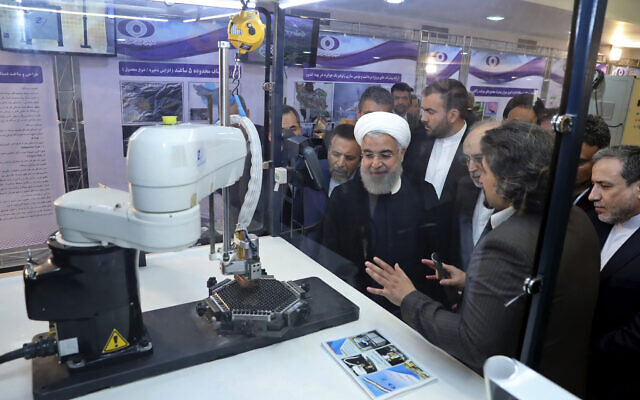
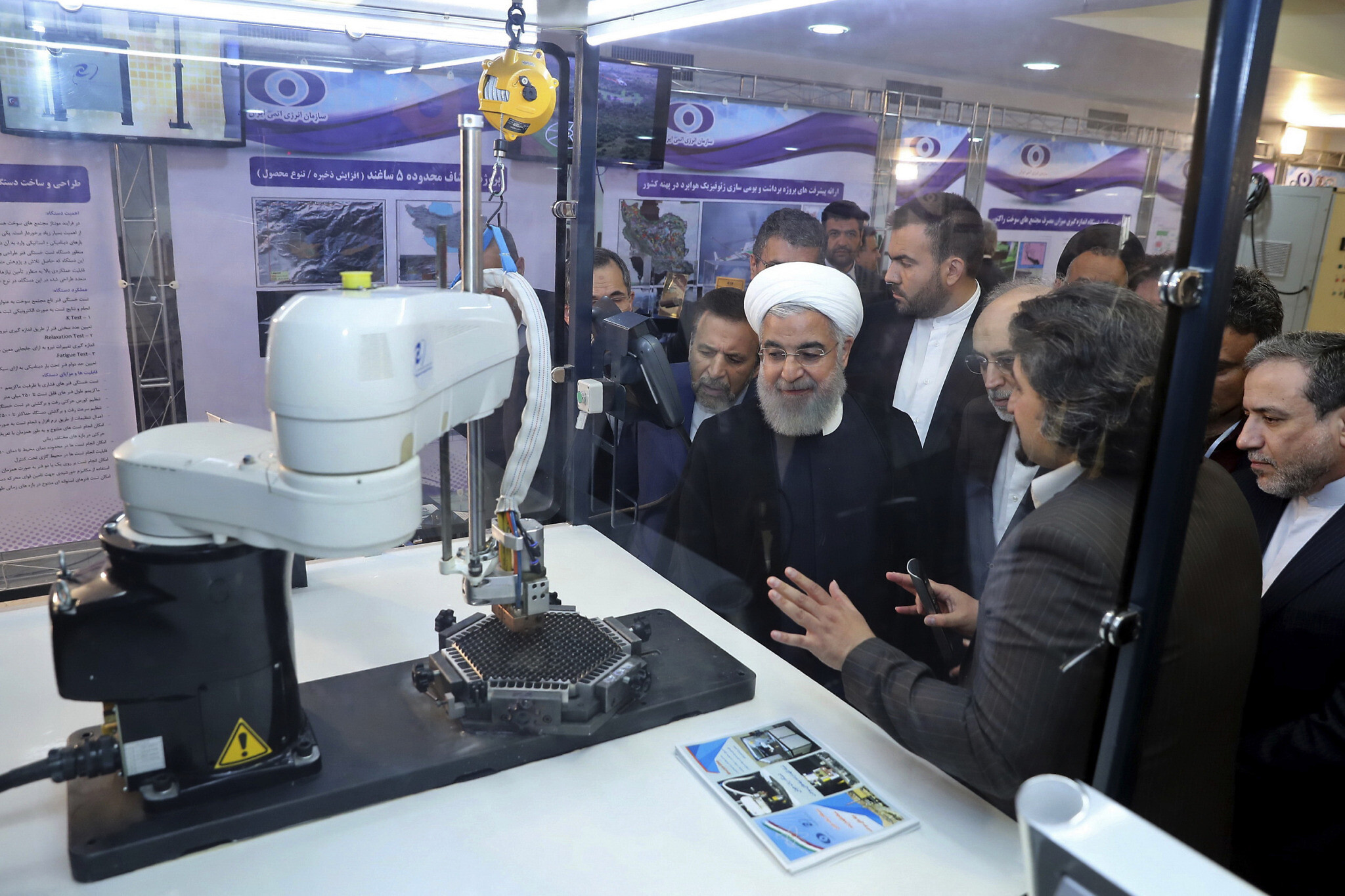
In this April 9, 2018, photo, released by an official website of the office of the Iranian Presidency, President Hassan Rouhani listens to explanations on new nuclear achievements at a ceremony to mark “National Nuclear Day,” in Tehran, Iran. (Iranian Presidency Office via AP)
Vaez said “the seemingly impossible dilemma has a solution” if the two sides were prepared to take “closely synchronized steps.”
This would involve Washington revoking Trump’s 2018 withdrawal and greenlighting an Iranian request for an emergency IMF loan, while Iran freezes “the most problematic aspects” of its nuclear program, he said.
Khamenei emphasized Wednesday that Iran wanted to see “only action, action” from the United States.
“If we see action from the opposite side, we will act too,” he said.
State Department says it will accept invitation from European Union meet with deal’s original participants, including Tehran; US reportedly told Israel of move ahead of time
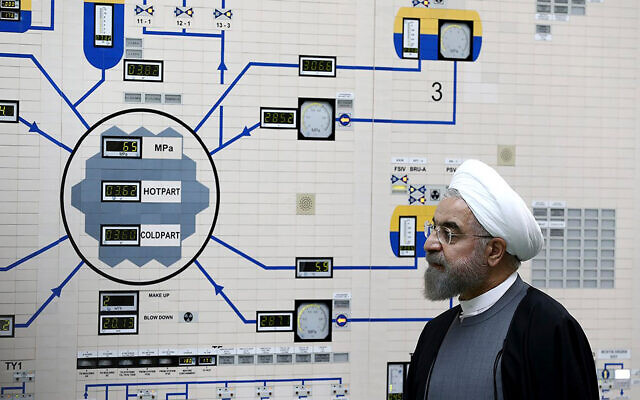
Illustrative: Iranian President Hassan Rouhani visits the Bushehr nuclear power plant just outside of Bushehr, Iran, Jan. 13, 2015. (AP Photo/Iranian Presidency Office, Mohammad Berno, File)
WASHINGTON — The Biden administration said Thursday it’s ready to join talks with Iran and world powers to discuss a return to the 2015 nuclear deal. It’s also reversed the Trump administration’s determination that all UN sanctions against Iran had been restored and eased stringent restrictions on the domestic US travel of Iranian diplomats posted to the United Nations.
The State Department said the US would accept an invitation from the European Union to attend a meeting of the participants in the original agreement. The US has not participated in a meeting of those participants since former president Donald Trump withdrew from the deal in 2018.
“The United States would accept an invitation from the European Union High Representative to attend a meeting of the P5+1 and Iran to discuss a diplomatic way forward on Iran’s nuclear program,” State Department spokesman Ned Price said in a statement.
Such an invitation has not yet been issued but one is expected shortly, following discussions earlier Thursday between US Secretary of State Antony Blinken and his British, French and German counterparts.
There was no response yet from Iran, which has demanded that the US lift sanctions before it returns to talks.
Meanwhile, at the United Nations, the Biden administration notified the Security Council that it had withdrawn Trump’s September 2020 invocation of the so-called “snapback” mechanism under which it maintained that all UN sanctions against Iran had been re-imposed. That determination had been vigorously disputed by nearly all other UN members and had left the US isolated at the world body.US Secretary of State Antony Blinken speaks at the State Department, Feb. 4, 2021, in Washington. (AP Photo/Evan Vucci)
In another move, officials said the administration has eased extremely strict limits on the travel of Iranian diplomats accredited to the United Nations. The Trump administration had imposed the severe restrictions, which essentially confined them to their UN mission and the UN headquarters building in New York.
“The idea here is to take steps to remove unnecessary obstacles to multilateral diplomacy by amending the restrictions on domestic travel. Those had been extremely restrictive,” a State Department official told reporters.
Israeli leaders, including Prime Minister Benjamin Netanyahu, have long opposed the agreement and repeatedly warned against the US returning to the deal. There was no response yet from Jerusalem about the US announcement that it was ready to resume talks, which came after midnight in Israel.
The Reuters news agency, citing a source familiar with the matter, said the US had informed Israel ahead of time about Thursday’s announcement, but that US President Joe Biden had not told Netanyahu directly.
The EU political director, Enrique Mora, after the announcement proposed via Twitter an informal meeting of all participants, saying the nuclear accord was at a “critical moment” — ahead of a weekend deadline for Iran to restrict some UN nuclear inspections.
A State Department official after the announcement called the move “just a very first initial step.”
The announcement was “not in and of itself a breakthrough. Even the first meeting itself may not be a breakthrough,” the official said.
“I assume this is going to be a painstaking and difficult process that’s going to take some time,” the official said. “I think the notion that either side is going to take steps in anticipation of the meeting or as a sort of down payment before the meeting, I think that’s probably not realistic.”
Earlier Thursday, Blinken and the foreign ministers of Britain, Germany and France urged Iran to allow continued United Nations nuclear inspections and stop nuclear activities that have no credible civilian use. They warned that Iran’s actions could threaten delicate efforts to bring the U.S. back into the 2015 deal and end sanctions damaging Iran’s economy.
Iran is “playing with fire,” said German Foreign Minister Heiko Maas, who took part in the talks Thursday in Paris with his British and French counterparts. Blinken had joined via videoconference.
Iran has said it will stop part of International Atomic Energy Agency inspections of its nuclear facilities next week if the West doesn’t implement its own commitments under the 2015 deal. The accord has been unraveling since Trump pulled the US out of the agreement.
Blinken reiterated that “if Iran comes back into strict compliance with its commitments… the United States will do the same,” according to a joint statement after Thursday’s meeting that reflected closer trans-Atlantic positions on Iran since Biden took office.
The diplomats noted “the dangerous nature of a decision to limit IAEA access, and urge Iran to consider the consequences of such grave action, particularly at this time of renewed diplomatic opportunity.”
They said Iran’s decision to produce uranium enriched up to 20% and uranium metal has “no credible” civilian use.
The 2015 accord is aimed at preventing Iran from developing nuclear weapons. Tehran denies it is seeking such an arsenal.In this April 9, 2018, photo, released by an official website of the office of the Iranian Presidency, President Hassan Rouhani listens to explanations on new nuclear achievements at a ceremony to mark “National Nuclear Day,” in Tehran, Iran. (Iranian Presidency Office via AP)
“We are the ones who have kept this agreement alive in recent years, and now it’s about supporting the United States in taking the road back into the agreement,” Maas told reporters in Paris.
“The measures that have been taken in Tehran and may be taken in the coming days are anything but helpful. They endanger the Americans’ path back into this agreement. The more pressure that is exerted, the more politically difficult it will be to find a solution,” he said.
Iran’s threats are “very worrying,” British Foreign Secretary Dominic Raab said, stressing the need “to re-engage diplomatically in order to restrain Iran, but also bring it back into compliance.”
The diplomats also expressed concern about human rights violations in Iran and its ballistic missile program.
In Iran, President Hassan Rouhani expressed hope Thursday that the Biden administration will rejoin the accord and lift the US sanctions that Washington re-imposed under Trump, according to state television.
Tehran has been using its violations of the nuclear deal to put pressure on the remaining signatories — France, Germany, Britain, Russia and China — to provide more incentives to Iran to offset the crippling sanctions.
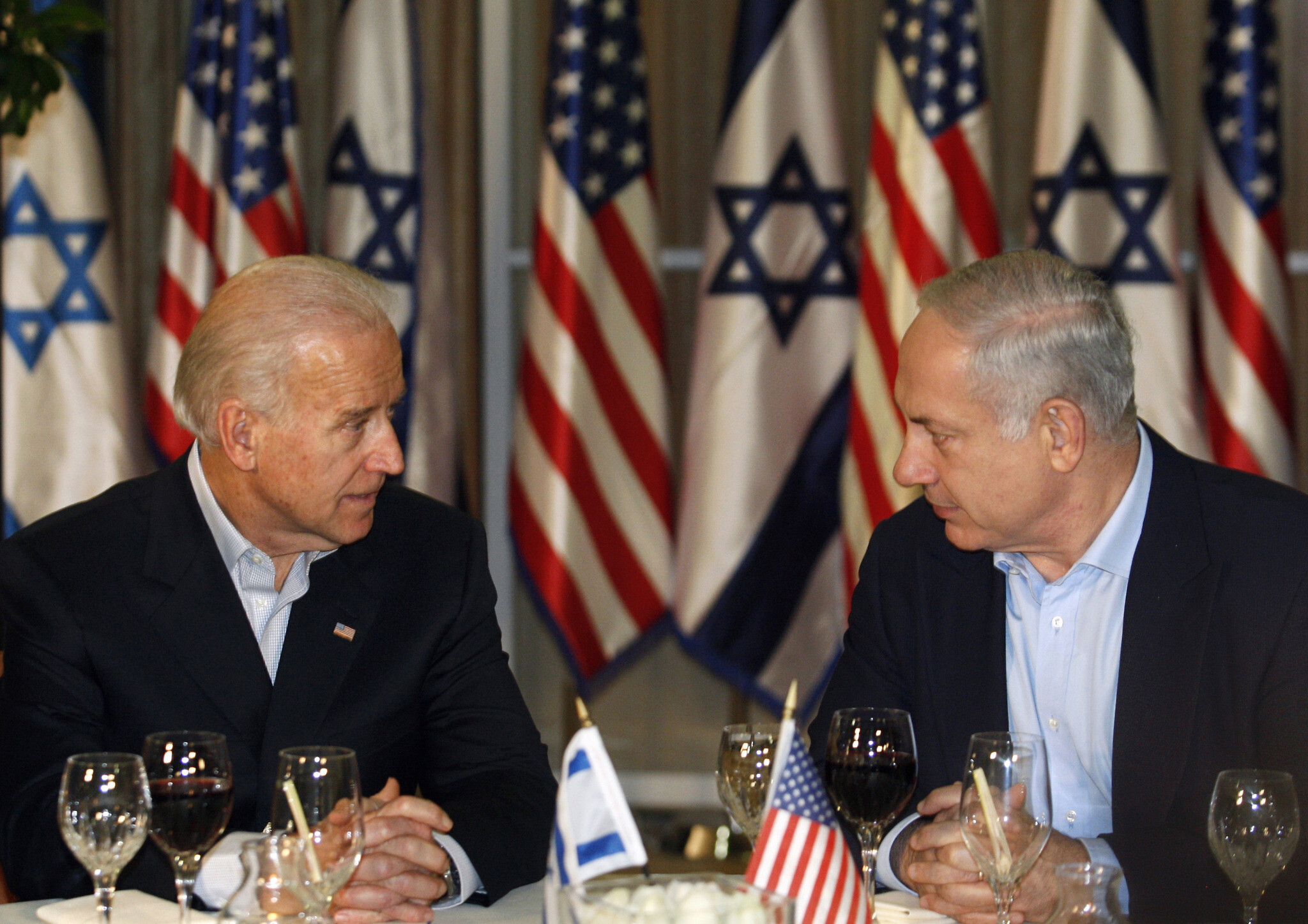
German Chancellor Angela Merkel and the president of the European Council spoke with Rouhani this week to try to end the diplomatic standoff. The head of the IAEA is scheduled to travel to Iran this weekend to find a solution that allows the agency to continue inspections.Then-US vice president Joe Biden, left, and Prime Minister Benjamin Netanyahu, right, talk before a dinner at the Prime Minister’s Residence in Jerusalem, March 9, 2010. (AP Photo/Baz Ratner, Pool)
Israel has voiced strong opposition to Washington returning to nuclear deal. Netanyahu has long been a leading critic of the agreement, which was reached when Biden was vice president, and warned against reengaging with Tehran on the accord.
Netanyahu strongly opposed the deal when it was made, and hailed Trump’s decision to quit it in 2018.
Netanyahu on Monday vowed opposition to those who oppose his hawkish stance toward Iran.
“Whoever supports our policies, I’m with him. And whoever endangers us, for example [on policies] regarding a nuclear Iran, which is an existential threat to us, so I oppose that, and I don’t care if it’s Democrats,” Netanyahu said.
Netanyahu spoke on the phone with Biden for the first time since he became president on Tuesday, after an eyebrow-raising four weeks of waiting.
Netanyahu was the first Middle Eastern leader to receive a call from Biden, but the 12th world leader overall.
The two leaders discussed further strengthening US-Israeli ties in addition to building on the normalization agreements that were brokered by the Trump administration between Israel and its Arab neighbors, the PMO said.
They also spoke about “the Iranian threat and challenges of the region, agreeing to continue talks between them.”
Biden has also said wants to address Iran’s ballistic missile program and regional hegemony, but that the priority is first getting Iran to comply with the JCPOA.
Israel held out the possibility on Tuesday that it would not engage with US President Joe Biden on strategy regarding the Iranian nuclear program, urging tougher sanctions and a “credible military threat.”
The remarks by Israel’s envoy to Washington came as Prime Minister Benjamin Netanyahu stands for re-election next month.
The new administration has said it wants a US return to a 2015 nuclear deal with Tehran – which former President Donald Trump quit, restoring sanctions – if the Iranians recommit to their own obligations. Washington has also said it wants to confer with allies in the Middle East about such moves.
“We will not be able to be part of such a process if the new administration returns to that deal,” Ambassador Gilad Erdan told Israel’s Army Radio.
Netanyahu aides have privately questioned whether engaging with US counterparts might backfire, for Israel, by falsely signaling its consent for any new deal that it still opposes.
Israel was not a party to the 2015 deal.
“We think that if the United States returns to the same accord that it already withdrew from, all its leverage will be lost,” Erdan said.
“It would appear that only crippling sanctions – keeping the current sanctions and even adding new sanctions – combined with a credible military threat – that Iran fears – might bring Iran to real negotiations with Western countries that might ultimately produce a deal truly capable of preventing it breaking ahead (to nuclear arms).”
The Biden administration has said it wants to strengthen and lengthen constraints on Iran [really? says who?], which denies seeking the bomb.
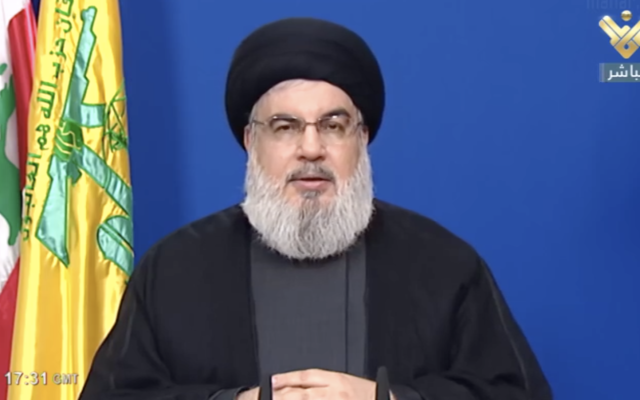
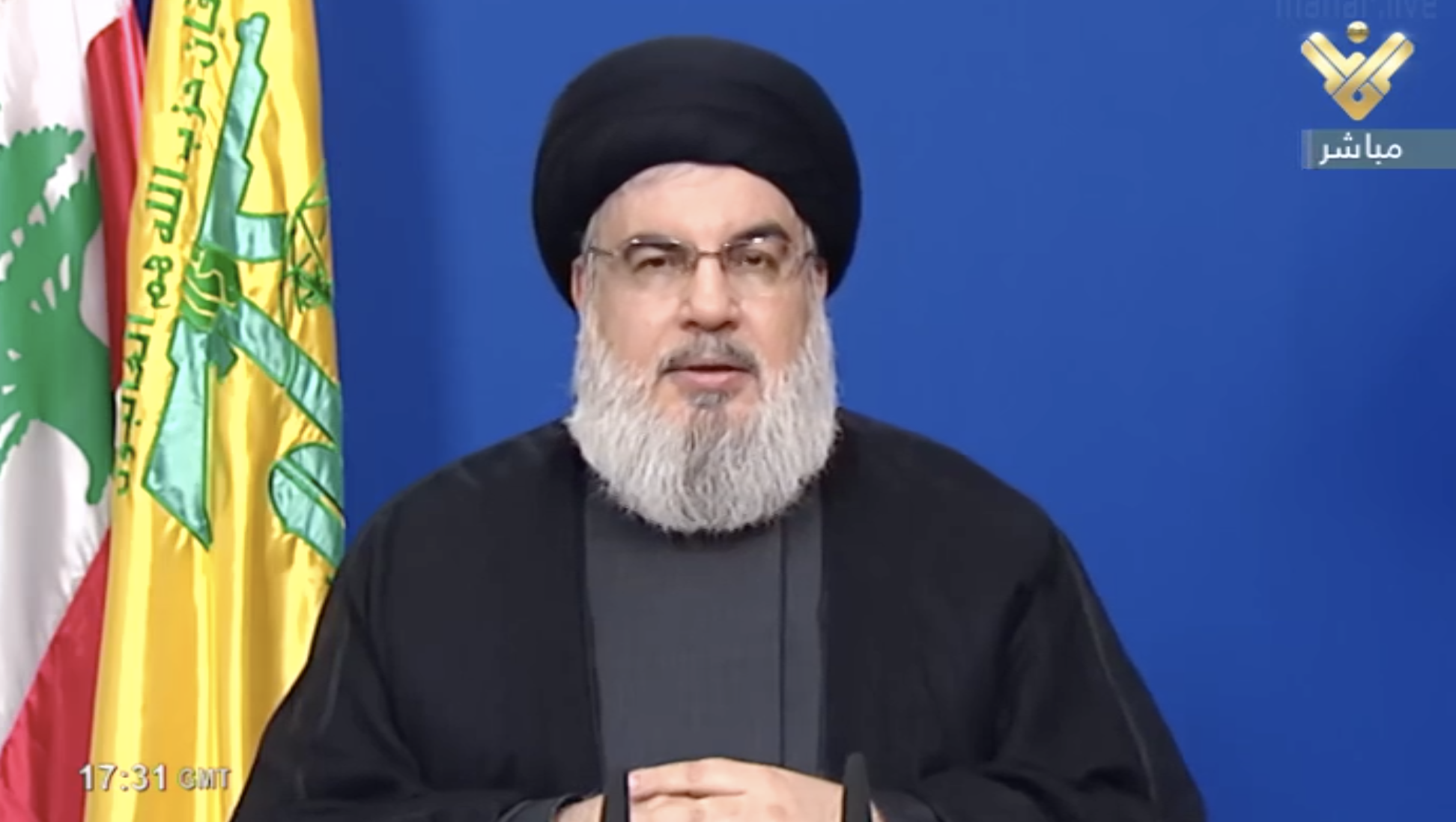
Hezbollah Secretary General Hassan Nasrallah gives an address on official party al-Manar TV on September 29, 2020. (Screenshot: Al-Manar)
Hezbollah chief Hassan Nasrallah issued a warning to Israel on Tuesday, after the Israel Defense Forces held an exercise simulating a war with Hezbollah in a clear threat to the Lebanon-based terrorist group.
“Israel’s home front needs to know that if there is a war with Hezbollah, it will see things it has not seen since the establishment of Israel,” Nasrallah said.
“We don’t seek a fight with Israel, but if it starts a war, we will fight,” Nasrallah said, according to Channel 13.
“If Israel bombs cities in Lebanon, we’ll bomb cities in Israel, and if it bombs villages in Lebanon, we’ll bomb towns in Israel. If the IDF bombs our military targets, we can also attack Israel’s military targets,” Nasrallah said.
“No one can guarantee that a few days of combat between us and Israel won’t lead to a wider war,” he said. “We’re following [events] and weighing our decisions. We won’t accept something that will put our country in danger.”
Nasrallah spoke from an undisclosed location via a live video feed in line with his usual security protocols.
The Israeli Air Force completed a three-day surprise exercise simulating a large-scale war against Hezbollah this week, including mock strikes on some 3,000 targets in one day, the military said, in a clear threat to the Lebanese terror group.An F-35 fighter jet takes off during a surprise exercise, ‘Galilee Rose,’ in February 2021. (Israel Defense Forces)
The hypothetical incident that kicked off this fictional conflict was Hezbollah shooting and damaging an Israeli aircraft — something the terrorist militia tried to do earlier this month when it fired anti-aircraft missiles at an IAF Heron unmanned aerial vehicle.
According to the Israel Defense Forces, dozens of aircraft — fighter jets, cargo planes, helicopters and drones — took part in the exercise, called “Galilee Rose.” They were operated and assisted by conscripted and reservist forces, who were called up on short notice after the drill was announced on Sunday.
“During [the exercise], intense fighting was simulated, along with offensive operations, scenarios involving defending the country’s airspace, command and control operations, precise planning and wide-scale, powerful strikes. In addition, strikes on thousands of targets and the launching of many weapons were practiced to simulate war on the northern front,” the military said.
A senior air force official, speaking on condition of anonymity, said the level of intensity shown in the exercise was unprecedented. To wit, the drill simulated the bombing of some 3,000 targets over the course of 24 hours, whereas in the more than month-long 2006 Second Lebanon War, roughly 5,000 targets were struck in total.
The exercise also simulated Hezbollah’s attacks on Israel, including the firing of cruise missiles and other advanced munitions, as well as standard, albeit massive rocket launches at both military and civilian targets in the Jewish state, the senior air force officer told reporters.
The surprise exercise came amid lingering tension in the region between Israel and Hezbollah over the death of one of the terror group’s operatives in Syria last summer, in an airstrike widely attributed to the IDF. The Israeli military believes Hezbollah still intends to exact revenge for the death of its fighter in order to deter Israel from future strikes.
After years of being relative caution, the IDF believes that the terror group has grown increasingly emboldened, though it still does not want to enter into a full-blown war with Israel. This was on display on February 3, when Hezbollah fired on the Israeli drone as it was flying over southern Lebanon.
In that case, the military refrained from retaliating. This week’s exercise, simulating a massive retaliation to such an attack, was seemingly meant to signal to the terror group what would happen if it again fired upon an Israeli drone.
US secretary of state won’t say if Washington has reached out to Tehran, vouches for nuclear deal, says Iran still ‘ways away’ from being in compliance
US Secretary of State Antony Blinken speaks at the State Department, Feb. 4, 2021, in Washington. (AP Photo/Evan Vucci)
US Secretary of State Antony Blinken said Tuesday that the US was open to diplomacy with Iran and voiced support for the 2015 deal Iran signed with world powers, while asserting that it must not be allowed to obtain a nuclear weapon.
In an interview with National Public Radio, Blinken said that for Iran, “the path to diplomacy is open.”
He reiterated the US stance that Iran must first return to compliance with the deal, formally known as the Joint Comprehensive Plan of Action (JCPOA), and said that, “Right now, Iran is still a ways away from being in compliance, so we’ll have to see what it does.”
When asked if the US had reached out to Iran, Blinken declined to say.
“At present, the president’s, I think, been very clear publicly, repeatedly, about where we stand. And we’ll see what, if any, reaction Iran has to that,” he said.
The Biden administration has repeatedly said it will return to the deal if Iran first returns to its terms, but Iran has said the US must first lift sanctions before talks resume, putting the two sides at a stalemate for now.
Iran has gradually broken the terms of the deal, including in recent months, since former US president Donald Trump withdrew from it in 2018 and imposed punishing sanctions on Tehran.
Iran on Monday reiterated its warning that it will halt certain nuclear inspections if other parties to the deal “fail to meet their obligations” by February 21.Illustrative: Iranian President Hassan Rouhani visits the Bushehr nuclear power plant just outside of Bushehr, Iran, Jan. 13, 2015. (AP Photo/Iranian Presidency Office, Mohammad Berno, File)
The Iranian foreign ministry said the move would see Iran end its adherence to the “additional protocol” of the nuclear accord, which prescribes intrusive inspections of its nuclear facilities.
Recent Iranian breaches have included exceeding the stockpile limit on enriched uranium, enriching beyond the permitted purity level and using more advanced centrifuges than permitted under the deal.
Blinken said the agreement “was very effective in cutting off all the pathways that Iran then had to produce fissile material for a nuclear weapon… and it’s very unfortunate that we pulled out of it.”
“The result is that today Iran is far closer to having the ability to produce fissile material for a weapon on short order than it was when the deal was enforced,” Blinken said.
He said Iran’s breakout time, or the amount of time it would take to produce enough fissile material for a nuclear weapon if it chose to do so, was longer than a year when the deal was in place, and was now down to three or four months.
“I think we have an incentive to try to put Iran back in the nuclear box. Presumably Iran still has incentives to get what it bargained for in the deal, which was some sanctions relief, given the state of its economy,” Blinken said.
He repeated the US position that the next deal with Iran needed to be “longer and stronger,” including by covering its ballistic missile program and destabilizing actions in other countries.US President Joe Biden speaks in the Oval Office of the White House in Washington, February 2, 2021. (AP Photo/Evan Vucci)
Interviewer Mary Louise Kelly asked Blinken if a rocket attack in Iraq on Monday outside an airport near where US forces are based was Iran testing the new US administration.
The strike in Kurdish-run Irbil killed one US-led coalition contractor and wounded at least eight people. Previous, similar strikes have been blamed on Iran-backed forces.
Blinken said the attack was “outrageous,” but that it was “too soon” to blame Iran.
“Certainly we’ve seen these attacks in the past. We’ve seen Iraqi militia, Iranian-backed militia in many cases, be responsible. But to date, it’s too early to know who is responsible for this one,” Blinken said.
Israel has voiced strong opposition to Washington returning to the Iran nuclear deal. Prime Minister Benjamin Netanyahu has long been a leading critic of the agreement, which was reached when President Joe Biden was vice president, and warned against reengaging with Tehran on the accord.
Netanyahu on Monday vowed opposition to those who oppose his hawkish stance toward Iran.
“Whoever supports our policies, I’m with him. And whoever endangers us, for example [on policies] regarding a nuclear Iran, which is an existential threat to us, so I oppose that, and I don’t care if it’s Democrats,” Netanyahu said.
Biden has not called Netanyahu after over three weeks in office. The lack of a phone call between the two leaders since Biden took office last month has raised eyebrows in Israel and the United States, though the White House has said the new American president was not intentionally snubbing Netanyahu.
Attack appears to be connected to efforts by IDF to prevent Iran from transporting weapons to its proxies; Syrian opposition group says 9 pro-regime fighters killed in the blasts
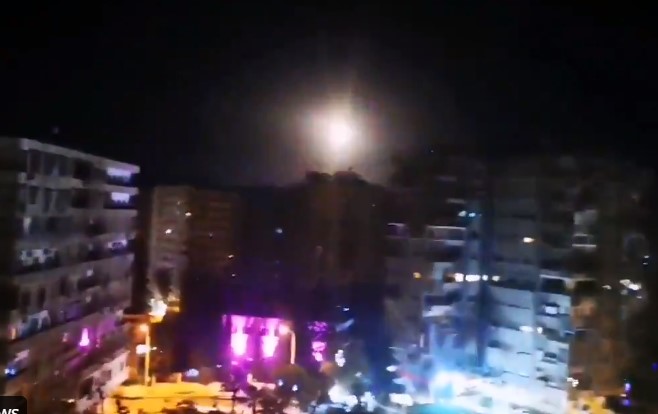
A purported Israeli airstrike near Damascus, Syria on February 15, 2021 (Screencapture/Twitter)
Israeli airstrikes targeted a number of sites in southern Syria after midnight Sunday, Syrian state media reported, in the latest in a series of attacks attributed to the Jewish state.
The attack came amid a reported uptick in efforts by Iran to transfer advanced weapons to its proxies in the region through Syria.
The strikes hit facilities in the area of Damascus International Airport, through which Iran has reportedly been flying advanced munitions — most recently on Saturday — as well as military sites around the Damascus suburb of el-Kisweh, a long-time base of Iranian operations.
The strikes came days after drones reportedly bombed a shipment of advanced weapons that were being transported through Iraq into eastern Syria by Iranian proxies.
The Britain-based pro-opposition group Syrian Observatory for Human Rights said at least nine pro-regime militia fighters were killed in the predawn strikes on Monday. This casualty count could not be independently verified and was not reported by other Syrian sources. The Observatory has regularly been accused by Syrian war analysts of inflating casualty numbers, as well as inventing them wholesale.
The state-run SANA news agency reported that explosions were heard to the west of Damascus and that Syrian air defenses were “confronting the Israeli aggression.”
Shortly after midnight, “the Israeli enemy launched an assault, firing missiles from the occupied Golan and Galilee,” SANA reported, citing a military source.
The strikes were aimed at targets near Damascus, the source said, adding that defenses shot down “most” of the missiles. Most Syrian war analysts consider these boasts of successful interceptions by the Syrian military — which come after nearly every reported Israeli strike — to be empty boasts.
The Israel Defense Forces refused to comment on the late-night strikes, in accordance with its policy to neither confirm nor deny its operations in Syria, save for those launched in retaliation for an attack from Israel’s northern neighbor.
The IDF has launched hundreds of strikes in Syria since the start of the civil war in 2011 against moves by Iran to establish a permanent military presence in the country and efforts to transport advanced, game-changing weapons to terrorist groups in the region, principally Hezbollah.
The reported attacks came 10 days after Israel was accused of hitting targets on the Syrian Golan Heights and at the Damascus International Airport.
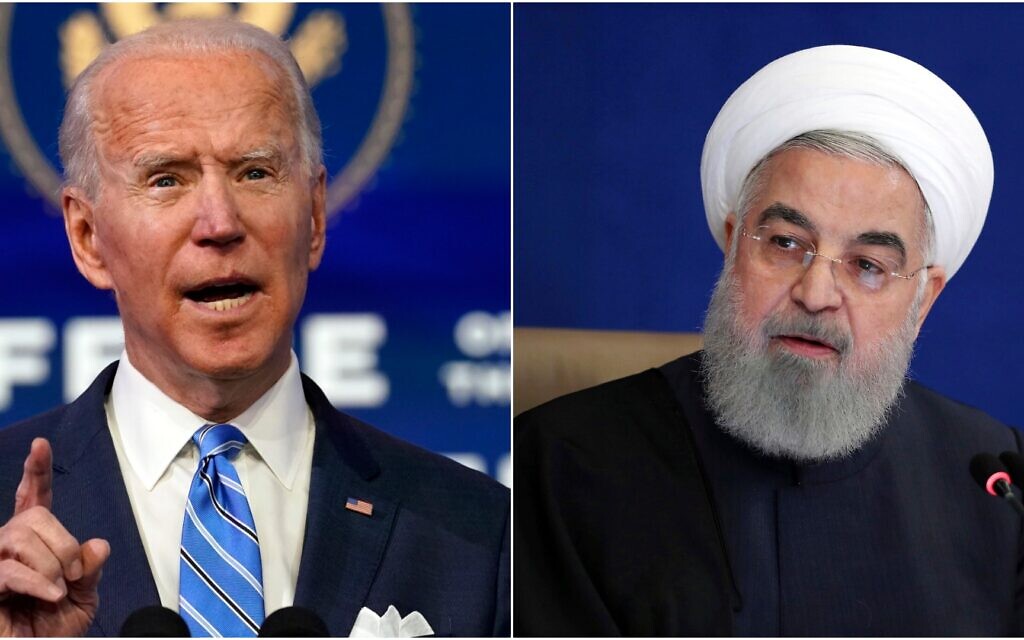
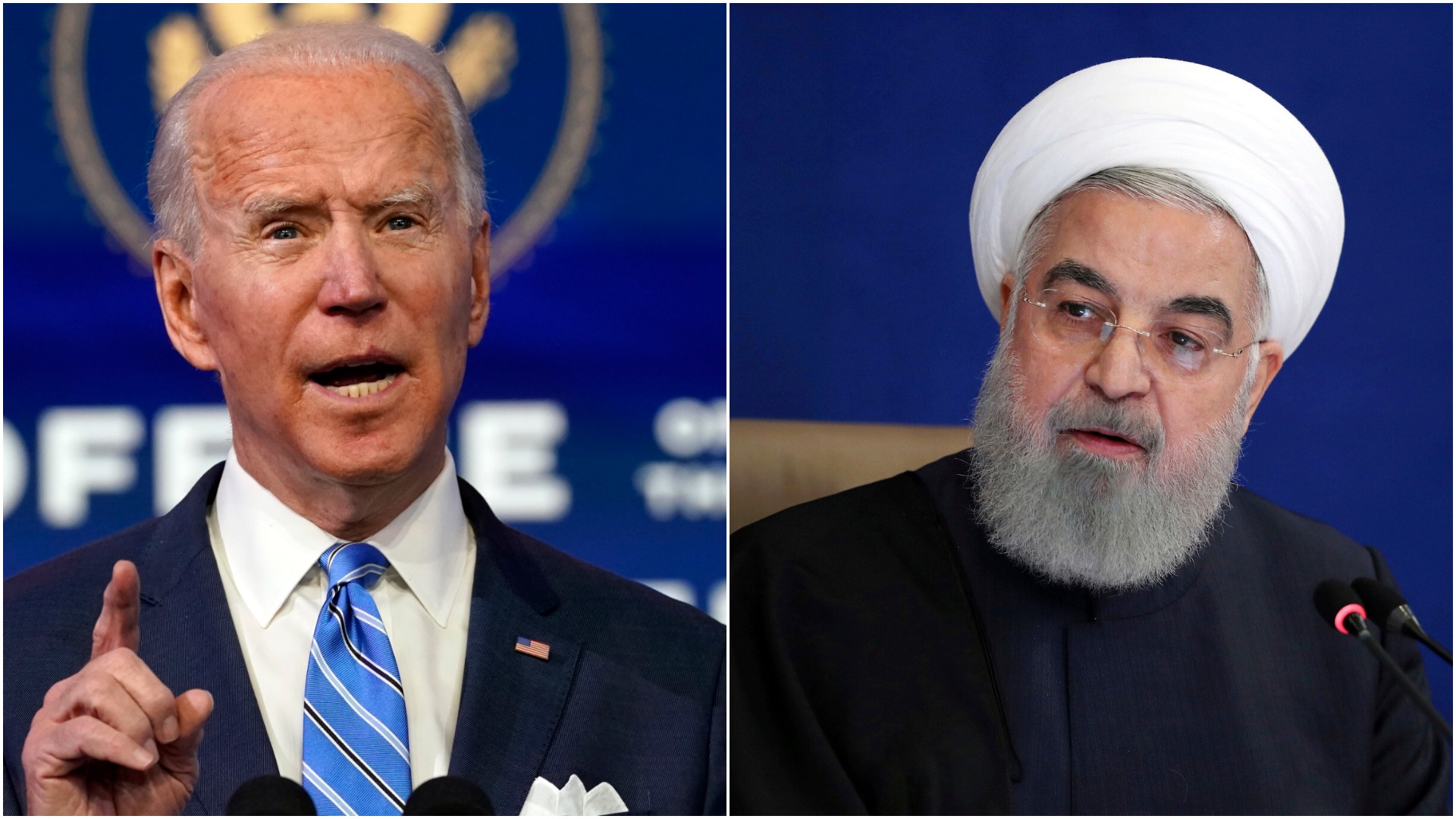
Left: US President-elect Joe Biden on January 14, 2021, in Wilmington, Delaware (AP Photo/Matt Slocum); Right: Iranian President Hassan Rouhani speaks in a meeting in Tehran, Iran, December 9, 2020. (Iranian Presidency Office via AP)
WASHINGTON — US President Joe Biden ran supporting a return to diplomacy with Iran but made clear he will not be rushed into re-entering a 2015 nuclear deal trashed by Donald Trump.
Nonetheless, a series of dates are coming up that will force the new US administration to show its hand.
What dates are coming up?
The Biden administration has repeatedly said it will return to full compliance with the deal, formally known as the Joint Comprehensive Agreement Plan of Action (JCPOA), once Iran does.
In other words, Biden will lift sanctions imposed by Trump only after the clerical regime reverses nuclear steps it took.
Iran, likely mindful of the widespread hostility it faces in Washington, wants to ensure an end to sanctions before it backs down on steps away from the nuclear commitments, which included enriching uranium to just a short technical step from weapons-grade levels
.
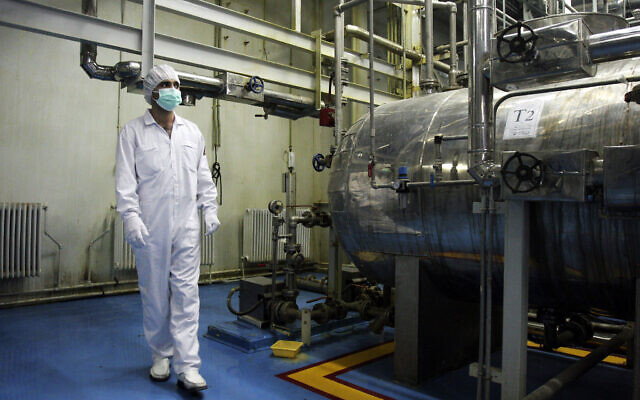
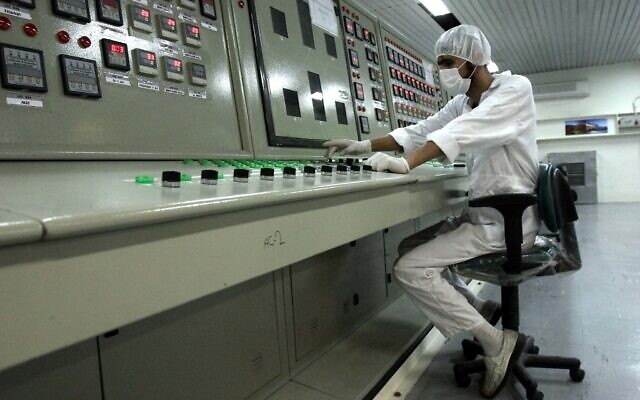
In this Feb. 3, 2007 file photo, a technician works at the Uranium Conversion Facility just outside the city of Isfahan, Iran. (AP Photo/Vahid Salemi, File)
A key date comes on February 21 when Iran, under a law passed in December by the conservative-led parliament, is set to stop allowing inspections by the International Atomic Energy Agency unless there is an easing of US sanctions.
Kelsey Davenport, director for nonproliferation policy at the Arms Control Association in Washington, said that Iran can quickly undo most steps such as uranium enrichment.
“But the steps that are coming, I think, do pose a more significant risk and are more difficult to reverse,” she said.
While Iran has stopped short of threatening to expel IAEA inspectors, Davenport worried that any loss of access would fuel speculation that Tehran is engaged in illicit activities.
The risk “underscores the importance of restoring full compliance with the JCPOA before Iran takes these steps and develops this new knowledge,” she said.
An Iranian technician walks through the Uranium Conversion Facility just outside the city of Isfahan 255 miles (410 kilometers) south of the capital Tehran, Iran, February 3, 2007. (Vahid Salemi/AP)
Another key date is in June when Iran holds elections that could bring to power a hardliner to succeed President Hassan Rouhani, who bet on engagement with the West when Barack Obama was president only to see tensions soar under Trump.
With February 21 fast approaching, “it is imperative that diplomacy happens,” a former European Union diplomat said.
“The next 10 days will be important to give us an idea of what is occurring and how successful it will be” in persuading Iran to step back, the diplomat said.
“The entire issue is to make sure that the threshold is not crossed on that date,” said another European diplomat.
The diplomat said that position was shared by Russia and China, which are also signatories to the JCPOA but enjoy much closer relations with Iran than Western powers.
Jon Wolfsthal, who advised Biden when he was Obama’s vice president, said that the United States and Iran, along with other JCPOA nations, could issue a statement before February 21 “that would show their mutual intent to return to full compliance.”
Iran’s Supreme Leader Ayatollah Ali Khamenei addresses the nation in Tehran, Iran, November 3, 2020. (Office of the Iranian Supreme Leader via AP)
But while action would be best as soon as possible, he doubted that decision-making would fundamentally change after the elections in Iran, where Supreme Leader Ayatollah Ali Khamenei has final say.
“I don’t think the United States is going to say, Oh, we have to give away everything we have to do everything, because after June it’s impossible,” said Wolfsthal, now at the anti-nuclear weapon movement Global Zero.
Will the US and Iran talk?
State Department spokesman Ned Price reiterated Friday that the United States is “not looking at any particular deadline” when asked about February 21.
The Biden administration has named a special envoy on Iran, Rob Malley, one of the architects of the JCPOA.
Officially his first task has been coordination with the Europeans and he will only afterward revive US dialogue with Iran that was ended under Trump.
But one former adviser to Obama, speaking on condition of anonymity, said, “I suspect that US officials have already engaged with Iranian officials in some number of ways.”
What are the options?
Thomas Countryman, who was a top arms control official in the Obama administration, said that Biden could immediately lift some sanctions to show good faith.
With help from the Europeans, the United States and Iran could also lay out the steps they will take, he said.
“Because of the domestic political situation in both countries, I think they’ve got to find a way to say, we did not give in to pressure,” Countryman said.
Iranian Foreign Minister Mohammad Javad Zarif listens during the talks in Moscow, Russia, January 26, 2021. (Russian Foreign Ministry Press Service via AP)
Iranian Foreign Minister Mohammad Javad Zarif has himself called for EU foreign policy chief Josep Borrell to “choreograph” action between Washington and Tehran.
Other steps that the United States could take, observers say, could include offering Iran badly needed COVID-19 vaccines or dropping Trump-era objections to the International Monetary Fund lending money to Tehran to fight the pandemic.
Israel is pushing for a tougher renegotiated deal, and Biden has said he’ll consult with the Jewish state and his Gulf allies before taking steps to reenter the pact.
UK’s Jewish Chronicle, citing unnamed intel sources, claims Fakhrizadeh was hit by Mossad team without US involvement, says killing likely set back nuke weapons program by years
By TOI STAFFToday, 12:02 amUpdated: 11 February 2021, 1:21 am 4
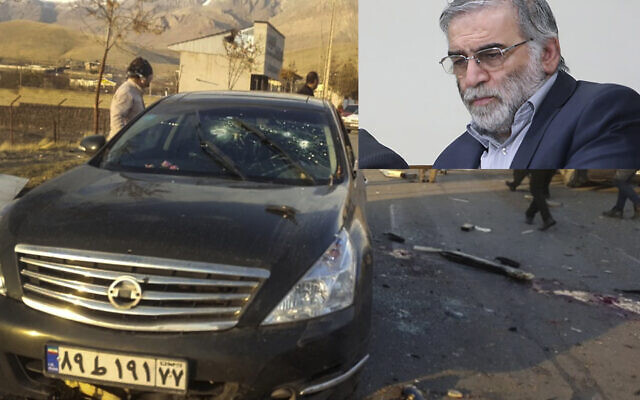
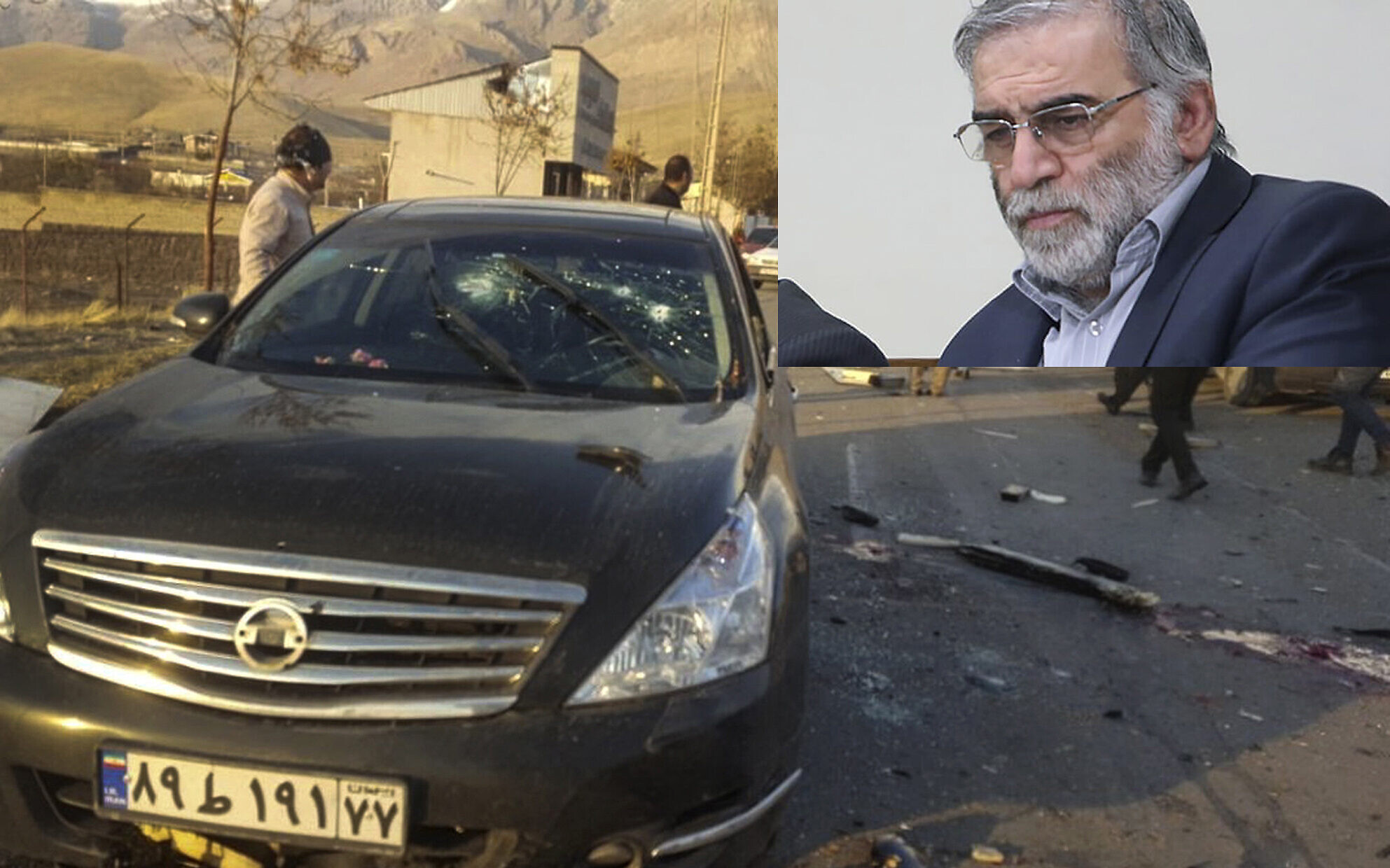
The scene where Mohsen Fakhrizadeh was killed in Absard, a small city just east of the capital, Tehran, Iran, November 27, 2020 (Fars News Agency via AP); inset: Mohsen Fakhrizadeh in an undated photo (Courtesy)
Top Iranian scientist Mohsen Fakhrizadeh was assassinated in November by a Mossad team using a one-ton automated weapon that had been smuggled into Iran in pieces, according to a Wednesday report in London’s Jewish Chronicle.
The US was not involved in the operation, which may have set back the rogue Iranian nuclear weapons program by years, the report said.
The veracity of the report could not be independently confirmed.
Apparently based at least in part on unnamed Israeli sources, the report appeared timed to send a message both to Iran, which is openly breaching the 2015 P5+1 nuclear deal, and to the new US administration, which is planning to re-enter the deal, highlighting Israel’s oft-stated determination to take whatever action is necessary to prevent Iran from attaining nuclear weapons.
Fakhrizadeh was killed on a road outside Tehran on November 27. Iran has blamed Israel for the hit.
The team that carried out the hit had over 20 members, both Israeli and Iranian nationals, the Jewish Chronicle reported, citing “intelligence sources.” At least some of those sources were evidently Israeli; one was quoted saying, “Thank God we got all our people out and they didn’t catch anyone. They didn’t even come close.”
The agents surveilled Fakhrizadeh for eight months before the assassination, the report claimed.
It said agents were on the ground at the time of the assassination to operate the gun from a distance.
The report claimed Fakhrizadeh was hit by a burst of 13 bullets from the “hyper-accurate” weapon, which did not injure his wife or 12 bodyguards who were traveling with him. Some of the numerous contradictory reports of the killing at the time, by contrast, claimed several of Fakhrizadeh’s bodyguards were also killed in the attack.
The weapon was mounted on the back of a Nissan truck and detonated to destroy evidence after the assassination, the report claimed. “The bespoke weapon, operated remotely by agents on the ground as they observed the target, was so heavy because it included a bomb that destroyed the evidence after the killing,” it added.This photo released by the semi-official Fars News Agency shows the scene where Mohsen Fakhrizadeh was killed in Absard, a small city just east of the capital, Tehran, Iran, Nov. 27, 2020. Parts of image are blurred for potentially disturbing imagery. (Fars News Agency via AP)
The US was not involved in the assassination, the report said. The Americans were given only a “little clue.”
It further asserted that Israeli analysts believe Fakhrizadeh’s killing has extended the time Iran would need to construct a nuclear weapon, if it decides to break out for the bomb, from 3.5 months to some 2-5 years. Furthermore, it said, Iran has “secretly assessed that it will take six years” before a replacement for Fakhrizadeh is “fully operational.”
Publication of the report came as Israel’s Prime Minister Benjamin Netanyahu is facing off against the new administration in the US, with President Joe Biden having said he intends to re-enter the 2015 JCPOA nuclear deal negotiated under president Barack Obama, an agreement from which president Donald Trump withdrew. Netanyahu, who publicly lobbied against the 2015 deal, has warned Biden that it would be a “mistake” and “folly” for the US to rejoin the JCPOA.Prime Minister Benjamin Netanyahu (left) with US Vice President Joe Biden in Jerusalem, 2010 (Avi Ohayun/GPO)
“There is no doubt that whatever approach the Americans take with Iran, Israel will ‘defend itself by itself,’” the Wednesday report said, and quoted an anonymous but plainly Israeli source saying: “Our main strategy for leverage over the United States is to present our 2018 intelligence to the IAEA. But if it doesn’t work, we will act. The US won’t love it, but we will keep our sovereignty and fight every existential threat… If the situation becomes critical, we will ask nobody for permission. We will kill the bomb.”
The report’s details of the Fakhrizadeh hit appear to at least partially accord with Iranian media claims after the killing that it was carried out from afar using a remote-controlled machine gun attached to a car.
Iran’s elite Islamic Revolutionary Guard Corps (IRGC) said a satellite-controlled gun with “artificial intelligence” was used in the attack.
The Jewish Chronicle report said the planning of the assassination began after the Mossad stole a trove of documents from a Tehran warehouse on Iran’s nuclear program, in an operation publicized by Netanyahu in 2018.
In a companion piece Wednesday for the Spectator magazine, Jake Wallis Simons, the journalist who wrote the Jewish Chronicle article, elaborated that Fakhrizadeh’s centrality to the rogue Iranian nuclear weapons program was underlined by the discovery that documents in the trove “were found to have been handwritten” by him, and some had his fingerprints “literally” all over them. Fakhrizadeh, the writer said he was told, “was found to be the architect of everything in the archive. He was directing all aspects [of the Iranian program], from the science and the secret sites to the personnel and the knowhow. From that moment – to use Mossad slang – it became clear that the scientist had to ‘depart’.”
There have been various reports describing how Fakhrizadeh was killed, including by a team of shooters on the ground and remote weapons controlled by satellites.
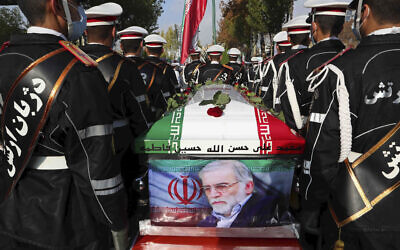
Israel and the US say Fakhrizadeh headed Iran’s rogue nuclear weapons program. According to Iranian authorities, Fakhrizadeh was a deputy defense minister and carried out work on “nuclear defense.”Military personnel stand near the flag-draped coffin of Mohsen Fakhrizadeh, an assassinated top nuclear scientist, during his funeral ceremony in Tehran, Iran, November 30, 2020. (Iranian Defense Ministry via AP)
Iranian officials have blamed Israel for the killing. Foreign Minister Mohammad Javad Zarif claimed there were “serious indications of [an] Israeli role” in the assassination. Israel has not publicly reacted to the accusations.
The killing came after months of mysterious explosions in Iran including a blast and fire that crippled an advanced centrifuge assembly plant at the Natanz uranium enrichment facility, which is widely believed to have been an act of sabotage allegedly carried out by Israel.
Israel has long been suspected of carrying out a series of targeted killings of Iranian nuclear scientists nearly a decade ago in a bid to curtail Iran’s nuclear program.
Iran’s intelligence minister said Monday that a member of the armed forces is suspected of involvement in Fakhrizadeh’s killing.
Fakhrizadeh was named by Netanyahu in 2018 as the director of Iran’s nuclear weapons project. When Netanyahu revealed then that Israel had removed from a warehouse in Tehran a vast archive of Iran’s own material detailing with its nuclear weapons program, he said: “Remember that name, Fakhrizadeh.”Prime Minister Benjamin Netanyahu stands in front of a picture of Mohsen Fakhrizadeh, who he named as the head of Iran’s nuclear weapons program, April 30, 2018 (YouTube screenshot)
In a video uploaded to Twitter hours after news of the killing emerged, Netanyahu, counting off various achievements of the week, noted that this was “a partial list, as I can’t tell you everything… It’s all for you, citizens of Israel, for our country. It’s a week of achievements, and there’ll be more.”
Wednesday’s report quoted one source warning that additional such operations were in prospect: “Further assassinations were planned for the future, the source said, though nothing on the same scale as Fakhrizadeh or [Qassem] Soleimani” — the head of the Quds Force of Iran’s IRGC who was killed in a US drone strike in Baghdad in January 2020.
The scene where Mohsen Fakhrizadeh was killed in Absard, a small city just east of the capital, Tehran, Iran, November 27, 2020 (Fars News Agency via AP); insert: Mohsen Fakhrizadeh in an undated photo (Courtesy)
A member of the armed forces is suspected of involvement in last November’s assassination near Tehran of Iran’s top nuclear scientist Mohsen Fakhrizadeh, the country’s intelligence minister said Monday.
“The person who carried out the first preparations for the assassination was a member of the armed forces,” Mahmoud Alavi said in an interview with state television, without elaborating.
He said it was not possible for the intelligence ministry “to keep watch over the armed forces.”
Mohsen Fakhrizadeh was traveling on a highway outside the capital accompanied by a security detail on November 27 when he came under machinegun fire
.
Military personnel stand near the flag-draped coffin of Mohsen Fakhrizadeh, an assassinated top nuclear scientist during his funeral ceremony in Tehran, Iran, November 30, 2020. (Iranian Defense Ministry via AP)
Israel and the US say Fakhrizadeh headed Iran’s rogue nuclear weapons program. According to Iranian authorities, Fakhrizadeh was a deputy defense minister and carried out work on “nuclear defense.”
Iran’s elite Revolutionary Guards said a satellite-controlled gun with “artificial intelligence” was used in the attack, which Tehran blamed on Israel.
State TV’s English-language Press TV reported a weapon recovered from the scene of the attack bore “the logo and specifications of the Israeli military industry.” There were no images published of the alleged weapon in the report, which was attributed to “informed sources.”
Israel did not react to the accusation. Unveiling a trove of material brought out of Iran by the Mossad on the regime’s nuclear weapons program, Prime Minister Benjamin Netanyahu said in 2018 that Fakhrizadeh was overseeing Iran’s bid for the bomb.
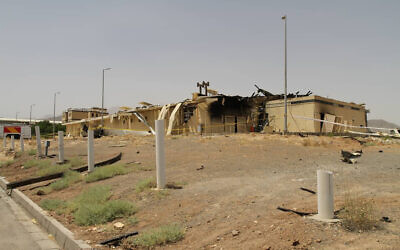
The killing came after months of mysterious explosions in Iran including a blast and fire that crippled an advanced centrifuge assembly plant at the Natanz uranium enrichment facility, which is widely believed to have been an act of sabotage allegedly carried out by Israel.
This photo released July 2, 2020, by the Atomic Energy Organization of Iran, shows a building after it was damaged by a fire, at the Natanz uranium enrichment facility some 200 miles (322 kilometers) south of the capital Tehran, Iran. (Atomic Energy Organization of Iran via AP)
Israel has long been suspected of carrying out a series of targeted killings of Iranian nuclear scientists nearly a decade ago in a bid to curtail Iran’s nuclear program.
After the assassination of Fakhrizadeh, Iranian lawmakers approved a bill requiring Iran to resume uranium enrichment to 20 percent purity, as it had been doing before the nuclear deal, and to stock 120 kilograms (265 pounds) of uranium each year. The legislation had already been in the pipeline, but it was advanced after Fakhrizadeh was killed.
Last month, Tehran announced it was beginning to enrich uranium up to 20 percent — far beyond the 3.5% permitted under the nuclear deal, and a relatively small technical step away from the 90% needed for a nuclear weapon. Iran also said it was beginning research into uranium metal, a material that technically has civilian uses, but is seen as another likely step toward a nuclear bomb.
On Saturday, the Wall Street Journal reported that United Nations nuclear inspectors found traces of radioactive material at Iranian nuclear sites that could indicate work on nuclear weapons.
In this Feb. 3, 2007 file photo, a technician works at the Uranium Conversion Facility just outside the city of Isfahan, Iran. (AP Photo/Vahid Salemi, File)
US President Joe Biden said Sunday that his administration will not agree to lift sanctions on Iran before it halts its uranium enrichment program, adding that the Islamic Republic will have to first resume compliance with the nuclear deal.
Biden’s comments drew a line in the sand in the US’s standoff with Iran, whose Supreme Leader Ayatollah Ali Khamenei said that Washington must lift all sanctions before Tehran reverses any nuclear production steps.
US Secretary of State Antony Blinken said last week that Iran was currently months away from being able to produce enough material to build a nuclear weapon. And, he said, that timeframe could be reduced to “a matter of weeks” if Tehran further violates restrictions it agreed to under the 2015 nuclear deal with world powers.

 US Secretary of State Antony Blinken speaks at the State Department, Feb. 4, 2021, in Washington. (AP Photo/Evan Vucci)
 In this April 9, 2018, photo, released by an official website of the office of the Iranian Presidency, President Hassan Rouhani listens to explanations on new nuclear achievements at a ceremony to mark “National Nuclear Day,” in Tehran, Iran. (Iranian Presidency Office via AP)
 Then-US vice president Joe Biden, left, and Prime Minister Benjamin Netanyahu, right, talk before a dinner at the Prime Minister’s Residence in Jerusalem, March 9, 2010. (AP Photo/Baz Ratner, Pool)
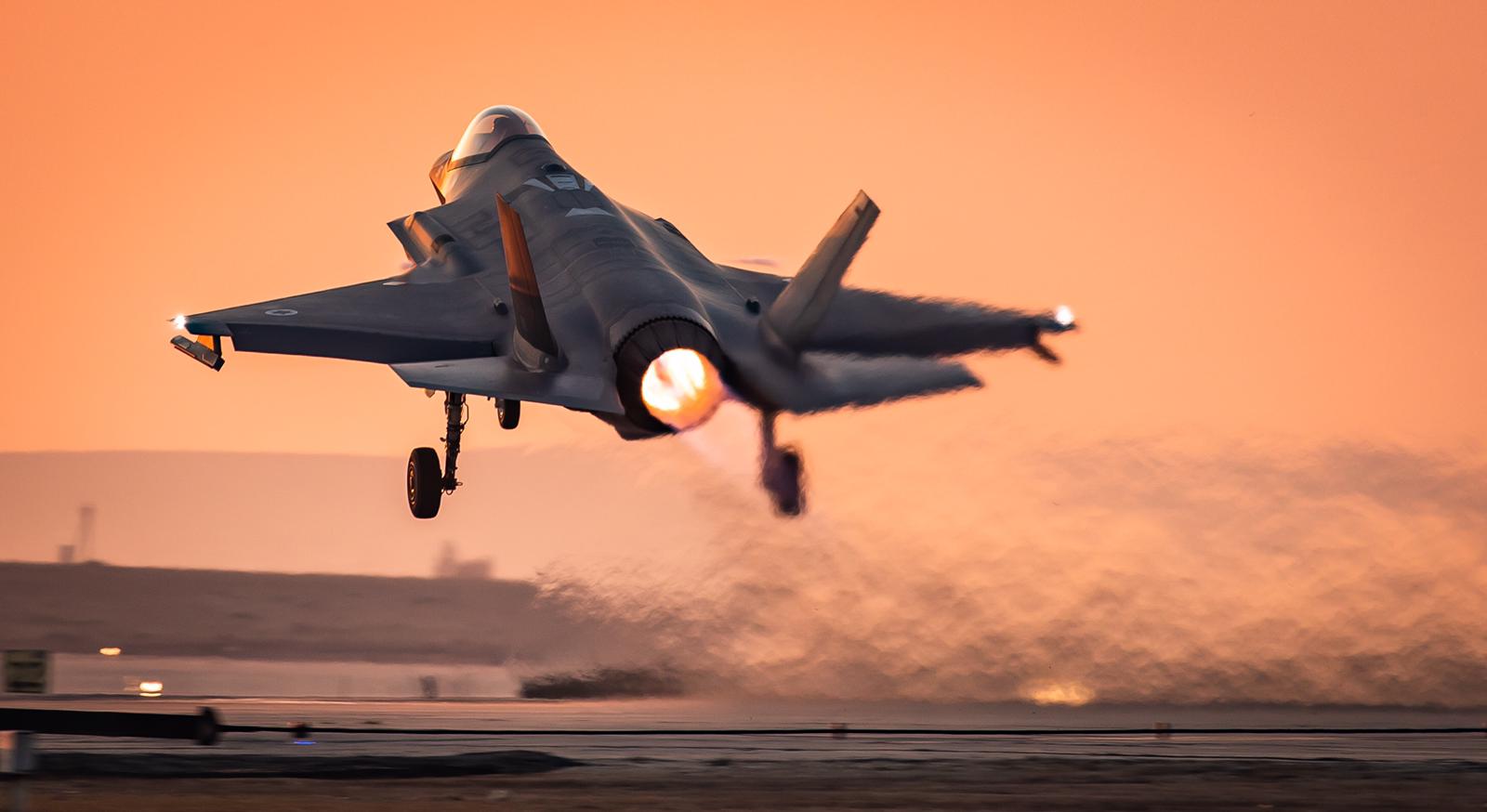 An F-35 fighter jet takes off during a surprise exercise, ‘Galilee Rose,’ in February 2021. (Israel Defense Forces)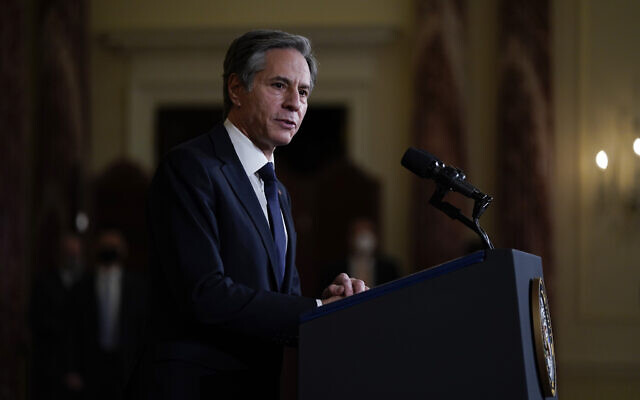
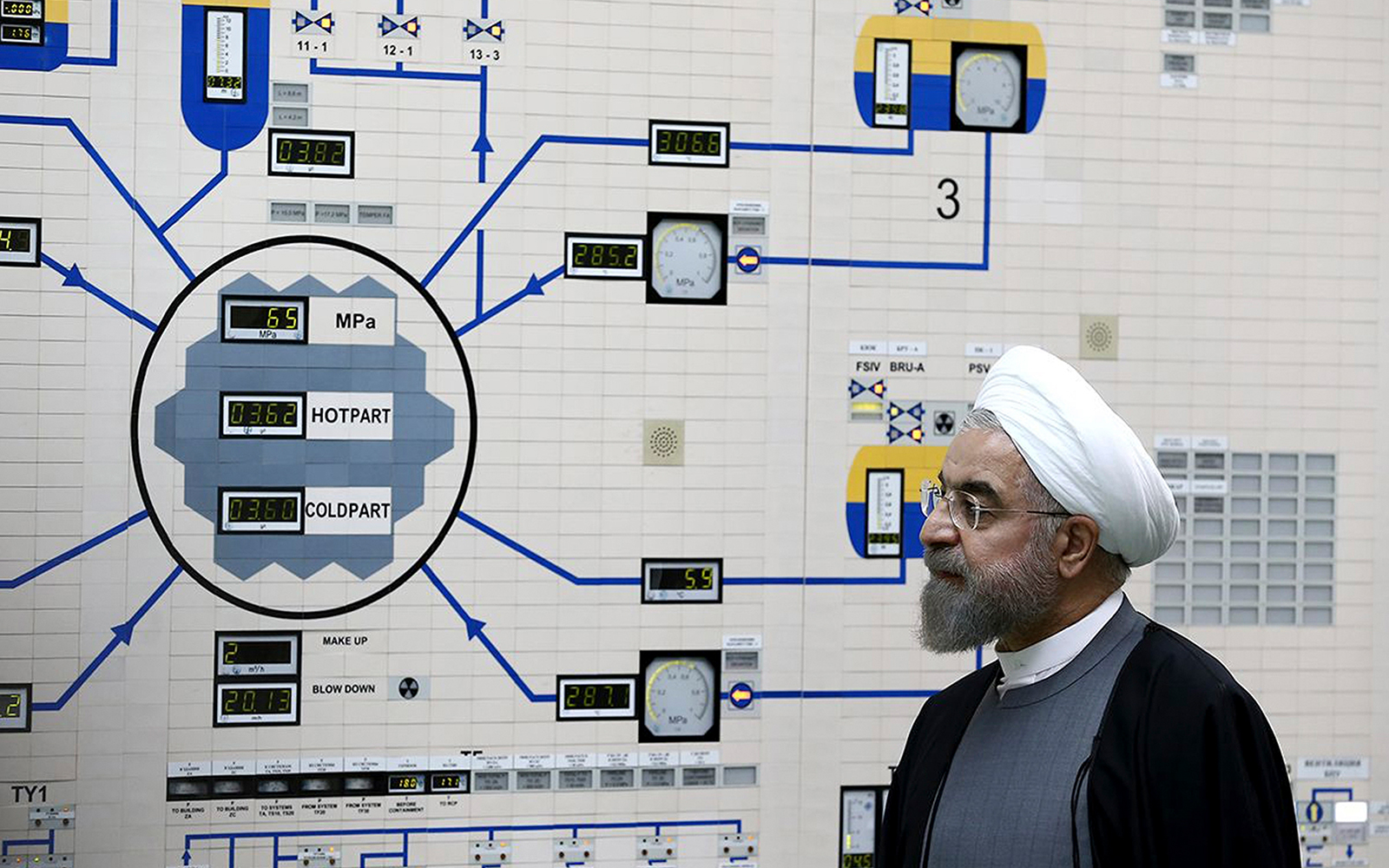 Illustrative: Iranian President Hassan Rouhani visits the Bushehr nuclear power plant just outside of Bushehr, Iran, Jan. 13, 2015. (AP Photo/Iranian Presidency Office, Mohammad Berno, File)
 US President Joe Biden speaks in the Oval Office of the White House in Washington, February 2, 2021. (AP Photo/Evan Vucci)








 anneinpt
 artaxes
 danmillerinpanama
 davidking1530
 Peter Hofman
 Joseph Wouk
 Peter
Peter Louisiana Steve
 WarSclerotic
Recent Comments