Archive for January 2021

Iran says it’s installing 1,000 more centrifuges as US slaps on new sanctions

January 6, 2021


Day after upping uranium enrichment to 20%, Islamic Republic’s atomic chief announces steps to increase production further

By TOI STAFF and AGENCIES5 January 2021, 9:07 pm  1
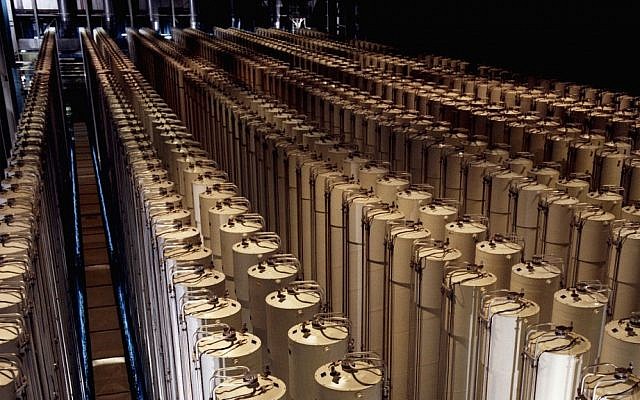
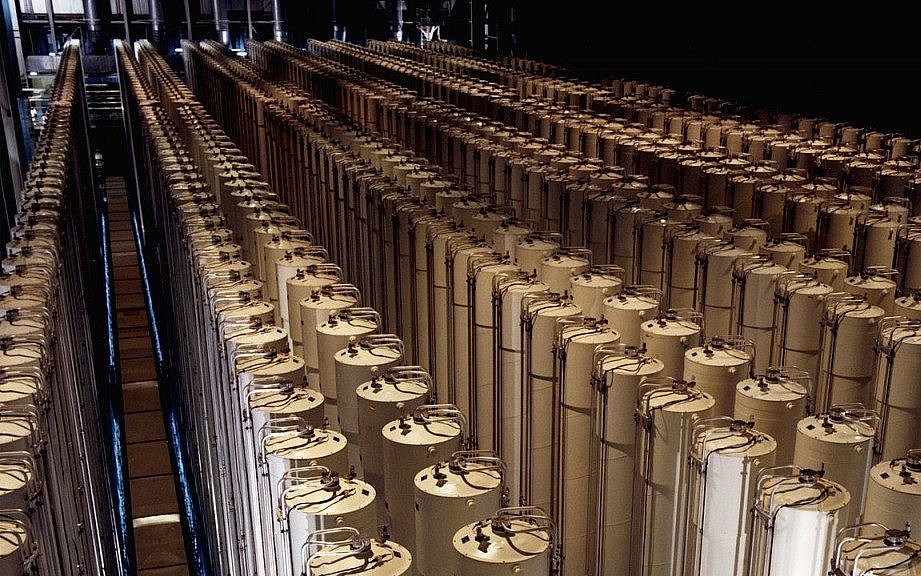
Illustrative. Centrifuges enriching uranium. (Public Domain/US Department of Energy/Wikimedia Commons)
  • s
  • Illustrative. Centrifuges enriching uranium. (Public Domain/US Department of Energy/Wikimedia Commons)

After Iran confirmed that it has stepped up its uranium enrichment in breach of the 2015 nuclear deal, the head of Iran’s atomic agency said Tuesday the Islamic Republic is in the process of installing 1,000 new centrifuges to help increase production.

“One thousand centrifuges are being installed inside the country,” Ali Akbar Salehi said, according to the semi-official Fars News Agency.

“We are currently installing one thousand IR-2m centrifuges, but two cascades are installed and working,” he added.

Salehi also said that Iran had increased its supply of yellowcake, a precursor to enriched uranium, eight-fold in the past two years.

“Until three or four years ago, we used to produce an average of 4 to 5 tons of yellowcake, but for the past two years, we have increased the production of yellowcake to 30 tons,” he said in his reported comments. “This year, the production of yellowcake will be between 35 and 40 tons, which means that we have 8-folded the production of yellowcake.”

Yellowcake is a uranium concentrate in powder form and an early step in uranium processing. It is produced by mining uranium ore from rocks and separating the uranium from the rocks by bathing them in acid. The yellowcake can then be converted, enriched to raise its purity, and then used for weapons or energy production.File: The head of Iran’s Atomic Energy Organization Ali Akbar Salehi delivers his speech at the opening of the general conference of the IAEA in Vienna, Austria, September 16, 2019. (AP Photo/Ronald Zak)

Salehi’s comments came a day after Iran said it had begun enriching uranium to 20 percent purity — far above the level permitted under its 2015 agreement with world powers — in a step the US State Department condemned as “nuclear extortion.” The 2015 deal capped enrichment at 3.75%. The jump from 20% to the 90% required for an atomic bomb is actually rather quick compared to the work needed to move from approximately 4% to 20%.

Increasing enrichment to 20% was the most striking suspension yet of Tehran’s commitments under its landmark deal with six nations, which has been fraying since US President Donald Trump withdrew from it in 2018 and reimposed crippling sanctions.

Responding to the uranium announcement, the US Treasury imposed new sanctions targeting Iran’s steel sector Tuesday, slapping penalties on a dozen Iranian companies, three foreign holding companies of Iranian firms, and one China-based manufacturer that supplies graphite electrodes to the Islamic Republic.

“The Iranian metals sector is an important revenue source for the Iranian regime, generating wealth for its corrupt leaders and financing a range of nefarious activities, including the proliferation of weapons of mass destruction and their means of delivery, support for foreign terrorist groups, and a variety of human rights abuses, at home and abroad,” the US Treasury said in a statement.

“The Trump Administration remains committed to denying revenue flowing to the Iranian regime as it continues to sponsor terrorist groups, support oppressive regimes, and seek weapons of mass destruction,” said Treasury Secretary Steven T. Mnuchin.

The European Union noted Iran’s step “with deep concern” and said it planned to “redouble our efforts to preserve the agreement and return to its full implementation by all parties.”Iranian nuclear scientist Mohsen Fakhrizadeh. (Agencies)

Iran’s conservative-dominated parliament voted in favor of increasing uranium enrichment after the November killing of its top nuclear physicist Mohsen Fakhrizadeh, an assassination Iran blamed on Israel.

Prime Minister Benjamin Netanyahu has charged Iran’s latest nuclear move proves it is seeking to build an atomic bomb — a claim Iran has always strongly denied — and pledged the Jewish state “will not allow” it to do so.

Iran’s Foreign Minister Mohammad Javad Zarif said Tehran took the latest enrichment step “after years of non-compliance” by other parties and that “our measures are fully reversible upon full compliance by all.”

Russia’s foreign ministry said in a statement it “paid tribute to the regular declarations by Iranian leaders of their willingness to return to full respect for the requirements of the agreement”.

It added, however, that “additional efforts and costs will now be required to bring the Fordo site in line with the terms of the agreement.”
The Arab-Israeli conflict may finally be over

January 5, 2021

https://www.spectator.co.uk/article/the-arab-israeli-conflict-may-finally-be-over

The dawn of the new year is rising on a world that would have been unrecognisable 12 months ago. The scourge of Covid, the fall of Trump, the resolution of Brexit; all have carved history in unpredictable ways. But nowhere has seen greater changes than the Middle East, where, for the first time, people are daring to believe that the Arab-Israeli conflict is over.

In January 2020, Israel was as isolated as ever in the region. Its ‘cold peace’ agreements with Egypt and Jordan, which were not matched by affection on the street, were as good as it got. The Arab League’s notorious threefold rejectionism — no to peace, no to recognition, no to negotiation — seemed unmovable.

Trump’s peace plan was dismissed out of hand by the Palestinians in February, and things hit a new low in May. When a new Knesset considered annexing parts of the West Bank, an impotent Palestinian Authority suspended all security co-operation. Then, with unprecedented masochism, it refused to accept more than half a billion pounds of Israeli tax revenues. Overnight, the Palestinian Authority deprived itself of 60 per cent of its budget, setting it on a course for self-imposed bankruptcy and impoverishing tens of thousands of its own citizens.

The act of self-harm brought to mind Mohamed Bouazizi, the despairing Tunisian street vendor who burned himself to death on the streets of Sidi Bouzid as a desperate act of protest [there was a bit more to it than that, and it involved a woman and dishonour…]. But the Palestinian Authority’s immolation did not trigger an Arab Spring. Instead, a different kind of regional revolution was already underway, one that would put the Palestinians and Israel in closer proximity to reconciliation than they had been for a quarter-century. For years, the Palestinians had held an effective veto on Arab relations with Israel.

For years, Benjamin Netanyahu — that caricatured bogeyman of the western left — had been quietly pursuing an ‘outside in’ strategy for peace. The first stage was to build bilateral links with countries outside the region, like India, Brazil and Japan. The second was to achieve normalisation with the Arab world. Finally, the theory went, with the Palestinians boxed in on all sides by cordiality, the last piece of the puzzle would slot into place.

The strategy dovetailed with the Arab Spring, which sounded the death knell for regional Arab unity. The uprisings were rooted in rage at the corrupt, inept leaders who had left the youthful population of the Middle East impoverished and with little hope. The ensuing crisis of the Levant — Syria a human abattoir, Lebanon collapsed under insoluble financial woes, Iraq riven by bloodshed and factional conflict — erased the last allegiances to the old pan-Arabism. The dream of Arab nationalists building successful, modern and cohesive states across the region had failed, and spectacularly at that. New answers were needed for new problems.

Slowly, Arab rulers became more open about the fact that it wasn’t Israel that was keeping them awake at night. Instead, it was the meddling of Iran and its proxies, the rise of a neo-Ottoman Turkey, the spread of ultra-Islamism and myriad economic woes. Normalising relations with the Jewish state would naturally ease these problems. Not only would they gain a powerful military and intelligence ally against a common enemy, but there would be significant economic advantages — Israeli tourists for Dubai, Israeli agricultural experts for Sudan — and enhanced ties with the United States.

For years, the Palestinians had held an effective veto on Arab relations with Israel. But where had it got them? Israel’s economy has boomed while the corrupt and incompetent Palestinian leadership, a victim of its own disunity and intransigence, had become a black hole for international aid dollars. Arab leaders had no wish to abandon the Palestinians, but they were no longer prepared to have them to dictate policy. The time was ripe for a new approach — one that would benefit the Palestinians as much as the rest of the Arab world.

Fast forward to the dawn of 2021, and the Abraham Accords have changed the face of the Middle East. The UAE, Bahrain, Sudan and Morocco are on board. Arab League states like Saudi Arabia, Oman, Mauritania, Djibouti and the Comoros are poised to make the jump, as is Somaliland. There is even talk that Qatar, despite its links to Turkey and fondness for Hamas, may eventually join the accords rather than be left isolated in the Gulf.

There are signs that the Palestinians may come to accept this new reality [I doubt that!]. The protests and burning of UAE flags that accompanied the signing of the Abraham Accords were brought to a sudden halt, I understand, by a telephone call from Saudi Arabia. After that, the Palestinian President Mahmoud Abbas turned on a sixpence. In November, he offered to reinstate the ambassadors he had withdrawn from UAE and Bahrain. Abandoning his policy of self-harm, he agreed to accept his half a billion pounds of tax receipts and resumed security co-operation with Israel. All of a sudden, the mood music was much improved.

The most stunning development has been the change of feeling on the Arab street. Traditionally, levels of anti-Semitism have soared across the Middle East, with a seminal 2014 study finding that 74 per cent of adults across the region harboured anti-Semitic beliefs. But as country after country has made peace with Israel, these attitudes have softened significantly. Recent polls report that about 80 per cent of Saudis are now in favour of normalisation, and 40 per cent of citizens across a range of Arab countries (excluding the Palestinian territories) want their leaders to take an active role in encouraging peace. This is a remarkable and rapid cultural shift.

Significant obstacles remain, of course. Foremost of these is Gaza, where Hamas continue to run the enclave as a belligerent outpost of Islamist extremism. There is also uncertainty over whether the incoming Biden team will build on Trump’s successes, or revert to the old model exemplified by John Kerry, who insisted on scotching regional peace unless a Palestinian state existed first.

But there are greater reasons for hope. With even the Palestinians showing less venomous opposition to the Abraham Accords, it would be very difficult for Biden to eschew them. Moreover, in some ways the normalisation deals have put the Palestinians in a stronger position [what?]. It is true that their concerns may become irrelevant as peace continues to break out around them. But at the same time, Netanyahu has effectively removed the most aggressive Israeli policies from the table himself; he will be unable to pursue annexation, or major settlement expansion, without risking the relationships with his new Arab allies. This time, the Palestinians may have a decent chance of a deal.

When the beleaguered Palestinian leadership sees the economic benefits enjoyed by other Arab states through co-operation with Israel and absorbs the idea that it now has friends as well as foes sitting across the negotiating table, the incentives will be hard to resist. The Emiratis and Bahrainis will make the point emphatically. And now that Israel has been elided into regional Sunni Arab interests, there can surely be no doubt that Jerusalem is a serious partner for peace.

As Iran eyes Biden, could conflict still erupt with Trump?

January 5, 2021


Iranians apply pressure by breaking nuclear deal with higher uranium enrichment, but experts say US president is becoming more unpredictable as he rages over election loss

By AP and TOI STAFFToday, 9:18 am  0

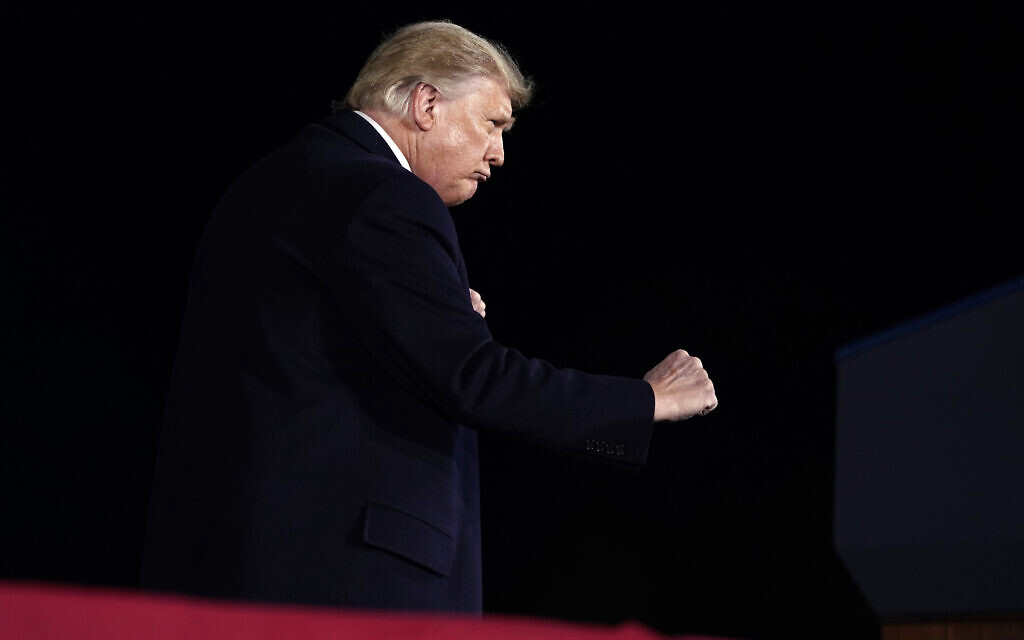
US President Donald Trump dances after speaking during a campaign rally for a Republican senator at Dalton Regional Airport, in Dalton, Georgia, January 4, 2021,  (Evan Vucci/AP)

US President Donald Trump dances after speaking during a campaign rally for a Republican senator at Dalton Regional Airport, in Dalton, Georgia, January 4, 2021, (Evan Vucci/AP)

Iran has opened the new year with a gambit to pressure US President-elect Joe Biden, but fears are rising that conflict could erupt instead with Donald Trump, who still commands US military might in his chaotic final stretch.

Iran announced Monday it was stepping up uranium enrichment well beyond the limits in a 2015 nuclear accord negotiated with former president Barack Obama — and indicated it would reverse course if Biden lifts Trump’s crippling sanctions after taking over on January 20.

Tensions have soared since Trump walked out of the accord in 2018, and have escalated further in recent days, with the United States flying B-52 bombers over the Gulf and abruptly reversing a decision to bring home an aircraft carrier.

In an unusual statement that sounded more like the White House than the Pentagon, acting Defense Secretary Christopher Miller said late Sunday he was keeping the USS Nimitz in the Gulf due to Iranian threats against US officials including Trump personally.

“We have a new form of deterrence now — schizophrenic deterrence. We don’t know what we’re doing,” said Vipin Narang, an expert on nuclear strategy at the Massachusetts Institute of Technology.

Instead of looking tough by reversing the Nimitz’s return, “it may send the wrong signal — which is that it’s total chaos in Washington right now and if you’re going to take a shot, maybe this is the time you want to do it.”

Narang said the risk of the United States initiating military action remained low but warned that Trump was becoming more unpredictable as he rages and seeks to overturn his election loss.

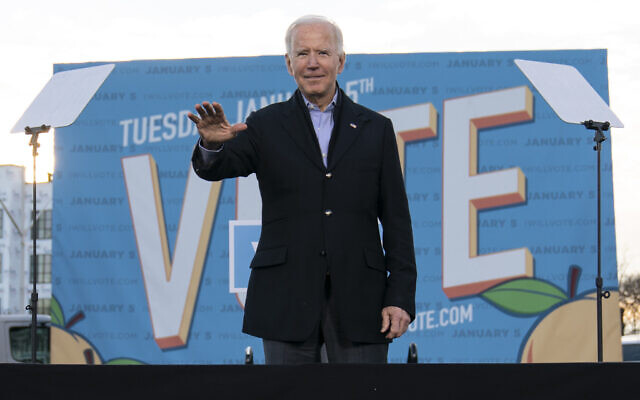
“If I were Iran right now, I would actually be thinking that it’s possible that Trump is so unhinged and so angry about the election that he may overreact to any slight provocation,” Narang said.US President-elect Joe Biden waves from the stage as he campaigns for for Georgia Democratic candidates in Atlanta, January 4, 2021. (Carolyn Kaster/AP)
Trump had warned that he would hold Iran accountable for the killings of any Americans after the US embassy in Baghdad was hit a week ago by rockets blamed on Shiite paramilitaries allied with the clerical state.

But Sunday’s anniversary of the US drone attack in Baghdad that killed Iran’s best-known general Qassem Soleimani passed without violence, despite angry demonstrations and Tehran’s calls for vengeance.

Pressure through enrichment

Iran said it would enrich uranium at 20 percent purity, far above the 3.67% allowed under the nuclear accord.

Some experts noted that the step was quickly reversible and that higher enrichment does not in itself bring Iran much closer to building a nuclear bomb, a goal that Tehran denies. Others warn that enrichment at 20% is a short, technical step away from weapons-grade levels of 90%.

Corey Hinderstein, who focused on implementation of the 2015 deal while at the US Energy Department, said that Iran likely wanted to keep the focus squarely on its nuclear program and discourage Biden from broadening diplomacy.

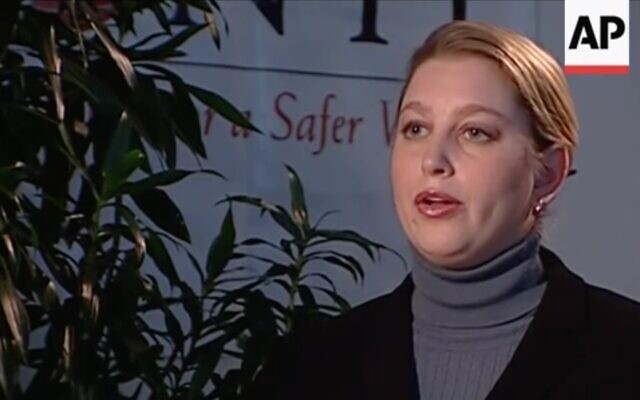
Jake Sullivan, who is set to be Biden’s national security advisor, said in a CNN interview Sunday that the incoming administration eventually wanted to secure limits on Iran’s ballistic missile capabilities.Screen capture from video of nuclear weapons expert Corey Hinderstein. (YouTube)
“I think that Iran in taking this step is both signaling that they are in a position to quickly ramp up their nuclear activities, and I think they believe they’re creating space to limit the negotiation once the new administration comes in,” said Hinderstein, now a vice president at the Nuclear Threat Initiative.

“Unfortunately, we don’t have a very clear understanding of what is driving decision-making for the remainder of the Trump administration. If they so choose, they could see this as a significant escalation.”

Previous standoffs

Despite hawkish threats and the imposition of sweeping sanctions on Iran, Trump had boasted in his unsuccessful campaign of starting no new wars and, in a break with top aides, called off a planned attack on Iran in 2019.

Israel has fewer qualms about the use of force on Iran, which it sees as its main enemy, and was widely suspected in a brazen November attack on Tehran’s outskirts that killed top nuclear scientist Mohsen Fakhrizadeh.

Israeli media have reported that one of its submarines has headed to the Gulf and Defense Minister Benny Gantz recently warned of the possibility of unspecified “events.”

But even Trump’s allies see Iran as looking ahead to Biden.

Jack Keane, a retired general whose Fox News appearances are frequently watched by Trump, said in a segment Monday that the recent deployments showed “the huge capability that the US military has.”

“But I don’t believe the Iranians are going to do anything,” he said.

“They don’t want to do anything to interfere with the potential to have a negotiation with president Biden, who they are hoping will remove the sanctions.”

Gantz: World must unite to prevent Iran from getting nuclear arms

January 5, 2021


Defense chief says Tehran ‘continuing to ignite the region with instability,’ as it ramps up uranium enrichment in breach of nuclear deal

By ALEXANDER FULBRIGHT and TOI STAFFToday, 3:00 pm  0

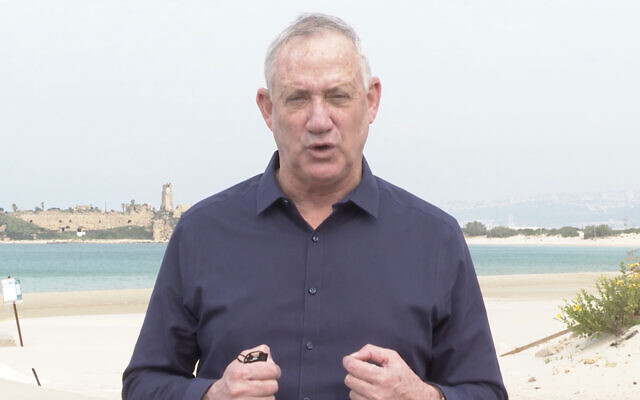
Defense Minister Benny Gantz visits the Atlit naval base in northern Israel on January 5, 2021. (Screen capture)

Defense Minister Benny Gantz visits the Atlit naval base in northern Israel on January 5, 2021. (Screen capture)

Defense Minister Benny Gantz on Tuesday urged greater international efforts to counter Iran, after the Islamic Republic ramped up uranium enrichment to levels that breach curbs on its nuclear program.

“We know that Iran is continuing to ignite the region with instability and chose to raise enrichment to 20 percent. Iran is a global and regional challenge and we too have our eyes open,” Gantz said in a video statement.

He added: “Everyone needs to join together in the fight against Iran, its regional terror activities and the threat of its nuclear armament.”

Gantz spoke as he toured the training base of the navy’s elite Shayetet 13 commando unit in northern Israel.

“Today I’m visiting the navy and its elite units… which operate in every space, close or far, above the water or below it,” he said, praising the “great work” of the soldiers.

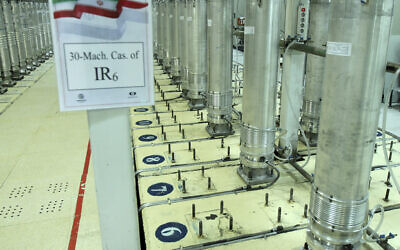
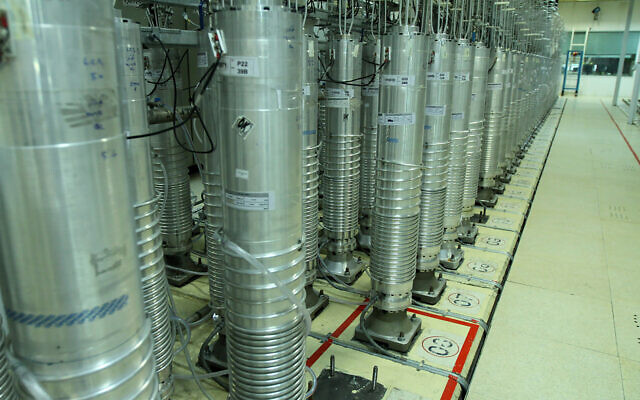
Centrifuge machines in the Natanz uranium enrichment facility in central Iran, November 5, 2019. (Atomic Energy Organization of Iran via AP, File)

Gantz issued a similar appeal on Monday, vowing that Israel would prevent Iran from obtaining nuclear weapons.

“The entire world must step up its pressure, and we must ensure that the defense establishment has the resources needed so that we can be prepared to deal with Iran as necessary on all fronts. We are working with many partners on all fronts and we must continue this trend,” he said.

Prime Minister Benjamin Netanyahu likewise said Israel wouldn’t allow Iran to develop nuclear arms and said its decision to increase uranium enrichment to 20 percent proves Tehran is seeking an atomic bomb.

Earlier Tuesday, Iran confirmed it was enriching uranium to 20% at the underground Fordo facility, well beyond the threshold set by its 2015 nuclear deal with major powers.

The UN’s International Atomic Energy Agency (IAEA) verified the move.A satellite image from September 15, 2017, of the Fordo nuclear facility in Iran. (Google Earth)

It was the most striking violation yet of Iranian commitments under the landmark deal, a process it started in 2019 in response to US President Donald Trump’s dramatic withdrawal from the accord the previous year.

Announcing the move on Monday, government spokesman Ali Rabiei said President Hassan Rouhani had ordered the enrichment “in recent days” in line with a law passed last month by the conservative-dominated parliament.

Foreign Minister Mohammad Javad Zarif tweeted that “we resumed 20% enrichment as legislated by our parliament,” adding that the IAEA had been “duly notified.”

He stressed that Tehran took the step “after years of non-compliance” by other parties and that “our measures are fully reversible upon FULL compliance by ALL.”

The step comes less than three weeks before the end of the presidency of Trump, who has sought to economically punish and diplomatically isolate Iran with a “maximum pressure” campaign, including tough sanctions.

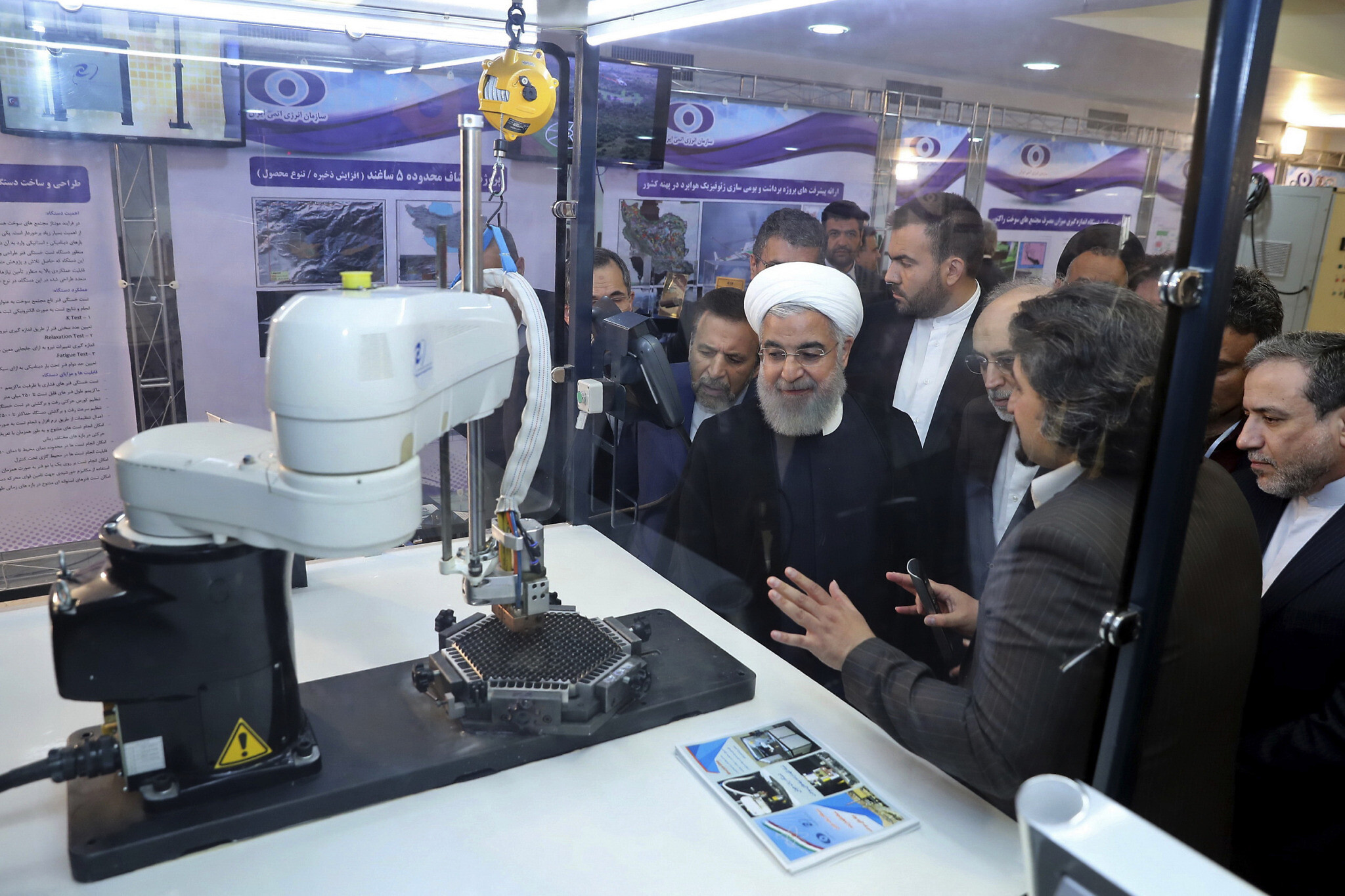
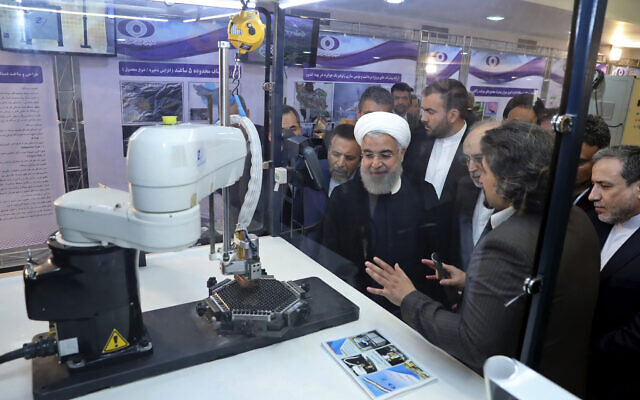
In this April 9, 2018 file photo, released by an official website of the office of the Iranian Presidency, President Hassan Rouhani listens to explanations on new nuclear achievements at a ceremony to mark “National Nuclear Day,” in Tehran, Iran.(Iranian Presidency Office via AP, File)

The outgoing US administration deplored Iran’s plan to step up uranium enrichment, while the European Union said it marked a “considerable departure” from the deal.

Uranium enriched to 20% is far below the 90% needed to construct nuclear bombs, but the jump from 20% to 90% is rather quick compared to the work needed to move from 4% to 20%.

Since the assassination in late November of Iranian nuclear physicist Mohsen Fakhrizadeh, which Iran has blamed on Israel, hardliners in Tehran pledged a response and parliament passed a controversial law calling for the production and storage of “at least 120 kilograms per year of 20% enriched uranium” and to “put an end” to the IAEA inspections intended to check that the country is not developing an atomic bomb.

The Iranian government opposed the initiative, which was also condemned by the other signatories to the accord who called on Tehran not to “compromise the future.”

Quoted by the government’s website, Iranian government spokesman Rabiei said that the administration’s stance toward the law is clear, “but the government considers itself bound to carry out the law.”

Agencies contributed to this report.

Amid fears of attacks on Israelis, UAE said to nab Iranian terror cell

January 4, 2021


Emiratis reportedly investigating whether the suspects planned to target Israeli tourists or businessmen, on first anniversary of Soleimani killing

By TOI STAFF3 January 2021, 10:14 pm  1

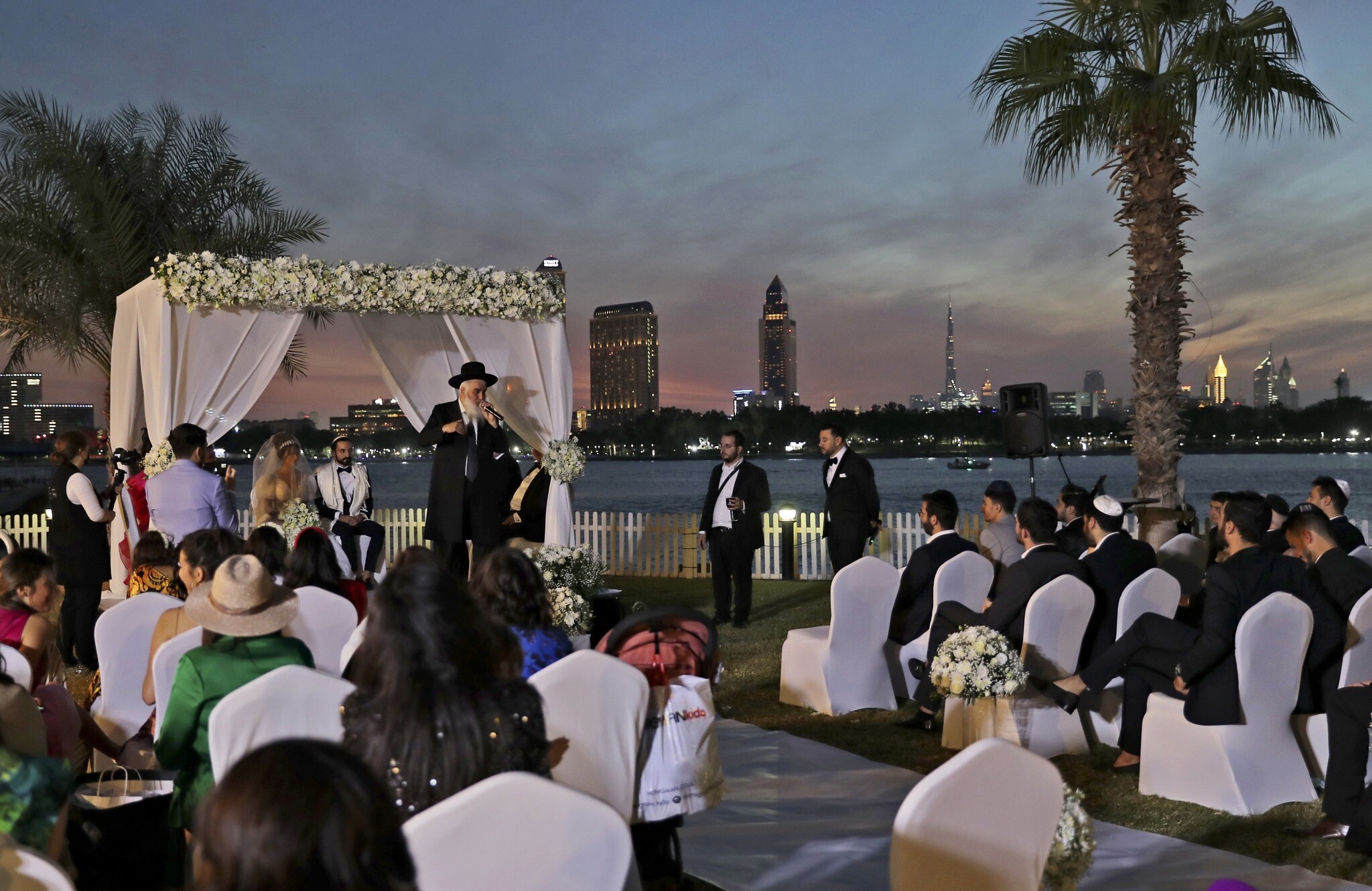
A rabbi officiates under a traditional Jewish wedding canopy during marriage ceremony of the Israeli couple Noemie Azerad, left, seated under the canopy, and Simon David Benhamou, at a hotel in Dubai, United Arab Emirates, December 17, 2020. (Kamran Jebreili/AP)

A rabbi officiates under a traditional Jewish wedding canopy during marriage ceremony of the Israeli couple Noemie Azerad, left, seated under the canopy, and Simon David Benhamou, at a hotel in Dubai, United Arab Emirates, December 17, 2020. (Kamran Jebreili/AP)

Amid fears of Iranian revenge attacks on American and Israeli targets for the killing a year ago of top Iranian military commander Qasem Soleimani, authorities in the United Arab Emirates have reportedly arrested a number of Iranians in Dubai and Abu Dhabi in the past few days on suspicion that they planned to carry out terror attacks there.

Israel’s Channel 12 news said Sunday night that the Iranian suspects were nabbed by UAE intelligence apparatuses and are currently being questioned.

The UAE is believed to be sharing the information revealed in the investigation “with friendly states,” the TV report said.

It noted that there are currently thousands of Israeli travelers in the UAE, for both business and pleasure.

The UAE authorities are probing whether they were the intended targets of the Iranian terror cell, the report said.Iraqis drive past a poster depicting late Iranian Revolutionary Guards commander Qasem Soleimani in Iraq’s capital Baghdad, on December 30, 2020, ahead of the first anniversary of his killing in a US drone attack. (Ahmad Al-Rubaye / AFP)

The development comes as Israel braces for an Iranian revenge attack on the first anniversary of the killing of Soleimani in a US drone strike in Baghdad on January 3, 2020. Soleimani was the head of the Quds Force of Iran’s Islamic Revolutionary Guard Corps, which is designated by the US as a terror group.

US orders aircraft carrier to remain in Gulf after ‘recent threats’ by Iran

January 4, 2021


Acting defense secretary orders USS Nimitz to halt redeployment, cites threats from Tehran against Trump on anniversary of Soleimani killing

By AFPToday, 4:59 am  0

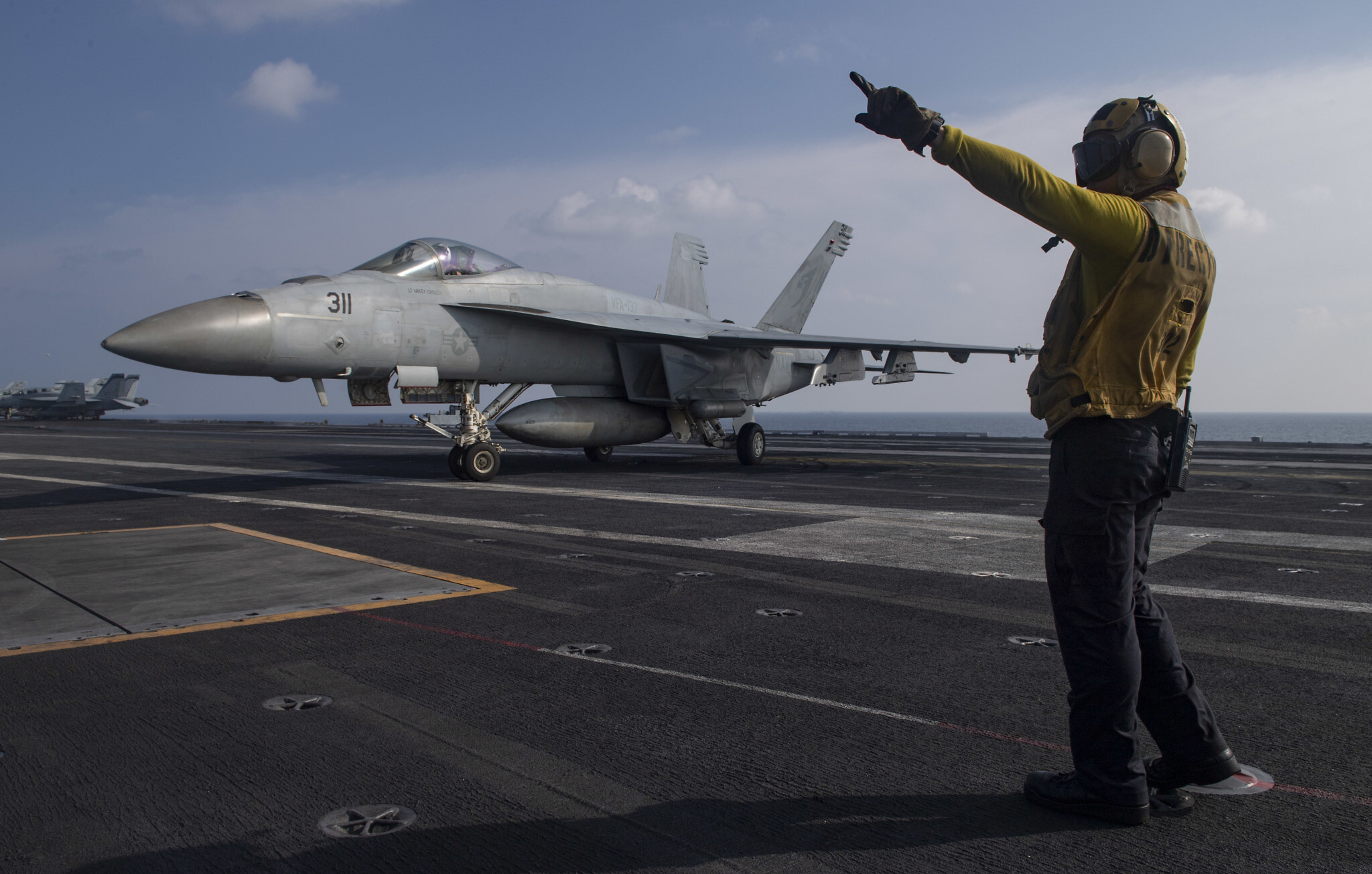
In this photo released by the U.S. Navy, Aviation Boatswain's Mate 3rd Class Marnell Maglasang, from La Puente, Calif., directs an F/A-18E Super Hornet on the flight deck of the aircraft carrier USS Nimitz in the Arabian Sea, Friday Nov. 27, 2020. The Nimitz returned to the Mideast in a move to support the drawdown of troops in Afghanistan and Iraq according to the Pentagon. (Mass Communication Specialist 3rd Class Cheyenne Geletka/U.S. Navy via AP)

In this photo released by the U.S. Navy, Aviation Boatswain’s Mate 3rd Class Marnell Maglasang, from La Puente, Calif., directs an F/A-18E Super Hornet on the flight deck of the aircraft carrier USS Nimitz in the Arabian Sea, Friday Nov. 27, 2020. The Nimitz returned to the Mideast in a move to support the drawdown of troops in Afghanistan and Iraq according to the Pentagon. (Mass Communication Specialist 3rd Class Cheyenne Geletka/U.S. Navy via AP)

WASHINGTON — The US aircraft carrier USS Nimitz will remain in the Gulf due to “recent threats” by Iran, the Pentagon said Sunday, following reports the ship was returning home in what some read as a sign of de-escalation.

The Nimitz has been patrolling Gulf waters since late November, but American media said this week that the acting US defense secretary, Christopher C. Miller, had ordered the vessel to return home.

The New York Times, quoting US officials, said this move was part of a “de-escalatory” signal to Tehran to avoid a conflict in US President Donald Trump’s last days in office.

However, Miller issued a statement to the contrary late Sunday.

“Due to the recent threats issued by Iranian leaders against President Trump and other US government officials, I have ordered the USS Nimitz to halt its routine redeployment,” he said.

“The USS Nimitz will now remain on station in the US Central Command area of operations. No one should doubt the resolve of the United States of America.”

His statement came one year after a US drone strike in Baghdad killed Iran’s revered commander Qasem Soleimani and his Iraqi lieutenant Abu Mahdi al-Muhandis.

Thousands of Iraqi mourners chanted “revenge” and “no to America” on Sunday.

The anniversary of the Baghdad drone strike was also marked in recent days across Iran and by supporters in Syria, Lebanon, Yemen and elsewhere.

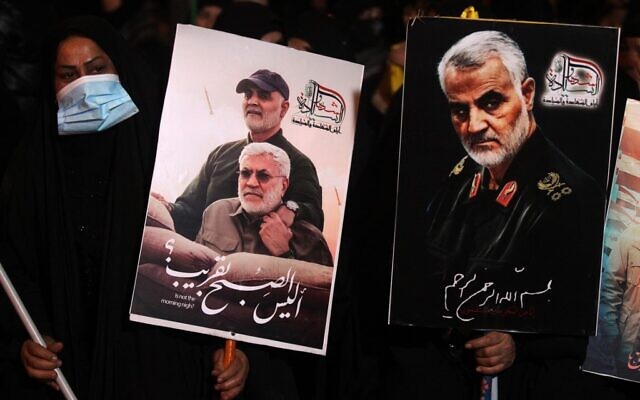
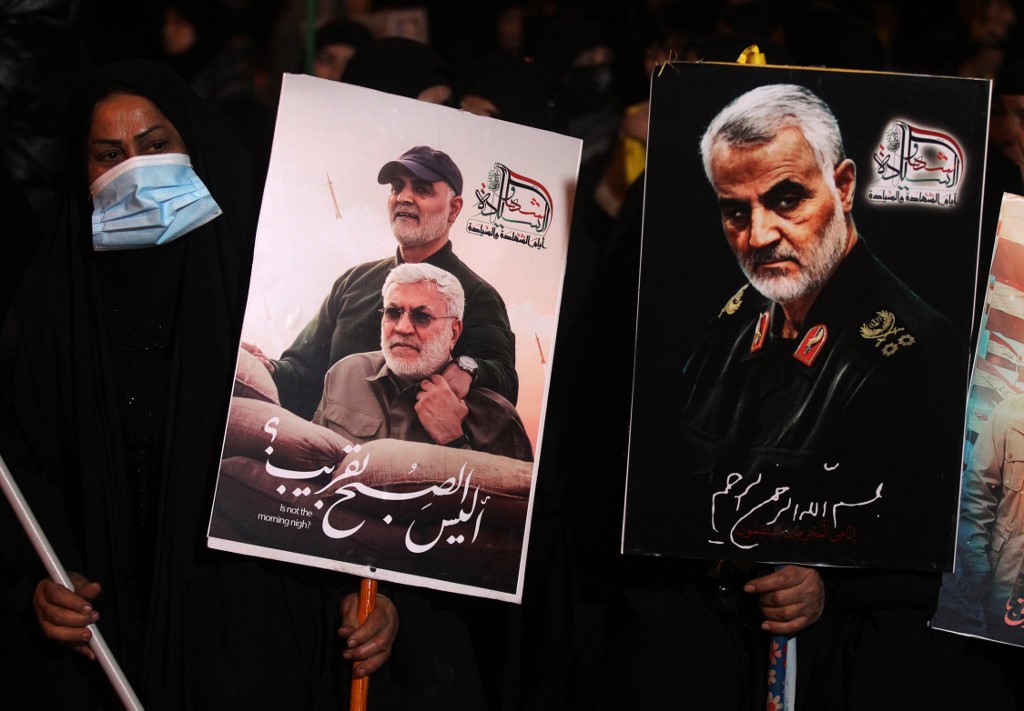
Trump unilaterally withdrew the US from a landmark nuclear deal with Iran and world powers in 2018 and launched a “maximum pressure” campaign against Tehran, reimposing and reinforcing crippling sanctions.Supporters of the Popular Mobilization Forces hold a posters of Abu Mahdi al-Muhandis, deputy commander of the Popular Mobilization Forces, front, and General Qassem Soleimani, head of Iran’s Quds force during a protest marking a year since their killing in a US drone strike, in Tahrir Square, Iraq, January 3, 2021. (Khalid Moha/AP)
The two countries have twice come to the brink of war since June 2019, especially following the killing of Soleimani.

Days after the Soleimani assassination, Iran launched a volley of missiles at Iraqi bases housing US and other coalition troops, with Trump refraining from any further military response.

Iran warns Lebanon, Gaza terror groups can ‘level Haifa, Tel Aviv to the ground’

January 3, 2021


Revolutionary Guards’ commander says proxies ready for ‘confrontation,’ with their missile capabilities supported by Tehran

By TOI STAFFToday, 12:59 pm  0

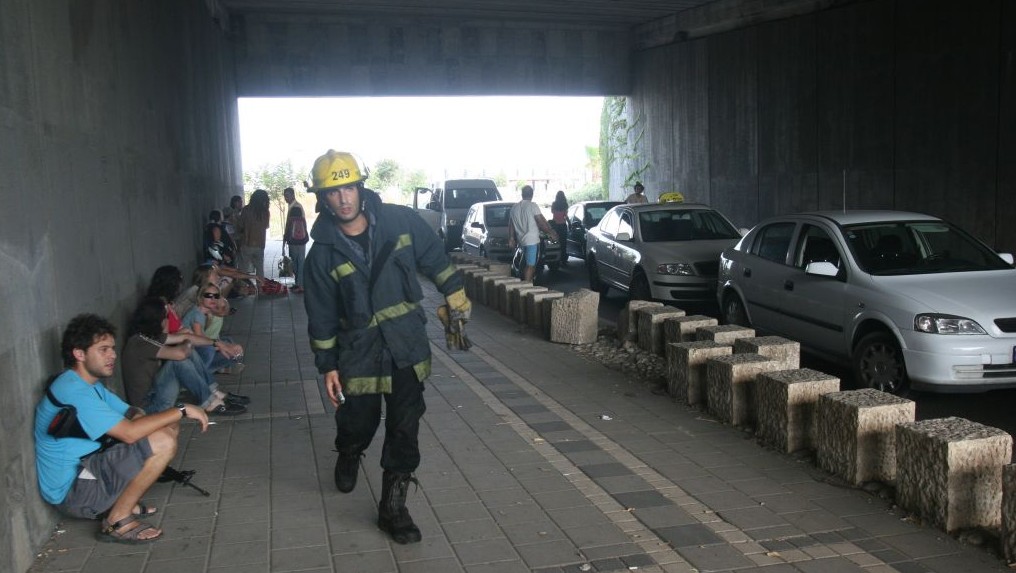
Israeli civilians under cover following a Hezbollah rocket attack in Haifa, August 11 , 2006. (photo credit: Flash90)

Israeli civilians under cover following a Hezbollah rocket attack in Haifa, August 11 , 2006. (photo credit: Flash90)

A top Iranian commander said Saturday that Supreme Leader Ali Khamenei had given an order for Tehran-backed terror groups to destroy Haifa and Tel Aviv if “any foolishness is committed against Iran,” warning that the Islamic Republic has been working for years on developing the capabilities of its proxies in Lebanon and the Gaza Strip.

“We teach the Resistance Front to make fishing rods, instead of providing fish, and Lebanon and Gaza possess the technology to manufacture missiles,” Amir Ali Hajizadeh, commander of the Revolutionary Guards’ Aerospace Force told the state-run Al-Manar TV channel.

“All the missile capabilities of Gaza and Lebanon have been supported by Iran, and they are the front line for confrontation,” he said.

Get The Times of Israel’s Daily Edition by email and never miss our top storiesFREE SIGN UP

Noting that “the capabilities of the resistance axis” are much advanced from what they were ten years ago Hajizadeh said, “today, the Palestinians fire rockets instead of throwing stones.”

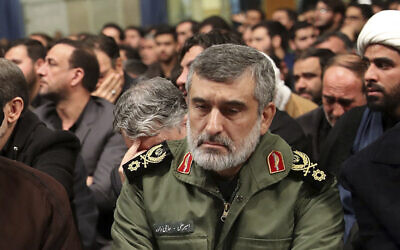
Gen. Amir Ali Hajizadeh, the head of the Revolutionary Guard’s aerospace division, attends a mourning ceremony for general Qassem Soleimani on January 9, 2020, a day after his forces shot down a Ukrainian airliner, in Tehran, Iran. (Office of the Iranian Supreme Leader via AP)

“We have a general order from the guide, Ali Khamenei, to level Haifa and Tel Aviv to the ground, in case any foolishness is committed against Iran, and we have worked over the past years to be able to do so,” he said.

Iran provides support to Hamas and more direct backing to Palestinian Islamic Jihad and Lebanon’s Hezbollah, all of which are sworn to Israel’s destruction.

Haifa and Tel Aviv have been threatened in the past by both Iran and Hezbollah.

Hezbollah leader Hassan Nasrallah recently suggested striking Haifa’s stores of ammonium nitrate, a highly explosive fertilizer that fueled the deadly Beirut port blast in August that killed 193 people and wounded 6,500 others.

The comments came as the Israeli military is preparing for the possibility of a strike by Iran-backed militias in Iraq or Yemen, according to a Friday report. The Israel Defense Forces held discussions last week about possible attacks, including missile and drone strikes, from the Iraqi militias and Houthi groups in Yemen, the Kan public broadcaster reported.

Iran on Sunday marked one year since the death of General Qassem Soleimani in an American drone strike in Baghdad, amid fears in Washington that Tehran could retaliate for the killing on the anniversary.

US officials have expressed concern that Iran may be planning attacks against US-allied targets in neighboring Iraq or elsewhere in the region to coincide with the date. In recent weeks the US military has taken a range of steps designed to deter Iran, while publicly emphasizing that it is not planning, and has not been instructed, to take unprovoked action against Iran.

US President Donald Trump has warned Iran against any attack, and the US has flown strategic bombers over the Persian Gulf in a show of force meant to deter Iran from attacking American or allied targets in the Middle East. A US nuclear submarine crossed the Strait of Hormuz and an Israeli submarine reportedly openly crossed the Suez Canal in a show of force directed at Iran a few days earlier.

Iranian officials have issued a stream of threats against the US and Israel as the anniversary of Soleimani’s death approached, while accusing Trump of seeking a “pretext” for war.Supporters of the Iran-backed Popular Mobilization Forces paramilitary pose before a banner showing a montage of (L to R) slain Iraqi PMF commander Abu Mahdi al-Muhandis, Iranian Quds Force Gen. Qassem Soleimani and Lebanese Hezbollah military chief Imad Mughniyeh during a demonstration outside the entrance to the Iraqi capital Baghdad’s highly-fortified Green Zone on November 7, 2020, demanding the departure of remaining US forces from Iraq. (Ahmad Al-Rubaye/AFP)

The US killed Soleimani, who oversaw the Revolutionary Guard’s expeditionary Quds Force, and others in the January 3, 2020, strike near Baghdad International Airport. It came after months of incidents raising tensions between the two countries and ultimately saw Iran retaliate with a ballistic missile strike targeting American troops in Iraq.

Iran has also threatened to attack Israel since the assassination of its top nuclear scientist, Mohsen Fakhrizadeh, in late November, in a raid blamed on the Jewish state.

Israel has long been suspected of carrying out a series of targeted killings of Iranian nuclear scientists nearly a decade ago, in a bid to curtail Iran’s nuclear program.

Iran says has ‘finger on trigger’ to enrich uranium to 20% ‘as soon as possible’

January 3, 2021


Tehran nuclear chief issues warning amid heightened tensions day ahead of one-year anniversary of Soleimani’s killing in US drone strike

By AGENCIES and TOI STAFF2 January 2021, 12:07 pm  0

In this April 9, 2018 file photo, released by an official website of the office of the Iranian Presidency, President Hassan Rouhani listens to explanations on new nuclear achievements at a ceremony to mark "National Nuclear Day," in Tehran, Iran.(Iranian Presidency Office via AP, File)

In this April 9, 2018 file photo, released by an official website of the office of the Iranian Presidency, President Hassan Rouhani listens to explanations on new nuclear achievements at a ceremony to mark “National Nuclear Day,” in Tehran, Iran.(Iranian Presidency Office via AP, File)

Iran said Saturday it plans to enrich uranium up to 20 percent at its underground Fordo nuclear facility “as soon as possible,” pushing its program a technical step away from weapons-grade levels as it increases pressure on the West over the tattered atomic deal.

Ali Akbar Salehi, the US-educated head of the civilian Atomic Energy Organization of Iran, offered a military analogy to describe his agency’s readiness to take the next step.

“We are like soldiers and our fingers are on the triggers,” Salehi told Iranian state television. “The commander should command and we shoot. We are ready for this and will produce [20% enriched uranium] as soon as possible.”

The move comes amid heightened tensions between Iran and the US in the waning days of the administration of President Donald Trump, who unilaterally withdrew America from Tehran’s nuclear deal in 2018, and ahead of the Sunday anniversary of a US drone strike that killed a top Iranian general in Baghdad a year ago, that has American officials now worried about possible retaliation by Iran.

The head of Iran’s Atomic Energy Organization Ali Akbar Salehi delivers his speech at opening of the general conference of the IAEA in Vienna, Austria, September 16, 2019. (AP Photo/Ronald Zak)

Iran informed the International Atomic Energy Agency that it intends to produce uranium enriched to up to 20% purity, well beyond the threshold set by the 2015 Vienna accord, the UN nuclear watchdog said Friday.

“Iran informed the agency of its intention to enrich uranium at a rate of up to 20 percent in its Fordo underground plant, to comply with a law recently passed by the Iranian parliament,” an IAEA spokesperson said.

The letter dated December 31 “did not state exactly when this enrichment activity would begin,” the spokesperson added.

Iran has not enriched to such levels since it entered into the 2015 nuclear deal with world powers, which capped its enrichment at 3.67%. Tehran has recently broken that limit as the nuclear deal has disintegrated, reaching 4.5%.

Uranium enriched to 20% is far below the 90% needed to construct nuclear bombs, but the jump from 20% to 90% is actually rather quick compared to the work needed to move from 4% to 20%.

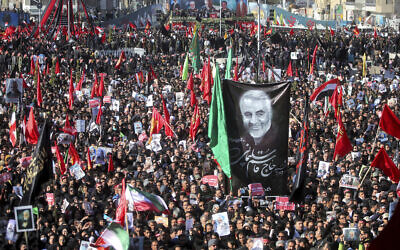
Mourners attend a funeral ceremony for Iranian Gen. Qassem Soleimani and his comrades, who were killed in Iraq in a US drone strike, in the city of Kerman, Iran, January 7, 2020. (Erfan Kouchari/Tasnim News Agency via AP)

Iran’s announcement coincides with the anniversary of the US drone killing of Revolutionary Guard Gen. Qassem Soleimani in Baghdad last year. That attack later saw Iran retaliate by launching a ballistic missile strike injuring dozens of US troops in Iraq. Tehran also accidentally shot down a Ukrainian passenger jet that night, killing all 176 people on board.

As the anniversary approached, the US has sent B-52 bombers flying over the region and sent a nuclear-powered submarine into the Persian Gulf.

On Thursday, sailors discovered a limpet mine on a tanker in the Persian Gulf off Iraq near the Iranian border as it prepared to transfer fuel to another tanker owned by a company traded on the New York Stock Exchange. No one has claimed responsibility for the mining, though it comes after a series of similar attacks in 2019 that the US Navy blamed on Iran. Tehran denied being involved.

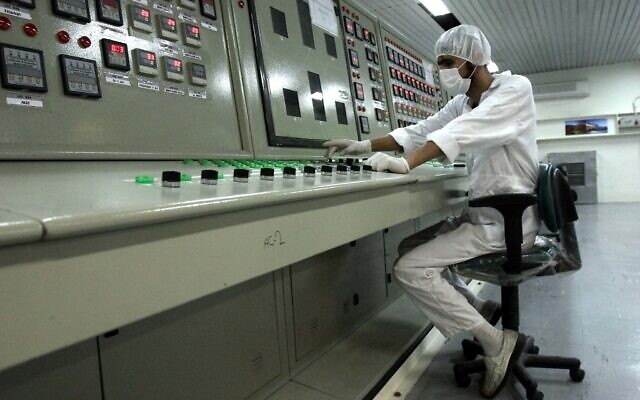
In this Feb. 3, 2007 file photo, a technician works at the Uranium Conversion Facility just outside the city of Isfahan, Iran (AP Photo/Vahid Salemi, File)

Tensions have been increasing since Trump withdrew from the accord in 2018 and began imposing a host of sanctions against Tehran as part of a so-called maximum pressure campaign aimed at buckling Iran and convincing it to agree to a more favorable agreement, in Washington’s eyes.

But Iran has not done so, instead choosing to enrich uranium to numbers far beyond what the deal allowed. The Islamic Republic’s stockpile of enriched uranium is more than 2.4 tons, 12 times the JCPOA limit, though still less than the more than eight tons Iran had enriched before signing the deal.

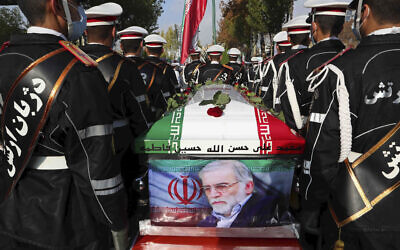
Military personnel stand near the flag-draped coffin of Mohsen Fakhrizadeh, an assassinated top nuclear scientist during his funeral ceremony in Tehran, Iran, November 30, 2020. (Iranian Defense Ministry via AP)

Since the assassination in late November of Iranian nuclear physicist Mohsen Fakhrizadeh, which Iran has blamed on Israel, hardliners in Tehran pledged a response and parliament passed a controversial law calling for the production and storage of “at least 120 kilograms per year of 20 percent enriched uranium” and to “put an end” to the IAEA inspections intended to check that the country is not developing an atomic bomb.

The Iranian government opposed the initiative which was also condemned by the other signatories to the accord who called on Tehran not to “compromise the future.”

Iran has indicated some willingness to return to compliance with the agreement if the US, under incoming president Joe Biden, lifts the sanctions that were put in place after Trump’s withdrawal.

Biden has vowed to re-enter the nuclear agreement if Iran first returns to compliance with it. He has also expressed a desire to negotiate a “longer and stronger” follow-up agreement that would extend the time-limited provisions on the JCPOA, while also addressing Iran’s missile program and curbing the influence of Tehran’s regional proxies.US President-elect Joe Biden delivers remarks at the Queen Theater on December 28, 2020, in Wilmington, Delaware. (Mark Makela/Getty Images/AFP)
Iran has rejected any such negotiations.

The remaining countries that signed the agreement with Iran — Germany, France, Britain, China and Russia — have been trying to keep it from collapsing after the unilateral withdrawal of the United States in 2018.

In late December the countries agreed to “positively address” the possibility of a US return to the accord. Germany’s foreign minister urged Iran not to waste what he called a final window of opportunity.

The three European powers have expressed hope that with the change of administrations in Washington, the US could be brought back into the deal, whose goal is to prevent Iran from developing a nuclear bomb — something Tehran insists it doesn’t want to do.

Centrifuge machines in the Natanz uranium enrichment facility in central Iran, November 5, 2019. (Atomic Energy Organization of Iran via AP)

The deal promises Iran economic incentives in exchange for curbs on its nuclear program, but with the reinstatement of American sanctions, the other nations have been struggling to provide Iran the assistance it seeks.

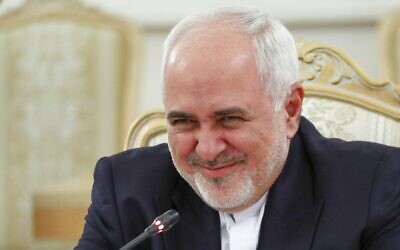
Iranian Foreign Minister Mohammad Javad Zarif has said that Iran would “rapidly reverse” its violations of the nuclear accord when the United States and the three European powers “perform their duties.”

Iranian Foreign Minister Mohammad Javad Zarif smiles during talks in Moscow, Russia, September 24, 2020. (Russian Foreign Ministry Press Service via AP)

Despite Iran’s violations, the International Atomic Energy Agency has reported that Tehran continues to give inspectors full access to its nuclear sites — a key reason the JCPOA member nations say it is worth preserving.

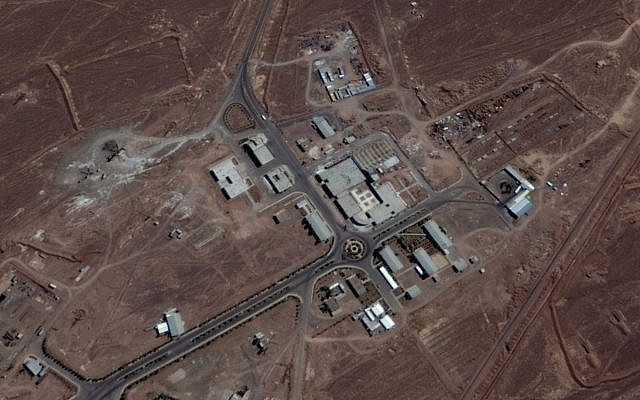
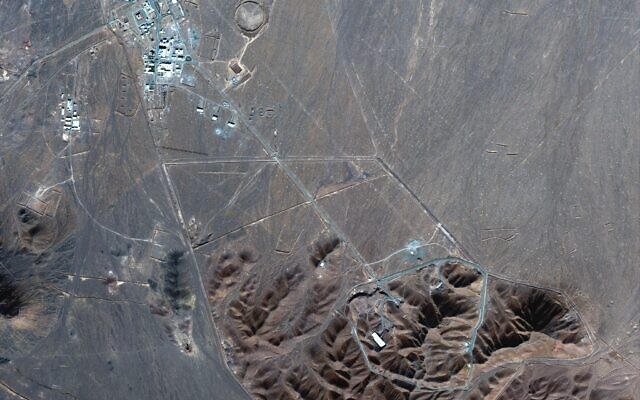
In December, photos obtained by The Associated Press showed that Iran has begun construction on a site at its underground nuclear facility at Fordo.

Iran has not publicly acknowledged any new construction at Fordo, whose discovery by the West in 2009 came in an earlier round of brinkmanship before world powers struck the 2015 nuclear deal with Tehran.

While the purpose of the building remains unclear, any work at Fordo will likely trigger new concern. Already, Iran is building at its Natanz nuclear facility after a mysterious explosion in July there that Tehran described as a sabotage attack.

“Any changes at this site will be carefully watched as a sign of where Iran’s nuclear program is headed,” said Jeffrey Lewis, an expert at the James Martin Center for Nonproliferation Studies at the Middlebury Institute of International Studies who studies Iran.

This Nov. 4, 2020, satellite photo by Maxar Technologies shows Iran’s Fordo nuclear site (Maxar Technologies via AP)

The IAEA as of yet has not publicly disclosed if Iran informed it of any construction at Fordo.

Under the 2015 nuclear deal, Iran agreed to stop enriching uranium at Fordo and instead make it “a nuclear, physics and technology center.”

“This location was a major sticking point in negotiations leading to the Iran nuclear deal,” Lewis said. “The US insisted Iran close it while Iran’s supreme leader said keeping it was a red line.”

Since the deal’s collapse, Iran has resumed enrichment there.

US, Iran locked in tense standoff on 1-year anniversary of Soleimani killing

January 3, 2021


American officials fear the Islamic Republic could carry out attacks on date of assassination of its top general

By TOI STAFF and AGENCIESToday, 6:14 am  0

People carry portraits of late Iraqi commander Abu Mahdi al-Muhandis and Iranian commander Qasem Soleimani at Baghdad Airport, in Baghdad on January 2, 2021, at the site of their killing (AHMAD AL-RUBAYE / AFP)

People carry portraits of late Iraqi commander Abu Mahdi al-Muhandis and Iranian commander Qasem Soleimani at Baghdad Airport, in Baghdad on January 2, 2021, at the site of their killing (AHMAD AL-RUBAYE / AFP)

Iran on Sunday marked one year since the death of General Qassem Soleimani in an American drone strike in Baghdad, amid fears in Washington that Tehran could retaliate for the killing on the anniversary.

US officials have expressed concern that Iran may be planning attacks against US-allied targets in neighboring Iraq or elsewhere in the region to coincide with the date. In recent weeks the US military has taken a range of steps designed to deter Iran, while publicly emphasizing that it is not planning, and has not been instructed, to take unprovoked action against Iran.

US President Donald Trump has warned Iran against any attack, and the US has flown strategic bombers over the Persian Gulf in a show of force meant to deter Iran from attacking American or allied targets in the Middle East. A US nuclear submarine crossed the Strait of Hormuz on Monday.

Get The Times of Israel’s Daily Edition by email and never miss our top storiesFREE SIGN UP

Iranian officials have issued a stream of threats against the US as the anniversary of Soleimani’s death approached, while accusing Trump of seeking a “pretext” for war.

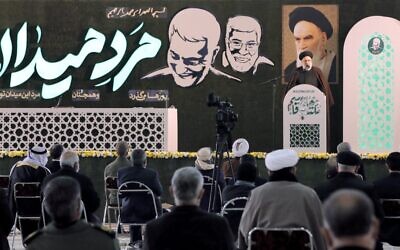
Iranian judiciary chief Ebrahim Raisi speaks during a ceremony on the occasion of the first anniversary of death of former Quds force commander Qasem Soleimani in Tehran, on January 1, 2021. (STR / AFP)

The US killed Soleimani, who oversaw the Revolutionary Guard’s expeditionary Quds Force, and others in the January 3, 2020, strike near Baghdad International Airport. It came after months of incidents raising tensions between the two countries and ultimately saw Iran retaliate with a ballistic missile strike targeting American troops in Iraq.

Iran has also threatened to attack Israel since the assassination of its top nuclear scientist, Mohsen Fakhrizadeh, in late November, in a raid blamed on the Jewish state.

The Israeli military is preparing for the possibility of a strike by Iran-backed militias in Iraq or Yemen, according to a Friday report. The Israel Defense Forces held discussions last week about possible attacks, including missile and drone strikes, from the Iraqi militias and Houthi groups in Yemen, the Kan public broadcaster reported.

Further ratcheting up tensions, the UN nuclear watchdog said Friday that Iran intends to produce uranium enriched up to 20 percent purity, well beyond the threshold set by the 2015 Vienna accord and a short jump from weapons-grade material.

Iranian Foreign Minister Mohammad Javad Zarif speaks outside the Lebanese Foreign Ministry, August 14, 2020. (AP Photo/Hussein Malla

Iranian Foreign Minister Mohammad Javad Zarif claimed Saturday that Israeli agents were planning to attack American targets in order to instigate an aggressive US reaction against Iran and spark armed conflict, warning Trump to avoid such a “trap.” And he warned that any attack against the Islamic Republic by the US would “backfire badly” on Washington’s “BFFs” (an initialism for “best friends forever”), in an apparent reference to the Jewish state.

“New intelligence from Iraq indicate (sic) that Israeli agent-provocateurs are plotting attacks against Americans — putting an outgoing Trump in a bind with a fake casus belli,” Zarif tweeted.

Top Iranian authorities, including supreme leader Ayatollah Ali Khamenei, had previously said that all those involved in Soleimani’s killing would face retribution.

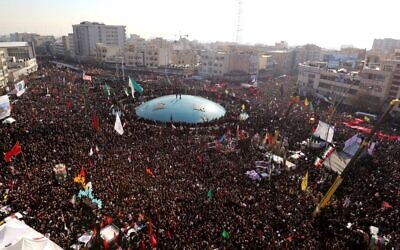
Mourners gather to pay homage to slain Iranian military commander Qassem Soleimani, Iraqi paramilitary chief Abu Mahdi al-Muhandis and other victims of a US attack, in the capital Tehran on January 6, 2020. (Atta Kenare/AFP)

Days after Soleimani’s killing, Iran launched a volley of missiles at Iraqi bases housing US and other coalition troops, with Trump refraining from any further military response.

The Iranian leadership has called the strikes a “slap” and vowed that “severe revenge” awaits.

CNN on Friday reported disagreements within the Pentagon as to the threat level from Iran. Some officials said the threat was the highest it’s been since Soleimani’s killing, with US forces in the region in real danger of attack, while others insisted this was an exaggeration.

“We do see several planning efforts underway and if even some of them are true and they execute they could kill several Americans,” one military official said.

Tensions between Washington and Tehran have soared since 2018, when Trump unilaterally withdrew the US from the Iran nuclear deal and reimposed crippling sanctions.

The two sides have twice come to the brink of war since June 2019, especially following the killing of Soleimani, who headed the foreign operations arm of the Islamic Revolutionary Guard Corps.

Trump administration working on another normalization deal in January

January 2, 2021

Hmm, wonder who will be next?

If it was Indonesia, the world’s largest islamic country, that would be so jaw-dropping that the lamestream media would find it hard to bury amongst all their Biden adulation etc.

And right before he takes office would be such sweet, sweet timing…

https://www.jpost.com/israel-news/trump-administration-working-on-another-israel-normalization-in-january-653766

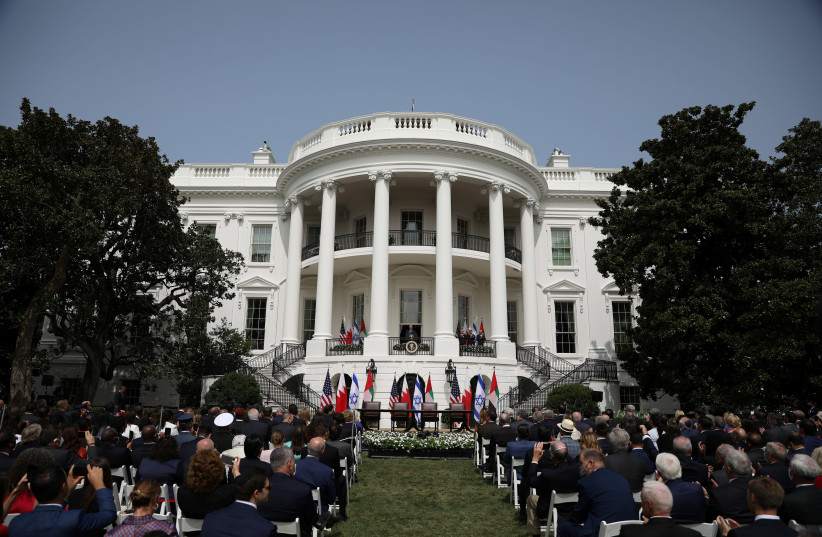
US President Donald Trump speaks as Israel's Prime Minister Benjamin Netanyahu, United Arab Emirates (UAE) Foreign Minister Abdullah bin Zayed and Bahrain’s Foreign Minister Abdullatif Al Zayani listen before the signing of the Abraham Accords. South Lawn of the White House in Washington, US, Septem (photo credit: REUTERS/TOM BRENNER)

Sources in Jerusalem and Washington have said in recent weeks that Indonesia, Mauritania or Oman could be the next country to join the accords.

The US is pushing for another Arab or Muslim state to normalize relations with Israel in the three weeks before US President  Donald Trump leaves office, a Trump administration source said on Wednesday.

“We’re working very hard on making it happen,” said the source, who has been involved in negotiations for the Abraham Accords, as the agreements are called. A second Trump administration source confirmed the ongoing efforts.

In the past four months, the United Arab Emirates, Bahrain, Sudan and Morocco have all joined the Abraham Accords establishing – or in the case of Morocco renewing – open and official diplomatic ties with Israel.

Sources in Jerusalem and Washington have said in recent weeks that Indonesia, Mauritania, Niger or Oman could be next to join the accords. All three [err, should that be four?] have had a certain level of secret or unofficial ties with Jerusalem in the past. There have also been persistent reports of progress with Pakistan. [pfffttt! as my coffee gets sprayed onto monitor!]

Secret ties between Israel and Saudi Arabia have been warming in recent years and months, to the extent that Prime Minister Benjamin Netanyahu and Saudi Crown Prince Mohammed bin Salman met in the Saudi city of Neom last month.

The Trump administration approved the sale of $290 million in precision-guided bombs to Saudi Arabia this week, and Israeli officials have speculated that the Saudis would seek maximum benefit from the US in exchange for normalization.

Vice President Mike Pence’s planned visit to Israel in a week and a half, which could have been the occasion to announce a new Abraham Accords agreement, has been called off, Yediot Aharonot reported.

A Prime Minister’s Office official said Pence’s visit had not been finalized.