Appointment comes amid criticism from some who consider him soft on Tehran, appears to indicate seriousness of Biden plans to reenter JCPOA if Iran returns first
By JACOB MAGID and AGENCIES29 January 2021, 7:25 pm 9
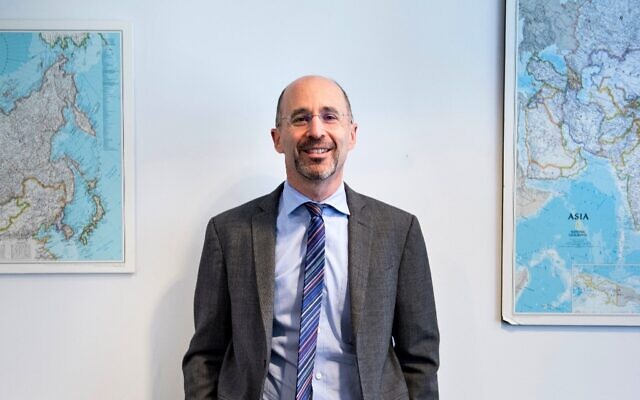
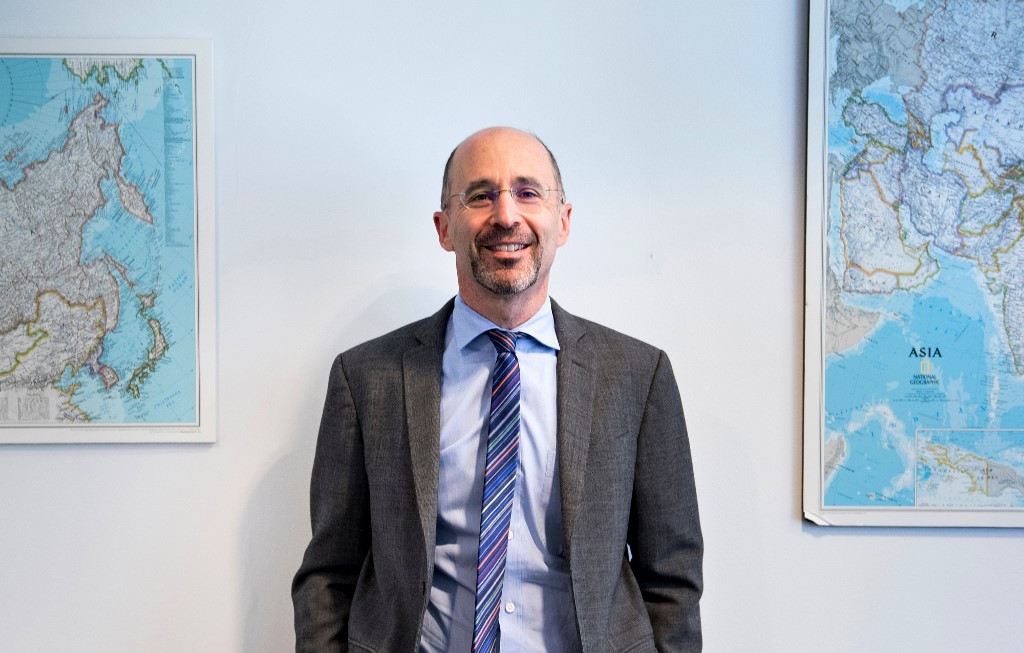
In this file photo taken on May 7, 2018 Rob Malley, former US negotiator during the Iran nuclear program negotiations and current CEO at the International Crisis Group in Washington, DC. (Brendan Smialowski / AFP)
US President Joe Biden has selected Robert Malley, who helped negotiate the 2015 Iran nuclear deal, to serve as his envoy on Iran, the White House confirmed Friday.
The move, which has been criticized by Iran hawks, who consider Malley soft on the Islamic Republic, is seen as an indication of the new administration’s intent to try to return to the Joint Comprehensive Plan of Action, which former president Donald Trump abandoned in 2018, with the support of the Israeli government.
After confirming Malley’s appointment, White House press secretary Jen Psaki reiterated that the US will be prepared to reenter the accord if Iran returns to compliance with it first. Tehran, for its part, has said that it will only return if the US lifts sanctions against it first and Iran’s envoy to the UN said Thursday that Washington had until February 21 to do so.
The Reuters news agency reported Friday that Malley had already begun calling his counterparts in the UK, France and Germany to assess their views on how to proceed with the nuclear deal.
Meanwhile, Biden’s national security adviser said that restoring limits on the Iranian nuclear program is a top priority and that the administration would work to build on whatever restrictions it could negotiate.
US President-elect Joe Biden’s national security adviser nominee Jake Sullivan speaks at The Queen theater, November 24, 2020, in Wilmington, Delaware. (AP/Carolyn Kaster)
Jake Sullivan said Friday that the administration’s goal is to put Iran’s nuclear program “back into a box” and then to confront other problematic Iranian activity in the Middle East.
“Our view is that if we can get back to diplomacy that can put Iran’s nuclear program in a box, that will create a platform upon which to build a global effort,” Sullivan said at an event hosted by the US Institute of Peace, with Trump’s national security adviser Robert O’Brien.
“We are going to have to address Iran’s other bad behavior, malign behavior across the region, but from our perspective, a critical early priority has to be to deal with what is an escalating nuclear crisis as they move closer and closer to having enough fissile material for a weapon, and we would like to make sure that we reestablish some of the parameters and constraints on their program that have fallen away over the past two years,” Sullivan said.
US Secretary of State Antony Blinken is “building a dedicated team” to address Washington’s relations with Iran, to be led by Malley, a State Department official told AFP Friday. Then-president Barack Obama, center, receives an update in the Oval Office on the situation in Syria, including from Rob Malley, right, then-White House Coordinator for the Middle East and North Africa, Feb. 24, 2016. (Official White House photo/Pete Souza)
Malley, a childhood friend of Blinken, has been serving as head of the International Crisis Group, an independent non-governmental organization focused on conflict resolution.
Malley “brings to the position a track record of success negotiating constraints on Iran’s nuclear program,” the State Department official said. “The Secretary is confident he and his team will be able to do that once again.”
Malley was previously a top national security aide to former US president Barack Obama.
Rumors of Malley’s potential new post roiled the insular but highly polarized community of American Iran experts in recent days.
Iran hawks are “aghast,” believing Malley to be a key architect of the 2015 nuclear deal, AP reported without citing named sources. These hawks are said to fear Biden “wants to rejoin the Iran deal at any cost and may be willing to sacrifice the security of Israel and the Gulf Arab states to do so,” the report said.
The hawks, it said, regard Malley as less than fully supportive of Israel.
“It’s deeply troubling that President Biden would consider appointing Rob Malley to direct Iran policy,” Republican Senator Tom Cotton tweeted last week.
“Malley has a long track record of sympathy for the Iranian regime & animus towards Israel. The ayatollahs wouldn’t believe their luck if he is selected,” he wrote.
Iran deal supporters have sprung to Malley’s defense, praising him as a measured, longtime Middle East hand who has served multiple presidents and who has significant expertise in the region. Malley was one of several senior national security council officials involved in both the 2000 Camp David peace talks between Israel and the Palestinians and the 2014-2015 Iran deal negotiations.
The J Street dovish Middle East lobby lauded Friday’s appointment, saying Malley was well-equipped to help get the JCPOA back on track.
“As a widely-respected diplomat, national security expert and human rights defender who was among the lead negotiators of the JCPOA, Malley is well-suited to play a major role in this urgent effort,” said the group, which supported the original Iran deal.
Malley has been a bete noire for pro-Israel hawks since his time as a Middle East aide to Bill Clinton when, in a New York Times op-ed, he rejected what he said were exaggerated accounts that Palestinian leader Yasser Arafat bore sole blame for the failure of the Camp David peace summit.
More damming, Xiyue Wang, a US scholar who was jailed while doing historical research in Iran, accused Malley of not doing enough to secure his release while he was in the Obama administration.
Wang said that Malley’s appointment showed that Blinken’s calls both to strengthen the nuclear deal and take up human rights were “merely empty words.”
“There are lessons to be learned from both Obama and Trump’s approaches to Iran. Mr. Malley’s appointment signals to Tehran that the US is simply lurching from one extreme policy to another,” he said.
But in a letter released Thursday some 200 former officials and activists voiced support for Malley, denouncing “smear tactics” by those who would never support diplomacy.
“Those who accuse Malley of sympathy for the Islamic Republic have no grasp of –- or no interest in -– true diplomacy, which requires a level-headed understanding of the other side’s motivations and knowledge that can only be acquired through dialogue,” it said.
Jason Rezaian, a Washington Post journalist who was imprisoned in Iran, said that Malley was crucial in negotiating his release in 2016 and said he spent hours speaking with him and others set to serve Biden.
“Simply put, in terms of negotiating with Iran on a range of issues, from strategic to human rights ones, this team had exponentially more experience on its first day in office than the Trump administration was able to amass in a full four years,” Rezaian wrote in an opinion piece in his newspaper.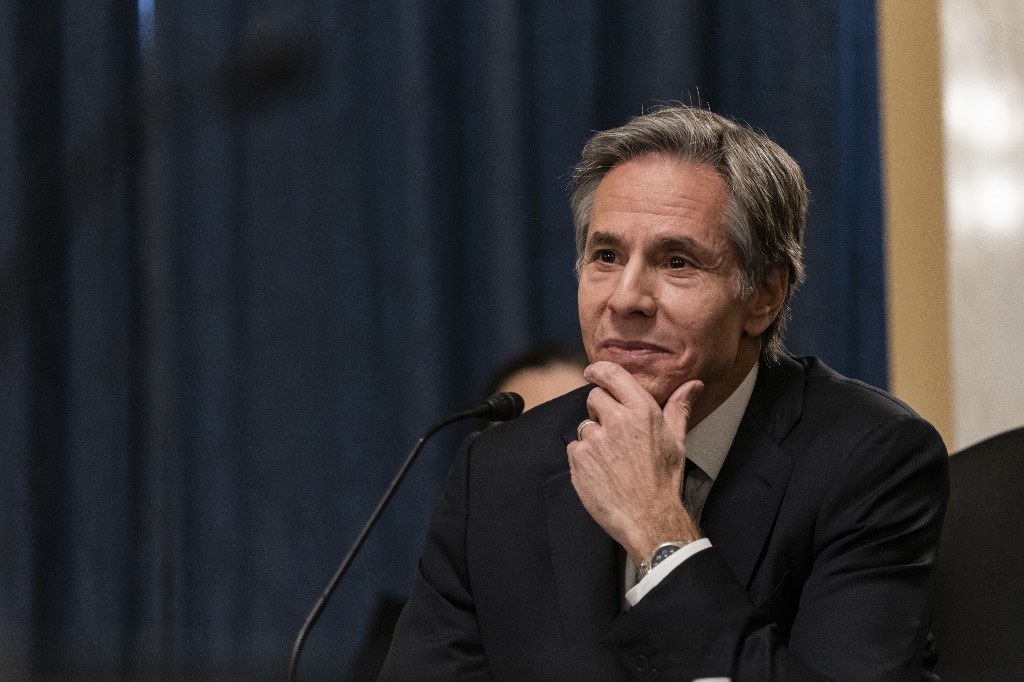 Antony Blinken speaks during his confirmation hearing to be secretary of state before the US Senate Foreign Relations Committee, on January 19, 2021 in Washington, DC. (Alex Edelman-Pool/Getty Images/AFP)
Iranian Foreign Minister Mohammad Javad Zarif responded Thursday to Blinken’s comments that the US will only reenter the deal if Iran returns to compliance with it first by saying that Blinken needed a “reality check” and blaming the US for the deal’s deterioration.
Tensions have heated in the Middle East in recent weeks, both before and after Biden assumed control of the White House.
Iran and the Trump administration exchanged a steady stream of threats before Trump’s term ended earlier this month, and Iran carried out fresh breaches of the nuclear agreement.
Iran’s aggressive moves were believed to be partially aimed at increasing its leverage ahead of negotiations with Biden.
The US on Wednesday flew a nuclear-capable B-52 bomber over the Middle East in a show of force directed at Iran. The Trump administration made two similar flights earlier this month.
Iran said Thursday it plans to install 1,000 new centrifuges at the Natanz nuclear facility and that its scientists had exceeded previous goals for uranium enrichment.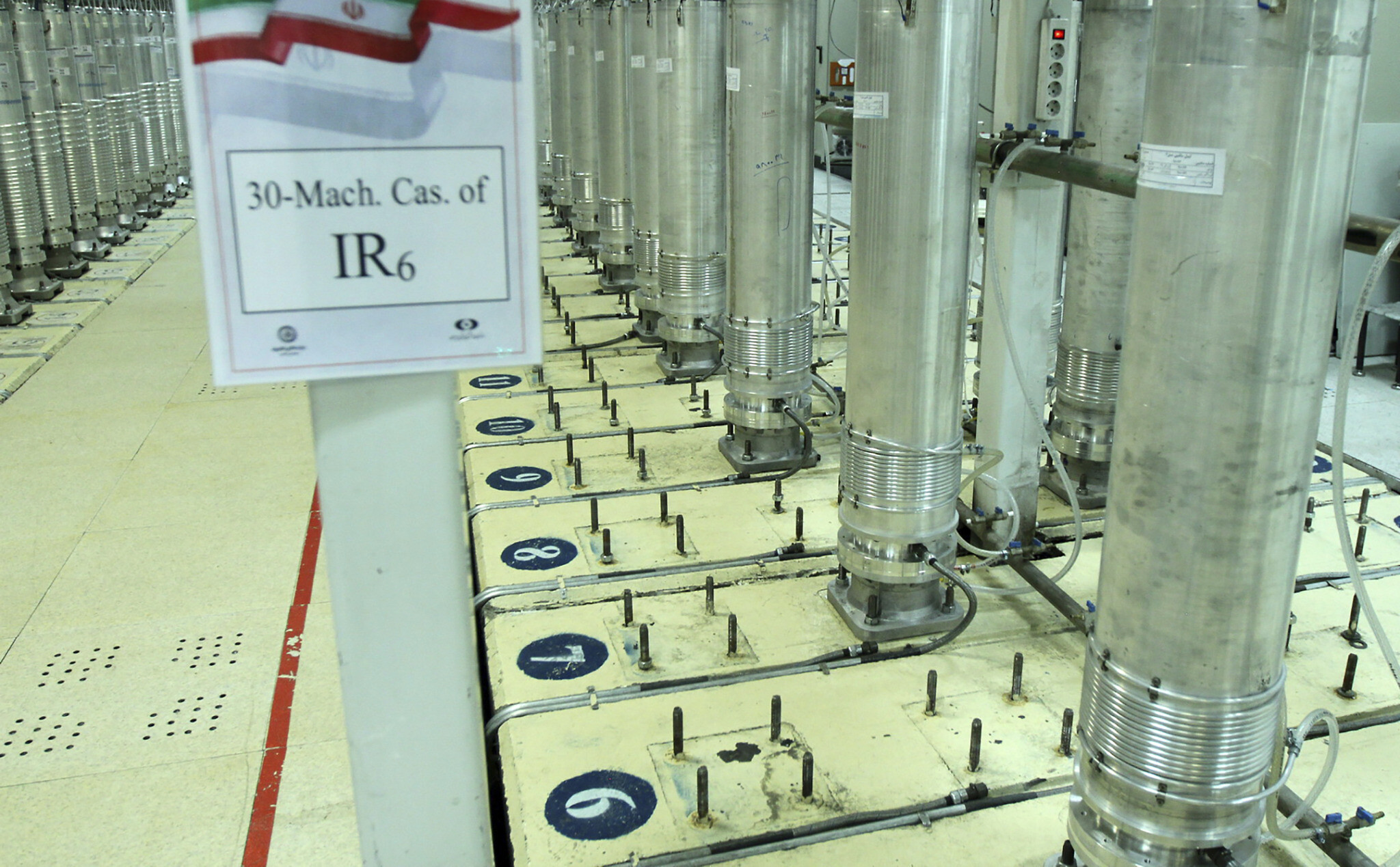 Centrifuge machines in the Natanz uranium enrichment facility in central Iran, November 5, 2019. (Atomic Energy Organization of Iran via AP, File)
The Biden administration has pledged to consult with Israel and its other Middle East allies before making decisions regarding Iran, but its policy toward Tehran is expected to be a point of contention between Washington and Jerusalem.
Israel, along with the United Arab Emirates and Bahrain, are all seeking to dissuade the Biden administration from returning to the Iran nuclear agreement in its original form.
Israeli officials have warned the US against rejoining the nuclear deal, and have also issued threats against Iran in recent weeks.
IDF chief Aviv Kohavi issued a rare public criticism of the US plans on Tuesday and said that he had ordered the military to develop operational plans for striking Iran’s nuclear program. Defense Minister Benny Gantz later appeared to rebuke Kohavi for the comments.




 anneinpt
 artaxes
 danmillerinpanama
 davidking1530
 Peter Hofman
 Joseph Wouk
 Peter
Peter Louisiana Steve
 WarSclerotic
Recent Comments