Archive for July 2020

Israeli Military Launches Radical New Google Maps Alternative

July 2, 2020

The only surprising thing in this article – (especially) given the source – is the lack of snide Israel bashing. 

Objective and fair journalism in relation to something about Israel (the Israeli military, no less). Golly gosh, fancy that.
https://www.forbes.com/sites/zakdoffman/2020/06/30/just-like-google-maps-secret-israeli-military-unit-launches-radical-new-app/#3a06aed77c9b

Unit 9900

“Imagine a tourist arriving in a foreign city,” the Israeli intel officer tells me, “the first thing they do is open Google Maps and look for a restaurant. Google helps them find a place. Helps them navigate. Helps them get there on time. We do the same.” Well, not exactly. The augmented reality mapping application Lieutenant-Colonel “N” is describing is designed to find hidden terrorists, not restaurants. “Mistakes can be fatal,” he tells me, “we need to get the right house on the right street.”

Welcome to the battlefield of the future—artificial intelligence, multi-source data fusion, augmented reality. Everything edge-based and real-time. Except this isn’t really a battlefield, as such. “What happened to us,” the officer tells me, “is that our enemies have adopted a technique to merge into urban areas populated with civilians, we need to unveil the enemy, precisely, and stop the threat.”

So, now you start to get the picture. Think Google Street View—except it’s not Google. And an augmented reality overlay that comes from the fusion of multiple sources of highly classified intelligence not big tech’s cloud servers And if that isn’t enough, there’s also AI running pattern analytics on prior enemy tactics, techniques and procedures to infer what a hidden enemy is likely to do next, in real time.

This is military augmented reality and it’s not unique—such systems are under development, gaming-style headsets overlaying friendlies and likely combatants, helping targeting and the avoidance of blue on blue. Israel’s new system is different, though. The augmented reality comes from the fusion of multiple intel sources, the intent is not to present ground troops with an advanced gaming-style view of the battlefield, but to use live data to infer where actual targets are hiding.

Picture this Street View lookalike again—no screenshots, I’m afraid, it’s classified. Arrows and graphics explain to a soldier on the ground why the third-floor apartment with the wrought iron balcony is deemed a hostile environment, why anyone exiting the building can be considered a combatant. The intent is to root out threats, but also to keep others safe, to avoid collateral damage. “We need to make sure we only target the aggressor and not any civilians,” Lt-Col “N” tells me.

Israel’s idea for this “intelligence saturated combat” has been a decade in the making. The new program sits within Unit 9900, the visual intelligence operation (think maps, satellite imagery, image analysis) within Aman, the country’s military intelligence directorate, and sister unit to the better known 8200 signals intelligence unit. Unit 9900 generated headlines a few years ago when it was reported that it was recruiting autistic teenagers for their unique analytical skillset.

As Lt-Col “N” describes the work of his team, “the development of 3D mapping that is as realistic as possible,” he continually refers back to the modern-day explorer’s Google Maps view of the world, that feeling of familiarity. Yes, the location might be strange, but the viewpoint is well known, understandable in absolute real-time. “We have to build something with that user experience,” he says, “our soldiers crossing the border for the first time must be familiar with the environment.”

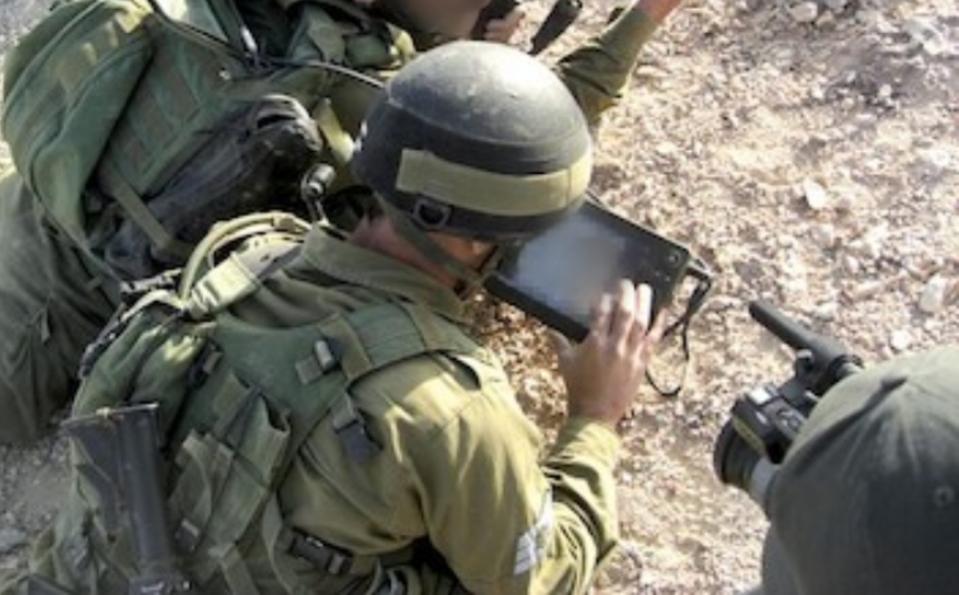
This “intelligence saturated” viewpoint can be presented to the solider on a smartphone or tablet, all off the shelf and “mostly Android,” or streamed directly into their binoculars or weapons sights. “They don’t know where the intel comes from,” Lt-Col “N” tells me, “but it reaches their sights, their C2 systems in real time.” The officer stresses that all targeting decisions are taken by the soldier on the ground, not by the system itself, this is an aid, not a automated targeting system.

The challenges the new unit has overcome, I’m told, include distilling down this intel, “terabytes every day,” into what is useful and relevant, that’s the role of the AI, the pattern analytics. The window is short—soldiers are given five to ten seconds to decide on any action they take. They are trained in the field with the technology, their feedback hones the program itself, “what to develop further and what to ditch.”

Essentially, putting the complexity to one side, this is a 3D, photo-realistic map, “the backbone onto which we build our intel—preliminary and real time—to understand the area and what the enemy is doing in real time.” By mining data from previous combat experiences, the AI “recognizes patterns of enemy behaviour—and can understand where the enemy is and what they’re planning.” This is overlaid with real-time intel, including open-source data on the terrain and the environment.

There has been a lot of talk about the fusion of the cyber and physical domain in the last year, not least from Israel, which became the first country to mount a physical military response to a cyber attack. A few weeks later, the U.S. did the opposite. This new concept of an “intelligence saturated” battlefield can take the cyber domain and feed it directly to troops on the ground. Those same soldiers are heaped in sensors, everything feeding back to the central intelligence system.

Lt-Col “N” often refers to the “disappearing enemy.” He means the urban shadows where combatants and civilians blend together, disasters waiting to happen. Yes, this new style of AR combat is intended to sharpen responses, but also to avoid mistakes. The officer explains that the AR display provides enough information to let the soldier understand why a location has been deemed hostile—the final targeting decision is theirs, and if they don’t understand they won’t act the right way.

I’m told that this new program within Unit 9900 has become a development hotbed, learning its approach from industry. Inside the “joint lab” you’ll find intel, combat troops, cyber and comms, Israel’s Darpa equivalent, defense contractors, even start-ups. When something new is envisaged, it’s prototyped and given to ground troops to field test. Their feedback hones to capability or consigns it to the bin.

The military world has changed, Lt-Col “N” tells me, “we needed to imagine new methods of fighting—as much as possible we use tools created outside the defense industry. We take civilian and open-source as much as possible, we access research from all over the world to help us deliver state of the art products.”

I’m told that Israel has accepted that “mil-spec” is not always best—why not plug into the billions of investment dollars piling into mapping and AR and AI, repurposing those capabilities for this. “We keep the user experience as straightforward as possible… Google Maps is a good model—how you see the world as a tourist, when you know what you see and understand where you’re going.”

This new program is now ripe for international collaboration. “Our discussions with various countries fighting terror around the world show they’re facing the same threat, enemies hiding in urban environments. This concept brings together quick intel, enhanced by AI and connected to accurate mapping. That’s its innovation.”

No details on any other countries using the tech, of course, no specifics on intel sources—all highly classified. “I can tell you this is a real-time bridge between intel and soldiers—intel wants to keep their secrets, combat operators want that intel in real time.” Testing of the new capabilities started this year.

You can add this IDF program to the multitude of new AI, IoT and AR systems being procured and developed by military customers world-wide. The concept of real-time dissemination of live intel from multiple sources, right to a soldier’s C2 or sights is novel. The challenge here is that the soldier must remain the decision maker. If there’s ever any implication that targeting has been automated, then the military world will have changed and there will be no going back.


Food for thought: Menachem Begin

July 2, 2020

Never a truer word has been spoken…

https://pbs.twimg.com/media/Eb1EO0dWoAINEQ7?format=jpg&name=small

‘Incident’ near Iran’s Natanz nuclear facility damages building

July 2, 2020

Mossad It's Never an Accident - Israel Accident, Unisex T-Shirt ...

https://www.foxnews.com/world/under-construction-building-at-site-of-iranian-enrichment-facility-damaged-in-incident-report

An “incident” damaged an under-construction building Thursday, July 2, 2020 near Iran's underground Natanz nuclear enrichment facility, though it did not affect its centrifuge operations or cause any release of radiation.

TEHRAN, Iran — An “incident” damaged an under-construction building Thursday near Iran’s underground Natanz nuclear enrichment facility, though it did not affect its centrifuge operations or cause any release of radiation, a spokesman said.

The affected building, described as an “industrial shed,” was above ground and not part of the enrichment facility itself, said Behrouz Kamalvandi, a spokesman for the Atomic Energy Organization of Iran. The state-run IRNA news agency quoted Kamalvandi as saying there was “no need for concern” over the incident.

However, there was no previously announced construction work at Natanz, a uranium enrichment center some 250 kilometers (155 miles) south of the capital, Tehran. Natanz includes underground facilities buried under some 7.6 meters (25 feet) of concrete, which offers protection from airstrikes.

Natanz is among the sites now monitored by the International Atomic Energy Agency after Iran’s 2015 nuclear deal with world powers. The IAEA did not immediately respond to a request for comment over the incident.

Natanz, in Iran’s central Isfahan province, hosts the country’s main uranium enrichment facility. There, centrifuges rapidly spin uranium hexafluoride gas to enrich uranium. Currently, the IAEA says Iran enriches uranium to about 4.5% purity, above the terms of the nuclear deal, but far below weapons-grade levels of 90%.

The U.S. under President Donald Trump unilaterally withdrew from the nuclear deal in May 2018, setting up months of tensions between Tehran and Washington. Iran now is breaking all the production limits set by the deal, but still allows IAEA inspectors and cameras to watch its nuclear sites.

However, Natanz did become a point of controversy last year as Iranian officials refused to allow an IAEA inspector into the facility in October after allegedly testing positive for suspected traces of explosive nitrates. Nitrates are a common fertilizer. However, when mixed with proper amounts of fuel, the material can become an explosive as powerful as TNT. Swab tests, common at airports and other secure facilities, can detect its presence on the skin or objects.


The Case for Israe: Democracy’s Outpost – Alan Dershowitz 

July 1, 2020

https://www.youtube.com/watch?v=A1ZHY405Kec

Israel is under attack – not only by terrorists who deny its basic right to exist, but also in the court of world opinion, which seeks to marginalize Israel as a human rights pariah that sanctions apartheid.

Rising in vigorous defense of the Jewish homeland in this landmark documentary, Alan Dershowitz, distinguished Harvard Law School professor and outspoken champion of human rights, presents evidence from leading diplomats, historians, legal experts and government officials on both sides of the political spectrum to make the definitive case for Israel’s legitimacy and right to self-defense.

Dershowitz argues forcefully that real peace in the Middle East can only occur when the Palestinians, Arabs, and their allies finally value the creation of a Palestinian homeland more than they oppose the presence of a Jewish state. Through incisive conversations with commentators ranging from Ambassador Dennis Ross and former Israel Supreme Court President Aharon Barak to then Opposition Leader Bibi Netanyahu and historians Michael Oren and Benny Morris, Dershowitz refutes deeply entrenched misperceptions about Israel’s history,

Jewish claims to a homeland, individual rights under Israel’s democratic system of government, the security fence, and military conduct in the face of terrorist attacks. He closes with a formidable warning that the greatest threat to Israel is also the greatest threat to international peace and security: Iran’s aggressive nuclear ambitions.ther.[137]

Jerusalem’s security challenges for 2020 – Jerusalem Studio 478

July 1, 2020


US envoy: Military action against Iranian nuclear program ‘always on the table’ 

July 1, 2020

Source: US envoy: Military action against Iranian nuclear program ‘always on the table’ | The Times of Israel

Brian Hook, US pointman on Iran, says Trump willing to use force to prevent Tehran acquiring nukes; downplays fears annexation could harm Israel’s ties with Arab states

US special envoy for Iran, Brian Hook, attends a press briefing with Prime Minister Benjamin Netanyahu at the Prime Minister's office in Jerusalem, June 30, 2020. (Abir Sultan/Pool via AP)

US special envoy for Iran, Brian Hook, attends a press briefing with Prime Minister Benjamin Netanyahu at the Prime Minister’s office in Jerusalem, June 30, 2020. (Abir Sultan/Pool via AP)

The Trump administration’s envoy for Iran said Tuesday that the White House was willing to take military action against Tehran to prevent the regime from acquiring nuclear weapons.

Brian Hook, the US special representative for Iran, said during a visit to Jerusalem that “the military option is always on the table.”

“We’ve made very clear, the president has, that Iran will never acquire a nuclear weapon,” Hook said in an interview with Channel 13.

“The Israeli people and the American people and the international community should know that President Trump will never allow them to have a nuclear weapon,” Hook said.

Hook is on a Middle East tour meeting with US allies to seek support for Washington’s demand of extending a 13-year UN weapons embargo on Iran set to expire in October. He visited the United Arab Emirates over the weekend.

In a meeting with Hook on Tuesday in Jerusalem, Prime Minister Benjamin Netanyahu urged the US to move forward with its threat to reimpose “snapback” sanctions on Iran.

Netanyahu urged that “in response to repeated Iranian provocations and violations… it is time to implement, now, snapback sanctions. I don’t think we can afford to wait. We should not wait for Iran to start its breakout to a nuclear weapon because when that happens it will be too late for sanctions.”

If the UN Security Council fails to extend the embargo, the US would seek to trigger the broad array of “snapback” sanctions due to Iran’s violations of the 2015 nuclear deal with world powers.

The US abandoned that deal in 2018, triggering a series of Iranian violations in the ensuing years.

Hook told Channel 13 that the US would prefer to extend the arms embargo over sanctions.

“When you play by Iran’s rules, Iran wins, so we are making the national security case for extending the arms embargo that has been in place for 13 years,” Hook said.

Russia and China, which are both members of the UN Security Council, oppose the embargo, however. Their support, or abstention from a vote, would be needed to extend the embargo.

“I’m hopeful because Russia and China also would like to see a peaceful and stable Middle East,” Hook said.

He highlighted ties between Israel and Arab states, which have likely been strengthened by shared concern over threats from Iran, and downplayed fears that Israel’s planned annexation of parts of the West Bank could damage those ties.

“We very much like the steps that have been taken by a number of governments I think to deal with Iranian aggression and we would very much like to see the Palestinians come to the table. With respect to annexation, that is a decision for the Israeli government to make. We are working on building support for the peace vision,” Hook said.

In his meeting with Hook, Netanyahu warned that the Iranian regime “deliberately deceives the international community. It lies all the time. It lies on solemn pledges and commitments that it took before the international community. It continues its secret program to develop nuclear weapons. It continues its secret program to develop the means to deliver nuclear weapons.”

He vowed that Israel would “do whatever is necessary to prevent Iran from developing nuclear weapons,” and told Hook, “I know that’s your position as well.”

“This is a policy, Brian, that we have adopted as well. We are absolutely resolved to prevent Iran from entrenching itself militarily in our immediate vicinity. We take repeated and forceful military action against Iran and its proxies in Syria and elsewhere if necessary,” said Netanyahu.

Prime Minister Benjamin Netanyahu, right, meets with US Special Representative for Iran Brian Hook in Jerusalem on June 30, 2020. (Haim Tzach/GPO)

Iranian officials have suggested they could expel international inspectors monitoring the country’s nuclear program in response to an arms embargo extension, or even withdrawal entirely from the nuclear Non-Proliferation Treaty.

The UN arms embargo so far has stopped Iran from purchasing fighter jets, tanks, warships and other weaponry, but has failed to halt its smuggling of weapons into war zones in Syria, Yemen, Lebanon and Iraq.

US Secretary of State Mike Pompeo on Tuesday urged the UN Security Council to extend the embargo, warning that its expiration would risk the stability of the oil-rich region.

“Iran will hold a sword of Damocles over the economic stability of the Middle East, endangering nations like Russia and China that rely on stable energy prices,” Pompeo told the virtual session. Both countries on Tuesday spoke out against extending the embargo.

European allies of the United States have voiced support for the embargo but also oppose new sanctions, saying the bigger issue is Iran’s nuclear program.

US sanctions imposed since the Trump administration’s withdrawal from the nuclear deal have created intense financial pressure on Tehran that have led to sporadic anti-government protests, including nationwide demonstrations in November that Amnesty International says saw over 300 people killed. While the Trump administration has maintained it doesn’t seek to overthrow Iran’s government, its pressure campaign has exacerbated public anger against its Shiite theocracy.

Since Trump’s withdrawal from the nuclear deal, Iran has broken all the accord’s production limits. The UN’s International Atomic Energy Agency, which monitors Iranian nuclear activity as part of the deal, says Tehran’s stockpile of low-enriched uranium continues to grow.

While not at weapons-grade levels, the growing stockpile and increased production shortens the one-year timeline analysts believe Iran would need to have enough material for a nuclear weapon if it chose to pursue one. Iran long has denied seeking atomic bombs, though the IAEA previously said Iran had done work in “support of a possible military dimension to its nuclear program” that largely halted in late 2003 following the US invasion of Iraq.