Archive for July 18, 2020

Sabotage in Iran Is Preferable to a Deal With Iran

July 18, 2020

Israel also engaged in sabotage operations as part of its effort to stop Saddam going nuclear, see here:

https://en.wikipedia.org/wiki/Operation_Opera#Strategy_and_diplomacy

Anthony Cordesman writes that Israel conducted a series of clandestine operations to halt construction or destroy the reactor.[46] In April 1979, Israeli agents in France allegedly planted a bomb that destroyed the reactor’s first set of core structures while they were awaiting shipment to Iraq.[46] In June 1980, Israeli agents are said to have assassinated Yehia El-Mashad, an Egyptian atomic scientist working on the Iraqi nuclear program.[47][48] It has also been claimed that Israel bombed several of the French and Italian companies it suspected of working on the project, and sent threatening letters to top officials and technicians.[46][48][49] Following the bombing in April 1979, France inserted a clause in its agreement with Iraq saying that French personnel would have to supervise the Osirak reactor on-site for a period of ten years.
https://www.bloomberg.com/opinion/articles/2020-07-13/nuclear-sabotage-is-preferable-to-a-nuclear-deal-with-iran

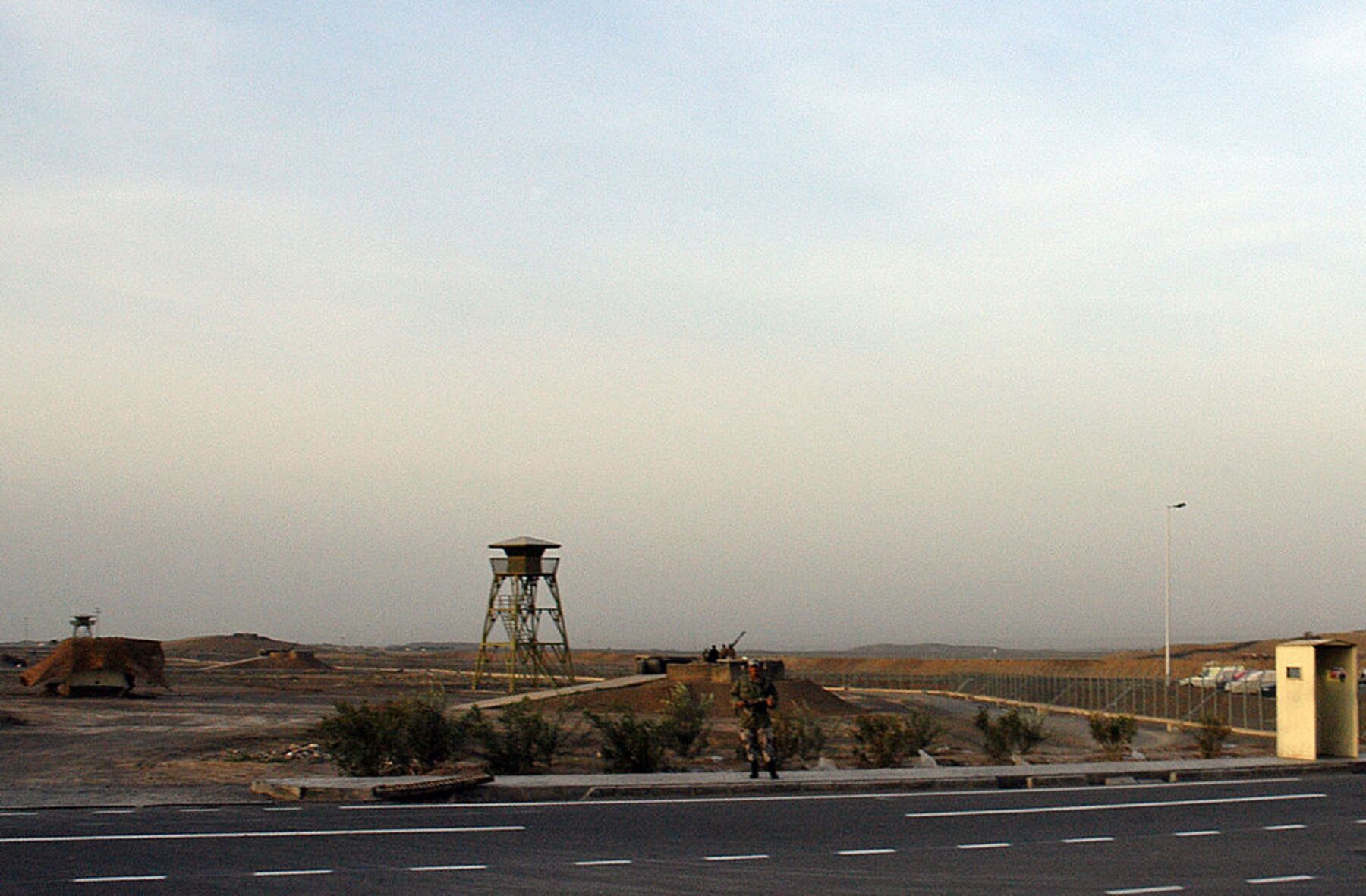
Natanz, Iran, 2007.

Whoever wins the U.S. presidency in November, there is a good chance he will try to negotiate a stronger nuclear deal with Iran in 2021. But events of the last few weeks show that there are better ways to frustrate the regime’s nuclear ambitions.

Both President Donald Trump and his Democratic rival, Joe Biden, favor talking with Iran. “I would rejoin the agreement and use our renewed commitment to diplomacy to work with our allies to strengthen and extend it,” Biden told the New York Times last winter. Trump, meanwhile, was on Twitter last month urging Iran to “make the Big deal.”

The logic of a deal goes like this: Except for war, the only sustainable way to prevent Iran from getting nuclear weapons is to reach an agreement with its leaders. That has been the basic assumption underlying U.S. nuclear policy on Iran for the last 20 years. With the right mix of carrots and sticks, the thinking goes, Iran will negotiate away a potential nuclear weapon.

But a nuclear deal with Iran would have to rely on a partnership with a regime that oppresses its citizens, preys on its neighbors, supports terrorism on three continents and has shown contempt for international law. And the alternative to a deal is not necessarily a costly and dangerous war. The West can delay and foil Iran’s nuclear ambitions by other means.

Since late June, explosions have rocked at least three Iranian military facilities. The latest appears to have targeted an underground research facility for chemical weapons. Earlier this month, a building at Iran’s Natanz centrifuge site burst into flames.

Much remains unknown about this latest spate of explosions. A relatively new group calling itself “Homeland Panthers” has claimed credit for the attack on Natanz. Iranian officials have blamed it on Israel. David Albright, the former nuclear inspector and founder of the Institute for Science and International Security, told me his organization — which has studied satellite imagery of the facility before and after the explosion — cannot rule out that it was an accident. But “it looks more like a deliberate act,” he said.

There are several good reasons to think all of this was an act of Israeli sabotage. To start, the Israelis have done this kind of thing before. In the early 2010s, Israel’s Mossad conducted a series of assassinations of Iranian nuclear scientists. Before that, Israel and the U.S. cooperated on a cyberattack on Natanz that sped up its centrifuges, causing them to break down.

More recently, Israeli spies broke into a Tehran warehouse and stole a technical archive of Iran’s nuclear program, demonstrating that they have “human networks that have penetrated Iran’s security structure,” said David Wurmser, a national security expert who most recently worked as an adviser to the National Security Council.

Whoever is responsible for the attack — and to be clear, the Iranians say they are prepared to retaliate against Israel, though they have yet to do so — the damage at Natanz alone has significantly set back Iran’s nuclear program. The facility there was an assembly center for more advanced and efficient centrifuges, which Iran was allowed to produce under the flawed 2015 deal. “This was a crown jewel of their program,” Albright said.

And the damage may be to more than just the centrifuges — it could also destabilize the Iranian regime itself. “The more Iran’s government looks impotent, and the impression is left the Israelis are everywhere, the more high-level Iranian officials will calibrate their survival by cooperating with Americans or Israelis, which itself creates an intelligence bonanza,” Wurmser said.

The attacks could also undermine the regime’s legitimacy among the Iranian public more generally. Sabotage of this sort shows that Iran’s leaders are not nearly as powerful and all-knowing as they say.

At the very least, the fact that someone was able to explode a “crown jewel” of Iran’s nuclear program should make clear that the civilized world can delay Iran’s nuclear ambitions without conferring legitimacy to the regime.

Hamas finally admits one of its number spied for Israel, then defected

July 18, 2020

Hahahah

https://www.timesofisrael.com/hamas-admits-one-of-its-number-spied-for-israel-then-defected/

Hamas terror group deputy Moussa Abu Marzouk discusses "collaborators" with Israel who were arrested or fled to Israel in recent weeks (Screenshot: Al-Mayadeen TV)

Hamas deputy leader Moussa Abu Marzouk has confirmed Arabic media reports that a member of the Gaza-based terror group collaborated with and subsequently defected to Israel.

“Hamas arrested a number of collaborators with the occupation… Some of them, or rather one of them, fled toward the occupation and the occupation gave him a warm welcome,” Abu Marzouk told the Lebanese pro-Hezbollah al-Mayadeen TV on Thursday.

A Tuesday report in the Saudi-sponsored Al-Arabiya outlet said that Hamas had arrested 16 members of a spy ring collaborating with Israel. While Hamas routinely announces the arrests of alleged collaborators, that ring was reportedly composed of members of Hamas’s own military wing.

Al-Arabiya further reported that Israel’s Mossad spy agency had recently facilitated the escape of senior commander Mohammad Abu Ajwa, who had previously led Hamas’s naval special forces, after Abu Ajwa had spied for Israel for years. The arrests of the remaining collaborators took place after Abu Ajwa’s escape, Al-Arabiya said.

While Hamas denied the report on Tuesday, Abu Marzouk appeared to confirm for the first time that the collaborators, including the one who had fled, were members of his group. Marzouk denied, however, that the collaborators were senior officials, or that they were operating in concert.

“They are isolated members. There is no connection between them. They are not commanders in the [Hamas military wing] Izz al-Din al-Qassam Brigades, nor are they commanders in Hamas… What the occupation claims, that they are commando officers or senior naval officers, is absolutely false,” Abu Marzouk said.

Israeli authorities have yet to comment publicly on any of the stories in the Arabic press.

The Shin Bet security service declined to comment on Abu Marzouk’s statements to al-Mayadeen, saying that it does not respond to “foreign reports.”

Hamas officials first claimed in early July that their group had arrested several members of an “Israeli-directed” spy ring planning “sabotage” in the Gaza Strip.

Since then, Arabic-language media have been buzzing with alleged revelations about Israeli-directed espionage in the Gaza Strip and traitors at the highest levels of Hamas.

Tuesday’s report in Al-Arabiya said that after arriving in Israel, the senior naval commander provided information about weapons stockpiles and the residences of senior Hamas officials, leading the terror group to immediately move the materiel to other hideouts in the Strip.

In response to the supposed high-level defection, the report said the Gaza-based terror group embarked on a “restructuring” of its military wing by firing several senior officers. A second senior commander in Hamas’s internal security forces was also arrested for spying for Israel, Al-Arabiya reported.

In its denial of the Al-Arabiya report on Tuesday, Hamas accused Saudi Arabia of “lies” and of “closing ranks with the Zionist occupation.”

Netanyahu aide said to admit US in no mood for annexation, so PM won’t go ahead

July 18, 2020

Unfortunately, I am not surprised.

https://www.timesofisrael.com/netanyahu-aide-said-to-admit-us-in-no-mood-for-annexation-so-pm-wont-go-ahead/

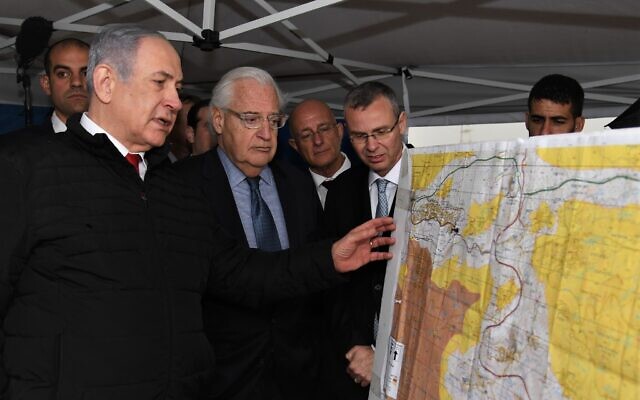
Prime Minister Benjamin Netanyahu, left, US Ambassador to Israel David Friedman, center, and then-Tourism Minister Yariv Levin during a meeting to discuss mapping extension of Israeli sovereignty to areas of the West Bank, held in the Ariel settlement, February 24, 2020. (David Azagury/US Embassy Jerusalem)

Knesset Speaker Yariv Levin has acknowledged in private conversations that no attention is currently being given in Washington to Israeli plans to annex up to 30 percent of the West Bank, according to a Tuesday Army Radio report.

As a result, Levin reportedly said, the controversial move will likely have to be placed on the back burner as Prime Minister Benjamin Netanyahu will not move forward without coordinating with the Trump administration.

The US administration’s attention is elsewhere, the report claimed Levin had said, and “it is not listening” when it comes to annexation.

The White House has said repeatedly that it is up to Israel to decide on annexation, but has yet to give a definitive answer as to whether it is prepared to support and recognize the unilateral annexation now of part or all of the 30% of the West Bank allocated to Israel in its peace plan.

While similar comments have been made in recent weeks by Likud officials who have acknowledged that the spiraling pandemic has forced the attention of world leaders to turn to other issues, Levin is one of only a handful of Israeli officials who have been deeply involved in talks with American officials regarding the Trump plan’s implementation and ramifications.

Levin also sits on the seven-member joint US-Israeli mapping committee that has been tasked with drawing up the exact parameters for annexation that Washington will be willing to accept. The committee’s progress has been slowed by the pandemic, with Netanyahu telling settler leaders and even Defense Minister Benny Gantz that the maps have yet to be finalized.

Settler leaders responded angrily to Tuesday’s Army Radio report, asserting that US approval is not needed for Israel to move forward with annexation. “There is no need to wait for anyone. This move depends solely on us. It is time to keep the promises made and apply [Israeli] sovereignty [to the West Bank] regardless of any factor,” the Yesha umbrella council of settlement mayors said in a statement, referring to the Likud premier’s repeated election promises to carry out annexation if elected.

The more hardline Samaria Regional Council chairman Yossi Dagan went further, writing in a statement, “Never since the establishment of the state has a nationalist government bowed and surrendered like this to the Americans.”

Dagan is among a plurality of the 24 settler mayors who have voiced their opposition to the Trump plan because it conditionally earmarks 70% of the West Bank for a potential Palestinian state. They have argued that Netanyahu must move forward with annexation, but not in the context of the US peace proposal.

A slightly smaller camp of settler mayors led by Efrat Local Council chairman Oded Revivi have argued that the plan’s theoretical proposal of a Palestinian state is a pill worth swallowing as it comes with US recognition of Israeli sovereignty over all settlements as well as the Jordan Valley — a development that settler leaders could only have dreamed of before Trump took office.

Netanyahu’s coalition government set July 1 as the date from which it could begin implementing Netanyahu’s pledge to unilaterally extend sovereignty to all 132 settlements in the West Bank and to the Jordan Valley, constituting together about 30 percent of the West Bank, subject to American approval.

But as the target date came and went without any action, Netanyahu’s office said he would continue to discuss the possible annexation with the US administration.

The US aside, the international community has voiced near-unanimous opposition to unilateral annexation.

On Monday, Jordan’s King Abdullah told British lawmakers that the Netanyahu government’s plans would fuel instability and dim slipping hopes for a peace agreement to end the Israeli-Palestinian conflict.

“Any unilateral Israeli measure to annex lands in the West Bank is unacceptable, as it would undermine the prospects of achieving peace and stability in the Middle East,” the Reuters news agency quoted Abdullah as having told members of the Foreign and Defense parliamentary committee in virtual testimony.

View comments 

Seven ships catch fire at port near Iranian nuclear reactor

July 18, 2020

Iran sure is having some rotten luck at the moment.

https://www.israelhayom.com/2020/07/15/seven-ships-catch-fire-at-port-near-iranian-nuclear-reactor/

Seven ships catch fire at port near Iranian nuclear reactor

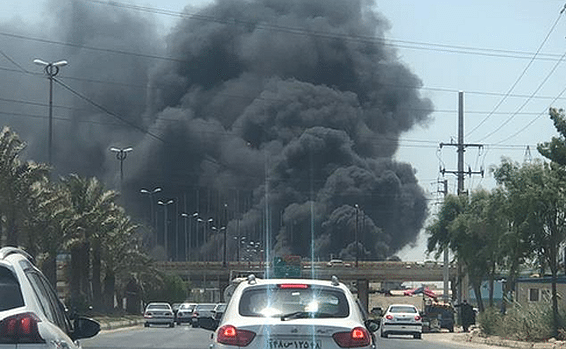
At least seven ships have caught fire at the Iranian port of Bushehr, Iran’s Tasnim news agency reported on Wednesday, in what appeared to be the latest in a series of unexplained incidents around nuclear and industrial installations since late June.

No casualties have been reported, the agency said.

According to the Iranian Mehr agency on Wednesday, the fire started near the northern installations of the city’s port. Pictures from the incident showed a large pillar of smoke billowing from the area.

The agency said that “many firefighting crews are in the area to stop the blaze from spreading.” Social media users expressed concern that the residents of Bushehr may be threatened if the fire expands further.

The city houses Iran’s nuclear reactor, which has been ostensibly for peaceful purposes only.

There have been several explosions and fires around Iranian military, nuclear and industrial facilities since late June, including in Natanz, where its main uranium enrichment center was badly damaged in what the New York Times described as a deliberate effort by the US and Israel.

Natanz is the centerpiece of Iran’s enrichment program, which Tehran says is for peaceful purposes. Western intelligence agencies and international inspectors believe it had a coordinated, clandestine nuclear arms program at least until 2003. Tehran denies ever seeking nuclear weapons.

Iran’s top security body said on July 3 that the cause of the Natanz fire had been determined but would be announced at a later time. Some Iranian officials have said it may have been cyber sabotage and one of them warned that Tehran would retaliate against any country carrying out such attacks.

In an article in early July, state news agency IRNA addressed what it called the possibility of sabotage by enemies such as Israel and the United States, although it stopped short of accusing either directly.

Israeli Defense Minister Benny Gantz said on July 5 that Israel was not “necessarily” behind every mysterious incident in Iran.