Amos Yadlin says shutdown of Iranian port seems to be response to attempted hacking of Israeli water companies, which appears to have been retaliation for Syria airstrikes
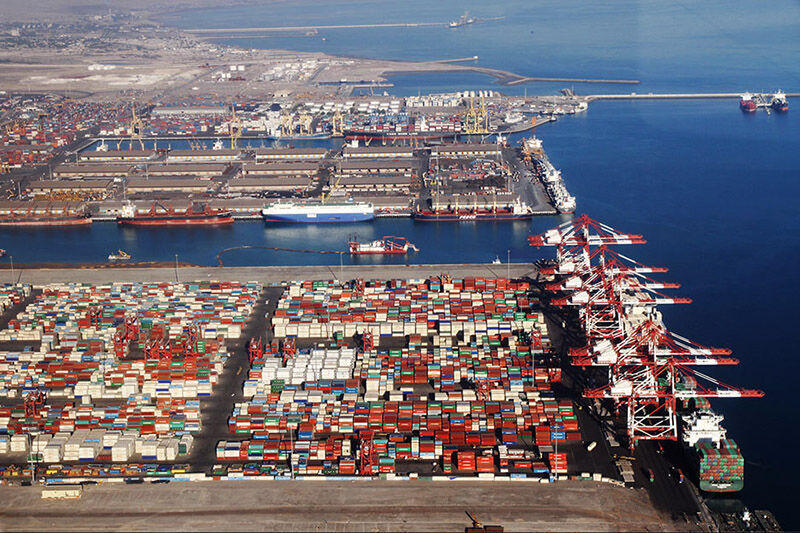
The former head of Military Intelligence on Tuesday said a sophisticated cyberattack on an Iranian port last week appeared to be an Israeli retaliation to Tehran’s failed attempted hacking of Israel’s water companies last month, sending a message that Jerusalem could significantly harm Iran’s economy if attacks on Israeli civilian infrastructure continued.
This appears to indicate that Israel has adopted a “tit-for-tat” strategy in responding to Iranian cyber aggression — a tactic already used by the Israeli military with physical, or kinetic, attacks — as the digital realm becomes increasingly important in modern warfare.
Maj. Gen. (res.) Amos Yadlin, an influential former IDF intelligence chief and current head of the leading Institute for National Security Studies think tank, said the alleged Israeli cyberattack could be seen as a message to Iran that Jerusalem would not accept attempts to damage its civilian infrastructure.
“If Israel was the one that responded to the Iranian attack against civilian infrastructure (water and sewage), Israel is making it clear that civilian systems ought to be left out of fighting,” Yadlin wrote Tuesday, hedging his assessment with the reservations that are common in Israeli officials looking to preserve a degree of ambiguity about Israel’s military activities abroad.
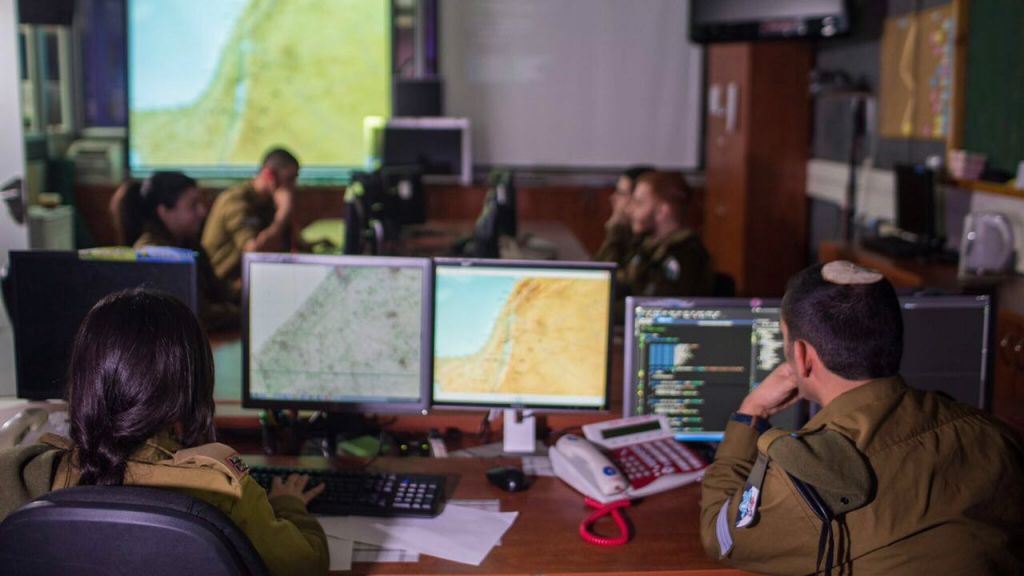
“This is a significant message about the vulnerability of Iran’s economic systems to Israeli cyber capabilities,” he wrote in a series of tweets.

Iran has faced a major financial crisis in recent years when the United States put in place a series of crushing economic sanctions after withdrawing from the 2015 nuclear deal, which offered relief from these measures in exchange for Tehran abandoning aspects of its atomic program.
Yadlin noted the growing importance of the digital realm in modern warfare, as an ever-greater portion of our daily lives is controlled by internet-connected computer systems. Once considered distinct from the physical battles waged between countries, the retired general said, cyber warfare appeared to be becoming just another area in which militaries can square off against one another.
The former intel chief indicated that the Iranian cyber attack on Israeli water infrastructure in April was a response to Israel’s ongoing efforts against Iran’s military presence and proxies in Syria. Israel has for years been bombing bases and convoys of Iranian forces and Iran-backed militias in Syria in order to prevent them from establishing a permanent military presence in the country from which to carry out attacks against the Jewish state and to halt the spread of advanced weapons to Hezbollah and other terror groups in the region. These strikes have reportedly stepped up in recent months.

“Cyber joins the earth, naval and air dimensions as a significant warfare dimension. It is important to note — both Iran (which is being attacked kinetically in Syria) and the United States (after the downing of its advanced unmanned aerial vehicle last summer) have used cyber responses when they didn’t want to escalate matters kinetically,” he wrote.
Yadlin was referring to reports that the US carried out a series of cyberattacks on Iranian weapons systems after the Iranian military shot down an American drone that Tehran said entered its airspace last June.
The former Military Intelligence chief echoed comments made by an unnamed Western official on Tuesday, who also told Israeli TV that the cyberattack on the Iranian port on May 9, which shut it down completely and caused widespread chaos at the site, was a response to an apparent Iranian attempt to sabotage Israel’s water and sewage infrastructure.

“The cyberattack on the [Shahid Rajaee port] in Iran was an Israeli response to the cyberattack that [the Iranians] carried out against Israel two weeks ago against Mekorot [national water company] components — an attack that failed,” the official from a Western country told Channel 12 news, on condition of anonymity.
“Israel hopes that [the Iranians] stop there. They attacked water infrastructure components. They didn’t really cause damage — but they crossed a line and [Israel] needed to retaliate,” the official said.
The official appeared to misspeak regarding the date of the alleged Iranian cyberattack, which was not reported to have occurred two weeks ago, but over three weeks ago, in late April.
According to the Ynet news site, the alleged Iranian attack targeted at least six water installations throughout Israel on April 24-25, causing minor disruptions.

One station saw a pump go online by itself, another had its entire operation system taken over, and a third noted “inconsistencies during an unplanned change to its figures,” the news outlet reported, without attributing the information.
Other stations similarly identified attempts to hack into their systems, but each of these were caught earlier and resolved quickly, according to Ynet.
However, despite these issues at individual stations, the Water Authority said “there was no harm to the water supply and it operated, and continues to operate, without interruption.”
A May 7 meeting of the high-level security cabinet, the first to be held in months, reportedly dealt in part with this Iranian attempt.
On May 9, Israel allegedly responded to these attempted hacks, carrying out a cyberattack on the Shahid Rajaee port — one of Iran’s most important terminals — shutting it down completely and causing widespread chaos, the Washington Post reported Monday.
“Computers that regulate the flow of vessels, trucks and goods all crashed at once, creating massive backups on waterways and roads leading to the facility,” the Post reported.
The port is a newly constructed shipping terminal in the Iranian coastal city of Bandar Abbas, on the Strait of Hormuz.
“There was total disarray,” a security official, who spoke on the condition that his identity and national affiliation not be revealed, told the Post.
Iran later acknowledged that an unknown foreign hacker had knocked the port’s computers offline, but denied the severity of the attack.
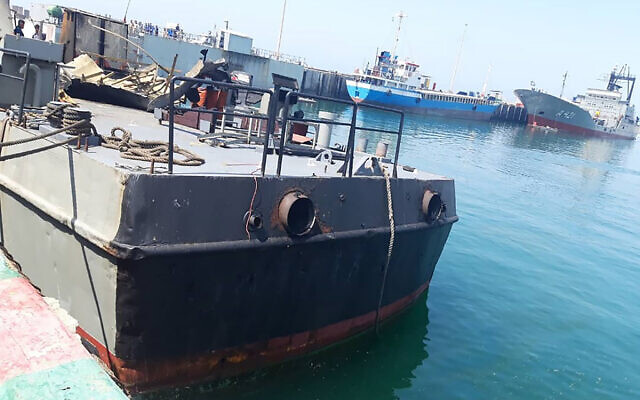
Satellite images of the port on May 11 and May 12 taken by Planet Labs and seen by The Times of Israel indeed show scads of ships idling off the port and a buildup of containers on dry land, days after the alleged Israeli cyberattack.
There was no comment from the Israeli embassy in Washington or the Israel Defense Forces, the report said.
Iran — whose regime avowedly seeks Israel’s destruction — and Israel have engaged in covert cyber-warfare for over a decade, including reported efforts by the Jewish state and US to remotely sabotage the Islamic Republic’s nuclear program in 2010 using an advanced cyber weapon known as Stuxnet.
Times of Israel staff and agencies contributed to this report.
After being accused of endorsing genocide, Iranian supreme leader says annihilating the Jewish state ‘means abolishing the imposed regime’ and ousting ‘thugs’ like Netanyahu
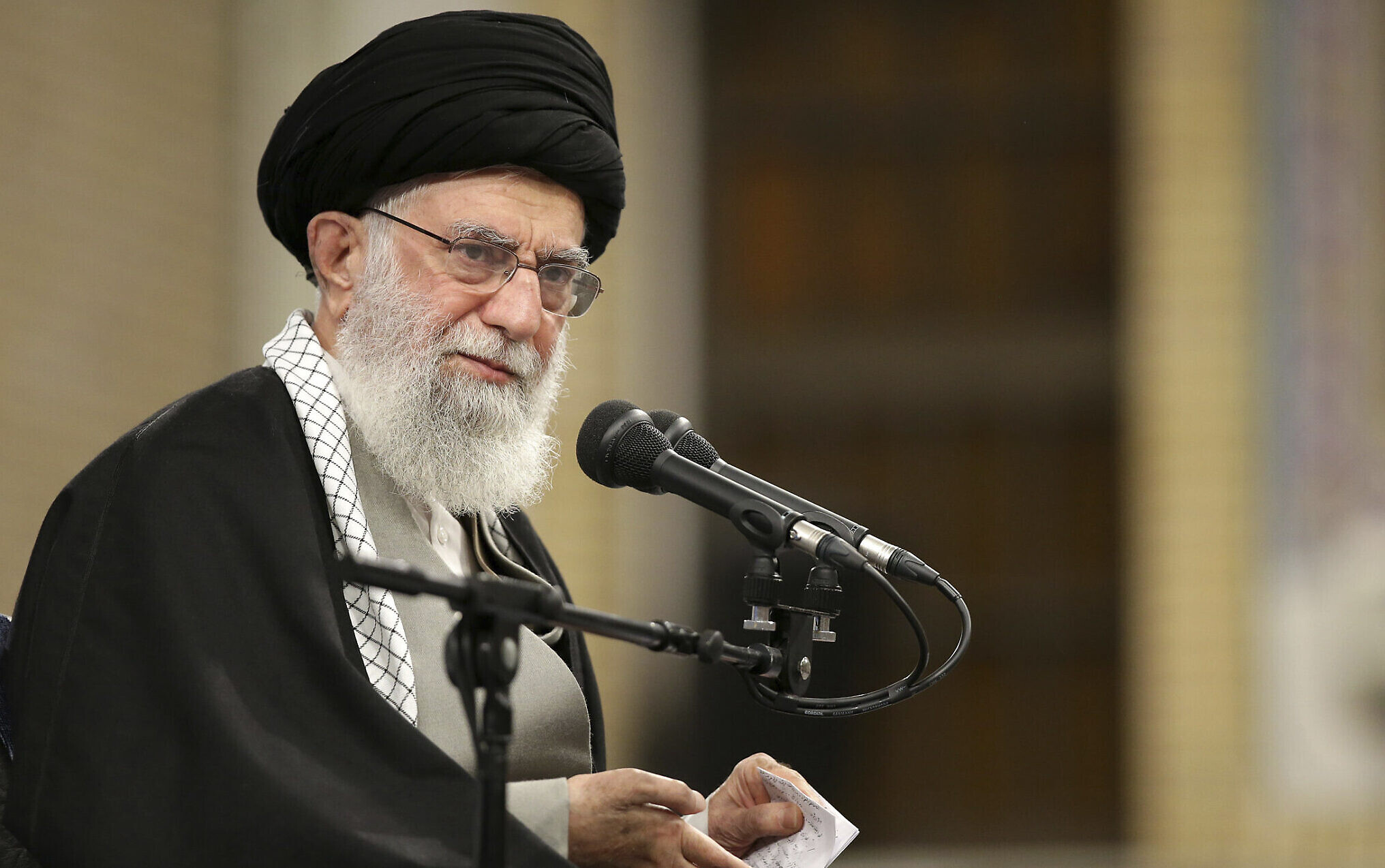
Iranian Supreme Leader Ayatollah Ali Khamenei on Wednesday said he seeks Israel’s destruction but not the annihilation of all Jews, after Israeli and American leaders accused him of encouraging genocide. He said Iran would support any nation or group that fights against Israel.
Khamenei was commenting on a poster published on his website that used the words “final solution” in calling for Israel’s destruction, a term usually associated with Nazi Germany’s efforts to eliminate all Jews during the Holocaust.
“Eliminating the Zionist regime doesn’t mean eliminating Jews. We aren’t against Jews. It means abolishing the imposed regime & Muslim, Christian & Jewish Palestinians choose their own govt & expel thugs like [Prime Minister Benjamin] Netanyahu,” Khamenei wrote on his Twitter account.
“This is ‘Eliminating Israel’” he explained, insisting “it will happen.”

He also claimed Israel only understood force and didn’t adhere by any treaty agreements.
“The nature of the Zionist regime is incompatible with peace because the Zionists seek to expand their territories & will certainly not be limited to what they have already occupied,” he said.
“Comprehensive struggles by the Palestinian nation — political, military & cultural — should continue till the usurpers submit to the referendum for the Palestinian nation,” Khamenei added.
Additionally, he said Iran would back anyone opposed to Israel.
“We will support and assist any nation or any group anywhere who opposes and fights the Zionist regime, and we do not hesitate to say this,” the Iranian leader said.
Iran funds terrorist groups sworn to Israel’s destruction, including the Lebanon-based Hezbollah and Gaza-based Hamas.

The statement from Khamenei came after Netanyahu and US Secretary of State Mike Pompeo accused him of backing the Nazi’s final solution.
“He should know that any regime that threatens the destruction of the State of Israel faces a similar danger,” a statement from Netanyahu’s office said.
The poster, shared on Khamenei’s website, showed people celebrating at the Temple Mount compound in Jerusalem after apparently capturing it from Israel as a Palestinian flag is raised over the Al-Aqsa Mosque.
“Palestine Will Be Free. The final solution: Resistance until Freedom,” the text on the poster says.
The poster later appeared to have been deleted from the website.
Khamenei has called for Israel’s destruction on numerous occasions and frequently refers to Israel as a “cancerous tumor.”
Blue-Eyed Baby Elephant Is So Brave And Sweet | The Dodo Wild Hearts
Source: Iran’s leader accuses UAE of ‘treachery’ after first direct flight to Israel | The Times of Israel
Etihad Airways flies 16 tons of aid for Palestinians via Tel Aviv, but Khamenei says Gulf states ‘betray Palestine by supporting Israel,’ calls for armed uprising in West Bank
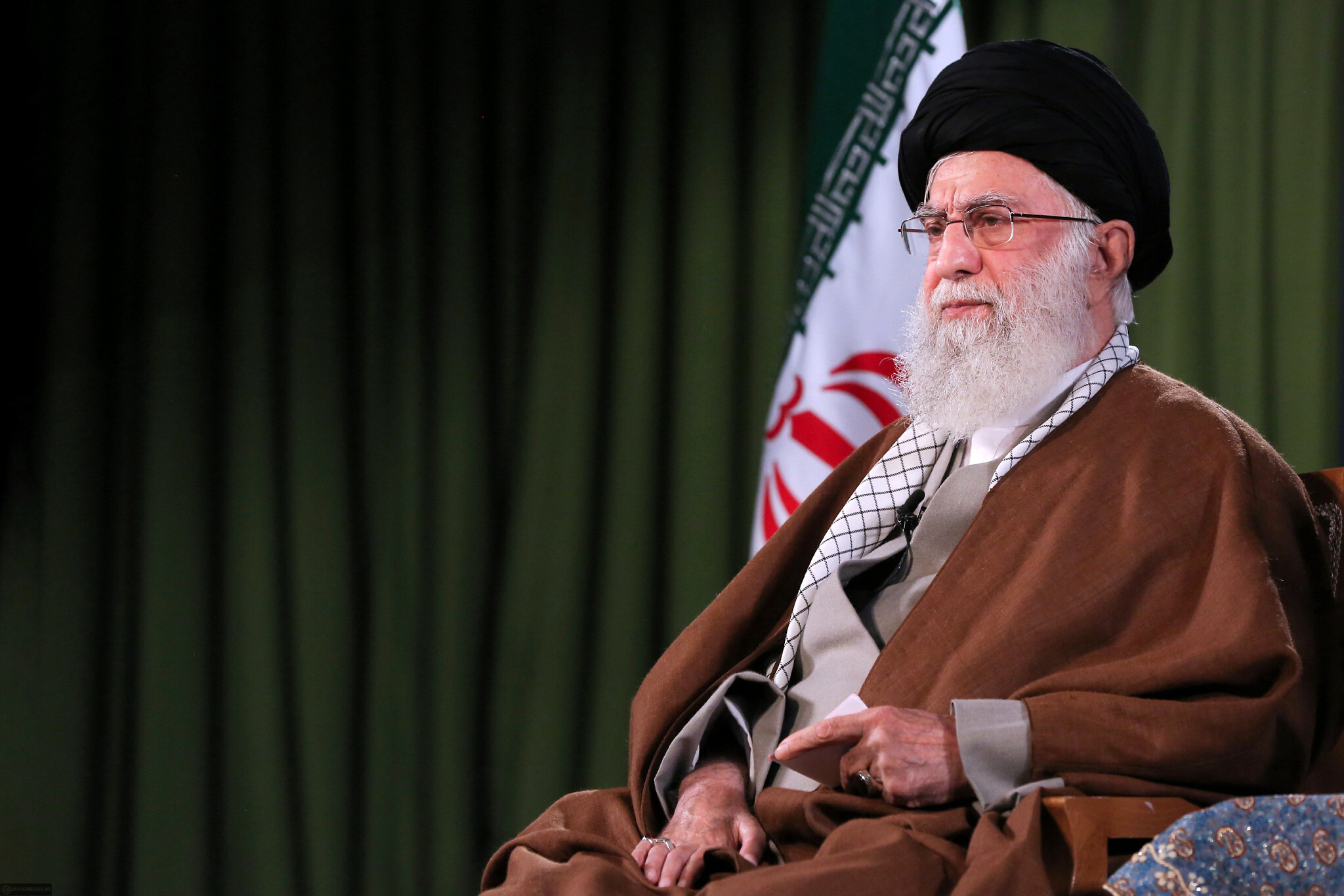
Iranian Supreme Leader Ayatollah Ali Khamenei on Tuesday accused the United Arab Emirates of committing “treachery” and “betrayal” after its Etihad Airways made history, flying the first known direct commercial flight between Israel and the UAE.
The UAE-based airline sent the plane loaded with 16 tons of coronavirus aid for Palestinians on a direct flight from Abu Dhabi to Tel Aviv on Tuesday.
But Iran’s top leader called the act a betrayal of the Palestinians.
“Today, some Persian Gulf states have committed the biggest treachery against their own history and the history of the Arab world,” Khamenei tweeted. “They have betrayed #Palestine by supporting Israel. Will the nations of these states tolerate their leaders’ betrayal?”
 Khamenei.ir@khamenei_ir
Today, some Persian Gulf states have committed the biggest treachery against their own history and the history of the Arab world. They have betrayed #Palestine by supporting Israel. Will the nations of these states tolerate their leaders’ betrayal?
The Etihad cargo jet, painted in all white and missing any marking, landed at Ben-Gurion Airport just after 9 p.m. after seemingly flying a roundabout route through Iraq and either Jordan or Turkey.
The flight struck a rare moment of public cooperation between the UAE, home to Abu Dhabi and Dubai on the Arabian Peninsula, and Israel. The countries have no formal diplomatic ties to Israel, but have begun to increasingly cooperate openly after years of rumored back-channel discussions between them over the mutual enmity of Iran.
An Israeli official said the flight was delivering humanitarian aid provided by the UAE to the Palestinians through the World Food Program, and that the cargo flight was coordinated with the Israeli government. The official spoke on condition of anonymity due to the sensitivity of the subject.
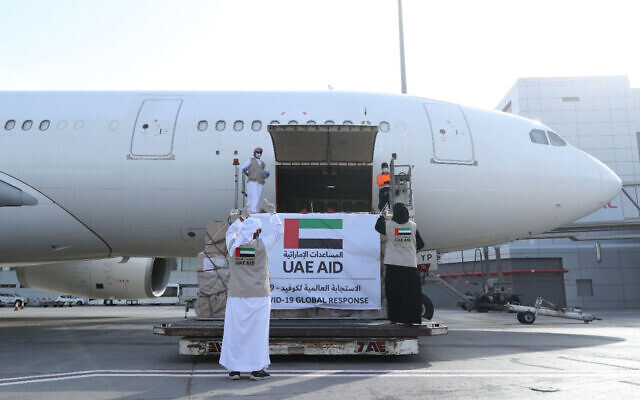
Etihad, a state-owned, long-haul carrier, earlier confirmed the flight to Tel Aviv’s Ben Gurion Airport.
“Etihad Airways operated a dedicated humanitarian cargo flight from Abu Dhabi to Tel Aviv on 19 May to provide medical supplies to the Palestinians,” the airline told The Associated Press. “The flight had no passengers on board.”
Emirati government officials did not respond to multiple requests for comment.
The UAE’s state-run WAM news agency issued a statement saying it delivered 16 tons of protective gear, medical items and ventilators “to curb the spread of COVID-19 pandemic and its impact in the occupied Palestinian territory.” It did not acknowledge the flight or its significance.
Much of the coordination between Israel and the Gulf states is based on a shared concern over Iran, which has repeatedly threatened to destroy the Jewish state and seeks to exert its hegemony over the region.
The flight came during a period of heightened tension between Iran and Israel, with reports emerging Tuesday that Israel had carried out a cyberattack on an Iranian port in retaliation for an earlier Iranian attempt to hack Israel’s water infrastructure.
On Monday, Khamenei called for arming Palestinians in the West Bank.
“The West Bank must be armed, just as Gaza. The only thing that can reduce the Palestinians’ hardships is the hand of power. Otherwise, compromise won’t reduce a bit of the cruelty of this usurping, evil, wolf-like entity,” Khameinei tweeted.
Khamenei.ir@khamenei_irThe West Bank must be armed, just as Gaza. The only thing that can reduce the Palestinians’ hardships is the hand of power. Otherwise, compromise won’t reduce a bit of the cruelty of this usurping, evil, wolf-like entity.#FlyTheFlag
Iran is the primary supplier of arms and rockets to terror groups in Lebanon and Gaza.
Meanwhile, a top Iranian legal official said Israel’s “annihilation” was closer than ever.
“On Quds Day, we come closer to annihilation of Israel,” Iran’s Judiciary Spokesman Gholam Hossein Esmayeeli told reporters in Tehran on Tuesday, according to the FARS news agency.
Al-Quds is the Arabic word for Jerusalem. Quds Day, marked by demonstrations against Israel and expressing support for Palestinians, is held on the last Friday of Ramadan, which this year is May 22.
Quds Day was declared in 1979 by Ayatollah Khomeini, the leader of the Iranian Revolution. It is marked throughout the Middle East and in countries around the world, including the United States. The Iranian regime organizes nationwide anti-Israel rallies, at which Israeli flags are trampled and burned.
Workers at sensitive facilities told to be on alert for malicious activity after hacking of Bandar Abbas port, which Israel has said is used to supply weapons to Hamas, Hezbollah
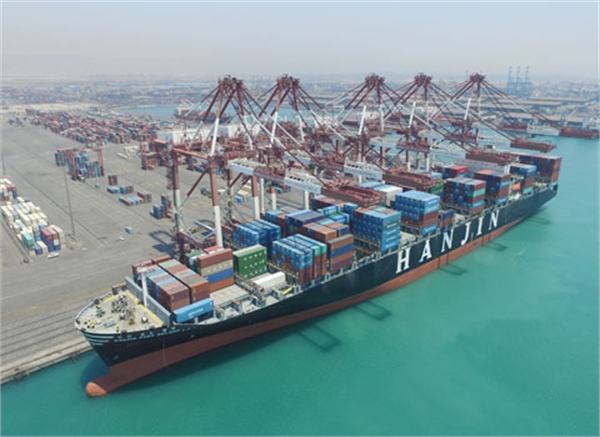
Israel’s security firms and agencies are reportedly preparing for a potential Iranian or Iran-linked cyberattack in response to an attack blamed on the Jewish state that was said to have crippled computer systems at a strategic port in the south of the Islamic Republic.
The Washington Post reported Monday that Israel brought down the Shahid Rajaee port’s computer systems, causing a total shutdown of the facility, on May 9.
Israel has refused to officially comment on the report, which cited US and other foreign officials saying Israel was likely behind the computer attack.
The attack was apparently in response to an alleged Iranian attempt to hack into Israel’s water infrastructure system. Israel’s high-level security cabinet held a secret meeting to discuss a response to the hack attack on May 7, according to Channel 13 news, and regarded the attempt to damage its water system, a non-military target, as crossing a red line.
Security officials on Tuesday instructed agencies and sensitive facilities to raise their awareness and preparedness for the option of a retaliatory cyberattack as part of an apparent new tit-for-tat war, Hebrew-language media reported.
Cyber-defense officials in the Israel Defense Forces and the National Cyber Directorate have raised their alertness, expecting an attack on websites, servers or services, the unsourced reports said.
Employees have been ordered not to open or download files from unknown sources or people whose credibility is questionable. Officials have stressed that malicious messages could be ostensibly about the coronavirus crisis.
Workers have also been told not to hand personal information or account details to unknown entities, and to only download mobile applications from known app stores.
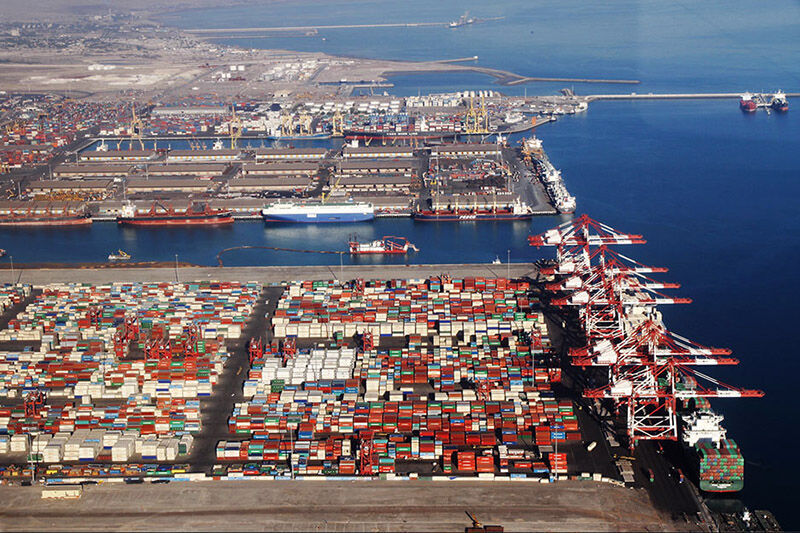
Shahid Rajaee Port, in the southern Hormozgan Province, is located some 25 kilometers (15 miles) from the city of Bandar Abbas, and is by far Iran’s largest and most strategically important port. It is also known as the port of Bandar Abbas.
It accounts for some 60 percent of all the country’s port activity, Mohammad Saeednejad, the managing director of Ports and Maritime Organization of Iran, said in 2017.
“The significance of the port lies in the fact that it is located at the mouth of the Strait of Hormuz where nearly 50,000 vessels of different countries sail annually,” he told Iran’s ILNA news agency at the time.
Saeednejad added that between March 2016 and March 2017, exports from the port totaled some 44 million tons of goods worth more than $11.14 billion, and imports totaled nearly 10 million tons worth $18.65 billion.
Israel has long accused Iran of using the port for military purposes to aid terrorists elsewhere in the Middle East, including the Jewish state’s foes Hamas and Hezbollah, with the IDF intercepting some of the shipments.
Satellite images of the port on May 11 and May 12 taken by Planet Labs and seen by The Times of Israel showed a large number of ships idling off the port and a buildup of containers on dry land, days after the alleged Israeli cyberattack.
Army chief Aviv Kohavi on Tuesday hinted at Israel’s role in the cyberattack, saying the IDF would continue to use “various military tools” against the country’s enemies.
While it is not unusual for politicians to insinuate Israeli involvement in attacks on Iran and terror groups, it is less common for senior IDF officers — who tend to maintain a policy of ambiguity regarding the military’s activities abroad — to do so.
On Tuesday, the former head of IDF Military Intelligence, Amos Yadlin, said the Iranian cyberattack on water facilities, which failed to cause significant damage, appeared to be in response to recent Israeli airstrikes against Iran’s forces and proxies in Syria.
A security official, who spoke on the condition that his identity and nationality not be revealed, told The Washington Post that the attack caused “total disarray” at the port.
“Computers that regulate the flow of vessels, trucks and goods all crashed at once, creating massive backups on waterways and roads leading to the facility,” the Post reported, adding that it had seen satellite photos showing miles-long traffic jams leading to the port and ships still waiting to offload several days later.
Iran later acknowledged that an unknown foreign hacker had briefly knocked the port’s computers offline.
“A recent cyber attack failed to penetrate the PMO’s systems and was only able to infiltrate and damage a number of private operating systems at the ports,” Mohammad Rastad, managing director of the Ports and Maritime Organization, said in a statement carried by ILNA.
The response appeared to indicate that Israel has adopted a “tit-for-tat” strategy in responding to Iranian cyber warfare, like that already used by the Israeli military with physical, or kinetic, attacks, an Israeli official said.

“The cyberattack on the [Shahid Rajaee port] in Iran was an Israeli response to the cyber attack that [the Iranians] carried out against Israel two weeks before against Mekorot [national water company] components — an attack that failed,” the official told Channel 12 news, on condition of anonymity.
“Israel hopes that [the Iranians] stop there. They attacked water infrastructure components. They didn’t really cause damage — but they crossed a line and [Israel] needed to retaliate,” the official said.
Iran — whose regime avowedly seeks the Jewish state’s destruction — and Israel have engaged in covert cyber-warfare for over a decade, including reported efforts by the Jewish state and US to remotely sabotage the Islamic Republic’s nuclear program in 2010 using an advanced cyber weapon known as Stuxnet.
Times of Israel staff and agencies contributed to this report.
US biotech firm’s shares soar as it claims tests of first volunteers show its vaccine candidate produces immune response, ‘has potential to prevent COVID-19’; Phase 3 tests in July
The Israeli chief medical officer of US biotech firm Moderna said Monday that its experimental anti-COVID-19 vaccine “actually works,” after tests on a small number volunteers, and that it will start Phase 3 testing on thousands of people in July.
“We got the first results today… and today we are showing that it actually works… we are able to stimulate the immune system,” Dr. Tal Zaks said.
In an interview with Israeli television, Zaks said he was confident that, toward the end of the year, “we’ll be able to present first results that prove that our vaccine indeed prevents the disease.”
“By about the end of the year, the start of next year, there’s a reasonable likelihood that we’ll see this vaccine on the market, at least on the American market,” he said in the Channel 12 interview from Moderna’s headquarters in Massachusetts.

Zaks said the battle against COVID-19 marked the firm’s ninth bid to develop vaccines against viruses, “and we succeeded with the previous eight.” Thus, he said, “the degree of confidence within the company was always high” that it would succeed this time, too.
News of the company’s progress, revealed in a release earlier Monday, lifted shares of Moderna more than 22 percent, and helped drive the broader stock market higher.

The company said the vaccine candidate, mRNA-1273, appeared to produce an immune response in eight people who received it, similar to that seen in people convalescing from the virus.
At the lowest dose, Zaks elaborated in the TV interview, the vaccine candidate produced a similar response to that “naturally” produced by patients who recovered from the virus. At a medium dose, of 100 micrograms, he said, the vaccine candidate created “more antibodies” than those created naturally by recovered patients.
Three groups of 15 patients aged 18 to 55 received three different doses of the vaccine in the Phase 1 test, the complete results of which are not yet known.

The Phase 2 trial, with 600 subjects, has already received the green light from the US Food and Drug Administration and Moderna said they should begin this quarter.
A Phase 3 trial, the largest and most important to validate the efficacy of a vaccine, should begin in July.
“These interim Phase 1 data, while early, demonstrate that vaccination with mRNA-1273 elicits an immune response of the magnitude caused by natural infection,” Zaks stated in the firm’s official release. “These data substantiate our belief that mRNA-1273 has the potential to prevent COVID-19 disease and advance our ability to select a dose for pivotal trials.”
Moderna, which was founded nine years ago, said the vaccine “was generally safe and well tolerated” and that patients suffered no more than redness or soreness from the shots.
In a conference call, Moderna CEO Stephane Bancel said the preliminary tests inspired confidence that mRNA-1273 has “a high probability to provide protection” against the virus.
“We could not be happier about these interim data,” Bancel said of the Phase 1 test, the first of three in the development of a vaccine.
Separate tests performed on mice showed that the vaccine prevented the virus from replicating in their lungs, according to the company.
The US government has invested nearly half a billion dollars in the development of Moderna’s vaccine candidate.
It is being developed in a partnership with the National Institute of Allergy and Infectious Disease headed by Anthony Fauci and the clinical test was carried out by the National Institutes of Health.
“The Moderna team continues to focus on moving as fast as safely possible to start our pivotal Phase 3 study in July,” said Bancel, Moderna’s CEO.
Based on the Phase 1 partial results, Moderna said they would no longer study the highest dose since the lower doses appeared to provide some effect.
“The lower the dose, the more people we expect to be able to protect,” said Moderna president Stephen Hoge.
President Donald Trump has said that he wants 300 million vaccine doses by January 2021 to protect the US population, and his administration has provided funding to Moderna, Johnson & Johnson, and France’s Sanofi.
The development of a vaccine usually takes years but the coronavirus pandemic, which has caused more than 315,000 deaths, has given unprecedented urgency to the search.
A dozen clinical trials are taking place around the world, half of them in China, according to the London School of Hygiene & Tropical Medicine.
China has said that it is carrying out tests on humans of five experimental vaccines.
The challenge is not only finding a safe and efficient vaccine, but also producing billions of doses.
Several large laboratories, including Moderna, have said that they would immediately begin production of an eventual vaccine even before the completion of all of the clinical trials.
Moderna recently announced a partnership with the giant drugmaker Lonza to boost its manufacturing capacity to up to one billion doses a year.
Worldwide, about a dozen vaccine candidates are in the first stages of testing or nearing it. Health officials have said that if all goes well, studies of a potential vaccine might wrap up by very late this year or early next year.
More than 4.7 million infections and 315,000 deaths from the coronavirus have been confirmed worldwide since it emerged in China late last year. There are no specific approved treatments, although several are being used on an emergency basis after showing some promise in preliminary testing.




 anneinpt
 artaxes
 danmillerinpanama
 davidking1530
 Peter Hofman
 Joseph Wouk
 Peter
Peter Louisiana Steve
 WarSclerotic
Recent Comments