Archive for April 2020

20 tons of medical equipment arrive in Israel from China on flight no. 1 of 11 

April 6, 2020

Source: 20 tons of medical equipment arrive in Israel from China on flight no. 1 of 11 | The Times of Israel

Plane touches down with masks and protective suits; additional shipments will include ventilators

Plane carrying 20 tons of medical equipment from China arrives at Ben Gurion Airport, April 6, 2020 (El Al/Defense Ministry)

The first plane from China carrying 20 tons of medical equipment, including masks and protective suits to contend with the coronavirus outbreak, has touched down in Israel, the Defense Ministry said Monday.

Another plane was en route to Tel Aviv, the ministry said, with a third set to take off later in the day.

Eleven airplanes in all, containing millions of pieces of medical equipment, including ventilators, will arrive in Israel from China in the coming days, the Defense Ministry said Sunday.

The ministry said it coordinated the effort alongside the Foreign Ministry, El Al and Israel Chemicals.

Video from the plane showed boxes of equipment strapped into the planes seats.

shimon yaish שמעון יעיש@shimonyaish

11 טון מסכות בדרך מסין לארץ במטוס של חברת ישראייר. כך זה נראה, פעם ישבו שם אנשים@IsraelHayomHeb @Israir_israel

Embedded video

The ministry said Sunday that the first flight would bring 900,000 surgical masks, half a million protective suits and other medical gear. Additional protective equipment will be coming in the coming days, alongside several ventilators.

Two El Al planes will fly to Israel from China each day through the rest of the week bringing more supplies, the ministry said.

The virus, which causes the COVID-19 disease, first spread at the end of last year in China, where it is known to have killed at least 3,300 people.

The air convoy is the latest in Israel’s efforts to bring much-needed supplies from abroad for use by medical staff in the campaign to treat patients infected with the virus, and prevent its further spread.

Last week, the Health Ministry said that security services and government ministries had managed to obtain 27 ventilators and a hoard of other medical equipment from abroad.

Hebrew media reported last week that the Mossad intelligence service, which has been tasked with securing medical equipment from abroad from unspecified countries amid worldwide shortages, helped obtain 25,000 N95 respiratory masks, 20,000 virus test kits, 10 million surgical masks, and 700 overalls for ambulance workers who usually carry out the initial testing for the virus.

It was the third such shipment by the Mossad over the past few weeks, aimed at addressing shortages in Israel.

There have been growing concerns there may not be enough ventilators to treat all of the most seriously ill.

According to a report prepared last month for the Knesset’s Special Committee on Dealing with the Coronavirus, there were at most 1,437 ventilators in the country still available to treat patients. The Health Ministry disputed that figure, saying there were 2,864 available ventilators.

Engineers produce ventilators in a converted missile factory. (Defense Ministry)

Last week, Prime Minister Benjamin Netanyahu ordered defense officials to acquire enough kits to perform 30,000 tests a day, but a shortage of a key reagent means that, instead, the number of people being checked has gone down.

On Sunday, however, the Health Ministry released a statement saying, “Over the weekend, it appeared that a solution was found to the reagent issue that will allow the test goals to be met.”

The statement added: “The Health Ministry is working constantly, in cooperation with all relevant agencies — the Defense Ministry, the army, the Mossad — to meet the goal of 10,000 tests a day.”

The Health Ministry said Monday that 8,611 people have been confirmed to be infected with the coronavirus in Israel. So far, 51 people have died.

There were 141 people in serious condition and 107 on ventilators. A total of 585 people have recovered from the virus.

Globally, more than 1.2 million are known to have been confirmed infected with the virus and almost 70,000 have died, according to figures from the Johns Hopkins University virus website, which collates data from around the world.

Along with Israel, many countries are scrambling to obtain medical supplies, and in particular ventilators, to treat virus patients.


2 more fatalities take coronavirus toll to 51; infections climb to 8,611 

April 6, 2020

Source: 2 more fatalities take coronavirus toll to 51; infections climb to 8,611 | The Times of Israel

No immediate details on identities of deceased; Health Ministry says 141 are in serious condition, with 107 on ventilators; 585 have recovered

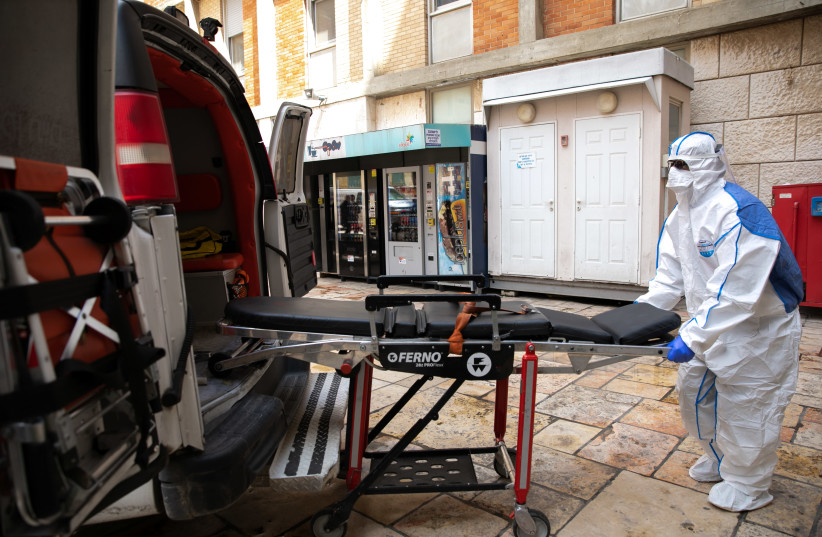
An ambulance driving in the central Israeli city of Elad, April 5, 2020. (Avshalom Sassoni/Flash90)

Two more people have died in Israel as a result of the coronavirus, the Health Ministry said Monday, raising the death toll by two since the evening before and putting it at 51.

It was not immediately clear who the latest victims were or where they had been hospitalized, although the Yitzhak Shamir Medical Center in Be’er Yaakov near tel Aviv announced there had been three fatalities at the hospital in the past 24 hours.

In addition, the number of confirmed coronavirus cases rose to 8,611, up only 181 from the evening tally a day earlier, continuing a slowdown that has largely been attributed to ongoing social distancing.

There are 141 patients in serious condition, including 107 on ventilators, and a further 191 in moderate condition. The ministry said 585 patients had recovered from the virus.

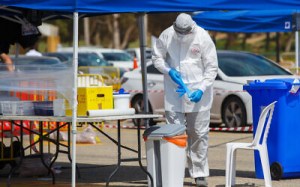
The Magen David Adom national emergency service drive through test complex in Ashdod on April 1, 2020 (Flash90)

A top medical expert said Sunday that a slowing of the rise in the number of cases in the past few days was encouraging: New cases had been doubling every six days until recently, he said, and now only every 11 days.

Experts are also pointing to the relatively slow rise in the number of patients on ventilators as a source of potential encouragement.

Putting a dent in the optimism, health officials are projecting that Israel will not be able to test more than 10,000 people a day for the novel coronavirus in the next few days, far short of the government’s goal, because of a shortage of a key reagent.

Still, officials said Sunday that Israel was looking at solutions — including local production of the reagent — that could boost the testing up to 10,000 people a day and beyond.

Four Israelis died of COVID-19 Sunday: an 84-year-old woman from the Mishan nursing home in Beersheba, the sixth fatality from the assisted living facility, and a 63-year-old man, 61-year-old woman and 98-year-old woman, all said to have had underlying health issues.

In figures released Sunday, the ministry said the highest number of cases across the country was recorded in Jerusalem (1,302), followed by the ultra-Orthodox city of Bnei Brak (1,214) and Tel Aviv-Jaffa (359). Bnei Brak, one-quarter the size of the capital by population, was closed off by police on Friday morning to stem the outbreak.

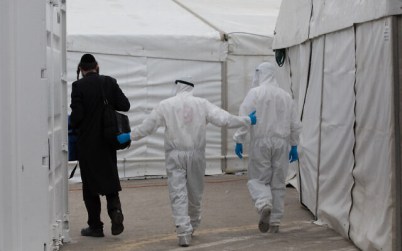
Magen David Adom and Shaarei Tzedek hospital medical workers in Jerusalem, wearing protective clothing, seen with an ultra-Orthodox man at the hospital’s new coronavirus unit on April 2, 2020. (Nati Shohat/Flash90)

Ministers were set Monday to rule on enforcing a tighter closure over eight cities and 15 ultra-Orthodox neighborhoods in Jerusalem to stem the coronavirus outbreak.

The cities set to be included in the decision are Tiberias, Elad, Migdal Haemek, Beitar Illit, Ashkelon, Or Yehuda, Modiin Illit, and parts of Beit Shemesh.

Interior Minister Aryeh Deri said Sunday that the government was considering imposing a general lockdown over all of the country ahead of Passover, when officials are concerned Israelis will flout the rules in order to hold Seder meals with family.

Health Ministry Director-General Moshe Bar Siman-Tov struck a cautiously optimistic note on Saturday, following reports that officials believe the current rate of infection in the country is rising at a relatively controlled rate and shows signs of remaining within levels that the health system can handle.

Prof. Gabi Barbash. (Weizmann Institute screenshot)

“The fact that we are holding discussions about an exit strategy from the crisis is a privilege,” he said.

Prof. Gabi Barbash, the former director general of the Health Ministry, similarly said the overall situation in Israel’s battle against the coronavirus “is much better” than it was. “We’ve gone down from a doubling of new cases every six days to a doubling every 11 days,” he explained Sunday on Channel 12.

That was “despite what’s been happening” in Bnei Brak and other hard-hit areas, he clarified, and was “thanks to the closures… I hope people will maintain” the stay-home discipline, he said.

The concern is to avoid another rise because of Passover, he added. If the numbers stay like this, “This gives the authorities a much better starting point,” he said, to consider easing some of the restrictions after Passover.


Coronavirus: More than 8,000 Israelis have the novel disease 

April 5, 2020

Source: Coronavirus: More than 8,000 Israelis have the novel disease – The Jerusalem Post

Death toll surges to 46, including an 84-year-old woman who was the sixth victim at the Mishan senior living facility.

Magen David Adom worker wearing protective gear against the coronavirus in Israel (photo credit: FLASH90)
Magen David Adom worker wearing protective gear against the coronavirus in Israel
(photo credit: FLASH90)
Before 8:30 a.m. on Sunday, the country had two more dead from the novel coronavirus: An 84-year-old woman who was being treated at Soroka Medical Center in Beersheba and a 63-year-old man who was being treated at Hadassah Hospital in the capital. In total, 46 Israelis have died from COVID-19.

The older woman was the sixth person to pass away from the Mishan senior living facility in the South and the fourth in the last three days.

At the same time, the numbers of infected people are on the rise. The Health Ministry reported 8,018 people with coronavirus Sunday morning – 127 in serious condition, among them 106 who are intubated.

The deaths per day appear to be escalating at a rapid rate. On Thursday, 10 people died – the deadliest day so far for coronavirus in the country. Over the weekend, Israel lost eight more.

The country last week decided to crack down on the haredi (ultra-Orthodox) city of Bnei Brak, instituting a full, military-enforced closure on the city of 200,000 people. On Sunday, marathon discussions are expected to take place among government and Knesset leaders about how to deal with the ultra-Orthodox sector.

The Knesset coronavirus task force will also discuss the issue of COVID-19 screening, after it was revealed over the weekend that the Health Ministry was forced to narrow the criteria for being tested, reporting a shortage of reagents (the chemical compound used for coronavirus testing).

The new guidelines explain that if one is suffering from a temperature above 38° Celsius, a cough, difficulty breathing, or any other respiratory symptoms that correspond to the virus, the person may only be screened if he or she has spent time abroad or in the Palestinian territories in the 14 days prior to the onset of symptoms.
As for asymptomatic cases, people are only eligible to be tested if they have stayed in the vicinity of a confirmed coronavirus patient for over 15 minutes or have returned from a country with a high rate of COVID-19 infections.
This move goes in contrast to all previous efforts to increase testing, which will help the country to find the neighborhoods and cities with the most coronavirus cases and isolate them rather than all Israelis.


‘Science will conquer this’: Inside the race for a coronavirus treatment

April 4, 2020

Source: ‘Science will conquer this’: Inside the race for a coronavirus treatment | The Times of Israel

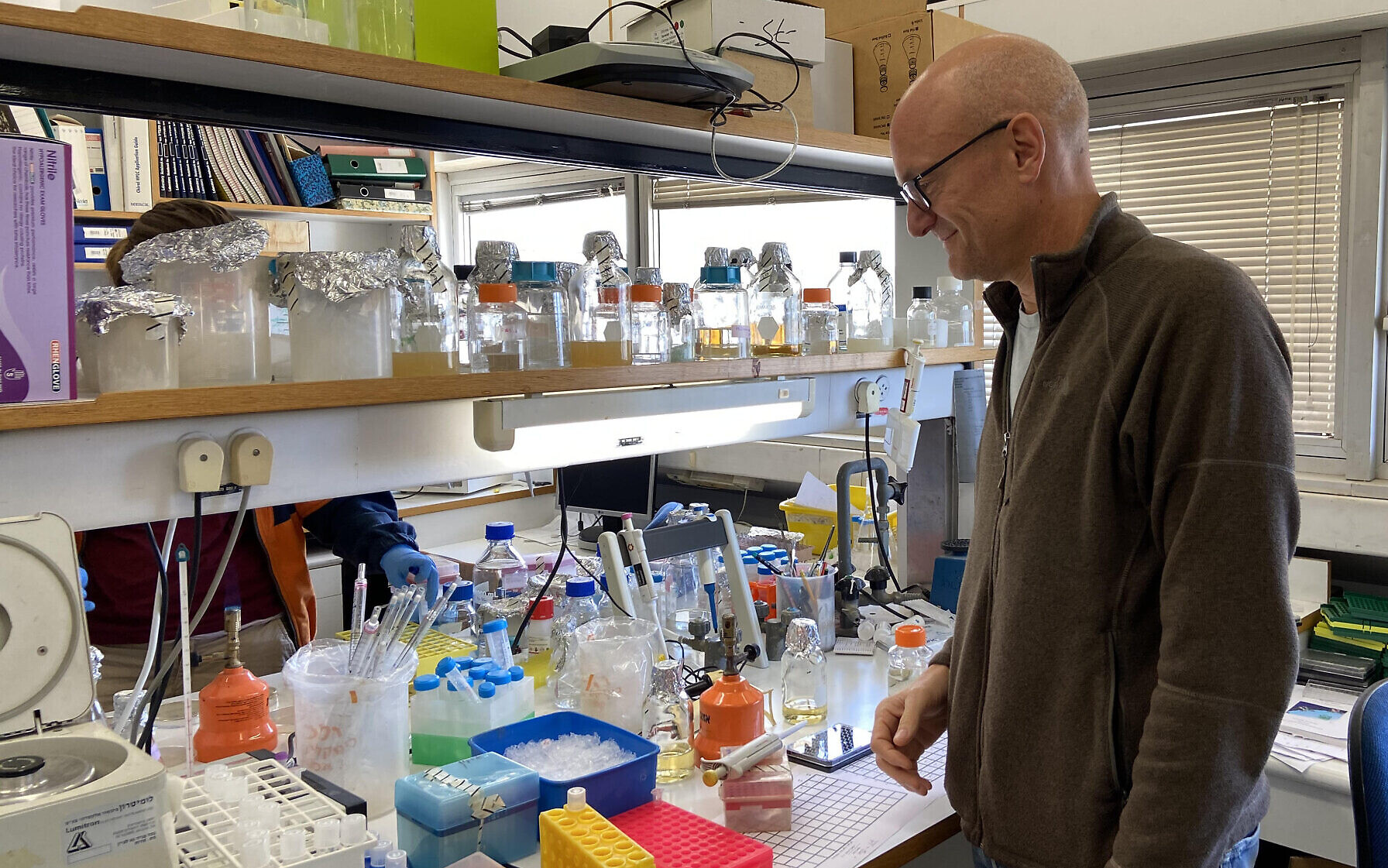
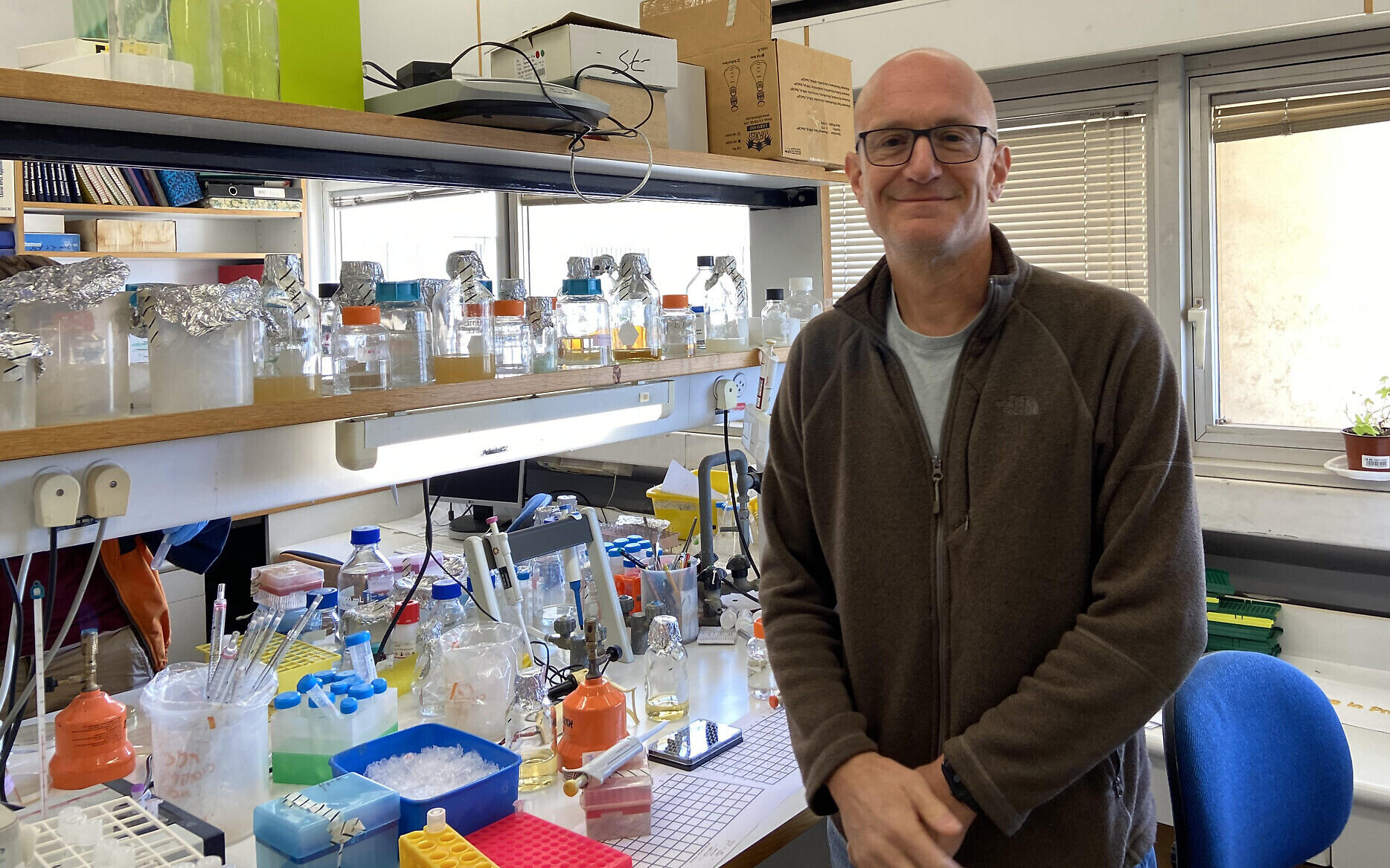
Prof. Isaiah (Shy) Arkin in his lab at the Hebrew University, March 29, 2020 (ToI staff)
THE GOAL: TO INHIBIT A PROTEIN CRITICAL TO THE VIRUS

‘Science will conquer this’: Inside the race for a coronavirus treatment

Labs worldwide are testing 6,125 chemicals against the two dozen proteins of COVID-19. A Hebrew University prof takes ToI into one such lab

In a small lab on the Givat Ram campus of the Hebrew University in Jerusalem, Professor Shy Arkin and his team of three are “throwing chemicals” at some of the proteins that constitute the coronavirus, hoping that one or more of them will stick.

Or at least that’s the kind of non-scientific language Arkin helpfully uses to describe the frantic research that is taking place in his and thousands of other labs around the world, in the battle to counter the pandemic that has gradually brought much of human endeavor and interaction to a near-halt.

In whichever constrained environment this article finds you, therefore, you’ll be pleased to hear that he’s optimistic. The virus, Arkin acknowledges, is particularly devastating among the elderly and other high-risk groups. But social distancing is at least a partially effective interim measure, buying time for the scientific community to come up with a real solution. And that solution, he is confident, will be found.

Arkin is among the scientists who feel they have something of a head start in the race to stop the pandemic, having spent close to two decades studying the components of influenza and SARS 1, the current COVID-19’s “remarkably similar predecessor,” which killed 774 people in 2002-3. And he says that at least some of COVID-19’s two dozen or so components are proteins that are known to be “drug-able” — that scientists have been able to inhibit.

The particular race in which his and all those thousands of other labs are frantically engaged is to test some 6,000 chemicals — drugs that are already approved as non-toxic to humans — against the virus’s constituent compounds: “You throw chemicals at it… If one of the chemicals inhibits a component, and that component is crucial to the virus, the chemical is immediately a potential antivirus drug.”

Sounds simple? Well, yes and no, as this interview attempts to make clear.

It was conducted on Sunday, first in Arkin’s office and then, briefly, in his small lab — one of the very few places on the university campus still working. We kept the obligatory two meters apart as we spoke — a task that became slightly more difficult when we entered the lab, and two members of his team showed me some of the testing process.

Prof. Isaiah (Shy) Arkin in his lab at the Hebrew University, March 29, 2020 (ToI staff)

The Times of Israel: So, how goes the search for a coronavirus treatment?

Prof. Shy Arkin: We’re working in frantic mode. We’re a small team, and we are serving chemicals against a component of the virus that we identified many years ago.

Serving chemicals?

Via an assay — a test to see if the virus protein is functional. You throw chemicals at it. If one of the chemicals inhibits a component, it is immediately a potential antivirus drug.

How many components are there in the virus?

About two dozen. A virus generally has a dozen to two dozen. Not all of them are “drug-able.” The component that we are focused on belongs to a family of proteins that is drug-able, that scientists have inhibited.

And if you can inhibit it in COVID-19?

You need to ensure it is crucial to the virus. If the answer is yes, then great. Labs around the world are targeting the two dozen or so components.

Influenza is simpler; it has about a dozen, and Tamiflu inhibits one of the proteins and stops the flu. In HIV, because the virus changes, they throw several different drugs on it at the same time — the famous cocktail, which inhibits several different components, so the probability of the virus evading each and every one of them at the same time is vanishingly small.

But COVID-19 is more simple and more straightforward, theoretically? It’s not mutating?

There are variants of it out there, but it doesn’t mutate as rapidly as HIV, as far as we know.

What can you tell me about the nature of the chemicals that you’re throwing at it?

What we’re trying to do — and again, I would hope and anticipate that others are doing — is trying to repurpose drugs. Because even if today, right now, I find a brand new chemical that inhibits the virus, you’re talking about a long period of time before it could be used in humans. Repurposing decreases that time span amazingly [to almost zero]. Your doctor basically says, just take that. He’ll prescribe it for you for, I don’t know, hair loss, and you go ahead and you take it. Off target, off label. It’s done all the time.

Chloroquine tablets (Courtesy)

Chloroquine was never tested against a SARS coronavirus. And yet it’s already being used. Because, again, it’s a repurposed drug. We know what the negative side effects of chloroquine are, and therefore we can use it against [the virus].

It’s been used with credible success?

The medical community, I think, is still out on that.

OK. So you’re choosing chemicals to throw at these proteins?

Right.

Remember, you’re talking to a complete layman writing mainly for non-experts. So that would sound very simple.

Correct.

Unless there are billions of chemicals.

No, no, there are about 6,000 chemicals that are approved drugs or at least have passed the stage of what’s called Phase 1.

Phase 1 basically means not toxic. Phase 2 and 3 means efficacious. But in terms of testing or repurposing, I don’t care if a drug is efficacious against, say, hair loss [or other originally intended purposes]. As long as it’s not toxic, I can use it.

Arkin turns his computer screen toward me, and refers me to a website.

You see the drug repurposing hub: There are 6,125 unique compounds.

And how hard is it to “throw a chemical at a protein”?

Well, that depends on how successful and simple your assay is. I can tell you, we’ve already tested about 300 chemicals. And we found two or three — they are non-satisfactory. So they work, but they’re not perfect. We want them to be better.

But I would imagine if out of 300 we found two or three that are somewhat promising, then out of the 6,000, we and labs the world over might find those that are better.

We’ve already tested about 300 chemicals. And we found two or three — they are non-satisfactory. So they work, but they’re not perfect. We want them to be better

The two or three that you found so far, once you’ve tested them and they’re only ‘non-satisfactory,’ that means they’re irrelevant? Or, if I was dying of this disease, you’d be saying, hey, take that?

The last bit that is missing from our research — and also, I would imagine for a huge number of other labs in the world, each taking their component, in their particular assay — is to try this on the real virus, either an animal model or tissue culture. We can’t do that here.

You need a bio-safety lab that is capable of handling this virus. In Israel, there’s only one — our good friends in Ness Ziona. In English it’s called the IIBR — the Israel Institute for Biological Research.

What they need to do is to throw [the drug] on either an animal model, which I don’t know if they have yet, or a tissue culture, a human tissue culture, which has the virus sort of living on it. And then see if it inhibits it.

You’ve got two or three drugs that you don’t think are worth sending to Ness Ziona yet…?

They’re in the questionable phase. They’re not perfect, but it’s difficult to know. We have initial indications; the eventual results might be better or worse.

The hierarchy is functioning? If you come across something that you think, wow, this really can make a difference, you would send it to Ness Ziona?

Correct.

Who are presumably being inundated already with requests?

Correct. Which, by the way, is a good thing. It means that they’re actively trying different solutions.

Those 6,125 unique compounds — you would have thought that weeks if not months into this virus crisis, they would all have been thrown at the 24 or so components of the virus, given the might of American science, for example …?

Well, we’re not months on this. To develop a brand new assay for a particular protein is not that quick.

We have devised an assay that is amenable to screen a large number of chemicals. This is what we’ve been doing in the past two decades or so: studying a very close relative of this particular virus and other similar viruses

So the assay is not straightforward? You gave a very layman’s term: “throwing” it at the protein. But in fact it’s far more complicated…?

In a test tube, you have an experiment, in which you have an outcome. The outcome: Maybe blue works, red doesn’t. And then you put a chemical there. One of those 6,000 or so chemicals. And then you see, ooh, does my solution turn from blue to red?

Devising that particular test tube, that assay, is not trivial.

And you’ve been able to devise tests for 300 chemicals.

We have tried 300 chemicals on one component.

We have devised an assay that is amenable to screen a large number of chemicals. This is what we’ve been doing in the past two decades or so: studying a very close relative of this particular virus and other similar viruses.

You’re not starting from scratch 6,125 times. You’ve got a test, an assay, that enables you to…

If those 6,125 chemicals were here on my shelf, we’d be able to screen them all.

Why are they not here on your shelf?

Because they didn’t have a reason to be here on my shelf before the beginning of March. Right now, other than directing the research and the group, what I’m doing is writing grants like crazy, trying to get money to fund this operation.

So if you ran the world and flicked your fingers, you’d be presiding over a bank of these 6,125 chemicals, with an assay enabling you to throw them all at one of the 24 proteins in this virus.

Correct

How long would that take you?

Probably two months.

And the signs so far would suggest to you that somewhere in those 6,125 there’s going to be something that works pretty effectively.

That’s a reasonable assumption.

The problem is that research around the world doesn’t work that way… People don’t pay for research that wasn’t seen as critical ahead of time. So there’s a bit of a lag.

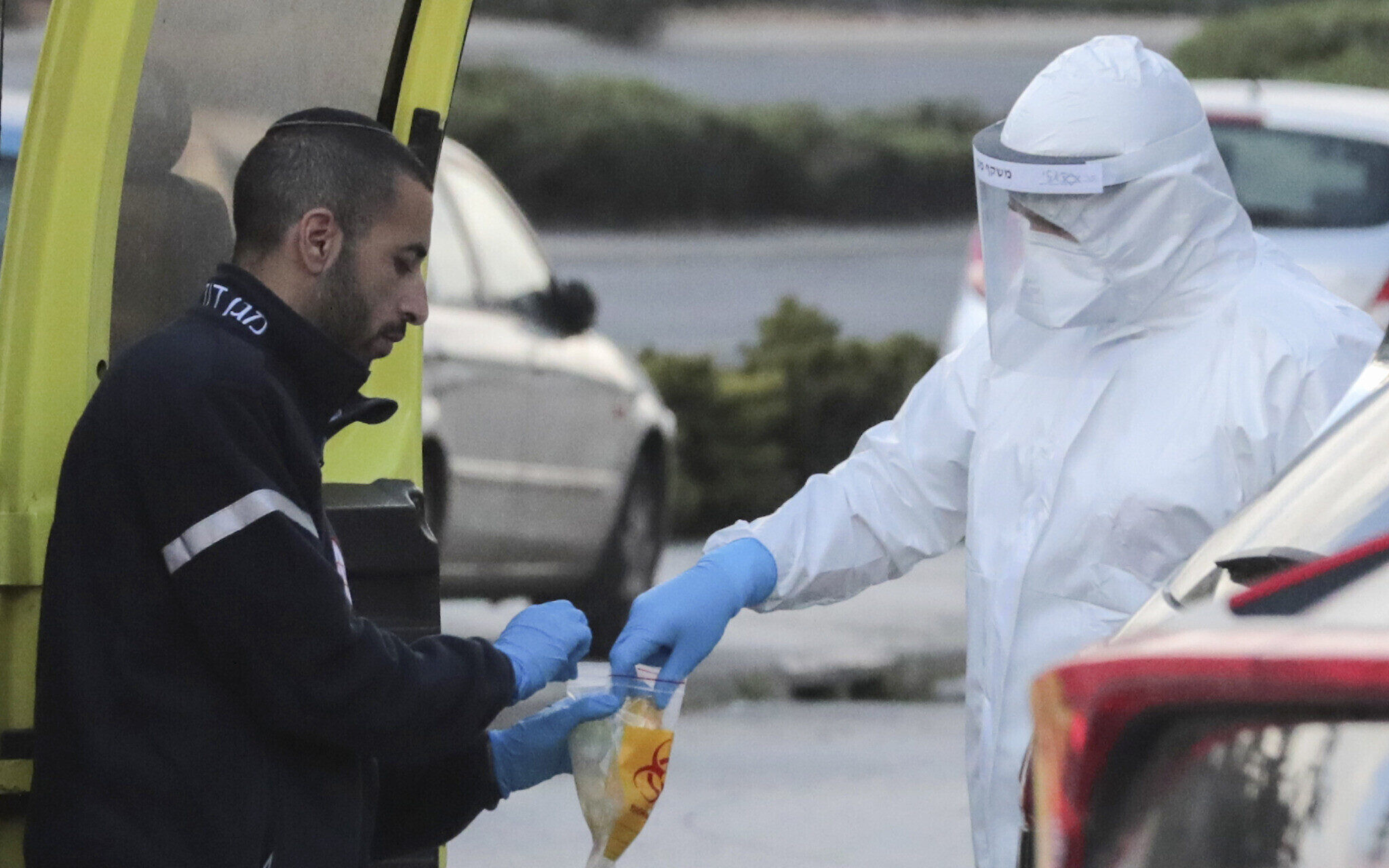
Magen David Adom worker wearing protective clothing as a preventive measure against the coronavirus, arrives to test a patient with symptoms of coronavirus in Jerusalem on March 28, 2020 (Yossi Zamir/Flash90)

Which presumably after these few weeks is starting to be made up?

Yes. I’m very happy to see that practically every agency in Israel is immediately saying, Look, people, just give us some ideas, and we’ll provide you with funding very quickly.

I’ve been amazed by the continuous generosity of the Friends of the Hebrew University, that contacted me directly and basically told me, Shy, what do you need? We’ll send it to you. People are saying that this is a clear and present danger. Everyone’s trying to pitch in.

On the phone to me a couple of weeks ago, you were skeptical about some of the assessments of the danger, as unnecessarily alarmist.

Correct. I stand by my prediction: This is not going to fell millions of people around the world.

Related: Israeli scientist: You’re not going to see millions of people die from COVID-19

But wouldn’t it fell millions of people if we weren’t all distancing, especially from the elderly?

Sure. But if you have a solution against something… A strep throat would result in tremendous morbidity and mortality were we not taking antibiotics. So there are things to do [to dramatically reduce the impact]. Many of them are very unpleasant. I mean, we all want to celebrate the Passover Seder. But simply look at the example of what’s taking place in China, where a fifth of the world population [was locked down]. The number of new cases has dropped away.

Look at the Johns Hopkins site. Spain is doing much worse. But if you look at Italy, which had a terrible death rate, the number of new cases every day is not that different. They’re out of the exponential figures. Obviously, the deaths that you’re seeing today are due to the infections of three, four weeks ago. But what will we see in another three weeks? I mean, it’s plateaued.

The number of new cases in Italy has plateaued?

The number of new cases is about the same each day. It’s under control. You’ll see more deaths because they have completely saturated their health care system. But in terms of stopping continuous growth, what you need to do is to decrease the number of infections. Social distancing does the job.

Social distancing is buying time for the medical community, which is working frantically to come up with solutions. And I’m absolutely certain that it will

You’re sounding scientific and rigorous, but social distancing is a radical method! Basically, we’ve shut down much of society. It’s a pretty atypical situation we’re in here.

Very atypical! It would be more correct to say: never previously experienced.
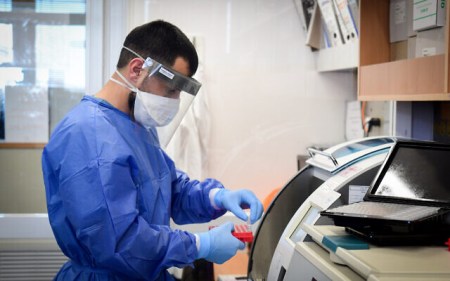
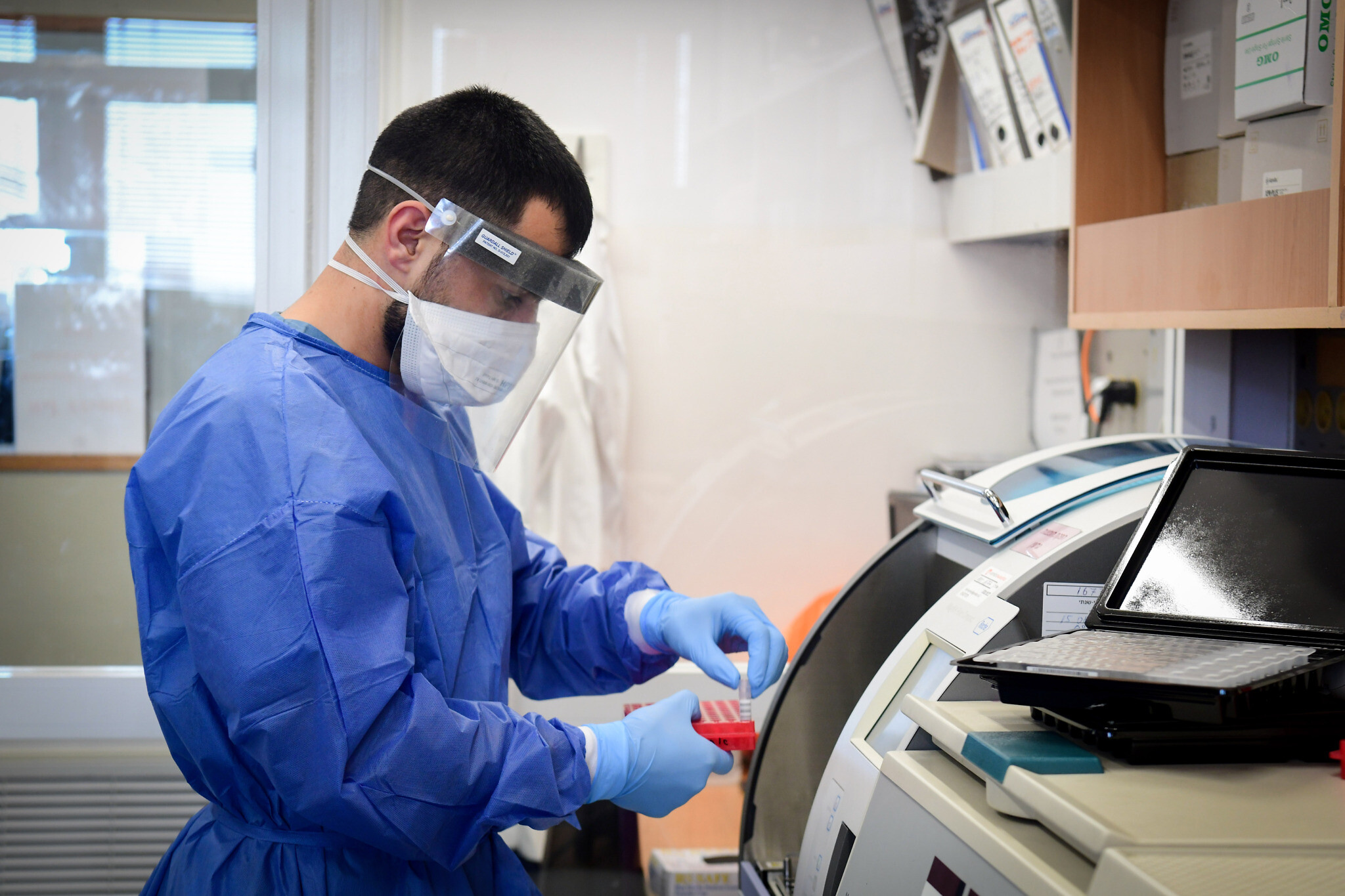
Medical team members at the Barzilay hospital, in the southern Israeli city of Ashkelon, wear protective gear, as they handle a coronavirus test sample on March 29, 2020. (Flash90)

What we’re doing right now is buying time for the medical community, which is working frantically to come up with solutions. And I’m absolutely certain that it will. I’m not saying my group will. But one of a very large number of such groups around the world will.

Thousands?

Thousands… They will come up with solutions.

Is this the taste of things to come? Does this pandemic signal that humanity has entered some new era where we’re going to be battered by these kind of viruses more often, or maybe worse?

Hopefully this is a wake-up call. It’s quite unbelievable that we had a rehearsal for COVID 19 [with SARS]. We had it in 2003.

And the effort that was expended by the West to do something about this was practically zero.

Because it only killed 700-plus people, so everyone just stopped trying?

It disappeared. You have to realize that it takes the scientific community a bit of time to react to something brand new. And by the time people started saying “I’ll forget the work that I’m doing routinely, I will focus on [SARS],” the disease had disappeared. It didn’t really inflict a lot of harm on the West. Complacency is the best word to describe the response.

And the lesson we should learn is…?

Virology departments should not disappear. And I’m not speaking as a virologist. I’m a biochemist and I study specific components in viruses.

But, again, does the fact that we had SARS 1 some 17-18 years ago and now we have SARS 2, mean we should be bracing for worse, or is it a quirk? Has this stuff been happening for centuries, and science never recognized it for what it was? People would die in large numbers…

No, I don’t think so. We have had past outbreaks. We have an outbreak every year of the flu that exacts a significant mortality. But it’s one which we know how to predict ahead of time. So in the United States, for instance, you say, OK, we’re going to have 60,000 deaths in the States because of the flu this year. We’ve learned to live with that. It’s not going to be much more. And unfortunately, it’s probably not going to be much less. But we know what the outcome is. The problem with this thing is that we don’t know the outcome.

I don’t want to use the term that we were ‘lucky’ before. But, pandemics do happen every so often. They do. What you need to ensure is that you’re prepared

Will we have more of these? The answer is absolutely yes, but we don’t know when. So there was Ebola, there was Zika, there was the swine flu. All of those really didn’t affect the West dramatically. They were not terrifying. This thing is.

I don’t want to use the term that we were “lucky” before. But, pandemics do happen every so often. They do. What you need to ensure is that you’re prepared.

Which means that you invest in the science that will help you tackle them quicker?

I’ll give you a very simple example. If you wrote a grant application before December 2019 to any research funding agency, and told them, “I want to study coronaviruses,” people would ask, “why would you want to study a virus family that infects mostly animals? Why not go ahead and study, let’s say, hepatitis C virus or hepatitis B or HIV or influenza?”

You could at least arm yourself with an answer: “Well, do you remember what happened in 2002-3 with SARS?” But if you didn’t even have that, you know, people would laugh at you. They would simply laugh at you.

Well, they presumably won’t laugh now.

Right now, they won’t. So I would say, let’s ensure that we map better those viruses that are infecting animals and that can jump to us — namely mammals and birds.

There are other viruses out there right now that we’re not looking at, because they never made that jump, potentially could do so, and potentially could be as devastating or worse than this one?

There could be. Viruses are so plentiful that we haven’t scratched the surface of how many of them are there. Coronaviruses were a good bet [to make the leap and to require more scientific attention] because they’ve shown us they can twice before — with SARS and MERS — and because they exact a lot of mortality and morbidity in animals that we’re familiar with.

If we try and take a step back from this, and given that we want to not overwhelm our health services and governments don’t want to invest more money in them, shouldn’t it be illegal to smoke, for example? The big crisis here has been that there aren’t going to be enough ventilators if it hits really hard. But half a million people die in America every year from smoking-related diseases. We see the hysteria about this unknown virus, as opposed to the indifference to a known vast killer.

It’s the difference between the danger that you know, and the unknown.

A woman smokes a cigarette outside a cafe. Israel took another step towards becoming smoke-free when strict regulations came into effect that limit smoking in public places. (photo credit: Nati Shohat/Flash90)

Illustrative photo of a woman smoking a cigarette outside an Israeli cafe. (Nati Shohat/Flash90)

I completely agree: The fact that smoking is still legal — or the fact that the police might incarcerate someone who is intoxicated and just, you know, let them let the hangover rub off and then release them — to my mind, that’s ridiculous.

Nearly every single health parameter that you have is lowered by smoking. Your probability of getting a heart attack, your probability of getting “just fill in the disease,” increases when you’re smoking. The financial toll that it exacts on the health system is unbelievable.

The question of why this virus terrifies us so much more than smoking — even though smoking, you’re absolutely right to say, kills more people per year than this virus will probably end up killing — lies more in the realms of psychology than biochemistry. Smoking kills you over a very long period of time. The moment that you smoke, you don’t instantly put yourself at risk of going to the ICU, while this thing does pose that risk. And while secondhand smoking is infectious in a way,  this thing is so much more.

Okay. Now, what can you show me about your actual testing work?

I can show you the robots. We don’t take each and every one of those chemicals and pipette them individually, and monitor every single test tube because, first, that takes a long time. But even worse, it’s unreliable due to human error; we make mistakes. So everything that we try to do, we try to do in replicates, in order to get good statistics.

So enter the robots. The robot is basically a fancy liquid handling system. It takes a test tube over here, and it takes solutions from A, B, C and D, and mixes them in the ratios that you’ve programmed to. And then it can actually monitor what’s happening in that test tube. That’s what I can show you. And this is very commonplace.

This is what’s going on in thousands of labs all over the world now?

Correct.

As they try to throw the 6,125 drugs at the two dozen virus components?

Yes, and many pharmaceutical industries have better libraries [of chemicals]. I’m really convinced that the scientific community will be able to conquer this. Because there is no reason ahead of time, when you look at the virus, that this is going to be a very difficult target — unlike HIV. Especially because we were able to develop a vaccine [for animals] against other members of this [coronavirus] family. So why not this? This is not going to be the end of humanity.

But what I can’t understand is people who are saying, “Oh, you know, let’s allow everyone to just acquire immunity as a herd. And okay, all those that are above 80 years old, you know, what can I do? Tough. You lived your life.” That’s insane.

Arkin leads me along the corridor to his lab, and introduces me to his team.

This is Dr. Prabhat Tomar. This is Ariella Shalev. Prabhat is the person who’s actually running the robot.

Arkin points to some flat, dark gray rectangles a little larger than playing cards: These are the plates where every one of these tests are carried out. This is called a 96-well plate. Each of these wells is a test tube on its own. And we can have eight of these running simultaneously. So eight times 96 — a fair bit of testing that you’re doing simultaneously.

We monitor the absorption — that is the color of each one of those wells — in this machine over here. And if you can just scoot over there, you can see what it looks like.

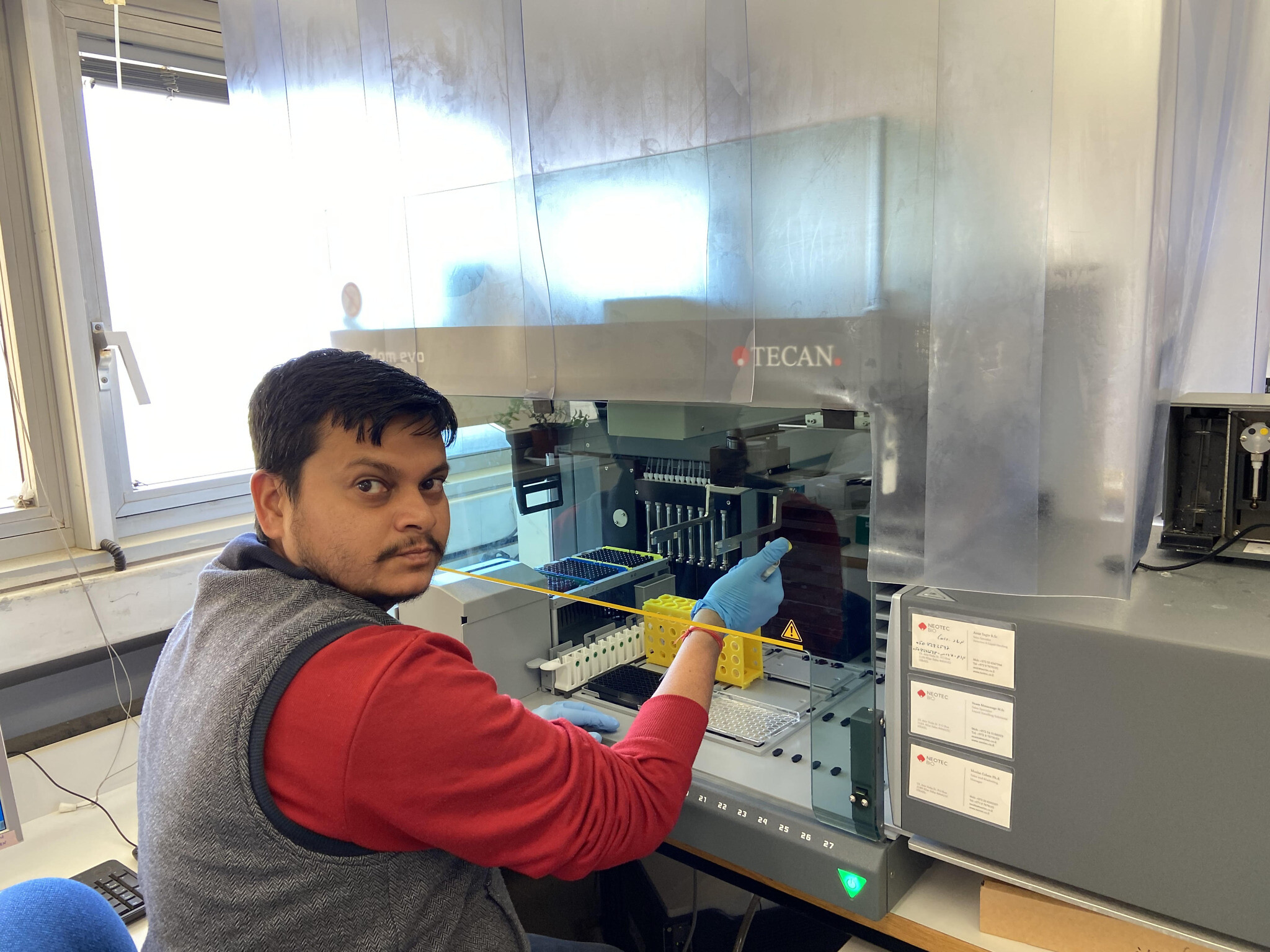
Arkin motions me toward the machine in the photograph below:
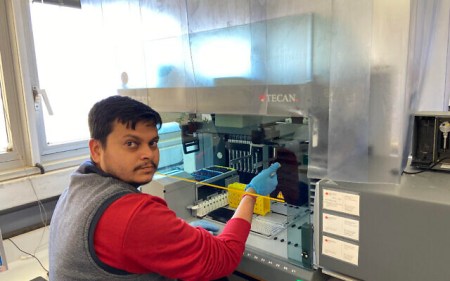
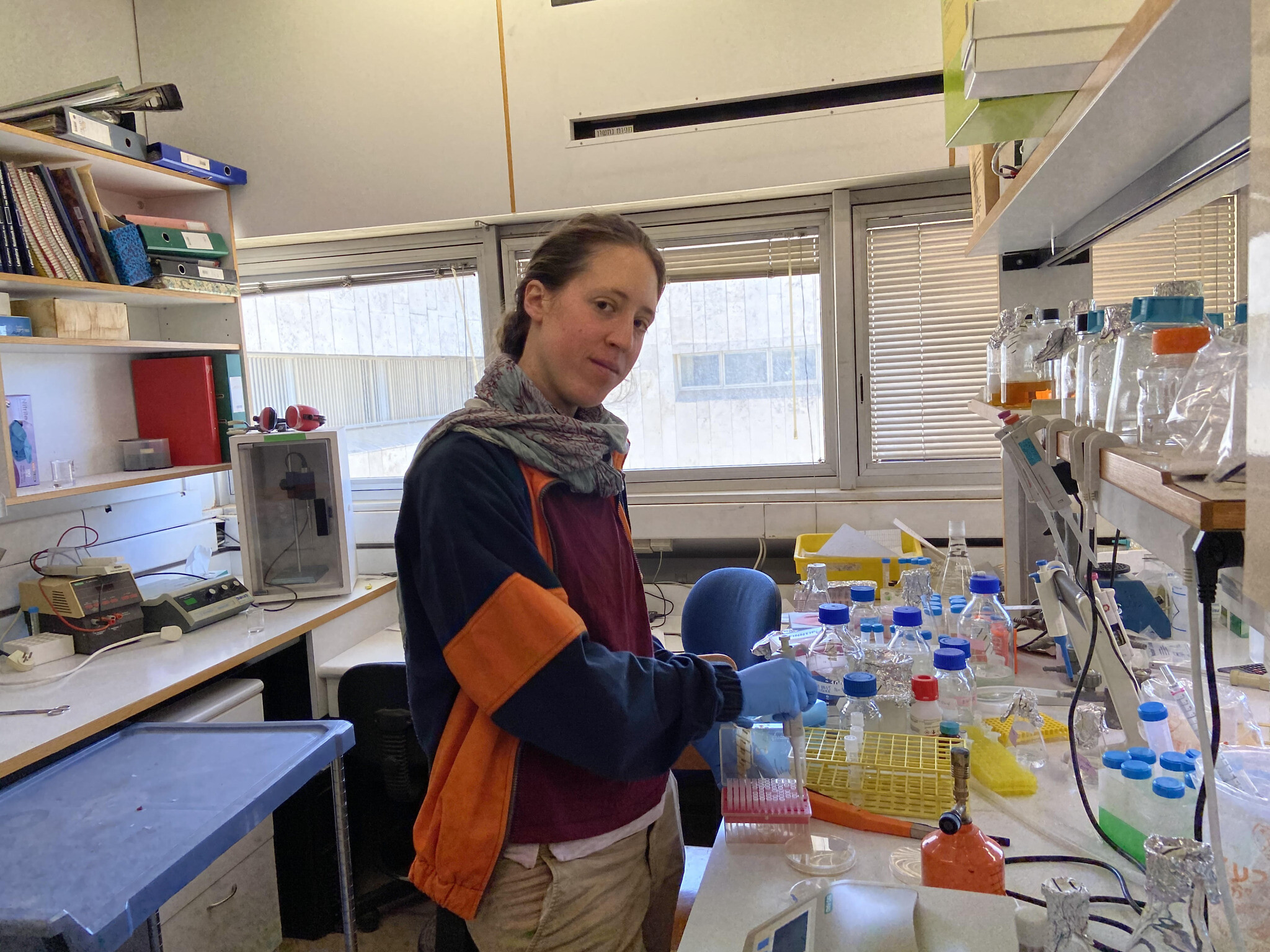
Dr. Prabhat Tomar prepares a test in Prof. Shy Arkin’s lab at the Hebrew University, March 29, 2020 (ToI staff)

How long does this process take?

A few hours.

Normally, Prabhat plans an experiment and then sets up one or two or three of these plates and we come back the next day and it’s done. The pharmaceutical industry probably has machines that can do so much more.
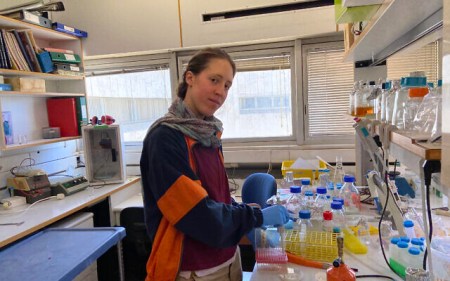
Ariella Shalev at work in Prof. Shy Arkin’s lab at the Hebrew University, March 29, 2020 (ToI staff)

And so far, two or three that were somewhat encouraging?

Yeah, two or three were somewhat encouraging.

Arkin leads me out of the lab, and to the exit of the building, almost all of whose offices are closed.

“If you have a great success, please let me know,” I say.

“Will do,” he promises, heading back to the race.


HAMAS LEADER: “If Gazans start dying from the China Virus because we run out of ventilators, we will make sure that six million Israelis are unable to breathe”

April 4, 2020

https://barenakedislam.com/

Iran’s Pres says US sanctions are not impeding fight against coronavirus 

April 3, 2020

Source: Iran’s Pres says US sanctions are not impeding fight against coronavirus – The Jerusalem Post

Rouhani’s statements contradict Zarif who has said that the US is waging “medical terrorism” against the Islamic Republic.

Iranian President Hassan Rouhani is seen during meeting with health ministry top officials in Tehran (photo credit: REUTERS)
Iranian President Hassan Rouhani is seen during meeting with health ministry top officials in Tehran
(photo credit: REUTERS)
BERLIN—The Islamic Republic of Iran’s president, Hassan Rouhani, issued a series of jaw-dropping comments at an economic cabinet meeting on Thursday, stating that US sanctions have not stopped Tehran from combating the coronavirus crisis.
Rouhani’s remarks contradict the narrative that his foreign minister, Mohammad Javad Zarif, has delivered to Western audiences in the hope of securing sanctions relief.
Radio Farda termed Zarif’s efforts on Thursday a “weeks-long propaganda campaign in the press and social media targeting the United States and Europe about the adverse impact of the sanctions on Iran’s ability to confront the outbreak.”
However, Rouhani said “Iran has no problem in providing foreign currency until the end of the [Iranian] year,” in March 2021.
The Islamic Republic News Agency reported that Rouhani also said “we will have no problem” with regard to medical and pharmaceutical demands.
According to IRNA, Rouhani said on the topic of health care that ”most of the requirements are being supplied domestically.”
“He noted that other products like face-masks and disinfectants are produced domestically,” wrote IRNA.
Rouhani’s statements contradict Zarif who has said that the US is waging “medical terrorism” against the Islamic Republic.
Critics of Tehran’s campaign to win sanctions relief state that Iran’s clerical regime can already receive humanitarian and medical aid via two channels: the Swiss-run humanitarian corridor and the EU operated Instex program.
IRNA wrote that “Part of Iran’s assets which had been frozen in some countries due to the US pressure will be possibly released thanks to the efforts made by” the foreign ministry and central bank of Iran.
The US government imposed sanctions on Iran’s regime for its nuclear program, international terrorism and ballistic missiles apparatus.


Israel ranks first for ‘general public safety’ amid COVID19 – TV7 Israel News 02.04.20

April 2, 2020


Netanyahu, much of Israeli top brass in quarantine as health minister gets virus

April 2, 2020

Source: Netanyahu, much of Israeli top brass in quarantine as health minister gets virus | The Times of Israel

Health Ministry chiefs, Mossad boss, national security adviser, all handling response to pandemic, enter isolation along with PM, who just emerged; IDF head already quarantined

Prime Minister Benjamin Netanyahu, left, with Health Ministry director-general Moshe Bar Siman Tov, center, and Health Minister Yaakov Litzman at a press conference about the coronavirus COVID-19, at the Prime Minister’s Office in Jerusalem on March 11, 2020. (Flash90)

Prime Minister Benjamin Netanyahu and some of Israel’s other top officials in managing the country’s response to the coronavirus crisis will enter quarantine after Health Minister Yaakov Litzman was confirmed to have contracted COVID-19, amid concerns that other senior officials could also be forced into isolation.

Netanyahu will work from his Jerusalem residence until Wednesday in accordance with Health Ministry instructions and the advice of his personal physician, Dr. Tzvi Berkowitz, the Prime Minister’s office said in a statement.

Health Ministry head Moshe Bar Siman-Tov, who has become the face of Israel’s management of the crisis with near daily briefings and media appearances, announced on Thursday morning that he would self-quarantine, due to the contact he had with Litzman in recent days.

Sigal Sadetzki, head of public health at the Health Ministry, will also enter a two-week period of home isolation, since she recently met with Litzman.

Mossad Chief Yossi Cohen, whose spy agency has been instrumental in obtaining medical equipment for Israel, and National Security Adviser Meir Ben-Shabbat, who has been coordinating the government’s response to the pandemic, will also be sent into isolation, according to Hebrew news reports. IDF chief of staff Aviv Kohavi is already working from quarantine, due to exposure to an infected officer, but has tested negative for the virus.

From left: Prof. Sigal Sadetsky, head of the Public Health Services in the Ministry of Health, Ministry CEO Moshe Bar Siman-Tov, and Health Minister Yaakov Litzman outside the Central Laboratory of the Health Ministry at the Sheba Medical Center in Ramat Gan, February 4, 2020. (Flash90)

Under Health Ministry orders, tens of thousands of Israelis are in self-quarantine due to possible exposure to the virus and the entire country is in an almost total lockdown that has seen most of the population confined to their homes, only allowed out for essential needs.

The number of COVID-19 deaths in Israel rose Thursday to 31, and the number of people diagnosed with the coronavirus increased to 6,211.

Last week, Litzman attended a Knesset session, and staff at the parliament are said to be checking the footage of security cameras to see who came in direct contact with the minister. It is expected that several lawmakers, and possibly some ministers as well, will have to self-quarantine.

Netanyahu had just emerged from self-quarantine on Wednesday evening, 14 days after he last met with one of his advisers, who also contracted the virus. He, his family and several close advisers were tested on Monday and were found to not be carriers.

Both Litzman and Bar Siman-Tov will continue to manage the country’s fight against the disease while in isolation, according to the Health Ministry.

“Bar Siman-Tov will remain in quarantine in a specialized facility that includes a work space and the relevant communication equipment,” the ministry said in a statement issued Thursday morning.

“We planned for a possibility like this and prepared accordingly,” the ministry’s director-general said. “I will continue to manage this event together with my managerial colleagues with digital tools.

“Needing to go into quarantine can happen to anyone, and we must abide by the orders. I continue to call for citizens of Israel to abide by the Health Ministry’s directives,” Bar Siman-Tov added.

Prime Minister Benjamin Netanyahu (left) with Health Minister Yaakov Litzman, in Jerusalem, on March 11, 2020. (Flash90)

Litzman, 71, and his wife Chava were both found to have contracted the disease, which is especially dangerous to people above the age of 65.

“His condition at this time is mild. He is not asymptomatic, there are some symptoms, but no more than that,” Dr. Itamar Grotto, deputy director-general of the ministry, told Channel 12 on Thursday.

The ministry is investigating from whom Litzman contracted the disease and is informing people who have been in contact with the minister to go into quarantine, Grotto added.

Health Minister Yaakov Litzman announces new restrictions to combat the COVID-19 coronavirus during a press conference at his office in Jerusalem on March 11, 2020. (Flash90)

Grotto himself will not have to go into quarantine, he said, since all his recent meetings with Litzman have been held over the phone or through videoconferences.

It is possible that the health minister may have contracted the virus from another senior government official, according to Grotto, though he may also have caught the disease from someone within his ultra-Orthodox community in Jerusalem.

“There’s a high rate of the illness in the Haredi community, so it’s reasonable to think that it happened there,” he said.

Litzman, the head of the ultra-Orthodox United Torah Judaism party, has played a prominent role in handling the pandemic crisis alongside Netanyahu, attending key meetings with him, though the prime minister has been careful to maintain social distancing regulations.

Litzman has been frequently criticized for his handling of the virus outbreak in Israel.

Some have alleged he put the interests of the ultra-Orthodox community ahead of the general public in his handling of the fight against the pandemic. He reportedly pushed to delay stringent restrictions on public gatherings that would have affected observance of the Purim festival last month, and fought bitterly against last week’s closing of synagogues.

Police officers arrive to close synagogues in the city of Bnei Brak on April 1, 2020 (Yossi Zamir/Flash90)

A group of senior medical officials in major hospitals have written to Netanyahu with an urgent demand to appoint a professional figure as health minister instead.

The doctors wrote in the letter that the coronavirus pandemic “has exposed and caught the healthcare system at a low point from an organizational and operational point of view, which everyone had been aware of.”

They laid out problems in the system, including widening gaps between the quality of health services in the center of the country and in the north and south.

“At this time… it is right for a professional to be appointed to head the Health Ministry — a doctor with a rich experience in Israeli healthcare,” they wrote. “Health comes before anything else, definitely before politics.”
Times of Israel staff and Judah Ari Gross contributed to this report.


Israelis told to wear face masks in public, mark religious holidays with close family only – Reuters

April 2, 2020

Source: Israelis told to wear face masks in public, mark religious holidays with close family only – Reuters

JERUSALEM (Reuters) – All Israelis should wear face masks while in public as a precaution against the coronavirus, and upcoming Jewish, Muslim and Christian holidays should be marked only with immediate family, Prime Minister Benjamin Netanyahu said on Wednesday.

In televised remarks, Netanyahu also announced curbs on movement around an ultra-Orthodox Jewish town that has experienced a disproportionately large outbreak.

Israel has taken stringent measures to try to halt the spread of the virus, after recording more than 6,000 cases. At least 25 Israelis have died of COVID-19, according to Health Ministry data.

“We ask you, citizens of Israel, all of you, to wear masks in the public sphere,” Netanyahu said in televised remarks, adding that people could improvise “with a scarf or any other facial covering” in the absence of factory-produced masks.

Increasingly tight restrictions have largely confined Israelis to their homes, forcing businesses to close and causing unemployment to skyrocket to 24.4%.

On Monday, Netanyahu and Finance Minister Moshe Kahlon said Israel would spend 80 billion shekels ($22 billion) to help the economy weather the crisis and predicted a gradual return of business activity after the Passover holiday from April 8-15.

Netanyahu on Wednesday said the government would give Israeli families 500 shekels per child, up to a maximum of four children. The elderly would also receive 500 shekels, Netanyahu said, terming all the payments a “Passover gift”.

Those stipends would cost the state a total of 1.5 billion shekels, public broadcaster Kan estimated.

Netanyahu also said Israel’s majority Jews must mark Passover “with the nuclear family only,” adding that including elderly relatives in celebrations “would be to endanger them”.

Those same restrictions apply to Muslims and Christians, Netanyahu said, who make up most of Israel’s 21% Arab minority and will mark Easter and the beginning of Ramadan, respectively, later this month.

Israeli authorities will also tighten curbs on movement around Bnai Brak, an ultra-Orthodox Jewish town near Tel Aviv, which the Channel 12 TV news on Wednesday projected may account for as many as 30% of the coronavirus cases nationwide.

“We have decided to reduce to the minimum necessary the access and egress from the city,” Netanyahu said, while adding that residents would still be allowed to move around within the city if required.

Israeli officials describe the ultra-Orthodox as especially prone to contagion because their districts tend to be poor and congested, and in normal times they are accustomed to holding thrice-daily prayers with often large congregations. Some ultra-Orthodox rabbis have also cast doubt on the coronavirus risk.

Reporting by Rami Ayyub; Additional reporting by Dan Williams, Steve Scheer and Tova Cohen; Editing by Chizu Nomiyama and Hugh Lawson


Exclusive: Captain of aircraft carrier with growing coronavirus outbreak pleads for help from Navy

April 1, 2020

Source: Exclusive: Captain of aircraft carrier with growing coronavirus outbreak pleads for help from Navy – SFChronicle.com

Note: This story has been updated with comments from the U.S. Navy and other developments.

The captain of a nuclear aircraft carrier with more than 100 sailors infected with the coronavirus pleaded Monday with U.S. Navy officials for resources to allow isolation of his entire crew and avoid possible deaths in a situation he described as quickly deteriorating.

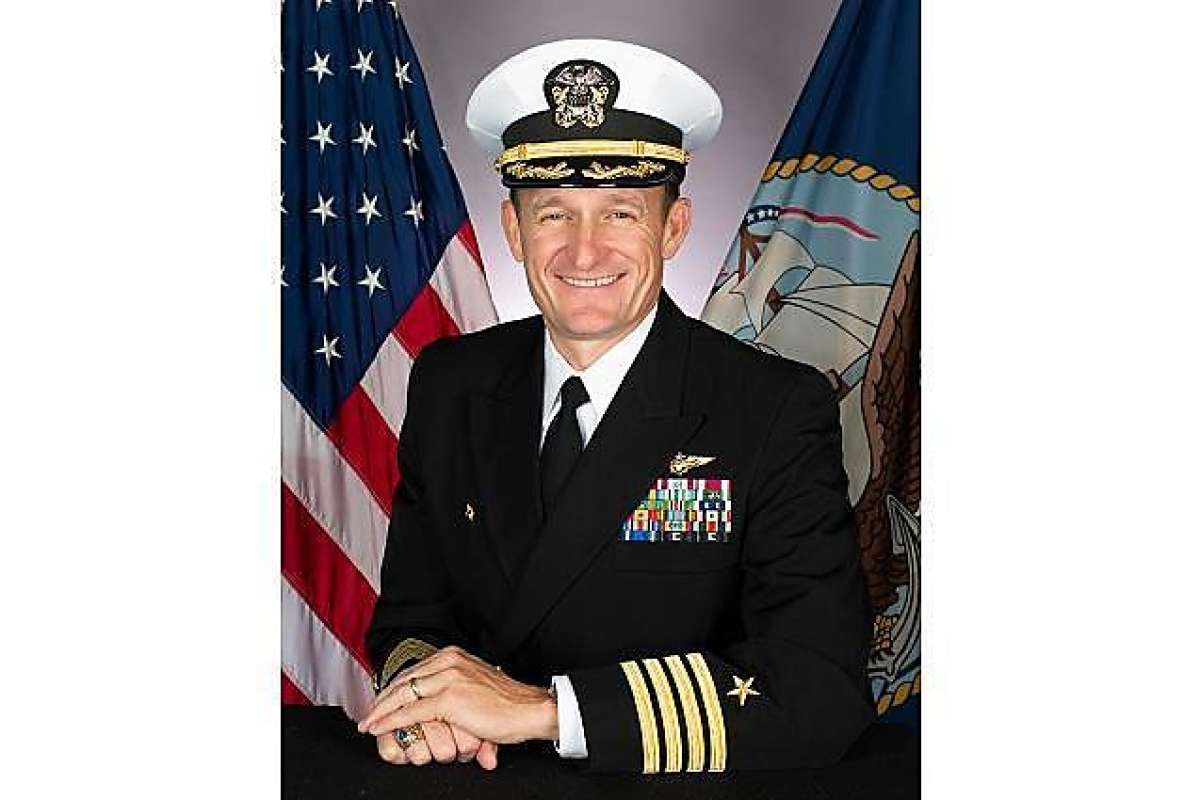
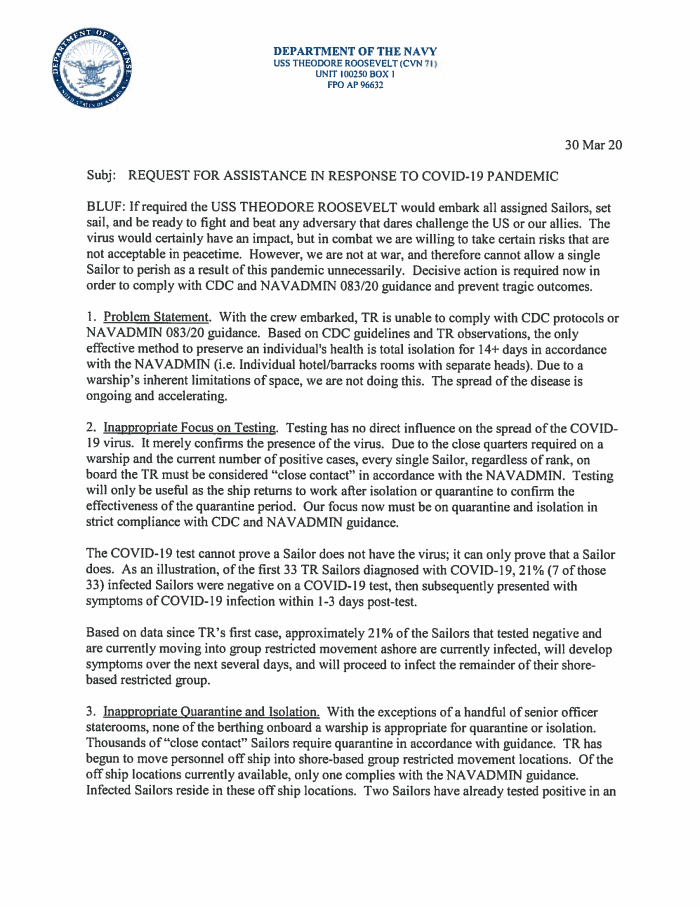
The unusual plea from Capt. Brett Crozier, a Santa Rosa native, came in a letter obtained exclusively by The Chronicle and confirmed by a senior officer on board the aircraft carrier Theodore Roosevelt, which has been docked in Guam following a COVID-19 outbreak among the crew of more than 4,000 less than a week ago.

“This will require a political solution but it is the right thing to do,” Crozier wrote. “We are not at war. Sailors do not need to die. If we do not act now, we are failing to properly take care of our most trusted asset — our Sailors.”

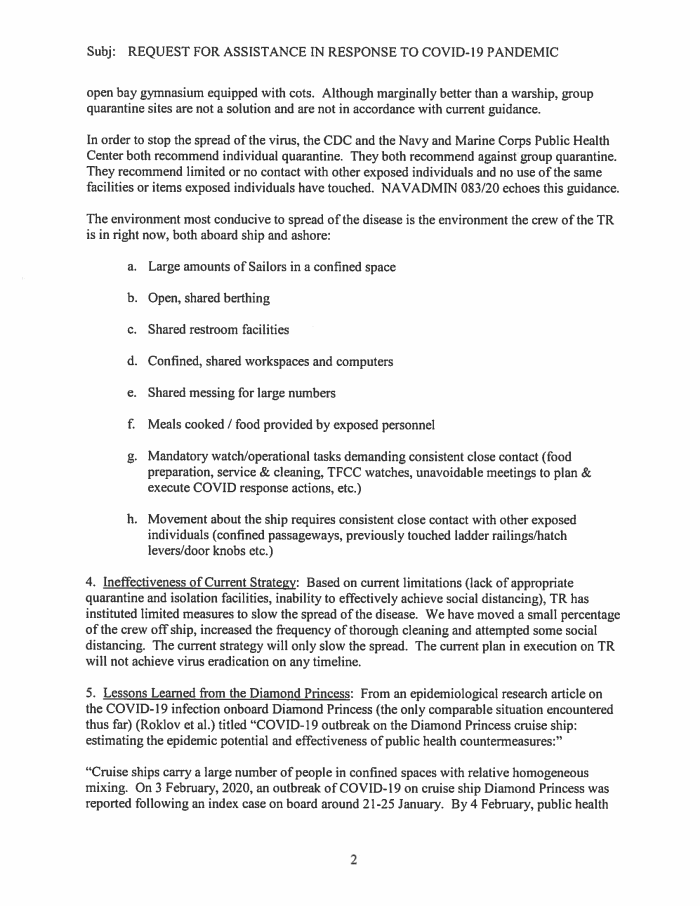
In the four-page letter to senior military officials, Crozier said only a small contingent of infected sailors have been off-boarded. Most of the crew remain aboard the ship, where following official guidelines for 14-day quarantines and social distancing is impossible.

“Due to a warship’s inherent limitations of space, we are not doing this,” Crozier wrote. “The spread of the disease is ongoing and accelerating.”

He asked for “compliant quarantine rooms” on shore in Guam for his entire crew “as soon as possible.”

“Removing the majority of personnel from a deployed U.S. nuclear aircraft carrier and isolating them for two weeks may seem like an extraordinary measure. … This is a necessary risk,” Crozier wrote. “Keeping over 4,000 young men and women on board the TR is an unnecessary risk and breaks faith with those Sailors entrusted to our care.”

The Navy did not respond to The Chronicle’s requests for comment Monday, but on Tuesday morning as the news spread, the Acting Navy Secretary Thomas Modly spoke to CNN.

“I heard about the letter from Capt. Crozier (Tuesday) morning, I know that our command organization has been aware of this for about 24 hours and we have been working actually the last seven days to move those sailors off the ship and get them into accommodations in Guam. The problem is that Guam doesn’t have enough beds right now and we’re having to talk to the government there to see if we can get some hotel space, create tent-type facilities,” Modly said.

“We don’t disagree with the (captain) on that ship and we’re doing it in a very methodical way because it’s not the same as a cruise ship, that ship has armaments on it, it has aircraft on it, we have to be able to fight fires if there are fires on board the ship, we have to run a nuclear power plant, so there’s a lot of things that we have to do on that ship that make it a little bit different and unique but we’re managing it and we’re working through it,” he said.

“We’re very engaged in this, we’re very concerned about it and we’re taking all the appropriate steps,” Modly said.

So far, none of the infected sailors has shown serious symptoms, but the number of those who have tested positive has jumped exponentially since the Navy reported infections in three crew members on March 24, the first time COVID-19 infections had been detected on a naval vessel at sea.

Asked Tuesday what should be done about the Roosevelt, President Trump said he would “let the military make that decision.”

Retired Admiral James Stavridis, former NATO Supreme Allied Commander Europe, told The Chronicle Tuesday in an e-mail that “we should expect more such incidents because warships are a perfect breeding ground for coronavirus.”

“Unfortunately, naval vessels are ideal breeding grounds for the spread of viruses because it is impossible to do social distancing on one” because of the tight quarters on board, Stavridis said.

The ship’s problems will “compound,” Stavridis said, because you can’t tie the vessel up “and send everyone ashore. It is full of weapons, billions of dollars of equipment, fire hazards, and nuclear reactors.”