Archive for January 2020

Israel’s National War of Independence 

January 16, 2020

https://www.youtube.com/watch?v=_OuZCMBy35U

Israel’s National War of Independence

Credit: Kings and generals

Using animated 3d icons representing opposing forces, this documentary does a superb job of tracking the prioress of this long and complicated war.Using animated 3d icons representing opposing forces, this documentary does a superb job of tracking the prioress of this long and complicated war.

___________________________________

The Arab-Israeli War of 1948 broke out when five Arab nations invaded territory in the former Palestinian mandate immediately following the announcement of the independence of the state of Israel on May 14, 1948. In 1947, and again on May 14, 1948, the United States had offered de facto recognition of the Israeli Provisional Government, but during the war, the United States maintained an arms embargo against all belligerents.

On November 29, 1947, the United Nations General Assembly adopted Resolution 181 (also known as the Partition Resolution) that would divide Great Britain’s former Palestinian mandate into Jewish and Arab states in May 1948. Under the resolution, the area of religious significance surrounding Jerusalem would remain under international control administered by the United Nations. The Palestinian Arabs refused to recognize this arrangement, which they regarded as favorable to the Jews and unfair to the Arab population that would remain in Jewish territory under the partition. The United States sought a middle way by supporting the United Nations resolution, but also encouraging negotiations between Arabs and Jews in the Middle East.

The United Nations resolution sparked conflict between Jewish and Arab groups within Palestine. Fighting began with attacks by irregular bands of Palestinian Arabs attached to local units of the Arab Liberation Army composed of volunteers from Palestine and neighboring Arab countries. These groups launched their attacks against Jewish cities, settlements, and armed forces. The Jewish forces were composed of the Haganah, the underground militia of the Jewish community in Palestine, and two small irregular groups, the Irgun, and LEHI. The goal of the Arabs was initially to block the Partition Resolution and to prevent the establishment of the Jewish state. The Jews, on the other hand, hoped to gain control over the territory allotted to them under the Partition Plan.

After Israel declared its independence on May 14, 1948, the fighting intensified with other Arab forces joining the Palestinian Arabs in attacking territory in the former Palestinian mandate. On the eve of May 14, the Arabs launched an air attack on Tel Aviv, which the Israelis resisted. This action was followed by the invasion of the former Palestinian mandate by Arab armies from Lebanon, Syria, Iraq, and Egypt. Saudi Arabia sent a formation that fought under the Egyptian command. British trained forces from Transjordan eventually intervened in the conflict, but only in areas that had been designated as part of the Arab state under the United Nations Partition Plan and the corpus separatum of Jerusalem. After tense early fighting, Israeli forces, now under joint command, were able to gain the offensive.

Though the United Nations brokered two cease-fires during the conflict, fighting continued into 1949. Israel and the Arab states did not reach any formal armistice agreements until February. Under separate agreements between Israel and the neighboring states of Egypt, Lebanon, Transjordan, and Syria, these bordering nations agreed to formal armistice lines. Israel gained some territory formerly granted to Palestinian Arabs under the United Nations resolution in 1947. Egypt and Jordan retained control over the Gaza Strip and the West Bank respectively. These armistice lines held until 1967. The United States did not become directly involved with the armistice negotiations, but hoped that instability in the Middle East would not interfere with the international balance of power between the Soviet Union and the United States. The Arab-Israeli War of 1948 ultimately led to the displacement of hundreds of thousands of Palestinian A
Iran crown prince predicts regime collapse as protesters ‘smell opportunity’ 

January 16, 2020

Source: Iran crown prince predicts regime collapse as protesters ‘smell opportunity’ | The Times of Israel

Exiled Reza Pahlavi, son of deposed Shah, says Iranians becoming more fearless in demonstrating against government, expect the world to show more than ‘just moral support’

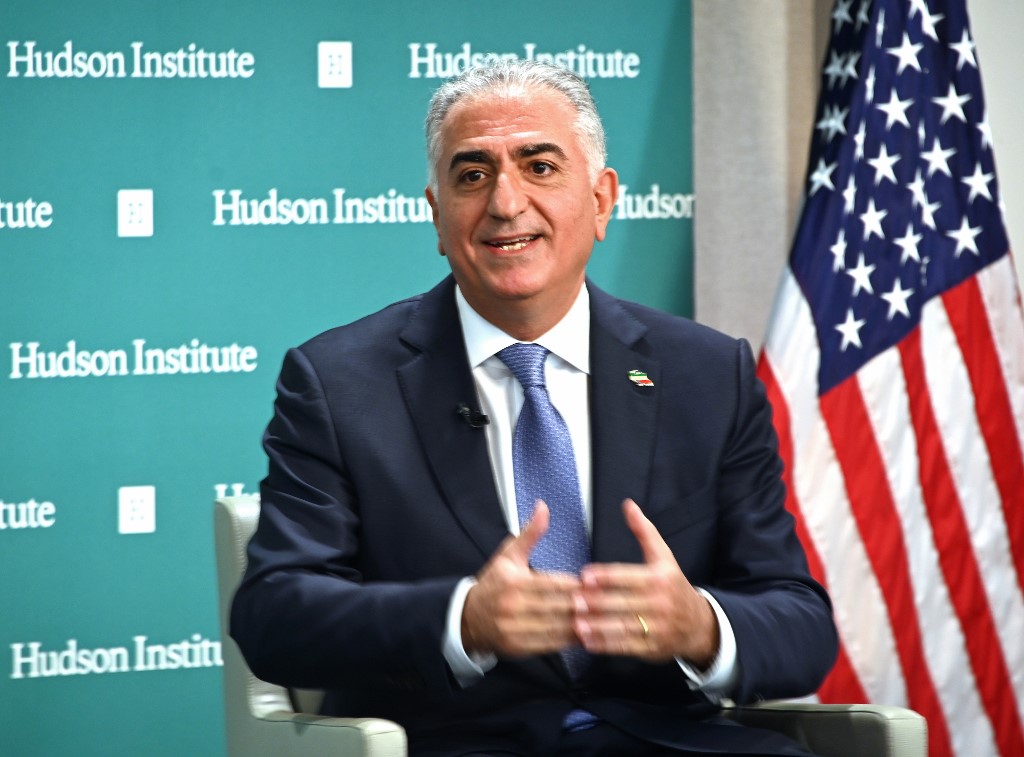
Reza Pahlavi, former Crown Prince of Iran, speaks about current events in Iran at the Hudson Institute in Washington, DC on January 15, 2020. (EVA HAMBACH/AFP)

Reza Pahlavi, former Crown Prince of Iran, speaks about current events in Iran at the Hudson Institute in Washington, DC on January 15, 2020. (EVA HAMBACH/AFP)

WASHINGTON, United States — The heir of Iran’s deposed monarchy predicted Wednesday that the clerical regime will collapse within months and urged Western powers not to negotiate with it.

Reza Pahlavi said that major protests which erupted in November and again this month, after the accidental downing of a Ukrainian passenger jet, reminded him of the uprising that ousted his father in early 1979.

“It’s just a matter of time for it to reach its final climax. I think we’re in that mode,” the former crown prince told a news conference in Washington, which he lives near in exile.

“This is weeks or months preceding the ultimate collapse, not dissimilar to the last three months in 1978 before the revolution,” he said.

While exiled activists have routinely predicted the fall of the regime, Pahlavi said that Iranians could “smell the opportunity for the first time in 40 years this time.”

The 59-year-old heir to the Peacock Throne, who has not been to Iran since he was a teenager, cited as evidence what he called an easing of fear among protesters and the growing distancing of self-described reformists from the Islamic regime.

In an address to the Hudson Institute, Pahlavi largely supported US President Donald Trump’s “maximum pressure” campaign that has sought to isolate the Iranian regime through severe sanctions, saying that past negotiations have failed.

“It has long been time to recognize that this is not a normal regime and that it will not change its behavior,” Pahlavi said.

“My compatriots understand that this regime cannot be reformed and must be removed.”

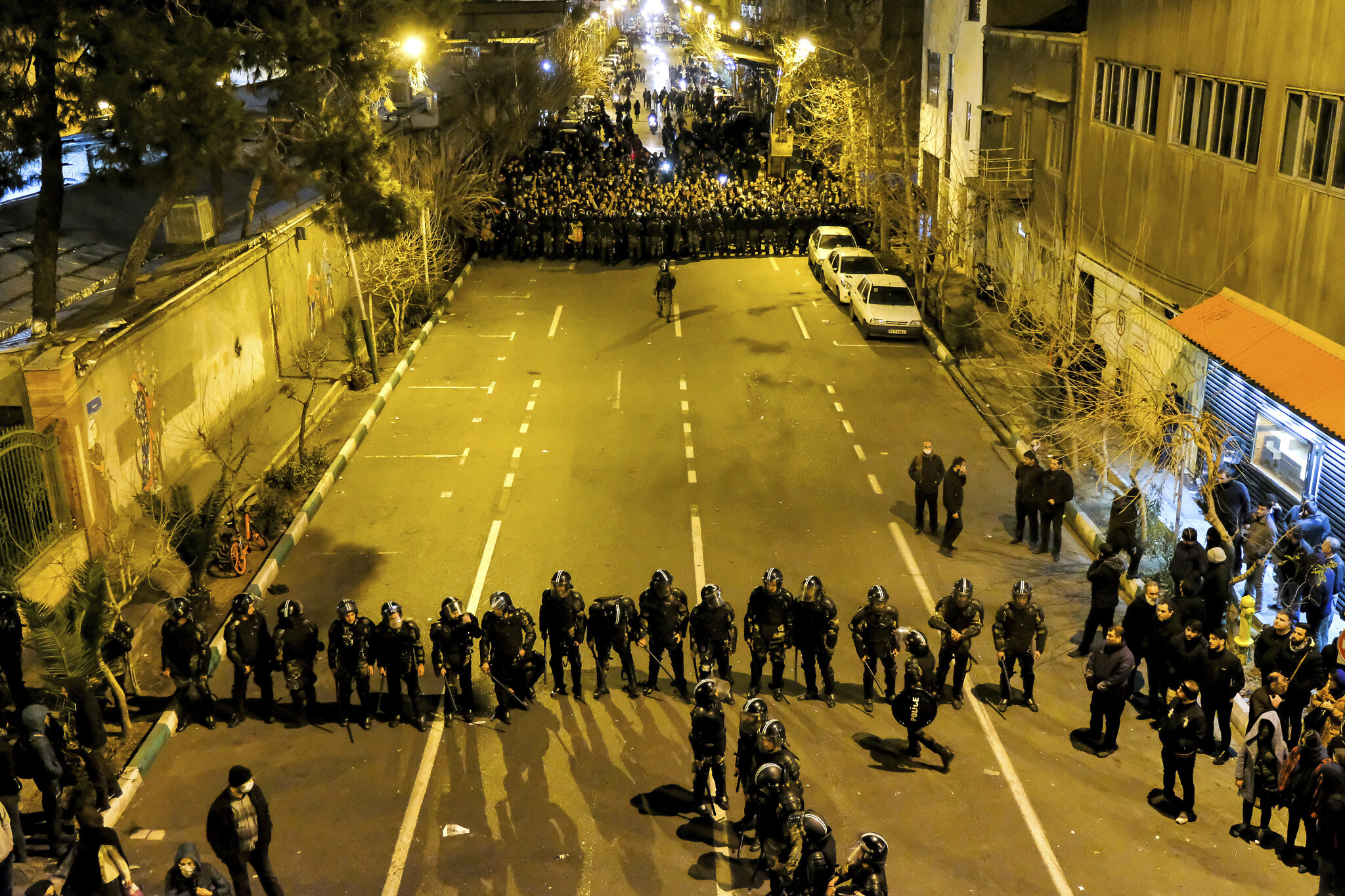
Iranian police officers take position while protesters gather in front of Amir Kabir University in Tehran, Iran, January 11, 2020.(AP Photo)

Iranians “expect the world to show more than just moral support. They expect not to be thrown under the bus in the name of diplomacy and negotiation.”

Trump previously held out hope of negotiations but has recently said he was unconcerned with talks and ordered the killing of a top Iranian general, Qassem Soleimani.

Pahlavi, whose Western-oriented father was closely allied with the United States, has played down prospects for restoration of the monarchy.

He says instead that he wants to support a broad coalition of Iranians who will replace the regime with a secular democracy.

Asked whether he can represent all Iranians, Pahlavi said: “It’s not about me, it’s about the people of Iran.”

“You may not like the messenger, but is there something wrong with the message?”


IDF strikes Hamas in Gaza in response to rocket fire, as sustained calm tested

January 16, 2020

Source: IDF strikes Hamas in Gaza in response to rocket fire, as sustained calm tested | The Times of Israel

Two incoming projectiles shot down by Iron Dome, others apparently strike open fields; attack sends hundreds of Israelis rushing to bomb shelters

The Israeli Air Force launched a series of strikes on Hamas sites in the Gaza Strip Wednesday evening in response to rocket fire on Israeli communities hours earlier, the military said.

According to the Israel Defense Forces, fighter jets attacked several Hamas facilities, including a weapons production site and a military base.

“The attack was carried out in response to the rocket launches from the Gaza Strip at Israeli territory,” the military said in a statement.

Palestinian media reported that one of the strikes targeted a Hamas naval commando facility in central Gaza. Footage of the attack (above) was widely shared on social media.

The military said it held Hamas, the de facto rulers of Gaza, responsible for all violence emanating from the Strip.

A Channel 13 reporter standing in a community near the Gaza border told the television network that he heard at least three explosions from the Gaza side of the border.

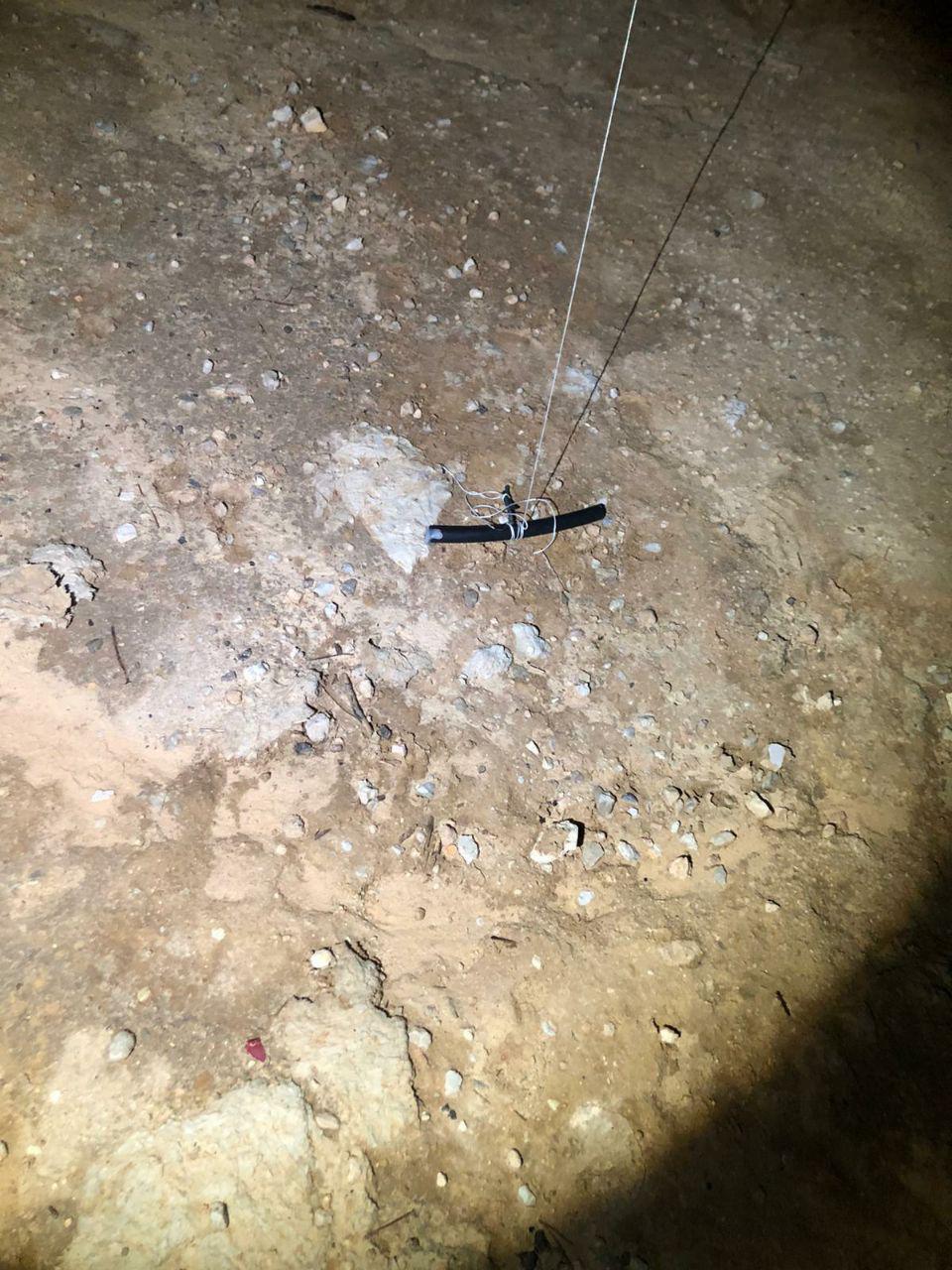
Also on Wednesday evening, police sappers were dispatched to the border town of Sderot where a suspicious object attached to a cluster of balloons landed in a residential neighborhood. It appeared to mark the renewal of the arson balloons attacks that torched thousands of acres of Israeli fields along the Gaza border in recent years.

דבורה 🐝🇮🇱@devorah555

ראשוני:
דוברות עיריית שדרות
ערב טוב. לפני זמן קצר אותרה בשדרות קבוצת בלונים אליה חובר פריט חבלה. המשך טיפול משטרה.

קרדיט חמ’ל הדרום

View image on Twitter

Two of the incoming projectiles were intercepted by the military’s Iron Dome air defense system. The other two appeared to strike open fields in Israel’s Sha’ar Hanegev region, east of northern Gaza.

The mortar attack shattered a period of relative calm along the border.

The attack triggered sirens in the Israeli communities of Sa’ad, Kfar Aza and Nahal Oz, sending hundreds of residents rushing to bomb shelters.

The round of mortar fire came three days since alarms last sounded in Nahal Oz, apparently due to heavy machine gun fire from the coastal enclave.

Israel has reportedly warned the Hamas and Palestinian Islamic Jihad terror groups against any attempted response to the US targeted killing of Iranian general Qassem Soleimani earlier this month.

Hamas, which rules the Gaza Strip, expressed its “sincere condolences” to Iran’s leadership after Soleimani was killed in Baghdad on January 3 and hailed his support for the “Palestinian resistance,” but did not issue any overt threat.

Hamas leader Ismail Haniyeh speaks at the funeral of Qassem Soleimani, in Tehran, Iran, January 6, 2020. (Office of the Iranian Supreme Leader)

The Islamist group’s leader in Gaza, Ismail Haniyeh, in the past lauded the “strong, powerful and warm” ties Hamas enjoyed with Soleimani, and spoke at the Iranian general’s funeral in Tehran.

The Iran-backed Islamic Jihad, which in November fought a two-day battle with Israel after one its military commanders was killed in an Israeli strike, has yet to respond.

Iran has for years sought to arm the Palestinian terror groups with rockets, mortars and missiles.

The US strike on Soleimani came amid efforts to broker a long-term ceasefire between Israel and Hamas, which have fought three wars since the terror group took control of Gaza in 2007.

Times of Israel staff contributed to this report.

Israel intel: Iran will have fissile material for a nuke this year, a nuclear-capable missile in two years – DEBKAfile

January 15, 2020

Source: Israel intel: Iran will have fissile material for a nuke this year, a nuclear-capable missile in two years – DEBKAfile

The Israeli intelligence 2020 assessment published on Tuesday, Jan 14, estimates that if Iran continues its nuclear program at the present pace, it will have 25 kgs of highly enriched uranium by winter 2020 and a missile capable of carrying a nuclear bomb in two years.

This estimate matches the forecast Israel made five years ago, DEBKAfile’s sources note, when six world powers signed a nuclear accord with Iran for curtailing its development of a nuclear bomb. What happened was that the $150bn reward received by Iran was invested in advanced weapons systems and in establishing paramilitary groups under its control for planting around Israel’s borders.

The assessment released today is hardly compatible with another estimate in the 2020 intelligence paper that rates as low the prospects of war by Israel’s enemies. Does that mean that those enemies, Iran and Hizballah, will hold off until they accumulate a stock of nuclear warheads? The most pressing question is this: What is Israel doing about the advancing nuclear threat?

Its leaders have refrained from publicly discussing the threat since tensions between the US and Iran became critical. Last week, President Donald Trump declared: We will never allow Iran to acquire a nuclear weapon. On Tuesday, Prime Minister Binyamin Netanyahu said on Twitter: “We know exactly what’s happening with the Iranian nuclear program. Iran thinks it can achieve nuclear weapons. I reiterate: Israel won’t allow Iran to achieve nuclear weapons. I also call on all Western countries to impose snap back sanctions at the UN now.”

He was referring to the decision taken earlier in the day by the UK, France and Germany, co-signatories of the 2015 nuclear accord, to activate the dispute mechanism embodied in that accord after repeated Iranian breaches.

This process is long and cumbersome. Hence Netanyahu’s impatient demand. Complaints are first referred to a Joint Commission, then to the foreign ministers, and finally to the UN Security Council, with long pauses in between. For Iran’s non-compliance with its obligations, a vote could “snap back” the international and multilateral sanctions lifted under the accord.


Iranians keep up protests against downing of airliner after arrests announced

January 14, 2020

Source: Iranians keep up protests against downing of airliner after arrests announced | The Times of Israel

Angry demonstrators at universities in Tehran slam regime for initial denials; security forces separate protesters from pro-government counter-demonstrators

Iranian students gather for a demonstration over the downing of a Ukrainian airliner at Tehran University on January 14, 2020. (ATTA KENARE / AFP)
Iranian students gather for a demonstration over the downing of a Ukrainian airliner at Tehran University on January 14, 2020. (ATTA KENARE / AFP)
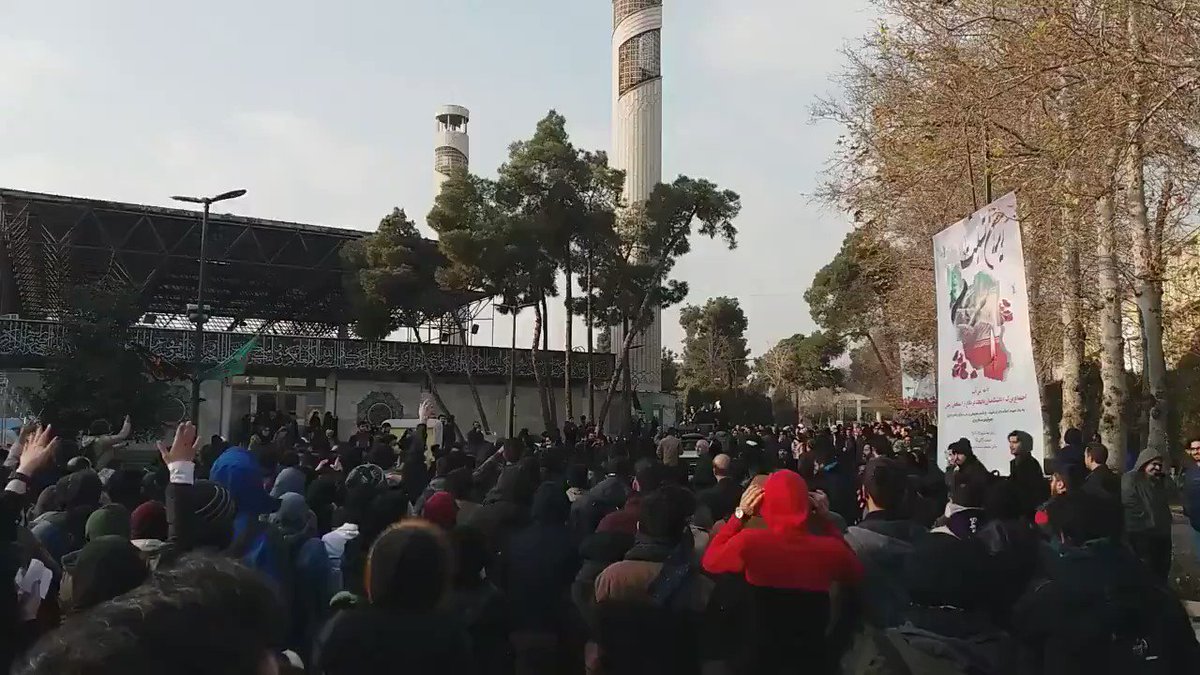
Protests in Iran over the accidental downing of a Ukrainian passenger plane entered their fourth day on Tuesday.

Iranian social media accounts shared footage said to be of demonstrators, especially in universities in the capital Tehran, protesting the country’s theocratic regime and demanding accountability after officials initially concealed the cause of the crash, which killed all 176 people on board, including several children and an infant.

Iran at first dismissed allegations that a missile had brought down the plane, but in the face of mounting evidence officials acknowledged on Saturday — three days after — that its Revolutionary Guard had shot down the plane by mistake as the force braced for a possible military confrontation with the United States.

AFP correspondents said around 200 mainly masked students gathered at Tehran University on Tuesday, where they were locked in a tense standoff with youths from the Basij militia loyal to the regime.

Mohammad Mozafari@mohmd_mozafari

Fourth day of popular protests in Iran. Students chant: We will save Iran. The Iranian people say: We do not want the Islamic Republic.

Embedded video

The British ambassador had said he went to a candlelight vigil to pay his respects for the victims of the Ukrainian plane shoot down and left as soon as the chanting began and it turned into a protest.

AVA TODAY@ava_today

Embedded video

Kept apart by security forces, the groups eventually parted ways.

Alireza Nader@AlirezaNader

“No reforms, no referendum, strike & revolution the way to go.”
Anti regime protests. Tehran University, .

Embedded video

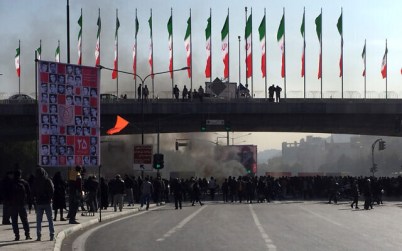
The shoot down of the plane and the lack of transparency around it has reignited anger in Iran at the country’s leadership. Online videos appeared to show security forces firing live ammunition and tear gas to disperse protests in the streets.

כאן חדשות

@kann_news

איראן: המחאה נגד השלטון נמשכת זה היום הרביעי ברציפות. לפי דיווחים של גופי תקשורת אופוזיציוניים, סטודנטים קוראים נגד המשטר בכמה אוניברסיטאות בבירה טהראן. באחד הסרטונים ניתן לשמוע מפגינים קוראים: “אל תפחדו, כולנו כאן יחד” ובסרטון אחר צועקים הסטודנטים “בוגדים”@yoavz

Embedded video

Also Tuesday, Iran’s judiciary said that 30 people had been detained in the protests, and that some were released, without elaborating further. An Iranian film director who had called for protests in Tehran’s Azadi, or Freedom, Square is among those released.

The protests have been much smaller than the nationwide demonstrations against fuel price hikes that turned deadly in November.

But one commentator said the latest rallies showed there was a “real rift between the people and the authorities.”

“I hope that [police restraint] will continue and that no lives are lost, because this could be a catalyst for more protests,” Mehdi Rahmanian, director of reformist daily Shargh, told AFP.

In another sign of growing dissent, a group of artists canceled their participation in the Fajr festival, held each year on the anniversary of the 1979 Islamic Revolution, according to Hamshahri newspaper, which is owned by Tehran City Hall.

Iranian officials said Tuesday arrests had also been made in the investigation into the downing of the Ukrainian airliner.

Iran’s Judiciary spokesman Gholamhossein Esmaili said “some individuals” were arrested after “extensive investigations.” His statement on the judiciary’s website did not say how many people had been detained or name those arrested.

The plane, en route from Tehran to the Ukrainian capital of Kyiv, was carrying 167 passengers and nine crew members from several countries, including 82 Iranians and 57 Canadians, many of whom were Iranians with dual citizenship. There were several children among the passengers, including an infant.

Supporters of the Basij, a militia loyal to the Islamic Republic regime, attend a memorial for the victims of the Ukraine plane crash at the University of Tehran on January 14, 2020. (ATTA KENARE / AFP)

Iran’s president on Tuesday called for a special court with “a ranking judge and dozens of experts” to be set up to probe the incident.

“The responsibility falls on more than just one person,” President Hassan Rouhani said in a televised speech, adding that those found culpable “should be punished.”

“There are others, too, and I want that this issue is expressed honestly,” he said, without elaborating.

Rouhani called the incident “a painful and unforgivable” mistake and promised that his administration would pursue the case “by all means.”

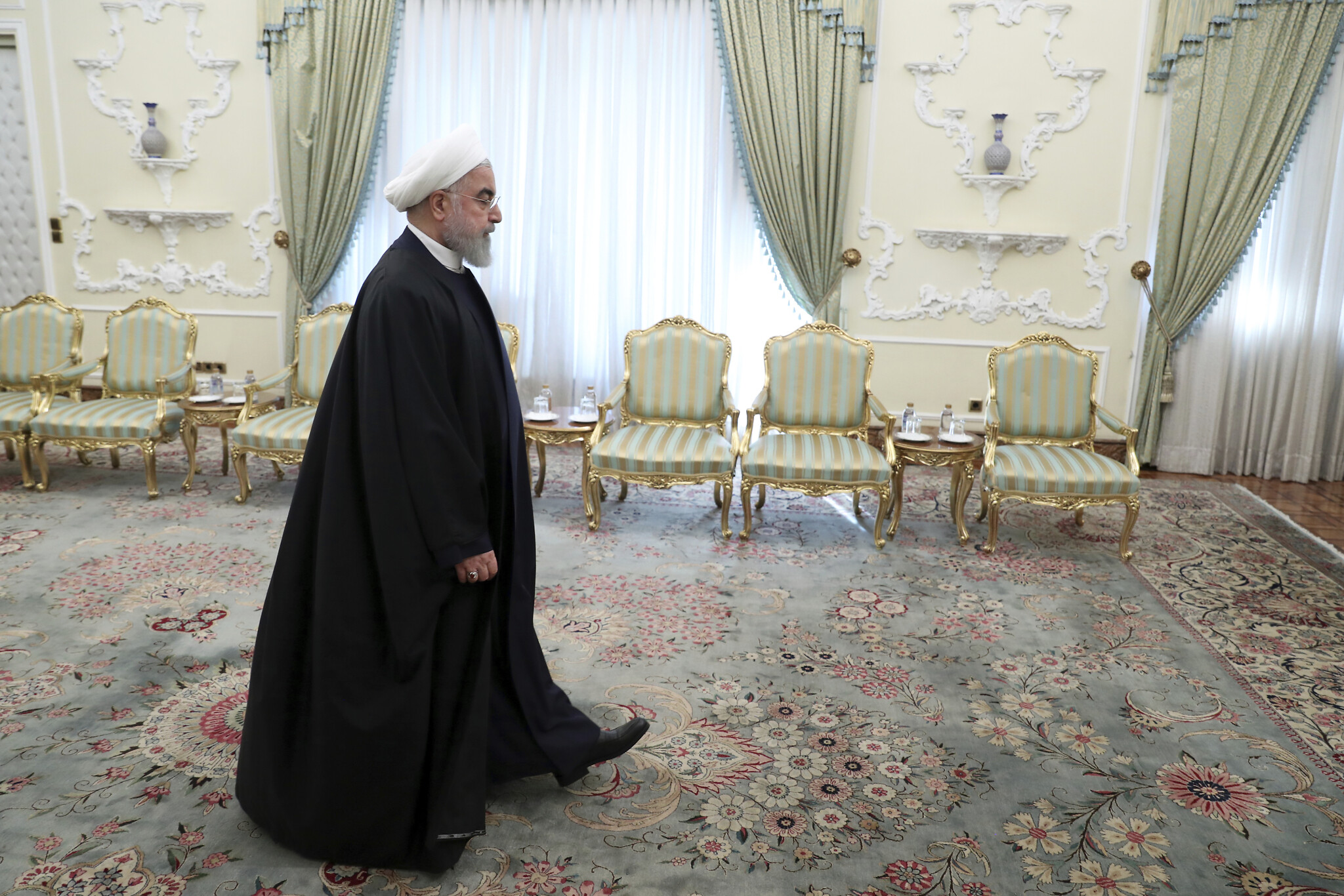
Iranian President Hassan Rouhani delivers a speech at the Kuala Lumpur Summit in Kuala Lumpur, Malaysia, December 19, 2019. (AP Photo/Lai Seng Sin)

“This is not an ordinary case. The entire the world will be watching this court,” he said.

Tensions have been escalating since US President Donald Trump pulled the US out of Iran’s 2015 nuclear deal with world powers, then reimposed sanctions that had been lifted under the accord.

The deal has quickly unraveled since then, with Iran steadily breaking away from limits on its nuclear program and Europe unable to find ways to keep Tehran committed.

The US sanctions have devastated Iran’s economy.

Smoke rises during a protest after authorities raised gasoline prices, in the central city of Isfahan, Iran, November 16, 2019. (AP Photo)

On Tuesday, Britain, France and Germany triggered the so-called dispute mechanism action that paves way for possible further sanctions in response to Iran’s moves.

Tensions sharply escalated further after January 3, when a US airstrike killed Iran’s most powerful military commander, Revolutionary Guard general Qassem Soleimani, in Baghdad.

In response, Iran launched ballistic missiles on military bases housing US troops in Iraq to avenge Soleimani’s killing. The Ukrainian plane was shot down in Tehran as Iranian forces were on alert for possible US retaliation.

While Rouhani pointed to mistakes and negligence, he also repeated the government’s line that the plane tragedy was ultimately rooted in US aggression.

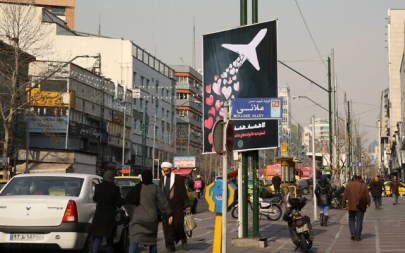
Iranians walk past a poster honoring the victims of a Ukrainian passenger jet accidentally shot down in the capital last week, in front of the Amirkabir University in the capital Tehran, on January 13, 2020. (ATTA KENARE/AFP)

“It was the US that made for an agitated environment. It was the US that created an unusual situation. It was the US that threatened and took our beloved [Soleimani],” he said.

Rouhani called the government’s admission that Iranian forces shot down the plane a “first good step.”

He added that Iranian experts who retrieved the Ukrainian plane’s flight recorder, the “black box,” have sent it to France for analysis.

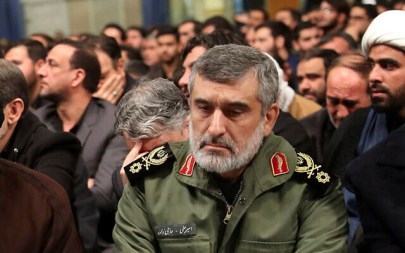
Gen. Amir Ali Hajizadeh, the head of the Guard’s aerospace division, said over the weekend his unit accepts full responsibility for the shoot down. He said when he learned about the downing of the plane, “I wished I was dead.”

In this January 9, 2020 photo released by an official website of the office of the Iranian supreme leader, Gen. Amir Ali Hajizadeh, the head of the Revolutionary Guard’s aerospace division, attends a mourning ceremony for general Qassem Soleimani a day after his forces shot down a Ukrainian airliner, in Tehran, Iran. (Office of the Iranian Supreme Leader via AP)

The incident raised questions about why Iran did not shut down its international airport or airspace the day it was on alert for US military retaliation.

Iran’s Foreign Ministry summoned the British ambassador on Sunday to protest what it said was his presence at an illegal protest. Britain, in turn, summoned Iran’s ambassador on Monday “to convey our strong objections” over the weekend arrest.

Iran’s top prosecutor, Mohammad Javad Montazeri, was quoted in local media Tuesday saying the British ambassador must be expelled from the country as soon as possible.


EU states trigger dispute process with Iran for breaches of nuclear deal

January 14, 2020

Source: EU states trigger dispute process with Iran for breaches of nuclear deal | The Times of Israel

‘Dispute mechanism’ over Tehran’s walking back of commitments to 2015 pact allows 2 weeks for resolution of problems ahead of possible sanctions, although period can be extended

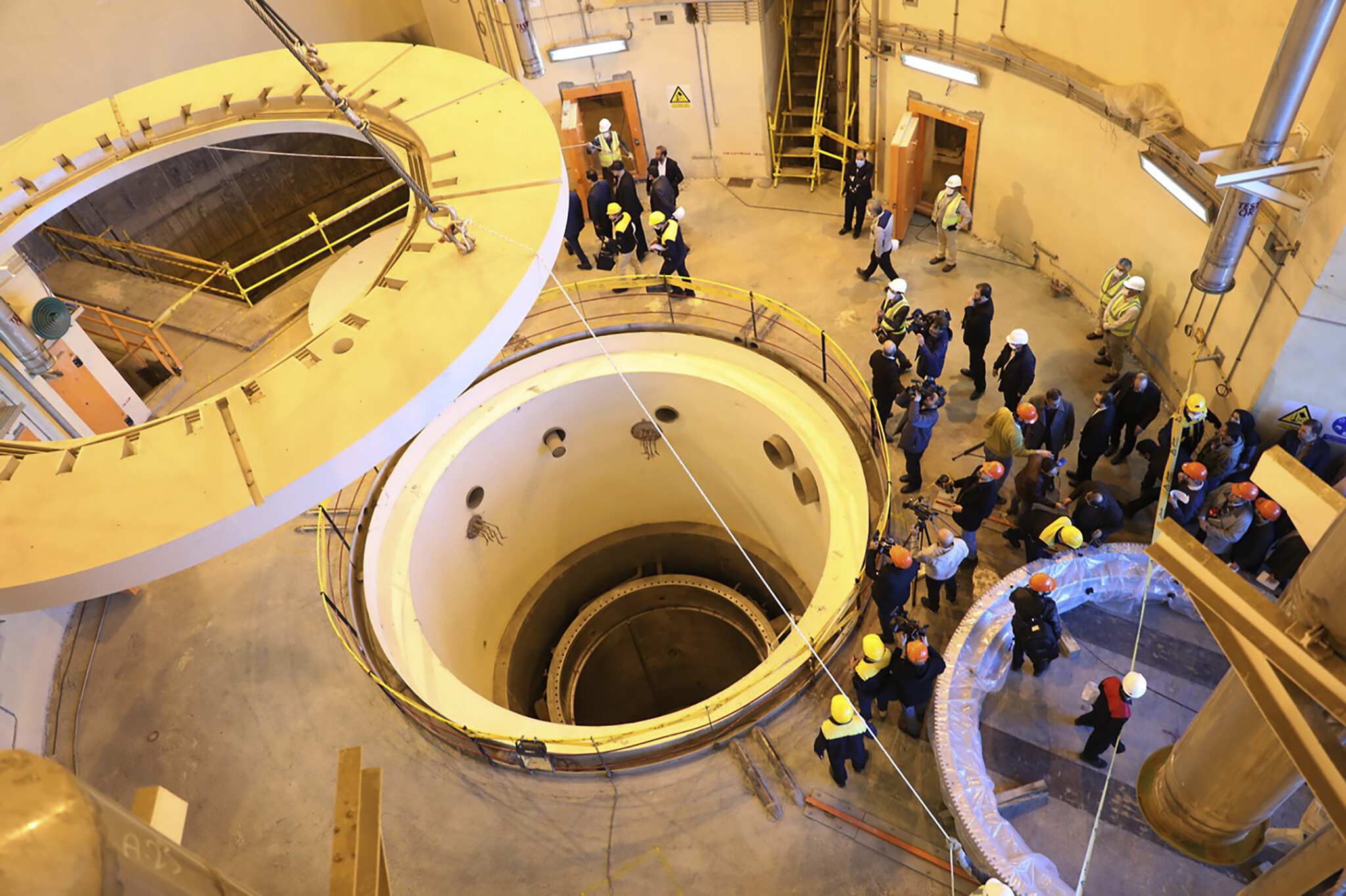
Technicians work at the Arak heavy water reactor's secondary circuit, as officials and media visit the nuclear site, near Arak, 150 miles (250 kilometers) southwest of the capital Tehran, Iran, December 23, 2019. (Atomic Energy Organization of Iran via AP)

Technicians work at the Arak heavy water reactor’s secondary circuit, as officials and media visit the nuclear site, near Arak, 150 miles (250 kilometers) southwest of the capital Tehran, Iran, December 23, 2019. (Atomic Energy Organization of Iran via AP)

BRUSSELS — Britain, France and Germany have launched action under the Iran nuclear agreement paving the way for possible sanctions in response to Tehran’s attempts to roll back parts of the deal, European Union foreign policy chief Josep Borrell said Tuesday.

The three countries, which signed the international agreement in 2015 along with the United States, Russia and China, informed Borrell, who supervises the pact, in a letter that they are triggering its “dispute mechanism,” ratcheting up pressure on the Islamic Republic.

The leaders of the three nations said in a statement that they’ve been “left with no choice, given Iran’s actions, but to register today our concerns that Iran is not meeting its commitments.”

The powers said they are referring “this matter to the Joint Commission under the Dispute Resolution Mechanism, as set out” in the nuclear deal.

German Foreign Minister Heiko Maas arrives for the weekly cabinet meeting in Berlin, Germany, July 31, 2019. (AP Photo/Michael Sohn)

German Foreign Minister Heiko Maas said in a statement that the three European countries “could no longer leave the growing Iranian violations of the nuclear agreement unanswered.”

“Our goal is clear: we want to preserve the accord and come to a diplomatic solution within the agreement,” he added. “We will tackle this together with all partners in the agreement. We call on Iran to participate constructively in the negotiation process that is now beginning.”

Borrell insisted that the move does not mean that sanctions will automatically be reimposed.

The mechanism allows two weeks for ministers to resolve any problems, although that period can be extended if all sides agree. If needed, an advisory board would have an extra 20 days to adjudicate.

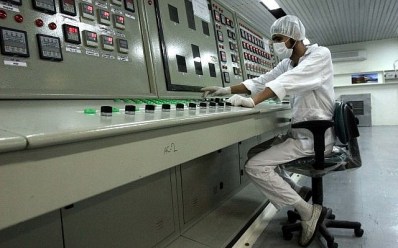
A technician at the Uranium Conversion Facility just outside the city of Isfahan, Iran, 255 miles (410 kilometers) south of the capital Tehran, February 3, 2007. (AP/Vahid Salemi/File)

The nuclear agreement is aimed at convincing Iran to stop developing atomic weapons in exchange for economic incentives. It’s been on life support since US President Donald Trump unilaterally pulled the United States out in 2018, triggering sanctions that have hurt Iran’s moribund economy. Since then, Tehran has gradually rolled back its commitment to the deal.

After its top general was killed in a US drone attack earlier this month, Iran announced that it would no longer respect limits set on how many centrifuges it can use to enrich uranium. Tehran said the new move was a “remedial step” in line with the deal and that it could be reversed.


Iran warns of ‘strong response’ if Europe reimposes nuclear sanctions

January 14, 2020

Source: Iran warns of ‘strong response’ if Europe reimposes nuclear sanctions | The Times of Israel

Tehran’s Foreign Ministry says country ‘fully ready to answer any good will and constructive effort’ to preserve nuclear deal after European states trigger dispute mechanism

Abbas Mousavi, spokesman for Iran's Foreign Ministry, gives a press conference in the capital Tehran on May 28, 2019. (Atta Kenare/AFP)

Abbas Mousavi, spokesman for Iran’s Foreign Ministry, gives a press conference in the capital Tehran on May 28, 2019. (Atta Kenare/AFP)

Iran’s Foreign Ministry warned Tuesday of a “serious and strong response” after Britain, France and Germany triggered the 2015 nuclear deal’s dispute mechanism due to Tehran’s ongoing transgressions of its terms.

The European countries ratcheted up pressure on the Islamic Republic to cease its violations of the landmark deal, stressing in a letter to the European Union’s foreign policy chief that they want to resolve differences through talks while starting the clock on a process that could result in a so-called snapback of United Nations sanctions.

However, while Iran’s Foreign Ministry spokesman Abbas Mousavi vowed tough retaliation could follow, he added that Tehran was “fully ready to answer any good will and constructive effort” that preserves the nuclear deal.

He was quoted by the official IRNA news agency.

The three European countries, which signed the international agreement along with the United States, Russia and China, said they rejected Tehran’s argument that Iran was justified in violating the deal because the United States broke the agreement by pulling out unilaterally in 2018.

Technicians work at the Arak heavy water reactor’s secondary circuit, as officials and media visit the nuclear site, near Arak, 150 miles (250 kilometers) southwest of the capital Tehran, Iran, December 23, 2019. (Atomic Energy Organization of Iran via AP)

“We have therefore been left with no choice, given Iran’s actions, but to register today our concerns that Iran is not meeting its commitments,” the countries said in a joint statement.

EU foreign policy chief Josep Borrell, who coordinates the agreement on behalf of the world powers, said the pressure on Iran from Europe does not mean international sanctions will automatically be slapped on the Islamic Republic.

The aim of the move by France, Germany and Britain is “to find solutions and return [Iran] to full compliance within the framework of this agreement,” he said.

The Europeans stressed that they want to “resolve the impasse through constructive diplomatic dialogue” and made no threat of sanctions in their statement.

They also specifically distanced themselves from sanctions imposed by the US, which Washington has said is part of a “maximum pressure” campaign against Tehran.

“Our three countries are not joining a campaign to implement maximum pressure against Iran,” they said. “Our hope is to bring Iran back into full compliance with its commitments.”

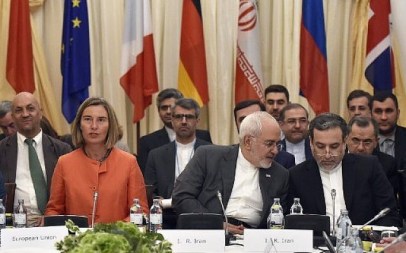
European Union High Representative for Foreign Affairs Federica Mogherini (L); Iranian Minister of Foreign Affairs Mohammad Javad Zarif (C) and political deputy at the Ministry of Foreign Affairs of Iran Abbas Araghchi take part in a Comprehensive Plan of Action (JCPOA) ministerial meeting on the Iran nuclear deal on July 6, 2018 in Vienna, Austria. (AFP/APA/Hans Punz)

The 2015 nuclear deal, known as the Joint Comprehensive Plan of Action, or JCPOA, seeks to prevent Iran from producing a nuclear weapon — something Iran insists it does not want to do — by putting curbs on its atomic program in exchange for economic incentives.

Under its dispute resolution mechanism, countries have 30 days to resolve their problem, though that can be extended. If it cannot be solved, the matter could be brought before the UN Security Council and could then result in the snapback of sanctions that had been lifted under the deal.

US President Donald Trump unilaterally pulled the US out in May 2018, saying the pact was insufficient and should be re-negotiated because it didn’t address Iran’s ballistic missile program or its involvement in regional conflicts. Since then he has reinstated American sanctions, which have been having a devastating effect on Iran’s economy.

In response, Iran has rolled back its commitments in stages to try and pressure the other countries involved to provide economic incentives to offset the American sanctions, but efforts from them so far have been insufficient.

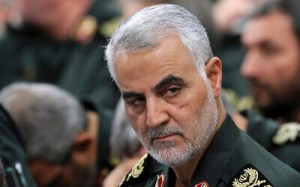
Senior Revolutionary Guard commander Gen. Qassem Soleimani, center, attends a meeting with Supreme Leader Ayatollah Ali Khamenei (not seen) and Revolutionary Guard commanders in Tehran, Iran, September 18, 2016 photo. (Office of the Iranian Supreme Leader via AP)

After its top general, Qassem Soleimani, was killed in a US drone attack earlier this month, Iran announced what it said was its fifth and final step in violating the deal, saying it no longer will abide by any limitation to its enrichment activities. At the same time it again said all of its violations were reversible if it gets the economic relief it wants.

With the growing skepticism that the deal will be able to saved, British Prime Minister Boris Johnson on Tuesday suggesting that maybe the agreement could be somehow re-worked to address some of the concerns raised by Trump when he pulled the US out.

“Let’s work together to replace the JCPOA with the Trump deal,” he told the BBC.

Borrell refused to comment on the suggestion, but again emphasized that the remaining signatories to the deal, which took years to negotiate, feel it is the best solution to limiting Iran’s nuclear ambitions.

“We have to preserve the nuclear deal and work to go back to full and effective implementation,” Borrell told reporters in Strasbourg, France. He described the pact as a “significant achievement” and underlined that “there is no alternative to this agreement.”

Britain’s Foreign Secretary Dominic Raab told Parliament that “the government in Iran has a choice.”

“The regime can take the steps to de-escalate tensions and adhere to the basic rules of international law. Or sink deeper and deeper into political and economic isolation,” he said. “We urge Iran to work with us to save the deal.”


Tension reported between Rouhani, Guard Corps as prominent Iranians bash regime 

January 14, 2020

Source: Tension reported between Rouhani, Guard Corps as prominent Iranians bash regime | The Times of Israel

Powerful military unit angry it was publicly blamed for downing of Ukrainian plane; government claims it was deceived over what had happened, UK’s Telegraph reports

Iranian President Hassan Rouhani arrives for a meeting at the presidency office in Tehran, Iran, December 23, 2019. (Ebrahim Noroozi/AP)

Iranian President Hassan Rouhani arrives for a meeting at the presidency office in Tehran, Iran, December 23, 2019. (Ebrahim Noroozi/AP)

There is increasing ill feeling between the Iranian government and the powerful Islamic Revolutionary Guards Corps over last week’s downing of a Ukrainian passenger jet, with a government spokesman on Monday accusing the military of deceiving political leaders about what really happened to the plane, according to a report from the UK’s Telegraph newspaper.

Popular anger has swelled at the Iranian government’s attempt to conceal its role in the airliner tragedy, with days of protests and several prominent Iranians critiquing the regime.

Iran initially claimed the plane crashed last Wednesday, killing all 176 on board, due to engine failure, but over the weekend admitted that it had been shot down after being mistaken for a hostile aircraft.

Government spokesman Ali Rabiei indicated the military had at first misled rulers over what actually happened to the airliner.

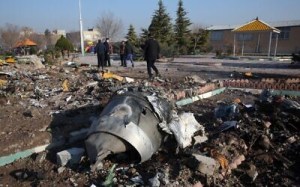
Rescue teams work amidst debris after a Ukrainian plane carrying 176 passengers crashed near Imam Khomeini airport in the Iranian capital Tehran early in the morning on January 8, 2020, killing everyone on board. (AFP)

”All relevant authorities had assured us that there had been no missile involved in the downing of the Ukrainian plane,” Rabiei said in the report.

The Ukrainian Airlines flight was hit in the hours after Iran fired volleys of missiles at two US bases in Iraq in revenge for the US drone strike killing of top IRGC commander Gen. Qassem Soleimani.

Most of the people aboard the Ukraine International Airlines jet were Iranians and Iranian-Canadians. For three days, Iranian officials ruled out any attack on the plane, suggesting the crash of Flight 752 was caused by a technical failure. Only on Saturday did authorities acknowledge shooting it down, as evidence mounted and after Western leaders accused Iran of culpability.

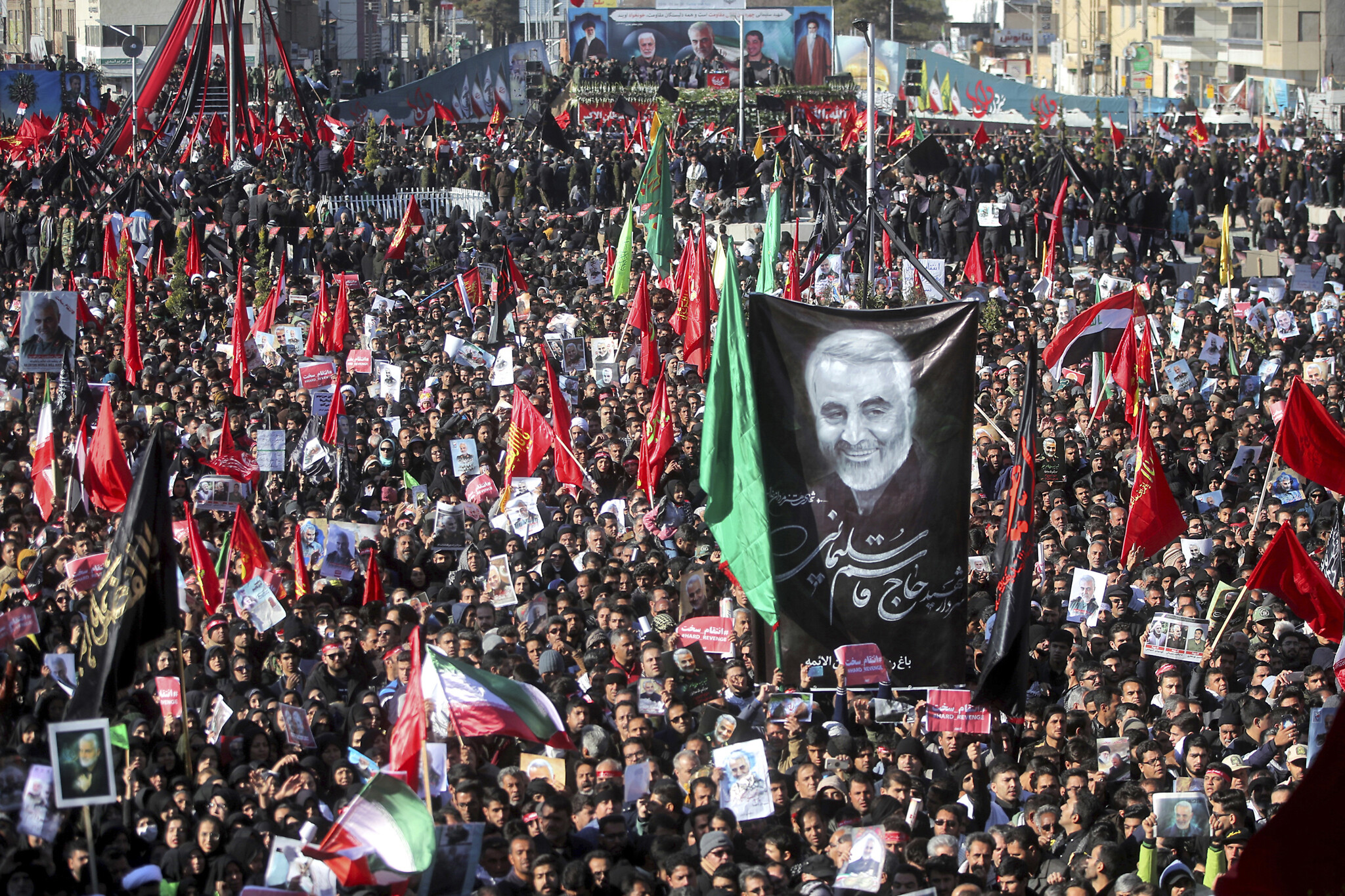
Mourners attend a funeral ceremony for Iranian Gen. Qassem Soleimani and his comrades, who were killed in Iraq in a US drone strike, in the city of Kerman, Iran, January 7, 2020 (Erfan Kouchari/Tasnim News Agency via AP)

Rabiei insisted Iran’s civilian officials learned only on Friday that the Revolutionary Guard had shot down the plane. The Guard answers directly to Supreme Leader Ayatollah Ali Khamenei.

“The point is that we did not lie,” Rabiei said. He went on to blame the US for “spreading the shadow of war over Iran.”

Meanwhile a recording of an IRGC commander speaking to other officers, published by the Iranian opposition site Pyk Net, appeared to show that the unit’s leaders are angry at the government for so quickly putting responsibility for the incident on the Guards.

“The statement by the government admitting the cause of air crash was disgraceful,” the officer said according to the Telegraph, citing the recording. “The statement should not have blamed the entire Revolutionary Guard and could have just said it was the fault of one individual.”

This commander suggested the government could have waited “two or three months” before revealing the cause of crash so that the Guards could continue to enjoy public support over the missile attack on two US bases in Iraq.

“The November protests were caused by the Rouhani government but the Revolutionary Guard sacrificed itself and put them down, but this time the government is so passive in the face of the attacks on the Revolutionary Guard,” the commander said, referring to demonstrations sparked by fuel price hikes late last year. Amnesty International estimated that some 300 people were killed by Iranian security forces as they suppressed nationwide protests. The Reuters news agency estimated 1,500 were killed.

Rouhani has been at odds with the Guards for years, the newspaper report said. Whereas he supports diplomacy with the West, the Guards want isolation.

Iranian police officers take position while protesters gather in front of Amir Kabir University in Tehran, Iran, January 11, 2020.(AP Photo)

Many Iranians, already suffering under crippling US sanctions, expressed shock and outrage over the plane crash that killed scores of young people. They also decried the misleading statements from top officials.

For a growing number of critics — from ordinary citizens to notable athletes and artists — the events have revealed a government that is incapable of following through on its incendiary rhetoric and willing to mislead its own people about a national tragedy in order to avoid embarrassment. In addition to the street protests, Iran’s government has also faced harsh criticism from prominent artists, athletes and journalists.

A number of artists, including famed director Masoud Kimiai, withdrew from an upcoming international film festival. And two state TV hosts have resigned in protest over the false reporting about what happened to Flight 752.

Gelare Jabbari, an Iranian state television anchor who resigned, said: “It was very hard for me to believe the killing of my countrymen. I apologize for lying to you on TV for 13 years,” the Telegraph reported.

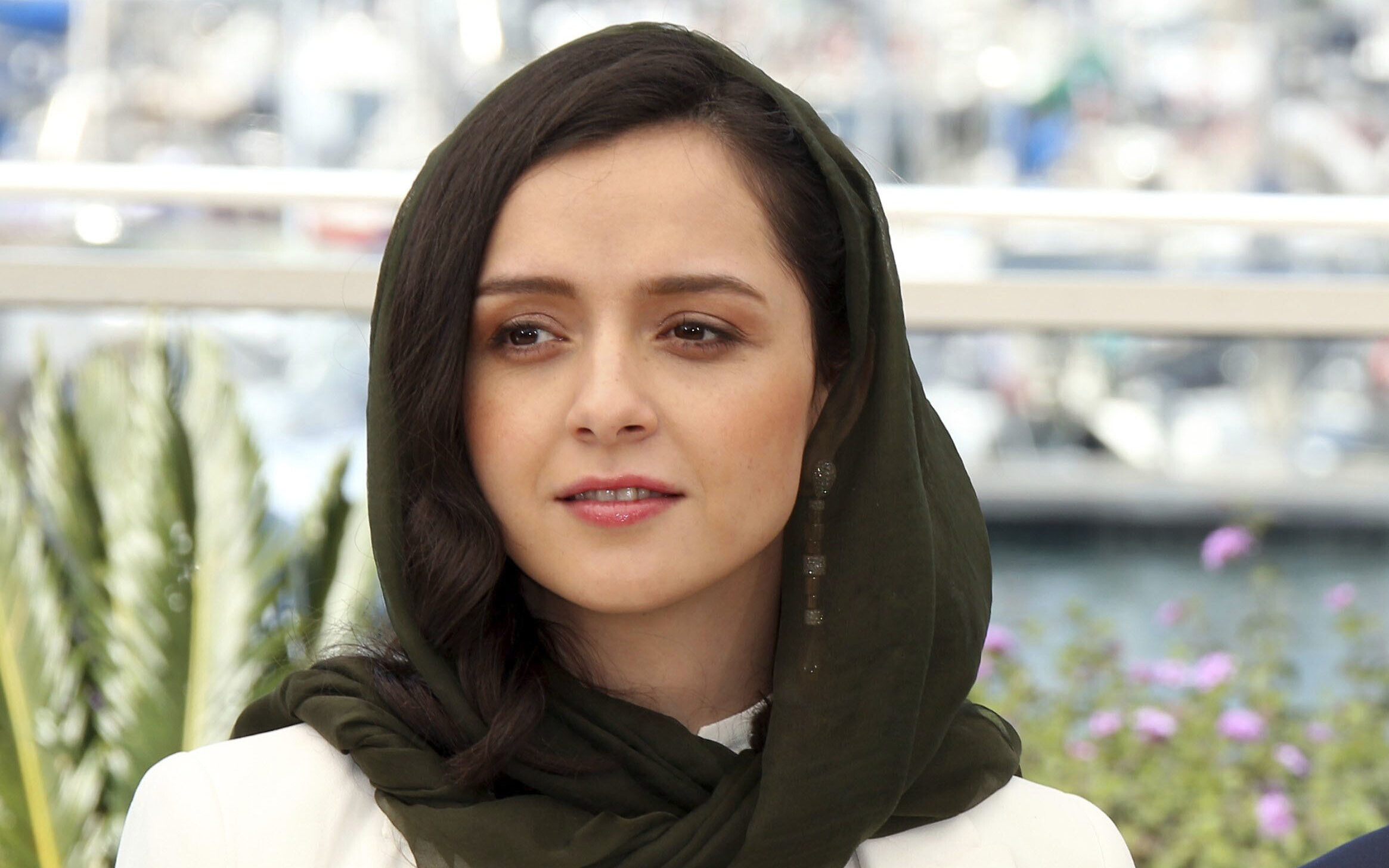
Taraneh Alidoosti, one of Iran’s most famous actresses, posted a picture of a black square on Instagram with the caption: “We are not citizens. We are hostages. Millions of hostages.”

Iranian actress Taraneh Alidoosti during a photo call for the film ‘Forushande (The Salesman)’ at the 69th international film festival, Cannes, southern France, May 21, 2016. (Joel Ryan/AP)

Saeed Maroof, the captain of Iran’s national volleyball team, also wrote on Instagram: “I wish I could be hopeful that this was the last scene of the show of deceit and lack of wisdom of these incompetents but I still know it is not.”

He said that despite Iran’s national team qualifying for the 2020 Tokyo Olympics after years of effort, “there is no energy left in our sad and desperate souls to celebrate.”

Sentiments first boiled over late Saturday, shortly after the Revolutionary Guard admitted to shooting the plane down by mistake. A candlelight vigil at a university rapidly turned into an anti-government demonstration.

“They are lying that our enemy is America! Our enemy is right here!” students shouted.

On Sunday night, protesters massed in Tehran’s Azadi, or Freedom, Square.

The IRGC, which has enormous power in Iran, has also in the past rattled Foreign Minister Mohammad Javad Zarif. Zarif reportedly resigned his position last year after Soleimani met with Syrian President Bashar Assad in talks the minister felt should have been his responsibility. Rouhani rejected Zarif’s resignation.


IDF sees chance to halt Iranian entrenchment in region with Soleimani gone 

January 14, 2020

Source: IDF sees chance to halt Iranian entrenchment in region with Soleimani gone | The Times of Israel

In army’s annual intel assessment, Tehran remains the primary foe in the region; the death of its viceroy might make the fight easier, but potential for unwanted conflicts abounds

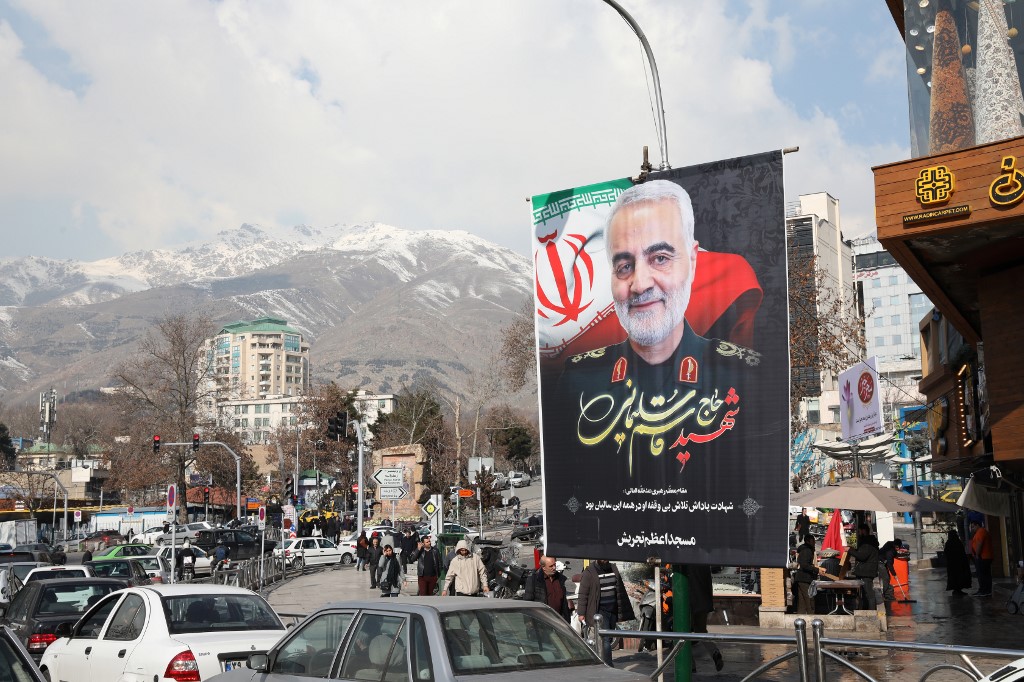
Iranians walk past a poster of slain military commander Qasem Soleimani off a main square in the Islamic republic’s capital Tehran on January 11, 2020. (ATTA KENARE / AFP)

Israeli Military Intelligence believes the killing of Iranian general Qassem Soleimani represents a significant opportunity to counter Tehran’s growing aggressiveness in the region, The Times of Israel learned Tuesday.

In its annual intelligence assessment, which is presented to the country’s decision-makers, the Israel Defense Forces relates to Iran as its primary enemy, albeit one that is both increasingly weakened by internal protests in the country and by the recent loss of one of its main leaders, who served as something of a viceroy commanding and counseling allies throughout the Middle East.

However, the assessment also warns that Iran’s attempts to maintain control of its country and allies, who have also seen protests against Tehran’s influence, could end up raising the risk of heavy retaliation by Iran against Israel for ongoing Israeli airstrikes against its efforts to entrench itself militarily in Syria, Iraq and elsewhere in the region.

The IDF does not foresee Iran intentionally initiating a war against the Jewish state in the coming year, but does see a risk of unwitting conflict as Israel intends to continue acting against Tehran in the region, which could prompt Iranian strikes against it in return.

In this photo from June 23, 2017, supporters of Iraqi Hezbollah brigades march on a representation of an Israeli flag with a portrait of late Iranian leader Ayatollah Khomeini and Iran’s Supreme Leader Ayatollah Ali Khamenei, in Baghdad, Iraq. (AP Photo/Hadi Mizban, File)

The full ramifications of Soleimani’s death earlier this month in an American airstrike in Baghdad remain unclear, but as the long-time commander of the Islamic Revolutionary Guard Corps’ Quds Force, who created and controlled Shiite militia proxies throughout the Middle East, his absence is expected to have a positive effect on regional stability, according to the military assessment.

Specifically, the IDF believes Soleimani’s death has the potential to allow Israel to curb or halt Iran’s efforts to entrench itself militarily in Syria and continued attempts to transfer technology needed for Hezbollah to produce its own precision-guided missiles within Lebanon.

For now, Hezbollah is not believed to have this capability — a threat that Israel is prepared to go to war to prevent. Access to large numbers of highly accurate missiles would represent a significant threat to Israeli national security, second only to the danger posed by an Iranian nuclear weapon, Israeli officials have said in the past.

The assessment notes that it’s not clear if Hezbollah leader Hassan Nasrallah fully believes that the IDF is prepared to go to war to prevent Iran and the Lebanese-based terror group from establishing factories to produce precision-guided rockets, and warns that the misunderstanding could end up sparking a intense, prolonged military confrontation with Hezbollah.

No breakout plans

On the nuclear front, the IDF does not believe that Iran is currently interested in rapidly “breaking out” and developing an atomic bomb as quickly as possible. Though the military sees Iran’s ongoing violations of the 2015 nuclear deal, known as the Joint Comprehensive Plan of Action (JCPOA), as a troubling development, it does not assess that Iran is inclined to race toward a weapon.

Following Soleimani’s death, Tehran announced it would no longer abide by the limits on quantities and levels of enrichment for uranium of the JCPOA — the latest in a line of violations of the agreement since US President Donald Trump abandoned the deal in 2018. Israel believes that these violations are not meant to signify an effort to develop a nuclear bomb as quickly as possible, but are rather meant to serve as a form of pressure on the other signatories of the JCPOA.

The exterior of the Arak heavy water production facility in Arak, Iran, 360 kilometers southwest of Tehran, October 27, 2004. (AP Photo)

However, should it choose to “break out” rapidly, by the fall of 2020 Iran would be able to produce the 1,300 kilograms (2,900 pounds) of low-enriched uranium needed to get the 25 kilograms (55 pounds) of highly enriched uranium necessary for a bomb, assuming it continued at current projected rates, according to Israeli assessments. The overall current assessment is that Iran is potentially two years from a bomb — the same time frame that has been assessed for some time.

For Iran, while there is relatively broad consensus on the importance of its nuclear program, it is facing increasing pressure domestically to abandon or limit its expansionism as American sanctions wreak havoc on the Iranian economy.

The IDF sees the ongoing protests throughout Iran, which began in November, as the most significant challenge to the regime led by Supreme Leader Ali Khamenei since the Islamic revolution that brought it to power in 1979.

Iranian forces quelled those protests in a bloody crackdown that killed as many as 1,500, according to some estimates.

New protests have broken out in recent days since Iran admitted accidentally downing a Ukrainian airliner, killing all 176 aboard.


Person who shared video of Iranian missile hitting plane detained — report 

January 14, 2020

Source: Person who shared video of Iranian missile hitting plane detained — report | The Times of Israel

A person who shared video online of an Iranian missile hitting a Ukrainian passenger plane has been taken into custody by Iran’s Revolutionary Guard, Reuters reports, quoting the Fars news agency.

The Fars report says the investigation will be published, without elaborating.

The Revolutionary Guard admitted over the weekend to shooting down the plane, killing all 176 people on board.

Iran’s judiciary earlier today announced arrests in connection to the missile strike on the plane, but didn’t specify how many people were detained or name them.