Archive for January 2020

Iranian stars bolster downed jet protests amid spate of high-profile defections

January 21, 2020

Source: Iranian stars bolster downed jet protests amid spate of high-profile defections | The Times of Israel

Among those openly criticizing regime are actors vowing to boycott a film festival, a famed volleyball player and a former state TV presenter who apologized for ’13 years of lying’
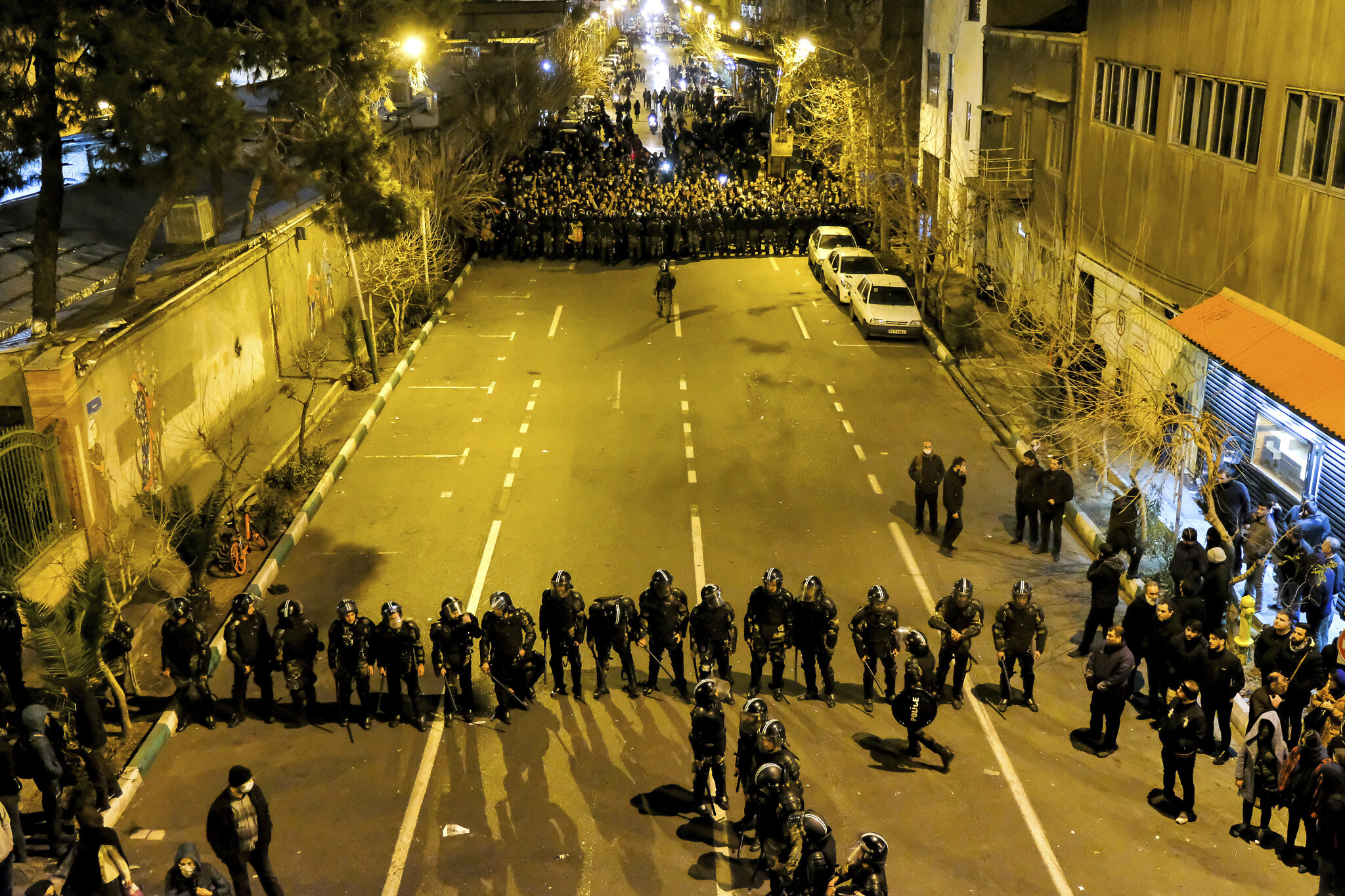
Iranian police officers take position while protesters gather in front of Amir Kabir University in Tehran, Iran, January 11, 2020.(AP Photo)

NICOSIA, Cyprus — Iranian artists, athletes and media personalities have lent their voices to anti-government protests in the Islamic republic over the accidental downing of a passenger plane that killed 176 people.

Among them have been actors vowing to boycott a film festival, a star volleyball player who said he saw “no light in the future,” and a former state TV presenter who apologized “for 13 years of lying” to her viewers.

The latest demonstrations broke out after the armed forces admitted they had accidentally shot down a Ukrainian passenger jet on January 8 amid high tensions with arch foe the United States.

The acknowledgement, after days of denial by the government, was met with an outpouring of grief over the loss of life and anger at the breach of trust, with demonstrators calling their rulers “liars.”

They were soon joined by a string of high-profile figures from the worlds of arts, sports and media.

A slew of actors and others withdrew from April’s Fajr International Film festival, which is held each year to mark the anniversary of the 1979 Islamic Revolution.

Navid Mohammadzadeh holds the Orizzonti Special Prize for best actor for ‘No Date, No Signature’ during the awards photo call at the 74th Venice Film Festival at the Venice Lido, Italy, September 9, 2017. (Domenico Stinellis/AP)

Over three million people within days watched a clip posted by one actor, Navid Mohammadzadeh, which also garnered plaudits from other Iranian stars.

The short take from his 2018 film “Sheeple” touches on a tough choice many dissidents face: stay and push for change despite the risks, or leave and join Iran’s chronic brain drain.

“Now you see that I haven’t left this wreck of a place,” Mohammadzadeh’s character tells his abusive father in the short video.

“I have stayed and will blacken your life. I stayed to get my rights.”

‘Desperate and sad’

One high-profile flight from the country drew headlines around the time of the protests.

On January 11, taekwondo athlete Kimia Alizadeh, Iran’s only female Olympic medalist, announced she had permanently left Iran, citing the “hypocrisy” of a system she claimed humiliates athletes while using them for political ends.

“I am one of the millions of oppressed women in Iran with whom they have been playing for years,” the 21-year-old wrote on Instagram.

Iranian parliamentarian Abdolkarim Hosseinzadeh demanded answers, accusing “incompetent officials” of allowing Iran’s “human capital to flee” the country.
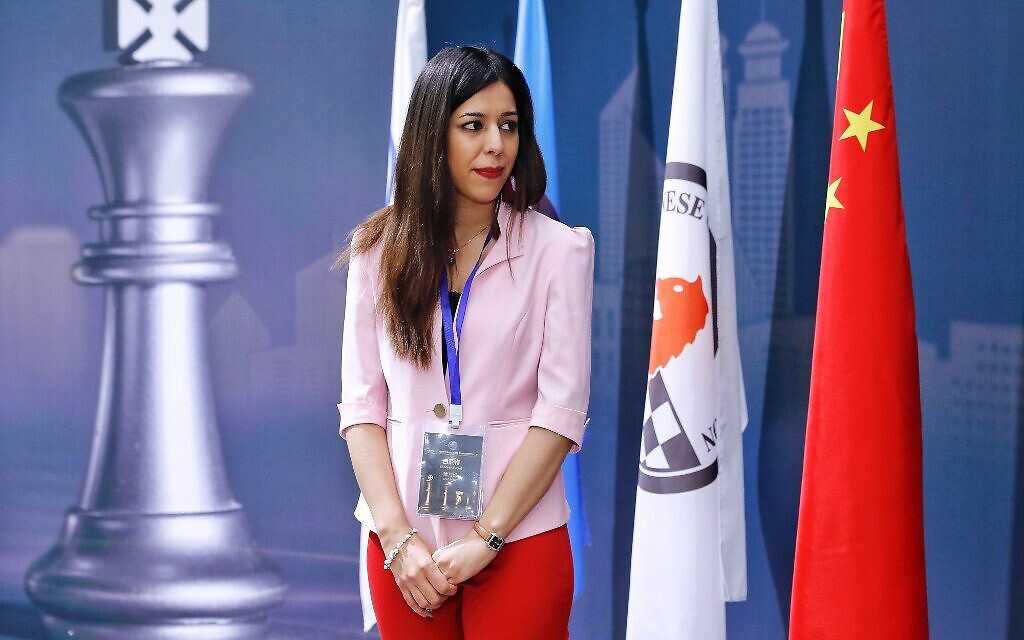
Shohreh Bayat, chief arbiter for the match between Aleksandra Goryachkina of Russia and Ju Wenjun of China, lis seen before the match during the 2020 International Chess Federation (FIDE) Women’s World Chess Championship in Shanghai on January 11, 2020. (Stringer/AFP)

Another star athlete, national volleyball captain Said Marouf, posted a message on January 12 that was sombre in tone despite the fact the team had just earned a spot at the 2020 Tokyo Olympics.

“Today, in our desperate and sad mood, we can’t celebrate this victory and achievement of a dream that we have worked toward for years,” he said.

“Our despair and sadness are not only because our fellow citizens are mourning, but because we see no light in the future.”

And, just days ago, Iranian chess referee Shohreh Bayat, who drew fire over accusations she violated Iran’s Islamic dress code while at a world championship in Russia, also reportedly said she now plans to stay away from her homeland.

‘Solidarity and solace’

For days after the aircraft tragedy, state media toed the line that a mechanical failure had caused it to crash.

So the admission that a missile operator had fired at the Ukraine International Airlines plane mistaking it for an American cruise missile sent ripples through the media arena.

In a rare move, state-run TV acknowledged that “anti-regime” protests were being held, only months after November’s much larger nationwide protests were bloodily put down amid a near-total internet blackout.
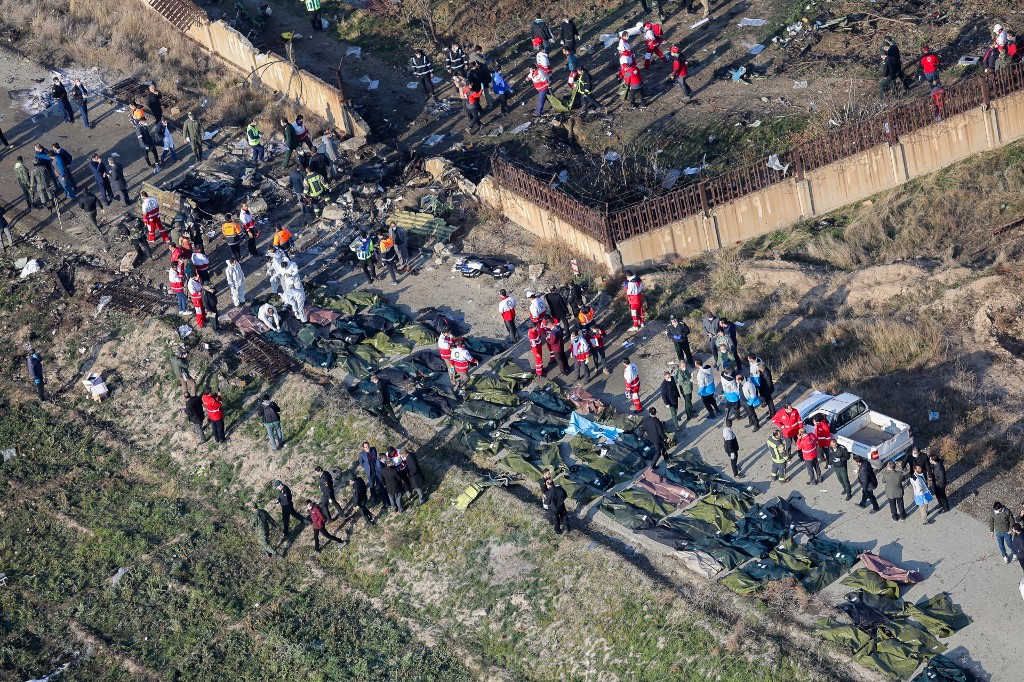
People and rescue teams amid bodies and debris after a Ukrainian plane carrying 176 passengers that was accidentally shot down by Iranian forces near Imam Khomeini airport in the Iranian capital Tehran, January 8, 2020. (Rouhollah VAHDATI/ISNA/AFP)

Several state television employees announced on social media that they were quitting, and former state TV lifestyle show presenter Gelare Jabbari went a step further.

“Forgive me for 13 years of lying to you on Iran television,” she wrote on Instagram, only to delete the post later after it had spread widely and then asking that her comments not be “misused” by anyone.

Another state TV personality, Zahra Khatami Rad, also quit on Instagram, vowing to “never work in television again.”

She won praise and gained more than 50,000 likes, but also revealed in a later post some of the many insults she had received in response.
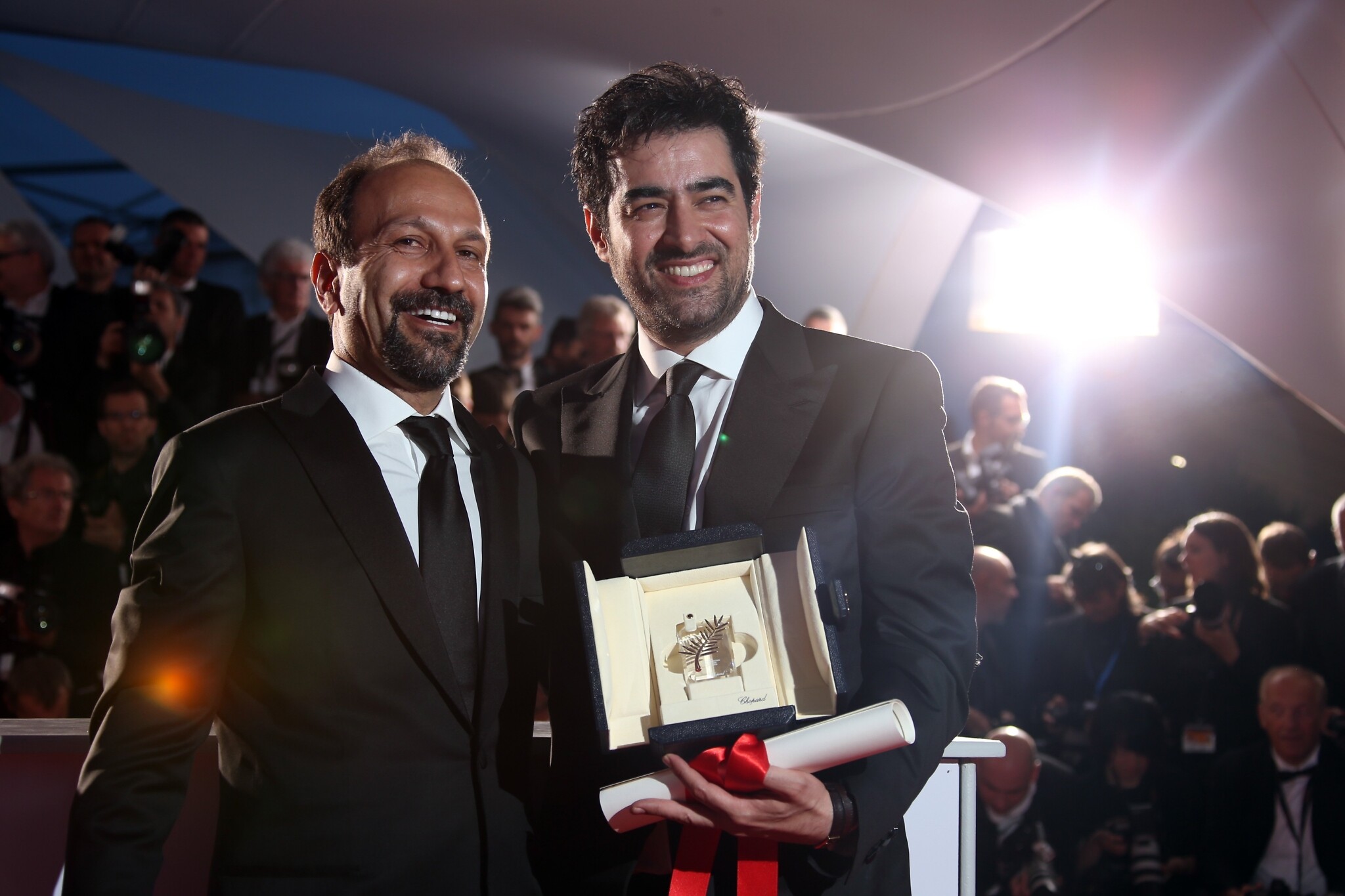
Actor Shahab Hosseini, right and director director Asghar Farhadi pose for photographers after Hosseini won the Best Actor award and Farhadi, the Best Screenplay award for the film Forushande (The Salesman) at the 69th international film festival, Cannes, southern France, May 22, 2016. (Joel Ryan/AP)

Some celebrities have come out against the protests, also exposing them to criticism.

Movie star Shahab Hosseini, known for his collaborations with director Asghar Farhadi in internationally-acclaimed films such as “The Salesman,” sparked controversy by opposing the film festival boycott.

Last Thursday, Hosseini, wrote on Instagram that a boycott was divisive — earning him over 30,000 comments of support but also much vitriol, which prompted him to defend his political and religious views.

“This move provokes social divisions between us and them, and this at a time when, more than ever, people need solidarity and solace,” he wrote.

“This action, even among artists, fans and audiences, also creates a deep and perhaps irreparable rift that is in nobody’s interest.”
 

Israeli FM, US top diplomat urge more countries to blacklist Hezbollah entirely

January 21, 2020

Source: Israeli FM, US top diplomat urge more countries to blacklist Hezbollah entirely | The Times of Israel

Following UK’s move, Katz and Pompeo call on nations to add the political wing of Iran-backed Lebanese group to terror list

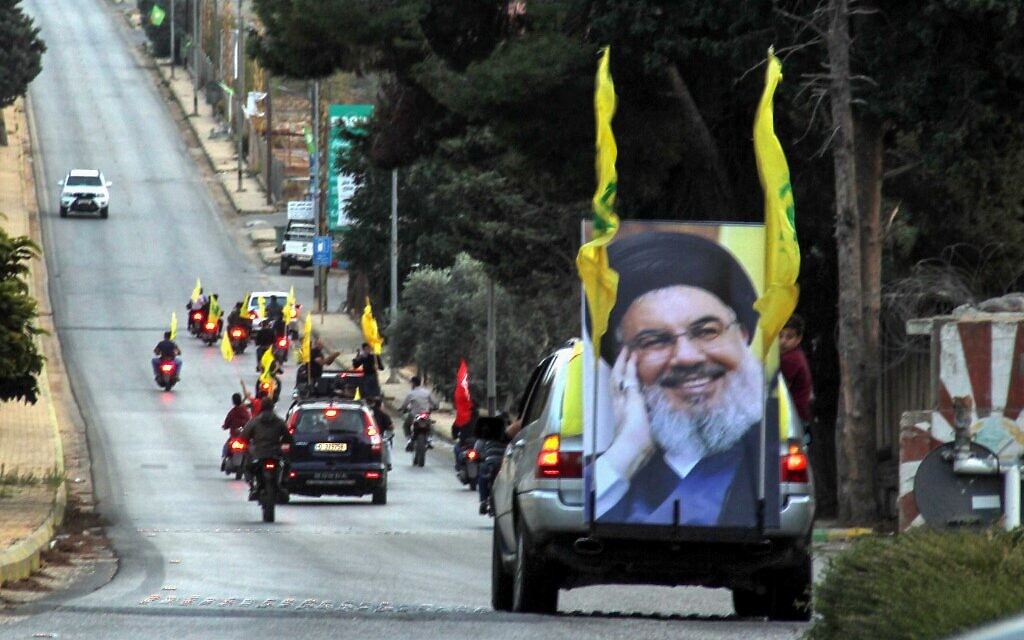
Supporters of the Hezbollah terror group drive in a convoy in support of its leader Hassan Nasrallah's speech, in the area of Fatima's Gate in Kfar Kila on the Lebanese border with Israel, October 25, 2019. (Ali Dia/AFP)

Supporters of the Hezbollah terror group drive in a convoy in support of its leader Hassan Nasrallah’s speech, in the area of Fatima’s Gate in Kfar Kila on the Lebanese border with Israel, October 25, 2019. (Ali Dia/AFP)

Foreign Minister Israel Katz and US Secretary of State Mike Pompeo issued separate remarks on Saturday calling on more countries to add Lebanon’s entire Hezbollah movement to their terror blacklists after the UK announced that it did so this week.

Britain’s finance ministry said on Friday that it added Hezbollah’s political wing to its list of terrorist groups subject to asset freezing. The ministry previously only targeted the Shiite organization’s military wing but has now listed the whole group after the government designated it a terrorist organization last March.

The change requires any individual or institution in Britain with accounts or financial services connected to Hezbollah to suspend them or face prosecution.

Katz said in a statement Saturday that he applauded the British government for “its decision to include all Hezbollah organizations, including the political echelon, under the legislation enabling asset freezing for terror organizations.”

The foreign minister said the move was “an achievement for Israel in its struggle against Iran and its proxies in the region, chiefly Hezbollah.”

Hezbollah supporters watch a televised speech by their leader Hassan Nasrallah during a religious mourning procession on the tenth day of the lunar month of Muharram, which marks the day of Ashura, in Beirut, on September 10, 2019. (Anwar Amro/AFP)

Katz said he raised the issue in a recent discussion with British Foreign Secretary  Dominic Raab and added that he expected the governments of Germany, Brazil, Australia and additional countries with which he’s had discussions to take similar steps.

Pompeo on Saturday published a tweet calling on “all nations to designate #Hizballah as the terrorist organization it is.”

The US top diplomat also marked the five-year anniversary of the death of Argentine prosecutor Alberto Nisman who was assassinated in 2015 just before he was slated to speak to a congressional panel about allegations that then-president Cristina Fernandez de Kirchner had been engaged in efforts to cover up Iranian involvement in a 1994 terror attack against the country’s Jewish community.

Secretary Pompeo

@SecPompeo

Nisman investigated the terror attack on the AMIA Jewish center in Buenos Aires that left 85 people dead and hundreds wounded. He established that the Iranian-backed Hezbollah terror group was responsible for the carnage and later accused Kirchner and other officials of ignoring Iran’s involvement in exchange for commercial benefits for Argentina, in violation of the country’s penal code and the independence of the judiciary.

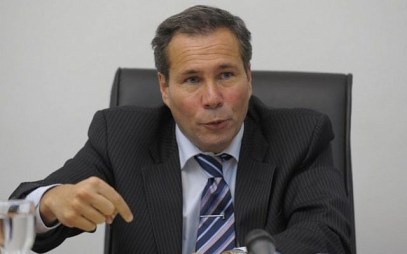
Alberto Nisman gives a news conference in Buenos Aires on May 20, 2009. (AFP Photo/Juan Mabromata)

Nisman’s body was found on January 18, 2015, hours before he was to present evidence to back up his claim. His death was initially ruled a likely suicide but an Argentine federal appeals court later found that he was murdered.

Kirchner, who was indicted in 2017 in connection with the alleged cover-up of Iran’s involvement in the bombing, denies any wrongdoing.

Firemen and policemen search for wounded people after a bomb exploded at the Argentinian Israelite Mutual Association (AMIA in Spanish) in Buenos Aires, 18 July 1994. (ALI BURAFI/AFP/Getty Images via JTA)

‘Pleased with the decision’

Earlier this week, Brian Hook, the US special representative for Iran, said the United States was “very pleased” with the UK’s decision on Hezbollah, adding that it had long been seeking such a move from European allies.

“We would like to congratulate the United Kingdom,” he told reporters in Washington. “There is no distinction between Hezbollah’s political arm and its military arm.”

Public Security Minister Gilad Erdan welcomed the move, calling it an “important step” and urged the EU and others to follow London’s example.

“Hezbollah and its Iranian backers are behind numerous attacks which have murdered innocent civilians all over the world. Europe is waking up to Iran’s terrorist activities and their murderous proxies,” Erdan said.

The Treasury in London said the change followed its annual review of the asset freezing register, and brought it into line with the 2019 decision by the interior minister to blacklist all of Hezbollah.

“The UK remains committed to the stability of Lebanon and the region, and we continue to work closely with our Lebanese partners,” a spokesman said.

Hezbollah is a Shiite movement established in 1982 during the Lebanese civil war by Iran’s Revolutionary Guard Corps.

A cross-border raid into Israel in the summer of 2006 in which the terror group captured the bodies of Israeli soldiers sparked a 34-day war where over 1,200 people died.

The group is seen as a key component of Shiite-majority Iran’s strategy for regional influence.

Britain’s move comes amid heightened tensions in the Middle East, after the US killed top Iranian general Qassem Soleimani in a drone strike earlier this month.

Tehran retaliated by firing a volley of missiles at US troops stationed in Iraqi military bases.

Britain currently proscribes 75 international terrorist organizations under terrorism legislation passed in 2000.


Iran threatens to quit global nuclear pact if Europeans turn to Security Council

January 21, 2020

Source: Iran threatens to quit global nuclear pact if Europeans turn to Security Council | The Times of Israel

FM Zarif says his country may abandon the Non-Proliferation Treaty if 3 EU member states pursue further measures over its alleged violations of 2015 nuclear deal

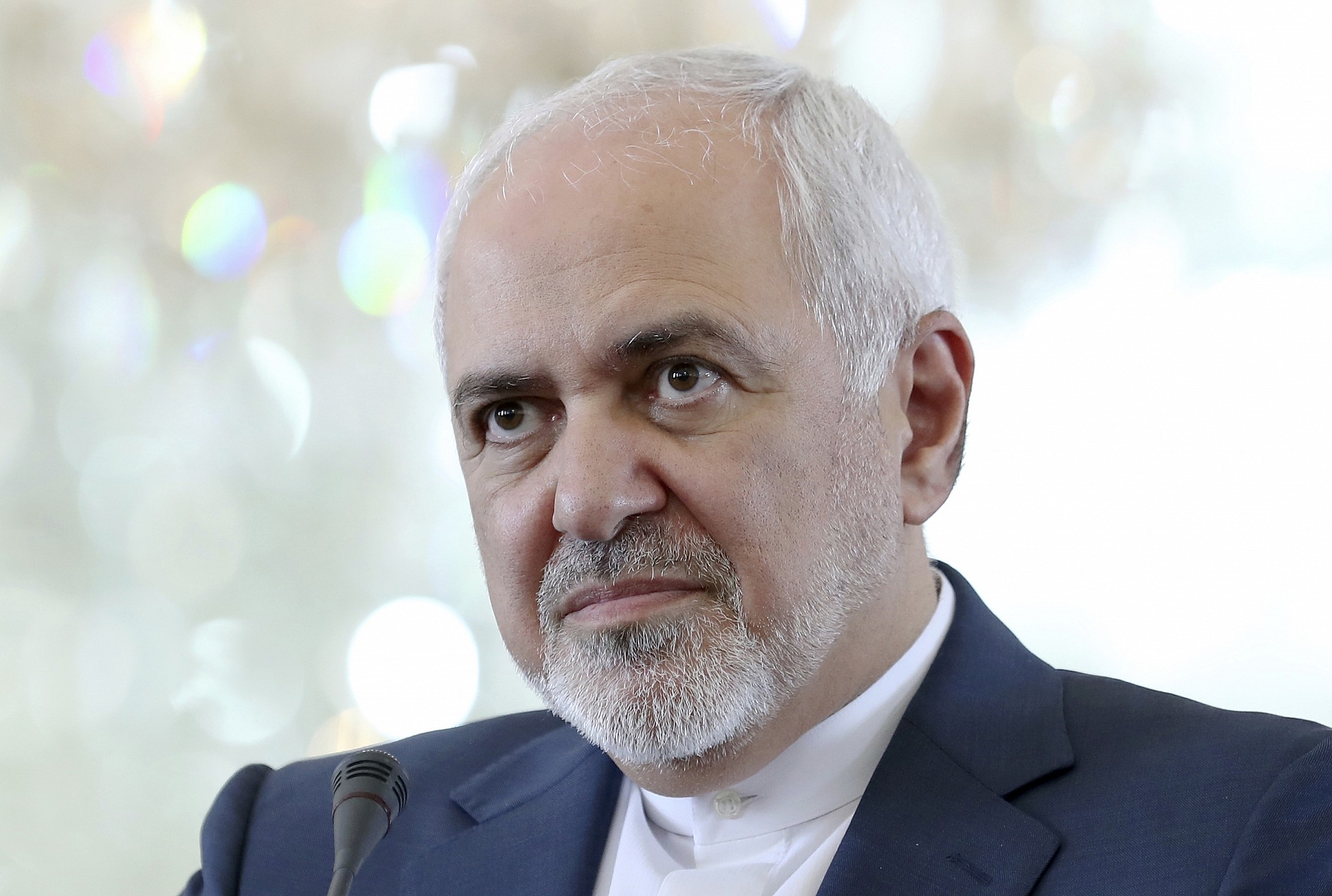
Iranian Foreign Minister Mohammad Javad Zarif during a press conference in Tehran, Iran, June 10, 2019. (Ebrahim Noroozi/AP)

Iran threatened Monday to withdraw from the 1970 Treaty on the Non-Proliferation of Nuclear Weapons (NPT) if a dispute over its atomic program goes before the UN Security Council.

Britain, France and Germany launched a process last week charging Iran with failing to observe the terms of a 2015 nuclear deal, a move that could eventually see the Security Council reimpose international sanctions on the country.

Iran has accused the three EU member states of inaction over sanctions the United States reimposed on it after unilaterally withdrawing from the accord in 2018.

The European move “has no legal basis” and if they take further measures “Iran’s withdrawal from the NPT will be considered,” Foreign Minister Mohammad Javad Zarif was quoted as saying by the Iranian parliament’s website.

The 2015 deal reached with Britain, China, France, Germany, Russia and the United States gave Iran relief from sanctions in return for curbs on its nuclear program. But the deal faced criticism from Israel, US Republicans and others over its 15-year phaseout period, and for leaving Tehran’s ballistic missile program and much of its nuclear infrastructures intact.

The exterior of the Arak heavy water production facility in Arak, Iran, 360 kilometers southwest of Tehran, October 27, 2004. (AP Photo)

Since the US pullout, Iran has progressively rolled back its commitments to the accord — called the Joint Comprehensive Plan of Action — in retaliation.

It has hit out at the three European nations that remain party to the JCPOA for failing to live up to their promises to ease the impact of US sanctions on its oil-based economy.

“If the Europeans return to the commitments, Iran will also stop reducing its commitments, but if the Europeans continue as they have been… we have different options,” Zarif said Monday.

The foreign minister said Iran’s President Hassan Rouhani had warned former EU foreign affairs chief Federica Mogherini about some of those consequences in three letters sent in 2018. Rouhani explicitly raised the possibility of withdrawing from the global nonproliferation treaty in a letter sent in May of that year, around the time of the US withdrawal from the 2015 accord.

In this photo released by the official website of the office of the Iranian Presidency, President Hassan Rouhani speaks before the heads of banks, in Tehran, Iran, Thursday, Jan. 16, 2020. (Office of the Iranian Presidency via AP)

“It was stated in the president’s letter that if this issue is referred to the Security Council, Iran’s withdrawal from the NPT will be discussed, but before that we can consider other (options),” Zarif said.

European officials have made it clear that the decision to trigger the 2015 deal’s dispute resolution mechanism was made in a bid to bring Iran back into compliance and save the accord.

But Iran’s foreign ministry on Monday warned more measures could be taken in retaliation for the European move.

“If these talks continue, Iran is formulating a final and even more effective” measure regarding the nuclear deal, spokesman Abbas Mousavi told a news conference in Tehran.

Asked by reporters to elaborate, Mousavi said it would be a “serious” measure, but he gave no further details.

“Different options are on the table for Iran that will be announced if a consensus is reached” by its leaders, he said.

This photo taken on October 26, 2010, shows the inside of reactor at the Russian-built Bushehr nuclear power plant in southern Iran. (HAMED MALEKPOUR/FARS NEWS AGENCY/AFP)

Iran has said the steps it has taken to roll back the nuclear deal can be reversed if its interests are realized.

The NPT, which went into effect in 1970, has been signed by 190 states that committed not to pursue nuclear weapons. Iran was first found to be in violation of the treaty in a 2003 report by the UN’s atomic watchdog, the International Atomic Energy Agency.

Israel is among five states to never have signed the treaty, maintaining what it has called a policy of nuclear “ambiguity.” Foreign reports have claimed over the years that the Jewish state possesses deliverable nuclear weapons.


Hundreds injured as fierce protests rock Beirut amid simmering crisis 

January 19, 2020

Source: Hundreds injured as fierce protests rock Beirut amid simmering crisis | The Times of Israel

Demonstrators clash with police as anger resurfaces over economic pressure and persisting political impasse after three months of protests

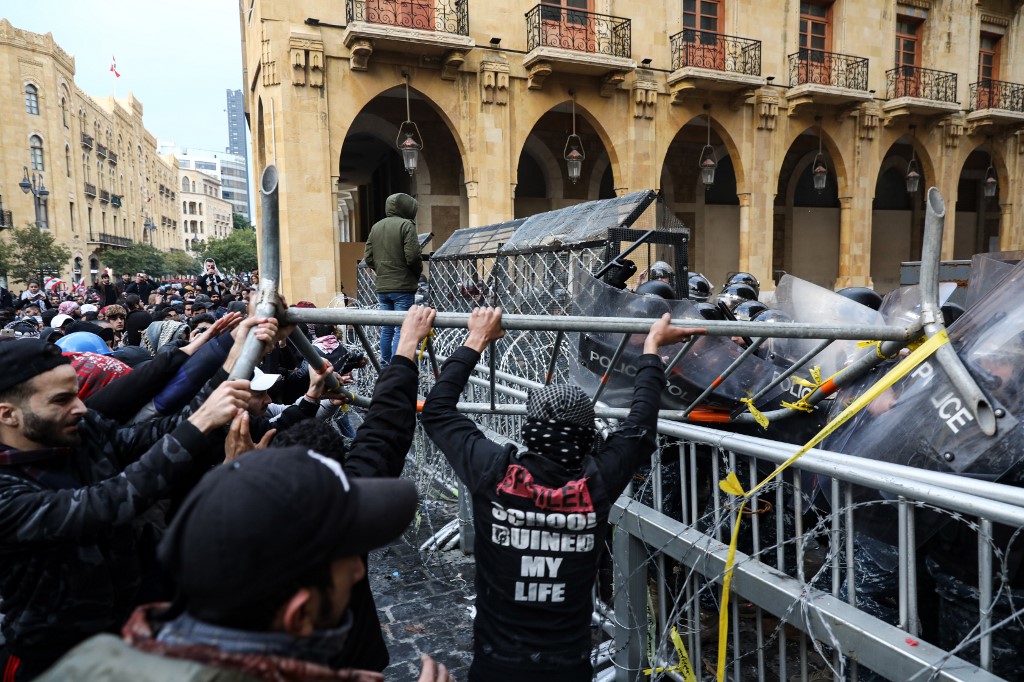
Anti-government protesters use a metal barrier to ram security forces taking cover during clashes in the central downtown district of the Lebanese capital Beirut near the parliament headquarters on January 18, 2020. (ANWAR AMRO / AFP)

BEIRUT, Lebanon — Clashes between police and Lebanese protesters wounded more than 220 people on both sides Saturday in the highest such tally in three months of anti-establishment demonstrations.

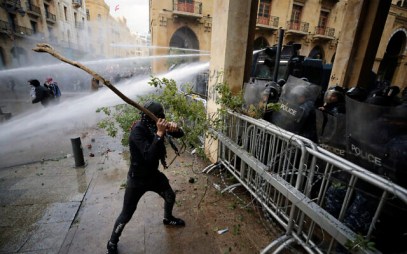
Thick white smoke covered the downtown Beirut area near Parliament as police and protesters engaged in confrontations that saw groups of young men hurl stones and firecrackers at police who responded with water cannons and tear gas. Some protesters were seen vomiting on the street from inhaling the gas.

The sound of ambulance sirens rang out across Beirut as the Red Cross reported 80 wounded had been taken to hospitals and 140 more were treated on site.

The protest movement rocking Lebanon since October 17 revived this week as a deepening economic crisis increases pressure to form a new government.

No progress appears to have been made towards finalizing the cabinet, which protesters demand be comprised of independent experts and exclude all established political parties.

Lebanon has witnessed three months of protests against the political elite who have ruled the country since the end of the 1975-90 civil war. The protesters blame politicians for widespread corruption and mismanagement in a country that has accumulated one of the largest debt ratios in the world.

Anti-government demonstrators clash with riot police at a road leading to the parliament building in Beirut, Lebanon, Saturday, Jan. 18, 2020. (AP/Bilal Hussein)

The protesters had called for a demonstration Saturday afternoon with the theme “we will not pay the price” in reference to debt that stands at about $87 billion, or more than 150% of GDP.

After several hours of clashes, the violence died down as demonstrators dispersed. Several were arrested, local media said.

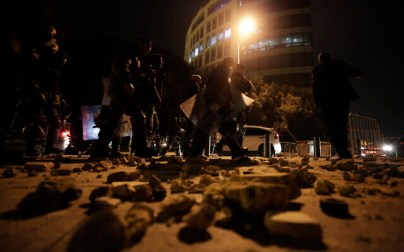
The violence began after dozens of protesters — some concealing their faces in scarves — threw rocks and large plant pots at police guarding the road leading up to parliament.

Others charged police lines with traffic signs and metal barriers.

Anti-government demonstrators clash with riot police at a road leading to the parliament building in Beirut, Lebanon, Saturday, Jan. 18, 2020. Riot police fired tears gas and sprayed protesters with water cannons near parliament building to disperse thousands of people after riots broke out during a march against the ruling elite amid a severe economic crisis. (AP Photo/Hassan Ammar)

Security forces behind the barricades responded with water cannon and tear gas to disperse the crowds.

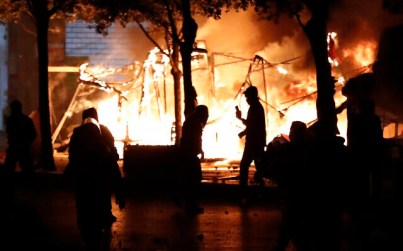
As clashes continued, some two dozen men believed to be parliament guards attacked the protesters’ tents in Martyrs Square, setting them on fire. A gas cylinder inside one of the tents blew up. The fire spread quickly and charred a nearby shop.

Civilian men believed to be the private unit of the parliament guards, burn the tents of the anti-government protesters, during ongoing protests against the political elites in Beirut, Lebanon, Saturday, Jan. 18, 2020. Riot police fired tear gas and sprayed water cannon near parliament in Lebanon’s capital Saturday to disperse thousands of protesters after riots broke out during a march against the ruling elite amid a severe economic crisis. (AP Photo/Hussein Malla)

The bells of nearby St. George Cathedral began to toll in an apparent call for calm, while loudspeakers at the adjacent blue-domed Muhammad Al-Amin mosque called for night prayers.

Later in the evening, hundreds of protesters chanting “Revolution” chased a contingent of riot police near the entrance of the mosque, forcing them to withdraw. Inside the mosque, several men were treated for gas inhalation and some families were said to be hiding inside.

An anti-government demonstrator throws back tear gas at riot policemen with a tennis racket, in Beirut, Lebanon, Saturday, Jan. 18, 2020. (AP/Bilal Hussein)

“We call on the security forces to be merciful with women and children inside the mosque,” a statement blared through the mosque’s loudspeakers.

President Michel Aoun called on security forces to protect peaceful protesters and work on restoring clam in downtown Beirut and to protect public and private propery. He asked the ministers of defense and interior and heads of security agencies to act.

“The confrontations, fires and acts of sabotage in central Beirut are crazy, suspicious and rejected. They threaten civil peace and warn of grave consequences,” tweeted outgoing Prime Minister Saad Hariri, who lives nearby. He called those behind the riots “outlaws” and called on police and armed forces to protect Beirut.

The National News Agency said demonstrators also vandalized bank facades in central Beirut.

‘Popular anger’

“A direct and violent confrontation is taking place with anti-riot police at one of the entrances to parliament,” the Internal Security Forces said earlier on Twitter.

“We ask peaceful protesters to keep away from the site of the rioting for their safety.”

They published photos of several wounded policemen and a video showing pillars stripped of their tiles, reportedly to be thrown at security forces.

A 23-year-old woman named Maya said she was protesting because politicians seemed to be ignoring demands for an overhaul of the old political class.

“I’m here because after more than 90 days in the streets, they’re still squabbling over their shares in government… It’s as if they didn’t see our movement,” she told AFP.

“Popular anger is the solution,” she said.

Lebanese police walk after dispersing a protest in Beirut, Lebanon, Saturday, Jan. 18, 2020. (AP/Hassan Ammar)

Forming a cabinet is an often convoluted process in Lebanon, where a complex system seeks to maintain balance between the country’s many political parties and religious confessions.

But protesters say they want to scrap the old system, and demand a new government of impartial technocrats to address mounting economic woes, including a severe liquidity crisis.

This week public anger has been directed at banks, with branches in the capital’s Hamra district vandalized following widely unpopular limits on withdrawals and transfers.

Panic and anger have gripped the public as their local currency, pegged to the dollar for more than two decades, plummeted. The Lebanese pound lost more than 60% of its value in recent weeks on the black market. The economy has seen no growth and foreign inflows dried up in the already heavily indebted country that relies on imports for most of its basic goods.

This picture taken on January 18, 2020 shows a view of debris by the security forces’ barricade in the central downtown district of the Lebanese capital Beirut near the parliament headquarters, following clashes with anti-government protesters there. (ANWAR AMRO / AFP)

Dozens were detained for several nights after clashes on Tuesday and Wednesday, before being released.

Human rights groups condemned the arrests and what they described as unacceptable violence against largely peaceful protesters.

Hariri and his government stepped down under pressure from the street on October 29, but they have remained in a caretaker capacity until a new cabinet is formed.

Political factions that agreed on December 19 to appoint former education minister and professor Hassan Diab as the new premier are now disagreeing over proposed ministers.

Diab had been expected to announce an 18-member Cabinet on Friday, but last minute disputes among political factions scuttled his latest attempt.

The World Bank has warned that the poverty rate in Lebanon could rise from a third to half of the population if the political crisis is not solved soon.


Iran warns of ‘repercussions’ for IAEA after European moves over nuclear deal 

January 19, 2020

Source: Iran warns of ‘repercussions’ for IAEA after European moves over nuclear deal | The Times of Israel

Parliamentary speaker responds to UK, France, Germany launch of dispute process charging Iran with failing to uphold terms of 2015 nuclear agreement, saying it’s ‘unfortunate’

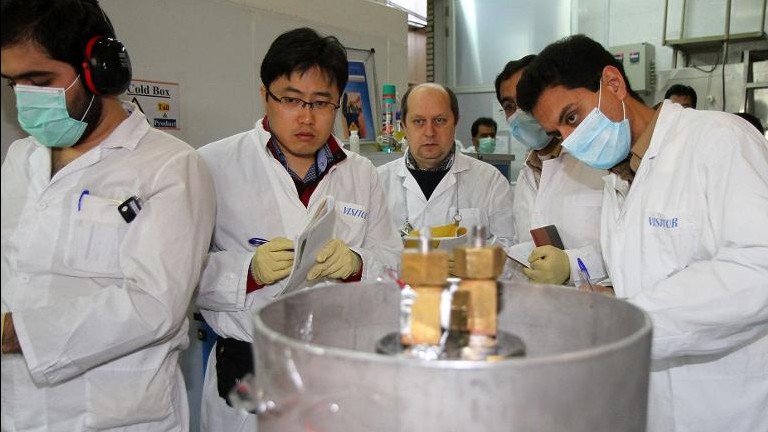
Illustrative: IAEA inspectors at Iran's nuclear power plant in Natanz on January 20, 2014. (IRNA/AFP Kazem Ghane)

Illustrative: IAEA inspectors at Iran’s nuclear power plant in Natanz on January 20, 2014. (IRNA/AFP Kazem Ghane)

TEHRAN, Iran — Iran’s parliamentary speaker on Sunday warned of unspecified repercussions for the UN’s nuclear watchdog if European nations that launched a dispute mechanism against the Islamic Republic act “unfairly.”

Britain, France and Germany launched a process last week charging Iran with failing to observe the terms of the 2015 deal curtailing its nuclear program, while Tehran accuses the bloc of inaction over US sanctions.

The EU three insisted they remained committed to the agreement, which has already been severely undermined by the US exit from it in 2018 and Washington’s reimposition of unilateral sanctions on key sectors of Iran’s economy.

“What the three European countries did regarding Iran’s nuclear issue… is unfortunate,” parliamentary speaker Ali Larijani was quoted as saying by state news agency IRNA.

“We clearly announce that if Europe, for any reason, uses Article 37 of the nuclear agreement unfairly, then Iran will make a serious decision regarding cooperation with the agency,” he said, referring to the International Atomic Energy Agency (IAEA).

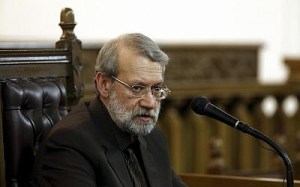
Then-Iranian parliament speaker Ali Larijani speaks during a press conference in Tehran, Iran, March 13, 2017. (AP Photo/Ebrahim Noroozi)

Since May 2019, Iran has progressively scaled back some commitments under the agreement in response to the US sanctions and Europe’s inability to circumvent them.

It has stressed, however, that they can be reversed if Tehran’s interests are realized.

Iran’s latest and final step in January entailed forgoing the limit on the number of machines used to make uranium more potent.

The 2015 nuclear deal — known as the Joint Comprehensive Plan of Action (JCPOA) — was struck in Vienna by Iran, the EU three, the United States, China and Russia.

It has a provision that allows a party to claim significant non-compliance by another party before a joint commission.

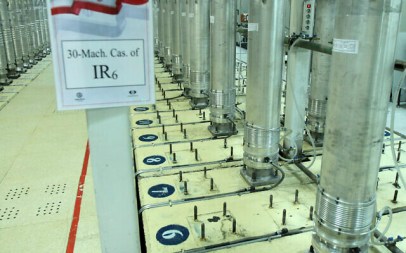
This photo released by the Atomic Energy Organization of Iran on November 5, 2019, shows centrifuge machines at Natanz uranium enrichment facility in central Iran. (Atomic Energy Organization of Iran via AP)

Articles 36 and 37 of the deal say if the issue is not resolved by the commission, it then goes to an advisory board and eventually to the UN Security Council, which could reimpose sanctions.

The decision to begin the so-called dispute mechanism process comes as tensions soar between the West and Iran following the killing of top commander Qassem Soleimani in a US air strike, and the admission by Tehran days later that it had accidentally shot down a Ukrainian airliner.

“The issue is not Iran’s behavior,” said the parliamentary speaker. “It is America’s threats that have pushed a powerful European country to a humiliating and unjust” position, said Larijani.

Germany confirmed last week that the United States had been threatening to impose a 25-percent tariff on European cars if the bloc continued to back the nuclear deal.


After failed launch last year, Iran preparing to send satellites into space

January 19, 2020

Source: After failed launch last year, Iran preparing to send satellites into space | The Times of Israel

The Zafars will monitor natural resources and the environment, state media says; Western nations fear Tehran’s space program could be used to develop long-range missiles

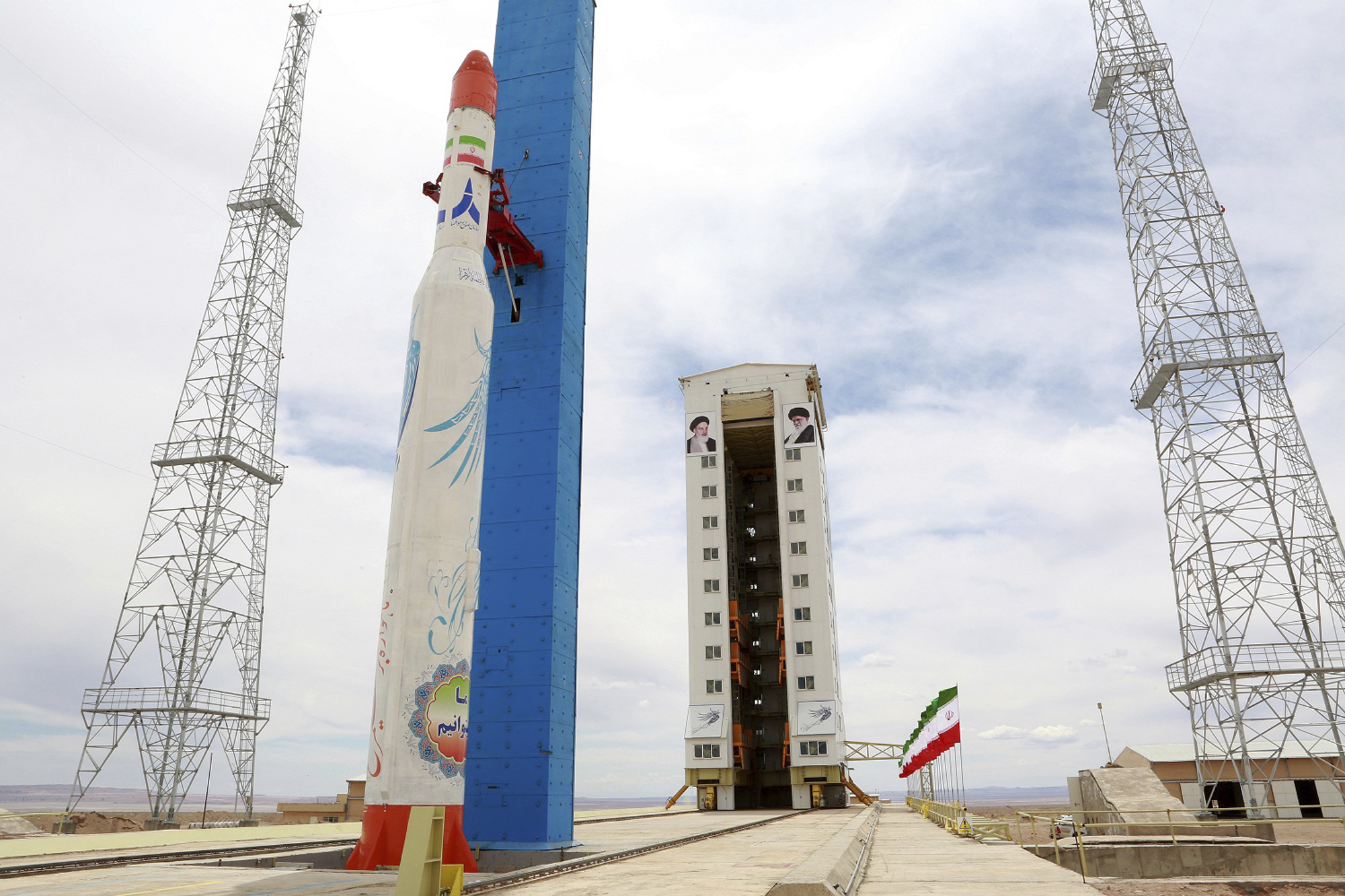
Illustrative: This picture, released by the official website of the Iranian Defense Ministry on July 27, 2017, claims to show the Simorgh satellite-carrying rocket at Imam Khomeini National Space Center, Iran. (Iranian Defense Ministry via AP)

TEHRAN, Iran — Iran said Sunday that two newly constructed satellites have passed pre-launch tests and will be transported to the nation’s space center for eventual launch, without elaborating.

Telecommunications Minister Mohammad Javad Azari Jahromi tweeted about the development, calling it an “important research step.”

Iran has not said when it will launch the satellites, but often coordinates its launches with national holidays. It will celebrate the 41st anniversary of the Islamic Revolution next month.

Iran’s largely state-run media say the 90-kilogram (200-pound) Zafar satellites each have four high-resolution color cameras and will monitor and transmit data on natural resources as well as agricultural and environmental developments.

Iran says its satellite program, like its nuclear activities, is aimed at scientific research and other civilian applications. The US and other Western countries have long been suspicious of the program because the same technology can be used to develop long-range missiles.

In this August 31, 2019 photo, Iran’s Minister of Information and Communications Technology Mohammad Javad Azari Jahromi looks at The Nahid-1 domestically built satellite at the space research center in Tehran, Iran. (Information and Communications Technology via AP)

Iran tried and failed to launch two satellites into orbit in January and February last year.

A rocket exploded inside the Imam Khomeini Space Center in August during what officials later said was a test-launch. Iranian officials did not acknowledge the mishap until satellite imagery showed the explosion. Officials blamed a technical malfunction.

In a separate incident, a fire killed three researchers at the space center, which is some 240 kilometers (150 miles) southeast of the capital, Tehran.

Iran has sent several satellites into orbit over the past decade, and in 2013 it launched a monkey into space.


US sanctions Iranian general for ‘massacre of 148 helpless Iranians’ in protests 

January 19, 2020

Source: US sanctions Iranian general for ‘massacre of 148 helpless Iranians’ in protests | The Times of Israel

State department targets IRGC’s Hassan Shahvarpour over bloody crackdown in the Mahshahr region, but Washington adds Iran is deescalating tensions

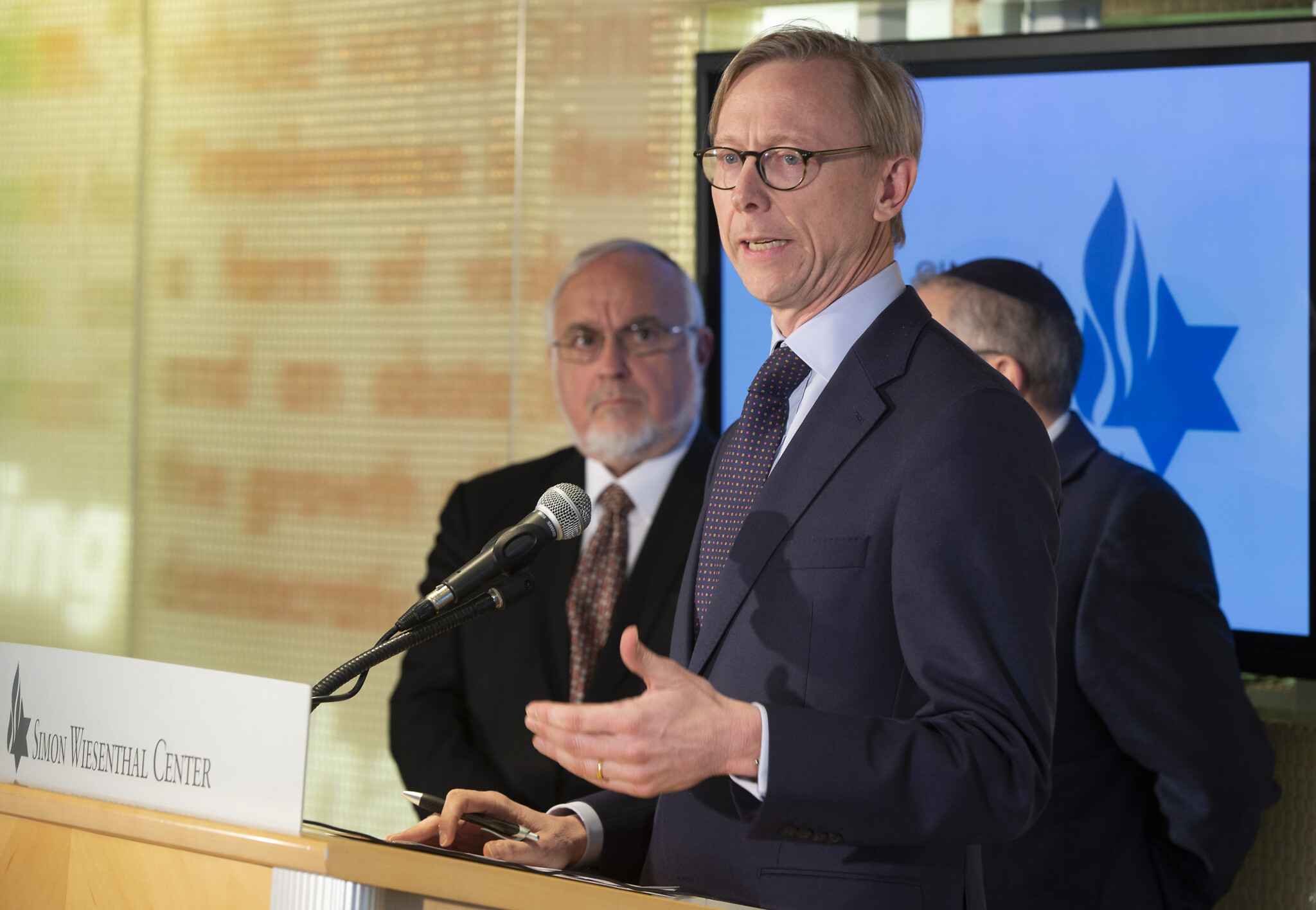
Brian Hook, a US special representative on Iran, takes questions from the media at the Simon Wiesenthal Center in Los Angeles, January 7, 2020. (AP Photo/Damian Dovarganes)

Brian Hook, a US special representative on Iran, takes questions from the media at the Simon Wiesenthal Center in Los Angeles, January 7, 2020. (AP Photo/Damian Dovarganes)

WASHINGTON, United States — The United States on Friday slapped sanctions on another senior Iranian official over a crackdown on protests but said Tehran appeared to be following through on deescalating military tensions.

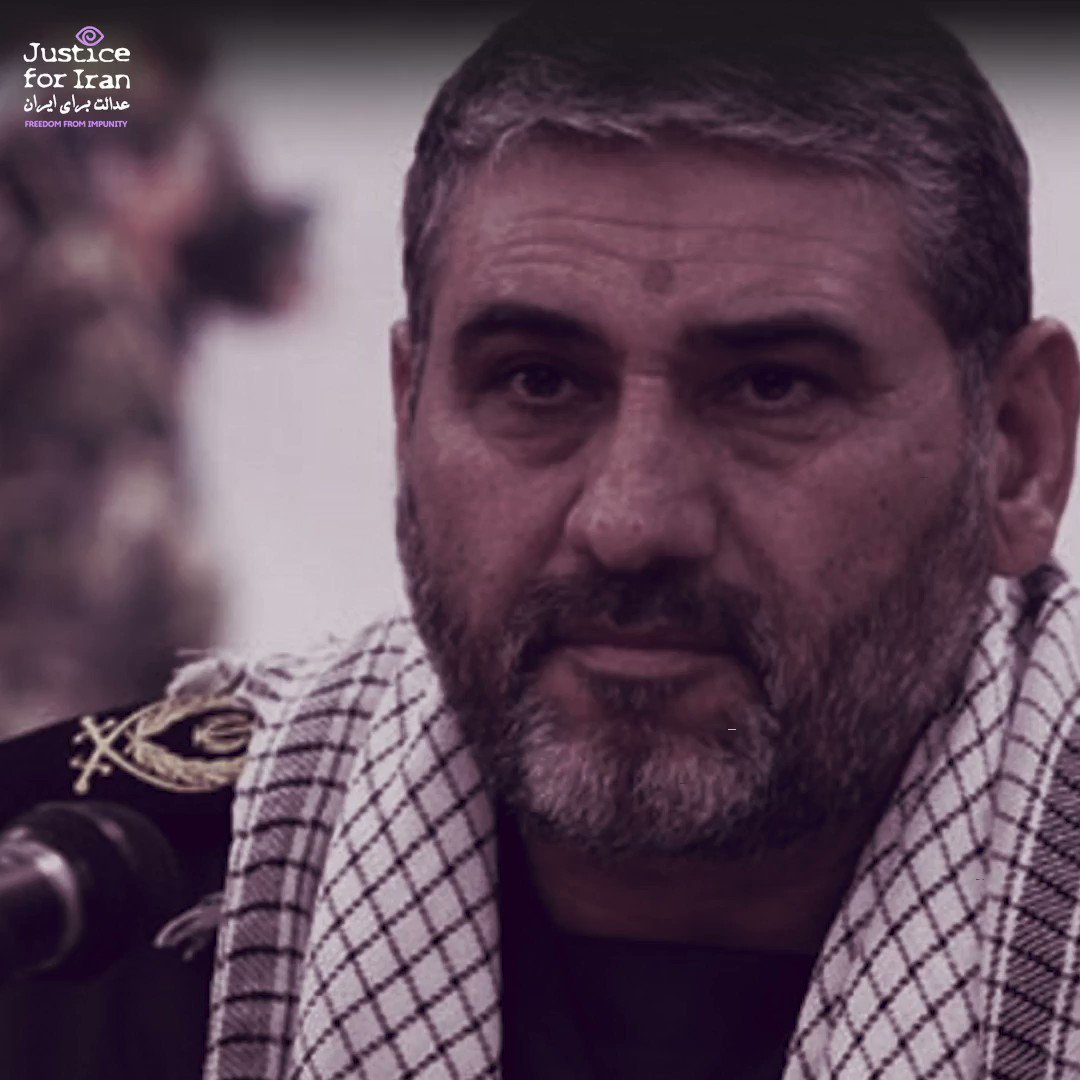
The United States said it was blacklisting Revolutionary Guards Brigadier General Hassan Shahvarpour for crushing protests in November in the southwestern city of Mahshahr.

The city, home to many from Iran’s Arab minority, was a hotbed of protests that broke out after an abrupt hike in fuel prices. Amnesty International says hundreds died across the country.

“He oversaw the massacre of 148 helpless Iranians in the Mahshahr region,” Brian Hook, the US pointman on Iran, told a news conference.

He said that the United States had received 88,000 tips from Iranians about November’s protests after appealing for information to break through internet restrictions.

“We are continuing to review all information we received from the Iranian people and we will continue to hold more regime officials responsible for human rights violations,” he said.

Justice for Iran@Justice4IranEn

Embedded video

The sanctions mean Shahvarpour is banned from entering the United States — a symbolic step as US President Donald Trump has stopped visas for virtually all Iranians, from inside or outside the government.

The United States earlier this month killed the powerful head of the Revolutionary Guards, Qassem Soleimani, in a drone strike in Baghdad after months of rising tension and rocket attacks on US forces in Iraq.

Despite a fiery sermon Friday by Supreme Leader Ayatollah Ali Khamenei, Hook said that Iran did not appear to be escalating the military conflict.

“They appear to be standing down for now,” Hook said.

“But we have a combination of maximum economic pressure and restoring deterrence by the credible threat of military force if attacked,” he said.


IDF begins installing tunnel-detecting sensors along Lebanese border 

January 19, 2020

Source: IDF begins installing tunnel-detecting sensors along Lebanese border | The Times of Israel

Military launches effort a year after finding Hezbollah underground cross-border passages, says it believes there are still no new tunnels into northern Israel

Israeli troops search for attack tunnels dug into Israel from southern Lebanon that the Israeli military believes Hezbollah planned to use in future wars, in January 2019. (Israel Defense Forces)

The Israel Defense Forces on Sunday began installing a series of underground sensors along the northern border in order to detect any new subterranean tunnels entering Israeli territory from Lebanon. The effort comes a year after the military discovered and destroyed six such passages dug by the Hezbollah terror group.

IDF spokesman Lt. Col. Jonathan Conricus said the decision to install the sensors near Misgav Am now was not based on fresh intelligence that Hezbollah was digging a cross-border tunnel there, but was in light of the fact that the sensor technology being used had recently been declared operational, following a series of tests.

“The installation of this system is a preventative infrastructure step, it is not based on new intelligence,” the military said.

On Sunday morning, the IDF began digging the holes needed to install the detection system, which was recently deemed fully operational. The first of these sensors, which collect both acoustic and seismic data, will be installed near the community of Misgav Am in the northern Galilee. The process was expected to take several weeks, Conricus said.

The military appeared to be widely publicizing this new effort in order to prevent confusion or panic on both sides.

“This is an action that will be seen and heard both in our territory and on the Lebanese side — we want to prevent a miscalculation,” said IDF Spokesperson Brig. Gen. Hidai Zilberman.

IDF reveals what it says is the longest cross-border attack tunnel dug by Hezbollah from Lebanon into Israel, May 29, 2019. (Israel Defense Forces)

The military planned to install additional detection systems along other points on the border in the future, with the exact number and location dependent upon intelligence about where Hezbollah intended to dig its tunnels and available funding.

Conricus estimated that in total the military would be operating along the border toward this effort for several months.

In December 2018, the IDF launched Operation Northern Shield, an effort to locate and destroy tunnels dug by Hezbollah into northern Israel from southern Lebanon. In total, the military said it found six such passages and rendered them inoperable — either using explosives or filling them with concrete — last year.

Senior military officials have said they believed that these six were the only Hezbollah tunnels to cross the Israeli border, though the terror group may have been in the process of digging more.

Conricus said in recent months the military has been performing a series of tests on the new sensor technology in order to ensure that it could be deployed.

“We now have technology available that our professional engineering officers deem ready to become operational,” he said.

Israeli troops search for attack tunnels dug into Israel from southern Lebanon that the Israeli military believes Hezbollah planned to use in future wars, in January 2019. (Israel Defense Forces)

Conricus said the military informed the peacekeeping United Nations Interim Force in Lebanon (UNIFIL), which operates in southern Lebanon, of its plans to install these sensors along the so-called Blue Line, the unofficial but widely recognized border between Israel and Lebanon.

A UNIFIL spokesperson confirmed to The Times of Israel that the IDF had updated the peacekeeping force about this operation.

“In line with our liaison and coordination mechanisms, we have been informed by the IDF,” the UNIFIL official said.

Conricus said the IDF had also informed local Israeli municipal governments of its plans.

The IDF believes that the six tunnels dug by Hezbollah into northern Israel were built with the specific purpose of allowing thousands of Hezbollah terrorists to stage an infiltration attack on military and civilian targets in northern Israel as a surprise opening maneuver in a future war.

Approximately eight years ago, Hezbollah created a special forces unit — known as the Radwan Unit — specifically tasked with crossing into Israel and causing as much mayhem and destruction as possible both for the sake of the destruction itself and for the “symbolism” of having troops carry out attacks inside Israel.

The military credits the discovery and destruction of these tunnels with removing what otherwise would have been a potentially devastating weapon in Hezbollah’s arsenal.

As far back as 2014, residents of northern towns raised the alarm regarding the possibility of Hezbollah tunneling below the border to carry out attacks, after an extensive series of underground passages dug by the Hamas terror group were discovered under the Gaza border in the south.

Israel has fought two wars in Lebanon, one in 1982 against Palestinian terrorist groups, and another in 2006 against Hezbollah, as well as a number of smaller operations.

Though seen as volatile, the border has not seen significant fighting since the end of the 2006 war.


Russian sources: Moscow gave Iran the high precision tech for missiles that struck US bases in Iraq – DEBKAfile

January 19, 2020

Source: Russian sources: Moscow gave Iran the high precision tech for missiles that struck US bases in Iraq – DEBKAfile

The high precision technology accounting for the astonishing accuracy of Iran’s missile strike on the US Ain Al Asad air base in Iraq on Jan. 8 came from Moscow, say Russian media quoting local military sources.

They name the technology as the GLONASS global navigation system, which corresponds to the American GPS, and had the effect of reducing the Iranian missiles’ targeting error to just 10 meters.

The same sources report that the Iranians launched altogether 19 missiles against the Ain al Asad base n western Iraq, of which 17 struck dead center of their targets.

DEBKAfile’s military sources report that the accuracy of impact amazed US and Israel intelligence, which had not been aware of this Iranian capacity. Its significance is such that – whether provided by Russia or self-made – Iran’s short- and medium-range missiles can reach any point in the Middle East that is unprotected by effective anti-missile systems within a 700km radius.

Still defending Russia’s downing of the Ukrainian airliner, killing all 176 people aboard, hours after the Iranian attacks on US bases in Iraq, Foreign Minister Sergei Lavrov claimed there were “at least six F-35 fighters in the air in the Iranian border area at the time” when Iranian forces “were braced for some kind of US military retaliation.” Lavrov did not say whether the planes belonged to the US air force or Israel.


Ayatollah Khamenei Gets Mouthy Toward Trump On Twitter. That Was A Bad Idea.

January 18, 2020

Source: Ayatollah Khamenei Gets Mouthy Toward Trump On Twitter. That Was A Bad Idea. | The Daily Wire

DailyWire.com
Ayatollah Khamenei Trump
Getty Images: Olivier Douliery / Iranian Religious Leader Press Office

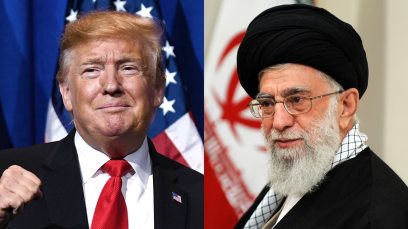
Iranian Supreme Leader Sayyid Ali Hosseini Khamenei was blasted on Friday by President Donald Trump after Khamenei decided to attack Trump directly on Twitter over Trump’s advocacy for the Iranian people.

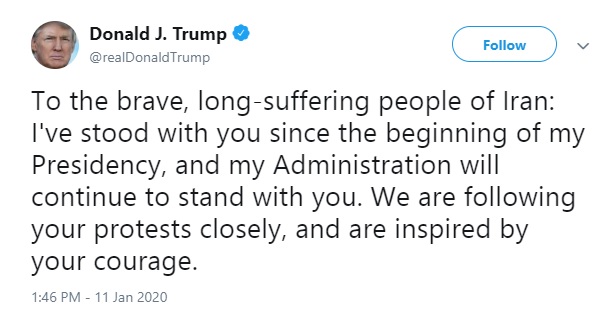
Khamenei made his remarks in response to a tweet from Trump on January 11, which stated: “To the brave, long-suffering people of Iran: I’ve stood with you since the beginning of my Presidency, and my Administration will continue to stand with you. We are following your protests closely, and are inspired by your courage.”

Khamenei responded: “The villainous US govt repeatedly says that they are standing by the Iranian ppl. They lie. If you are standing by the Iranian ppl, it is only to stab them in the heart with your venomous daggers. Of course, you have so far failed to do so, & you will certainly continue to fail.”

Trump responded to Khamenei by quote retweeting him and writing: “The noble people of Iran—who love America—deserve a government that’s more interested in helping them achieve their dreams than killing them for demanding respect. Instead of leading Iran toward ruin, its leaders should abandon terror and Make Iran Great Again!”

Donald J. Trump

@realDonaldTrump

Khamenei.ir@khamenei_ir

The villainous US govt repeatedly says that they are standing by the Iranian ppl. They lie. If you are standing by the Iranian ppl, it is only to stab them in the heart with your venomous daggers. Of course, you have so far failed to do so, & you will certainly continue to fail.

View image on Twitter
In a separate tweet, Trump added: “The so-called ‘Supreme Leader’ of Iran, who has not been so Supreme lately, had some nasty things to say about the United States and Europe. Their economy is crashing, and their people are suffering. He should be very careful with his words!”

Donald J. Trump

The New Yorks Times said in a recent report that the Trump administration’s sanctions again Iran, which is the world’s leading state sponsor of terrorism, have devastated the country and have limited Iran’s ability to respond to aggression from the U.S.:

Iran is caught in a wretched economic crisis. Jobs are scarce. Prices for food and other necessities are skyrocketing. The economy is rapidly shrinking. Iranians are increasingly disgusted.

Crippling sanctions imposed by the Trump administration have severed Iran’s access to international markets, decimating the economy, which is now contracting at an alarming 9.5 percent annual rate, the International Monetary Fund estimated. Oil exports were effectively zero in December, according to Oxford Economics, as the sanctions have prevented sales, even though smugglers have transported unknown volumes.

…The bleak economy appears to be tempering the willingness of Iran to escalate hostilities with the United States, its leaders cognizant that war could profoundly worsen national fortunes. In recent months, public anger over joblessness, economic anxiety and corruption has emerged as a potentially existential threat to Iran’s hard-line regime.

Pressure against Iran has rapidly increased over the last week after it admitted that it shot down a passenger plane, killing 176 people, and after Britain, France and Germany notified Iran that they were taking action to clamp down on Iran’s accelerating aggression, which violates the 2015 Iran nuclear deal.

The Foreign Ministers of France, Germany, and the United Kingdom said in a joint statement on Tuesday:

Following Iran’s announcement in May 2019 that it would cease meeting some of its commitments under the JCPoA, we have sought to persuade Iran to change course. The E3 have worked hard to address Iran’s concerns and bring it back into compliance with its commitments under the nuclear agreement. We have also undertaken and supported diplomatic efforts, such as France’s initiative, to deescalate tensions and to bring Iran and the US to the negotiating table for a comprehensive negotiated solution. The E3 remain fully committed to this diplomatic effort and intend to resume it as soon as conditions allow.

However, in the meantime Iran has continued to break key restrictions set out in the JCPoA. Iran’s actions are inconsistent with the provisions of the nuclear agreement and have increasingly severe and non-reversible proliferation implications.

We do not accept the argument that Iran is entitled to reduce compliance with the JCPoA. Contrary to its statements, Iran has never triggered the JCPoA Dispute Resolution Mechanism and has no legal grounds to cease implementing the provisions of the agreement.

We publicly stated our concerns, along with the High Representative of the European Union, on 11 November. At the Joint Commission on 6 December, we made clear to Iran that unless it reversed course, we would have no choice but to take action within the framework of the JCPoA, including through the Dispute Resolution Mechanism.

Instead of reversing course, Iran has chosen to further reduce compliance with the JCPoA and announced on 5 January that “the Islamic Republic of Iran, in the fifth step in reducing its commitments, discards the last key component of its limitations in the JCPOA, which is the ‘limit on the number of centrifuges’”, and that “the Islamic Republic of Iran’s nuclear program no longer faces any operational restrictions”, including on enrichment and enrichment-related matters.

We have therefore been left with no choice, given Iran’s actions, but to register today our concerns that Iran is not meeting its commitments under the JCPoA and to refer this matter to the Joint Commission under the Dispute Resolution Mechanism, as set out in paragraph 36 of the JCPoA.

The Trump administration launched new sanctions against Iran this last week in response to Iran firing missiles at U.S. forces in Iraq.

“First, the President is issuing an executive order authorizing the imposition of additional sanctions against any individual owning, operating, trading with, or assisting sectors of the Iranian economy, including construction, manufacturing, textiles, and mining,” Treasury Secretary Steven Mnuchin said during a White House press conference. “And let me be clear: These will be both primary and secondary sanctions. The EO also allows us to designate other sectors in the future as Secretary Pompeo and me think is appropriate.”

“Second, we are announcing 17 specific sanctions against Iran’s largest steel and iron manufacturers, three Seychelles-based entities, and a vessel involved in the transfer of products,” Mnuchin said. “As a result of these actions, we will cut off billions of dollars of support to the Iranian regime, and we will continue our enforcement of other entities.”

“Third, we are taking action against eight senior Iranian officials who advanced the regime’s destabilizing activity and were involved in Tuesday’s ballistic missile strike,” Mnuchin concluded. “Today’s sanctions are part of our commitment to stop the Iranian regime’s global terrorist activities. The President has been very clear: We will continue to apply economic sanctions until Iran stops its terrorist activities and commit that it will never have nuclear weapons.”

This report has been updated to include additional information.