Archive for January 2020

Netanyahu backs Iranian protesters after Tehran admits downing plane 

January 12, 2020

Source: Netanyahu backs Iranian protesters after Tehran admits downing plane | The Times of Israel

PM says he supports demonstrators: ‘They deserve freedom, liberty and the ability to live in security and peace, all of which the regime denies them’
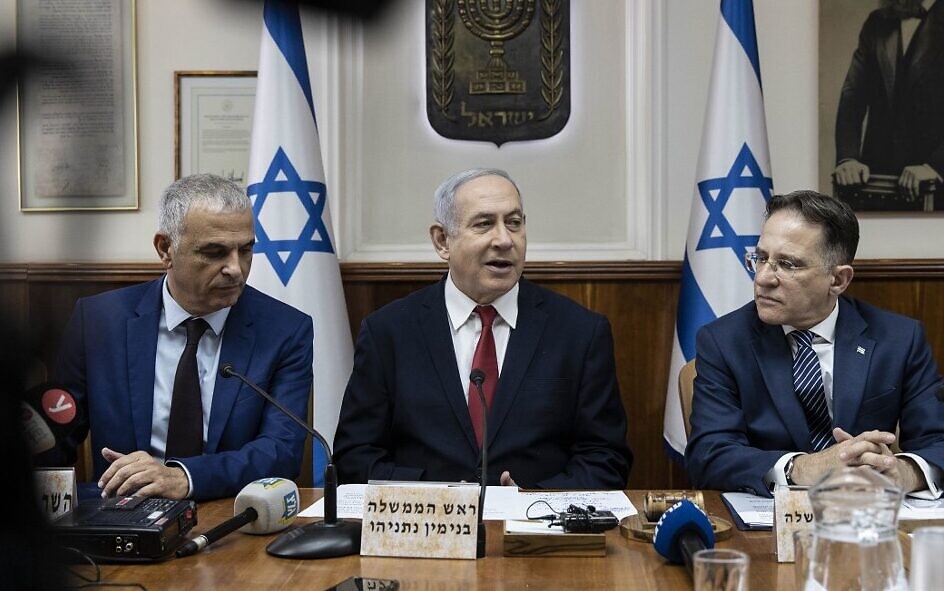
(L to R) Finance Minister Moshe Kahlon, Prime Minister Benjamin Netanyahu, and Cabinet Secretary Tzahi Braverman attend the weekly cabinet meeting at the Prime Minister's office in Jerusalem on January 12, 2020. (Tsafrir Abayov / POOL / AFP)

(L to R) Finance Minister Moshe Kahlon, Prime Minister Benjamin Netanyahu, and Cabinet Secretary Tzahi Braverman attend the weekly cabinet meeting at the Prime Minister’s office in Jerusalem on January 12, 2020. (Tsafrir Abayov / POOL / AFP)

Prime Minster Benjamin Netanyahu on Sunday praised Iranian protesters demonstrating against the regime after Tehran admitted shooting down an airliner by mistake, killing all 176 people aboard.

“I note the courage of the Iranian people who are again demonstrating in the streets against this regime. They deserve freedom, liberty and the ability to live in security and peace, all of which the regime denies them,” he said in Hebrew comments at the start of the weekly cabinet meeting.

In English, he added, “Iran lied. Just as they lied about their secret nuclear program, they are lying now about the downing of the Ukrainian aircraft. They knew from the start that they had downed it. They knew that it was an unintentional downing, but they lied intentionally. They deceived the entire world.

“This is completely contrary to how a civilized country should act and we send our condolences to the victims of Iran’s deception and negligence,” Netanyahu said.

Iranians expressed horror after the head of the Islamic Revolutionary Guards Corps Aerospace division said his unit had shot down the airliner on Wednesday after mistaking it for a cruise missile. The admission followed three days of Iranian officials vociferously denied shooting down the jet, despite mounting evidence.

In response, Iranians in Tehran took to the streets Saturday night to rally against the regime. Protests were also reported in other areas. On Sunday, Iran deployed riot police in the capital expecting possible further protests.

Videos posted to social media showed police firing tear gas at demonstrators chanting against the regime and calling for the resignation of Supreme Leader Ayatollah Khamenei and the prosecution of those behind the downing of the jet.

Calls included “Death to the dictator,” “Shame on you Khamenei, leave the country,” “Death to the liars,” and “Shame on the Revolutionary Guards, let the country go.”

Borzou Daragahi 🖊🗒

@borzou

Protest in Iranian city of Rasht. “Mercenary, get lost,” they call out to security forces

Borzou Daragahi 🖊🗒

@borzou

Extraordinary footage, posted by famed film director Jafar Panahi, captures confrontation between regime enforcers and students in Tehran tonight
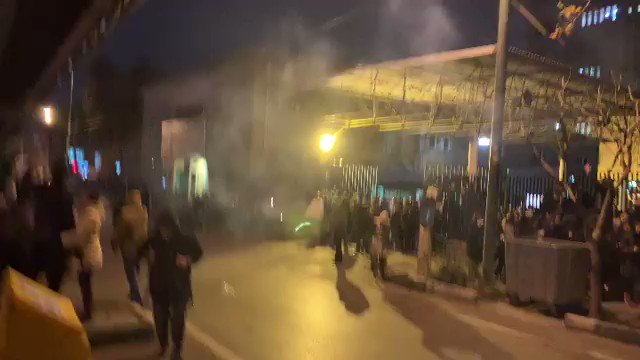
Embedded video

Netanyahu’s comments came hours after US President Donald Trump told Iranian protesters that he supported them and warned the regime against cracking down on the demonstrations.

“The government of Iran must allow human rights groups to monitor and report facts from the ground on the ongoing protests by the Iranian people,” Trump tweeted in English and Farsi.

“There can not be another massacre of peaceful protesters, nor an internet shutdown. The world is watching,” Trump added, referring to an internet blackout that blanketed the country during widespread protests in November.

Donald J. Trump

@realDonaldTrump

“To the brave, long-suffering people of Iran: I’ve stood with you since the beginning of my Presidency, and my Administration will continue to stand with you,” Trump tweeted.

“We are following your protests closely, and are inspired by your courage,” he said.

Donald J. Trump

@realDonaldTrump

In addition to his comments supporting the protesters, Netanyahu reiterated praise of Trump after the White House announced a new wave of sanctions on Iran following the missile strikes by the Islamic Republic on US bases that came in retaliation for the US drone strike killing Revolutionary Guard general Qassem Soleimani, Iran’s most powerful military commander.

“I commend President Trump for imposing new and very harsh sanctions against this regime,” Netanyahu said.

“I call on Britain, France and Germany to join the American effort. They need to go to the Security Council, and there they need to activate the sanctions that have been decided upon. I would like to reiterate: Israel will not allow Iran to develop nuclear weapons.”

 

Iranian students seen refusing to trample US, Israeli flags 

January 12, 2020

Source: Iranian students seen refusing to trample US, Israeli flags | The Times of Israel

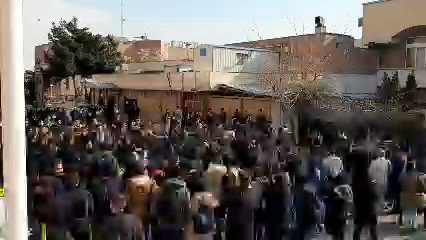
Students at an Iranian university are filmed this morning refusing to trample an American and an Israeli flag painted on the floor.

The footage is shared on social media accounts supportive of the anti-regime protests of the past two days.

مملکته@mamlekate

دانشگاه شهید بهشتی، ۲۲دی۹۸

Embedded video

مملکته@mamlekate

Today, the crowd in an Iranian university refused to trample US and Israel flag . These IR ideologies, like forced hijab, are falling one by one.

Stepping on flags of countries despised by the Iranian regime is a common pro-regime ritual in the Islamic Republic. It is not immediately clear if the apparent refusal to do so is a sign of support for the flags or the nations they represent, or simply an act of resistance against a sign of fealty to the regime in Tehran.


Excerpt from PM Netanyahu’s Remarks at Weekly Cabinet Meeting 

January 12, 2020


IRAN-CRASH/POLITICS (ANALYSIS):ANALYSIS-Iran’s handling of plane disaster sparks new challenge to rulers

January 12, 2020

Source: ANALYSIS-Iran’s handling of plane disaster sparks new …

(Repeats for wider distribution story first issued on Jan. 11, no changes to text)

* U.S, others said plane was brought down by missile

* Revolutionary Guards belatedly admitted fired in error

* Outcry over plane disaster follows November protests

* Anger may mean more protests, low election turnout

By Parisa Hafezi and Tuqa Khalid

DUBAI, Jan 11 (Reuters) – Iran’s clerical rulers risk a legitimacy crisis as popular anger has boiled up at the way the state handled a passenger plane crash, which the military took three days to admit was caused by an Iranian missile fired in error.

Amid mounting public fury and international criticism, the belated admission of blame by Iran’s elite Revolutionary Guards has squandered the national unity seen after the killing of the country’s most influential commander in a U.S. drone strike in Iraq on Jan. 3.

Huge crowds had turned out on the streets of Iranian cities to mourn Qassem Soleimani’s death, chanting “Death to America”.

But since the Ukraine International Airlines plane crashed on Wednesday – an incident Canada and the United States said early on was due to an Iranian missile albeit fired by mistake – social media has been ablaze with criticism of the establishment. All 176 people on board the plane, en route from Tehran to Kiev, were killed.

That mood bodes ill for a parliamentary election in February, when Iran’s rulers typically seek a high turnout to show their legitimacy even if the outcome will not change any major policy.

But instead they are now hearing more rumblings of discontent, after anti-government protests in November in which hundreds of people died.

“It is a very sensitive time for the establishment. They face a serious credibility problem. Not only did they conceal the truth, they also mismanaged the situation,” said a senior former official, who spoke on condition of anonymity.

Since the 1979 Islamic revolution, Iran’s clerics have swept aside challenges to their grip on power. But the kind of distrust between the rulers and the ruled that erupted in protests last year may now have deepened.

“There will be a short-term blow to the regime’s credibility and this will aid the pressure on the regime from the economic and political problems it had before the latest standoff with the U.S.,” said Daniel Byman, senior fellow for foreign policy at the Brookings Institution’s Center for Middle East Policy.

‘DEATH TO THE DICTATOR’

Video clips on Twitter showed protesters in Tehran on Saturday chanting “Death to the dictator,” a reference to Supreme Leader Ali Khamenei. Reuters could not independently verify the footage. It followed a welter of criticism in Iran.

Iran’s state news agency confirmed protests had erupted.

The Guards issued an apology for shooting down the plane, saying air defences were fired in error during a state of high alert. Iran had expected U.S reprisals after it retaliated for Soleimani’s killing by firing missiles at Iraqi bases where U.S. troops were stationed.

One hardline official said the mistake should not be turned into a political weapon against the establishment and the Guards, a parallel force to the conventional army that answers directly to Khamenei and is a guardian of the theocratic system.

“Let’s avoid being so harsh. It was a sensitive time and everyone was nervous. You cannot ignore what the Guards have done to protect the nation and this country since the revolution,” the security official told Reuters.

But Khamenei, who has always cited turnout at elections as a sign of the legitimacy of the system of clerical rule, may now find Iranians are not so keen to show their support.

“Why should I vote for this regime. I don’t trust them at all. They lied to us about the plane crash. Why should I trust them when they don’t trust people enough to tell the truth?,” said Hesham Ghanbari, 27, a university student in Tehran.

The government is already struggling to keep the economy afloat under increasingly tough U.S. sanctions, imposed by Washington after it withdrew in 2018 from Tehran’s nuclear deal with world powers. Vital oil exports have been slashed.

BEDROCK SUPPORT

“This tragedy will not be forgotten nor is it easy to overcome for the population under sanctions and pressure not just from abroad but also from the state,” said Sanam Vakil, Senior Research Fellow at Middle East and North Africa Programme, Chatham House.

“This incident is a stark reminder of the gaping lack of governance,” said Vakil.

The clerical system has survived more severe challenges in the past, including a crippling eight-year war with Iraq in the 1980s.

But its bedrock of support, the poor and lower middle classes who have most benefited from state largesse in the past, were among the first on the street in November in protests sparked by a hike in gasoline prices – a particularly sensitive issue where many rely on cheap fuel.

Protesters’ demands swiftly turned more political, including calls for their rulers to go, before authorities cracked down.

SHOCK TO IRANIANS

Learning that Iranian forces shot down a plane, whether by accident or not, is a further blow. Many of the passengers were dual national Iranians.

Social media was flooded with angry comments from Iranians, many complaining that the authorities had spent more time denying they were to blame for the plane crash than sympathising with victims’ families.

“It has shocked the public. Once more, the regime carelessly kills its own people,” said Ray Takeyh, senior fellow for Middle East studies at the Council on Foreign Relations.

“It punctures the already spurious narrative that the killing of Soleimani has united the Iranian people behind their government,” he said.

Alongside the parliamentary vote, the elections on Feb. 21 will also choose members of the Assembly of Experts, a clerical body that in future will be responsible for selecting a successor to 80-year-old Khamenei.

Khamenei, who has no term limit, has been in office since the death in 1989 of the founder of the Islamic Republic, Ayatollah Ruhollah Khomeini.

(Writing by Parisa Hafezi Editing by Edmund Blair and Frances Kerry)


Iranian protesters demand Khamenei quit over plane downing 

January 11, 2020

Source: Iranian protesters demand Khamenei quit over plane downing – The Jerusalem Post

The concealment of the Ukrainian jet downing by the Iranian authorities raised questions among the republic’s citizens, leading to the renewal of the protests.

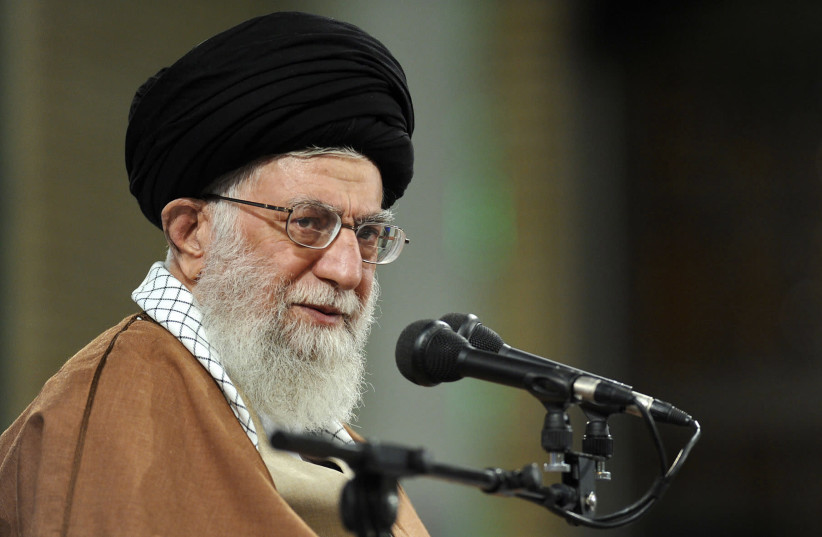
Iran's supreme leader Ayatollah Ali Khamenei (photo credit: AFP PHOTO / HO / KHAMENEI.IR)
Iran’s supreme leader Ayatollah Ali Khamenei
(photo credit: AFP PHOTO / HO / KHAMENEI.IR)
 A group of Iranian protesters demanded Iran’s Supreme Leader Ayatollah Ali Khamenei step down on Saturday after Tehran said that its military had mistakenly shot down a Ukrainian plane, killing all 176 people on board.

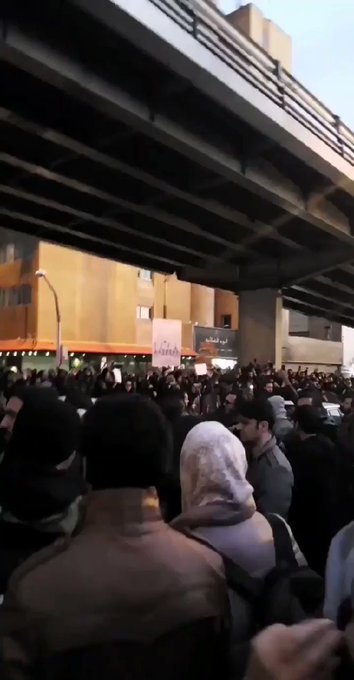
“Commander-in-chief [Khamenei] resign, resign,” videos posted on Twitter showed hundreds of people chanting in front of Tehran’s Amir Kabir university.


Alireza Azami@Alireza__Azami

People in have just begun the protest against de regime.
Students of Amirkabir university in Tehran chant slogans against the supreme leader!

Embedded video

This is the first protest since the assassination of IRGC Quds Force Commander Qasem Soleimani. Last November, hundreds were killed in protests in multiple cities across the Islamic Republic.
In videos circulating on social media in November, demonstrators in western Iran and in the republic’s capital were seen chanting “Death to Khamenei!”

Iranian authorities shut off the internet across the country, blocking communications in preparation for expected protests.

Saudi news agency Al Arabia reported that the republic’s security forces confronted the protesters across the state. Videos showing the forces launching tear gas toward the protesters emerged. Users on social media also reported the presence of armed forces. An attempt to renew protests in December was shut down with no known casualties.
The concealment of the Ukrainian jet downing by the Iranian authorities raised questions among the republic’s citizens, leading to the renewal of the protests.

Farnaz Fassihi

@farnazfassihi

Public mourning gatherings turn into protests in . Angry crowds chanting, “Death to the liars.”

Embedded video

“They were so careful not to kill any American in their revenge for Soleimani. But they did not close the airport? This shows how much this regime cares for Iranians,” said Iranian citizen Mira Sedaghati after the Iranian military admitted mistakenly shooting down the jet.
“This is not human error. This is a crime against humanity,” said exiled Persian Crown Prince Reza Pahlavi on Saturday. “He who has irresponsibly empowered his thugs to fire at will at innocents bears full responsibility. #Enough_is_enough. Khamenei and his regime must go.”

Reza Pahlavi

@PahlaviReza

Reza Pahlavi

@PahlaviReza

این #خطای_انسانی نیست؛ جنایت علیه بشریت است؛ و رهبری که فرمان #آتش_به_اختیار می‌دهد، مسوول مستقیم آن. دیگر بس است. خامنه‌ای و‌ رژیمش باید بروند.

In an earlier tweet, Pahlavi, a self-described advocate for human rights and secular democracy, said that “unfortunately, death has overshadowed our country. A government that cannot handle a funeral has cheapened death,” he said on Thursday. “Our task is to combat the normalization of death.”
The Ukrainian prosecutor general’s office said on Saturday it is investigating possible willful killing and aircraft destruction in its probe of the crash.
Tzvi Joffre and Reuters contributed to this report.


Jerusalem’s security challenges for 2020- Jerusalem Studio 478

January 11, 2020


Trump announces new sanctions against the Iranian metal industry

January 11, 2020

Source: Trump announces new sanctions against the Iranian metal industry – The Jerusalem Post

“The United States will continue to counter the Iranian regime’s destructive and destabilizing behavior,” he said in a statement

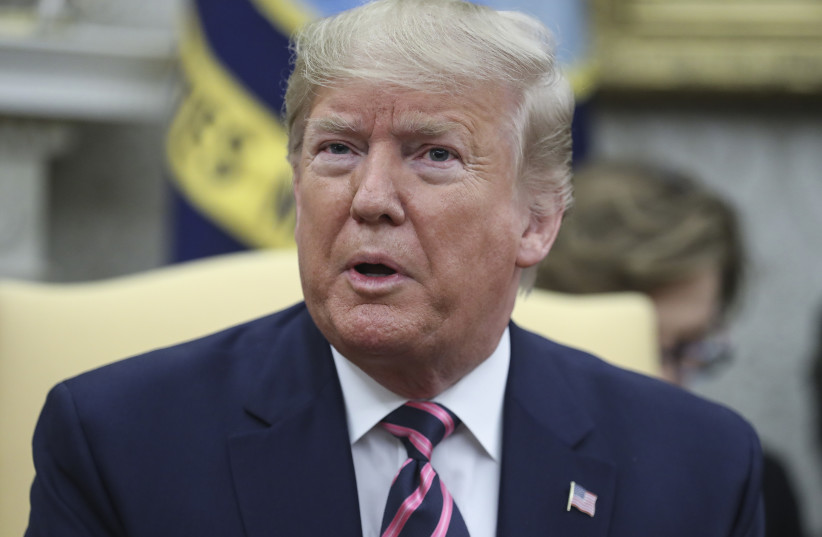
President Donald Trump speaks as he welcomes Paraguay s President Mario Abdo Benitez to the White House in the Oval Office on December 13, 2019 in Washington, D.C. (photo credit: STHANLEE B. MIRADOR/SIPA USA/TNS)
President Donald Trump speaks as he welcomes Paraguay s President Mario Abdo Benitez to the White House in the Oval Office on December 13, 2019 in Washington, D.C.
(photo credit: STHANLEE B. MIRADOR/SIPA USA/TNS)
WASHINGTON – US President Donald Trump issued an Executive Order on Friday, authorizing new sanctions against the Iranian metal industry, as well as senior regime officials.
According to the Treasury’s Department announcement, this action includes the designations of Ali Shamkhani, the Secretary of Iran’s Supreme National Security Council; Mohammad Reza Ashtiani, the Deputy Chief of Staff of Iranian armed forces; and Gholamreza Soleimani, the head of the Basij militia of the Islamic Revolutionary Guards Corps (IRGC).
“In addition, Treasury designated 17 Iranian metals producers and mining companies; a network of three China- and Seychelles-based entities; and a vessel involved in the purchase, sale, and transfer of Iranian metals products, as well as in the provision of critical metals production components to Iranian metal producers,” the Treasury Department added in a statement.
“This order will have a major impact on the Iranian economy,” President Trump said in a statement released on Friday. “Iran continues to be the world’s leading sponsor of terrorism. The Iranian regime has threatened the United States military service members, diplomats, and civilians, as well as the citizens and interests of our allies and partners, through military force and proxy groups.”
“The United States will continue to counter the Iranian regime’s destructive and destabilizing behavior,” Trump continued. “Iran will never be allowed to have a nuclear weapon. These punishing economic sanctions will remain until the Iranian regime changes its behavior. The United States is ready to embrace peace with all who seek it.”
“Maximum pressure on the Iranian regime continues,” US Secretary of State, Mike Pompeo tweeted. “The US is sanctioning eight senior Iranian leaders and numerous entities in the metals industry in response to Iran’s attacks against US forces and interests. Our sanctions will continue until Iran changes its behavior.”

“We applaud the Trump administration for imposing sanctions on additional sectors of the Iranian economy and welcome the designations of senior individuals in Iran’s national security establishment as well as individuals and companies associated with manufacturing and metal production,” the Christians United for Israel (CUFI) Action Fund said in a statement.
“Only this maximum pressure campaign can diminish the likelihood the Islamic Republic acquires a nuclear weapon and increase the likelihood the Iranian people will one day be able to take their country back from Tehran’s tyrants,” the statement reads


Trump reveals new details on imminent threat from Soleimani 

January 11, 2020


US rejects Iraq request to work on a troop withdrawal plan

January 11, 2020

Source: US rejects Iraq request to work on a troop withdrawal plan | The Times of Israel

State Department says two sides should instead talk about how to ‘recommit’ to their partnership; thousands protest in Baghdad and beyond, calling on both US and Iran to leave

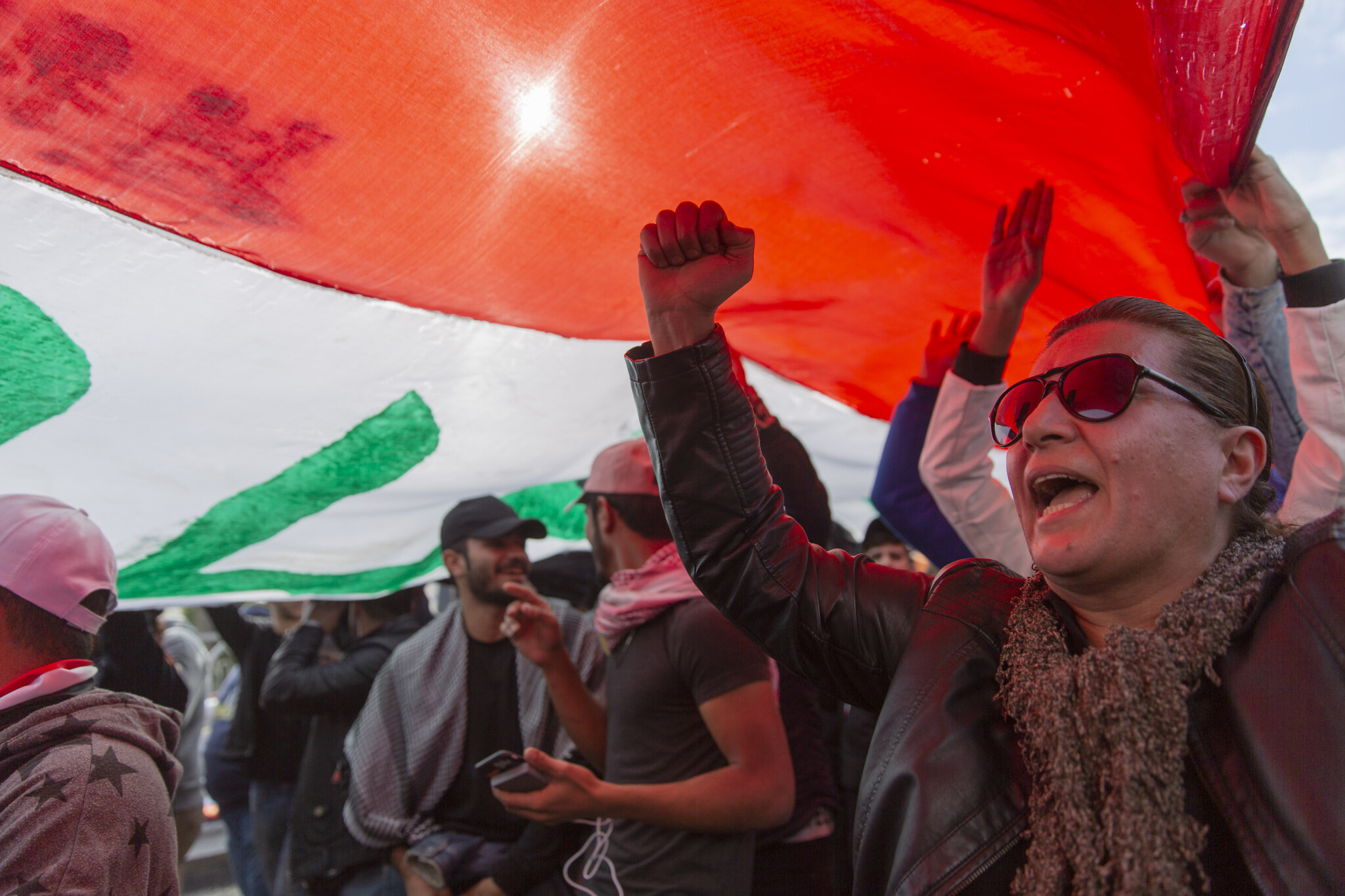
Anti government protesters chant anti-Iran and anti-US slogans under a big Iraqi flag that they carry during the ongoing protests in Tahrir square, Baghdad, Iraq, Friday, Jan. 10, 2020. (AP Photo/Nasser Nasser)

Anti government protesters chant anti-Iran and anti-US slogans under a big Iraqi flag that they carry during the ongoing protests in Tahrir square, Baghdad, Iraq, Friday, Jan. 10, 2020. (AP Photo/Nasser Nasser)

BAGHDAD (AP) — Iraq’s caretaker prime minister asked Washington to start working out a road map for an American troop withdrawal, but the US State Department on Friday bluntly rejected the request, saying the two sides should instead talk about how to “recommit” to their partnership.

Thousands of anti-government protesters gathered in the capital and southern Iraq, many calling on both Iran and America to leave Iraq, reflecting anger and frustration over the two rivals — both Baghdad’s allies — trading blows on Iraqi soil.

The request from Prime Minister Adel Abdul-Mahdi pointed to his determination to push ahead with demands for US troops to leave Iraq, stoked by the American drone strike on Jan. 3 that killed top Iranian Gen. Qassem Soleimani. In a phone call Thursday night, he told US Secretary of State Mike Pompeo that recent US strikes in Iraq were an unacceptable breach of Iraqi sovereignty and a violation of their security agreements, his office said.

He asked Pompeo to “send delegates to Iraq to prepare a mechanism” to carry out the Iraqi Parliament’s resolution on withdrawing foreign troops, according to the statement.

“The prime minister said American forces had entered Iraq and drones are flying in its airspace without permission from Iraqi authorities, and this was a violation of the bilateral agreements,” the statement added.

In this May 15, 2019 file photo, Iraqi Prime Minister Adel Abdul-Mahdi speaks to the media during a joint news conference with Turkish President Recep Tayyip Erdogan, in Ankara, Turkey (AP Photo/Burhan Ozbilici, File)

Abdul-Mahdi signaled he was standing by the push for the American forces to go despite recent signs of de-escalation between Tehran and Washington after Iran retaliated for Soleimani’s death with a barrage of missiles that hit two Iraqi bases where US troops are based but caused no casualties.

Iraqis have felt furious and helpless at being caught in the middle of fighting between Baghdad’s two closest allies. Abdul-Mahdi has said he rejects all violations of Iraqi sovereignty, including both the Iranian and US strikes.

On Friday, the US State Department flatly dismissed the request. It said the presence of US troops was crucial for the fight against the Islamic State group and it would not discuss removing them.

“Any delegation sent to Iraq would be dedicated to discussing how to best recommit to our strategic partnership — not to discuss troop withdrawal, but our right, appropriate force posture in the Middle East,” said spokesperson Morgan Ortagus.

“We want to be a friend and partner to a sovereign, prosperous, and stable Iraq,” she added.

Iraqi lawmakers passed a resolution Sunday to oust US troops, following the Jan. 3 US drone strike that killed Soleimani and senior Iraqi militia commander Abu Mahdi al-Muhandis at Baghdad’s airport. The nonbinding vote put the responsibility on the government to formally request a withdrawal. Abdul-Mahdi, addressing lawmakers at the time, called for “urgent measures” to ensure the removal of the troops.

A child with the colors of the Iraqi flag on his face during ongoing protests in Tahrir square, Baghdad, Iraq, Friday, Jan. 10, 2020. (AP Photo/Nasser Nasser)

Speaking to Pompeo, Abdul-Mahdi stopped short of requesting an immediate withdrawal and appeared to give the US time to draw up a strategy and timeline for departure.

In its initial readout of the call, the State Department made no mention of Abdul-Mahdi’s request on the troops. It said Pompeo initiated the call and reiterated the US condemnation of the Iranian missile strikes on the two bases, underscoring that President Donald Trump “has said the United States will do whatever it takes to protect the American and Iraqi people and defend our collective interests.”

There are some 5,200 US troops in Iraq assisting and providing training to Iraqi security counter-parts to fight the Islamic State group. An American pullout could deeply set back efforts to crush remnants of the group amid concerns of a resurgence amid the political turmoil.

Top American military officials including Gen. Mark Milley, chairman of the Joint Chiefs of Staff, and Defense Secretary Mark Esper, have said there were no plans for the US to withdraw.

Ortagus also said the State Department was in talks with NATO to increase its role in Iraq. Trump has invited NATO to play a larger role in the Middle East.

US State Department spokesperson Morgan Ortagus speaks at a news conference at the State Department in Washington, June 17, 2019. (AP Photo/Andrew Harnik)

“Today, a NATO delegation is at the State Department to discuss increasing NATO’s role in Iraq, in line with the president’s desire for burden sharing in all of our collective defense efforts,” the statement said. “There does, however, need to be a conversation between the US and Iraqi governments not just regarding security, but about our financial, economic, and diplomatic partnership.”

Ortagus did not elaborate. Iraq is highly dependent on Iran sanctions waivers from Washington to continue importing Iranian gas to meet electricity demands, and the US has consistently used this as leverage in the past. The current waiver expires in February, and without a new one, Iraq could face severe penalties.

Still, the demand for withdrawal is not universal. Sunni and Kurdish lawmakers oppose the Parliament resolution. The Sunnis see the US presence as a bulwark against domination by the majority Shiites and Iran, while the Kurdish security forces had benefited from American training and aid.

The latest escalation between Tehran and Washington on Iraqi soil was set off when a rocket attack blamed on the Iranian-backed militia group Kataeb Hezbollah, or Hezbollah Brigades, caused the death of an American contractor at a base in Kirkuk province in late December. The US replied with a barrage of strikes on the militia’s bases, killing at least 25 people.

Protesters lambasted the ongoing diplomatic crisis between Iraq, the US and Iran in mass protests across the capital and southern provinces.

Thousands massed in Baghdad’s Tahrir square, the epicenter of the protest movement, and many chanted “Damn Iran and America!” Large demonstrations were also held in southern provinces of Basra, Dhi Qar, Najaf and Diwanieh, as anti-government protesters sought to recover momentum following the regional tensions that overshadowed their uprising.

An anti government protester flies an Iraqi flag on top of cement blocks that separate protesters from riot police, during the ongoing protests in Tahrir square, Baghdad, Iraq, Friday, Jan. 10, 2020. (AP Photo/Nasser Nasser)

Meanwhile, Grand Ayatollah Ali al-Sistani urged rival Iraqi political factions to unite and put private interests aside, saying their attempts to outbid each other in the political process had led to the current crisis and risked creating more unrest.

Rival political factions have yet to agree on a nominee to replace the outgoing Abdul-Mahdi, who resigned in December under pressure from the protesters.

“The serious attacks and repeated violations of Iraqi sovereignty that occurred in recent days with the apparent weakness of the concerned authorities in protecting the country and its people … are part of the repercussions of the current crisis,” al-Sistani said.

“Everyone is required to think carefully about what this situation will lead to if there is no end to it,” he added.


US unsuccessfully targeted another Iranian commander on day of Soleimani strike

January 11, 2020

Source: US unsuccessfully targeted another Iranian commander on day of Soleimani strike | The Times of Israel

American forces tried to take out high-ranking Revolutionary Guards commander Abdul Reza Shahlai, who is accused of financing militia groups, planning attacks on US and allies

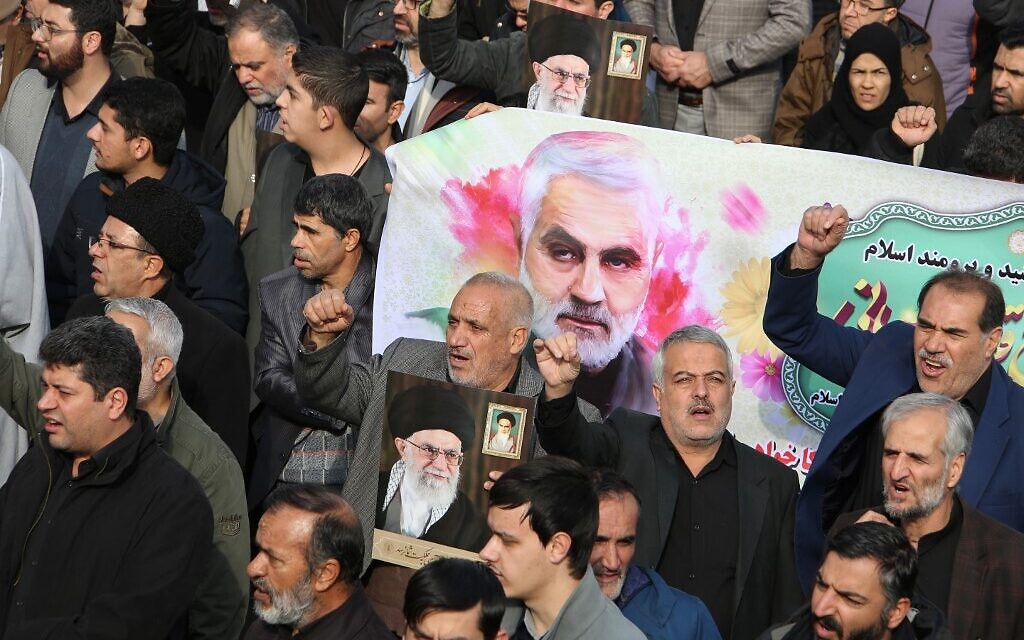
Iranians march with a banner bearing an illustration of Quds Force General Qassem Soleimani during a demonstration in Tehran on January 3, 2020, against the killing of the top commander in a US strike in Baghdad. (Atta Kenare/AFP)

Iranians march with a banner bearing an illustration of Quds Force General Qassem Soleimani during a demonstration in Tehran on January 3, 2020, against the killing of the top commander in a US strike in Baghdad. (Atta Kenare/AFP)

AP — The US military tried, but failed, to take out another senior Iranian commander on the same day that an American airstrike killed the Revolutionary Guard’s top general, US officials said Friday.

The officials said a military airstrike by special operations forces targeted Abdul Reza Shahlai, a high-ranking commander in Iran’s Islamic Revolutionary Guard Corps but the mission was not successful. The officials spoke on condition of anonymity in order to discuss a classified mission.

Officials said both Iranian general Qassem Soleimani and Shahlai were on approved military targeting lists, which indicates a deliberate effort by the US to cripple the leadership of Iran’s Quds force, which has been designated a terror organization by the US. Officials would not say how the mission failed.

A US drone strike on January 3 killed Soleimani shortly after he landed at Baghdad International Airport. Trump administration officials have justified the killing as an act of self-defense, saying he was planning military acts that threatened large numbers of American military and diplomatic officials in the Middle East.

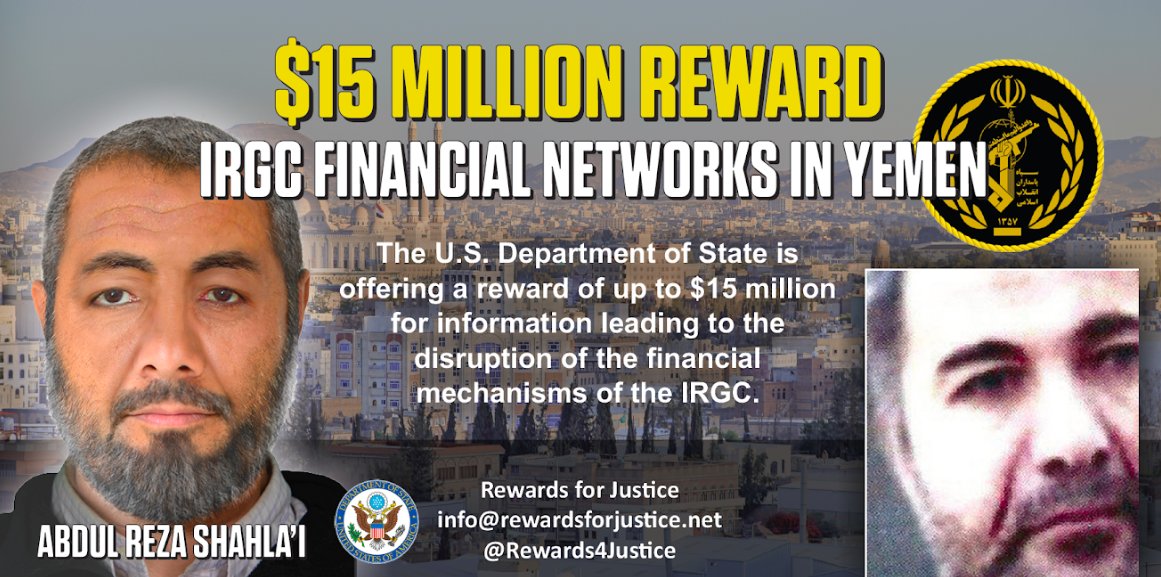
Rewards for Justice

@Rewards4Justice

The U.S. Department of State is offering a reward of up to $15 million for information leading to Shahla’i or to the disruption of the IRGC’s financial mechanisms in Yemen and in the region.

View image on Twitter
US President Donald Trump on Friday said that Soleimani was likely planning attacks on four US embassies when he was killed.

Iran, however, called the airstrike an act of terrorism, and on January 8 it launched more than a dozen ballistic missiles at two bases in Iraq that house American and coalition forces. No one was killed in that retaliation.

The US State Department offered a reward of $15 million early last month for information leading to the disruption of the Revolutionary Guards’ finances, including for Shahlai, a key financier in the organization. The US State Department said he “has a long history of targeting Americans and U.S. allies globally,” and planned multiple assassinations of coalition forces in Iraq.

It added that his activities included providing weapons and explosives to Shi’ite militia groups and directing a plot to assassinate the Saudi ambassador in Washington, DC, in 2011.

The Pentagon declined to discuss the highly-classified operation.

“We have seen the report of a January 2 airstrike in Yemen, which is long-understood as a safe space for terrorists and other adversaries to the United States. The Department of Defense does not discuss alleged operations in the region,” said Navy Commander Rebecca Rebarich, a Pentagon spokeswoman.

The Washington Post first reported the development.

Times of Israel staff contributed to this report.