MOSCOW — Russia condemns the EU move to put the Iran nuclear deal in dispute, warning it risked causing a “new escalation.”
“We do not rule out that the thoughtless actions of the Europeans could lead to a new escalation around the Iranian nuclear accord,” the foreign ministry says in a statement.
The ministry adds that Moscow sees “no reason for such a move.”
“The mechanism to resolve differences was created for totally different ends,” the ministry addd.
“The reasons for the difficulty of implementing the accord were broadly known and not linked to Iran,” but to the unilateral US withdrawal from the accord in 2018 which led to new sanctions being imposed on Tehran, in Moscow’s view.
The ministry addd that Iran’s nuclear program “remains under the constant control of the IAEA (International Atomic Energy Agency).” It says that level of oversight was “unprecedented” in its scope.
“Despite all the challenges the Iranian nuclear accord has not lost its relevance,” the ministry concludes.
Britain, France and Germany earlier today launched a dispute mechanism charging Iran with failing to observe the terms of the 2015 deal curtailing its nuclear program.
The move comes as tensions soar between the West and Iran following the killing of top commander Qassem Soleimani in a US strike, and the admission by Tehran days later that it had accidentally shot down a Ukrainian airliner
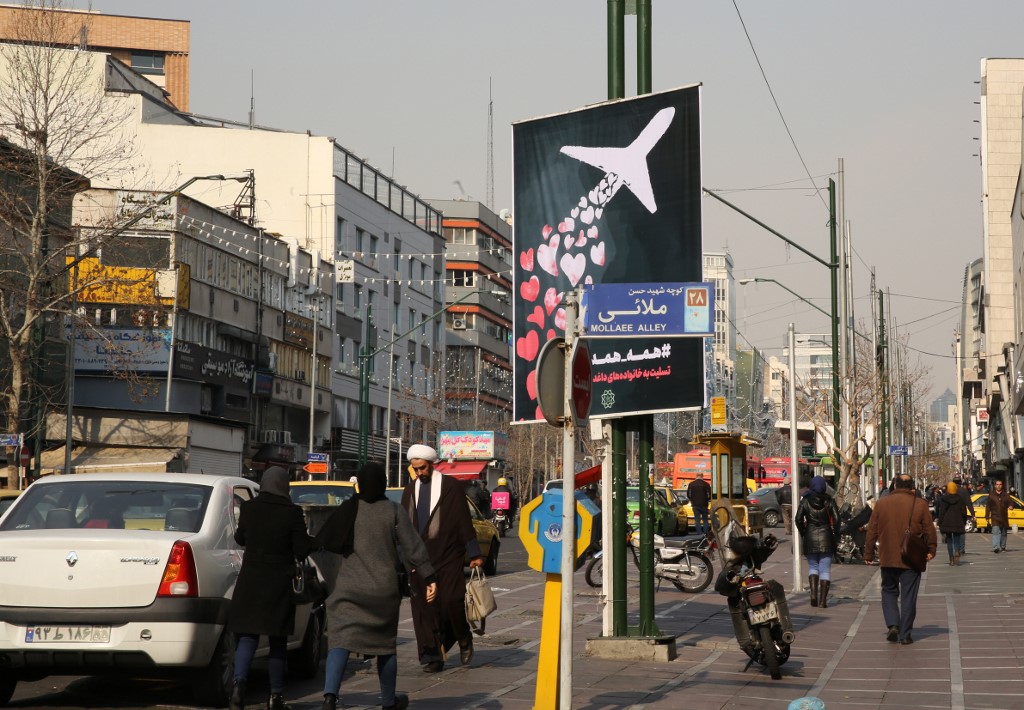
Iranians walk past a poster honoring the victims of a Ukrainian passenger jet accidentally shot down in the capital last week, in front of the Amirkabir University in the capital Tehran, on January 13, 2020. (ATTA KENARE/AFP)
Police in Tehran have been ordered to show “restraint” at demonstrations that erupted after the accidental shooting down of a Ukrainian passenger jet, the Iranian capital’s police chief said Monday.
“The police treated the people who had gathered with patience and tolerance” in a second night of demonstrations in Tehran on Sunday, said General Hossein Rahimi.
“The police did not shoot at the gatherings at all because a restraint order (had been issued) for police in the capital,” he said in a statement published by state television.
The protests have drawn the attention of the international community.
German Foreign Office spokeswoman Maria Adebahr said Iranians have the right to take to the streets to express their “grief and also their anger” after the plane disaster.
“The Iranian people must have the opportunity to protest peacefully and freely, and to express their opinions,” Adebahr told reporters at a regular government press conference.
“We are convinced this has to happen in a peaceful, free and unhindered way,” she said.
This image from a Sunday, Jan. 12, 2020 video provided by the New York-based Center for Human Rights in Iran shows a crowd fleeing police near Azadi, or Freedom, Square in Tehran, Iran (Center for Human Rights in Iran via AP)
On Saturday evening, a memorial at Tehran’s Amir Kabir University in honor of those killed turned into a demonstration that AFP correspondents said was attended by hundreds of students.
They shouted “death to liars” and demanded the resignation and prosecution of those responsible, Fars news agency reported, saying that police “dispersed” them.
Similar demonstrations were held in the Iranian capital again on Sunday night, according to unverified videos shared on social media, but it was difficult to assess how many people took part.
Adebahr said videos reportedly showing security forces cracking down on the demonstrations were “very worrying.”
“We urge the security forces to show the greatest possible restraint,” she added.
The Ukraine International Airlines plane bound for Kyiv was shot down shortly after take-off from Tehran on Wednesday, killing all 176 people on board.
Officials in Iran initially denied Western claims the Boeing 737 was downed by a missile, before acknowledging on Saturday that it had been shot down in a catastrophic error.
Iran has invited experts from Canada, France, Ukraine and the United States to take part in the investigation into the air disaster.
Iran’s President Hassan Rouhani has promised a “thorough investigation.”
US president’s open encouragement of demonstrations and praise for protesters refusing to walk on Israeli flag is break from previous Washington policy on Iran affairs, say experts
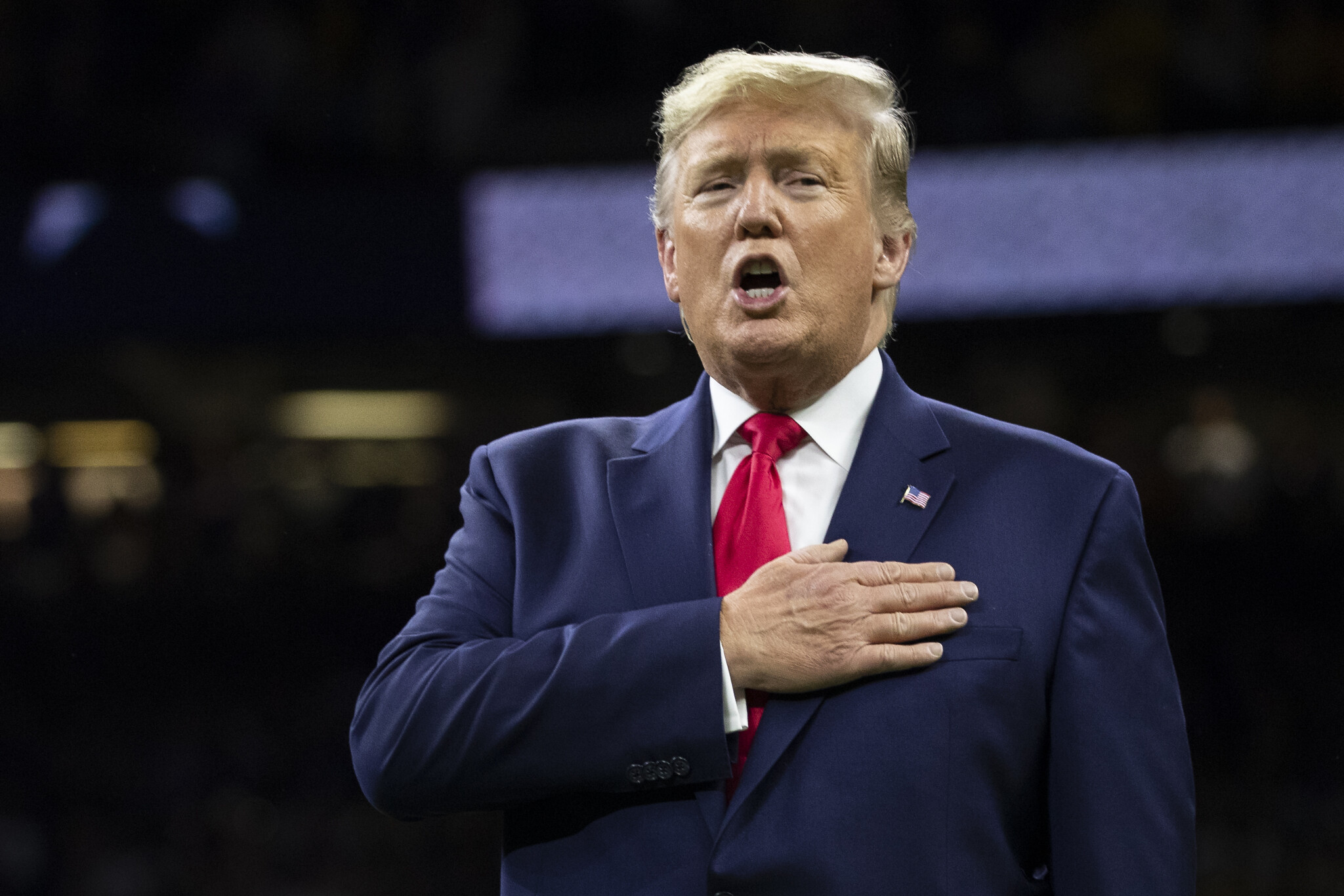
US President Donald Trump stands for the national anthem before the beginning of the NCAA College Football Playoff National Championship game between LSU and Clemson, in New Orleans, January 13, 2020. (Evan Vucci/AP)
WASHINGTON (AP) — US President Donald Trump’s embrace of anti-government protesters in Iran is another departure from his predecessors, who feared such overt support could backfire and inadvertently help hardliners in the Islamic Republic.
Trump has tweeted repeatedly in recent days in support of protesters who surged into the streets in anger over the apparently accidental downing of a Ukrainian jetliner and their government’s initial attempt to conceal its role in the disaster.
But his encouragement carries a risk by seeming to confirm the claims of Iranian hard-liners who accuse the US of fomenting the unrest.
“When the Iranian people are upset with their government for blatantly lying about shooting down a plane, he should have taken the high road and send his condolences to the families,” said Jon Alterman, director of the Middle East Program at Center for Strategic and International Studies. “By seeming to make it about him, he de-legitimizes the protesters and allows the government to portray the protests as a US plot.”
Previous administrations have sought to keep some distance between Washington and demonstrators opposed to Iran’s Islamic leadership. That was why the Obama administration offered only muted expressions of support during the major political unrest in Iran in 2009.
This image from a Jan. 12, 2020, video provided by the New York-based Center for Human Rights in Iran shows a crowd fleeing police near Azadi, or Freedom, Square in Tehran, Iran (Center for Human Rights in Iran via AP)
Trump and his team have no such qualms. They see their pro-demonstrator comments — even the president’s tweets in Farsi on Sunday — as a way to further pressure Tehran.
Popular anger swelled Monday in Iran over the downing of the Ukrainian jet, which was apparently knocked out of the sky by an Iranian missile hours after the Islamic Republic fired a barrage of missiles at Iraqi bases housing American soldiers. Iran’s action was in response to the US killing of its top military leader, Gen. Qassem Soleimani, in a drone strike.
All 176 people on board the jet, including scores of young Iranians and people of Iranian descent, were killed, prompting widespread shock and outrage in Iran and around the world.
Ali Rabiei, a government spokesman, insisted Iran’s civilian officials learned only on Friday that the Revolutionary Guard had shot down the plane. The Guard answers directly to Supreme Leader Ayatollah Ali Khamenei.
“The point is that we did not lie,” Rabiei said. He went on to blame the US for “spreading the shadow of war over Iran.”
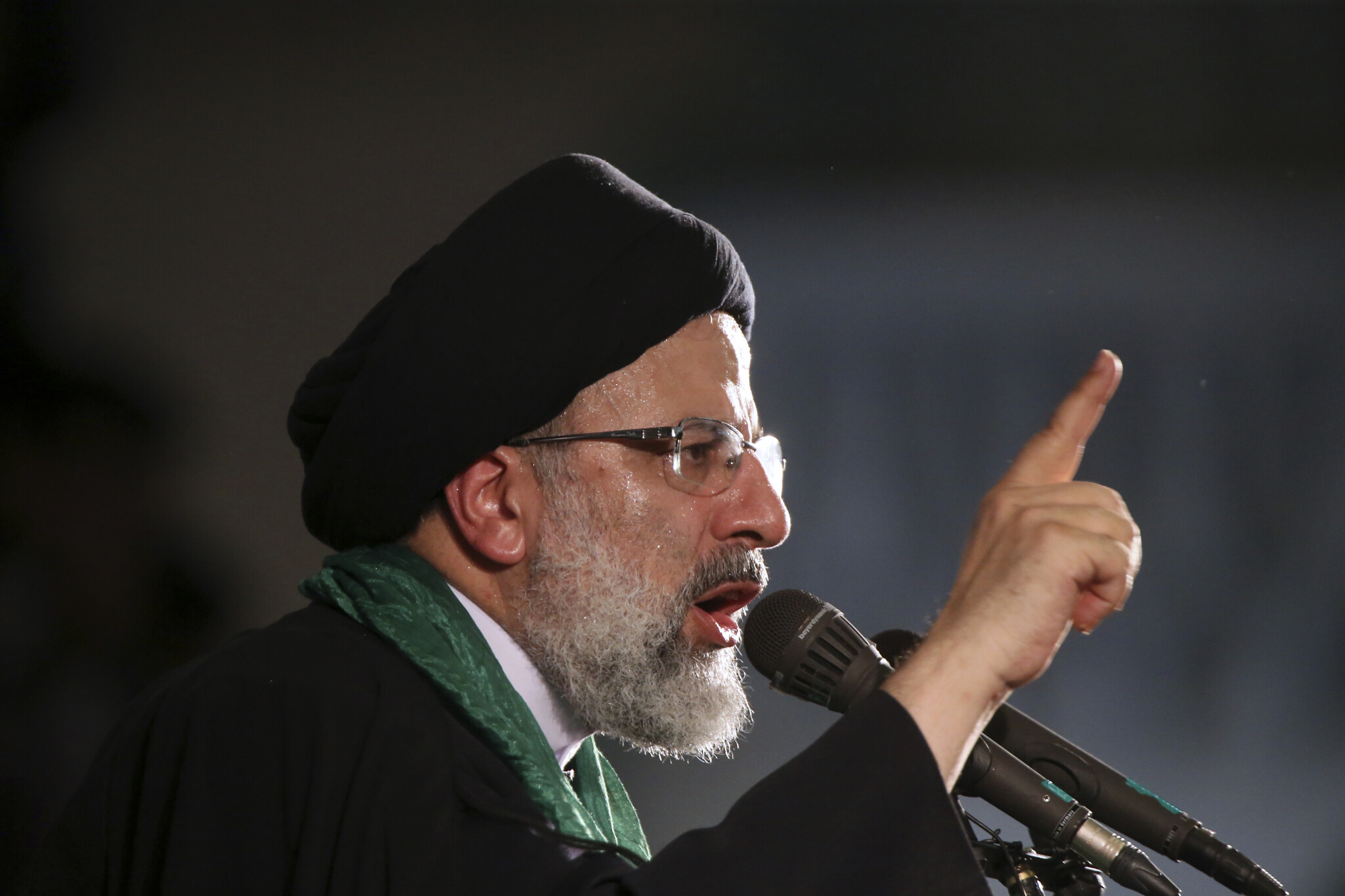
Hard-line cleric Ebrahim Raisi speaks during a 2017 presidential election rally in Tehran, Iran, May 16, 2017. (Vahid Salemi/AP)
Ebrahim Raisi, the head of Iran’s judiciary, issued a warning to protesters, saying “the agents of America and agents of foreign countries” want to use anger over Flight 752 to “compromise” Iran’s security. Iran often blames anti-government protests on foreign conspiracies.
Yet others say the Trump administration’s hands-on approach might not make any difference.
“The reality is when (President Barack) Obama offered only tepid support to Iranian protesters in 2009, the regime still called them American agents and crushed them. If the Trump administration offers more enthusiastic support, the regime will call them American agents and attempt to crush them,” said Karim Sadjadpour, an Iran expert and senior fellow in the Middle East program at the Carnegie Endowment for International Peace.
“The best thing any US administration can do is inhibit the regime’s ability to shut down the internet and repress people in darkness,” he said. “But, I think the Islamic Republic’s penchant for repression is high regardless of whatever anyone says in D.C.”
In a series of tweets sent since late last week as protests against Iran’s shooting down of a Ukrainian passenger jet intensified, Trump has personally exhorted the Iranian people to rise up and be heard.
He has applauded the apparent refusal of some to walk over painted flags of Israel and the United States at a Tehran campus in a quiet show of defiance. He has also demanded that the government allow the protests and protect the demonstrators.
Students at an Iranian university are seen attempting to avoid trampling large Israeli and American flags painted on the ground, in what pro-protester social media accounts depicted as a rejection of the Tehran regime. (Twitter screen capture)
“To the leaders of Iran – DO NOT KILL YOUR PROTESTERS,” he tweeted on Sunday. “Thousands have already been killed or imprisoned by you, and the World is watching. More importantly, the USA is watching. Turn your internet back on and let reporters roam free! Stop the killing of your great Iranian people!”
On Saturday, as protests grew following the admission by the Islamic Revolutionary Guard Corp that it had unintentionally shot down the Ukrainian plane, Trump tweeted, “To the brave, long-suffering people of Iran: I’ve stood with you since the beginning of my Presidency, and my Administration will continue to stand with you. We are following your protests closely, and are inspired by your courage.”
Beyond supporting the protesters, Trump and fellow Republicans have denounced Democrats, saying they have not expressed robust backing for the Iranian demonstrators.
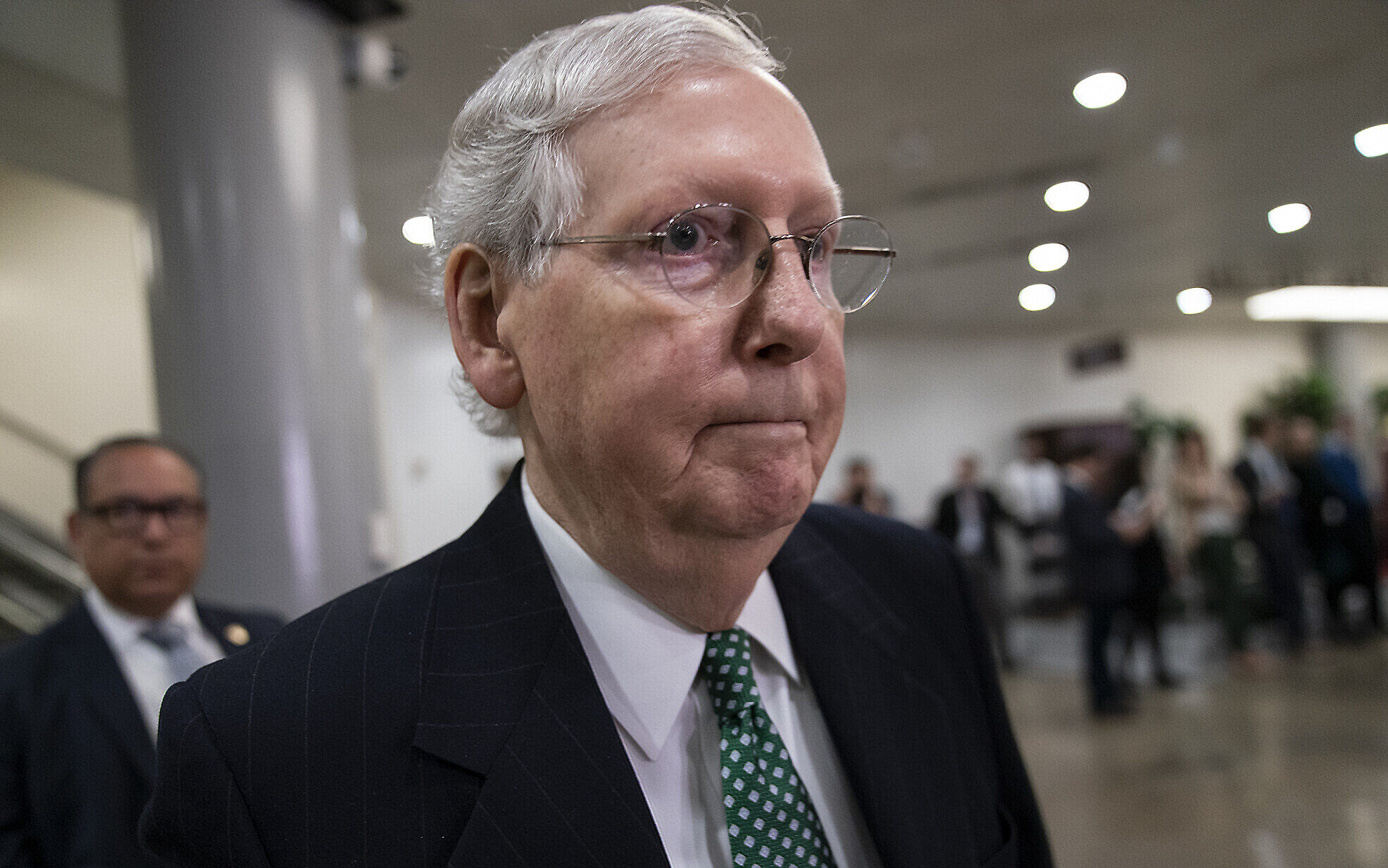
Senate Majority Leader Mitch McConnell, Republican-Kentucky, heads to a briefing by Secretary of State Mike Pompeo, Defense Secretary Mark Esper, and other national security officials on Capitol Hill in Washington, January 8, 2020. (J. Scott Applewhite/AP)
“Even under threat of tear gas or even gunfire, the brave people of Iran are themselves displaying more willingness to criticize their own brutal rulers than we saw in the initial responses from some Democrats and so-called experts right here at home,” Senate Majority Leader Mitch McConnell, Republican-Kentucky, said Monday on the Senate floor.
US Secretary of State Mike Pompeo also joined in, following an unprecedented appeal to the Iranian people last year to send in photos and videos of security forces cracking down on protests that erupted over fuel price increases that the government had blamed on US sanctions.
“The United States is with them in their calls for freedom and justice, in their justified anger at the Ayatollah and his minions,” Pompeo said in a speech at Stanford University on Monday. “And I repeat President Trump’s insistence that Iran not harm a single protester. The world must do the same.”
“The voice of the Iranian people is clear,” Pompeo tweeted over the weekend. “They are fed up with the regime’s lies, corruption, ineptitude, and brutality of the IRGC under @khmanei_ir’s kleptocracy. We stand with the Iranian people who deserve a better future.”
British PM says US president is a ‘great dealmaker, by his own account and many others,’ stresses goal must be ‘to stop the Iranians acquiring a nuclear weapon’
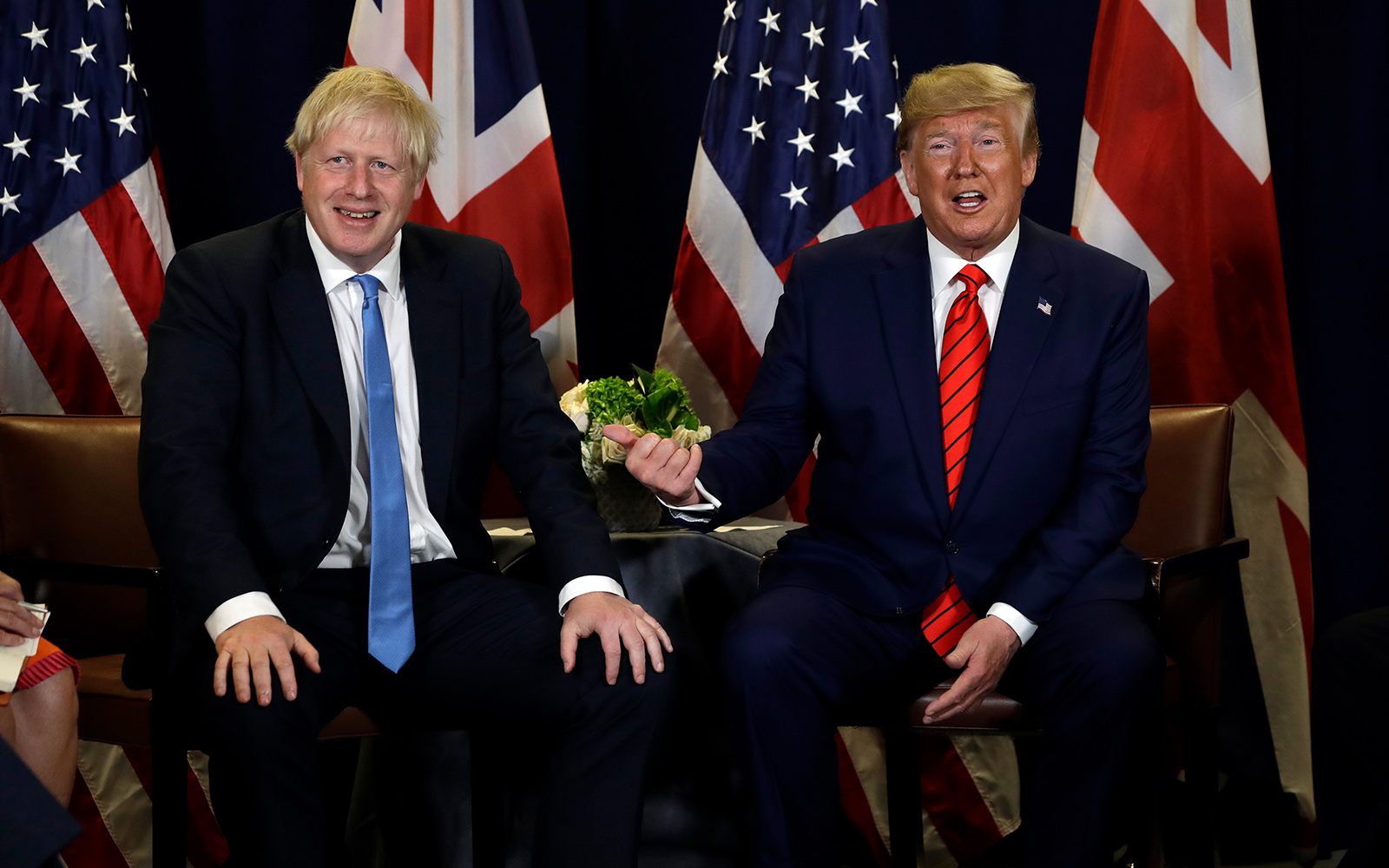
US President Donald Trump meets with British Prime Minister Boris Johnson at the United Nations General Assembly, September 24, 2019, in New York. (AP Photo/Evan Vucci)
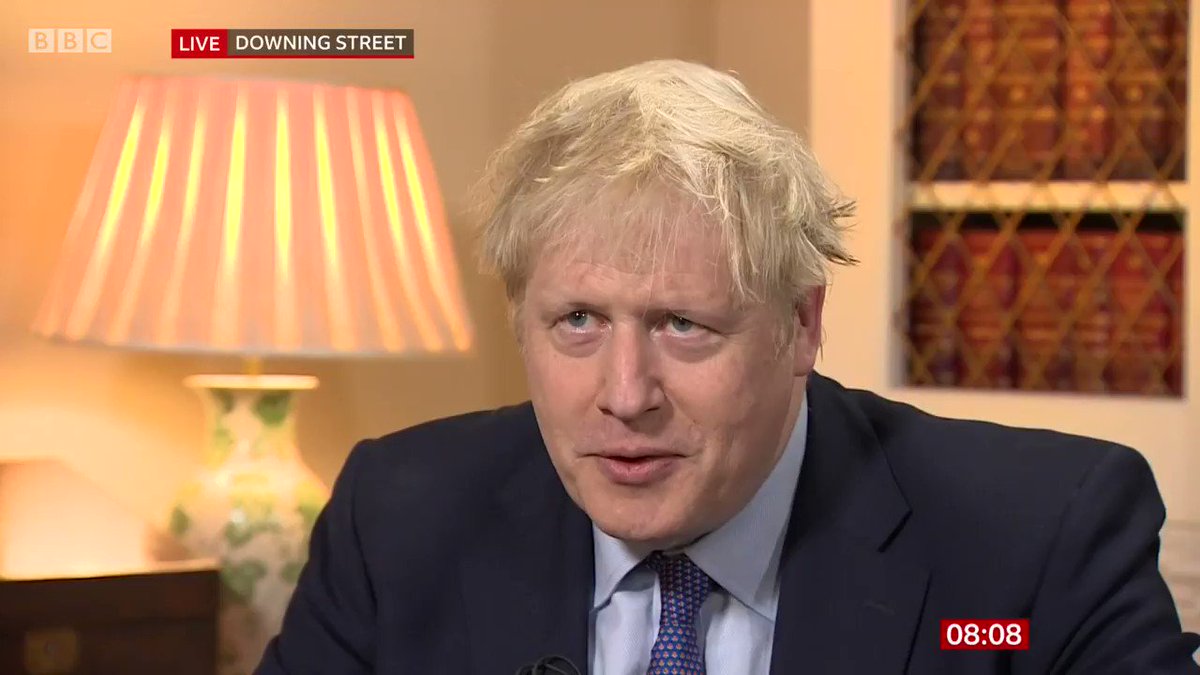
UK Prime Minister Boris Johnson on Tuesday called for US President Donald Trump to put forward a new agreement, in lieu of the existing Iran nuclear deal, that would guarantee Tehran cannot acquire nuclear weapons.
“If we’re going to get rid of it let’s replace it and let’s replace it with the Trump deal,” Johnson told the BBC.
Trump pulled the US out of the international agreement to limit Iran’s nuclear program in 2018, saying the deal did not do enough to prevent the Islamic Republic from acquiring atomic arms.
Iran has since reduced its commitments to the 2015 accord in response to reimposed US sanctions, faulting the deal’s remaining European signatories for not providing relief amid growing economic pressure.
Noting the Trump administration’s criticism of the current deal, Johnson said a new agreement was necessary to prevent Iran from developing nuclear arms.
“My point to my American friends is somehow or other we’ve got to stop the Iranians acquiring a nuclear weapon,” Johnson said.
“President Trump is a great dealmaker, by his own account and many others, let’s work together to replace the JCPOA,” he added, using the initials of the deal’s formal name.
Trump said last week “the time has come” for others to pull out of the nuclear deal, after Iran said it was no longer bound to the agreement following the US killing of top Iranian military commander Qassem Soleimani on January 3.
The United Kingdom, France and Germany, who along with Russia and China remain parties to the deal, have called for Iran to return to “full compliance” with its agreements.
In the BBC interview, Johnson said he was on vacation when the strike on Soleimani in Baghdad was carried out. He said there was no reason the UK should have been told in advance because it “was not our operation.”
Iranian President Hassan Rouhani, right, greets then British foreign secretary Boris Johnson at the start of their meeting in Tehran, Iran, December 10, 2017. (Iranian Presidency Office via AP)
He also addressed Iran’s acknowledgement it shot down a Ukrainian passenger jet plane hours after firing missiles at US targets in Iraq to retaliate for Soleimani’s killing, killing all 176 people on board.
“Iran made a terrible mistake, it’s good they have apologized,” Johnson said. “The most important thing now is that tensions in the region calm down.”
He indicated the UK was not weighing any penalties on Iran for downing the plane and called for an easing of regional tensions.
“I don’t want a military conflict between us and the United States and Iran. Let’s dial this thing down,” he said.
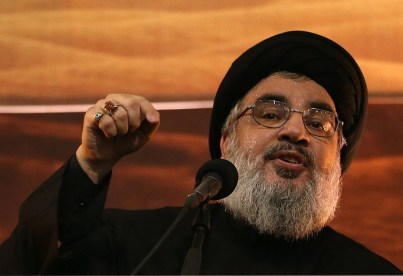
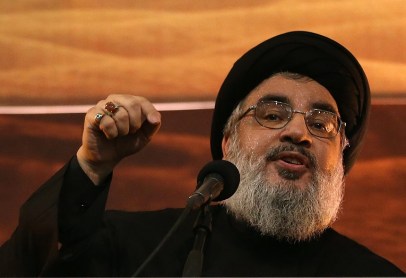
The leader of the Lebanese terrorist group Hezbollah said Sunday that Iran’s missile attacks on two bases in Iraq housing US forces was only the start of the retaliation for America’s killing a top Iranian general in a drone strike.
Hassan Nasrallah described Iran’s ballistic missile response as a “slap” to Washington, one that sent a message. The limited strikes caused no casualties and appeared to be mainly a show of force.
The strikes were the “first step down a long path” that will ensure US troops withdraw from the region, Nasrallah said.
“The Americans must remove their bases, soldiers and officers and ships from our region. The alternative … to leaving vertically is leaving horizontally. This is a decisive and firm decision,” Nasrallah said.
“We are speaking about the start of a phase, about a new battle, about a new era in the region,” he added.
His 90-minute televised speech marked one week since the killing of Iranian general Qassem Soleimani.
Nasrallah praised Soleimani for his steadfast support for Hezbollah. Iran’s Islamic Revolutionary Guard Corps has provided training, vast funds and extensive weapons for Hezbollah, which fought in the war in Syria alongside Iran-backed militias that Soleimani directed.
Nasrallah said that the world is a different place after Soleimani’s death, and not a safer place as some US officials have declared.
Iran had for days been promising to respond forcefully to Soleimani’s killing. But after the ballistic missile strikes, Iran’s Foreign Minister Mohammad Javad Zarif tweeted that the country had “concluded proportionate measures in self-defense.”
Nasrallah also praised Iran’s leadership for admitting to accidentally shooting down a Ukranian passenger plane on the night it launched the missile attacks. He called the acknowledgement “transparency that is unparalleled in the world.”
The plane crash early Wednesday killed all 176 people on board, mostly Iranians and Iranian-Canadians. Iran had initially pointed to a technical failure and insisted the armed forces were not to blame.
Turkey’s efforts to restore the “glory days” of the Ottoman Empire extend far beyond influence peddling in Jerusalem and on the Temple Mount. Turkey is spending money in Haifa, among the Bedouin, and even in mixed Jewish-Arab cities in an attempt to increase its status and bolster the Palestinian cause.
Snow globe souvenirs for sale in the Old City of Jerusalem feature Al-Aqsa Mosque as well as Palestinian and Turkish flags | Photo: Oren Ben Hakoon
Palestinian Authority officials are calling the gift the Turkish government gave them a few years ago “the treasure.” The trove contains 140,000 pages of carefully arranged microfilm that could have a dramatic effect on Israel’s ability to hold onto a number of assets – land and structures – throughout Israel, in the West Bank, and east Jerusalem.
The “treasure” is actually a copy of the Ottoman Archive and includes thousands of documents of land registration under the Ottoman Empire, which ruled what is now Israel from 1517-1917. The Palestinians see these documents as a game-changer in their battle with Israel over land. They have already used the archive to challenge Israeli ownership of land and real estate in various parts of the country.
The first complete copy of the valuable archive was placed in the building of the PA consulate in Ankara for fear that the Israelis would get their hands on it. In March of last year, a formal celebration marked the transfer of part of the archive to Bethlehem. The Meir Amit Intelligence and Terrorism Information Center documented the event, as well as the transfer of the archive in its entirety. But for some reason – even though the Palestinians now have a tool that could shake up the Israeli real estate market – the story has stayed under the radar.
To illustrate the possible ramifications of the Turkish move, we could compare it to a better-known incident in which the Greek Orthodox Church refused to extend leases on its extensive land holdings in Jerusalem. As a result, thousands of Jewish families in the capital are now living under the threat of being evicted from their homes.
A key figure at the ceremony in Bethlehem was Yousef Adais, minister of religious endowments in the PA, who was given the files that have to do with the Waqf’s properties in Bethlehem and Jerusalem. At the event, the Palestinians talked about the Israeli government’s so-called “attempts to falsify” history, and now, lawyers in east Jerusalem regularly consult the Ottoman Archive to determine property and land ownership. The documents help them in the legal battles they are waging over the ownership of land, especially in east Jerusalem.
One obvious example are the properties and plots in the Old City of Jerusalem that Jews and Arabs are battling over. The most famous is the Western Wall plaza, where the Mughrabi neighborhood used to stand. Israel evacuated and demolished it to lay down the broad plaza. That was land that Israel confiscated, but at least in terms of propaganda, brandishing the deeds to it could be a big embarrassment for Israel.
Saeed al-Haj, a Palestinian researcher and expert on the Turkish matter, reported back in 2015 on a giant project carried out by an organization called the “Turkish-Palestinian Forum.” As part of the project, hundreds of thousands of document from the Ottoman Archive are being transferred so that Palestinians can pick and choose those that are relevant to the Palestinian issue. Al-Haj thinks that this will give the Palestinians ground to file hundreds of lawsuits against Israel, here and abroad.
Working with the mufti
The PA isn’t losing any time. Judge Musa Shakarna, chairman of the Palestinian Land Authority, is already registering land in the tabu for Judea and Samaria as well as Jerusalem, with help from Turkey and its archive. In an interview to the Wafa news agency, Shakarna made it clear that the process has started and no one can stop it. He defined the move as strategic and explained that by registering the lands of Palestinians who live outside the country, he is implementing their right of return. Shakarna assesses that by 2023, all of the land in the West Bank will be legally registered. PA President Mahmoud Abbas is involved, as is Turkish President Recep Tayyip Erdoğan and the people from TIKA, a Turkish development NGO. TIKA is active across the globe in the name of the Turkish government, including in the West Bank, Gaza, and Jerusalem, where it invests some $1.3 million annually.
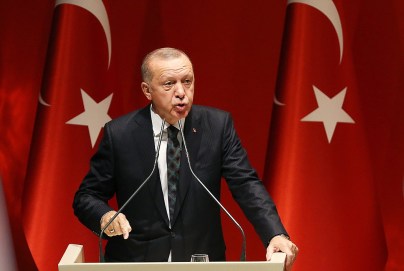
Turkish President Recep Tayyip Erdoğan: If we lose Jerusalem, we lose Mecca (EPA/STR)
Erdoğan, it turns out, does not limit himself to ideology. The president of Turkey, who sees himself as the patron of the Muslim Brotherhood and a knife of the Ottoman Caliphate that will one day return to Jerusalem, has decided to take action to implement his vision of restoring Islam’s glory throughout “Palestine” as a whole and Jerusalem in particular. The story of the archive is the crowning achievement of his recent moves, but he is also promoting a Turkish national awakening in the capital through cultural events, Turkish flags, and especially dawa – known as the “quiet jihad.” Dawa is by definition activity that focuses on charity, education, and social assistance in an attempt to bring people closer to Islam. In Israel, dozens of dawa groups are active and receive funding from Turkey. They help the Arab population with religious, cultural, community, and social matters, thus strengthening Turkey’s influence in Israel, with special emphasis on Jerusalem.
We reported on the activity of some of these groups about two and a half years ago. Most are still busy, and more have popped up. One central organization is the “Turkish Cultural Center,” which focuses on developing and spreading the Ottoman legacy and the dream of reviving the empire in the areas it ruled until 1917.
Only a few weeks ago, the center signed an agreement to cooperate with the Jerusalem Islamic Waqf. The center provides encouragement and assistance in funding Turkish language programs in east Jerusalem schools and in universities such as Bir Zeit and Al Quds. At the signing ceremony, the Waqf was represented by Sheikh Ekrima Sa’id Sabri, the former mufti of Jerusalem.
A few years ago, Sabri rolled out a campaign to rebuild terrorists’ homes that Israel has demolished and even called suicide bombings “legitimate.” He is identified with Hamas and the Muslim Brotherhood, as well as the Islamic Movement in Israel. Sabri is a close associate of both Sheikh Raed Salah, head of the outlawed Northern Branch of the Islamic Movement, and Erdoğan. Two years ago, Erdoğan conferred on him the “Defender of Jerusalem” medal.
The Turkish Culture Center is located on Al Zahara Street in Jerusalem but deals with matters beyond culture. Last year, the center was a partner in a conference that featured calls rejecting Jewish ties to Jerusalem, and on the Palestinians’ independence day it celebrated the “29th year since the declaration of a Palestinian state.”
Who remembers the governor’s house?
Until not long ago, Israeli-Turkish cultural relations were different. It was none other than right-wing politician Rehavam Zeevi who initiated a program to rebuild the Saraya in Jaffa, the former home of the Turkish governor. It was a different time; Erdoğan hadn’t been elected, and Zeevi was working with the Turks. Even after Zeevi was murdered in 2001, the Turks and the Israeli Tourism Ministry, along with the Tel Aviv-Jaffa Municipality, continued to promote the project and invested millions of shekels in it. The historic structure, which was bombed by the Lehi in 1948 and stood derelict until 2002, was refurbished.
Architect Eyal Ziv cooperated fully with the Turkish architect. He recalls that the Turks were responsible for rebuilding the interior of the governor’s house, and says the project was “free from religious or national zealotry. We focused on preserving the building culture, within the framework of a larger plan to rebuild Old Jaffa, but Operation Cast Lead in December 2008 threw a wrench in the works.”
Ziv says that the building’s rededication had been planned down to the smallest detail: “The furniture that was brought in was a copy of the furniture in the Topkapi Palace, the seat of the sultans in Istanbul. Erdoğan, who had just been elected prime minister, was supposed to come to Israel and Shimon Peres, as president, was to welcome him. But then came the Mavi Marmara incident. Erdoğan became more extremist and relations with Turkey deteriorated. In effect, the plan was frozen. Today, the Turkish Embassy is renting the building, and it’s usually closed,” he says.
Now everything has changed. The owners of souvenir shops in the Old City sell keychains with pendants that show the Western Wall on one side, and the Turkish flag on the other. In the past two years, the Turks have funded not only a replacement for the gold crescent that tops the Dome of the Rock, but also the reconstruction of other Islamic monuments like the Dome of the Chain in the center of the Temple Mount and parts of the eastern wall of the Old City.
The Turks’ position on the Temple Mount is clear. It fits in well with the blood libel “Al-Aqsa is in danger” that is repeatedly used against Israel. A new computer game, “Guardians of Al-Aqsa” – which is aimed at young children – places a “guard” in the center whose job it is to “save Al-Aqsa from the Zionists” and “fight the Judaization of Jerusalem.” Players look for the “lost treasure.” On the way, they are asked to answer questions about Al-Aqsa’s past and present and the winner is called the “liberator of Jerusalem.”
The game was invented by the organization Burj al-Laklak, which is supported by the Turkish group “Reading Time.” Another NGO, Al Bustan, sent delegations of student athletes from Jerusalem to competitions in Turkey last August. The mayor of the host city, Kayseri, spoke to them, and the students had their pictures taken with Palestinian and Turkish flags.
‘You poisoned me’
While the Turks’ main focus is Jerusalem, they are active throughout the country and their interest in Jaffa and other Arab population centers goes beyond considerations of tourism or culture. According to Mehmet Damarg, the head of the Turkish organization “Our Legacy,” the group allocated funds to rebuild the Hassen Bek and Sea (Al-Bahr) mosques in Jaffa, as well as the Al Jarina Mosque in Haifa.
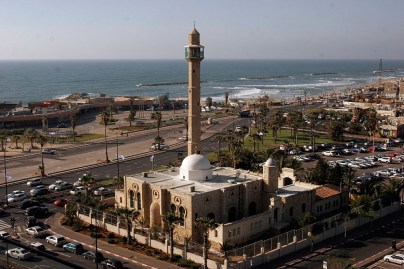
The Turkish group “Our Legacy” has funded renovations to the Hassen Bek Mosque (pictured) at the north end of Jaffa (Roni Shutzer)
“We can say that ‘Our Legacy’ created an important historic change to the Turkish worldview and their interaction with the issue of Palestine,” Damarg explained in one of his many online interviews. “Today, thanks be to God, ‘Our Legacy’ has links to our Arab and Muslim peoples in many countries.”
Our Legacy, which is headquartered in Istanbul, was in contact with Raed Salah. One of its main sources of funding is TIKA, and its goals include “protecting Al-Aqsa Mosque and the Ottoman legacy in Jerusalem.”
There are other Turkish organizations that maintain contact with Sabri, who recently led the Waqf’s campaign to take control of the area in front of the Gate of Mercy, and Archbishop of Sebastia Atallah Hanna, who accused Israel of poisoning him. Only a few weeks ago, Hanna took part in a conference in Turkey titled “Apartheid in Israel.” Hanna has a long history of anti-Israeli stances. He has visited the homes of suicide bombers, and even met with Syrian President Bashar Assad.
Other Turkish targets include the mixed Jewish-Arab cities of Acre, Ramla, and Lod. In Acre, the Turks have tried to plant their flag, but without success. In Ramla, they are trying to buy influence in the White Mosque. In Lod, the Great Mosque (Al-Omari Mosque) was allocated 620,000 shekels ($180,000) for renovations from the NGO “Hand in Hand.” Israel Hayom reporter Akiva Bigman has reported on the organization’s activity on the website Mida. “Hand in Hand” was established in Ankara in 2012 to “make things easier for the residents of the territory Israel occupied in 1948.”
Since then, Hand in Hand has busied itself rebuilding mosques and Muslim cemeteries that were damaged in the “catastrophe of 1948” and places that have “been transferred to Israel’s filthy hands.” The group has paid the salaries of dozens of imams throughout Israel, funded Quran study, funded student groups at Israeli universities, and even helped facilitate Muslim visits to Al-Aqsa. In the past few years, Hand in Hand has turned its attention to the Negev and fostered ties with the Bedouin population. It worked with the Islamic Movement and helped outfit illegal Bedouin villages with water and solar energy, all while inculcating the narrative of the “Nakba” among Israeli Arabs. Recently, representatives of Hand in Hand took part in an event in Turkey alongside activists from IHH, which Israel has declared a terrorist organization.
Turkish organizations and money are filtering through Israel, but particularly Jerusalem, where a total of 130 buildings have been restored thus far thanks to Turkish money. According to Israeli security officials, some 4,300 homes and 70 mosques in east Jerusalem have been marked for renovations to be funded by Turkish NGOs. A few members of the Southern Branch of the Islamic Movement have their fingers in the pie and recommend community and religious projects they believe worth of Turkish funding, and Turkey listens to what they have to say.
Israel, which is taking out Hamas cells that were handled from Turkey, is finding it hard to handle the Turkish civil activity, which should be an easier task. In only one case has the government outlawed one of these organizations after it managed to prove that it had links to Hamas and the Muslim Brotherhood. According to the security establishment, the group functioned as a conduit for projects Hamas was executing in Jerusalem.
In another case, the National Security Council recommending putting limits on the activity of a large Turkish organization. In another instance, the Jerusalem Municipality approved a request for a building permit for a sports center for the charity organization Women of Zur Baher, which is linked to Hamas and has received money from Turkey.
‘Embracing Jerusalem’
Maor Tzemach, head of the group Lach, Yerushalayim [“For you, Jerusalem”], which has been tracking Turkish activity in Jerusalem for years, claims that the extensive Turkish activity harms Israeli sovereignty in Jerusalem, and that it is time for Israel to draw clear boundaries for Turkish involvement in the city and the rest of the country. Tzemach and his organization continually supply Israeli authorities with relevant information, but don’t think Israel has taken any significant action to stop it.
Tzemach’s group has spent the last few months documenting anti-Israel and anti-Semitic conferences in Turkey that functioned as platforms for meetings between people from Hamas, the Jerusalem Waqf, heads of Turkish organizations active in Israel, and Erdoğan himself.
“It should have set off warning lights for the policymakers in Israel a long time ago,” Tzemach says.
Asa Ofir, an analyst on Turkey and a doctoral candidate in the Department of Middle Eastern Studies at Bar-Ilan University, has been plowing through Instagram, Facebook, and Twitter and documenting some of the Jerusalem-themed conferences taking place in Turkey. Three examples of the many available include a conference titled “Embracing Jerusalem,” which was held in the town of Tekirdağ; “Time for Jerusalem,” a play that was put on with sponsorship from Erdoğan’s office; and a special panel marking 50 years since the “occupation” of Jerusalem that was organized by the city of Esenler.
“If we lose Jerusalem, we lose Mecca,” Erdoğan recently declared. He is continuing his efforts to not only avoid losing Jerusalem, but also to conquer it.
Iran has two naval forces – its official one, and the secret maritime forces of the Revolutionary Guards Corps. How far is it willing to push the envelope in the Persian Gulf to retaliate for the death of Qassem Soleimani?
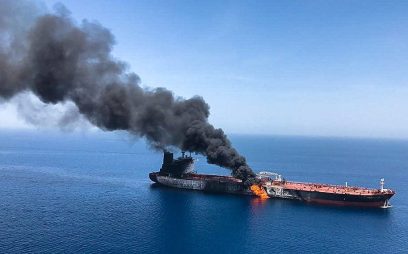
An oil tanker is seen after it was attacked at the Gulf of Oman, June 13, 2019 | Photo: ISNA/Handout via REUTERS
Last week, the ongoing escalation between the United States and Iran turned into an open conflict between the world superpower and the Islamic Republic – the first time this has happened since US President Donald Trump was elected. The airstrike that killed Quds Force commander Maj. Gen. Qassem Soleimani; Iran’s outright warnings of revenge; and missile attacks perpetrated by the Iranian Revolutionary Guards Corps on US bases brought to light how close Washington and Tehran, and therefore the entire Middle East, are to an all-engulfing conflict.
But while Iran’s ballistic and cruise missile programs were making headlines following Wednesday’s brazen attack, Iran’s most destructive response would be naval action in the Persian Gulf, both in terms of the American presence there and the world economy.
The US comprehends the nature of the threat perfectly, and issued a rare warning to its ships in the Mediterranean and the Persian Gulf about possible Iranian raids that could come as retaliation for Soleimani’s death.
The warning is not theoretical: this past year, Iran has raided a few vessels, most notably the British Stena Impero, which was a response to a similar British action against an Iranian tanker that was bringing oil to Syria.
The West is also claiming that Iran was behind attacks at Fujairah Port, one of the most important oil shipping ports in the United Arab Emirates, as well as attacks on oil tankers in open waters. Tehran never claimed the attacks, but the US disseminated footage of the IRGC’s navy returning to the scene of the incident, and it resonated. Iran’s belligerent maritime actions peaked when it shot down a high-tech US drone over international waters last June.
‘One strike is enough’
Iran’s growing prowess at sea is more confusing than anything. Along with building advanced weaponry such as missile ships and submarines, the Iranians also maintain a huge fleet of small boats that it operates secretly.
“What is important to understand in terms of Iran’s naval power is that it is in effect two separate forces,” explains Ido Gilad, a research fellow at the Maritime Policy & Strategy Research Center and the Chaikin Chair for Geostrategy at the University of Haifa.
“Alongside Iran’s official navy, which has an impressive number [of vessels], even if some are outdated; there is the Iranian Revolutionary Guards’ naval force. That is a secret force that maintains a large, unknown number of small vessels and submarines designed to carry out actions that are ‘extra-governmental,’ or actually terrorism,” Gilad says.
That is one of the ideas for which Soleimani was noted – sophisticated, high-level operations in a number of arenas, thus allowing for many different types of actions and responses. Indeed, the IRGC’s naval forces are believed to be behind most of Iran’s maritime terrorist actions this past year. It also frequently serves to send Iranian threats to the US. In 2015, the IRGC conducted a military drill that simulated the attack and seizure of an American aircraft carrier, an unequivocal threat to one of the US’ most valuable military assets.
Then-commander of the IRGC’s naval forces, Admiral Ali Fadavi, bragged at the time that “American aircraft carriers are easy to sink … They are full of missiles, ammunition, jet fuel, and torpedoes. One strike is enough to set off a wave of secondary explosions,” he said. Since then, Iran has repeated its threat against US aircraft carriers multiple times.
According to Professor Shaul Chorev, director of the Maritime Policy & Strategy Research Center, “It’s very difficult to attack American aircraft carriers. There is definitely an element of braggadocio here. Aside from the planes and firepower it carries, that particular vessel is defended by an impressive group of [other] ships, submarines, and small boats.
“This doesn’t eradicate the threat from the IRGC’s naval forces. The US maintains an enormous navy – the Iranian navy doesn’t come close to it, but the idea behind the IRGC’s perception is to exact a price, to hurt, to deter conflict and escalation. Their tactics, such as using small missile-armed boats to confuse and attack larger ships; heavy use of surface-to-surface missiles and raiding vessels like they did the American patrol boat – these are operations that leave an impression and cost the enemy,” Chorev explains.
No one wants to wake the sleeping giant
A maritime conflict in the Persian Gulf or the Strait of Hormuz, on any scale, is not merely a military question but also one of prestige for Iran and the US. Over 20 million barrels of oil pass through the Strait of Hormuz each day en route to the world’s markets. Not only the national economies of local nations, including Saudi Arabia, Kuwait, Bahrain, Qatar, and the UAE depend on oil revenues – so does the world energy market. This makes any conflict in the Gulf, even a relatively small one, an international incident.
Nevertheless, Chorev thinks that there is a real chance Iran could opt to carry out a response in that region precisely because it is so exposed.
“The possibility of closing the Strait of Hormuz or attacking some of the traffic there is definitely in Tehran’s bank of responses. They might limit the extent of the closure or make some excuse for it or through a proxy force, without officially declaring it, like they have done in the past when raiding ships. It’s not certain the US has a way of handling that scenario,” Chorev observes.
Gilad, on the other hand, thinks that a complex operation to close the Strait of Hormuz, even temporarily, would mean Iran shooting itself in the foot. He says that Iran is dependent on its already-shrinking revenue from oil that passes through the strait, and that even a low-level conflict in the Gulf is the last thing Tehran needs.
Gilad sees Iran’s actions in a different light.
“The maritime drill Iran conducted with China and Russia a couple of weeks ago, which caused an international storm, was aimed at not only showing that it was not diplomatically isolated but also that in cooperation with nations that have a clear interest in the region such as India, Russia, and China, it can ensure freedom of movement in the Gulf. They don’t want to wake the ‘American giant’ at this stage,” Gilad says.
Whether Tehran wants to calm the waters of the Gulf, or is preparing to relaunch its terrorist actions there, the maritime powder keg should worry leaders of the world at large, and leaders of the Persian Gulf region in particular.
Both the Obama and George W. Bush administrations passed on the prospect of taking out the head of Iran’s elite Quds Force, widely considered a terrorist mastermind. Even Trump’s advisers acknowledged the move could pull the US and Tehran into direct military conflict, but Trump decided it was time.
US President Donald Trump | Photo: AP/Carolyn Kaster
President Donald Trump is not the first American leader to have Iranian Maj. Gen. Qassem Soleimani in his sights, but he was the first to pull the trigger.
It is a pattern that has emerged throughout Trump’s presidency. On a range of national security matters, he has cast aside the same warnings that gave his predecessors in both parties pause.
At times, he has simply been willing to embrace more risk. In other moments, he has questioned the validity of the warnings altogether, even from experts within his own administration. And he has publicly taken pride in doing so.
When Trump moved the US Embassy in Israel from Tel Aviv to Jerusalem, a pledge others had made but ultimately backed away from, it was against the advice of aides who argued it would inflame tensions in the Middle East. When he became the first American leader to step foot in North Korea, he disregarded those who said he was giving Pyongyang a symbolic victory without getting anything in return.
Trump’s supporters have embraced his willingness to act where others would not, saying he has brought a businessman’s fresh eye to intractable problems. But his high-risk approach has sparked fear in Democrats, as well as some Republicans, who worry that the president is overly focused on short-term wins and blind to the long-term impact of his actions.
“Trump thinks foreign policy is a reality show, and if there aren’t devastating consequences the next day, then they won’t come,” said Ben Rhodes, who served as former-President Barack Obama’s deputy national security adviser. “They are coming – in some cases, they already have, in others, the situation is getting progressively worse.”
Trump’s willingness to buck conventional thinking has been a defining feature of his political life. As he enters the final year of his first term, aides and allies describe him as increasingly emboldened to act on his instincts. He’s banished the coterie of advisers who viewed themselves as “guardrails” against his impulse. Others, like former Defense Secretary Jim Mattis, have left because they disagreed with Trump’s decision-making.
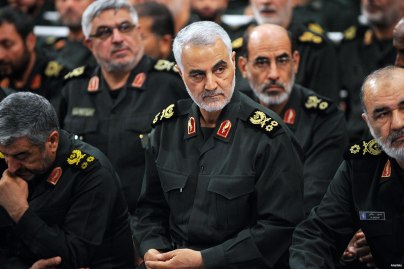
Quds Force Commander Maj. Gen. Qassem Soleimani
Trump’s approach to national security has been shaped in part by the response to one of his first major actions: airstrikes against Syria in retaliation for the use of chemical weapons in 2017, a few months after he took office. He relished the fact that both Republicans and Democrats cheered the decision, one that Obama had backed away from.
Obama halted plans for a strike in 2013 in part because he feared it would drag the US into a wider conflict. That didn’t happen after Trump’s targeted strike – though quagmire in Syria remains and the US still has a small troop presence in the country.
The consequences of Trump’s brash foreign policy decisions have indeed been mixed.
His decision to move the embassy from Tel Aviv to Jerusalem did not, in fact, prompt an uptick in violence in the Middle East. But it also did nothing to help the Trump White House ease mounting tensions with the Palestinians, cratering prospects for progress on a peace deal with the Israelis.
Trump’s decision to embrace direct diplomacy with North Korean leader Kim Jong Un, including a meeting at the dividing line between North and South Korea, has resulted in little progress toward dismantling Pyongyang’s nuclear program. Negotiations have largely broken down, and Kim said this week that his country would soon unveil a new strategic weapon.
The president also faced fierce backlash from his own party last year when he abruptly announced that he was withdrawing US forces from Syria, clearing the way for Turkey to launch an offensive against Kurdish forces allied with the US Trump initially dug in on his decision, but ultimately reversed course.
To the president’s critics, his decision to order a targeted strike against Soleimani may be his riskiest decision yet.
Both the Obama and George W. Bush administrations passed on the prospect of taking out Soleimani, the leader of Iran’s elite Quds Force who is accused of helping orchestrate attacks on American troops in Iraq. Even Trump advisers acknowledged the risk of Iranian retaliation, which could pull the US and Tehran into a direct military conflict.
“One of these days, he’s going to blunder himself into a real, full-blown crisis,” Marie Harf, a senior adviser to former Secretary of State John Kerry, said of Trump. “The Soleimani assassination may be the reckless move by Trump that sends us into full-scale conflict.”
But to Trump backers, it’s just another hyperbolic response to a warranted action by the president.
Sen. Ben Sasse (R-Neb.) criticized those who he said were treating Soleimani’s killing like it “was the end of the world.” Sasse said that while he and Trump don’t always see eye-to-eye on policy issues, the president was right to take this step.
“The fact of the matter is, Iran in general and Soleimani in particular had been ramping up attacks,” Sasse said. “There had to be a red line around the loss of American life.”
Israeli observers say that despite some damage to its short-term capabilities, Tehran is expected to keep up activities in Iraq and Syria, and that alongside a new clash with the United States, a parallel Israeli-Iranian shadow war will continue.
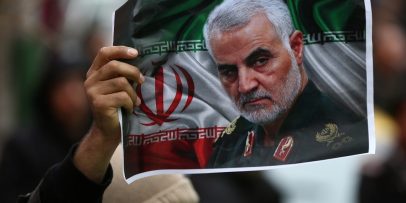
An Iranian holds a picture of late Gen. Qassem Soleimani | Photo: Nazanin Tabatabaee/WANA (West Asia News Agency) via REUTERS
Despite the substantial blow absorbed by Iran due to the Jan. 3 assassination of the notorious Quds Force commander, Gen. Qassem Soleimani, by US military forces, the regime is set to continue its expansion program to dominate the region, Israeli observers have assessed.
“No one can dispute the fact that Qassem Soleimani was undoubtedly not only one of the most skilled commanders in Iran throughout the past decades, but that he had many types of skills—not just militarily but also politically,” Raz Zimmt, a research fellow at the Institute for National Security Studies in Tel Aviv, told JNS.
Soleimani’s ability to manage relations with Iraqi Shi’ite militias, Hezbollah in Lebanon, Houthi forces in Yemen and the regime of Syrian President Bashar Assad (added to his ability to convince Russia in 2015 to enter the Syrian war to rescue Assad) all meant that he was a most significant figure who was in the “right place at the right time” from his perspective, said Zimmt.
“It’s totally clear that the Quds Force and Islamic Revolutionary Guard Corps absorbed a painful blow,” stated Zimmt, editor of “Spotlight on Iran,” which is published by the Meir Amit Intelligence and Terrorism Information Center.
Nevertheless, unlike non-state terror organizations, Iran is an organized state, he stressed, and those setting the strategy in the Islamic Republic are continuing to function. They are made up of the Supreme Leader, Ayatollah Ali Khamenei, and members of Iranian Supreme National Security Council.
Soleimani, despite being highly influential, did not set the strategy and core objectives, noted Zimmt.
“Soleimani is the one who implemented the strategy with a large degree of success, although he had quite a few failures as well. Hence, the bottom line is that in short term, in my assessment, we can expect to see damage to the operational capabilities of Iran. But that is unlikely to change their regional agenda. They won’t change their objectives.”
Gen. Esmail Ghaani, the newly appointed commander of Iran’s Quds Force (Tasnim News Agency via Reuters)
Attention is now turning to Soleimani’s successor, Gen. Esmail Ghaani, who was, until the assassination, the Quds Force deputy commander. Ghaani will now face the test of being able to deliver on Iran’s regional agenda.
“No one really knows Ghaani well,” said Zimmt. “But it must be said that he knows the Quds Force well. He has been its deputy commander since the end of 1990s.”
While possibly lacking Soleimani’s charisma, Ghaani is close to the supreme leader, said Zimmt, noting that both were born in the city of Mashhad and had been in contact since the 1980s following the Iranian revolution.
Pronouncements about the end of Iran’s destructive role in the region are premature, Zimmt cautioned, saying that “Soleimani was important, effective and fairly successful, but Iran will continue to implement its strategy.”
New commander of the Iranian Quds Force Brig. Gen. Esmail Ghaani. Credit: Erfan Kouchari via Wikimedia Commons.
Asked whether Iran could also seek to target Israel in its retaliation to the assassination, Zimmt said Tehran has no interest in dragging Israel into the clash, due to the fact that they are in “up to their necks” with the United States at the moment, and because “it is clear to them that Israel is not Saudi Arabia—it will respond.”
At the same time, he said, “I can’t rule out the possibility that if a US-Iran clash escalates, the Iranian thinking might change, and they could drag Israel in.”
In addition, the separate Israeli-Iranian shadow war in Syria has not ended, and the Iranians are still committed to responding to Israeli action taken to prevent Iranian entrenchment.
‘Iran has a problem’
Ely Karmon, a senior research scholar at the International Institute for Counter-Terrorism (ICT) in Herzliya, told JNS that Iran had many options to contemplate in its revenge against America, including potential attacks on embassies and military bases overseas. The problem for Iran, he said, is in figuring out what would be painful enough without causing US President Donald Trump to react too harshly.
Referring to the recent Iraqi parliament vote calling for a US departure from Iraq, Karmon said that a parliament has no authority to cancel a Status of Force Agreement (SOFA), and that only a prime minister could do that. Iraqi Prime Minister Adil Abdul Mahdi is currently serving only in a caretaker role following his Nov. 29 resignation.
Karmon said that one of Soleimani’s missions in Iraq may have been an attempt to secure the appointment of a pro-Iranian prime minister.
Looking ahead, Karmon said if they feel vulnerable in Baghdad’s Green Zone, US military forces could reposition to the Kurdish region of northern Iraq, where some American forces already operate out of a base near Kirkuk, and where close working relations are in place with the friendly Kurdish Peshmerga forces.
Such a move would also boost Kurdish hopes of preserving autonomy and could be used to undermine Iran, he argued.
Karmon said he doubted that Iran would activate Hezbollah against Israel at this time, since firing rockets and missiles could quickly result in a deterioration into general conflict, but that Iranian-controlled Iraqi and Afghan militias in southern Syria could launch attacks on the Golan Heights.
“The physical war between Israel and Iran in Syria will continue, and it is broadening into Iraq, as IDF Chief of Staff [Aviv Kochavi] recently stated,” said Karmon. Simultaneously, Iran will likely focus on Iraq as a central arena to take over.
“The Iranian maneuver is to eject the US from Iraq,” emphasized Karmon. “But they have to take into account the fact that they’re in a problematic situation. There have been big demonstrations in Iran, and 1,500 people have been killed recently in disturbances. There have been anti-Iranian protests in Iraq, which are likely to continue, and 500 have been killed. Then there are the protests in Lebanon.
“Due to all of these fronts, Iran has a problem,” he continued. “Their response will not involve shooting from the hip. They will seek to avoid aggravating the unpredictable President Trump.”
While Israel has kept a low profile since the US killed top Iranian General Qassem Soleimani last Friday, it will be difficult to remain on the sidelines if Iran follows through on its pledge to step away from the nuclear accord.
An Israeli Air Force F-35 Lightning II fighter jet in action | Photo: AFP/Jack Guez
Iran’s dramatic announcement that it no longer intends to honor its commitments under the 2015 nuclear deal with world powers could soon revive discussions in Israel over a possible military strike on Iranian targets.
While Israel has kept a low profile since the US killed top Iranian General Qassem Soleimani last Friday, it will be difficult to remain on the sidelines if Iran follows through on its pledge to step away from the nuclear accord. Israel, a fierce critic of the agreement, accuses Iran of trying to develop a nuclear weapon and has repeatedly said it will not allow that to happen, even if that requires a risky military strike.
Israel is widely believed to possess its own arsenal of nuclear warheads, but neither confirms nor denies it.
The US-led nuclear deal, which restricted Iran’s atomic activities in exchange for relief from sanctions, put any talk of Israeli military action into deep freeze. But that all changed Sunday when Iran, protesting Soleimani’s killing, said it would no longer honor the limits on uranium enrichment and other nuclear research spelled out in the deal.
Qassem Soleimani, the commander of Iran’s Quds Force (Office of the Iranian Supreme Leader via AP)
Iran denies it is seeking a nuclear bomb and says its activities are for peaceful purposes only.
Israeli officials had no immediate response to the Iranian announcement, although last month, with the nuclear accord already unraveling, Foreign Minister Yisrael Katz said on Twitter that Israel remained ready to take military action as a “last resort” to prevent Iran from developing an atomic bomb.
Prime Minister Benjamin Netanyahu met with his diplomatic-security cabinet on Monday to discuss the latest developments.
Yoel Guzansky, an analyst at the Institute for National Security Studies, an Israeli think tank, said the Iranian announcement puts the region in a delicate moment.
On one hand, he noted that Iran is only talking about its intention to abandon the deal and has not taken any action. “They’re still cautious,” said Guzansky, who is a former adviser on Iranian affairs in the Prime Minister’s Office.
On the other hand, he said that a failure by the US and other world powers to spell out their “red lines” risks encouraging Iran to press forward and potentially put it on a collision course with Israel.
“Where is the US? Where are the Chinese, the Russians, the Europeans? Their voices are not being heard,” he said. Without spelling out their limits, he said Iran could move “very close, much closer to a bomb” in the coming year.
Former Prime Minister Ehud Barak has said that Israel came close to attacking Iran in the early 2010s while he was defense minister, but ultimately backed down. Such a move would risk not only the pilots and troops sent on a difficult mission in a far-off land. It also could unleash a war that could quickly engulf the region.
Israel has long considered Iran its greatest enemy, with suspicions about Iran’s nuclear intentions at the top of its concerns.
But Israel has a long list of other grievances against Iran. Among them are Iran’s support for hostile proxy groups, especially the powerful Hezbollah terrorist group in Lebanon, as well as Iran’s military presence in neighboring Syria.
In recent years, Israel has struck a number of Iranian and Hezbollah targets in Syria, in many cases to prevent the transfers of “game changing” weapons, such as precision-guided missiles, to Hezbollah. Soleimani, the longtime commander of Iran’s expeditionary Quds Force, was seen as the mastermind of these efforts and topped Israel’s most-wanted list.
While Netanyahu put out a brief statement praising US President Donald Trump for ordering the airstrike, Israel has otherwise remained quiet, apparently in fear of escalating an already volatile situation. With Iran vowing retaliation, Israel has stepped up security at diplomatic installations overseas and its forces remain on their standard high alert along the northern borders with Syria and Lebanon.
Yet it is no secret that Israel sees the death of its arch-enemy’s top general as a watershed moment.
In Israeli eyes, the airstrike restored much-needed US credibility, which many felt was eroded by Trump’s decision to withdraw troops from the region and his lack of responses to previous Iranian actions. Israeli defense strategy hinges heavily on close military ties with the US.
“This was a big strategic miracle. Suddenly, we are no longer on our own,” wrote Alex Fishman, military commentator for the Yediot Ahronoth daily.
For now, there seems to be a consensus among analysts that the death of Soleimani dealt a tough short-term blow, and the odds of retaliation against Israeli targets are low. Iran’s main objective right now is to mete out revenge against the US, and it has little incentive to open another front, the thinking goes. But there remains great uncertainty about whether there will be any long-term benefits.
“With all due caution, it can be said that it appears that Iran will not initiate a direct clash with Israel in the foreseeable future,” Giora Eiland, a former national security adviser, wrote on Monday.
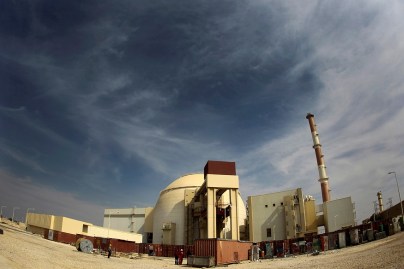
A general view of the Bushehr nuclear power plant, some 470 miles south of Tehran (Reuters/Mohammad Babai)
He said Iran is “liable to decide on an aggressive course of action” if it meets one of three goals: acquiring nuclear weapons, deepening its presence in Syria or succeeding in transferring guided missiles to Hezbollah. “The Israeli side is making a great effort to prevent these exact three things, and with a fair degree of success up until now,” he said.
Little is known about Soleimani’s successor and longtime deputy, Esmail Ghaani. Iran also shows no signs of moderating the policies that Soleimani carried out at the behest of the country’s leaders in Tehran.
Raz Zimmt, a former military intelligence officer now at the INSS think tank, said it may be “wishful thinking” to expect Soleimani’s death to create great opportunities for Israel.
“Yes, Iran is weaker today than it used to be two or three days ago,” he said. “But that doesn’t mean that Iran is going to change.”











 anneinpt
 artaxes
 danmillerinpanama
 davidking1530
 Peter Hofman
 Joseph Wouk
 Peter
Peter Louisiana Steve
 WarSclerotic
Recent Comments