Archive for January 1, 2020

BRYEN: The Unyielding Iranian Menace 

January 1, 2020

Source: BRYEN: The Unyielding Iranian Menace | The Daily Wire
DailyWire.com
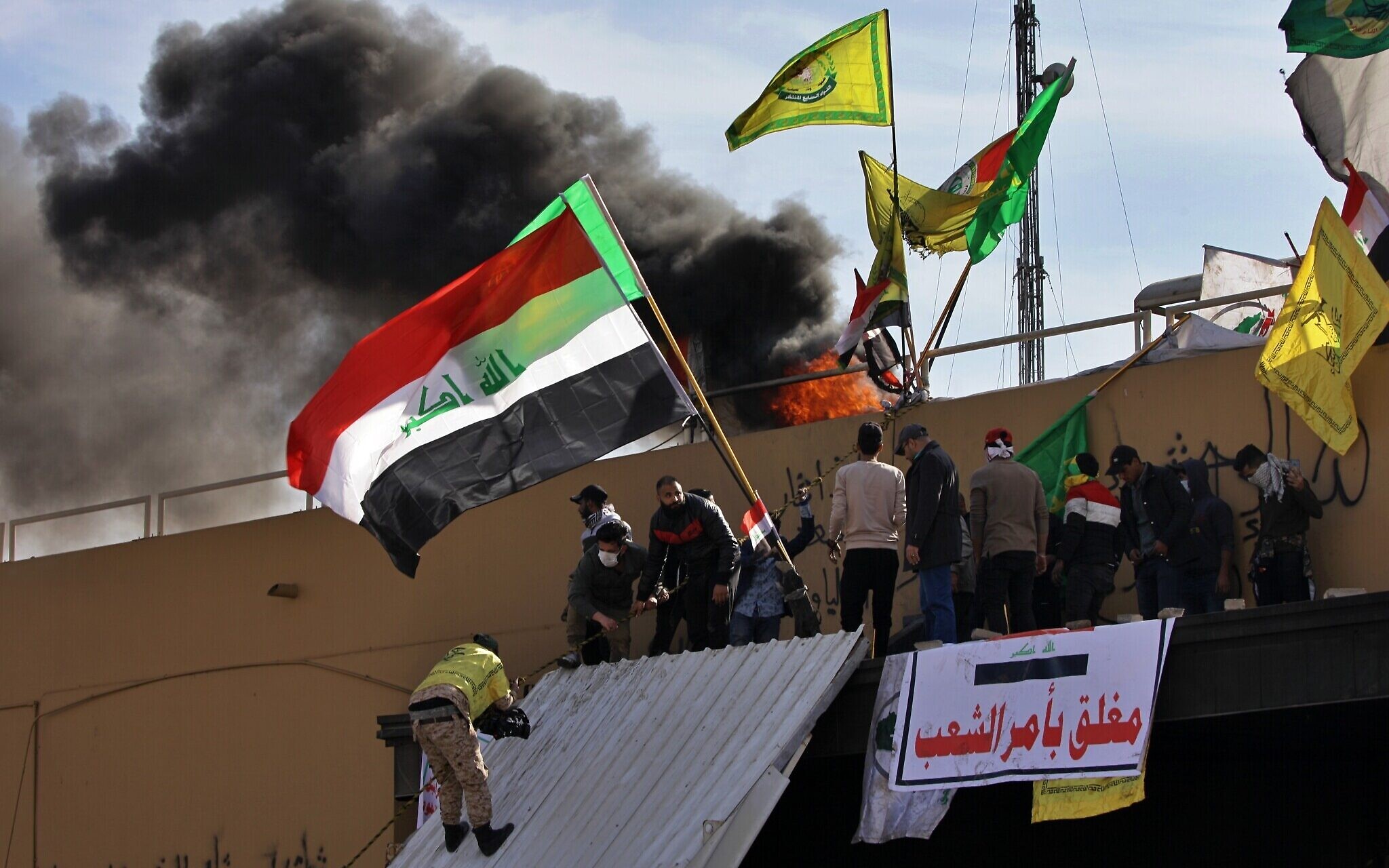
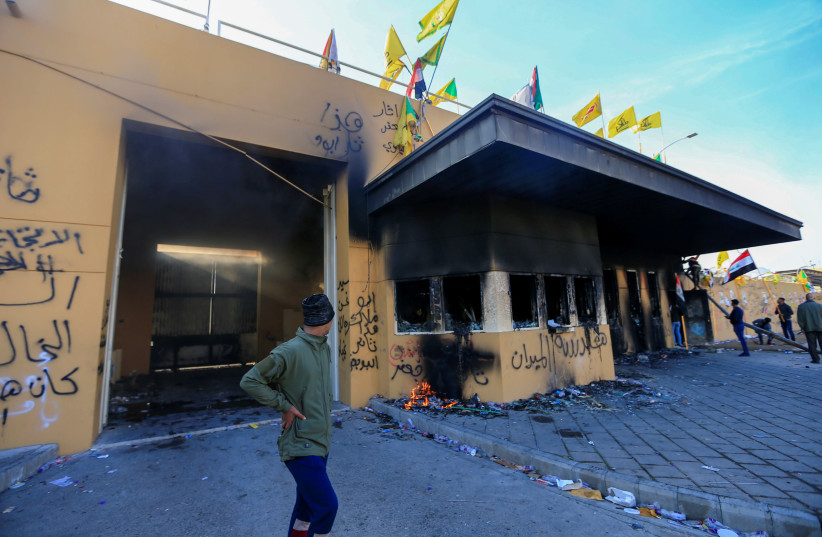
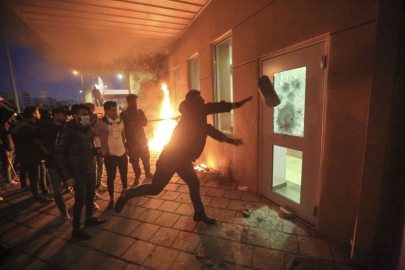
BAGHDAD, IRAQ - DECEMBER 31: Outraged Iraqi protesters storm the U.S. Embassy in Baghdad, protesting Washington's attacks on armed battalions belong to Iranian-backed Hashd al-Shaabi forces on December 31, 2019. At least 25 people were killed in weekend U.S. airstrikes on positions of Kataib Hezbollah, an Iranian-backed militia group, in Iraq and Syria. Hundreds of Iraqi protesters gathered early Tuesday near the embassy to show their anger at the U.S. move.
Murtadha Sudani/Anadolu Agency via Getty Images

This will not be Tehran 1979. Nor Benghazi 2012.

There were, apparently two groups of invaders at the U.S. embassy in Baghdad — hordes of rioting protesters in the streets and well-covered, professional-looking, careful militia members entering the out building. Security forces (and some contractors) used tear gas and stun guns against the demonstrators as the United States protected its embassy compound — sovereign American territory by international convention.

A bit of U.S.-Iranian history is instructive here. When the Iranians overran the U.S. embassy in Tehran in 1979, President Jimmy Carter dubbed the Ayatollah Khomeini “a holy man” with whom, presumably, one could do business. President Barak Obama was certain, in 2015, that “the only alternative to the JCPOA is war with Iran,” presumably meaning that the so-called “Iran nuclear deal” was the way to avoid war and restore Iran to the family of nations.

The result of Carter’s assistance to the ayatollah, and Obama’s lapse in memory — the Iranians had, actually, been in a declared state of war with the United States (and Israel) since 1979 — was to allow the juggernaut of Shiite expansionist theology to ruin Iran, invade Iraq, incubate ISIS, occupy Syria, bring its proxy to power and ruin Lebanon, run the Houthi war in Yemen, undermine Bahrain, attack Saudi Arabia, and spread its tentacles across Africa. And this transpired all while Iran violated the U.N. ban on Iranian arms imports and exports, the U.N. ban on the development of Iranian ballistic missiles, and the P5+1-ratified-by-the-U.N. ban on the development of nuclear weapons technology.

President Donald Trump harbors no such fantasies. He has already shown that retaliation for acts of war is in his playbook. But he has also shown that it isn’t necessary to retaliate every time for every single thing — including Iran’s attack on Saudi oil facilities.

As Iran’s tentacles have spread farther, it has begun to show signs of “imperial overreach.” The re-imposition of American sanctions means Iran has fewer and fewer resources to stoke the flames of revolution extraterritorially. Rebellion against the clerical regime actually began in December 2017 — not 2019, when The New York Times began to report on it. Uprisings in Lebanon and Iraq began earlier this year — both decidedly anti-Iran and anti-clerical. And, as Iran watches Russia swallow Syria’s reconstruction money for its own purposes, the mullahs appear to have decided it is now time for Iran to reassert itself.

Iranian forces are out in the streets of multiple Iranian cities and the U.S. confirms that the death toll among demonstrators is more than 1,500, including hundreds of women. The ayatollahs have cut off the internet, to the extent they can, to prevent Western understanding of the devastation. Iranian-backed Shiite militias have been out in force in Iraq — not only in Baghdad, but in Shiite cities across the south of the county. The Lebanese Armed Forces (LAF) plus Hezbollah militias are trying to get Lebanon under control with some brutal tactics.

It hasn’t been working very well.

A wounded adversary is the most dangerous. The 1944 Battle of the Bulge reflected Hitler’s understanding that the Allies would not be held off forever, so he wanted to make it harder and bloodier to reach V-E Day. Emperor Hirohito’s determination that every Japanese civilian would fight to the death on the mainland — knowing defeat was inevitable — was the impetus for President Truman’s use of the atomic bomb (in part) to short-circuit the casualty count, assessed by analysts to be in the millions.

This is NOT a suggestion that the U.S. storm Iran — or heaven forbid, use an atomic or other weapon against Iranian cities. Not, not, not!

It is, however, a reminder of what we face. Iran has been begging for the sort of American retaliation that it could (A) use to try to bring its population together in opposition to the “Great Satan,” or (B) use to launch Hezbollah to attack Israel, presenting the U.S. with the conundrum that legitimate American retaliation might harm an ally. The death of an American contractor and wounding of several American soldiers last week in Iraq — in a barrage of more than 30 rockets — followed weeks of Pentagon warnings that Iranian-backed groups in Iraq were likely to attack U.S. forces there.

American retaliation was precise, hitting three sites: Weapons storage facilities and locations the militia used to plan attacks against coalition forces.

What happens next is unclear. At this writing, reinforcements for the U.S. embassy have been called in. But there is a clear understanding in Washington that this is not an uprising of Iraqis against the United States. These are Iranian acts of war. Where American retaliation goes will, no doubt, take that into account.
 

WATCH: U.S. Forces Arrive At Embassy In Baghdad To Stop Attack; Trump Drops Big Statement 

January 1, 2020

Source: WATCH: U.S. Forces Arrive At Embassy In Baghdad To Stop Attack; Trump Drops Big Statement | The Daily Wire

DailyWire.com
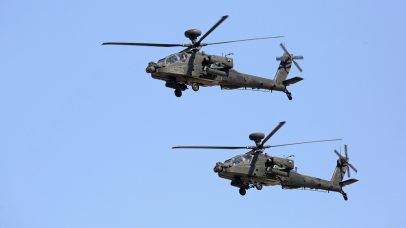
DUBAI, UNITED ARAB EMIRATES - NOVEMBER 17, 2019: Boeing AH-64 Apache attack helicopters perform at the 2019 Dubai Airshow.
Marina LystsevaTASS via Getty Images

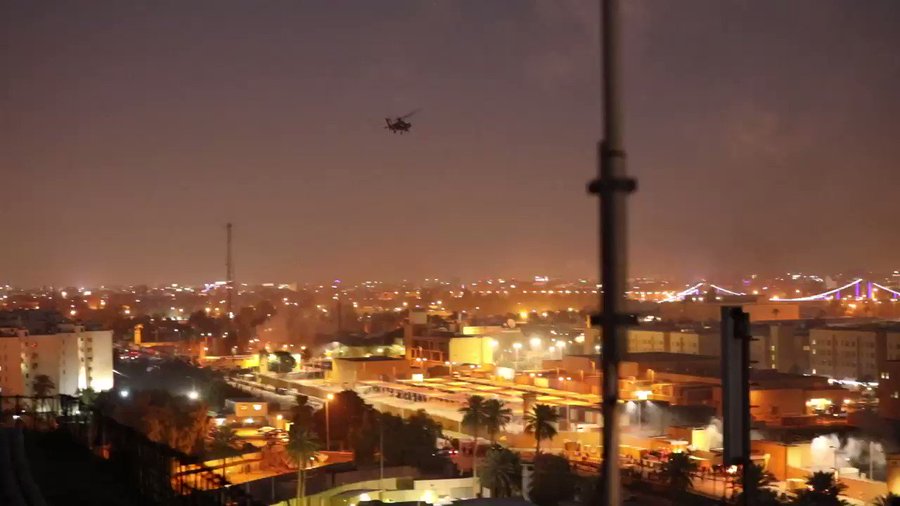
American military forces arrived on scene at the U.S. Embassy in Baghdad, Iraq, on Tuesday to stop a terrorist attack against the embassy that was being carried out by thousands of attackers.

President Donald Trump announced that Iran would be held “fully responsible” for any lives lost or damage to the facility and that they would pay “a very big price.”

“The U.S. Embassy in Iraq is, & has been for hours, SAFE! Many of our great Warfighters, together with the most lethal military equipment in the world, was immediately rushed to the site,” Trump tweeted. “Thank you to the President & Prime Minister of Iraq for their rapid response upon request Iran will be held fully responsible for lives lost, or damage incurred, at any of our facilities. They will pay a very BIG PRICE! This is not a Warning, it is a Threat. Happy New Year!”

Donald J. Trump

@realDonaldTrump

Donald J. Trump

@realDonaldTrump

….Iran will be held fully responsible for lives lost, or damage incurred, at any of our facilities. They will pay a very BIG PRICE! This is not a Warning, it is a Threat. Happy New Year!

Dan Scavino Jr, Assistant to President Trump, tweeted out a video of the Marines loading up their weapons and deploying to the embassy.

Dan Scavino Jr.🇺🇸

@Scavino45

Ryan Browne

@rabrowne75

View image on Twitter

Myles B. Caggins III, official military Spokesperson for Operation Inherent Resolve (OIR), tweeted out a video of AH-64 Apache helicopters arriving at the embassy to provide backup support.

OIR Spokesman Col. Myles B. Caggins III

@OIRSpox

Embedded video

The terrorist attack on the U.S. Embassy started early on Tuesday morning when thousands of supporters of the Kataeb Hezbollah terrorist organization attacked the facility in response to U.S. forces killing dozens of terrorists from the organization just a few days ago.

The terrorist supporters shouted “Down, down USA!” and “Death to America” and “Death to Israel” as they attacked the facility.

Democrats and far-left media pundits politicized the terrorist attack to attack Trump and suggest that the attack was Trump’s Benghazi, however, critics quickly fired back at the claims.

Trump responded to attacks from the far-left by writing on Twitter: “The Anti-Benghazi!”

Donald J. Trump

Democrat Senator Chris Murphy (CT) tweeted: “The attack on our embassy in Baghdad is horrifying but predictable. Trump has rendered America impotent in the Middle East. No one fears us, no one listens to us. America has been reduced to huddling in safe rooms, hoping the bad guys will go away. What a disgrace.”

Rep. Lee Zeldin (R-NY) responded: “Because ISIS & others feared the US under Pres Obama right? The victims in Benghazi btw never safely made it out of a safe room & the bad guys did get away. The amt of Dems spending New Years Eve rooting & working against America just bc of hate for POTUS is the disgrace!”

Lee Zeldin

@RepLeeZeldin

The victims in Benghazi btw never safely made it out of a safe room & the bad guys did get away.

The amt of Dems spending New Years Eve rooting & working against America just bc of hate for POTUS is the disgrace! https://twitter.com/ChrisMurphyCT/status/1212019681688727552 

Chris Murphy

@ChrisMurphyCT

The attack on our embassy in Baghdad is horrifying but predictable.

Trump has rendered America impotent in the Middle East. No one fears us, no one listens to us.

America has been reduced to huddling in safe rooms, hoping the bad guys will go away.

What a disgrace.

Radio host Dale Jackson noted: “Reading these comments about the situation in #Iraq and it is clear that the media and their Democrats wanted a straight up Benghazi disaster. Odd, considering they claimed what happened at Benghazi was no big deal. This is who they are, they are telling you, believe them.”

Dale Jackson@TheDaleJackson

Odd, considering they claimed what happened at Benghazi was no big deal.

This is who they are, they are telling you, believe them. https://twitter.com/realsaavedra/status/1212126753977556992 

Ryan Saavedra

@RealSaavedra

WATCH: U.S. Forces Arrive At Embassy In Baghdad To Stop Attack; Trump Drops Big Statement https://www.dailywire.com/news/watch-u-s-forces-arrive-at-embassy-in-baghdad-to-stop-attack-trump-drops-big-statement/ 

Jason Howerton, who works for The Blaze, mocked the notion that the terrorist attack at the U.S. Embassy in Baghdad was the same thing at the Benghazi attack by noting the differences between the two attacks: “Benghazi: -13-hour attack -No military response -4 Americans dead. Iraq: -Militiamen (or “mourners according to NYT) storm US embassy -immediate military response -Air support -Marines dispatched to reinforce -No deaths so far, thank God. Yeah, those sound exactly the same.”


Hardliners resist as pro-Iran militia in Iraq orders pullback from US embassy 

January 1, 2020

Source: Hardliners resist as pro-Iran militia in Iraq orders pullback from US embassy | The Times of Israel

Kataeb Hezbollah commander insists group will stay put outside Baghdad mission after powerful Hashed al-Shaabi paramilitary force tells supporters to retreat

Pro-Iranian militiamen and their supporters set a fire during a sit-in in front of the US embassy in Baghdad, Iraq, January 1, 2020. (AP Photo/Khalid Mohammed)

Some supporters of Iraq’s Hashed al-Shaabi force began dismantling their sit-in outside the US embassy in Baghdad on Wednesday, but hardliners insisted they would stay put.

The Hashed, a powerful paramilitary network integrated into Iraq’s state security forces, ordered its backers to end their protest outside the US mission.

“You delivered your message,” it said in a statement.

Thousands had massed outside the embassy in anger at deadly weekend US airstrikes on the pro-Iran Hashed faction Kataeb Hezbollah. Those strikes were in response to a rocket attack on an Iraqi army base that killed a US contractor.

Iraq’s caretaker prime minister, Adel Abdel Mahdi, had called on the Hashed supporters to leave the embassy on Tuesday but most spent the night in dozens of tents pitched outside the perimeter wall.

On Wednesday, the Hashed called on supporters to regroup outside the high-security Green Zone where the mission is located.

An AFP photographer saw some protesters beginning to dismantle their tents.

But a leading Kataeb Hezbollah commander told AFP they would stay outside the embassy.

“We in Kataeb Hezbollah won’t withdraw even if the others do,” said the commander, who was among those outside.

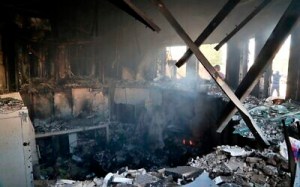
On Wednesday morning, US Marines guarding the embassy fired tear gas as more crowds arrived and after the protesters lit a fire on the roof of the reception area. Smoke rose from the building. There have been no reports of any injuries since the protests began.

Smoke rises from the reception room of the US embassy that was burned by Pro-Iranian militiamen and their supporters, in Baghdad, Iraq, Wednesday, January 1, 2020. (AP Photo/Khalid Mohammed)

Dozens of Iran-allied militiamen and their supporters had camped out at the gates of the embassy overnight, a day after they broke into the compound, trashing a reception area and smashing windows before pulling back. It was one of the worst attacks on a US diplomatic mission in years.

The violence comes as Iran and its allies have faced unprecedented mass protests in recent months and after heavy US sanctions on Iran that have cratered its economy and raised tensions across the region. In Iraq, the protesters have been angered at their own government’s corruption and economic mismanagement, as well as its close ties to Tehran.

US President Donald Trump blamed Iran for the attack on the embassy and Defense Secretary Mark Esper later announced the immediate deployment of an infantry battalion of about 750 soldiers from the Army’s 82nd Airborne Division to the Middle East. He did not specify their destination, but a US official familiar with the decision said they will go to Kuwait.

Iran has denied any involvement in the attack on the embassy. Foreign Ministry spokesman Abbas Mousavi was quoted by state media on Tuesday as warning the US against any “miscalculation” in the worsening standoff, and Iranian Supreme Leader Ayatollah Ali Khamenei on Wednesday said that US President Donald Trump was powerless to do anything to Iran.


Happy New Year from the Israel Defense Force ! 

January 1, 2020

https://www.youtube.com/watch?v=ucQy_EKdZU8


Trump: Iran Will Pay ‘Very BIG PRICE’ for Embassy Attack; ‘This Is Not a Warning, It Is a Threat’

January 1, 2020

Source: Trump: Iran Will Pay ‘Very BIG PRICE’ for Embassy Attack; ‘This Is Not a Warning, It Is a Threat’

US President Donald Trump takes part in a luncheon with the UN Security Council permanent representatives in the Cabinet Room of the White House in Washington, DC, on December 5, 2019. (Photo by MANDEL NGAN / AFP) (Photo by MANDEL NGAN/AFP via Getty Images)
Mandel Ngan/AFP/Getty Images
2:05

President Donald Trump tweeted Tuesday that Iran will pay a “very big price” after pro-Tehran forces attacked the U.S. embassy in Baghdad.

“The U.S. Embassy in Iraq is, & has been for hours, SAFE! Many of our great Warfighters, together with the most lethal military equipment in the world, was immediately rushed to the site. Thank you to the President & Prime Minister of Iraq for their rapid response upon request,” the president tweeted.

Donald J. Trump

@realDonaldTrump

Donald J. Trump

@realDonaldTrump

….Iran will be held fully responsible for lives lost, or damage incurred, at any of our facilities. They will pay a very BIG PRICE! This is not a Warning, it is a Threat. Happy New Year!

“Iran will be held fully responsible for lives lost, or damage incurred, at any of our facilities. They will pay a very BIG PRICE! This is not a Warning, it is a Threat. Happy New Year!” he added.

The U.S. Embassy in Baghdad remained locked down Tuesday after hundreds of Iraqi protesters who attempted to storm the compound failed to gain entry, U.S. officials said.

An embassy spokesman told CNN the embassy personnel were secure following an assault by protesters who were angered by a series of deadly American airstrikes carried out Sunday against an Iranian-backed Iraqi militia group in Iraq and Syria.

Protesters entered the heavily fortified “Green Zone” near the compound after apparently being granted access by Iraqi security forces and gathered at the walls of the embassy itself to denounce the U.S. airstrikes against the Kata’ib Hezbollah militia.

U.S. officials blamed the militia for the death of a U.S. contractor in Kirkuk, Iraq, late last week.

Hours after the attack, President Trump accused Iran of orchestrating the event, vowing to “strongly responded.”

“Iran killed an American contractor, wounding many. We strongly responded, and always will. Now Iran is orchestrating an attack on the U.S. Embassy in Iraq. They will be held fully responsible. In addition, we expect Iraq to use its forces to protect the Embassy, and so notified!” the president wrote on Twitter.

Donald J. Trump

@realDonaldTrump

The UPI contributed to this report. 


Militia Leader Who Led Raid on U.S. Embassy a White House Visitor

January 1, 2020

Source: Militia Leader Who Led Raid on U.S. Embassy a White House Visitor

President Barack Obama meets with advisors prior to a bilateral meeting with Prime Minister Haider al-Abadi of Iraq at the United Nations in New York, N.Y., Sept. 24, 2014. With the President from left are: Phil Gordon, White House Coordinator for Middle East, North Africa and the Gulf Region; National …
Official White House Photo by Pete Souza
6:55

Iranian militia leader Hadi al-Amiri, one of several identified as leading an attack on the U.S. embassy in Baghdad on Tuesday, reportedly visited the White House in 2011 during the presidency of Barack Obama.

On Tuesday, a mob in Baghdad attacked the U.S. embassy in retaliation against last weekend’s U.S. airstrikes against the Iran-backed Shiite militia Kataib Hezbollah (KH), responsible for killing an American civilian contractor. KH is one of a number of pro-Iran militias that make up the Popular Mobilization Forces (PMF/PMU), which legally became a wing of the Iraqi military after fighting the Sunni Islamic State terrorist group.

President Donald Trump has since accused Iran of having “orchestrated” the embassy attack and stated that the government would be “held fully responsible.”

Breitbart News reporter John Hayward described the attack on the embassy, writing:

The mob grew into thousands of people, led by openly identified KH supporters, some of them wearing uniforms and waving militia flags. The attack began after a funeral service for the 25 KH fighters killed by the U.S. airstrikes. Demonstrators marched through the streets of Baghdad carrying photos of the slain KH members and Iraq’s top Shiite cleric, Grand Ayatollah Ali Sistani, who condemned the American airstrikes.

KH vowed to seek revenge for the airstrikes on Monday. Both KH and the Iranian military unit that supports it, the Islamic Revolutionary Guard Corps (IRGC), have been designated as terrorist organizations by the U.S. government. The government of Saudi Arabia also described KH as one of several “terrorist militias supported by the Iranian establishment” in remarks on Tuesday condemning the assault on the U.S. embassy.

The attackers were able to smash open a gate and push into the embassy compound, lighting fires, smashing cameras, and painting messages such as “Closed in the name of resistance” on the walls. Gunshots were reportedly heard near the embassy, while tear gas and stun grenades were deployed by its defenders.

A uniformed militia fighter on the scene in Baghdad told Kurdish news service Rudaw that attacks were also planned against the U.S. consulates in Erbil and Basra, with the goal of destroying the consulates and killing everyone inside.

The Washington Post reported Tuesday that among those agitating protesters in Baghdad on Tuesday was Hadi al-Amiri, a former transportation minister with close ties to Iran who leads the Badr Corps, another PMF militia.

In 2011, both Fox News and the Washington Times noted that then-Iraqi Prime Minister Nouri al-Maliki brought his transportation minister, al-Amiri, to a meeting at the White House. The Times noted that the White House did not confirm his attendance, but the official was on Iraq’s listed members of its delegation.

The al-Amiri accompanying al-Maliki, besides also being transportation minister, was identified at the time as a commander of the Badr organization, further indicating it was the same person. At the time, the outlets expressed concern that al-Amiri had ties to the Iranian Revolutionary Guard Corps (IRGC), which the FBI has stated played a role in a 1996 terrorist attack that killed 19 U.S. servicemen. President Donald Trump designated the IRGC a foreign terrorist organization, the first time an official arm of a foreign state received the designation.

Fox News’ Ed Henry questioned White House Press Secretary Jay Carney following the visit about the attendance of al-Amiri at the White House. Carney refused to answer and stating that he would need to investigate the issue. The full transcript from RealClearPolitics reads:

Ed Henry, FOX News: When Prime Minister Maliki was here this week there have been reports that a former commander of the Iranian Revolutionary Guard, which U.S. officials say played a role in a 1996 terrorist attack that killed 19 U.S. servicemen.

He was here at the White House with Prime Minister Maliki because he’s a transportation minister, yeah, transportation minister —

Jay Carney, WH: Who’s [sic] report is that?

Henry: I believe the Washington Times has reported it. I think others have as well, but I think this is a Washington Times —

Carney: I have to take that question then, I’m not aware of it.

Henry: Can you just answer it later though, whether he was here and whether a background check had been done?

Carney: I’ll check on it for you.

Henry: Okay, thanks.

In 2016, Obama secured a deal with Iran which included a payment of $1.7 billion in cash. Breitbart News reporter John Hayward reported in September of 2016:

On Tuesday, the Obama administration finally admitted something its critics had long suspected: The entire $1.7 billion tribute paid to Iran was tendered in cash — not just the initial $400 million infamously shipped to the Iranians in a cargo plane — at the same moment four American hostages were released.

“Treasury Department spokeswoman Dawn Selak said in a statement the cash payments were necessary because of the ‘effectiveness of U.S. and international sanctions,’ which isolated Iran from the international finance system,” said ABC News, relating what might be one of history’s strangest humblebrags. The sanctions Obama threw away were working so well that he had to satisfy Iran’s demands with cold, hard cash!

By the way, those sanctions were not entirely related to Iran’s pursuit of nuclear weapons. As former prosecutor Andrew McCarthy pointed out at National Review last month, they date back to Iran’s seizure of hostages at the U.S. Embassy in Tehran, its support for “Hezbollah’s killing sprees,” and, most pertinently, Bill Clinton’s 1995 invocation of “federal laws that deal with national emergencies caused by foreign aggression,” by which he meant Iran’s support for international terrorism.

Former white house staffer during the Obama administration, Ben Rhodes, blamed President Trump’s policies for the Tuesday attack on the U.S. embassy.

Ben Rhodes

Amichai Stein

@AmichaiStein1

#BREAKING: US official tells me: New Iran-related sanctions will be announced “In the next 24 hours”

Many have hit back at Rhodes for the accusations, including former CIA ops officer Bryan Dean Wright.

Bryan Dean Wright

@BryanDeanWright

What a time to be self righteous. https://twitter.com/brhodes/status/1211991305208905729 

Ben Rhodes

@brhodes

Trump sanctions on Iran have done nothing to change Iranian behavior except make it worse. This is what happens when your foreign policy is based on Obama envy, domestic politics, Saudi interests, and magical right wing thinking. https://twitter.com/amichaistein1/status/1211731826890412033 

No further information has been given about al-Amiri’s presence at the U.S. embassy raid on Tuesday. Read more about the attack on the U.S. embassy in Baghdad at Breitbart News here.

Lucas Nolan is a reporter for Breitbart News covering issues of free speech and online censorship. Follow him on Twitter @LucasNolan or email him at lnolan@breitbart.com


Off Topic:  My man of the decade: Donald Trump 

January 1, 2020

Source: My man of the decade: Donald Trump – www.israelhayom.com

I have come to the realization that Trump is one of the most important presidents in US history because of his moral clarity, and because he dared to defy political correctness.

Over the past decade, the world’s equilibrium has been disrupted. Social media helped advance the democratic debate, but also intensified the shaming of others, no to mention psychological warfare.

And the US, as always, was the leader of the pack. Self-appointed clergy from the Political-Correctness religion have been telling us what we can say and what we cannot. If you tell one bad joke, you are automatically put on trial. The Inquisition is back, but this time in English.

But there is one person who has taken it upon himself to counter this trend, using the very social media networks that have created this problem.

His name is Donald Trump, the same person who has been dismissed all through the primaries and the general election, only to prove his detractors wrong, eventually becoming the 45th president of the United States.

He has already fulfilled his most important pledges, among them the appointment of two Supreme Court justices and 50 federal judges to lower courts.

The US economy is on fire despite the ongoing spats with China. And despite the domestic problems he faces at home, he has managed to successfully amend free-trade agreements, create new alliances and successfully promote US interests in NATO and other international bodies.

He has maintained his policy of maximum pressure on Iran by withdrawing from the 2015 nuclear deal and imposing sanctions. Even the investigations into the alleged Russian interference in the election went nowhere, and now people are asking questions over law enforcement’s conduct and why Trump’s campaign was subject to wiretapping.

The Israeli public has also understood that the president has lived up to his promises, especially after his decision to move the US Embassy to Jerusalem and recognize the Golan Heights as Israeli territory, as well as his decision to view Israeli settlements as consistent with international law and his executive order punishing campuses for allowing anti-Israel activity.

But the media herd, the intellectuals, and the fundamentalist liberals will just not let go. For them, Trump is like a red rag to a bull. They consider him a thug who has taken over the White House.

I had the opportunity to meet and interview him multiple times on the campaign trail and three times as president. I have come to the realization that Trump is one of the most important presidents in US history.

In a world where boundaries are blurred, where it is unclear who is good and who is bad, it is good to know that that the world’s superpower is led by a person with moral clarity, a president who knows which side creates technology and develops medicine, and which side exports terrorism. He knows that there are some who are for liberty and some who live in darkness.

We live in an era where if you are a conservative, God forbid, you are automatically considered an enemy because you are against political correctness.

Some would say that he is vulgar, but he has forced the liberals to confront the reality they have created with their discourse on the “Deplorables,” as Hillary Clinton called his supporters.

Trump is the man of the decade because he has been the leader of the good guys. Regardless of whether he wins another term, he has redefined the world and challenged the cardinals of the new Inquisition – and by doing that he has changed our discourse and reality.

Boaz Bismuth is the editor-in-chief of Israel Hayom.


Syria: An irresistible force (Israel) meets an immovable object (Iran)

January 1, 2020

Source: Syria: An irresistible force (Israel) meets an immovable object (Iran) – www.israelhayom.com

There was nothing overtly extraordinary about Sunday night’s missile attack near Damascus, which was attributed to Israel. And yet, it very well could have signaled the start of a new phase in Israel’s campaign to remove Iran from Syria.

In retrospect, there was nothing extraordinary about the missile attack near Damascus late Sunday night, which was attributed to Israel. Foreign sources are again saying the attack targeted weapons warehouses, that missiles were again fired from the Golan Heights and Lebanese airspace, and that Syrian air defenses again engaged the incoming missiles. It’s really just a matter of routine at this point.

And yet, perhaps the attack was uncommon after all, as it could have signaled the start of a new stage. We can posit cautiously, based on the recent comments by Defense Minister Naftali Bennett, that Israel apparently intends to intensify and expand the scope of its campaign to curb Iran’s efforts to entrench itself in Syria while arming Hezbollah and other Shiite militias.

This is a long-standing policy. It was first unveiled by Benny Gantz as IDF chief of staff, reaching its apex during the tenure of previous IDF chief Gadi Eizenkot. In 2017-2018 alone, Israel carried out more than 1,000 different actions against the Iranians in the northern sector. Some of these actions were military in nature; others were economic, diplomatic, and legal. Others still were meant to influence public opinion. The result was a resounding success in terms of preventing Iranian entrenchment, partial success in terms of preventing the transfer of weapons, and zero success in persuading the Iranians to stop pursuing either endeavor.

In recent months, however, Israel significantly decreased its activities. This stemmed from the tensions in Gaza, which culminated in the assassination of Bahaa Abu Al-Ata in early November, and the disinclination to become ensnared on two fronts simultaneously. It was also rooted in the increased brazenness of the Iranians – who felt confident enough to shoot down an advanced American drone and attack Saudi oil infrastructure – which led to the Israeli assessment that Iran would no longer restrain itself when attacked.

It now appears Israel is returning to action – vigorously. Gaza is calm, and Iran is more determined than ever. Israel’s political and military leaders caution that failing to dislodge Iran from Syria would pose an intolerable threat to Israel. In other words: Whoever wants to prevent the establishment of another Hezbollah in Syria needs to act now, despite the inherent risks.

Assuming that Israel has indeed decided to intensify its activities, it needs to take into account four primary factors:

1. The upcoming general election; and the possibility that attacks in Syria will be perceived as political moves.

2. Tensions with Moscow and the growing unease in Russia over Israeli activity in Syria (to the point that the Russian Defense Ministry has demanded they stop).

3. The internal situation in Iran, a consequence of its economic distress, alongside the possibility of renewing nuclear talks with the United States.

4. The potential for an atypical Iranian response that could lead to an escalation, maybe even war.

All four factors require attention. The first, on the political level, necessitates coordination with the Opposition and other elements. The second and third factors require diplomatic coordination between the Prime Minister’s Office, Defense Ministry, and Foreign Ministry, together with the IDF and the Mossad. And the fourth factor necessitates a broad military deployment for deterrence purposes; and if indeed a conflagration occurs – to provide either a pinpoint or large-scale response if Hezbollah chooses to join the fray.

This means that Israel must continue using its brawn, but also its brains. It cannot be obstinate. It must be able to change and adapt its actions to developments on the ground. Expecting the Iranians to surrender and give up trying to establish a presence in Syria, simply because of Israeli attacks, is unrealistic. This will only happen (if and when) the superpowers come to an agreement, which Israel should certainly strive to facilitate.

The attack on Sunday night, assuming Israel was responsible, still falls within the framework of the so-called “campaign between the wars” – a fundamental condition of which is that it won’t cause the other side to want to go to war. It isn’t certain this condition will hold water much longer. Even now its viability is already debatable. Iran will retaliate sooner or later, and the result could be painful. Israel could find itself in another fight, maybe worse. It would be wise to prepare for this right now, at home and abroad.


Senior navy officer: Hamas and PIJ know of the opportunities at sea 

January 1, 2020

Source: Senior navy officer: Hamas and PIJ know of the opportunities at sea – The Jerusalem Post

Despite talks of a ceasefire arrangement,the Israeli navy remains on high alert

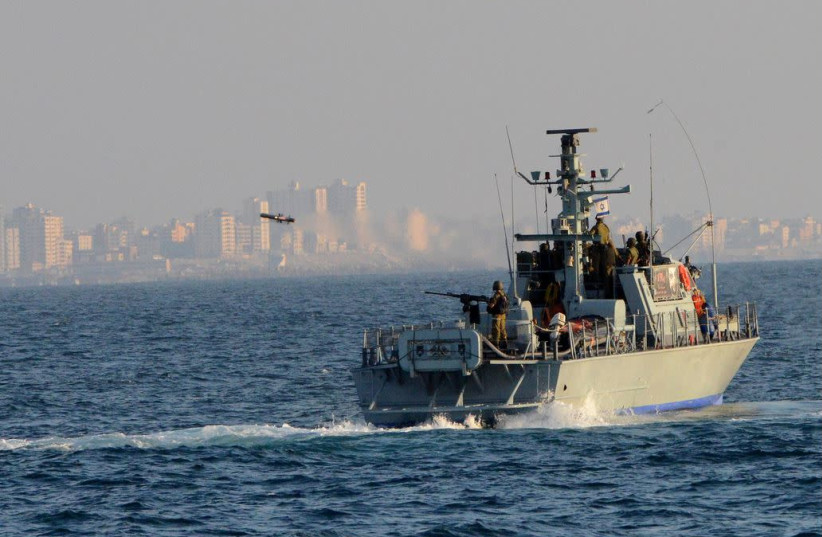
Israeli Navy boat  (photo credit: FLICKR)
Israeli Navy boat
(photo credit: FLICKR)
Despite talk of a ceasefire arrangement between Israel and Hamas in the Gaza Strip, Israel’s Navy remains on high alert for any attacks by terrorist groups in the blockaded coastal enclave.

Hamas and the Palestinian Islamic Jihad are trying to challenge us and test us all the time,” a senior naval officer told The Jerusalem Post in a recent interview. “The sea, unlike the ground where there are barriers, is wide open and we have to protect our citizens from any possible terror attack.”

Israel is highly dependent on the sea with over 90% of Israel’s imports arriving via shipping lanes and while the country’s navy is relatively small compared to other IDF corps, it has a significant amount of territory to protect since the expansion of the country’s exclusive economic zone (EEZ) from 40 miles to 150 nautical miles.

Divided into three areas, Haifa in the north and Ashdod and Eilat in the south, the expansion of the EEZ has changed the face of the navy and has posed a significant challenge for the navy, which must use everything at its disposal to gather intelligence and keep the waters safe from any threat, including working closely with the air and ground forces.

“Communication with ground troops and the IAF is critical,” the senior officer said. “We practice daily so that when we have a joint operation we act as an iron barrier.”

The senior officer explained during the May round of fighting between Israel and terrorist groups in the Strip, the power of the IDF was clearly seen in the joint retaliatory operations.

“In May I remember seeing rockets fired from Gaza towards Israel and then the Iron Dome in action all the while hearing the communications of ground troops over the radio and of course my troops from the patrol boats and missile ships,” he recounted. “To see this whole scene of everyone working together gives you the perfect view of the IDF’s power when all its forces work cooperate. It’s a scene that fills you with pride and responsibility.”The navy is also tasked with securing the natural gas drilling rigs that are in Israel’s EEZ, clear targets for enemies on Israel’s borders. The IDF believes that Hezbollah has long-range missiles capable of hitting the rigs, which supply a large amount of the electricity consumed in Israel.

On Tuesday Israel’s Leviathan gas platform off of Haifa’s coast began operations. The offshore platform has been threatened by Hezbollah leader Secretary General Hassan Nasrallah.

And while the threat posed by Hezbollah on Israel’s northern border remains the main focus of the Navy and the IDF in general, the threat posed by terrorist groups on Israel’s southern border remains just as real.

In May, during a violent round of fighting that saw Hamas and PIJ launch 690 rockets and mortars into Israel over the span of less than 48 hours, Energy Minister Yuval Steinitz ordered the suspension of natural gas supplies from the Tamar field over concerns that it could be targeted.

Israel receives most of its natural gas from Tamar, whose production platform stands just 20 kilometers off the coast of southern Israel – in clear sight of terror groups in the Gaza Strip.

But it’s not only rocket attacks that Israel has to worry about. The naval units of Hamas and PIJ have expanded significantly since the last war five years ago.

During Operation Protective Edge in 2014, five Hamas frogmen (naval commandos) tried to infiltrate Kibbutz Zikim before they were engaged and killed by the IDF. Since the conflict, Hamas has significantly expanded its naval commando unit with a reported 1,500 frogmen.

Last year, the IDF destroyed a naval terrorist tunnel belonging to Hamas which would have enabled terrorists who would enter from a Hamas military post in the northern Gaza Strip to exit into the sea unnoticed, making it possible for them to carry out terrorist acts against the State of Israel from the sea.

The route of the tunnel, which was operational but did not actually extend into Israeli waters, reached a depth of 2-3 meters and was 3 km. from the border with Israel. It was identified by the IDF as part of a campaign against Hamas’s naval force in the past year.

The tunnel was destroyed by an air strike, which was part of the IDF’s retaliation to the barrage of mortars and rockets launched from the Gaza Strip by Hamas and Islamic Jihad.

Since then a number of other naval assets belonging to both Hamas and the PIJ have been destroyed by Israeli airstrikes.

The border with Gaza is Israel’s most explosive, with more than 1,000 rockets fired towards southern Israel over the past year and almost two years of violent protests along the border fence which has seen Palestinians launch numerous incendiary aerial devices and throw explosive devices toward troops.

Thousands of Palestinians have taken part in the protests, which has also seen naval flotillas from Gaza try to cross into Israeli waters.

“We are the maritime power,” the senior officer said, explaining that Squadron 916, which patrols the coast of the Gaza Strip, has played a central role in dealing with the violence stemming from the coastal enclave.

“We are following them. We will stop them before they can carry out an attack,” the senior naval officer said. “You always have to think when an attack can happen, and where, in order to be ready.

“We can’t allow ourselves to fall asleep at the wheel. We have to always think about what’s next,” he warned.


US sends Marines to Iraq embassy as Trump blames Iran for attack 

January 1, 2020

Source: US sends Marines to Iraq embassy as Trump blames Iran for attack – The Jerusalem post

US officials, speaking on condition of anonymity, told Reuters that a small number of additional Marines were expected to go to the US embassy in Baghdad.

Protests at the U.S. Embassy in Baghdad (photo credit: REUTERS)
Protests at the U.S. Embassy in Baghdad
(photo credit: REUTERS)
WASHINGTON – US President Donald Trump blamed Iran on Tuesday for “orchestrating” an attack on the US embassy in Baghdad and said he would hold Tehran responsible, as officials said more Marines were expected to be sent to the mission.

“Iran killed an American contractor, wounding many. We strongly responded, and always will. Now Iran is orchestrating an attack on the US Embassy in Iraq. They will be held fully responsible. In addition, we expect Iraq to use its forces to protect the Embassy, and so notified,” Trump said on Twitter.

“To those many millions of people in Iraq who want freedom and who don’t want to be dominated and controlled by Iran, this is your time!,” Trump wrote in another Twitter post.

US officials, speaking on condition of anonymity, told Reuters that a small number of additional Marines were expected to go to the US  embassy in Baghdad.

One official said they were expected to number in the dozens and would be there temporarily.

Another official said two Apache helicopters carried out a “show of force” over the embassy.The US State Department and White House did not immediately respond to a request for comment on whether the American ambassador and other staff had been evacuated from the embassy compound in the Iraqi capital.

Iraqi officials said the ambassador and other staff were evacuated from the embassy for their safety on Tuesday, as thousands of protesters and militia fighters thronged the gates in fury at US air strikes in Iraq.

On Monday, State Department officials said Washington had exhibited restraint and patience in the face of escalating provocations from Iran or Iranian-backed groups, but that it was time to re-establish deterrence against Iranian aggression.

“We had very much hoped that Iran would not miscalculate and confuse our restraint for weakness. But after so many attacks it was important for the president to direct our armed forces to respond in a way that the Iranian regime will understand,” Brian Hook, the US special representative for Iran, told reporters.