Israeli expert says several Arab countries didn’t find considerable value in explicitly knocking initiative; Palestinian analyst says it may be too early to fully judge responses
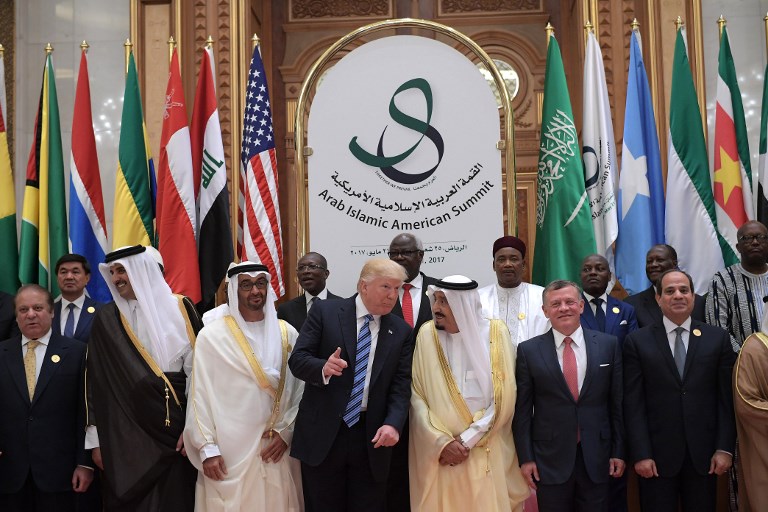
When Prime Minister Benjamin Netanyahu pledged to annex the Jordan Valley last September if given another term in office, Arab governments allied with the US overwhelmingly joined the Palestinians in slamming the statement.
Saudi Arabia’s royal court called Netanyahu’s statement “a very dangerous escalation at the expense of the Palestinian people” and added that it represents “a clear violation of the United Nations Charter and international norms.”
The Bahraini Foreign Ministry called the prime minister’s remark “a barefaced and unacceptable violation of the Palestinian people’s rights.” Jordanian Foreign Minister Ayman Safadi said it aimed at “blowing up the foundations of the peace process.”
And the Qatari Foreign Ministry said it constituted “an extension of the occupation’s policy of violating international laws and employing despicable methods to displace the brotherly Palestinian people.”
But on Tuesday and Wednesday, after the US administration unveiled its plan to resolve the Israeli-Palestinian conflict, which also envisions placing the Jordan Valley under Israeli sovereignty, most Arab governments issued statements that struck a notably different tone compared to those they put out following Netanyahu’s remark in September.
While their statements did not express full-fledged support for the plan, they also did not reject it out of hand or state direct criticisms of it. In contrast, the Palestinians blasted the US initiative, with Palestinian Authority President Mahmoud Abbas calling it “the slap of the century” and vowing the Palestinian people “will send it to the dustbins of history.”
The Saudi Foreign Ministry said Riyadh “reiterates its support for all efforts aimed at reaching a just and comprehensive resolution to the Palestinian cause” and “appreciates the efforts of President [Donald] Trump’s administration to develop a comprehensive peace plan.” It also said the Gulf kingdom “encourages the start of direct peace negotiations between the Palestinian and Israeli sides, under the auspices of the United States, and to resolve disagreements with aspects to the plan through negotiations.”

The Bahraini Foreign Ministry said Manama “affirms…its support for all efforts aimed at reaching a just and comprehensive solution to the conflict, which leads to the restoration of all the legitimate rights of the Palestinian people and the establishment of an independent Palestinian state.”
The United Arab Emirates seemingly issued the most complimentary statement, calling the plan “a serious initiative” and stating that it “offers an important starting point for a return to negotiations within a US-led international framework.”
Meanwhile, Qatar and Jordan issued more strongly worded statements, but they also refrained from specifically rebuking the plan.
Qatar said it welcomes “all efforts aiming towards a longstanding and just peace” and “appreciates the endeavors of President Trump and the current US administration to find solutions for the Palestinian-Israel conflict.” The Gulf emirate also said “peace cannot be sustainable if Palestinians rights in their sovereign state within the 1967 borders, including East Jerusalem, and the right of return are not preserved.”
Safadi, the Jordanian foreign minister, expressed support for the establishment of a Palestinian state along the 1967 lines with East Jerusalem as its capital and warned against “the dangerous consequences of unilateral Israeli measures, such as annexation of Palestinian lands, building and expansion of illegal Israeli…and encroachments on holy sites in Jerusalem.”
Eldad Shavit, a senior researcher at the Institute for National Security Studies think tank in Tel Aviv, said many of the Arab states chose not to directly criticize the plan because they did not find considerable value in doing so.
“They certainly want to maintain good relations with the US,” Shavit, who was both a high-ranking official in IDF Military Intelligence and the Prime Minister’s Office, said. “They also know that this plan could remain on the shelf and never be implemented. So they do not think there is much for them to gain from explicitly criticizing it now.”
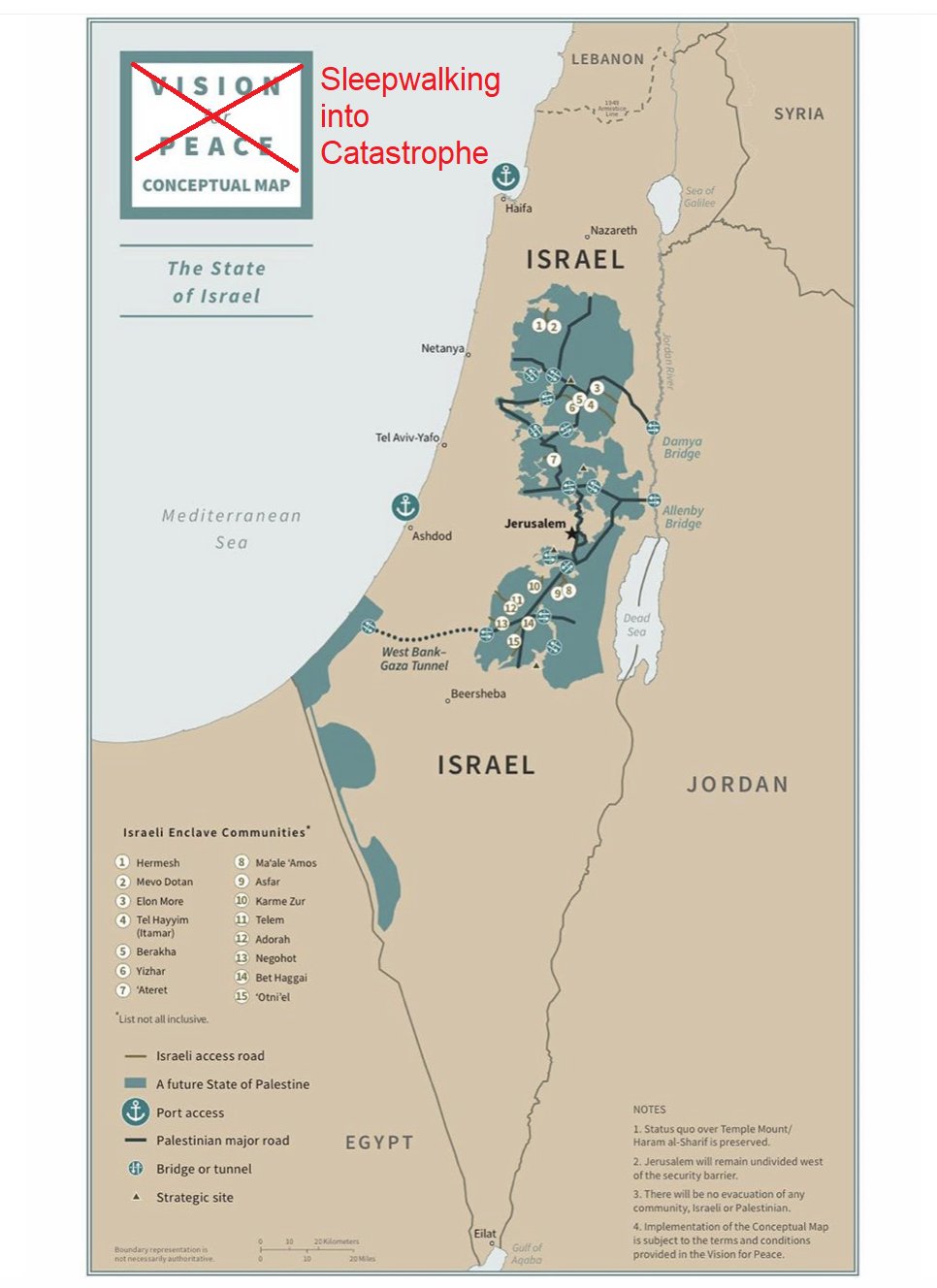
In addition to putting the Jordan Valley under Israeli sovereignty, the plan envisions the creation of a Palestinian state in about 70 percent of the West Bank, a small handful of neighborhoods in East Jerusalem, most of the Gaza Strip and some areas of southern Israel — on condition that the Palestinians recognize Israel as a Jewish state and Hamas and other terror groups in the Gaza Strip disarm.

It also calls for allowing Israel to annex settlements, granting the Jewish state overriding security control west of the Jordan River and barring Palestinians from entering Israel as refugees.
Shavit, however, noted that he believes several Arab countries would shift their rhetoric about the plan, if Israel uses it to unilaterally annex parts of the West Bank.
“I believe that the US gave promises to these countries that Israel would not be taking unilateral steps and that there would be negotiations,” he said. “If that changes and Israel goes for annexation, for example, I think we will see these countries taking a different line.”
Netanyahu originally said on Tuesday that he wanted to bring a proposal to annex parts of the West Bank to a vote this coming Sunday, but Tourism Minister Yariv Levin suggested on Wednesday that would not happen.
Levin said there were still several bureaucratic hurdles to leap, including “bringing the proposal before the attorney general and letting him consider the matter.”
Asked about the prospect of Israel imminently annexing territory in the West Bank, Jared Kushner, a senior adviser to Trump, said on Wednesday: “The hope is that they’ll wait until after the election, and we’ll work with them to try to come up with something.”
Uzi Rabi, the head of the Moshe Dayan Center for Middle Eastern Studies at Tel Aviv University, said that he thought many of the Arab countries have not explicitly knocked the plan because the US had consulted with them about it.
“They know that they cannot vitriolically come out against a plan that the Americans discussed and developed with them,” he said. “If they did that, they would cause tensions with the Americans and they very much do not want that.”
Since Trump assumed office in 2016, Kushner and other senior American officials have often met Arab officials to discuss the Israeli-Palestinian conflict. Bahrain even hosted the launch of the economic portion of the plan in June.

Rabi also argued that most of the responses of Arab countries in the Persian Gulf indicate that they believe Iran’s regional activities take precedence over the Israeli-Palestinian conflict.
“Their reactions clearly show that their first priority in the region is Iran. They do not want to make any move that will antagonize the US and undermine their chances of dealing with Iranian threats,” he said. “They simply do not believe there is great strategic value in investing efforts in the Palestinian issue.”
Arab countries in the Gulf, especially Saudi Arabia, the UAE and Bahrain, view Iran as a major regional foe and strongly oppose its support for armed groups throughout the Middle East.
Daoud Kuttab, an Amman-based Palestinian analyst who writes for Al-Monitor and runs a local radio station, said he agreed that a large number of the Arab states want to maintain positive relations with the US, but cautioned that it may be too early to fully judge their response to the plan.
“These are very diplomatic responses. They understand the way Trump works and do not want to anger him,” he said. “But I think it is too early to say we have seen their full response. It will be important to see what they say at the Arab League this weekend.”
The Arab League is set to convene with Abbas in attendance to discuss the plan.
Source: Netanyahu to announce annexation of Maale Adummim next week – DEBKAfile

DEBKA Exclusive: PM Binyamin Netanyahu will next week declare Israel sovereignty over Maale Adummim, a small town 7km east of Jerusalem, as the first step towards realizing the Trump peace plan. The details of this step are still unclear, since the town is located in an area called E1, which connects it to Jerusalem and has not yet been precisely mapped. Therefore, the prime minister may just make a general statement of Israel sovereignty and leave the details until after the March 2 election.
This decision comes against the background of comments heard on Wednesday, Jan. 29, from the authors of the peace plan, the president’s special adviser Jared Kushner and Jason Greenblatt, that they don’t expect Israel will go forward in the coming days to annex all the Jewish locales across the Green Line, as set forth in the plan. US Secretary State Mike Pompeo later said in a TV interview that he is sure the Israeli government will act according to the law and its tempo.
DEBKAfile’s Washington sources disclose that the Trump administration has asked Netanyahu to submit the “Deal of the Century” to the Knesset for endorsement before going forward to execute its share of the plan, i.e., proclaiming Israeli sovereignty over 34pc of the West Bank area. Opposition leader Benny Gantz picked up on this request and decided to run off with it. He plans to table the Trump peace plan in the Knesset himself next week.
According to our sources, Trump officials urged Israel to hold its horses after being asked by Saudi Arabia and Egypt to give them a chance to prepare their domestic public opinion and allow people to digest the import of the Trump peace plan before it takes off. Both Arab governments informed Washington that they are not opposed to the plan, but they want to make sure that the Arab League’s foreign ministers meeting in Cairo on Saturday, Feb. 1, approve a mild resolution. This will be difficult if Netanyahu has meanwhile rushed forward with annexations.
Our sources also reveal that Mahmoud Abbas, Chairman of the Palestinian Authority, who has rejected the Trump blueprint with “a thousand noes,” secretly approached the Saudis and Egyptians with a request to try and slow down the Trump blueprint’s implementation. Its immediate realization, he said, would leave him without an Arab umbrella and no choice but to join up with the extremist Hamas and Islamic Jihad to fight the plan. In any case, Abu Mazen reported he is planning to revoke Yasser Arafat’s signature on the 1994 Oslo accords, including the attached letter he wrote to the late Israeli prime minister Yitzhak Rabin affirming Palestinian recognition of the state of Israel.
I hope it does, but fear it won’t.
https://www.israelhayom.com/opinions/israel-facing-monumental-decisions/
Fate has sent Israel a rare set of circumstances that is unlikely to come our way again. The “deal of the century” really is a once-in-a-century opportunity, and Israel must seize it.
In October 1937, David Ben-Gurion wrote to his son Amos: “A partial Jewish state is not an end but a beginning … a powerful lever in our efforts to redeem the land in its entirety.”
US President Donald Trump’s Middle East peace plan, which could potentially rip the Israeli nation’s ancient homeland in two, is also not the end, but rather the beginning.
Israel is facing a Ben-Gurion-style monumental decision: Some 73 years after the 1947 United Nations Partition Plan for Palestine, providence has sent the State of Israel, under the leadership of Prime Minister Benjamin Netanyahu, a rare set of circumstances that is unlikely to come our way again. The “deal of the century” really is a once-in-a-century opportunity, and Israel must seize it.
The full details of Trump’s peace plan will be revealed soon enough, but if what we know about it so far is true – if Jerusalem, even without the Arab neighborhoods beyond the security fence, remains ours; if the Temple Mount is left under Israeli sovereignty; if all Jewish communities in Judea and Samaria fall under Israeli rule, and if the settlement enterprise in historical lands, the cradle of the Israeli nation, will have territorial continuity and become part of greater Israel – than we must say yes to Trump’s plan.
In 1947, too, the partition plan tore the land of Israel in two, leaving the Western and central Galilee, the eastern part of the Negev, including Beersheba, and even Jaffa (as an enclave) within the borders of the proposed Arab state.
In 2020, too, Trump’s plan will tear Judea and Samaria, the heart of our homeland, apart, and leaves about 70% to a future Palestinian entity. But what time and Arab rejectionism did in the past, time and Palestinian rejectionism will do in the future.
Embracing Trump’s plan at this time is just the beginning, even if parts of it are a bitter pill to swallow.
If we look at it through the Ben-Gurion mindset, it is clear that the Palestinians will not give up on “full statehood” and on east Jerusalem; they will not disarm Hamas, and they will continue not to miss every opportunity to miss every opportunity.
The Palestinians will provide Israel with enough cause to “continue our efforts to redeem the land in its entirety,” and to stick by the principles of Zionism that call for maintaining our allegiance to our historic homeland – not only by virtue of the theoretical right but by virtue of the practical building of the country along the 1967 borders, set following the liberation of Judean and Samaria.
Netanyahu’s test will be in the realization of the decision to apply sovereignty to all communities here and now, even before the March 2 elections.
This will also be a test for Yisrael Beytenu leader Avigdor Lieberman, as he will have to decide which is more important to him: His morbid addiction to the “anything but Bibi” concept, or seizing a historical opportunity.
If, indeed, “Israel comes first” for Lieberman ally the be party, they Yisrael Beytenu’s head will have to support the Trump outline.
Anyone who still hurts for the destruction of the communities in Gush Katif over the Israeli disengagement from Gaza in 2005; and anyone who has nightmares about the possibility that a similar fate might befall dozens of communities and thousands of Israelis across Judea and Samaria – has to support the “deal of the century.”
But after all of that, let’s take a moment to consider one thing: Jerusalem.
Reports about what the plan holds for the Israeli capital have been inconsistent, but if, God forbid, Israel is required to divide the city again or relinquish its status on the Temple Mount, then we will have to devise a way to exclude Jerusalem from the plan. This may even cause Israel to rethink its position about the plan as a whole and address the issue again vis-à-vis Washington.
Source: Kushner slams Palestinian leadership, urges giving up ‘fairy tales’ for peace | The Times of Israel
Trump adviser says Palestinians have been lied to, chiefs ‘screwed up every opportunity in the past’; rejecting Trump plan shows they aren’t ready for a state
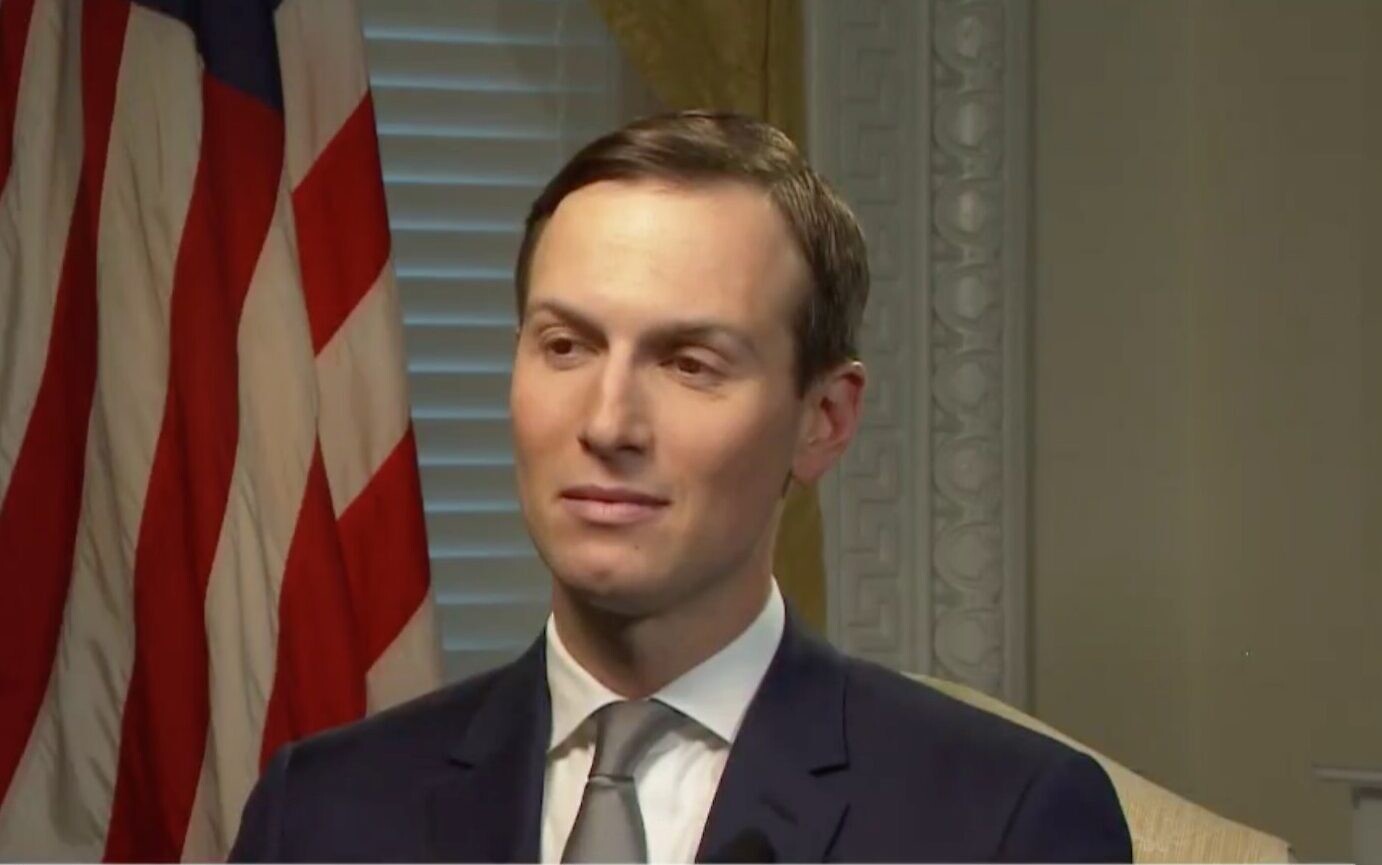
US President Donald Trump’s senior adviser and son-in-law Jared Kushner on Tuesday launched scathing attacks against the Palestinian leadership, which he said has lied to the Palestinian public for years by promising them “fairy tales” that cannot be achieved.
In media interviews Kushner gave to the pan-Arabic Al Jazeera network and US broadcaster CNN, he answered questions about the Trump administration’s peace plan, which was released earlier in the day, and which Prime Minister Benjamin Netanyahu said he would agree to.
The plan does not include some key demands by Palestinians, such as the Temple Mount in Jerusalem being part of their capital, the return of Palestinian refugees to live in Israel, and the removal of Israeli settlements in the West Bank. It also allows for broad Israeli annexation moves.
“It’s time to let go of past fairy tales that quite frankly will never happen,” Kushner told Al Jazeera.
“The Palestinians have been lied to for so many years and they have been promised things and there has been no counter to the promises that have been made to them,” he said. “If they have expectations that are not realistic then I feel bad for them. They’ve been lied to by their leadership and they’ve been lied to by a lot of people and they’ve been used as pawns in the Middle East.”
In the past, he said, Palestinian leaders “have gotten all these demands and there hasn’t been a counter to explain why the positions are not rational or achievable positions, and, as a result of that, they have not made peace and the people’s lives have continued to suffer and they blame their suffering on Israel as opposed to blaming the suffering on the leadership.”
“The Palestinian people are on a terrible trajectory thanks to a lot of bad decisions by their leadership,” Kushner continued. “They have to stop holding out for myths that will never come, and fairytales that will never come.”
“The Palestinian Authority would rather go and complain as opposed to come to the table and negotiate, which, quite frankly, shows that they are not ready to have a state,” he said.
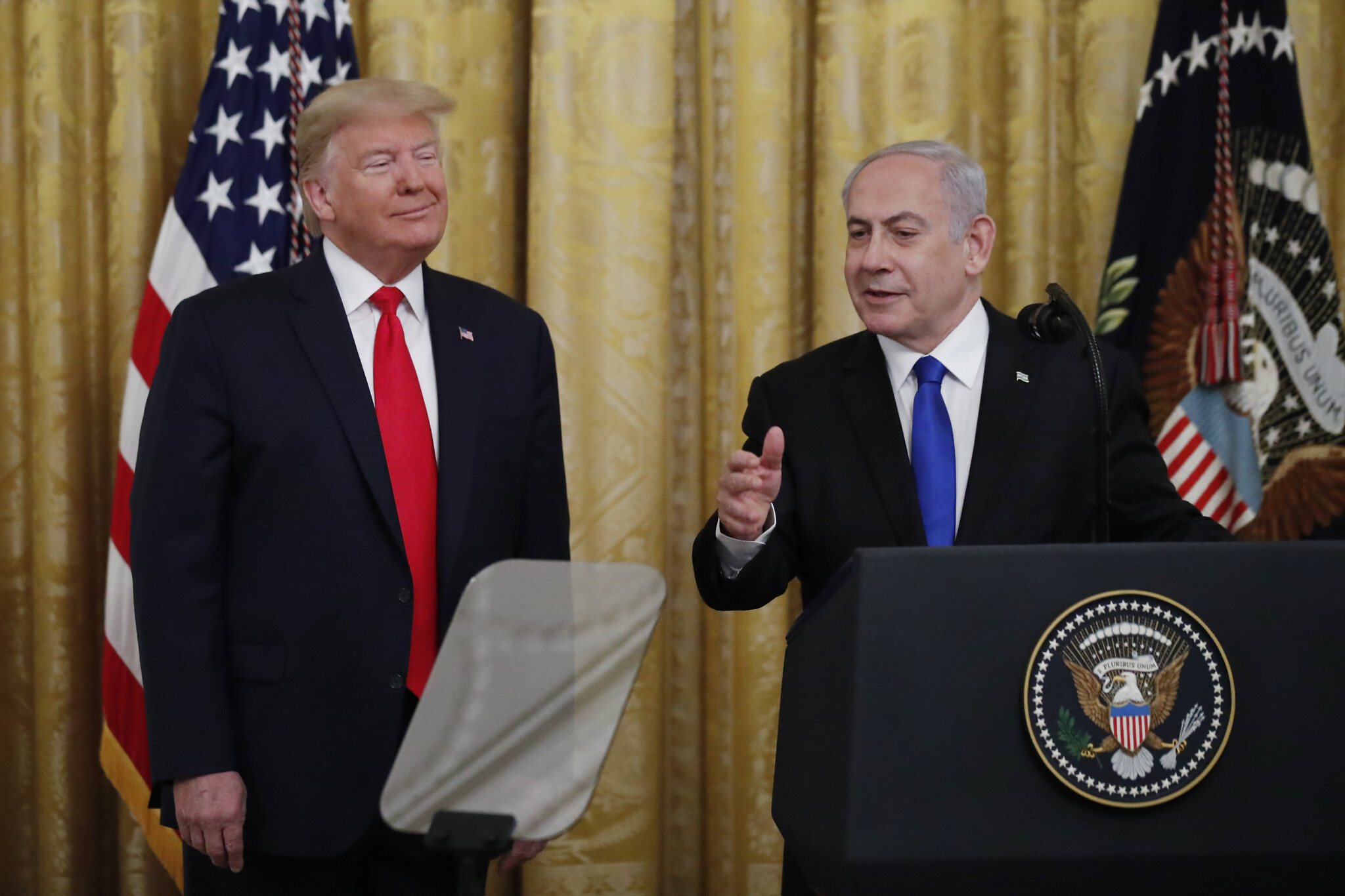
Kushner said that if the Palestinians are prepared to negotiate, they will find in Israel a “very willing partner” for any suggestions that will make the lives of Palestinians better.
The Palestinian people need an opportunity “to lead a better life. They need dignity, they need jobs, they need opportunity, they need good leadership,” Kushner said. “This is the best opportunity they have ever had and I really hope they seize it.”
He claimed that, throughout the world, there are those who care about the Palestinian people and are urging their leadership to negotiate on the basis of the Trump plan.
“The entire Arab world is begging for the Palestinians to resolve this. You have security cooperation with Israel going on. Israel is a technology superpower; people want to do business with them. There’s a lot that can happen now that could be very, very positive for the region and the world,” Kushner said.
Breaking with past US administrations, the plan envisions the creation of a Palestinian state in part of the West Bank, a handful of neighborhoods in East Jerusalem, the Gaza Strip and some areas of southern Israel — on condition that the Palestinians recognize Israel as a Jewish state and Hamas and other terror groups in the Gaza Strip disarm.
The plan also calls for allowing Israel to annex settlements, granting the Jewish state sovereignty over the Jordan Valley, as well as ongoing overall security control west of the Jordan River, and barring Palestinians from entering Israel as refugees.
Jerusalem would remain “the undivided” capital of Israel, Trump stressed as he unveiled the plan in the White House Tuesday, with Netanyahu standing next to him.
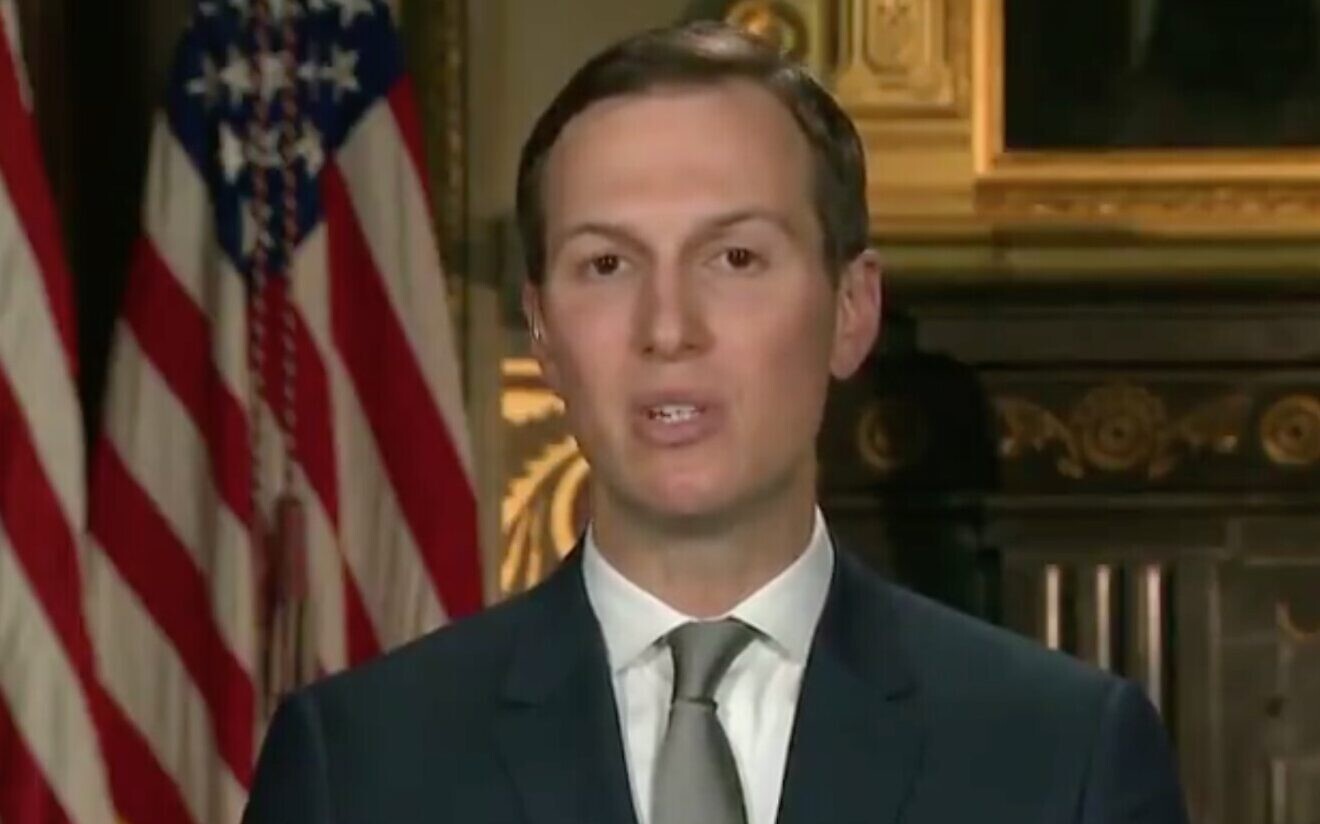
Palestinian Authority President Mahmoud Abbas firmly rejected the plan in a speech to senior Palestinian leaders, including representatives of the Hamas and Islamic Jihad terror groups.
“We say a thousand times: No, no and no to the ‘deal of the century,’” Abbas said, adding that the US plan “will not come to pass” and that “our people will send it to the dustbins of history.”
Speaking to CNN on Tuesday, Kusher kept up his attacks on the Palestinian leadership, accusing the Palestinian leadership of calling a “day of rage” in the West Bank in response to the peace plan. Though the PA did not call for a day of rage, Abbas has indicated that his forces would not stand in the way of protesters.
“What are they calling for? They are calling for a day of rage,” Kushner said. “Who do you know who runs a state that when they don’t get what they want they call for a day of rage? That’s not how people who are capable of running a state work.
“If they screw up this opportunity — and again, they’ve had a perfect track record of screwing up opportunities — I think they will have a very hard time looking the international community in the face saying they’re victims, saying they have rights. This is a great deal for them if they come to the table and negotiate,” he said.
 CNN✔@CNN
Jared Kushner, senior adviser to the President, says the White House’s Middle East plan is “a great deal” and if Palestinians reject it, “they’re going to screw up another opportunity, like they’ve screwed up every other opportunity that they’ve ever had in their existence.”
“The Palestinian leadership have to ask themselves a question,” Kushner said.” Do they want to have a state? Do they want to have a better life? If they do, then we have created a framework for them to have it and we will treat them in a very respectable manner. If they don’t, then they are going to screw up another opportunity just like they’ve screwed up every other opportunity in their existence.”
“You have five million Palestinians who are really trapped because of bad leadership,” he added.
The plan, he said, “unquestionably” makes the lives of Palestinians better and makes Israel “much more secure.”
With Israel having agreed to the plan, “you are going to see them becoming less and less isolated internationally and you’re going to see more and more pressure put on Palestinian leadership to do it.”
Times of Israel staff contributed to this report
Source: Trump unveils plan for ‘realistic 2-state’ deal, ‘undivided’ Israeli Jerusalem | The Times of Israel
Proposal sets conditions for Palestinian state that won’t threaten Israel, with capital ‘in eastern Jerusalem,’ president says; Netanyahu, Gantz okayed plan as basis for talks
US President Donald Trump on Tuesday unveiled his long-awaited Israeli-Palestinian peace plan, saying it will enshrine Jerusalem as Israel’s “undivided” capital and enable Israeli sovereignty in parts of the West Bank, while also providing for an eventual Palestinian state with “eastern Jerusalem” as its capital.
He hailed the plan as marking “a big step towards peace” for Israel, and said “we have an obligation to humanity” to get the deal done.
Speaking at the White House alongside Prime Minister Benjamin Netanyahu, the US president said support for the plan by both Netanyahu and his election rival, Blue and White party leader Benny Gantz, showed “peace transcends politics in Israel.”
“This vision for peace is fundamentally different from past diplomacies,” Trump said. “Even the most well-intentioned plans were light on factual details and heavy on conceptual framework.” He added that his plan was 80-pages long, calling it “the most detailed proposal ever.”
“Today, Israel is taking a big step toward peace… Netanyahu informed me that he is willing to endorse the vision as a basis for direct negotiations.”
The US president said that the “peace vision” that Trump’s son-in-law and senior adviser Jared Kushner has been working on for nearly three years calls for a two-state solution, includes detailed maps of territory.
He said the future Palestinian state will be contiguous, but would not be able to threaten Israel’s security interests.

Trump said his plan includes “a realistic two-state solution,” and that his administration would “work to create a territory for a contiguous Palestinian state in the future” that would “reject terrorism.”
He hailed Netanyahu as “willing to endorse the vision as the base for direct negotiations.” Calling it “a historic breakthrough,” he added: “Mr. Netanyahu, thank you for being willing to take this bold step forward.”
Trump said the plan more than doubles the territory currently under Palestinian control, but also that the United States would “recognize Israeli sovereignty over the territory that my vision provides to be part of the State of Israel” — a reference to West Bank settlements.
The Palestinians have already rejected the proposal, accusing Trump of being biased in favor of Israel as he has adopted policies that bolster Israel at their expense.
Trump thanked representatives of the Arab states of Oman, Bahrain and the United Arab Emirates for being in attendance, which could possibly mean those countries support the plan. Oman’s Ambassador Hunaina al Mughairy, asked by The Times of Israel whether her presence meant the sultanate accepts the peace plan, replied: “We haven’t seen the plan yet.”
Under the plan, Jerusalem will remain Israel’s “undivided capital,” Trump said, raising eyebrows after he had said that the capital of the Palestinian state would be in “eastern Jerusalem,” where the United States would “proudly open an embassy.”
He said the status quo in Jerusalem’s Temple Mount compound will be preserved in coordination with Jordan, which will maintain its special role in managing the Al-Aqsa Mosque (which Trump mispronounced as “al-aqua”).
He said the Palestinian state would be formed in a way that “resolves the risk to Israel’s security” and the risk of terror attacks, saying: “We will never ask Israel to compromise its security.”
“No Israelis or Palestinians will be uprooted from their homes,” he added, saying West Bank settlements wouldn’t be expanded for four years, during which negotiations will be advanced.
Trump said he was “saddened by the fate of the Palestinian people. They deserve a far better life — they deserve a chance to achieve their extraordinary potential.”
“We are asking the Palestinians to meet the challenges of peaceful coexistence,” Trump said, calling on them to pass laws enshrining human rights, “stop the malign activities” of the Hamas, Islamic Jihad and other terror groups, “end incitement” against Israel and “halt financial compensation to terrorists.”
Trump said the plan would “end the cycle of Palestinian dependence on charity.”
He said making peace between Israel and the Palestinians “may be the most difficult challenge of all,” noting that many former US presidents had failed to achieve that. “But I was not elected to do small things or shy away from problems,” he added.
“We will be there every step of the way. It will work. If they do it, it’ll work.”
The plan builds on a 30-page economic plan for the West Bank and Gaza that was unveiled last June and which the Palestinians have also rejected.
Source: Iran, Turkey slam Trump peace plan as UAE, Saudi Arabia urge negotiations | The Times of Israel
UN, Jordan, Egypt and Western countries reiterate support for two states based on pre-1967 borders; Ankara calls outline ‘stillborn,’ Tehran says it’s ‘a nightmare’

International reactions came quickly following US President Donald Trump’s unveiling of his administration’s Israeli-Palestinian peace plan at the White House on Tuesday.
Many Western countries and international bodies said they needed time to assess the plan, reiterating their support for the longtime international consensus favoring a two-state solution to the conflict on the basis of the pre-1967 borders.
Jordan gave the plan a cool reaction, saying it remained committed to a two-state solution based on Israel’s pre-1967 lines. It also said it rejected any unilateral move by Israel, referring to the annexation plan.
Egypt, the first Arab country to reach a peace deal with Israel, urged Israelis and Palestinians to carefully study the plan, and Saudi Arabia expressed support for a return to negotiations. The European Union said it needed to study the outline more closely.
But the United Arab Emirates issued a strikingly positive reaction, with its ambassador to the United States saying on Twitter that his country “appreciates continued US efforts to reach a Palestine-Israel peace agreement.”
“This plan is a serious initiative that addresses many issues raised over the years. The only way to guarantee a lasting solution is to reach an agreement between all concerned parties. The UAE believes that Palestinians and Israelis can achieve lasting peace and genuine coexistence with the support of the international community. The plan announced today offers an important starting point for a return to negotiations within a US-led international framework,” he said.
Along with fellow Gulf Arab states Bahrain and Oman, the United Arab Emirates sent its ambassador to Trump’s announcement alongside Prime Minister Benjamin Netanyahu, despite the country’s not recognizing the Jewish state.
Saudi Arabia expressed its longtime support for the “brotherly Palestinian people,” and said it backed “all efforts aimed at reaching a just and comprehensive resolution to the Palestinian cause.”
“The Kingdom appreciate the efforts of President Trump’s Administration to develop a comprehensive peace plan between the Palestinian and Israeli sides; and encourages the start of direct peace negotiation between the Palestinian and israeli sides, under the auspices of the United States,” Saudi Arabia’s foreign ministry said in a statement.
 Foreign Ministry
✔@KSAmofaEN
#Statement | The Ministry of Foreign Affairs of the Kingdom of Saudi Arabia has viewed the U.S. Administration’s announcement of its peace plan titled: “Vision for Peace, Prosperity, and a Brighter Future”.
“The State of Qatar welcomes all efforts aiming towards a longstanding and just peace in the occupied Palestinian territories. It also appreciates the endeavors of President Trump and the current US administration to find solutions for the Palestinian-Israeli conflict,” Qatar’s foreign ministry said in a statement carried by the country’s QNA news agency.
UN Secretary-General Antonio Guterres said the United Nations remained committed to supporting Palestinians and Israelis in resolving their conflict on the basis of UN resolutions, international law and bilateral agreements.
He said the UN was also committed to realizing the vision of two states “living side by side in peace and security within recognized borders, on the basis of the pre-1967 borders,” according to his spokesman.
“The position of the United Nations on the two-State solution has been defined, throughout the years, by relevant Security Council and General Assembly resolutions by which the Secretariat is bound,” said UN spokesman Stephane Dujarric.
Those resolutions call all Israeli settlements in the West Bank illegal and call for a solution based on the borders before the 1967 Six Day War, with agreed land swaps.
The European Union’s top diplomat said that the bloc remains “firm and united” behind the quest for a negotiated two-state peace deal between Israel and the Palestinians.
“The European Union will study and assess the proposals put forward,” EU representative Josep Borrell said. But he added: “This will be done on the basis of the EU’s established position and its firm and united commitment to a negotiated and viable two-state solution that takes into account the legitimate aspirations of both the Palestinians and the Israelis, respecting all relevant UN resolutions and internationally agreed parameters.”
Borrell acknowledged that “today’s initiative by the United States provides an occasion to re-launch the urgently needed efforts towards a negotiated and viable solution to the Israeli-Palestinian conflict.”
But he made it clear that European capitals see the need for more inclusive negotiation ahead.
“The EU reaffirms its readiness to work towards the resumption of meaningful negotiations to resolve all permanent status issues and to achieve a just and lasting peace,” he said. “It urges both sides to demonstrate, through policies and actions, a genuine commitment to the two-state solution as the only realistic way to end the conflict.”

Borrell’s statement did not say if he had consulted some or all EU members before issuing his reaction, but most capitals have previously expressed support for a negotiated solution.
Iran said the plan amounted to the “treason of the century” and was bound to fail.
“The shameful peace plan imposed by America on the Palestinians is the treason of the century and doomed to fail,” the foreign ministry said in a statement.
Iran’s Foreign Minister Mohammad Javad Zarif said on Twitter that the “so-called ‘Vision for Peace’ is simply the dream project of a bankruptcy-ridden real estate developer,” referring to Trump.
“But it is a nightmare for the region and the world and, hopefully, a wake-up call for all the Muslims who have been barking up the wrong tree,” wrote Zarif, whose country does not recognize Israel and routinely threatens to destroy it.
 Javad Zarif
✔@JZarif
The so-called “Vision for Peace” is simply the dream project of a bankruptcy-ridden real estate developer.But it is a nightmare for the region and the world
And, hopefully, a wake-up call for all the Muslims who have been barking up the wrong tree.#LetsUniteForPalestinians
Turkey slammed the proposal as “stillborn,” calling it an “annexation plan” intended to destroy hopes for a two-state solution.
“The United States’ so-called peace plan is stillborn,” Turkey’s foreign ministry said in a statement. “This is an annexation plan aimed at killing a two-state solution and extorting the Palestinian territory. Palestinian people and its land cannot be bought for money.”
Turkey repeated its longtime mantra that Jerusalem was Ankara’s “red line.”
“We will not allow any step that will legitimize Israel’s occupation and persecution. We will always stand by brotherly Palestinian people. We will work for an independent Palestine in the Palestinian territory,” the ministry said. “We will not support any plan that is not accepted by Palestine. There will be no peace in the Middle East without an end to the occupation policies.”
Russia called on Israelis and Palestinians to negotiate directly to find a “mutually acceptable compromise.”
“We do not know if the American proposal is mutually acceptable or not. We must wait for the reaction of the parties,” Deputy Foreign Minister Mikhail Bogdanov told Russian news agencies. “The important thing is that Palestinians and Arabs express their opinion,” he said, adding that Moscow would study the US plan.
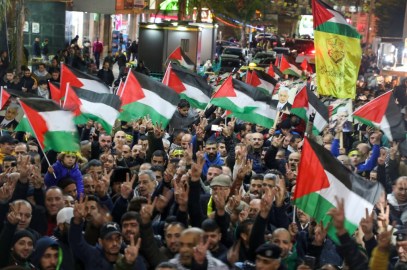
Palestinian leaders had already resoundingly rejected Trump’s plan when he presented it alongside Netanyahu at a White House press conference. No Palestinian official was present at the launch.
Netanyahu is expected to visit Moscow on Wednesday to present the plan to Russian President Vladimir Putin. Russia has repeatedly said it is prepared to host direct talks between the Israeli and Palestinian camps.
British Foreign Secretary Dominic Raab said the plan was “clearly a serious proposal, reflecting extensive time and effort.”
“A peace agreement between Israelis and Palestinians that leads to peaceful coexistence could unlock the potential of the entire region, and provide both sides with the opportunity for a brighter future,” Raab said in a statement. “Only the leaders of Israel and the Palestinian territories can determine whether these proposals can meet the needs and aspirations of the people they represent. We encourage them to give these plans genuine and fair consideration, and explore whether they might prove a first step on the road back to negotiations.”
Earlier, British Prime Minister Boris Johnson spoke to Trump to discuss the plans. Downing Street said they “could prove a positive step forwards.”
UK Labour party leader Jeremy Corbyn said that the proposal “is not a peace plan. It is a plan to lock in illegal Israeli colonisation and deny Palestinian rights. It is a threat to peace.”
Germany’s foreign minister reacted cautiously, saying the plan raises questions that need to be addressed.
Foreign Minister Heiko Maas said in a statement that “only a negotiated two-state solution that is acceptable to both parties can lead to lasting peace between Israelis and Palestinians.” He added that “on that basis, every impetus laid out in such a way as to set the long-stalled Middle East peace process in motion again is to be welcomed.”
Maas said the US proposal “raises questions” that Germany will discuss with its European partners. Those, he said, include the involvement of the two sides in a negotiating process and “its relationship to recognized international parameters and legal positions.”
Chancellor of Austria Sebastian Kurz wrote on Twitter: “I welcome the release of the #US plan which hopefully brings new momentum to the [Middle East Peace Process] having been in a deadlock for far too long. We call on the parties to start negotiations on the basis of this plan under #US leadership with a view to achieving a two-state-solution.




 anneinpt
 artaxes
 danmillerinpanama
 davidking1530
 Peter Hofman
 Joseph Wouk
 Peter
Peter Louisiana Steve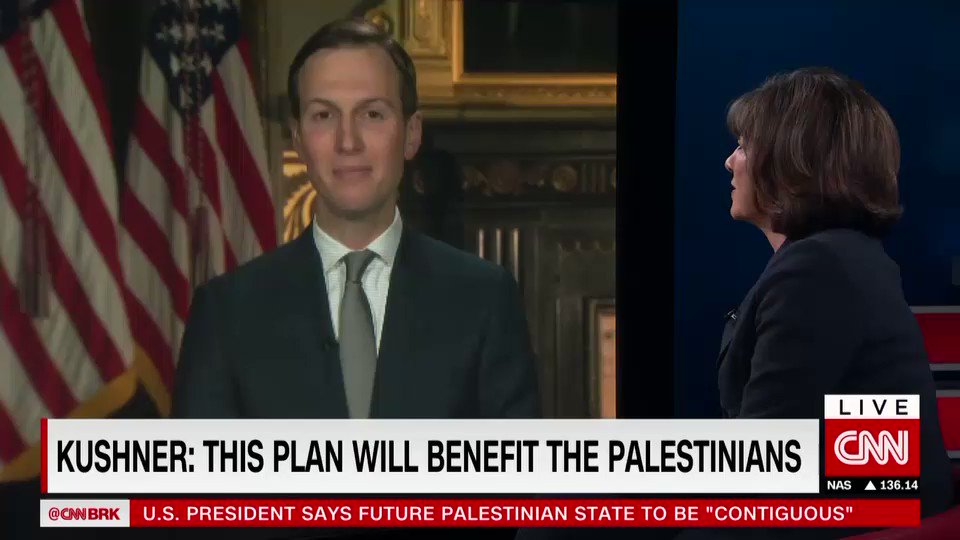
 WarSclerotic
Recent Comments