A video collage of a single day for Israel’s Air Force.
A video collage of a single day for Israel’s Air Force.
Source: Trump says Iran will be held ‘fully responsible’ for attack on embassy
President Donald Trump on Tuesday blamed Iran for planning an attack on the U.S. Embassy in Iraq and promised to hold Tehran “fully responsible.”
“Iran killed an American contractor, wounding many. We strongly responded, and always will,” the president wrote on Twitter. “Now Iran is orchestrating an attack on the U.S. Embassy in Iraq. They will be held fully responsible.”
 Donald J. Trump
✔@realDonaldTrump
Iran killed an American contractor, wounding many. We strongly responded, and always will. Now Iran is orchestrating an attack on the U.S. Embassy in Iraq. They will be held fully responsible. In addition, we expect Iraq to use its forces to protect the Embassy, and so notified!
Trump’s tweet came after dozens of angry Iraqi Shiite militia supporters stormed the U.S. Embassy compound in Baghdad and set fire to a reception area on the grounds earlier in the day.
The Iraqi supporters, many dressed in military apparel, pushed into the compound using cars to break through its gate. The protesters hung a poster on the wall saying, “America is an aggressor.”
Though the mob stopped short of entering the main building of the compound, many shouted “Down, Down, USA!” and flung water and rocks over the embassy walls. About 30 Iraqi soldiers in armored vehicles arrived near the embassy hours after the violence, according to an Associated Press report.
The attack followed deadly U.S. airstrikes on Sunday that killed 25 fighters of the Iran-backed militia in Iraq, carried out in retaliation for last week’s killing of an American contractor in a rocket attack on an Iraqi military base that American officials blamed on the militia.
“The President is in close touch with his national security team and is receiving regular updates,” said White House Press Secretary Stephanie Grisham. “As the President said, Iran is orchestrating this attack and they will be held fully responsible. It will be the President’s choice how and when we respond to their escalation.”

While Secretary of State Mike Pompeo said Sunday’s strikes were designed to convey that the White House will not turn a blind eye to actions taken by Iran that jeopardize American lives, the Iraqi government deemed the attack a “flagrant violation” of its sovereignty and said it will reexamine its relationship with the U.S.-led coalition.
Source: IAF Commander Norkin: US airstrikes in Iraq a potential game changer – The Jerusalem Post
Thousands of paramilitary members march on US Embassy in Baghdad following deadly strikes.
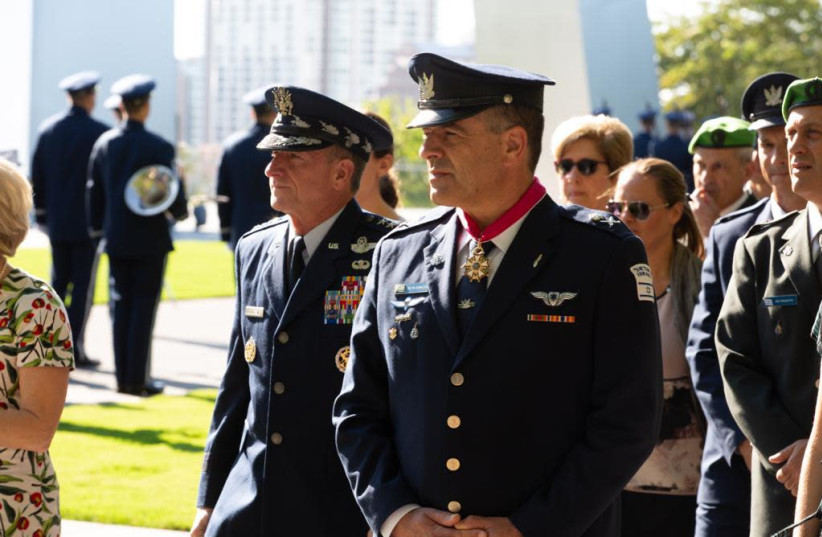
“The attack by the United States Air Force are a potential game changer,” Maj.-Gen. Amikam Norkin said at a conference held by Calcalist of the American strikes on Kata’ib Hezbollah locations in Syria and Iraq which killed some 25 paramilitary fighters.
The strikes came two days after a barrage of over 30 rockets were fired by the Iranian-backed militia towards the K1 Iraqi military base in Kirkuk, killing a US civilian contractor and wounded dozens of Iraqi and American troops.
In a statement on Sunday, outgoing Iraqi Prime Minister Adel Abdul Mahdi called the strikes a “dangerous escalation that threatens the security of Iraq and the region.”
According to Abdul Mahdi, US Secretary of Defense Mark Esper called him close to 30 minutes before to inform him of the coming strikes. During the call Abdul Mahdi demanded that Esper call off the strikes as they would lead to a further escalation.
Both Israel and the US have warned that Iran and it’s proxy militias are the biggest threats to peace in the region and hope to weaken Tehran’s growing influence across the Middle East and the Persian Gulf.
During the conference on Tuesday Norkin said that the connection between the Israeli Air Force and the Americans is an asset that strengthens Israel’s aerial superiority.Israel’s aerial supremacy, he said is the “key to regional stability.”
“We are in a time of turmoil in which the Iranian threat is known to everyone, including the nuclear one,” Norkin continued.
“In the northern arena, we face a series of the world’s most advanced ground-to-air systems like the S-300 and S-400. The Middle East that was when I joined [the military] is not the same Middle East that I see today. There are states have changed and some will never return to what they once were.”
Israeli officials have warned that Iran is also attempting to entrench itself in Iraq, a mainly Shia country, as it did in Syria, where it has established and consolidated a parallel security structure.
Iran has for years been trying to establish a 1,200 km. length land bridge from Tehran to the Mediterranean, a major concern for Israel which since 2013 has been carrying out a “war-between-wars” campaign aimed at preventing Iran from reaching its goal.
Last week Israel’s top military chief IDF Chief of Staff Lt.-Gen. Aviv Kochavi publicly admitted to IAF airstrikes in Iraq, stating that Iran’s Quds force is smuggling advanced weapons in the country on a monthly basis “and we can’t allow that.”
Source: Trump sets ‘red line’ for Iran amid mounting risks | The Times of Israel
Some fear that by making American deaths the threshold for response, Washington may be signaling to Tehran that it can continue other provocations

WASHINGTON, United States (AFP) — US President Donald Trump’s order for airstrikes on a Tehran-backed Iraqi militia group, after resisting retaliating against Iran for months, sent a clear message Sunday that killing Americans was his red line.
But experts warned that, far from being deterred, Iran might find that line signals there is space for them to continue the kind of provocative activities that fired up tensions across the Gulf region throughout 2019.
And with Trump facing a re-election fight in 2020, some said Tehran could even step up its actions to challenge the president’s promise to pull US troops out of the Middle East.
US officials said Monday that Trump had exercised “strategic patience” during the past year in the face of Iran’s stepped-up military activities in the region challenging the US and its allies.
But they said that the death Friday of a US civilian contractor in Kirkuk in a rocket attack by Kateb Hezbollah, or the Hezbollah Brigades, an Iran-supported militia, forced Trump’s hand.
At least 25 members of the group were killed in retaliatory US strikes Sunday on five of their bases in Iraq and Syria.
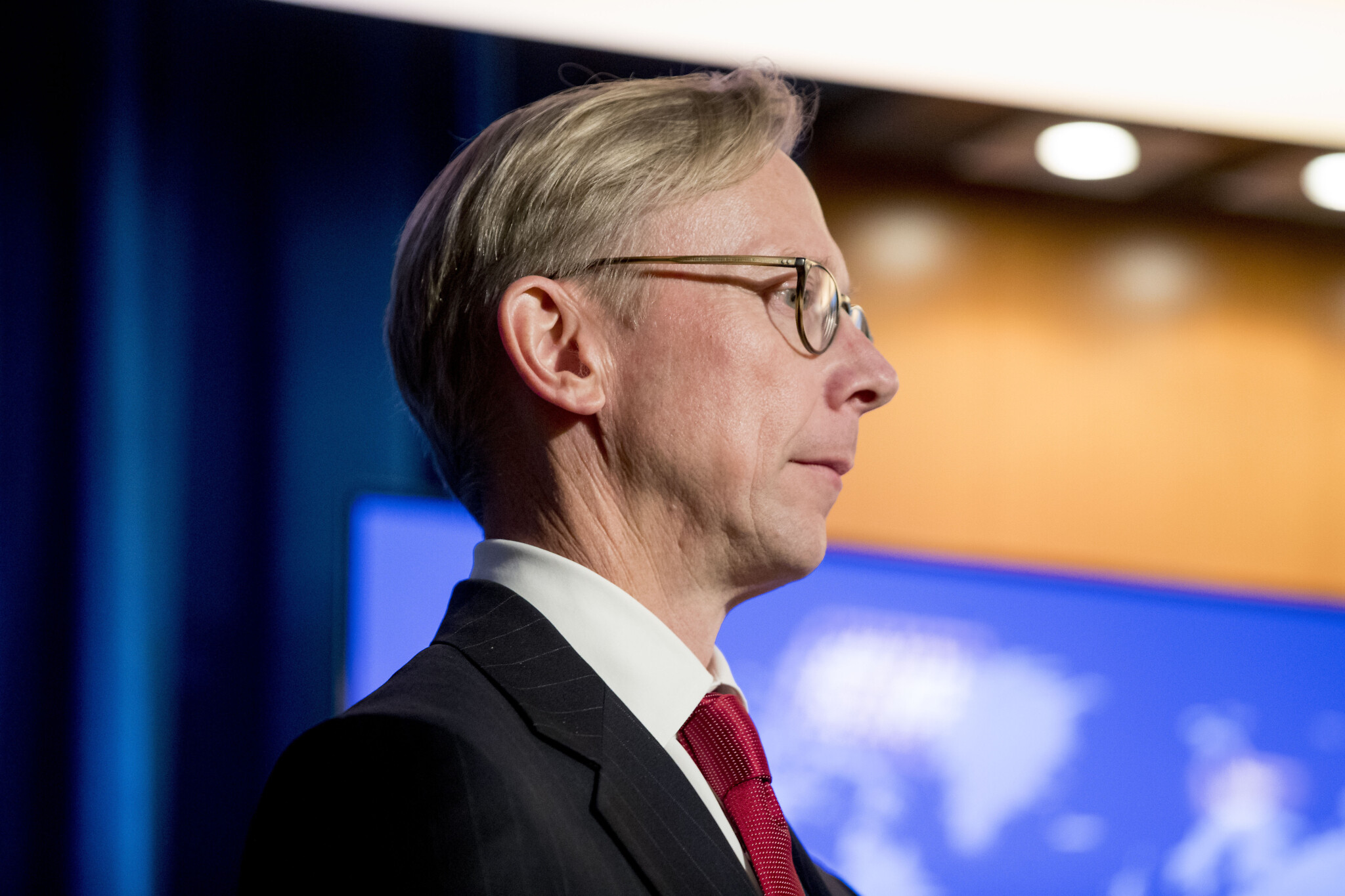
“The president has shown a lot of restraint,” Brian Hook, the State Department’s Special Representative for Iran, told reporters Monday.
“We very much hoped that Iran would not miscalculate and confuse our restraint for weakness. But after so many attacks, it was important for the president to direct our armed forces to respond in a way that the Iranian regime will understand.”
Trump mulled and then deferred retaliation against Iran several times this year over its attacks on foreign oil tankers, the downing of a US drone and the brash September drone-and-missile assault on oil plants in Saudi Arabia, which took out nearly half of Riyadh’s oil output.
Each time, the US leader fell back on more economic sanctions, despite them having had little visible impact on Tehran’s expansive regional military operations.
Since October, the Hezbollah Brigades, which the Pentagon said are supported by the Iranian Revolutionary Guard Corps, carried out some 11 rocket attacks on installations in Iraq where US and coalition forces are present.
But until this weekend the response has been minimal.
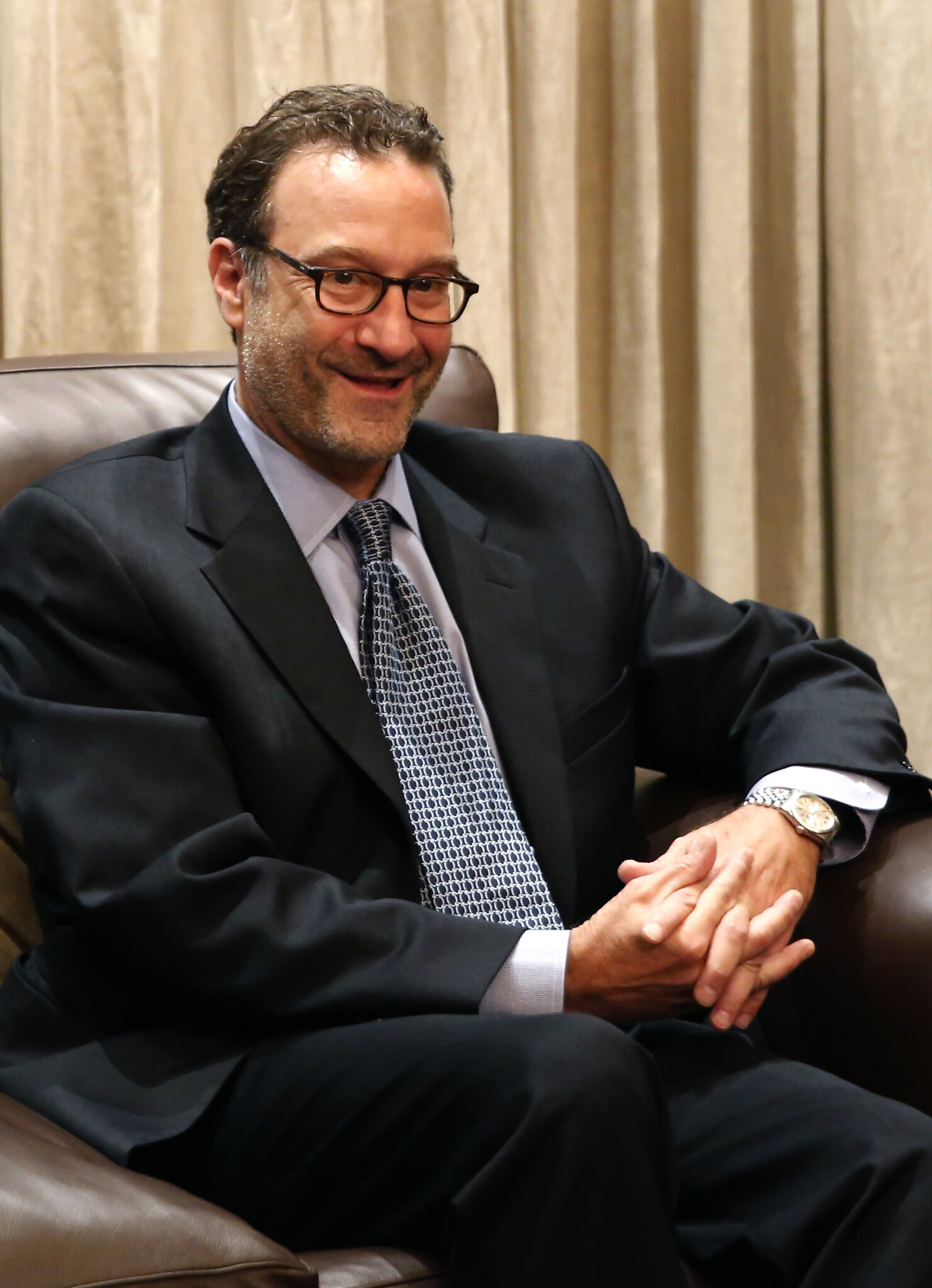
What changed was the death of an American, which “pushed the envelope,” State Department Assistant Secretary David Schenker said Monday.
“We thought it important to hit a significant target set to send a very clear message to them about how serious we take American lives,” he said.
“This was a defensive action designed to protect American forces and American citizens in Iraq, and it was aimed also at deterring Iran,” Secretary of State Mike Pompeo told Fox news.
“President Trump has been pretty darn patient, and he’s made clear, at the same time, that when Americans’ lives were at risk we would respond.”
With Sunday’s airstrikes, Schenker stressed that Washington aims to deter Iran, but does not seek to escalate the conflict between the two countries.
But experts warned that Tehran could receive a different message: that, as long as Americans aren’t directly injured, it could boost its covert activities.
Richard Haass, president of the Council on Foreign Relations, said that Iran’s growing political weight in Iraq and Trump’s aim to reduce the Pentagon’s footprint in the Middle East could well result in Baghdad pressuring the United States to pull out.
Martin Indyk, a former US ambassador to Israel, said Iran could sense an opportunity to further provoke Washington, knowing where Trump’s red line is.
“The consequences of strikes against Iranian proxies going into a US election year is that the Iranians now believe they own the higher rungs of the escalation ladder,” he said on Twitter.
“If US troops in Iraq come under attack Trump will have an invidious choice: another [Middle East] war or backing down.”
Source: Trump accuses Iran of ‘orchestrating’ Baghdad embassy breach and violence | The Times of Israel
US president tells Iraqis they should use force to secure complex, where angry protesters broke through the outer wall and burned property following US airstrike on local militia
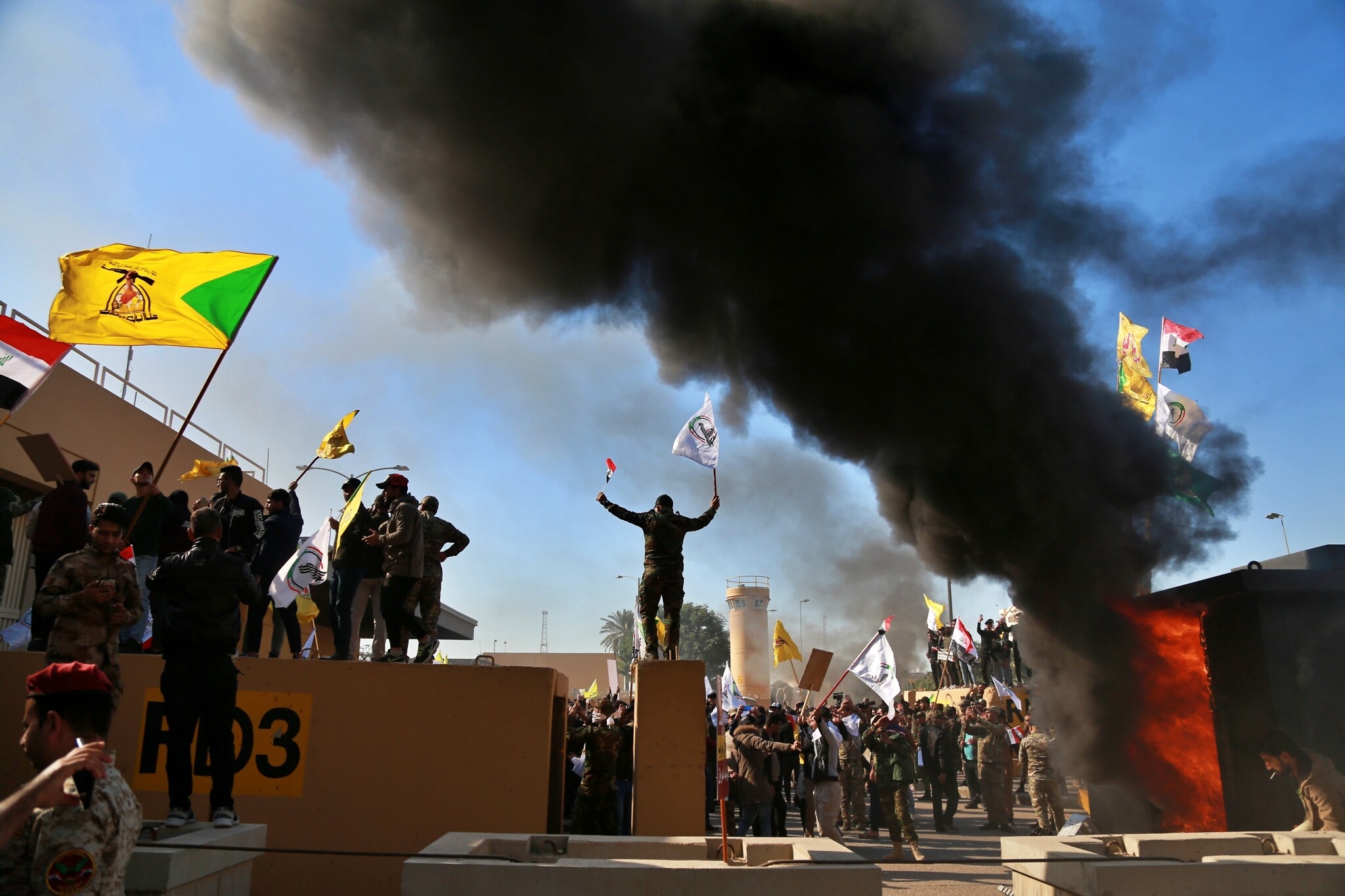
US President Donald Trump on Tuesday blamed Iran for an attack hours earlier by militia supporters who broke into the US Embassy compound in Baghdad and damaged property, along with previous Iraqi Shiite militia attacks on US interests.
“Iran killed an American contractor, wounding many. We strongly responded, and always will. Now Iran is orchestrating an attack on the US Embassy in Iraq. They will be held fully responsible,” he tweeted.
“In addition, we expect Iraq to use its forces to protect the Embassy, and so notified!” Trump added.
The US military said its airstrikes were in retaliation for last week’s killing of an American contractor in a rocket attack on an Iraqi military base that it blamed on the Kataeb Hezbollah militia.
Trump tweeted from his estate in Palm Beach, Florida, where he is in the midst of two-week-plus vacation. He’s been largely out of sight and the tweet marked his first comment on the weekend US airstrikes in Iraq and Syria that killed 25 member of the Iran-backed group.

Dozens of Iraqi Shiite militiamen and their supporters broke into the US Embassy compound in Baghdad on Tuesday, smashing a main door and setting fire to a reception area, angered over the deadly US airstrikes. Tear gas and sounds of gunfire ensued.
The US ambassador and his staff were evacuated, Reuters reported.
An Associated Press reporter at the scene saw flames rising from inside the compound and at least three US soldiers on the roof of the main embassy building. There was a fire at the reception area near the parking lot of the compound but it was unclear what had caused it. A man on a loudspeaker urged the mob not to enter the compound, saying: “The message was delivered.”
Iraqi security forces made no effort to stop the protesters as they marched to the heavily fortified Green Zone after a funeral held for those killed in the US airstrikes, letting them pass through a security checkpoint leading to the area.
The protesters, many in militia uniform, stopped in a corridor after about 5 meters (16 feet), and were only about 200 meters away from the main building.
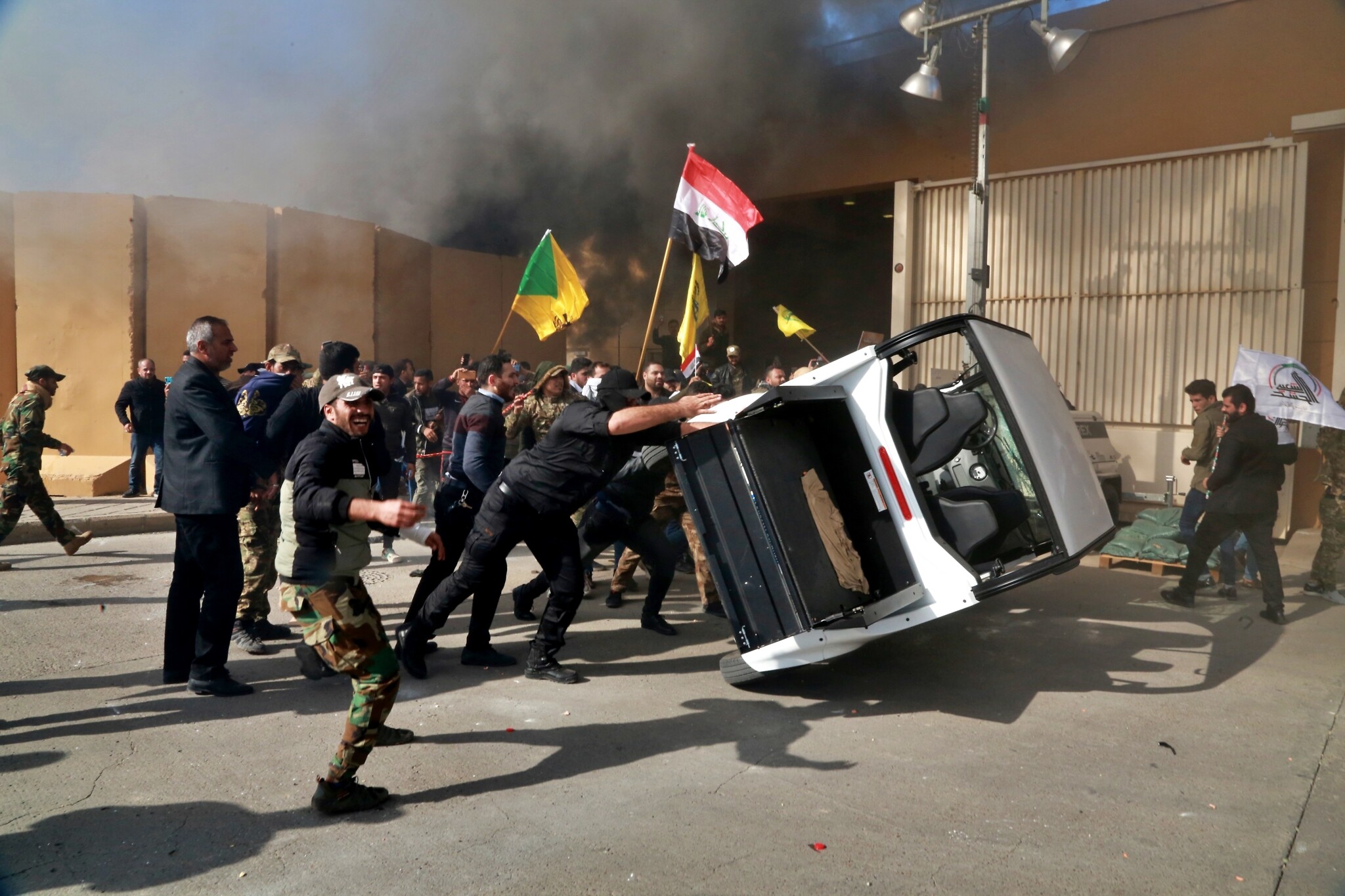
Smoke from the tear gas rose in the area, and at least three of the protesters appeared to have difficulty breathing. It wasn’t immediately known whether the embassy staff had remained inside the main building or were evacuated at some point.
There was no immediate comment from the Pentagon and the State Department on the breach of the US Embassy in Baghdad.
Yassine al-Yasseri, Iraq’s interior minister, appeared outside the embassy at one point and walked around to inspect the scene. He told the AP that the prime minister had warned that the US strikes on the Shiite militiamen would have serious consequences.
“This is one of the implications,” al-Yasseri said. “This is a problem and is embarrassing to the government.”
He said more security will be deployed to separate the protesters from the embassy, an indication the Iraqi troops would not move in to break up the crowd by force.
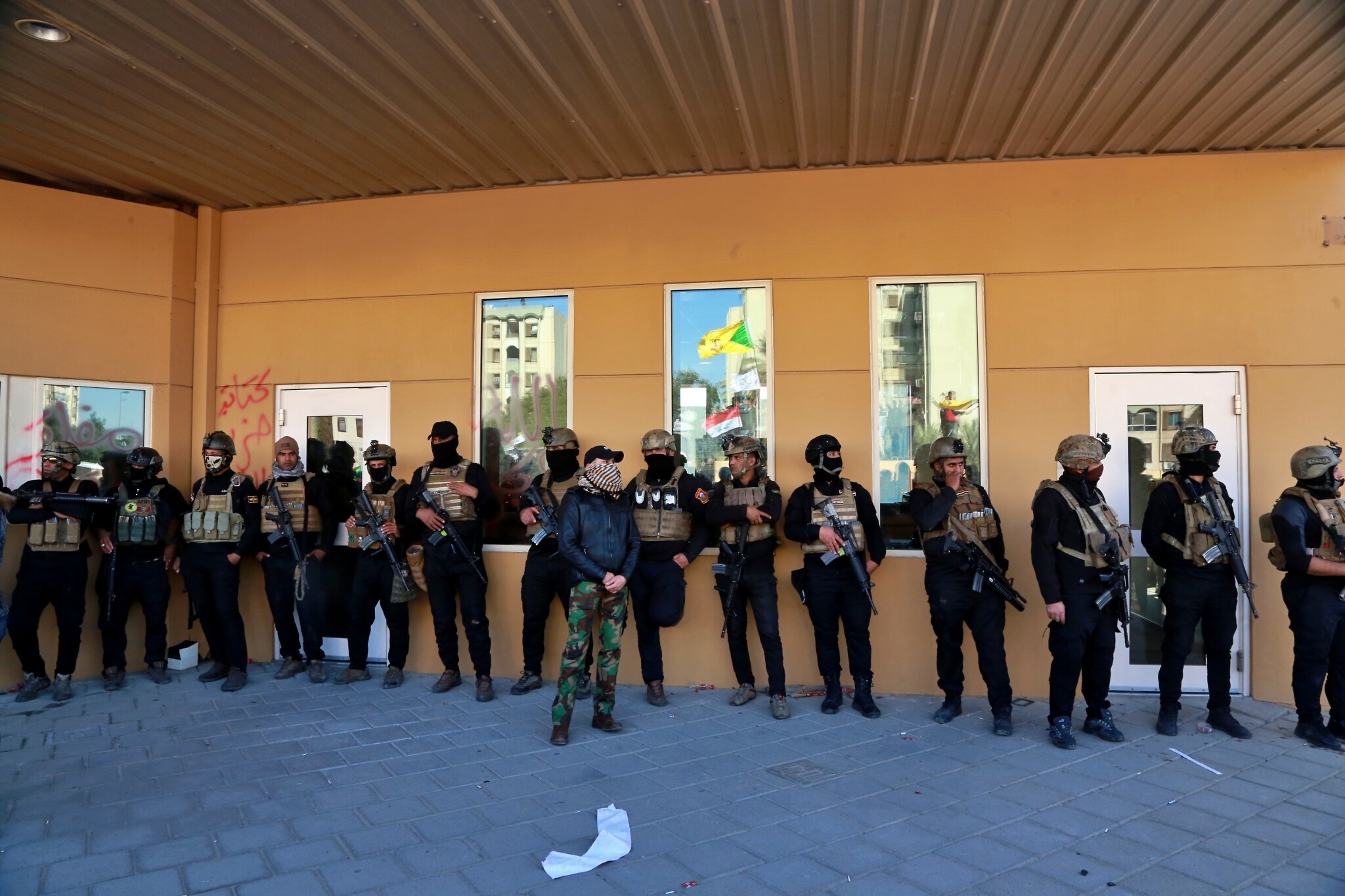
Seven armored vehicles with about 30 Iraqi soldiers arrived near the embassy hours after the violence erupted, deploying near the embassy walls but not close to the breached area. Four vehicles carrying riot police approached the embassy later but were forced back by protesters who blocked their path.
There were no reports of casualties, but the unprecedented breach was one of the worst attacks on the embassy in recent memory.
The developments represent a major downturn in Iraq-US relations that could further undermine US influence in the region and also weaken Washington’s hand in its maximum pressure campaign against Iran.
Iraq has long struggled to balance its ties with the US and Iran, both allies of the Iraqi government. But the government’s angry reaction to the US airstrikes and its apparent decision not to prevent the protesters from reaching the embassy signaled a sharp deterioration of its ties with the US.




 anneinpt
 artaxes
 danmillerinpanama
 davidking1530
 Peter Hofman
 Joseph Wouk
 Peter
Peter Louisiana Steve
 WarSclerotic