Source: Iran hopes naval drill with Russia, China will show US not a global power – The Jerusalem Post
“Iran befriends the powerful because it has strategic ambition.”
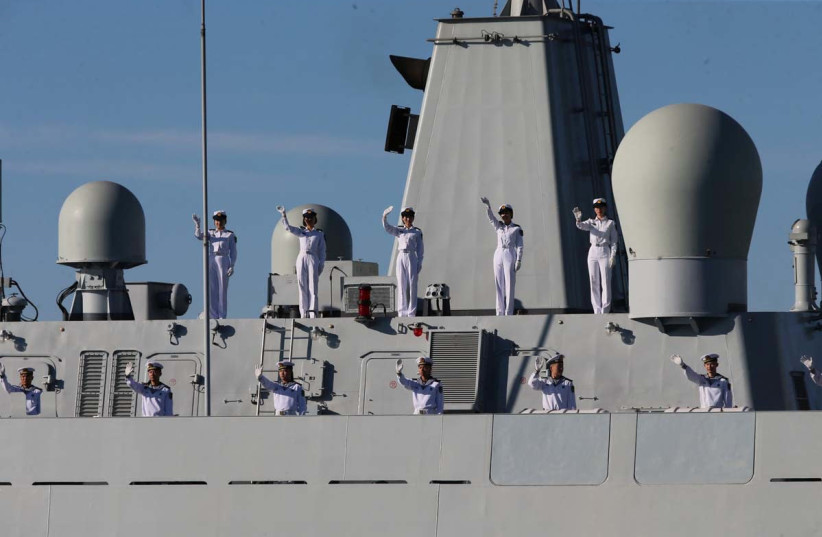
Iranian photographers were on hand to capture the moment that ships from the three countries readied to go to sea. It was a big moment for Tehran in which it showed that US sanctions and attempts to isolate Iran are not working.
Acting-US Navy Secretary Thomas Modly said on Friday, in a statement that appeared timed to coincide with the naval drill, that Iran could conduct provocative actions in that region.
Since May, tensions have risen in the Gulf between the US and Iran. According to US assessments, Iran has attacked six oil tankers, as well as Saudi Arabia and downed a US drone. Iran continues to harass ships and even took control of a UK-flagged vessel in July. Islamic Revolutionary Guard Corps fast boats continue to be a threat.
Iran says the drill is covering 17,000 sq. km. Several ships are involved – including Iran’s Sahand and Alborz destroyers, two Iranian logistic ships and the Neyzeh missile boat. Iran sent a hospital ship as well.
Iran’s R. Adm. Hossein Khanzadi said the drill is important for security.
On Saturday, the navies continued to work together for the second day. It is a four-day drill that will span the Indian Ocean and Gulf of Oman. Iran and India recently agreed to increase economic relations via Chabahar Port. The US has said it won’t block funding for this initiative.At the same time reports indicated the Chinese Xining guided-missile destroyer arrived at Chabahar for the joint exercise. Iran said Russia sent three ships from its Baltic Fleet, including the Yaroslav Mudry frigate, the Yevgeniy Khorov tanker and Yel’nya rescue boat.
Iran has refitted its destroyers and considers them among its most advanced ships. Xining is also a very modern ship and Russia’s Mudry was commissioned a decade ago.
Iranian media has played up this major success, while it has gone mostly unnoticed in Russia and China. Iran’s Press TV aired footage along with other channels.
Iranian Foreign Minister Javad Zarif highlighted the joint drills. Iran is pushing a maritime security initiative called HOPE (“Hormuz Peace”) and it wants to show off its responsible behavior.
“Our joint military drills in the Sea of Oman and Indian Ocean with our Russian and Chinese partners make clear our broader commitment to secure vital waterways,” he said. Zarif has made recent diplomatic initiatives to Oman, and Iran’s president has gone to Malaysia and Japan. Iran also hosted a major Indian delegation. This comes as Iran is under criticism for cracking down on protests.
The Iranian Embassy in China shared a tweet arguing this was a transitional era that shows not everything is done by the West. “We are living in a post-Western world.”
The message is that this joint work brings stability. Iran’s Tasnim News had a similar message, saying the joint work reduces US hegemony. “Iran befriends the powerful because it has strategic ambition.”
As usual, Iran is not secretive about what it wants. It wants friends in India, China and Russia and to displace the role of the US. It accomplishes this through official initiatives like this naval drill but also through other means, such as its clandestine activities to sabotage ships in the Gulf, to have proxies fire rockets at US personnel in Iraq, by showing it can down a US drone or that it can fire rockets at Israel, a key US ally.
Iran is pushing the diplomatic envelope in Turkey, Malaysia, Japan, Oman and elsewhere. It wants to show it can multitask while the US is merely pushing sanctions. At the same time Iran continues to reduce adherence to the Iran nuclear deal.
Iran’s navy is no match for the US, but its purpose behind these drills is not to show it can confront the US. It is to show that it can partner with other countries that also want to challenge US power in the long term.
US defense strategy today is to focus on confronting Russia and China. Sea power is key to this. Yet the US Navy has been unclear as to what kind of ships it will build, scrapping ideas for littoral combat ships and a stealth-like DD-21 program, which also appears to have been a multi-decade failure.
While the US searches for a policy and future combat vessels, the message from Tehran is that symbolically the US is no longer a global hegemon.
Source: Photos show rockets used against the US were also shipped to Hezbollah – The Jerusalem Post
Rockets used against US forces in Iraq were same type Israel found in 2009 being shipped to Hezbollah
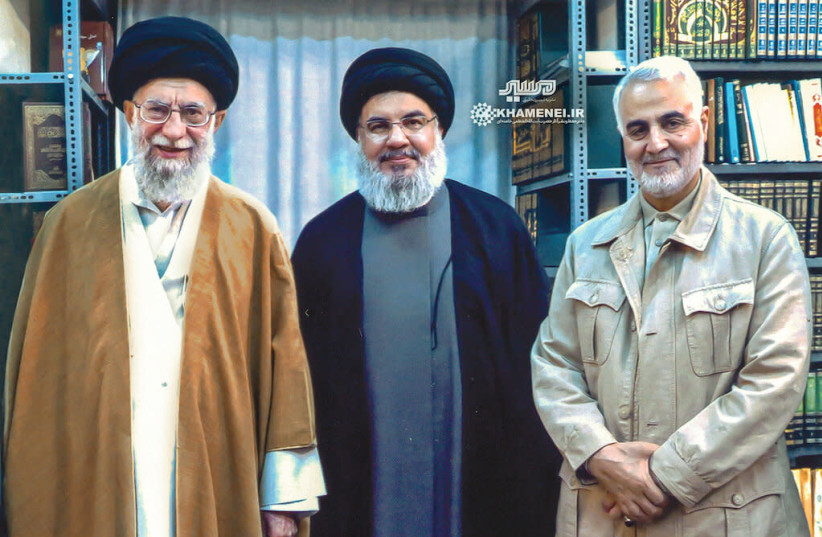
In 2009 Israel intercepted a shipment of rockets destined for Hezbollah. The crates of rockets were a similar 107mm type as were found near a base in Iraq where a US contractor was killed and several US forces injured on Friday.
Photos posted online on Saturday show that the rockets used in the attack on the K-1 base northwest of Kirkuk were 107mm rockets that weighed 18 kg. They were manufactured in 2016. A Bongo truck with an improvised rocket launched in the back was used to fire them. A total of three rows of 12 tubes was used. Four of the rockets were found intact. 32 others were fired at K-1 base, setting off munitions in a storage facility there on Friday night and killing one US contractor. This is the most serious incident since May when rockets have been fired at bases in Iraq where US forces are present. The US has blamed Iranian-backed proxies for the past attacks. In a November attack on Qayyarah a similar salvo of 107mm rockets was fired.
In 2009 Israel intercepted the MV Francop. According to the Ministry of Foreign Affairs website and the IDF Spokesperson at the time, the ship included munitions hidden in containers. Israel put photos online in 2009 from the ship that showed rockets. These were 107 mm rockets with the same style logo and lettering on them. The rockets say “107mm rocket” and “Lot, Date, N.W and R.No” printed on them. In 2009 the rockets had been made in 2007 and were lot number 6 and weighed 19.25 kg. They had an “R.NO” of 8872 that was hand printed. The K-1 rockets were also 107 mm, had lot number 570, made in 2016. They were 18kg and in hand written notes their “R No.” was 3965.
In 2009 Israel noted that it had intercepted 500 tons of arms en route to Syria on the MV Francop. This included 3,000 Katyusha rockets. The consignment was “en route via Syria to the Hizbullah terrorist organization,” the MFA wrote at the time.
More recent photos of these types of Iranian rockets have turned up. These include 2016 production numbers from lots 524 to 526. It appeared these were used by the Syrian regime in Eastern Ghouta in February 2017. More turned up in January 2018 in fighting in Syria near Damascus. This means that these types of rockets were frequently sent to Syria but that they also likely ended up in the hands of other pro-Iranian allies, including Hezbollah and likely in the hands of pro-Iranian members of the Popular Mobilization Units in Iraq. These include groups such as Kataib Hezbollah and Asaib Ahl al-Haq which US officials have accused in the past of threatening US forces. The US sanctioned the head of Asaib Ahl al-Haq in early December.
That means these PMU groups had the motive, means and opportunity to carry out the attack. What is missing is information on where precisely this lot number of 2016 rockets of the 107mm type were exported by Iran. Reports earlier this month indicated Iran was sending ballistic missiles to Syria. It is known that 107mm rockets have been sent to the PMU in the past according to the Center for Strategic and International Studies.
Source: How should the US react to the killing of the US contractor in Kirkuk? – The Jerusalem Post
“Iranian-backed militia killed an American in Iraq. They’d been conducting these harassing attacks for about two months with impunity. You can’t leave it to Baghdad to tell us who did this”

Mark Dubowitz, CEO of the Foundation for Defense of Democracies (FDD) think tank in Washington, told The Jerusalem Post that the regime in Iran has killed and injured Americans, “which is a flagrant violation of the redline President [Donald] Trump established.”
“To not respond will be to invite further attacks and destroy American deterrence, which already has been significantly undermined by Trump’s unwillingness to respond to previous Iranian attacks against American assets and those of our allies,” he added.
He emphasized, however, that no rule says Trump must respond directly to this attack in Iraq. “If the administration is confident that Iran-backed proxies are behind these attacks, the US can strike at regime assets anywhere,” said Dubowitz.
“Indeed, the US should strike the regime where it least expects it,” he continued. “Beyond the element of surprise, it’s also critical that the response goes beyond sanctions or cyber and deploy precise but overwhelming military force.”
Dubowitz also addressed the Israeli efforts to counter Iran. “Israel has shown the ability to strike hard at Iranian military assets without meaningful retaliation from Tehran,” he said. “US policy should be to reinforce Israeli military power and do nothing to restrict Israel’s freedom of action against Iran in Iraq, Syria, or elsewhere in the Middle East. US and Israeli military action, mutually reinforcing and coordinated where appropriate, can impose punitive costs on the Islamic Republic and increase deterrence against a regime that believes today it can challenge Washington with impunity.”
Mike Pregent, a senior fellow at Hudson Institute, shares a similar perspective. “Israel has been able to attack IRGC Quds Force in Iraq with impunity,” he told The Jerusalem Post. “We have not. For some reason, the United States doesn’t want to [hit] these militias. But we said we would if they killed an American. My concern is that [the administration would] say, ‘Well, it was a contractor.’ Who cares if it was a contractor? It was an American, and it was on an Iraqi-US base,” he said.“This was an attack against the Iraqi security forces and the Americans knowing the Iraqi security forces cannot go after the militias because of the level of broader infiltration in these decision-making ranks,” Pregent continued. “The US needs to look at its problem in Iraq, reevaluated its relationship and use every economic tool to put pressure on Baghdad, like getting rid of our loan guarantees for that $30 billion; stop immediately the US training equip program. until Baghdad purges these people from the security forces, which they won’t.”
Pregent told the Post that according to his knowledge, Kataeb Hezbollah is responsible for the attack. “This is an American red line,” he said. “Iranian-backed militia killed an American in Iraq. They’d been conducting these harassing attacks for about two months with impunity. You can’t leave it to Baghdad to tell us who did this because Baghdad is not going to tell us it was Kataeb Hezbollah. They’re going to say it’s ISIS or they’re going to say it was Ba’athists elements. That’s what they always do. So, we have to kind of take action on our own. And this will be the test whether or not the president is willing to address a red line that Iran just violated with this attack. And we need to reevaluate our relationship with Baghdad. We should sanction the MOI, the MOD we should designate and sanction Hadi al-Amiri. We should put pressure on Baghdad.
“These are tough things that I’m recommending,” Pregent added. “What’s likely to happen is that we’re likely to let Baghdad tell us it was ISIS when we know ISIS didn’t do it. That’s the easy way out. It sends a message to Iran that they can continue to kill Americans, and then we will blame it on ISIS, and that’s a very bad position for the United States to be in.”
Ned Price, a lecturer at Georgetown University’s School of Foreign Service and former spokesperson for the National Security Council under the Obama administration, told The Jerusalem Post that the first task for the administration will be determining responsibility – whether this was the work of a Shi’ite faction or a Sunni terrorist group. “But, more broadly, the Trump administration’s approach to Iraq has been of two minds: On the one hand, there’s been an understandable desire to reduce the footprint in an effort to prevent the type of tragedy that struck yesterday. On the other, the administration has taken a stridently aggressive anti-Tehran approach, both in Iraq and throughout the region,” he said.
“But the two are not always coherent, especially as the drawdown in diplomatic representation has allowed Iran to garner an even larger foothold in Iraqi politics. What this incident underscores is the need for a holistic evaluation of US objectives and strategies in Iraq. The piecemeal approach that we’ve seen in recent years is not sufficient, and places Americans in undoing the harm,” Price added.
Lieutenant Tav, the religious daughter of an immigrant from the Ivory Coast, says her looks ‘are not the story’ — what’s important is how well she does her job
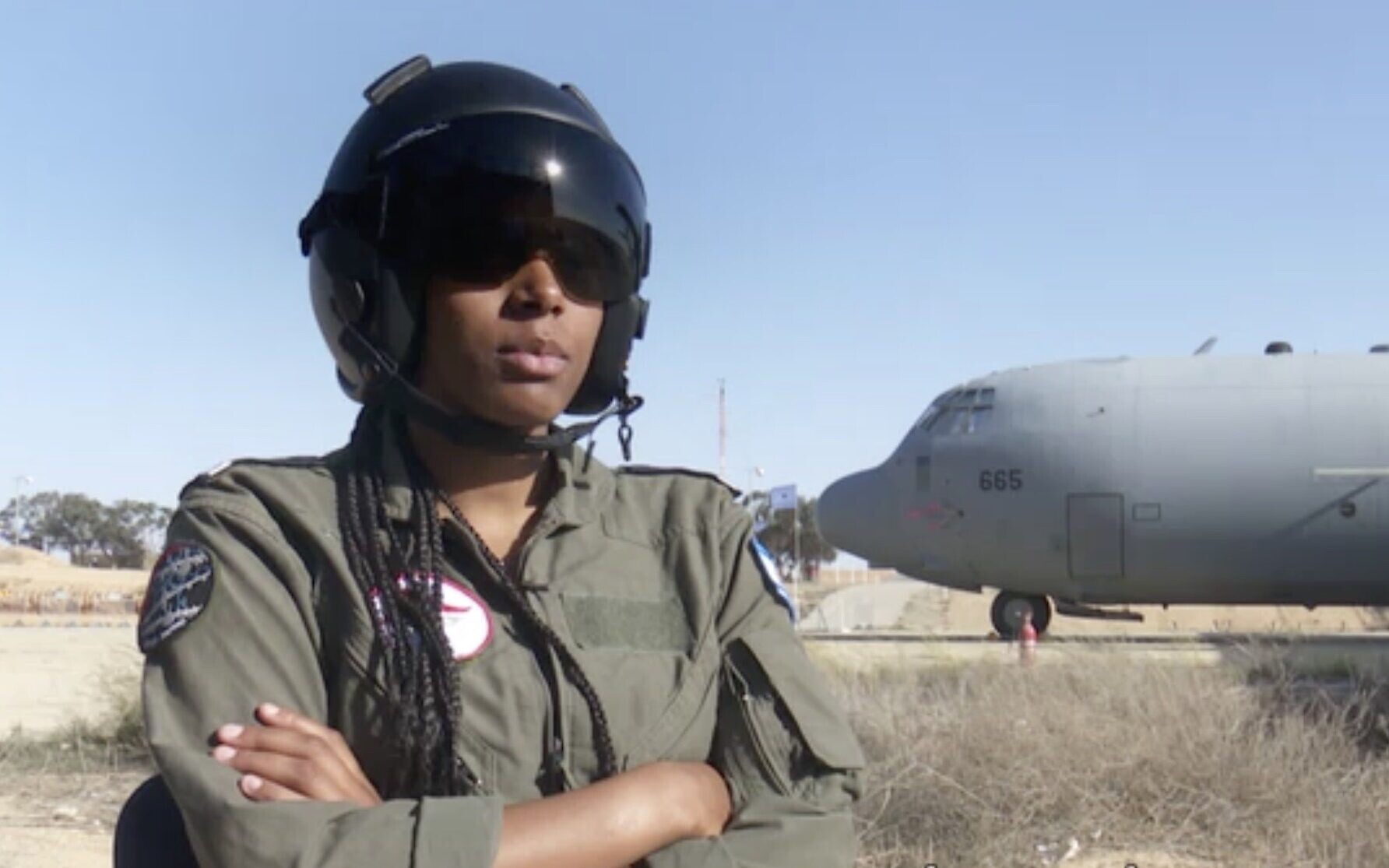
Female. Religious. Dark-skinned.
While any of these traits may seem remarkable for a pilot in the Israeli Air Force, for the only woman to graduate this year from the military’s flight academy, they are not what defines her.
“The first thing you’ll see is probably my [skin] color, or that I’m a girl or that I have braids,” Lieutenant Tav told Channel 12 news in an interview aired Friday. “After a conversation of two sentences you’ll see that isn’t what I bring to the table; there are other things.”
Tav, who was only identified by her rank and first initial of her name, grew up in Jerusalem with immigrant parents. Her father moved to Israel from the Ivory Coast, her mother from France.
While she heard comments from other kids about her skin color growing up, Tav said she never let them dictate how she views herself.
“What I would tell any kid who feels he is being diminished, is that it’s a matter of point of view and that it doesn’t take anything from your abilities… It’s something external,” she said.
Though many religious women opt for other forms of national service after high school rather than serve in the military, Tav said that she never questioned whether she’d enlist.
“I’m not the classic religious woman you think of. I’m one of the religious girls who for me that isn’t the [entire] story,” she said.
What was important was for her to be outside of her comfort zone.
“I like the challenge. It’s important to me that I be in a place that isn’t comfortable for me, that’s it not easy for me there, that I need to work in order to achieve,” she said.

Tav, who finished the course as a flight engineer on a cargo plane, conceded that it was tough at times to be the only woman among the 40 pilots who graduated, noting that at the end of a “terribly tough week” she would return to her room and be alone.
“On the other hand, it is a chance to say, ‘OK, it isn’t important.’ I’m a girl and he’s a boy but it’s not important; both of us are doing a role, both of us want to be the best at what we do and that’s what the emphasis is on,” she said.
Asked if she is bothered by questions about being the only female pilot to finish the course, Tav said the queries say more about Israeli society than about her.
“It says something about us as a society, that we’re dealing with how to be a young religious woman — or how to be a young woman at all, or to be different in a group… that is homogeneous on the outside,” she said.
“To me this isn’t the lesson we need to learn, it isn’t interesting,” Tav went on, stressing that what counts is how she stacks up professionally.
“Ultimately what is important to understand is that it matters what you bring with you from home, but not really the external characteristics.”

“What really matters is how I am in the cockpit, how I am in working with a team, how professional I am,” she said.
With her completion of the prestigious course, Tav became one of several dozen women to graduate as an IAF pilot since a 1993 High Court of Justice ruling ordering the military to allow female soldiers into the program.
The overwhelming majority of fighter pilots in the Israeli Air Force are still men, mostly because of the physical fitness requirements.
Source: New York police confirm Monsey stabbing suspect in custody | The Times of Israel
Israeli leaders condemn Hanukkah rampage in rabbi’s home that left 5 injured; Yisrael Beytenu leader Liberman encourages immigration to Israel as ‘solution’ to anti-Semitism
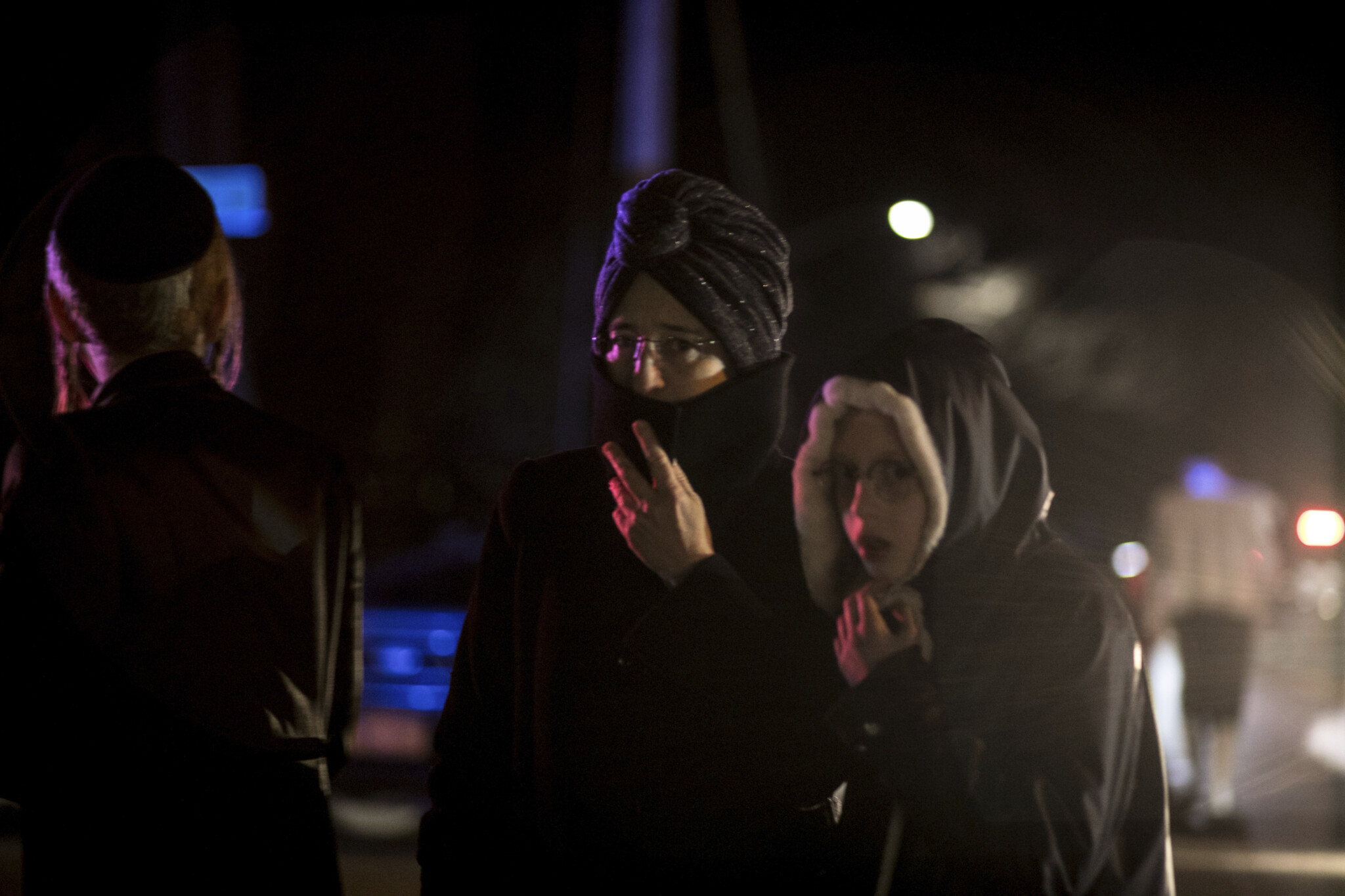
Several people have been injured in a stabbing at a synagogue in the New York suburb of Monsey, according to multiple reports from the scene.
The Times of Israel is liveblogging the latest updates.
Deputy Health Minister Yaakov Litzman, the leader of the ultra-Orthodox United Torah Judaism party, joins Israeli politicians in expressing dismay over the Monsey stabbing.
“It is shocking to see time and again innocent people being harmed and persecuted simply for being Jewish,” says Litzman. “This is a terrible situation and US leaders and authorities, as in the entire world, must put an end to it and uproot this affliction.”
Shaken residents of Monsey are taking to social media to express their fears about anti-Semitic attacks in their town.
 Yoely Lebovits
✔@Badchen
I am sure I’m not the only Jew in Monsey that us up at this hour 2AM.
Attacks against Jews is increasing. Yes we need to fight hate with Love and Prayer. But I think we should also have a conversation about training to fight and carrying guns. #SleeplessinMonsey
Eliyahu Fink@efinkI live in Monsey, NY. We are all terrified.
 Sam
Sam@samlipschitz
@realDonaldTrump I live in Monsey, it’s the second attack in the last month, I’m scared to let my kids play in the street #jewishlivesmatter
Stabbing at my family’s synagogue an hour ago in Monsey. It’s truly a miracle that no one in my family was there…
פורסם על ידי Aly Frank ב- יום שבת, 28 בדצמבר 2019
 Shayndi Raice
✔@Shayndi
Another attack on Jews in my hometown. This is starting to feel scary. https://twitter.com/avitalrachel/status/1211130770833788929 …
Avital Chizhik-Goldschmidt✔@avitalrachel
Three Jews stabbed in a synagogue in Monsey tonight. An intruder came into Rabbi Rottenberg’s shul with a machete.
There are no words to describe the anxiety of this moment.
Blue and White leader Benny Gantz describes the Monsey attack as “horrific” and expresses confidence New York law enforcement will “do everything to stop this alarming trend.”
 בני גנץ – Benny Gantz
✔@gantzbe
I send my wishes for a speedy recovery to the victims of the hate crime in Monsey, New York. We have become witness to a surge in anti-Semitic violence around the world, and this horrific attack, during a Hanukkah celebration, is further evidence of a global problem that we face.
בני גנץ – Benny Gantz✔@gantzbe
I have no doubt that the American authorities, who took the attacker into custody, will show zero tolerance and will do everything to stop this alarming trend.
The Ramapo Police Department, in a statement on Facebook, confirm a suspect in the Monsey stabbing has been apprehended.
“The suspect fled the scene, but he is in custody at this time. This investigation is still ongoing,” it says.
Condemning the Monsey attack on a Hasidic community, Foreign Minister Israel Katz says Israelis must refrain from derogatory comments against the ultra-Orthodox in Israel.
“This hate crime requires us to learn to avoid, in the Israeli discourse, derogatory comments about the Haredi community in Israel,” the foreign minister tells Kan radio.
He expresses “heavy shock” over the attack.
Yisrael Beytenu leader Avigdor Liberman also sends well-wishes to the victims of the Monsey stabbing.
In a Hebrew-language tweet, he writes: “Again and again, we are witnesses to the dire consequences of anti-Semitism, this time in Monsey, New York. Alongside the deep sadness and wishes for a speedy recovery to the injured, it’s important to know that the main solution to these trends is immigration to Israel.”
He is also joined by Blue and White’s Yair Lapid, who also sends wishes for a fast recovery to the New York stabbing victims.
“Anti-Semitism won’t defeat us, won’t destroy our spirit,” writes Lapid in Hebrew. “The community in Monsey today, too, will light the last candle of Hanukkah and pray for good news.”
President Reuven Rivlin condemns the Monsey stabbing, saying in a tweet he’s “shocked and devastated by the terrible terror attack in New York.”
“The resurgent anti-Semitism is not only a problem for the Jewish people, and certainly not for Israel alone. We must work together to confront this evil which is again and again raising its head and represents a real danger to the entire world,” he writes.
The Anti-Defamation League calls for greater security protection for American Jewish communities.
Jonathan Greenblatt
✔@JGreenblattADL
We are horrified by this latest attack in Monsey. ADL staff already on the scene, coordinating with law enforcement and supporting the victims of this crime. We will share updates as they become available.
✔@JGreenblattADL
After the hateful assaults we saw this past week in Brooklyn and Manhattan, it is heart-wrenching to see the holiday of Hanukkah violated yet again. We are outraged because the answer is clear: the Jewish community NEEDS greater protection.
New York Governor Andrew Cuomo says he’s directed the police’s hate crimes division “to immediately investigate and to use every tool available to hold the attacker accountable to the fullest extent of the law.”
He condemns the Monsey stabbing as a “despicable and cowardly act.”
New York City Mayor Bill De Balsio says he won’t let attacks on Jews become the “new normal.”
“We will NOT allow this to become the new normal. We’ll use every tool we have to stop these attacks once and for all. The NYPD has deployed a visible and growing presence around Jewish houses of worship on the streets in communities like Williamsburg, Crown Heights and Boro Park,” he tweets.
“I’ve spoken to longtime friends who, for the first time in their lives, are fearful to show outward signs of their Jewish faith,” he also writes.
 Mayor Bill de Blasio
✔@NYCMayor
Horrific.
So many Jewish families in our city have close ties to Monsey. We cannot overstate the fear people are feeling right now.
I’ve spoken to longtime friends who, for the first time in their lives, are fearful to show outward signs of their Jewish faith. https://twitter.com/cbsnewyork/status/1211131699939201031 …
CBS New York✔@CBSNewYork
BREAKING: At least 3 people have been stabbed by a man with a machete inside a synagogue in Monsey, New York. More here: https://cbsloc.al/2MEzpHV #CBSNewYork
Mayor Bill de Blasio✔@NYCMayor
Horrific.
So many Jewish families in our city have close ties to Monsey. We cannot overstate the fear people are feeling right now.
I’ve spoken to longtime friends who, for the first time in their lives, are fearful to show outward signs of their Jewish faith. https://twitter.com/cbsnewyork/status/1211131699939201031 …
CBS New York✔@CBSNewYork
BREAKING: At least 3 people have been stabbed by a man with a machete inside a synagogue in Monsey, New York. More here: https://cbsloc.al/2MEzpHV #CBSNewYork
Mayor Bill de Blasio✔@NYCMayor
We will NOT allow this to become the new normal. We’ll use every tool we have to stop these attacks once and for all. The NYPD has deployed a visible and growing presence around Jewish houses of worship on the streets in communities like Williamsburg, Crown Heights and Boro Park.
A local law enforcement official says a “possible suspect” has been located who may be linked to the Monsey attack.
The vehicle used in the rampage has been found.
Chris Eberhart@ChrisEberhart2
BREAKING: suspect wanted in connection with Monsey stabbing arrested by NYPD in 32 Precinct. @lohud
Yossi Gestetner, a co-founder of the Orthodox Jewish Public Affairs Council (OJPAC) for the Hudson Valley region, tells the New York Times one of the Monsey stabbing victims is a son of the rabbi.
“The house had many dozens of people in there,” Gestetner says. “It was a Hanukkah celebration.”
Two people were reportedly in critical condition, OJPAC adds.
— AFP
New York officials are condemning the stabbing at a Monsey synagogue and call for additional efforts to combat rising anti-Semitism.
NY AG James
✔@NewYorkStateAG
I am deeply disturbed by the situation unfolding in Monsey, New York tonight.
There is zero tolerance for acts of hate of any kind and we will continue to monitor this horrific situation.
I stand with the Jewish community tonight and every night.
Mark D. Levine✔@MarkLevineNYC
There have been NINE anti-Semitic attacks in NYC in the past week.And now this horror tonight just outside the city, in Monsey.
This is a full blown crisis. None of what we are doing is good enough.https://abc7ny.com/sources-5-stabbed-during-hanukkah-celebration-at-rabbis-home/5795550/ …
5 stabbed during Hanukkah celebration at rabbi’s home in Rockland County, sources say
Five people have been stabbed at a rabbi’s house in Rockland County, sources say.
abc7ny.com
Scott M. Stringer✔@NYCComptroller
Being Jewish should not mean living in fear. These reports are heartbreaking and horrifying.
I want to be very clear: we must redouble our efforts to keep our community safe in the face of rising anti-Semitism. https://twitter.com/cliffordlevy/status/1211138700157034496 …
Clifford Levy✔@cliffordlevy
Breaking:
Several wounded in stabbing at rabbi’s home in Monsey, NY, a suburb with a large concentration of ultra-Orthodox Jews.https://nyti.ms/2Mztjsk
Authorities say two of the stabbing victims in the Monsey attack are in critical condition, with another victim’s injuries described as “severe.”
Five people have been injured in the stabbing attack outside of a synagogue in Monsey, according to latest reports from the scene.
They are said to range from critical condition to some already having been discharged from the hospital.
Source: New York police confirm Monsey stabbing suspect in custody | The Times of Israel
Israeli leaders condemn Hanukkah rampage in rabbi’s home that left 5 injured; Yisrael Beytenu leader Liberman encourages immigration to Israel as ‘solution’ to anti-Semitism
Several people have been injured in a stabbing at a synagogue in the New York suburb of Monsey, according to multiple reports from the scene.
The Times of Israel is liveblogging the latest updates.
Deputy Health Minister Yaakov Litzman, the leader of the ultra-Orthodox United Torah Judaism party, joins Israeli politicians in expressing dismay over the Monsey stabbing.
“It is shocking to see time and again innocent people being harmed and persecuted simply for being Jewish,” says Litzman. “This is a terrible situation and US leaders and authorities, as in the entire world, must put an end to it and uproot this affliction.”
Shaken residents of Monsey are taking to social media to express their fears about anti-Semitic attacks in their town.
 Yoely Lebovits
✔@Badchen
I am sure I’m not the only Jew in Monsey that us up at this hour 2AM.
Attacks against Jews is increasing. Yes we need to fight hate with Love and Prayer. But I think we should also have a conversation about training to fight and carrying guns. #SleeplessinMonsey
Eliyahu Fink@efinkI live in Monsey, NY. We are all terrified.
 Sam
Sam@samlipschitz
@realDonaldTrump I live in Monsey, it’s the second attack in the last month, I’m scared to let my kids play in the street #jewishlivesmatter
Stabbing at my family’s synagogue an hour ago in Monsey. It’s truly a miracle that no one in my family was there…
פורסם על ידי Aly Frank ב- יום שבת, 28 בדצמבר 2019
 Shayndi Raice
✔@Shayndi
Another attack on Jews in my hometown. This is starting to feel scary. https://twitter.com/avitalrachel/status/1211130770833788929 …
Avital Chizhik-Goldschmidt✔@avitalrachel
Three Jews stabbed in a synagogue in Monsey tonight. An intruder came into Rabbi Rottenberg’s shul with a machete.
There are no words to describe the anxiety of this moment.
Blue and White leader Benny Gantz describes the Monsey attack as “horrific” and expresses confidence New York law enforcement will “do everything to stop this alarming trend.”
 בני גנץ – Benny Gantz
✔@gantzbe
I send my wishes for a speedy recovery to the victims of the hate crime in Monsey, New York. We have become witness to a surge in anti-Semitic violence around the world, and this horrific attack, during a Hanukkah celebration, is further evidence of a global problem that we face.
בני גנץ – Benny Gantz✔@gantzbe
I have no doubt that the American authorities, who took the attacker into custody, will show zero tolerance and will do everything to stop this alarming trend.
The Ramapo Police Department, in a statement on Facebook, confirm a suspect in the Monsey stabbing has been apprehended.
“The suspect fled the scene, but he is in custody at this time. This investigation is still ongoing,” it says.
Condemning the Monsey attack on a Hasidic community, Foreign Minister Israel Katz says Israelis must refrain from derogatory comments against the ultra-Orthodox in Israel.
“This hate crime requires us to learn to avoid, in the Israeli discourse, derogatory comments about the Haredi community in Israel,” the foreign minister tells Kan radio.
He expresses “heavy shock” over the attack.
Yisrael Beytenu leader Avigdor Liberman also sends well-wishes to the victims of the Monsey stabbing.
In a Hebrew-language tweet, he writes: “Again and again, we are witnesses to the dire consequences of anti-Semitism, this time in Monsey, New York. Alongside the deep sadness and wishes for a speedy recovery to the injured, it’s important to know that the main solution to these trends is immigration to Israel.”
He is also joined by Blue and White’s Yair Lapid, who also sends wishes for a fast recovery to the New York stabbing victims.
“Anti-Semitism won’t defeat us, won’t destroy our spirit,” writes Lapid in Hebrew. “The community in Monsey today, too, will light the last candle of Hanukkah and pray for good news.”
President Reuven Rivlin condemns the Monsey stabbing, saying in a tweet he’s “shocked and devastated by the terrible terror attack in New York.”
“The resurgent anti-Semitism is not only a problem for the Jewish people, and certainly not for Israel alone. We must work together to confront this evil which is again and again raising its head and represents a real danger to the entire world,” he writes.
The Anti-Defamation League calls for greater security protection for American Jewish communities.
Jonathan Greenblatt
✔@JGreenblattADL
We are horrified by this latest attack in Monsey. ADL staff already on the scene, coordinating with law enforcement and supporting the victims of this crime. We will share updates as they become available.
✔@JGreenblattADL
After the hateful assaults we saw this past week in Brooklyn and Manhattan, it is heart-wrenching to see the holiday of Hanukkah violated yet again. We are outraged because the answer is clear: the Jewish community NEEDS greater protection.
New York Governor Andrew Cuomo says he’s directed the police’s hate crimes division “to immediately investigate and to use every tool available to hold the attacker accountable to the fullest extent of the law.”
He condemns the Monsey stabbing as a “despicable and cowardly act.”
New York City Mayor Bill De Balsio says he won’t let attacks on Jews become the “new normal.”
“We will NOT allow this to become the new normal. We’ll use every tool we have to stop these attacks once and for all. The NYPD has deployed a visible and growing presence around Jewish houses of worship on the streets in communities like Williamsburg, Crown Heights and Boro Park,” he tweets.
“I’ve spoken to longtime friends who, for the first time in their lives, are fearful to show outward signs of their Jewish faith,” he also writes.
 Mayor Bill de Blasio
✔@NYCMayor
Horrific.
So many Jewish families in our city have close ties to Monsey. We cannot overstate the fear people are feeling right now.
I’ve spoken to longtime friends who, for the first time in their lives, are fearful to show outward signs of their Jewish faith. https://twitter.com/cbsnewyork/status/1211131699939201031 …
CBS New York✔@CBSNewYork
BREAKING: At least 3 people have been stabbed by a man with a machete inside a synagogue in Monsey, New York. More here: https://cbsloc.al/2MEzpHV #CBSNewYork
Mayor Bill de Blasio✔@NYCMayor
Horrific.
So many Jewish families in our city have close ties to Monsey. We cannot overstate the fear people are feeling right now.
I’ve spoken to longtime friends who, for the first time in their lives, are fearful to show outward signs of their Jewish faith. https://twitter.com/cbsnewyork/status/1211131699939201031 …
CBS New York✔@CBSNewYork
BREAKING: At least 3 people have been stabbed by a man with a machete inside a synagogue in Monsey, New York. More here: https://cbsloc.al/2MEzpHV #CBSNewYork
Mayor Bill de Blasio✔@NYCMayor
We will NOT allow this to become the new normal. We’ll use every tool we have to stop these attacks once and for all. The NYPD has deployed a visible and growing presence around Jewish houses of worship on the streets in communities like Williamsburg, Crown Heights and Boro Park.
A local law enforcement official says a “possible suspect” has been located who may be linked to the Monsey attack.
The vehicle used in the rampage has been found.
Chris Eberhart@ChrisEberhart2
BREAKING: suspect wanted in connection with Monsey stabbing arrested by NYPD in 32 Precinct. @lohud
Yossi Gestetner, a co-founder of the Orthodox Jewish Public Affairs Council (OJPAC) for the Hudson Valley region, tells the New York Times one of the Monsey stabbing victims is a son of the rabbi.
“The house had many dozens of people in there,” Gestetner says. “It was a Hanukkah celebration.”
Two people were reportedly in critical condition, OJPAC adds.
— AFP
New York officials are condemning the stabbing at a Monsey synagogue and call for additional efforts to combat rising anti-Semitism.
NY AG James
✔@NewYorkStateAG
I am deeply disturbed by the situation unfolding in Monsey, New York tonight.
There is zero tolerance for acts of hate of any kind and we will continue to monitor this horrific situation.
I stand with the Jewish community tonight and every night.
Mark D. Levine✔@MarkLevineNYC
There have been NINE anti-Semitic attacks in NYC in the past week.And now this horror tonight just outside the city, in Monsey.
This is a full blown crisis. None of what we are doing is good enough.https://abc7ny.com/sources-5-stabbed-during-hanukkah-celebration-at-rabbis-home/5795550/ …
5 stabbed during Hanukkah celebration at rabbi’s home in Rockland County, sources say
Five people have been stabbed at a rabbi’s house in Rockland County, sources say.
abc7ny.com
Scott M. Stringer✔@NYCComptroller
Being Jewish should not mean living in fear. These reports are heartbreaking and horrifying.
I want to be very clear: we must redouble our efforts to keep our community safe in the face of rising anti-Semitism. https://twitter.com/cliffordlevy/status/1211138700157034496 …
Clifford Levy✔@cliffordlevy
Breaking:
Several wounded in stabbing at rabbi’s home in Monsey, NY, a suburb with a large concentration of ultra-Orthodox Jews.https://nyti.ms/2Mztjsk
Authorities say two of the stabbing victims in the Monsey attack are in critical condition, with another victim’s injuries described as “severe.”
Five people have been injured in the stabbing attack outside of a synagogue in Monsey, according to latest reports from the scene.
They are said to range from critical condition to some already having been discharged from the hospital.
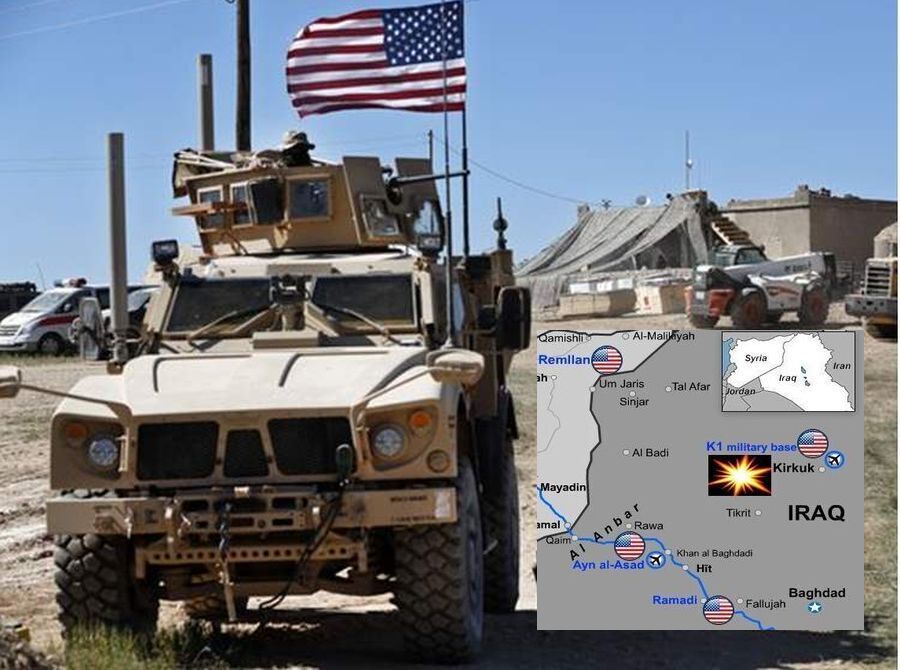
At least 30 rockets launched against the US K-1 base near the oil city of Kirkuk in northern Iraq on Friday, Dec. 27, killed an American civilian contractor and injured 4 US soldiers. Some 11 to 14 exploded inside the base; the rest outside. They were fired from rocket-launching trucks parked outside the facility. The crews then abandoned the launchpads and took off in waiting getaway vehicles.
DEBKAfile’s military sources report that analysis of the shrapnel quickly identified the Iranian-made rockets that are supplied to their Iraqi proxy, the Popular Mobilization Units (PMU), whose commander Abu Mahdi al-Muhandis, is a deputy of Al Qods-chief Gen. Qassem Soleimani.
According to our sources, the PMU rocket attack was Iran’s punishment for the month-long US aerial offensive for breaking up the Iraqi Shiite militia concentrations around Abu Kamal and Deir ez-Zour near the Syrian border with Iraq, According to a division of labor, the US Air Force has targeted the Der ez-Zour contingents and Israel, the units present around Abu Kamal and up to Palmyra.
Urgent consultations began in Washington on Saturday for a decision on how and when the US should retaliate for the attack on the K-1 base. The US maintains some 5,000 troops in Iraq.
On Dec. 13, Secretary of State Mike Pompeo issued a strong warning that any attack by Iran or its proxies that “harm Americans, our allies or our interests will be answered with a decisive US response.” He was reacting to more than 10 rocket and mortar attacks against US military facilities in Iraq and the US embassy compound in Baghdad. Three days later, Defense Secretary Mark Esper repeated this warning in a conversation with Iraqi prime minister Adel Abdul-Mahdi. Not much can be expected from Baghdad since both the prime minister and this week the president have handed in their resignations over the turmoil generated by two months of protests that have paralyzed government.
DEBKAfile’s military sources note that while Iran retaliates habitually for US air strikes on its military facilities and those of its proxies in Syria, Tehran has so far mostly avoided responding in kind to Israel’s air campaign.




 anneinpt
 artaxes
 danmillerinpanama
 davidking1530
 Peter Hofman
 Joseph Wouk
 Peter
Peter Louisiana Steve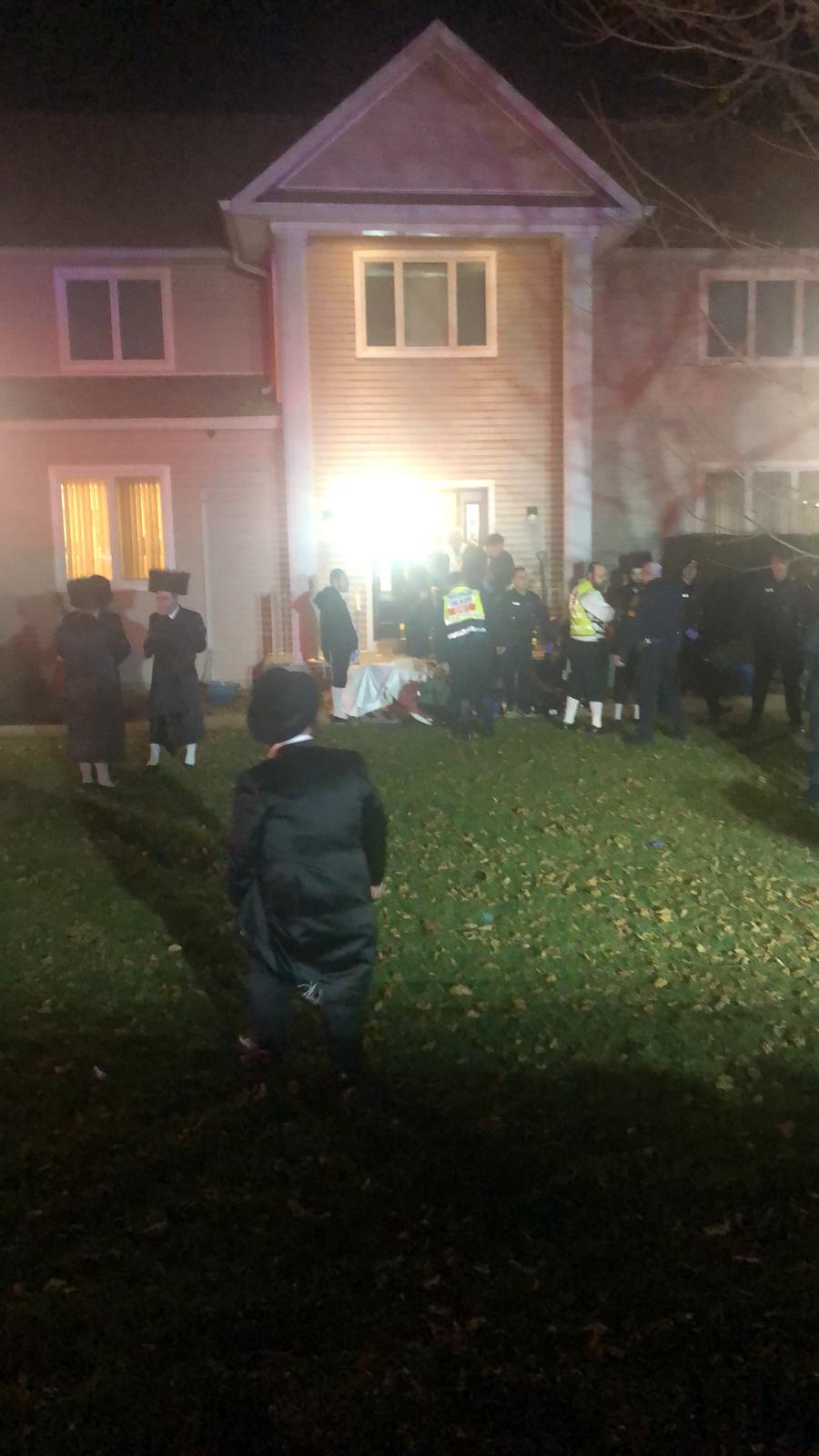


 WarSclerotic
Recent Comments