Archive for November 2019

In ceasefire breach, rockets fired at Beersheba; IDF hits Hamas targets in Gaza

November 16, 2019

Source: In ceasefire breach, rockets fired at Beersheba; IDF hits Hamas targets in Gaza | The Times of Israel

2 rockets fired at Israel; in return to IDF policy, Hamas, which sat out last round of fighting as Israel traded blows with Islamic Jihad, blamed for all terror coming from Strip
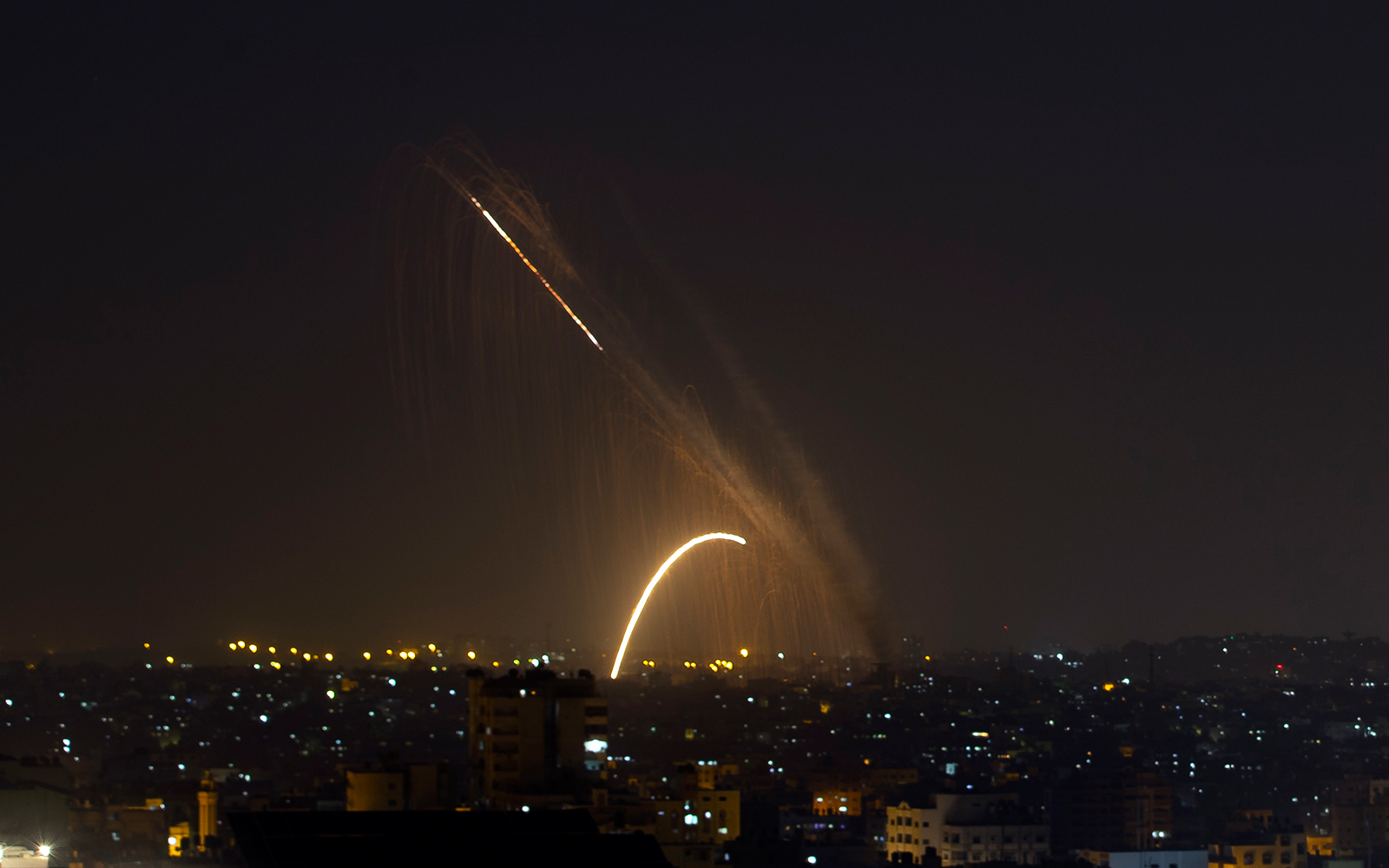
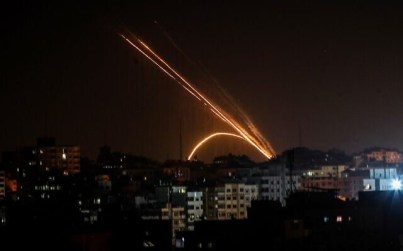
Rockets are launched from the Gaza Strip towards Israel, November 13, 2019. (AP Photo/Khalil Hamra)

Rockets are launched from the Gaza Strip towards Israel, November 13, 2019. (AP Photo/Khalil Hamra)

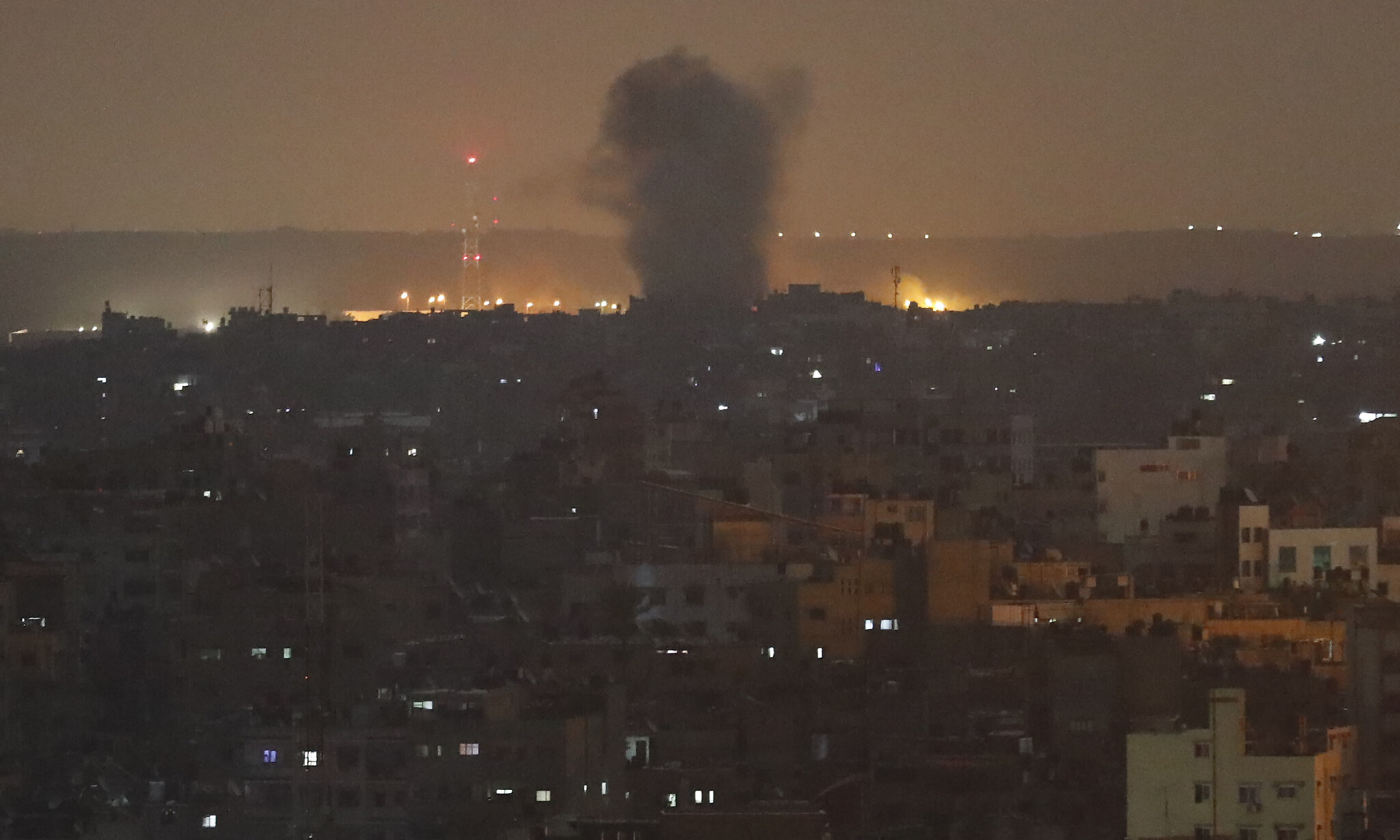
Two rockets were fired into Israel from the Gaza Strip in the early hours of Saturday morning in a fresh breach of the ceasefire, leading to the Israel Defense Forces carrying out strikes on Hamas terror targets in the enclave, the army said in a statement.

Significantly, the army said it was targeting Hamas in the latest strikes. During the this week’s fighting, Israel traded blows with the Islamic Jihad terrorist organization, while the Gaza-ruling Hamas terror group sat on the sidelines.

In a statement, the IDF said Hamas targets hit in the early morning strikes included a military camp and a compound serving the terror group’s naval forces. In addition, underground infrastructure was also hit. No casualties were reported in the strikes.

“The Hamas terror organization is responsible for everything in the Gaza Strip and will bear the consequences of terror acts carried out against Israeli citizens,” the IDF said.
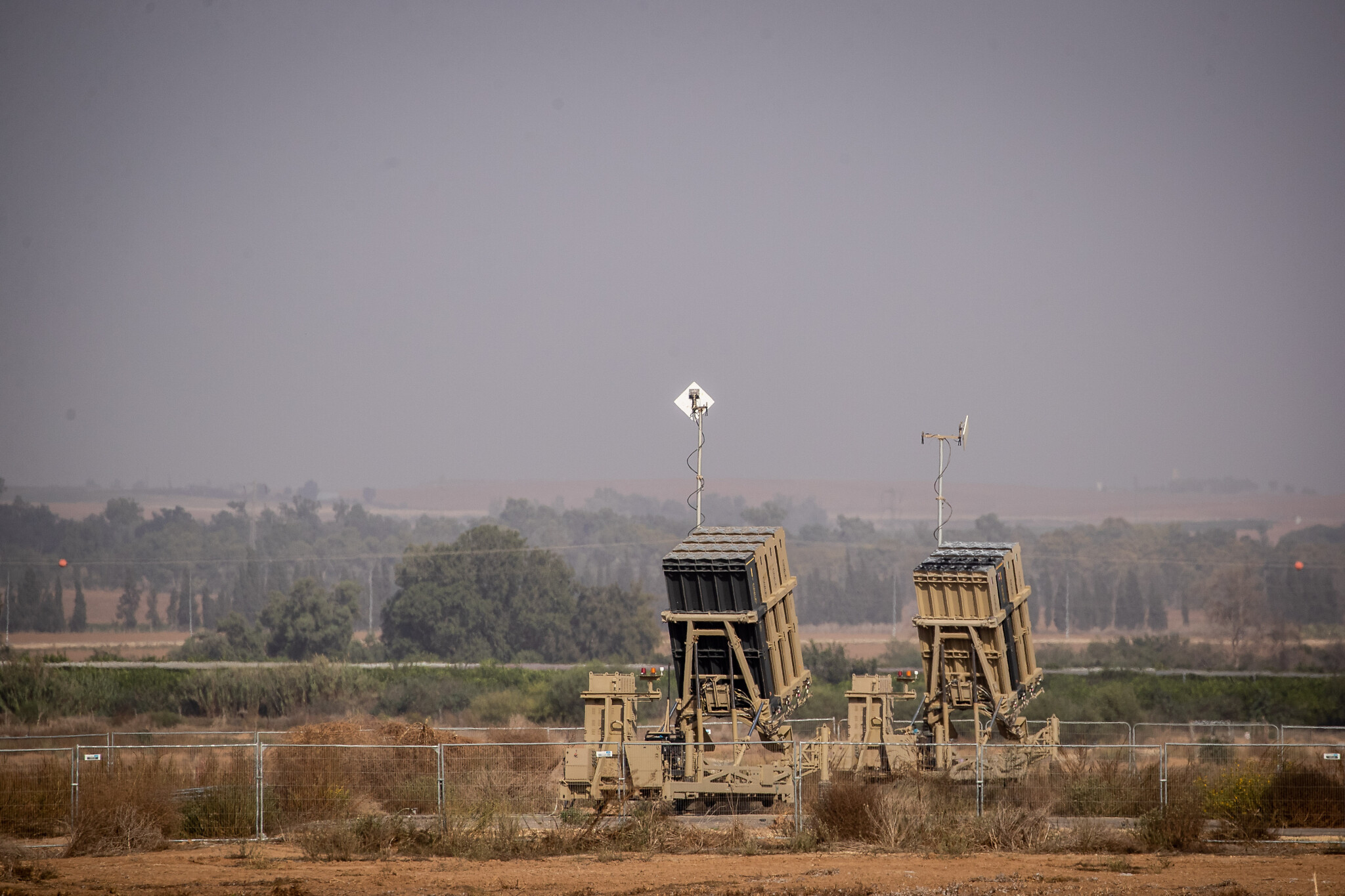
An Iron Dome battery in southern Israel near the border with the Gaza Strip on November 13, 2019 (Yonatan Sindel/Flash90)

Earlier, two rockets were fired toward Beersheba in the predawn hours of Saturday morning in a fresh breach of a ceasefire agreement between Israel and Gaza terror groups.

Both projectiles were shot down by soldiers operating the Iron Dome missile defense system, the IDF said.

The rockets set off warning sirens in Beersheba for the first time this week.

The Magen David Adom emergency and rescue service said it was treating five people for anxiety and four who were injured while running to bomb shelters following the attack.

On Friday Hamas acknowledged that one of its operatives had been killed during fighting this week.

The Izz Ad-Din Al-Qassam Brigades, Hamas’s military wing, said Ahmed Abdel al-A’al was one its members. A statement from the group did not clarify whether he was taking part in fighting when he died.

According to the military wing, al-A’al, 23, and two of his teenage brothers were killed in a “Zionist bombardment” on Wednesday.

The outbreak of violence in the early hours of Saturday morning came as Israelis had started recovering from two days of intense fighting between Israel and Gaza terror groups.

From the predawn Tuesday to Thursday morning, Israel and Islamic Jihad fought a battle in which over 450 rockets and mortar shells were fired at Israel from Gaza, and the IDF responded with dozens of airstrikes on Islamic Jihad facilities and on the terror cells as they were firing and preparing to launch rockets.

The escalation began when an IDF targeted missile strike killed Baha Abu al-Ata, a commander in the Islamic Jihad terror group who Israel said was the “prime instigator” of terrorism from Gaza over the past year.

Palestinian sources said 34 Gazans were killed in the two days of conflict. Israel said 25 of the fatalities were terrorists; human rights officials said 16 civilians were among the dead.

Fifty-eight Israelis were lightly and moderately injured or treated for anxiety.

חדשות 13

@newsisrael13

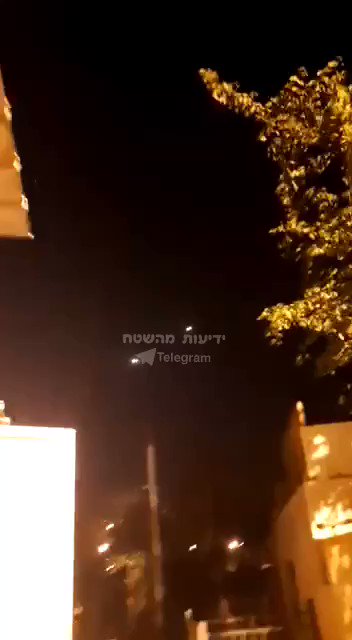
לאחר כיממה של שקט: רקטות נורו לעבר באר שבע – ויורטו • @bokeralmog ו-@OrHeller עם כל הפרטים >> https://bit.ly/2XnjjH0 

(צילום: ניר פרץ)
Embedded video

Most of the rockets from Gaza either landed in open fields or were intercepted by Israeli air defenses. Some struck homes, businesses and streets, causing injuries and significant property damage. Dozens of people were also hurt as they fell running to bomb shelters.

In response to the attacks, the Israeli military conducted dozens of strikes on Islamic Jihad bases and weapons facilities, as well as rocket-launching teams throughout the Strip. The Hamas terror group, which rules the Strip, refrained from partaking in the violence.

Israel and Islamic Jihad agreed to a ceasefire on Thursday morning, although there were four rocket attacks throughout the day Thursday and the IDF attacked Islamic Jihad targets in Gaza overnight in response.
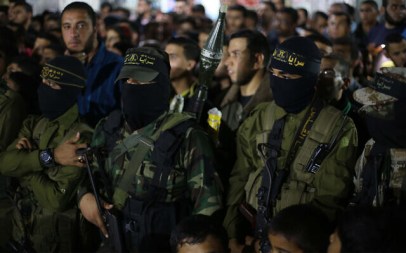
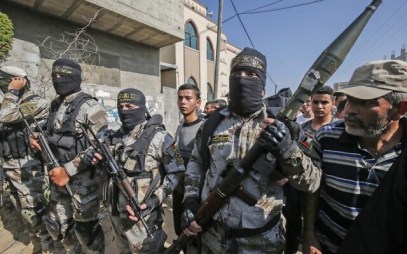
Islamic Jihad terrorists attend a memorial service for one of their number who was killed in clashes with Israel, November 15, 2019. (Hassan Jedi/Flash90)

On Friday schools remained closed in the Gaza periphery, but at noon local councils announced a return to normal life.

Maj. Gen. Herzi Halevi, the head of the Israeli military’s Southern Command, warned Gaza-area residents Thursday that the rocket fire might continue even with the ceasefire agreement in place.

The general said the IDF would be working to thwart these attacks. “If we identity launch efforts, we will strike the cells,” Halevi said.

Other Israeli leaders have warned they would not hesitate to return to battle.

Islamic Jihad’s military wing also threatened Israel that it was ready to continue fighting.
 

As fighting fades, Islamic Jihad’s losses seen as less than catastrophic

November 15, 2019

Source: As fighting fades, Islamic Jihad’s losses seen as less than catastrophic | The Times of Israel

Former IDF official says terror group suffered a significant, but not fatal, setback, while Gazan analyst contends Israel caused only limited damage

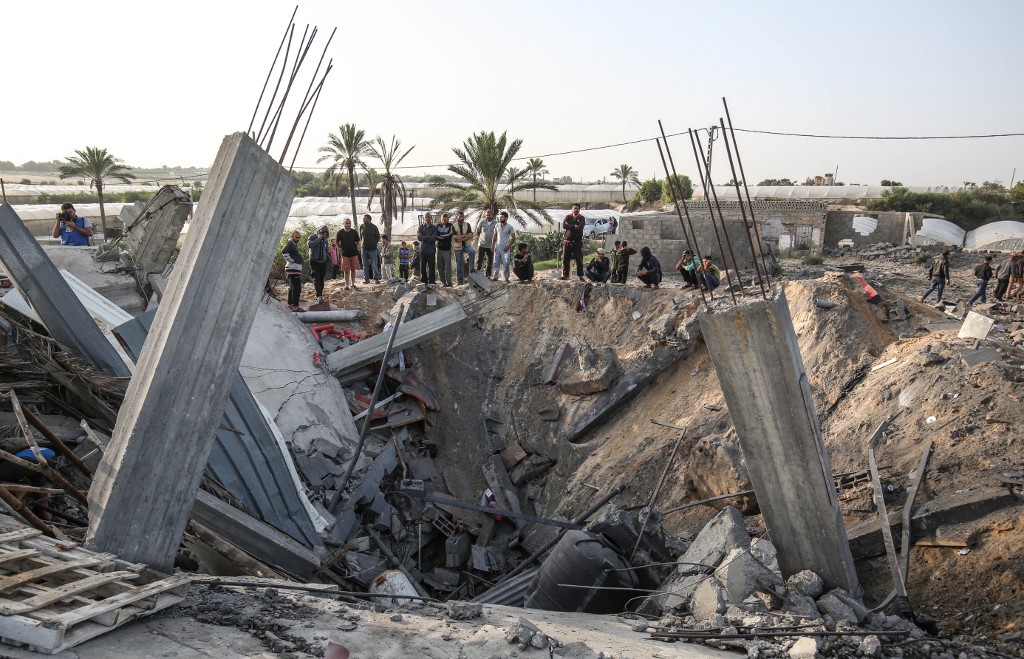
Palestinians gather around the remains of a house that the IDF says was used as a weapons cache controlled by the Palestinian Islamic Jihad, which was destroyed in an Israeli airstrike in Khan Yunis in the southern Gaza Strip November 13, 2019. (SAID KHATIB / AFP)

Palestinians gather around the remains of a house that the IDF says was used as a weapons cache controlled by the Palestinian Islamic Jihad, which was destroyed in an Israeli airstrike in Khan Yunis in the southern Gaza Strip November 13, 2019. (SAID KHATIB / AFP)

After two days of intense fighting in Gaza, Israel’s military is contending that its forces dealt a “severe blow” to the Palestinian Islamic Jihad terror group. But some Israeli and Palestinian analysts have expressed disagreement over the extent of the damage the military actually caused the Iran-backed organization via its air campaign.

While some Israeli analysts have argued the Israel Defense Forces brought about a significant setback for Islamic Jihad, some of their Palestinian counterparts have asserted that the military only did limited harm to the group.

Israeli security forces eliminated Baha Abu al-Ata, a top commander in the Al-Quds Brigades, the Islamic Jihad terror group’s military wing, in a dawn strike on Tuesday in Gaza. Terror groups in the Strip, namely the Al-Quds Brigades, subsequently fired large salvos of rockets at cities and towns in Israel for nearly two days, prompting retaliatory Israeli strikes in the Palestinian enclave.

Early Thursday Israel and Islamic Jihad agreed to a ceasefire. In the subsequent hours, the IDF and the terror group halted their fire, but at least six rockets were fired later in the day.

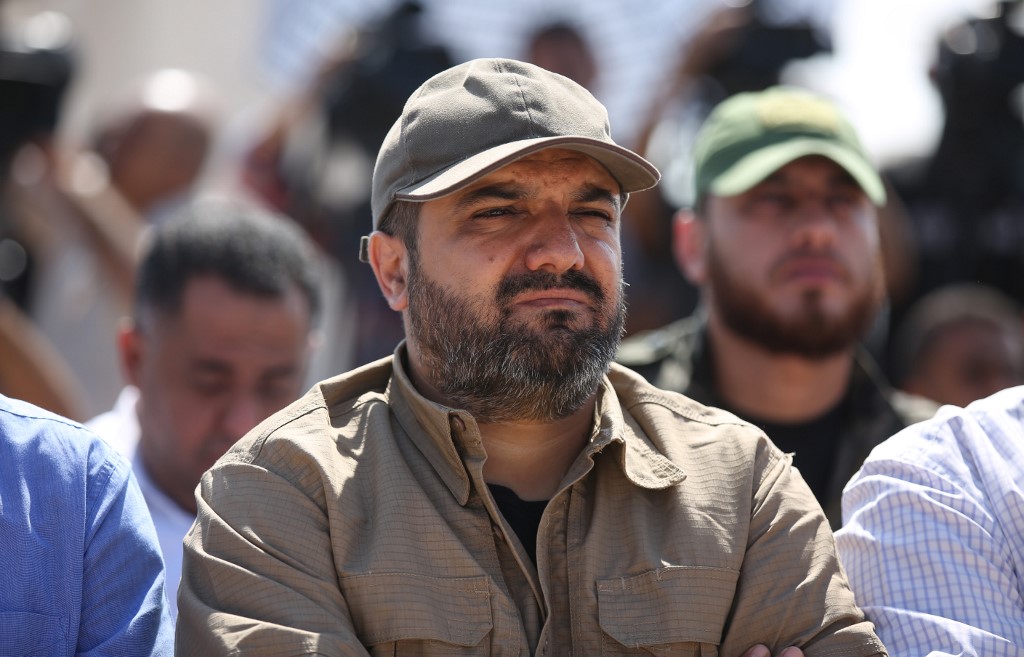
In this photo taken on October 21, 2016, Palestinian Islamic Jihad terror leader Baha Abu al-Ata attends a rally in Gaza City. (STR/AFP)

“Islamic Jihad took a very hard hit. It lost its main commander in Gaza and 12 to 15 key activists who would launch rockets. It did not achieve what it wanted or what it could describe as a victory,” Amos Yadlin, a former IDF Military Intelligence chief, said in a phone call, referring to Abu al-Ata, whom Prime Minister Benjamin Netanyahu described as “the main instigator of terrorism from the Gaza Strip.”

Rockets are fired from the Gaza Strip toward Israel on November 13, 2019. (Anas Baba/AFP)

The IDF killed at least 13 members of the Al-Quds Brigades in strikes on the Gaza Strip this week, according to Palestinian sources.

The army also said that it hit dozens of Islamic Jihad targets between Tuesday and early Thursday morning including weapons manufacturing and storage facilities, military bases, the homes of its operatives used to store weapons, training bases, command centers, rocket launchers, naval commando boats, tunnel openings, rocket launching bases and observation posts.

Amos Yadlin, former director of military intelligence, Jan 2012. (photo credit: Gideon Markowicz/FLASH90)

Amos Yadlin, former director of military intelligence and current head of the Institute of National Security Studies (Gideon Markowicz/Flash90)

But Yadlin stated that the Iran-backed group was not on the verge of falling apart.

“Is Islamic Jihad collapsing? No. They still have enough terrorists and they have many rockets,” he said.

Talal Okal, a prominent political analyst in Gaza, argued that Israel had only caused limited damage to Islamic Jihad, considered the second most powerful terror group in Gaza after Hamas, which has controlled the small territory since ousting the Fatah-dominated Palestinian Authority in 2007.

“The Israeli army focused on hitting members of Islamic Jihad because it could not find major targets such as buildings that belong to it,” he said in a phone call. “It only caused them a small amount of losses.”

Palestinian Islamic Jihad terrorists attend the funeral of one of their members in Khan Younis in the southern Gaza Strip, November 14, 2019. (Photo by SAID KHATIB / AFP)

In past flare-ups, Israel has demolished large buildings in Gaza, which it has accused the Hamas terror group of using.

Okal added that Islamic Jihad also demonstrated that it was able to shut down major parts of Israel.

“Islamic Jihad showed that it can paralyze half of Israel and force Israelis to sit near shelters all day,” he said. “It sees that as a major achievement.”

Israel closed schools in Tel Aviv on Tuesday and shuttered educational institutions and businesses throughout much of southern part of the country for the duration of the hostilities.

A child lies inside a bomb shelter in the coastal city of Ashkelon, Israel, amid a two-day bout of rocket fire from the Gaza Strip, November 13, 2019. (Tsafrir Abayov/AP)

But even if Islamic Jihad proved it could battle Israel, it now needs to deal with the fallout of having been left without Hamas’s support during its confrontation with Israel, Yadlin argued.

Unlike previous escalations of tensions between Israel and terror groups in Gaza, Hamas’s military wing, the Izz ad-Din al-Qassam Brigades, was widely believed to have not actively participating in the fighting.

Hamas’s decision to stay out of the fighting was seen as a major factor keeping a lid on the violence, allowing the sides to reach a ceasefire fairly quickly.

Mkhaimar Abu Sada, a political scientist at Al-Azhar University in Gaza City. (Screenshot: Palestine TV)

Mkhaimar Abu Sada, a political scientist at Al-Azhar University in Gaza City, said that Hamas made the decision to stay out of the fighting largely to spare the coastal enclave of major losses.

“Hamas had to weigh two choices. The first was to join the fight, which would have resulted in a bitter conflict with civilians and large buildings being targeted. The second was to stay on the sidelines and prevent major Israeli retaliation,” he said. “It chose the first option because it did not want to deal with the consequences of a major confrontation, which likely would have been catastrophic.”

In the last war between Israel and terror groups in Gaza, substantial parts of the coastal enclave were destroyed. In that conflict, well over 2,000 Palestinians died and more than 270,000 were displaced. Israel says many of those killed were fighters belonging to Hamas, Islamic Jihad and other terror groups.

Hamas is responsible for providing services to and governing Palestinians in Gaza, while Islamic Jihad is not.

Okal contended that Hamas and Islamic Jihad would move past their differences over the latest round of fighting with Israel, which he accused of attempting to drive a wedge between them.

“They are both from here and realize that Israel wants them to be divided,” he said. “I think they will deal with this issue, if they indeed consider it one, because they do not want to play into Israel’s hand.”

Judah Ari Gross contributed to this article.


Rouhani warns Muslim countries against ‘friendship’ with Israel 

November 15, 2019

Source: Rouhani warns Muslim countries against ‘friendship’ with Israel | The Times of Israel

Iranian president calls cooperation with Jewish state a ‘strategic mistake,’ proclaims bond with Saudi Arabia, UAE

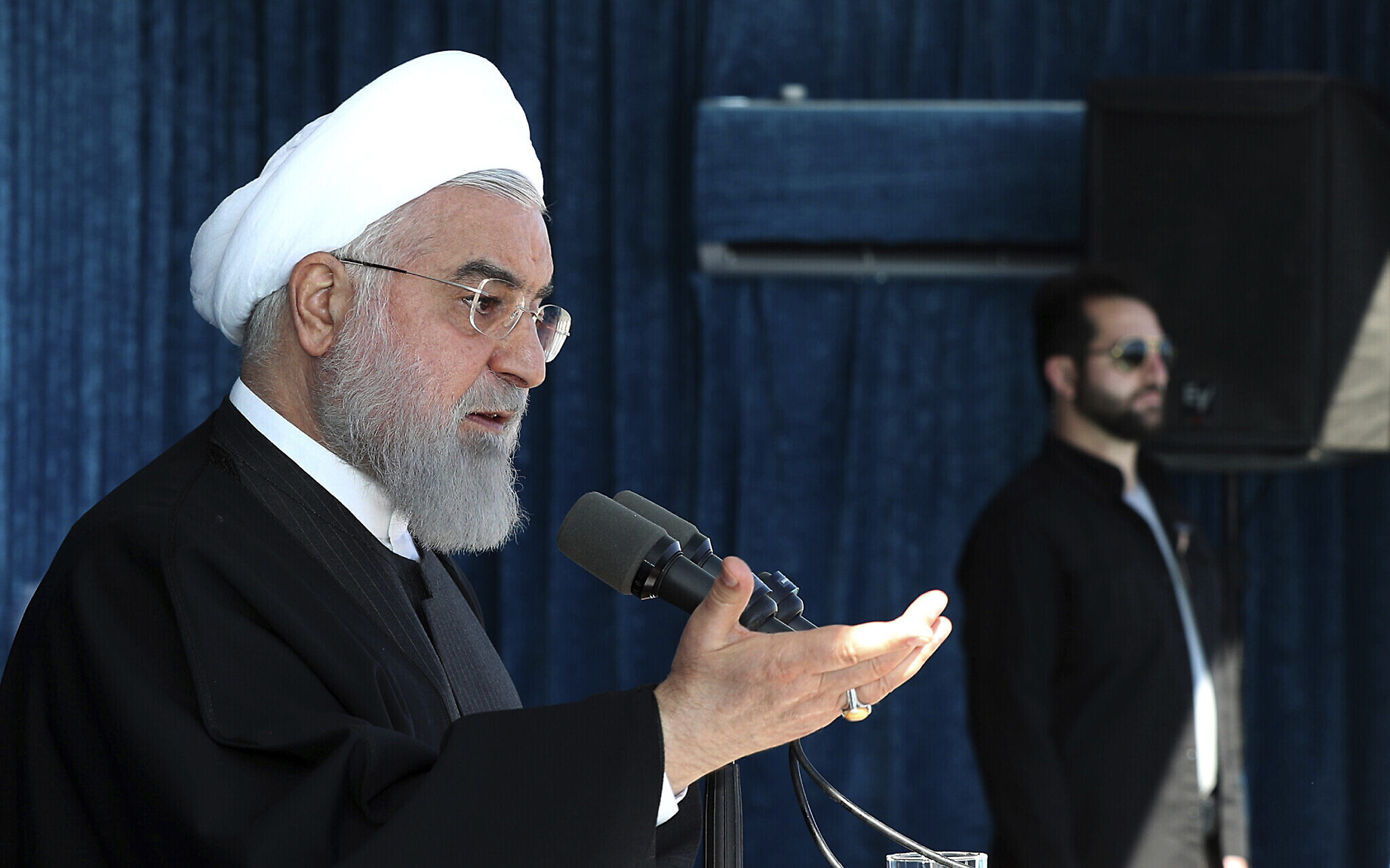
In this photo released by the official website of the office of the Iranian Presidency, President Hassan Rouhani speaks at a public gathering in the city of Rafsanjan in Iran's southwest Kerman province, Monday, November 11, 2019. (Office of the Iranian Presidency via AP)

In this photo released by the official website of the office of the Iranian Presidency, President Hassan Rouhani speaks at a public gathering in the city of Rafsanjan in Iran’s southwest Kerman province, Monday, November 11, 2019. (Office of the Iranian Presidency via AP)

Iranian President Hassan Rouhani warned Muslim countries against working with Israel, in a speech aired Thursday by Iran’s IRINN TV news broadcaster.

“It is a strategic mistake in the Islamic world when some see Israel as their friend. It is very unfortunate that some Islamic countries, that are supposed to be steadfast against their enemies for the benefit of the world of Islam and the benefit of their own people, have extended a hand in friendship to Israel,” Rouhani said, according to a translation by the Middle East Media Research Institute watchdog group.

“They are even using Israel’s intelligence capabilities against the Muslim people and the resistance movements,” he said.

Israel has peace agreements with Egypt and Jordan, and has seen warming ties with Sunni-Arab Gulf states in recent years, despite the absence of formal diplomatic relations, due to shared concerns about an increasingly belligerent Iran.

Rouhani said that Iran was at the “forefront of the struggle against arrogance and the Zionist regime,” alongside Palestinians, Syrians and Iraqis, and expressed his country’s enmity toward the US.

“We must clear our minds of any doubt that America is our enemy,” Rouhani said, although he said this did not mean that Iran sought war with the US.

Iran’s relationship with the US has unraveled since US President Donald Trump withdrew in May 2018 from the landmark 2015 nuclear deal with international powers. Tehran Iran still allows United Nations inspectors to monitor its nuclear sites and hasn’t pushed its enrichment anywhere near weapons-grade levels of 90 percent.

It has violated the deal, however, by enriching uranium up to 4.5%, beyond the 3.67% allowed by the deal. Iranian officials say their stockpile of low-enriched uranium is over 500 kilograms (1,100 pounds), beyond the accord’s 300-kilogram (661-pound) limit. It also began using advanced centrifuges prohibited by the agreement and resumed enrichment at its underground Fordo facility.

Rouhani in his speech proclaimed Iran’s friendship for Saudi Arabia, despite longstanding tensions between the states, and its bond with Kuwait, the UAE, Bahrain and the Palestinian people.

“Today is not the time for Shia-phobia, Sunni-phobia, Iran-phobia, or any-country-phobia. Our phobia today should be about the arrogance and Zionism,” Rouhani said.


Khamenei: When Iran speaks of wiping out Israel it refers to regime, not Jews

November 15, 2019

Source: Khamenei: When Iran speaks of wiping out Israel it refers to regime, not Jews | The Times of Israel

( Gee,  I feel better already… – JW )

Supreme leader claims frequent statements only refer to abolishing rule of ‘thugs’ like Netanyahu; however, many past remarks have threatened to flatten Tel Aviv and Haifa

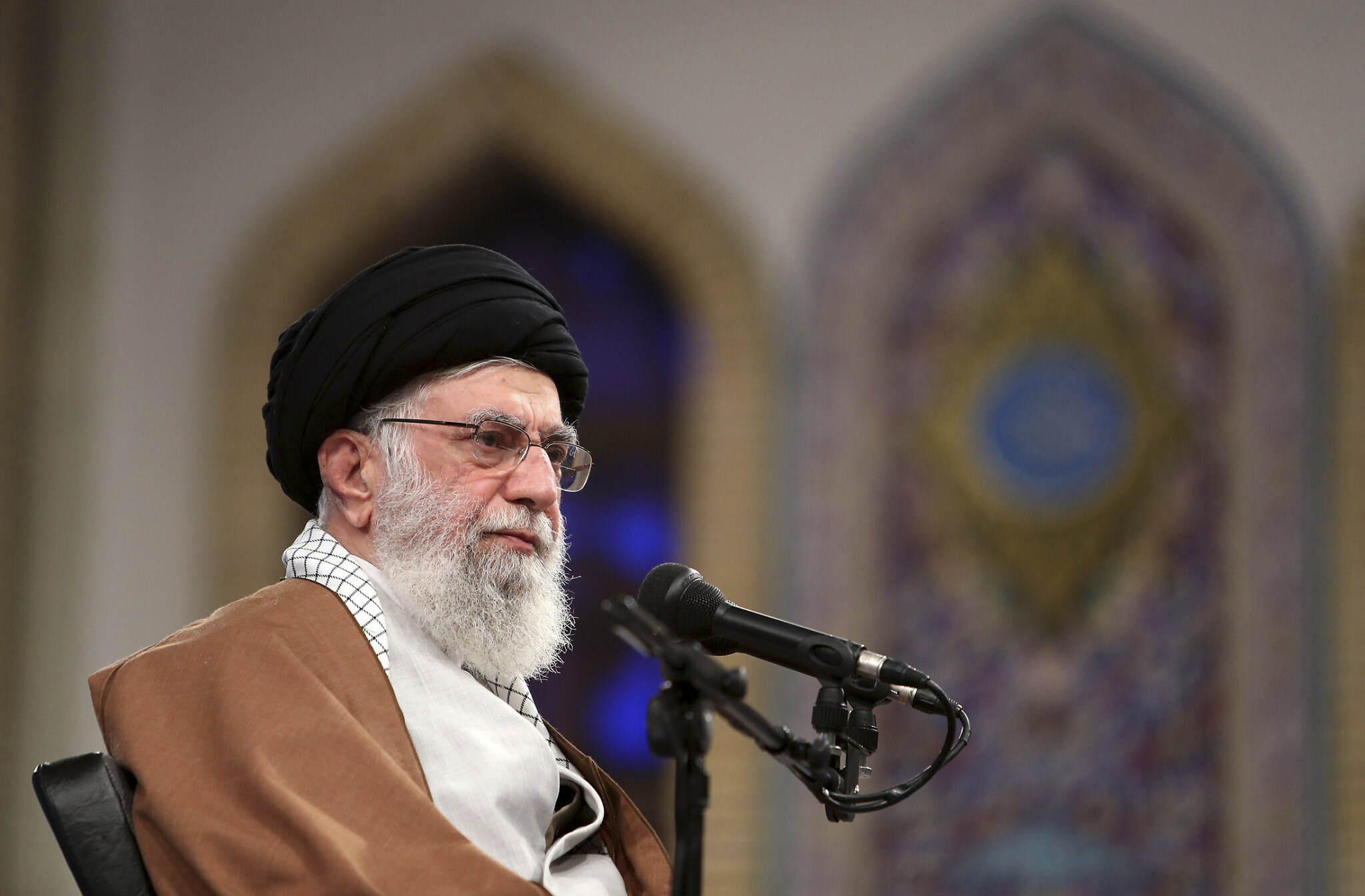
In this picture released by the official website of the office of the Iranian supreme leader, Supreme Leader Ayatollah Ali Khamenei attends a meeting with thousands of students in Tehran, Iran, November 3, 2019. (Office of the Iranian Supreme Leader via AP)

In this picture released by the official website of the office of the Iranian supreme leader, Supreme Leader Ayatollah Ali Khamenei attends a meeting with thousands of students in Tehran, Iran, November 3, 2019. (Office of the Iranian Supreme Leader via AP)

When Iran speaks of wiping Israel off the map, it doesn’t mean the mass slaughter of the country’s Jews but rather eliminating the Jewish state’s “imposed regime,” Supreme Leader Ayatollah Ali Khamenei said Friday.

“The disappearance of Israel does not mean the disappearance of the Jewish people, because we have nothing against [Jews],” Khamenei said, speaking alongside senior Iranian officials at the so-called 33rd International Islamic Unity Conference.

“Wiping out Israel means that the Palestinian people, including Muslims, Christians and Jews, should be able to determine their fate and get rid of thugs such as [Prime Minister Benjamin] Netanyahu,” Khamenei continued, according to Iranian media.

Khamenei further argued that “had the Islamic world been committed to unity, there would have been no tragedy in Palestine.” He lamented that Muslims couldn’t even adhere to what he called the lowest level of unity — non-aggression between Muslims.

“We are not anti-Semitic. Jews are living in utmost safety in our country. We only support the people of Palestine and their independence,” he said.

“Our position on the case of Palestine is definitive,” he said. “Early after the victory of the [1979 Islamic] revolution, the Islamic Republic gave the Zionists’ center in Tehran to the Palestinians. We helped the Palestinians, and we will continue to do so. The entire Muslim world should do so.”

A Shahab-3 surface-to-surface missile is on display next to a portrait of Iranian Supreme Leader Ayatollah Ali Khamenei at an exhibition by Iran’s army and paramilitary Revolutionary Guard celebrating “Sacred Defense Week” marking the 39th anniversary of the start of 1980-88 Iran-Iraq war, at Baharestan Square in downtown Tehran, Iran, September 25, 2019. (AP Photo/Vahid Salemi)

Iran regularly threatens to annihilate Israel, viewing the country as a powerful enemy allied with the United States and Sunni countries in the region against Tehran and its nuclear ambitions.

Contrary to Khamenei’s claims, those threats commonly refer to the physical destruction of Israeli cities, rather than of just the regime.

In September, Abbas Nilforoushan, the deputy commander of operations of the IRGC, threatened that if Israel attacks Iran, it will have to collect “bits and pieces of Tel Aviv from the lower depths of the Mediterranean Sea.”

“Iran has encircled Israel from all four sides. Nothing will be left of Israel,” said Nilforoushan in an interview with the Iranian news agency Tasnim.

“Israel is not in a position to threaten Iran,” he said according to a translation published by Radio Farda, the Iranian branch of the US government-funded Radio Free Europe/Radio Liberty.

Iranian senior cleric Ahmad Khatami delivers his sermon during Friday prayer ceremony in Tehran, Iran, on January 5, 2018. (AP Photo/Ebrahim Noroozi)

Last year, Ayatollah Ahmad Khatami, a key leader of weekly Muslim prayers in Iran, reacted to reports that Israel viewed a war with Iran-backed Lebanese terror group Hezbollah as likely by saying: “If you want Haifa and Tel Aviv to be razed to the ground, you can take your chance.”

In September, the commander of Iran’s elite Islamic Revolutionary Guard Corps said that destroying Israel was now an “achievable goal.”

Four decades on from Iran’s Islamic revolution, “we have managed to obtain the capacity to destroy the impostor Zionist regime,” Major General Hossein Salami was quoted saying by the IRGC’s Sepah news site.

Iranian Revolutionary Guards commander Maj. Gen. Hossein Salami speaks at Tehran’s Islamic Revolution and Holy Defense museum, during the unveiling of an exhibition of what Iran says are US and other drones captured in its territory, on September 21, 2019. (Atta Kenare/AFP)

“This sinister regime must be wiped off the map and this is no longer … a dream [but] it is an achievable goal,” Salami said.

Iran has lately been on edge, fearing an attack on the country over a drone-and-missile strike on Saudi Arabia’s oil industry in September attributed to Tehran. Yemen’s Iranian-backed Houthi rebels claimed the attack, but the US and others allege Iran was behind it.

The attack in Saudi Arabia was the latest incident following the collapse of Iran’s nuclear deal with world powers, over a year after US President Donald Trump unilaterally withdrew his country from the accord. The nuclear deal was meant to keep Tehran from building atomic weapons — something Iran denies it wants to do — in exchange for economic incentives.

Prime Minister Benjamin Netanyahu was a sharp critic of the nuclear deal negotiated under the administration of former US president Barack Obama, and welcomed Washington’s pull-back from the accord, urging further pressure on Iran.

Agencies contributed to this report.


IDF launches fresh strikes in Gaza in response to rocket attacks

November 15, 2019

Source: IDF launches fresh strikes in Gaza in response to rocket attacks | The Times of Israel

Military says it targeted Islamic Jihad facilities in the Strip after terrorists violated ceasefire deal four times on Thursday

An explosion caused by Israeli airstrikes is seen in Gaza City, November 14, 2019. (Adel Hana/AP)

An explosion caused by Israeli airstrikes is seen in Gaza City, November 14, 2019. (Adel Hana/AP)

The Israel Defense Forces said it launched fresh airstrikes on Palestinian Islamic Jihad targets in the Gaza Strip in the predawn hours of Friday morning, in response to four rocket attacks from the coastal enclave which violated a ceasefire agreement announced the day before.

Palestinian media reported that Israeli drones and fighter jets conducted strikes on PIJ facilities in the cities of Khan Younis and Rafah in the southern Strip.

“We are currently striking Islamic Jihad terror targets in Gaza. This comes after rockets were indiscriminately fired from Gaza at Israeli civilians today,” the IDF said in a statement.

The military said it attacked a PIJ facility used to manufacture rocket parts in Rafah and a brigade headquarters in Khan Younis “in which there were several offices belonging to PIJ commanders.”

“The IDF views with great severity the violation of the ceasefire and the firing of rockets at Israel. It is at high alert and will continue to act, as necessary, against attempts to harm Israeli citizens,” the army said.

Palestinian media reported that at least two people were injured in the Israeli strikes on PIJ posts.

Late Thursday night, terrorists in Gaza fired two rockets at southern Israel, which were shot down by soldiers operating the Iron Dome air defense system, the army said.

There were no reports of injuries or damage caused by shrapnel from the intercepted rockets.

Earlier in the day three separate volleys of rockets were fired at Israel from Gaza, puncturing a tense calm and leading to fears of a resumption of violence. In one case pieces of a projectile landed in the yard of a daycare in Netivot, but there were no injuries. Throughout Thursday, Israel abided by the Egypt- and UN-brokered ceasefire and refrained from launching retaliatory strikes, despite public pressure to do so.

It was not immediately clear who fired the rockets. Some members of the PIJ were reportedly opposed to the truce announced early Thursday morning, leading to speculation by analysts that they would fire rockets at Israel in order to derail it.

Following the Thursday night rocket attack, shortly after 10 p.m., the southern city of Ashkelon said it was canceling schools for Friday, following the lead of the Israeli communities closest to the Gaza border which made a similar announcement earlier in the evening in light of the multiple breaches of the ceasefire agreement. Early Friday, the city of Netivot also said it was closing its schools.

From predawn Tuesday to Thursday morning, Israel and the PIJ fought a 48-hour battle in which over 450 rockets and mortar shells were fired at Israel from Gaza, and the IDF responded with dozens of airstrikes on PIJ facilities and on the terror cells as they were firing and preparing to launch rockets. Palestinian sources said 34 Gazans were killed, many of them from Islamic Jihad. Israel said the overwhelming majority of the fatalities were terrorists. Fifty-eight Israelis were lightly and moderately injured or treated for shock.

Most of the rockets from Gaza either landed in open fields or were intercepted by Israeli air defenses. Some struck homes, businesses and streets, causing injuries and significant property damage. Dozens of people were also hurt as they fell running to bomb shelters.

In response to the attacks, the Israeli military conducted dozens of strikes on Islamic Jihad bases and weapons facilities, as well as rocket-launching teams throughout the Strip, killing 25 terrorists, according to the IDF.

Nine other Palestinians were killed in Israeli strikes, including a Palestinian father, Mahmoud Ayad, 54, and his two sons — Islam, 7, and Amir, 24 — who were killed in an Israeli airstrike in what appeared to be a case of mistaken identity, as residents of the Gaza Strip denied that they were involved with terrorist activities. In addition, two women and four children, who were family members of two senior PIJ operatives, were killed in Israeli strikes that targeted the two men.

The flare-up started after an Israeli missile killed Baha Abu al-Ata, a senior commander in the Palestinian Islamic Jihad terror group, whom Israel said was the “prime instigator” of terrorism from Gaza over the past year.

Maj. Gen. Gen. Herzi Halevi, the head of the Israeli military’s Southern Command, reportedly warned Gaza-area residents Thursday that the rocket fire might continue even with the ceasefire agreement in place.

“It’s true to now that the escalation is behind us, but the fire can resume,” he was quoted saying by Channel 12 news.

Halevi said Islamic Jihad was “making efforts to prevent cells from firing at Israel.”

The general said the IDF would also be working to thwart these attacks. “If we identity launch efforts, we will strike the cells,” Halevi said.

Other Israeli leaders have warned they would not hesitate to return to battle.

Islamic Jihad’s military wing also threatened Israel that it was ready to continue fighting.
“Our fighters in all of our military units still have their fingers on the trigger and they work in accordance with a fully integrated military system,” the Al-Quds Brigade said in a statement, unveiling what it said was a new rocket used in the fighting — the Buraq 120.

An Iron Dome battery missile set up in Sderot, Southern Israel, near the border with neighbouring Palestinian Gaza Strip on November 13, 2019. (Yonatan Sindel/Flash90 )

On Thursday the IDF said schools and businesses were allowed to reopen and limits on large gatherings were removed in the Gaza periphery and nearby Lachish region.

In addition, Israel reopened all land crossings to the Gaza Strip and resumed allowing Palestinian fisherman to work up to 15 nautical miles from the shore, following a security assessment, an Israeli official said Thursday.

Touring an Iron Dome command center Thursday, Prime Minister Benjamin Netanyahu said the fighting had ended and Israel had sent a deterrent message to “our enemies.”

Islamic Jihad spokesman Musab al-Berim said the ceasefire was based on a list of demands presented by his group late Wednesday, including a halt to Israeli targeted killings of the group’s leaders.

Rockets are fired from the Gaza Strip toward Israel on November 13, 2019. (Anas Baba/AFP)According to an Egyptian official, the agreement stipulates that Palestinian factions must ensure a return to calm in Gaza and “maintain peace” during demonstrations, while Israel must stop hostilities and “ensure a ceasefire” during demonstrations by Palestinians.

Times of Israel staff and AFP contributed to this report.


Israel Under Fire – 55 Hours Later 

November 14, 2019


Gaza ceasefire faces real test on Friday at weekly Palestinian border disturbance – DEBKAfile

November 14, 2019

Source: Gaza ceasefire faces real test on Friday at weekly Palestinian border disturbance – DEBKAfile

UN Middle East peace envoy Nickolay Mladenov knew from bitter experience what he was talking about when he said on Thursday, Nov. 14 that the UN and Egypt had “worked hard to prevent the most dangerous escalation in and around Gaza from leading to war” and “the coming hours and days were critical.”

According to established Gaza routine, the Palestinian side habitually declares a ceasefire has been agreed, and then violates it, while Israel officials hold silent. This time, the only sign that Israel went along with the truce negotiated by the UN and Egypt, was the IDF’s approval to reopen schools and restore normal life across most of Israel, with the exception of the most heavily battered communities adjacent to the Gaza Strip, West Lachish and Hof Ashkelon.

Rocket sirens were heard there early Thursday 90 hours after the truce was said by Islamic Jihad and Egyptian officials to have gone into effect at 5.30 a.m. It came at the end of 48 hours of massive Jihad rocket fire and systematic Israeli air strikes to destroy its infrastructure, following the killing of the Islamic Jihad’s northern Gaza commander Baha Abu Al-Atta.

The ceasefire, which was quickly proven fragile in its first hours, faces its first real test on Friday, Nov. 15, when the Gaza-Israeli border has for the past eighteen months erupted into weekly clashes between Palestinian rioters hurling explosives and grenades pressing against the border and their targets, armed Israeli soldiers, pushing them back, using live ammunition when tear gas fails.

The Islamic Jihad is expected to exploit the next Friday disturbance as cover for lethal attacks on Israeli troops or a civilian target, after 430 rockets fired in a 48-hour blitz failed to cause a single Israeli death. The group is also capable of claiming that Israel had violated the truce terms at the event as a pretext for resuming its rocket attacks.

This pessimistic forecast rests on past experience of Gaza ceasefires. Islamic Jihad is wont to stage violent finales in order to claim it had the last word (or shot) in a conflict with Israel. Therefore, if the truce holds up until Friday afternoon, its fate will be determined then. IDF concentrations therefore remain massed on the Gaza border along with heavy military hardware.


LISTEN UP 

November 14, 2019


Gaza rocket slams into old age home in Ashkelon, injuring a woman

November 14, 2019

Source: Gaza rocket slams into old age home in Ashkelon, injuring a woman | The Times of Israel

Resident of the facility taken to hospital with moderate wounds from flying shards of glass as count of rockets fired at Israelis passes 350

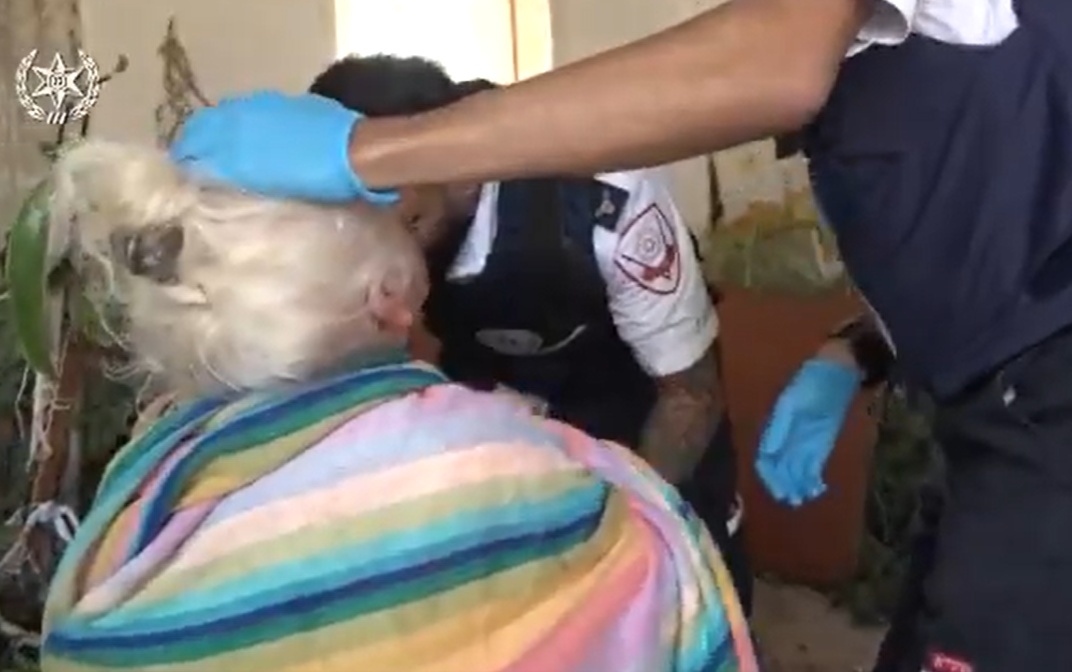
A woman in the southern city of Ashkelon injured by a rocket fired from the Gaza Strip is treated by paramedics on November 13, 2019. (Screen capture: Twitter)

A 70-year-old woman was moderately hurt when a rocket fired from the Gaza Strip struck her elder care facility in the southern city of Ashkelon on Wednesday, joining several dozen Israelis injured thus far in the rocket fire that began Tuesday morning.

The woman was struck by glass shards from a window in her apartment that exploded as the rocket hit. Rescuers from the Magen David Adom ambulance service took her to the city’s Barzilai Hospital.

Israel’s targeted killing before dawn Tuesday of Islamic Jihad’s terror chief Baha Abu al-Ata was met by over 350 rockets so far launched throughout Tuesday and Wednesday by terror groups in Gaza, the military said.

The Iron Dome missile defense system successfully intercepted some 90 percent of all rockets headed to populated areas since Tuesday morning, but dozens of Israelis have still been hurt by the barrages.

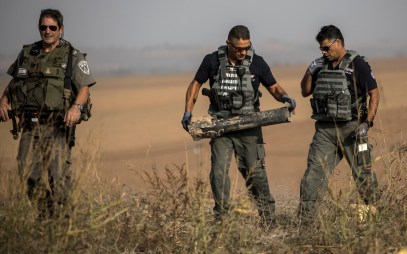
Israeli police sappers remove a rocket fired from the Gaza Strip in farmland near the Israel Gaza border, November 13, 2019. (AP Photo/Tsafrir Abayov)

Since Tuesday, two other people in Israel have been wounded directly by rocket fire, both of them sustaining light injuries from shrapnel. At least 23 more were lightly hurt after falling while running to a bomb shelter and 23 others were taken to the hospital after suffering anxiety attacks and other “stress symptoms” due to the attacks, the Magen David Adom ambulance service said.

An eight-year-old girl collapsed suddenly, apparently from a heart attack, while hiding in a bomb shelter during a rocket attack on the city of Holon on Tuesday. She remained in serious condition on Wednesday.

Meanwhile, the IDF on Wednesday conducted large-scale strikes against Palestinian Islamic Jihad sites in Gaza, including a major weapons manufacturing facility, as terror groups continued firing regular barrages.

The Israel Defense Forces said one of its aircraft also bombed a pair of PIJ members preparing to fire an anti-tank guided missile from the northern Gaza Strip. The use of anti-tank missiles — an expensive, highly accurate weapon — signifies a marked escalation by the terror group.

On Wednesday evening, “Code Red” rocket alert sirens sounded continuously throughout the Eshkol Regional Council area, which borders the Gaza Strip, and in nearby towns like Ashkelon, Sderot and Netivot.

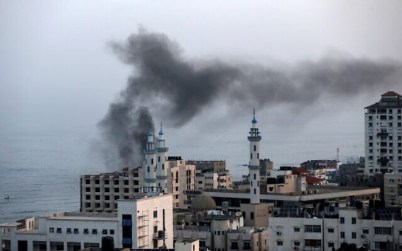
Smoke rises after an Israeli airstrike in Gaza City on November 13, 2019. (Mahmud Hams/AFP)

Since the start of the fighting, the Israeli military has carried out a number of strikes on terrorists who were preparing to launch rockets at Israel, killing several of them.

In total, at least 24 Palestinians in the Gaza Strip have been killed and 69 wounded since early Tuesday morning, the Hamas-run Gaza health ministry said.

PIJ and other terror groups in the Strip have publicly acknowledged that at least 12 of those killed were their members, though Israeli officials have indicated that the number is far higher. The Hamas-run health ministry in the Strip said three of the dead were children.


Gaza ceasefire between Israel, Islamic Jihad said in effect from 5.30 a.m

November 14, 2019

Source: Gaza ceasefire between Israel, Islamic Jihad said in effect from 5.30 a.m | The Times of Israel

Truce follows three hours of tense calm after apparent Israeli strike kills 6 members of same family in Gaza airstrike, rocket fire persists after midnight

An Iron Dome battery missile set up in Sderot, Southern Israel, near the border with neighbouring Palestinian Gaza Strip on November 13, 2019. (Yonatan Sindel/Flash90 )

An Iron Dome battery missile set up in Sderot, Southern Israel, near the border with neighbouring Palestinian Gaza Strip on November 13, 2019. (Yonatan Sindel/Flash90 )

Egypt has brokered a ceasefire between Israel and the Islamic Jihad terror group to end two days of intense fighting in Gaza that saw hundreds of rockets fired into Israel and 32 Palestinians killed in Israeli strikes, Palestinian and Egyptian officials said early Thursday.

The truce went into effect at 5.30 a.m after three hours of tense calm following an apparent Israeli airstrike that killed six members of a family in central Gaza and continued rocket fire into southern Israel.

The “ceasefire agreement comes as a result of Egypt’s efforts” and has been endorsed by “Palestinian factions including Islamic Jihad”, said a top Egyptian official.

Islamic Jihad spokesman Musab al-Berim said the ceasefire was based on a list of demands presented by his group late Wednesday, including a halt to Israeli targeted killings of the group’s leaders.

Israel Radio quoted a senior Egyptian official as saying that Islamic Jihad had agreed to stop firing rockets and will ensure protests along the Gaza border are peaceful.

Israel agreed to end airstrikes and targeted killings and committed to stop shooting protesters along the fence, the report said.

Israel has not confirmed the ceasefire, but has in the past often refrained from confirming truces with Gaza terror groups to preserve the impression that it does not negotiate with terror groups.

Less than an hour after the truce went into effect rocket sirens sounded in Israeli communities just north of Gaza. the IDF said it was investigating the incident.

The truce came after a night of violence.

Palestinian officials said six members of family were killed and 12 others wounded in an apparent Israeli airstrike on their house in Deir al-Balah town, in the central Gaza Strip, early Thursday.

An explosion caused by Israeli airstrikes is seen in Gaza City, early Thursday, Nov. 14, 20 (AP Photo/Adel Hana)

The Israel Defense forces had no immediate comment on the incident.

The Hamas-run Gaza Health Ministry said the dead included a woman and a child and all were civilians.

It was the deadliest incident since the beginning of the current fighting and brings the death toll on the Palestinian side to 32.

Israel says most of those killed were terrorists.

After midnight Palestinians continued to fire rockets into Israel until 2.30 a.m, with salvos fired at southern Israeli cities and communities along the Gaza border. Iron Dome intercepted several of the rockets and there were no reports of Israeli casualties.

The latest fighting began after Israel killed Baha Abu al-Ata, a senior commander in the terror group’s military wing, in a pre-dawn Tuesday airstrike. Israeli officials say Abu Ata was preparing multiple terror attacks against Israelis.

In response, the group launched at least 360 rockets at Israeli cities, according to a Wednesday night count by Israeli officials. The IDF has responded to the fire with waves of airstrikes targeting the terror group’s installations and rocket-launching squads. Gaza health officials say 26 Gazans have died in the strikes, at least 13 of them fighters. Israel says the great majority are PIJ fighters.

The terms of the reported ceasefire were similar to conditions laid out by Islamic Jihad’s  Damascus-based Secretary General Ziad Nakhala  late Wednesday.

In a Wednesday night interview with the pro-Hezbollah Lebanese television station Al-Mayadeen — PIJ, like Hezbollah, are allied with Iran — Nakhala said the terror group had laid out ceasefire conditions during talks in Egypt, which he said Israel would have to accept to achieve a ceasefire.

“We gave specific conditions for a ceasefire. If Israel accepts them, we will accept a ceasefire,” he said. “If Israel does not accept them, we are going to continue to fight for an indefinite period of time.”

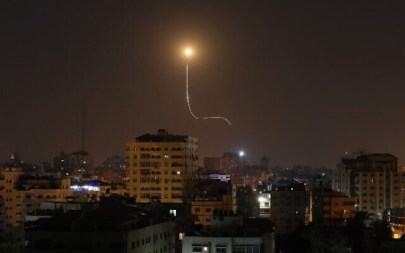
Israeli missile launched from the Iron Dome defence missile system, designed to intercept and destroy incoming short-range rockets and artillery shells, is seen above Gaza city on November 13, 2019. (Photo by MAHMUD HAMS / AFP)

Those conditions “are simple and humble. First, We are talking about halting assassinations in the Gaza Strip and West Bank,” he said, before apparent technical trouble on Al-Mayadeen’s part made the rest of the sentence inaudible.

He continued: “Second, stopping fire on innocent civilians at the March of Return. Third, Israel abiding by the understandings that were concluded in Cairo which are related to the measures [inaudible] in the Gaza Strip.”

Nakhala was apparently interviewed from Cairo, where he landed Wednesday evening to take part in Egyptian-led talks to end the fighting.

In this photo taken on October 21, 2016, Palestinian Islamic Jihad terror leader Baha Abu al-Ata attends a rally in Gaza City. (STR/AFP)

An Israeli diplomatic official appeared to confirm Wednesday night that Israel was nearing a ceasefire agreement with the terror group, saying PIJ was beginning to understand its rocket fire had failed.

“Quiet will be answered with quiet, and what happens on the ground will be the deciding factor,” the official said.

Islamic Jihad’s military wing, the Al-Quds Brigades, claimed its rocket attacks had inflicted extensive damage on the Israeli home front.

“If the enemy reveals [what they have done], it will turn Netanyahu into a laughingstock on the Zionist street,” spokesman Abu Hamza tweeted.

Top Israeli officials have said they are not seeking continued fighting, but were prepared to do take necessary steps to stop the rocket fire.

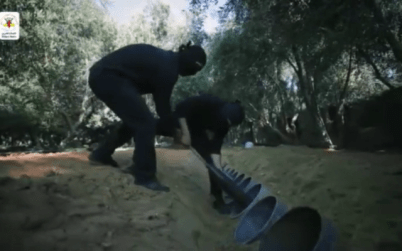
Palestinian Islamic Jihad fighters load missiles into their launchers in Gaza in a propaganda video by the terror group posted online on November 13, 2019. (Screen capture)

Earlier, a Hamas official suggested it would join Islamic Jihad in firing rockets at Israel if the Israeli military continued to strike Gaza.

Israel on Wednesday threatened to carry out additional targeted killings against Gaza terror leaders, but has refrained from explicitly threatening Hamas. This position marked a departure from previous rounds of fighting, when the Jewish state maintained it held Hamas responsible for all violence emanating from the coastal territory.

On Wednesday evening, the IDF Home Front Command eased some of the restrictions that had been in place on areas farther from the Gaza Strip. Under the new instructions, people living in the central Negev and Lachish regions will be permitted to return to work, provided there is a bomb shelter close to the building. However, schools will remain closed in those areas for the third day in a row.

Studies will resume in the Shfela region tomorrow, and the IDF has also removed all restrictions on the number of people permitted to gather in closed areas in the Tel Aviv metropolitan area and in the Yarkon and Shfela regions. Outdoor gatherings in those areas will remain limited to 300 people.

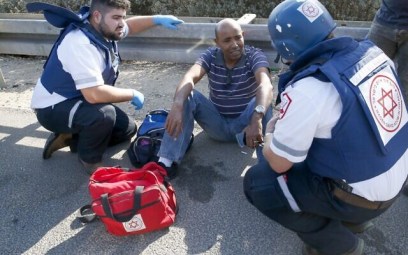
Israeli medics speak to a wounded man on a highway in the southern Israeli city of Ashdod on November 12, 2019, following a rocket attack from Gaza. (Jack Guez/AFP)

All restrictions will remain in place for the regions closest to the Gaza Strip: Schools will remain shut tomorrow; non-essential businesses will be closed; and all gatherings must be kept to fewer than 100 people.

Adam Rasgon contributed to this report