Archive for November 2019

By saying settlements not illegal, Trump seen as throwing Netanyahu a lifeline

November 19, 2019

Source: By saying settlements not illegal, Trump seen as throwing Netanyahu a lifeline | The Times of Israel

Former Mideast peace negotiator says move meant to ‘dismantle the core elements’ of the attempt to achieve a two-state solution
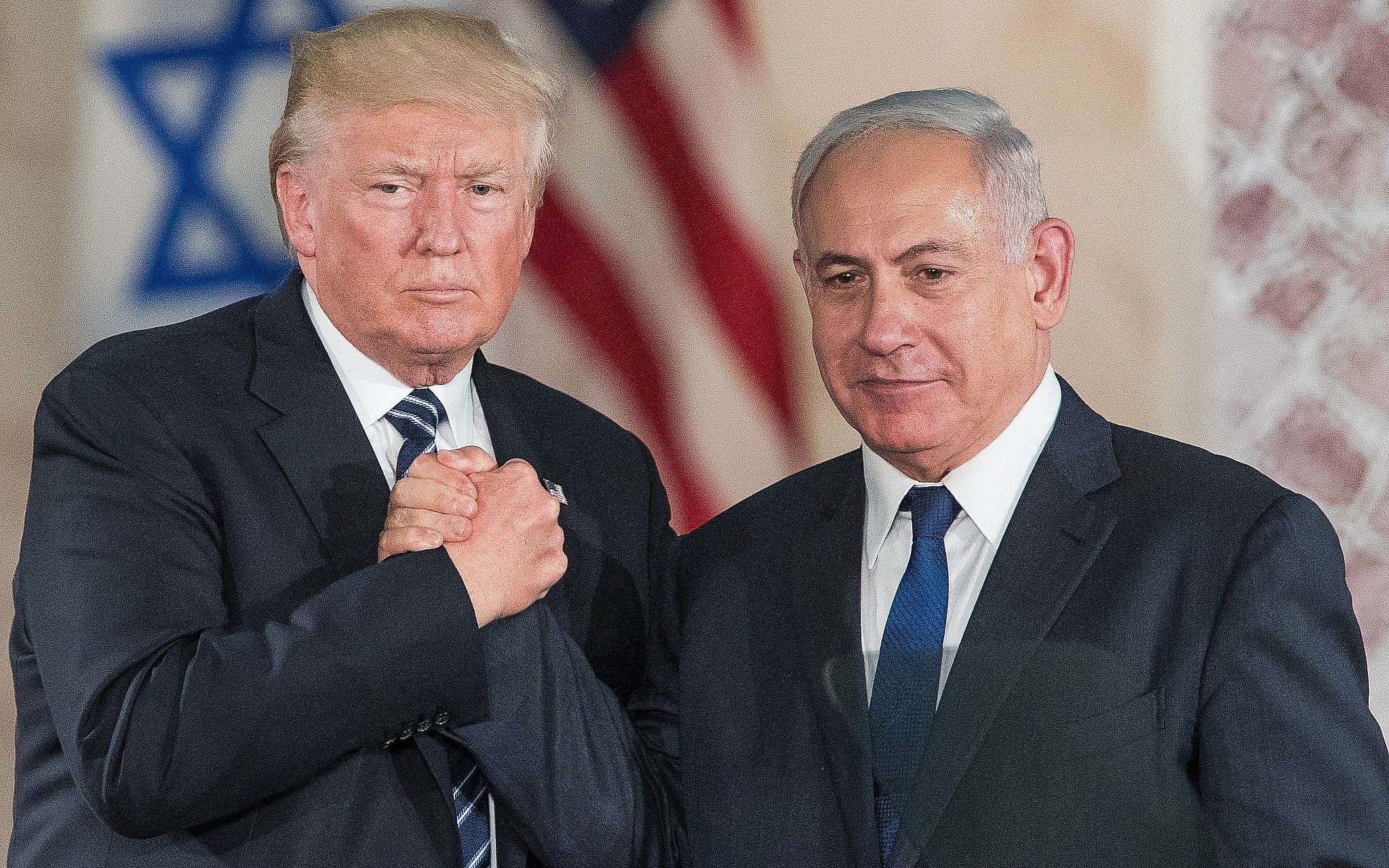
US President Donald Trump, left, and Prime Minister Benjamin Netanyahu shake hands at the Israel Museum in Jerusalem on May 23, 2017. (Yonatan Sindel/Flash90)

US President Donald Trump, left, and Prime Minister Benjamin Netanyahu shake hands at the Israel Museum in Jerusalem on May 23, 2017. (Yonatan Sindel/Flash90)

WASHINGTON — The US declaration Monday that the settlements do not violate international law — reversing decades of American foreign policy — was, according to former Mideast peace negotiators, the logical next step of the Trump administration’s efforts to reframe the basis on which Israeli-Palestinian peace negotiations take place.

Previous policy decisions have had a similar effect: from recognizing Jerusalem as Israel’s capital and moving the US embassy there from Tel Aviv to withholding funding from the United Nations agency responsible for Palestinian refugees and seeking to redefine eligibility for refugee status.

“The administration has gone about dismantling the core elements that have constituted a traditional approach to a two-state solution,” said Aaron David Miller, a State Department veteran who worked under both Republican and Democratic presidents. The latest move “fits within the broader context of what the administration has been involved in,” he said.

But the timing of the announcement — two days before Blue and White chief Benny Gantz must form a government or see Israel face new elections — adds another dimension.

It seems, at least in part, designed to bolster Prime Minister Benjamin Netanyahu as he faces one of the toughest political battles of his life.
US President Donald Trump, left, welcomes visiting Prime Minister Benjamin Netanyahu to the White House in Washington, March 25, 2019. (Manuel Balce Ceneta/AP)

“I tend to think this was in the works for a while, and this was something that Netanyahu wanted credit for,” said David Makovsky, a special envoy to Israeli-Palestinian negotiations during the Obama administration. “He sees this as kind of unfinished business from his tenure. I think it’s related to that and I tend to think there was a mind meld between Netanyahu and Ambassador David Friedman.”

Friedman, US President Donald Trump’s envoy to Israel, is a longtime supporter, financial and otherwise, of the West Bank settlements.

Indeed, a senior Israeli official told reporters on the condition of anonymity that Netanyahu had been pushing for the policy change “for a number of months.” The issue was advanced with the Israeli National Security Council and the department for international law at the attorney general’s office, the official said.

“This policy reflects a historical truth — that the Jewish people are not foreign colonialists in Judea and Samaria,” Netanyahu said in a statement, referring to the West Bank by its biblical name.

The move culminated in US Secretary of State Mike Pompeo repudiating, in a news conference Monday, a 1978 State Department legal opinion that held that civilian settlements in the occupied territories are “inconsistent with international law.”
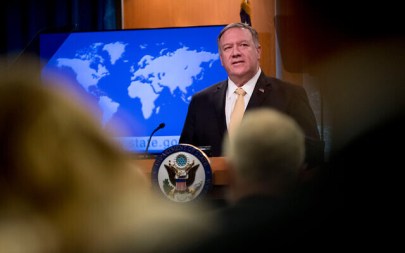
US Secretary of State Mike Pompeo speaks at a news conference at the State Department in Washington, November 18, 2019. (AP Photo/Andrew Harnik)

The Trump administration views the opinion, the basis for longstanding US opposition to expanding the settlement enterprise, as a distraction and believes any legal questions about the issue should be addressed by Israeli courts, Pompeo said.

The decision is part of a line of others that have weakened Palestinian efforts to achieve statehood.

The effect, Miller told The Times of Israel, will send a message to Israel that it’s okay to build more settlements in the West Bank — land that Palestinians see as their own for a future state.

“They have essentially green-lighted and validated — in an assertive act that was not necessary — the main transgression on the Israeli side that essentially has made the prospects of a [peace] settlement remote,” he said.

“I suppose domestic politics is part of it and throwing some lifeline to Netanyahu several days before Gantz’s time’s up might have been part of the calculation,” he added.

Makovsky said he wanted the White House to put out a statement clarifying that it is not condoning settlement expansion. “I hope the administration clarifies that this is not a call to start building settlements everywhere and make a two-state solution impossible,” he told The Times of Israel.

Construction in the northern West Bank settlement of Ariel in 2014. (Flash90)

Progressive American Jewish groups accused the Trump administration of using American foreign policy to help Netanyahu politically, all the while subverting US interests in the process.

“Coming at a moment when Prime Minister Netanyahu is struggling desperately for political survival and faces imminent indictment for corruption, the timing of this announcement can only be read as last-ditch attempt to boost the prime minister’s personal prospects,” said Jeremy Ben-Ami, who heads the liberal Zionist group J Street.

“The president and his advisers have given the Israeli government carte blanche to expand settlements, entrench occupation and move toward formal annexation of the West Bank,” he went on. “By discarding decades of bipartisan US policy and flagrantly disregarding international law, they are trampling on the rights of Palestinians and helping the Israeli right-wing to destroy Israel’s future as a democratic homeland for the Jewish people.”

Settler leaders and right-wing politicians, meanwhile, called for the annexation of the West Bank or at least for implementing Israeli law in the settlements, a move that Netanyahu has vowed to enact in the last two election cycles this year.

 

Golan alerted by explosions as Iron Dome intercepts 4 rockets from Syria. Blasts near Damascus airport – DEBKAfile

November 19, 2019

Source: Golan alerted by explosions as Iron Dome intercepts 4 rockets from Syria. Blasts near Damascus airport – DEBKAfile

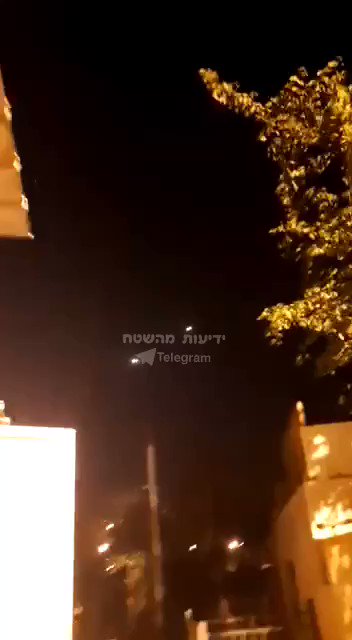
Northern Golan and the Galilee Panhandle were alerted by explosions shortly before 5 a.m. Tuesday, Nov. 19. The IDF said 4 rockets fired from Syria were intercepted by the Iron Dome air defense system. Syria also reported blasts near Damascus airport.

The sirens were heard in Shear Yeshuv, Dan, Dafne, Kfar Szold and Shnir in Upper Galilee and Nimrod, Masade, Ain Kanya, Majdel Shams and Neve Ativ in northern Golan near the Syrian border. No direct hits or Israeli casualties were immediately reported.

The Syrian army reported strong blasts in the military section of Damascus international airport caused by an air strike and activation of its air defenses.
Last week, Israeli missiles targeted the Damascus home of Palestinian Islamic Jihad leader Akram Al-Ajouri.

DEBKAfile reports that it is not clear which of the two attacks on Tuesday morning came first. The Syrian statement claims that the rocket fire against its military air facilities came from IDF positions on Mt. Hermon and were intercepted by its air defense batteries. Other sources report that Israel struck targets on the Syrian-Iraqi border.

Our military sources add: The exchange of rocket fire between Syria and Israel appears to follow on an abruptly called command-level exercise in northern Israel, which placed Israel forces on full alert near the Syrian border. The prime minister, defense minister and the chief of staff went concurrently into urgent conference. Both these events passed unnoticed in the ongoing flood of political crisis reporting.

Some of the fog cleared early Tuesday when the IDF was said to have struck an as yet unidentified Iranian target in Syria, following which Iran shot 4 rockets at the Golan. For the first time, therefore, Iran upheld its repeated threat of a response to every Israeli attack against it.
It now remains to be seen whether Tehran is satisfied with a 4-rocket salvo against Israel and, also, whether the IDF holds back from responding.


Mike Pompeo: Iran behind Islamic Jihad rocket attacks against Israel 

November 17, 2019

Source: Mike Pompeo: Iran behind Islamic Jihad rocket attacks against Israel – Middle East – Jerusalem Post

“Iran uses its terrorist proxy Palestinian Islamic Jihad to strike our great ally Israel. Iran does not want peace in the region.”

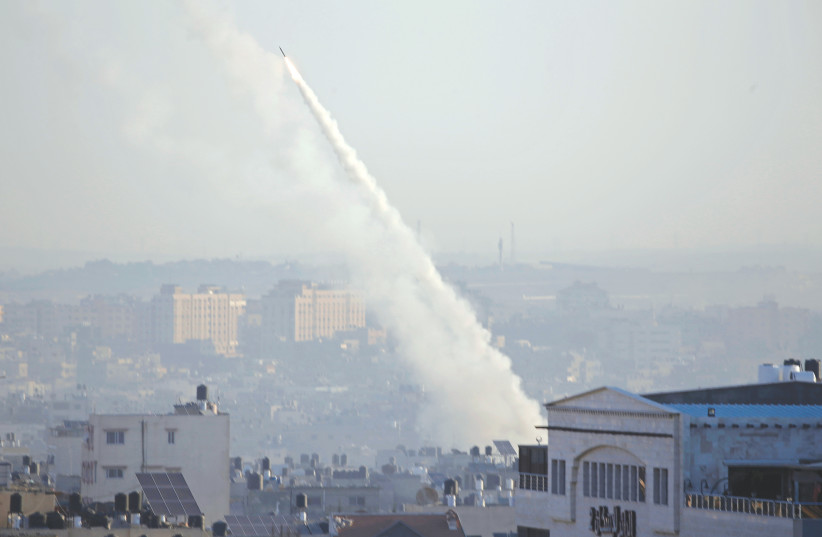
A ROCKET fired from Gaza by the Palestinian Islamic Jihad heads toward Israel this week (photo credit: MOHAMMED SALEM/REUTERS)
A ROCKET fired from Gaza by the Palestinian Islamic Jihad heads toward Israel this week
(photo credit: MOHAMMED SALEM/REUTERS)
Iran is behind the latest round of Israeli-Gaza violence, US Secretary of State Mike Pompeo tweeted on Saturday, as the fragile ceasefire understanding held for its third day in spite of sporadic rocket fire.

“Iran uses its terrorist proxy Palestinian Islamic Jihad to strike our great ally Israel. Iran does not want peace in the region. It does not want the Palestinian people to prosper. It wants more conflict. Until we address Iran’s threats, the cycle of violence will continue,” Pompeo tweeted.

It’s actions proves that international pressure is needed to curb Tehran’s  aggression, he said.

“The way forward is clear: continued pressure until Iran negotiates a comprehensive agreement that includes halting its support to terror groups like PIJ. Nations around the world can no longer claim to want peace in the region yet allow Iran’s threats to go unchallenged,” Pompeo wrote.

He spoke out one day after US sanctions against Iran forced its government to introduce gasoline rationing and price hikes of at least 50 percent, drawing sporadic protests and widespread worries over rising inflation despite official promises that the revenue would be used to help needy families. One person was killed and several people were wounded in the city of Sirjan in Kerman province on Friday, the ISNA news agency quoted a local official as saying on Saturday.

Riot police and security forces clashed with demonstrators in Tehran and dozens of cities across Iran on Saturday, Iranian news agencies and social media said. Reuters contributed to this report.


Russia sets up air base in Qamishli, challenges US/Israeli air force control of northeast Syria – DEBKAfile

November 17, 2019

Source: Russia sets up air base in Qamishli, challenges US/Israeli air force control of northeast Syria – DEBKAfile

The arrival this week in Qamishli of 50 Russian military trucks, 300 troops and hardware confirmed the revised US intelligence regarding Moscow’s military intentions in Syria, as DEBKA Weekly 869 first revealed on Nov. 8.

Until recently, US strategic experts estimated that Moscow’s interests focused on expanding its Mediterranean coastal footholds up to Libya, for which the Khmeimim air base was designed. This US assessment changed abruptly two weeks ago, when the first Russian military delegation arrived in Qamishli, capital of the Kurdish cantons in northern Syria.

The delegation was first thought to be looking for accommodation for the Russian troops taking part in joint patrols with Turkey along a 10-km deep strip on the Syrian-Turkish border.  But when Russian officials were photographed closely examining Qamishli airport and asking Syrian and Kurdish officials technical questions, warning signals flashed. Moscow was now seen to be eying Qamishli airport for conversion into a major military airfield to compete with expanding US military involvement in the region.

The Russians were then discovered negotiating a 49-year lease for Qamishli airfield with local Kurdish authorities. That contract was to keep part of the area in civil aviation use, while a large section was to be closed off as a Russian military facility.

The deal is evidently now in the bag. DEBKAfile’s military sources report. Substantial Russian military forces have since arrived at Qamishli: 50 trucks with 300 soldiers, consisting of a combat contingent for securing the new Russian air base and an engineering unit to build it; Mi-35 and Mi-8 assault helicopters have also landed, as well as Pantsir-S air defense systems for stationing around the facility.

Loud explosions emanating from the site in the last few days indicate that construction work has begun for expanding the small Qamishli airport into a large air base able to accommodate the landings of Russian fighter jets and large air freights. Moscow has clearly decided against allowing the US military to play unchallenged on the strategic playing field of northeastern Syrian and negotiated a counter-bid with America’s own Kurdish allies.


Pompeo says US stands with Iranian protesters

November 17, 2019

Source: Pompeo says US stands with Iranian protesters | The Times of Israel

Secretary of state retweets message stating support for ‘the proud Iranian people’ amid demonstrations over hikes in gas prices

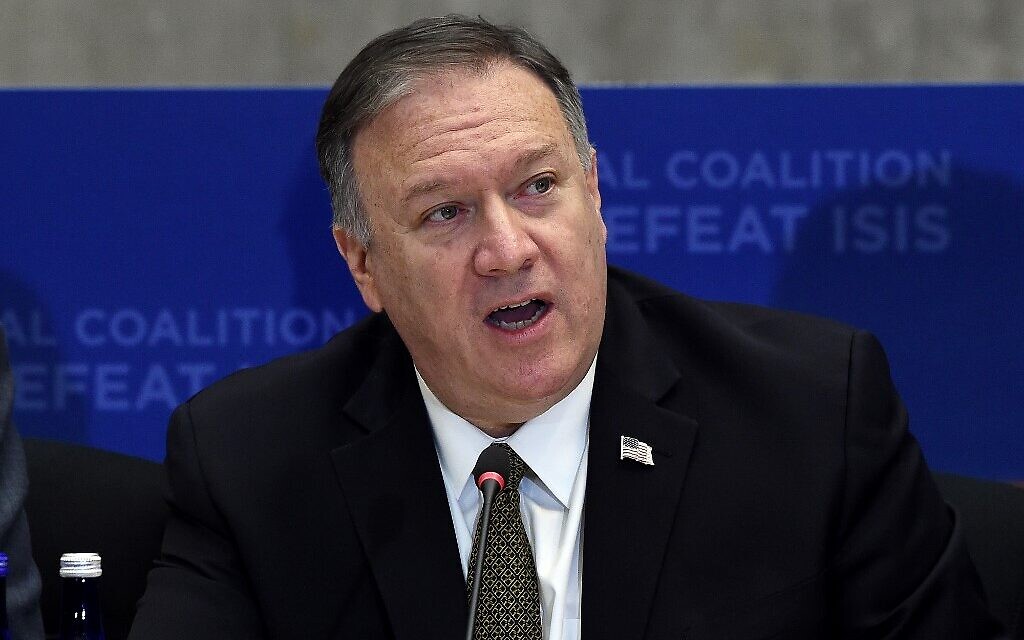
US Secretary of State Mike Pompeo delivers remarks at the Global Coalition to Defeat ISIS Small Group Ministerial, at the State Department in Washington, November 14, 2019. (Olivier Douliery/AFP)

US Secretary of State Mike Pompeo delivers remarks at the Global Coalition to Defeat ISIS Small Group Ministerial, at the State Department in Washington, November 14, 2019. (Olivier Douliery/AFP)

US Secretary of State Mike Pompeo on Saturday signaled his support for protesters in Iran, who have put renewed pressure on their government as it struggles to overcome the sanctions strangling the country after US President Donald Trump unilaterally withdrew America from Tehran’s nuclear deal with world powers.

“As I said to the people of Iran almost a year and a half ago: The United States is with you,” Pompeo said, retweeting a Persian-language tweet he sent out in July 2018 that referenced a speech he made that directly addressed the Iranian people.

“After 40 years of tyranny, the proud Iranian people are not staying silent about their government’s abuses,” Pompeo wrote in the original Persian tweet. “We will not stay silent either. I have a message for the people of Iran: The United States hears you. The United States supports you. The United States is with you.”

Though largely peaceful, demonstrations Saturday devolved into violence in several instances, with online videos purporting to show police officers firing tear gas at protesters and mobs setting fires.

While representing a political risk for Iranian President Hassan Rouhani ahead of February parliamentary elections, it also shows the widespread anger among the country’s 80 million people, who have seen their savings evaporate amid scarce jobs and the national rial currency’s collapse.

The demonstrations took place in over a dozen cities in the hours following Rouhani’s decision at midnight Friday to cut gasoline subsidies to fund handouts for Iran’s poor.

Gasoline in the country still remains among the cheapest in the world, with the new prices jumping up to a minimum of 15,000 rials per liter of gas — 50% up from the day before. That’s 13 cents a liter, or about 50 cents a gallon. A gallon of regular gasoline in the US costs $2.60 by comparison.

Violence broke out Friday night in Sirjan, a city some 800 kilometers (500 miles) southeast of Tehran.

The state-run IRNA news agency said “protesters tried to set fire to the oil depot, but they were stopped by police.” It did not elaborate, but online videos circulating on Iranian social media purported to show a fire at the depot as sirens wailed in the background. Another showed a large crowd shouting: “Rouhani, shame on you! Leave the country alone!”

Mohammad Mahmoudabadi, an Interior Ministry official in Sirjan, later told state television that police and demonstrators exchanged gunfire, wounding several. He said many protesters were peaceful, but later masked men armed with guns and knives infiltrated the demonstration.

“They insisted on reaching the oil depot and creating crises,” Mahmoudabadi said.

The semi-official ISNA news agency later quoted Mahmoudabadi as saying the violence killed one person.


Iran says it will increase range of cruise missiles, add laser air defense

November 17, 2019

Source: Iran says it will increase range of cruise missiles, add laser air defense | The Times of Israel

Deputy defense minister states Tehran working on project to increase scope and precision of ammunition; says research for home-grown laser defense system has finished

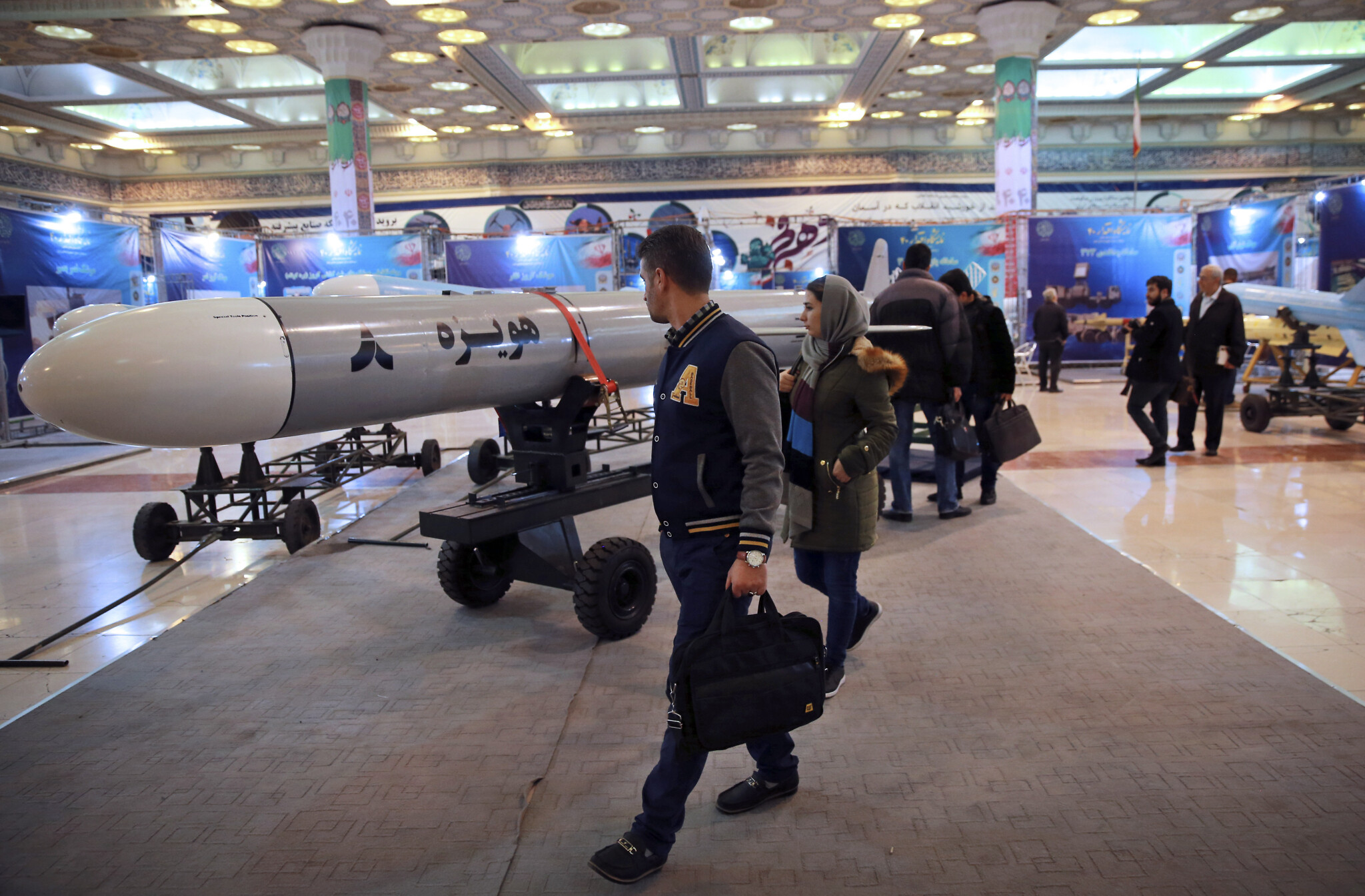
Visitors look at a Hoveizeh 8 cruise missile at a military show marking the 40th anniversary of Iran's Islamic Revolution in Tehran, Iran, February 3, 2019.  (AP/Vahid Salemi)

Visitors look at a Hoveizeh 8 cruise missile at a military show marking the 40th anniversary of Iran’s Islamic Revolution in Tehran, Iran, February 3, 2019. (AP/Vahid Salemi)

Iranian Deputy Defense Minister Qassem Taqizadeh said Saturday that Tehran was working to expand the range of its cruise missiles and that it will soon be adding a home-grown laser air defense system to its arsenal.

Taqizadeh said that Iran’s Defense Ministry was working on a new cruise missile prototype that will have “longer operational range and higher precision with the use of advanced digital and mapping technologies,” according to the semi-official Fars News Agency. He said the prototype would pass the testing stage in the near future.

Taqizadeh also said that a project to produce a laser air defense system had recently been successfully completed and that Tehran was working to mass-produce the new weapon, Fars News reported.

Last month, Israeli Air Force chief Amikam Norkin said the military’s multi-tiered network of air defense systems was “on alert” amid a general threat of attack by Iran.

Illustrative: Iran says it successfully tested the Hoveizeh cruise missile on February 2, 2019. (Screen grab via Tasnim)

In recent months, the military has begun to believe that Tehran intends to eventually retaliate against Israel’s regular airstrikes against its forces and proxies in the region.

The Israel Defense Forces believes this could take the form of a large-scale attack involving cruise missiles and attack drones, similar to the strike on Saudi Arabia’s Aramco petroleum facility that was attributed to Iran.

Prime Minister Benjamin Netanyahu said last month that Iran intends to attack Israel from Yemen, which may make intercepting such a strike more difficult as the IDF’s intermediate and long-range air defenses are better positioned to shoot down incoming attacks from Israel’s north, rather than from the south.

Unlike ballistic missiles, which usually fly through a high arc on the way to the target, cruise missiles and drones fly at low altitude, making them harder to detect and intercept.

Iran appears to have been building up its drone activities and attacks in recent months. In August, Israeli fighter jets carried out airstrikes in Syria to thwart a planned attack on Israel by Iran-backed fighters using armed drones, the IDF said at the time.

The Israeli military said its strike targeted operatives from Iran’s Islamic Revolutionary Guard Corps’ Quds Force as well as Shiite militias, including the Hezbollah terror group, who had been planning on sending “kamikaze” attack drones into Israel armed with explosives.

Israel has vowed to prevent Iran’s regional proxy militias from obtaining advanced weapons to use against the Jewish state and has carried out numerous airstrikes in Syria that it says were to prevent delivery of weapons and to stop Iranian military entrenchment in that country.


Khamenei backs government gas price hikes as protests rock Iran 

November 17, 2019

Source: Khamenei backs government gas price hikes as protests rock Iran | The Times of Israel

Supreme leader said to call demonstrators protesting 50% increase in fuel costs ‘thugs’ who are backed by Tehran’s foreign enemies, urges security forces to ‘implement their tasks’

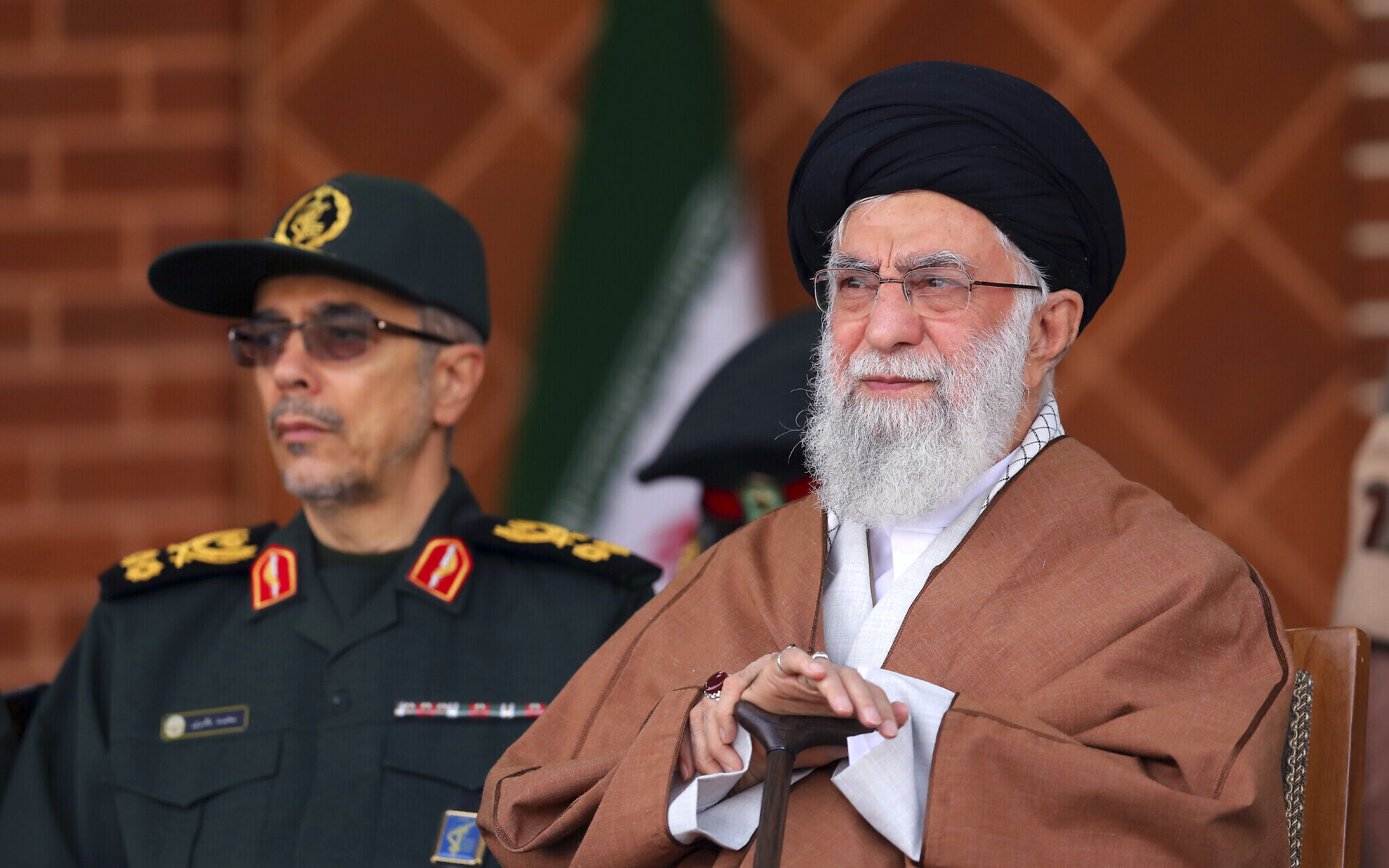
In this picture released by an official website of the office of the Iranian supreme leader, Supreme Leader Ayatollah Ali Khamenei, right, reviews armed forces with Chief of the General Staff of the Armed Forces Gen. Mohammad Hossein Bagheri, during a graduation ceremony at Iran's Air Defense Academy, in Tehran, Iran, October 30, 2019. (Office of the Iranian Supreme Leader via AP)

In this picture released by an official website of the office of the Iranian supreme leader, Supreme Leader Ayatollah Ali Khamenei, right, reviews armed forces with Chief of the General Staff of the Armed Forces Gen. Mohammad Hossein Bagheri, during a graduation ceremony at Iran’s Air Defense Academy, in Tehran, Iran, October 30, 2019. (Office of the Iranian Supreme Leader via AP)

DUBAI, United Arab Emirates (AP) — Iran’s supreme leader on Sunday backed the government’s decision to raise gasoline prices and called angry protesters who have been setting fire to public property over the hike “thugs,” signaling a potential crackdown on the demonstrations.

Ayatollah Ali Khamenei’s comments came as authorities apparently shut down the internet across Iran to smother the protests in some two dozen cities and towns over the rise of government-set prices by 50% as of Friday.

Since the hike, demonstrators have abandoned their cars along major highways and joined mass protests in the capital, Tehran, and elsewhere. Some protests turned violent, with demonstrators setting fires and there was also gunfire.

It remains to be seen how many people have been injured, killed or arrested. Authorities on Saturday said only one person was killed, though other videos from the protests have shown people gravely wounded.

In an address aired by state television Sunday, Khamenei said “some people had died and some centers destroyed,” without elaborating. He called violent protesters “thugs” who had been pushed into violence by counterrevolutionaries and foreign enemies of Iran.

“Setting a bank on fire is not an act done by the people. This is what thugs do,” Khamenei said.

Iranians fill their vehicles at a gas station in Tehran, on November 15, 2019. (STR / AFP)

However, he made a point to back the decision of Iran’s relatively moderate President Hassan Rouhani and others to raise gasoline prices. Gasoline in the country still remains among the cheapest in the world, with the new prices jumping up to a minimum of 15,000 rials per liter of gas — 50% up from the day before. That’s 13 cents a liter, or about 50 cents a gallon. A gallon of regular gasoline in the US costs $2.60 by comparison.

Khamenei ordered security forces “to implement their tasks” and for Iran’s citizens to keep clear of violent demonstrators.

That seemed to indicate a possible crackdown could be looming. Economic protests in late 2017 into 2018 were met by a heavy reaction by the police and the Basij, the all-volunteer force of Iran’s paramilitary Revolutionary Guard.

“Such illegal actions would not solve any problem but add insecurity on top of other problems,” Khamenei said. “Lack of security is the biggest calamity for any country and society. That is what they are looking for.”

The protests have put renewed pressure on Iran’s government as it struggles to overcome US sanctions strangling the country’s economy since President Donald Trump unilaterally withdrew America from Tehran’s nuclear deal with world powers over a year ago.

Though largely peaceful, the latest demonstrations devolved into violence in several instances, with online videos purporting to show police officers firing tear gas at protesters and mobs setting fires.

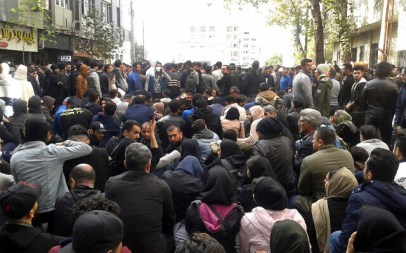
Protesters attend a demonstration after authorities raised gasoline prices, in the northern city of Sari, Iran, November 16, 2019. (Mostafa Shanechi/ ISNA via AP)

While representing a political risk for Rouhani ahead of February parliamentary elections, they also show widespread anger among Iran’s 80 million people who have seen their savings evaporate amid scarce jobs and the collapse of the national currency, the rial.

Cheap gasoline is practically considered a birthright in Iran, home to the world’s fourth-largest crude oil reserves.

Rouhani had been pushing for higher prices to offer payments to the poor for months.

While the hike was eventually expected, the decision to raise gasoline prices still caught many by surprise and sparked immediate demonstrations overnight.

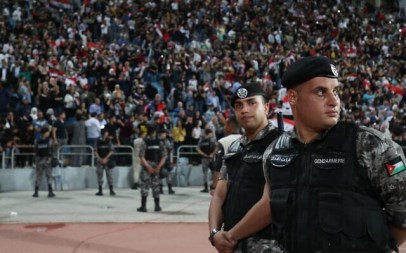
Jordanian police stand guard during the FIFA World Cup 2022 and the 2023 AFC Asian Cup qualifying soccer match between Iraq and Iran in the Jordanian capital Amman on November 14, 2019. (Khalil MAZRAAWI/AFP)

Iranian internet access meanwhile saw disruptions and outages Friday night into Saturday, according to the group NetBlocks, which monitors worldwide internet access. By Saturday night, “real-time network data show connectivity has fallen to just 7% of ordinary levels following 12 hours of progressive network disconnections as public protests have continued across the country,” NetBlocks said.

“The ongoing disruption is the most severe recorded in Iran since President Rouhani came to power, and the most severe disconnection tracked by NetBlocks in any country in terms of its technical complexity and breadth,” the group said. The websites of state media outlets appeared affected by the outage early Sunday.

Protester chants seen in online videos mirrored many from the economic protests in late 2017, which resulted in nearly 5,000 reported arrests and at least 25 people killed. Some criticized Iran’s spending abroad on Palestinians and others while the country’s people remain poor.

Persian Reuters@PersianReuters

Embedded video

One video showed demonstrators calling: “No Gaza, no Lebanon, I give my life for Iran” — an apparent reference to the Islamic Republic’s funds being spent abroad instead of at home.

The tensions in Iran came as weeks of anti-government protests have engulfed Iraq and Lebanon, two Mideast nations that are home to Iranian proxies and crucial to Tehran’s influence abroad.

Iran long has suffered economic problems since its 1979 Islamic Revolution cut off the country’s decades-long relationship with the U.S. Iran’s eight-year war with Iraq in the 1980s followed, further straining its economy.

The collapse of the nuclear deal has exacerbated those problems. The Iranian rial, which traded at 32,000 to $1 at the time of the accord, fell to 122,600 to $1 in trading on Saturday. Iran has since begun breaking terms of the deal as it tries to force Europe to come up with a way to allow it to sell crude oil abroad despite American sanctions.


On the Lighter Side…

November 17, 2019


Implications of Iran’s nuclear scale-back – Jerusalem Studio 465

November 16, 2019


Blamed for Beersheba rocket fire, Hamas says Israel ‘won’t choose timing’ of ops

November 16, 2019

Source: Blamed for Beersheba rocket fire, Hamas says Israel ‘won’t choose timing’ of ops | The Times of Israel

Terror group warns Jewish state will bear consequences of ‘ongoing aggression’; leaders of Hamas, Islamic Jihad said to speak before projectiles fired towards the southern city

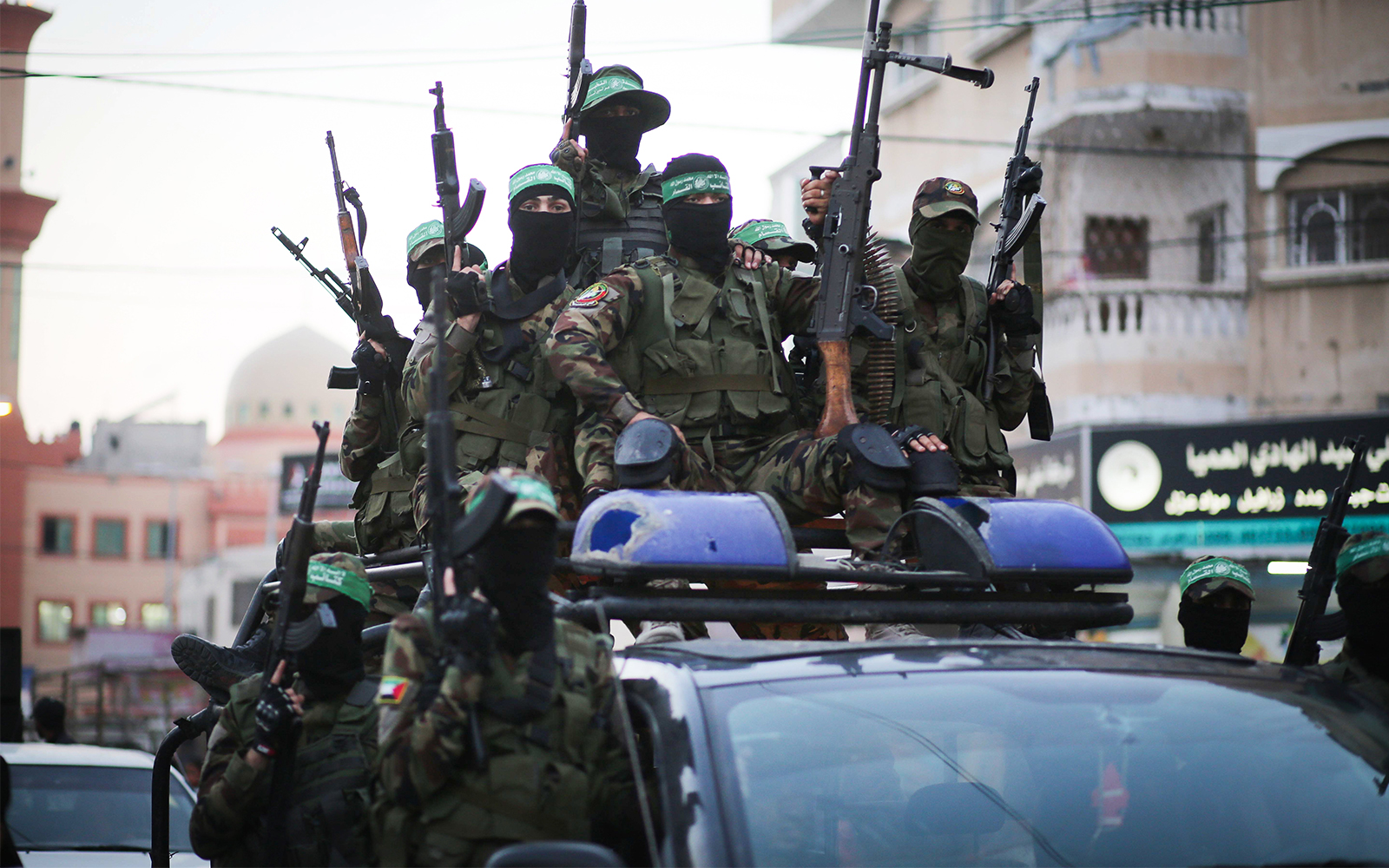
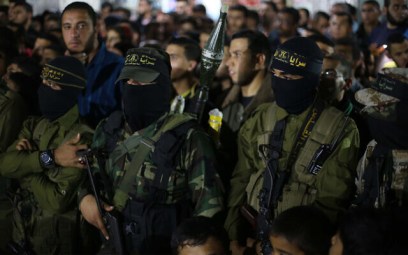
Members of the Izz-a-din al-Qassam Brigades, the military wing of the Islamist terror group Hamas, take part in a march in Gaza City, July 25, 2019. (Hassan Jedi/Flash90)

Members of the Izz-a-din al-Qassam Brigades, the military wing of the Islamist terror group Hamas, take part in a march in Gaza City, July 25, 2019. (Hassan Jedi/Flash90)

After two rockets believed by Israel to have been launched by Hamas were fired toward Beersheba overnight, a spokesperson for the terror group said Saturday that Israel “will not be allowed to choose the time and place of [military] campaigns.”

Hamas spokesperson Fawzi Barhoum added that the decision to carry out military operations remains in the hands of the Gaza terror groups and that “Israel bears the consequences and results of its ongoing aggression,” Hebrew-language media reported.

In a fresh breach of the ceasefire overnight Friday-Saturday, two rockets were fired into Israel from the Gaza Strip, setting off rocket sirens in Beersheba for the first time this week. Hebrew-language media reported that the Israeli security services assessed the rockets were launched by Hamas.

Both projectiles were shot down by the Iron Dome missile defense system, the IDF said. The Magen David Adom emergency and rescue service said it treated five people for anxiety and four who were injured while running to bomb shelters following the attack.

חדשות 13

@newsisrael13

לאחר כיממה של שקט: רקטות נורו לעבר באר שבע – ויורטו • @bokeralmog ו-@OrHeller עם כל הפרטים >> https://bit.ly/2XnjjH0 

(צילום: ניר פרץ)

Embedded video

Significantly, the IDF said it responded to the rocket fire by carrying out strikes on Hamas terror targets in the enclave. During this week’s fighting, Israel traded blows with the Islamic Jihad terrorist organization, while the Gaza-ruling Hamas sat on the sidelines.

In a statement Saturday morning, the IDF said Hamas targets hit in the strikes included a military camp and a compound serving the terror group’s naval forces. In addition, underground infrastructure was also hit. No casualties were reported in the strikes.

“The Hamas terror organization is responsible for everything in the Gaza Strip and will bear the consequences of terror acts carried out against Israeli citizens,” the IDF said.

FILE — An explosion caused by Israeli airstrikes is seen in Gaza City, November 14, 2019. (Adel Hana/AP)

The rocket attack came after the leaders of the Hamas and Palestinian Islamic Jihad terror groups spoke and agreed to increase cooperation, Palestinian media reported.

Channel 13 news reported that Hamas chief Ismail Haniyeh and Islamic Jihad leader Ziad Nahala spoke on the phone shortly before two rockets were fired toward Beersheba.

The phone call between Haniyeh and Nahala came after members of the military wings of Hamas and Islamic Jihad held talks in Gaza on Friday,  Lebanon’s Al-Akhbar newspaper reported. According to the report, there were angry accusations at the meeting but eventually also an agreement to cooperate. In addition, the newspaper reported that officials in Gaza believe the ceasefire will soon collapse.

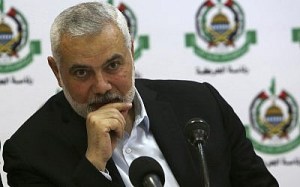
Hamas leader Ismail Haniyeh attends a meeting with foreign reporters at al-Mat’haf hotel in Gaza City, June 20, 2019. (AP Photo/Adel Hana)

A day earlier, senior Hamas members were twice barred from a mourning tent for the Palestinian Islamic Jihad terror chief whose killing by Israel set off the fighting. The mourners were apparently angry at Hamas after the Gaza-ruling terror group did not take part in the Tuesday-Wednesday flare-up between Israel and Islamic Jihad.

On Friday Hamas acknowledged that one of its operatives had been killed during the fighting this week.

The Izz Ad-Din Al-Qassam Brigades, Hamas’s military wing, said Ahmed Abdel al-A’al was one its members. A statement from the group did not clarify whether he was taking part in fighting when he died.

According to the military wing, al-A’al, 23, and two of his teenage brothers were killed in a “Zionist bombardment” on Wednesday.

The outbreak of violence in the early hours of Saturday morning came as Israelis had started recovering from two days of intense fighting between Israel and Gaza terror groups.

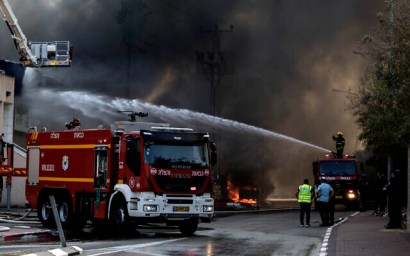
Israeli firefighters battle a blaze at a factory in Sderot, southern Israel, hit by a rocket fired from Gaza, on November 12, 2019 (AP Photo/Tsafrir Abayov)

From the predawn Tuesday to Thursday morning, Israel and Islamic Jihad fought a battle in which over 450 rockets and mortar shells were fired at Israel from Gaza, and the IDF responded with dozens of airstrikes on Islamic Jihad facilities and on the terror cells as they were firing and preparing to launch rockets.

The escalation began when an IDF targeted missile strike killed Baha Abu al-Ata, a commander in the Islamic Jihad terror group who Israel said was the “prime instigator” of terrorism from Gaza over the past year.

Palestinian sources said 34 Gazans were killed in the two days of conflict. Israel said 25 of the fatalities were terrorists; human rights officials said 16 civilians were among the dead.

Fifty-eight Israelis were lightly and moderately injured or treated for anxiety.

Most of the rockets from Gaza either landed in open fields or were intercepted by Israeli air defenses. Some struck homes, businesses and streets, causing injuries and significant property damage. Dozens of people were also hurt as they fell running to bomb shelters.

In response to the attacks, the Israeli military conducted dozens of strikes on Islamic Jihad bases and weapons facilities, as well as rocket-launching teams throughout the Strip. The Hamas terror group, which rules the Strip, refrained from partaking in the violence.

Israel and Islamic Jihad agreed to a ceasefire on Thursday morning, although there were four rocket attacks throughout the day Thursday and the IDF attacked Islamic Jihad targets in Gaza overnight in response.

Islamic Jihad terrorists attend a memorial service for one of their number who was killed in clashes with Israel, November 15, 2019. (Hassan Jedi/Flash90)

On Friday schools remained closed in the Gaza periphery, but at noon local councils announced a return to normal life.

Maj. Gen. Herzi Halevi, the head of the Israeli military’s Southern Command, warned Gaza-area residents Thursday that the rocket fire might continue even with the ceasefire agreement in place.

The general said the IDF would be working to thwart these attacks. “If we identity launch efforts, we will strike the cells,” Halevi said.

Other Israeli leaders have warned they would not hesitate to return to battle.

Islamic Jihad’s military wing also threatened Israel that it was ready to continue fighting.