
The US and Iran ramped up their preparations for direct military engagement on Monday, Nov. 25: A top Iranian general’s threatened to destroy the US, Israel and Saudi Arabia, and the USS Abraham Lincoln Carrier Strike Force moved into position opposite central Iran’s coastline..
Addressing a mass pro-government rally in Tehran, Iran’s Revolutionary Guards chief, Gen. Hossein Salami, shouted, while burning US and Israeli flags, “We have shown restraint… we have shown patience towards the hostile moves of America, the Zionist region and Saudi Arabia against the Islamic Republic Iran,” said Salami. “If you cross our red lines, we will destroy you. If Iran decides to respond, the enemy will not have security anywhere. Our patience has a limit.”
DEBKAfile’s military sources find the clue to Iran’s next move in his assertion that its patience has a limit. It indicates that while up until now Tehran hesitated to set a date for its next strike on an American or an Israeli target – or both – Iran has now finally decided to go forward.
Aware that this strike may come at any moment, CENTCOM chief, Gen. Kenneth McKenzie predicted on Saturday that Iran will probably launch another attack in the Middle East. He was speaking at a regional security conference at Manama, Bahrain, and noted that, despite the American troop build-up in the region, Tehran had not hesitated to attack Saudi oil fields on Sept. 14.
Iran’s leaders were also spurred toward military action by the return of the USS Lincoln carrier strike force to the Gulf for the first time since May, when the vessel moved into the Arabian Sea. Large-scale US marine, navy and air might aboard the Lincoln are now in position opposite Iran’s shores.
They also took note of the arrival in Israel of Gen. Mark Milley, Chairman of the Joint US Chiefs of Staff, and his quiet talks with Chief of Staff Lt. Gen. Aviv Kochavi. Their joint statement – “The two generals discussed operational questions and regional developments” – was interpreted in Tehran as meaning that the US and Israel had finalized coordinated plans for joint military operations against the Islamic Republic.
Since last week, Israel has been on high war alert for Iran’s potential payback for its wide-ranging air strike on Al Qods positions near and south of Damascus on Nov. 20. It is estimated in Israel and the US that multiple Iranian personnel were killed. They did not expect Tehran to let this go without responding.
Source: Thousands of Iranians rally against ‘American-Israeli riots’ | The Times of Israel
Regime supporters gather in Tehran after security forces quell days of demonstrations over gasoline price hikes
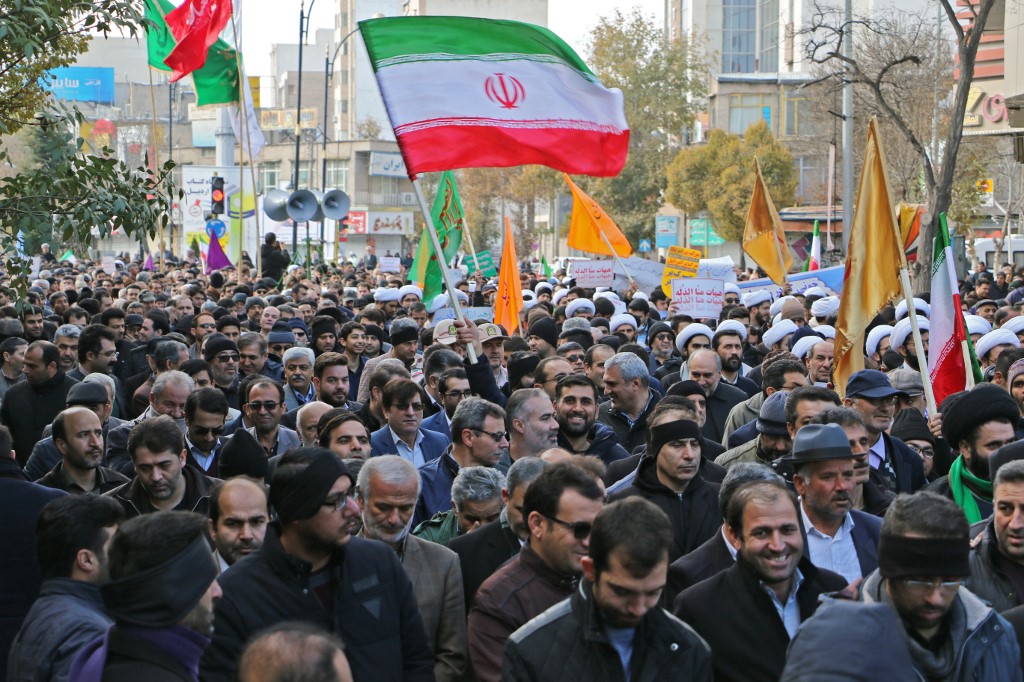
TEHRAN, Iran — Thousands of supporters of Iran’s government converged on a square in the capital Tehran on Monday to condemn days of “rioting” that the Islamic Republic blames on its foreign foes.
Waving the Iranian flag and banners that read “Death to America,” they marched from all directions towards Tehran’s Enghelab (Revolution) Square.
In a shock announcement 10 days ago, Iran raised the price of gasoline by up to 200 percent, triggering nationwide protests in a country whose economy has been battered by US sanctions.
Officials say the demonstrations turned violent because of the intervention of “thugs” backed by royalists and Iran’s arch-enemies — the United States, Israel and Saudi Arabia.
AFP correspondents said the square was filling up quickly Monday with young and old, including clerics carrying portraits of Iran’s supreme leader Ayatollah Ali Khamenei.

State television showed live footage of people gathered for the demonstration.
The rally was to be addressed by Major General Hossein Salami, the head of Iran’s Islamic Revolutionary Guard Corps, which helped put down the unrest.
Ahead of the rally, Iran’s foreign ministry condemned the “interference of foreign countries” in the street violence.
“We recommend they watch the rallies taking place these days in our country so they realize who the real people are in our country,” spokesman Abbas Mousavi said.
An SMS urging people to attend the demonstration was sent to citizens on Sunday evening, amid an ongoing internet outage imposed during the unrest.
The message called on “Tehran’s wise and revolutionary people” to take part in the demonstration to condemn “American-Israeli riots.”
The near-total internet blackout came at the height of the street unrest in a step seen as aimed at curbing the spread of videos of the violence.
Connectivity has returned for much of the country except for its mobile telephone networks, said NetBlocks, a website that monitors global internet disruptions.
NetBlocks said connectivity on Irancell was running at 100%, but two other key mobile service providers — MCI and RighTel — were down at 1% and 21% respectively.
The unrest erupted hours after a midnight announcement that the price of petrol would be immediately raised by 50% for the first 60 liters and 200% for any extra fuel after that each month.
President Hassan Rouhani said the proceeds would allow his government to provide welfare payments to the needy in Iran.
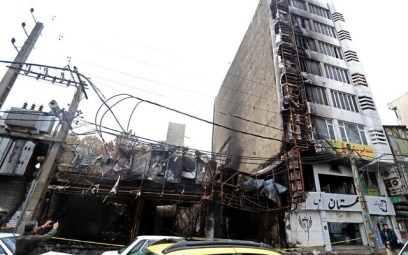
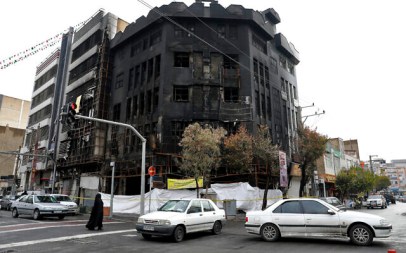
During the violence, dozens of banks, gasoline pumps and police stations were torched across the Islamic Republic.
Officials have confirmed five people were killed, but the death toll is thought to be much higher.
The United Nations said it feared that dozens died, while Amnesty International said more than 100 were believed to have been killed.
Authorities say they arrested 180 ringleaders.
The total number of people detained over the unrest remains unclear, but the UN human rights office put it at more than 1,000 on Tuesday.
Rear Admiral Ali Fadavi, deputy commander in chief of the Guards, on Sunday warned Iran would severely punish “mercenaries” arrested over the violence.
Iran has blamed the unrest on the Pahlavi royal family ousted in the 1979 Islamic Revolution and armed opposition group the People’s Mujahedeen of Iran, which it considers a “terrorist” cult.
Iran, seeking revenge for sanctions, chose to target oil refinery and ultimately backed away from direct confrontation with US, fearing retribution and emboldening Israel
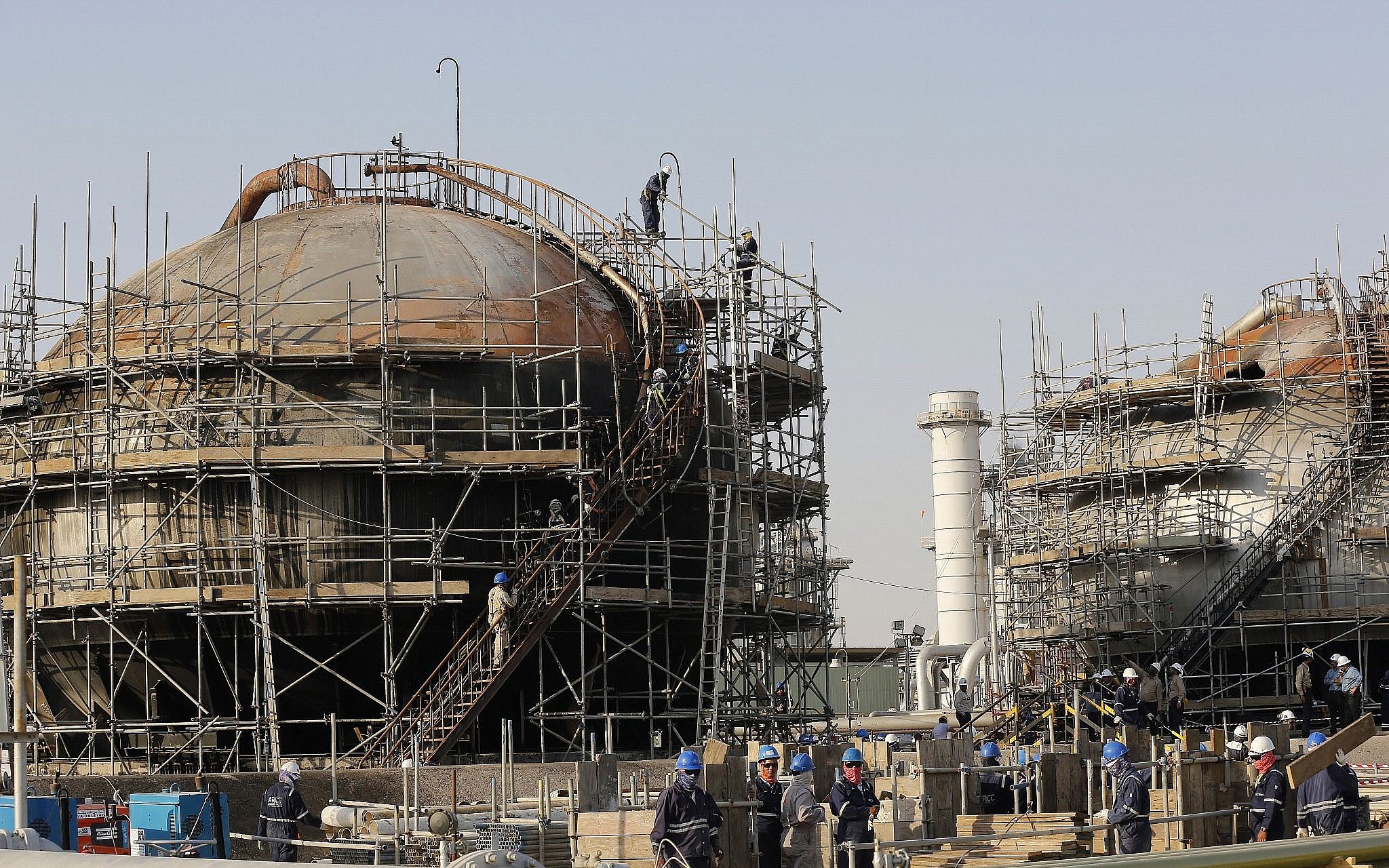
Iran’s Supreme Leader Ayatollah Ali Khamenei personally approved the devastating September 14 combined drone and cruise missile barrage on two Saudi facilities that knocked out half of the kingdom’s oil production, on condition the strike did not target civilians or Americans, the Reuters news agency reported Monday.
According to the in-depth report on the behind the scenes planning for a strike that was intended to punish the US for pulling out of the nuclear deal and imposing strict sanctions on Iran, Khamenei feared that targeting a US base “could provoke fierce retaliation by the United States and embolden Israel, potentially pushing the region into war,” the report said, citing four people familiar with the planning.
Although Yemen’s Iranian-backed Houthi rebels claimed responsibility, the US, Israel, Britain, France, Germany, and Saudi Arabia have accused Iran of being behind the attack. Tehran denies the allegation.
The report describes the deliberations that lead up to the attack, saying it took place in a series of five meetings dating back to May in a heavily fortified compound in Tehran and was attended by senior commanders of the Islamic Revolutionary Guard Corps.
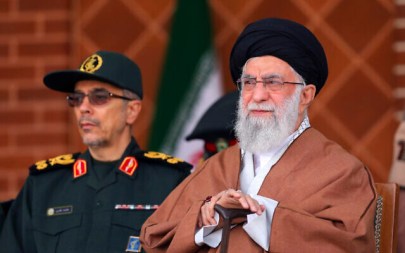
“It is time to take out our swords and teach them a lesson,” one commander reportedly said as hardliners pushed to hit a major target, like one of the US military bases in the area.
Khamenei himself attended one of the meetings.
Ultimately Iran decided to avoid a direct confrontation and attack Saudi Aramco, Saudi Arabia’s state-controlled oil company.
“The group settled on the plan to attack Saudi Arabia’s oil installations because it could grab big headlines, inflict economic pain on an adversary and still deliver a strong message to Washington,” the report said.
Iranian officials denied the Reuters account of the plan and any Iranian involvement.
The report said Iran used 18 drones and three low-flying missiles in the strike and flew them in a “circuitous paths to the oil installations, part of Iran’s effort to mask its involvement.”

Tensions have risen in the Persian Gulf since May last year when US President Donald Trump unilaterally abandoned the nuclear deal between major powers and Iran and began reimposing crippling sanctions in a campaign of “maximum pressure.”
They flared again this May when Iran began reducing its own commitments under the deal and the US deployed military assets to the region.
Since then, ships have been also attacked, drones downed and oil tankers seized.
A top US general said Iran was likely to attack again.
Iran is unlikely to have been undeterred by increased US troop deployment in the Middle East and remains on track to carry out a large-scale attack in the region, the head of the US military’s Central Command said in an interview published Saturday.
“My judgment is that it is very possible they will attack again,” Gen. Kenneth F. McKenzie told the New York Times.
“It’s the trajectory and the direction that they’re on,” he stated. “The attack on the oil fields in Saudi was stunning in the depth of its audaciousness. I wouldn’t rule that out going forward.”
The lack of serious consequences has led Israeli officials to warn an emboldened Tehran could seek a major attack on the Jewish state soon.
Prime Minister Benjamin Netanyahu last month said Iran was emboldened by the lack of a response to the series of attacks attributed to it. He vowed Israel would respond forcefully to any attack.

Last Tuesday, Iran’s Quds Force fired four missiles at Israel from Syria, according to the Israel Defense Forces. All four were shot down, and Israel responded a day later with a punishing round of airstrikes against Iranian and Syrian targets.
At least 23 combatants were killed, 16 of them likely Iranians, according to a Syrian war monitor.
Israel has repeatedly said that it will not accept Iranian military entrenchment in Syria and that it will retaliate for any attack on the Jewish state from Syria.




 WarSclerotic
Recent Comments